
/mɑ̃.ke/

#706 of 5,000 Core 1000
Translation
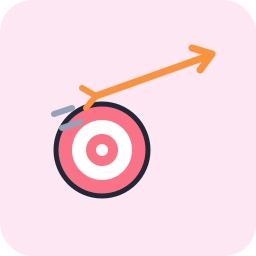
to miss; to lack; to be missing
Word origin
From Italian mancare ('to lack'), from manco ('lacking, defective'), from Latin mancus ('maimed, deficient'). The same root gives English 'maim' through a related path.
- Origin
- Latin
- Root
- mancus
- English cognates
- maim
Grammar
Verb type-er regular (1st group)
Conjugation
Regular -er conjugation. Pronouns: je, tu, il/elle, nous, vous, ils/elles.
Indicative
| Person | Present | Imperfect | Past historic | Future | Conditional |
|---|---|---|---|---|---|
| je | manque | manquais | manquai | manquerai | manquerais |
| tu | manques | manquais | manquas | manqueras | manquerais |
| il/elle | manque | manquait | manqua | manquera | manquerait |
| nous | manquons | manquions | manquâmes | manquerons | manquerions |
| vous | manquez | manquiez | manquâtes | manquerez | manqueriez |
| ils/elles | manquent | manquaient | manquèrent | manqueront | manqueraient |
Subjunctive
| Person | Present | Imperfect |
|---|---|---|
| je | manque | manquasse |
| tu | manques | manquasses |
| il/elle | manque | manquât |
| nous | manquions | manquassions |
| vous | manquiez | manquassiez |
| ils/elles | manquent | manquassent |
Imperative
| Person | Affirmative |
|---|---|
| tu | manque |
| nous | manquons |
| vous | manquez |
Non-finite
- Gerund / present participle
- manquant
- Past participle
- manqué · manquée · manqués · manquées
Examples
.
I miss you when you are far away.
.
He missed his train by a few minutes.
joueurs l'.
We are still missing two players for the team.
.
Whatever you do, do not miss this opportunity.
.
He has never lacked courage.
Used in
Stories
(1)Add to review queue
Track this word in your spaced-repetition queue and be tested on it at the right interval.
Go to my review queueThis word is part of lesson 15.