
Mandarin · For teachers
Every Mandarin printable, chapter by chapter
The whole Mandarin curriculum in one place, mapped to its 34 chapters and 683 lessons. Each lesson lists its downloads inline - worksheets with answer keys, infographics and PDFs - and each chapter's words fold out into their own per-word printable sets, so you can open and print any sheet for a class without hunting through the site.
Chapter 1 · Introduction to Mandarin
Chapter page →- Introduction to MandarinIntroduction
Read this first. The orientation: how Mandarin works, what it costs in hours, what the apps get wrong, and how to use this curriculum.
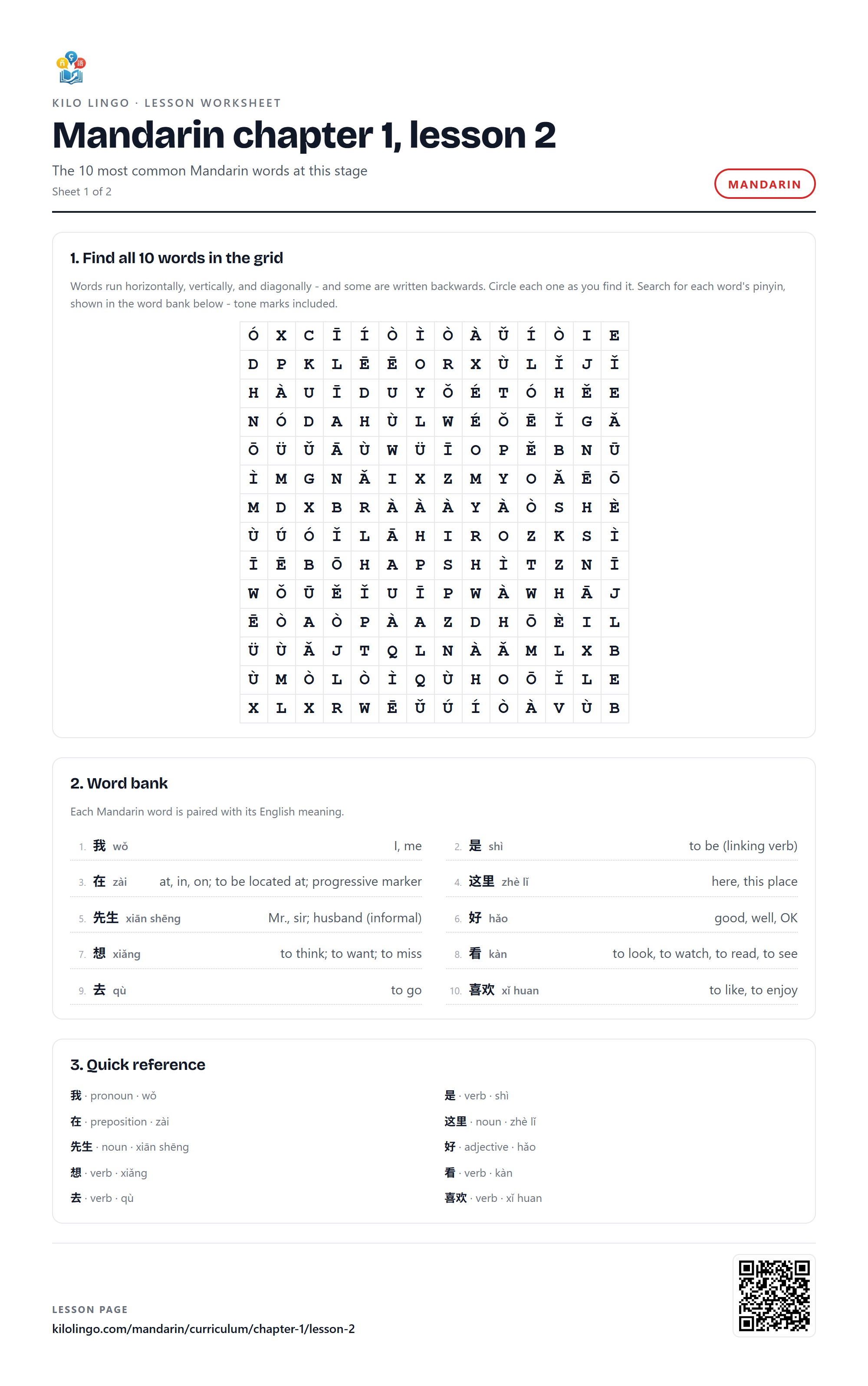
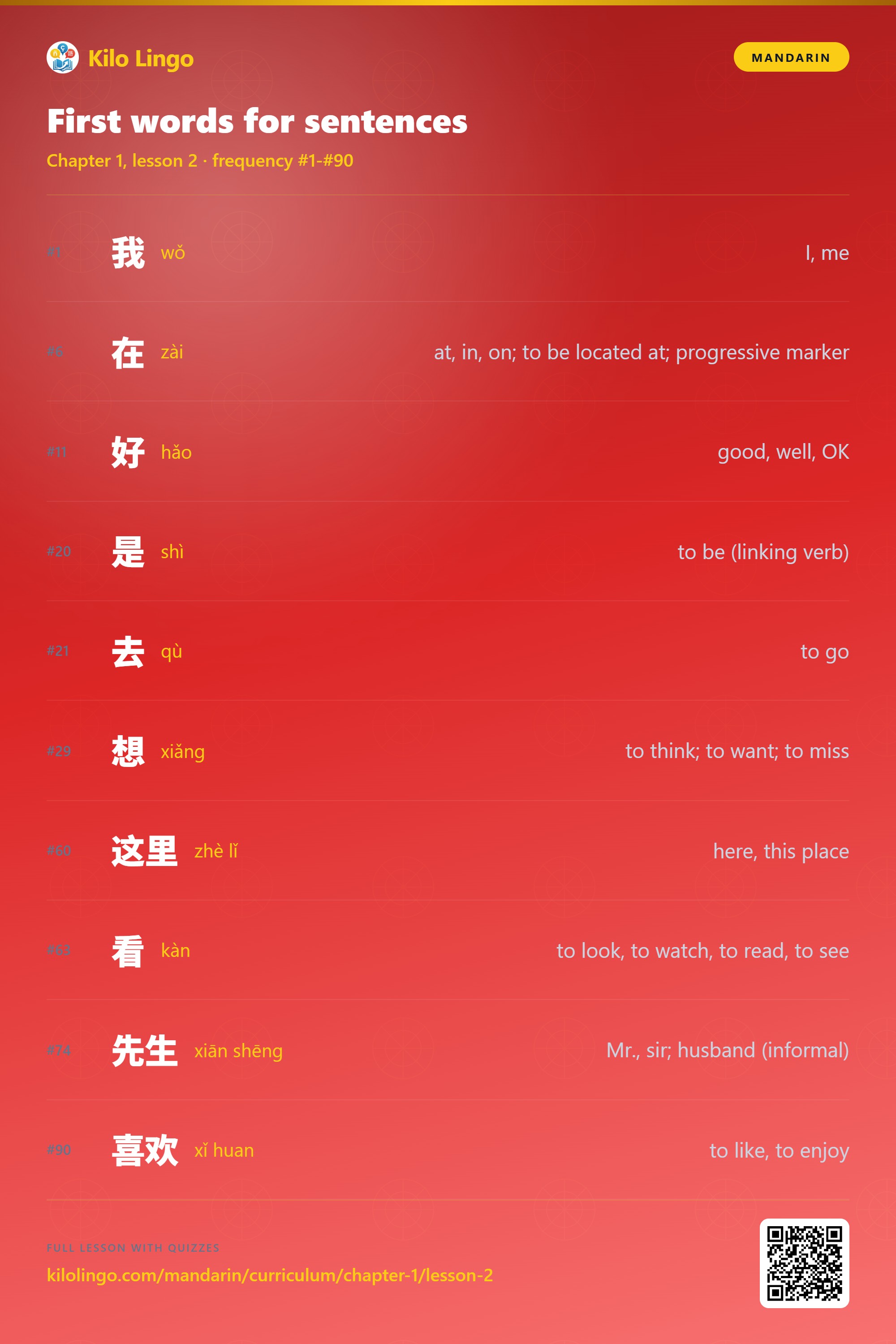
- First words for sentencesVocabulary
10 words · A pronoun, a few verbs, the things they act on. Enough to build a real Mandarin sentence by the end.
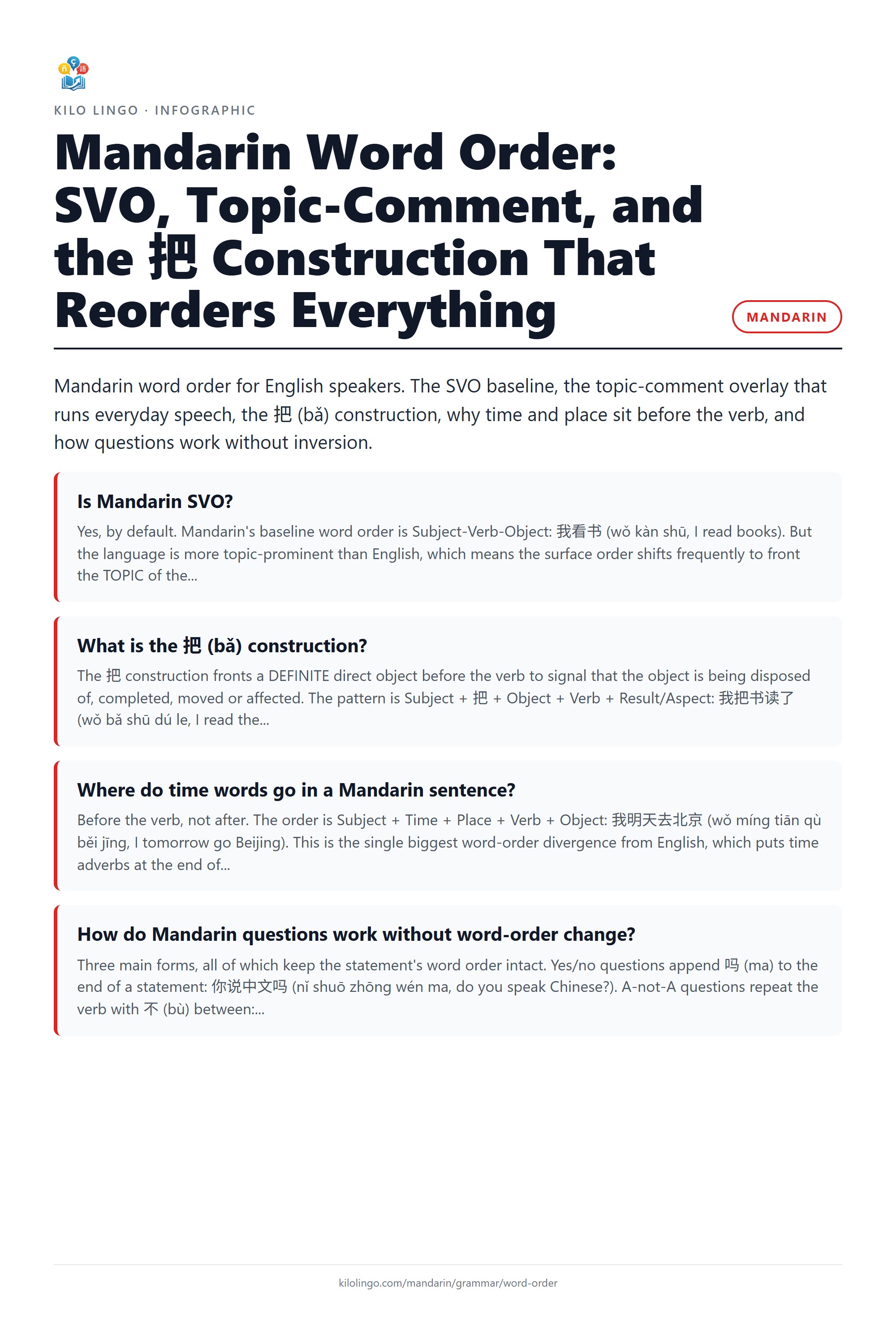
- Word order in MandarinGrammar
Subject, verb, object - and the moments Mandarin bends the English order.
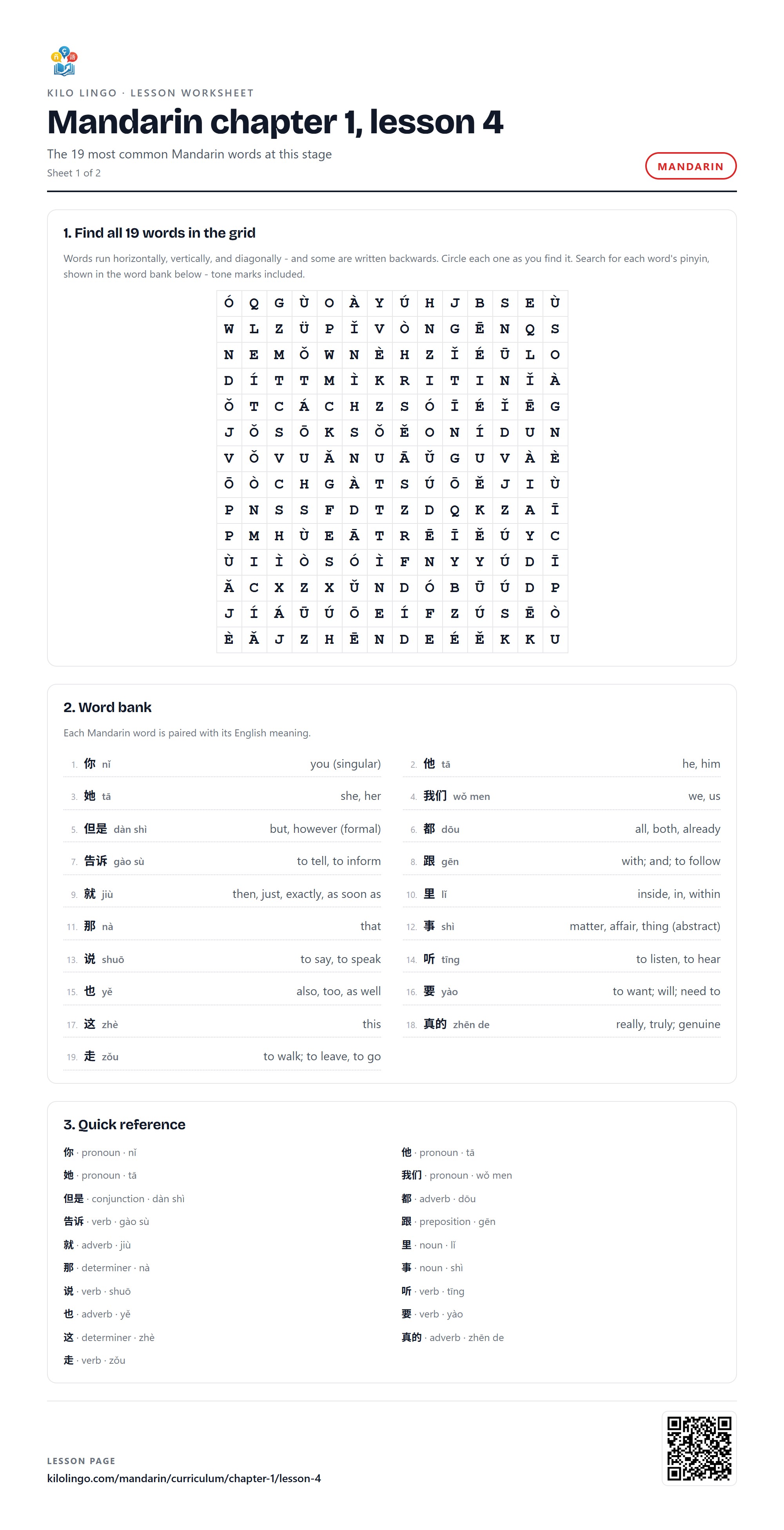
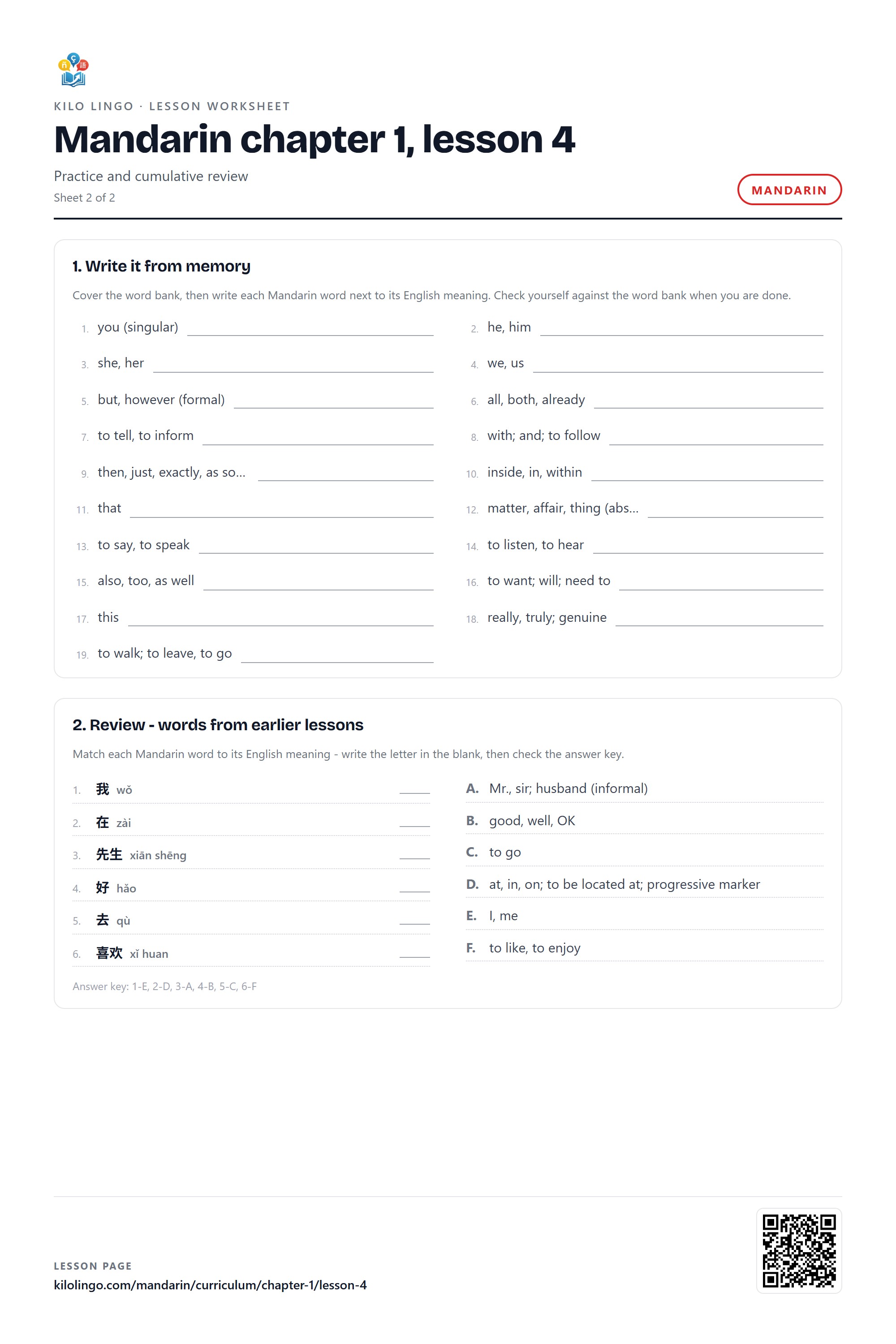
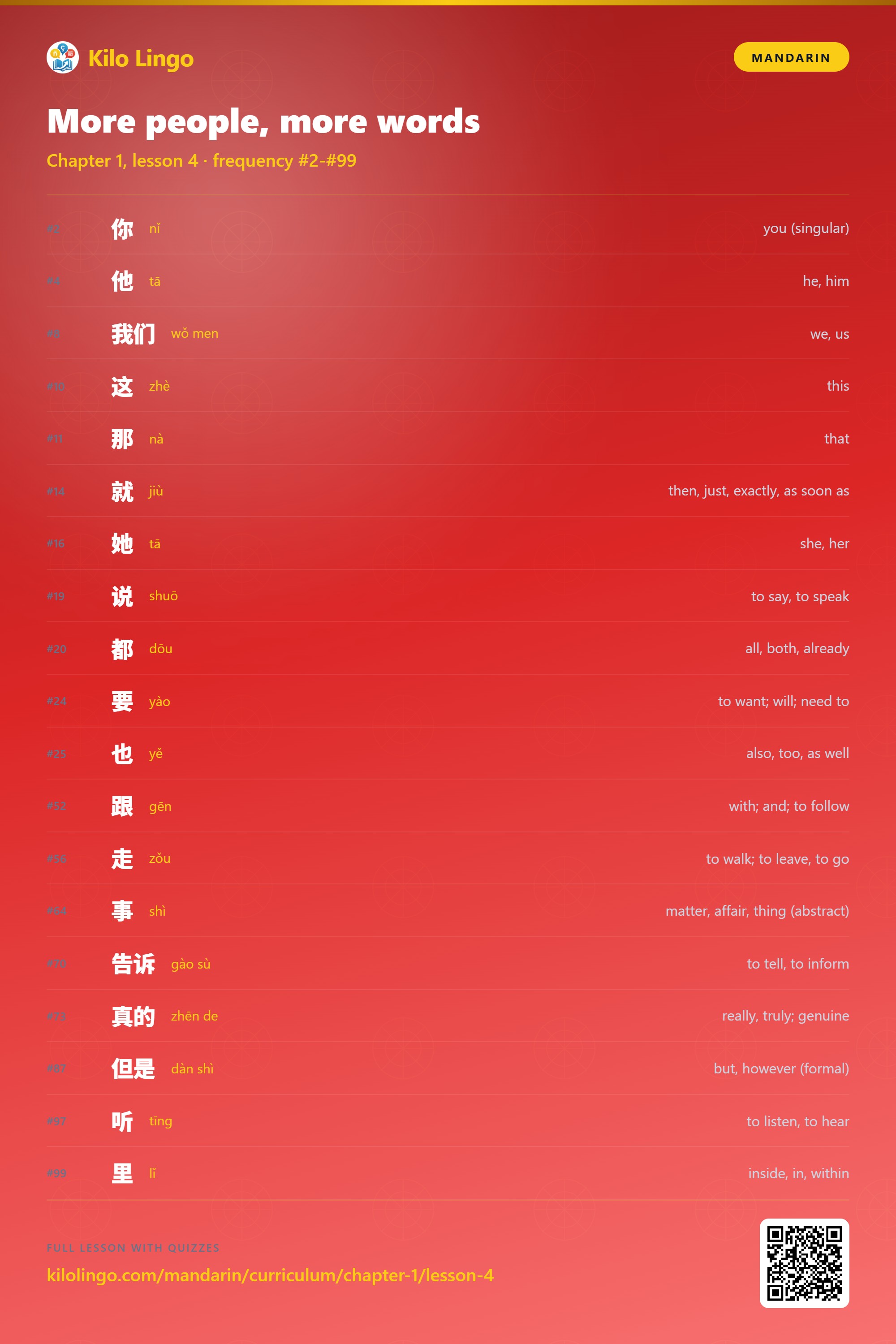
- More people, more wordsVocabulary
19 words · Subject pronouns for everyone else, plus the rest of the vocabulary you need for your first story.
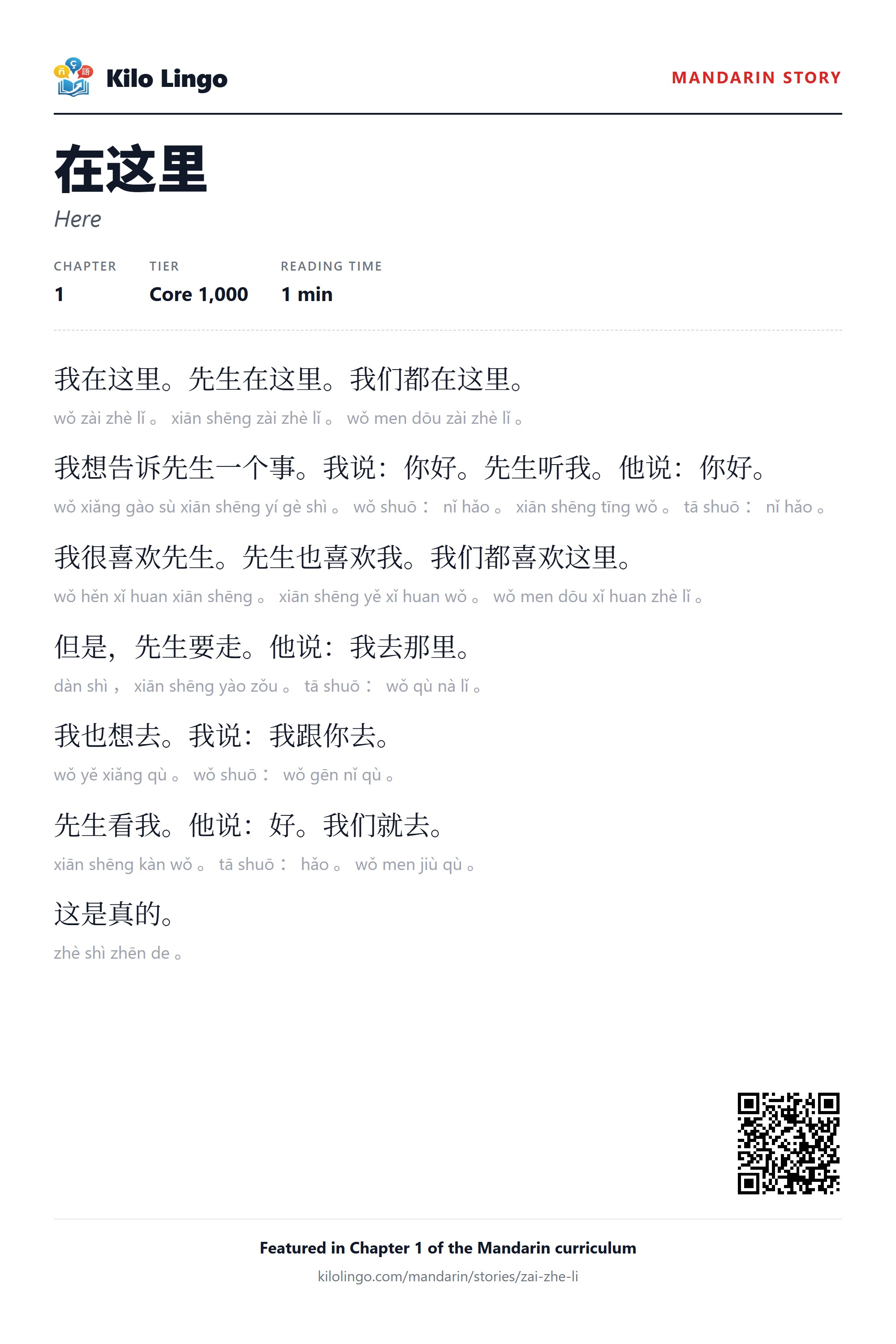
- Your first story in MandarinGraded-reader story
Every content word in this story comes from the lessons you've just finished. No lookups required.
- The sounds of MandarinPronunciation
Retroflex against palatal, and the ü. The tongue positions pinyin never shows you, drawn and animated.
A dozen fixed everyday phrases - nǐ hǎo, xièxie, wǒ jiào - so you can greet a real Mandarin speaker before you have learned any grammar.
- Arcade reviewReview games
Replay this chapter's words as games - a different kind of repetition, and it counts.
Word printables
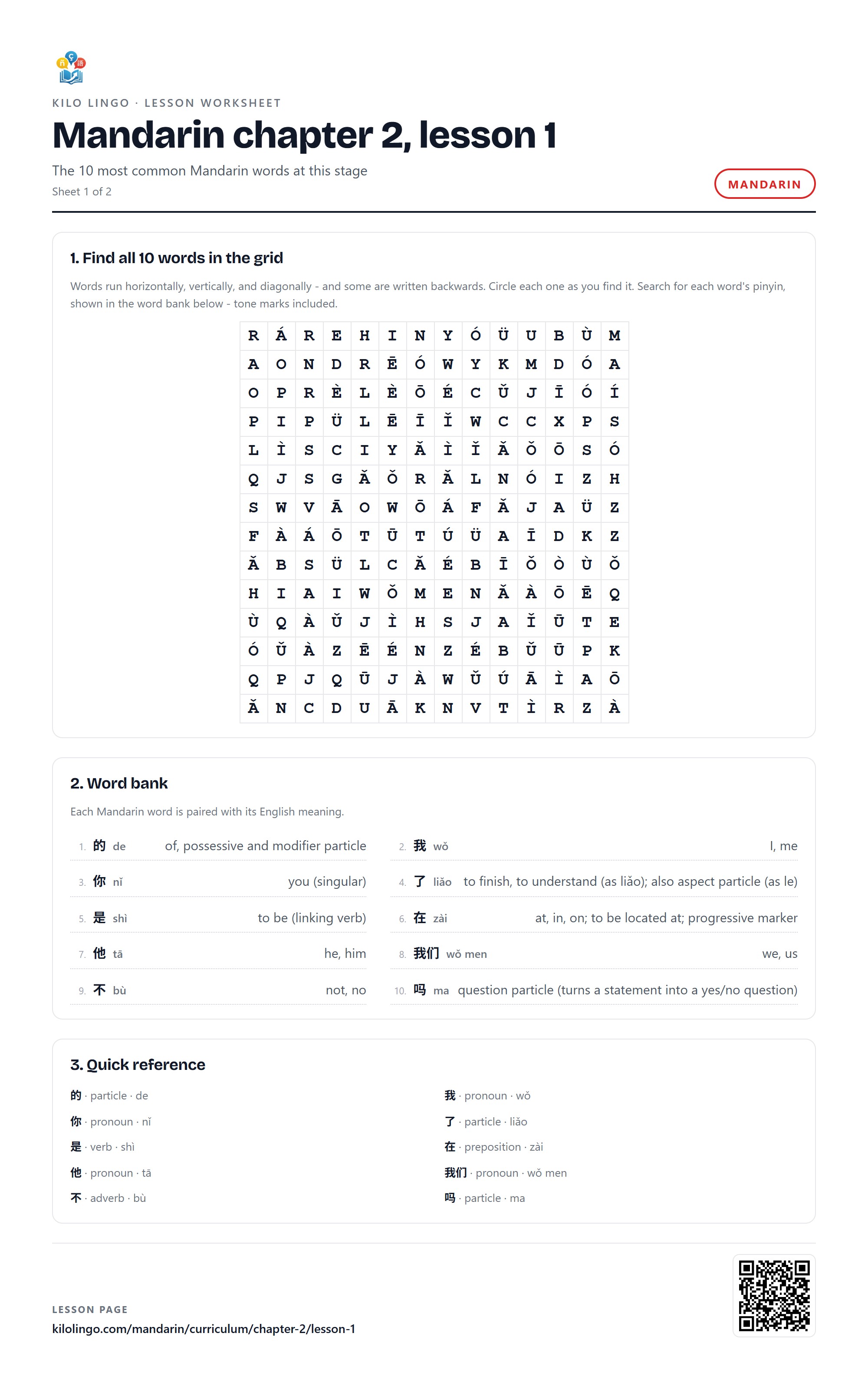
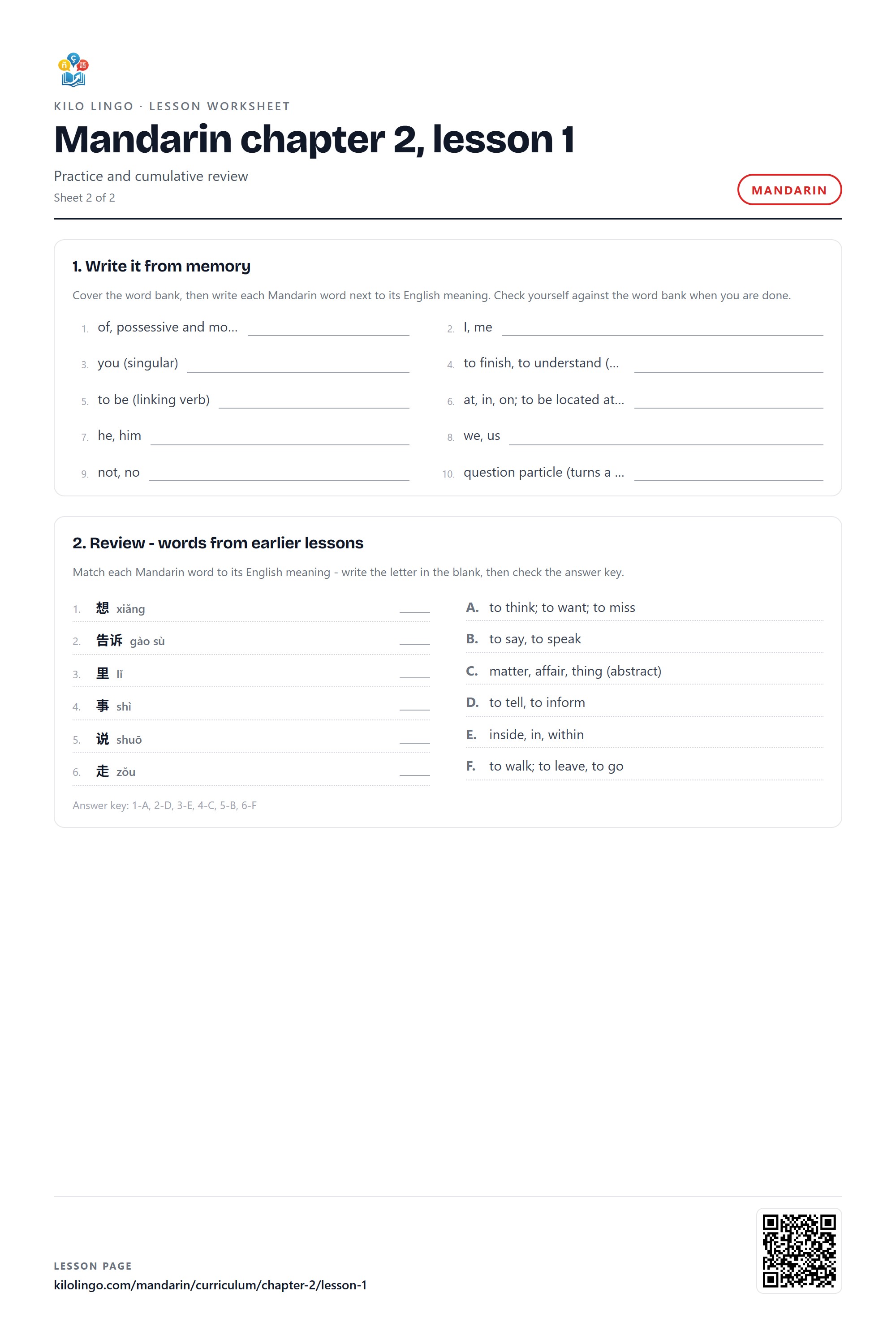
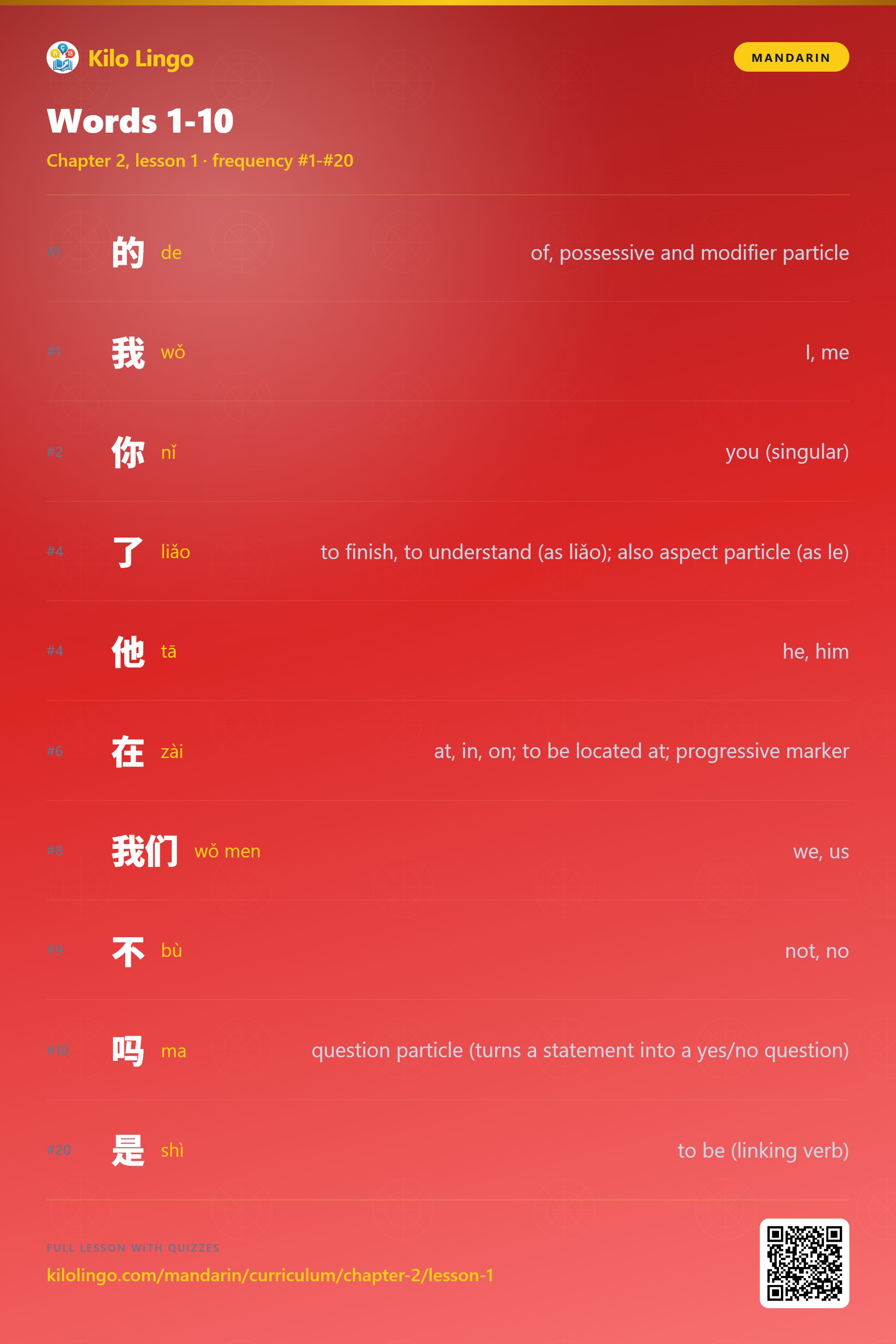
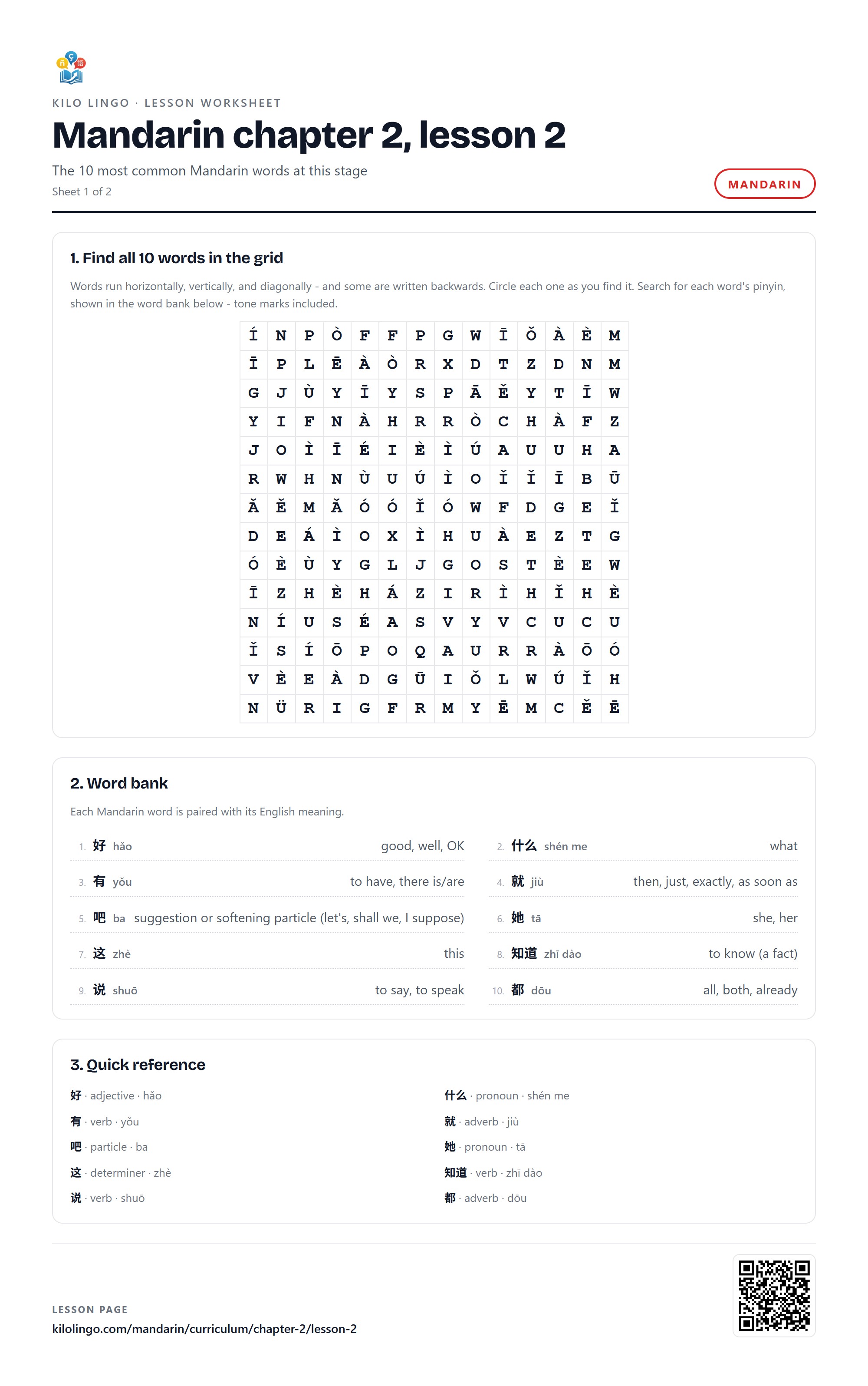
Per-word sheets29 words · a worksheet, infographic and listicle each


Chapter 2 · 是 or 很?
Chapter page →- Word Bubbles review sessionReview games
Pop the words you just met by matching each one to its meaning. A couple of rounds and the batch is yours.
- Tone Shooter review sessionReview games
Shoot the words you just met into their tones by colour. The quickest way to fix a tone in place.
- 是 or 很?Mistake clinic
I am coldis 我很冷, never 我是冷. This one trips up everybody. - Word Bubbles review sessionReview games
Pop the words you just met by matching each one to its meaning. A couple of rounds and the batch is yours.
- Negation: 不 (bù) vs 没 (méi)Grammar
Two words for not: 不 (bù) for now, the future and habits, 没 (méi) for what did not happen - and 有 only ever takes 没.
- Tone Shooter review sessionReview games
Shoot the words you just met into their tones by colour. The quickest way to fix a tone in place.
- Word Bubbles review sessionReview games
Pop the words you just met by matching each one to its meaning. A couple of rounds and the batch is yours.
- Tone Shooter review sessionReview games
Shoot the words you just met into their tones by colour. The quickest way to fix a tone in place.
- Word Bubbles review sessionReview games
Pop the words you just met by matching each one to its meaning. A couple of rounds and the batch is yours.
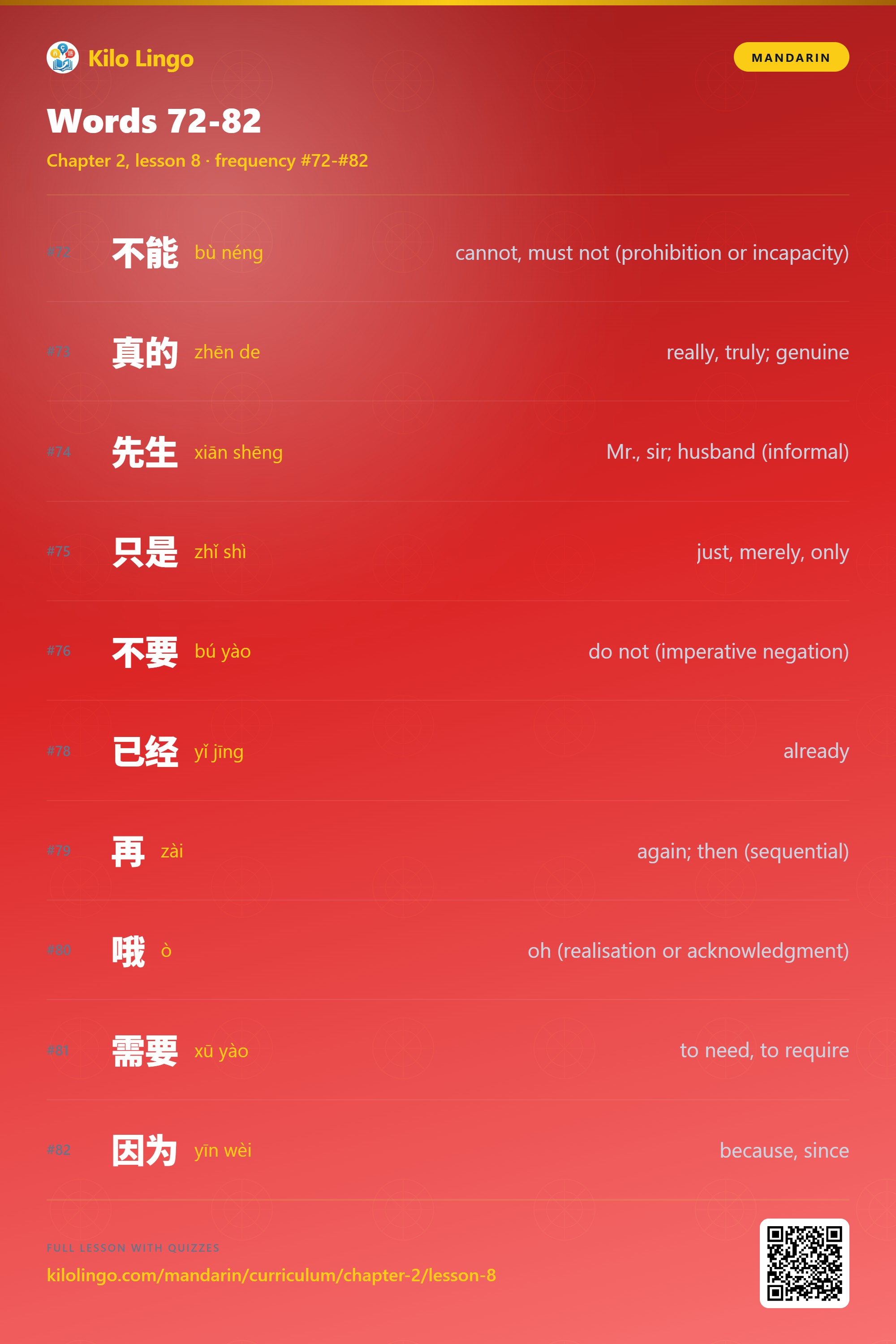
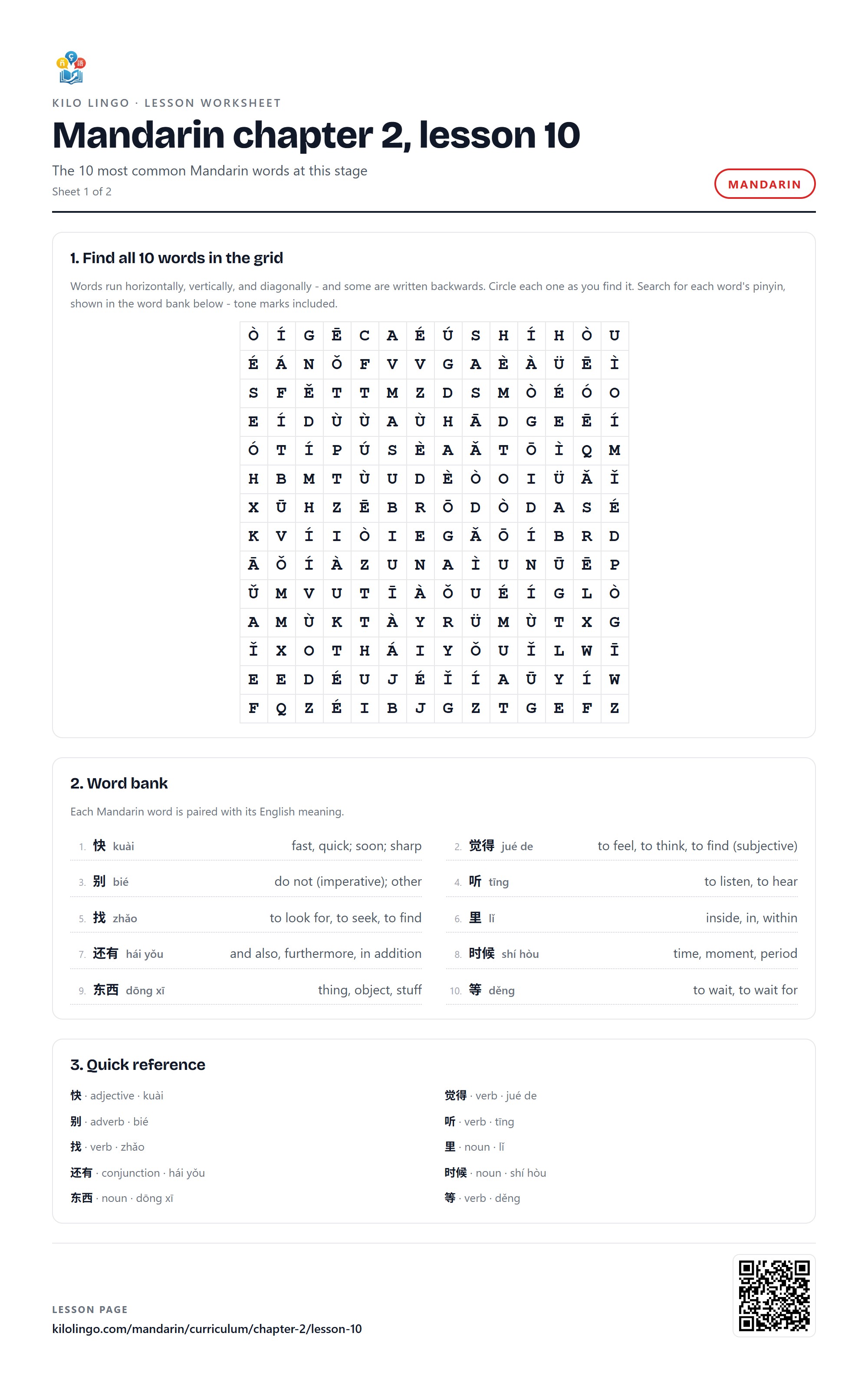
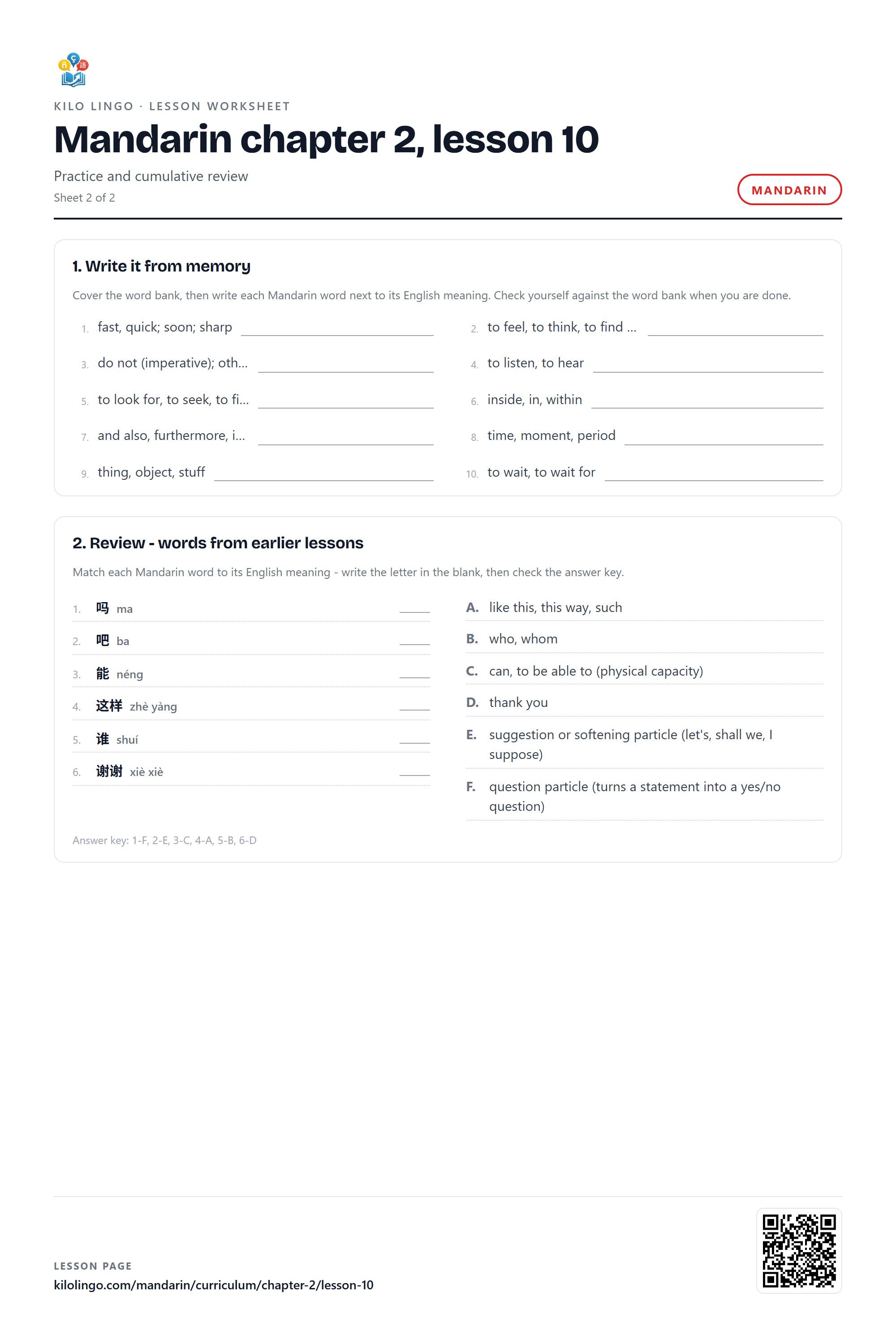
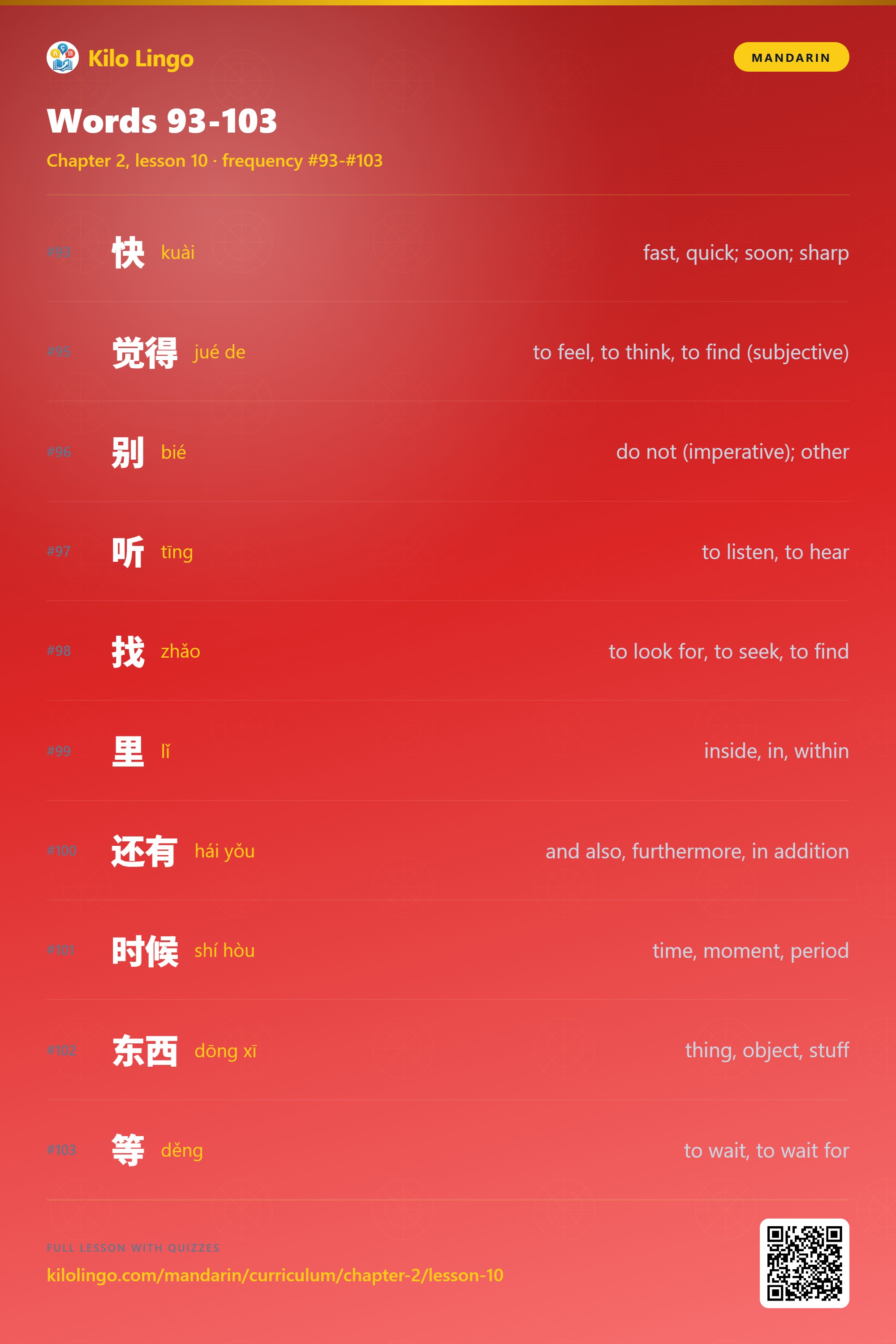
- Words 93-103Vocabulary
10 words · ranks 93-103
- Yes-no questions with 吗 (ma)Grammar
Add 吗 (ma) and any statement becomes a question, then answer by echoing the verb - Mandarin has no word for yes.
- Story milestone: top 100 wordsGraded-reader story
You can read this story using only the words you've learned so far. Every content word sits at or above the rank-100 ceiling.
Mandarin has no cognates, but it does have loanwords - and the ones built from meaning teach you characters for free.
- The pronoun house: who does whatVocabulary
8 words · The full pronoun set from just three characters plus 们 (men): 我/你/他/她/它 for one person, add 们 for the plural. Frequency scatters them; this house keeps the whole set together.
This and that with no gender and no case: 这 (zhè) and 那 (nà) plus the measure word 个 do all the pointing, and 这些/那些 handle the plurals.
The compliments, put-downs and moods of modern Mandarin that no textbook teaches - from 牛 (niú) and 666 to 躺平 (tǎngpíng).
China's worldwide network for Mandarin teaching and culture, with centres in most major cities. See what happens at the one nearest you.
- The KiloKombat dojoLesson
Learn 10 new words faster than a rival. Spar the training partner to earn your grams, then challenge a real person - winner takes a tooth.
- Arcade reviewReview games
Replay this chapter's words as games - a different kind of repetition, and it counts.
Word printables
Per-word sheets71 words · a worksheet, infographic and listicle each

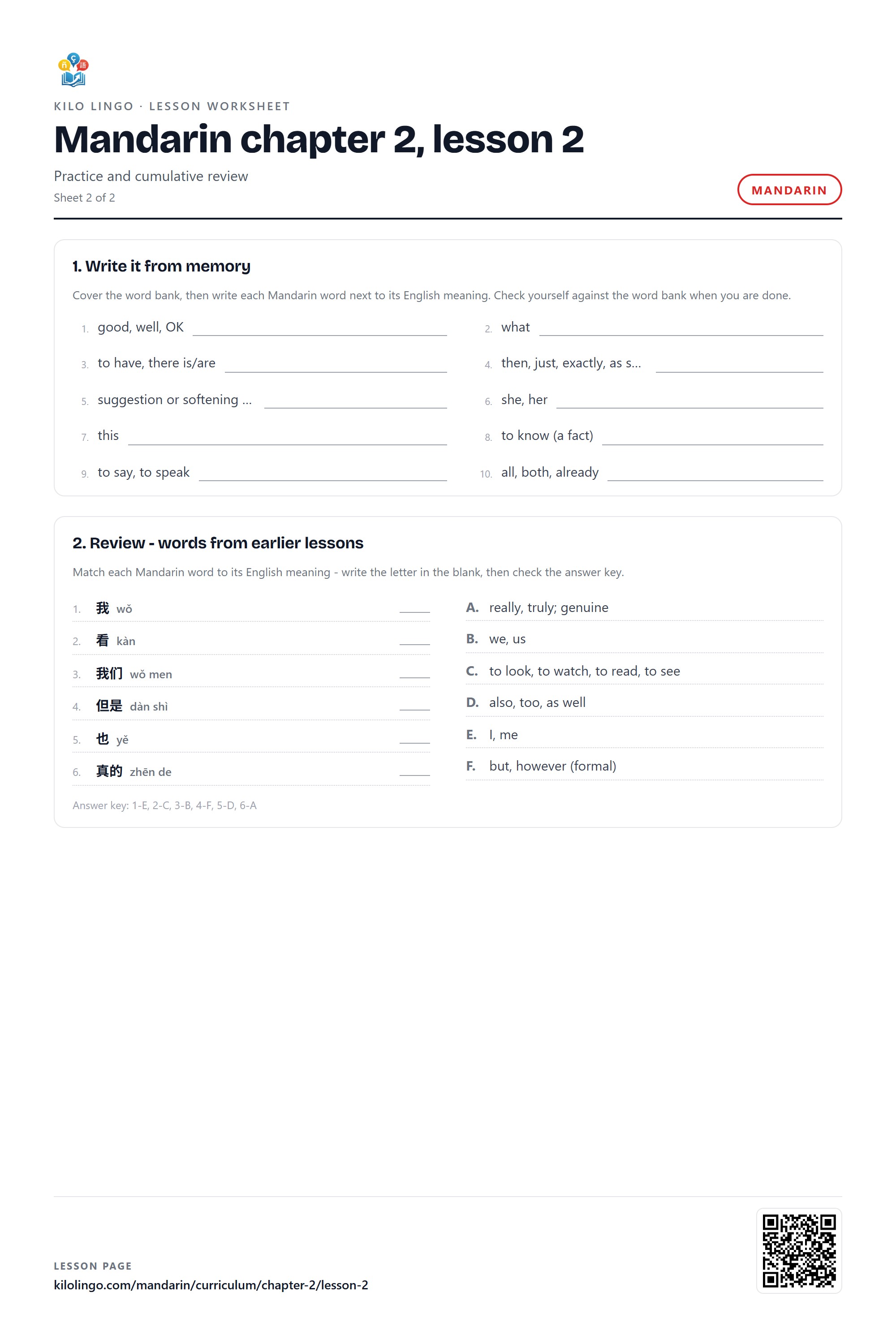

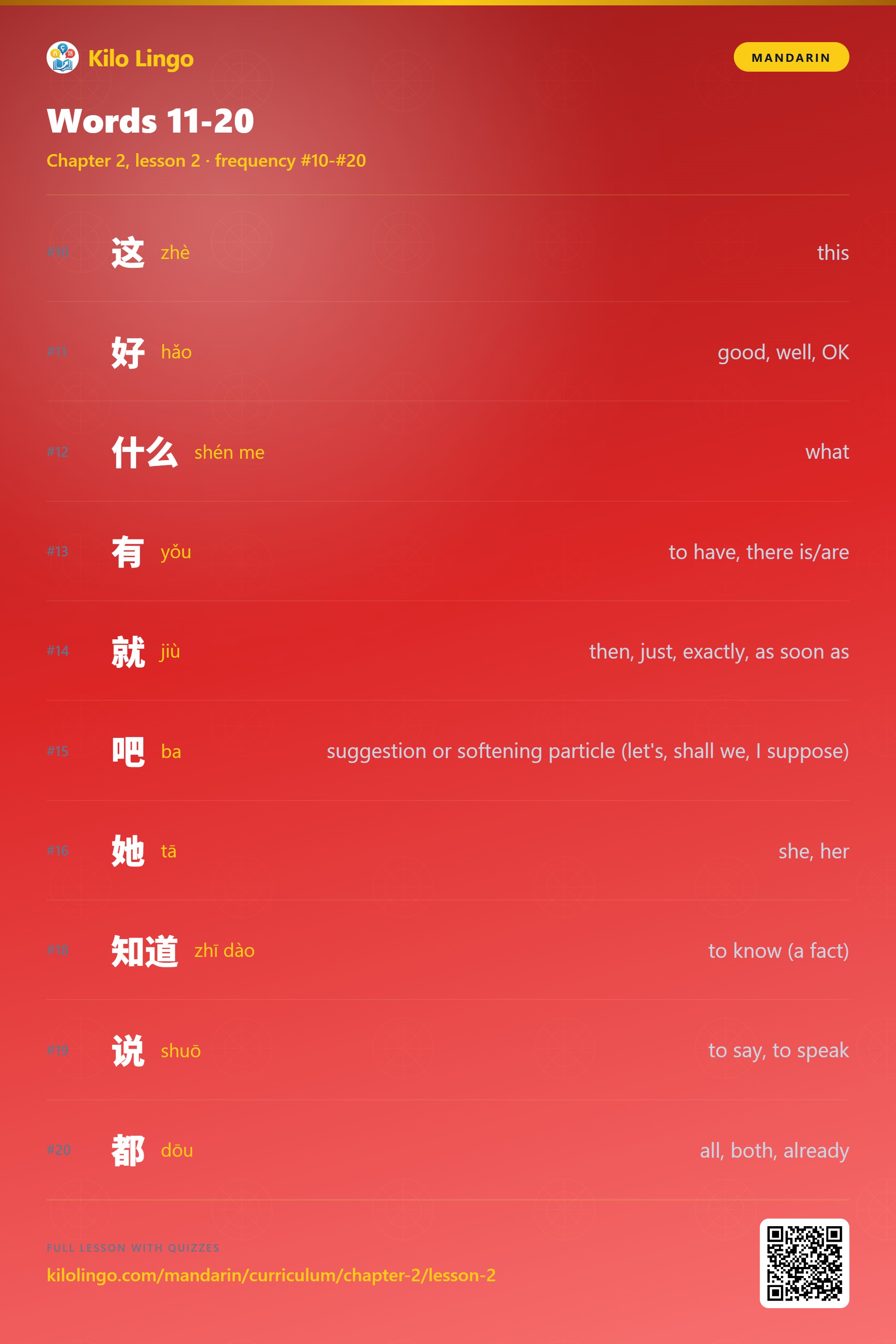
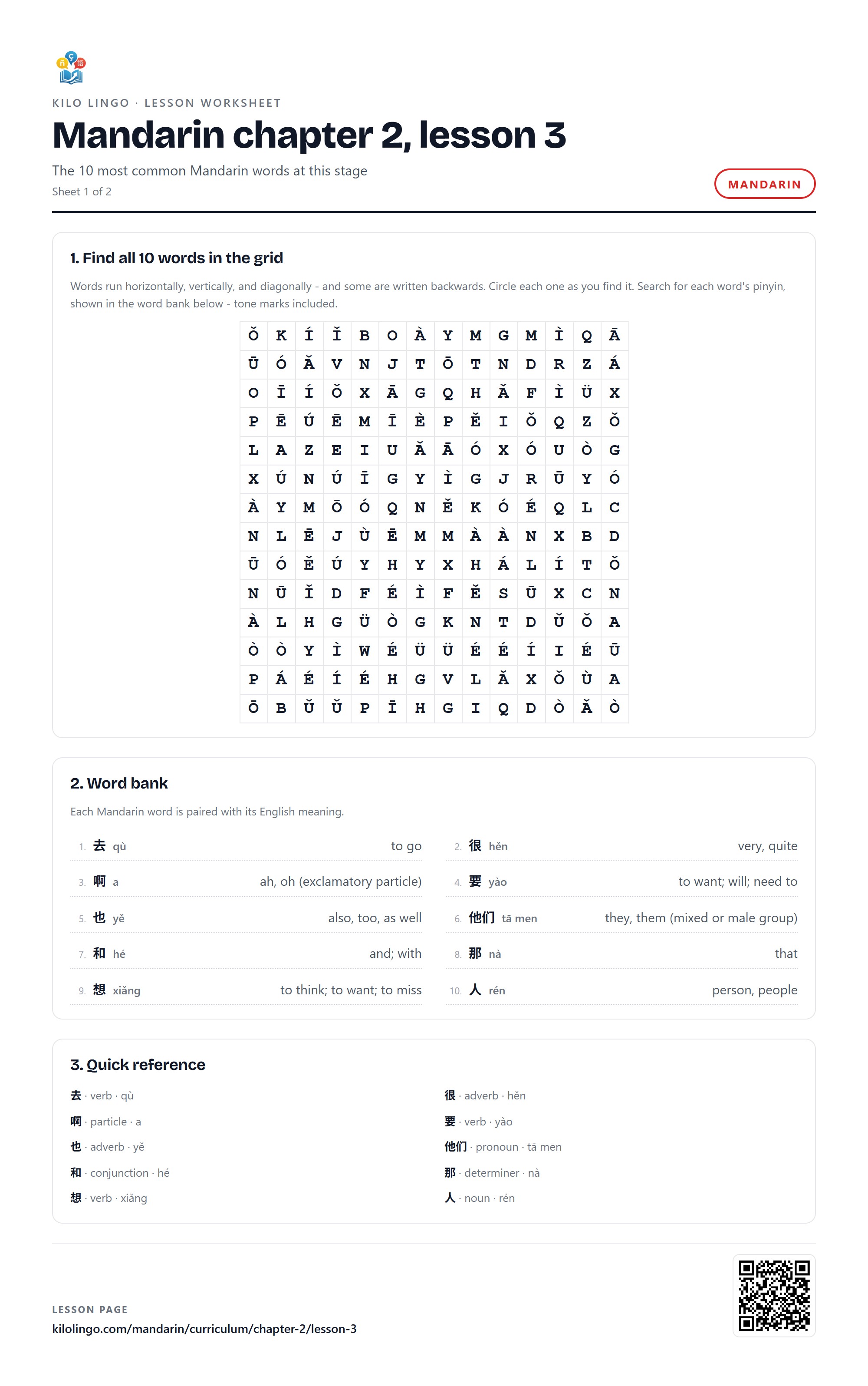
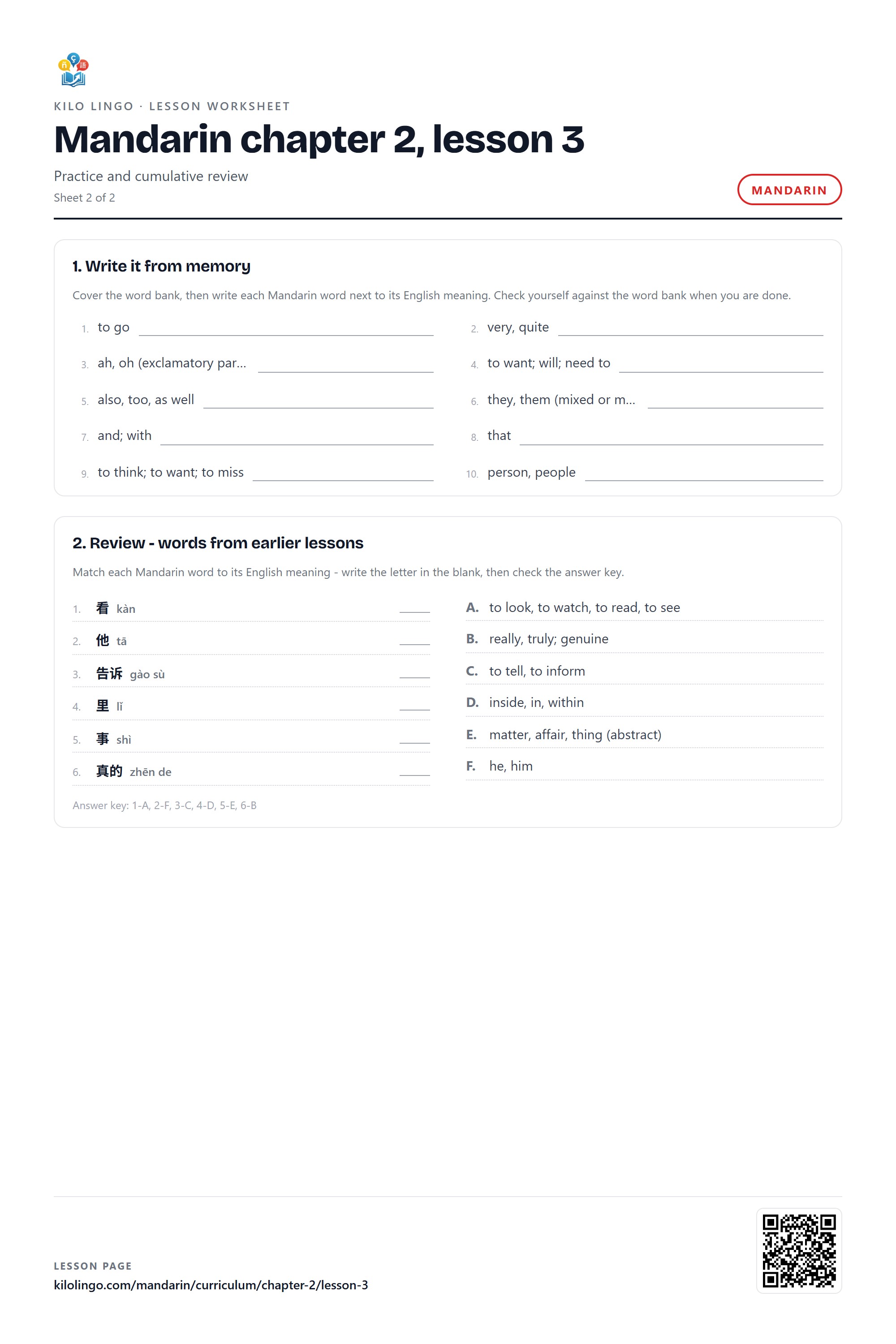

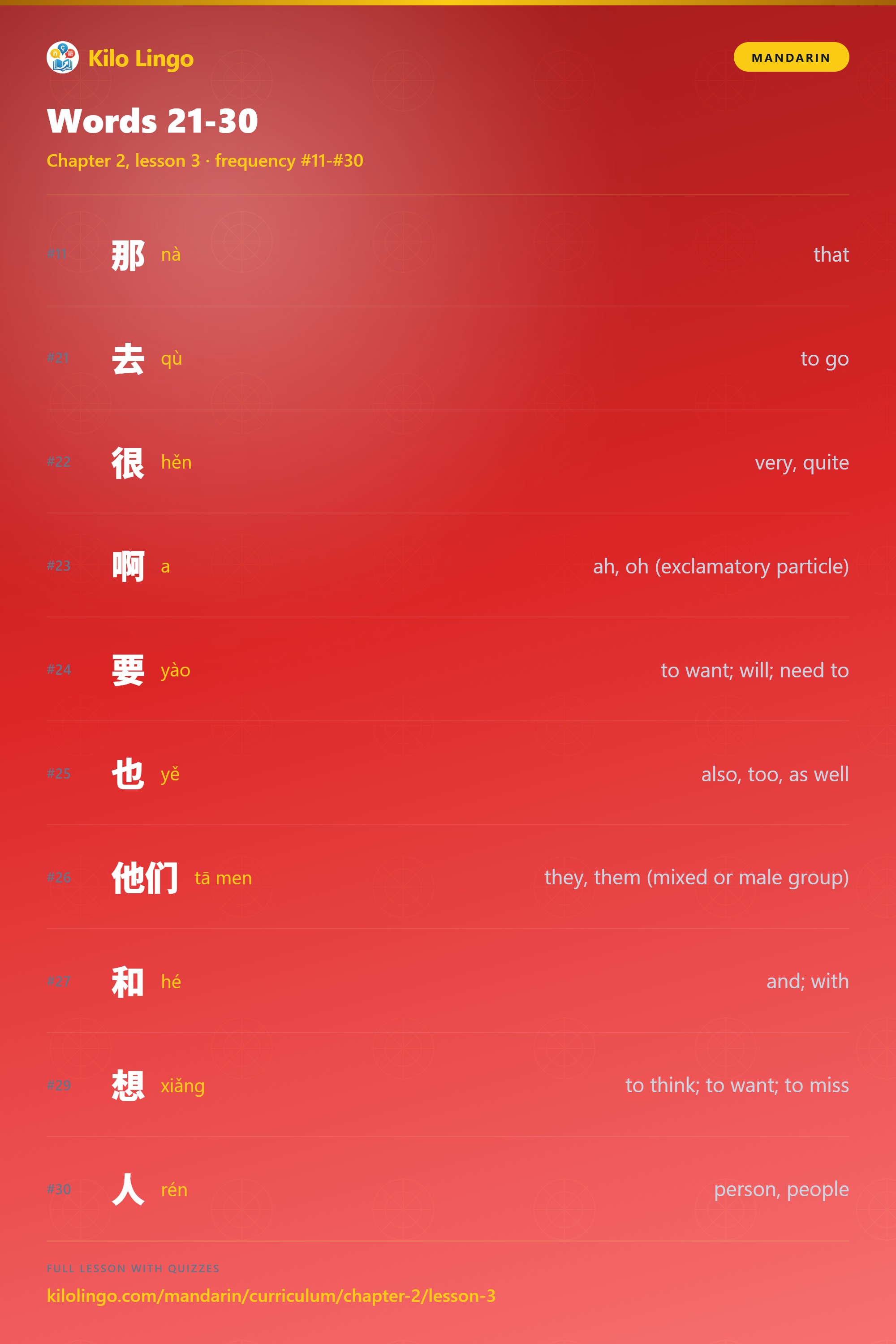
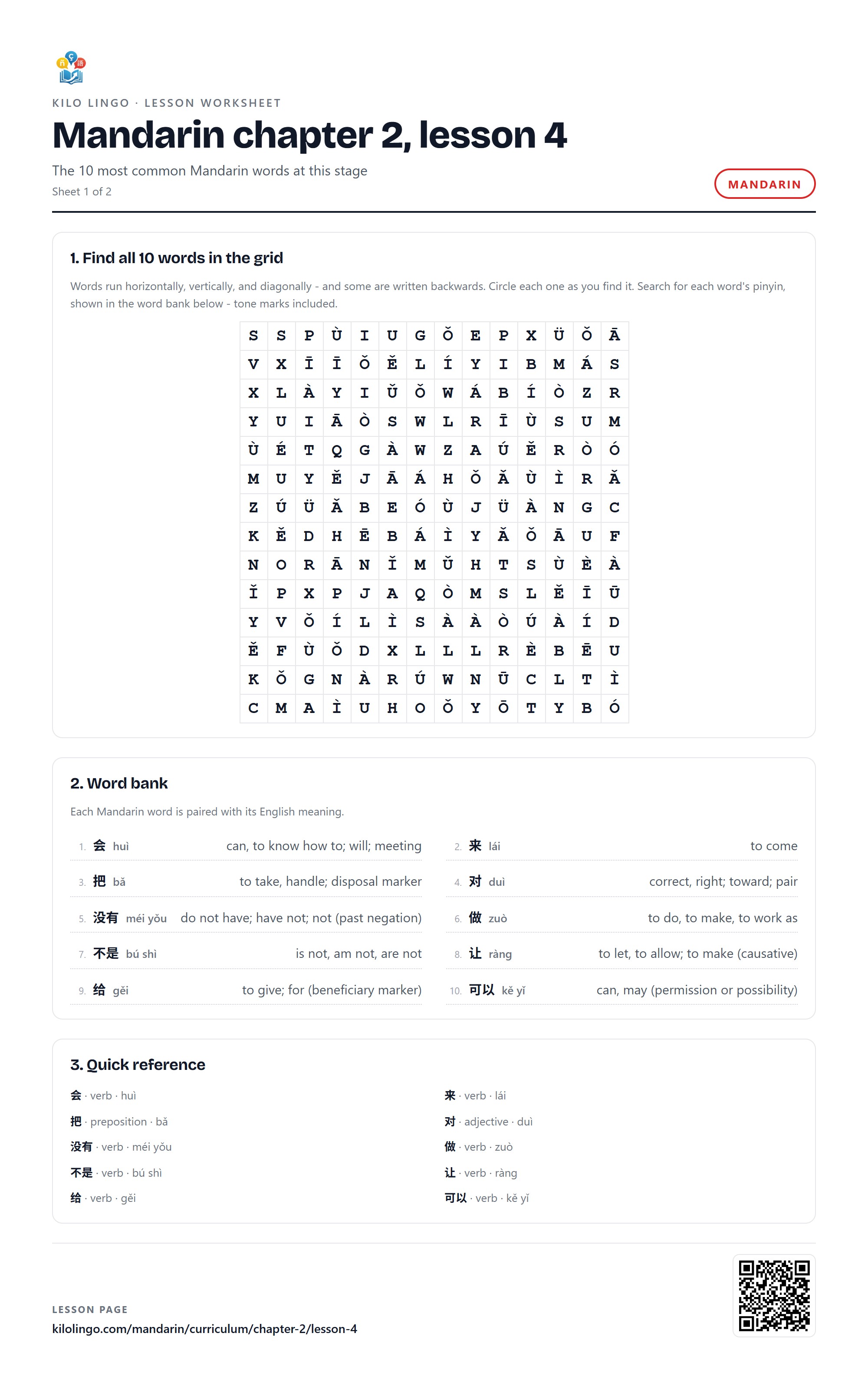
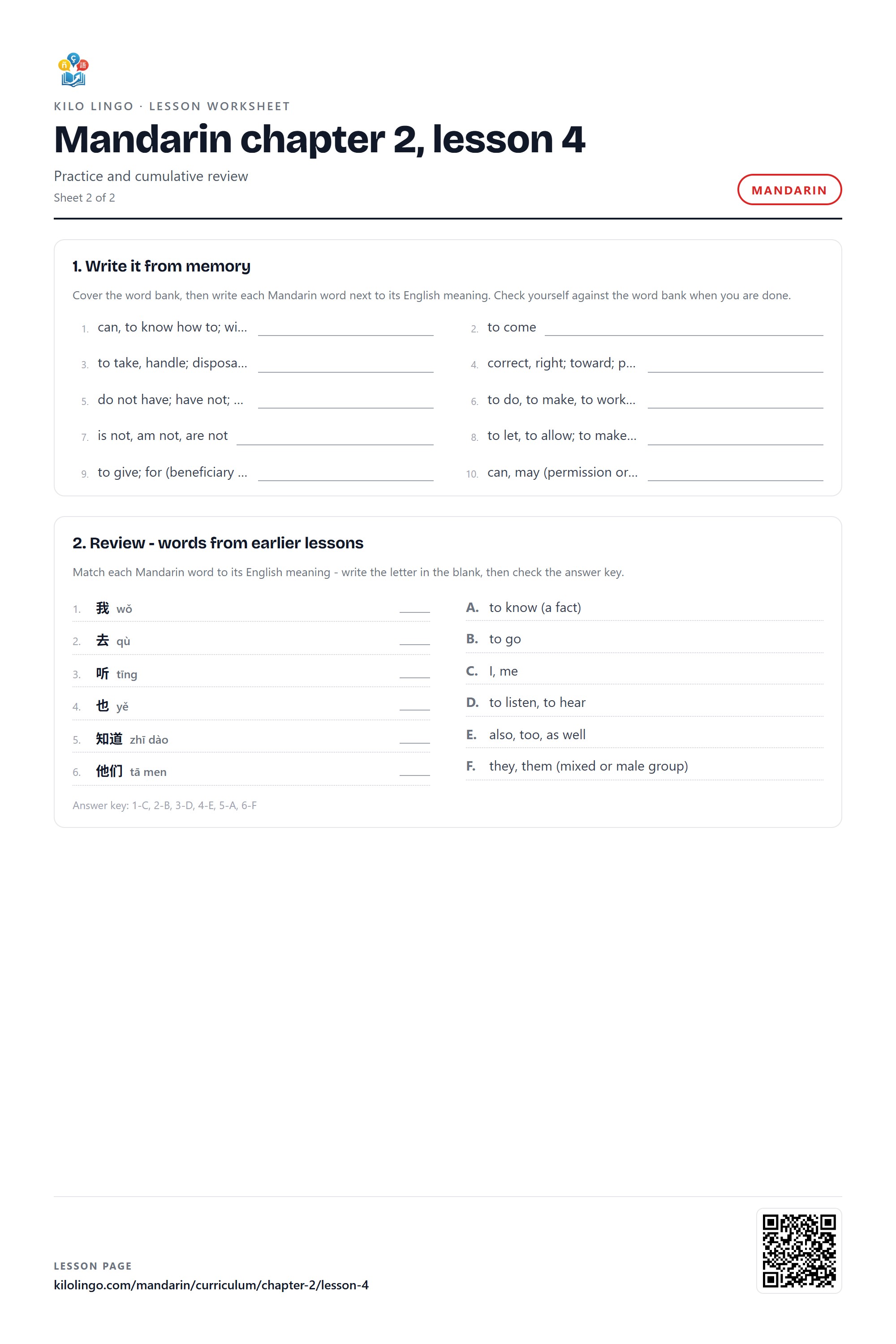

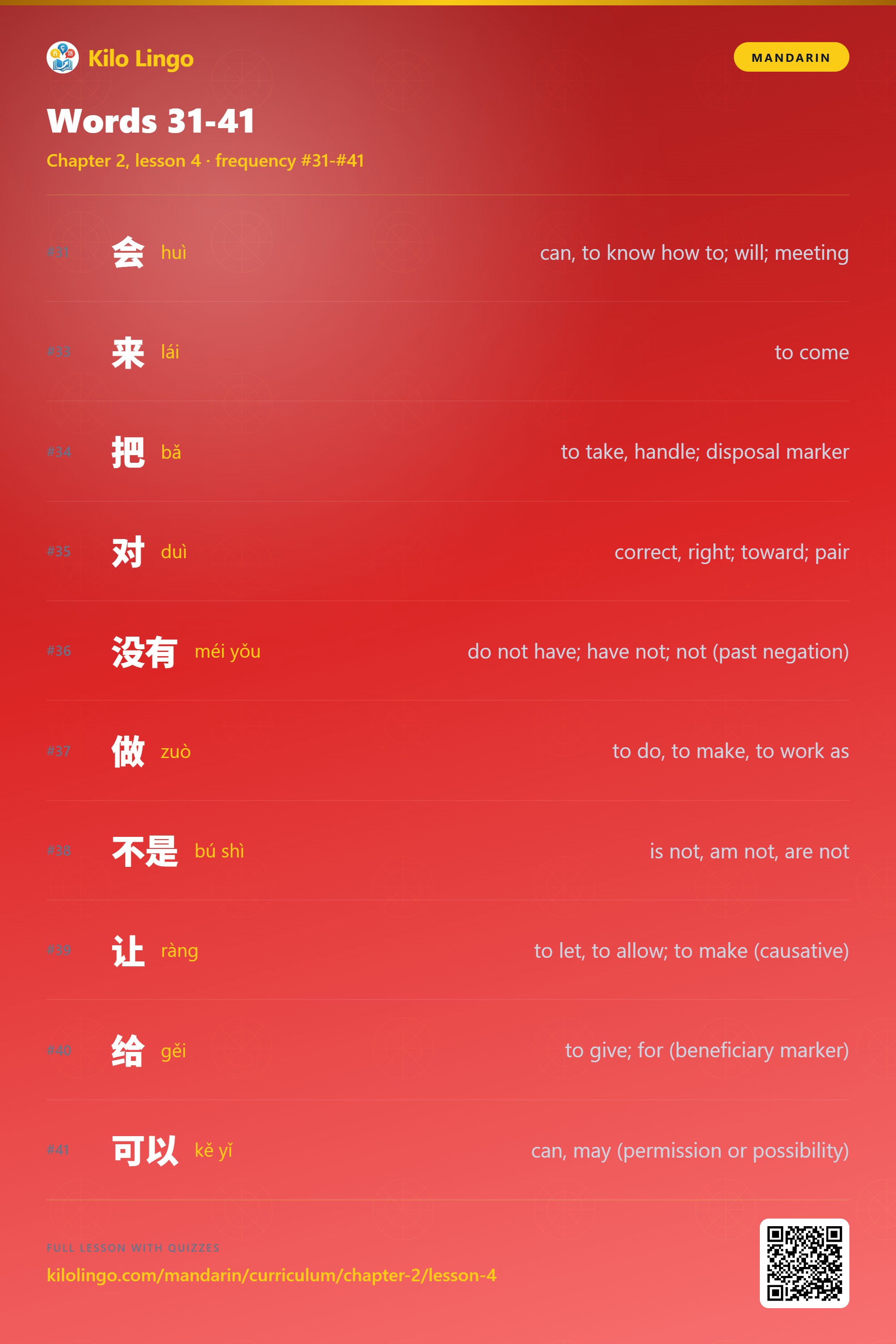
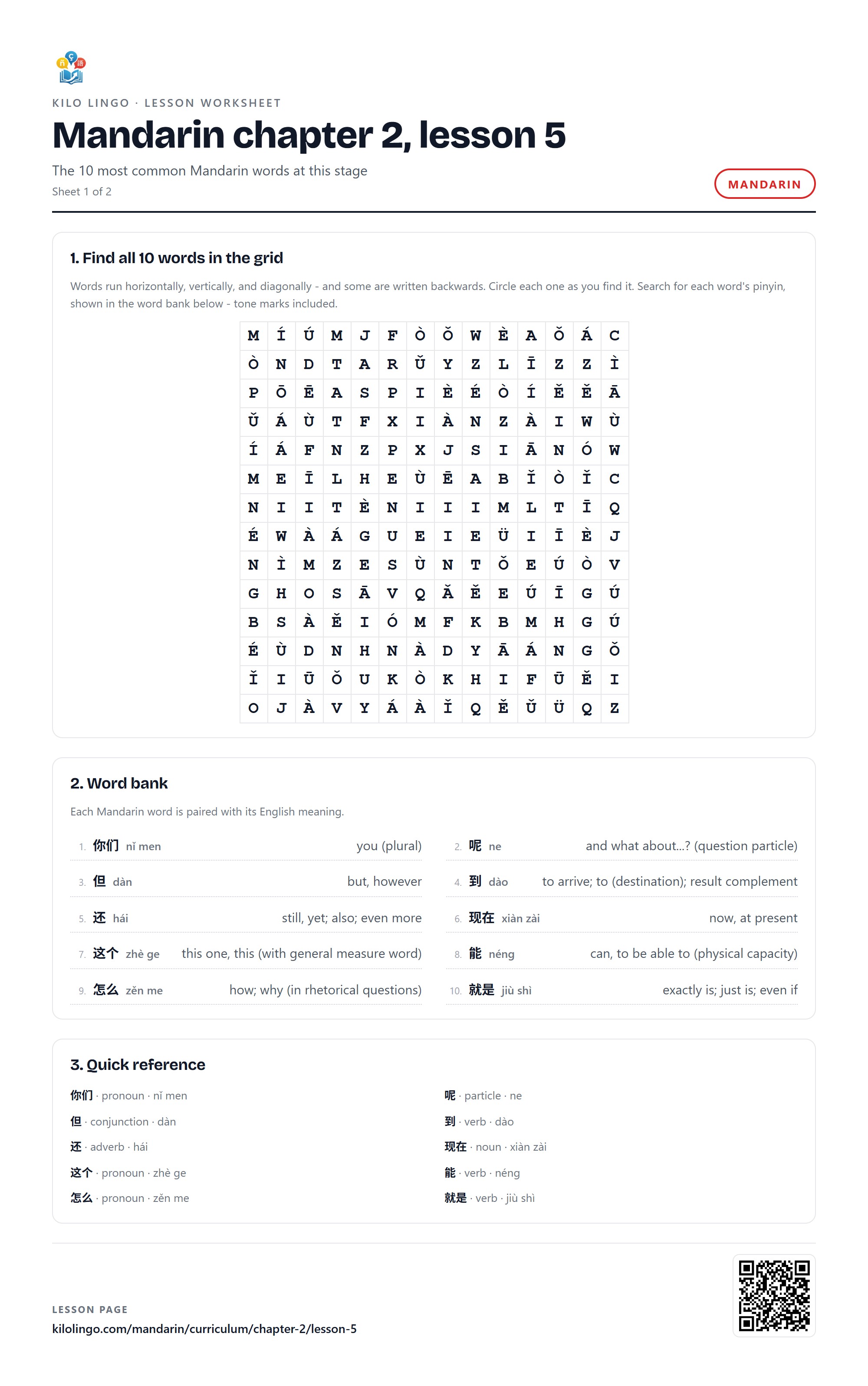
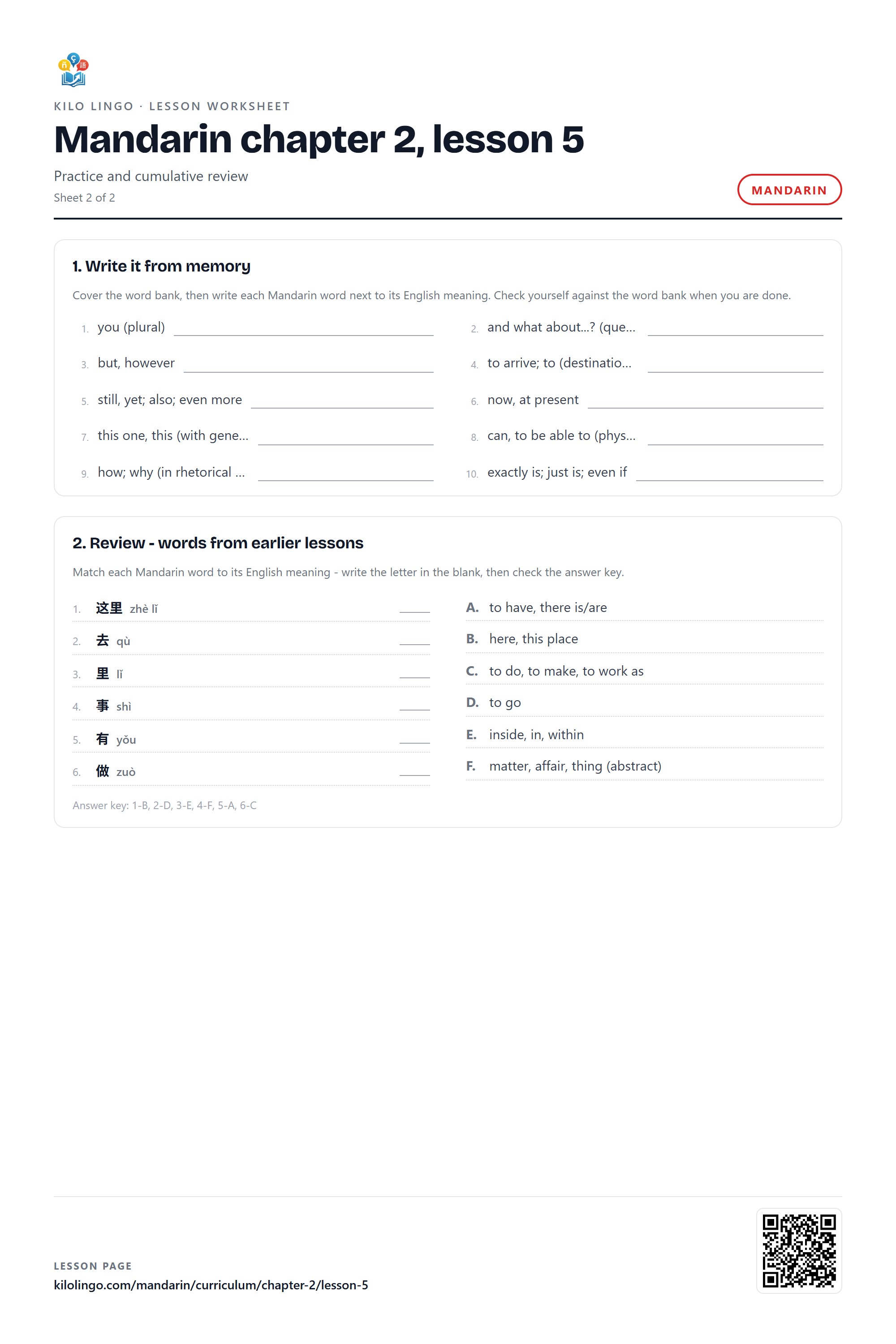

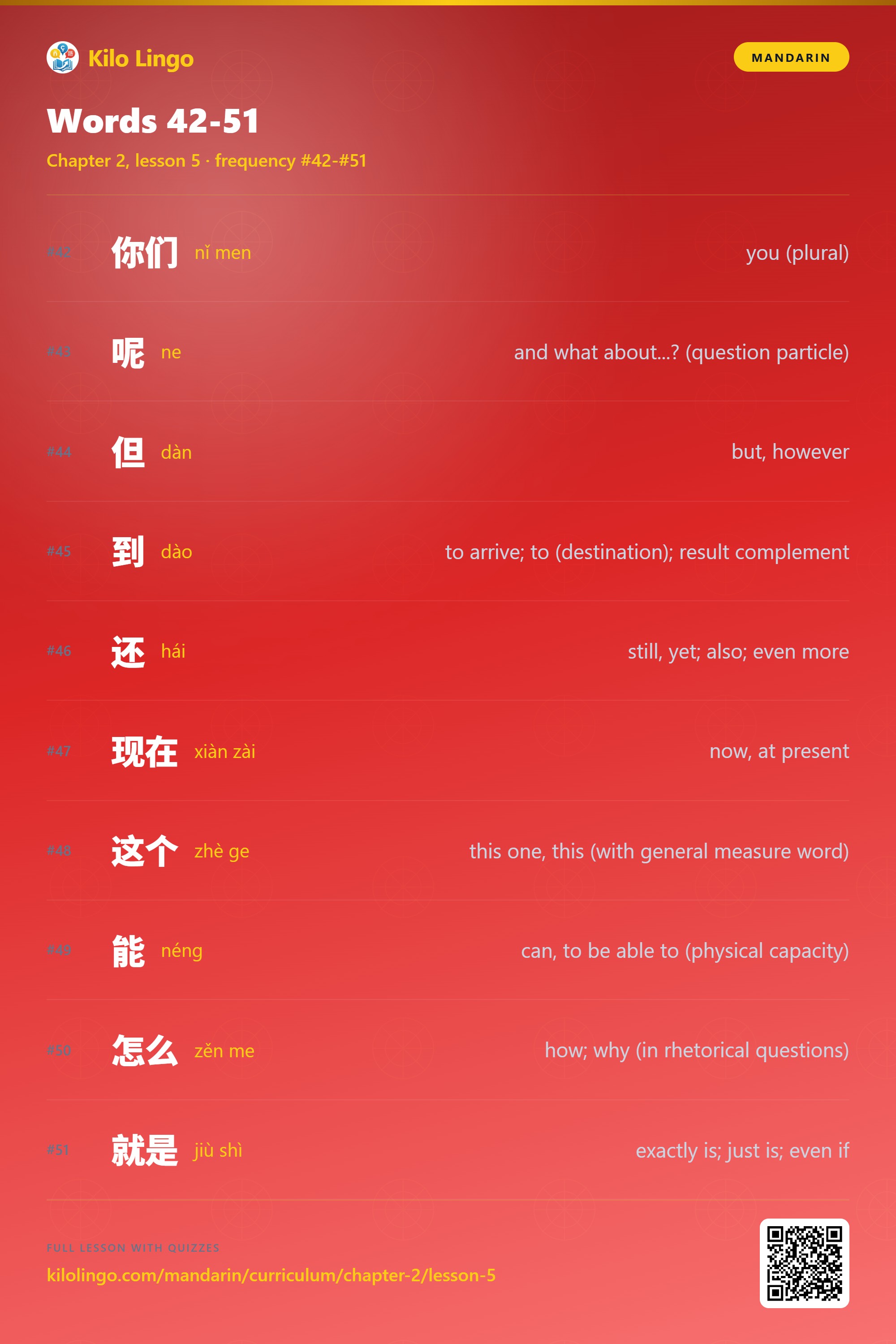
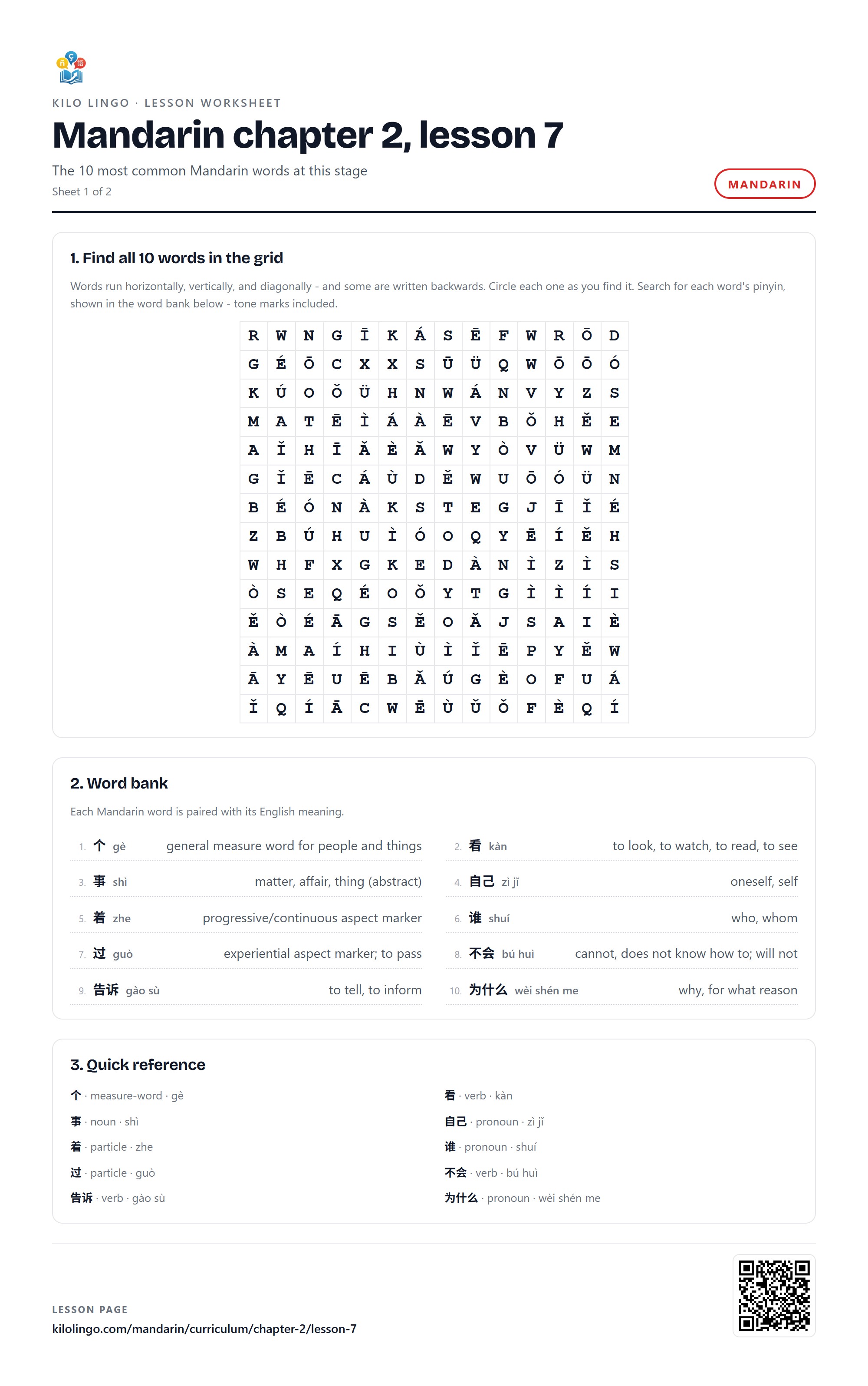
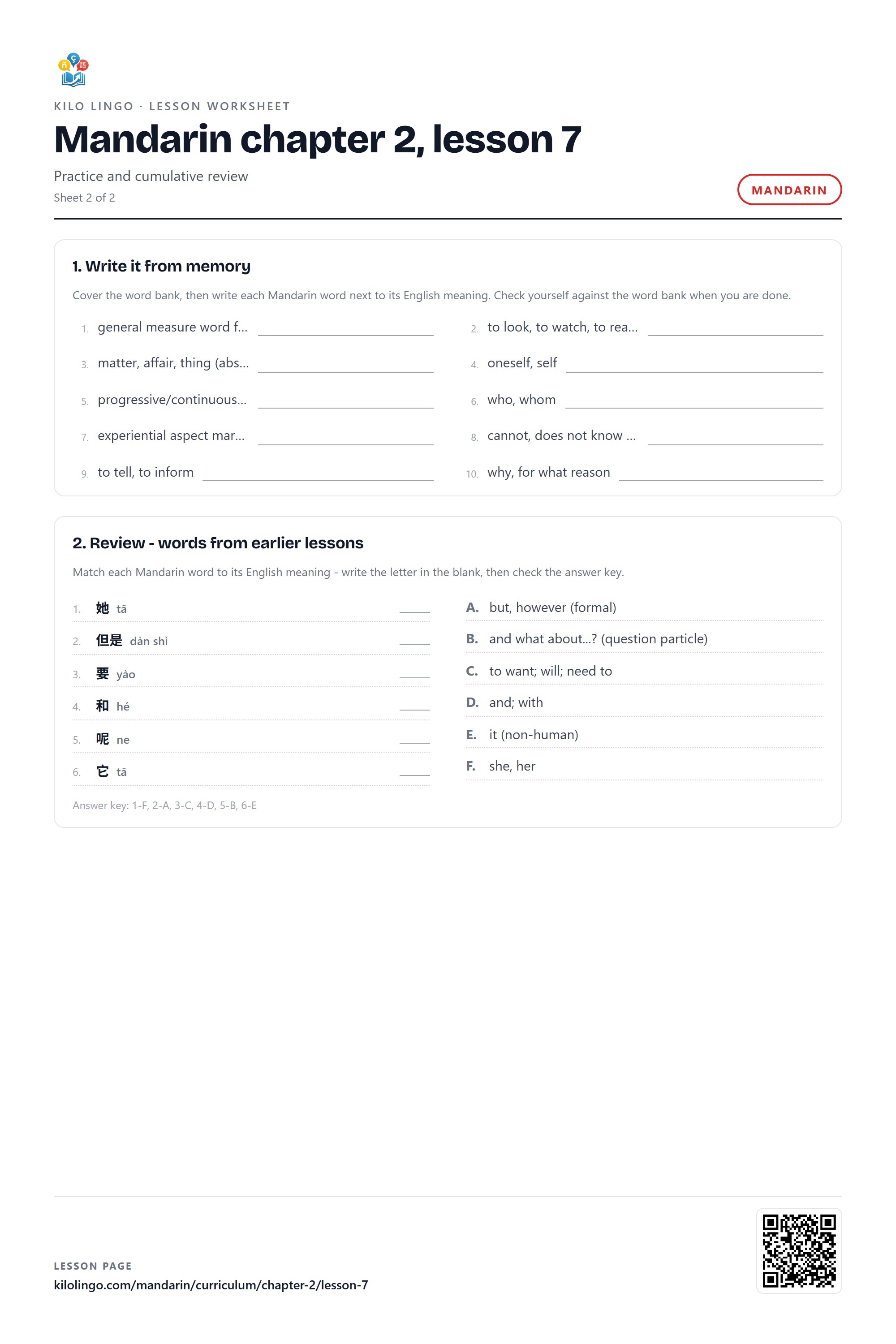

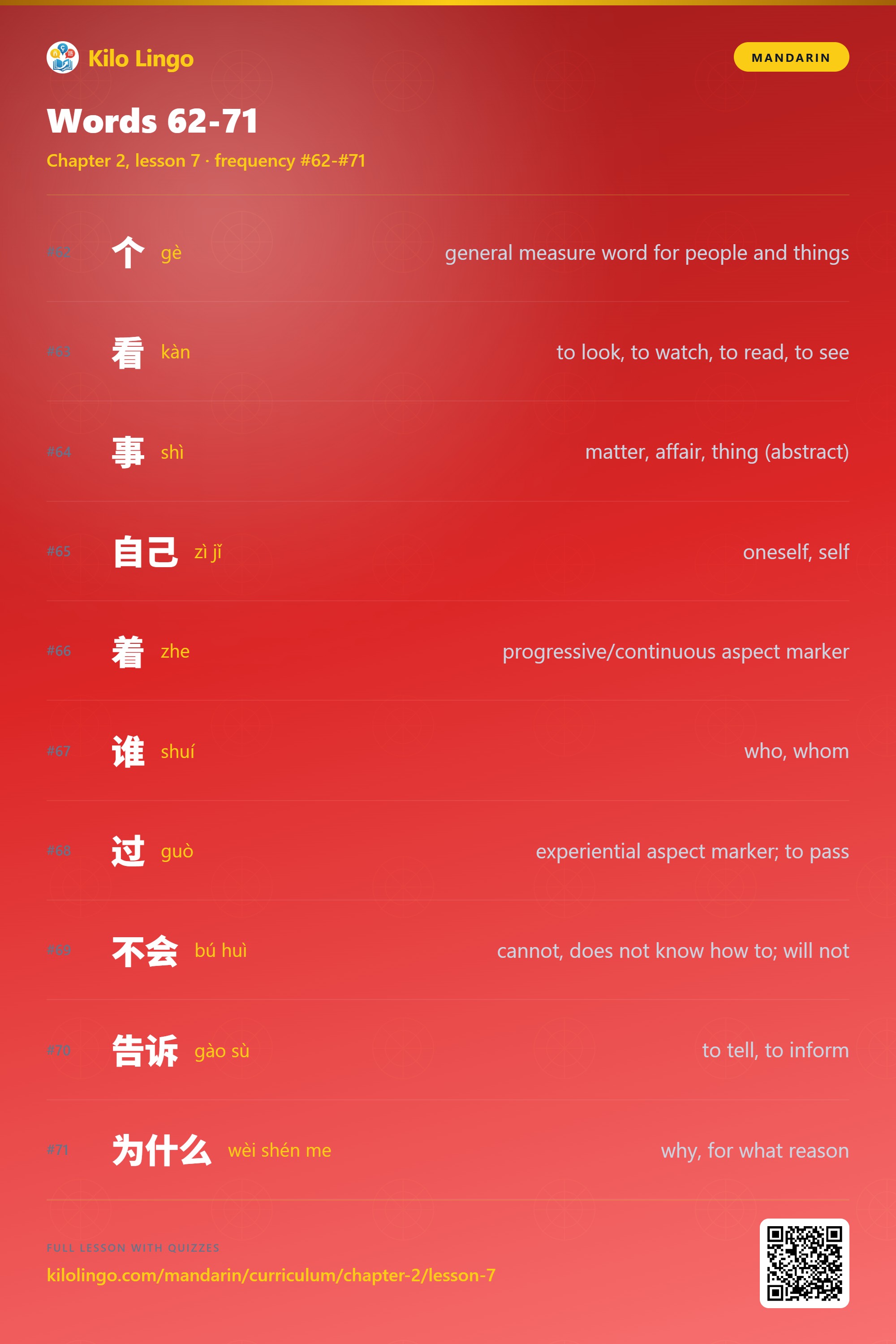
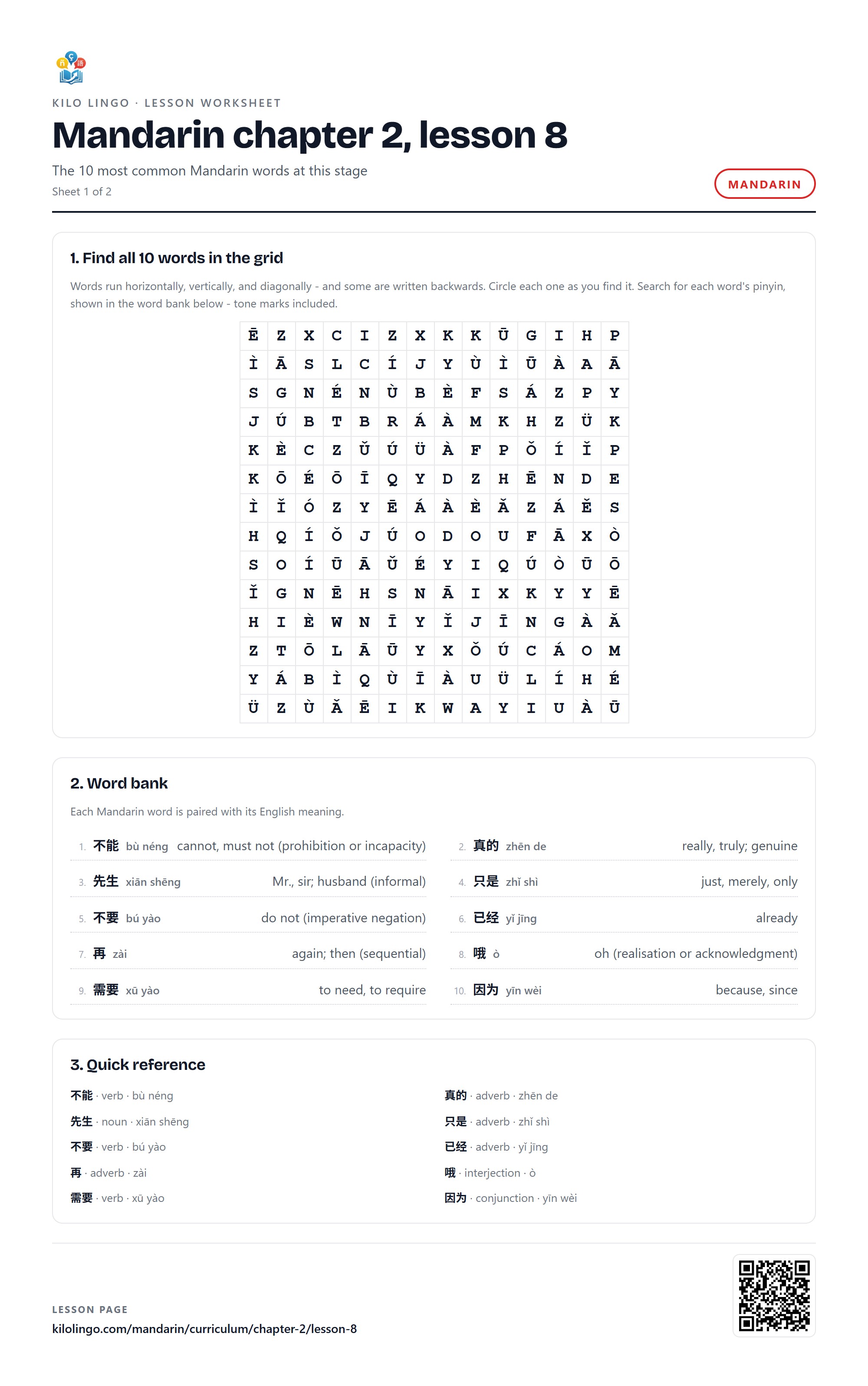
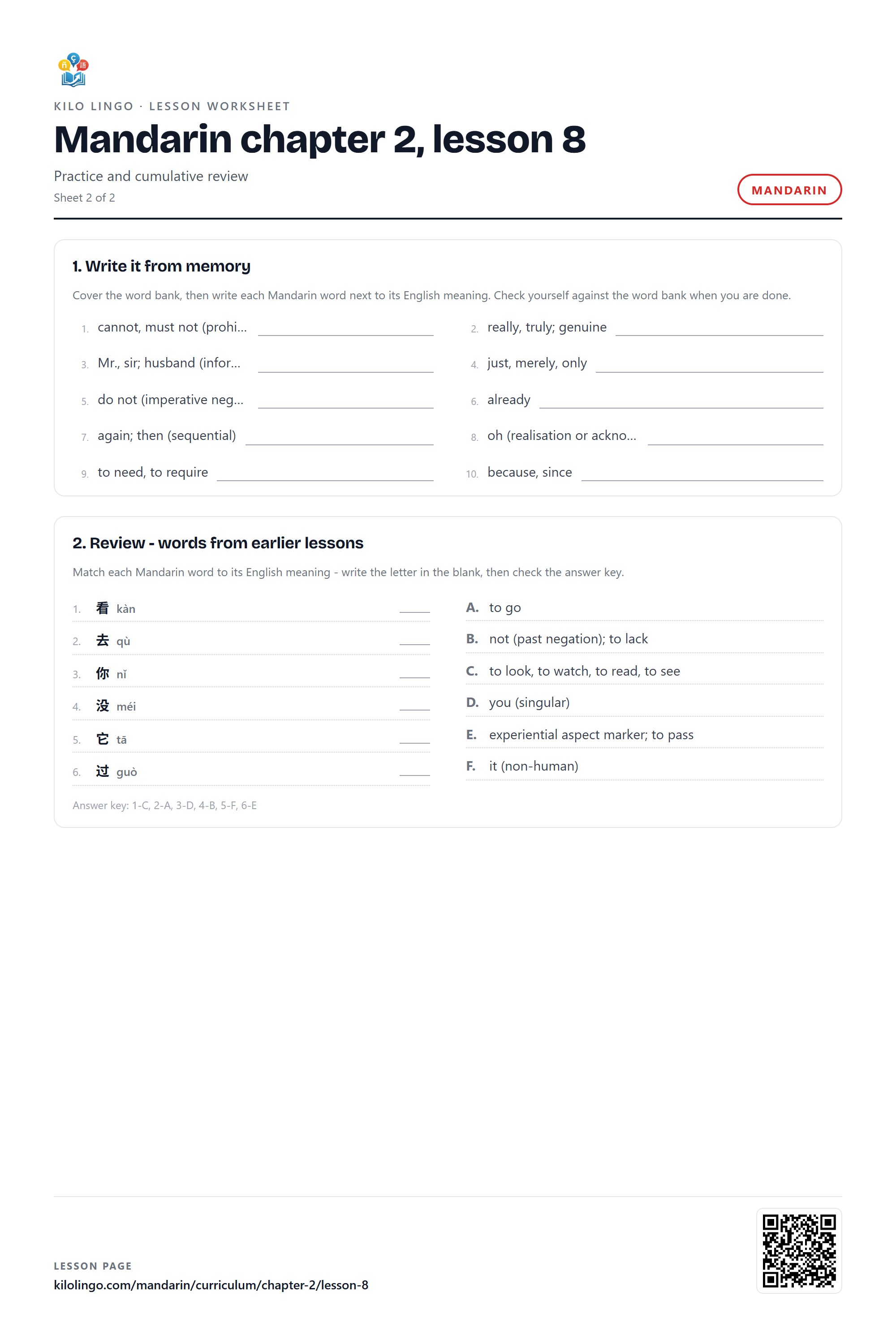



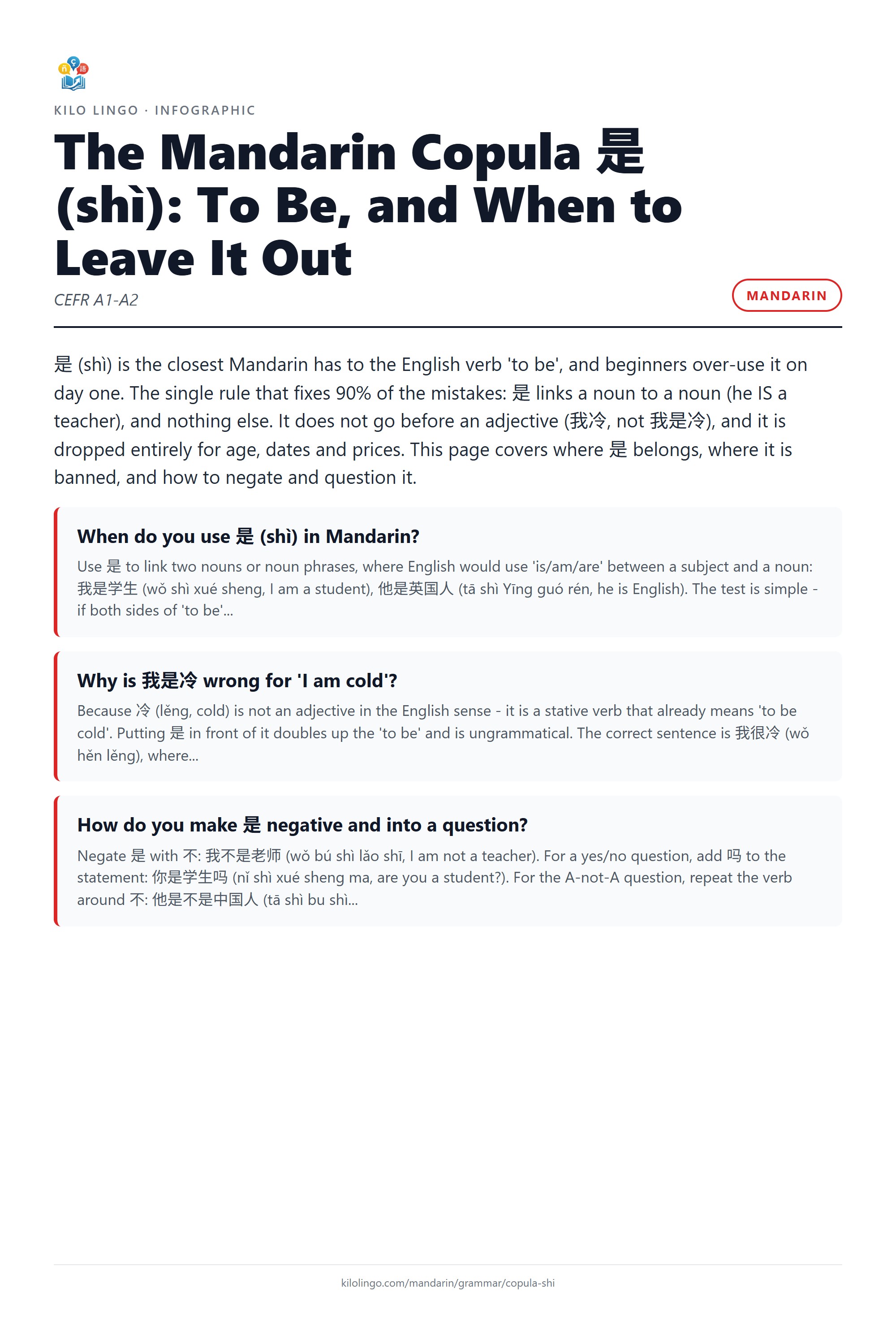
Chapter 3 · The copula 是 (shì): to be, and when not to use it
Chapter page →How 是 works as 'is/am/are' between two nouns, why you must NOT use it before an adjective, and the negative form with 不是.
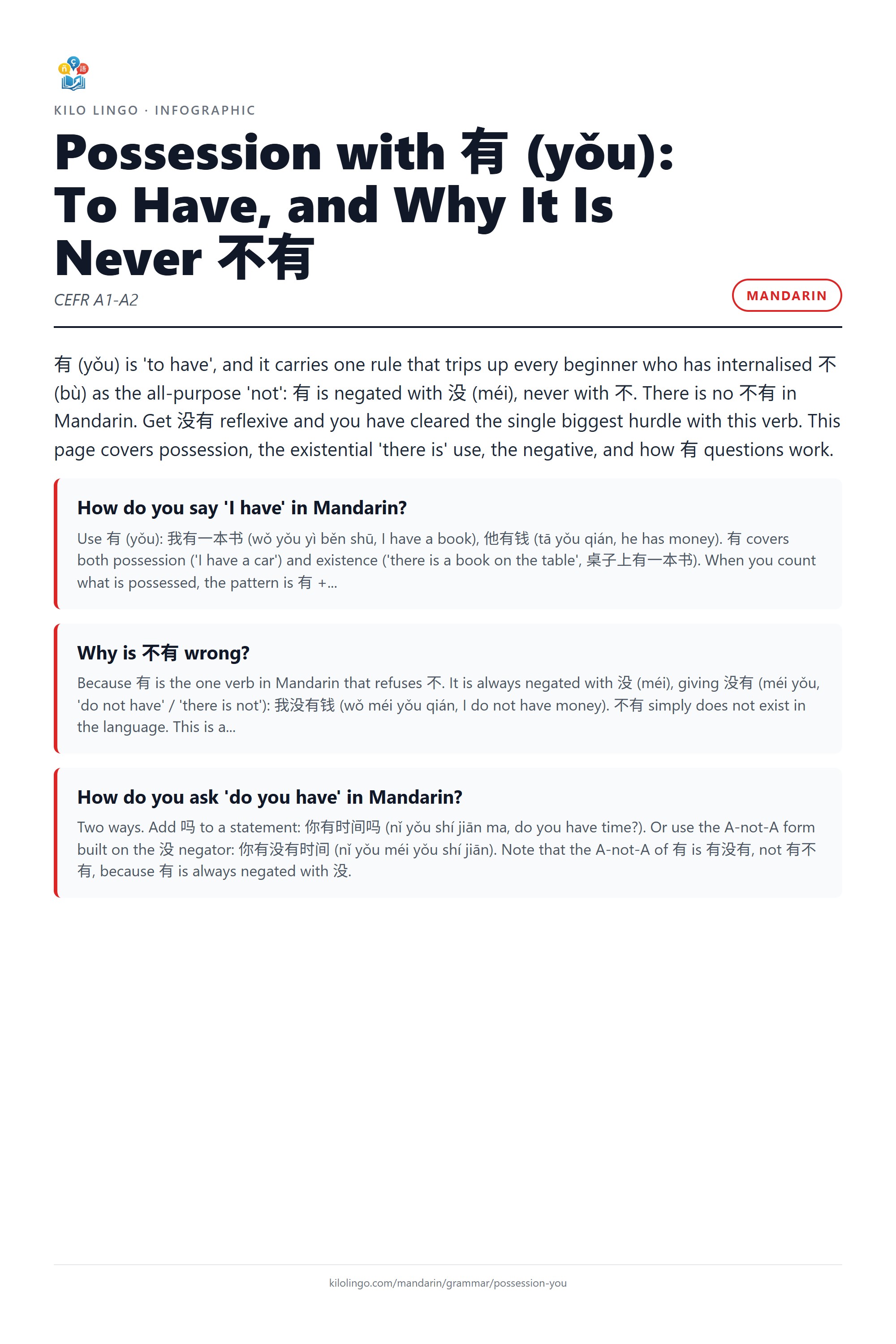
Positive and negative ('I have', 'I do not have'). The hard rule: 有 is negated with 没, never with 不.
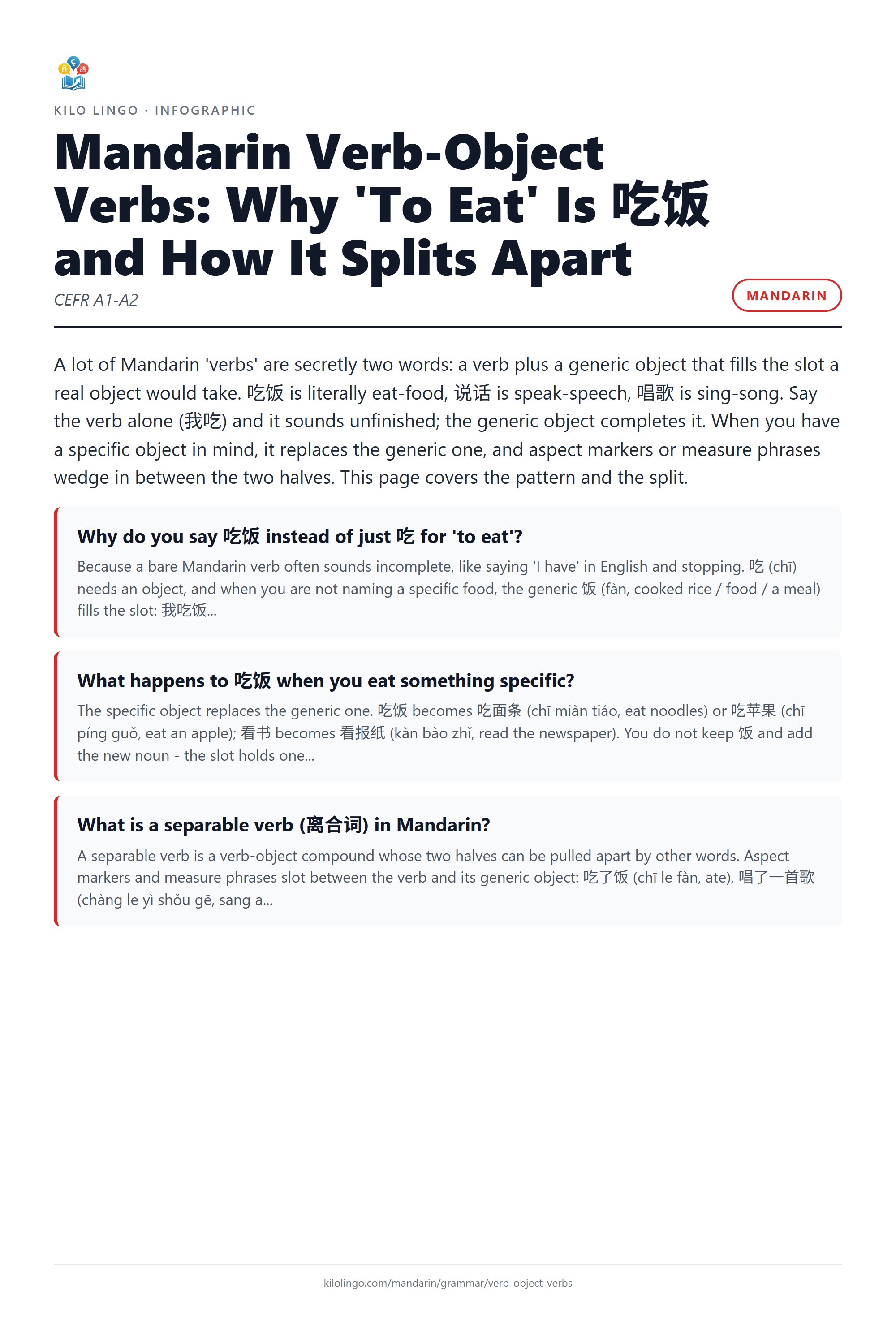
Many Mandarin verbs come paired with a generic object (吃饭 'eat-food', 说话 'speak-speech'). How the object splits off when a specific one shows up.
- Modal verbs: 会, 想, 要, 应该, 可以Grammar
The five core modals: learned-ability vs likelihood, want, need, should, may. Where they sit in the sentence and how to negate each.
- 在 or 有?Mistake clinic
Both turn up when you say where something is, and they are not interchangeable.
- Arcade reviewReview games
Replay this chapter's words as games - a different kind of repetition, and it counts.
Chapter 4 · Classifiers (measure words)
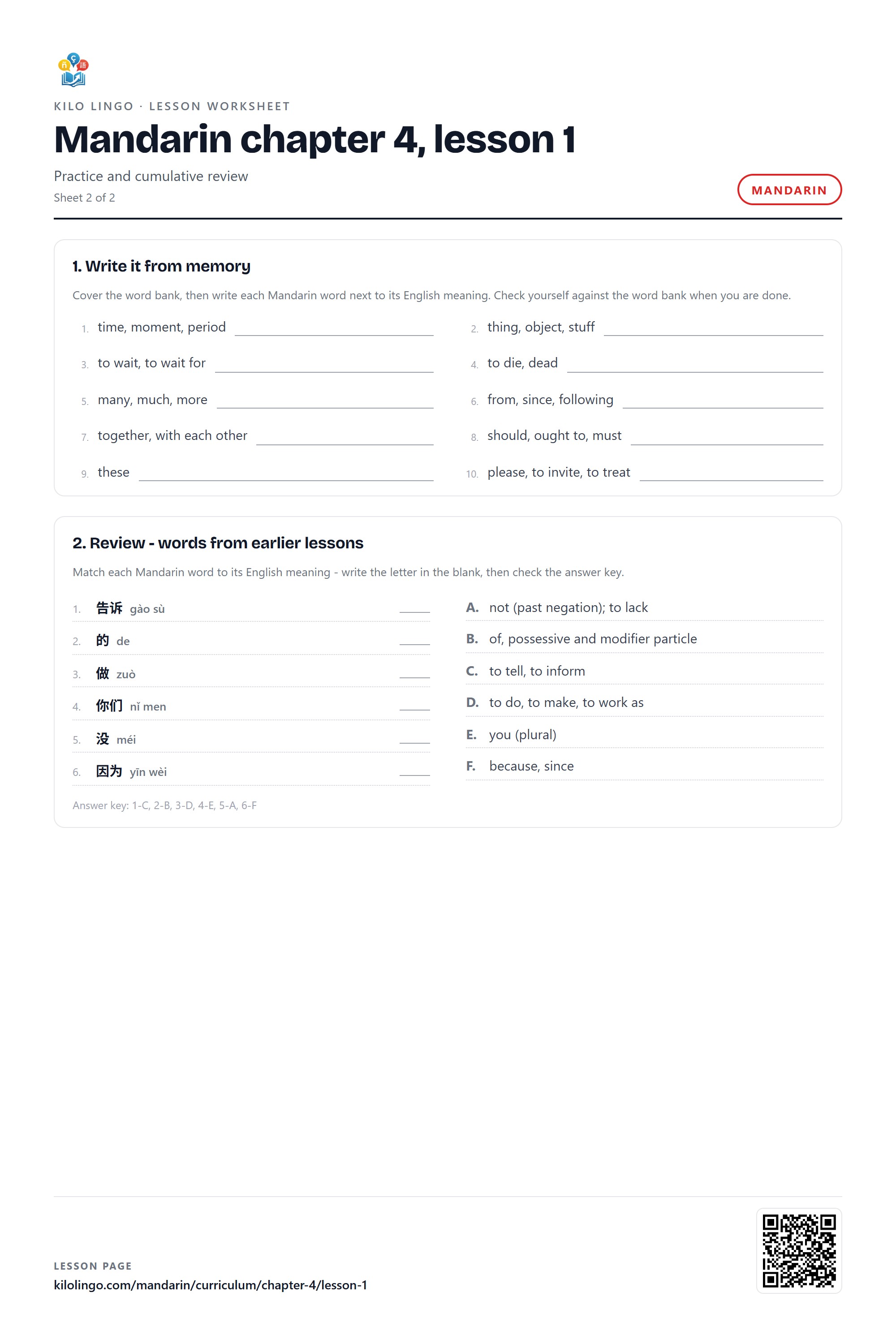
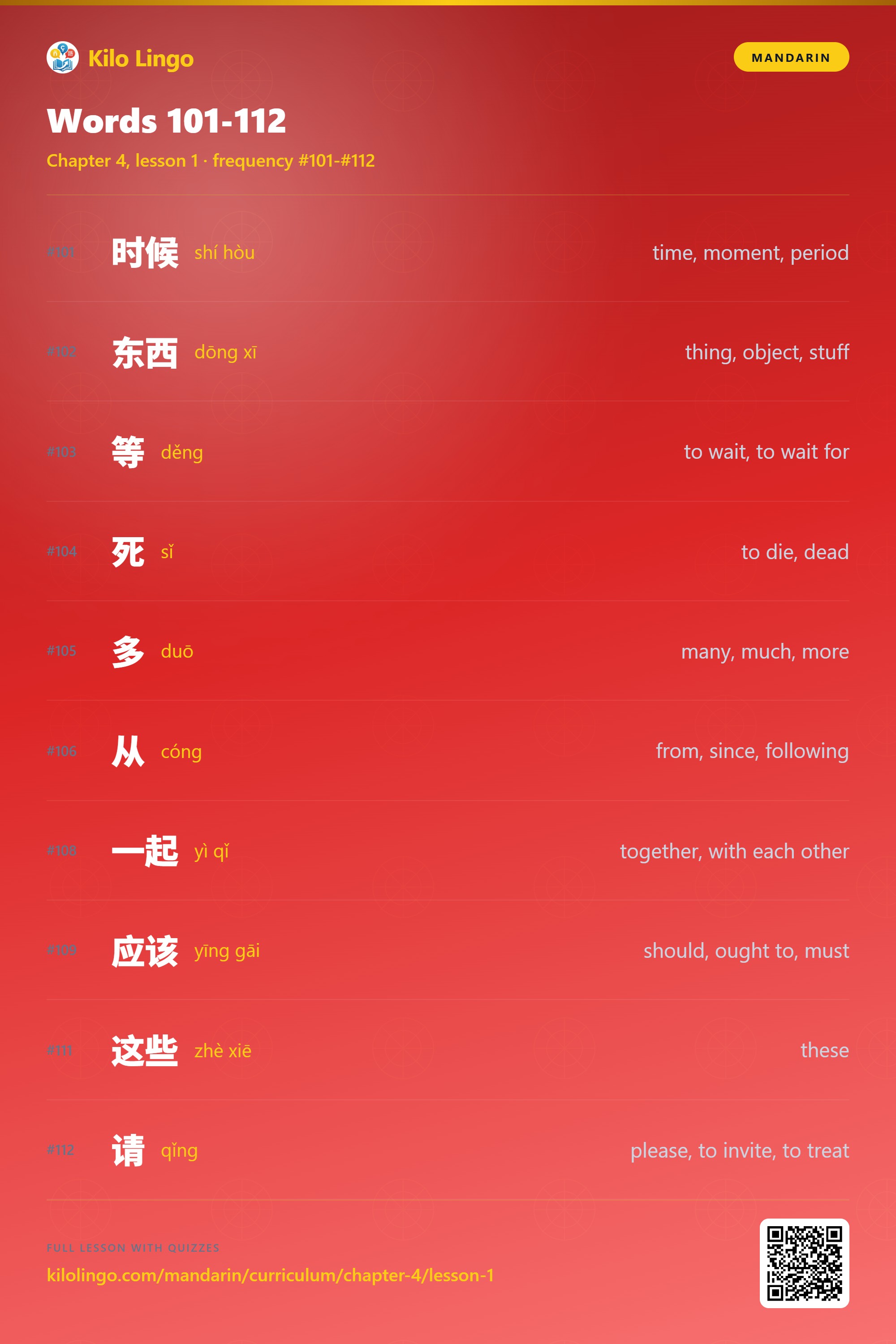
Chapter page →- Words 101-112Vocabulary
10 words · ranks 101-112
- Crossword review sessionReview games
Cross the words you just met, clued in English. Slower than a drill, and it sticks harder.
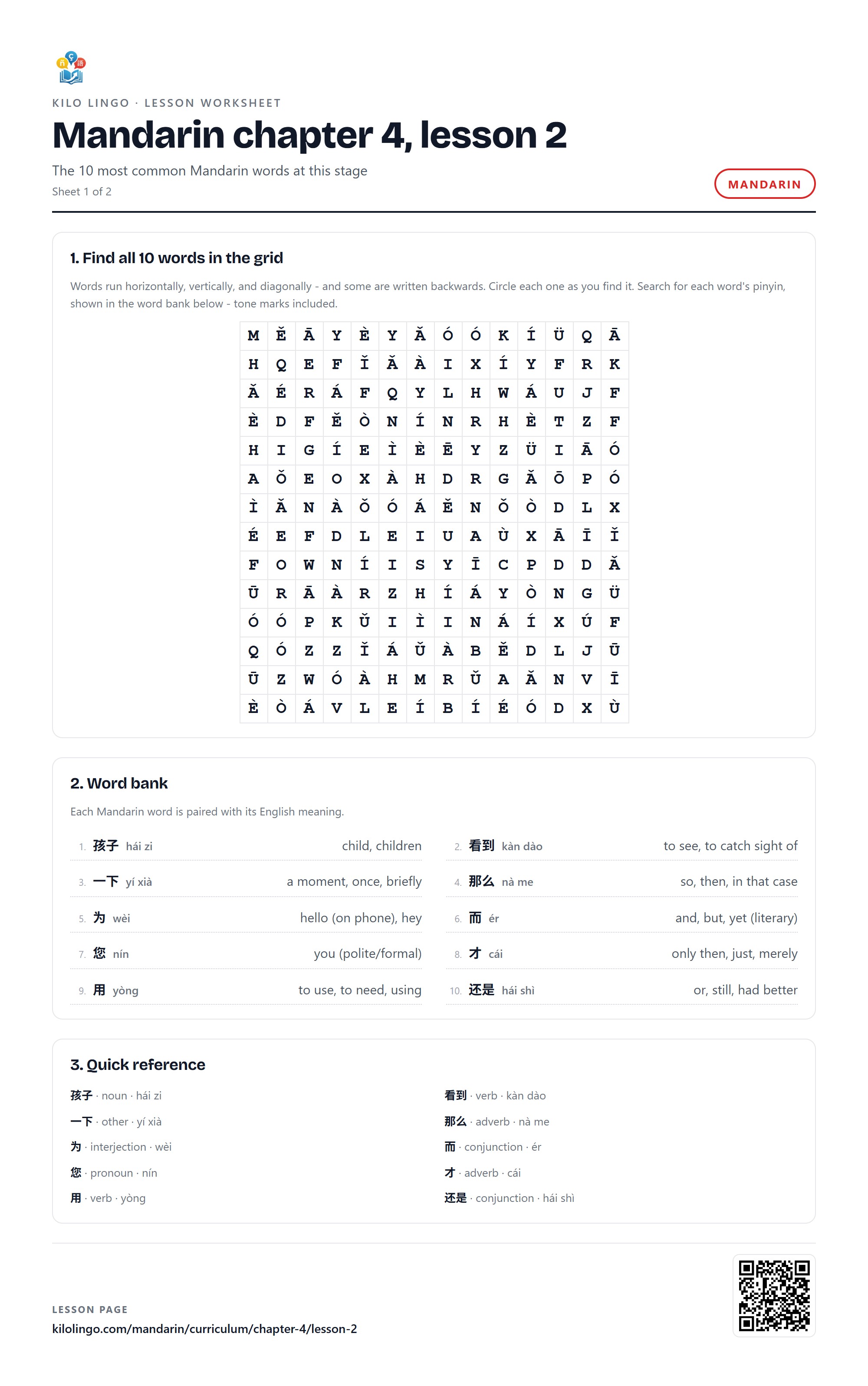
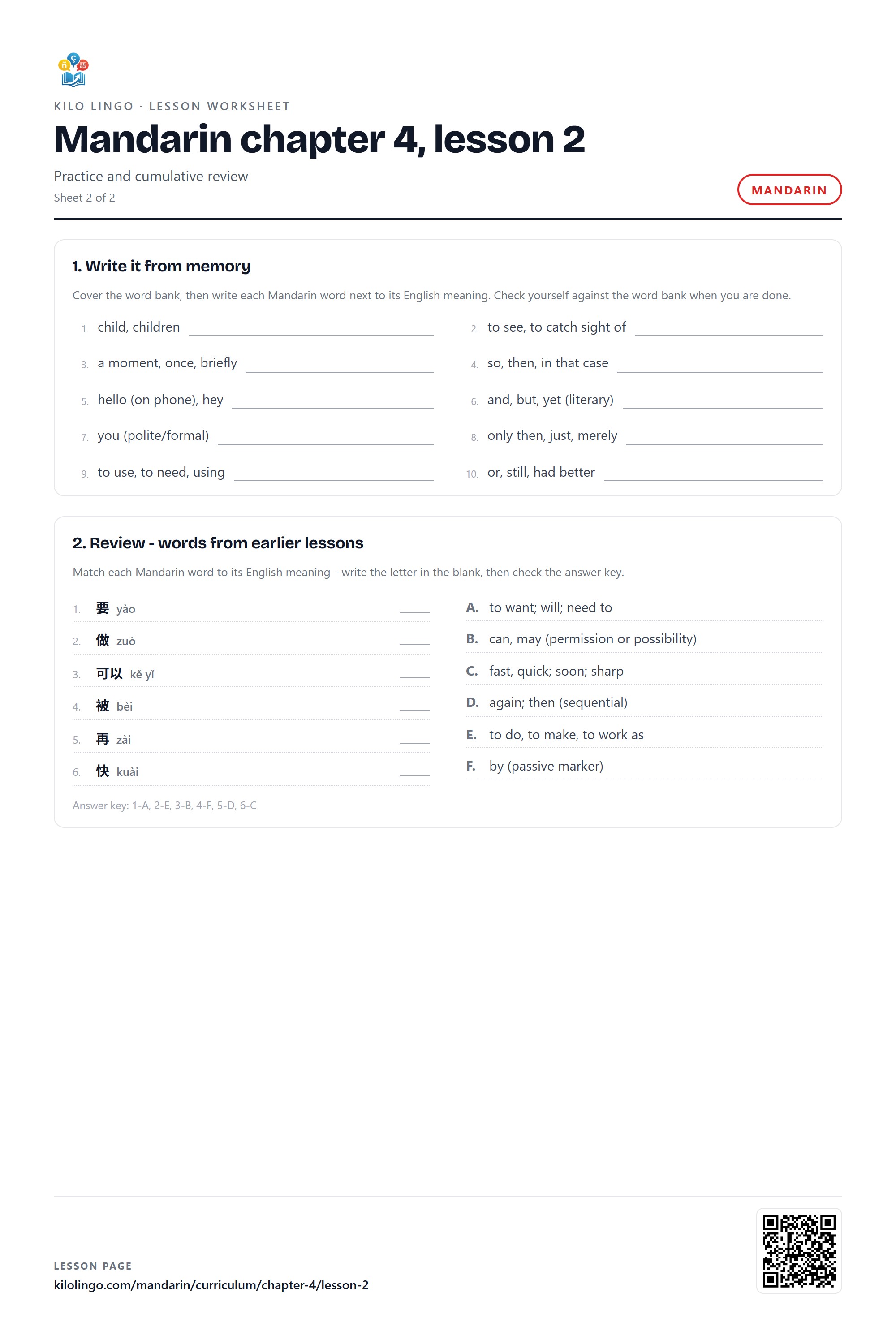
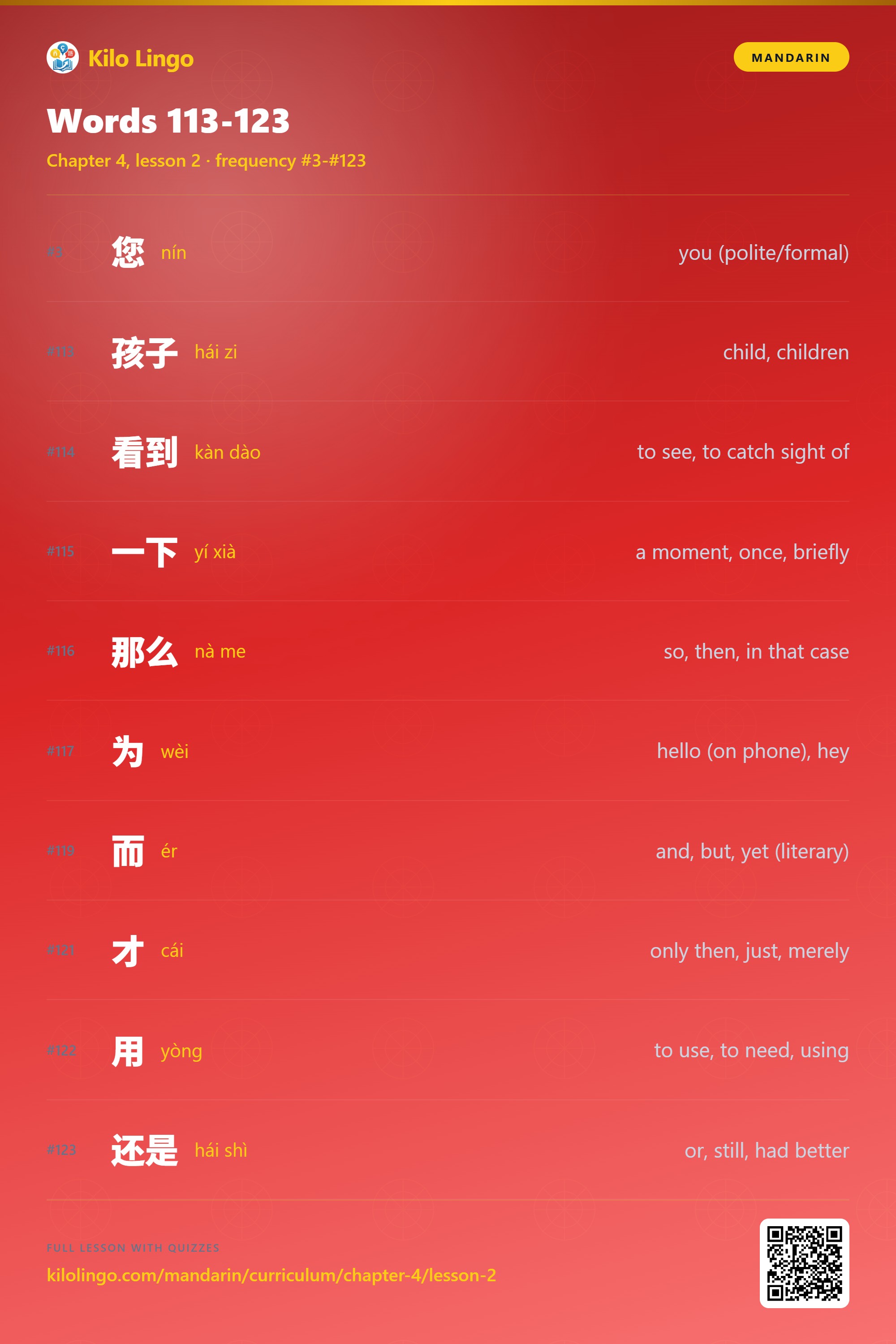
- Words 113-123Vocabulary
10 words · ranks 113-123
- Tone Shooter review sessionReview games
Shoot the words you just met into their tones by colour. The quickest way to fix a tone in place.
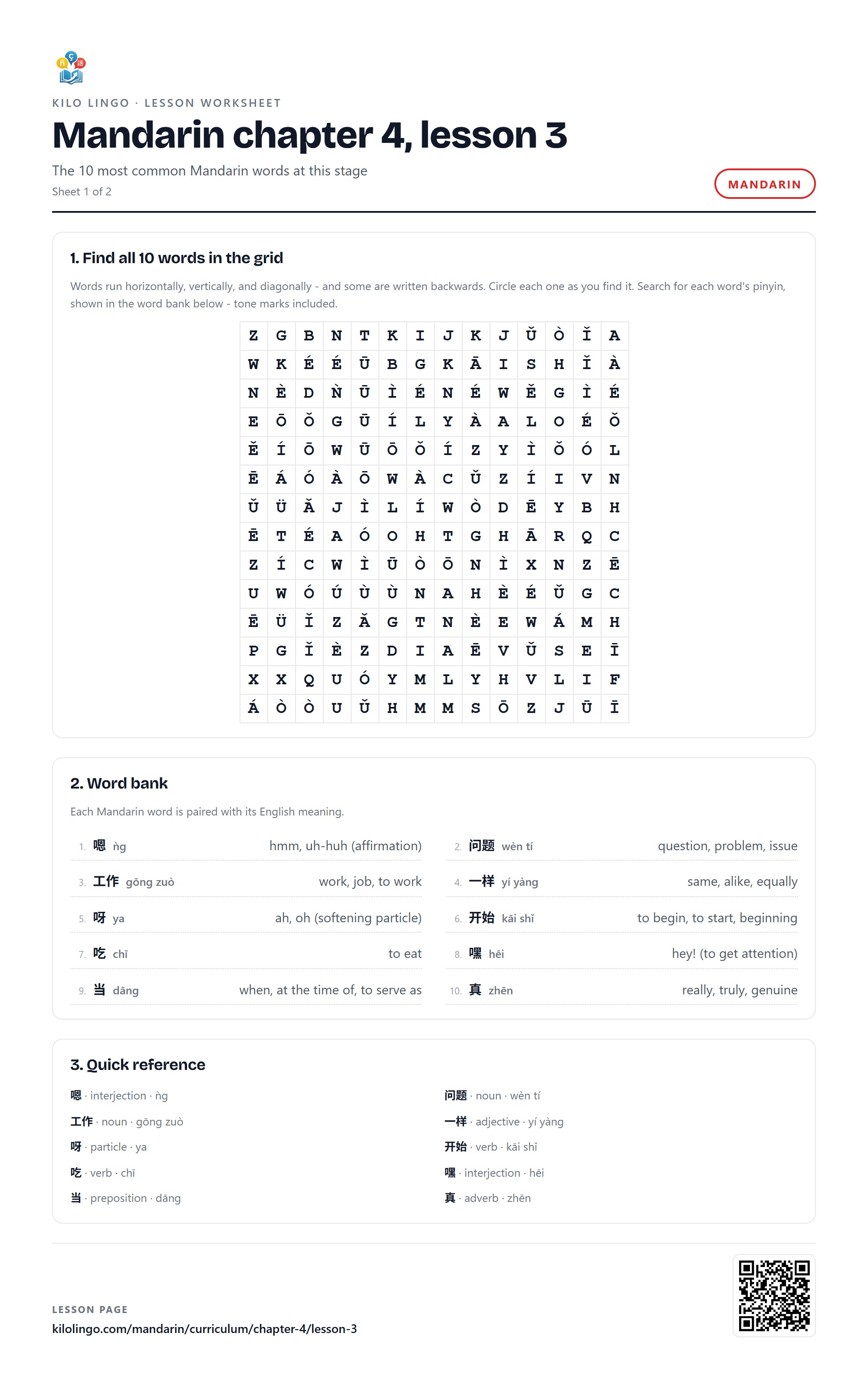
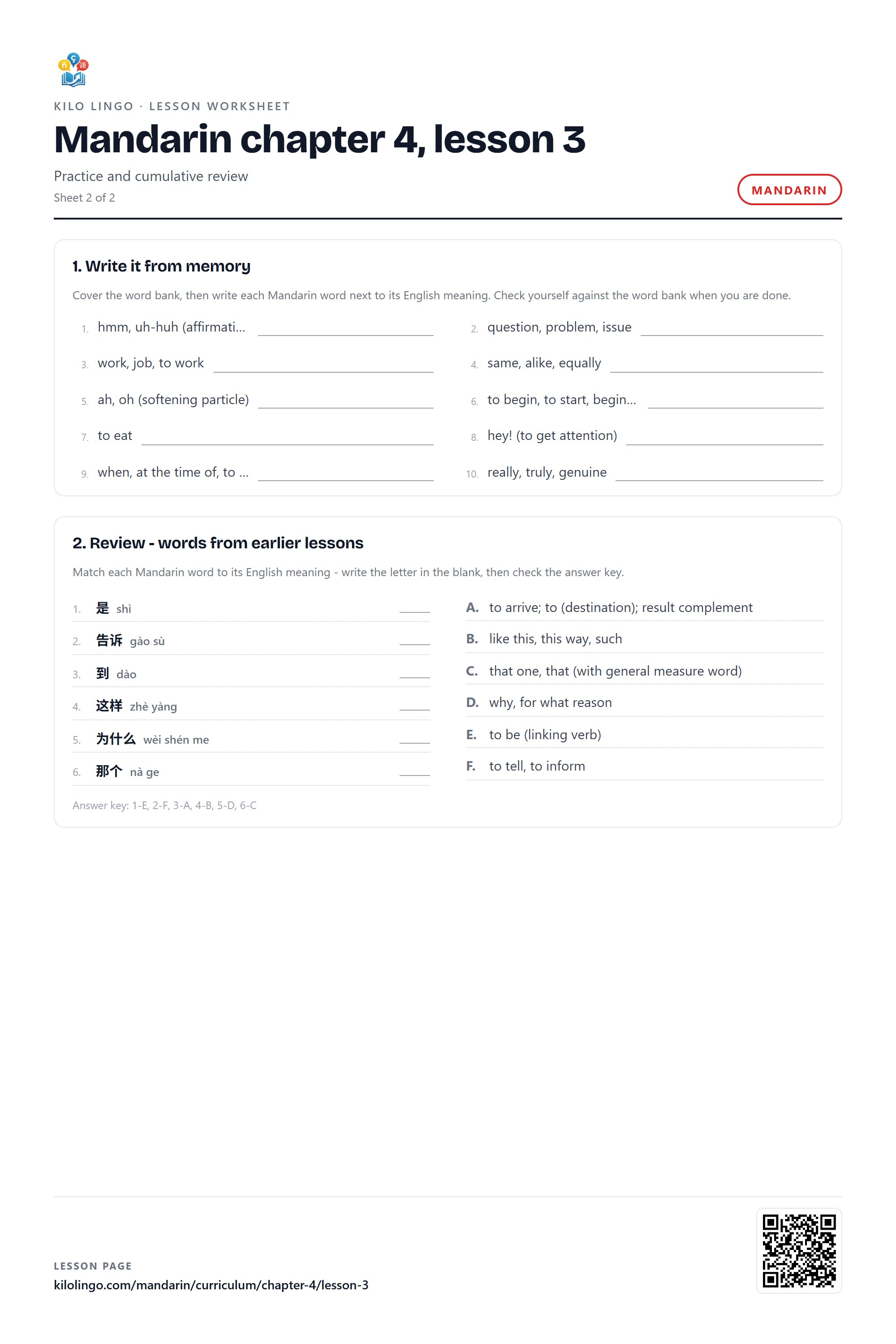
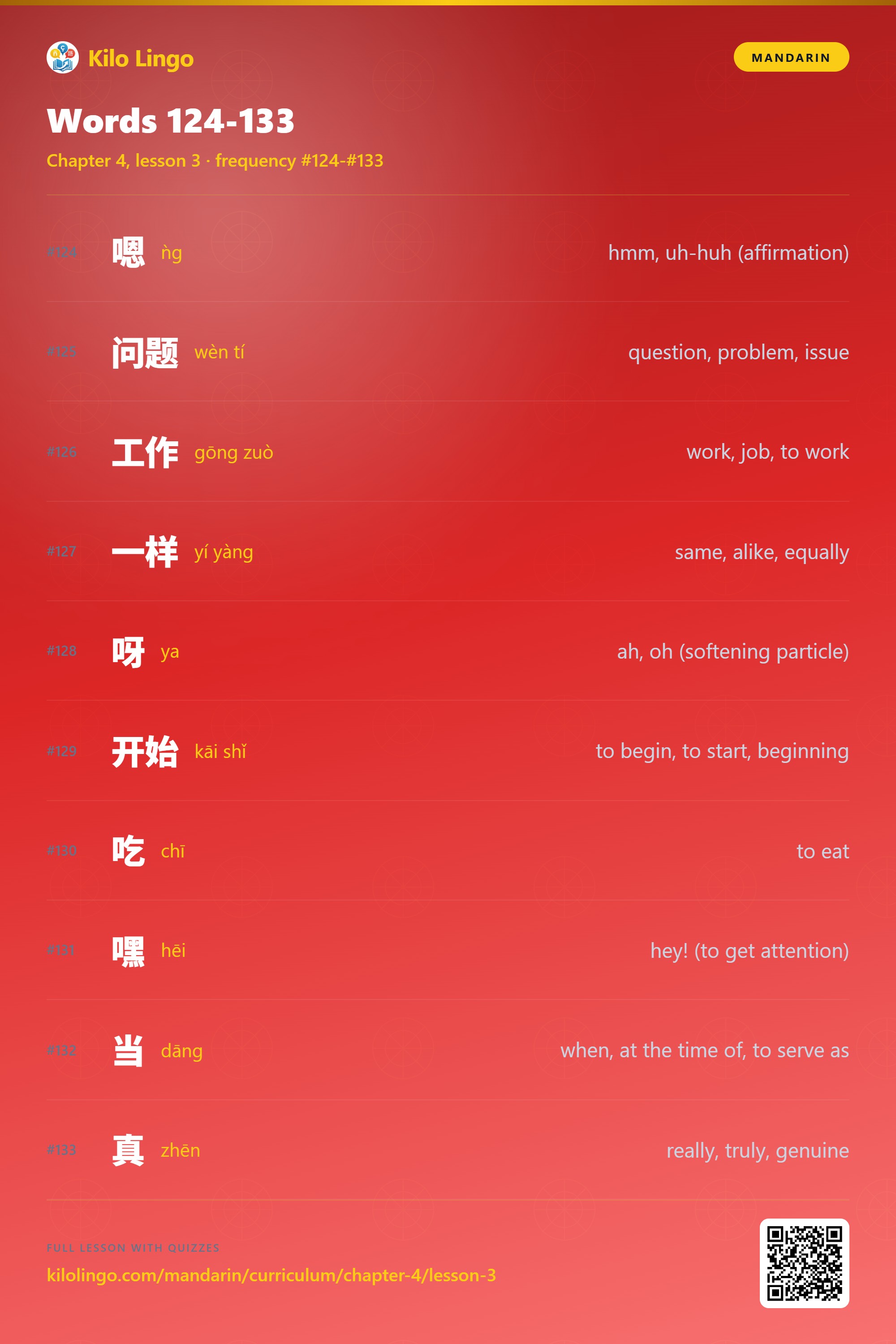
- Words 124-133Vocabulary
10 words · ranks 124-133
- Word Bubbles review sessionReview games
Pop the words you just met by matching each one to its meaning. A couple of rounds and the batch is yours.
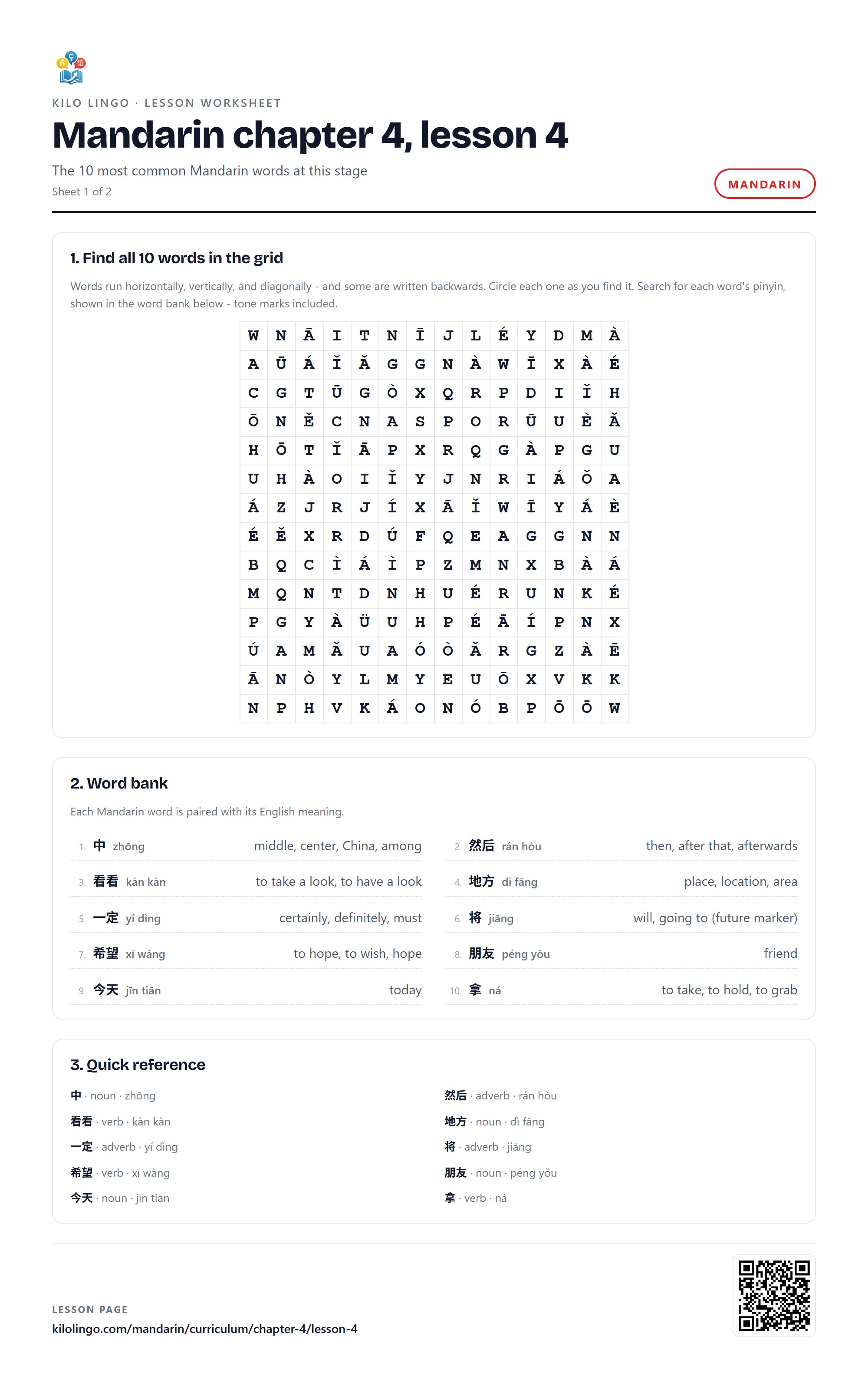
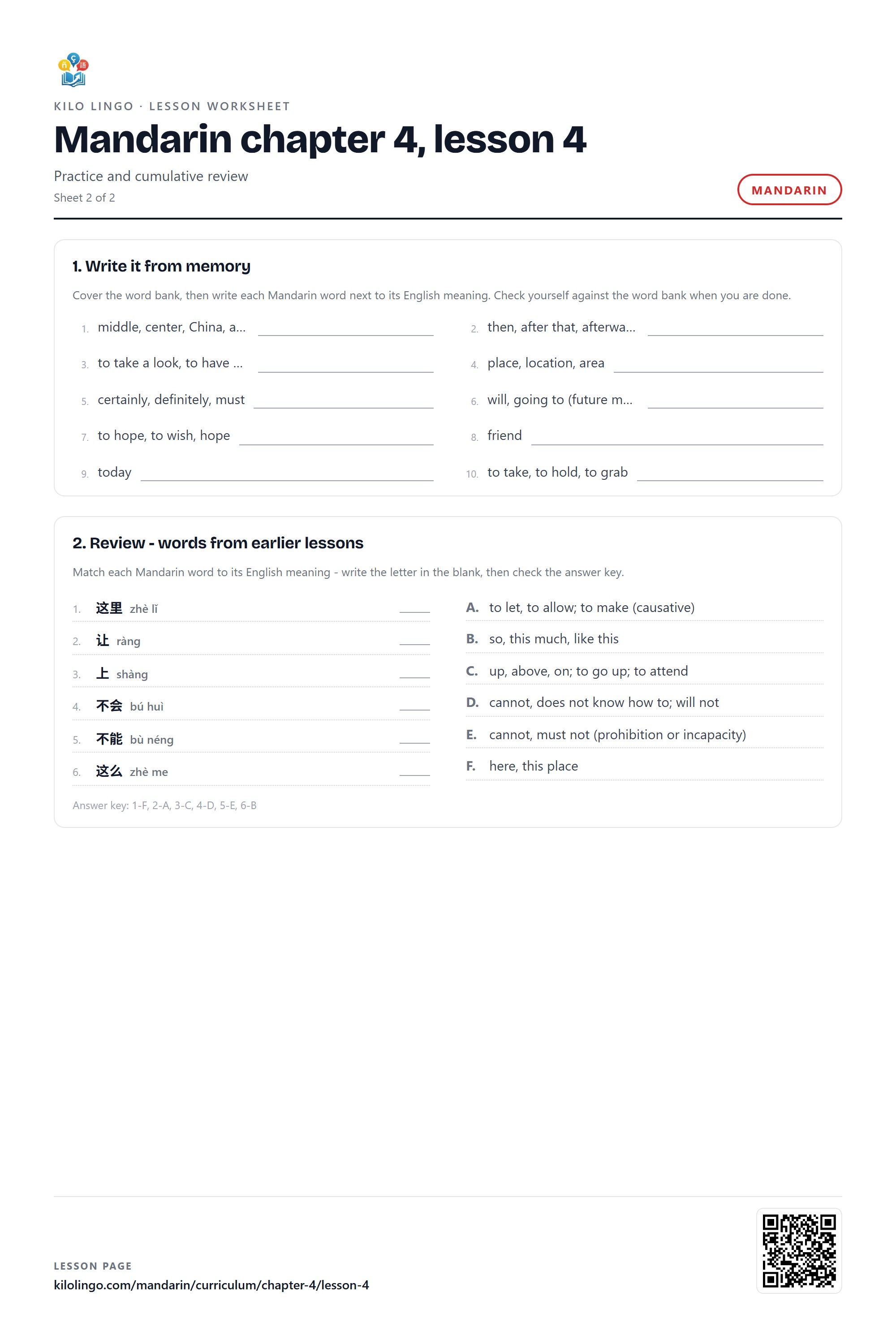
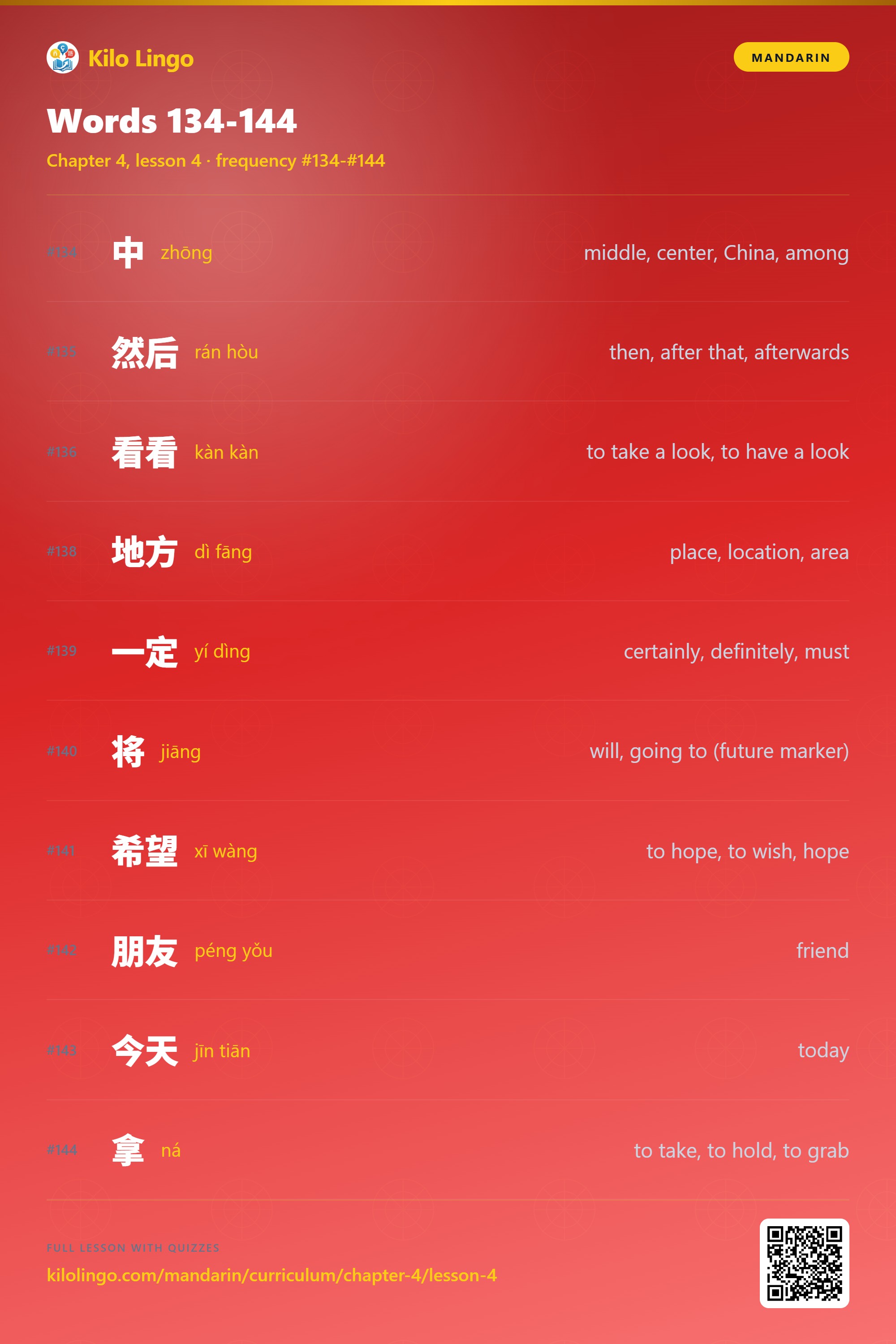
- Words 134-144Vocabulary
10 words · ranks 134-144
- Classifiers (measure words)Grammar
个, 岁, 年, 天, 只, 本, 口 and friends. The rule that every counted noun needs one, and the 这个/那个 demonstrative + classifier pattern.
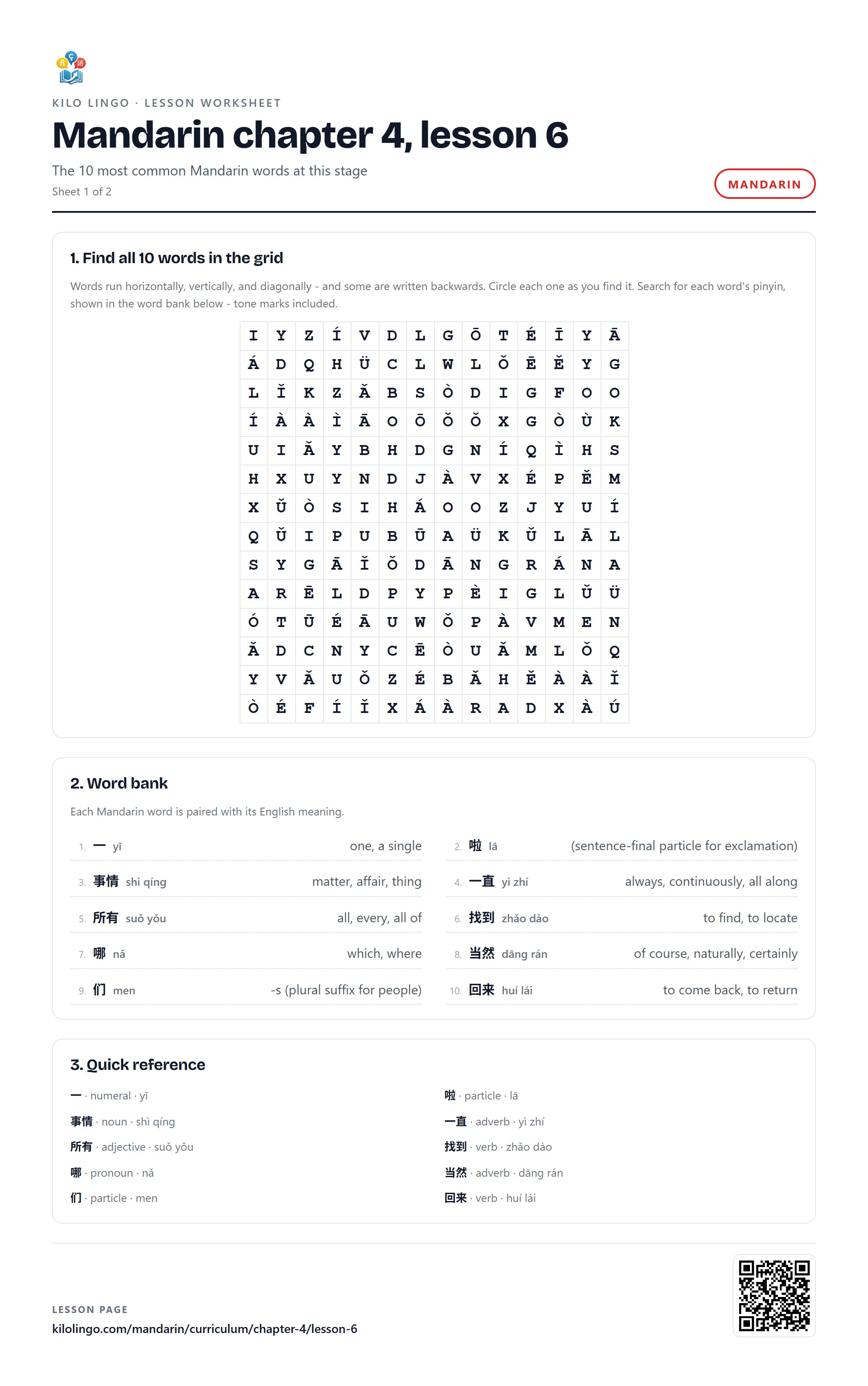
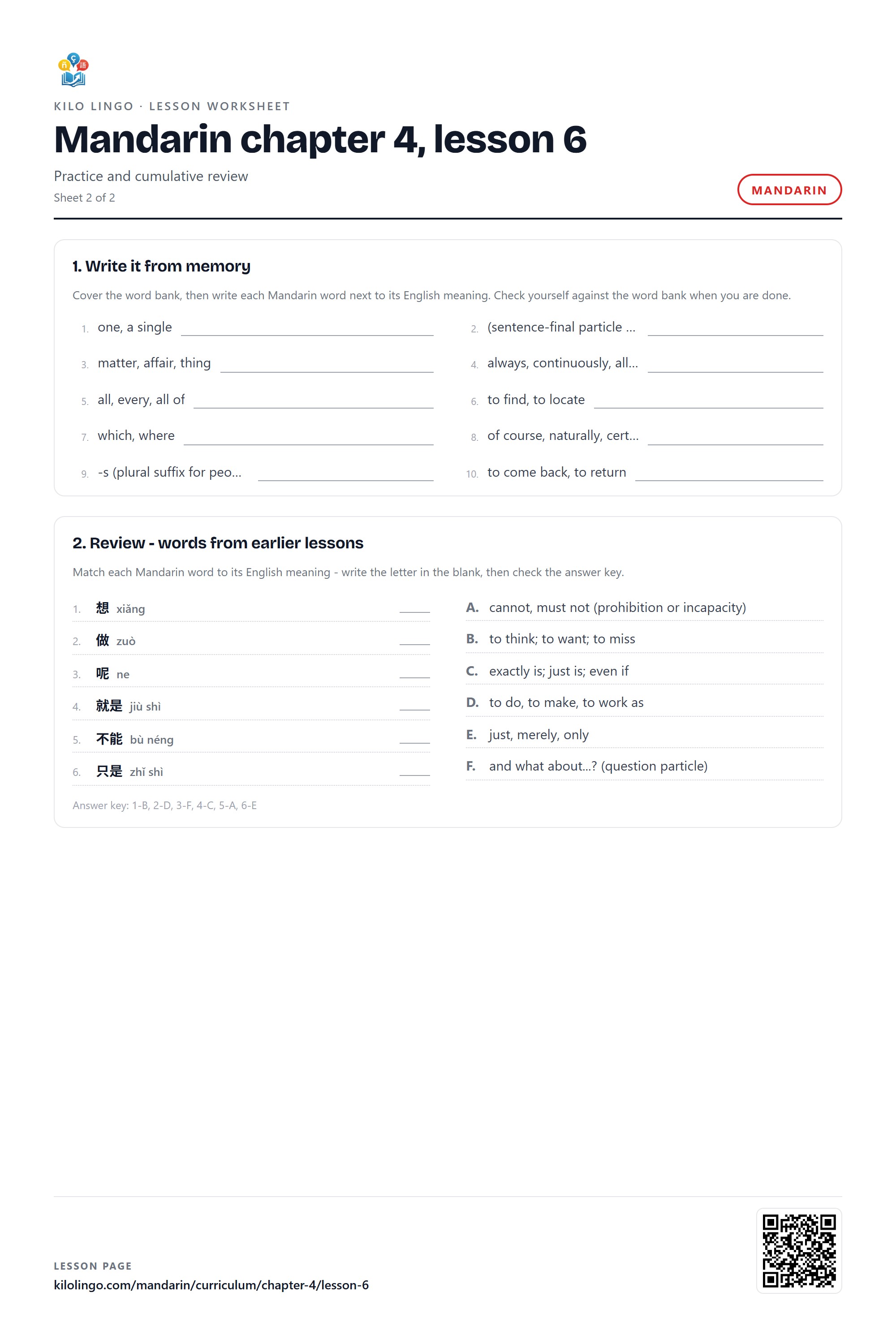
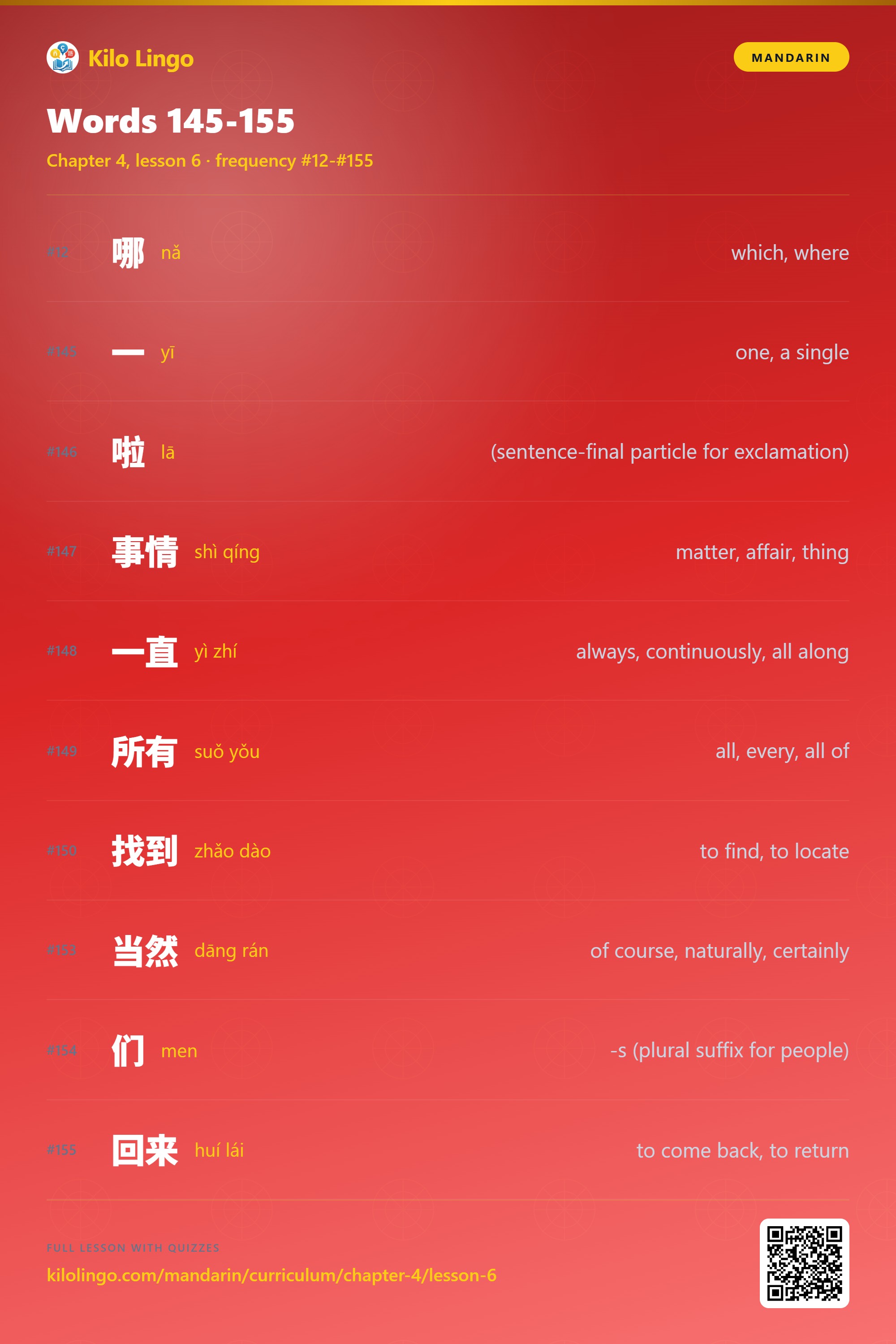
- Words 145-155Vocabulary
10 words · ranks 145-155
- 很 or 太?Mistake clinic
很 is not really
very, and that surprises everybody who learned it asvery. - Words 157-166Vocabulary
10 words · ranks 157-166
- Tone Shooter review sessionReview games
Shoot the words you just met into their tones by colour. The quickest way to fix a tone in place.
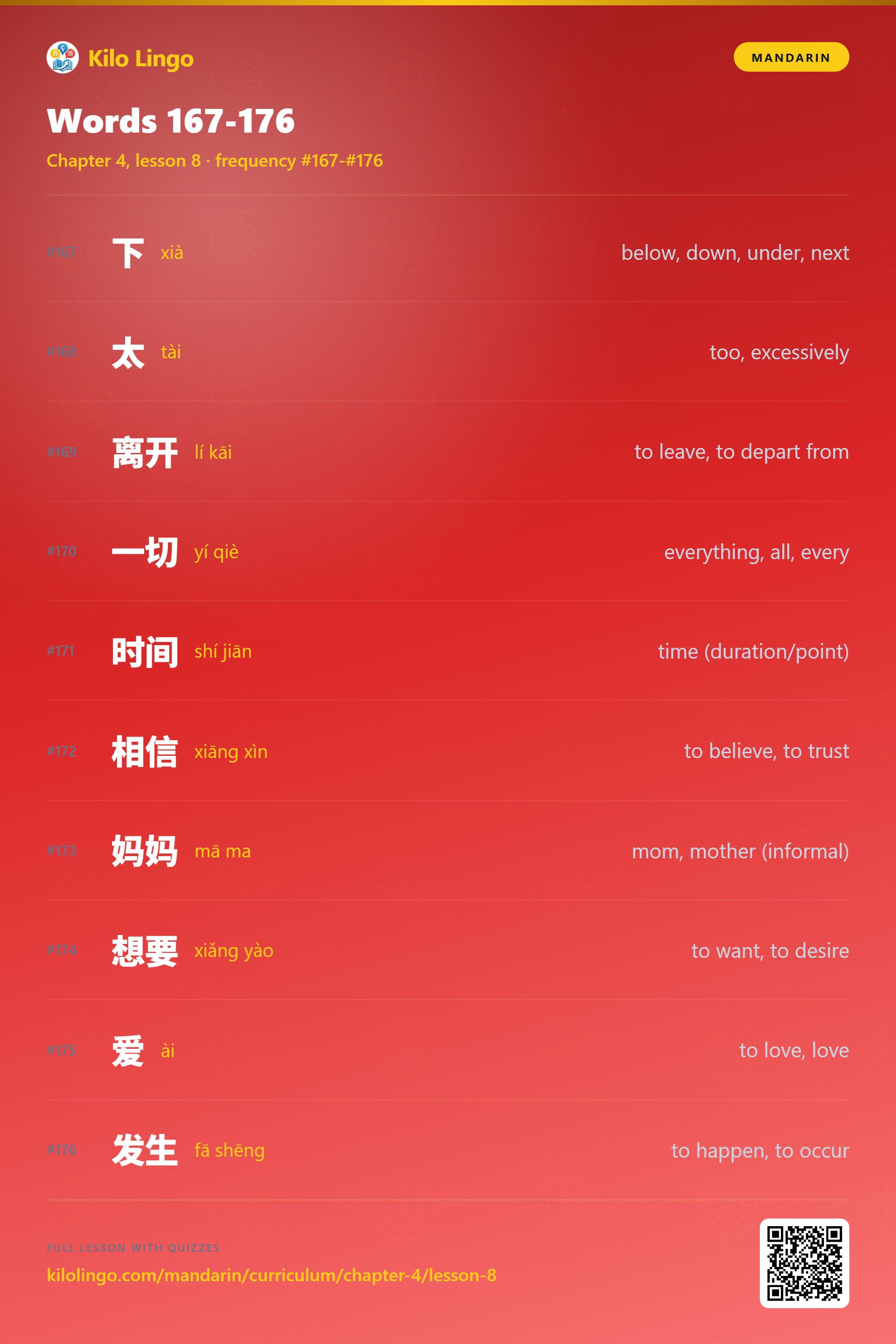
- Words 167-176Vocabulary
10 words · ranks 167-176
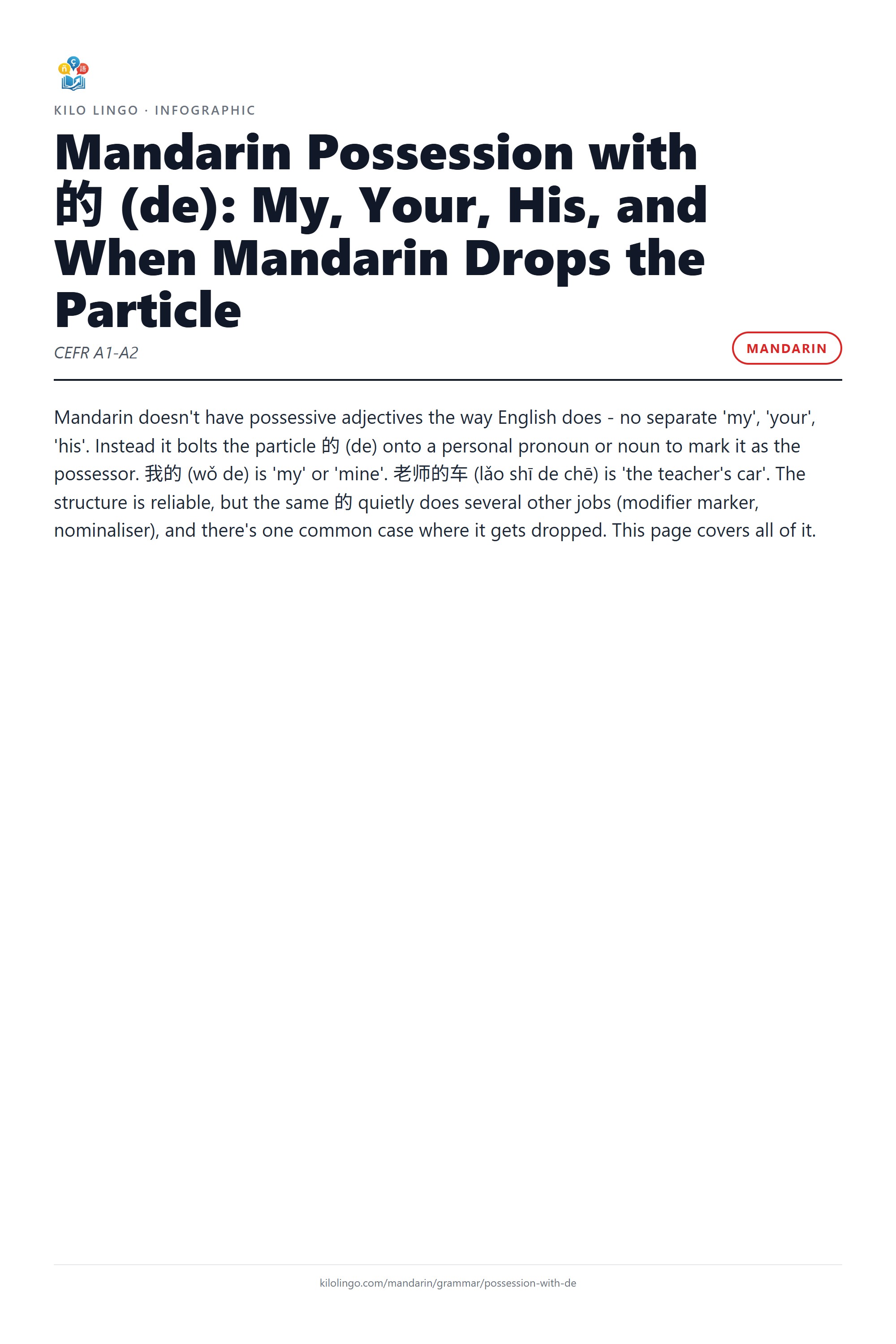
- Possession with 的Grammar
我的书, 老师的车. How 的 joins a possessor to a possessed noun, and the close-relation cases where it gets dropped (我妈, 我哥).
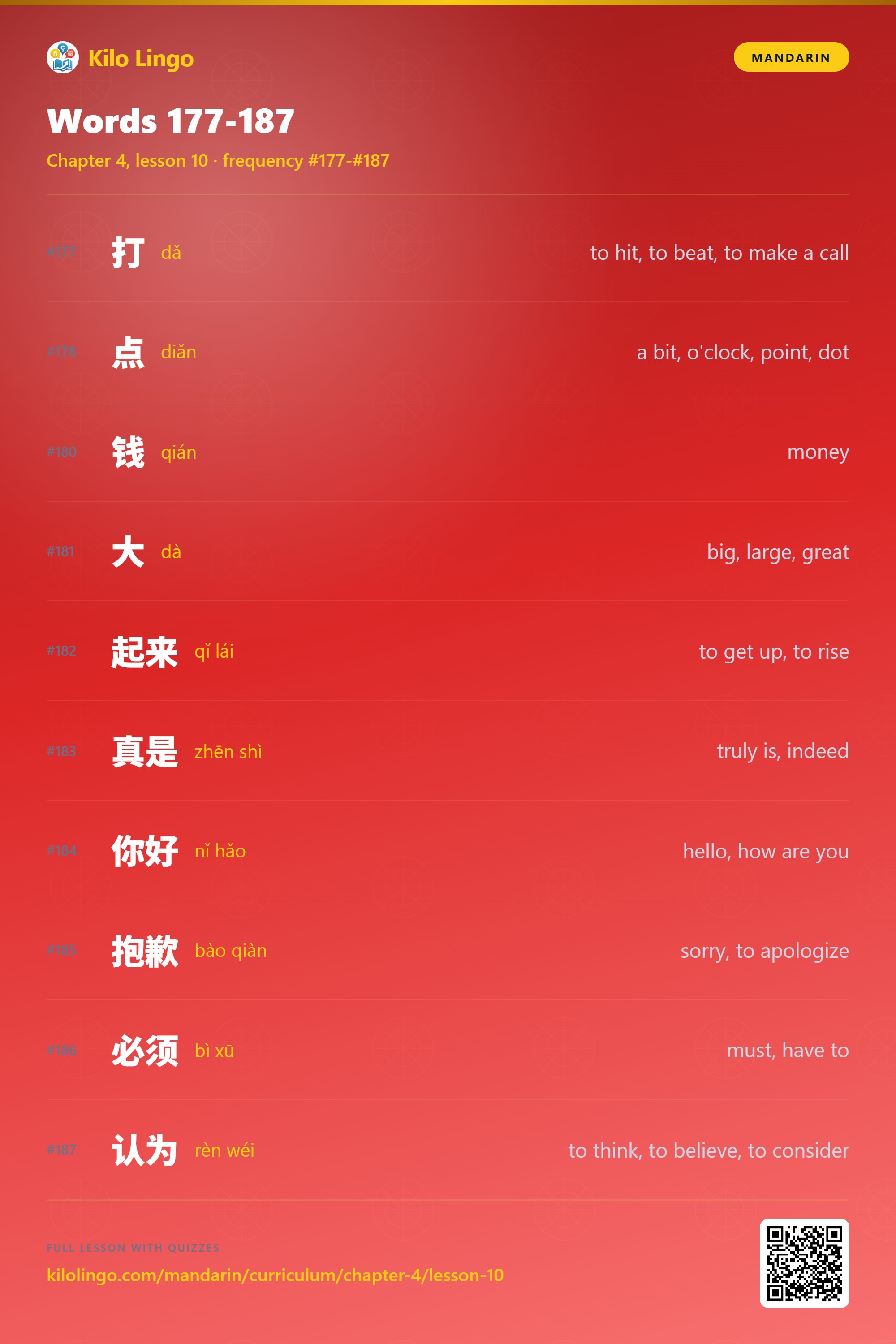
- Words 177-187Vocabulary
10 words · ranks 177-187
- Hello, thank you, sorryPhrase session
The first six, and the ones whose absence gets noticed.
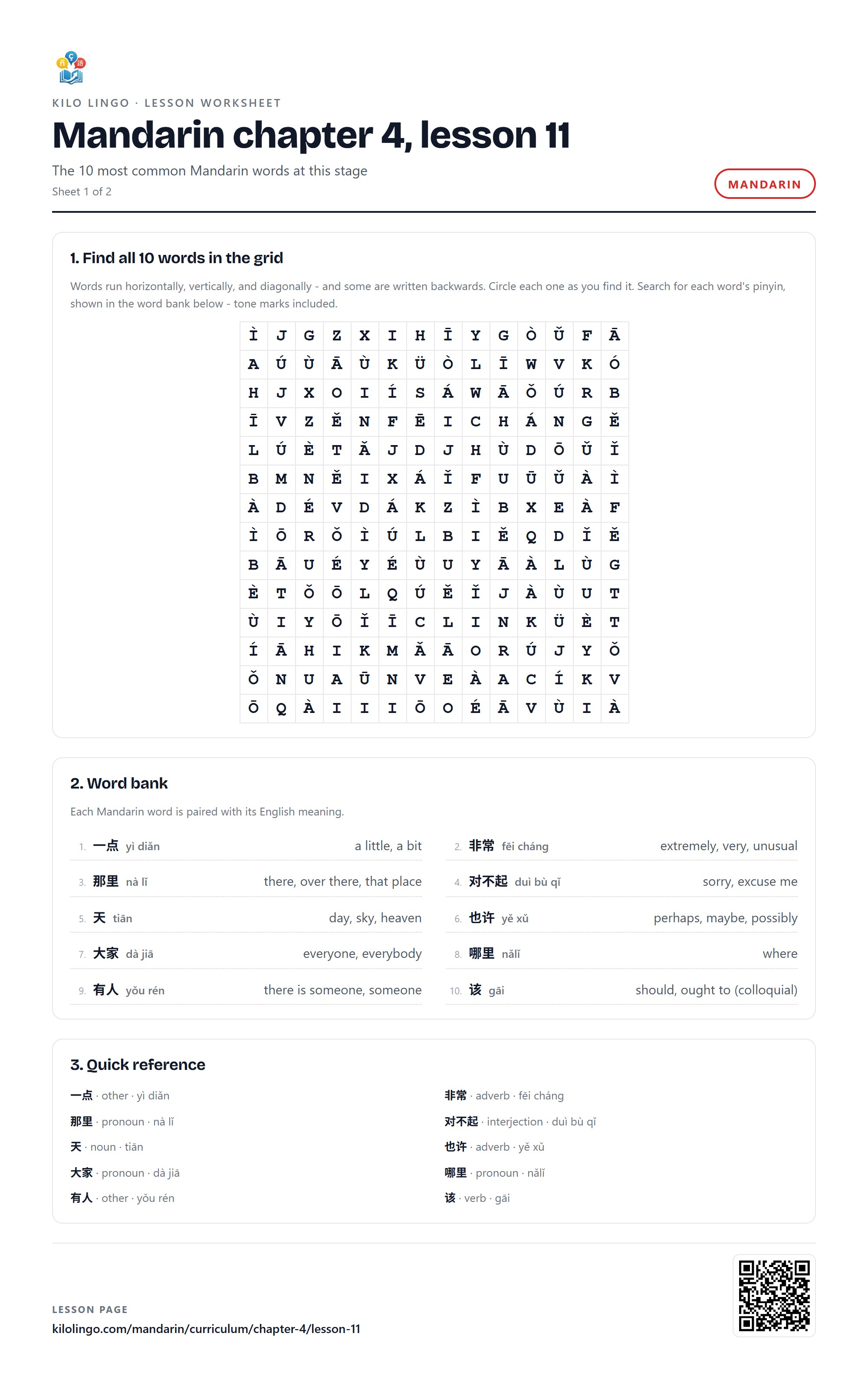
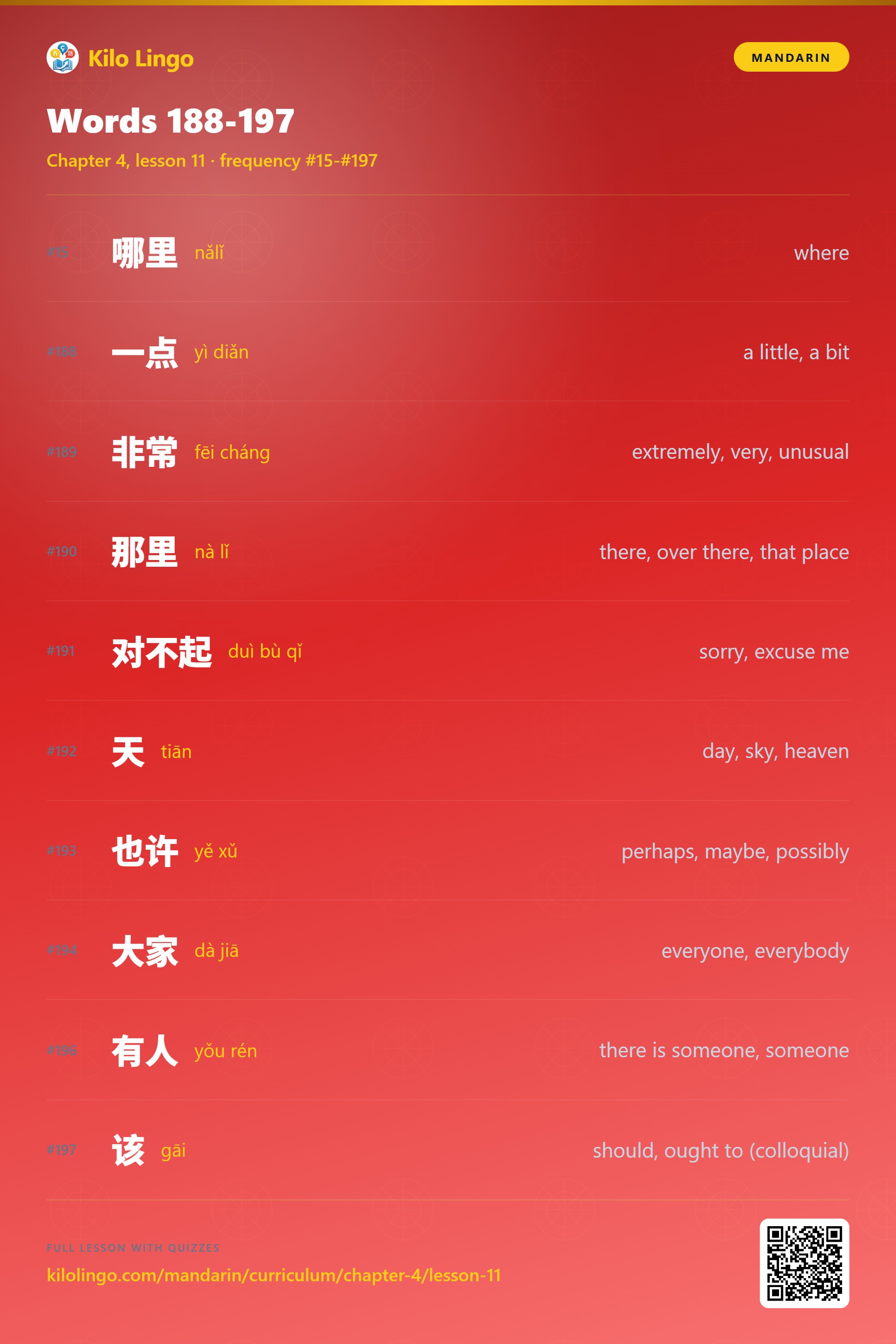
- Words 188-197Vocabulary
10 words · ranks 188-197
- Word Bubbles review sessionReview games
Pop the words you just met by matching each one to its meaning. A couple of rounds and the batch is yours.
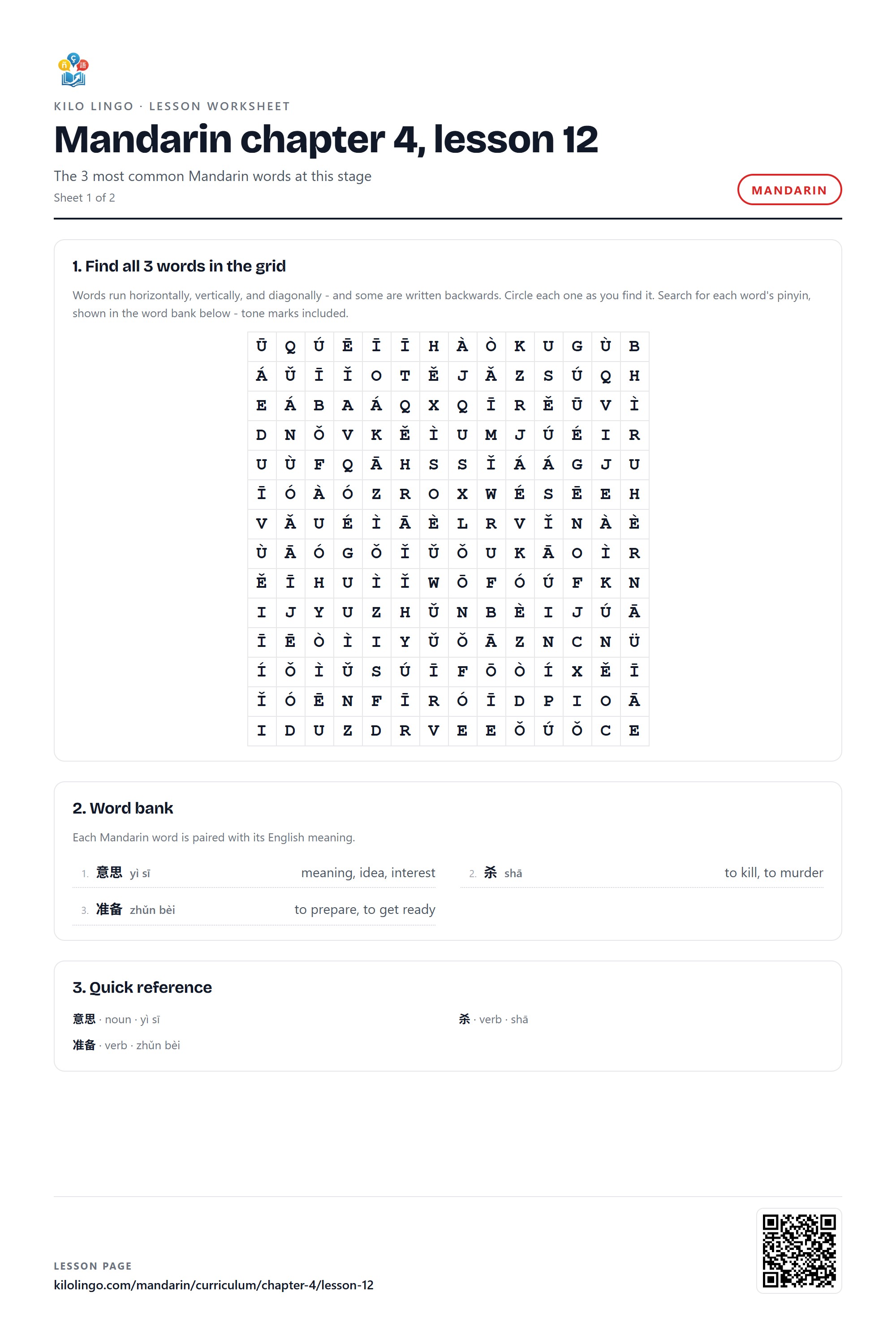
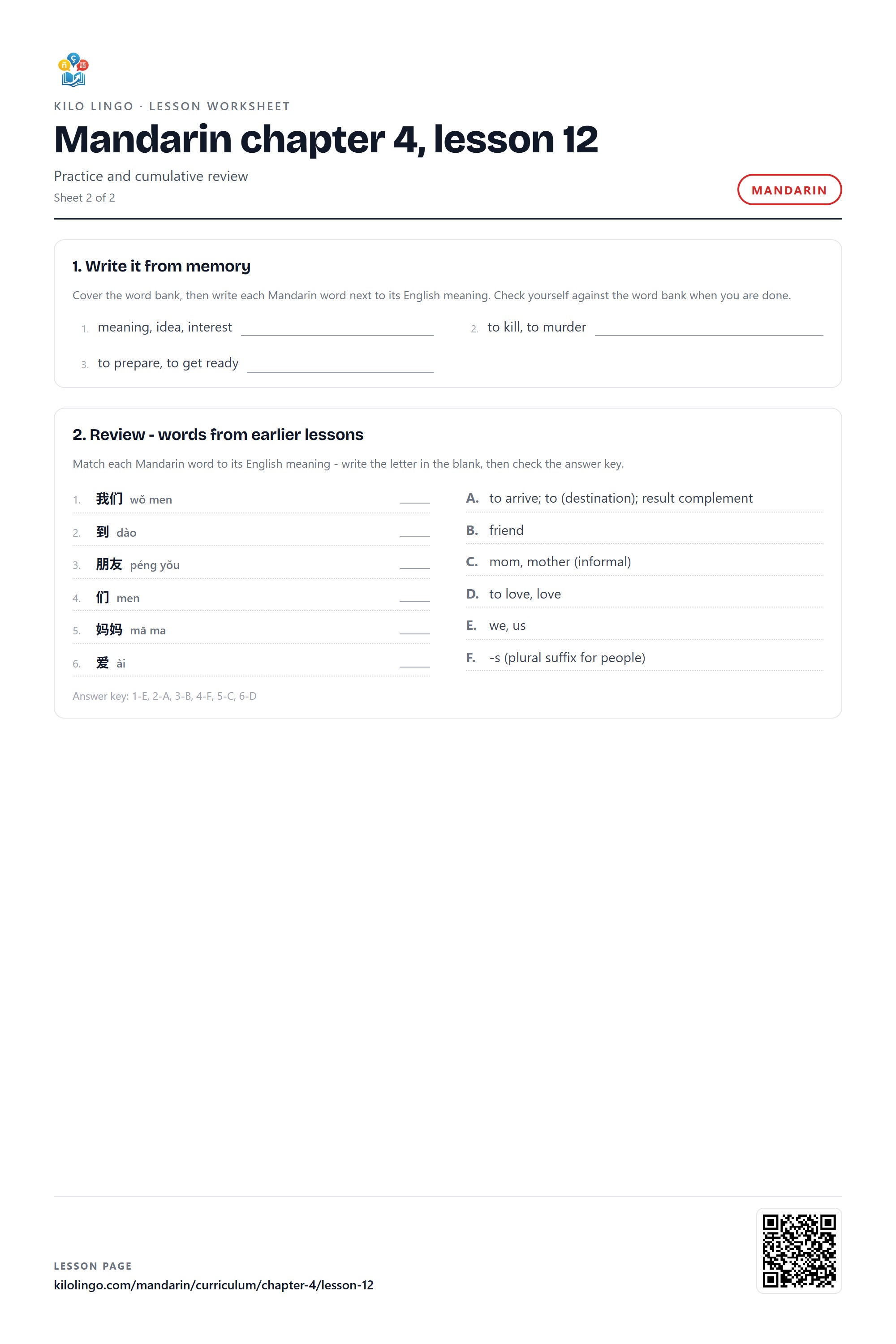
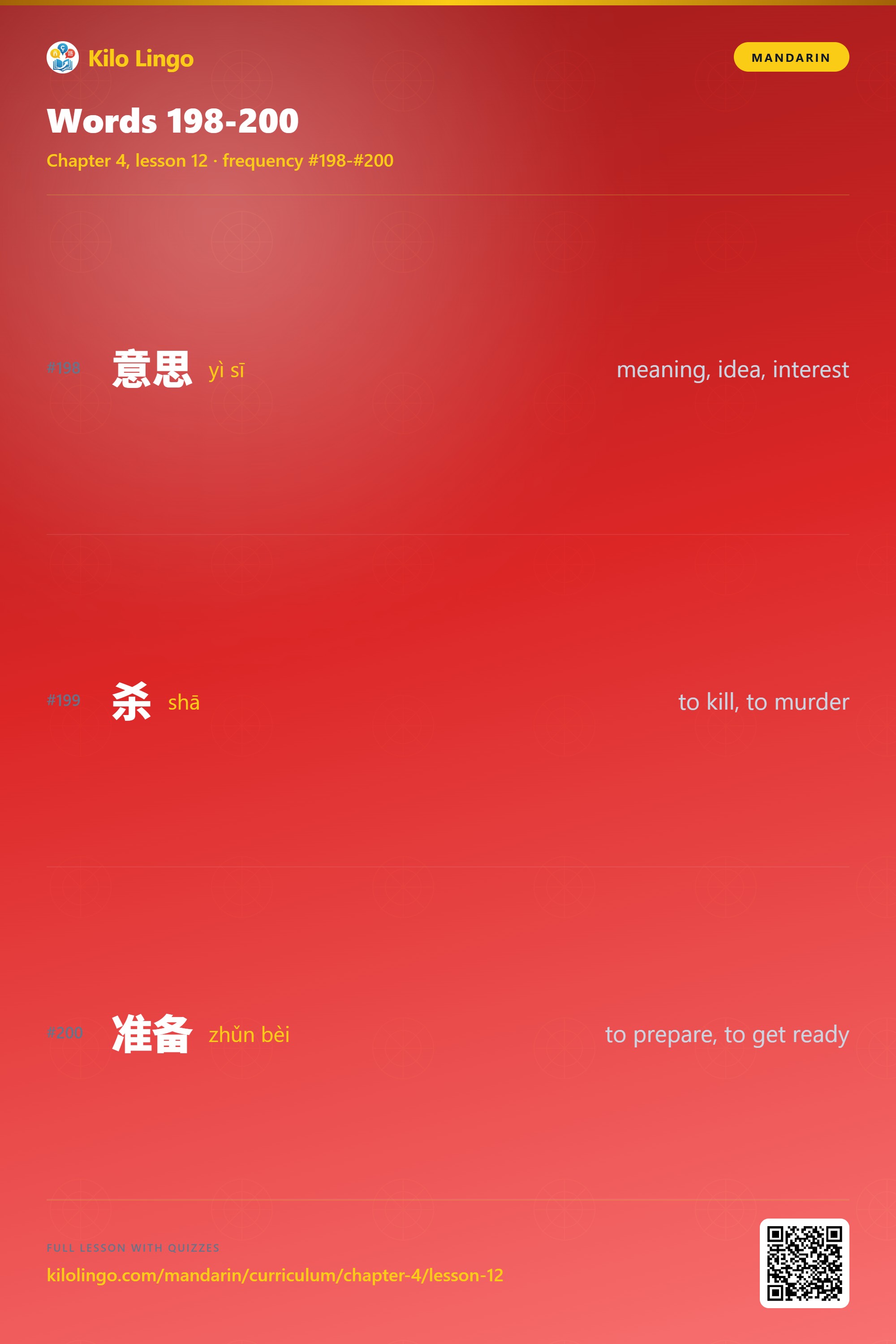
- Words 198-200Vocabulary
3 words · ranks 198-200
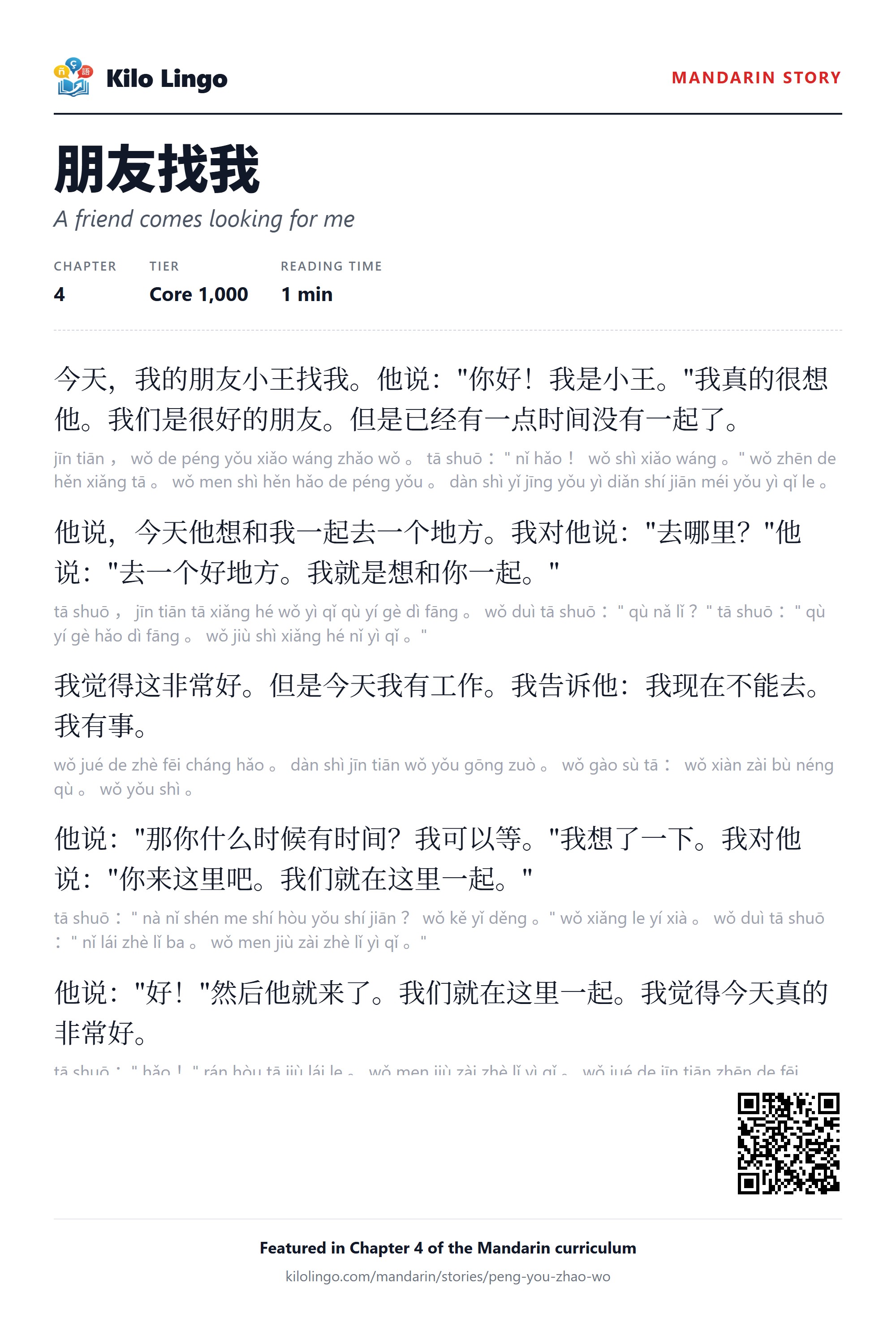
- Story milestone: top 200 wordsGraded-reader story
You can read this story using only the words you've learned so far. Every content word sits at or above the rank-200 ceiling.
- The question house: 什么, 谁, 哪Grammar
The question words as a set - 什么 (shénme), 谁 (shéi), 哪 (nǎ) and the rest sit exactly where the answer goes, and the drill fixes which one asks what.
- Arcade reviewReview games
Replay this chapter's words as games - a different kind of repetition, and it counts.
Word printables
Per-word sheets90 words · a worksheet, infographic and listicle each










Chapter 5 · Adjectives as stative verbs
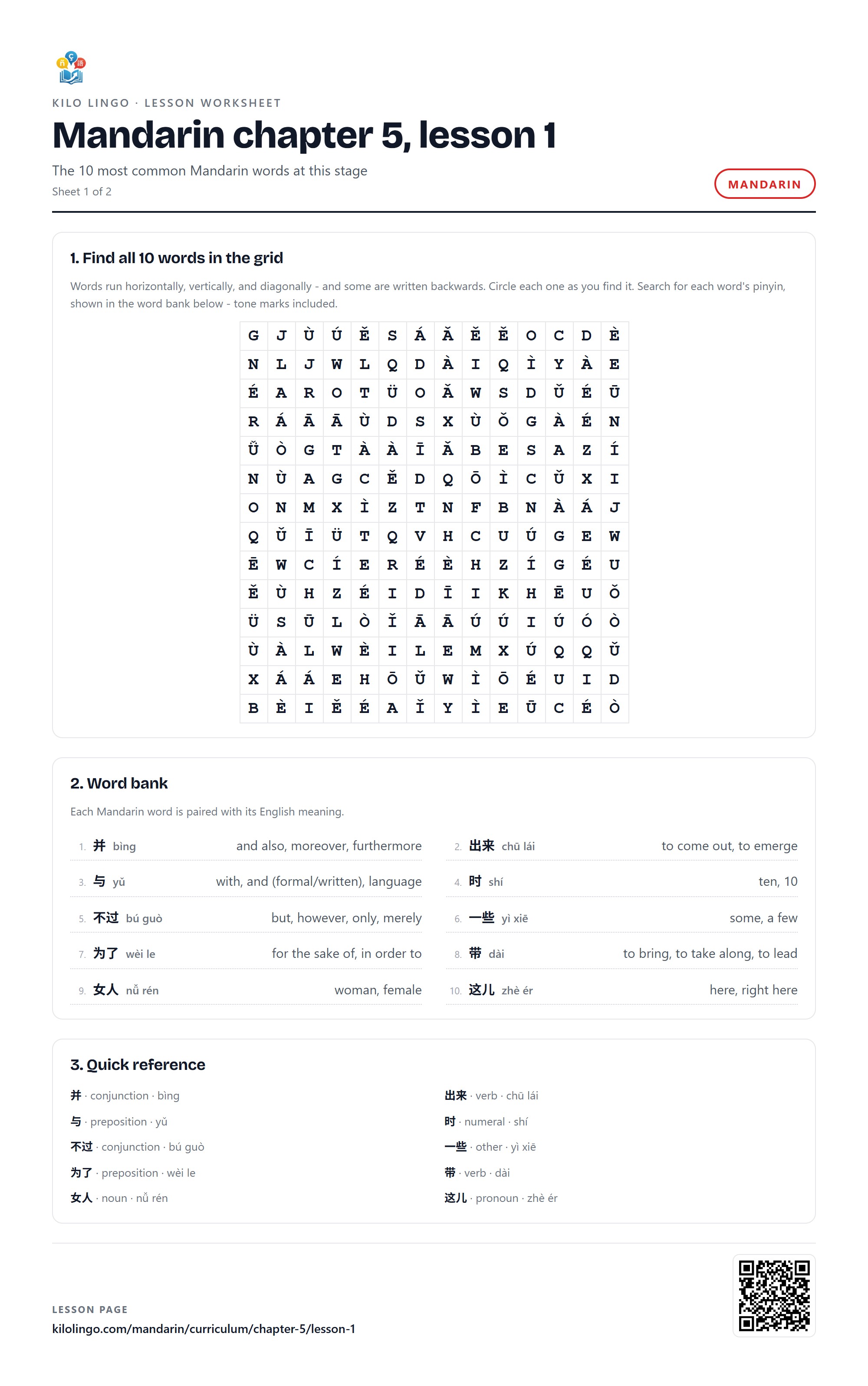
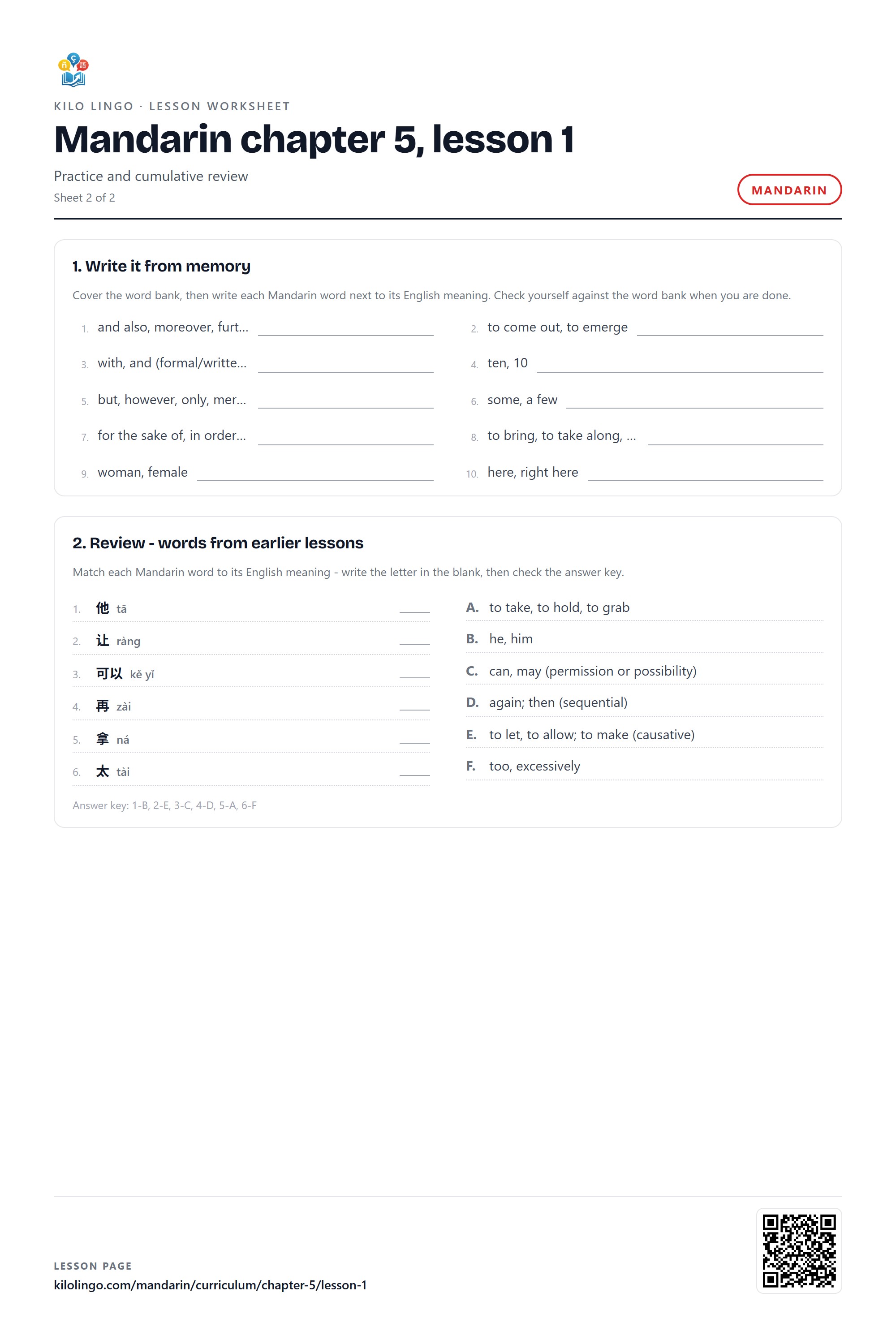
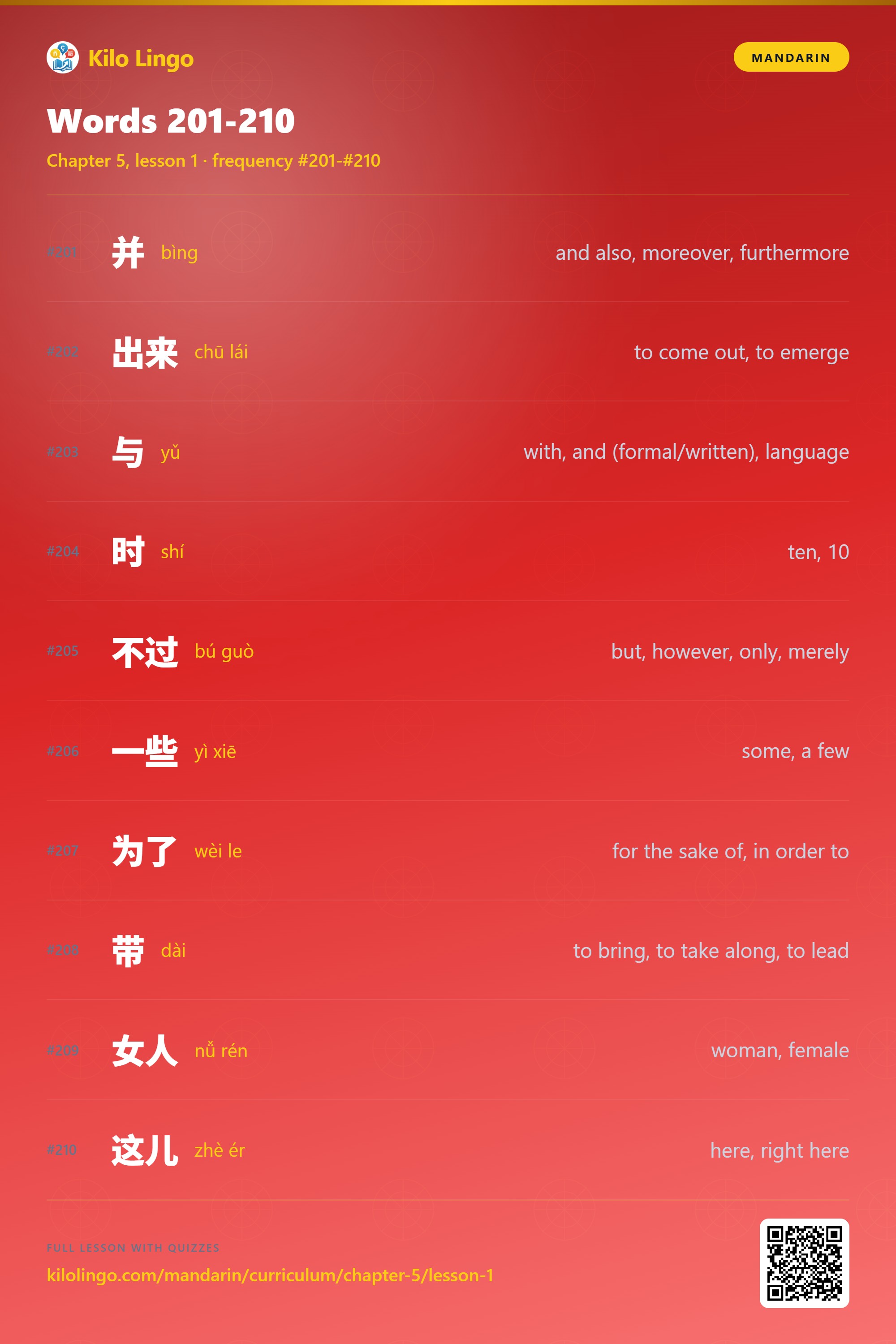
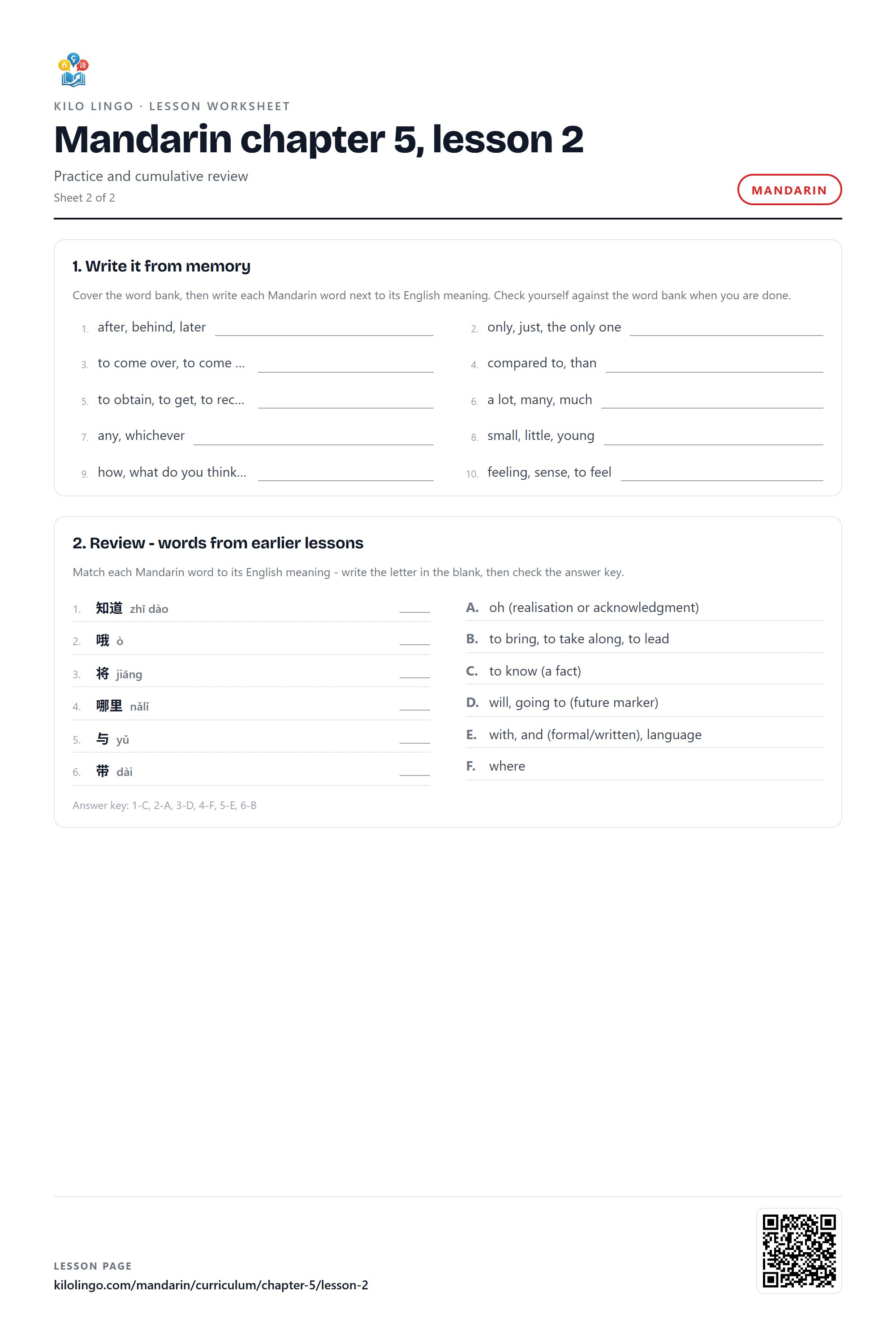
Chapter page →- Words 201-210Vocabulary
10 words · ranks 201-210
- Tone Shooter review sessionReview games
Shoot the words you just met into their tones by colour. The quickest way to fix a tone in place.
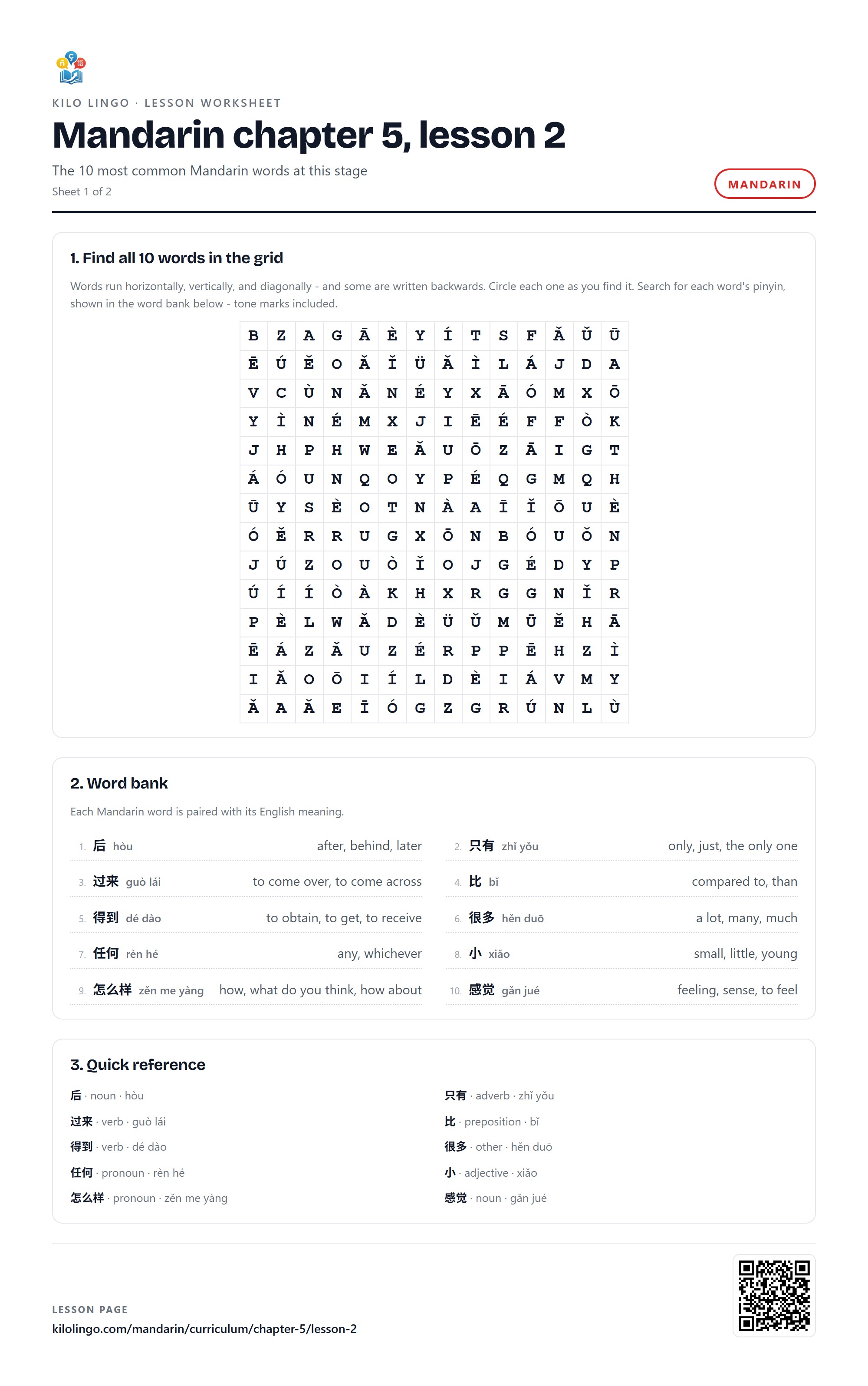
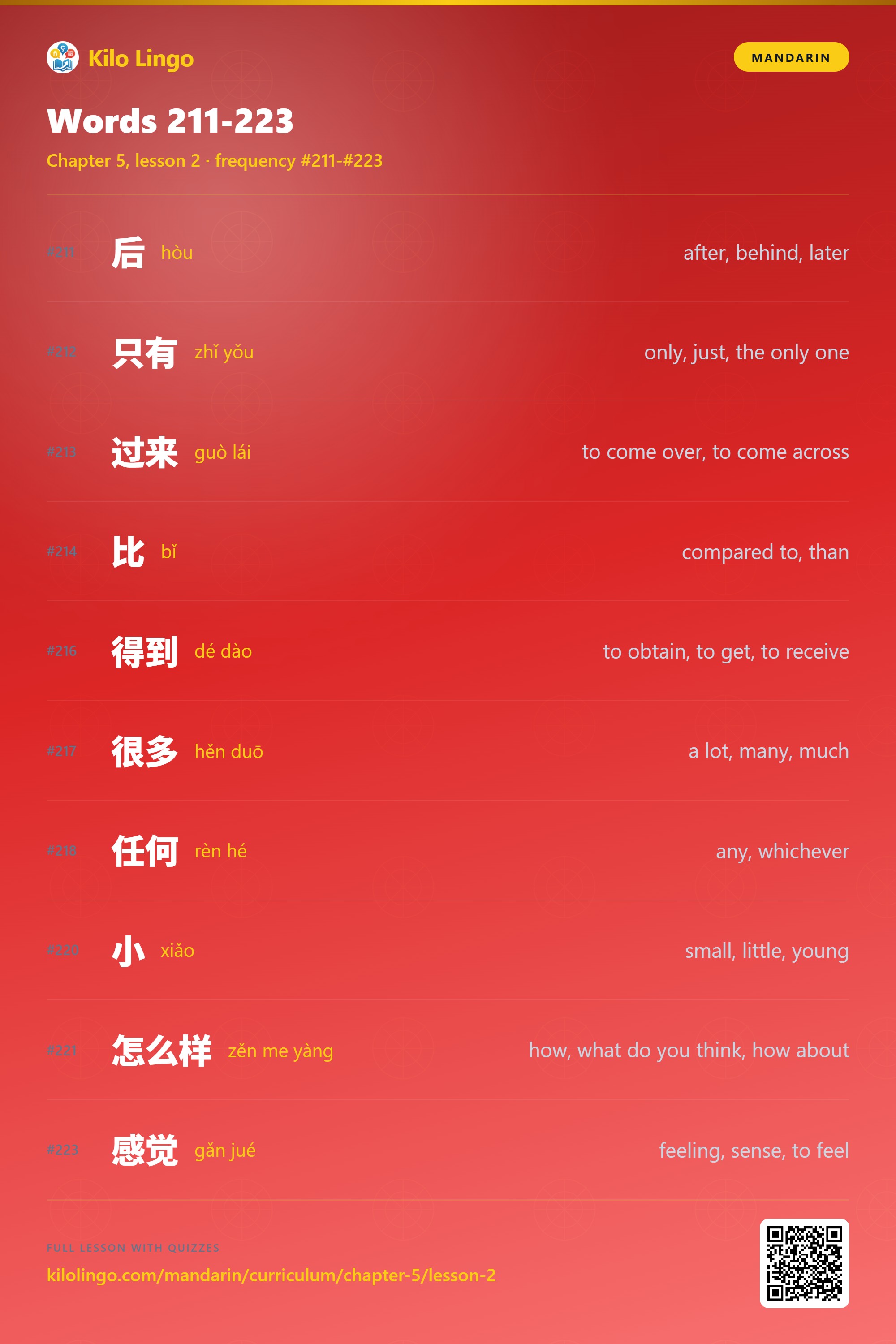
- Words 211-223Vocabulary
10 words · ranks 211-223
- Word Bubbles review sessionReview games
Pop the words you just met by matching each one to its meaning. A couple of rounds and the batch is yours.
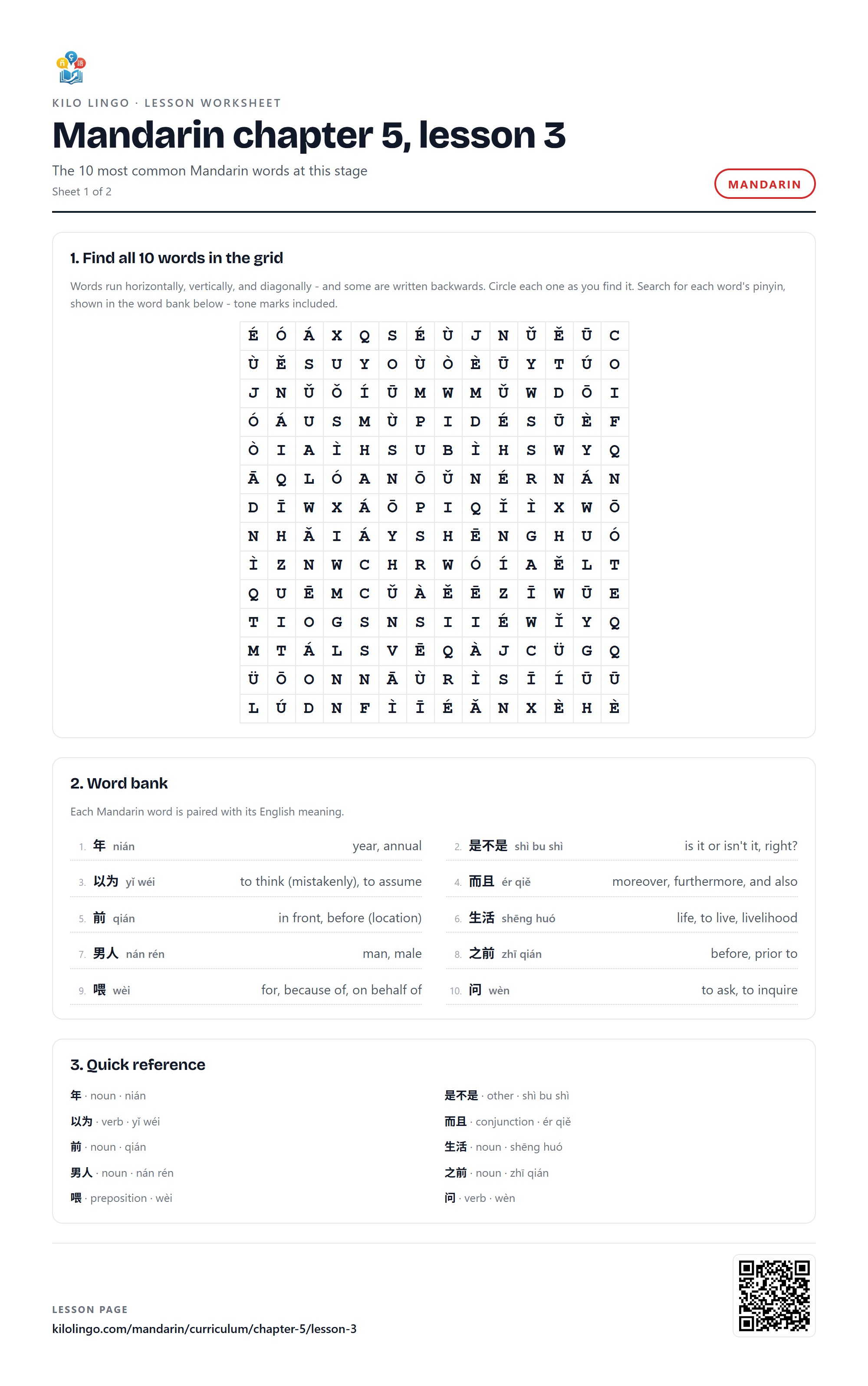
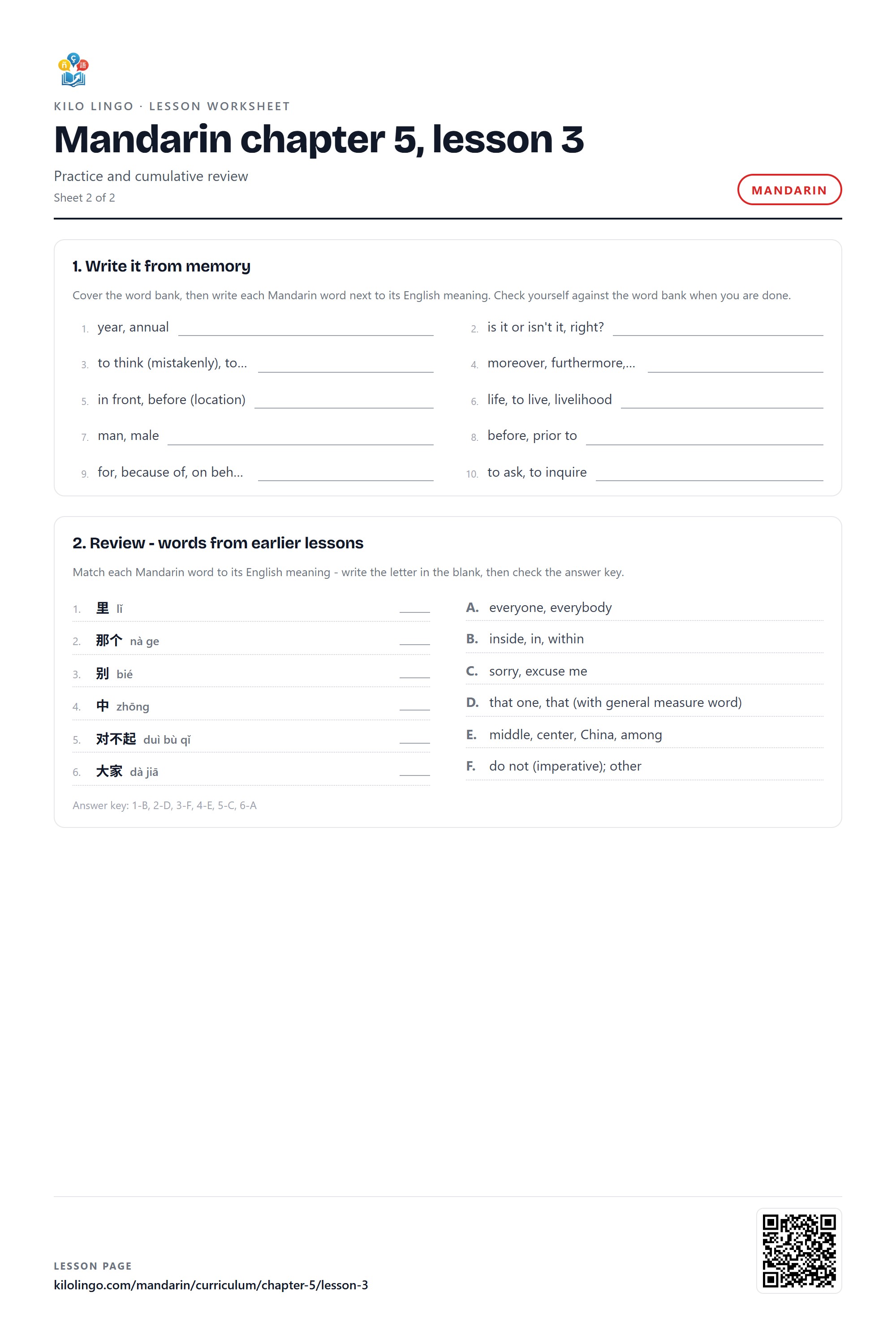
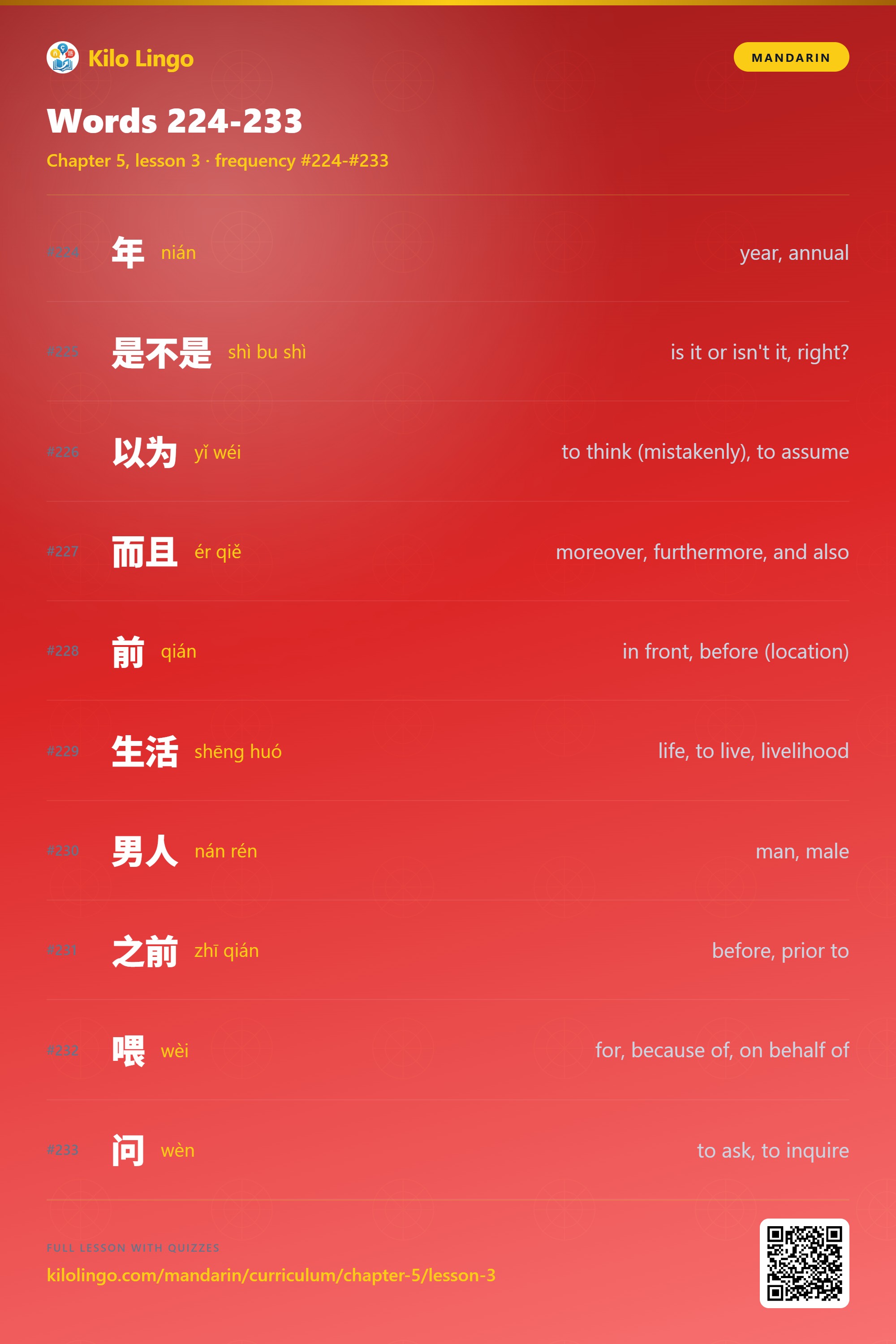
- Words 224-233Vocabulary
10 words · ranks 224-233
- Tone Shooter review sessionReview games
Shoot the words you just met into their tones by colour. The quickest way to fix a tone in place.
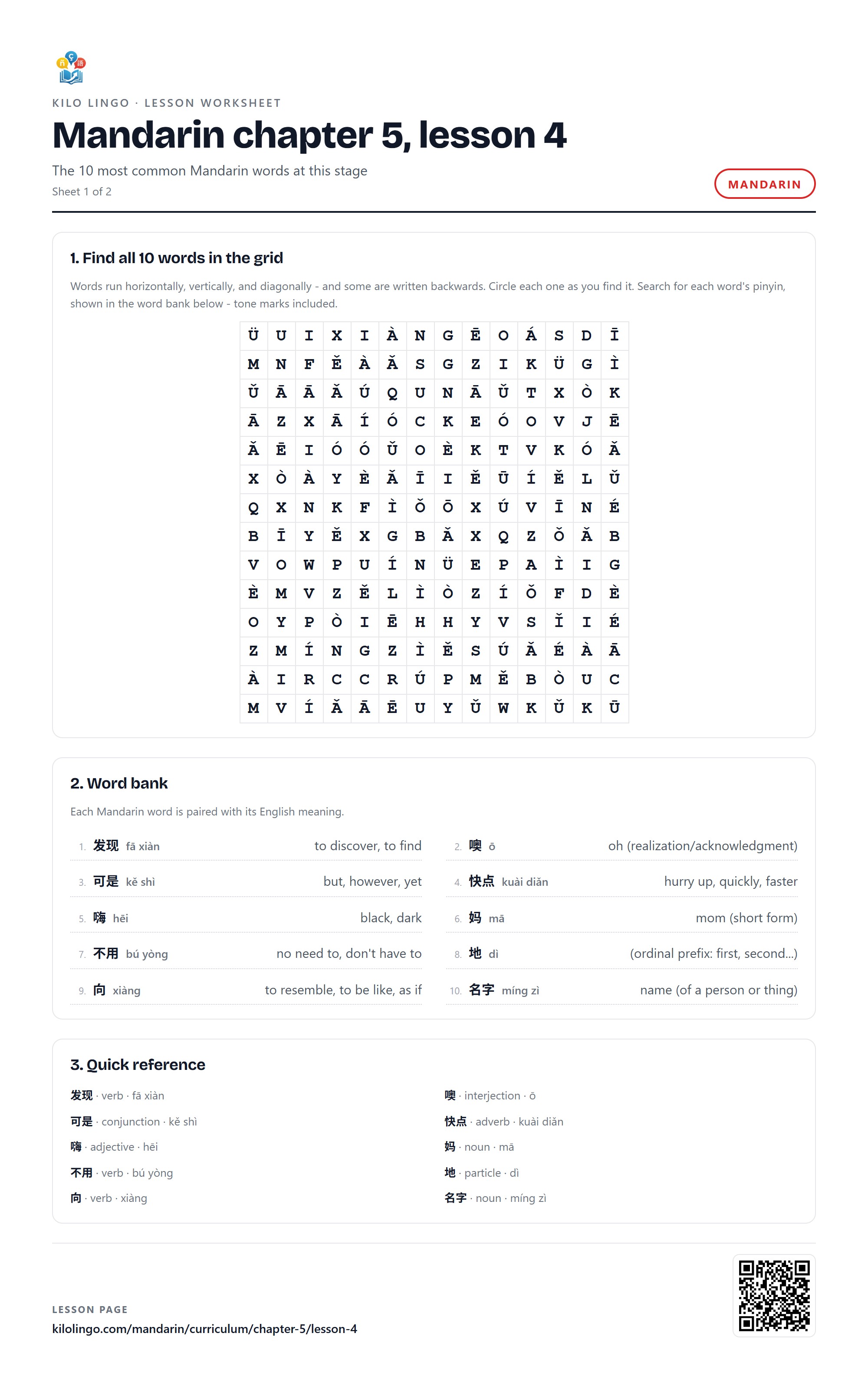
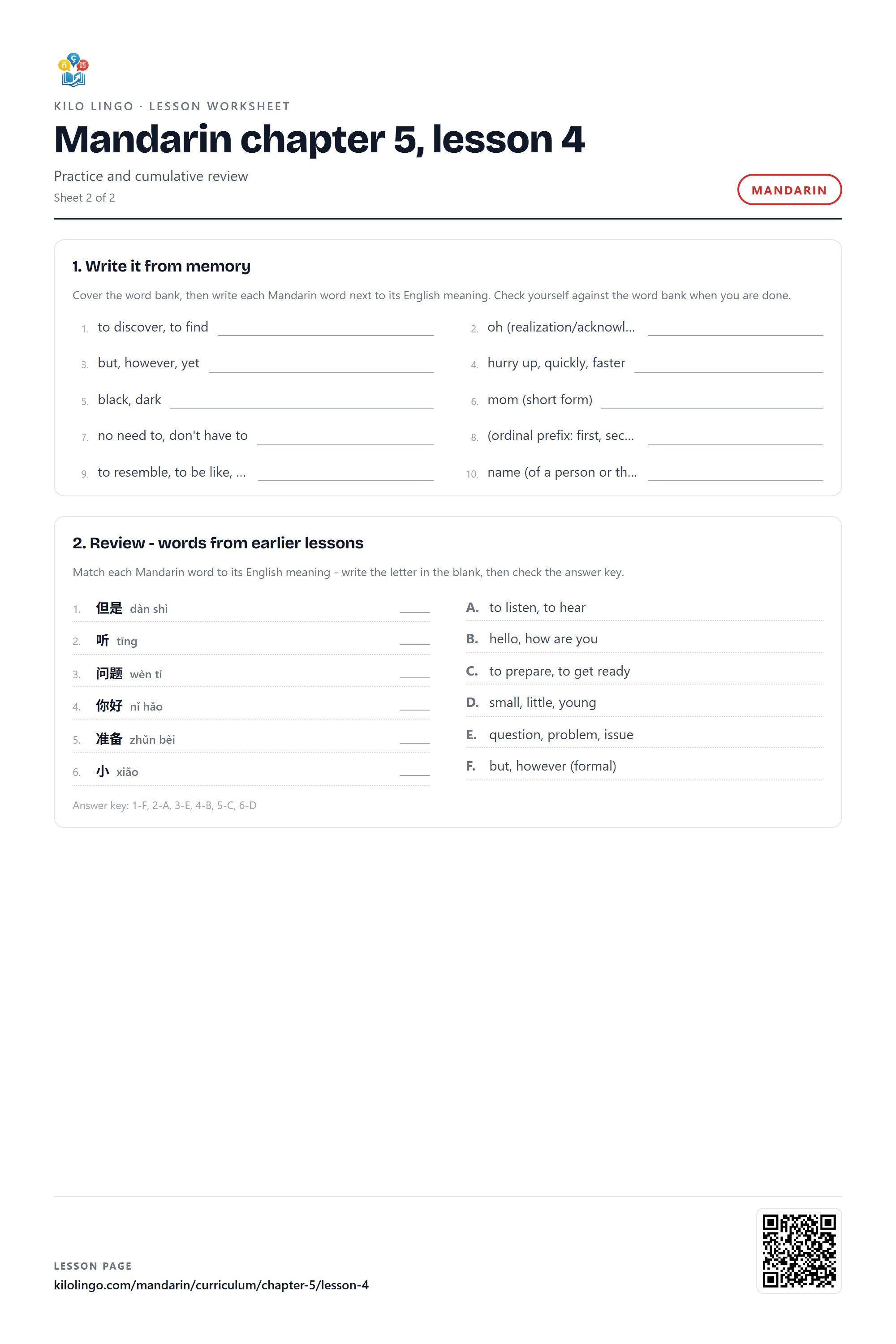
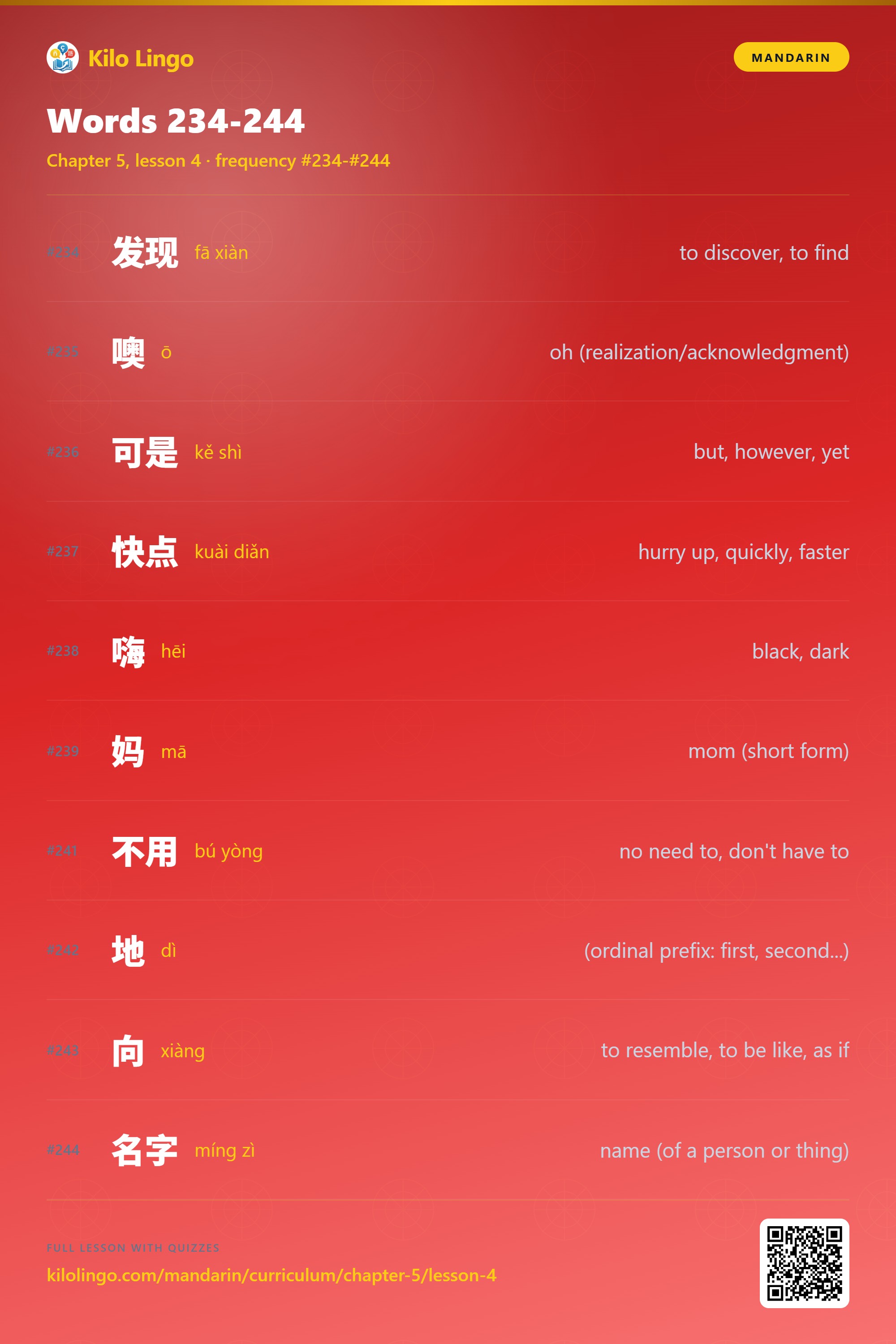
- Words 234-244Vocabulary
10 words · ranks 234-244
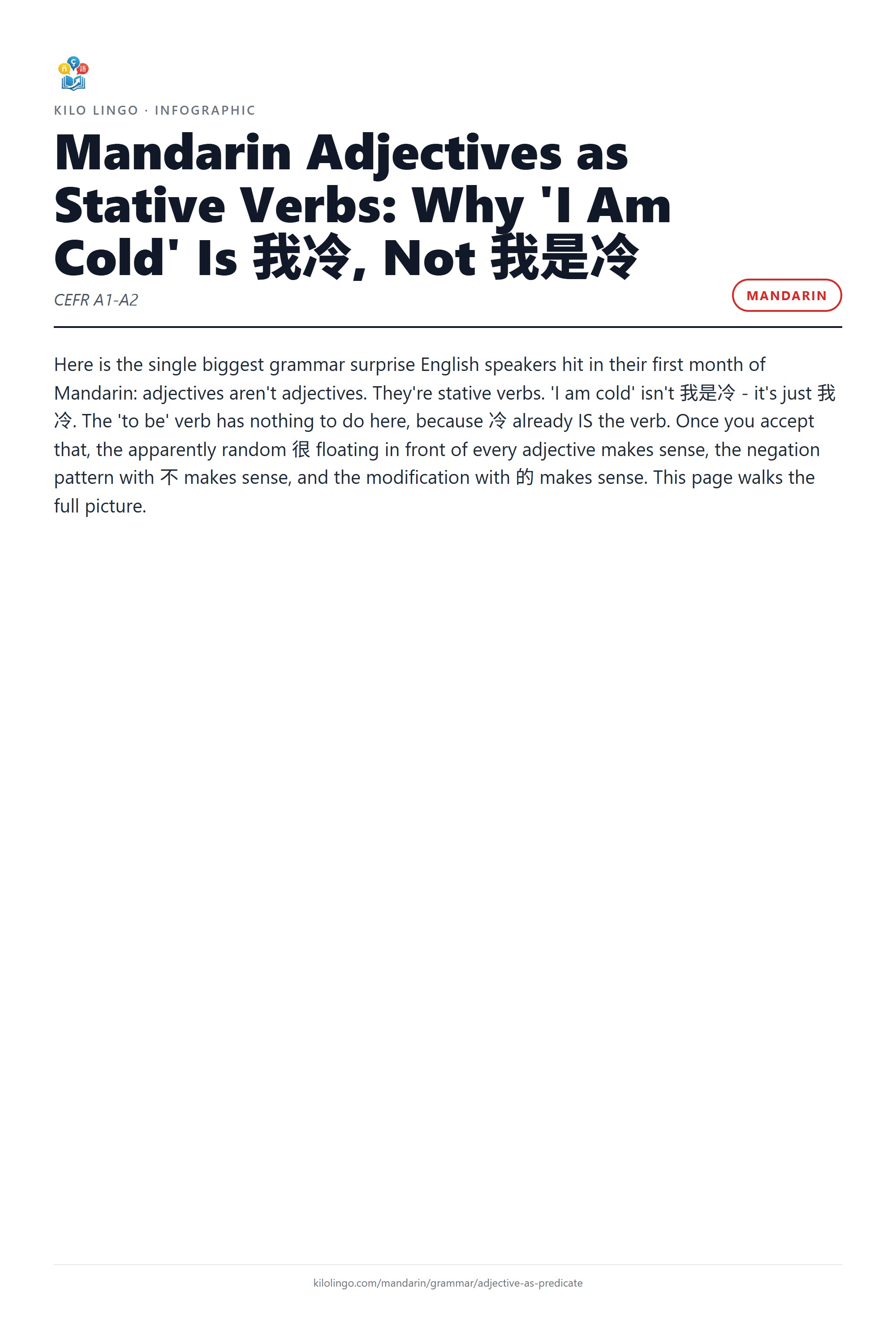
- Adjectives as stative verbsGrammar
Mandarin adjectives ARE verbs. 'I am cold' is 我冷, not 我是冷. Why 很 is a default filler, not always 'very', and how to negate with 不.
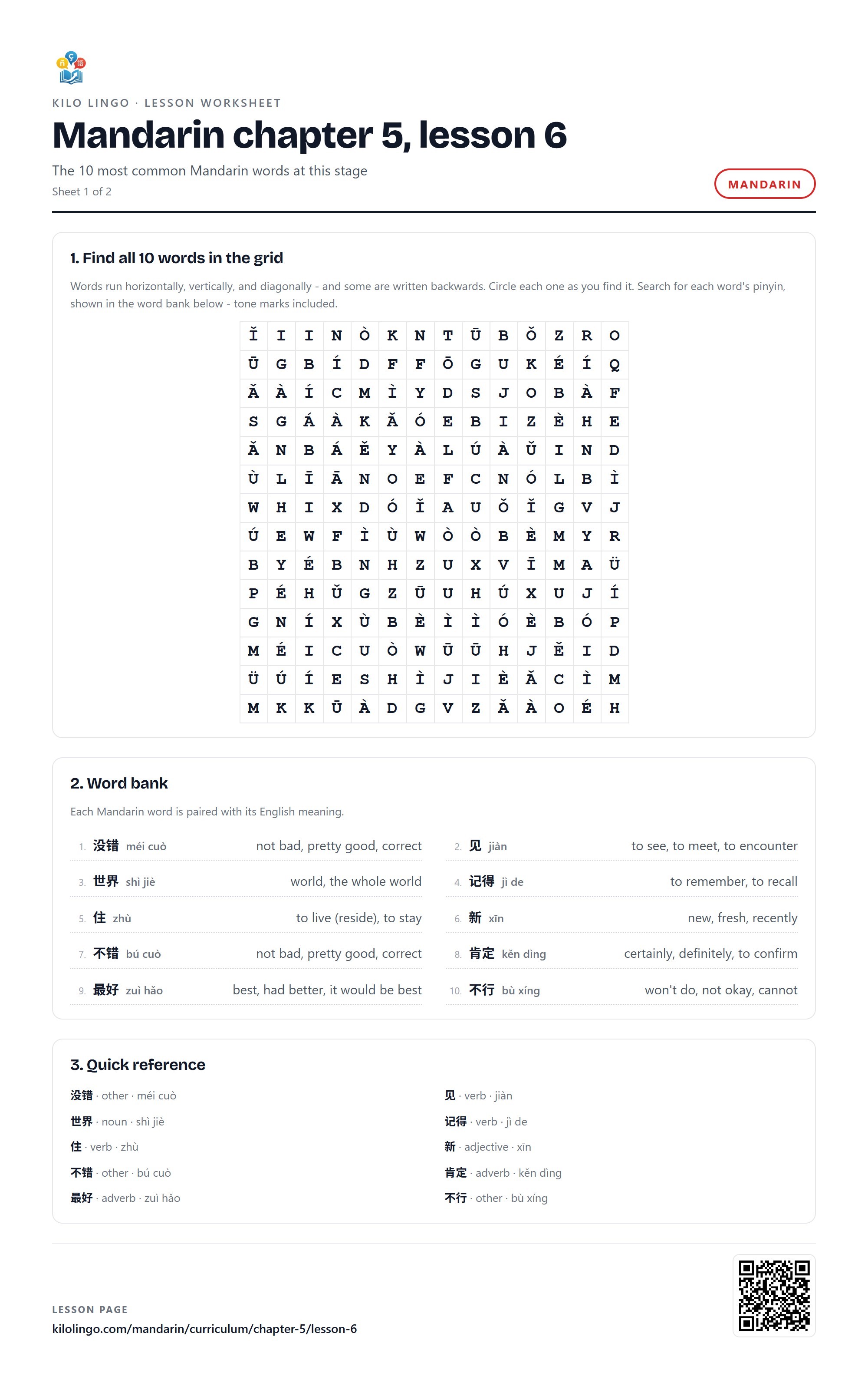
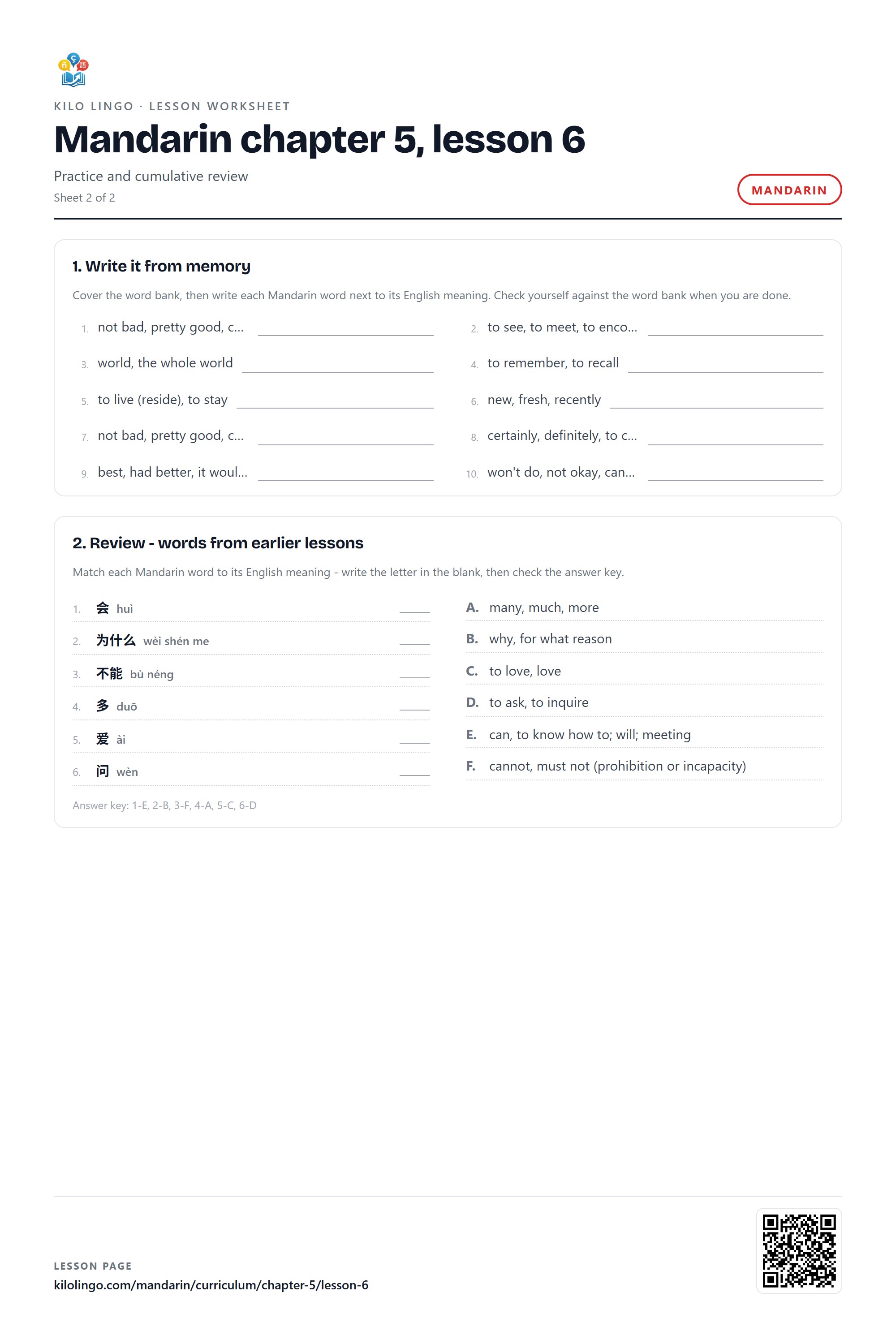
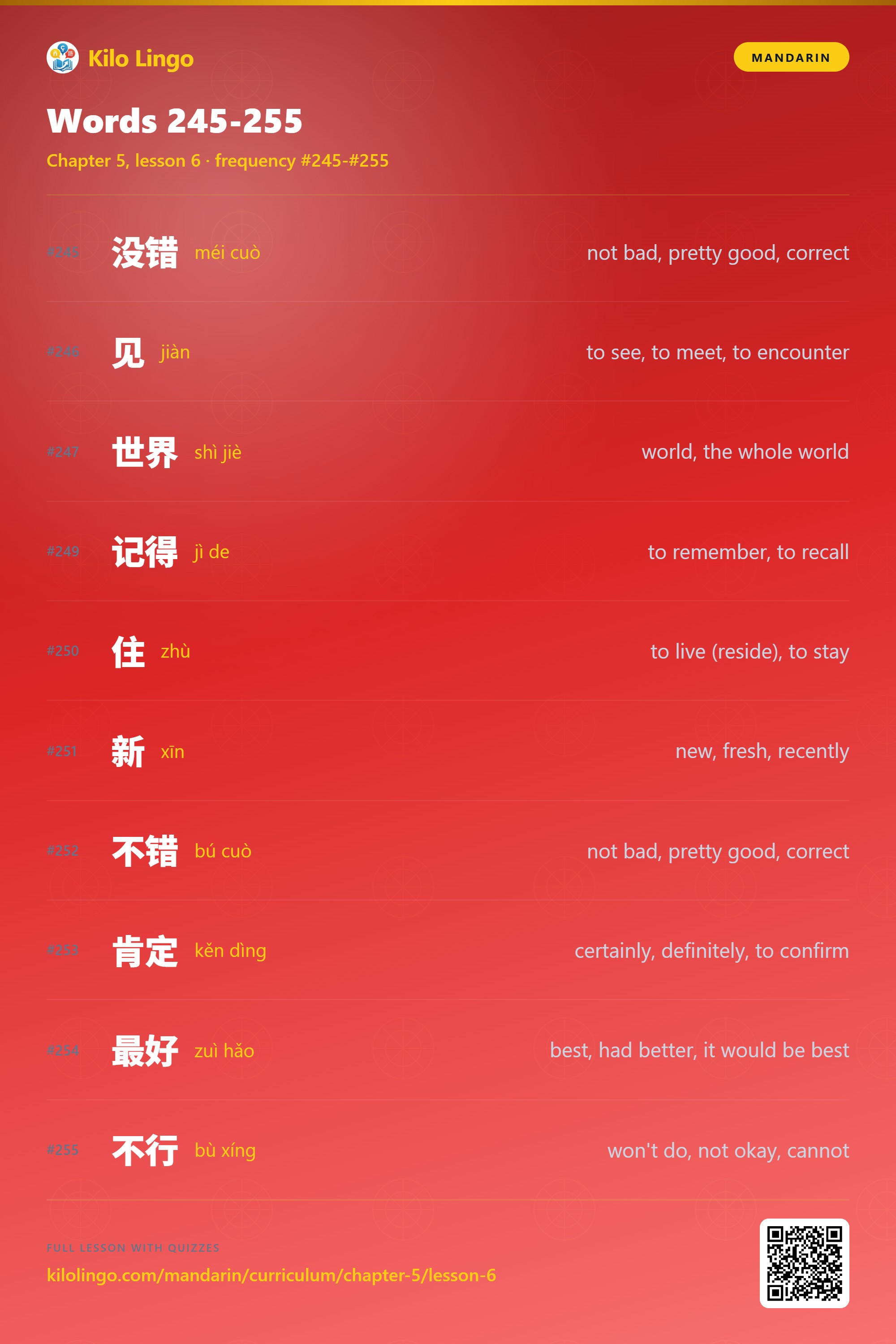
- Words 245-255Vocabulary
10 words · ranks 245-255
- Word Bubbles review sessionReview games
Pop the words you just met by matching each one to its meaning. A couple of rounds and the batch is yours.
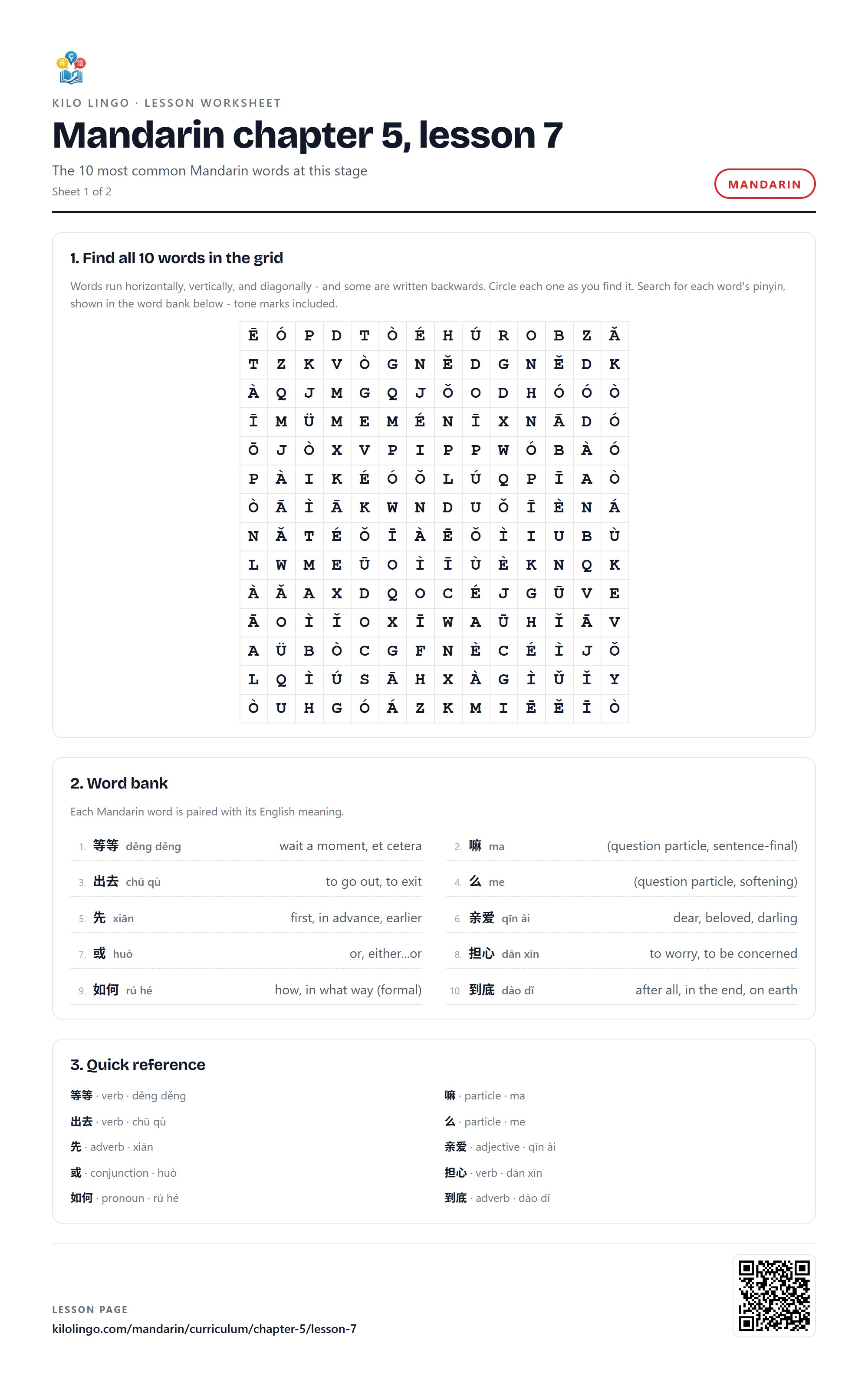
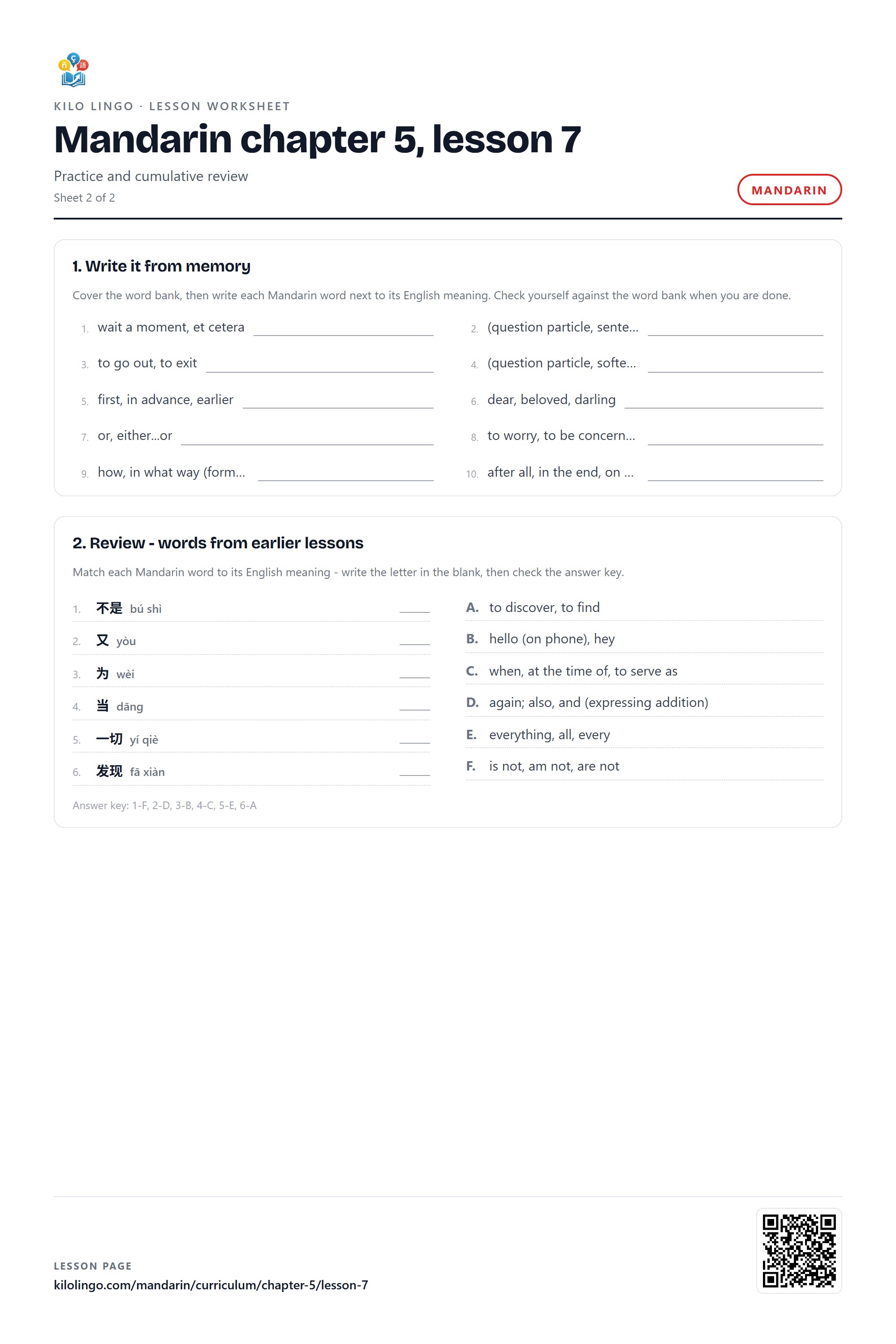
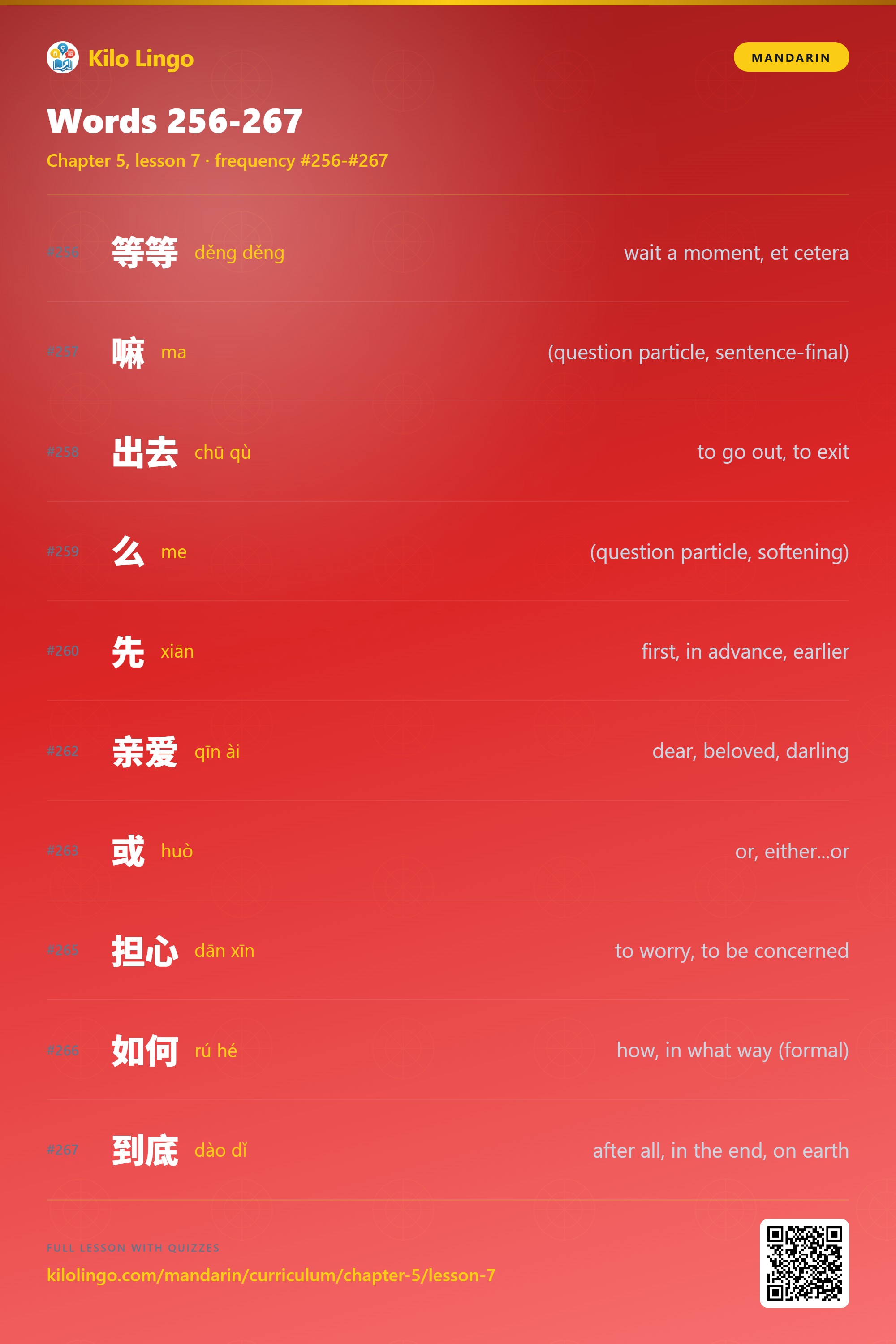
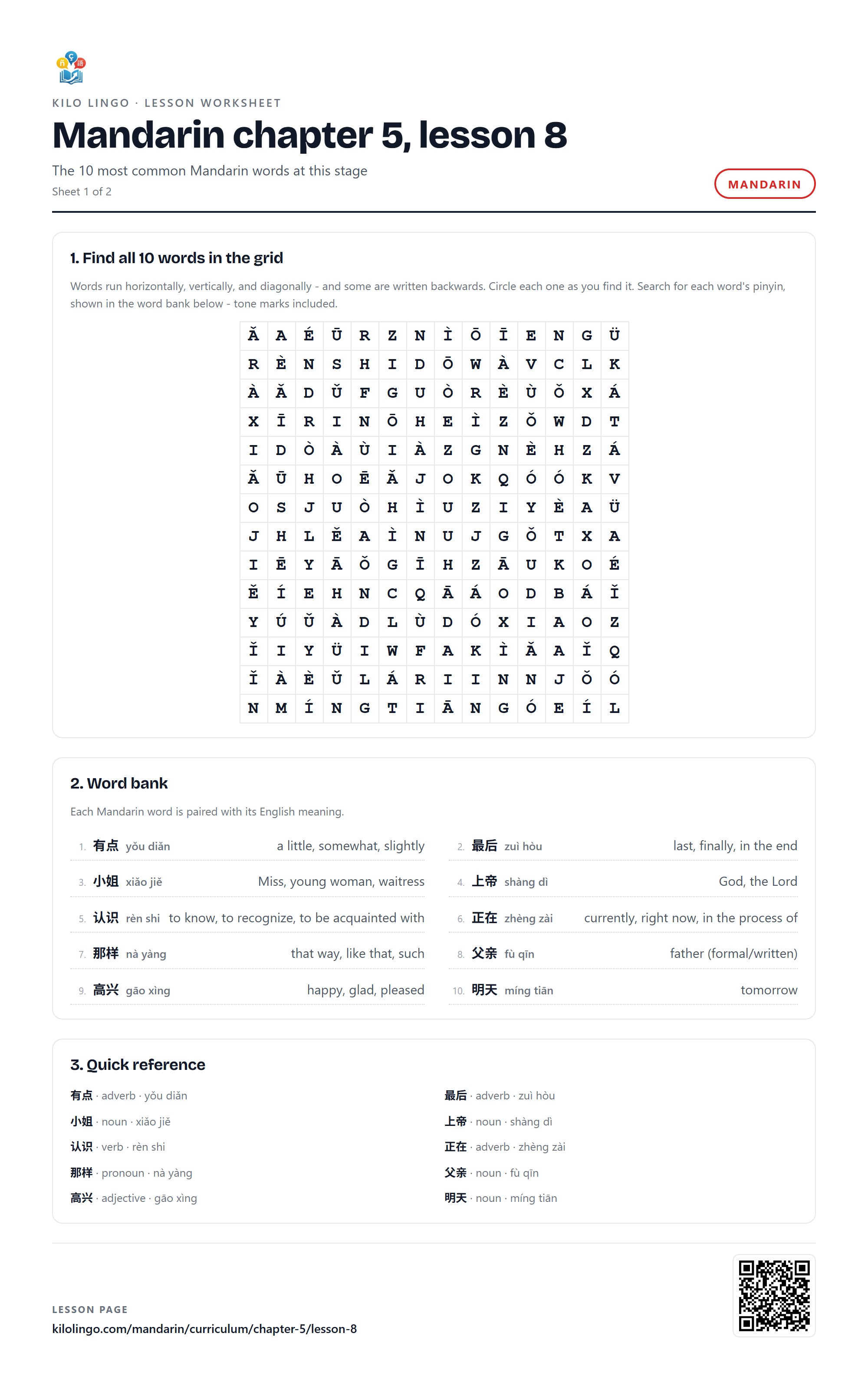
- Words 256-267Vocabulary
10 words · ranks 256-267
- Tone Shooter review sessionReview games
Shoot the words you just met into their tones by colour. The quickest way to fix a tone in place.
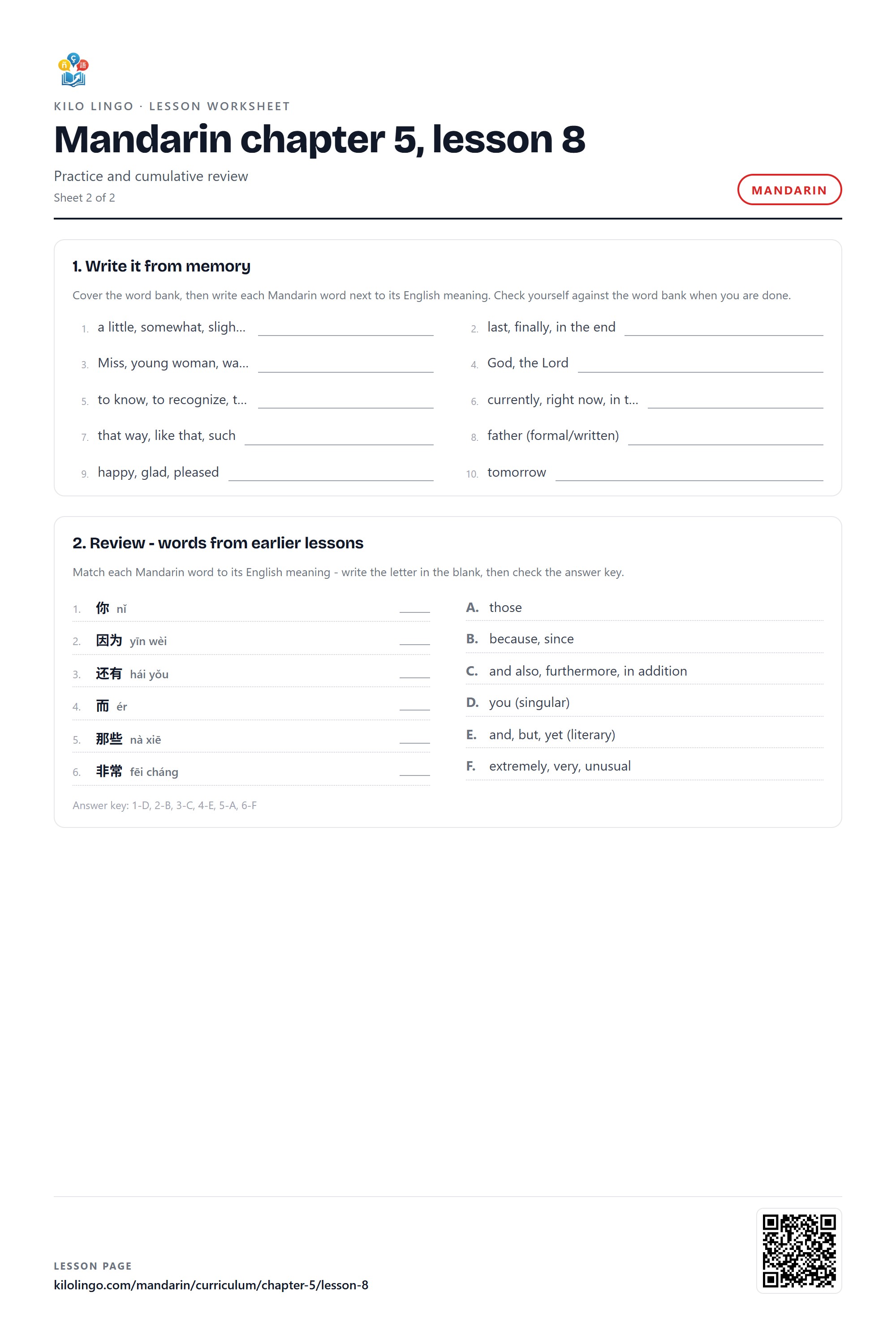
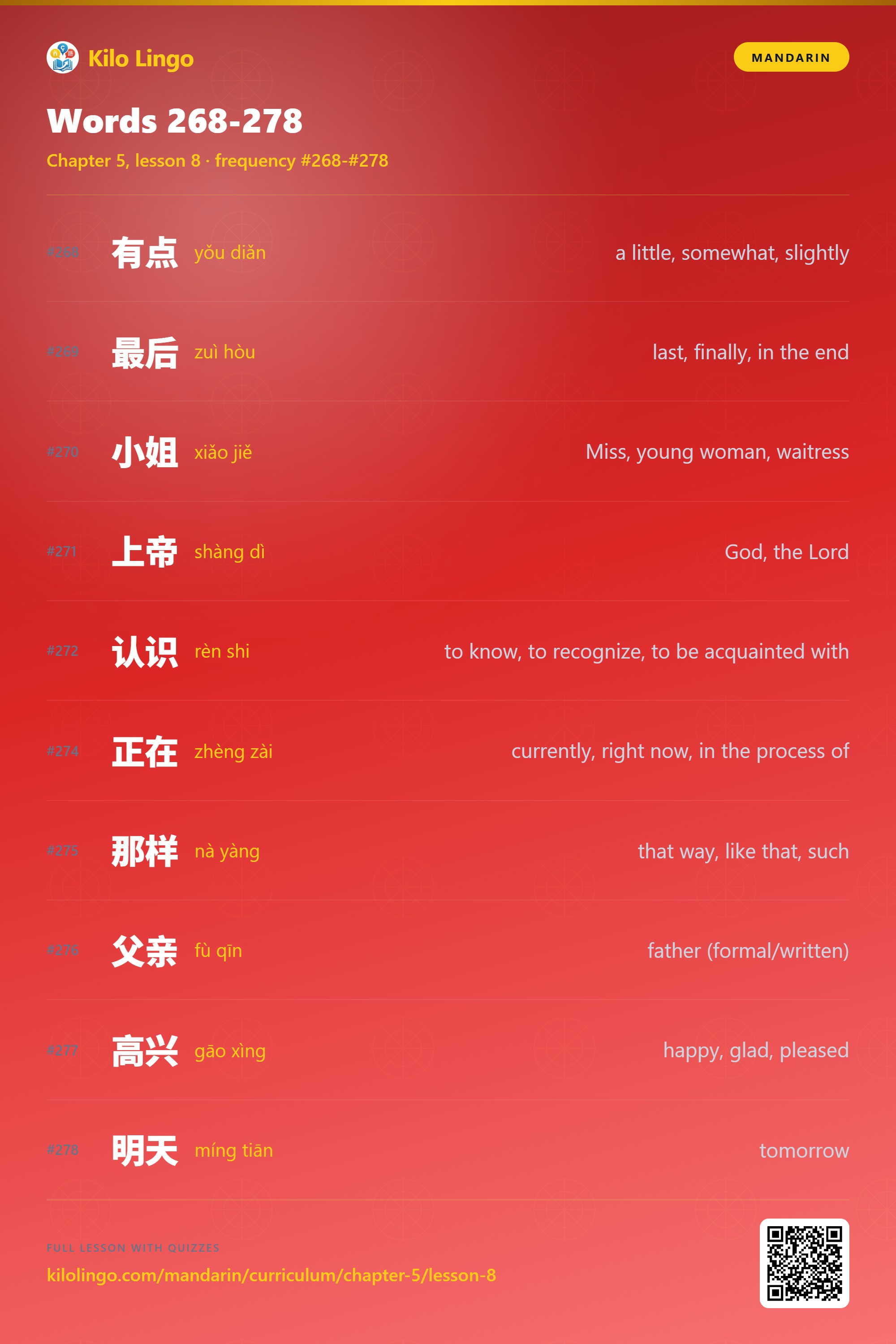
- Words 268-278Vocabulary
10 words · ranks 268-278
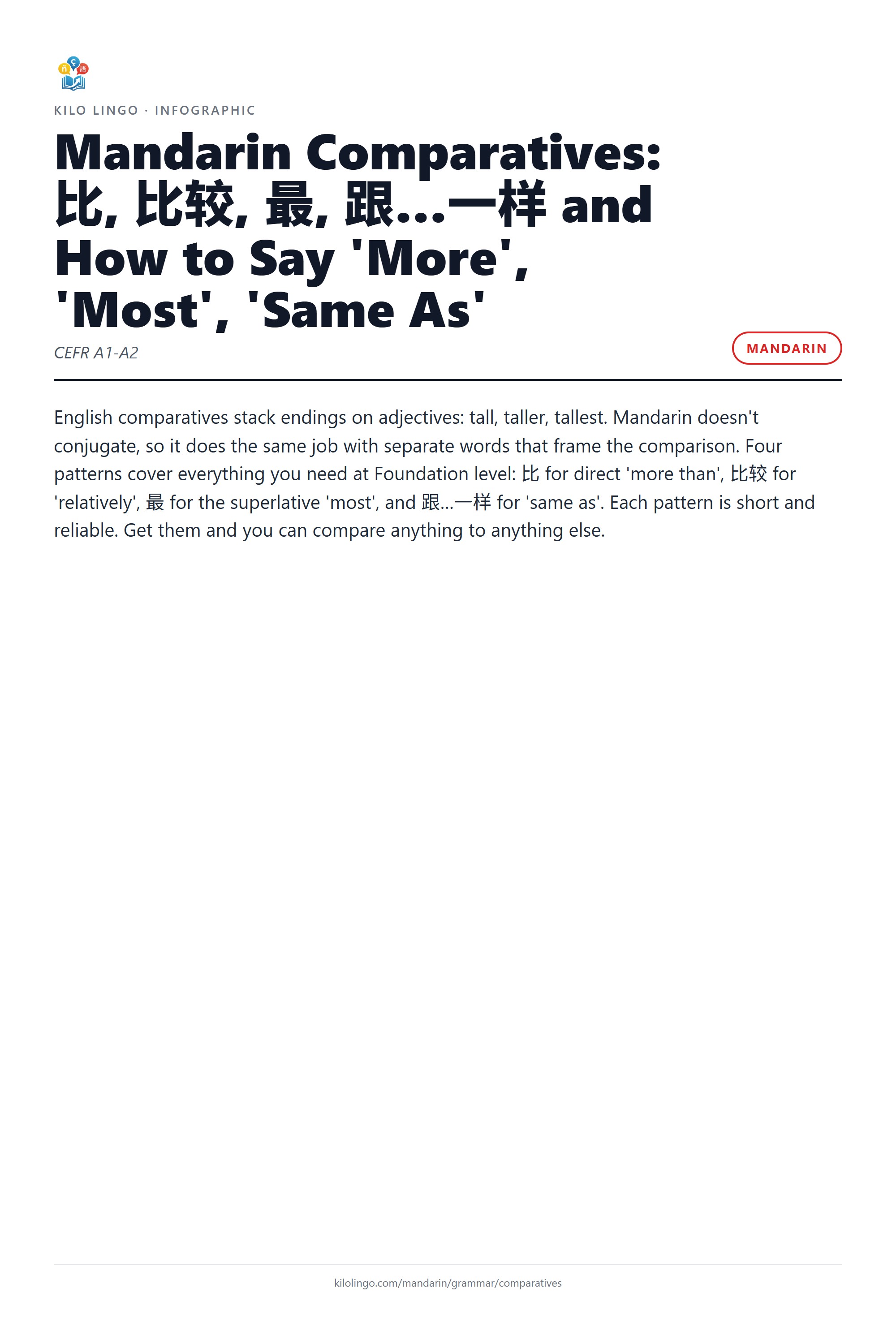
- Comparatives: 比, 比较, 最, 跟…一样Grammar
A 比 B + adjective for 'more than'. 比较 for 'relatively'. 最 for 'most'. 跟/和…一样 for 'same as'. The patterns side by side.
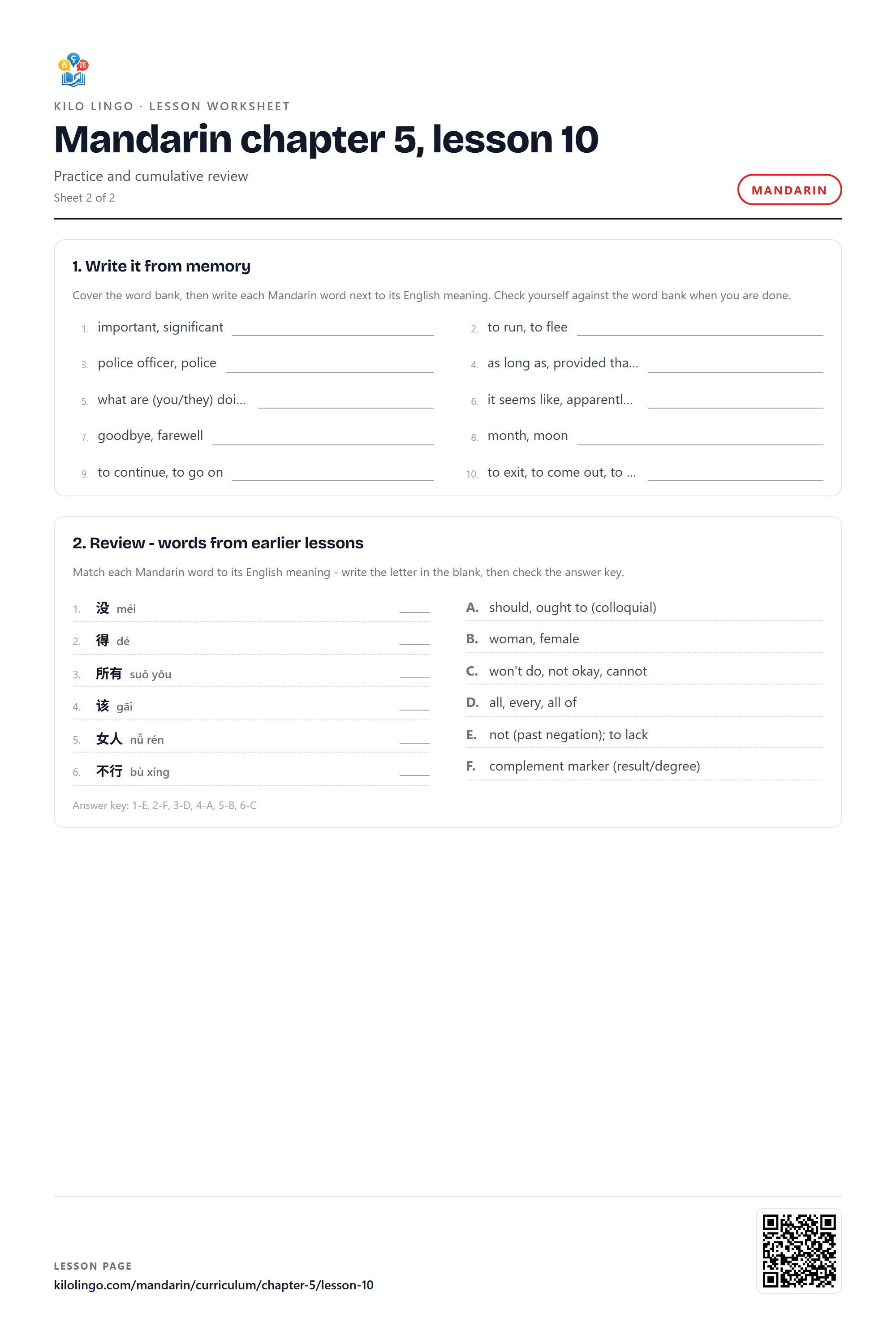
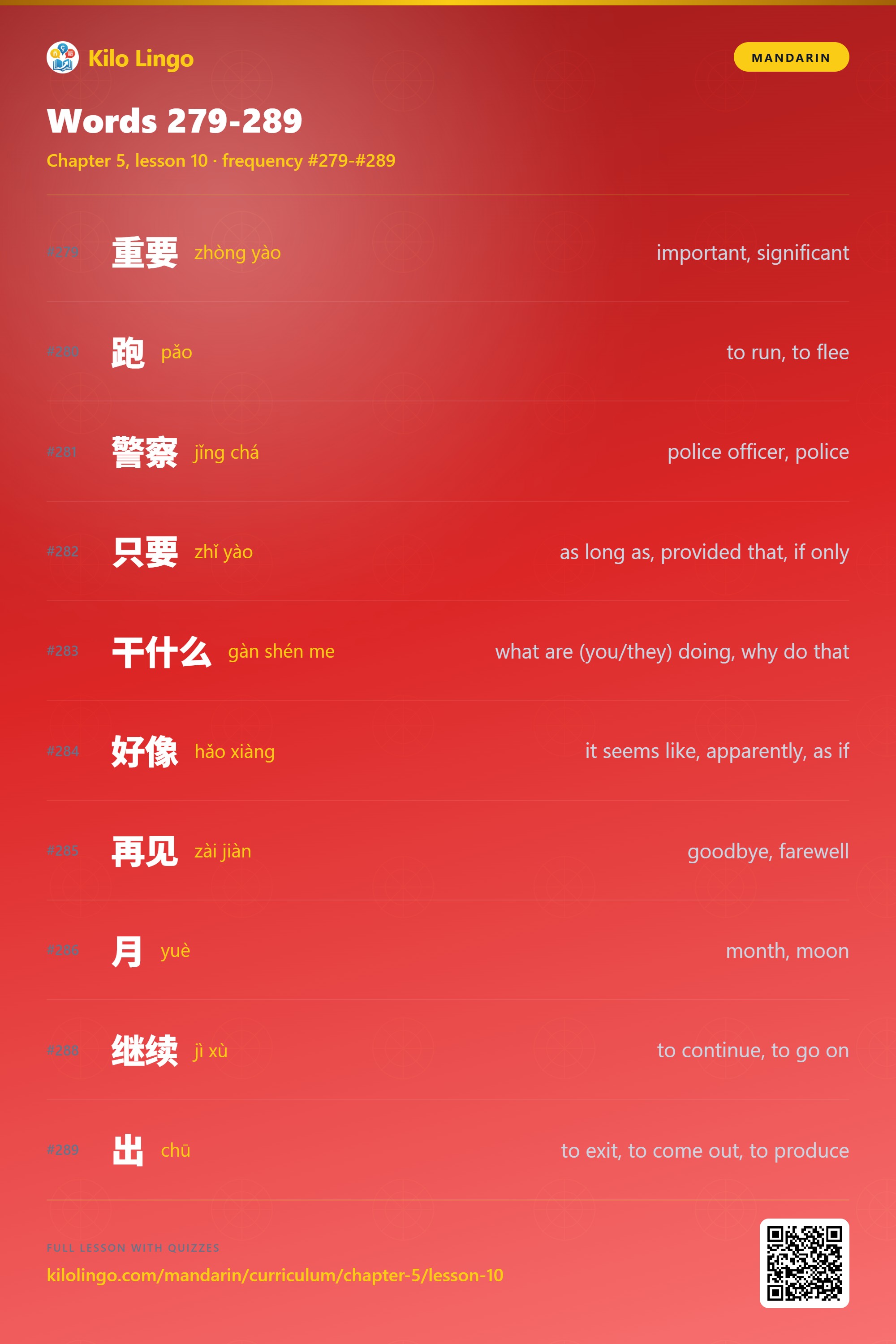
- Words 279-289Vocabulary
10 words · ranks 279-289
- Word Bubbles review sessionReview games
Pop the words you just met by matching each one to its meaning. A couple of rounds and the batch is yours.
- Words 290-300Vocabulary
10 words · ranks 290-300
- Story milestone: top 300 wordsGraded-reader story
You can read this story using only the words you've learned so far. Every content word sits at or above the rank-300 ceiling.
Post a hello to the Chinese-learning community, in Mandarin.
- 会, 能 or 可以?Mistake clinic
All three become
canin English. Mandarin keeps three different claims apart. - Arcade reviewReview games
Replay this chapter's words as games - a different kind of repetition, and it counts.
Word printables
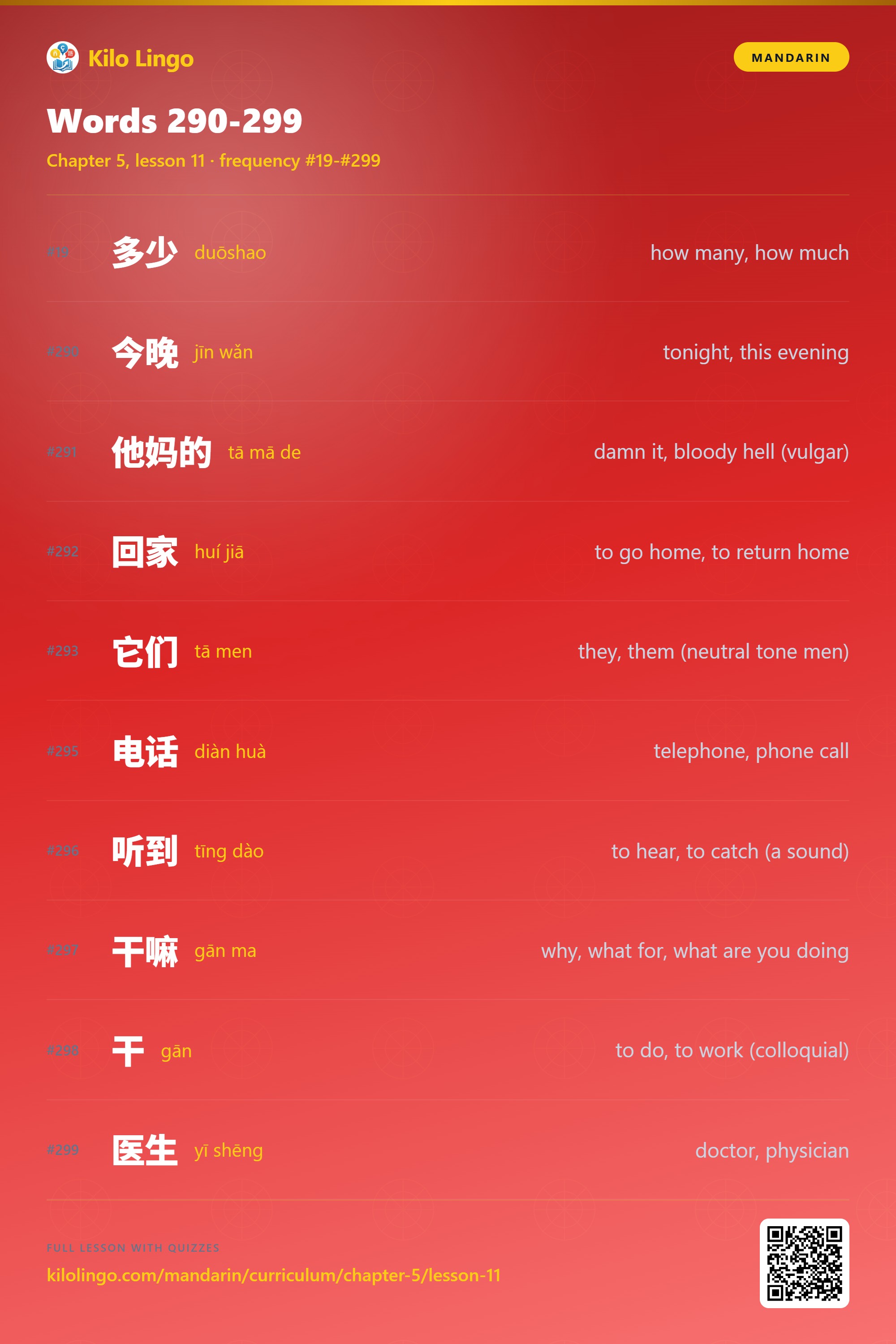
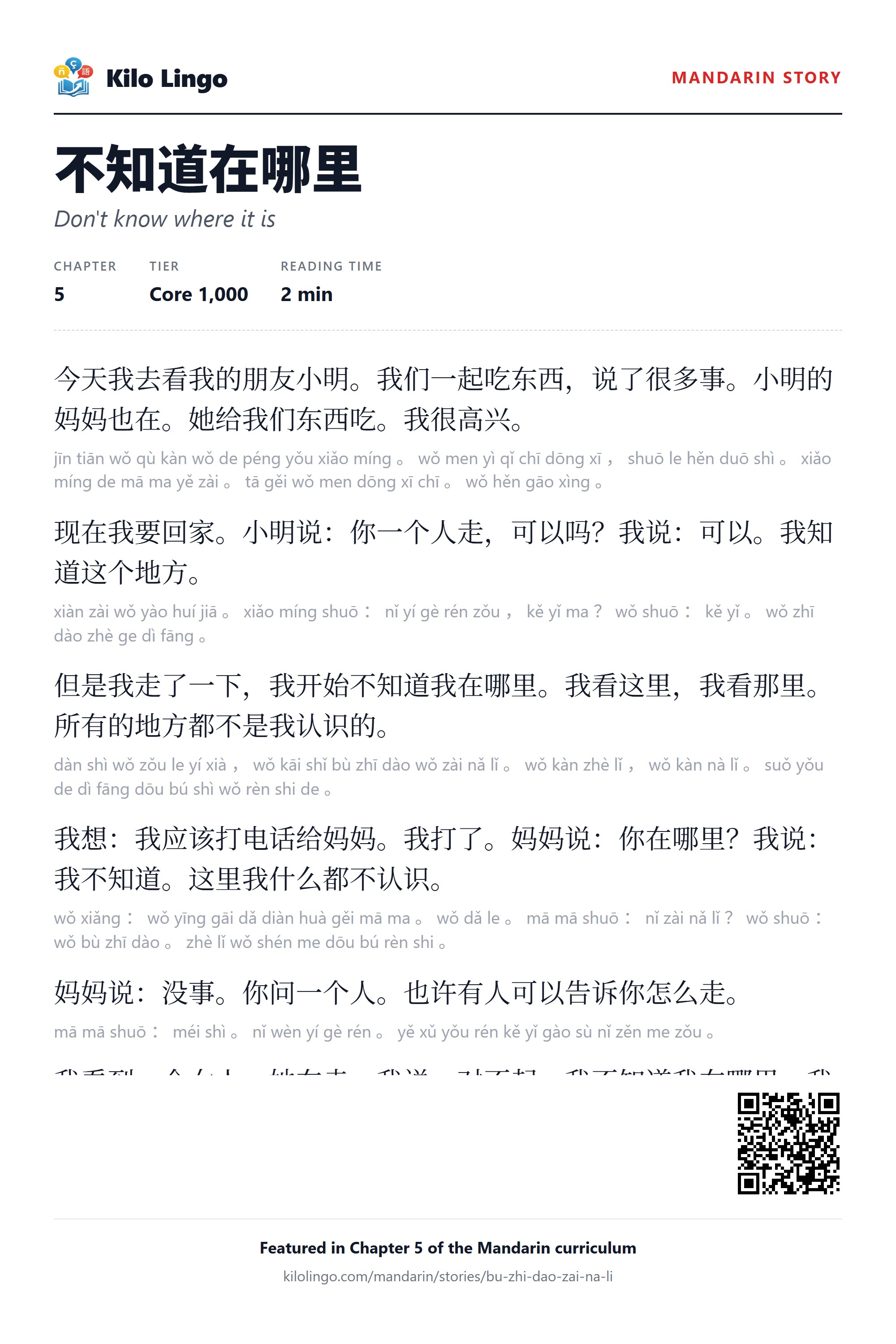
Per-word sheets90 words · a worksheet, infographic and listicle each









Chapter 6 · 要 or 想?
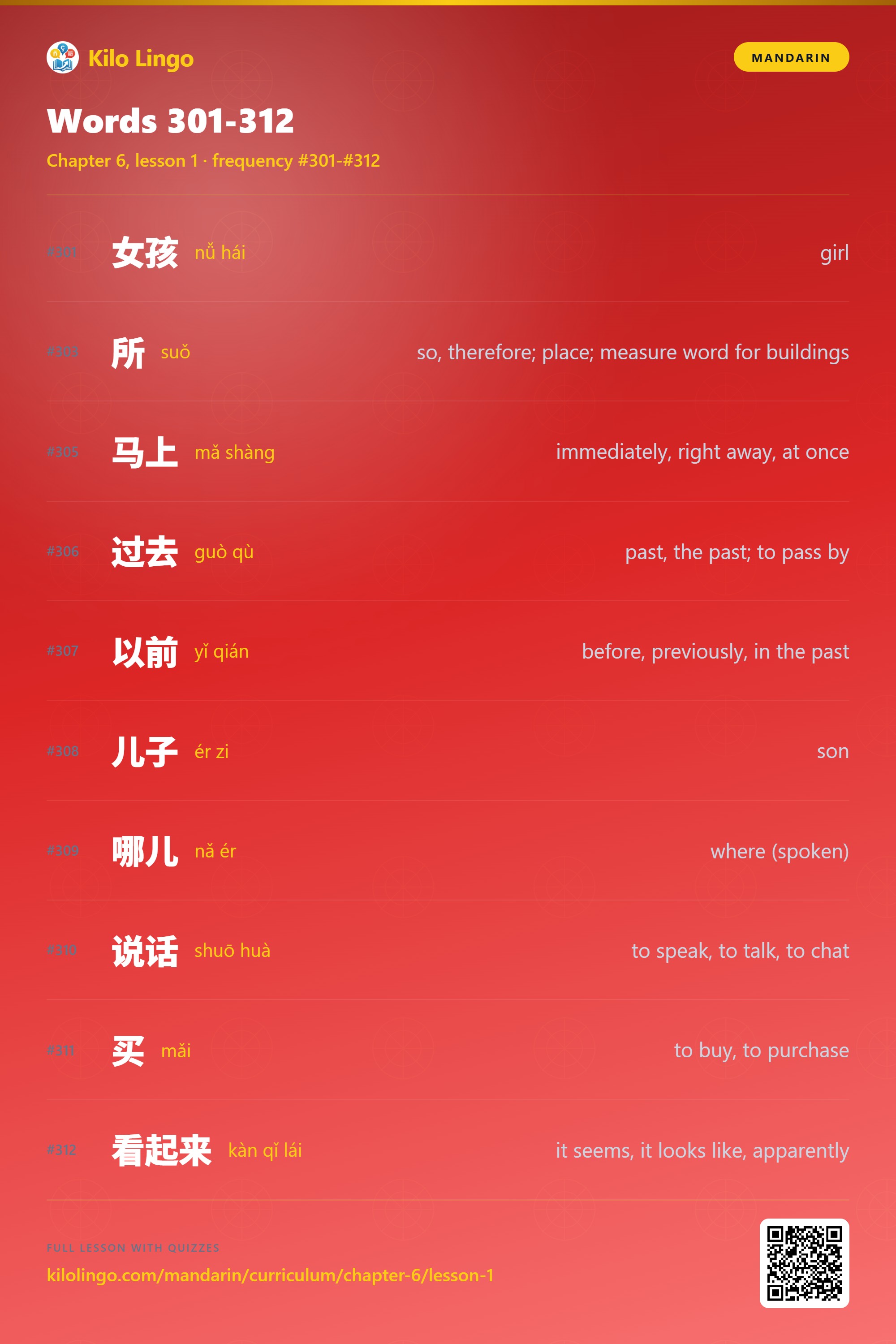
Chapter page →- Words 301-312Vocabulary
10 words · ranks 301-312
- Word Bubbles review sessionReview games
Pop the words you just met by matching each one to its meaning. A couple of rounds and the batch is yours.
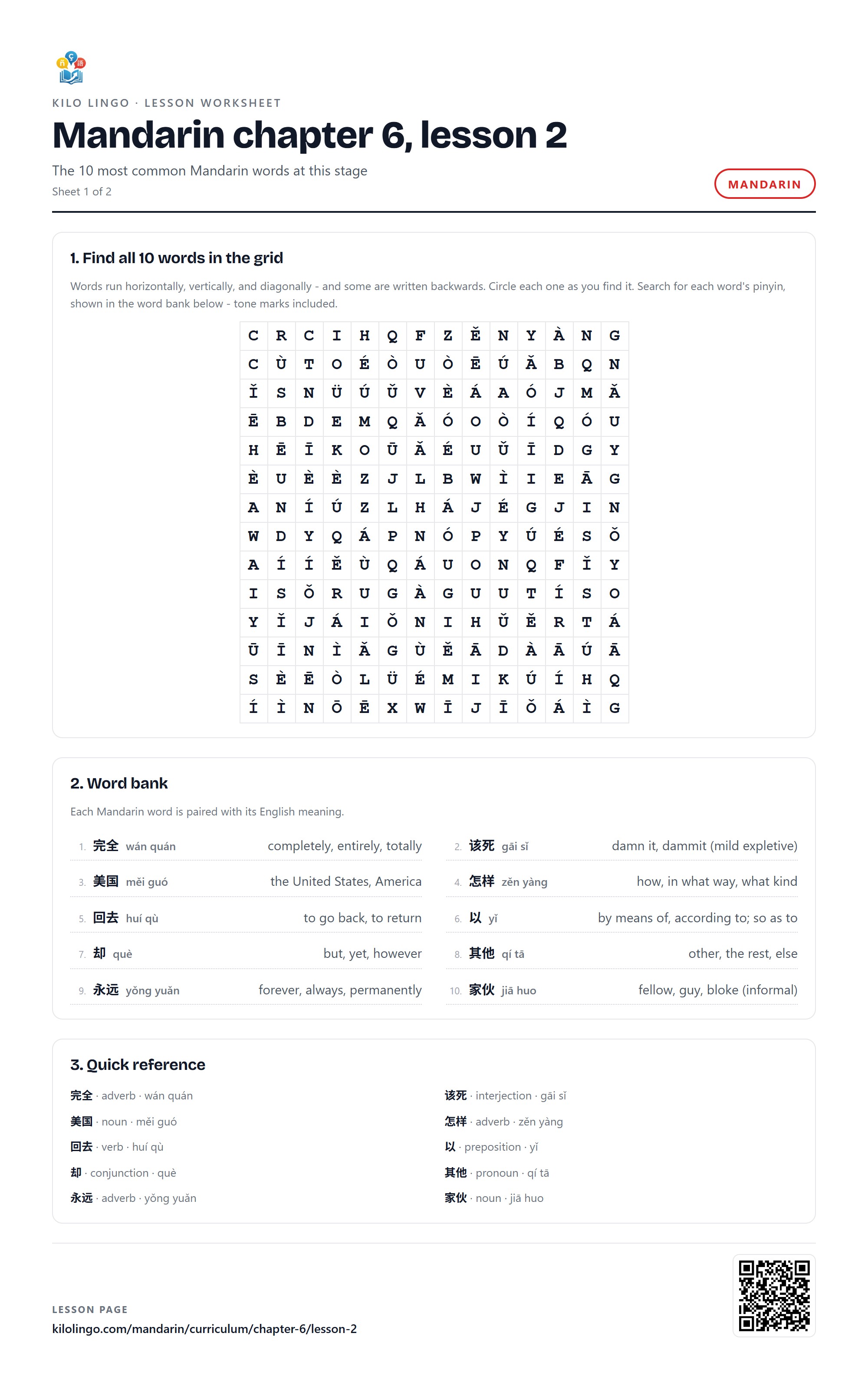
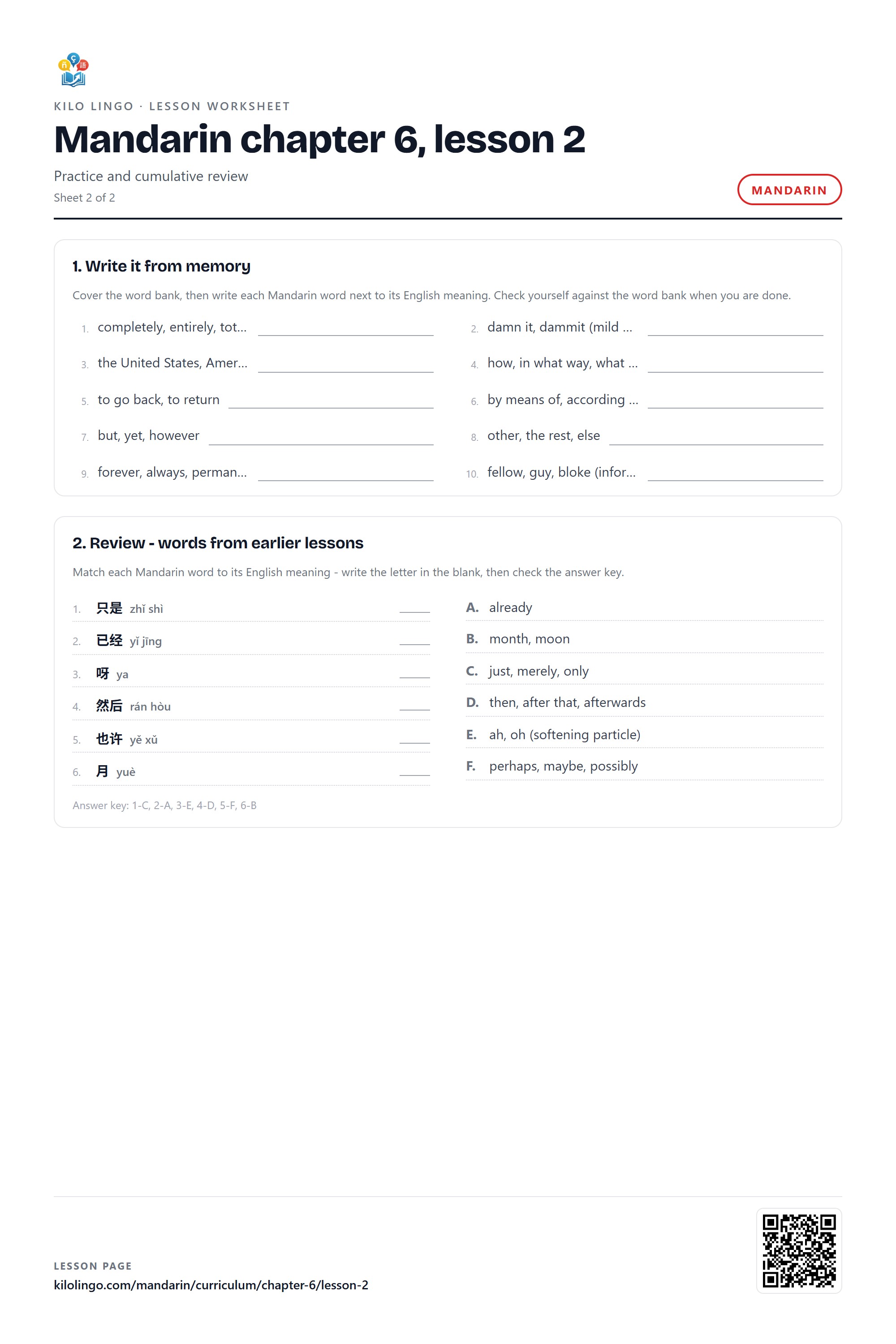
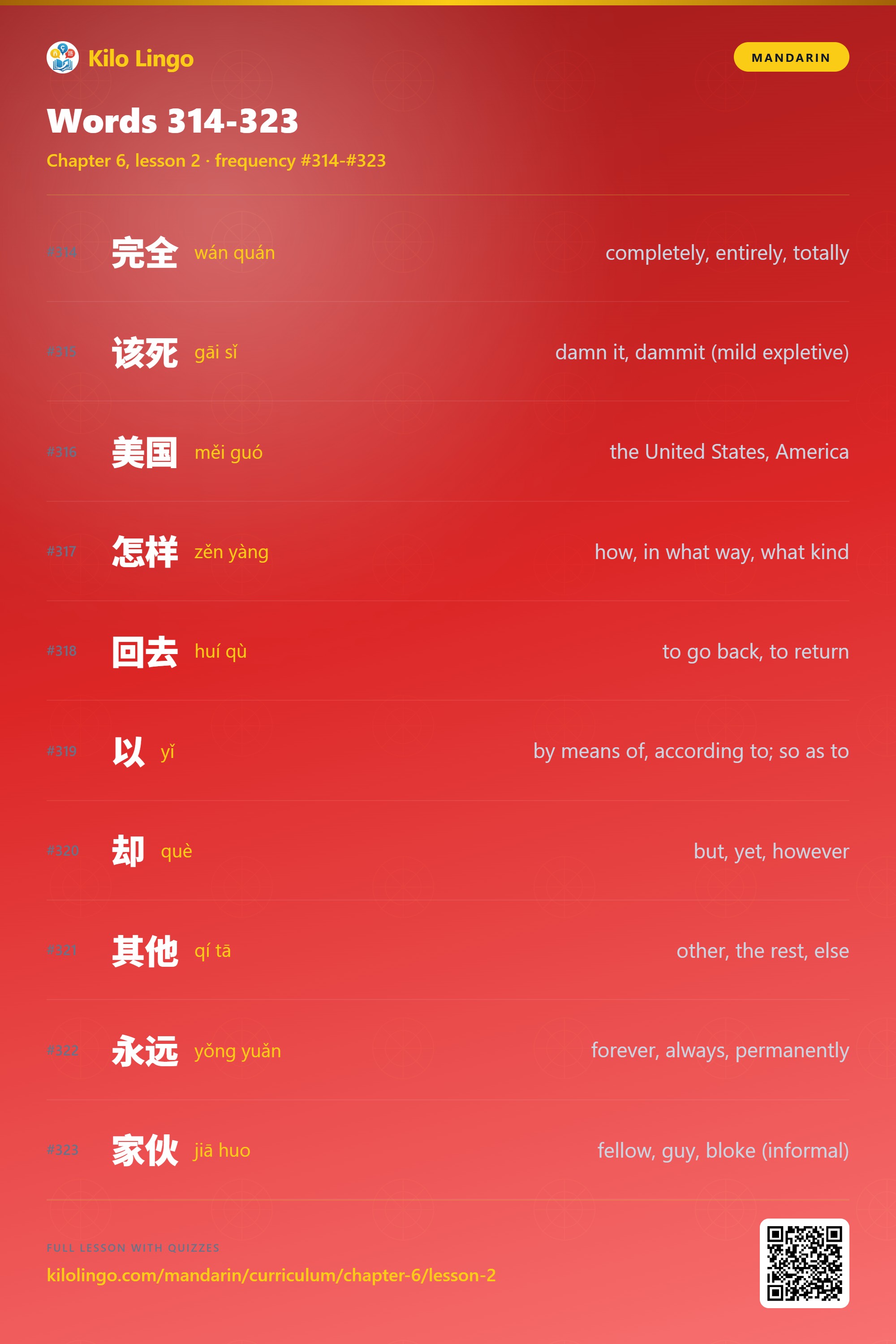
- Words 314-323Vocabulary
10 words · ranks 314-323
- Tone Shooter review sessionReview games
Shoot the words you just met into their tones by colour. The quickest way to fix a tone in place.
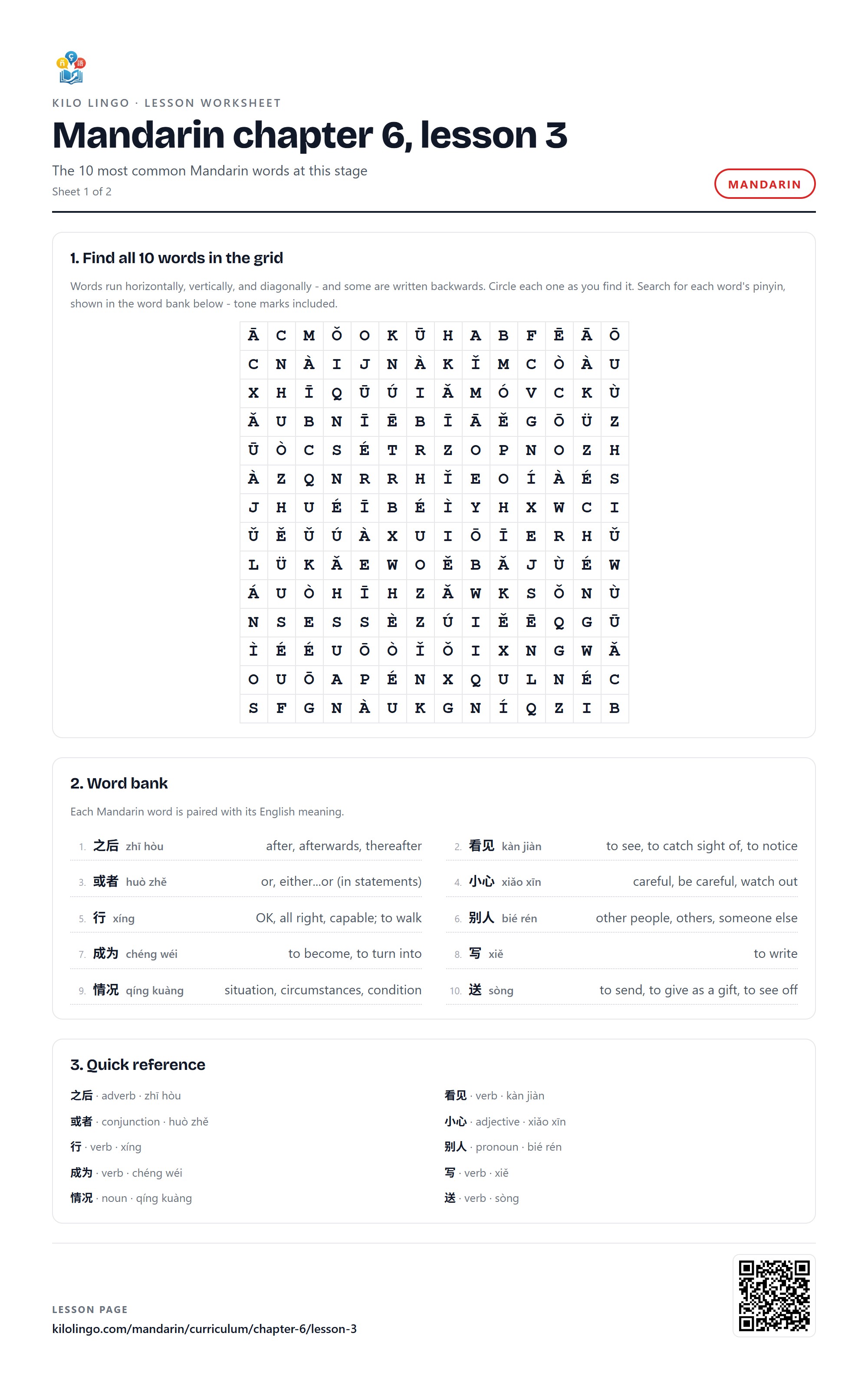
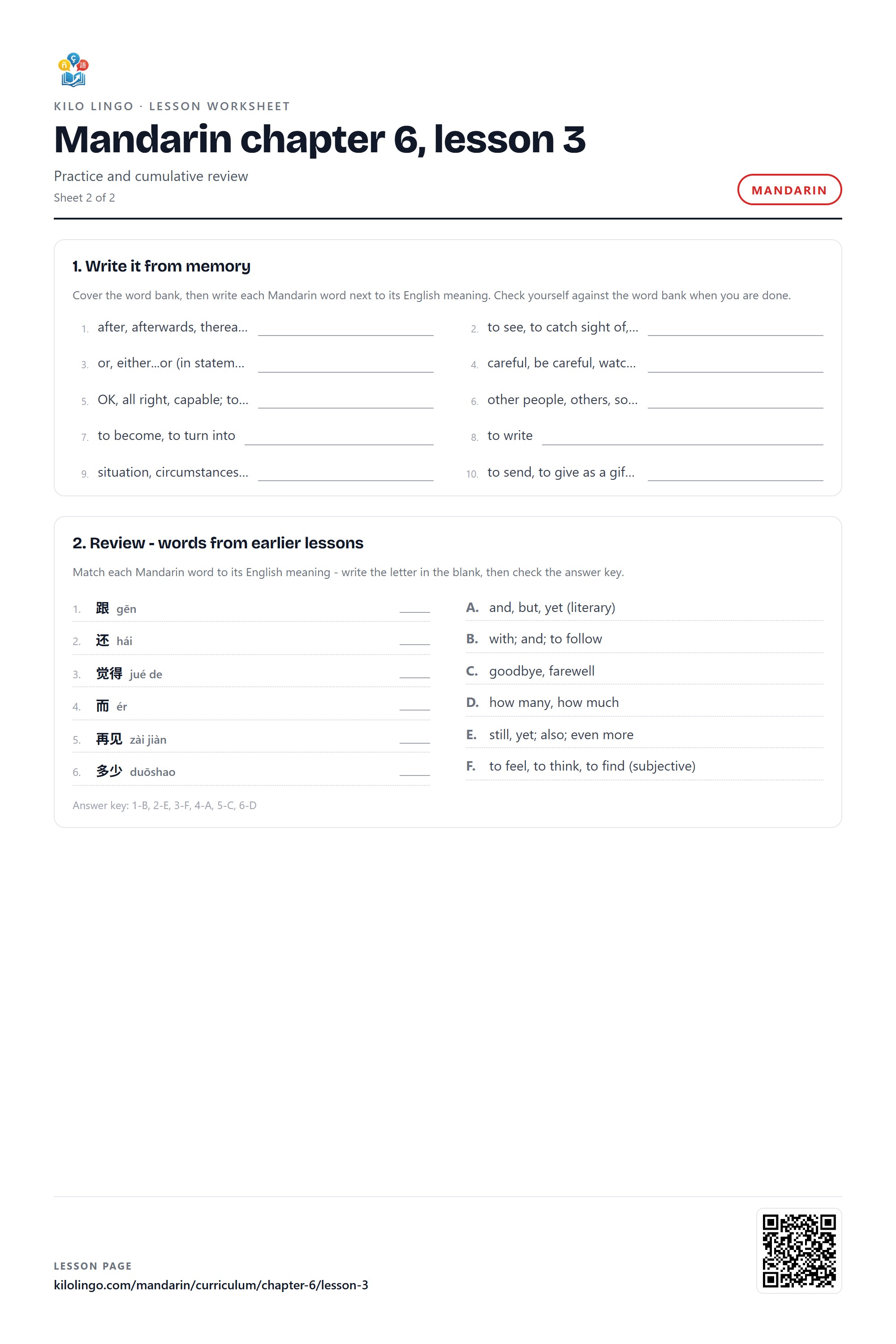
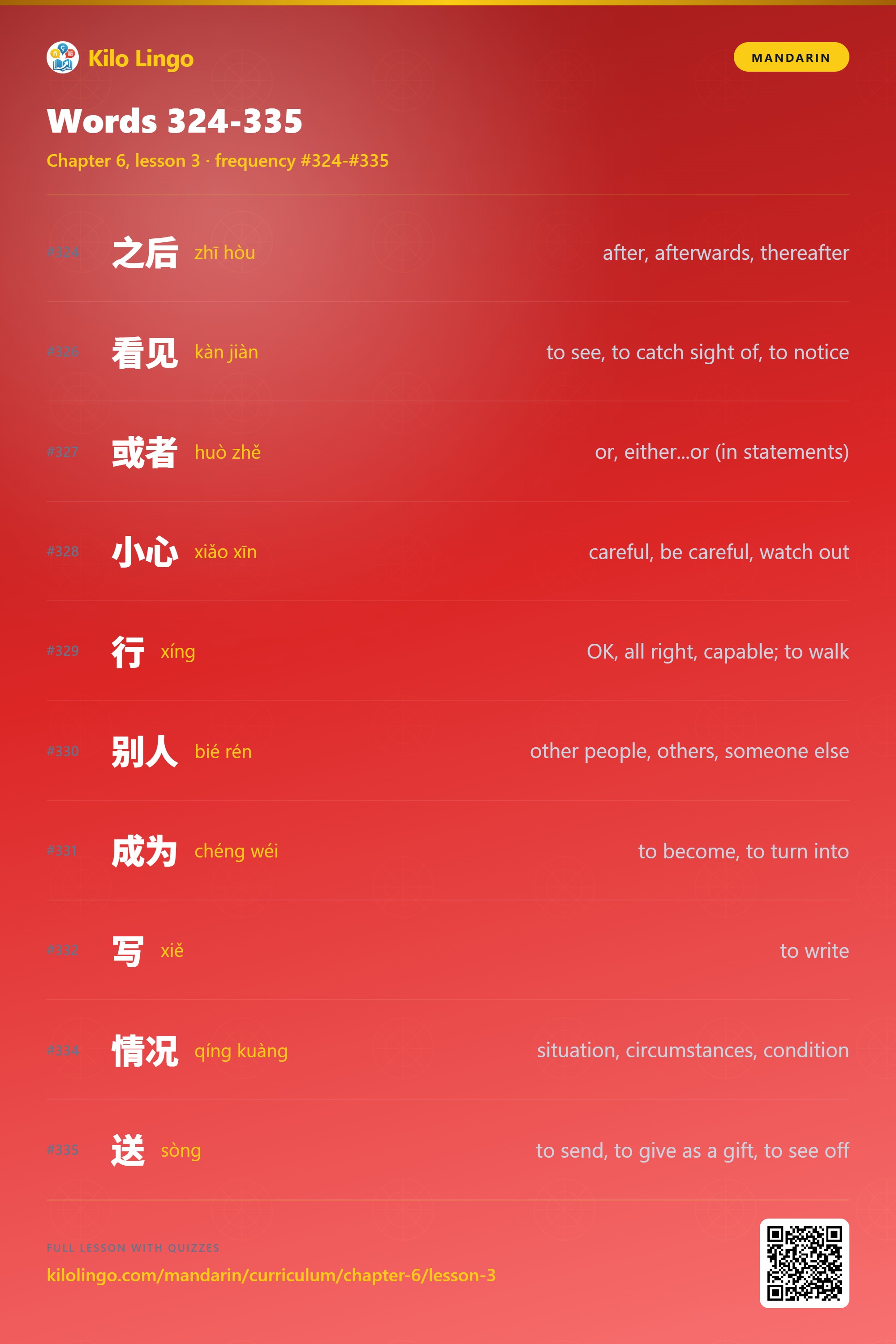
- Words 324-335Vocabulary
10 words · ranks 324-335
- Word Bubbles review sessionReview games
Pop the words you just met by matching each one to its meaning. A couple of rounds and the batch is yours.
- Words 336-346Vocabulary
10 words · ranks 336-346
- Tone Shooter review sessionReview games
Shoot the words you just met into their tones by colour. The quickest way to fix a tone in place.
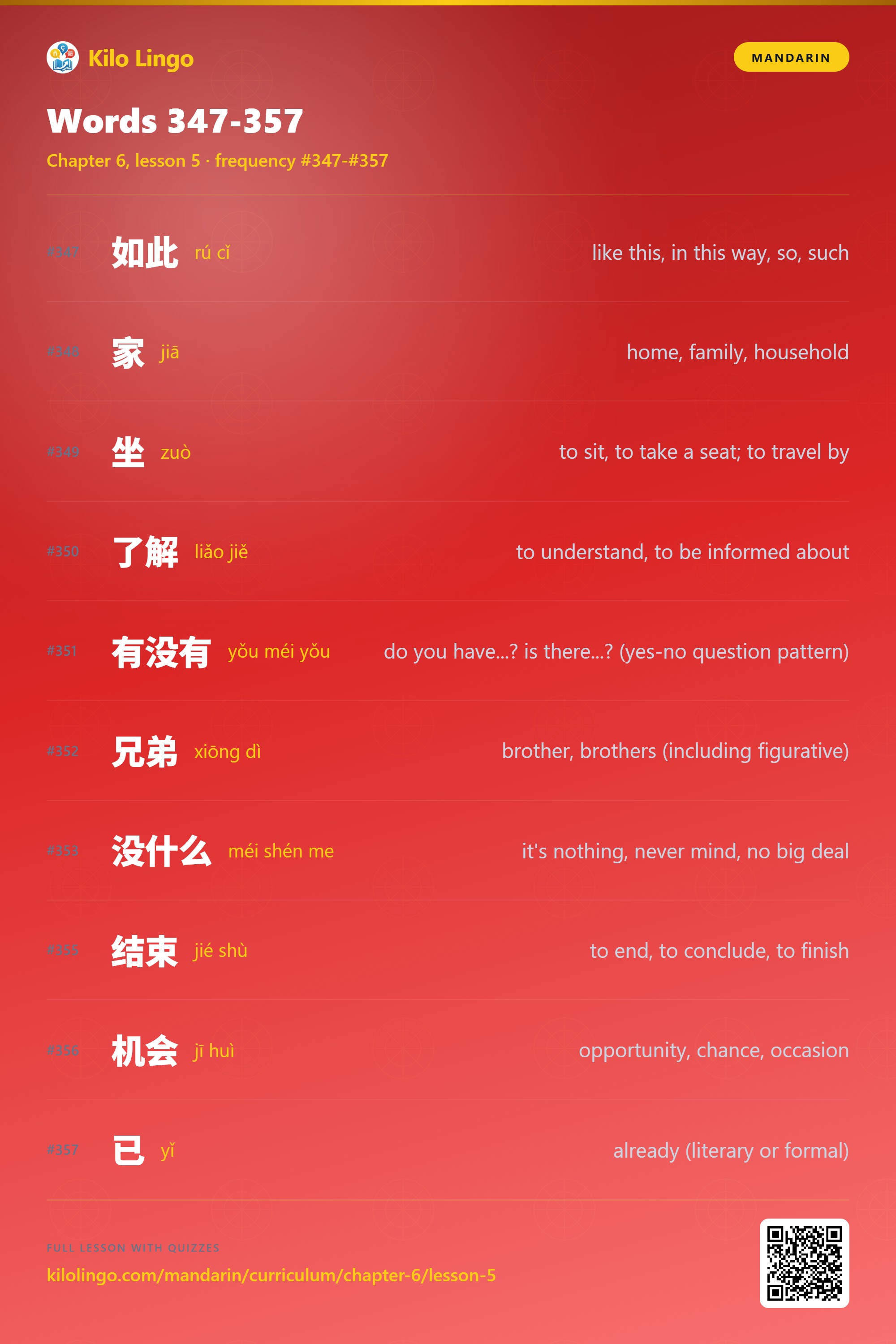
- Words 347-357Vocabulary
10 words · ranks 347-357
- 要 or 想?Mistake clinic
Both come out as
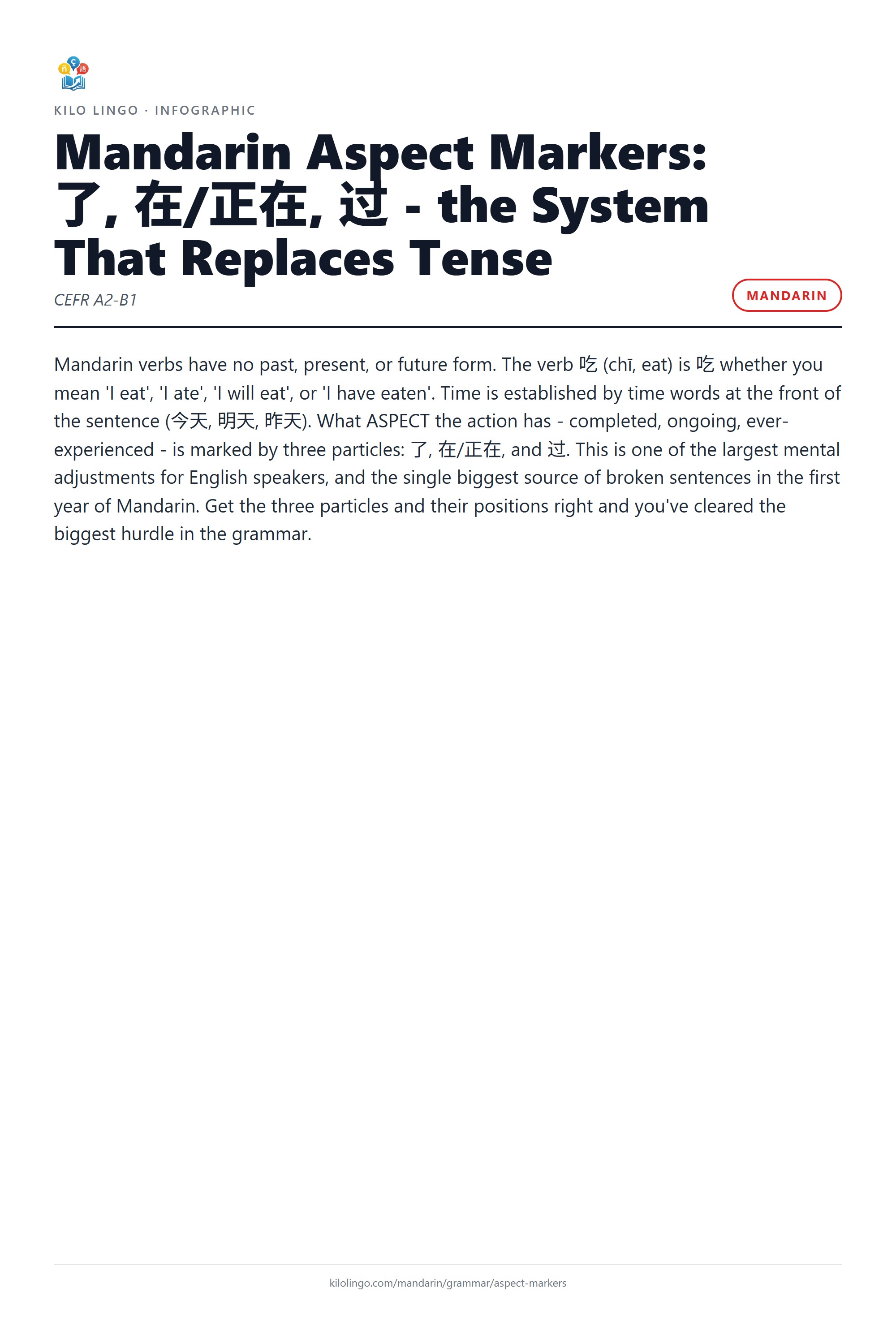
want, and one of them is considerably blunter. - Aspect markers: 了, 在/正在, 过Grammar
Mandarin replaces tense with aspect. 了 for completion and new states, 在/正在 for ongoing action, 过 for 'have ever' experience.
- Words 358-367Vocabulary
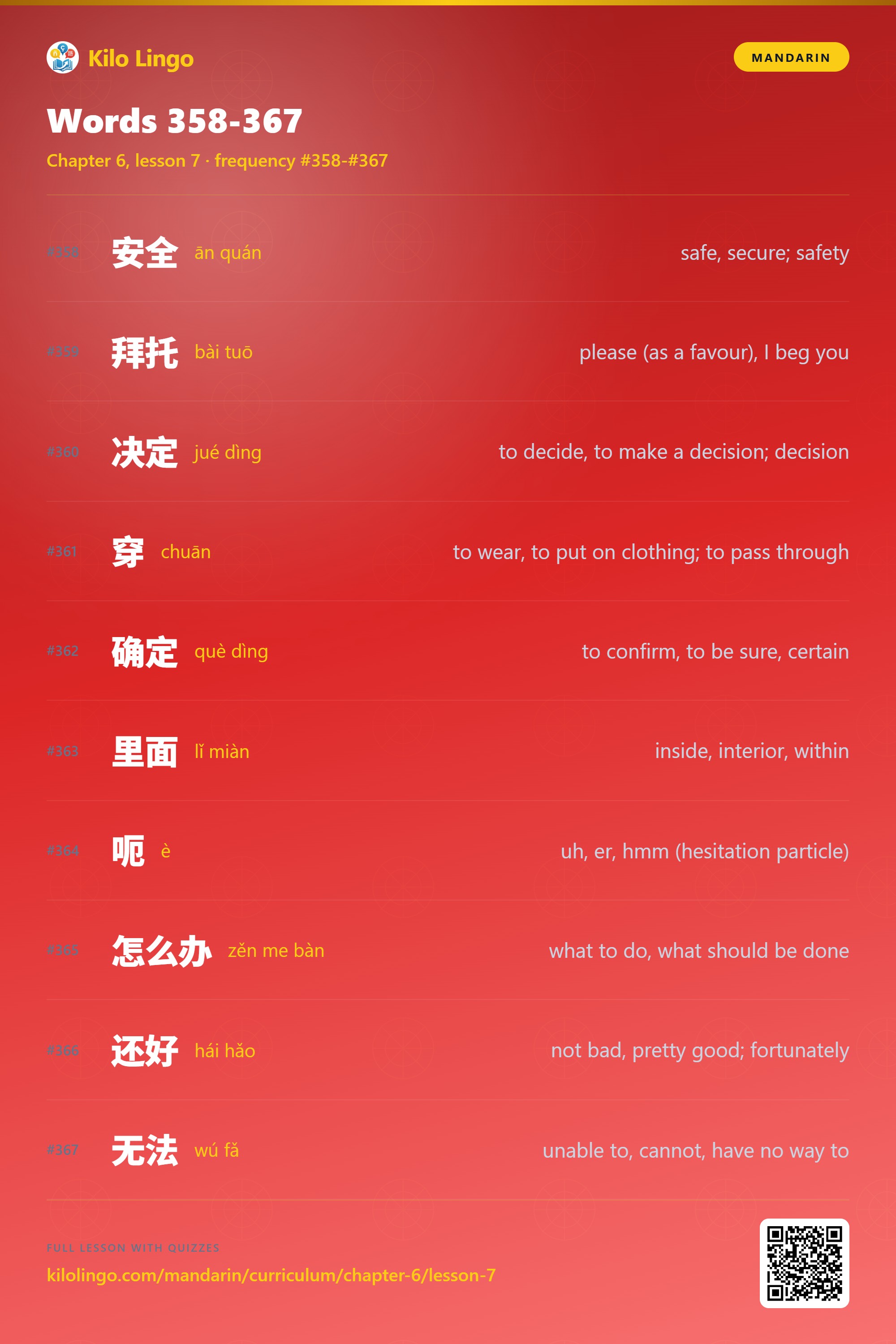
10 words · ranks 358-367
- Word Bubbles review sessionReview games
Pop the words you just met by matching each one to its meaning. A couple of rounds and the batch is yours.
- Words 368-378Vocabulary
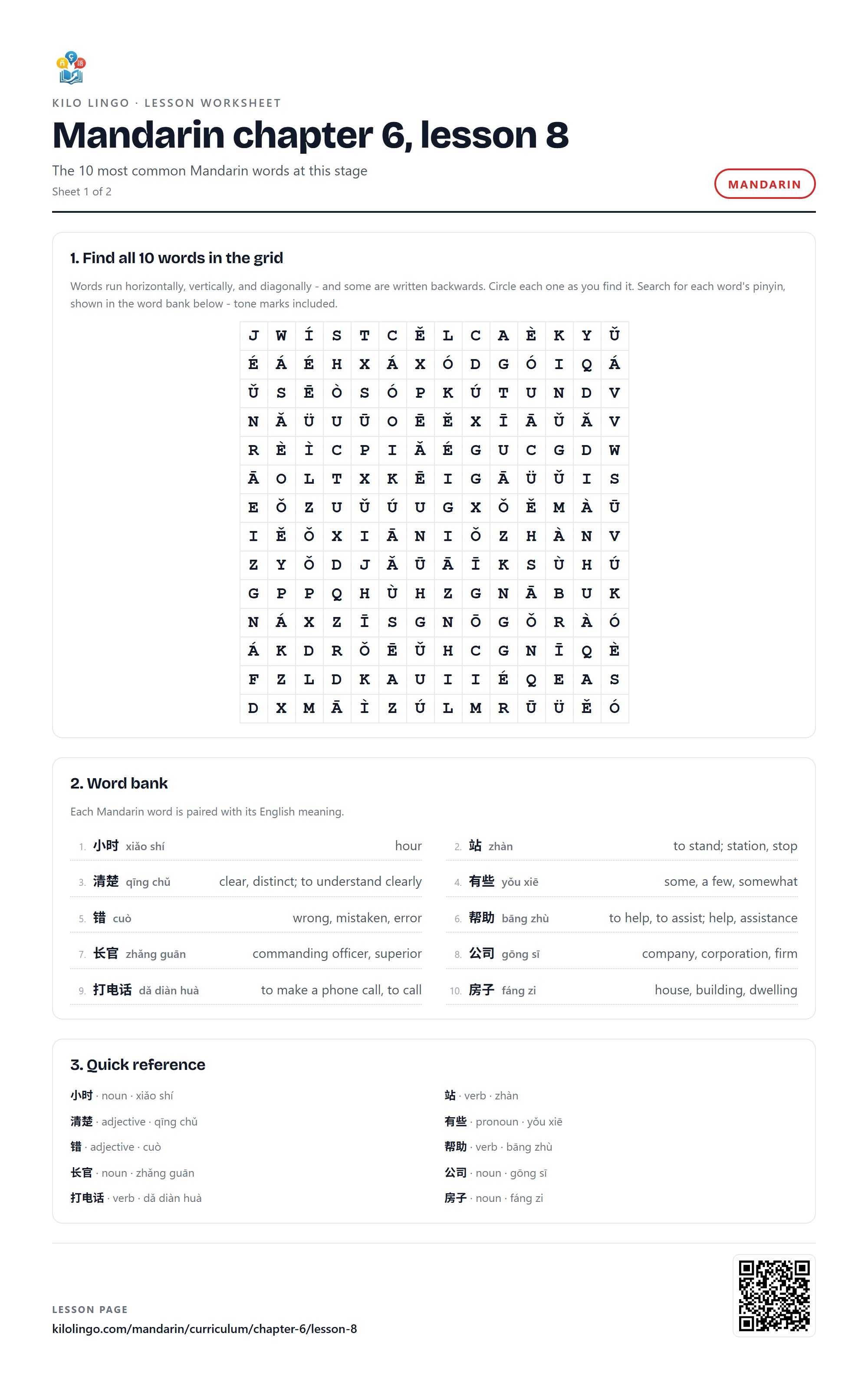
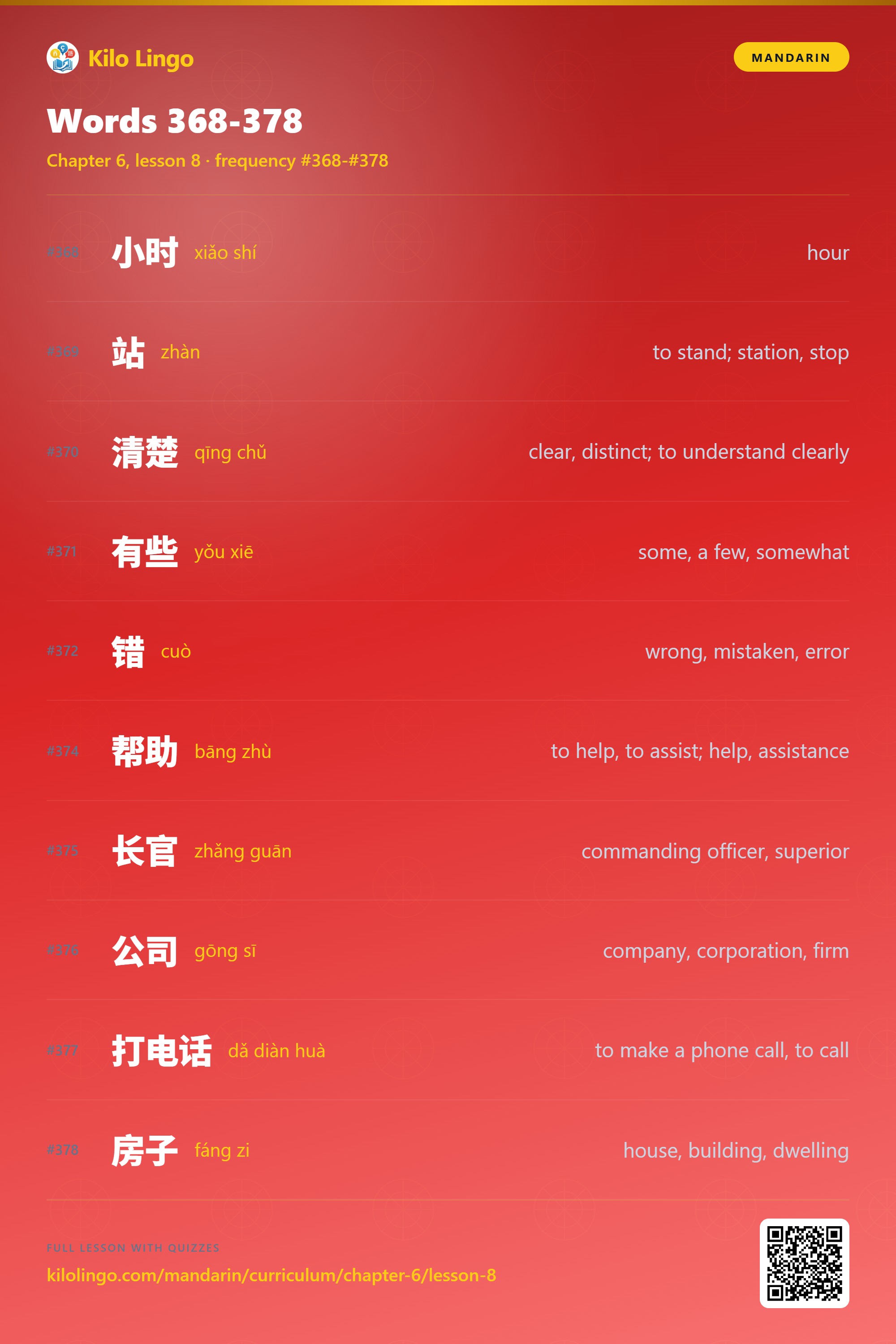
10 words · ranks 368-378
- Tone Shooter review sessionReview games
Shoot the words you just met into their tones by colour. The quickest way to fix a tone in place.
- Words 379-389Vocabulary
10 words · ranks 379-389
- Word Bubbles review sessionReview games
Pop the words you just met by matching each one to its meaning. A couple of rounds and the batch is yours.
- Words 391-400Vocabulary
8 words · ranks 391-400
- Story milestone: top 400 wordsGraded-reader story
You can read this story using only the words you've learned so far. Every content word sits at or above the rank-400 ceiling.
- Telling the timeThemed review
Days, months and the words for when. Notice the pattern: yesterday, today and tomorrow are all built on the same word for day.
Join a Chinese-learning community and introduce yourself in a general channel - a great way to practise SPEAKING without leaving the house.
- Arcade reviewReview games
Replay this chapter's words as games - a different kind of repetition, and it counts.
Word printables
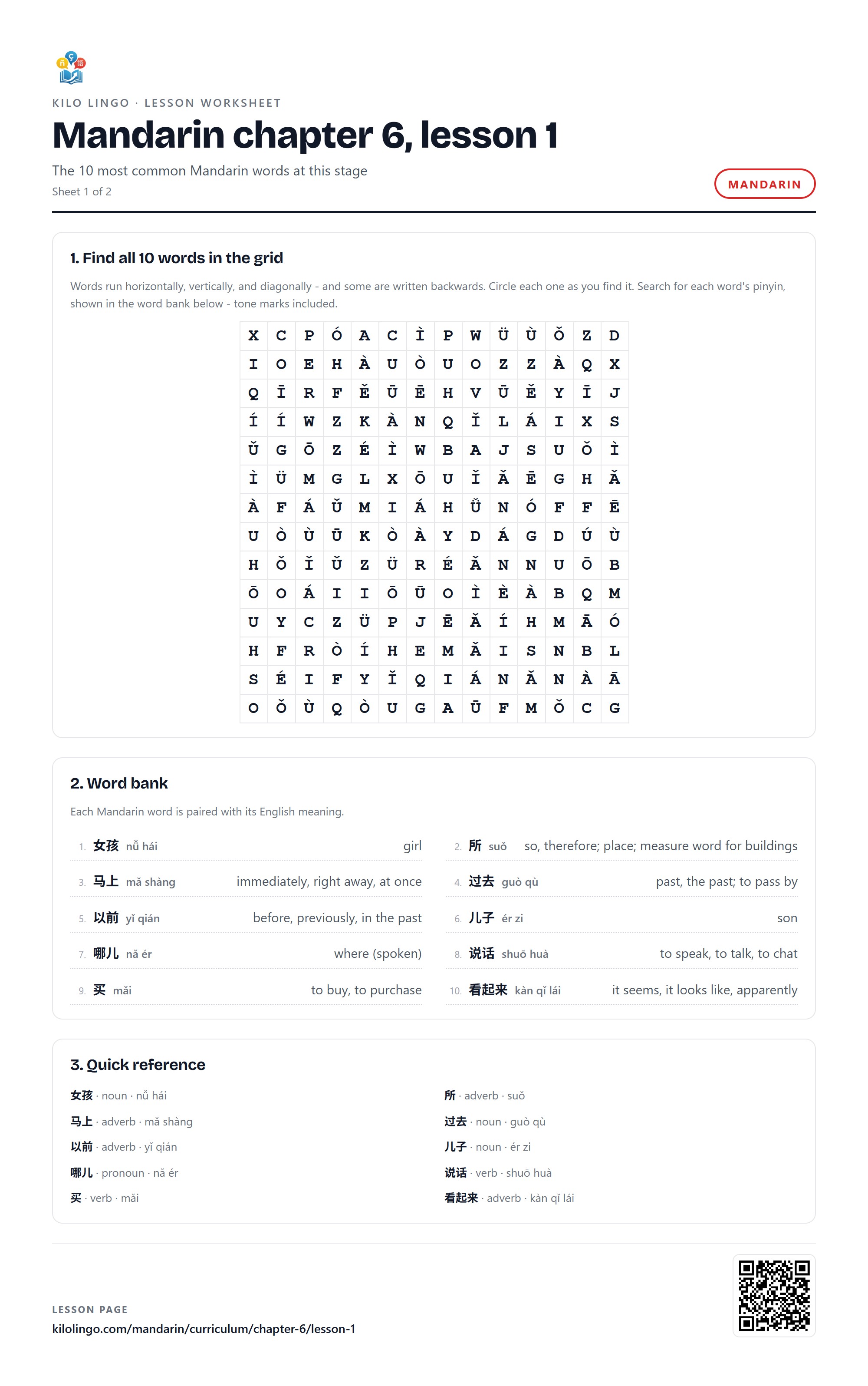
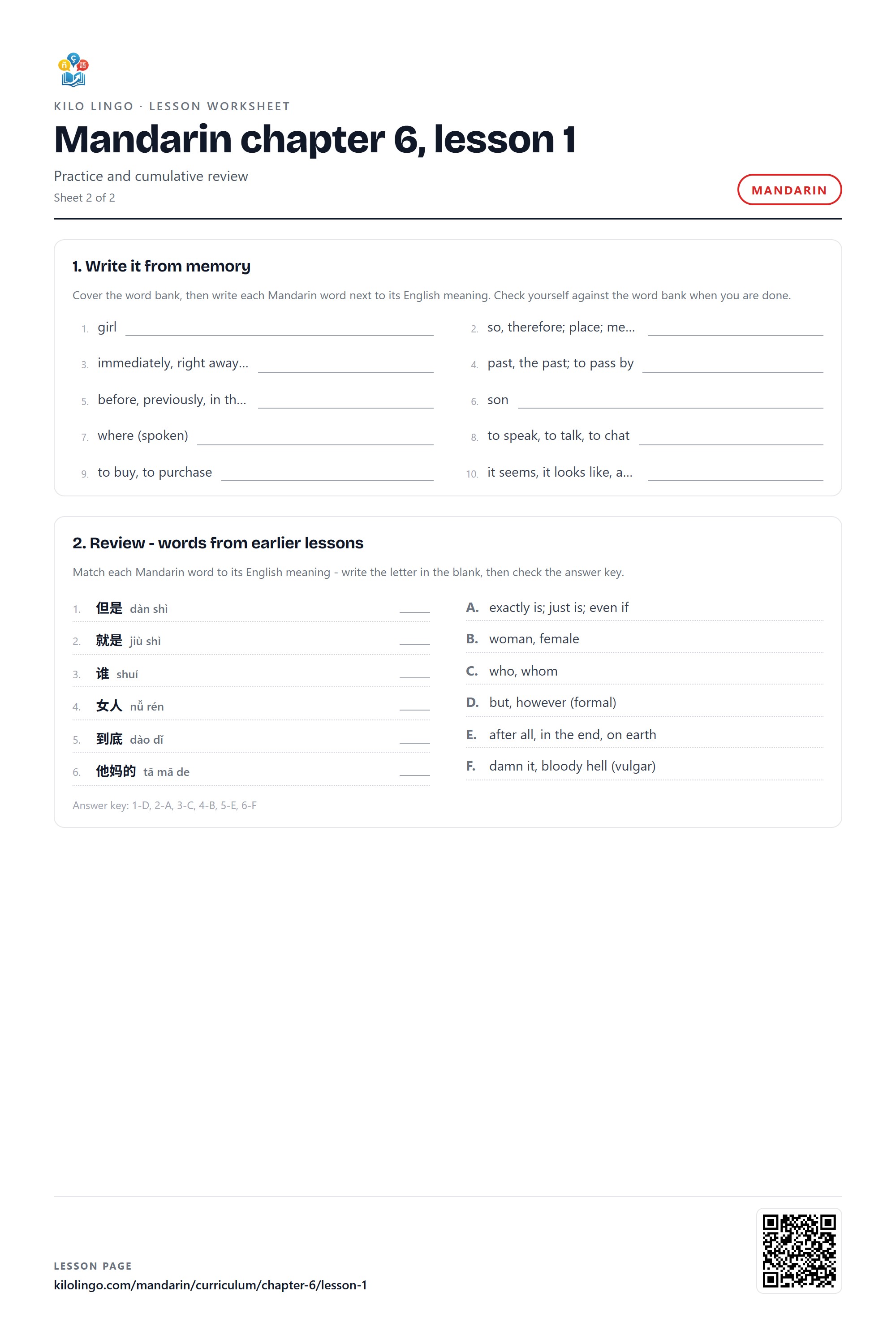
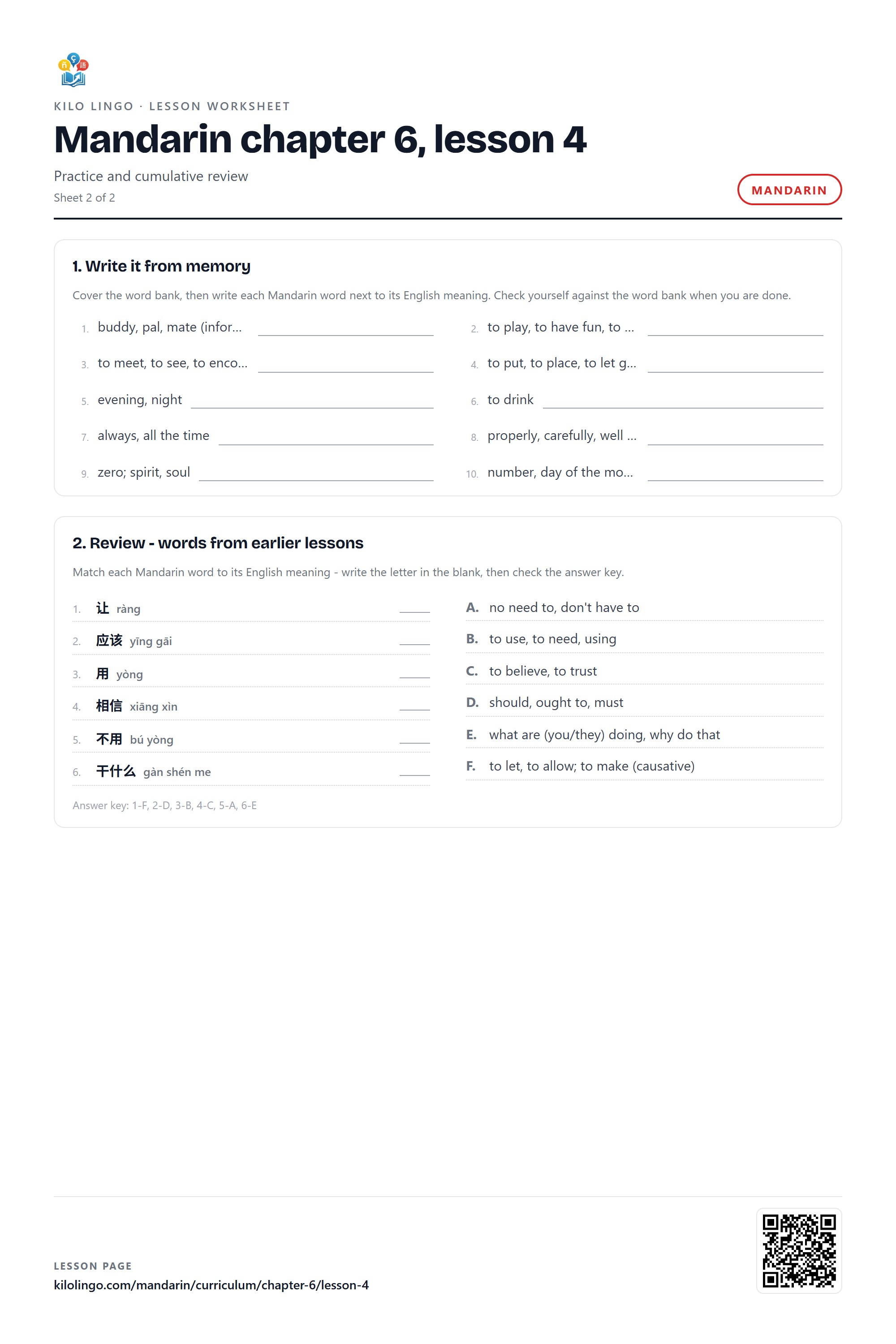
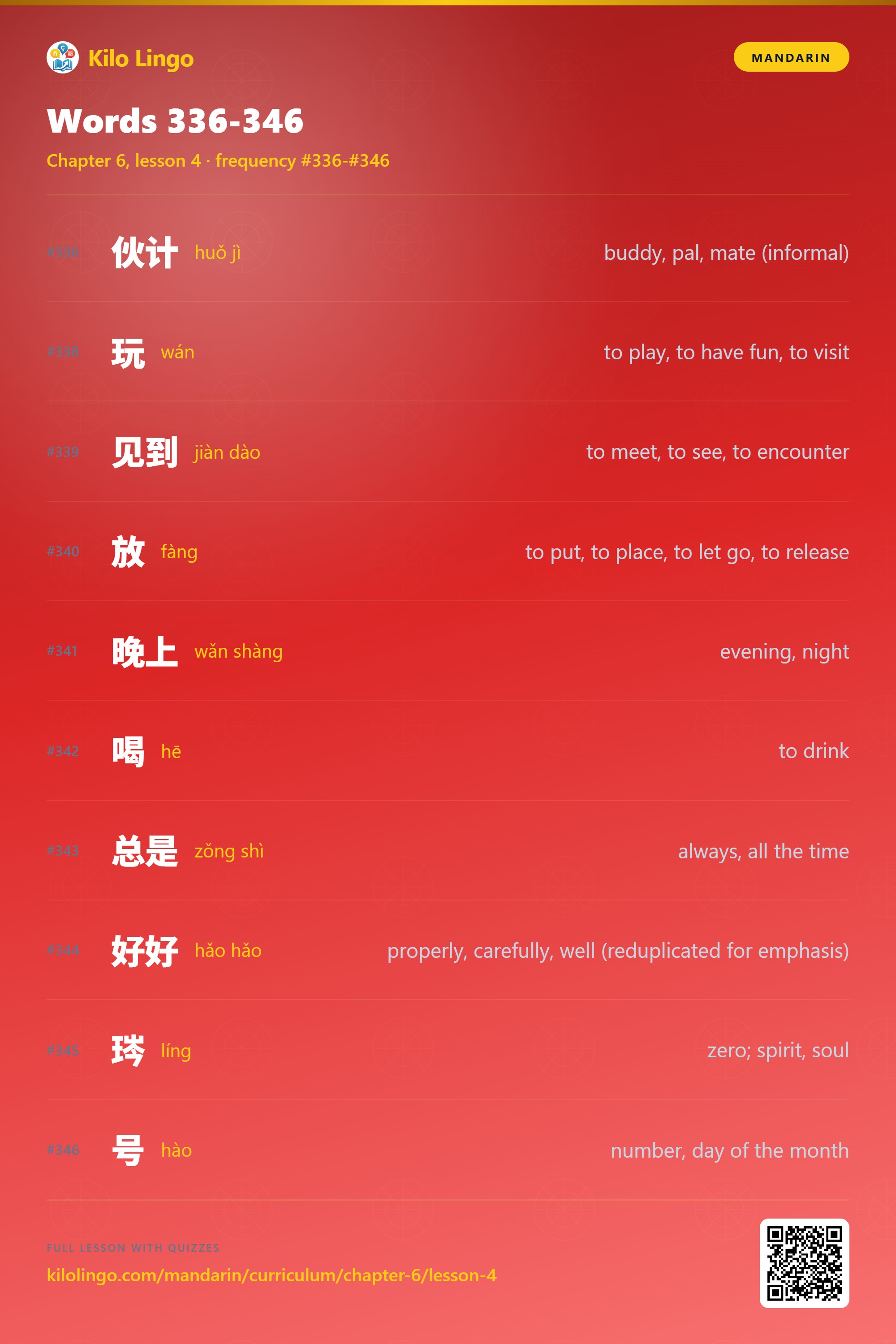
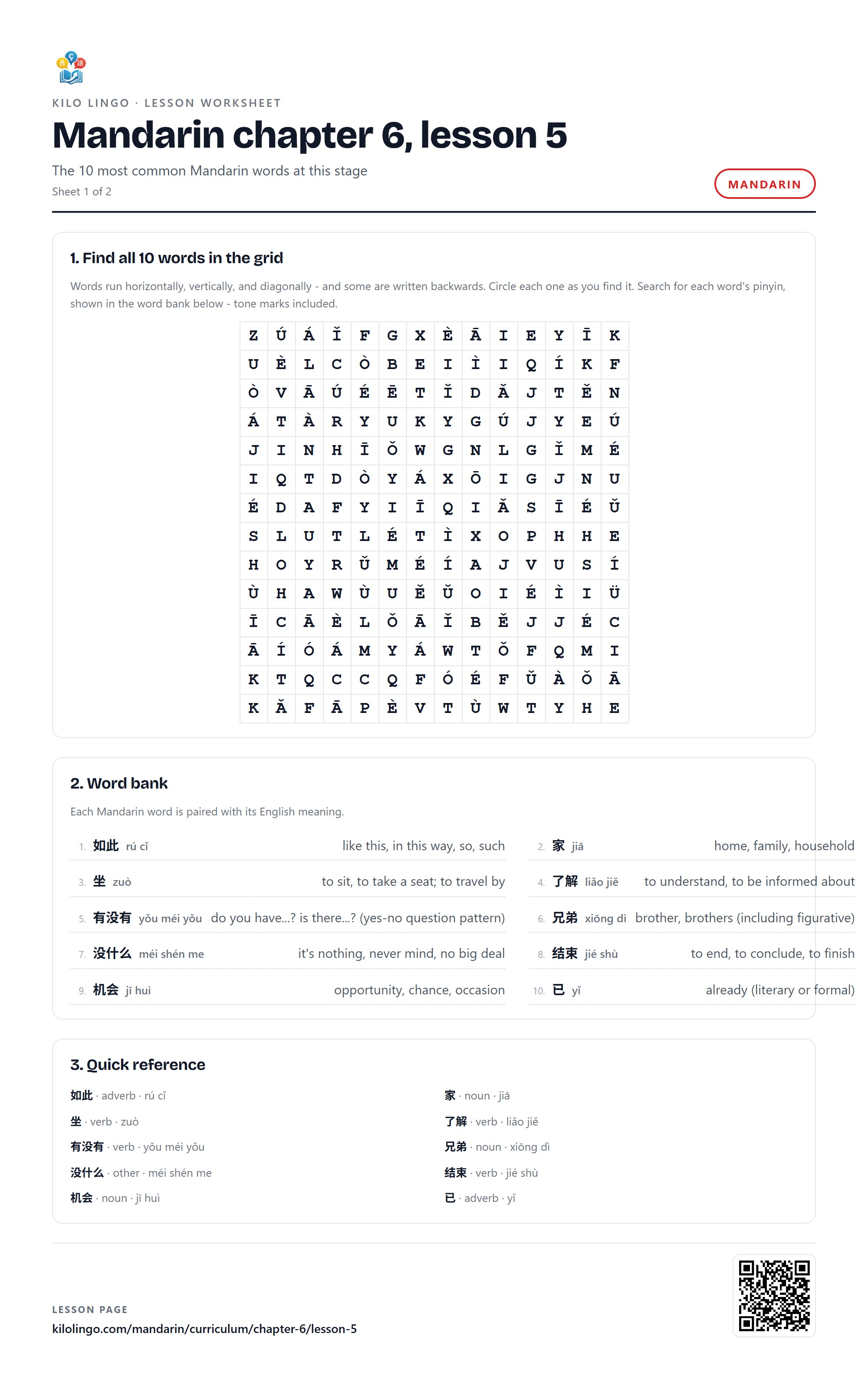
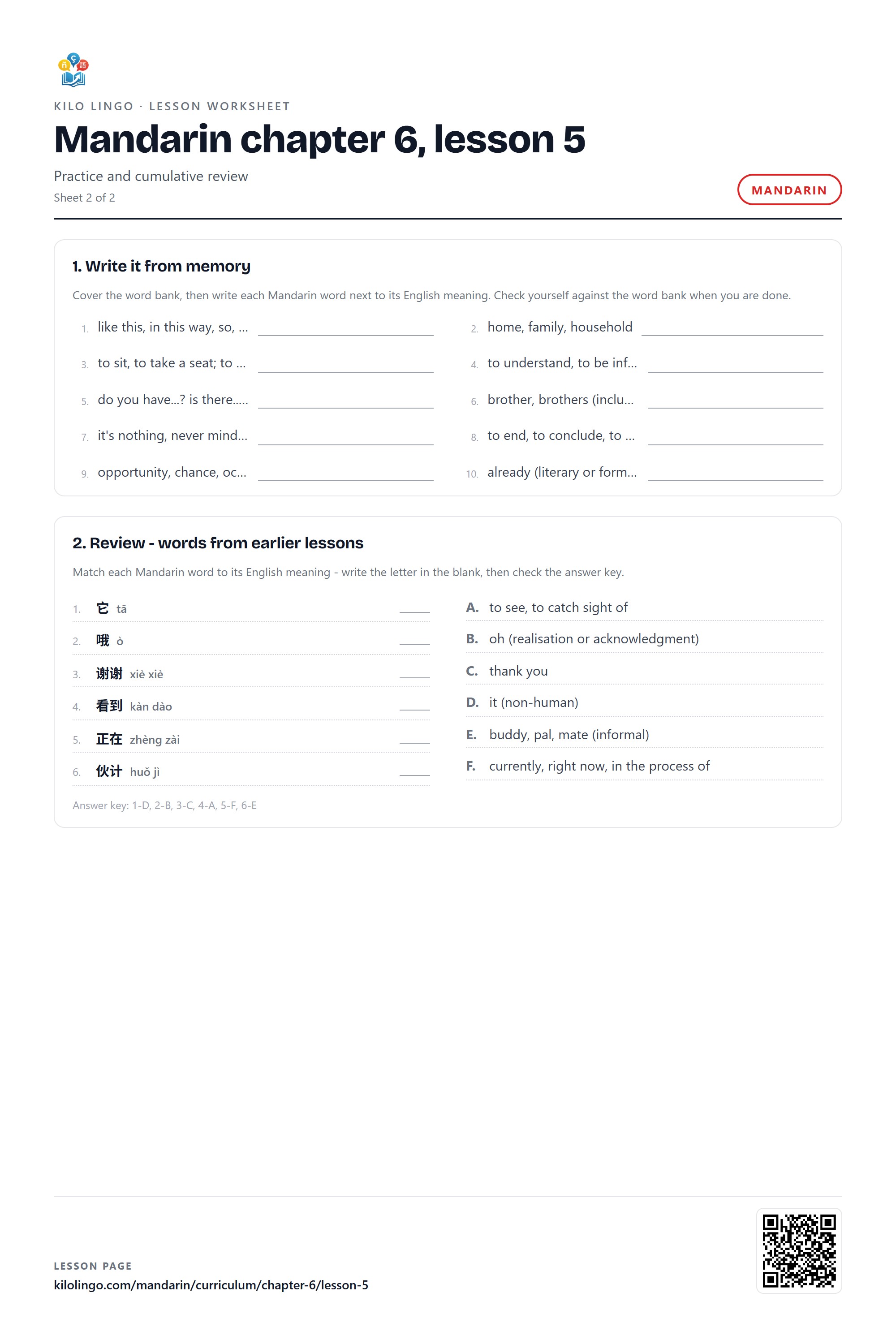
Per-word sheets88 words · a worksheet, infographic and listicle each







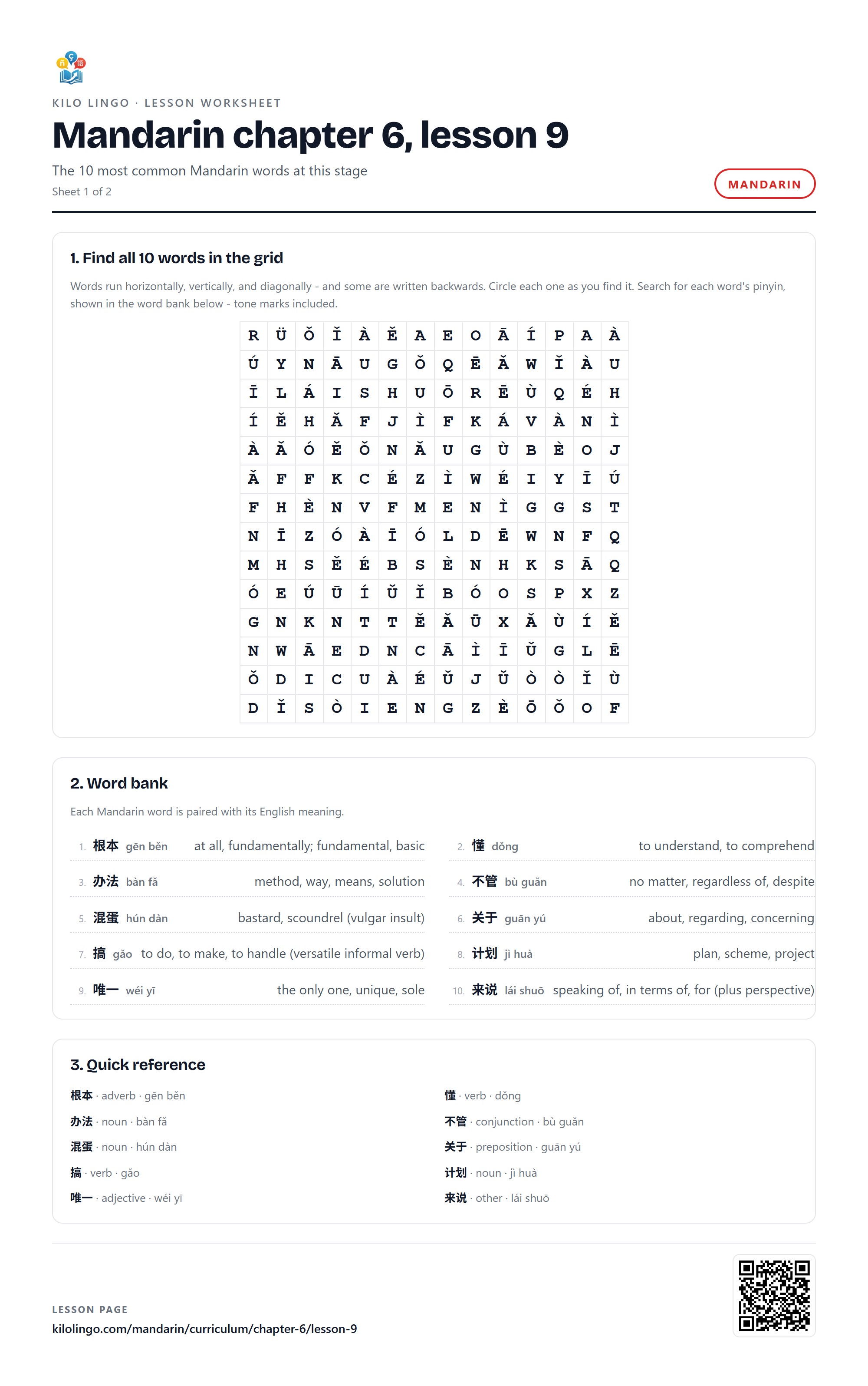
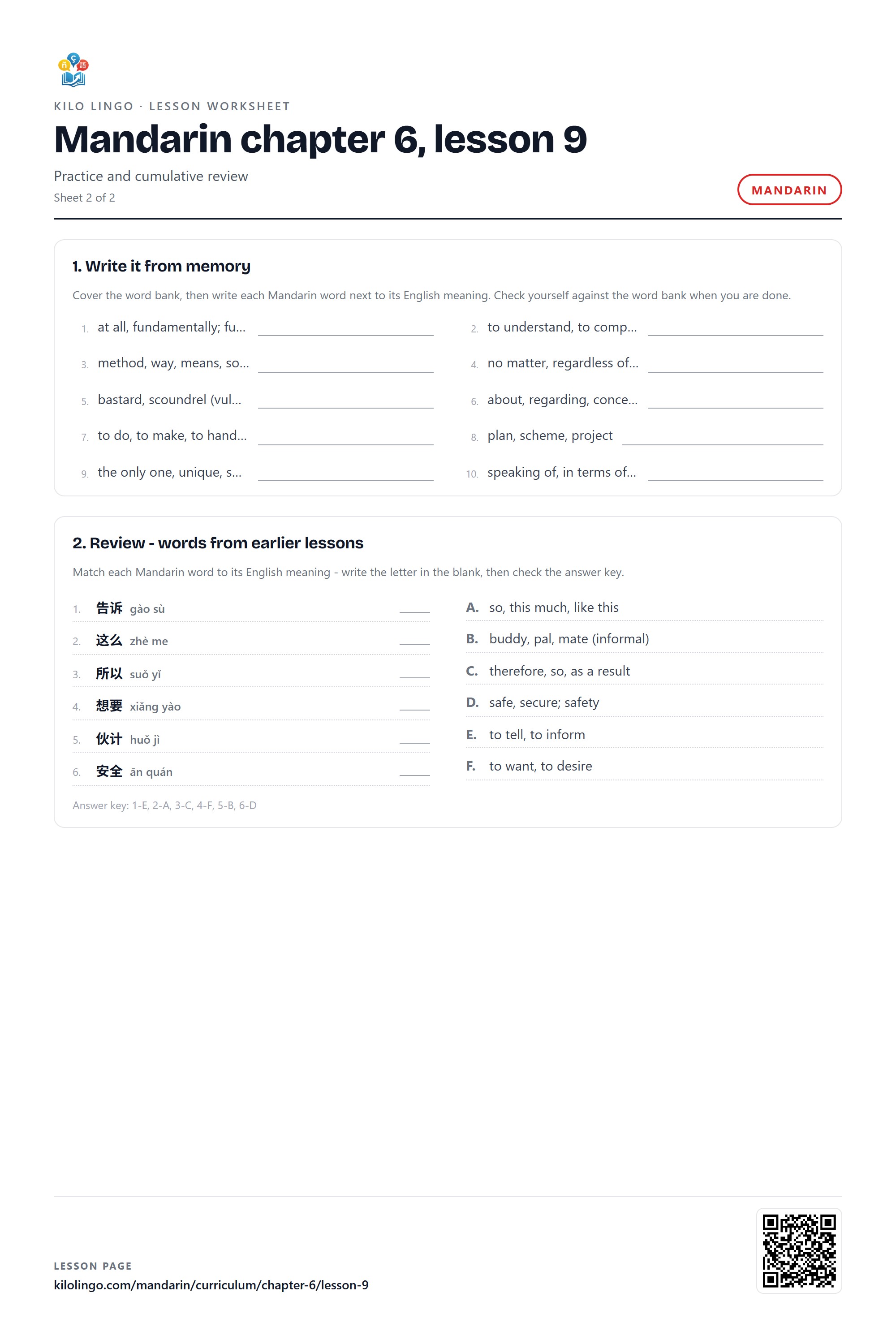

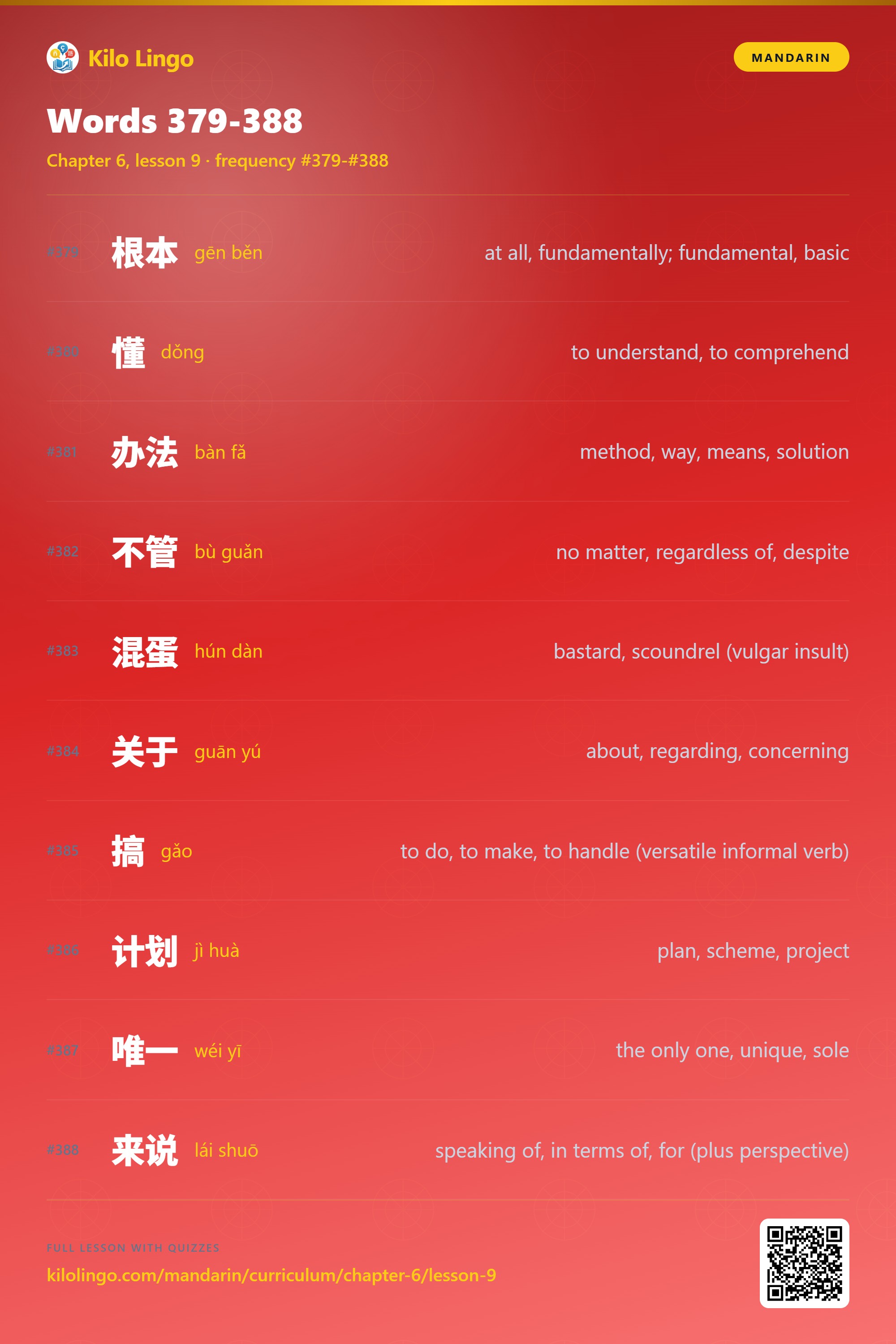
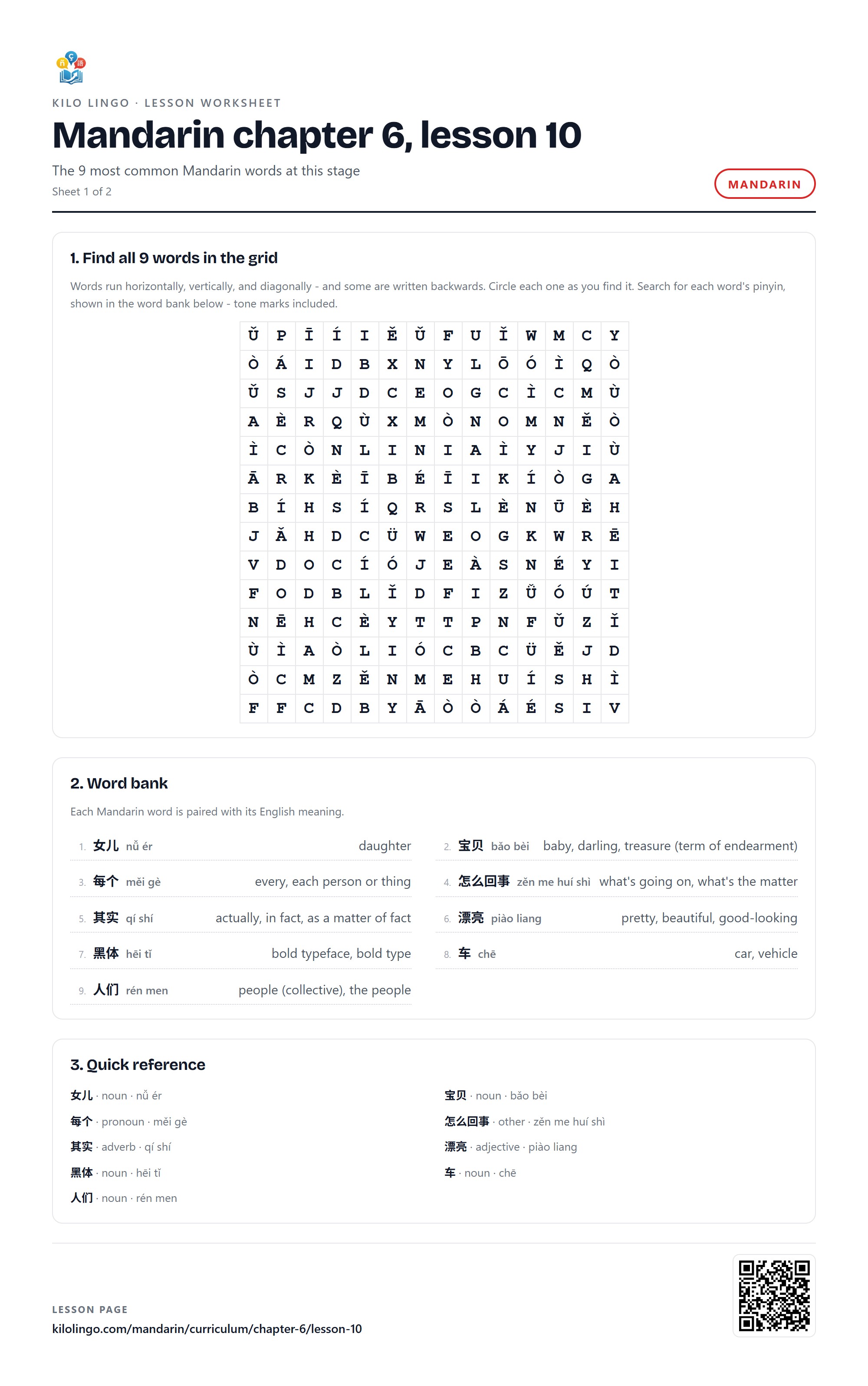

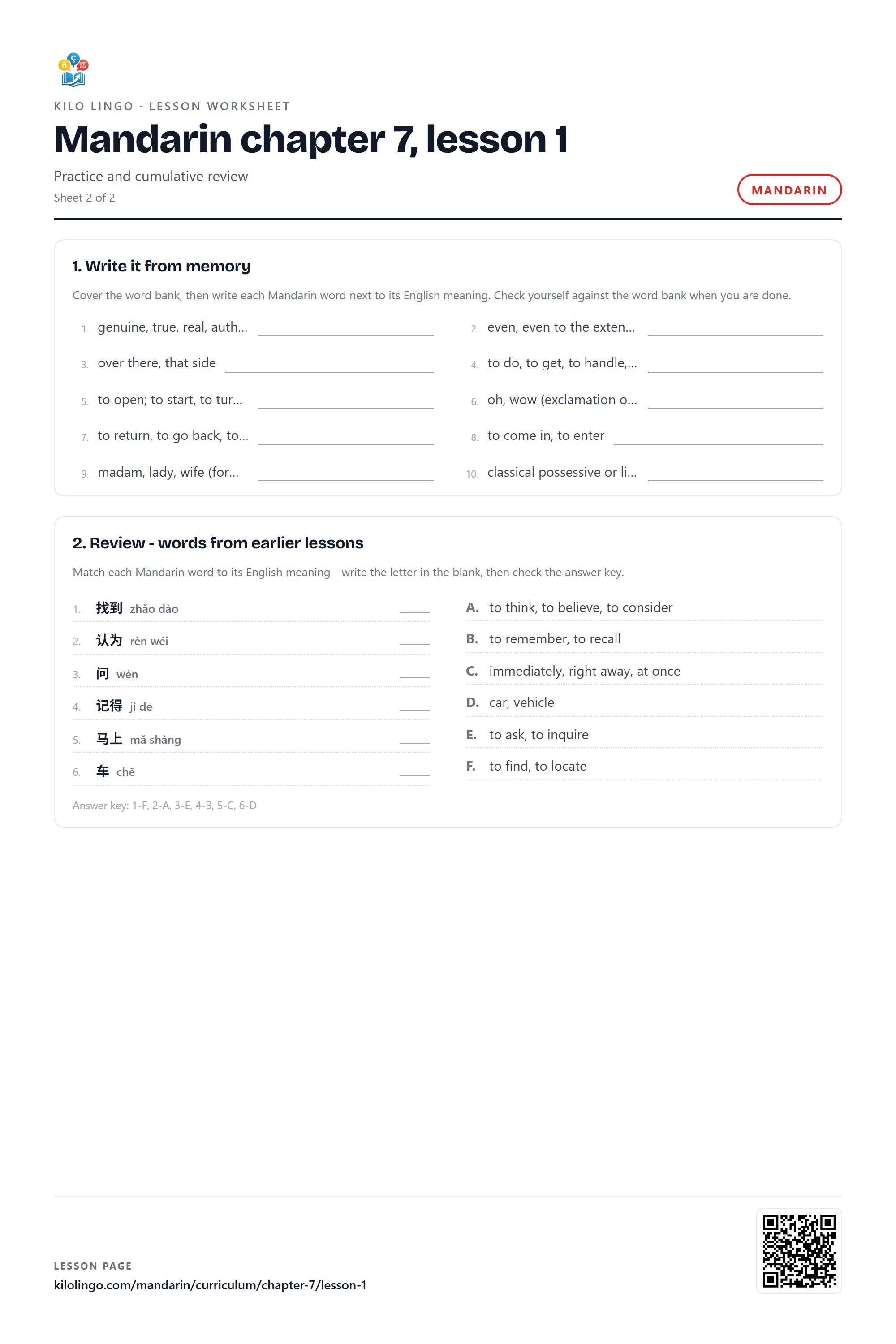
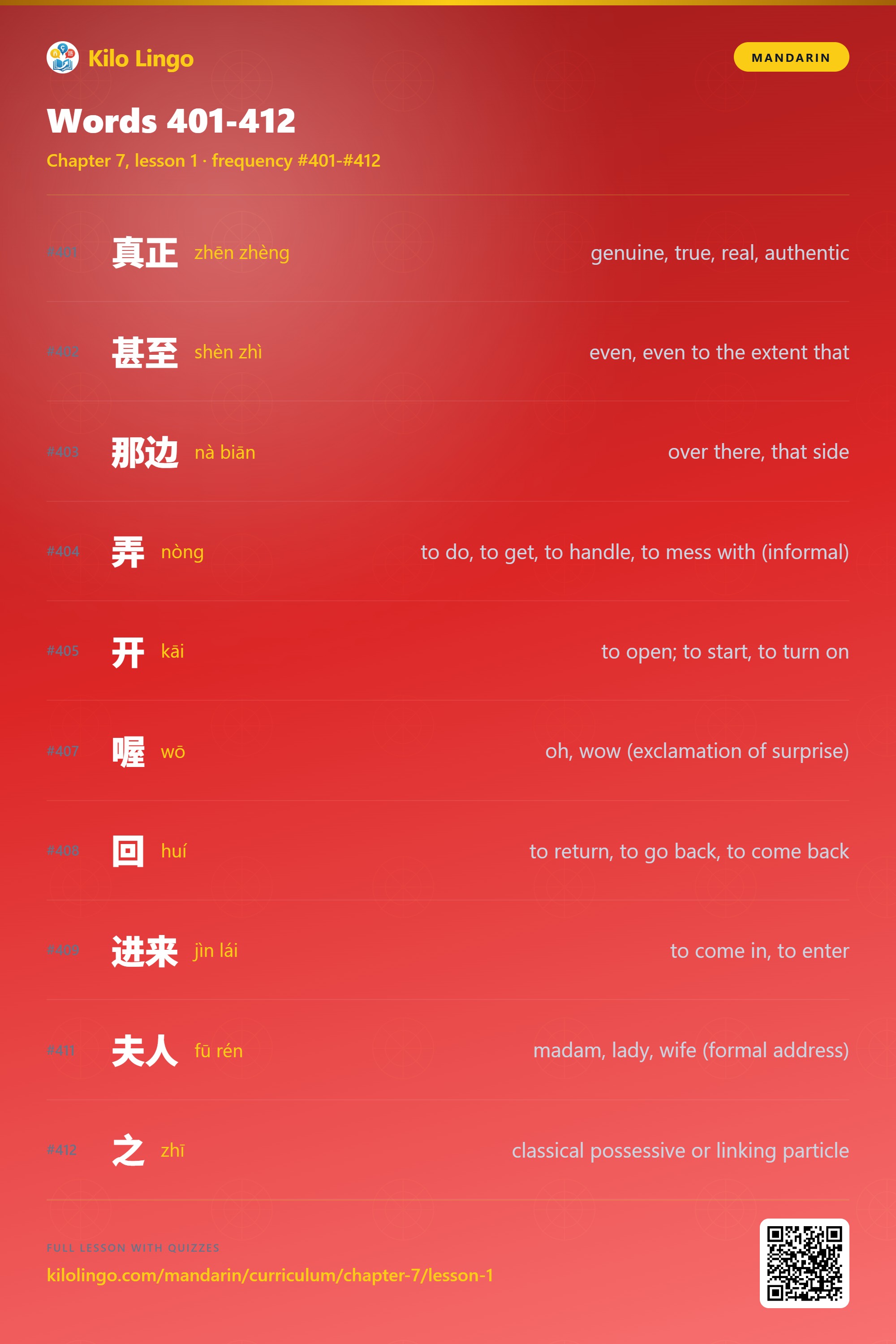
Chapter 7 · 知道 or 认识?
Chapter page →- Words 401-412Vocabulary
10 words · ranks 401-412
- Crossword review sessionReview games
Cross the words you just met, clued in English. Slower than a drill, and it sticks harder.
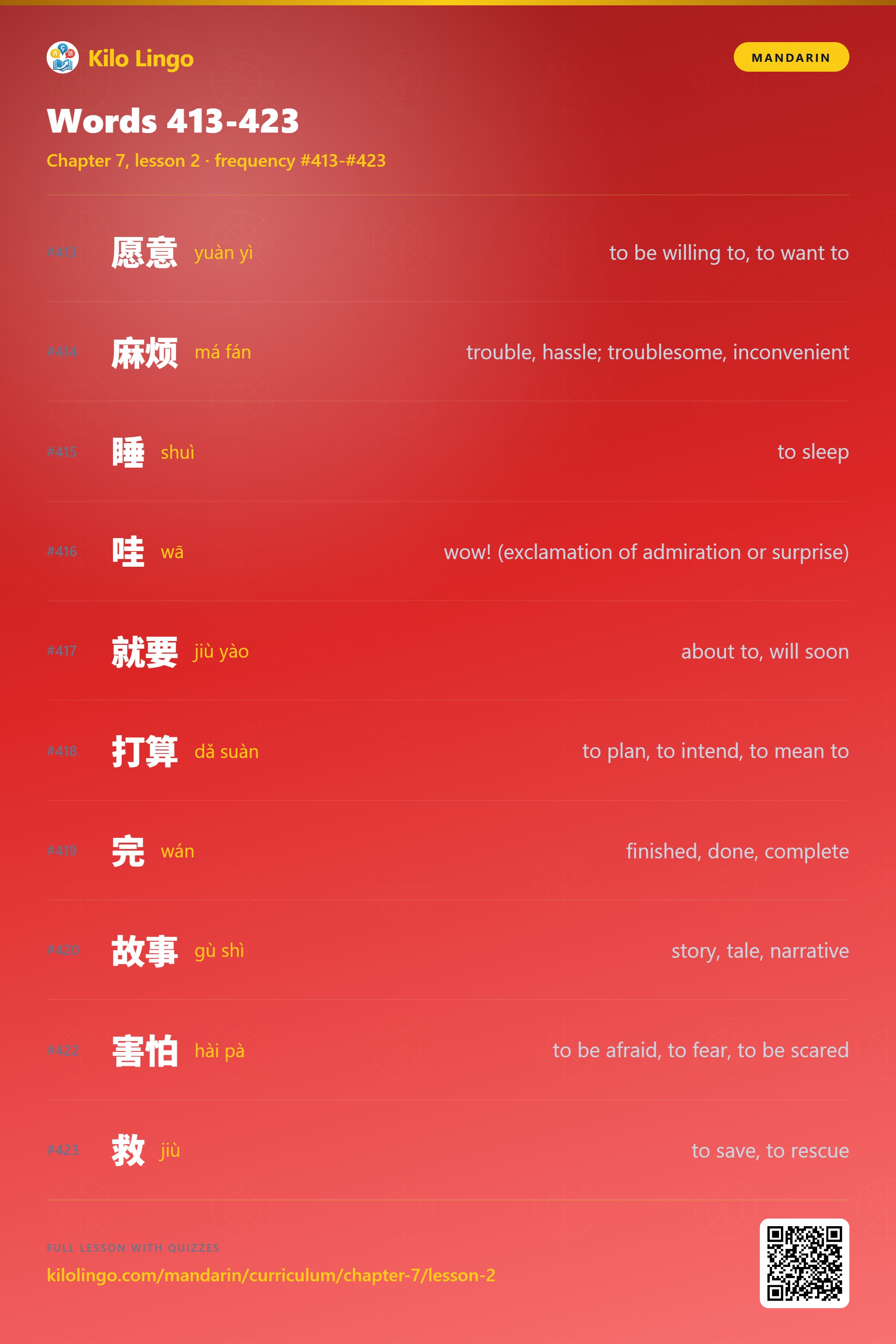
- Words 413-423Vocabulary
10 words · ranks 413-423
- Word Bubbles review sessionReview games
Pop the words you just met by matching each one to its meaning. A couple of rounds and the batch is yours.
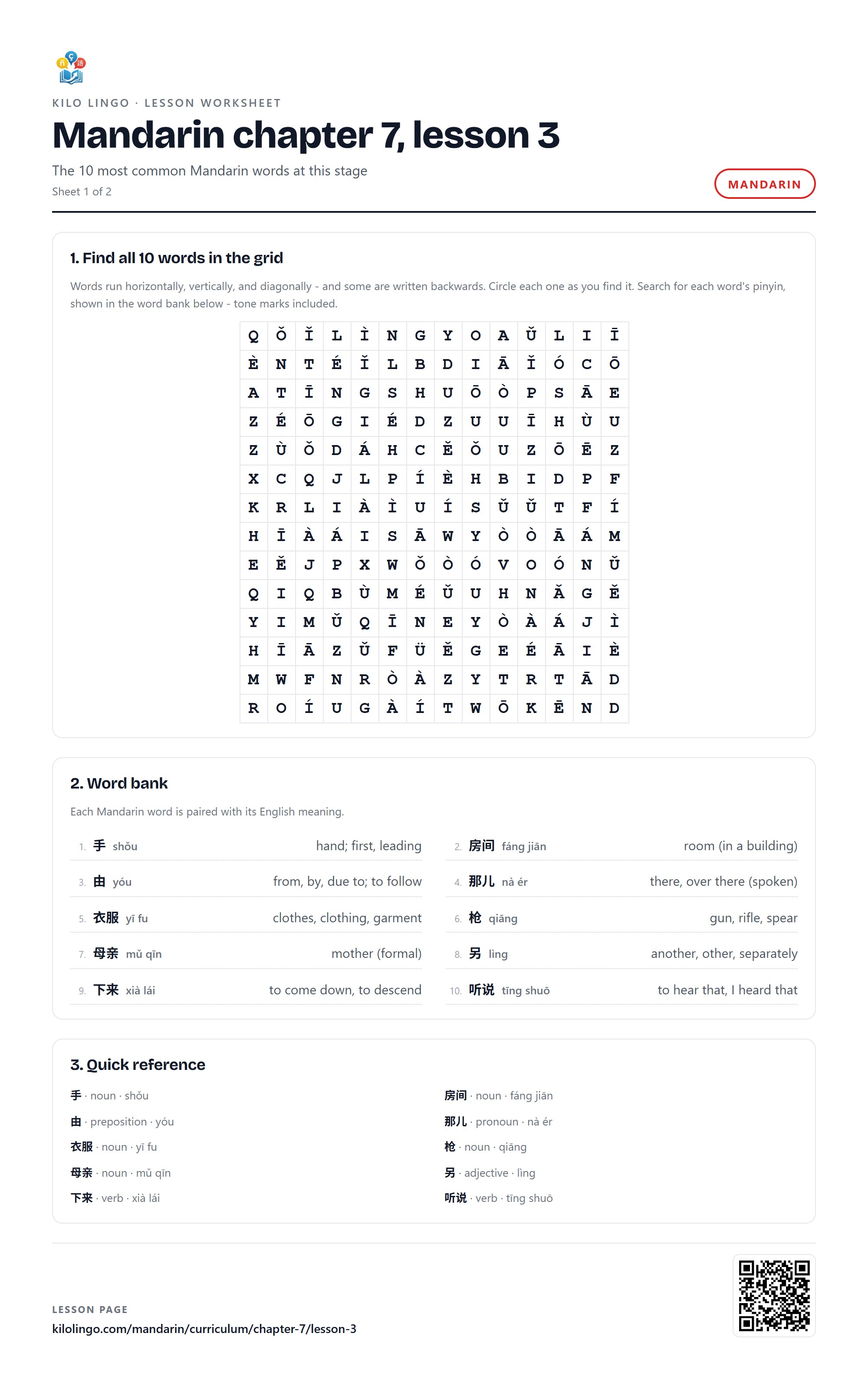
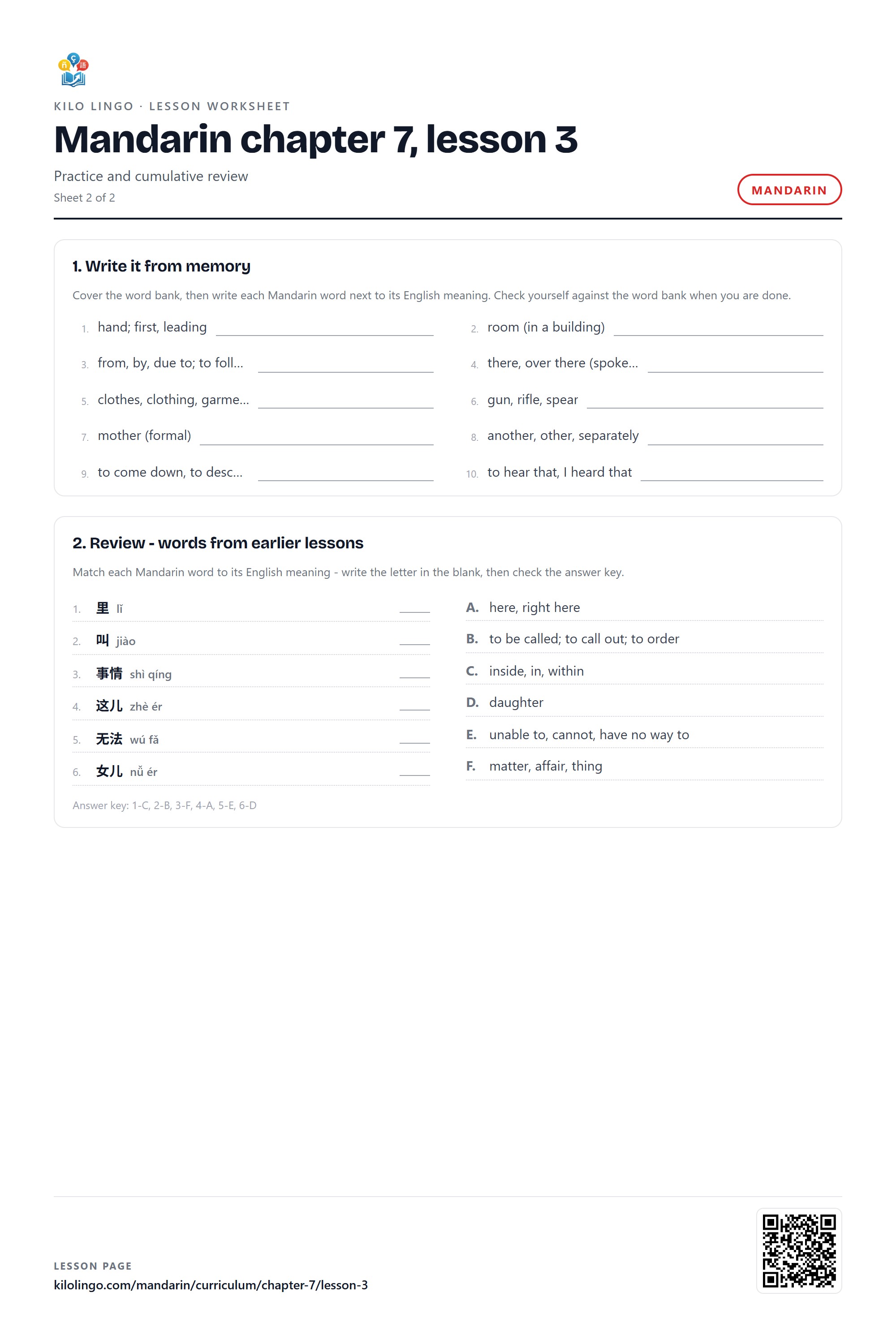
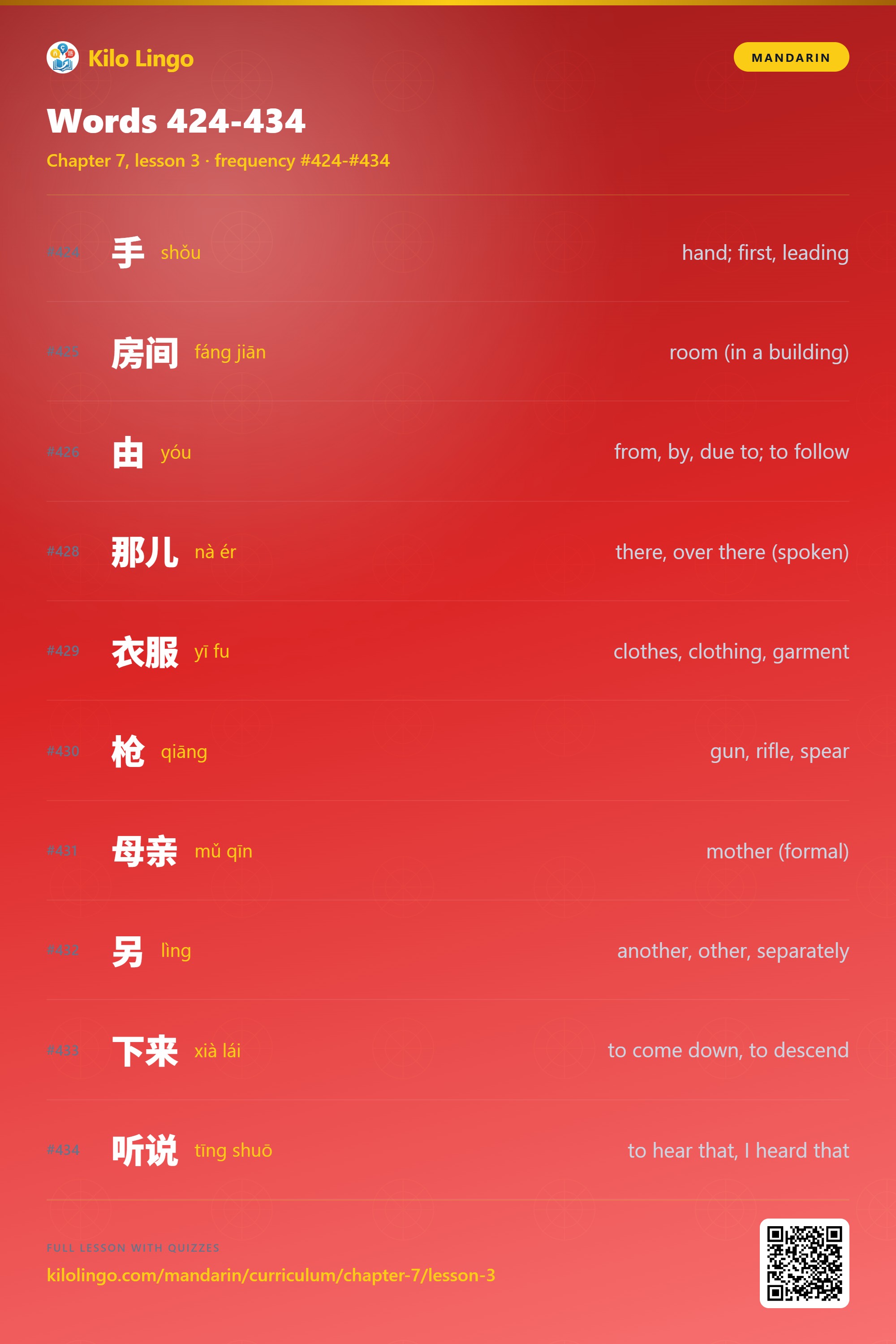
- Words 424-434Vocabulary
10 words · ranks 424-434
- Tone Shooter review sessionReview games
Shoot the words you just met into their tones by colour. The quickest way to fix a tone in place.
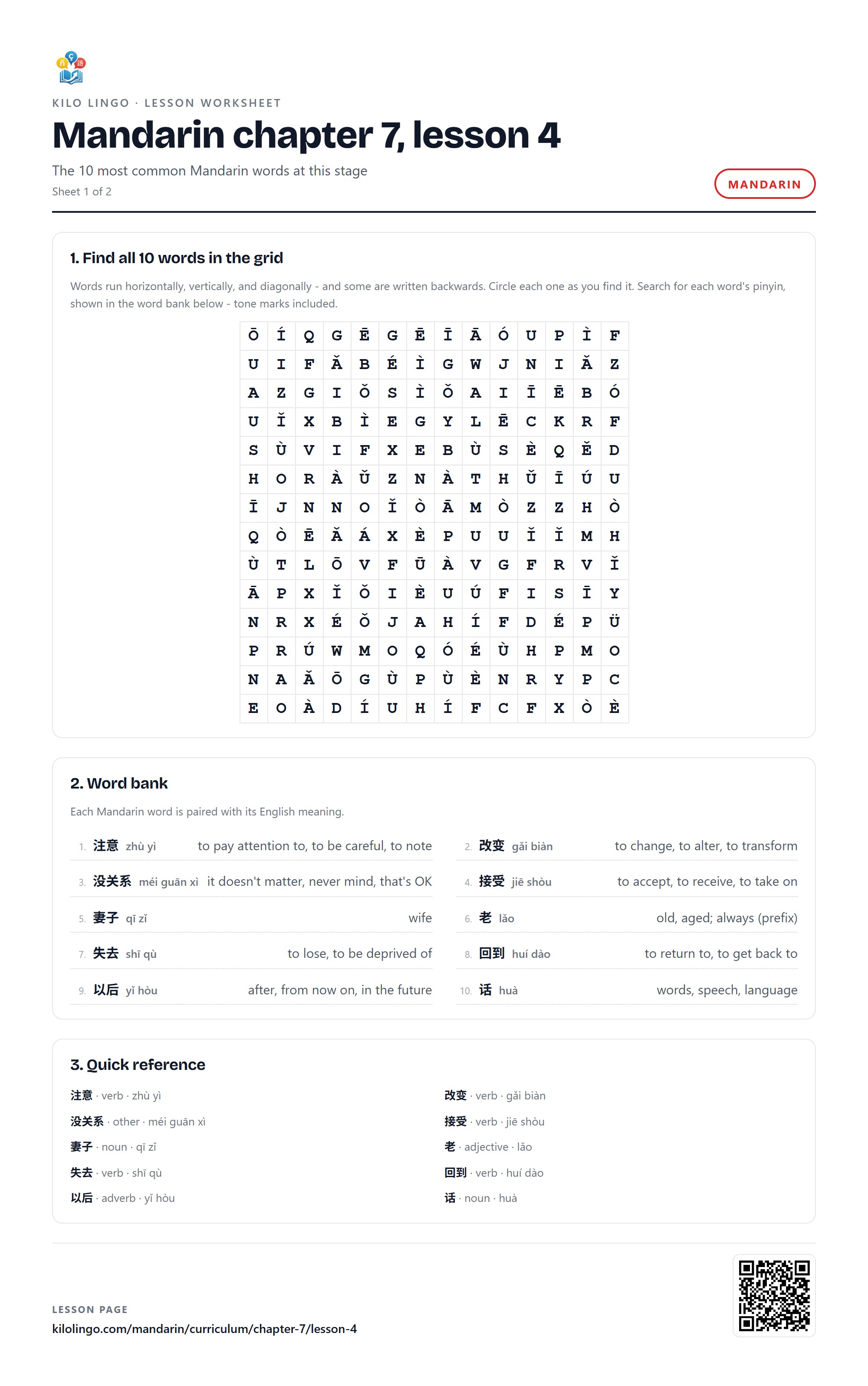
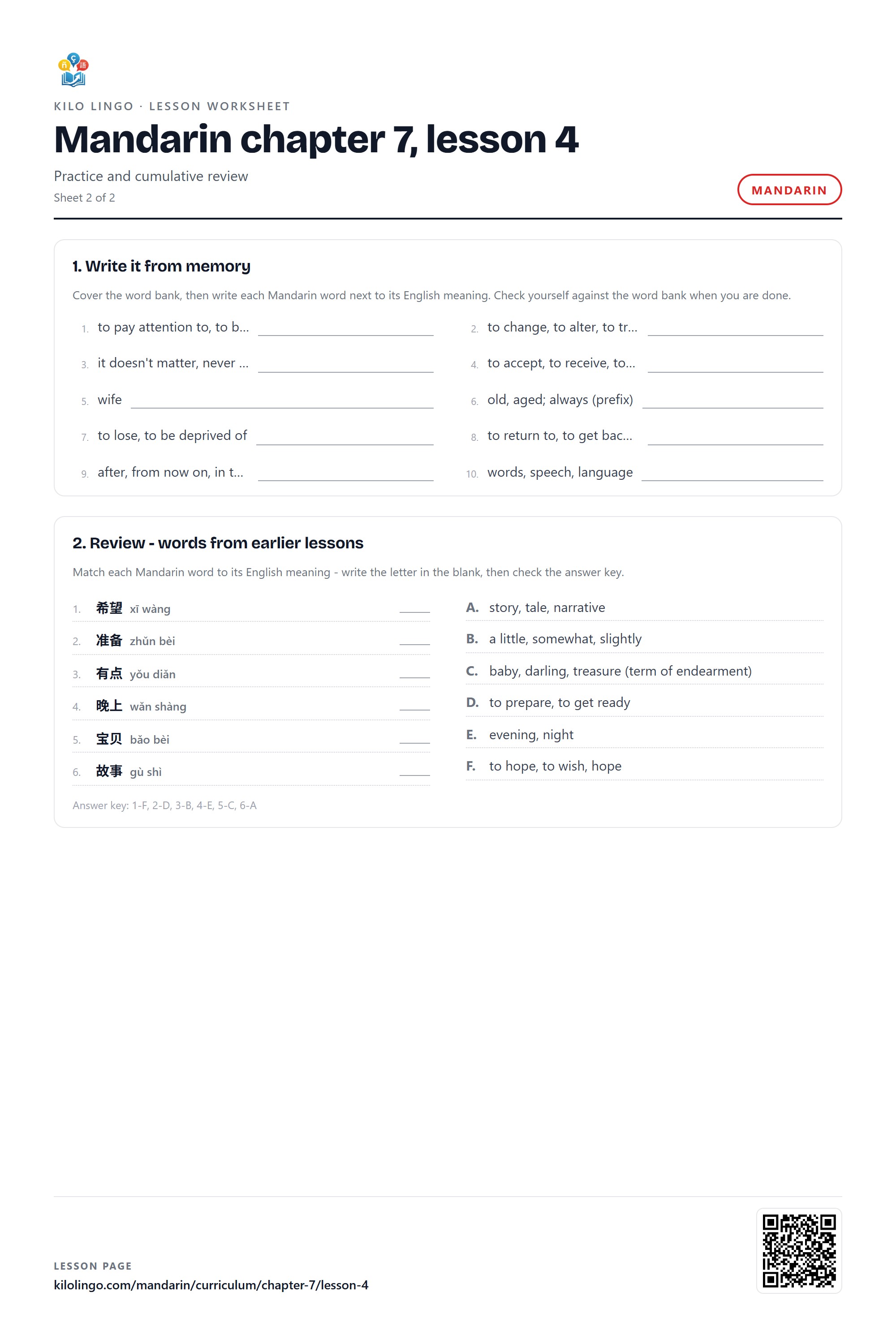
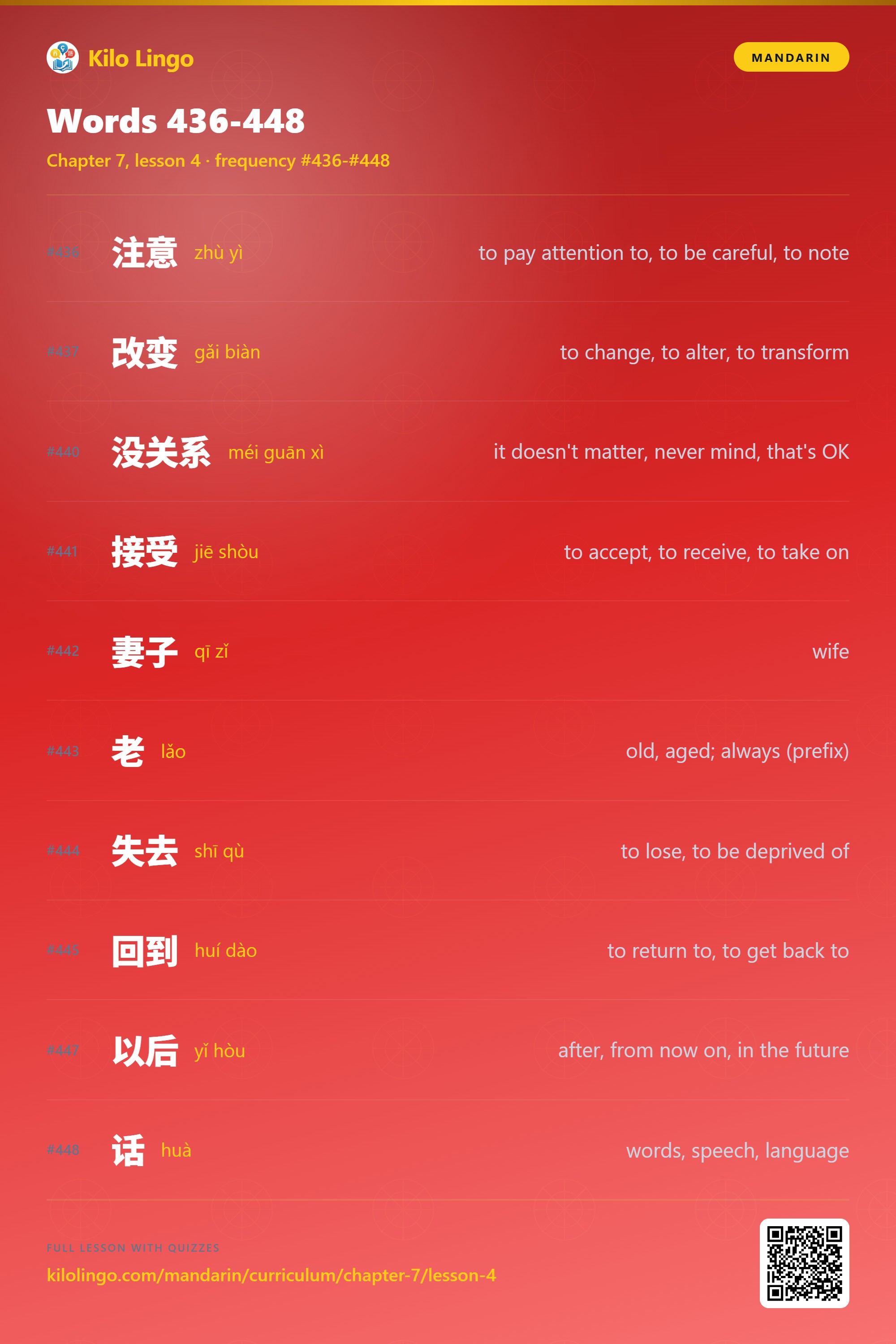
- Words 436-448Vocabulary
10 words · ranks 436-448
- Word Bubbles review sessionReview games
Pop the words you just met by matching each one to its meaning. A couple of rounds and the batch is yours.
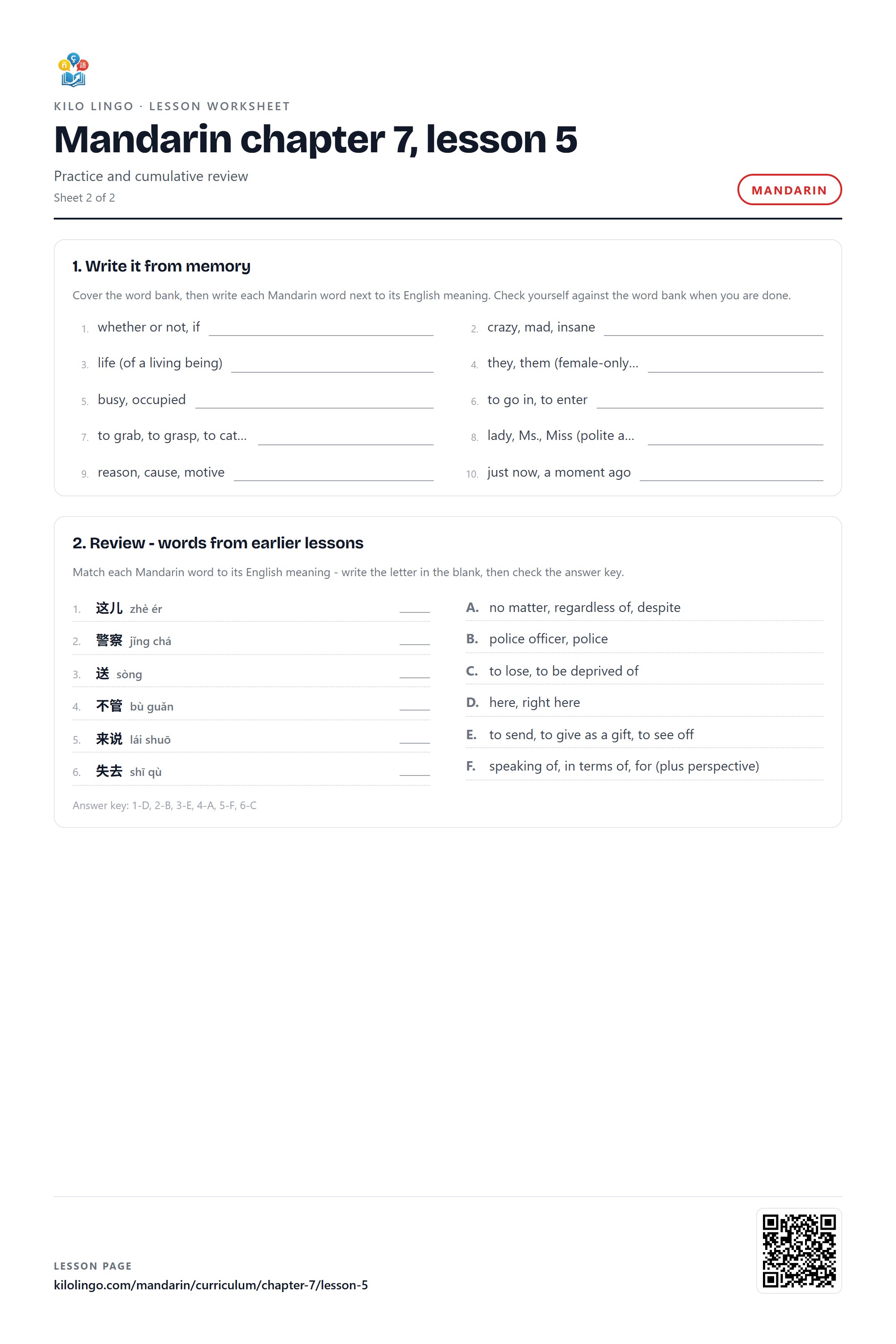
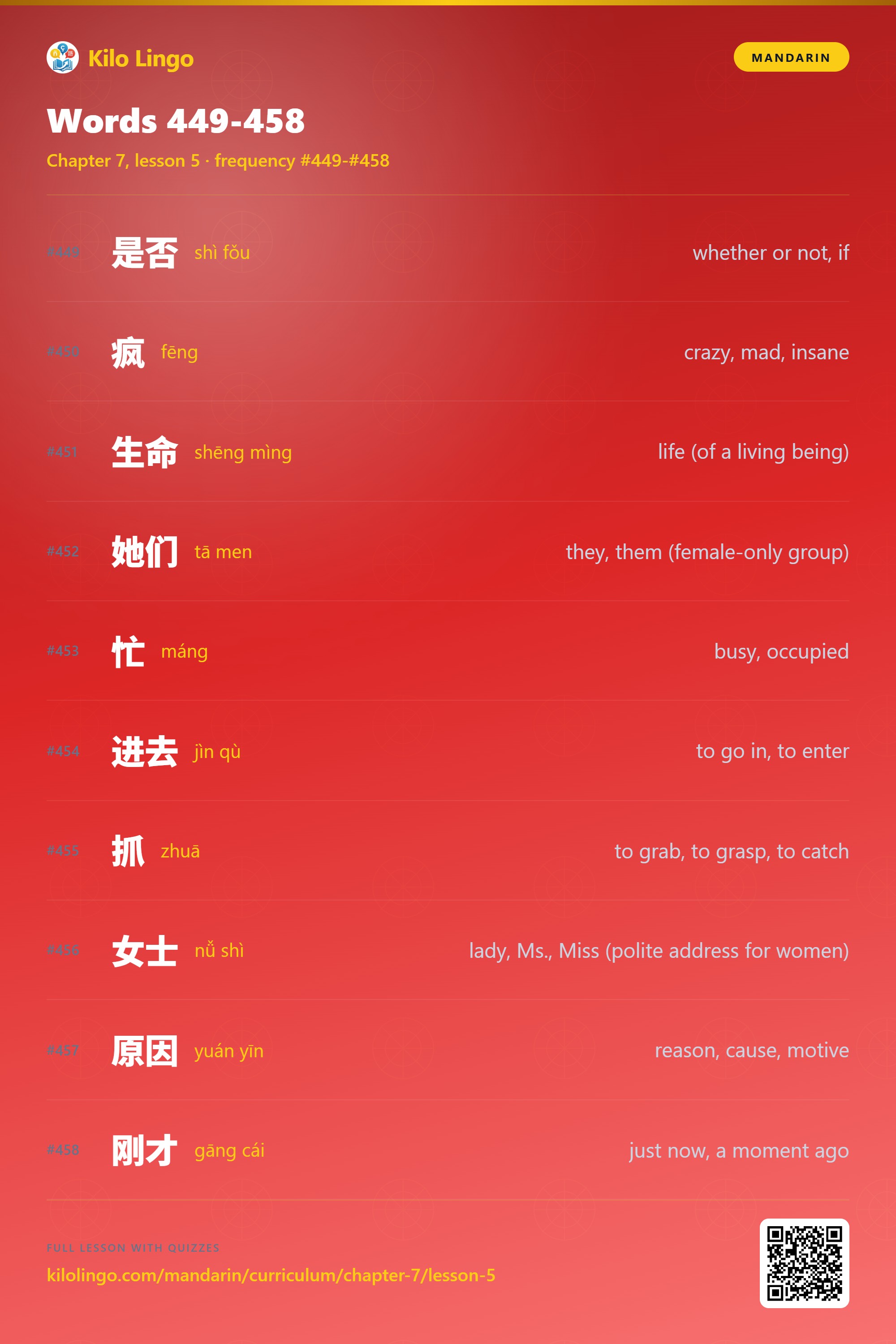
- Words 449-458Vocabulary
10 words · ranks 449-458
- 知道 or 认识?Mistake clinic
The same split Spanish and French make, in a third language.
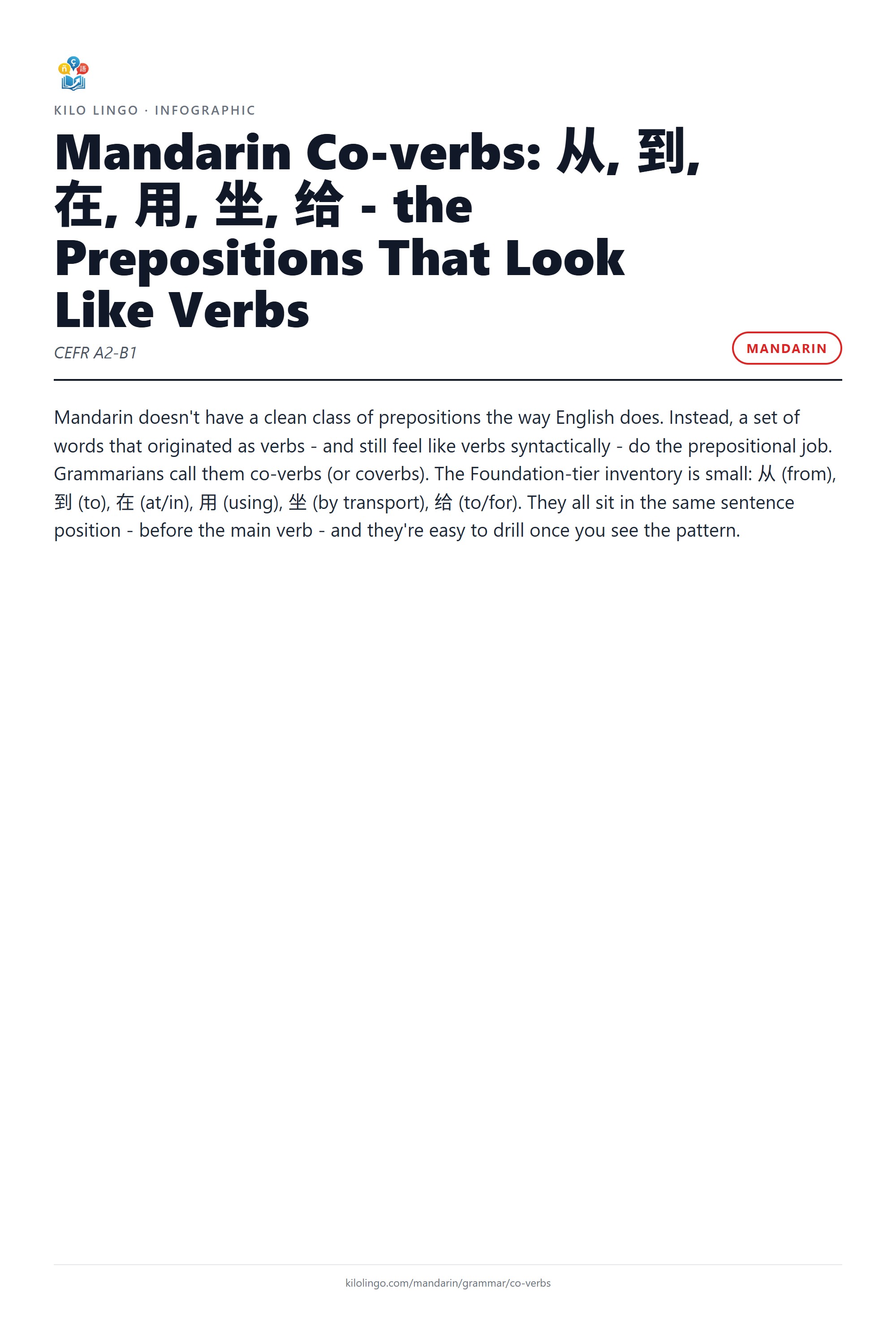
- Co-verbs: 从, 到, 在, 用, 坐, 给Grammar
Prepositional verbs that look like main verbs. The pattern Subject + co-verb + object + main verb, and what each co-verb covers.
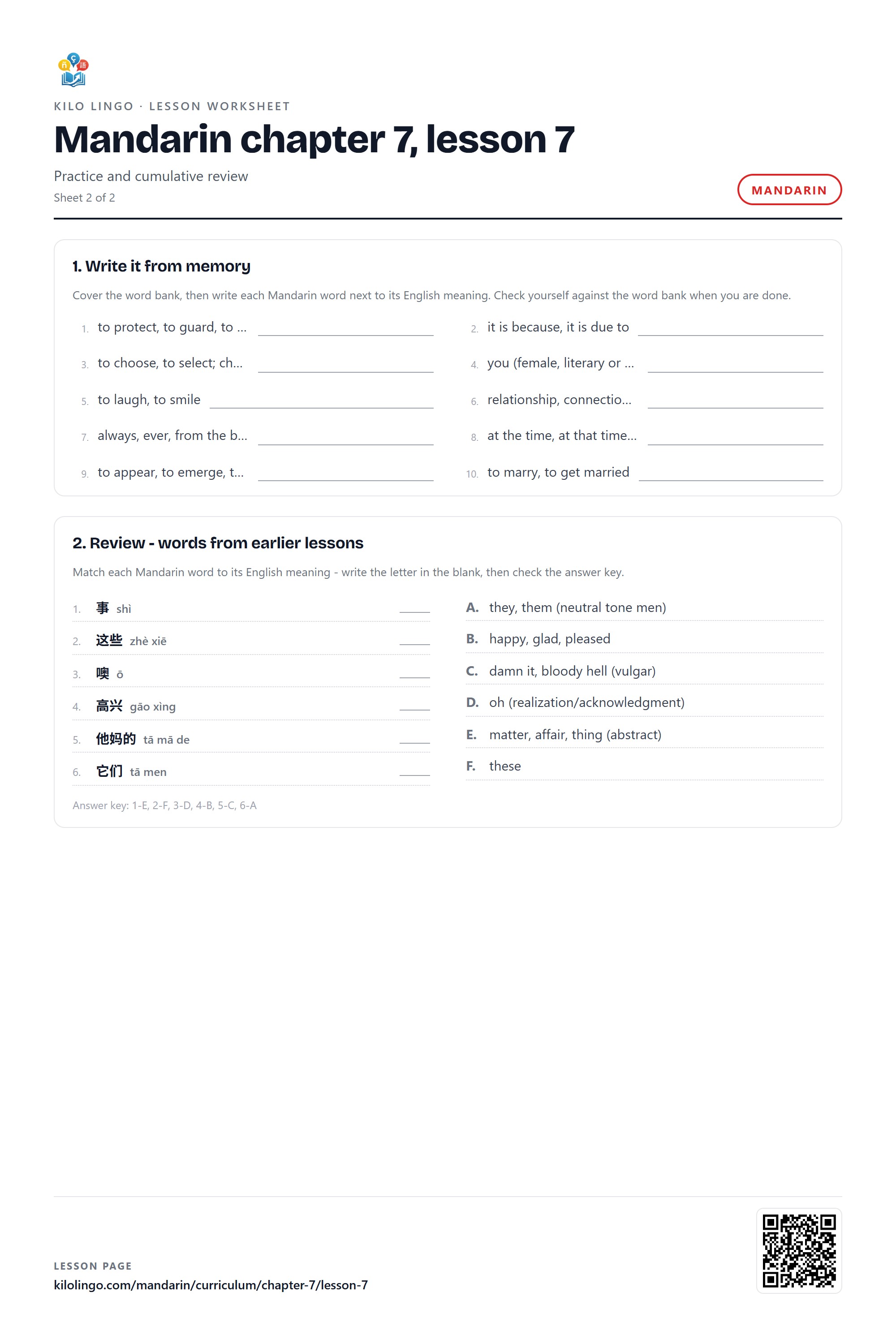
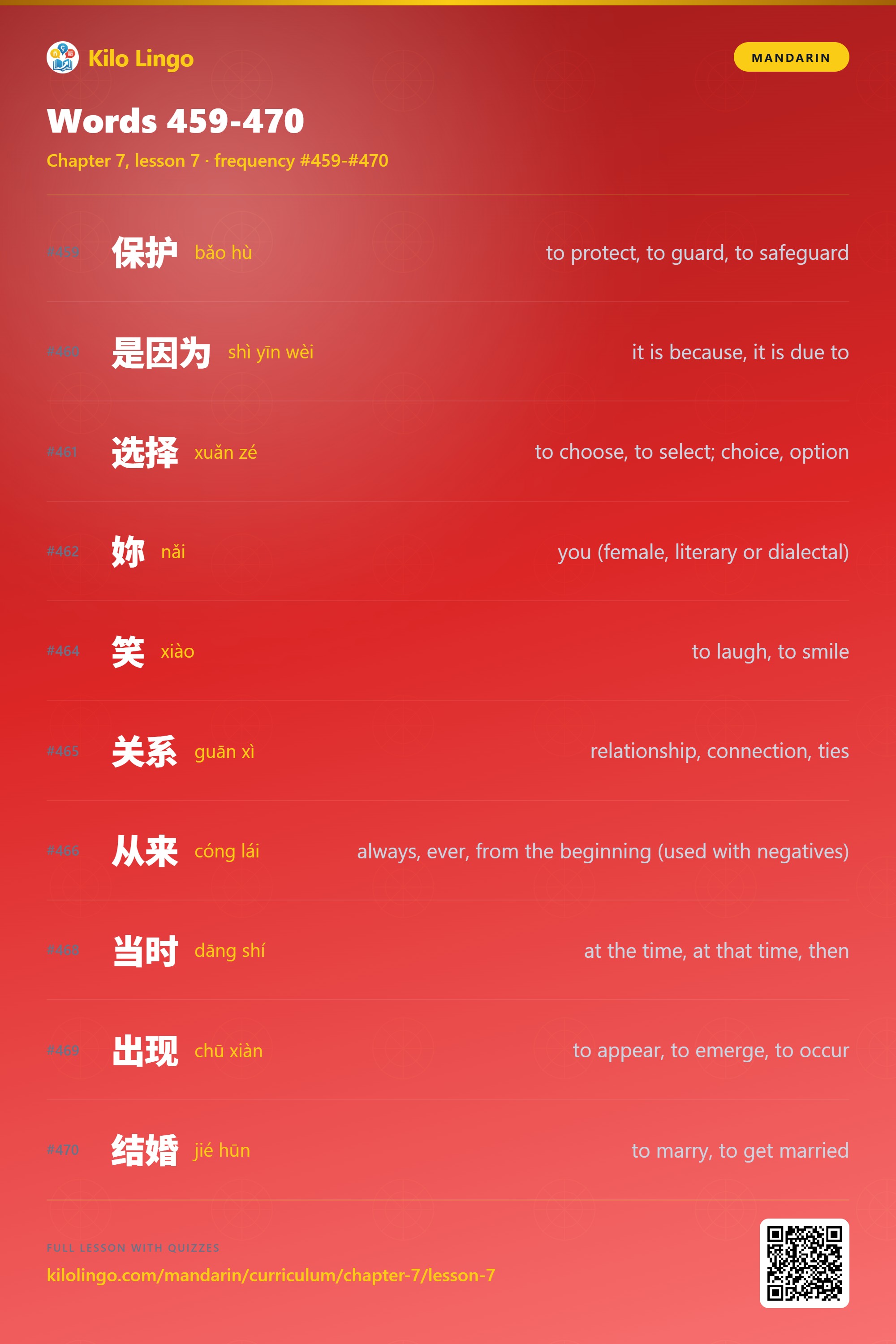
- Words 459-470Vocabulary
10 words · ranks 459-470
- Tone Shooter review sessionReview games
Shoot the words you just met into their tones by colour. The quickest way to fix a tone in place.
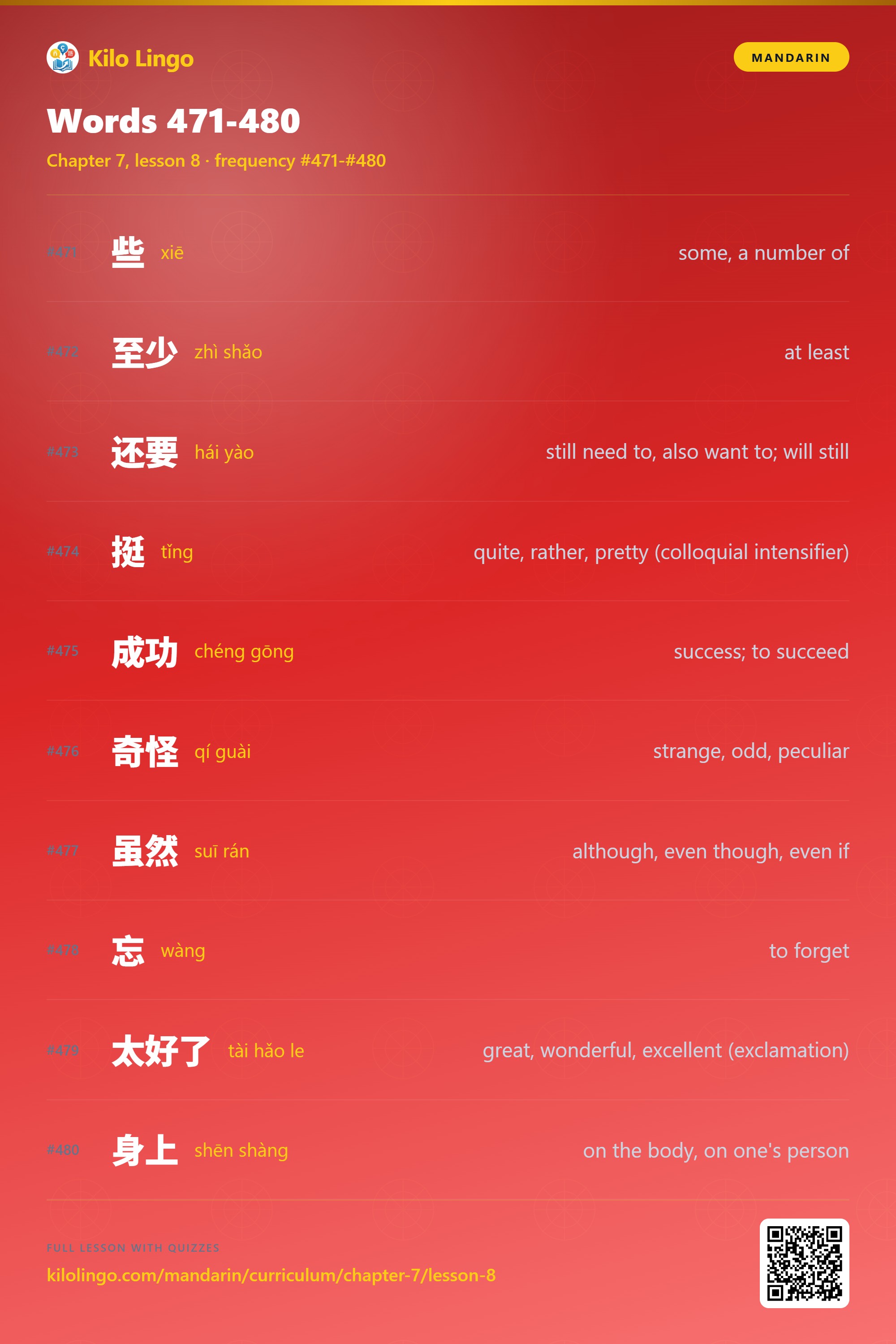
- Words 471-480Vocabulary
10 words · ranks 471-480
- Word Bubbles review sessionReview games
Pop the words you just met by matching each one to its meaning. A couple of rounds and the batch is yours.
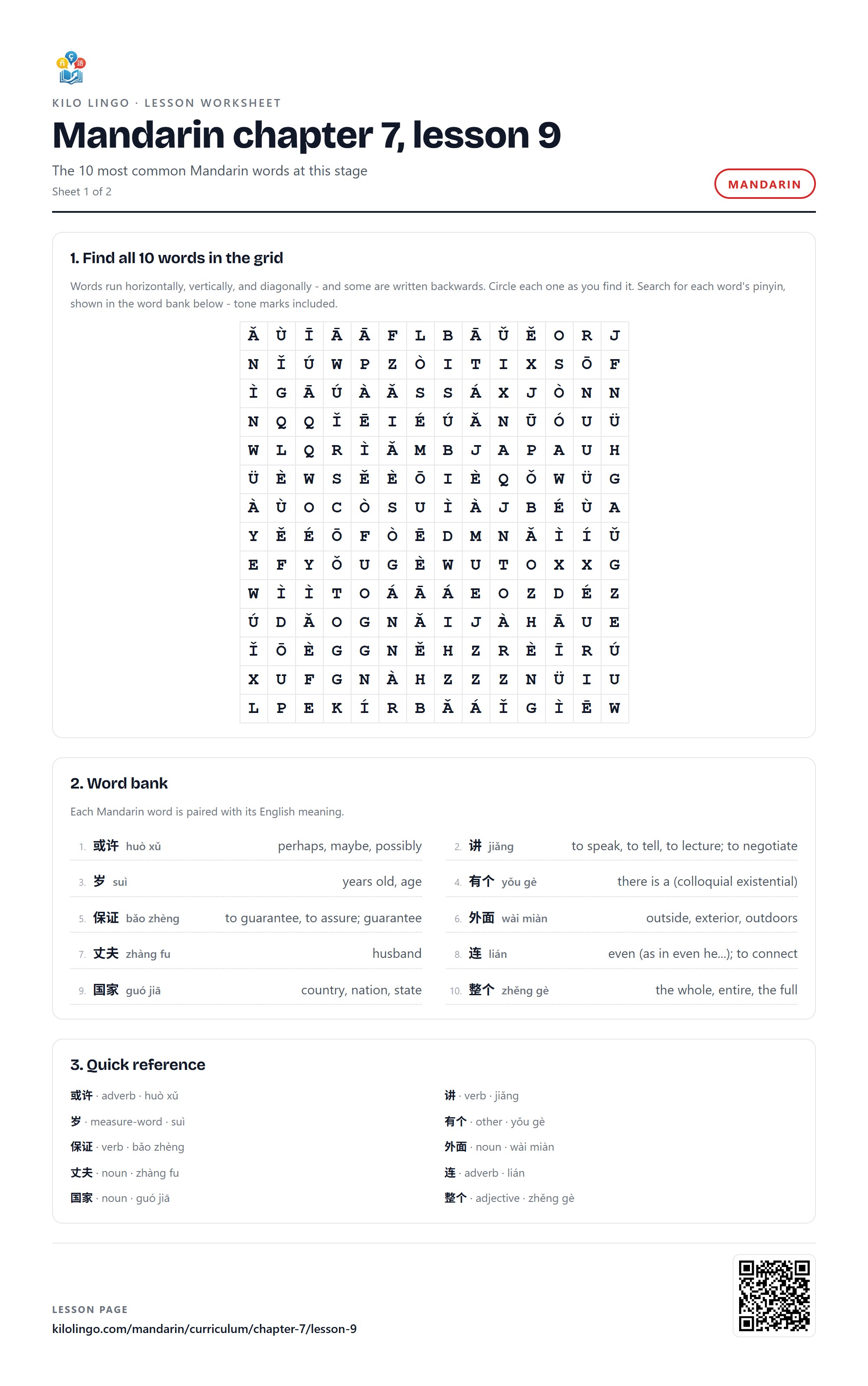
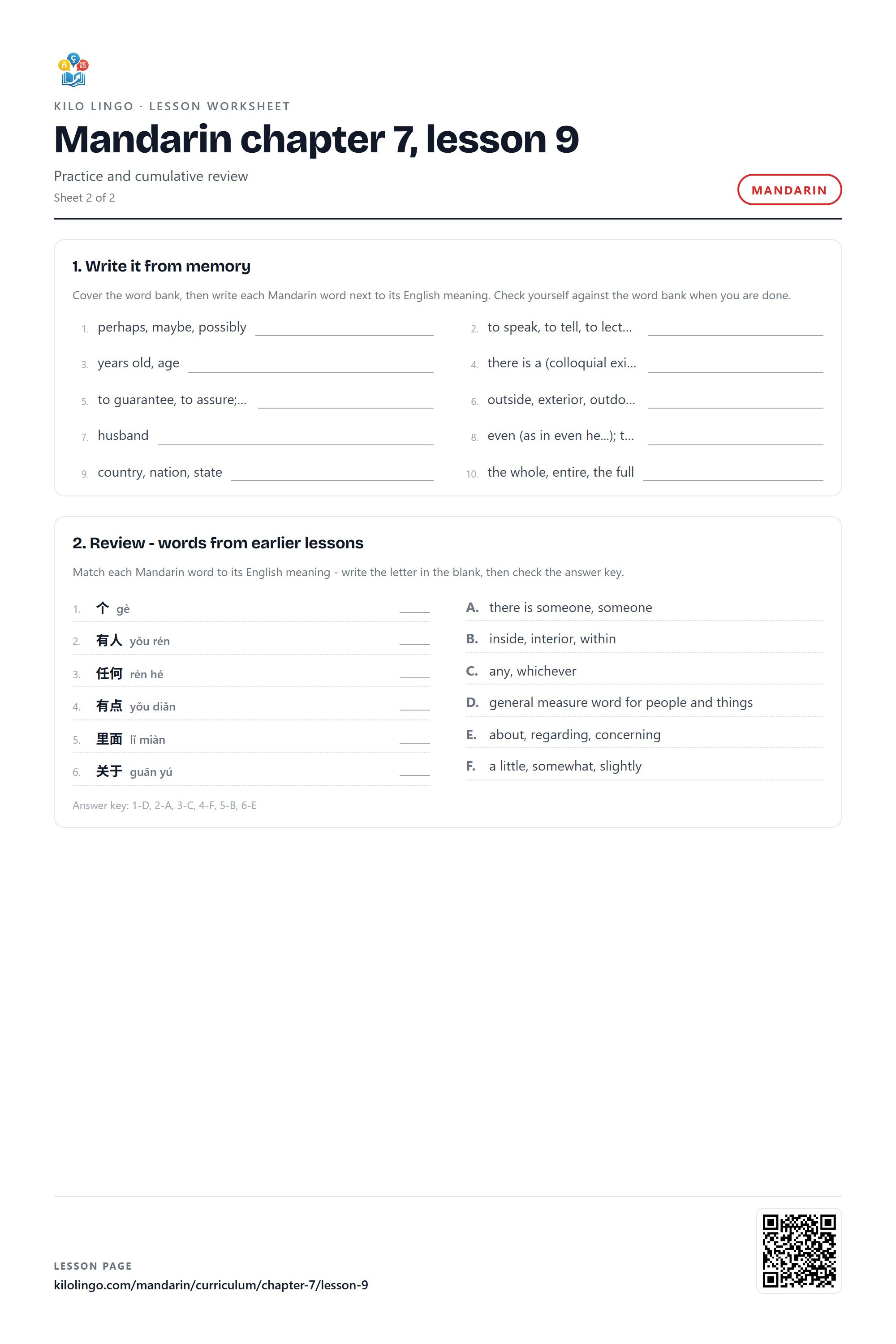
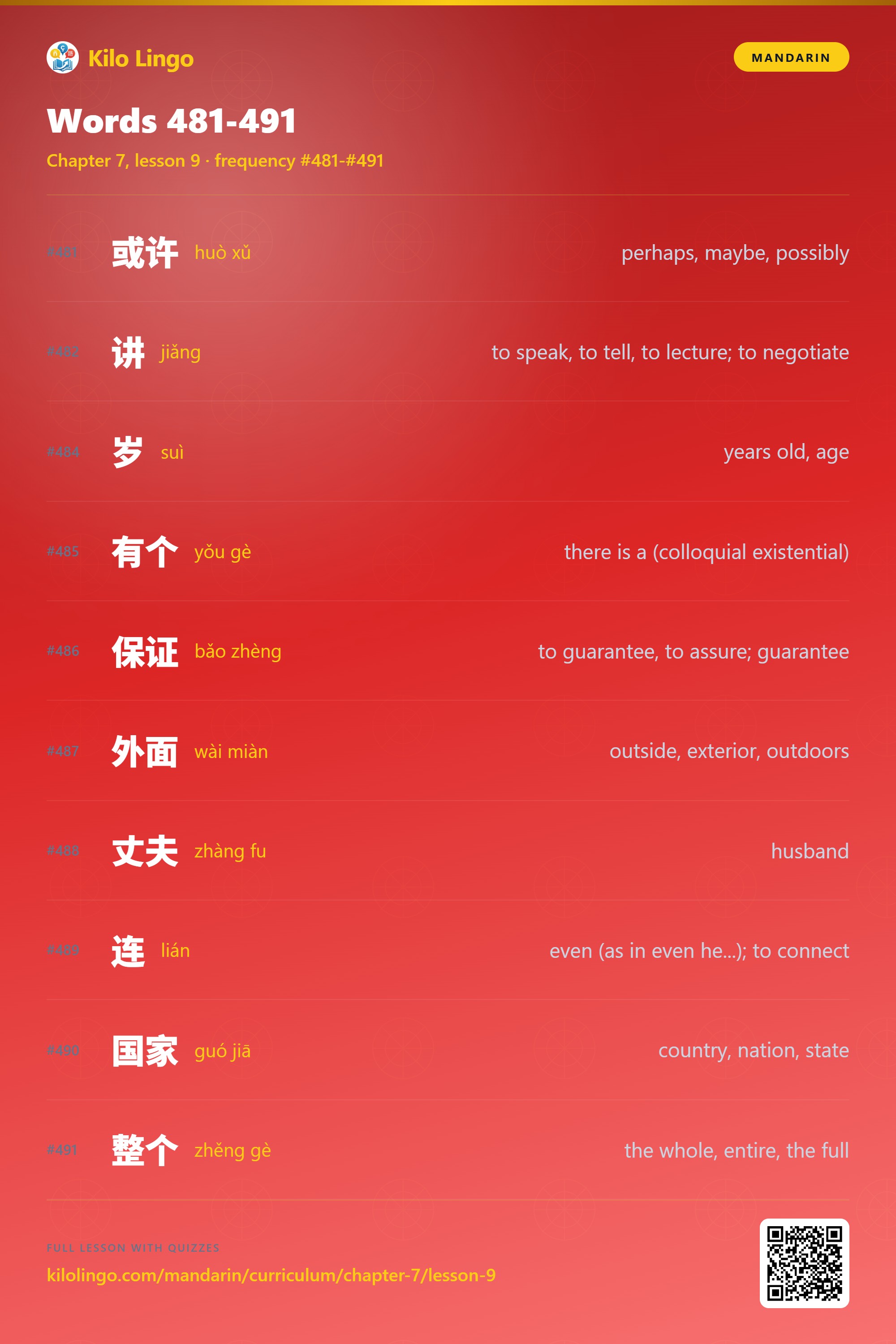
- Words 481-491Vocabulary
10 words · ranks 481-491
- Tone Shooter review sessionReview games
Shoot the words you just met into their tones by colour. The quickest way to fix a tone in place.
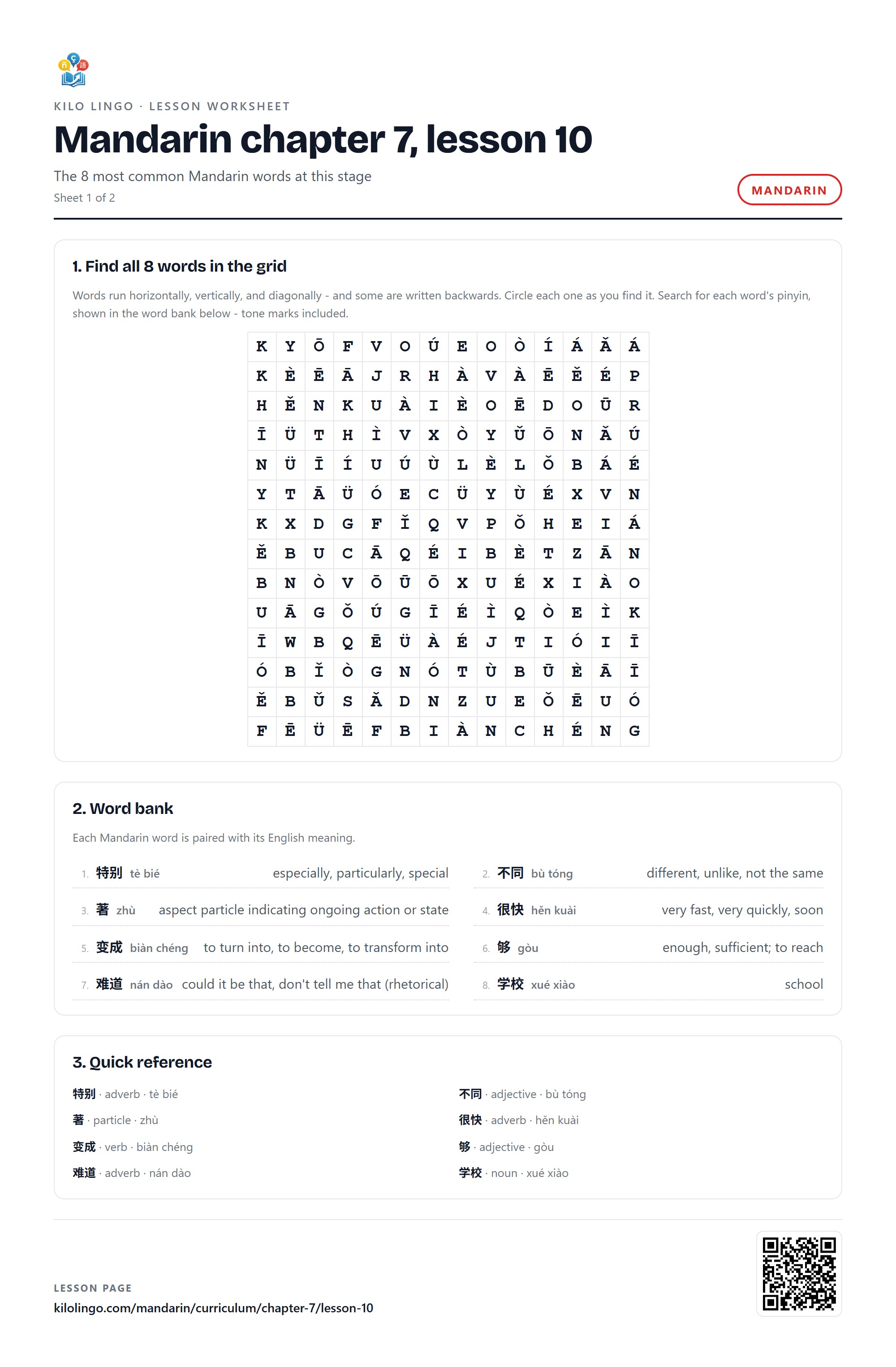
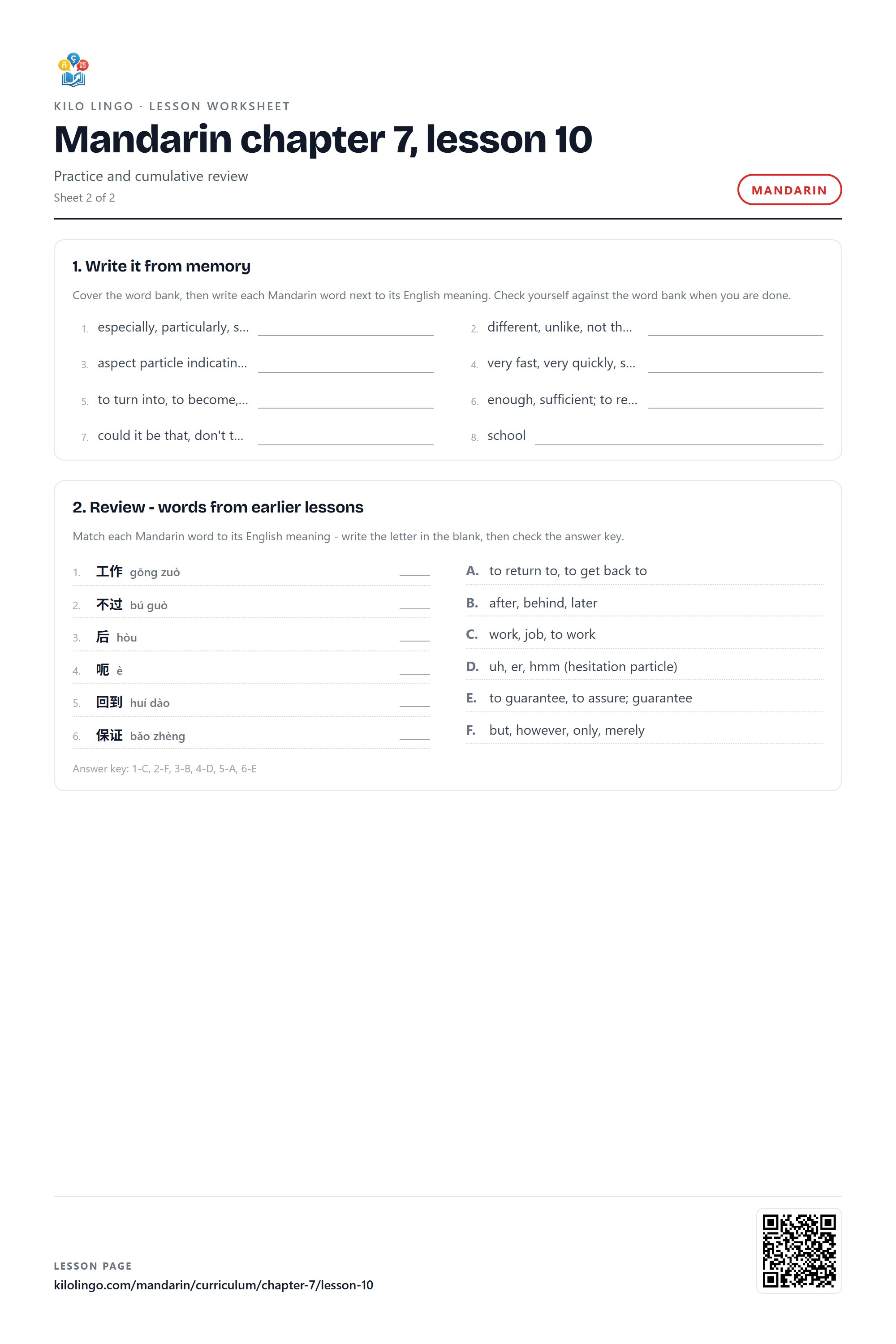
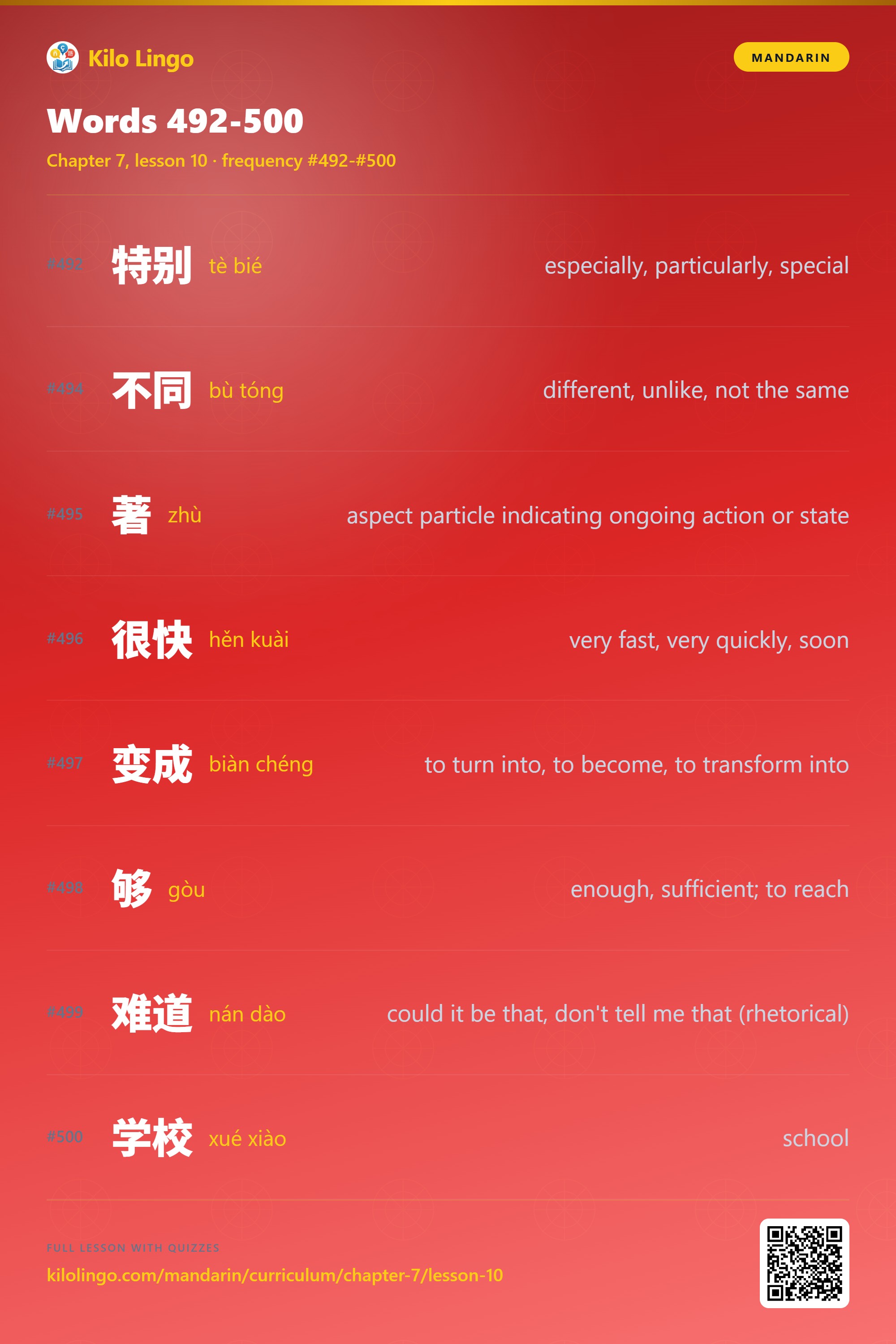
- Words 492-500Vocabulary
8 words · ranks 492-500
- When you have not understoodPhrase session
What rescues a conversation you have lost. Learn these before you need them.
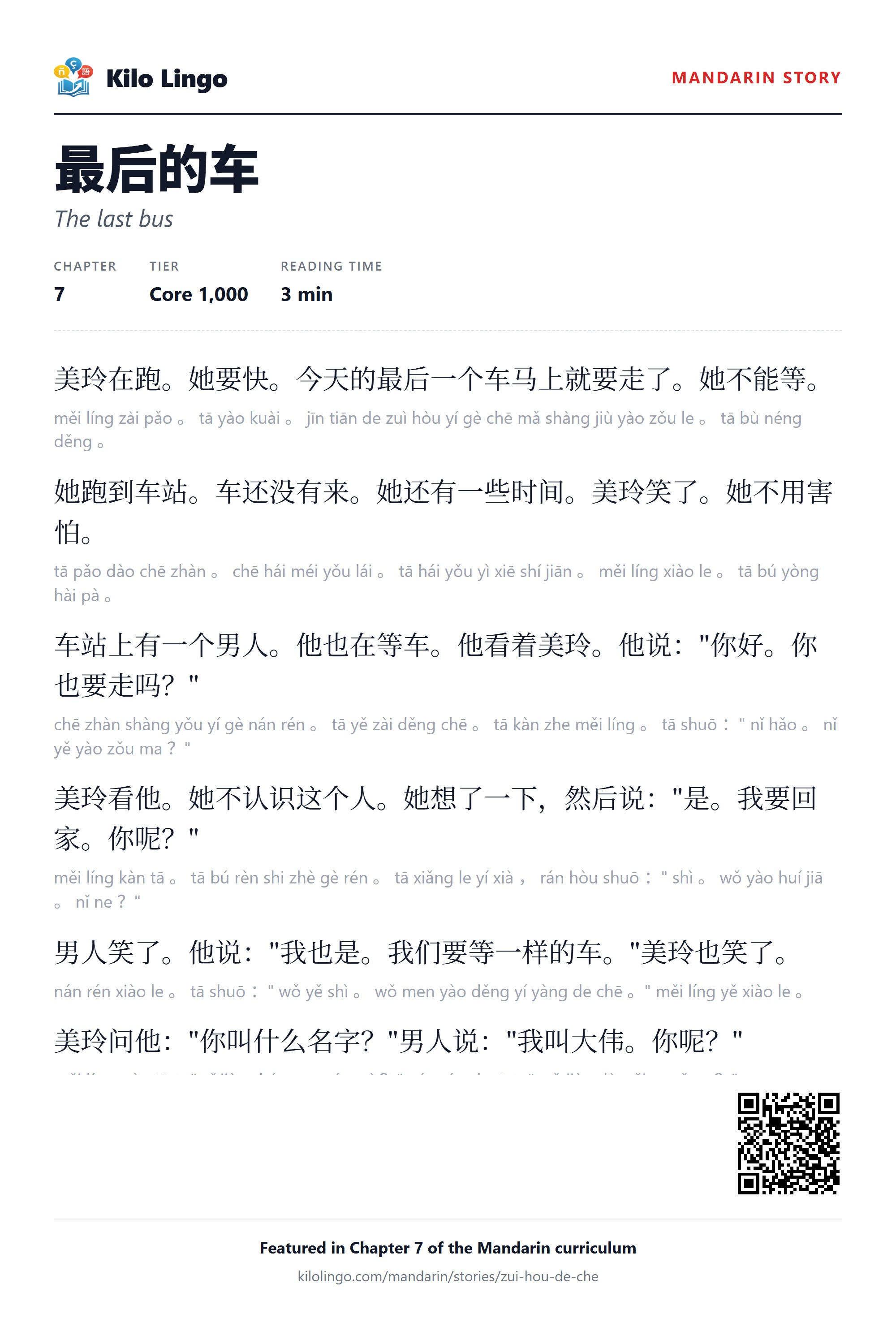
- Story milestone: top 500 wordsGraded-reader story
You can read this story using only the words you've learned so far. Every content word sits at or above the rank-500 ceiling.
- Measure words: the starter setMeasure words
Every counted noun needs its counting word, and 个 alone will not carry you. Match the nouns you already know to 件, 位, 份 and friends - tap the right chip, no typing.
- Arcade reviewReview games
Replay this chapter's words as games - a different kind of repetition, and it counts.
Word printables
Per-word sheets88 words · a worksheet, infographic and listicle each









Chapter 8 · 就 or 才?
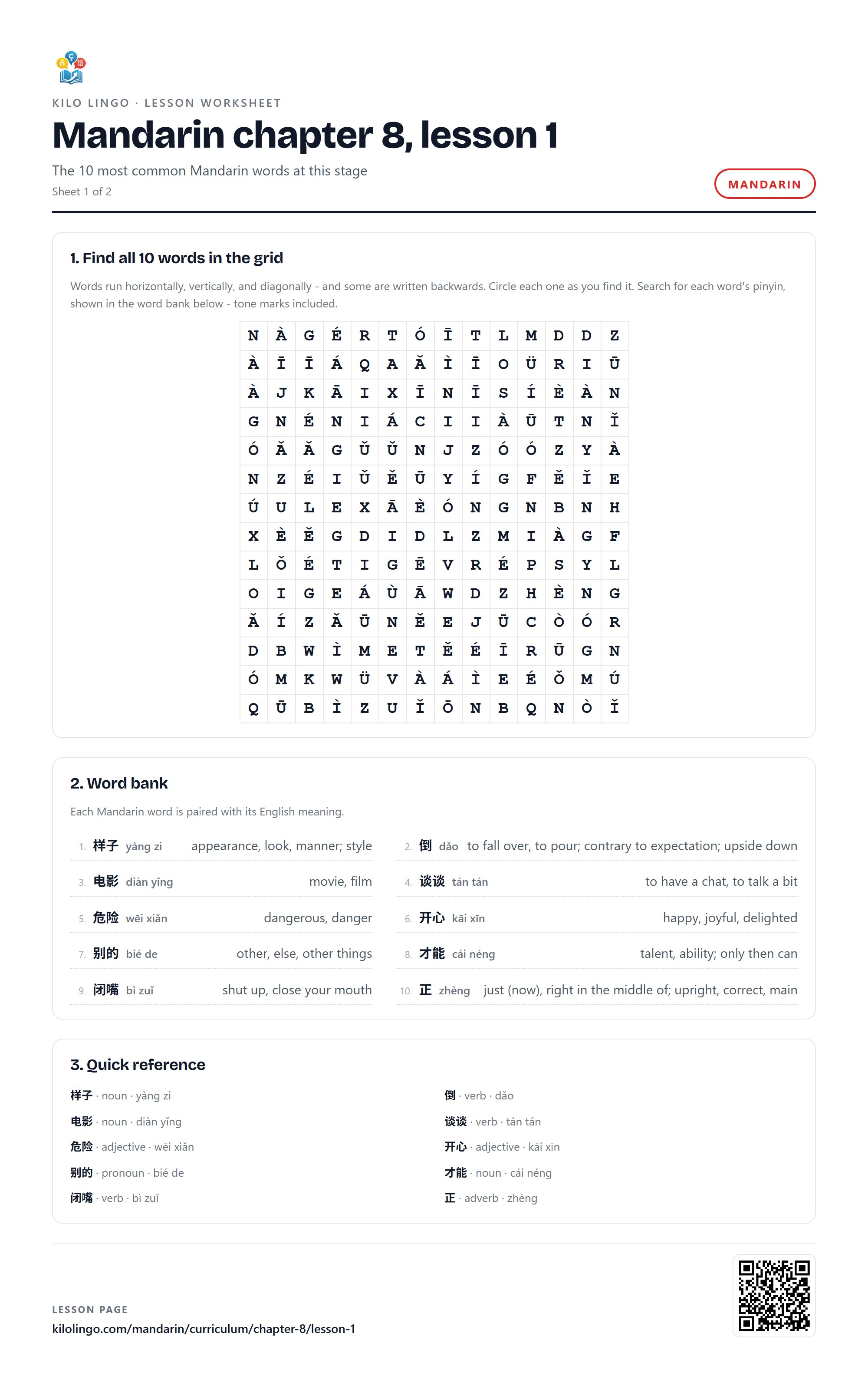
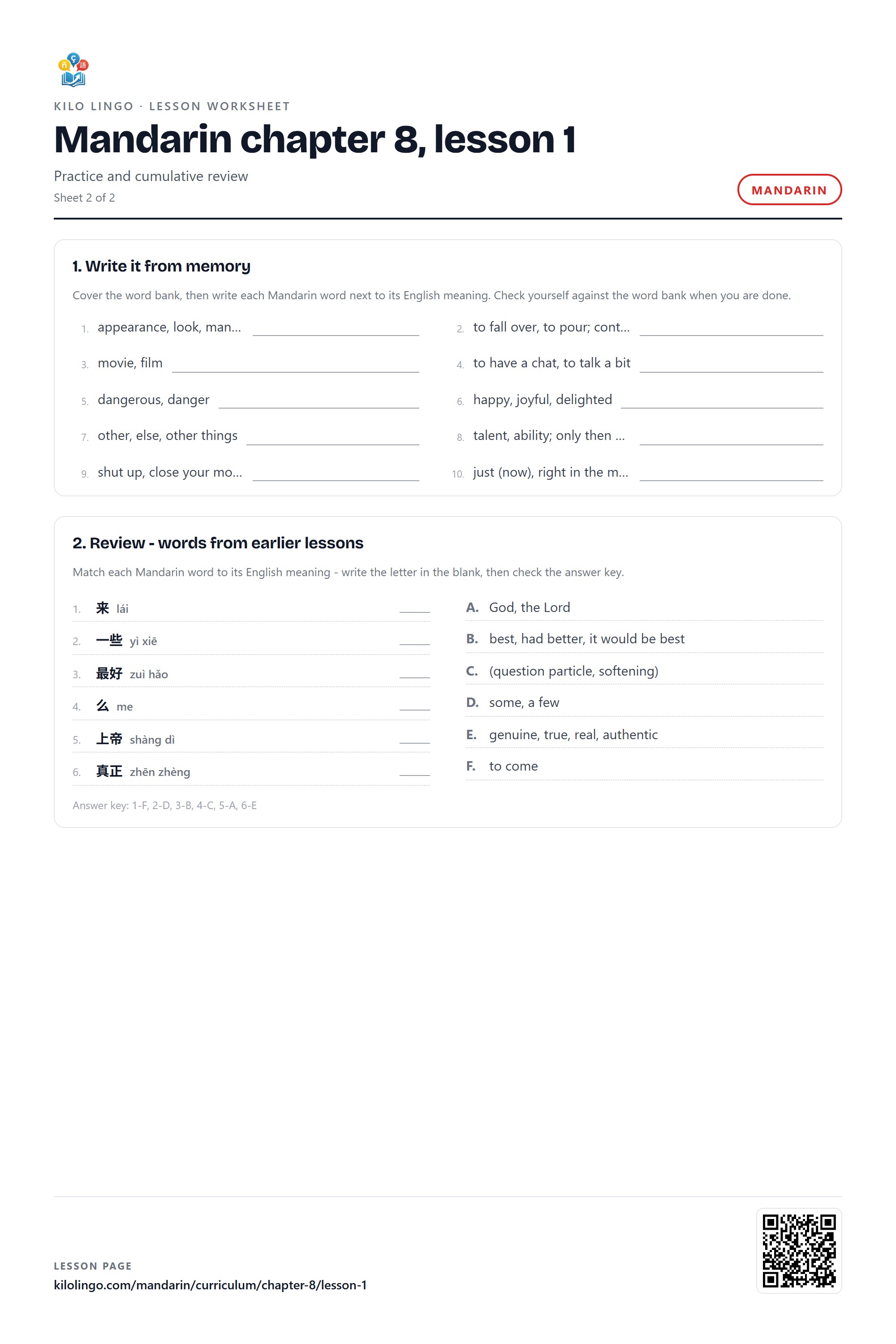
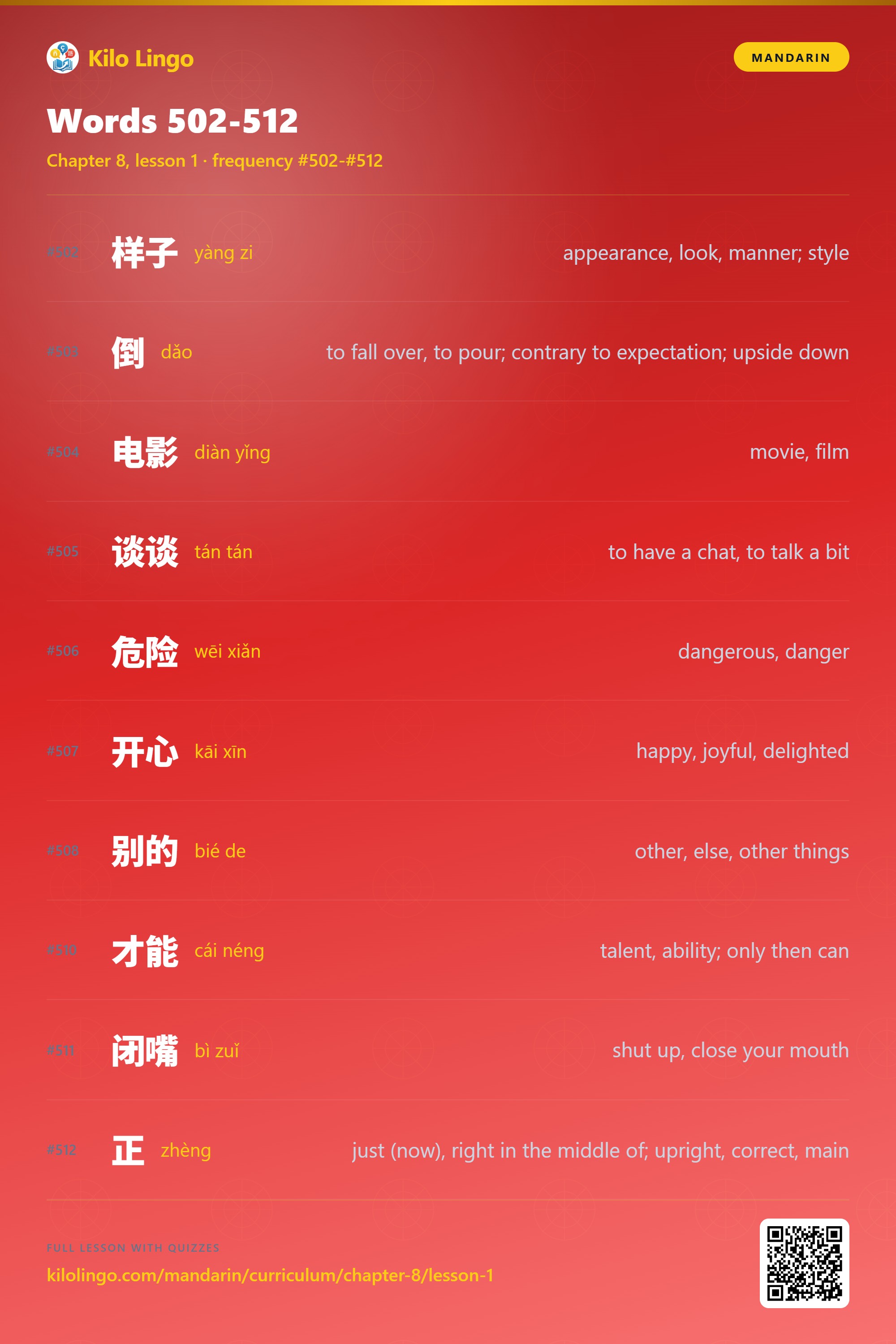
Chapter page →- Words 502-512Vocabulary
10 words · ranks 502-512
- Tone Shooter review sessionReview games
Shoot the words you just met into their tones by colour. The quickest way to fix a tone in place.
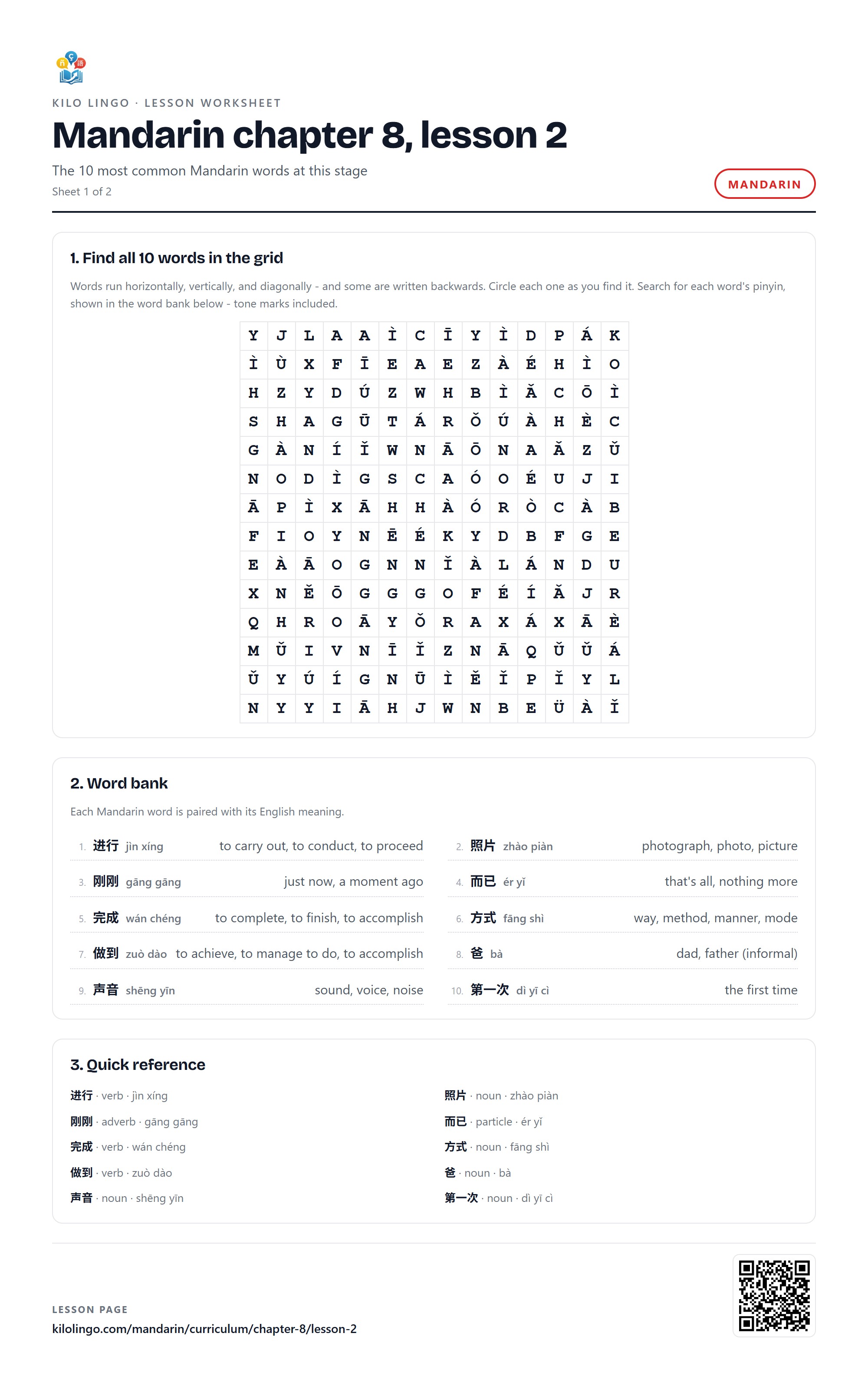
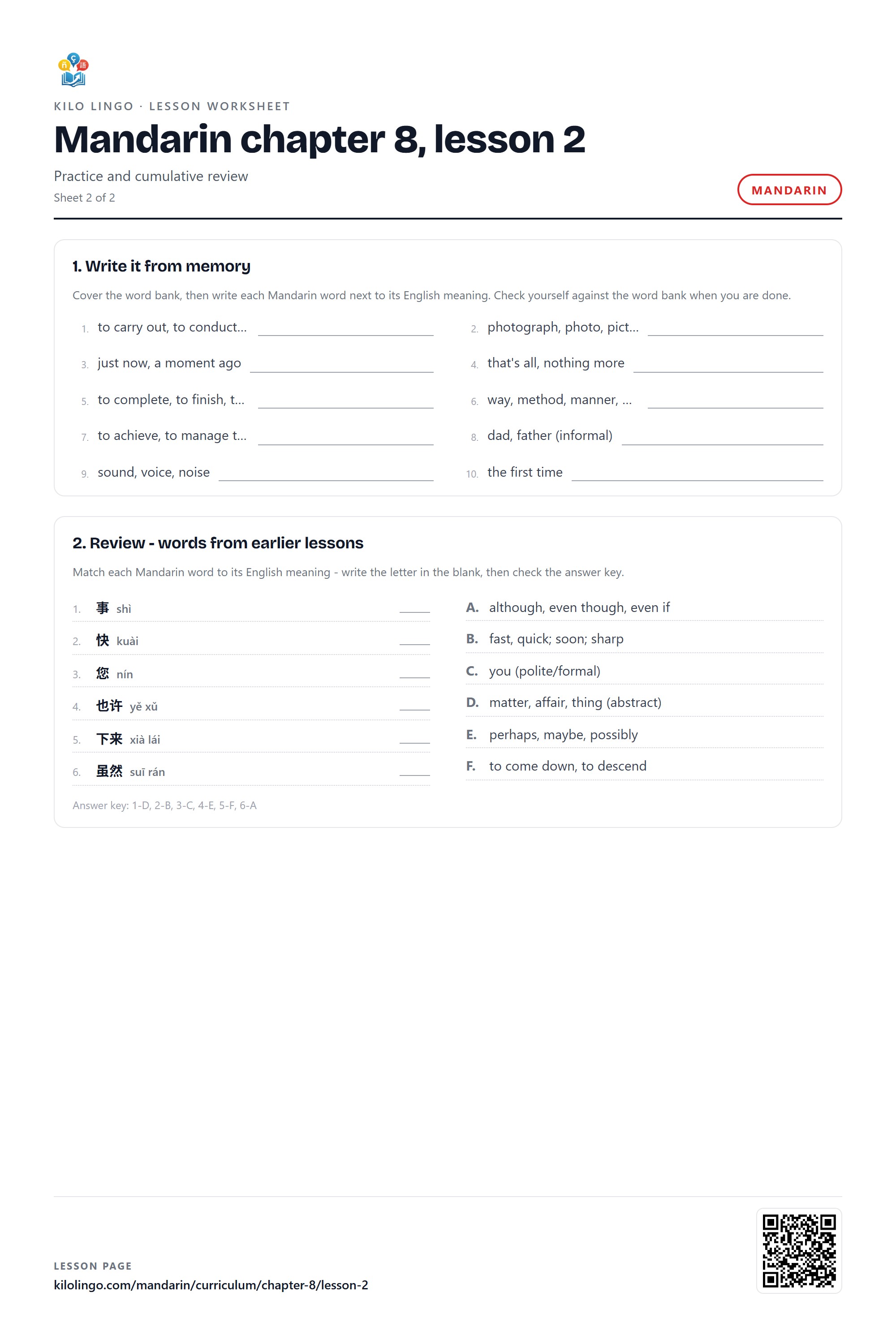
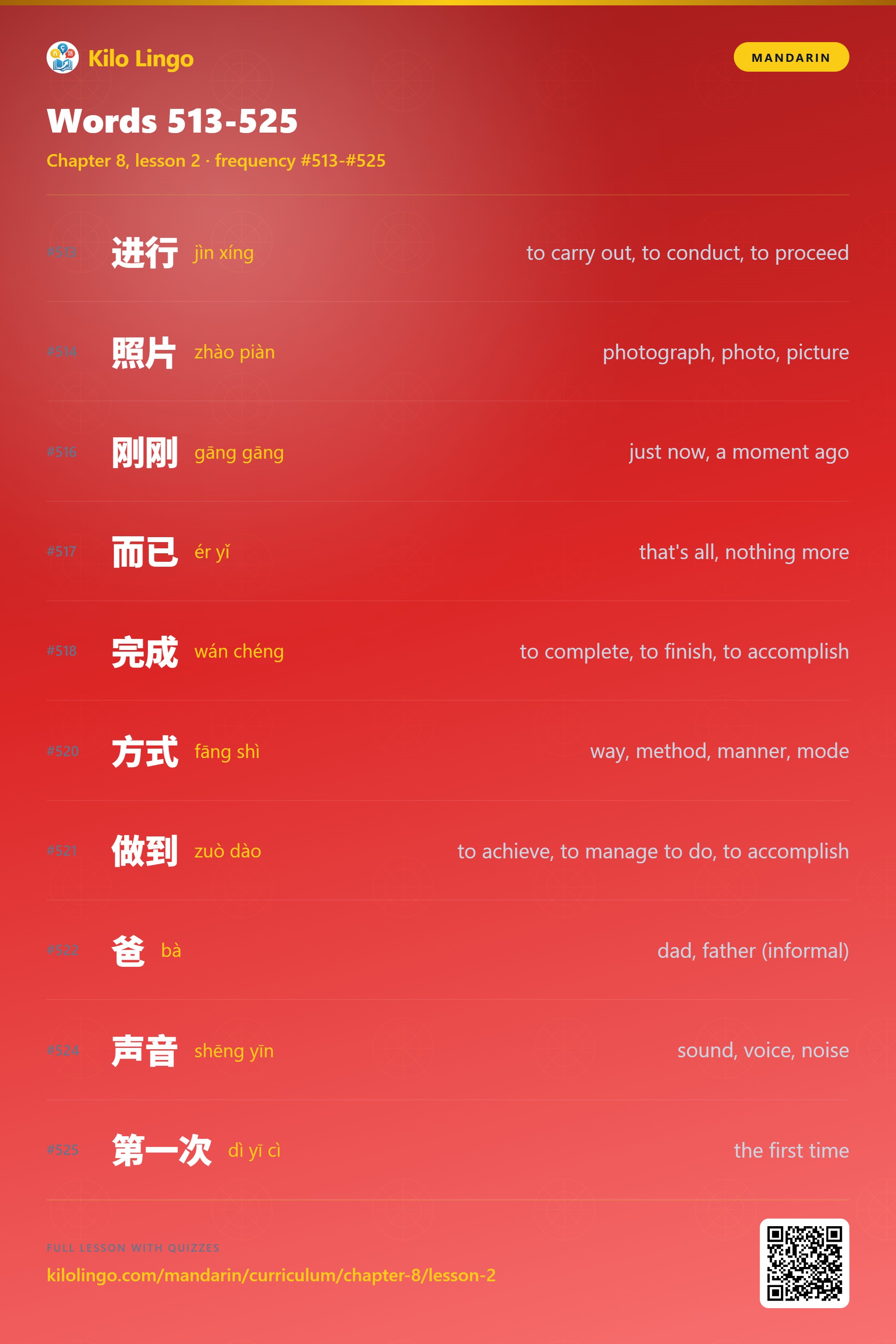
- Words 513-525Vocabulary
10 words · ranks 513-525
- Crossword review sessionReview games
Cross the words you just met, clued in English. Slower than a drill, and it sticks harder.
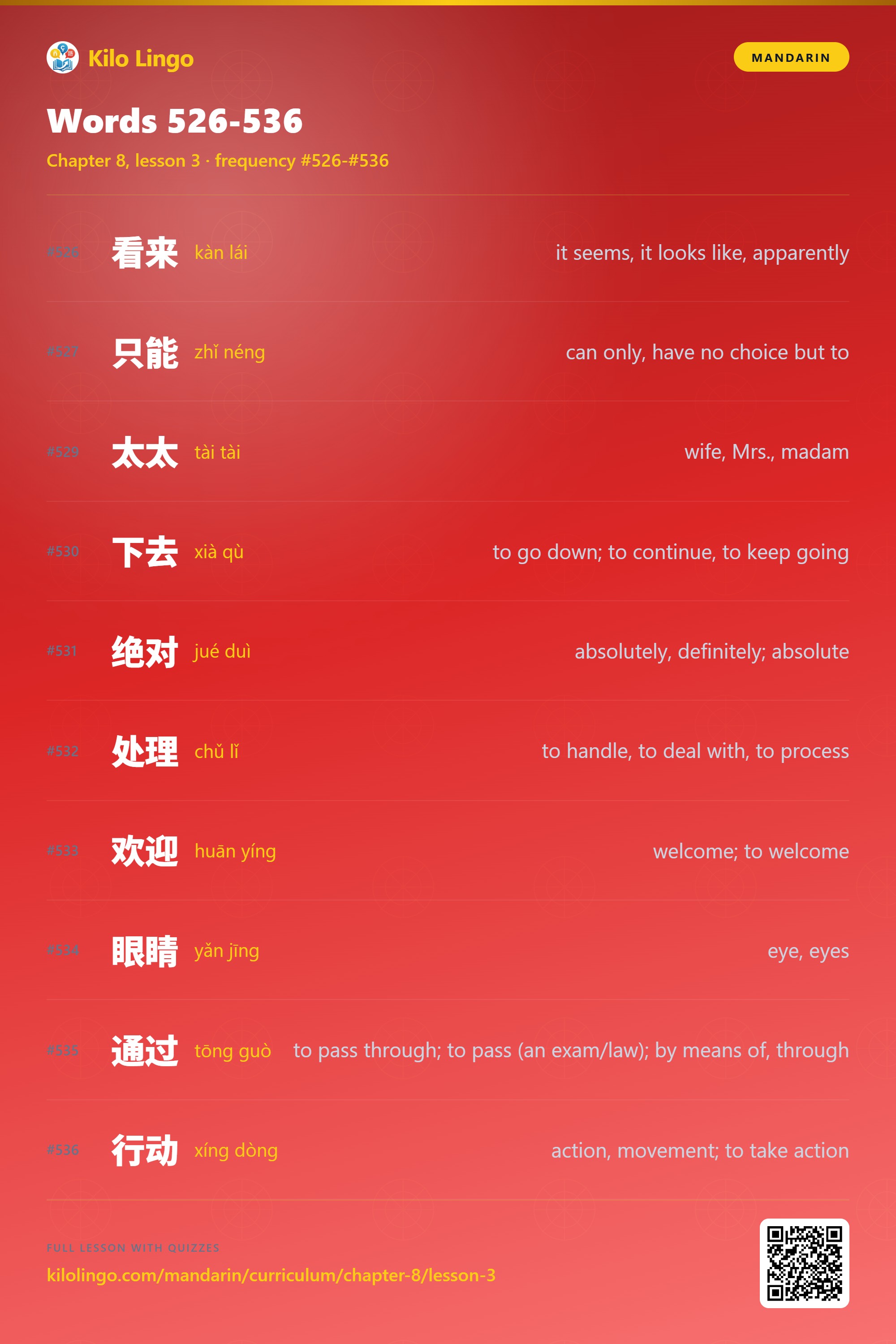
- Words 526-536Vocabulary
10 words · ranks 526-536
- Word Bubbles review sessionReview games
Pop the words you just met by matching each one to its meaning. A couple of rounds and the batch is yours.
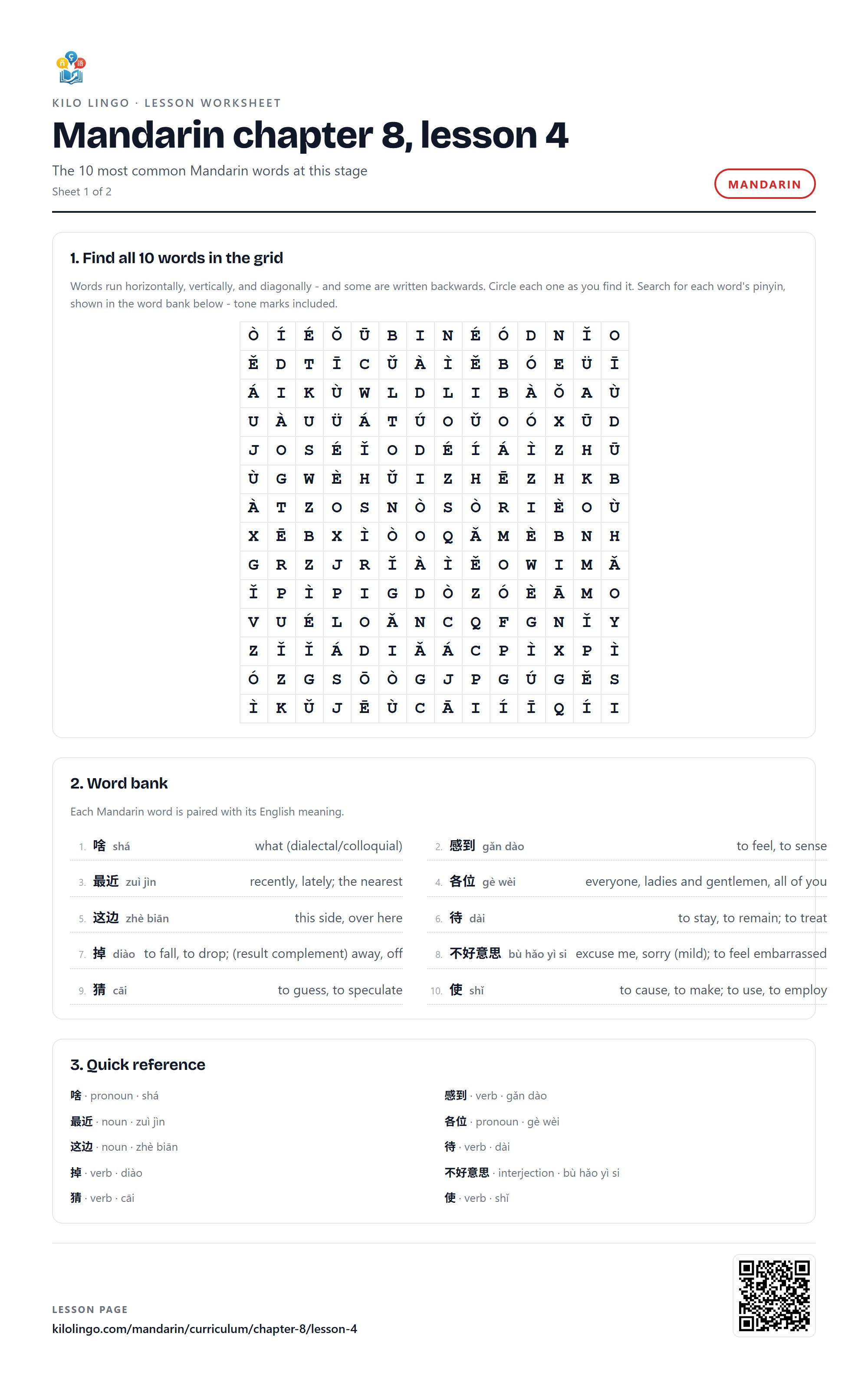
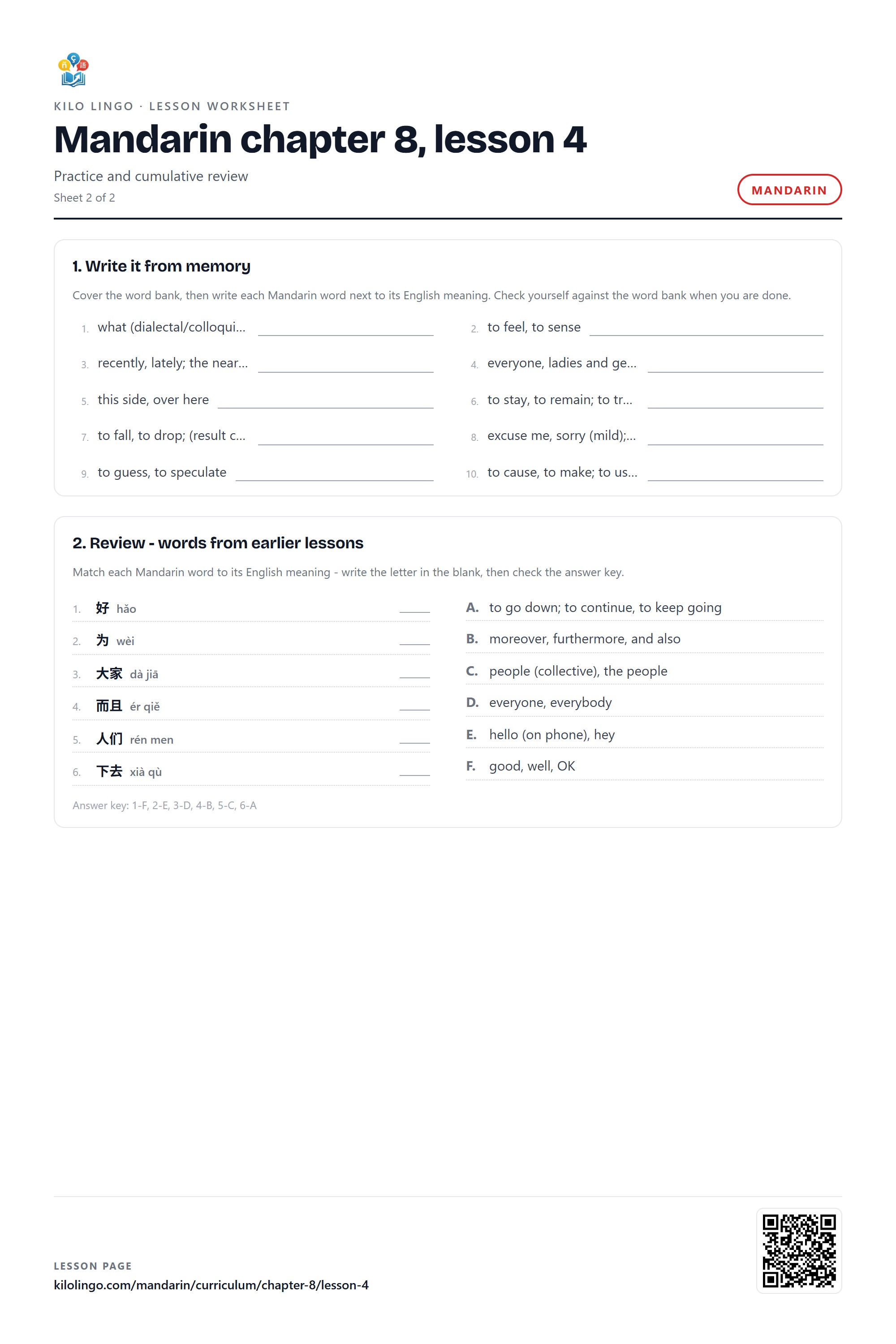
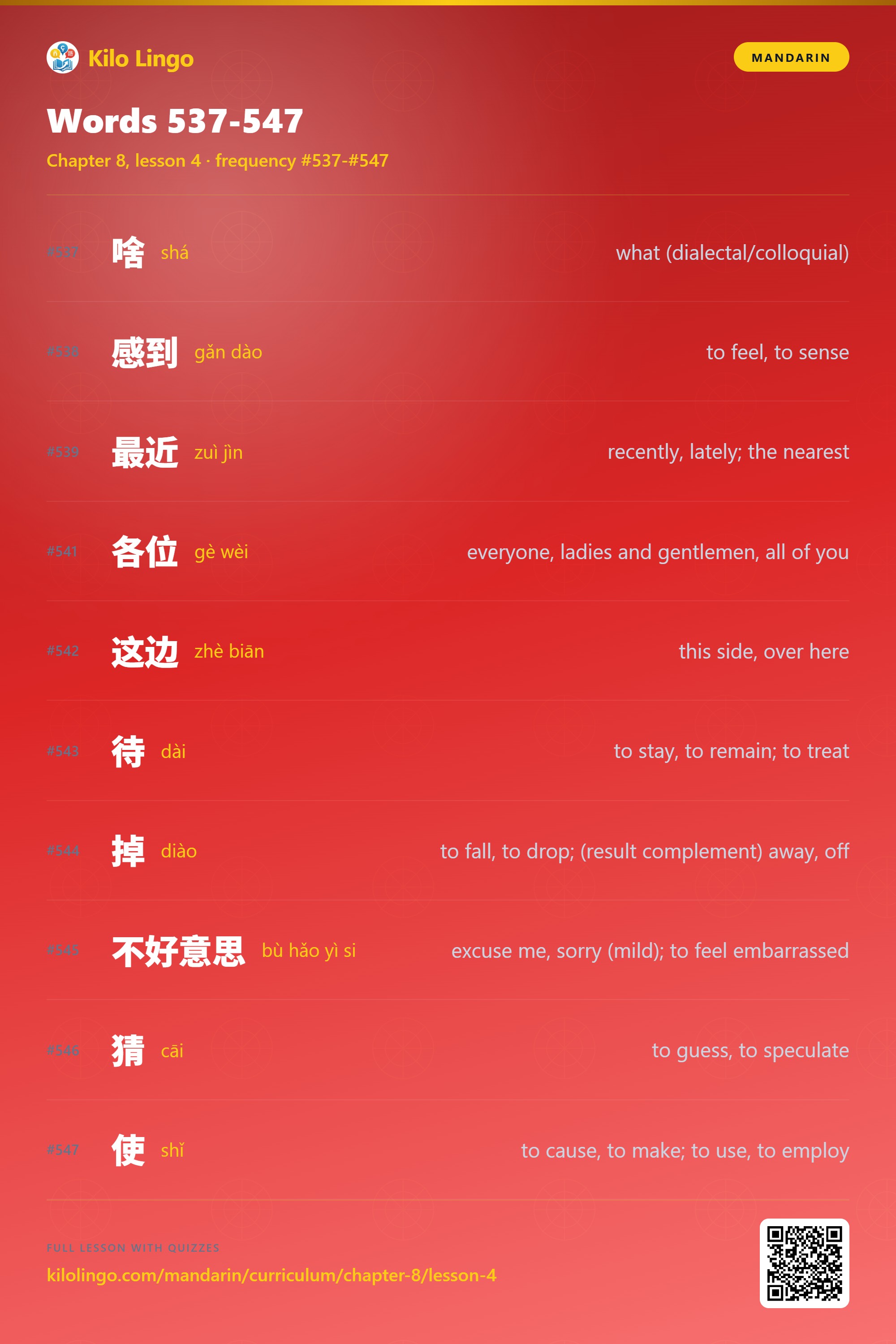
- Words 537-547Vocabulary
10 words · ranks 537-547
- Tone Shooter review sessionReview games
Shoot the words you just met into their tones by colour. The quickest way to fix a tone in place.
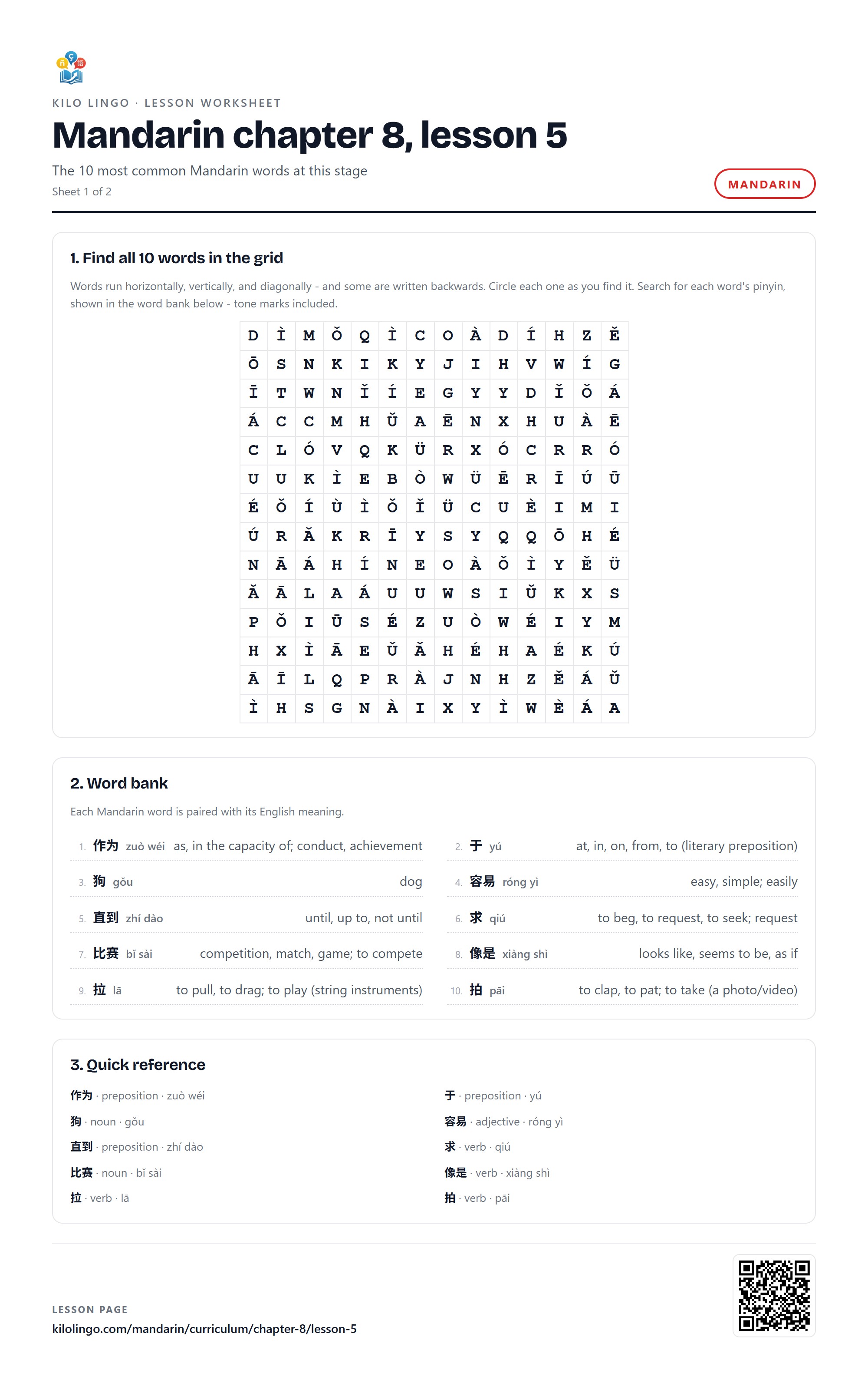
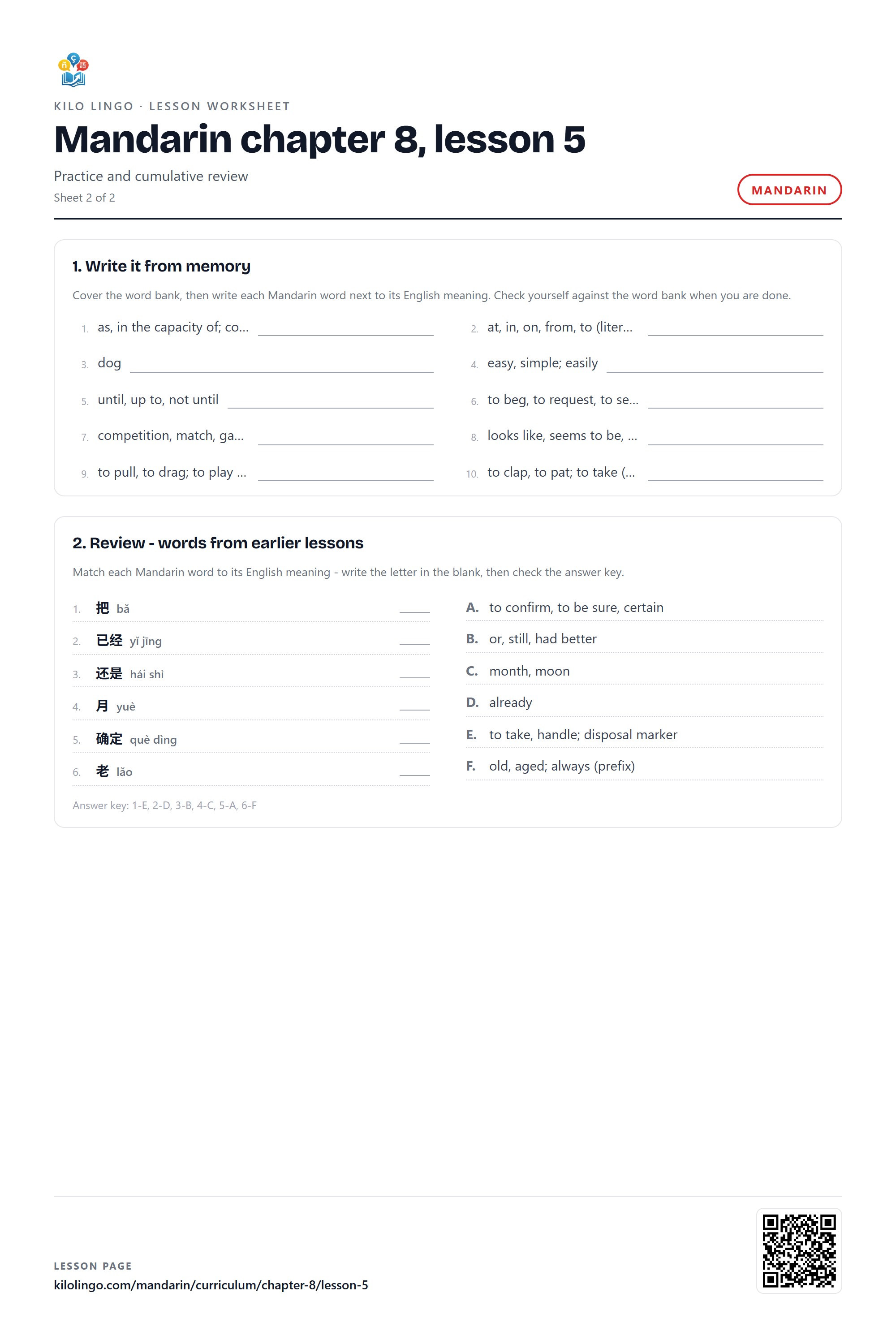
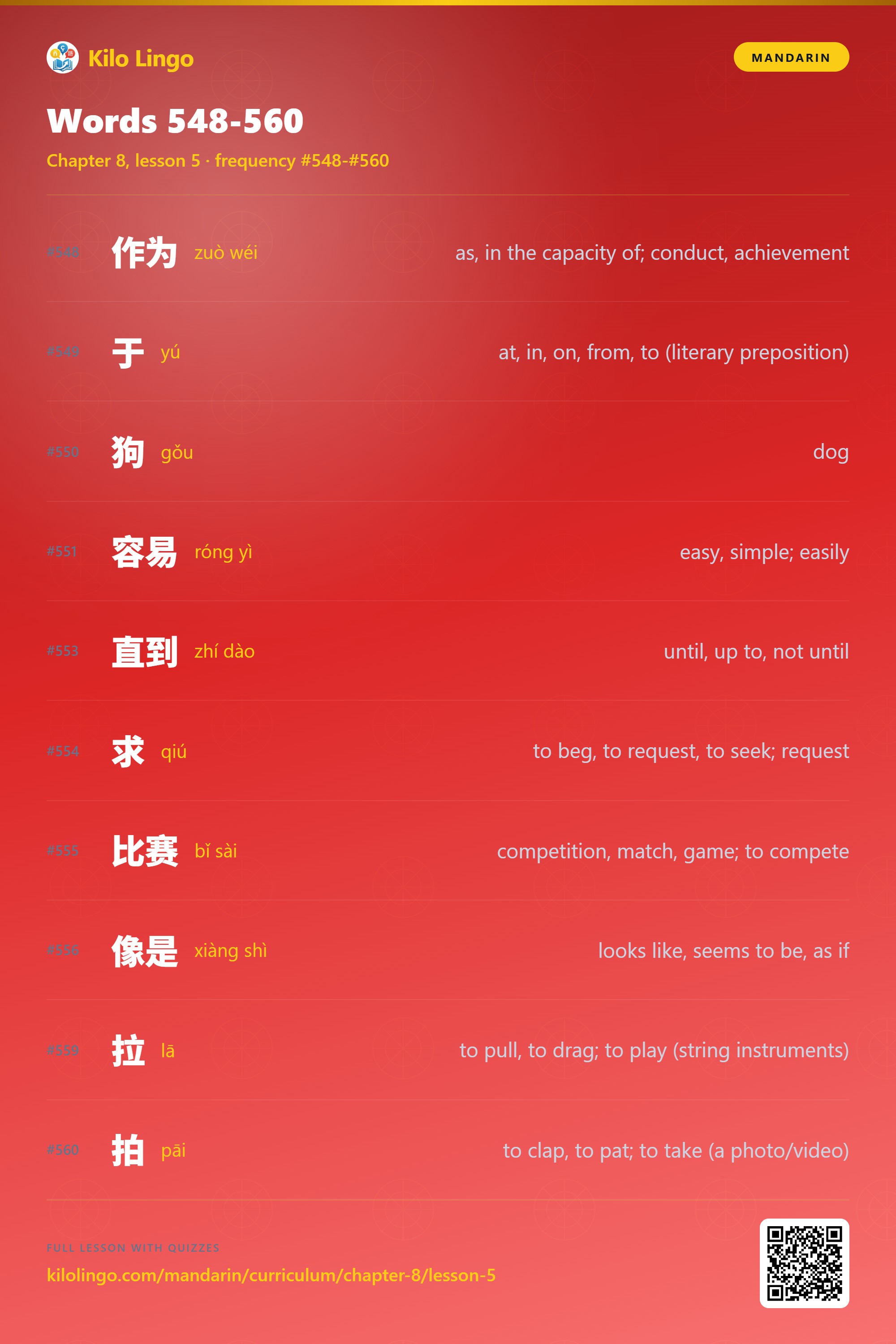
- Words 548-560Vocabulary
10 words · ranks 548-560
- 就 or 才?Mistake clinic
One says
already. The other saysnot until. - Question formation in fullGrammar
吗 yes/no, choice (V不V), 还是 alternatives, the full wh-word inventory (什么/谁/哪儿/为什么/怎么/几/哪个/什么时候/多少/多大), and tag particles 呢/吧.
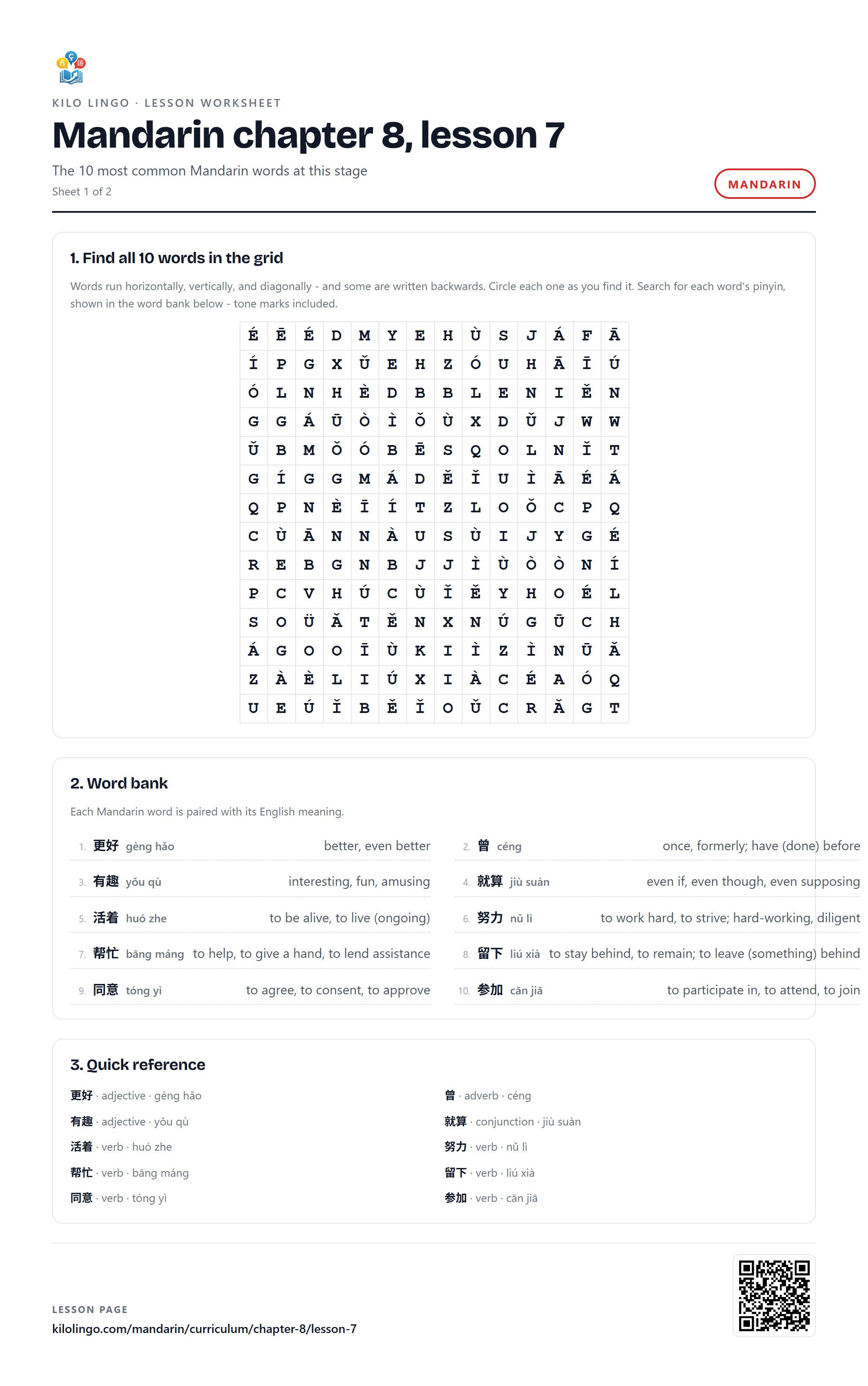
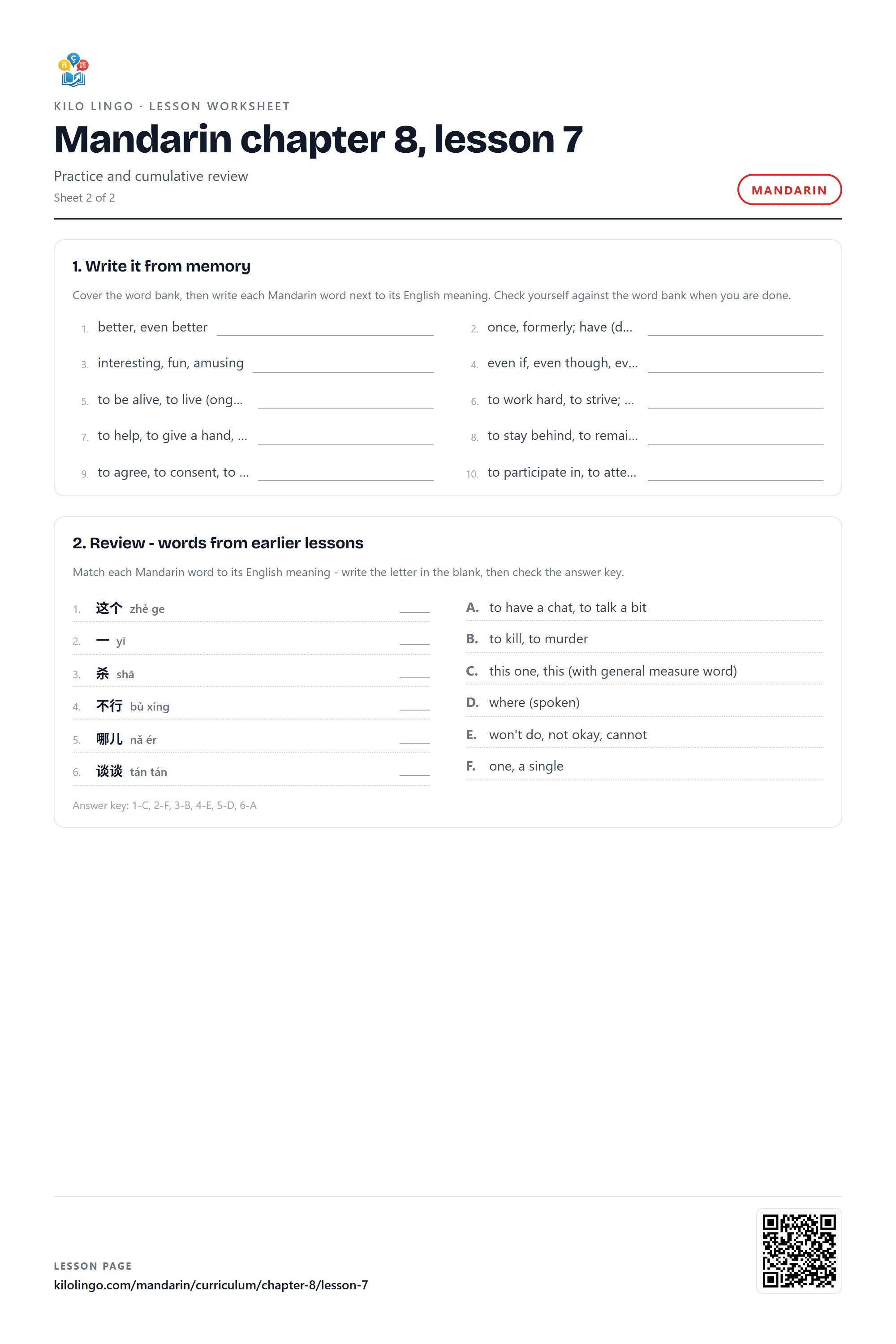
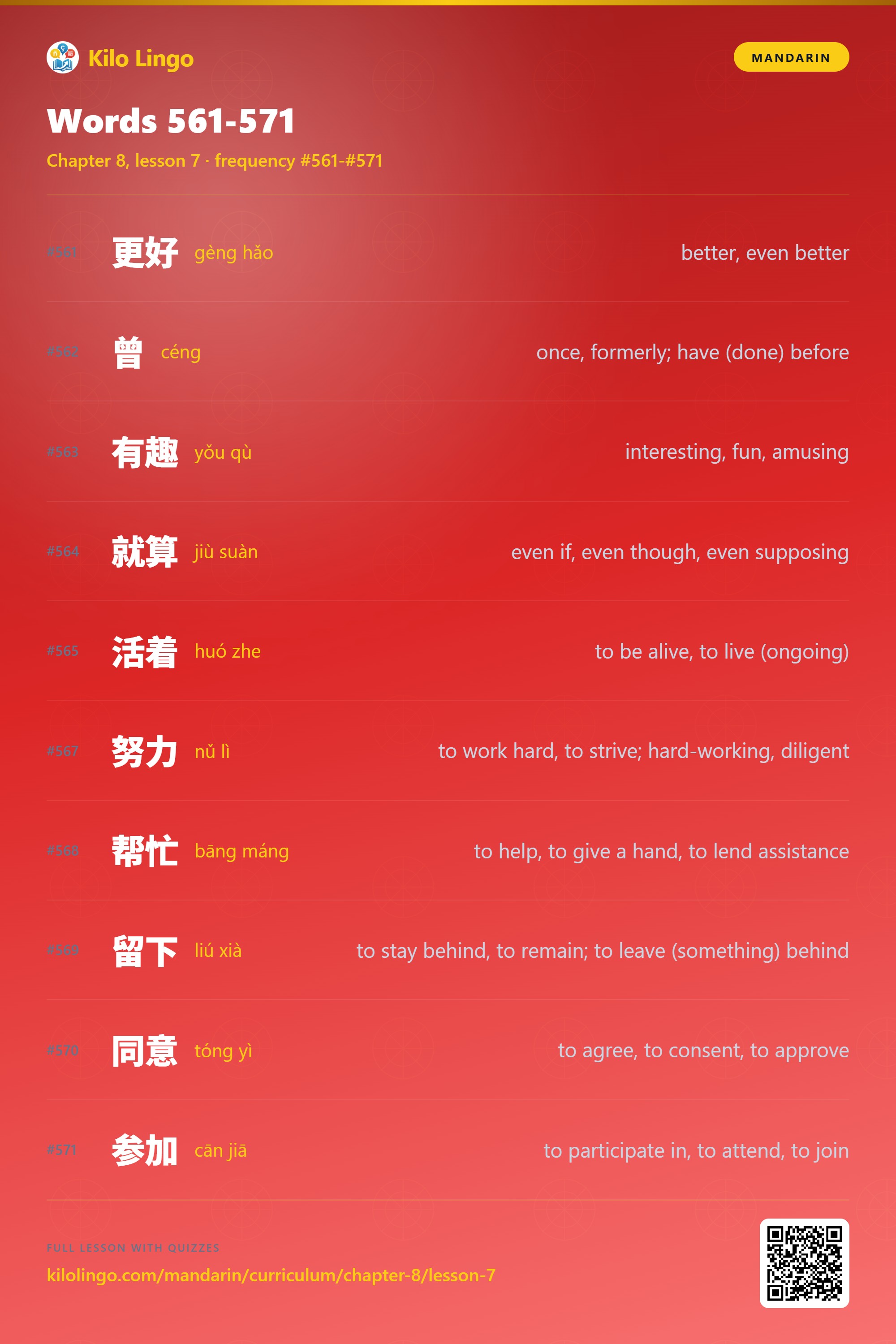
- Words 561-571Vocabulary
10 words · ranks 561-571
- Word Bubbles review sessionReview games
Pop the words you just met by matching each one to its meaning. A couple of rounds and the batch is yours.
- Words 572-581Vocabulary
10 words · ranks 572-581
- Tone Shooter review sessionReview games
Shoot the words you just met into their tones by colour. The quickest way to fix a tone in place.
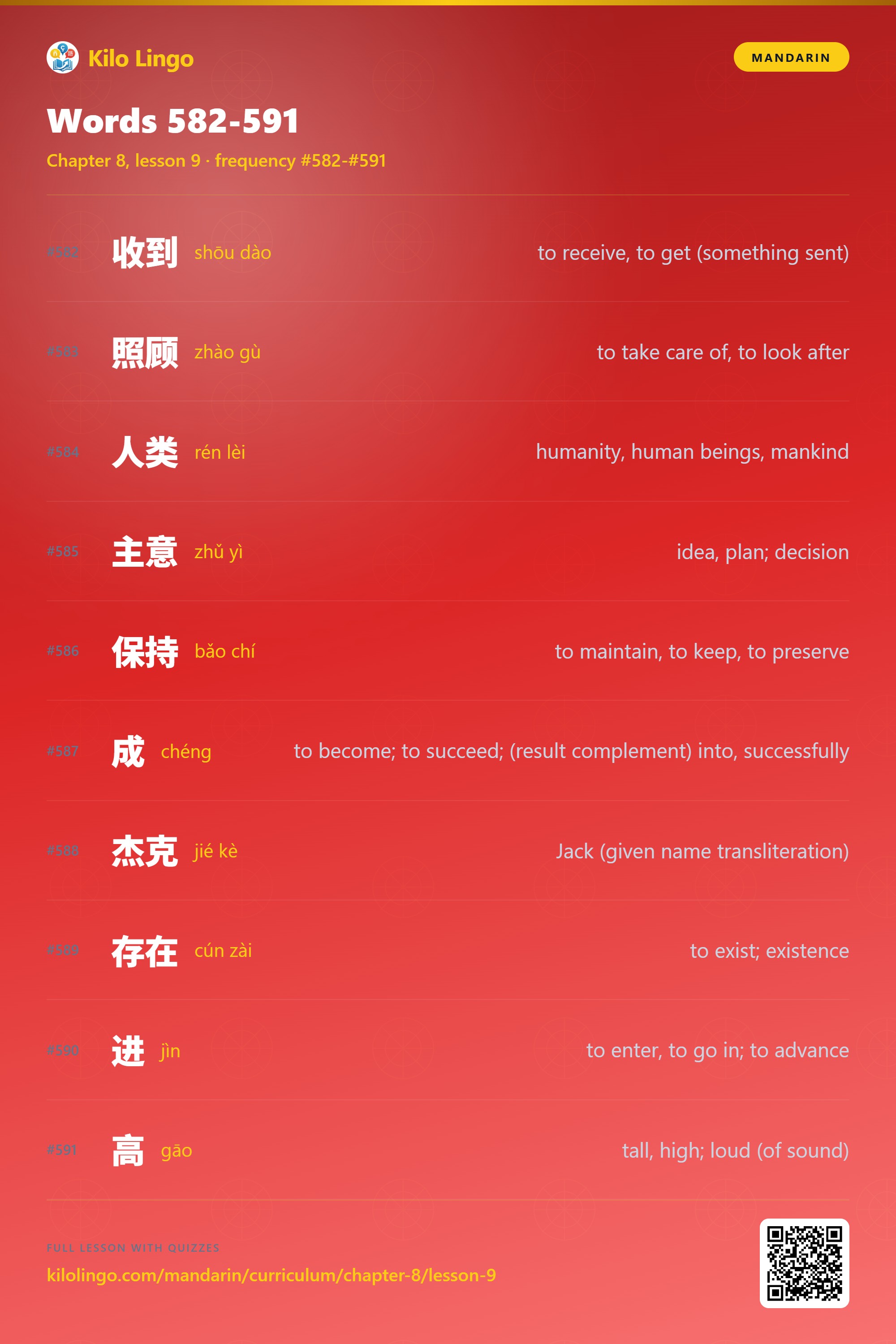
- Words 582-591Vocabulary
10 words · ranks 582-591
- Word Bubbles review sessionReview games
Pop the words you just met by matching each one to its meaning. A couple of rounds and the batch is yours.
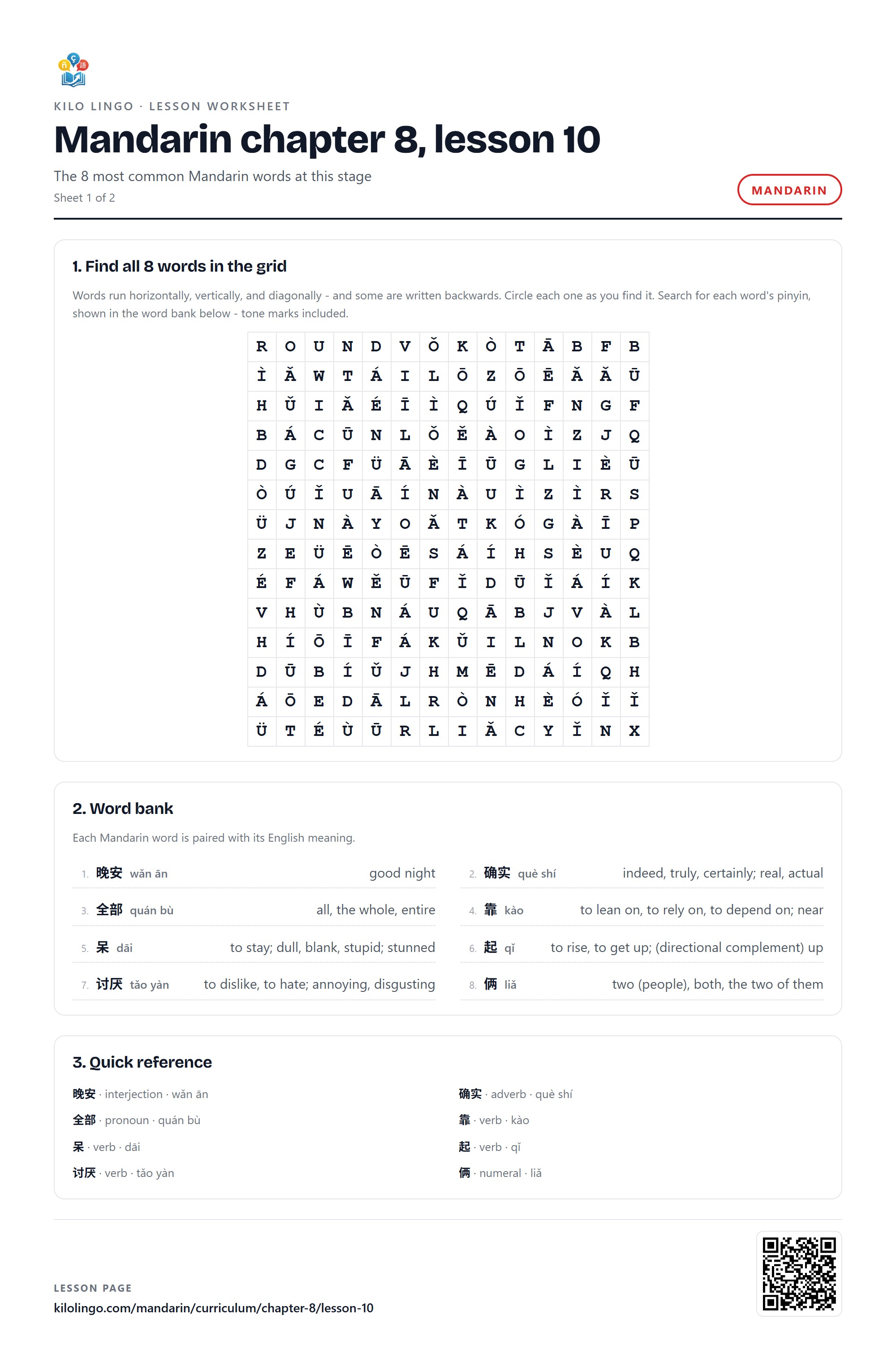
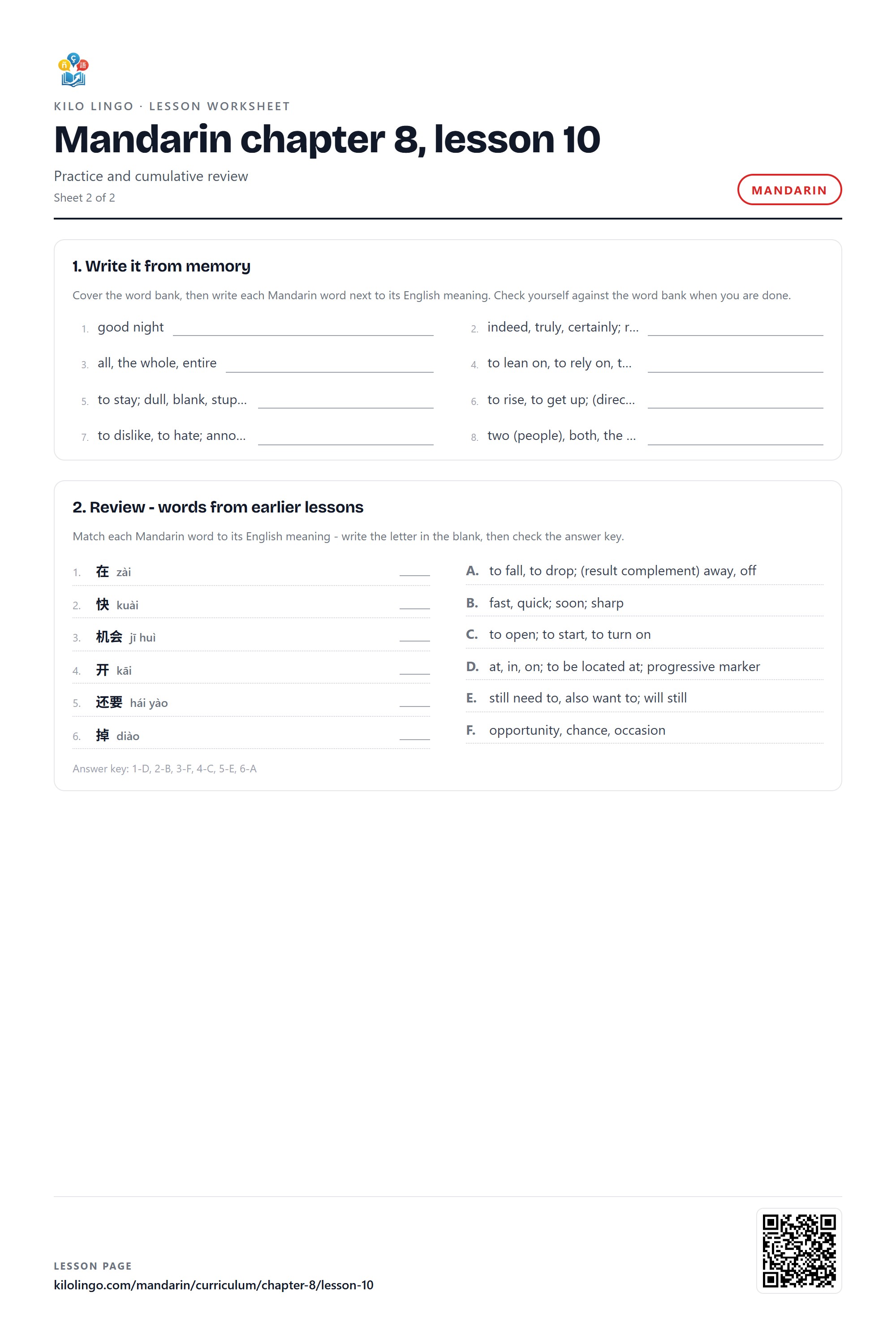
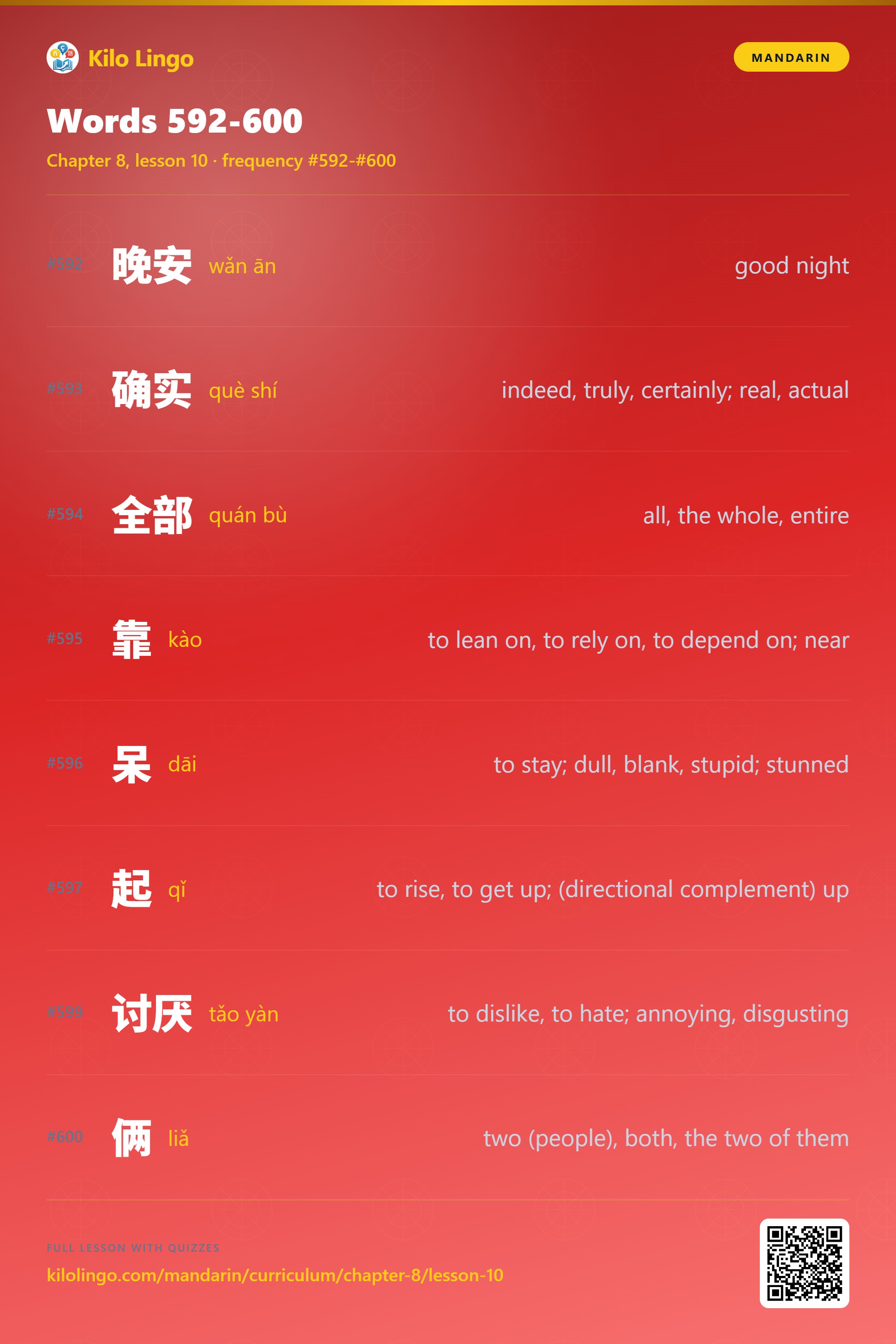
- Words 592-600Vocabulary
8 words · ranks 592-600
- Song: 两只老虎Song
Play it, read along word by word, then answer the questions. Every word is at your level - the song page teaches the few that are new.
- Story milestone: top 600 wordsGraded-reader story
You can read this story using only the words you've learned so far. Every content word sits at or above the rank-600 ceiling.
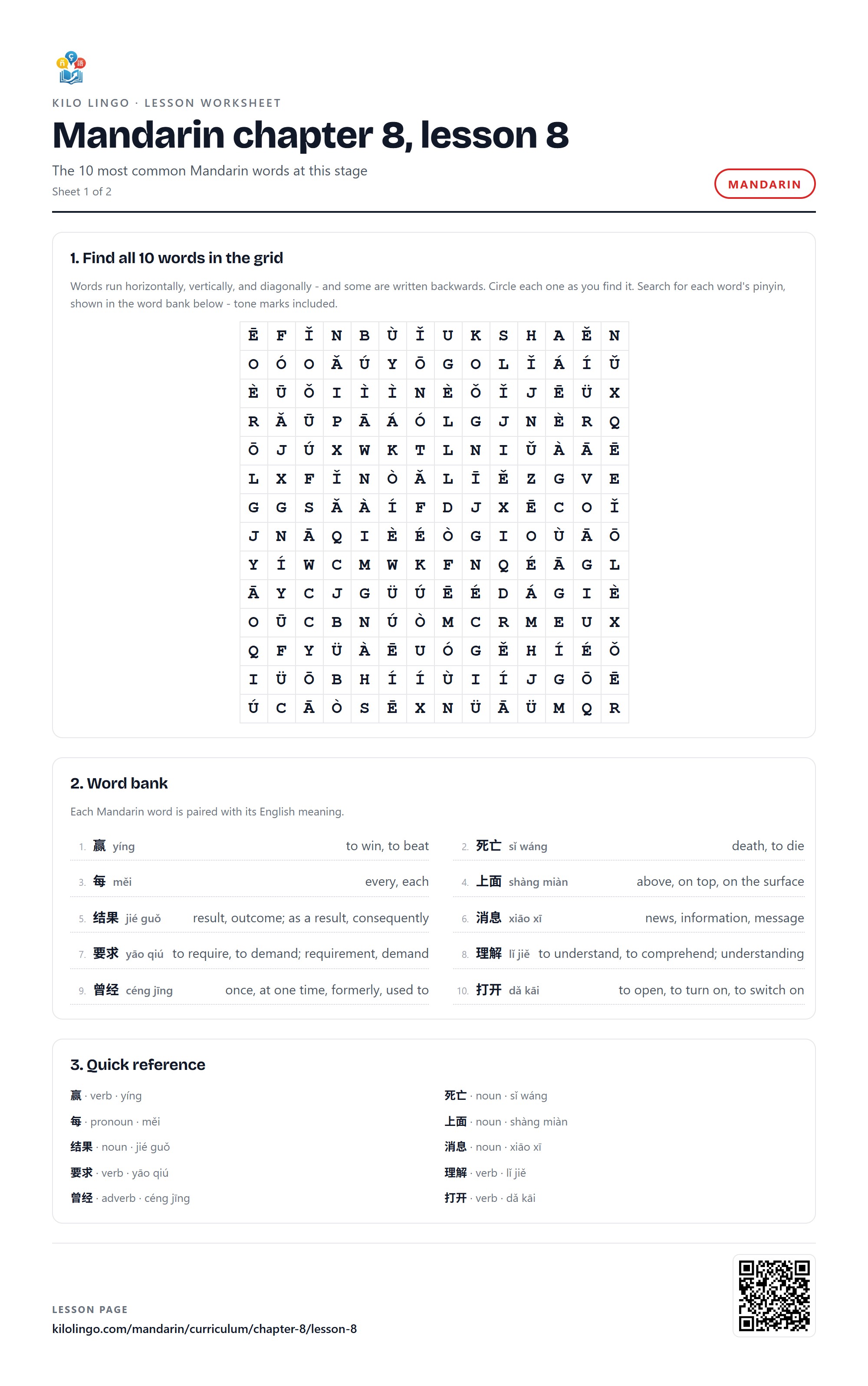
- Family and relativesThemed review
Everyone you have met so far. Mandarin keeps the formal and the everyday words apart -
fu4-qin1is the father you write about,ba4-ba0the one you talk to. - Email us in MandarinLesson
Tell us how your Mandarin is going - what you like and what you'd change - written only in Mandarin.
- Arcade reviewReview games
Replay this chapter's words as games - a different kind of repetition, and it counts.
Word printables
Per-word sheets88 words · a worksheet, infographic and listicle each









Chapter 9 · 也 or 都?
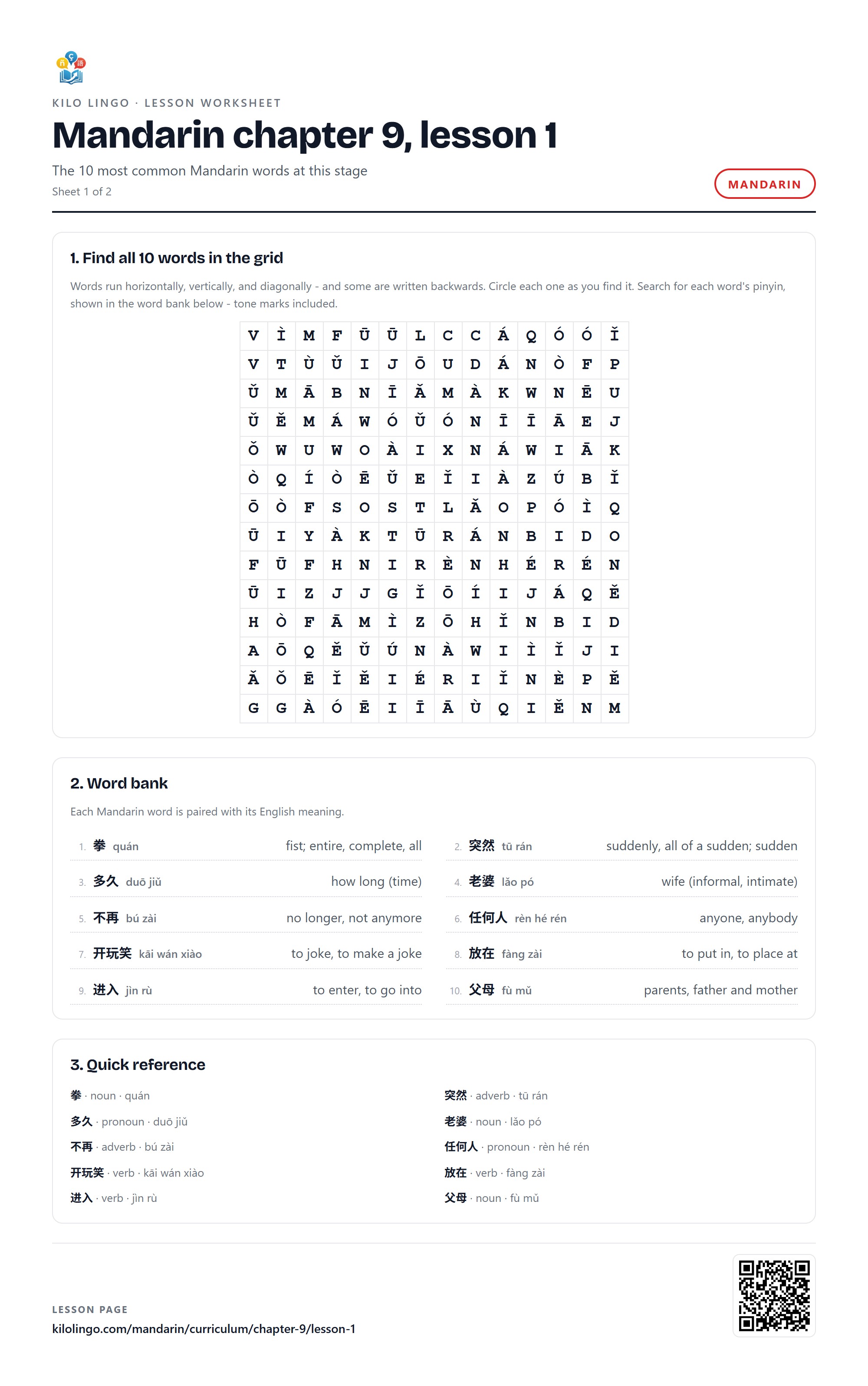
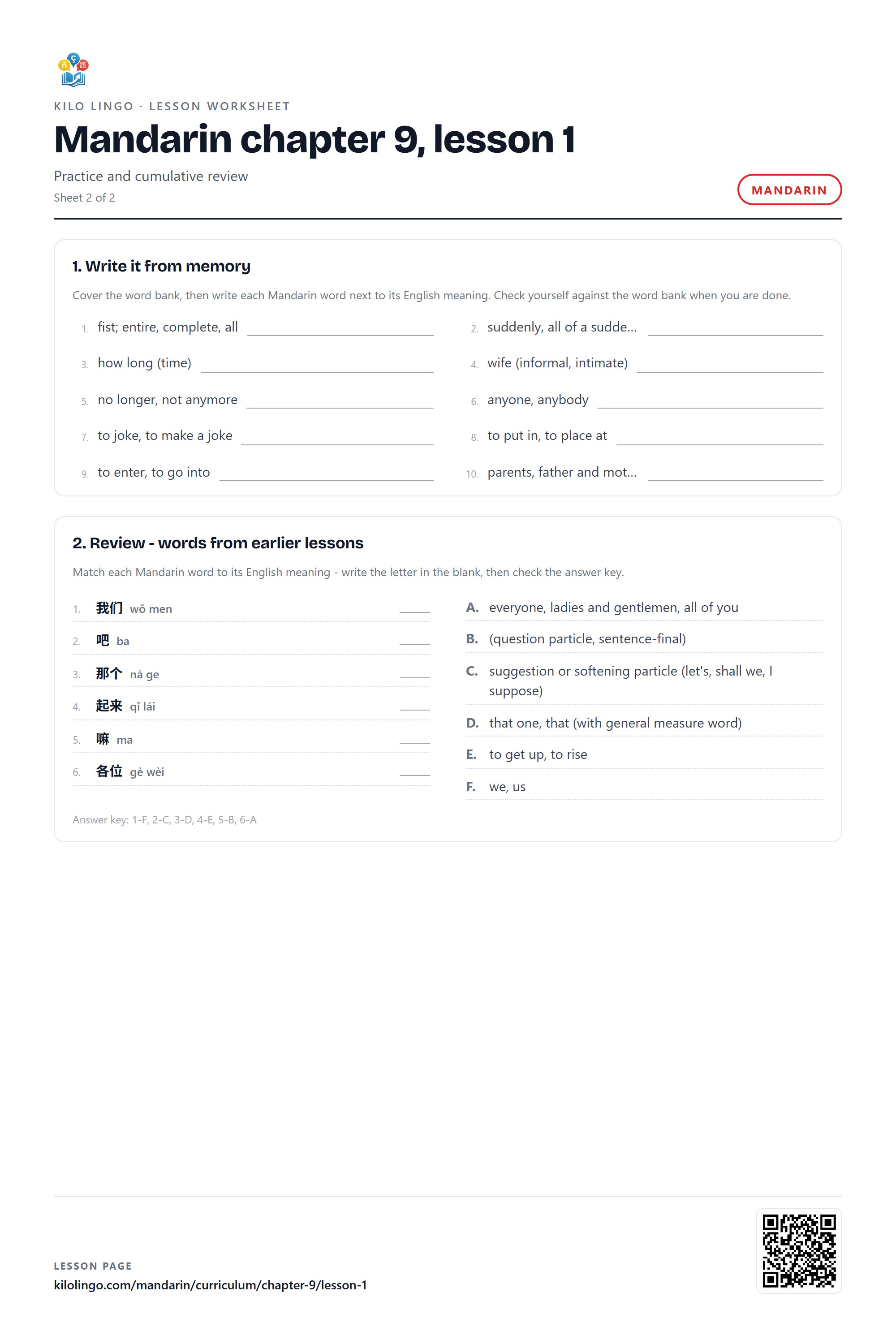
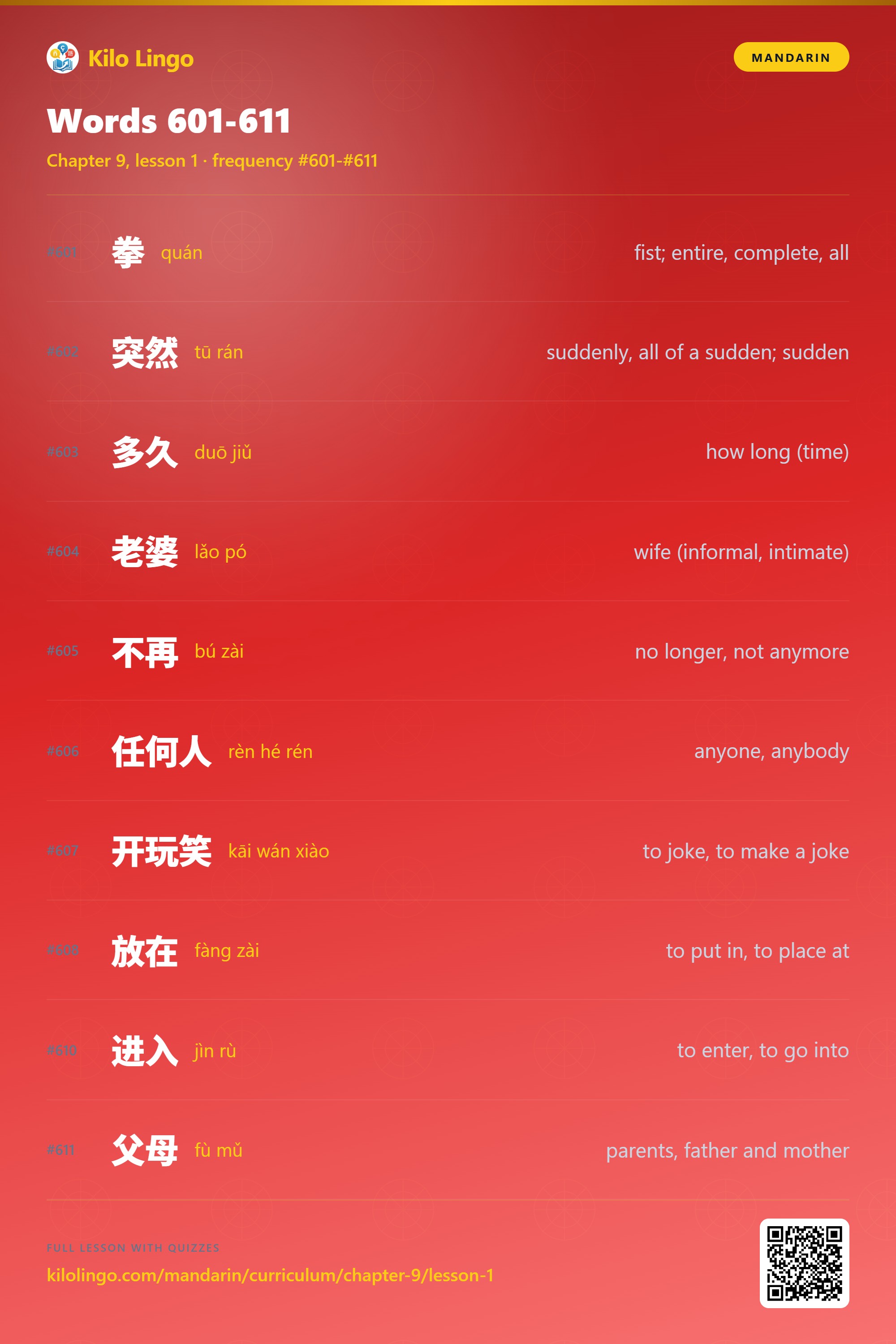
Chapter page →- Words 601-611Vocabulary
10 words · ranks 601-611
- Word Bubbles review sessionReview games
Pop the words you just met by matching each one to its meaning. A couple of rounds and the batch is yours.
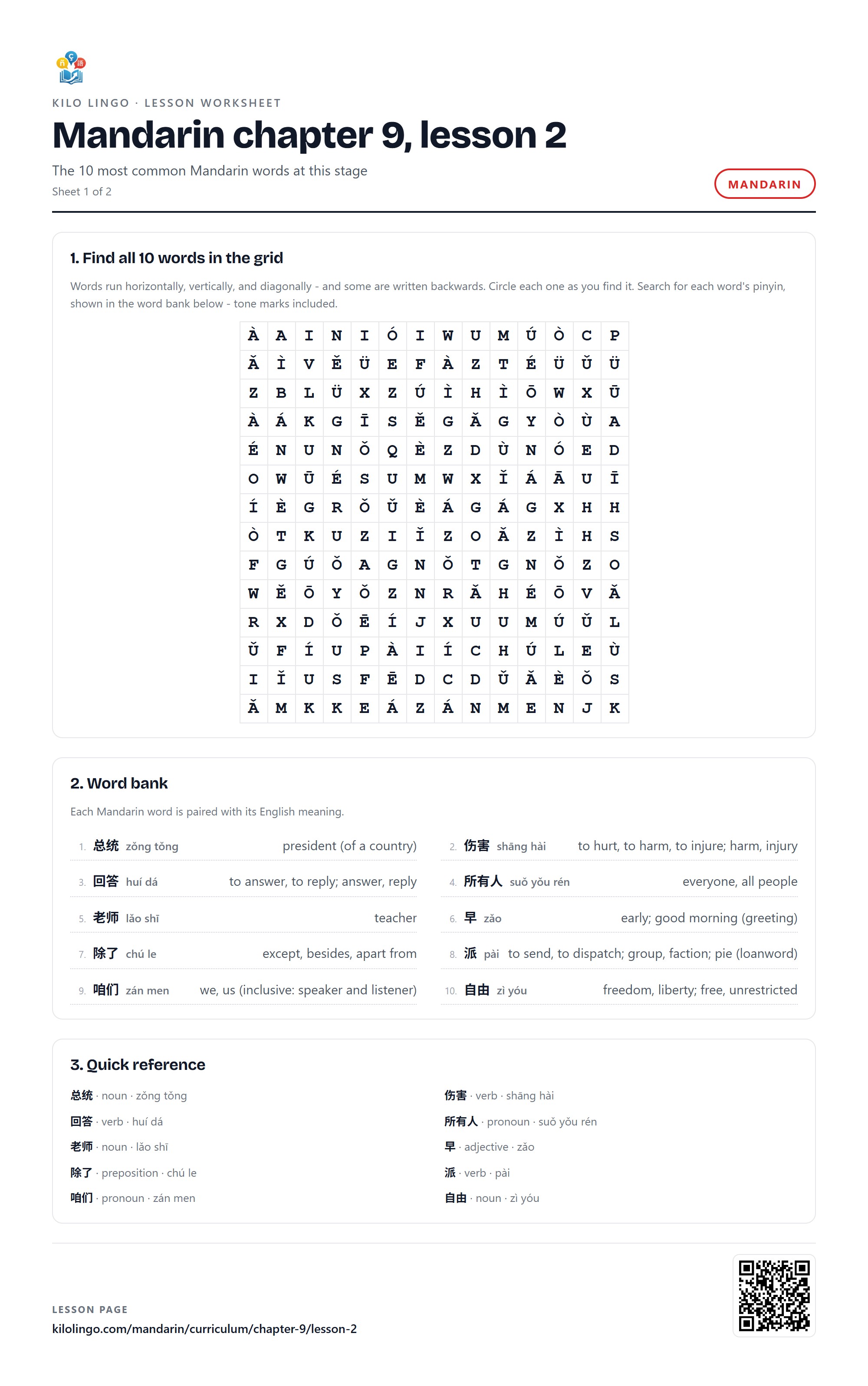
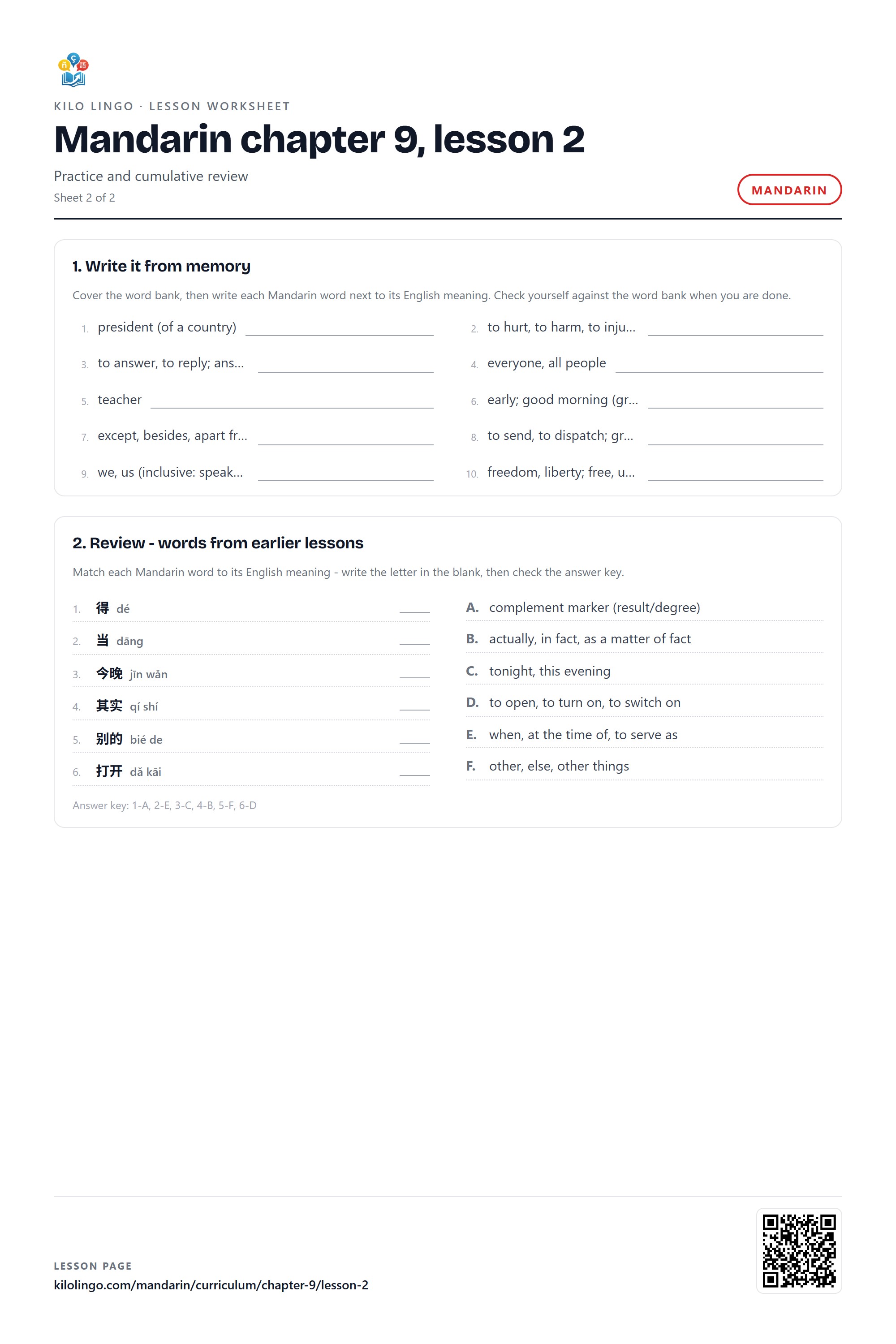
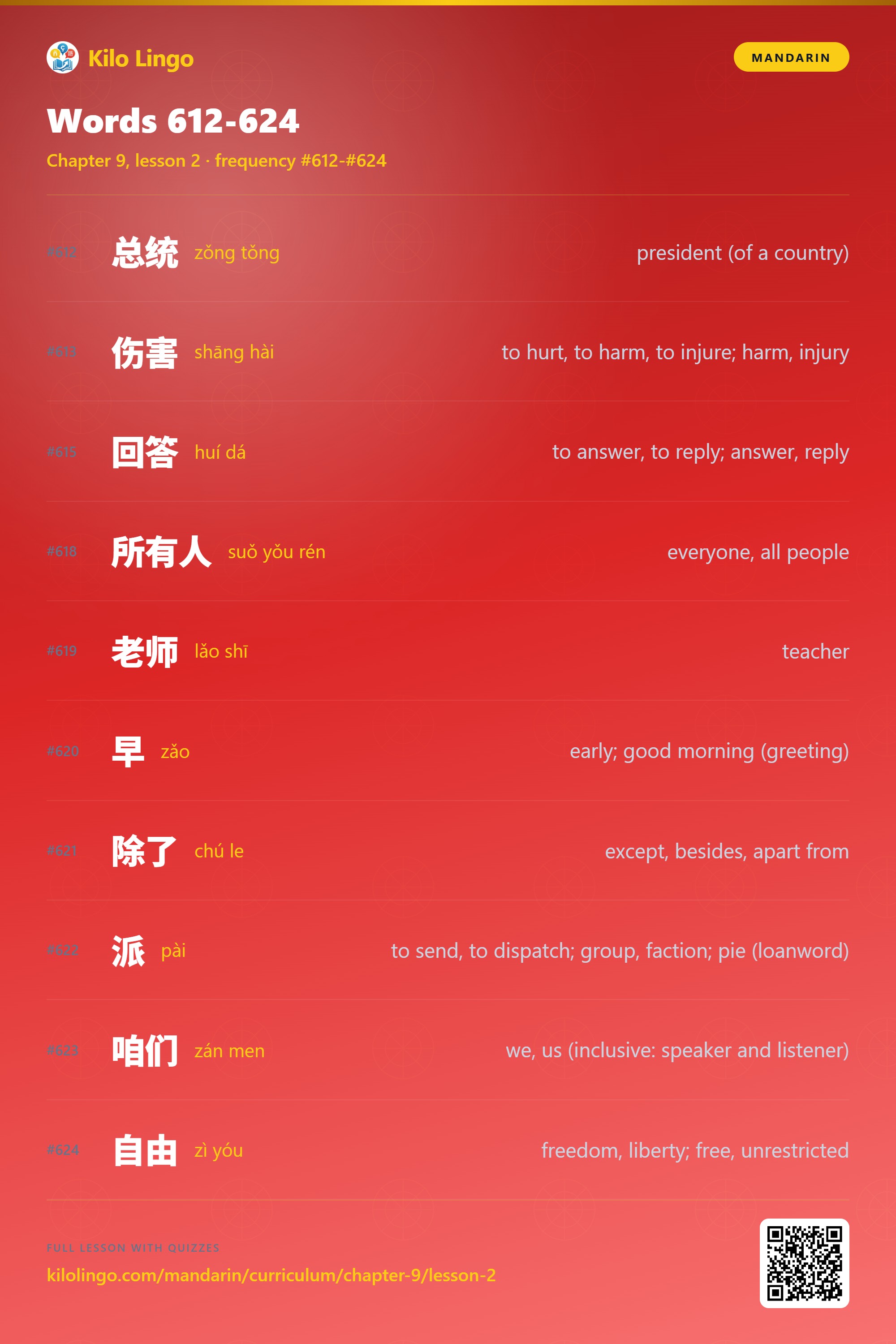
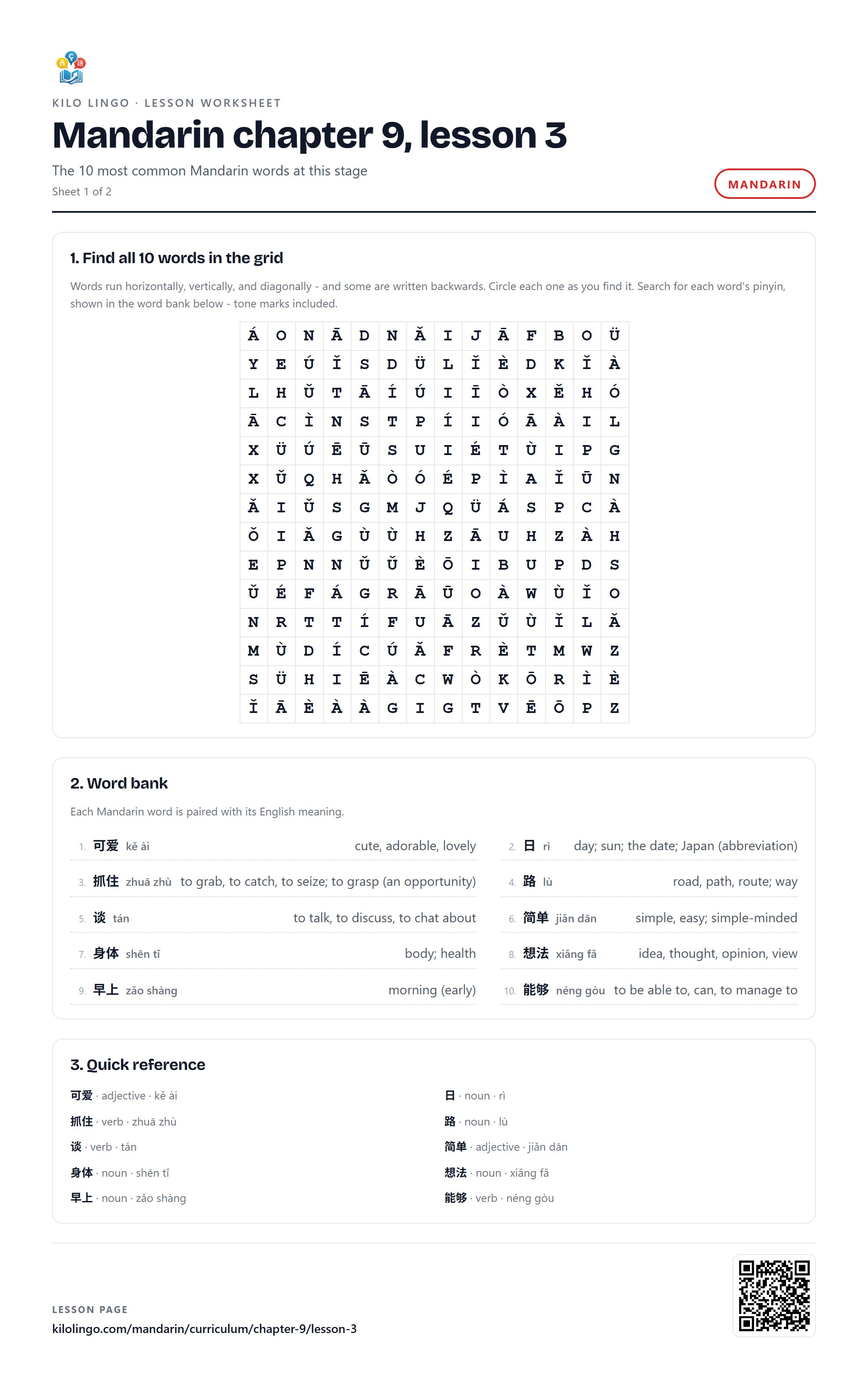
- Words 612-624Vocabulary
10 words · ranks 612-624
- Crossword review sessionReview games
Cross the words you just met, clued in English. Slower than a drill, and it sticks harder.
- Words 625-635Vocabulary
10 words · ranks 625-635
- Tone Shooter review sessionReview games
Shoot the words you just met into their tones by colour. The quickest way to fix a tone in place.
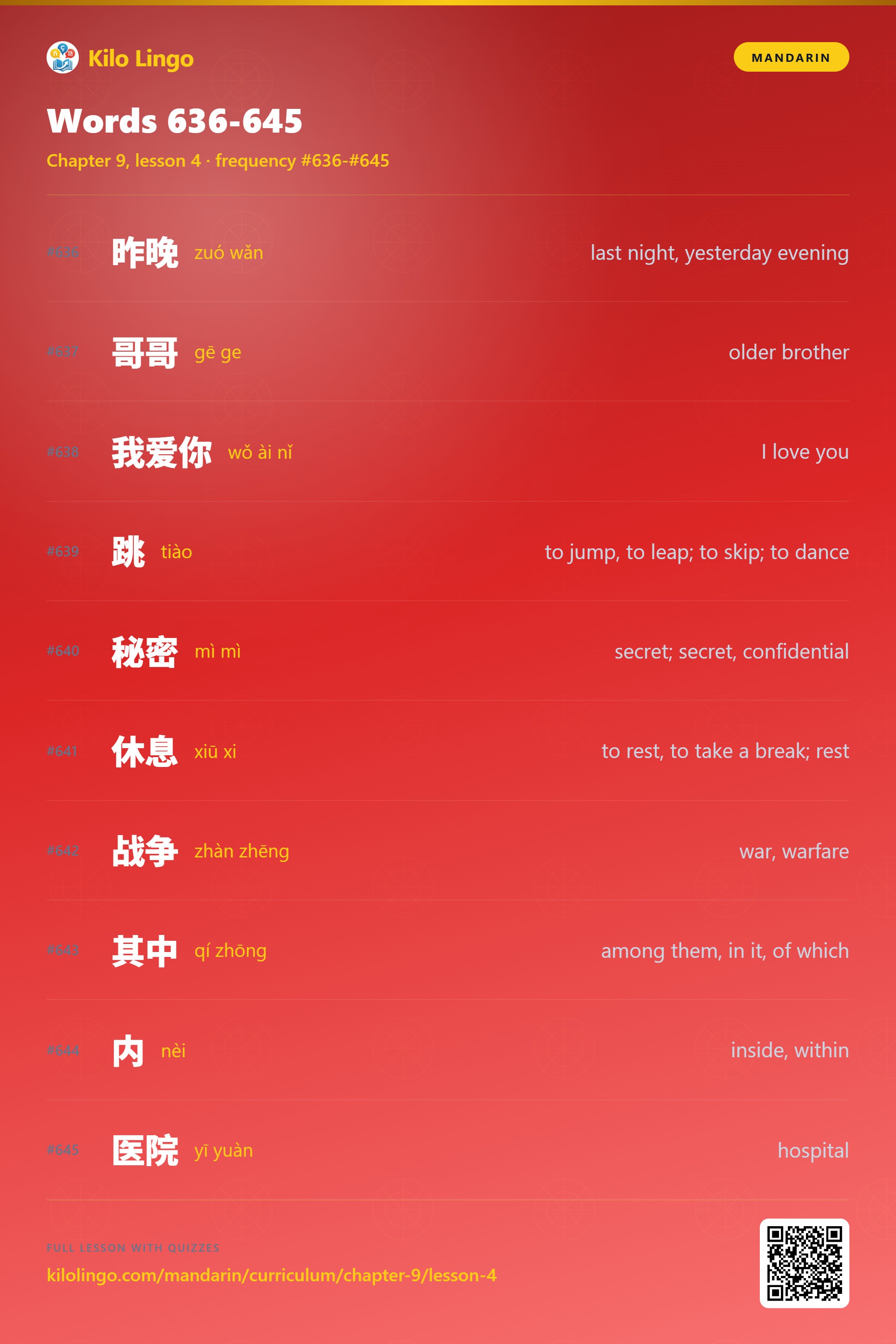
- Words 636-645Vocabulary
10 words · ranks 636-645
- Word Bubbles review sessionReview games
Pop the words you just met by matching each one to its meaning. A couple of rounds and the batch is yours.
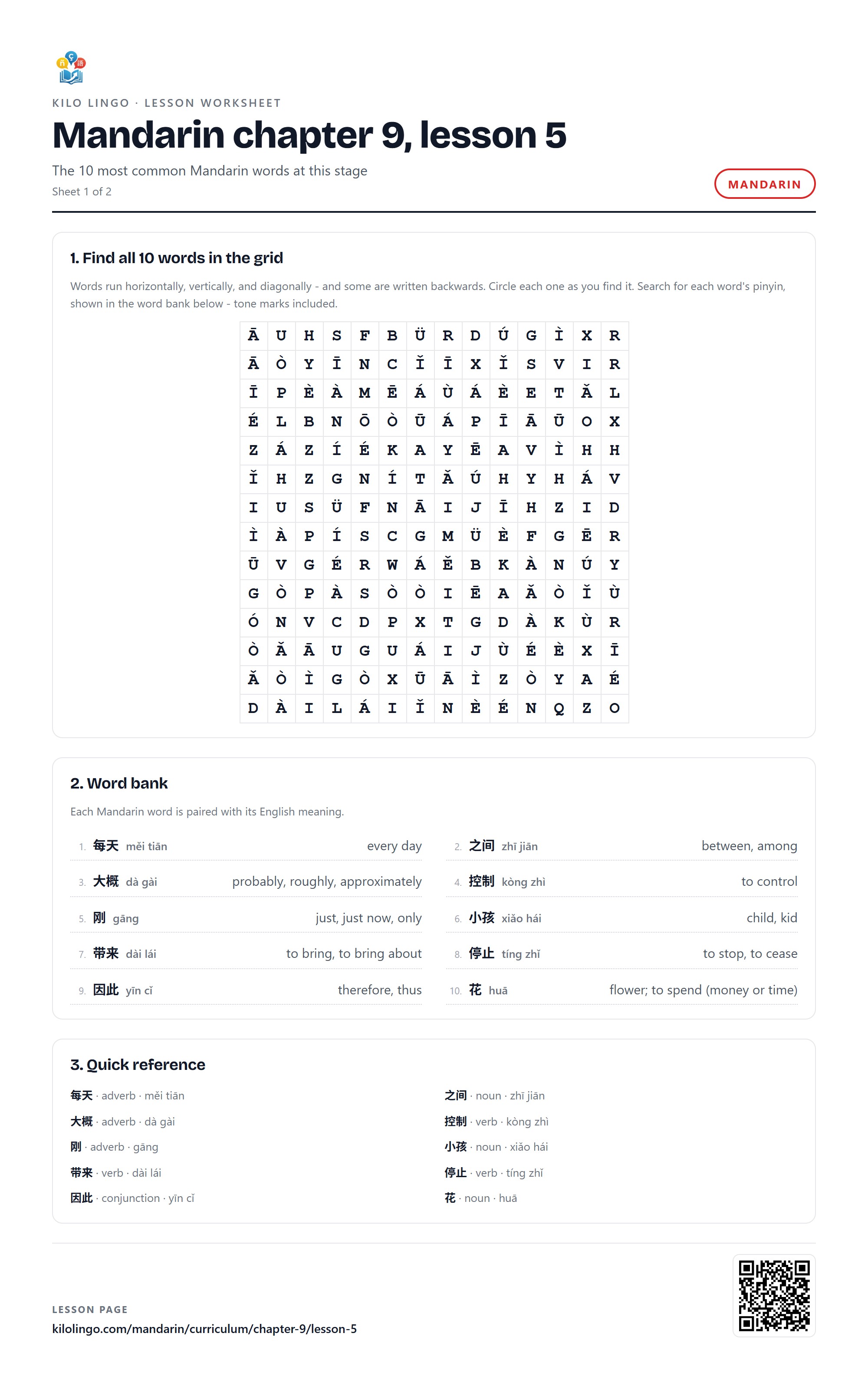
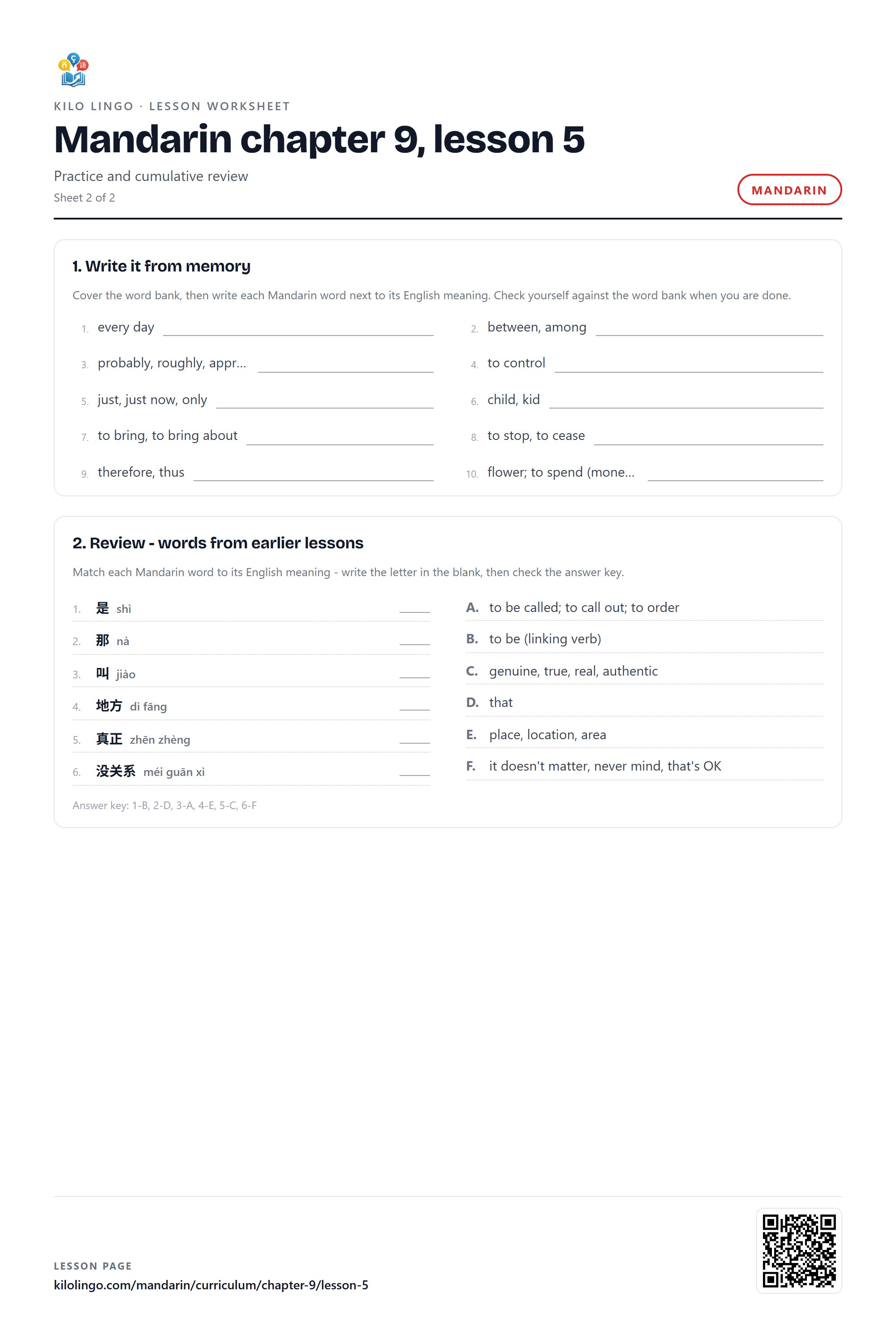
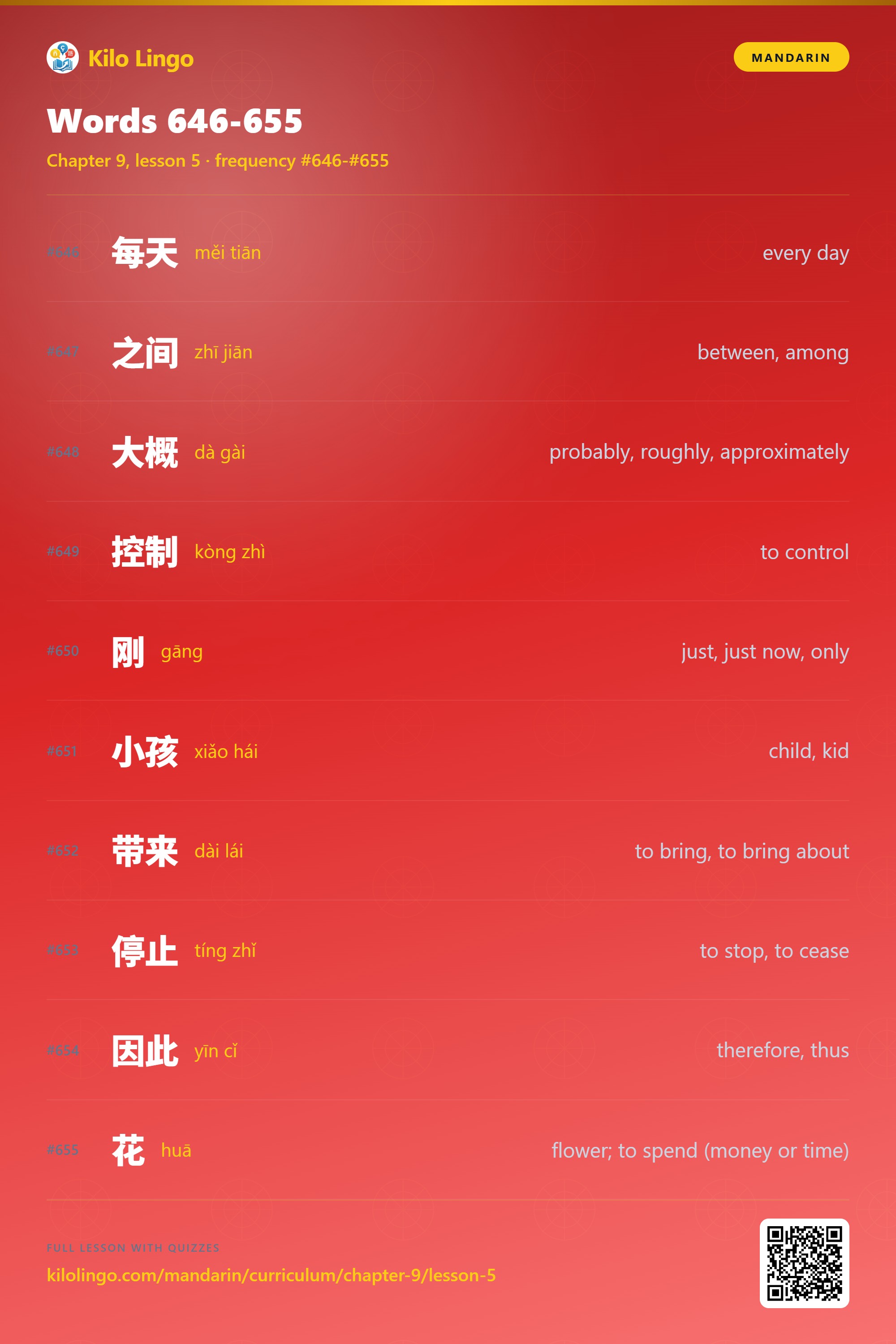
- Words 646-655Vocabulary
10 words · ranks 646-655
- 也 or 都?Mistake clinic
One adds another. The other covers the lot.
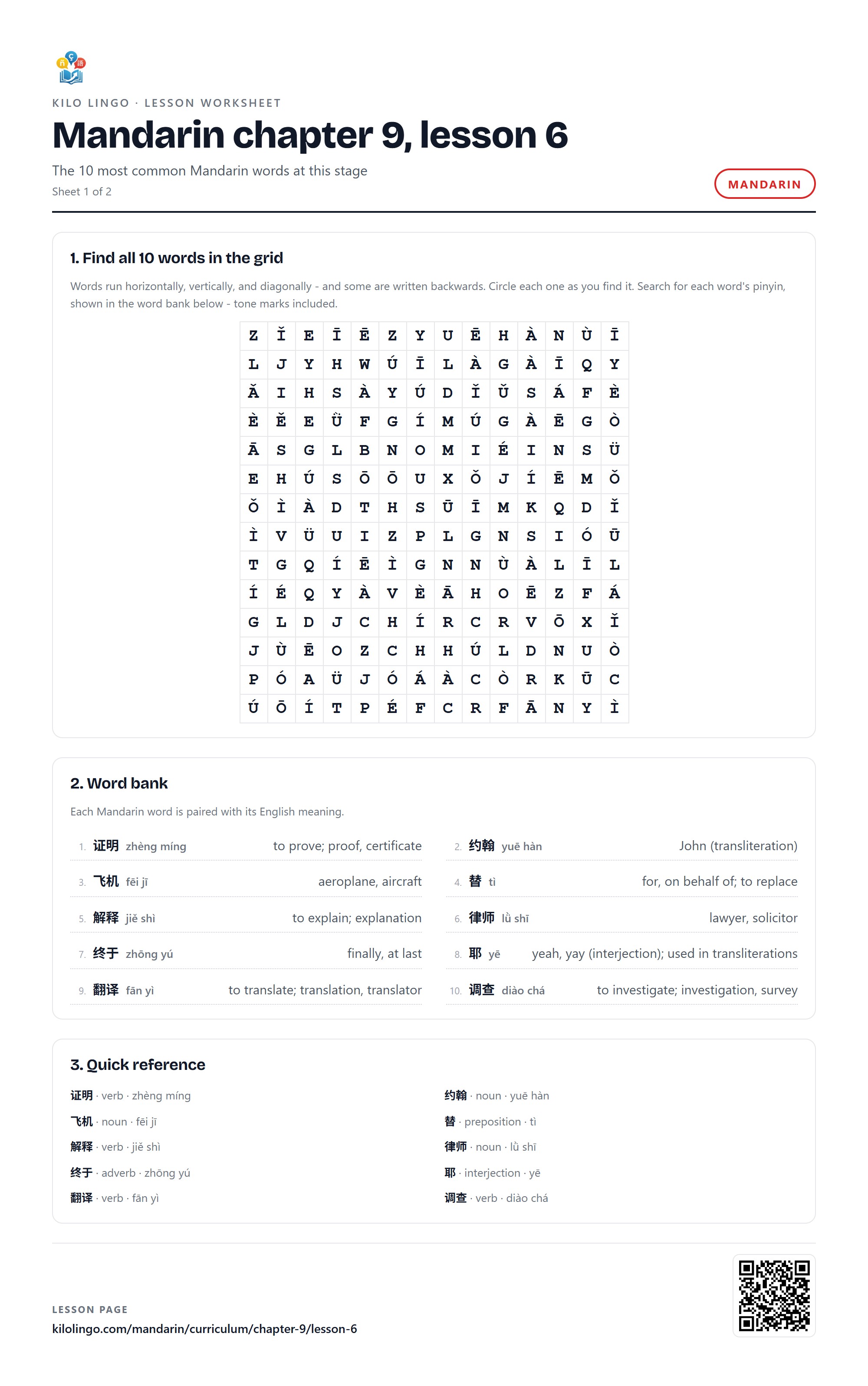
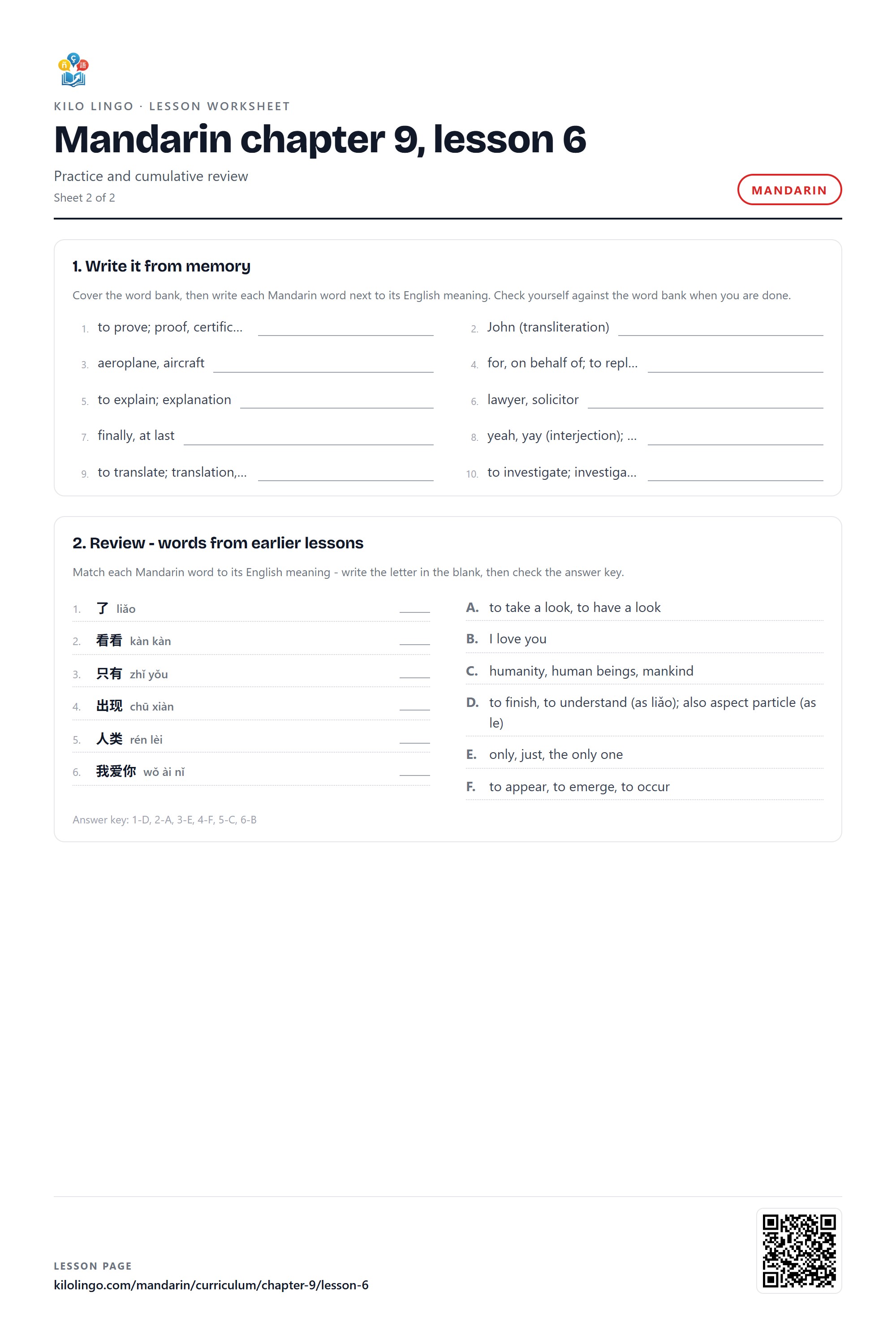
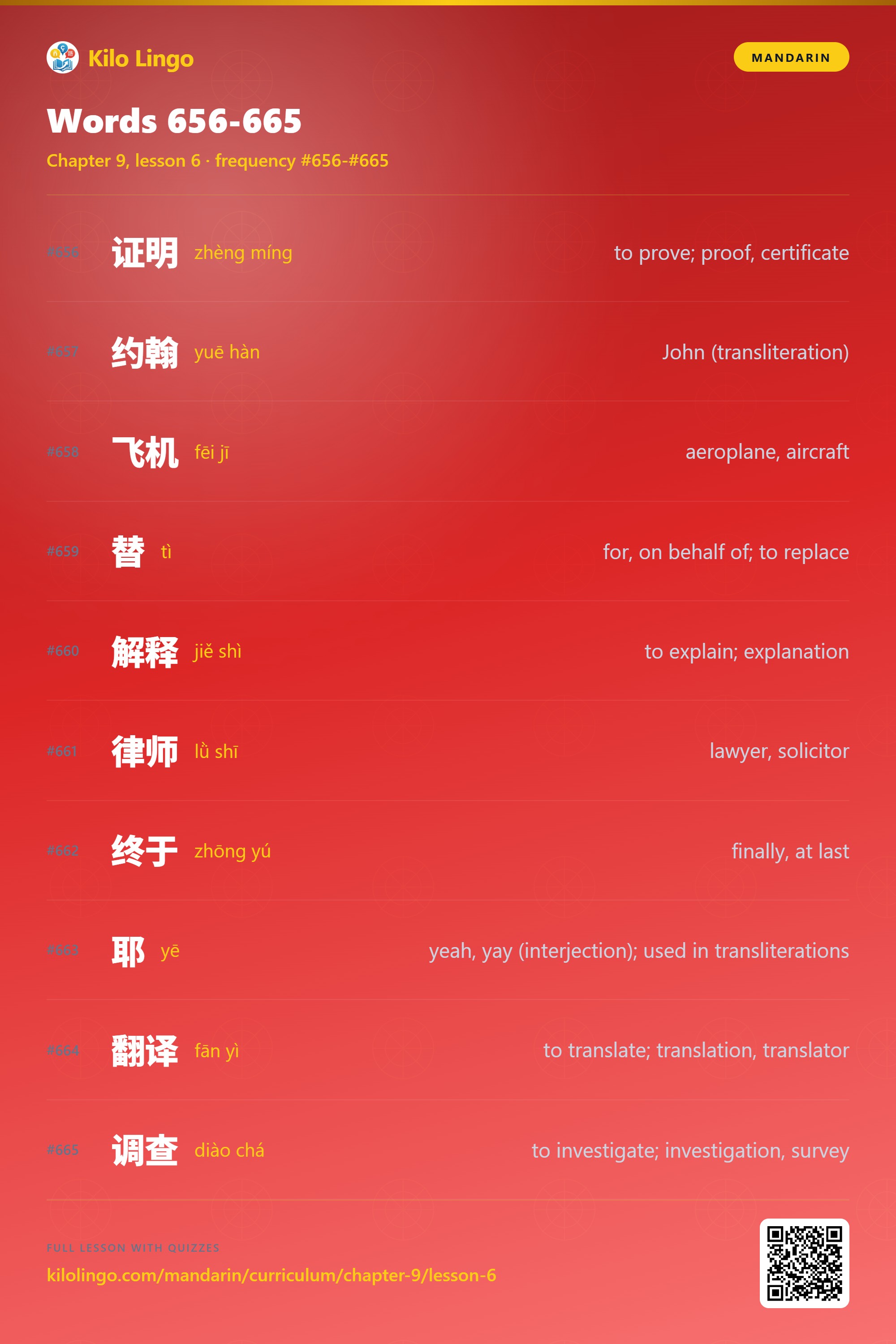
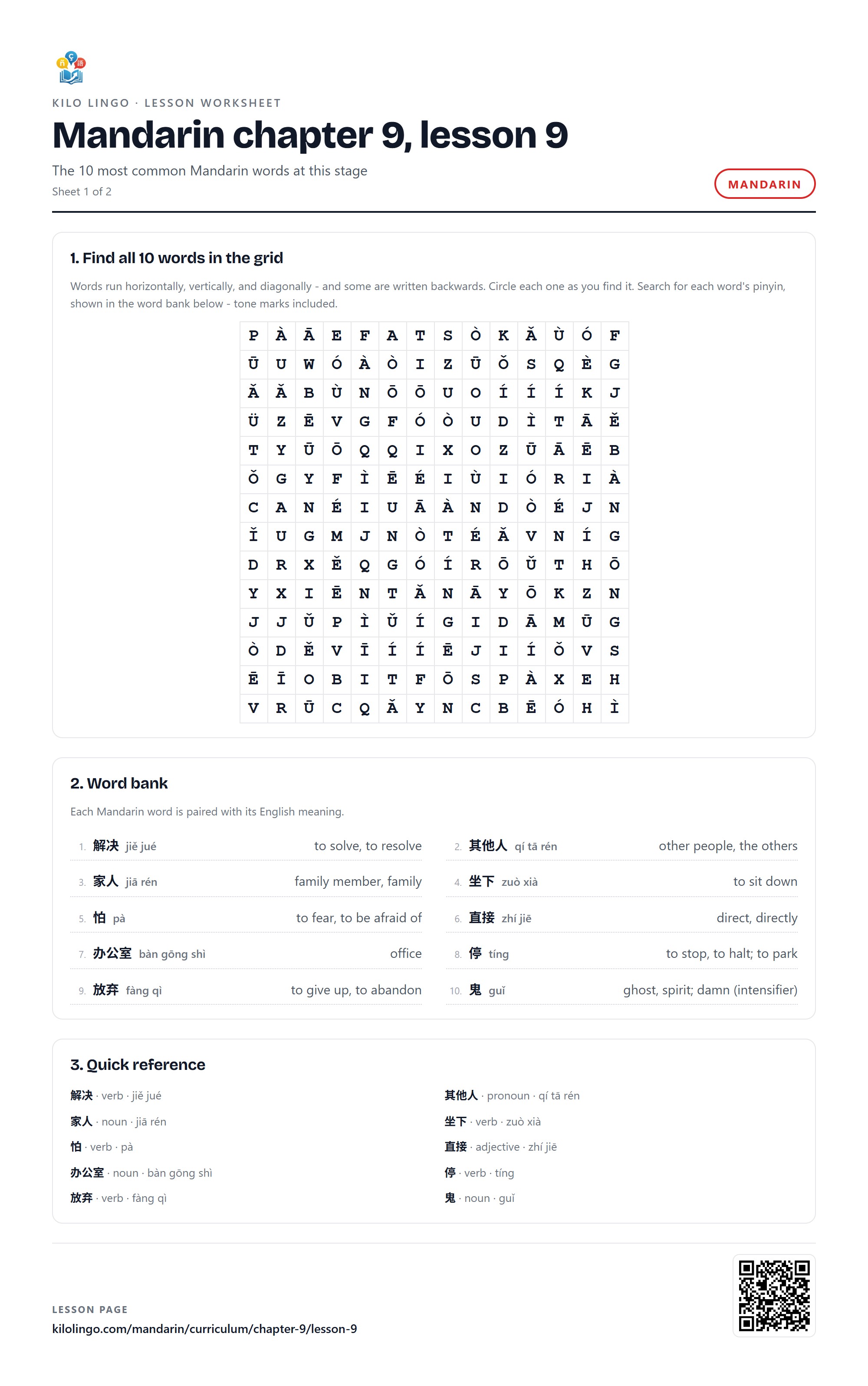
- Words 656-665Vocabulary
10 words · ranks 656-665
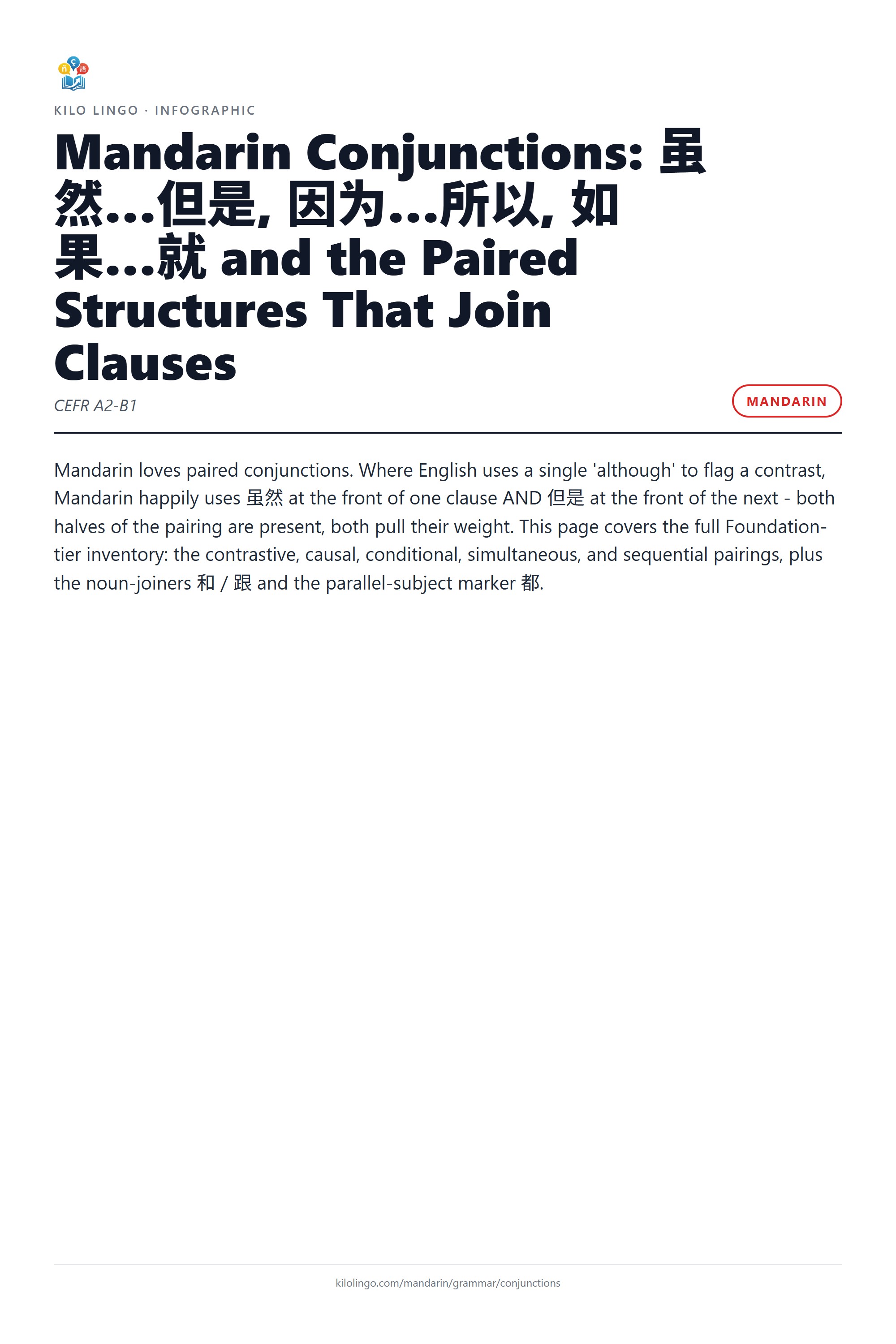
虽然…但是, 因为…所以, 如果/要是…就, 一边…一边, …的时候, 也…也, 又…又, 先…然后/再. The paired structures that join Mandarin clauses.
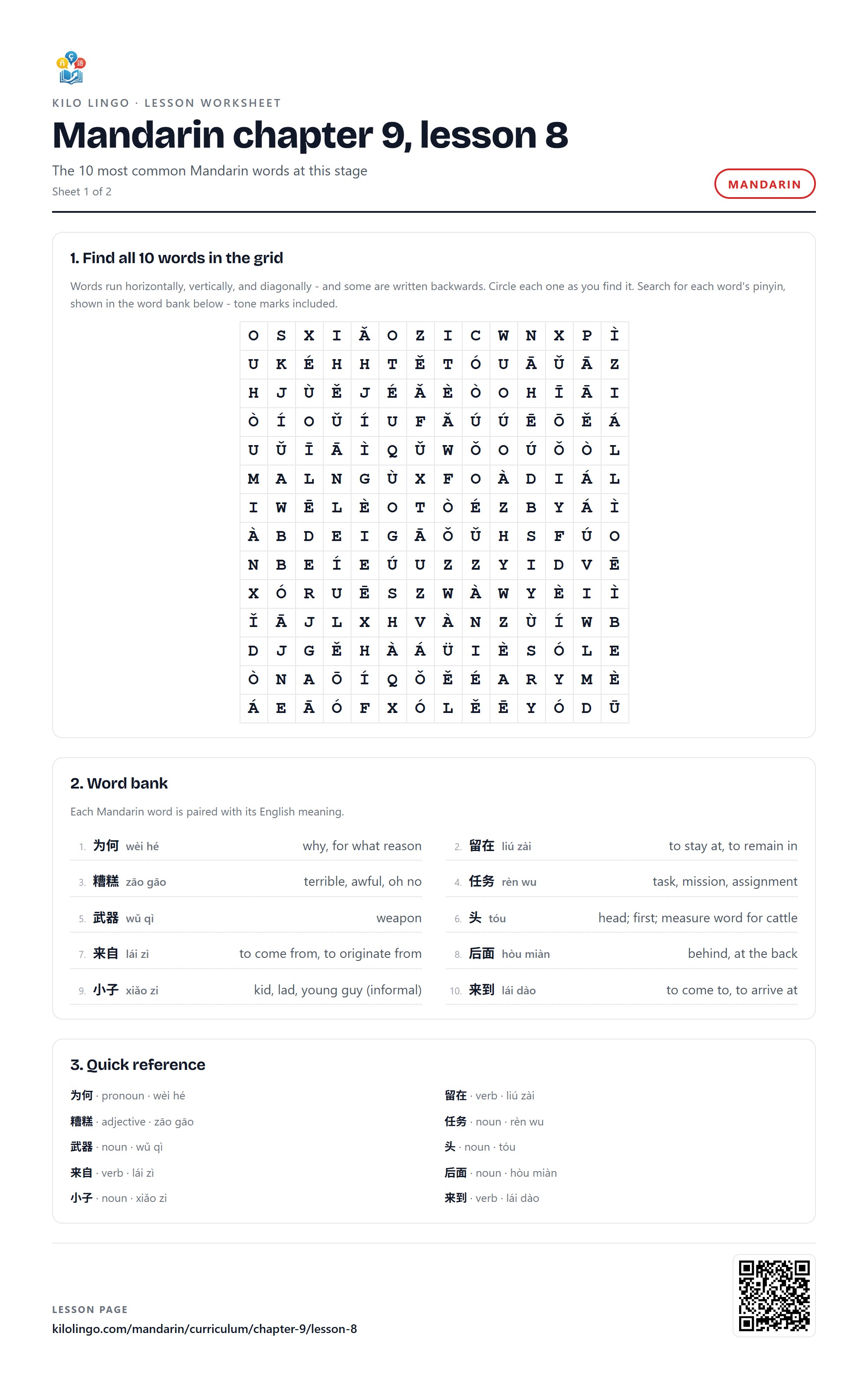
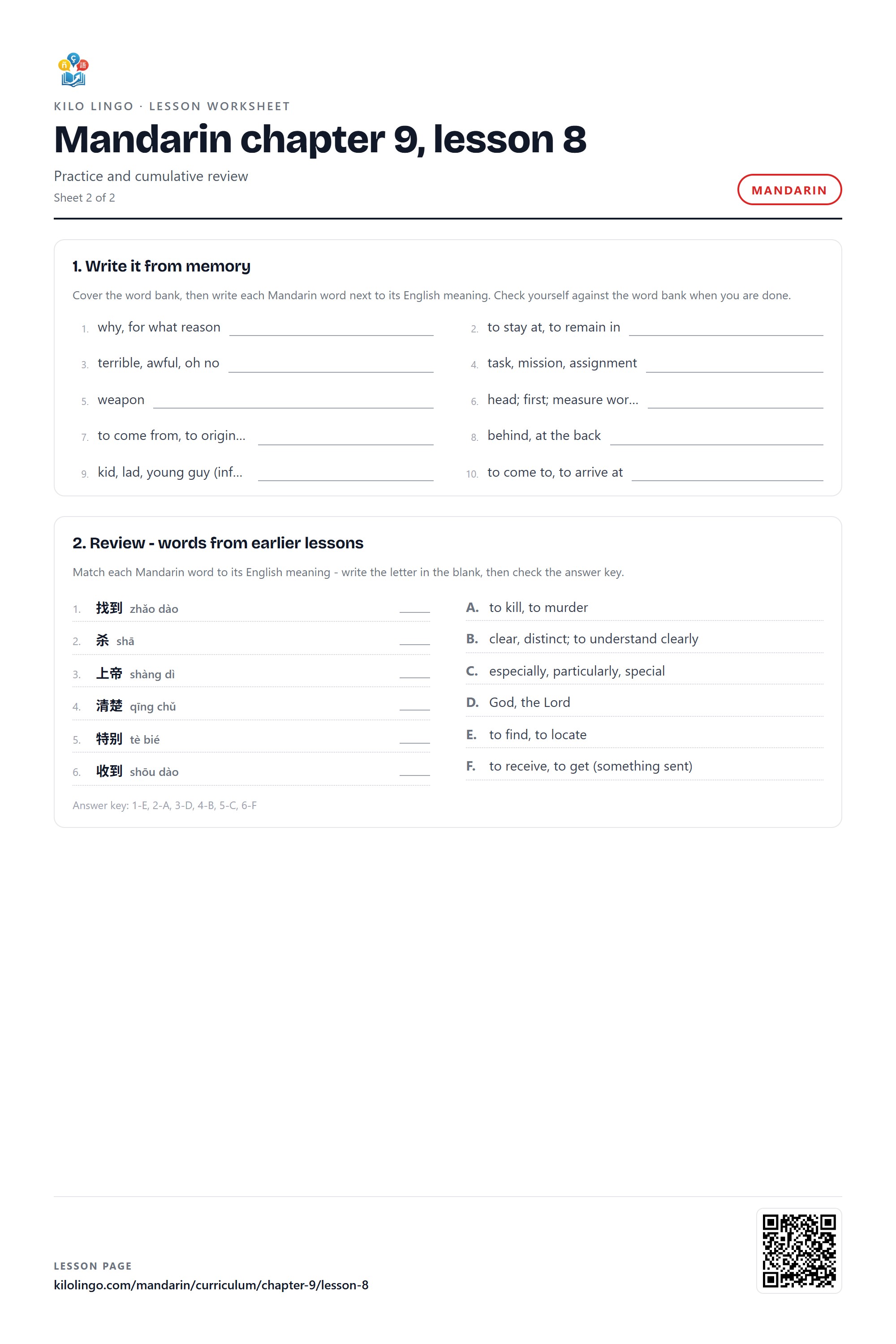
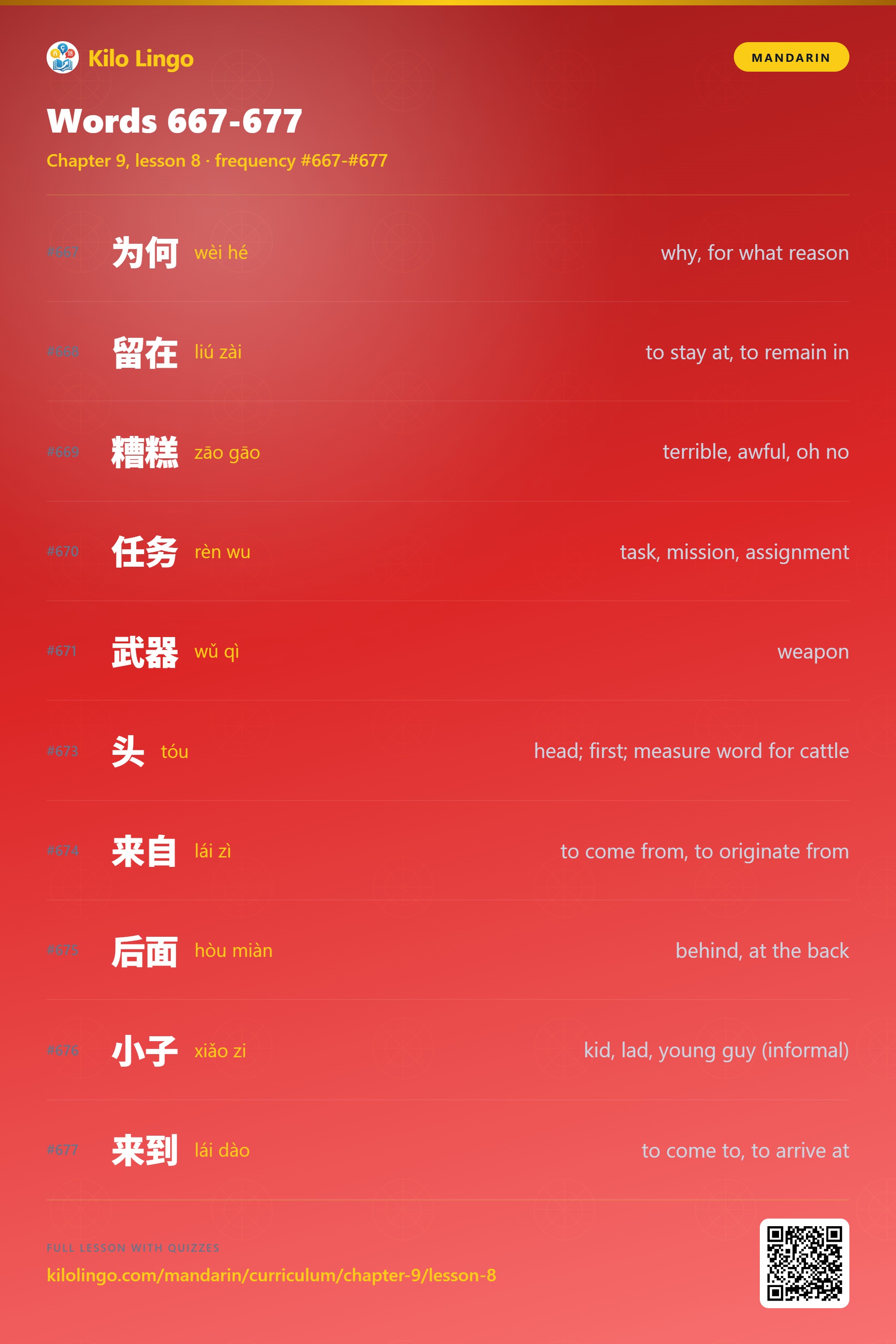
- Words 667-677Vocabulary
10 words · ranks 667-677
- Tone Shooter review sessionReview games
Shoot the words you just met into their tones by colour. The quickest way to fix a tone in place.
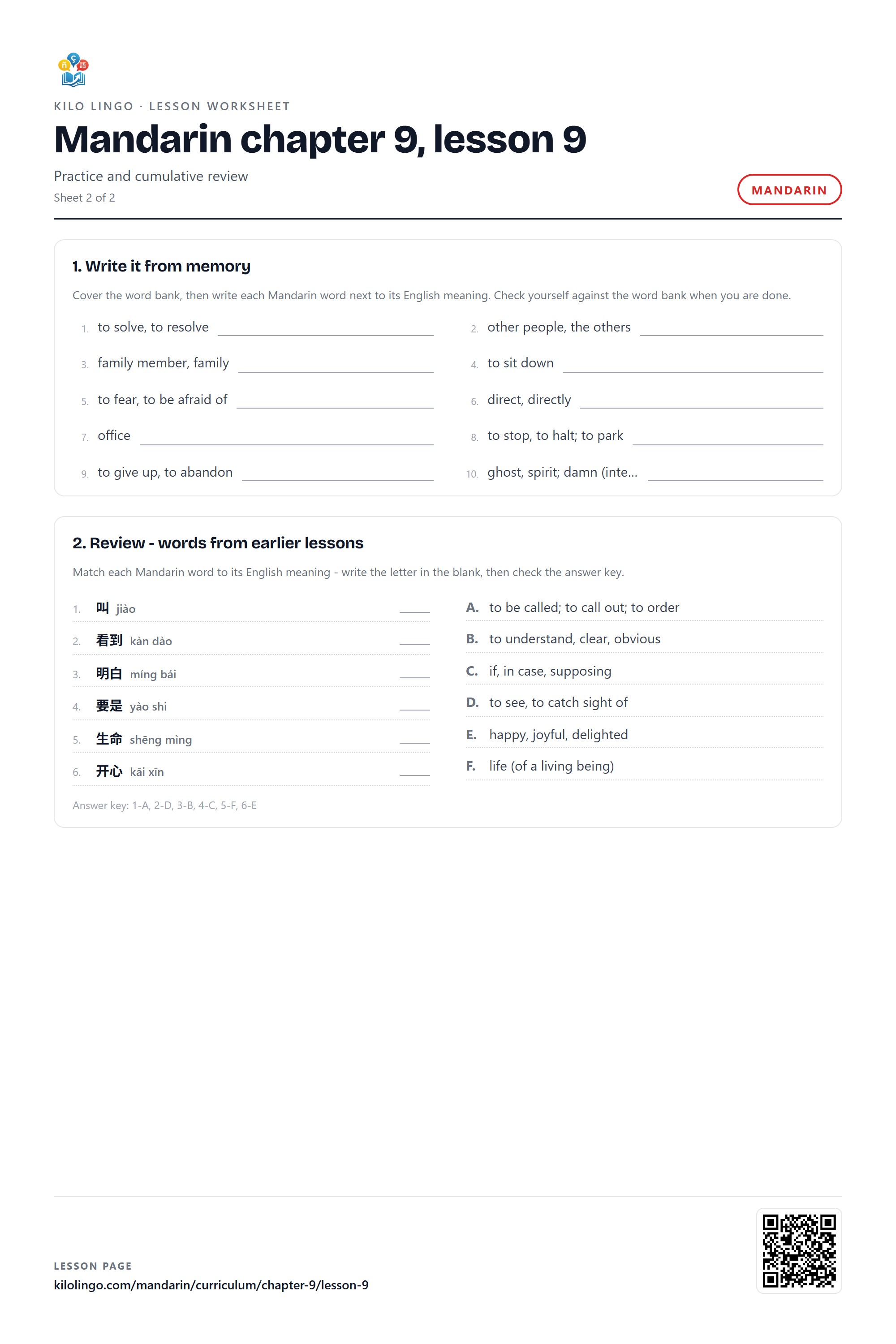
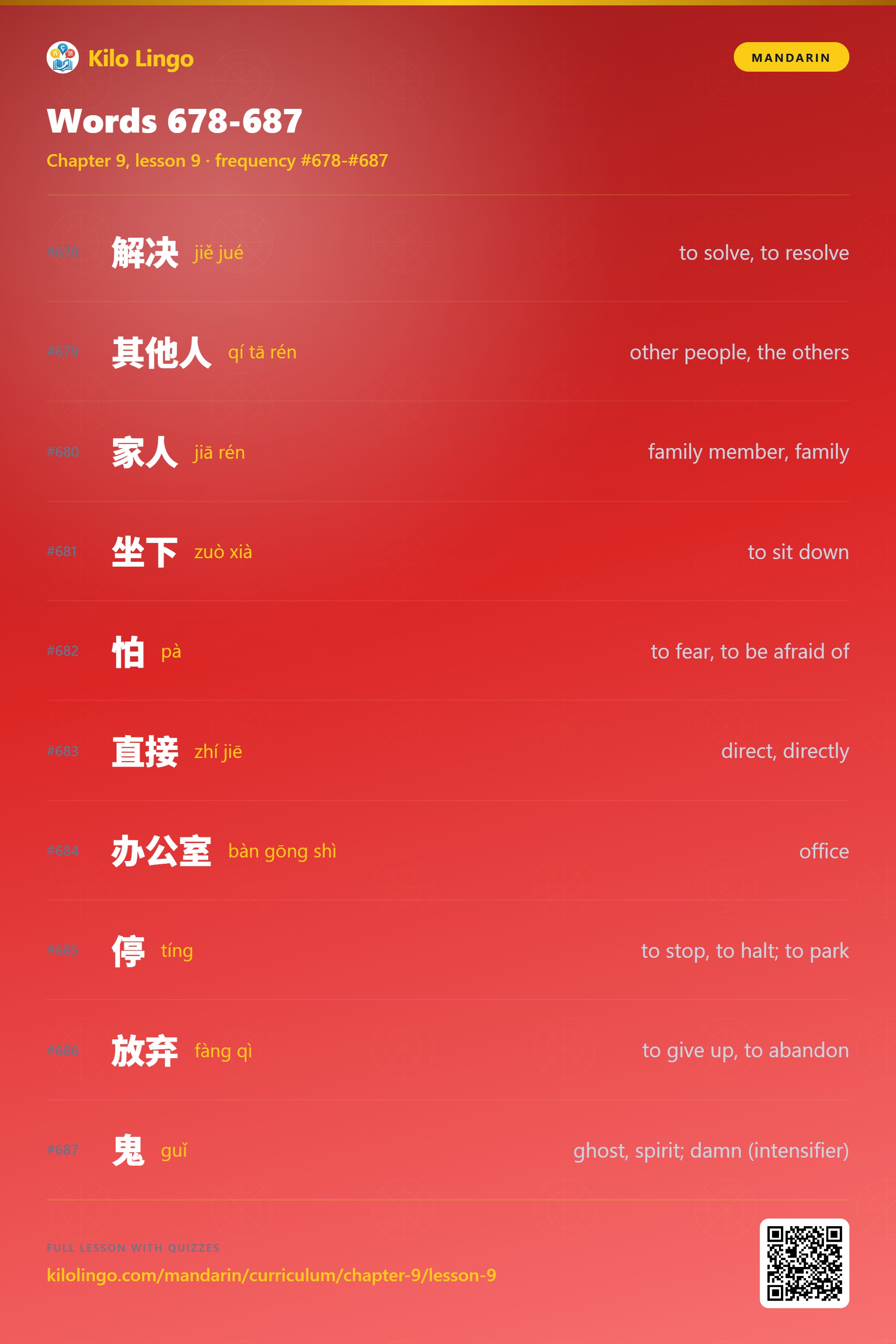
- Words 678-687Vocabulary
10 words · ranks 678-687
- Word Bubbles review sessionReview games
Pop the words you just met by matching each one to its meaning. A couple of rounds and the batch is yours.
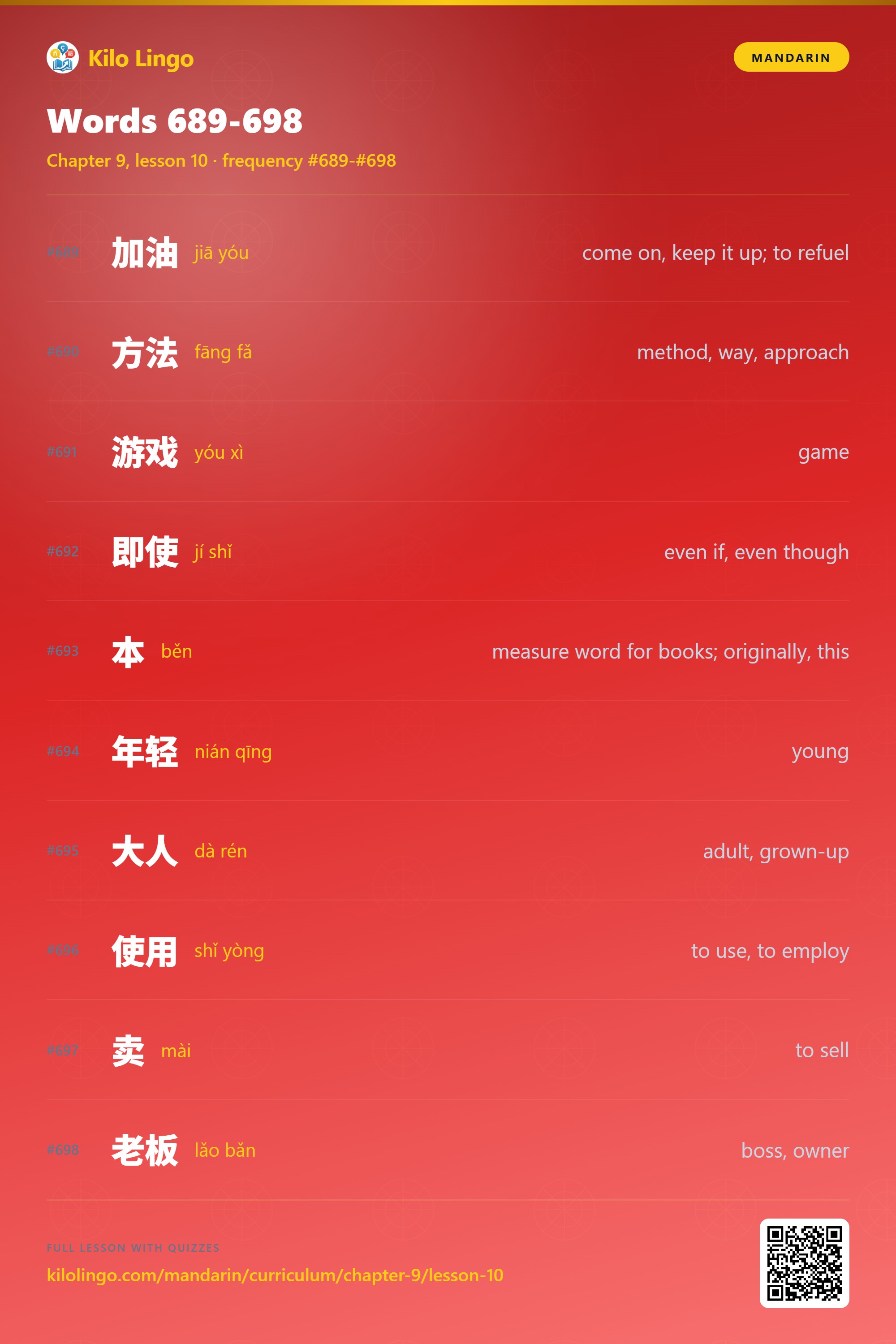
- Words 689-698Vocabulary
10 words · ranks 689-698
- Tone Shooter review sessionReview games
Shoot the words you just met into their tones by colour. The quickest way to fix a tone in place.
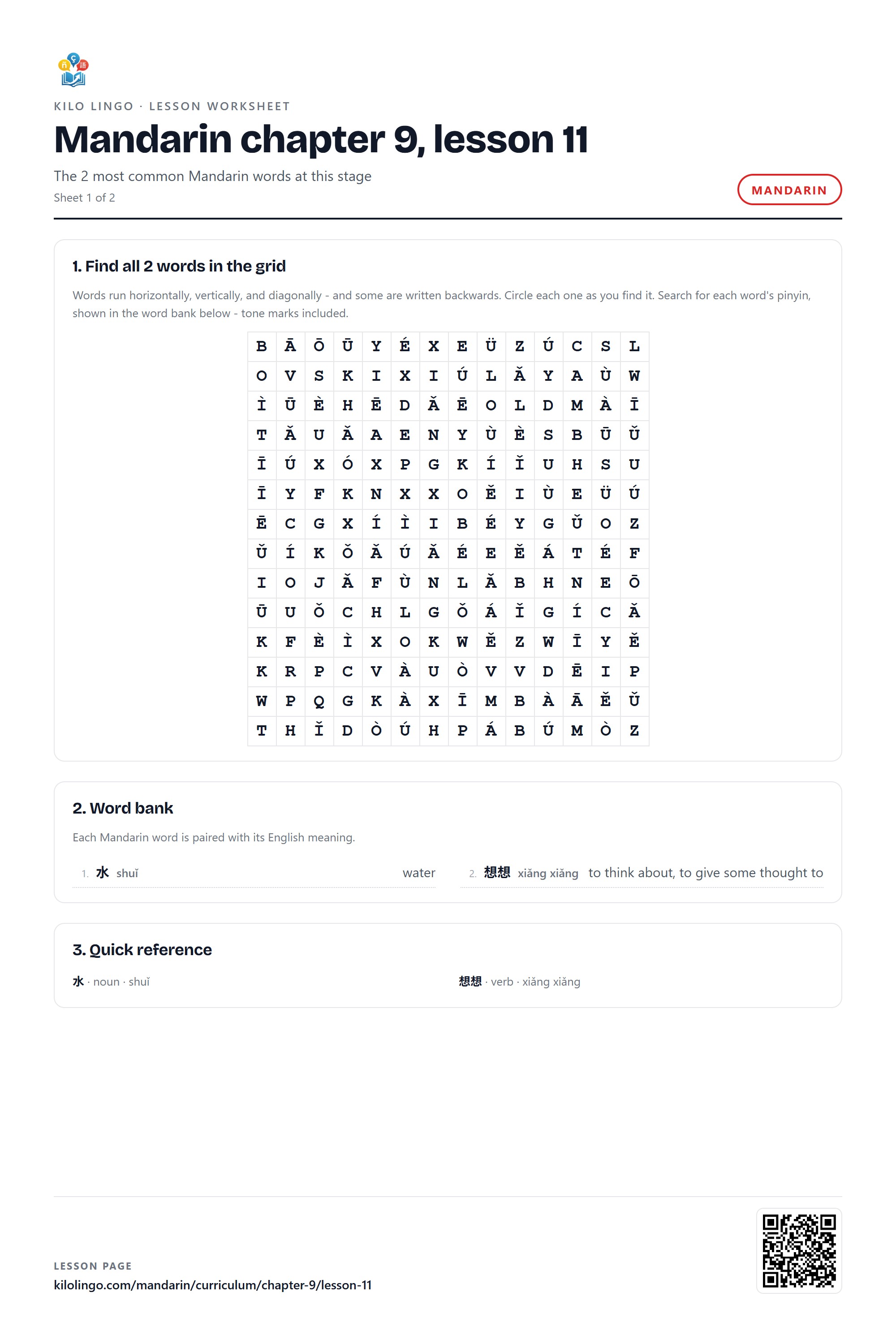
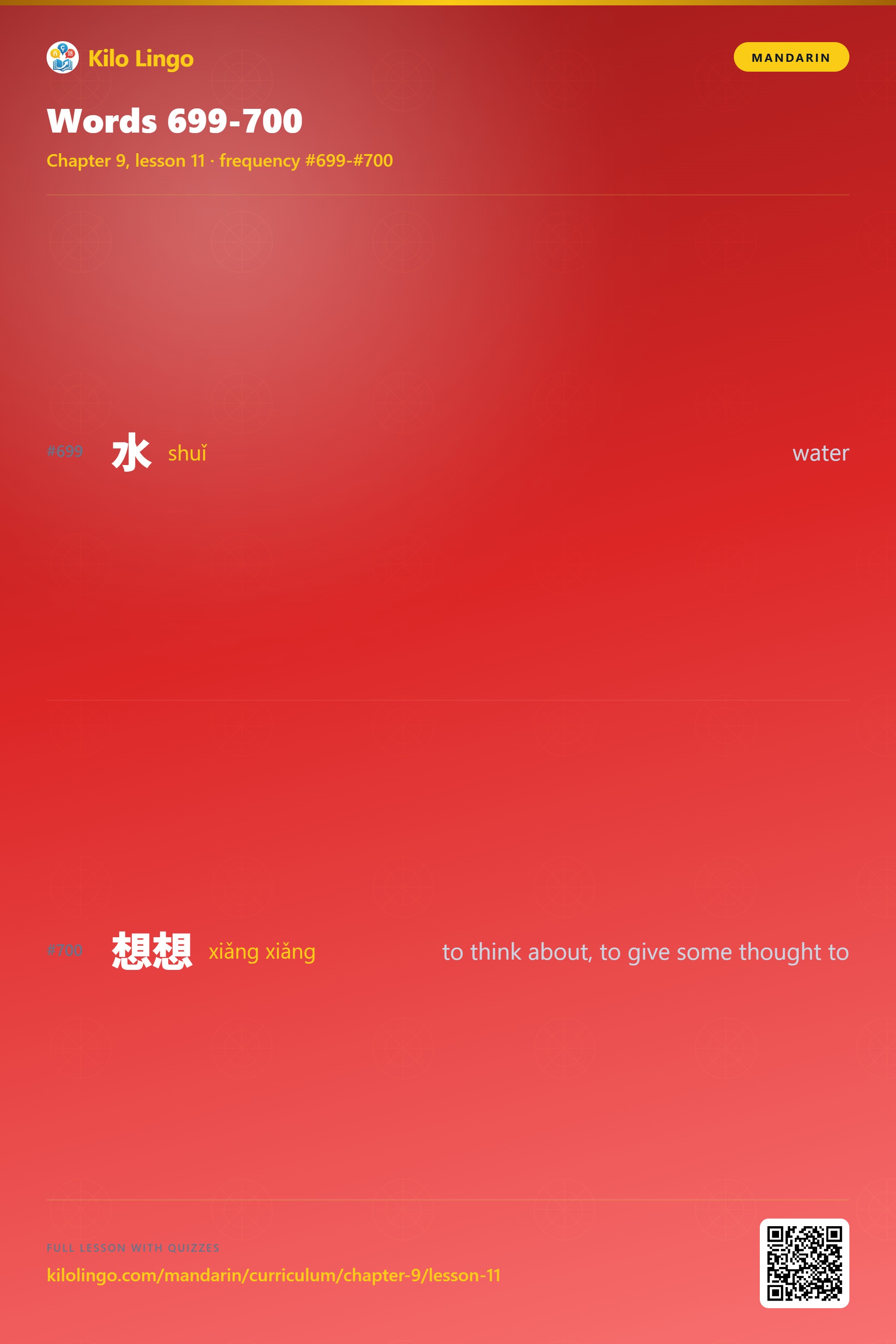
- Words 699-700Vocabulary
2 words · ranks 699-700
- Story milestone: top 700 wordsGraded-reader story
You can read this story using only the words you've learned so far. Every content word sits at or above the rank-700 ceiling.
The animal word, the pair word, the flat word. Your vocabulary has grown since the last session; so has the set of things worth counting properly.
- Arcade reviewReview games
Replay this chapter's words as games - a different kind of repetition, and it counts.
Word printables
Per-word sheets92 words · a worksheet, infographic and listicle each










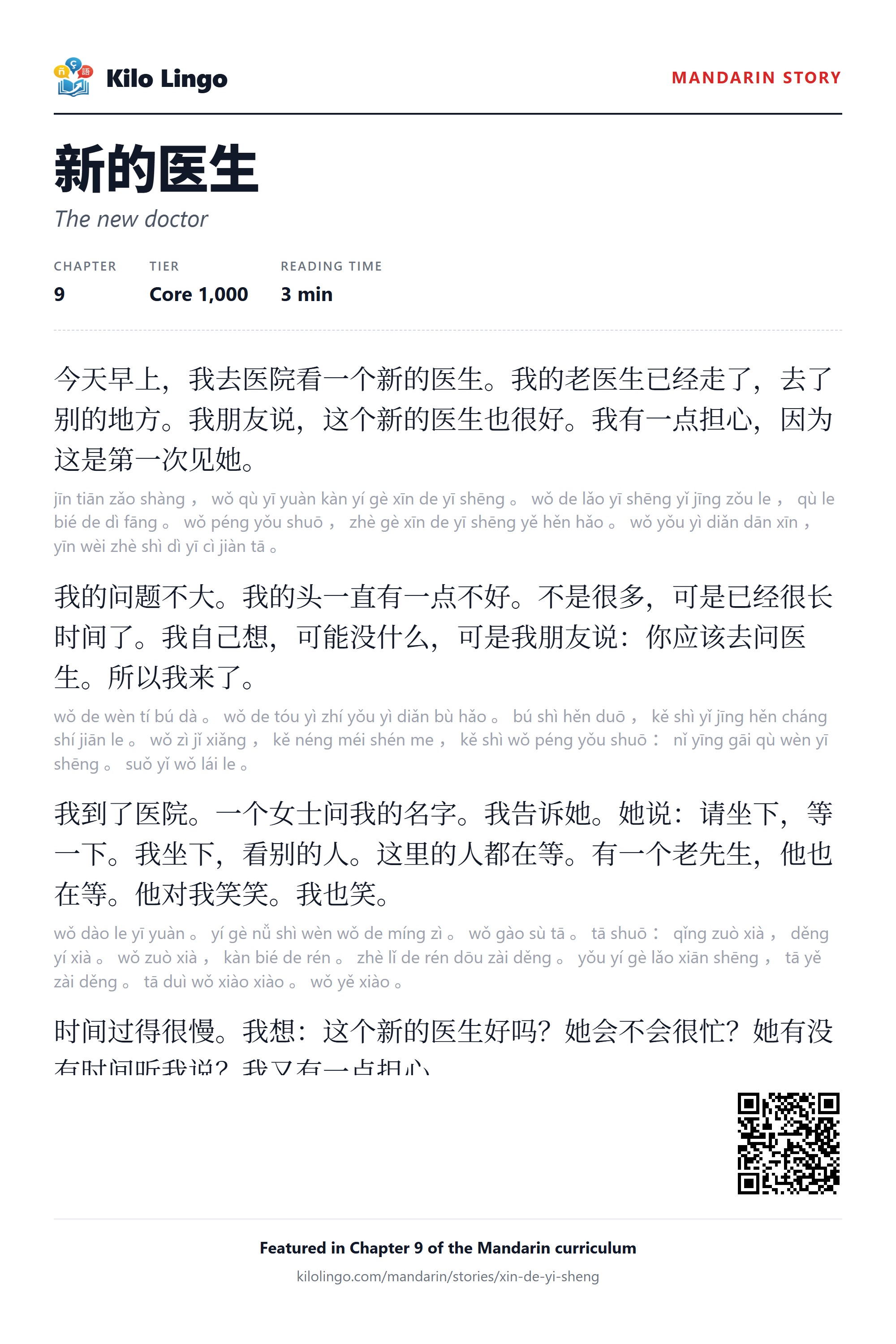
Chapter 10 · 一点 or 有点?
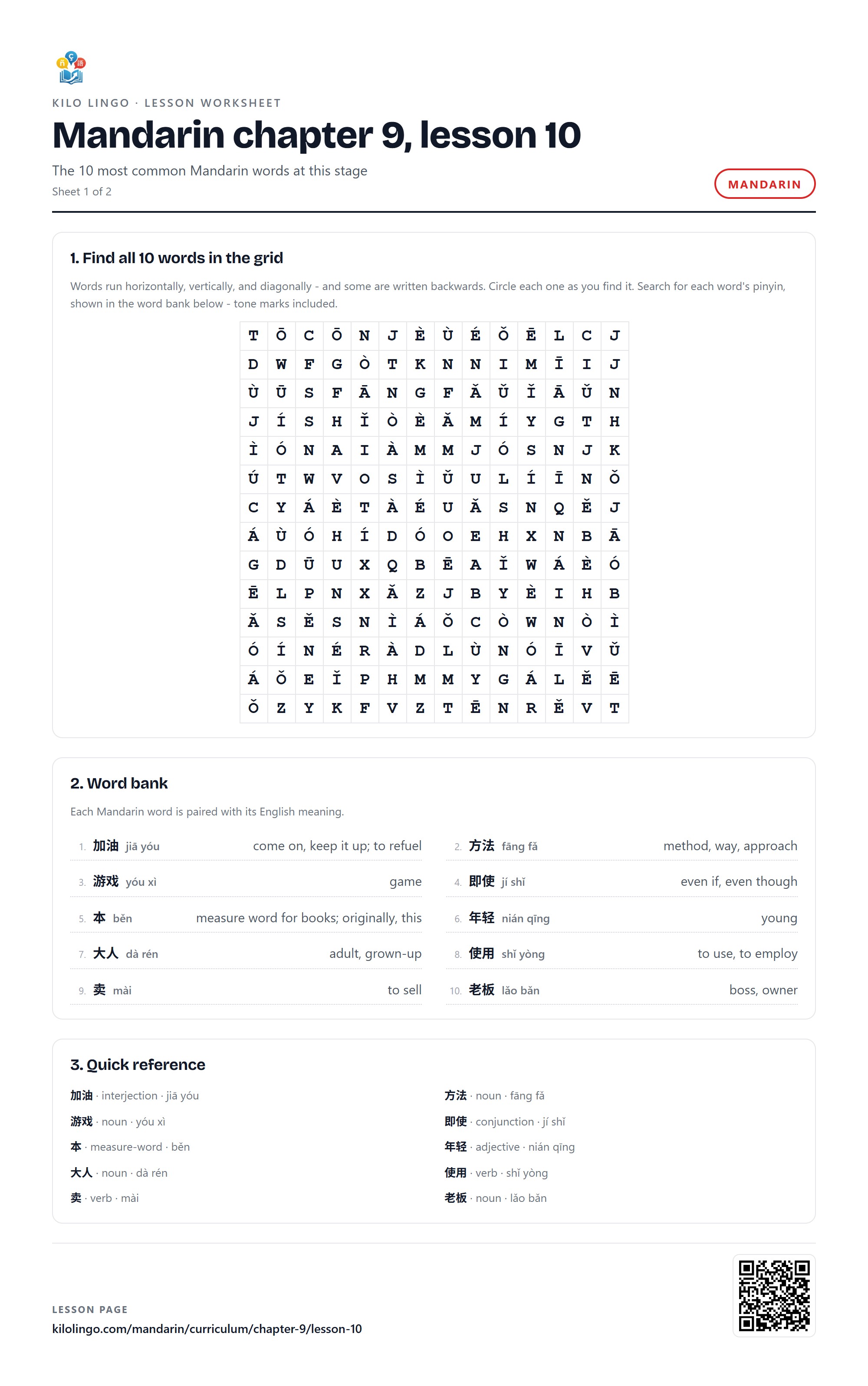
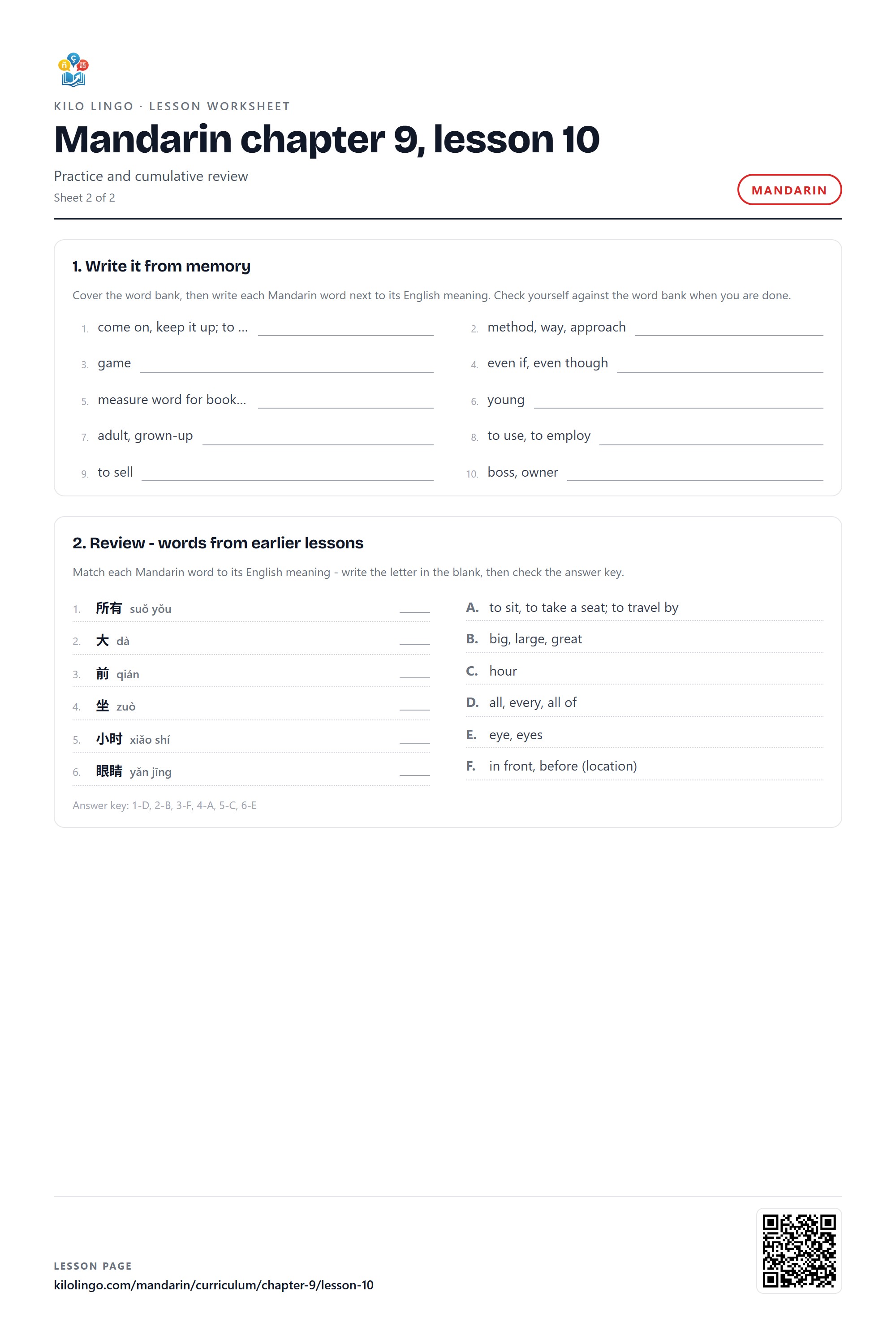
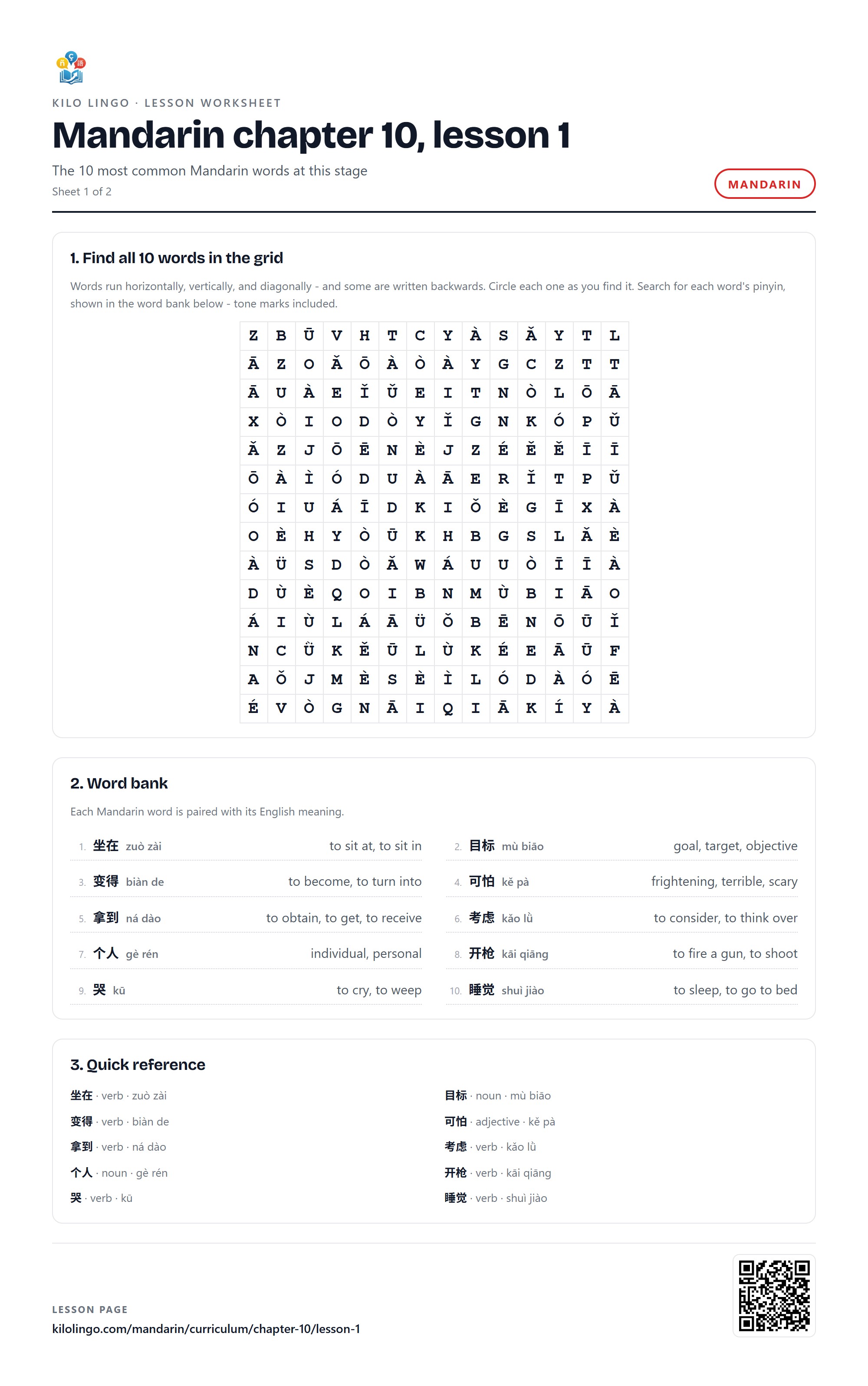
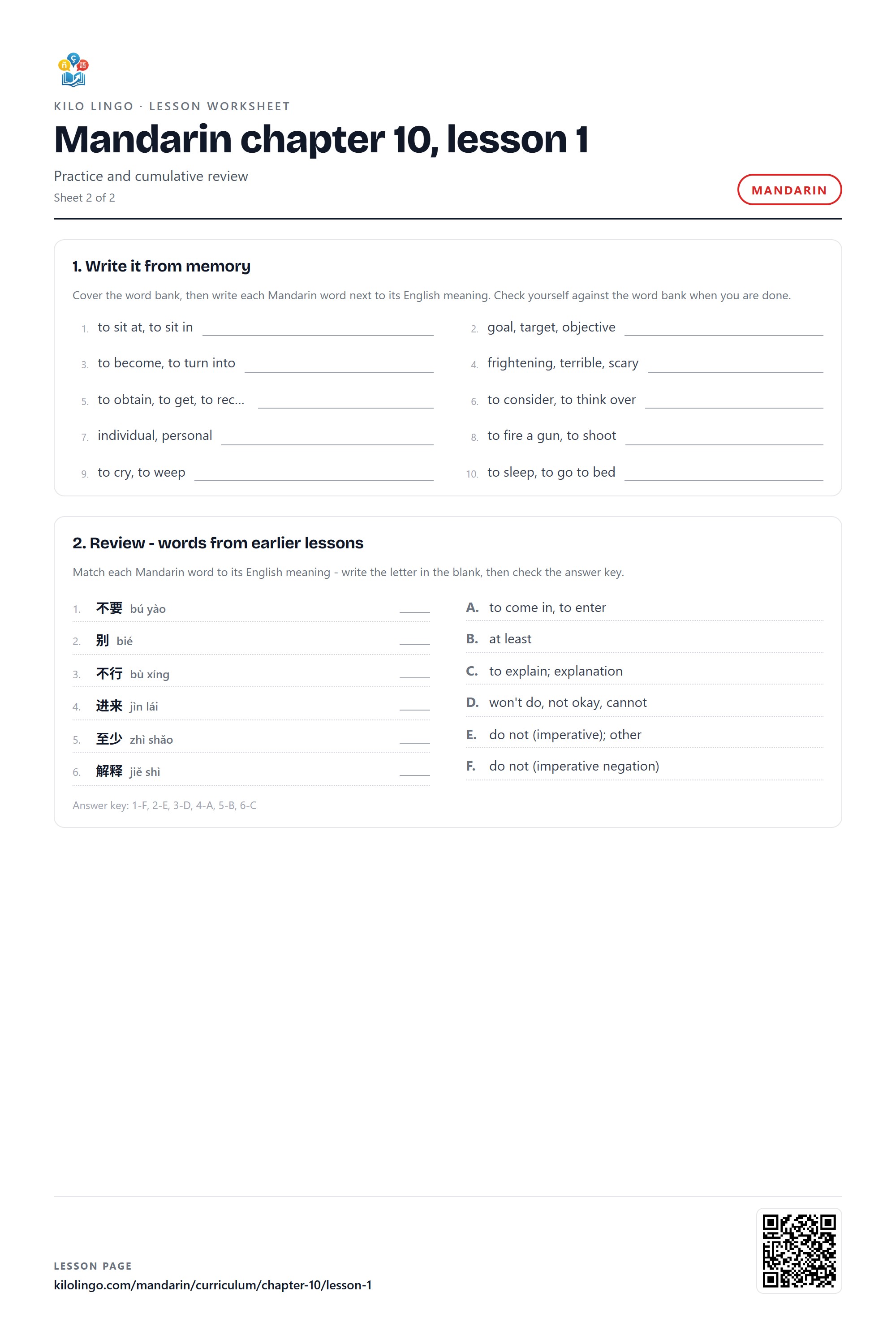
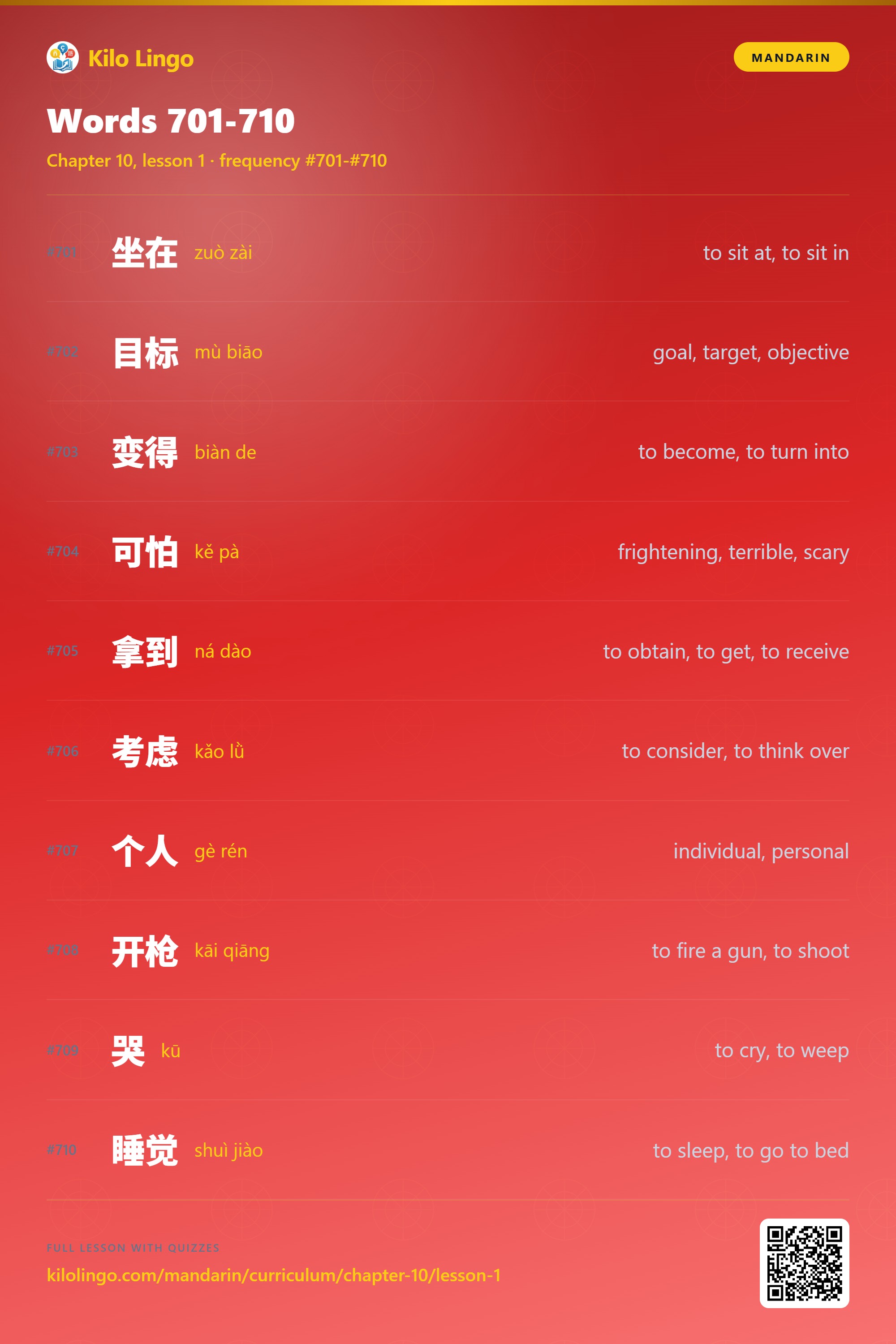
Chapter page →- Words 701-710Vocabulary
10 words · ranks 701-710
- Crossword review sessionReview games
Cross the words you just met, clued in English. Slower than a drill, and it sticks harder.
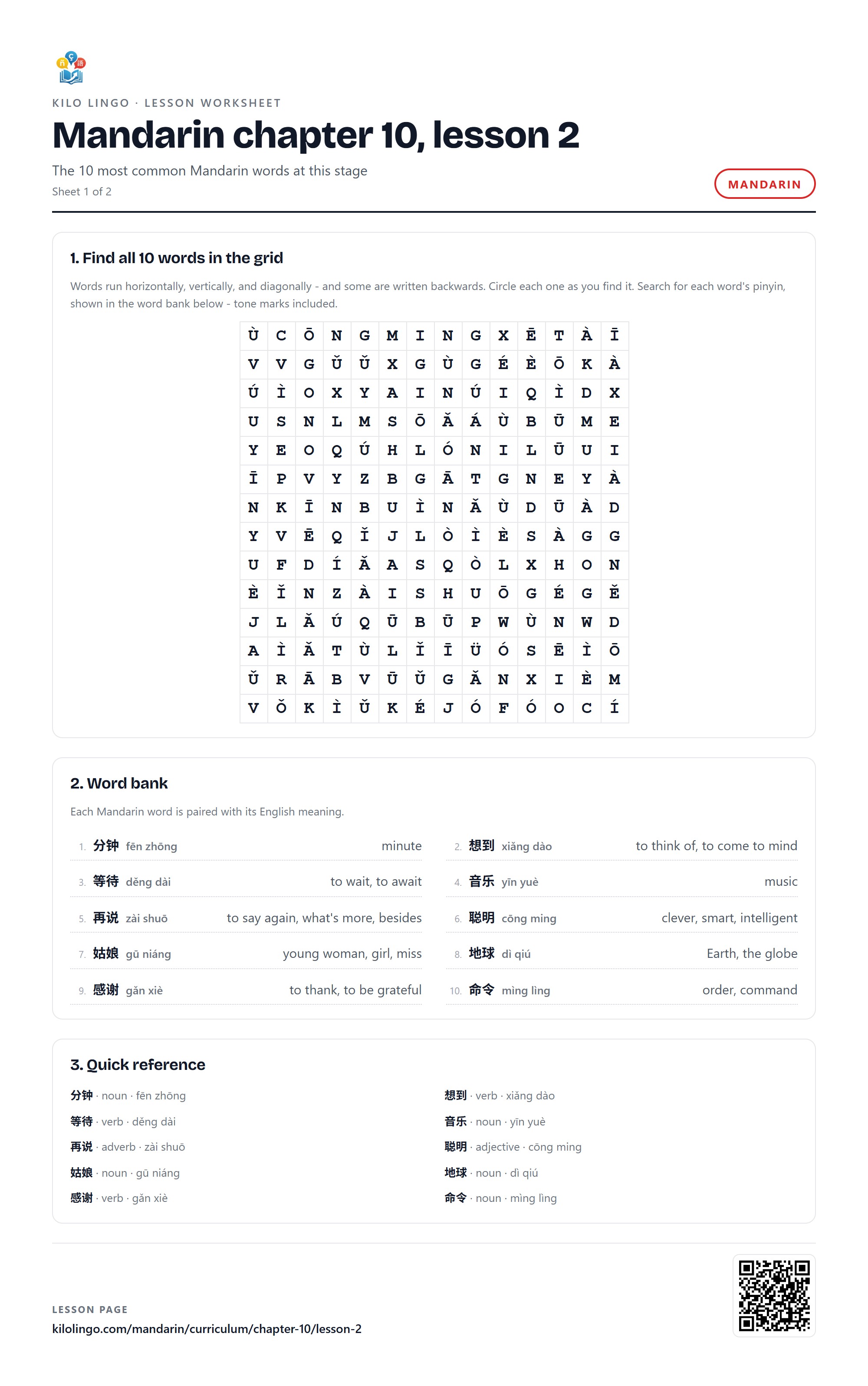
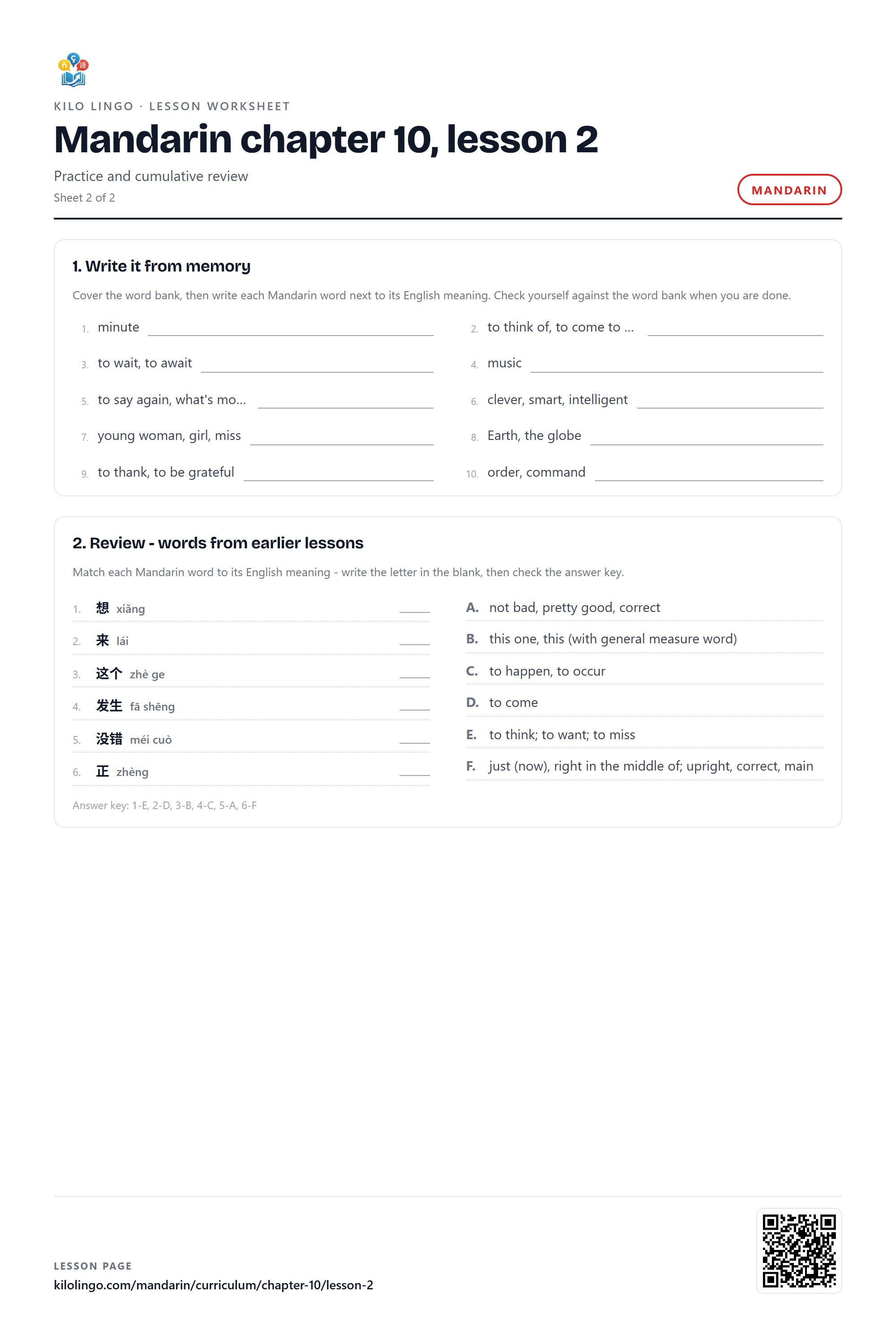
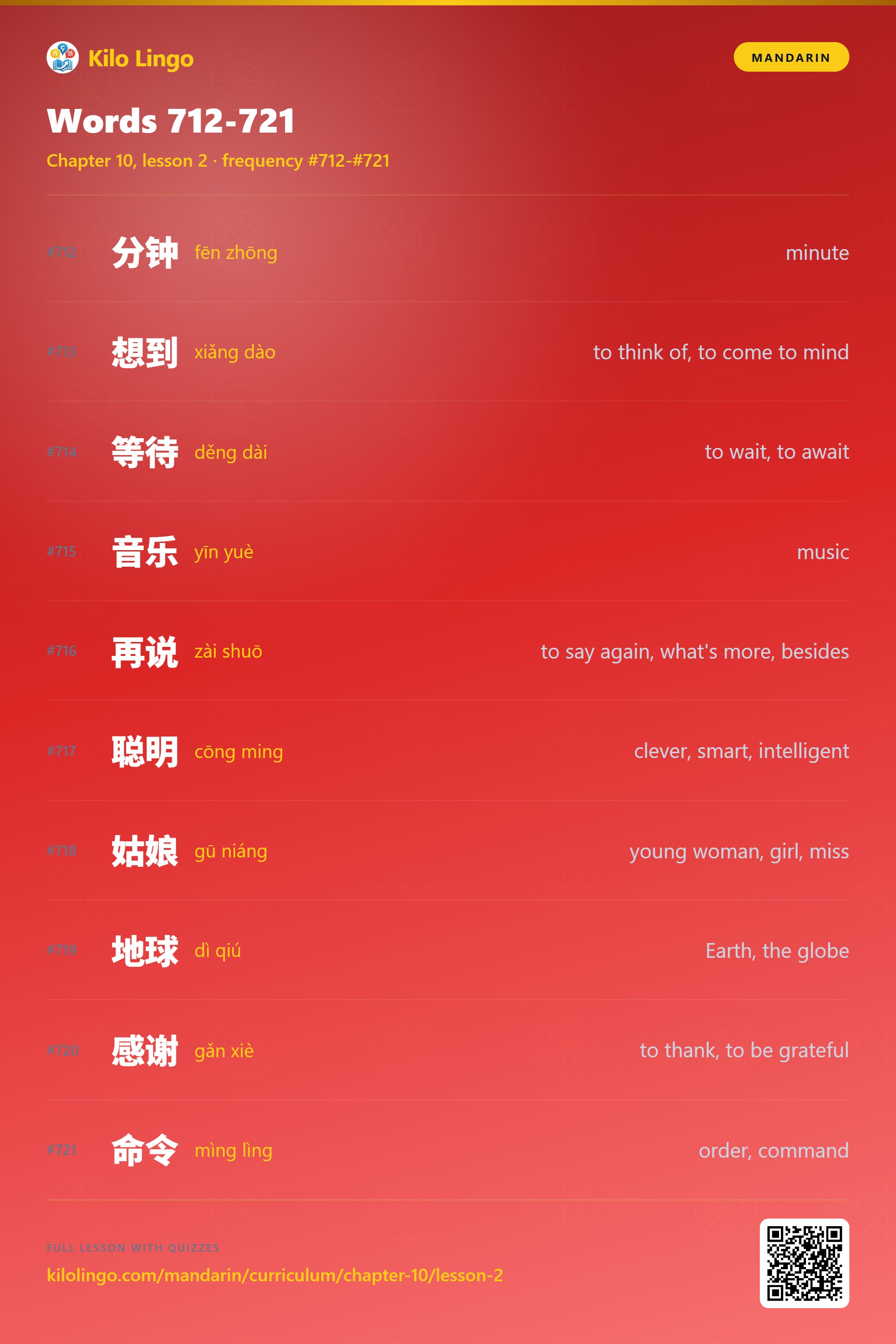
- Words 712-721Vocabulary
10 words · ranks 712-721
- Tone Shooter review sessionReview games
Shoot the words you just met into their tones by colour. The quickest way to fix a tone in place.
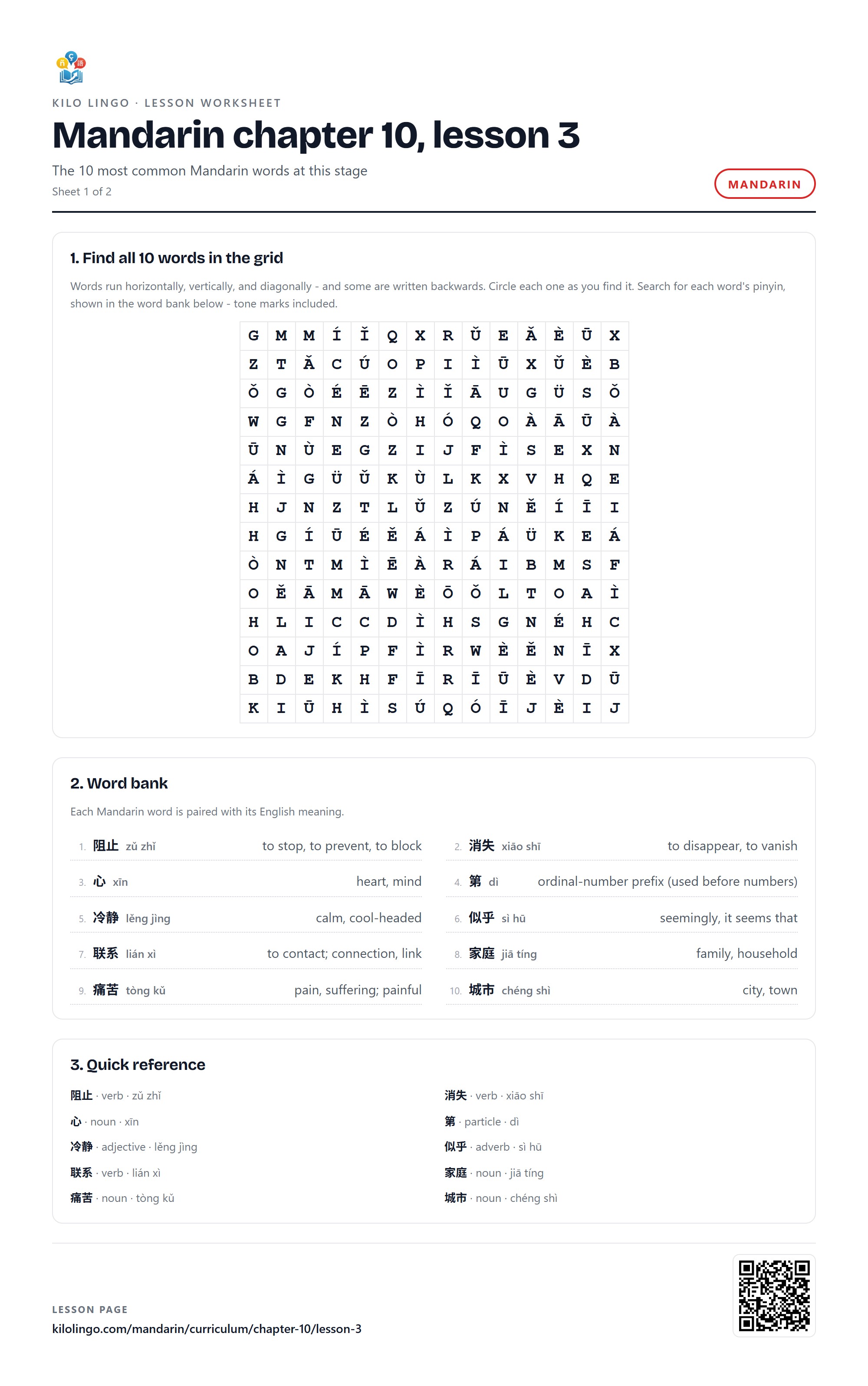
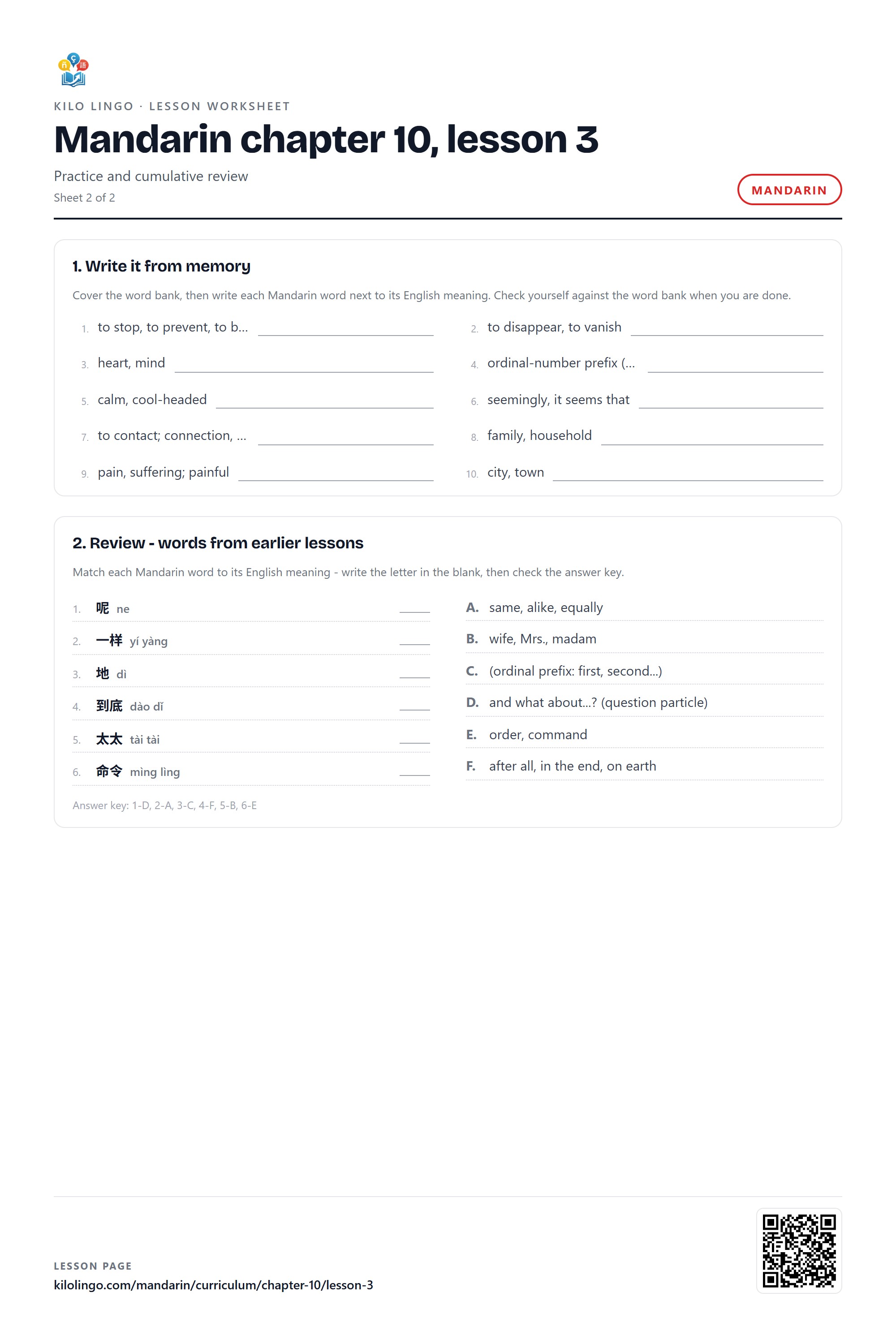
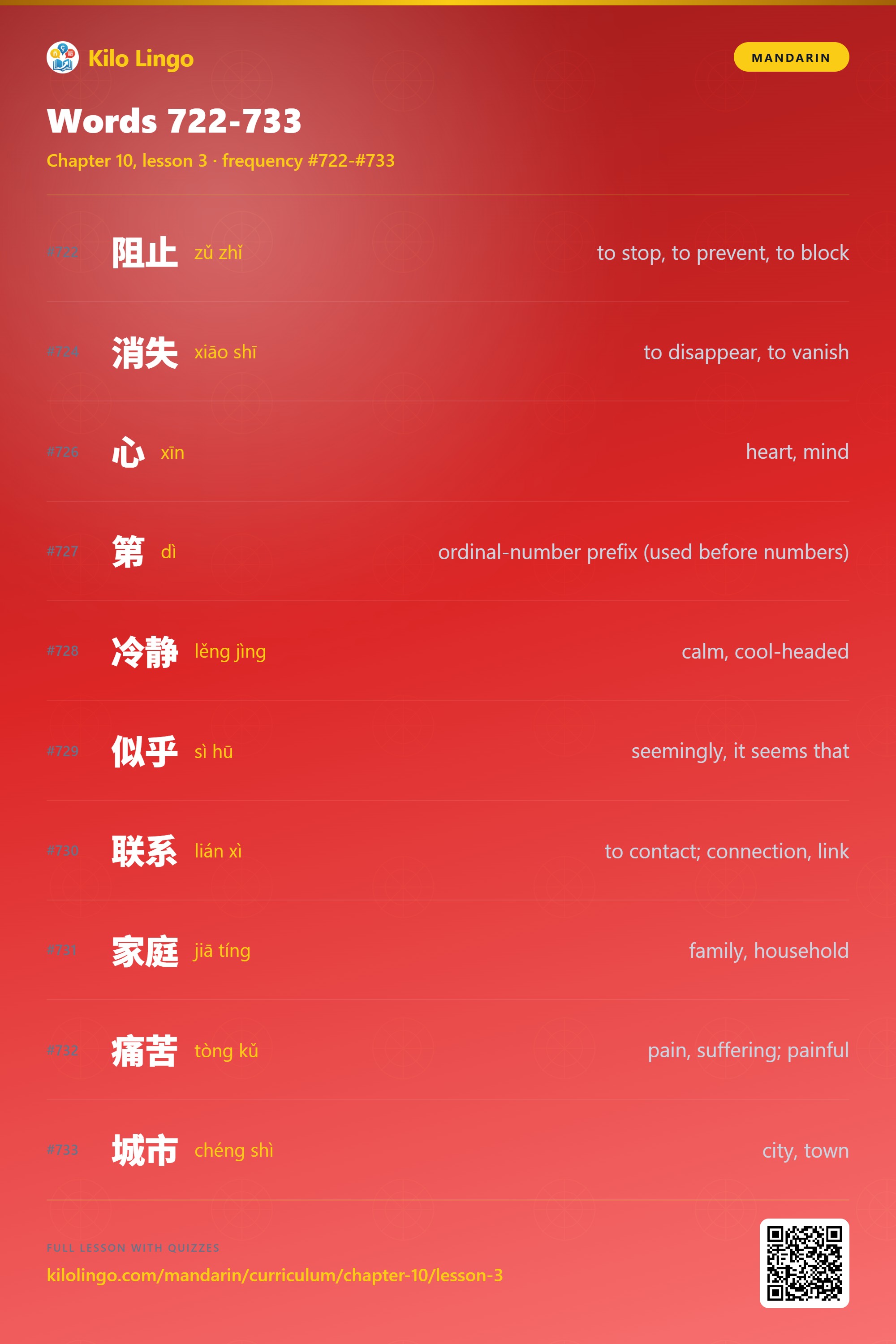
- Words 722-733Vocabulary
10 words · ranks 722-733
- Word Bubbles review sessionReview games
Pop the words you just met by matching each one to its meaning. A couple of rounds and the batch is yours.
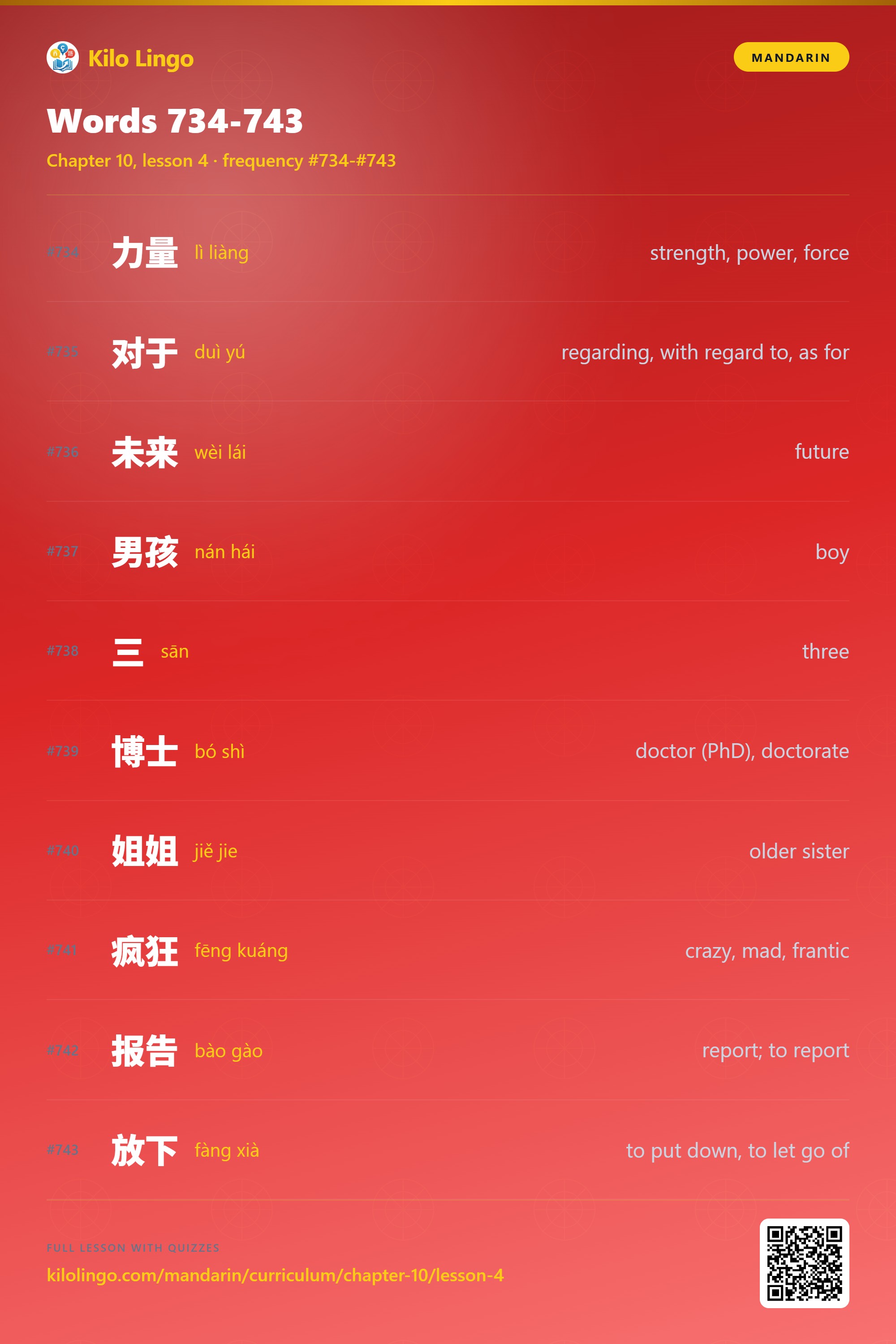
- Words 734-743Vocabulary
10 words · ranks 734-743
- Tone Shooter review sessionReview games
Shoot the words you just met into their tones by colour. The quickest way to fix a tone in place.
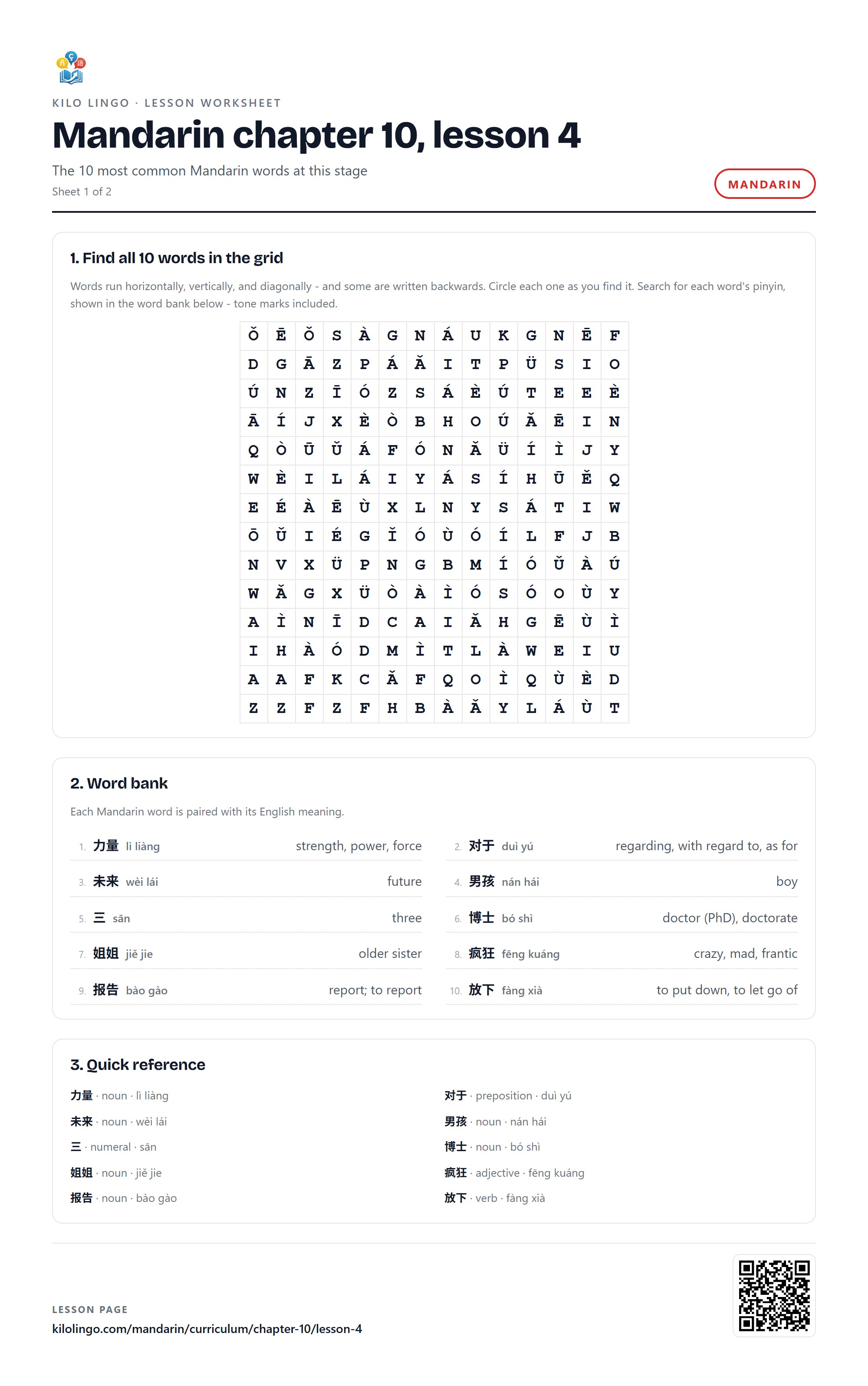
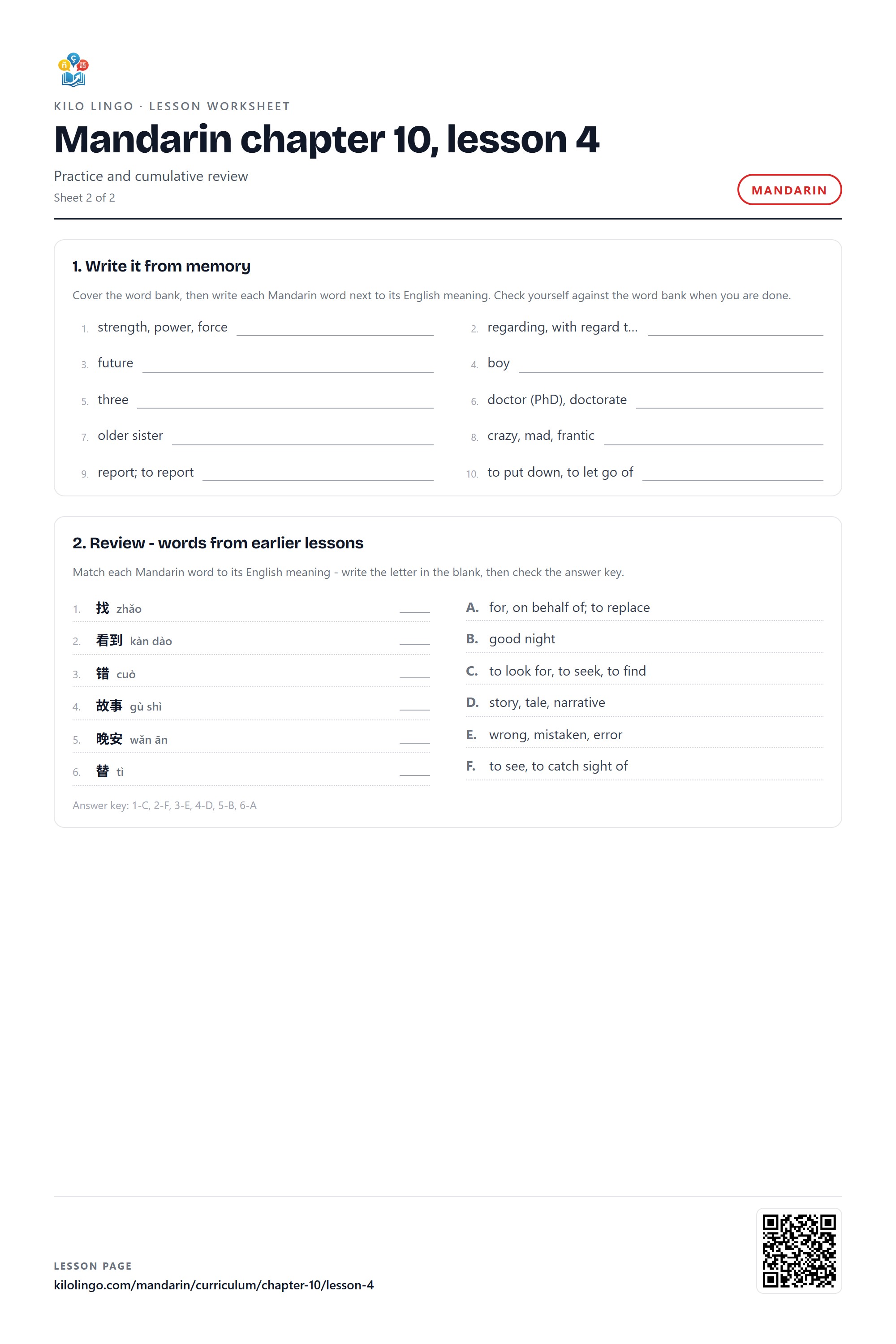
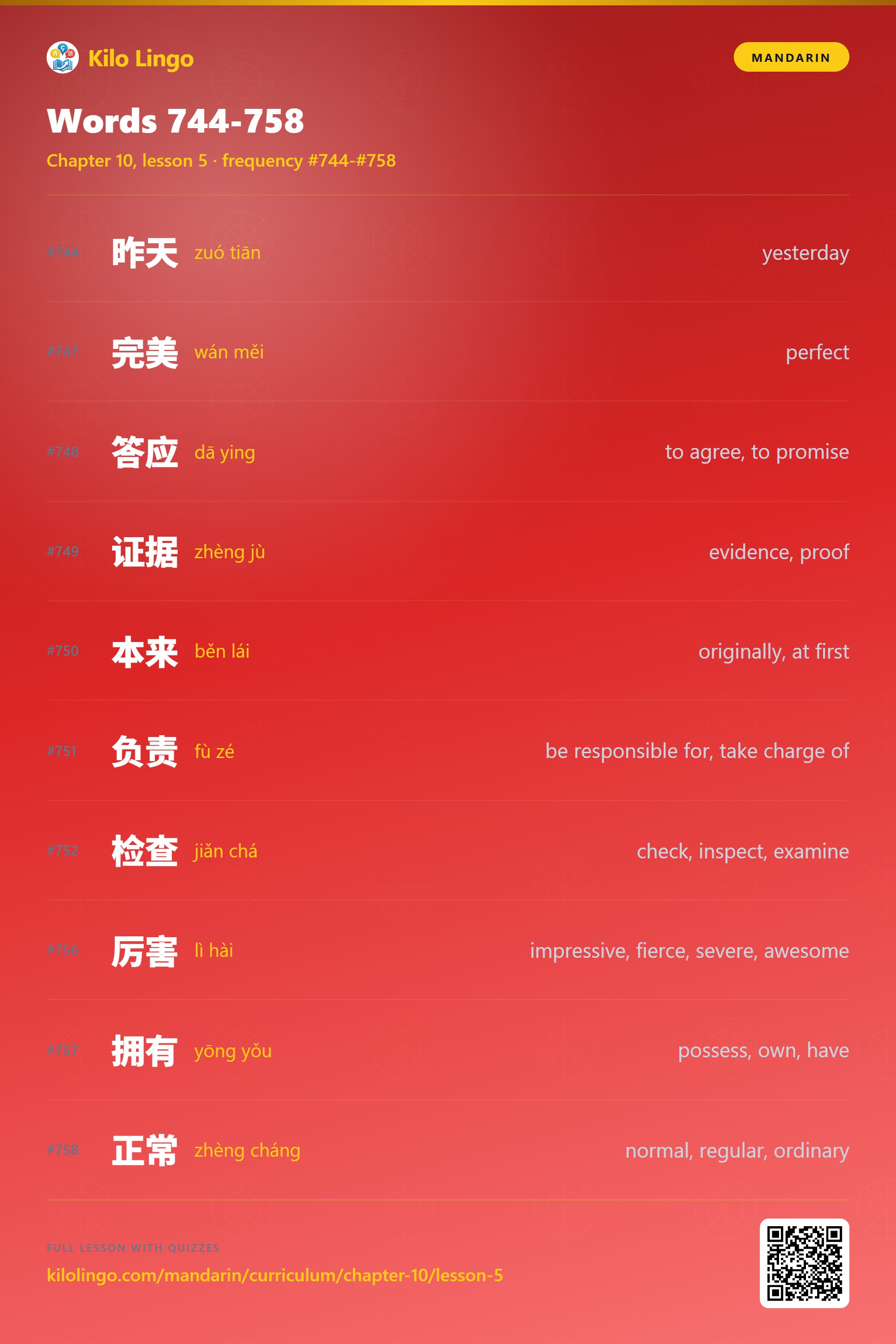
- Words 744-758Vocabulary
10 words · ranks 744-758
- 一点 or 有点?Mistake clinic
One of these grumbles. The other does not.
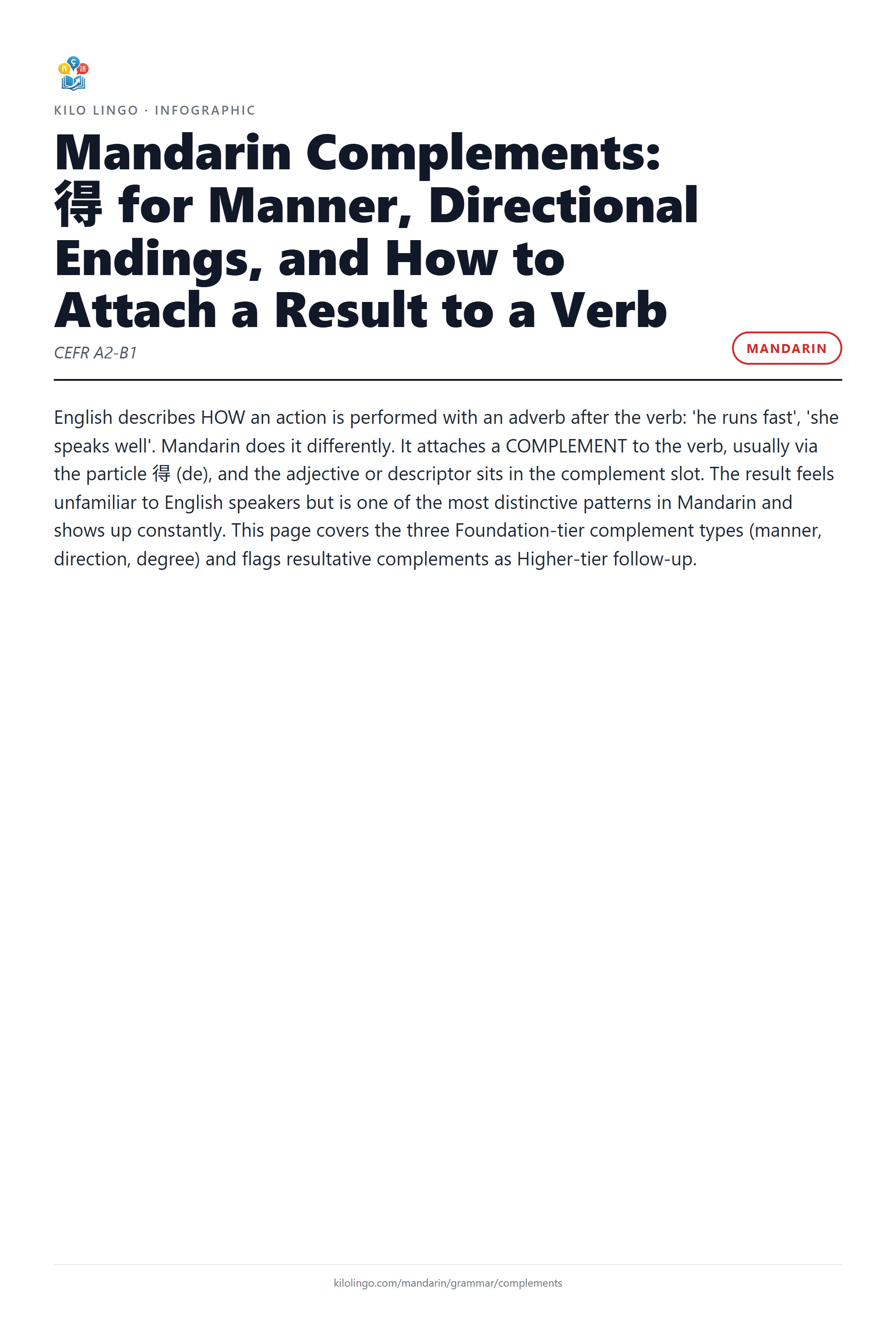
得 + adjective for manner (跑得快, 说得好), directional complements (进去, 出来, 回来), degree complements, and how Mandarin attaches a result to a verb.
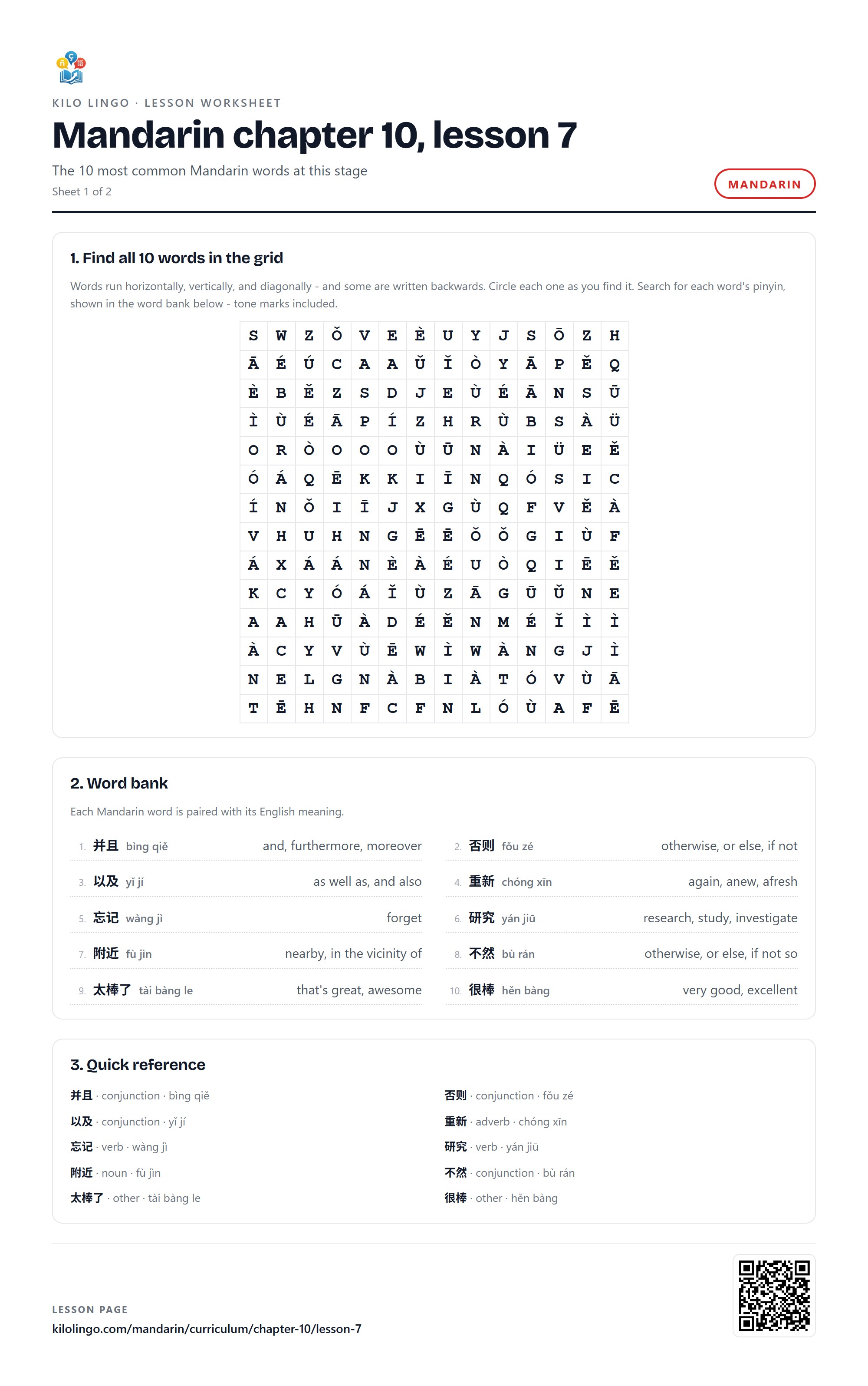
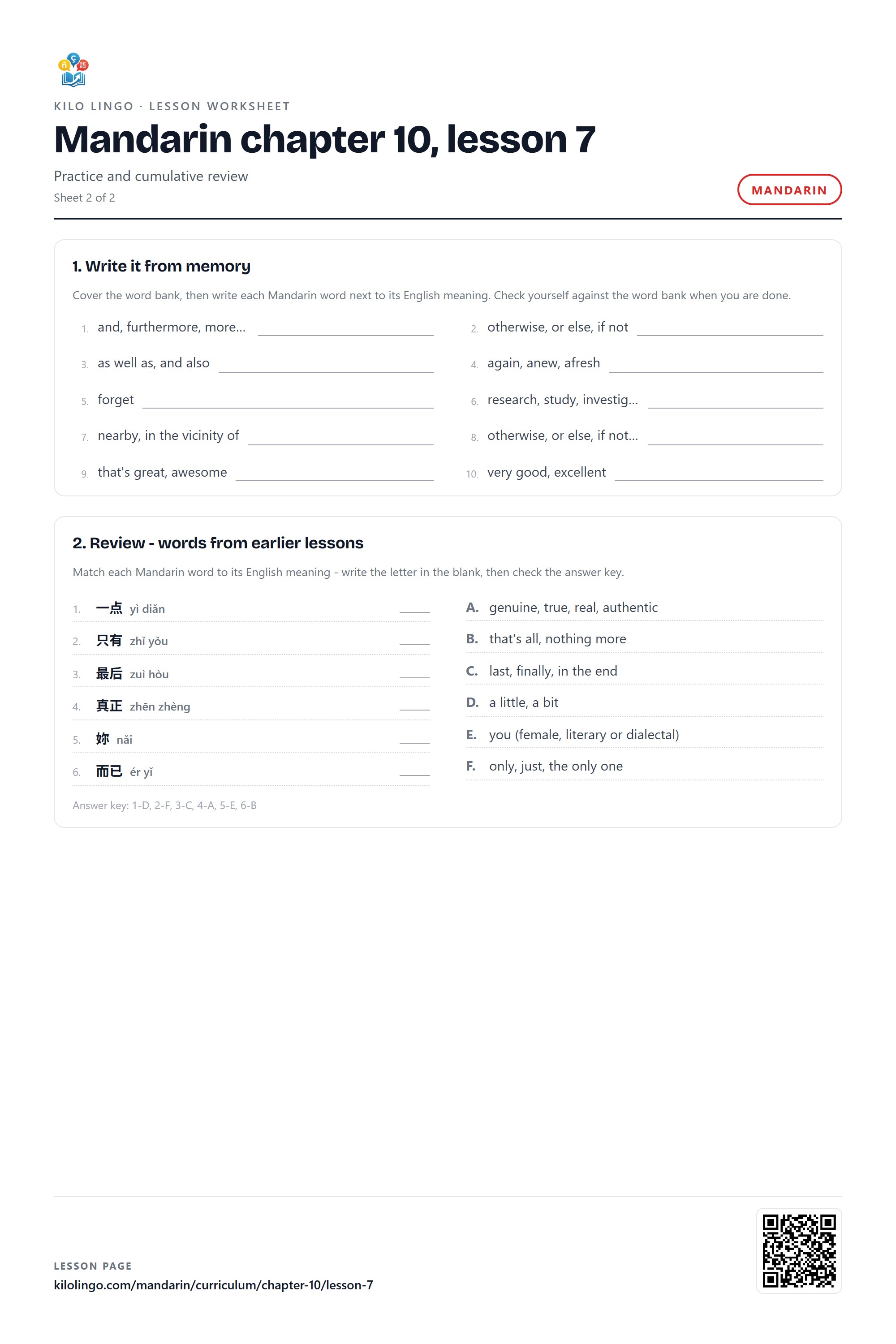
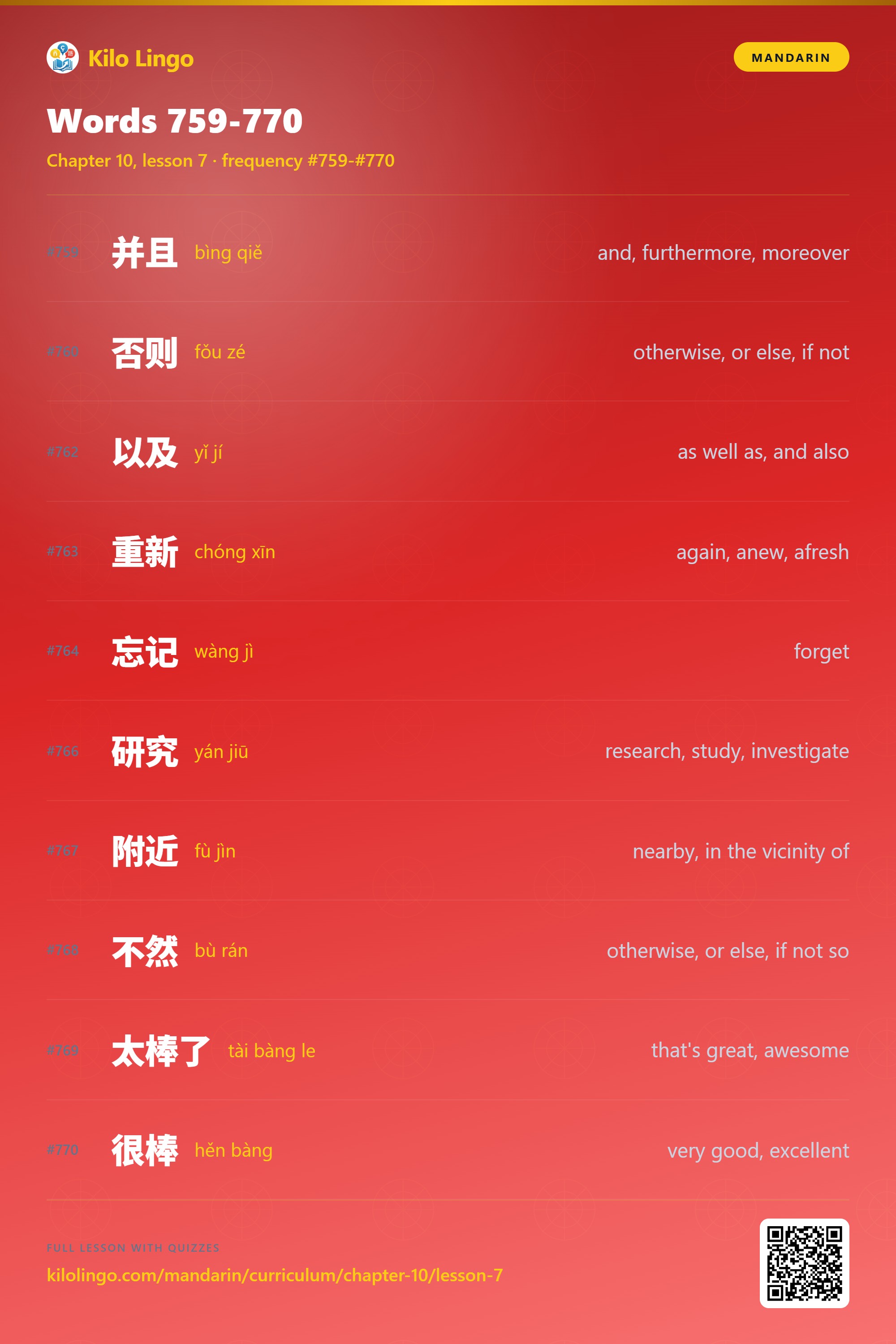
- Words 759-770Vocabulary
10 words · ranks 759-770
- Word Bubbles review sessionReview games
Pop the words you just met by matching each one to its meaning. A couple of rounds and the batch is yours.
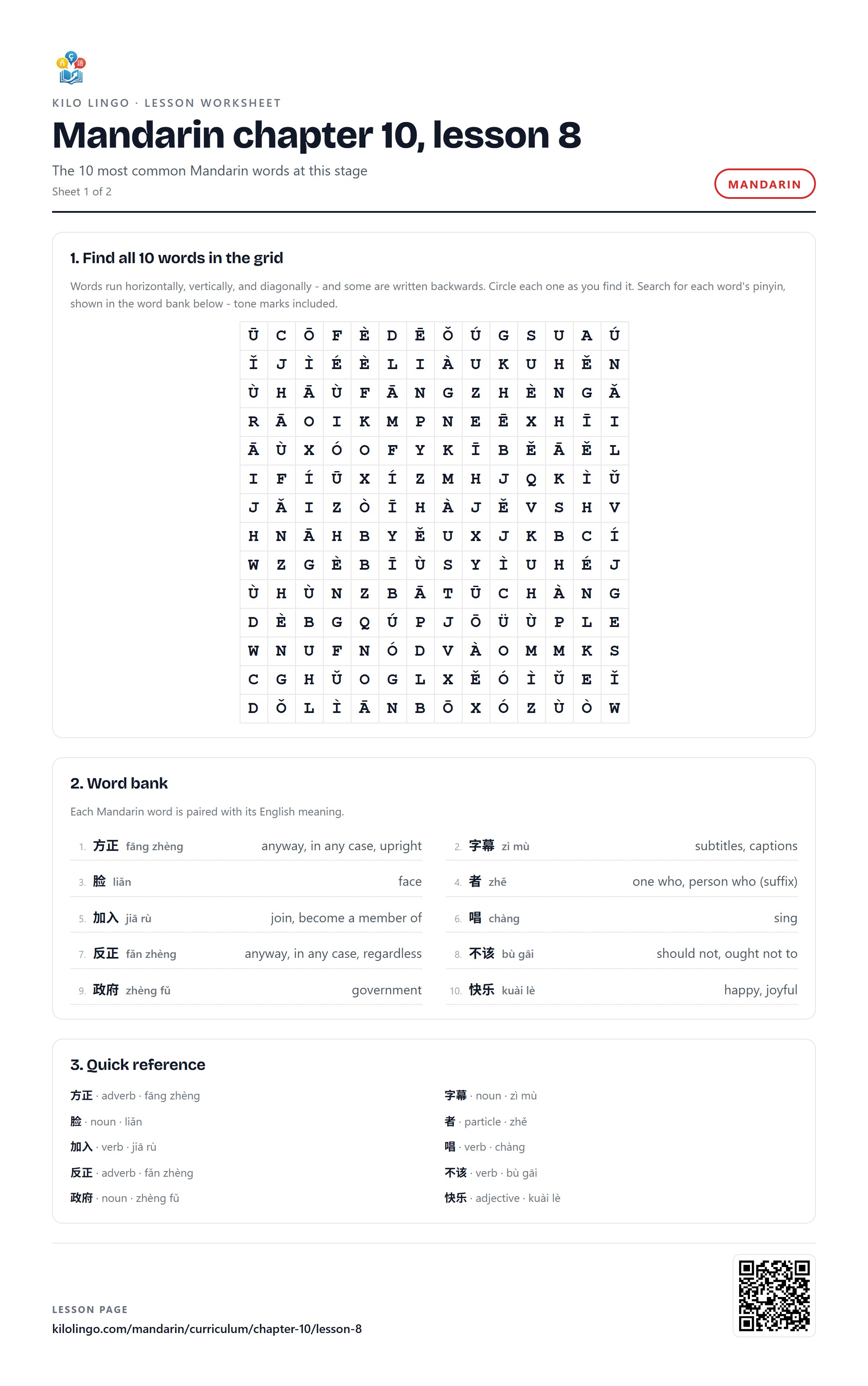
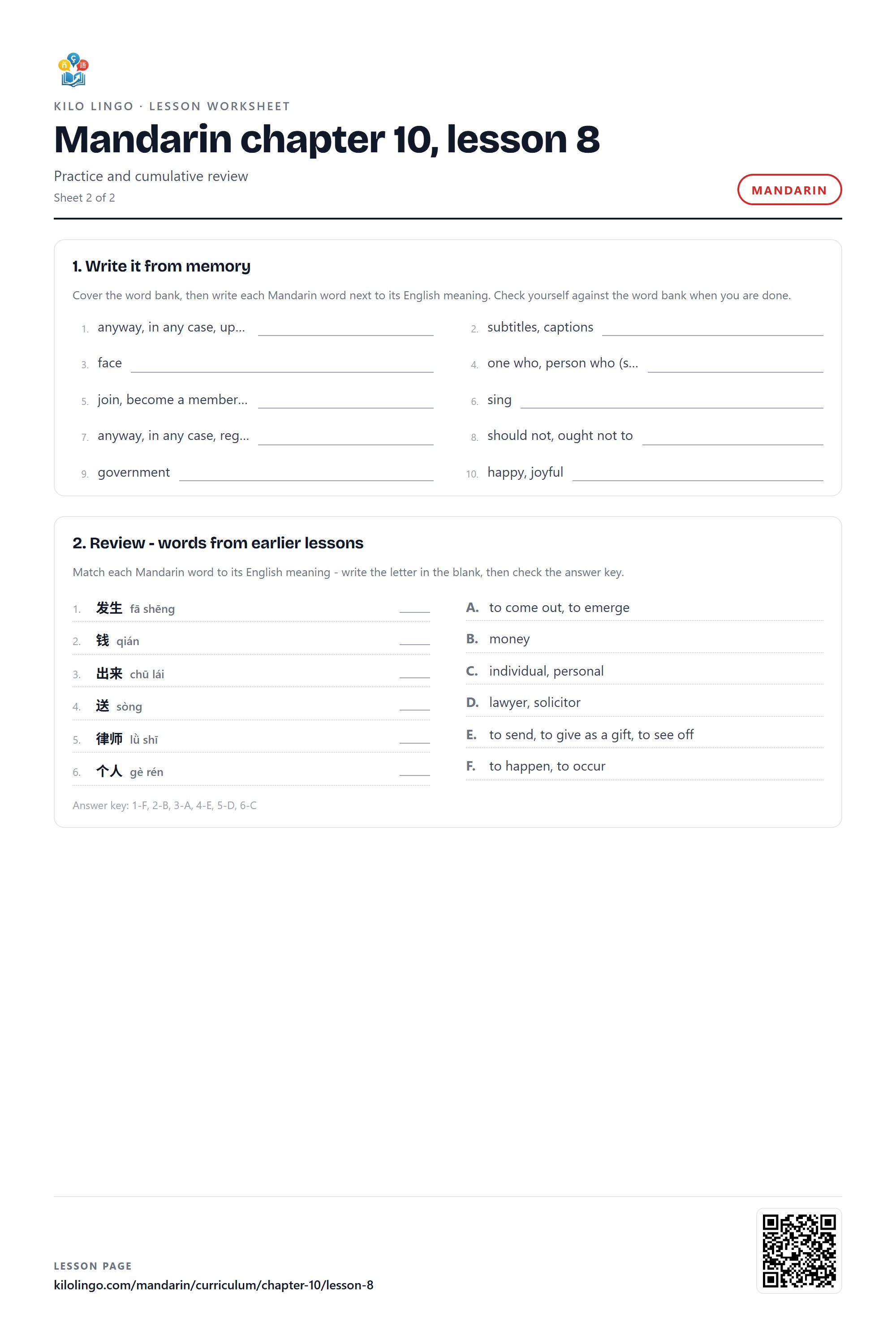
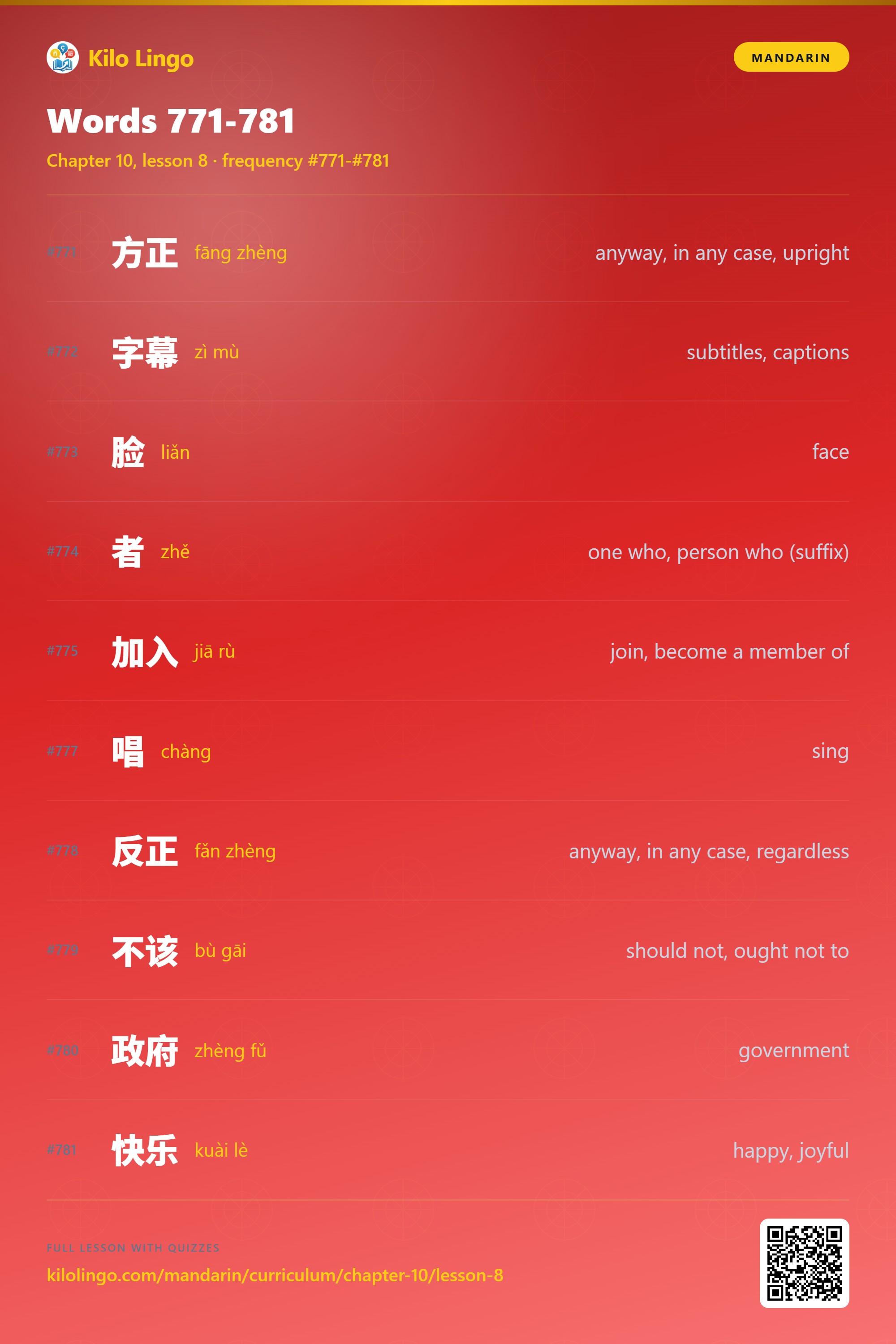
- Words 771-781Vocabulary
10 words · ranks 771-781
- Tone Shooter review sessionReview games
Shoot the words you just met into their tones by colour. The quickest way to fix a tone in place.
- Words 782-792Vocabulary
10 words · ranks 782-792
- Word Bubbles review sessionReview games
Pop the words you just met by matching each one to its meaning. A couple of rounds and the batch is yours.
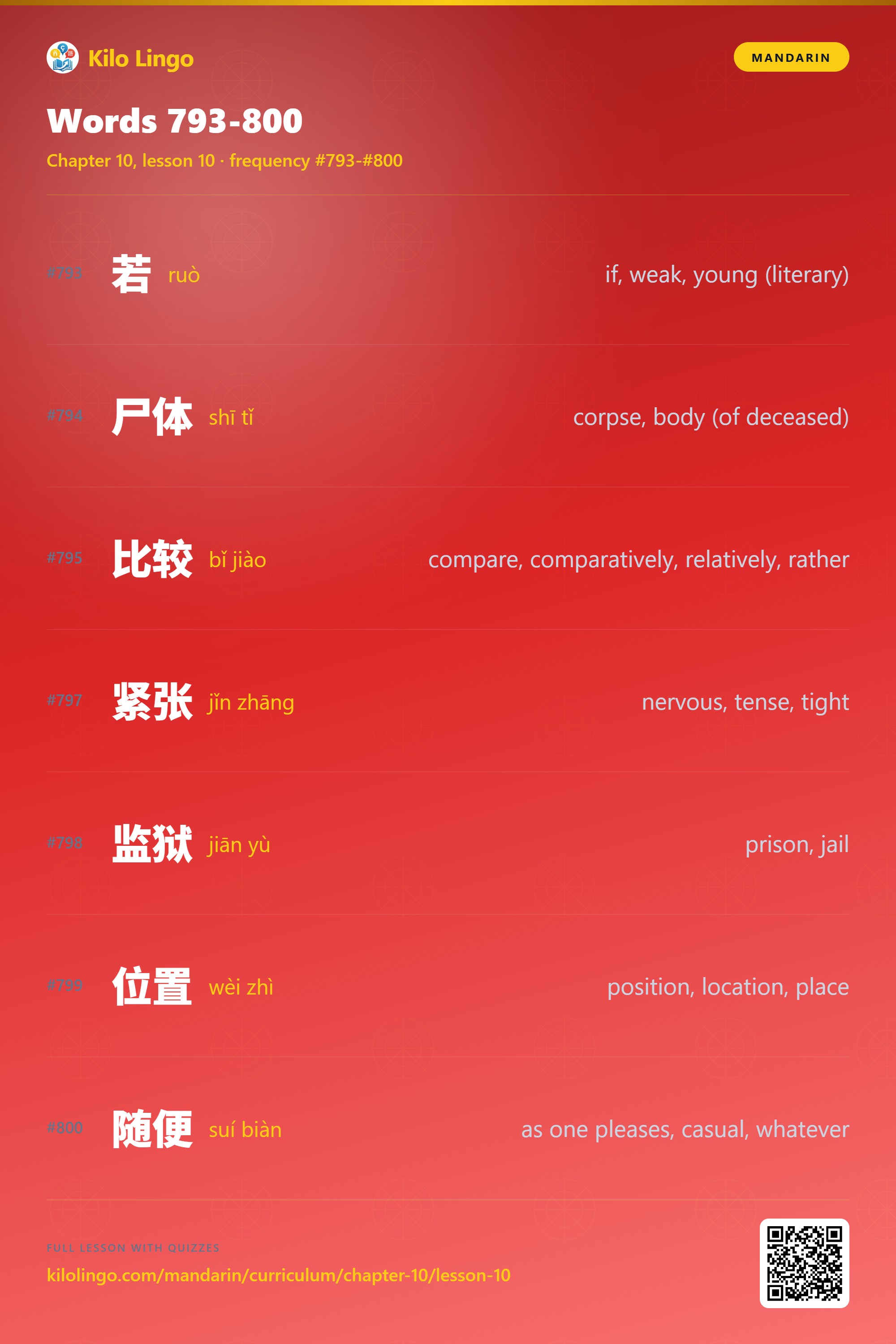
- Words 793-800Vocabulary
7 words · ranks 793-800
- Eating and drinkingPhrase session
Enough to get fed, get watered and pay for it.
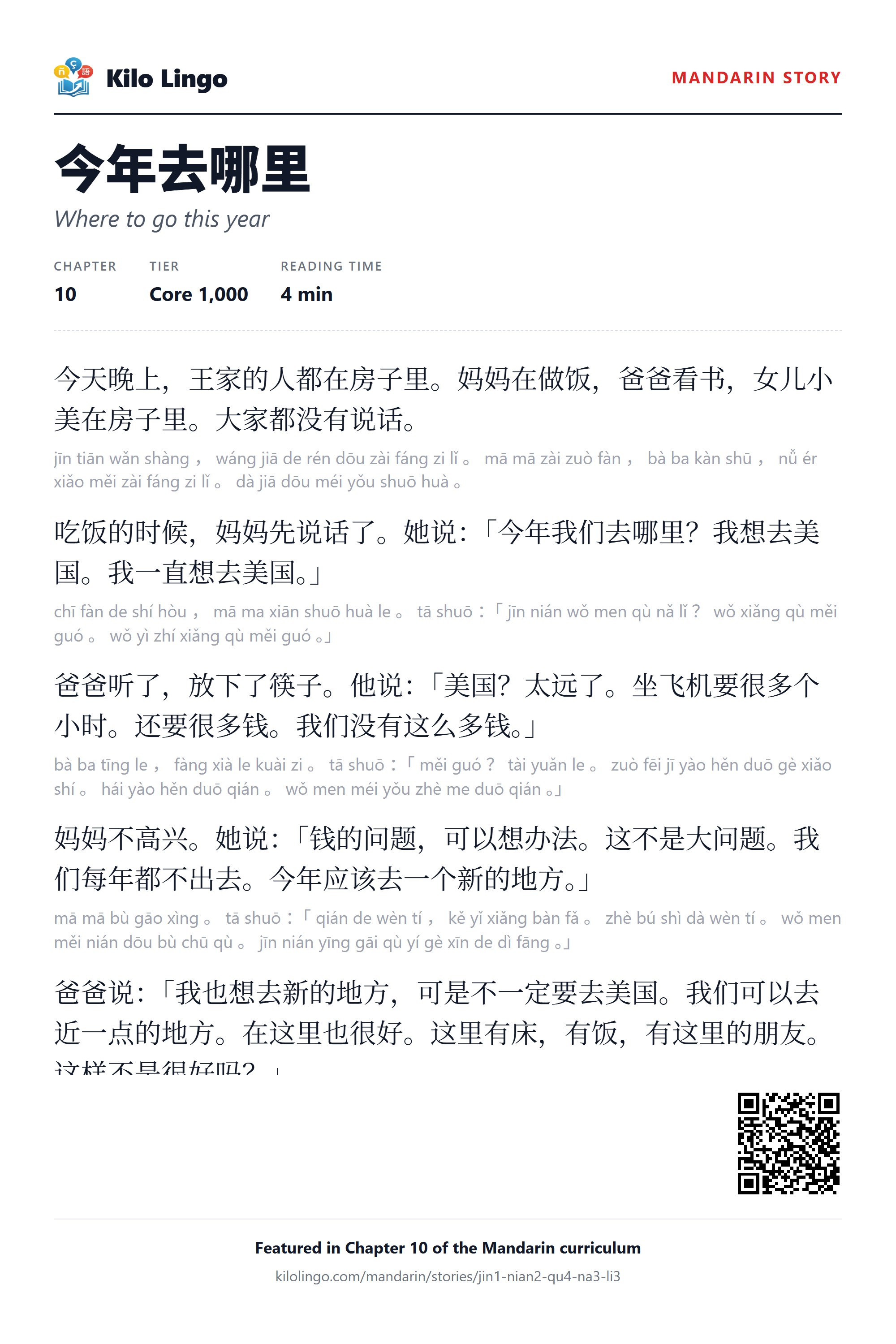
- Story milestone: top 800 wordsGraded-reader story
You can read this story using only the words you've learned so far. Every content word sits at or above the rank-800 ceiling.
Leave a comment in Mandarin on a video from a Chinese creator.
- Arcade reviewReview games
Replay this chapter's words as games - a different kind of repetition, and it counts.
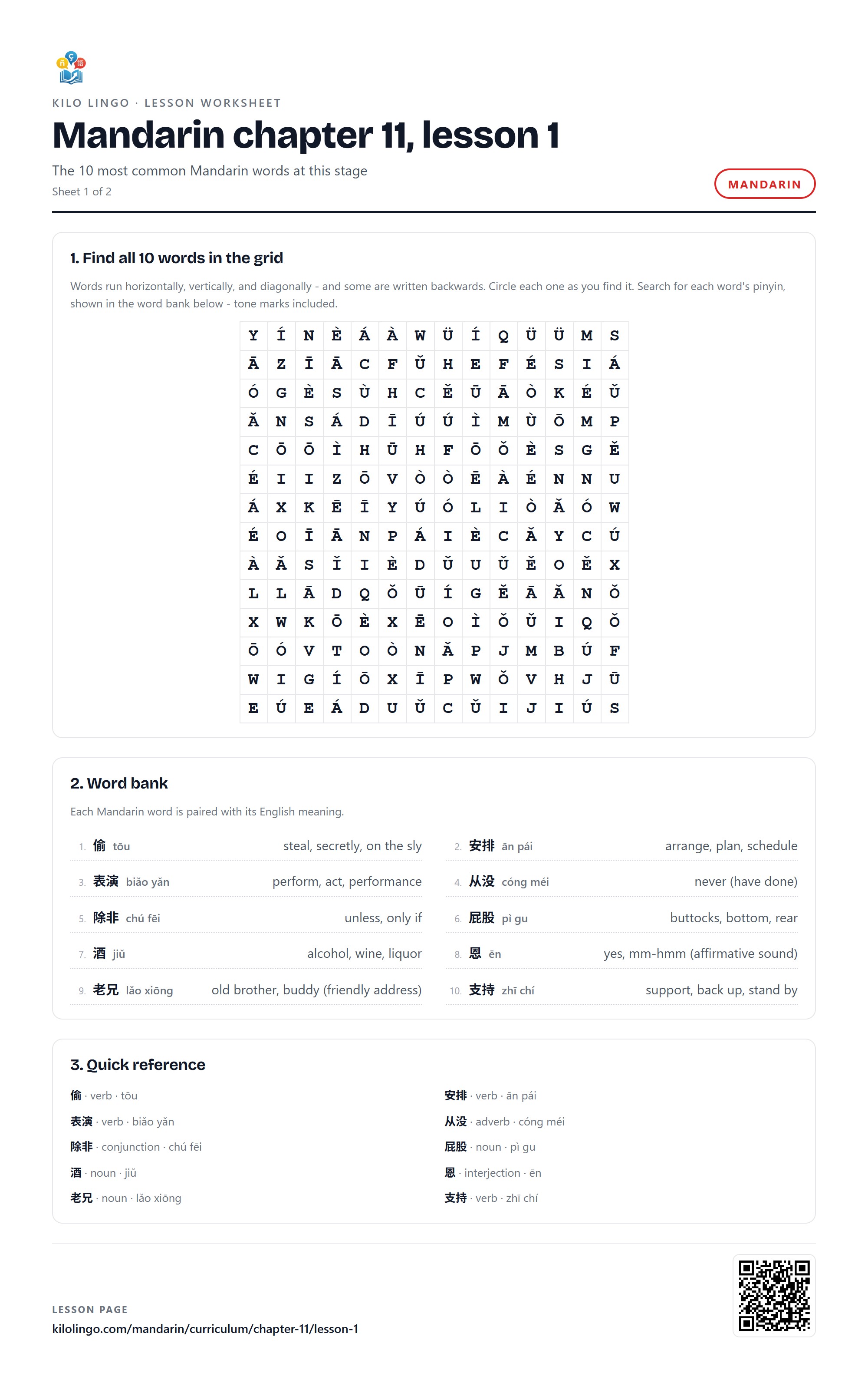
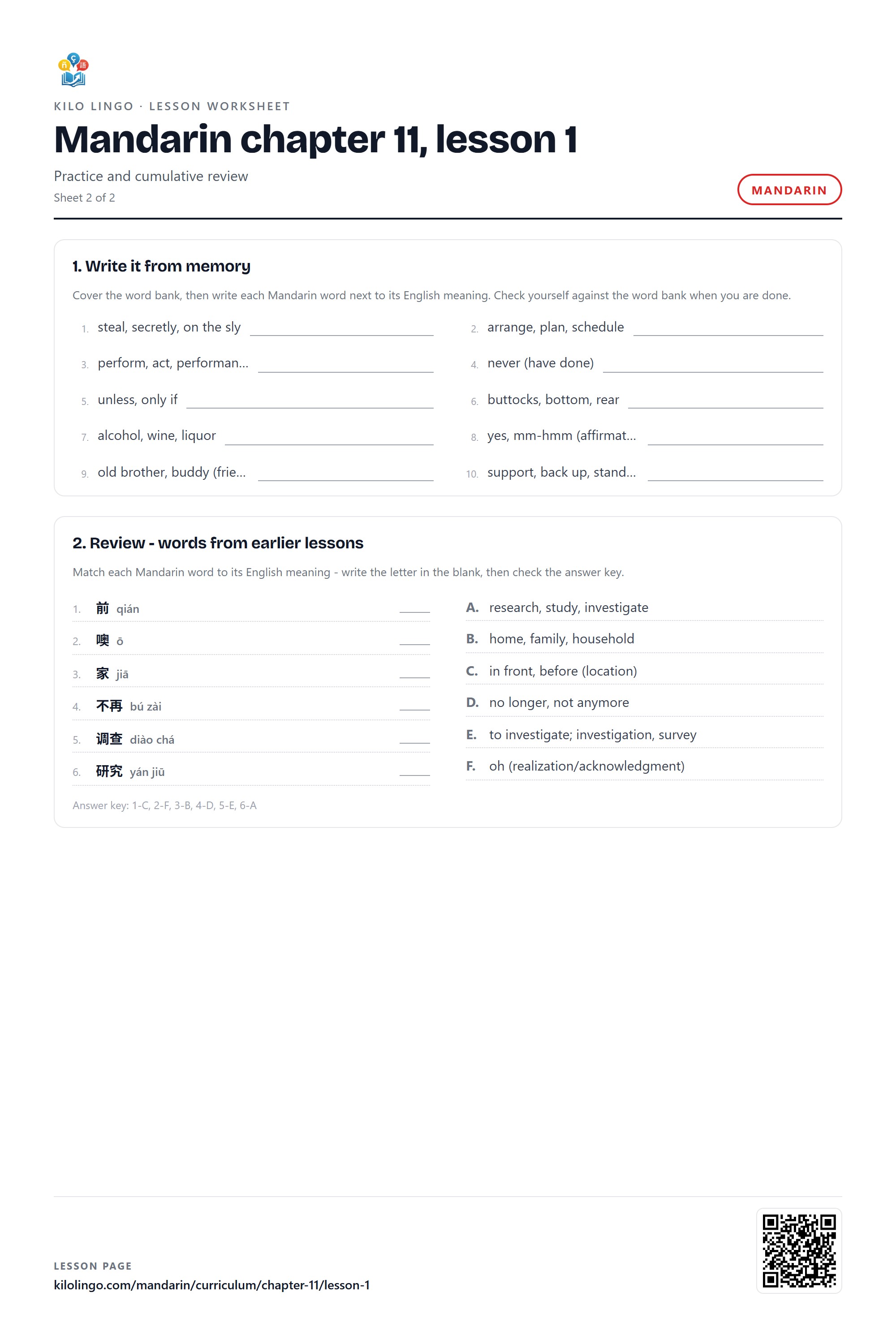
Word printables
Per-word sheets87 words · a worksheet, infographic and listicle each









Chapter 11 · Location and existence: 在, 是, 有
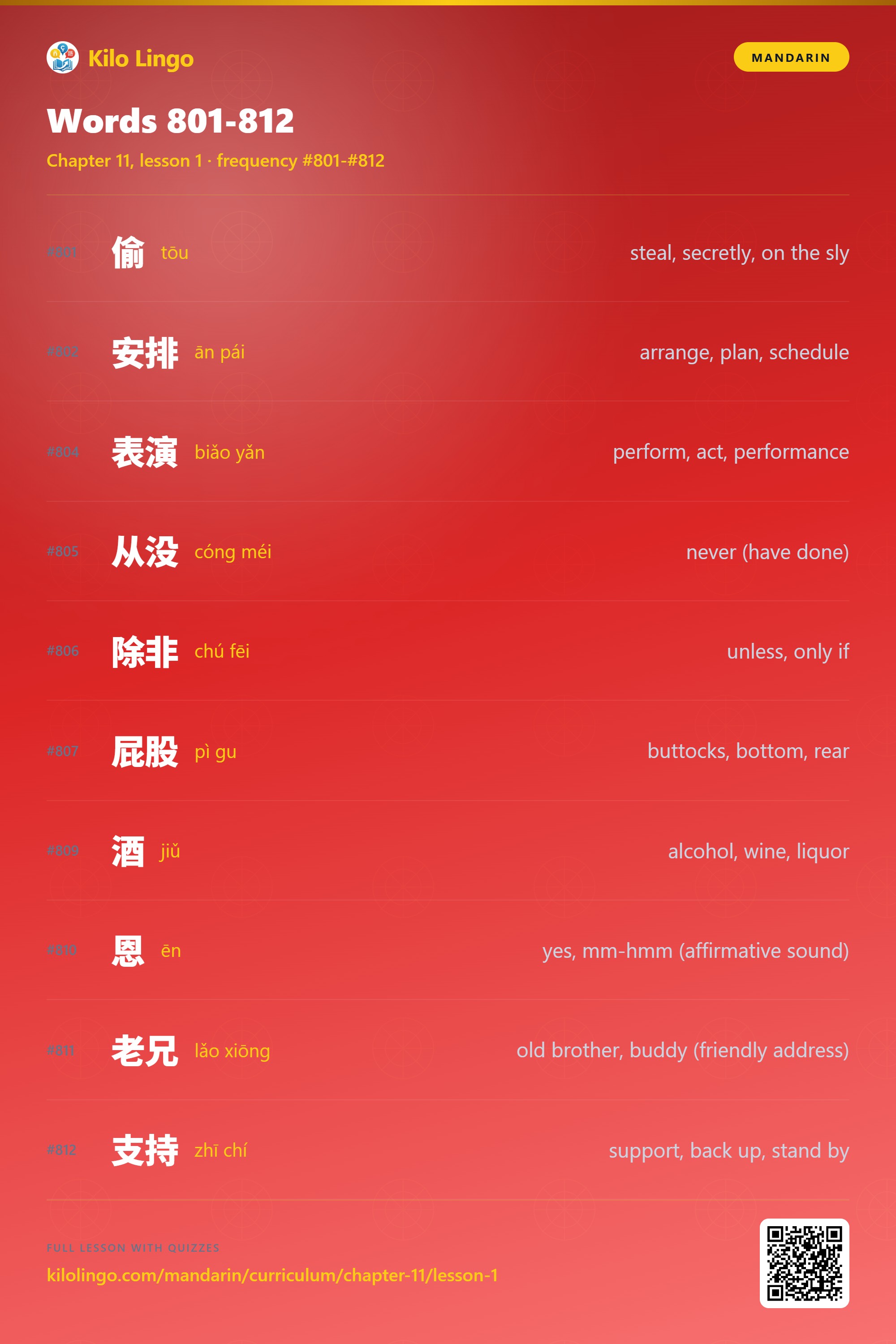
Chapter page →- Words 801-812Vocabulary
10 words · ranks 801-812
- Tone Shooter review sessionReview games
Shoot the words you just met into their tones by colour. The quickest way to fix a tone in place.
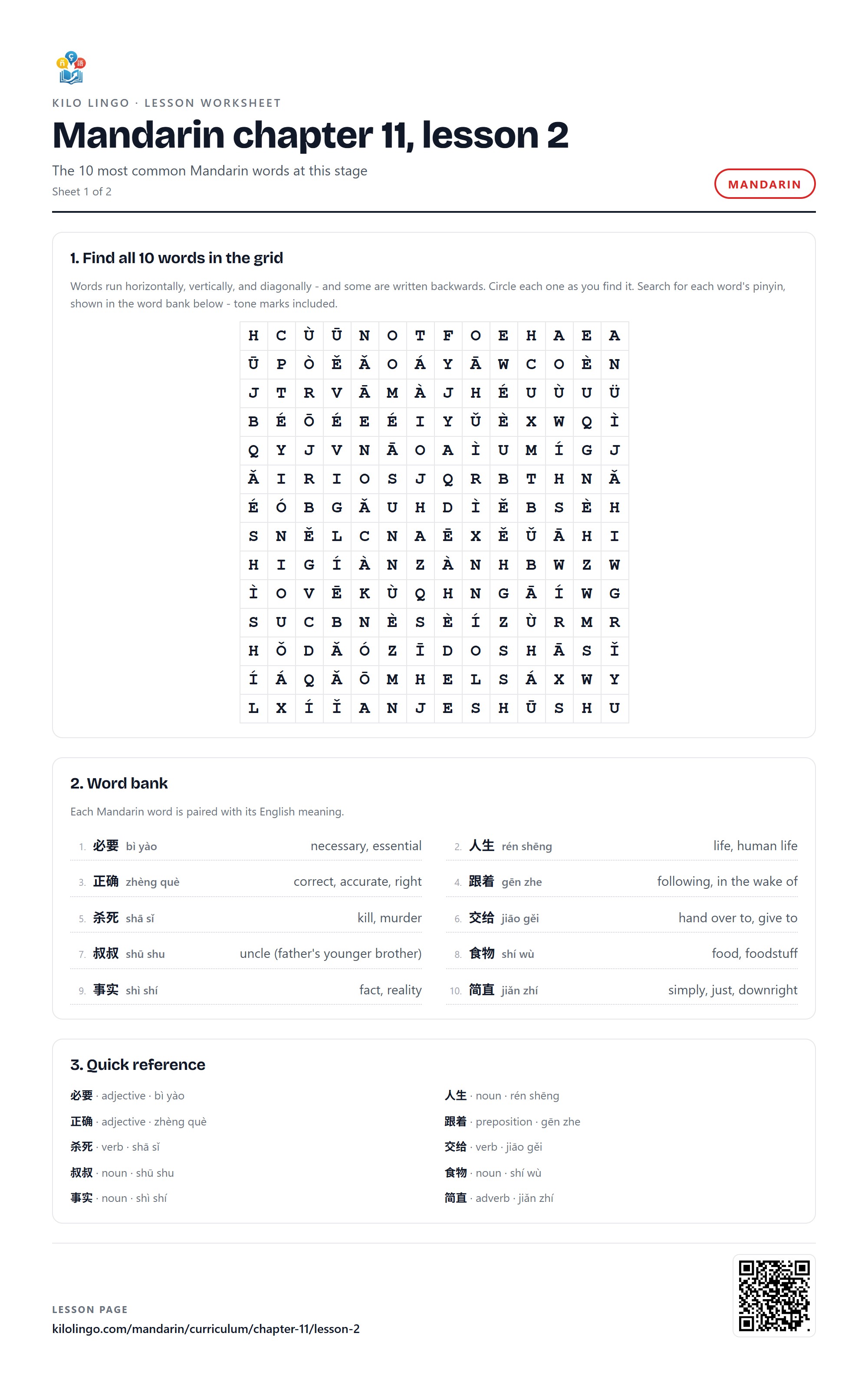
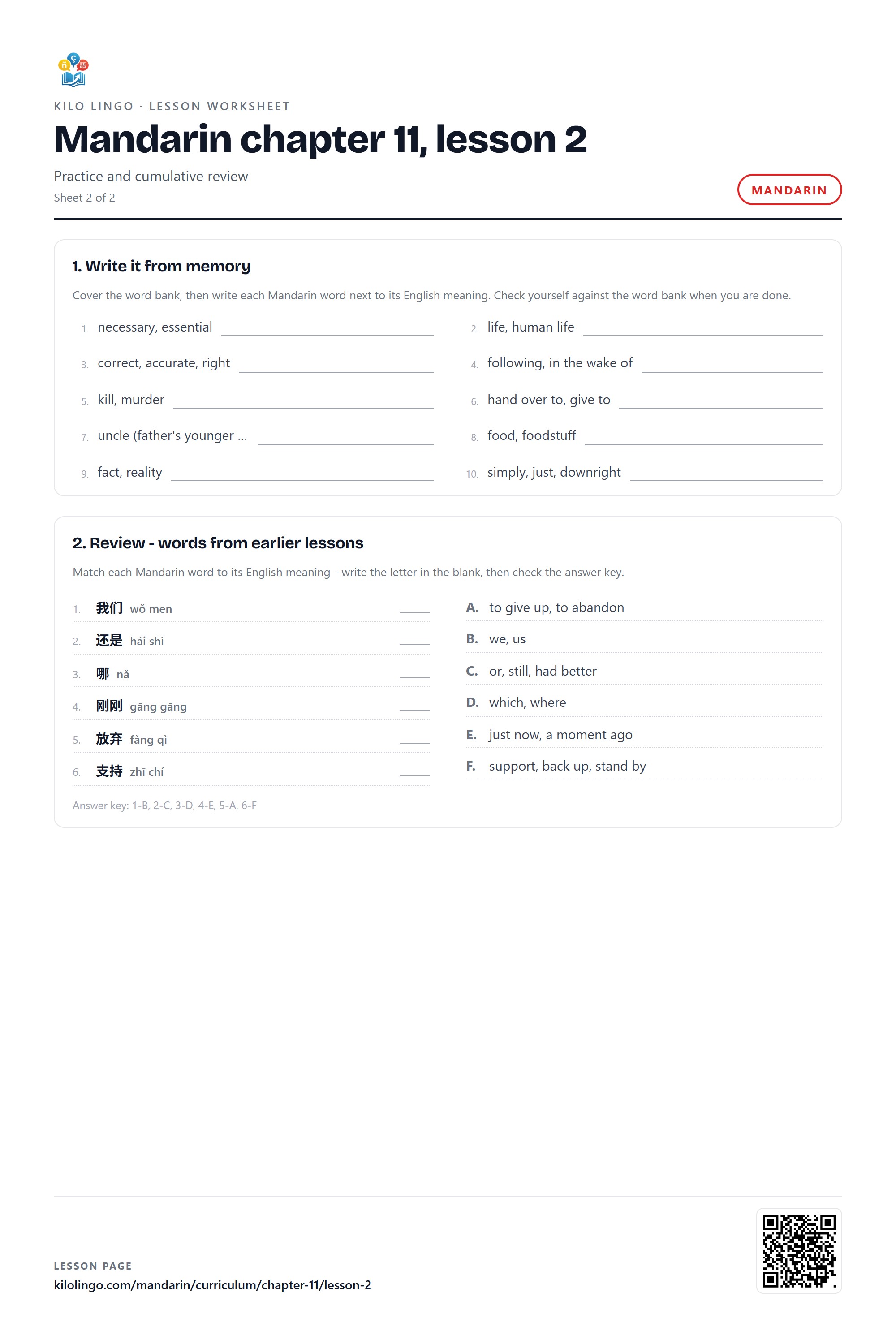
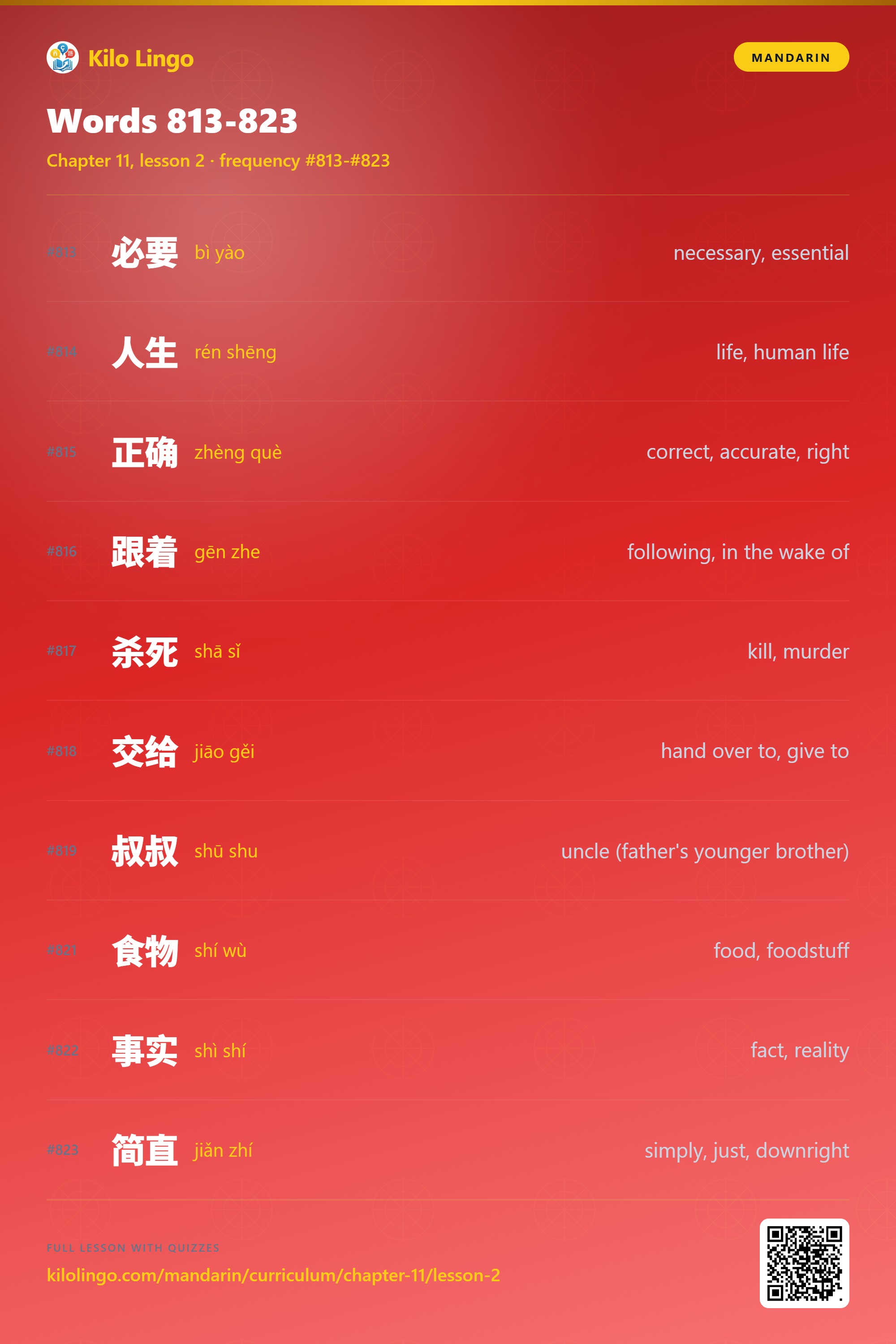
- Words 813-823Vocabulary
10 words · ranks 813-823
- Word Bubbles review sessionReview games
Pop the words you just met by matching each one to its meaning. A couple of rounds and the batch is yours.
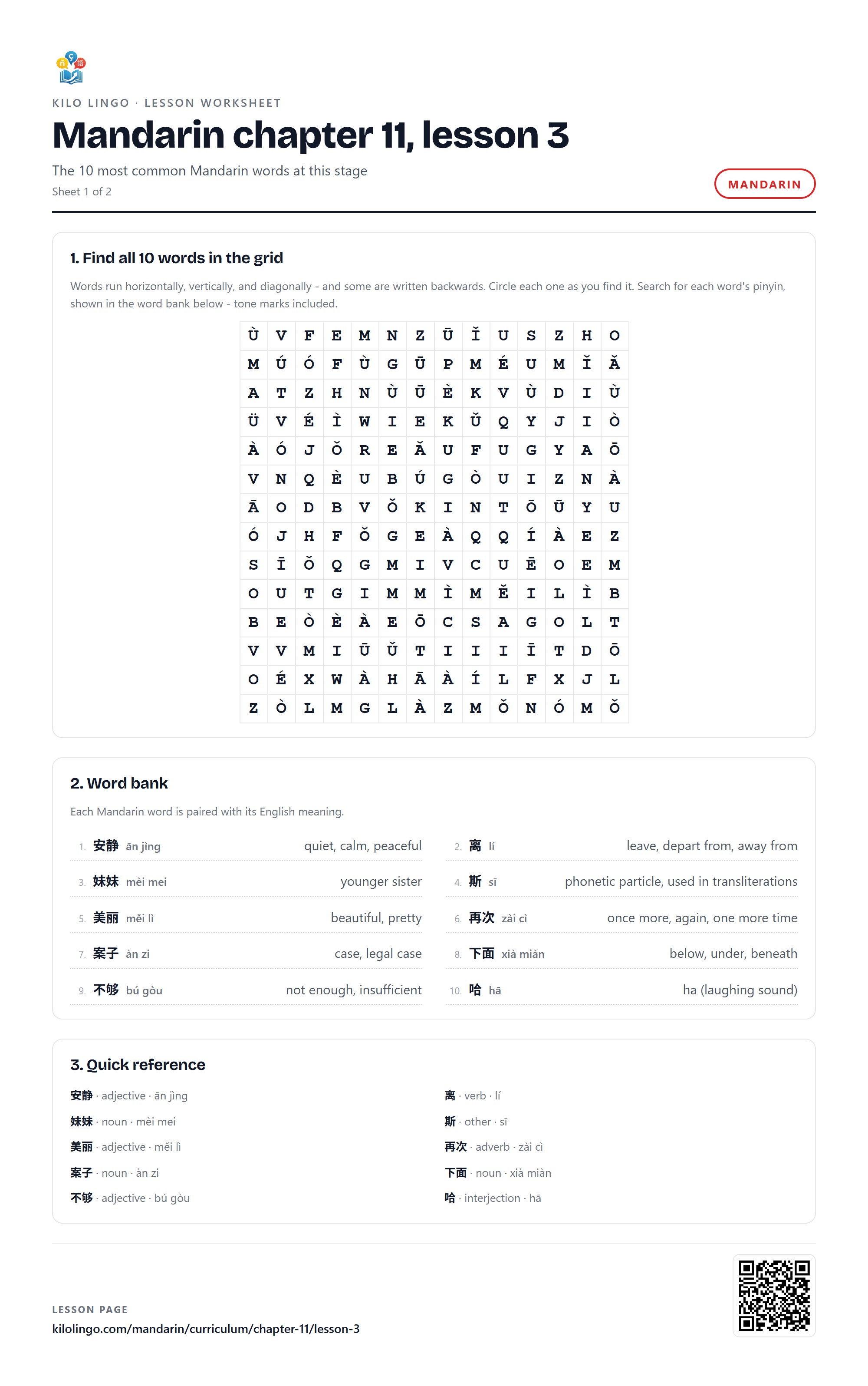
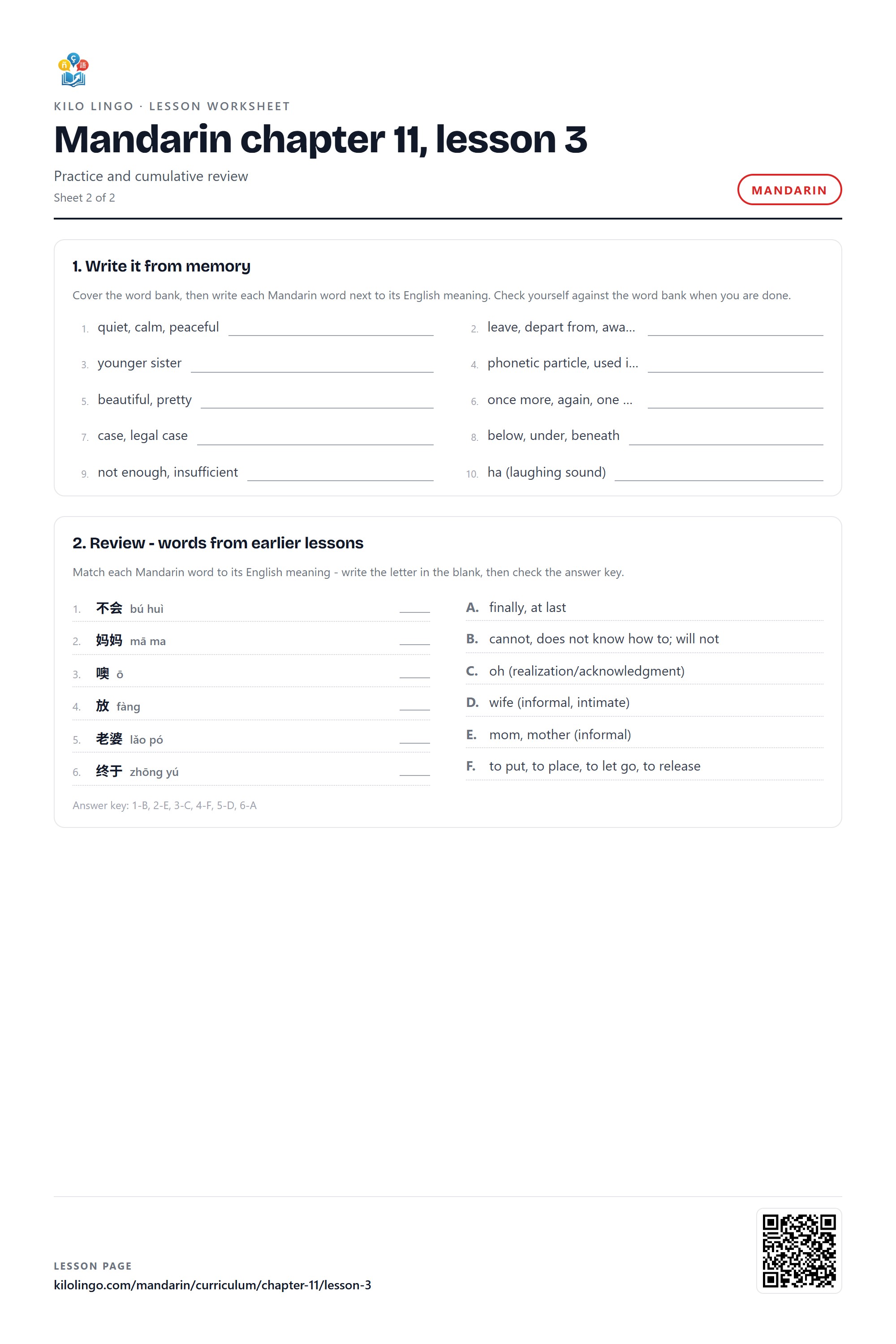
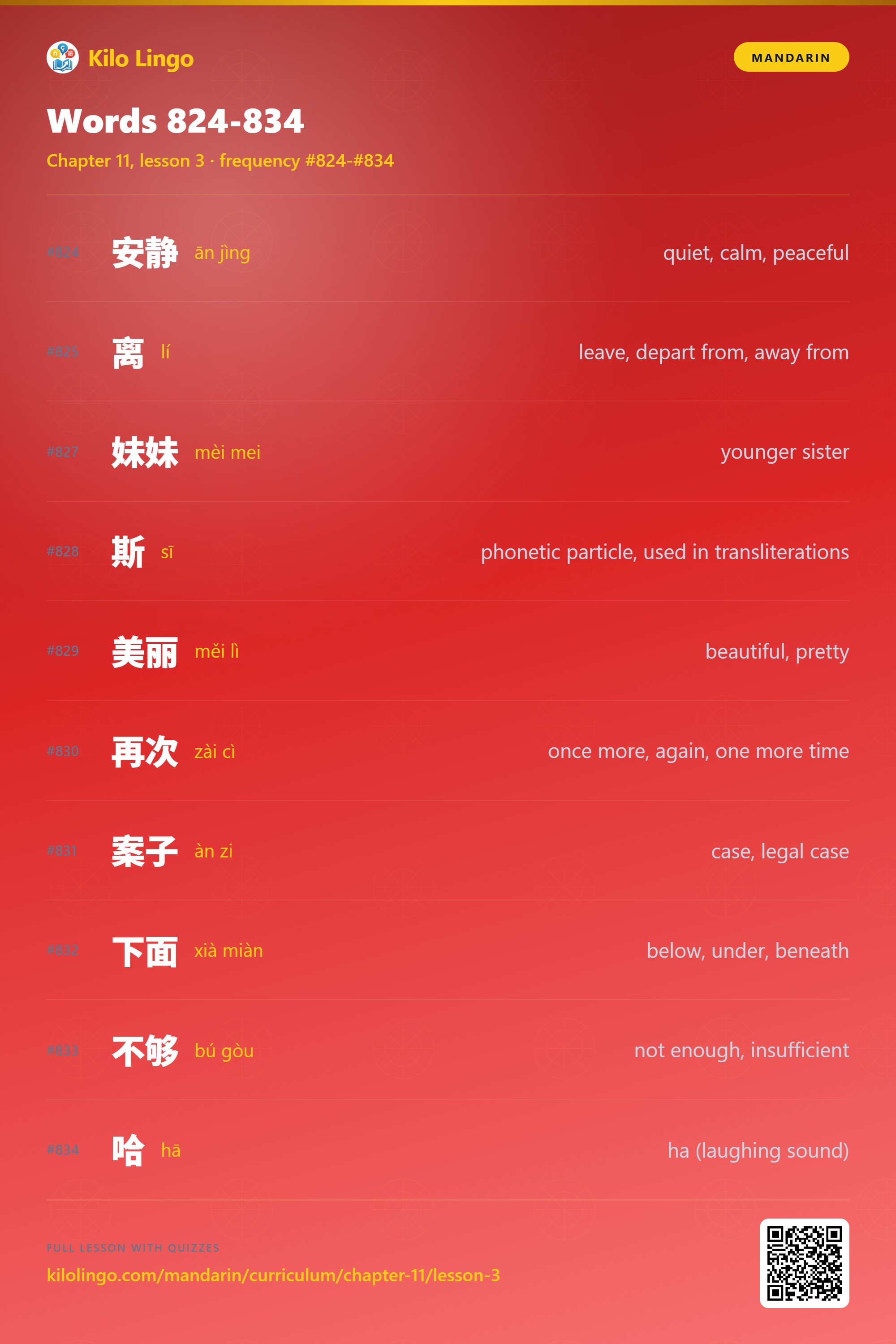
- Words 824-834Vocabulary
10 words · ranks 824-834
- Tone Shooter review sessionReview games
Shoot the words you just met into their tones by colour. The quickest way to fix a tone in place.
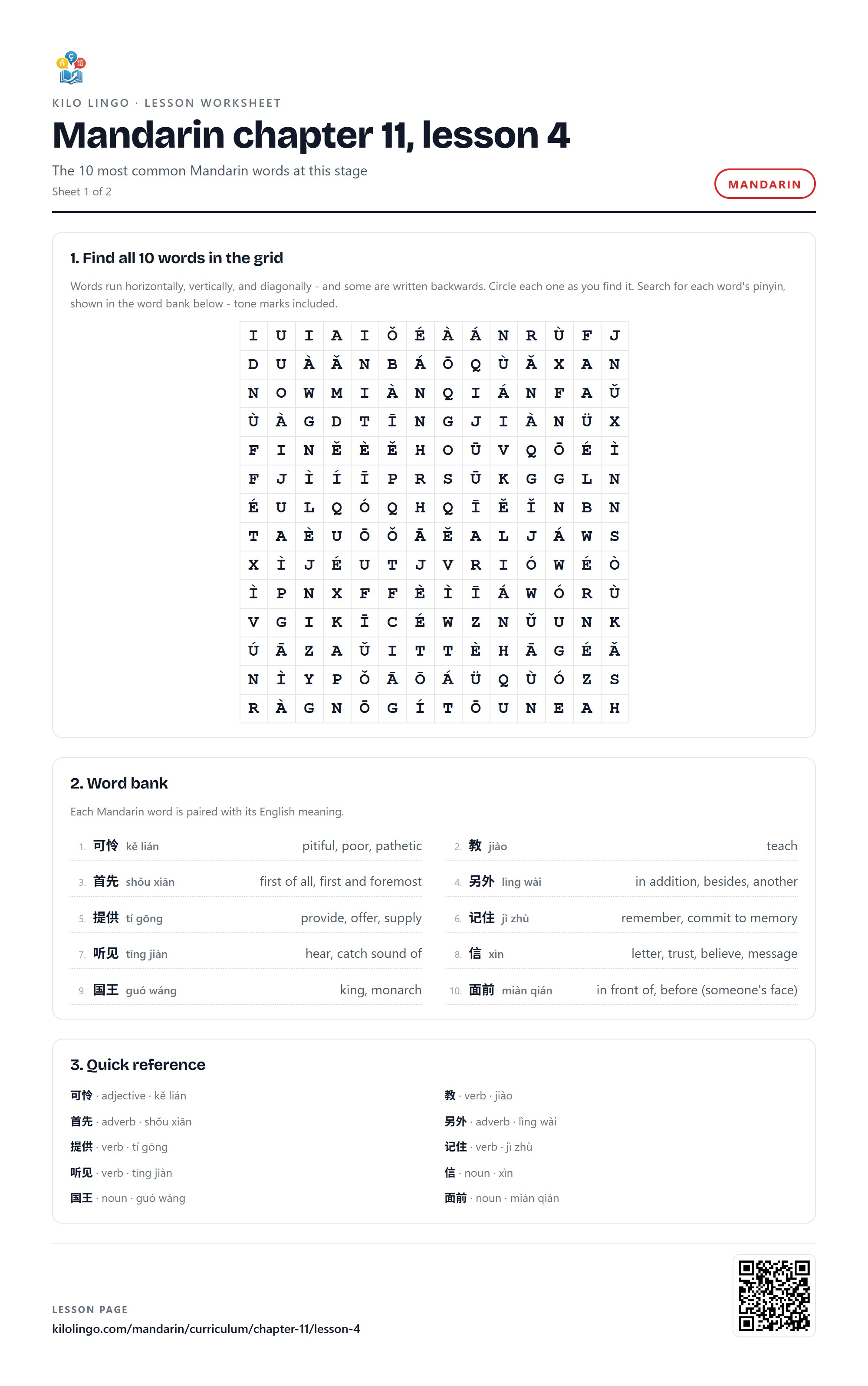
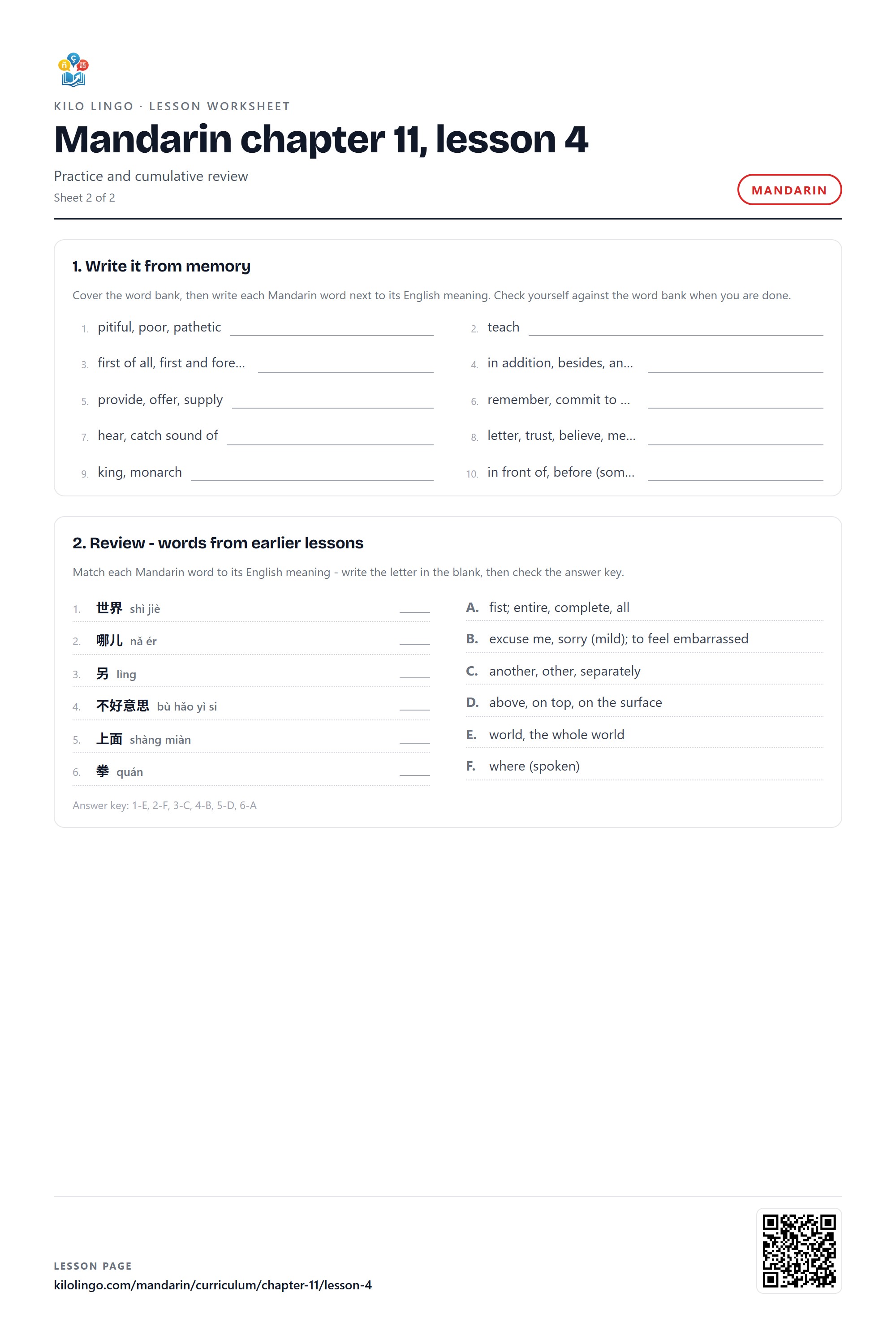
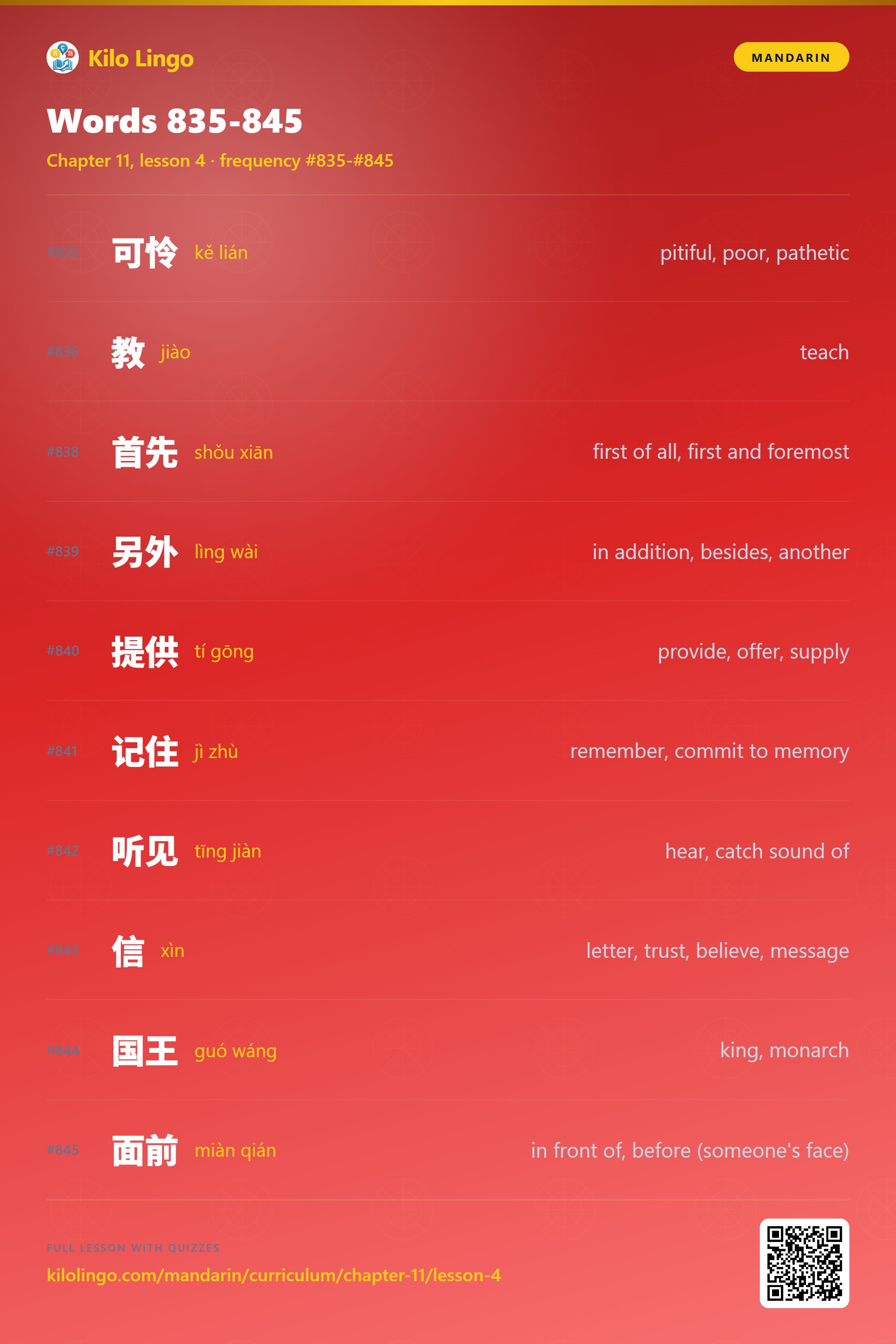
- Words 835-845Vocabulary
10 words · ranks 835-845
Subject 在 Place for stating location. Place 有 Thing for existence. Positional phrases with 的 (墙上的画). The location-words 上/下/里/外/前/后.
- 还是 or 或者?Mistake clinic
Mandarin has two words for
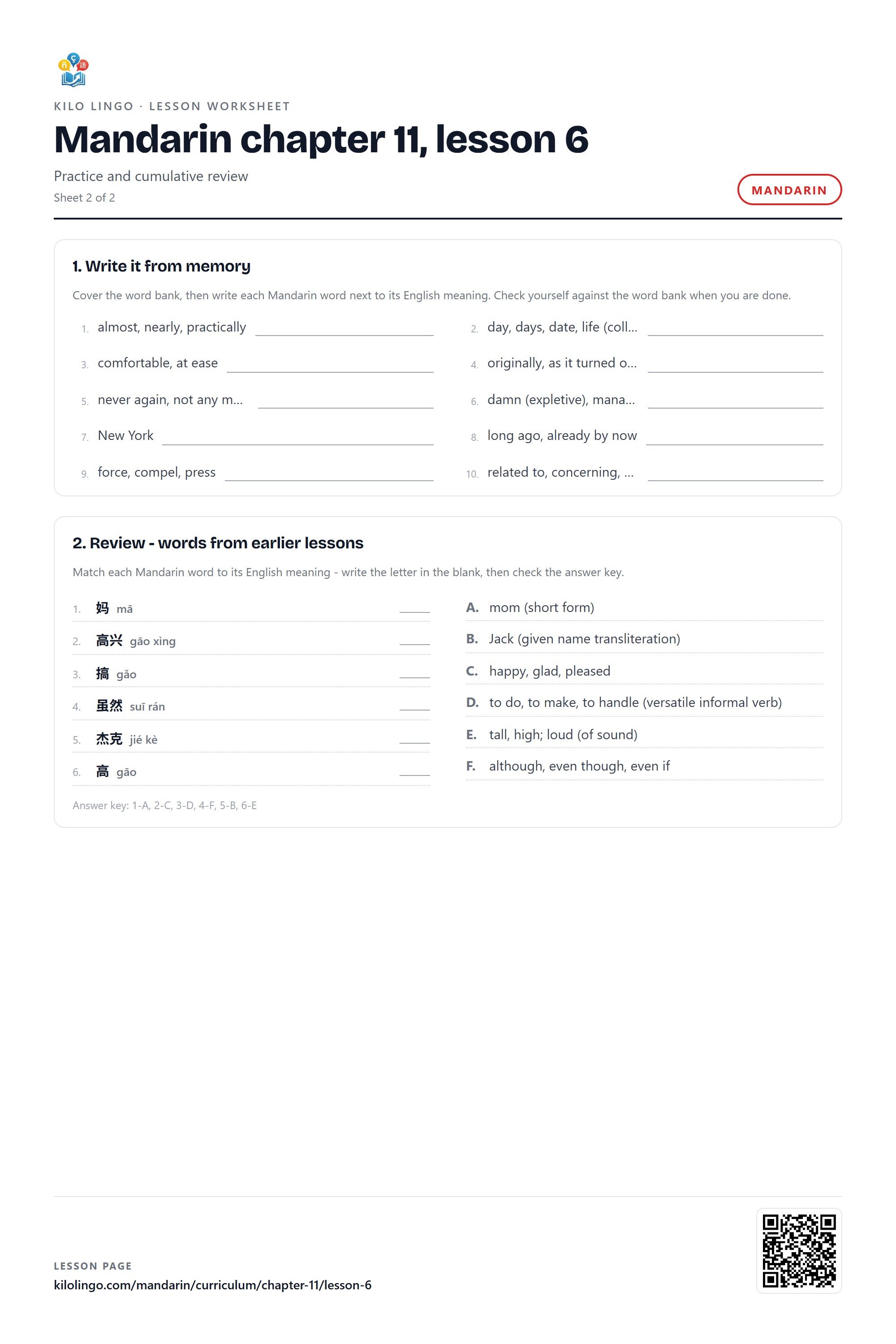
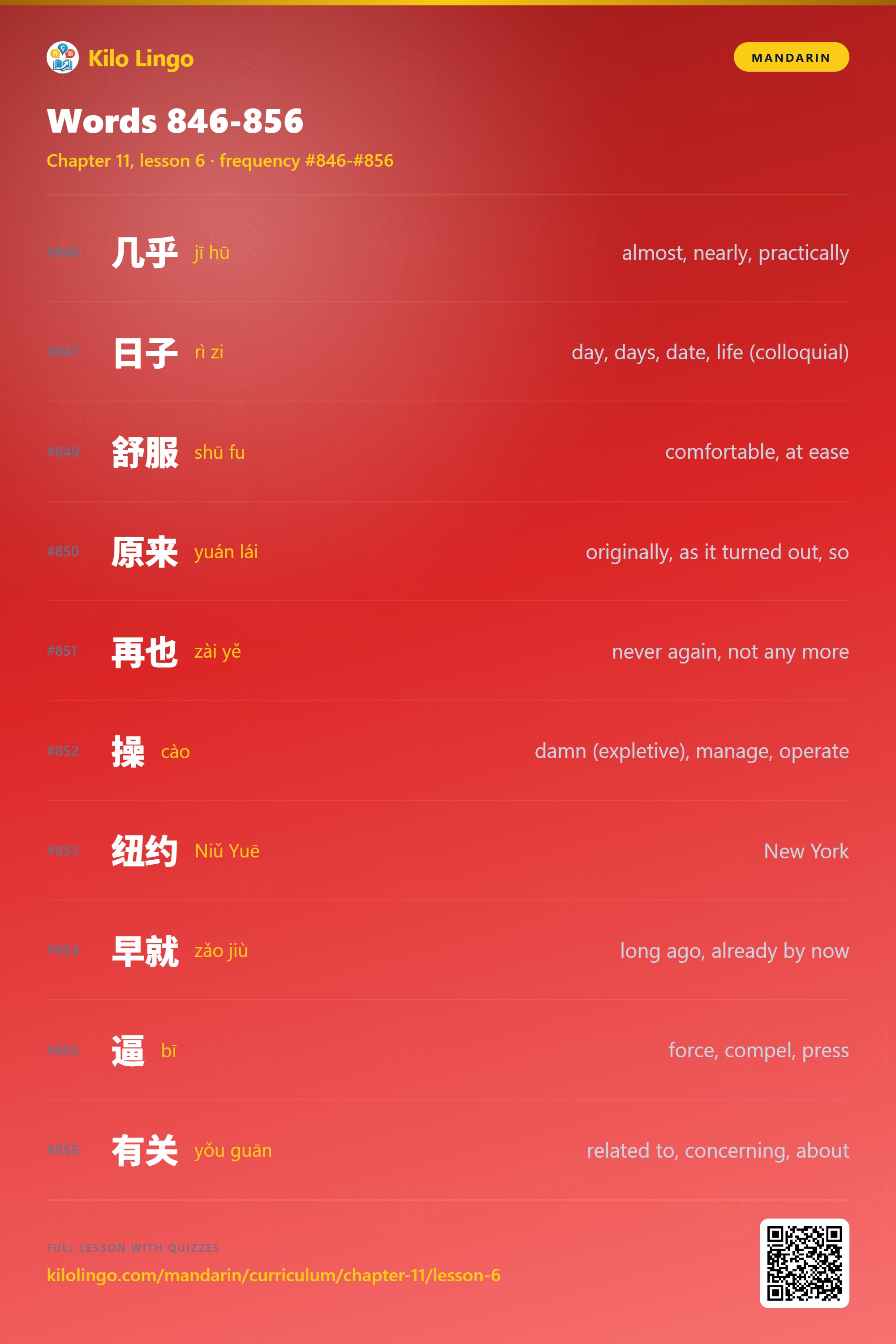
or, and the question decides which. - Words 846-857Vocabulary
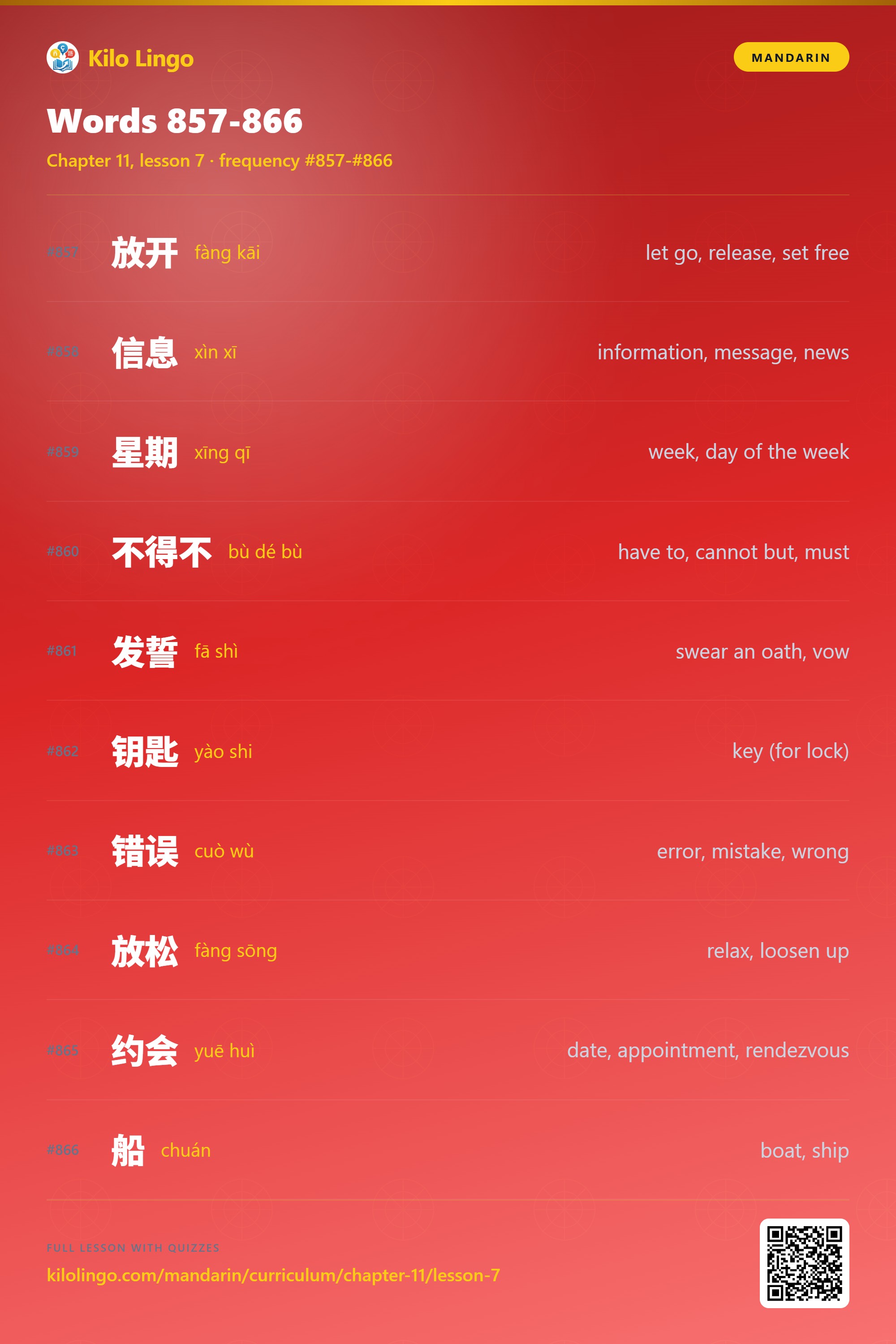
10 words · ranks 846-857
- Word Bubbles review sessionReview games
Pop the words you just met by matching each one to its meaning. A couple of rounds and the batch is yours.
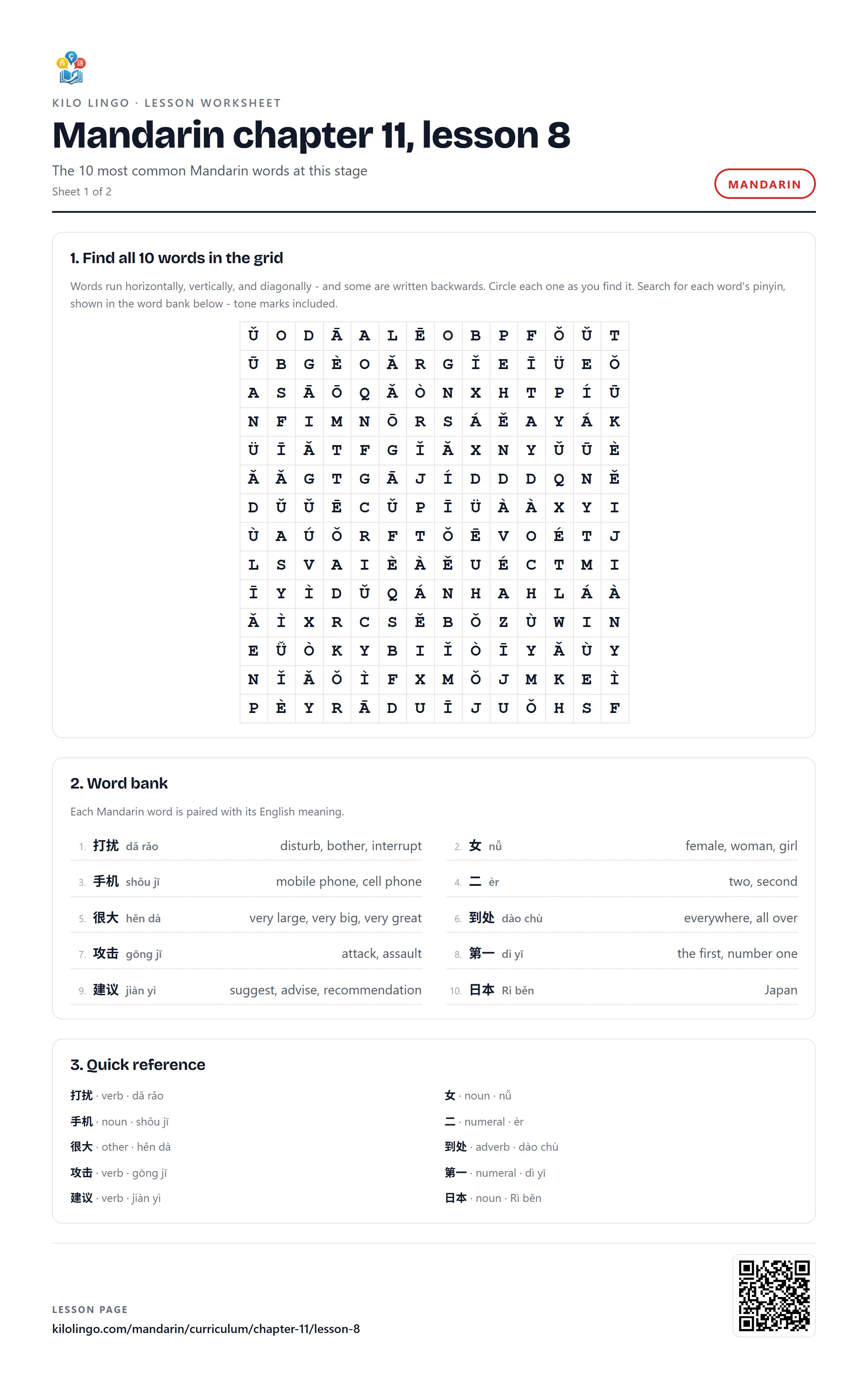
- Words 858-867Vocabulary
10 words · ranks 858-867
- Tone Shooter review sessionReview games
Shoot the words you just met into their tones by colour. The quickest way to fix a tone in place.
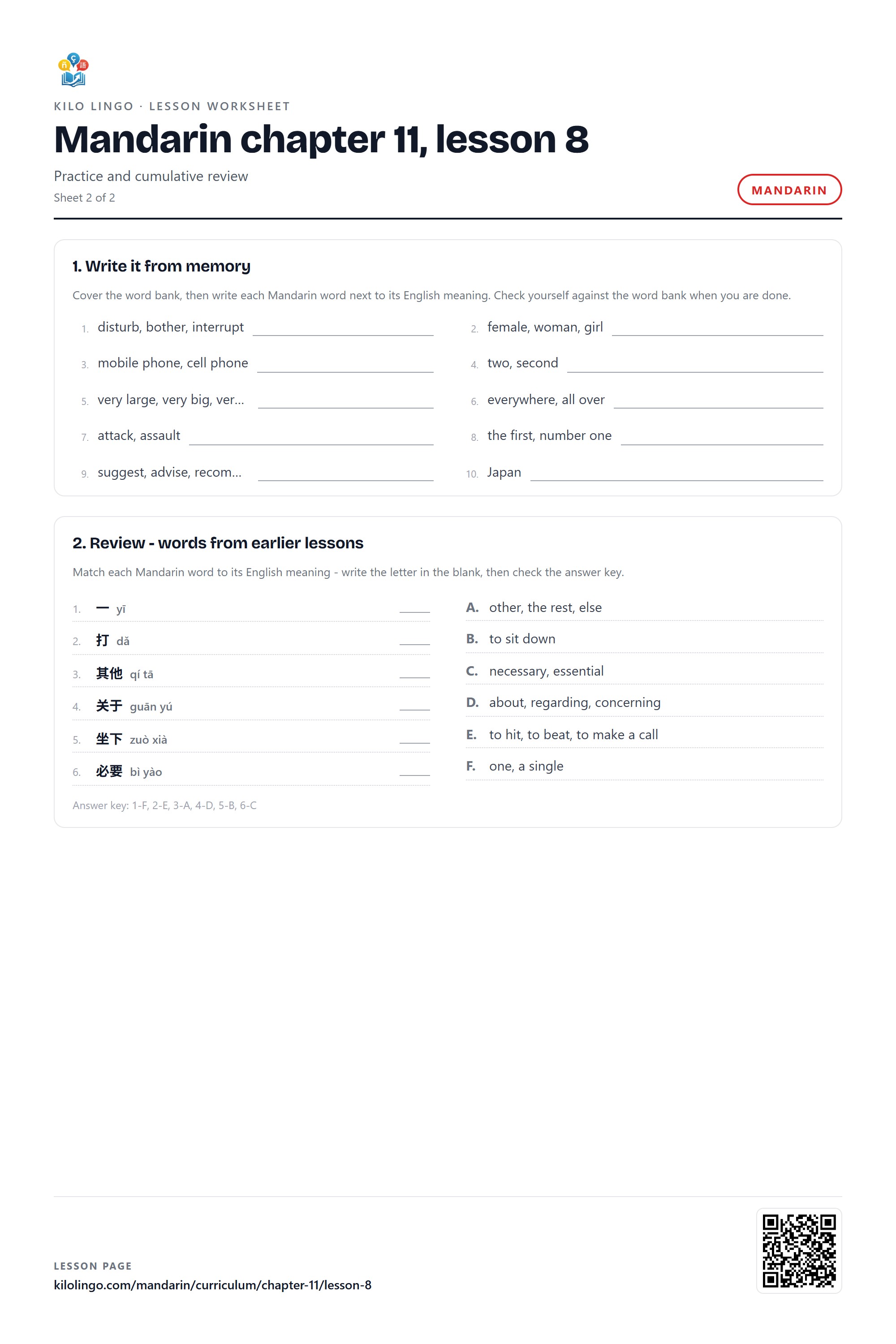
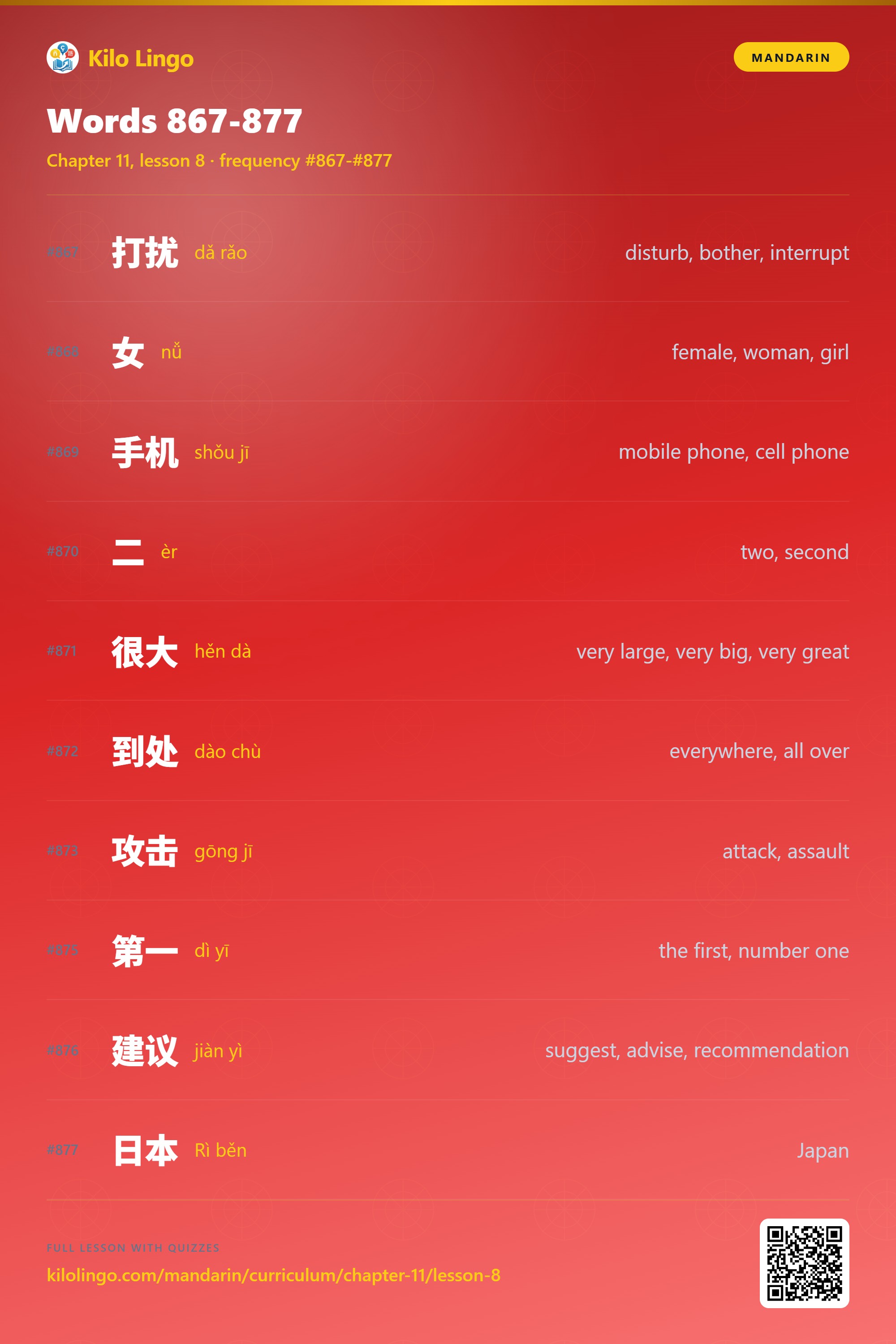
- Words 868-878Vocabulary
10 words · ranks 868-878
- Modals and future intentGrammar
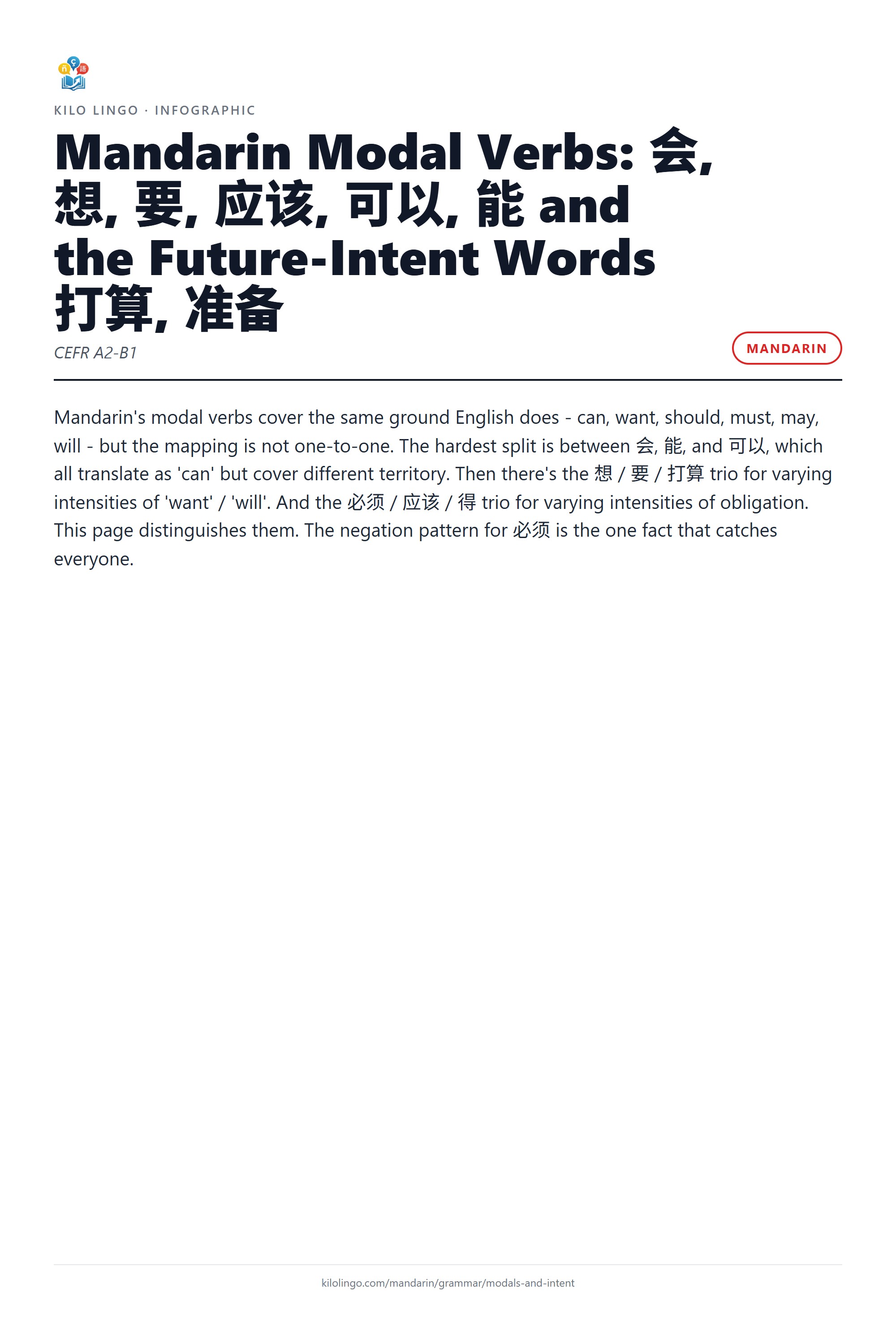
会 vs 能 vs 可以 distinguished properly. Future intent with 想, 要, 打算, 准备. Negating 必须 with 不用/不必, never 不必须.
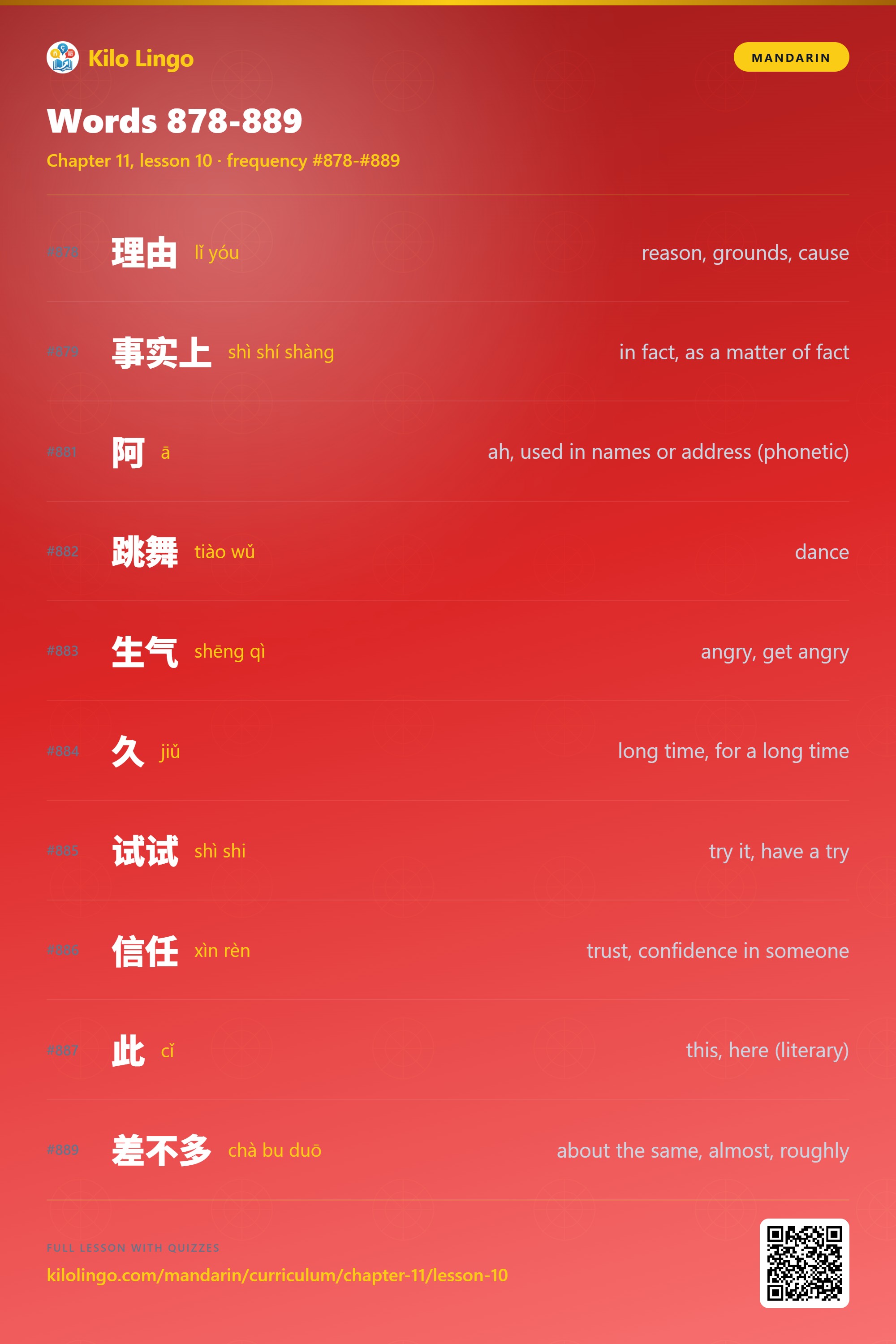
- Words 879-890Vocabulary
10 words · ranks 879-890
- Word Bubbles review sessionReview games
Pop the words you just met by matching each one to its meaning. A couple of rounds and the batch is yours.
- Words 891-900Vocabulary
10 words · ranks 891-900
- Story milestone: top 900 wordsGraded-reader story
You can read this story using only the words you've learned so far. Every content word sits at or above the rank-900 ceiling.
- Arcade reviewReview games
Replay this chapter's words as games - a different kind of repetition, and it counts.
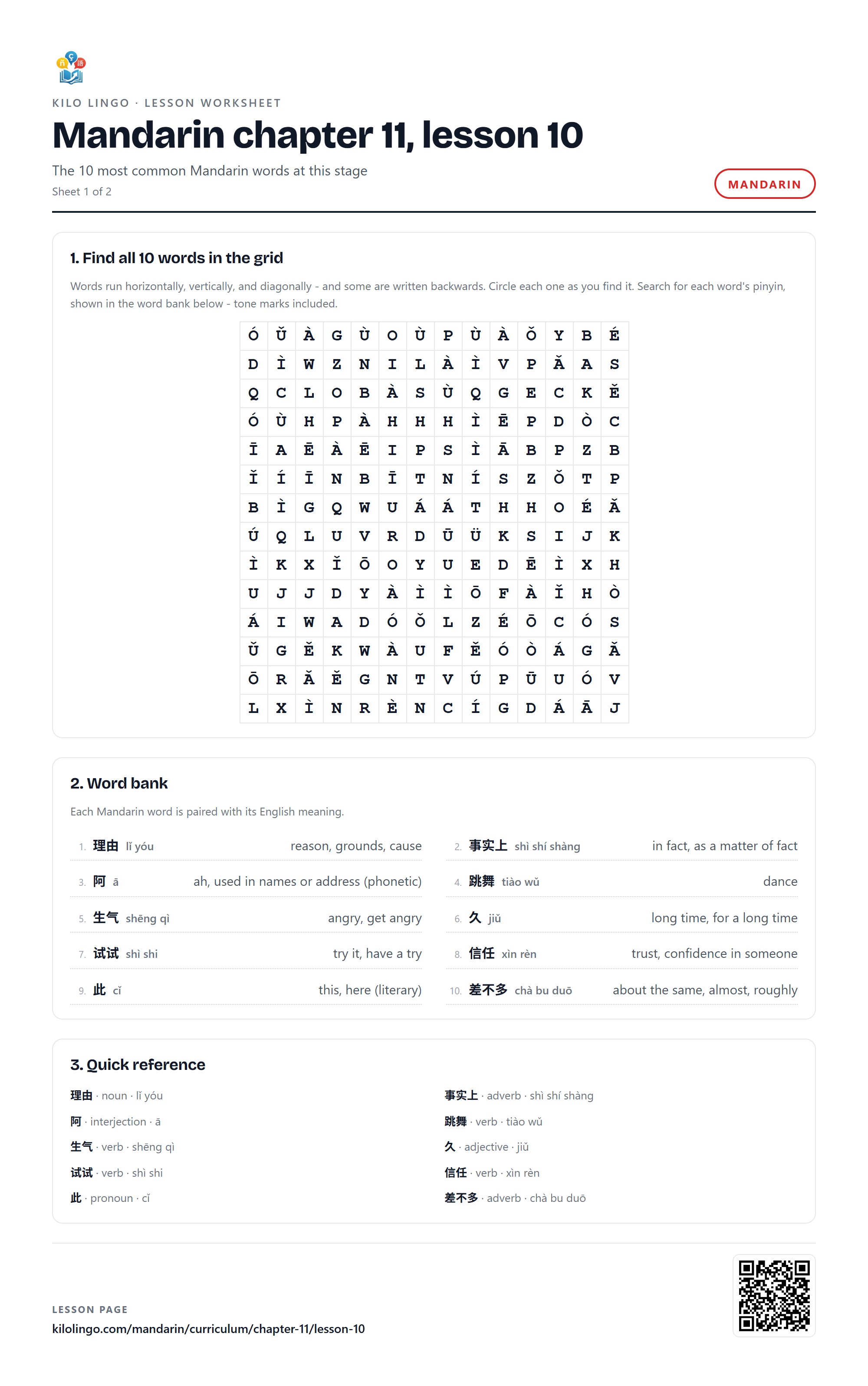
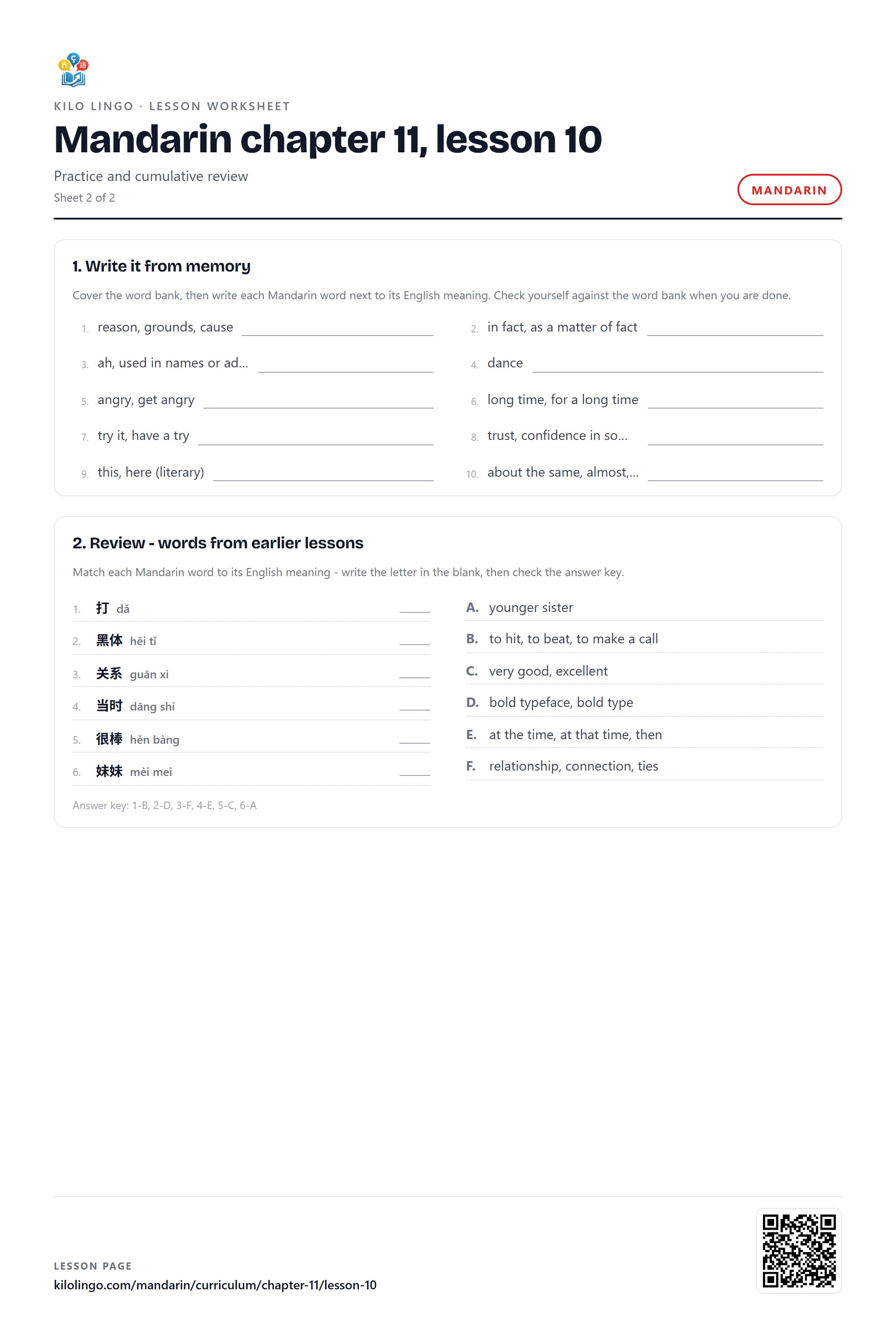
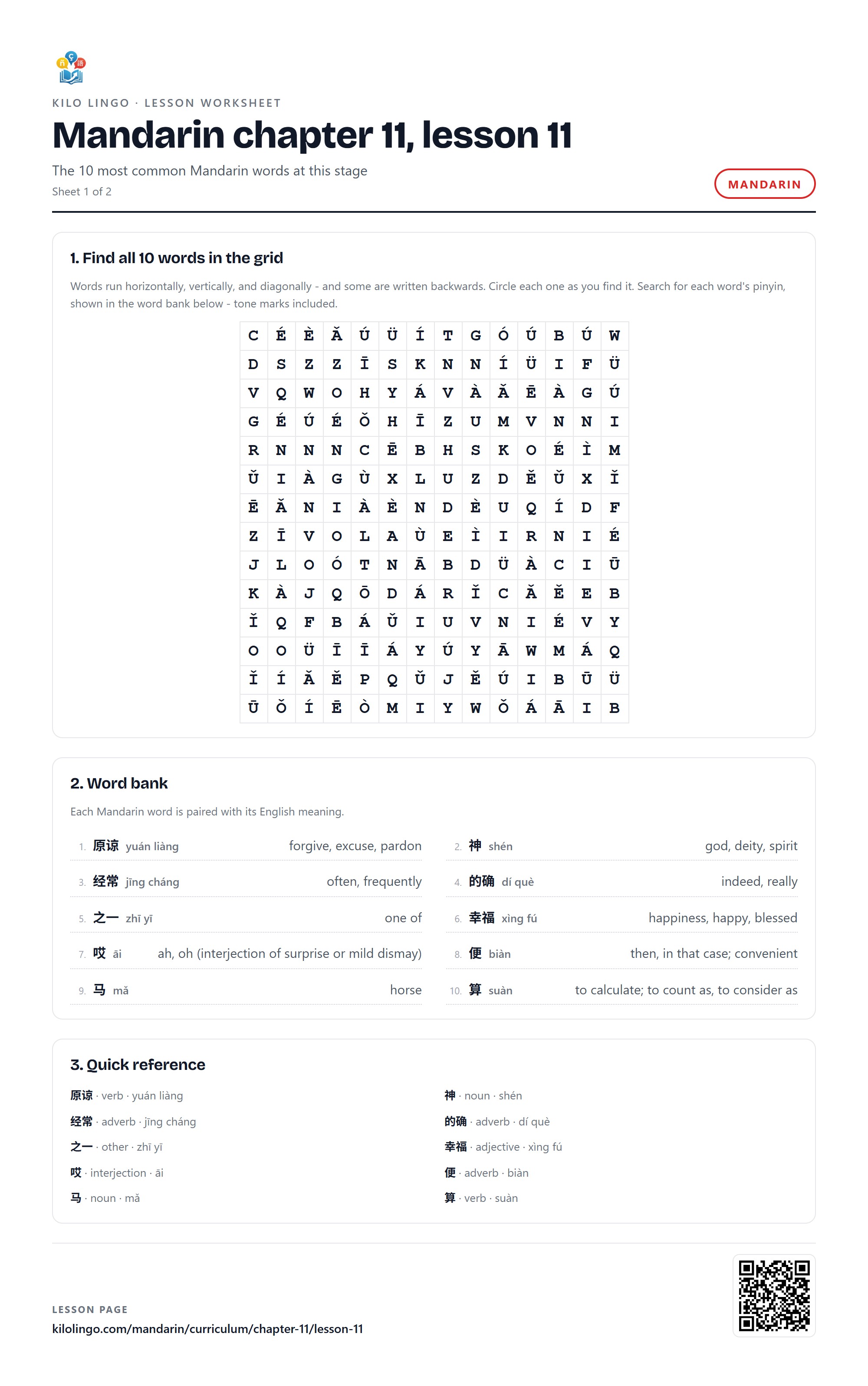
Word printables
Per-word sheets90 words · a worksheet, infographic and listicle each








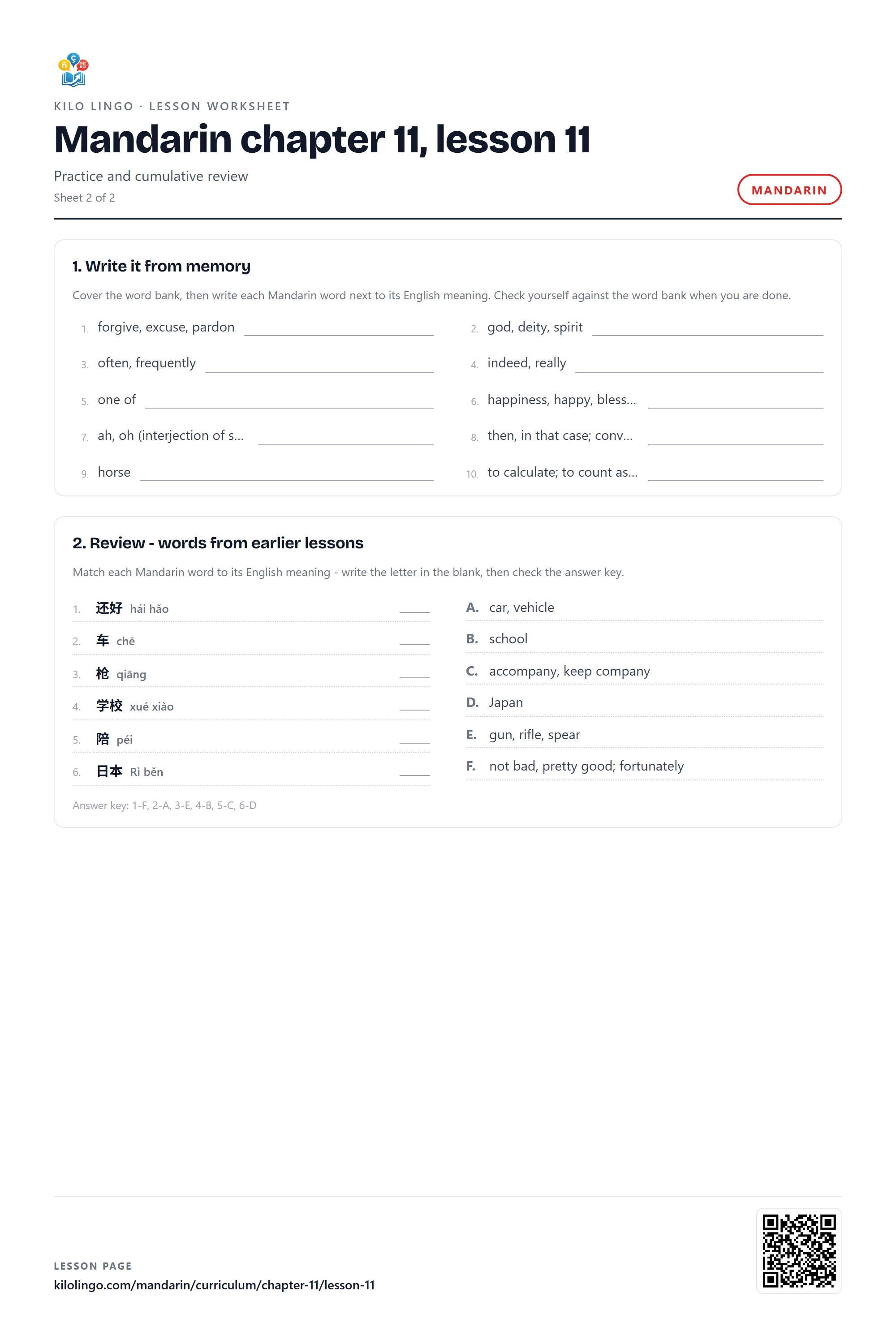

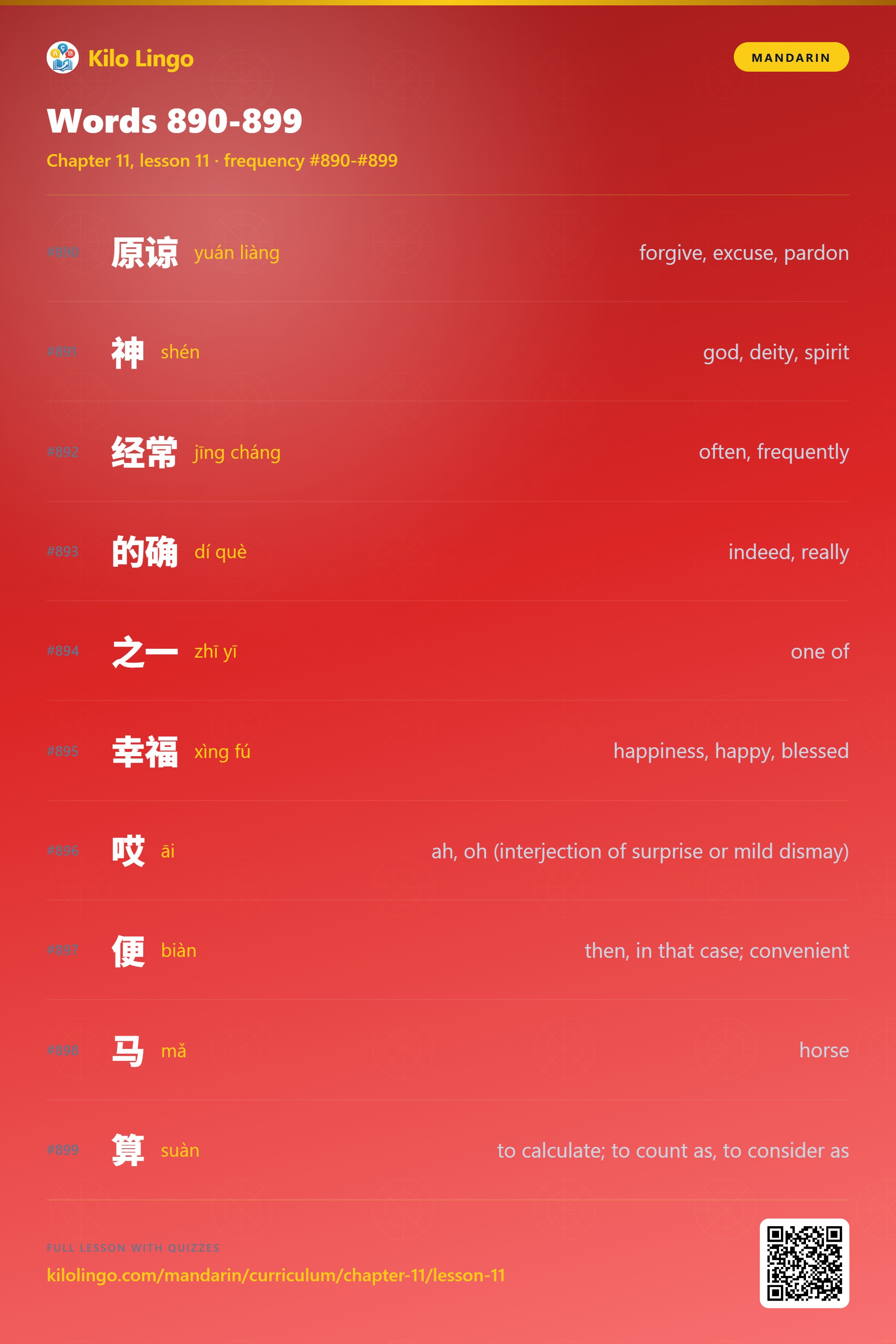
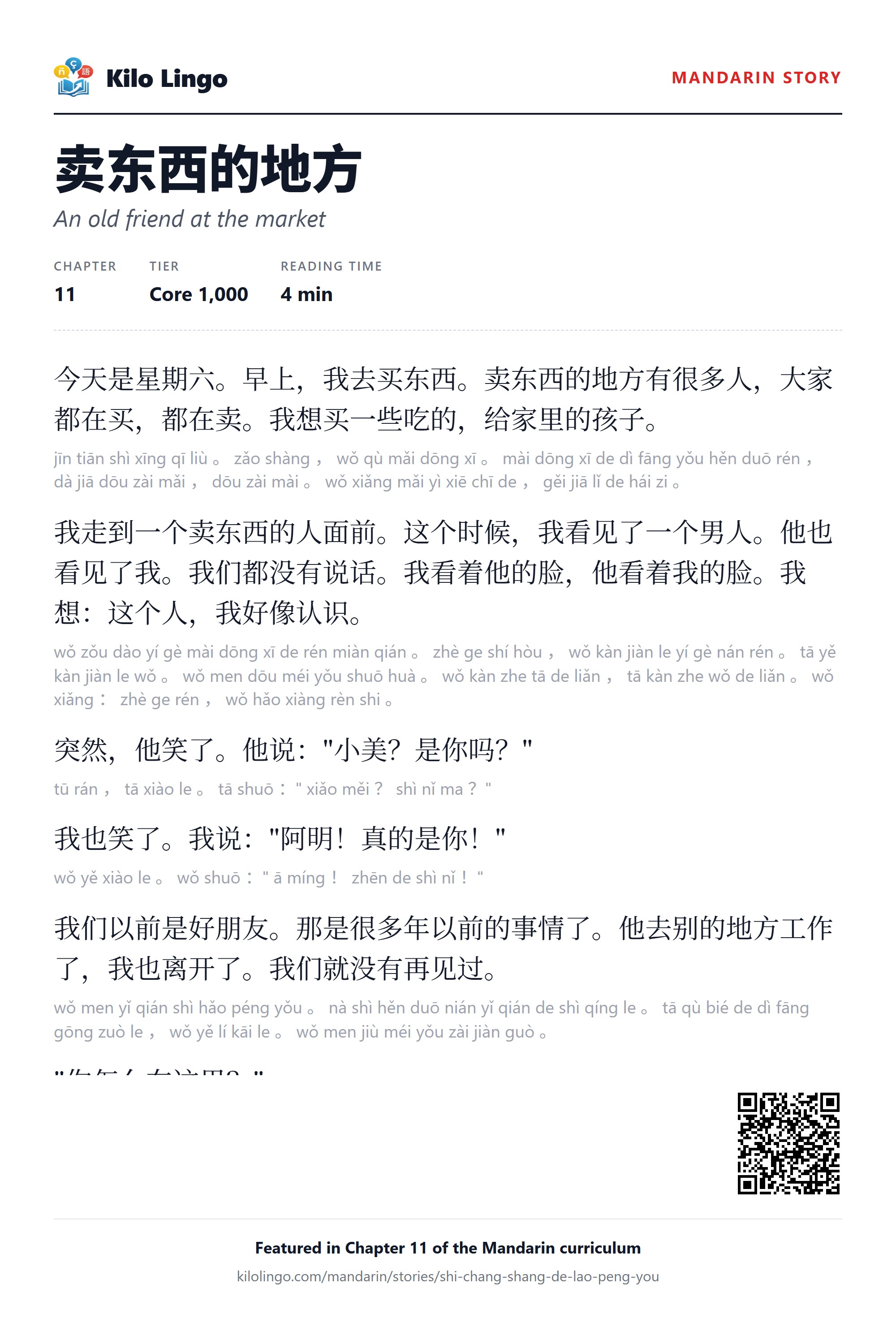
Chapter 12 · Numbers, time, dates, currency
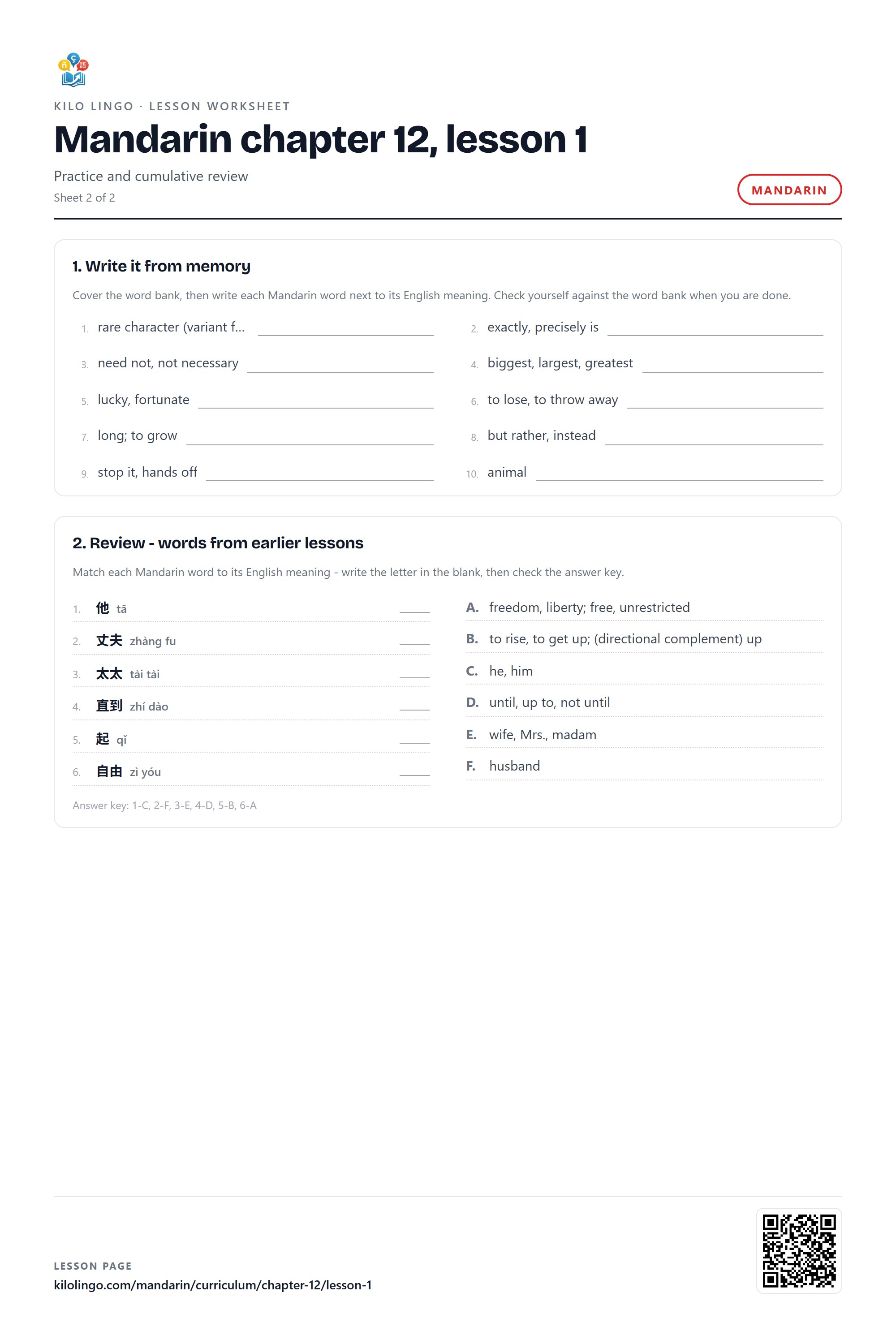
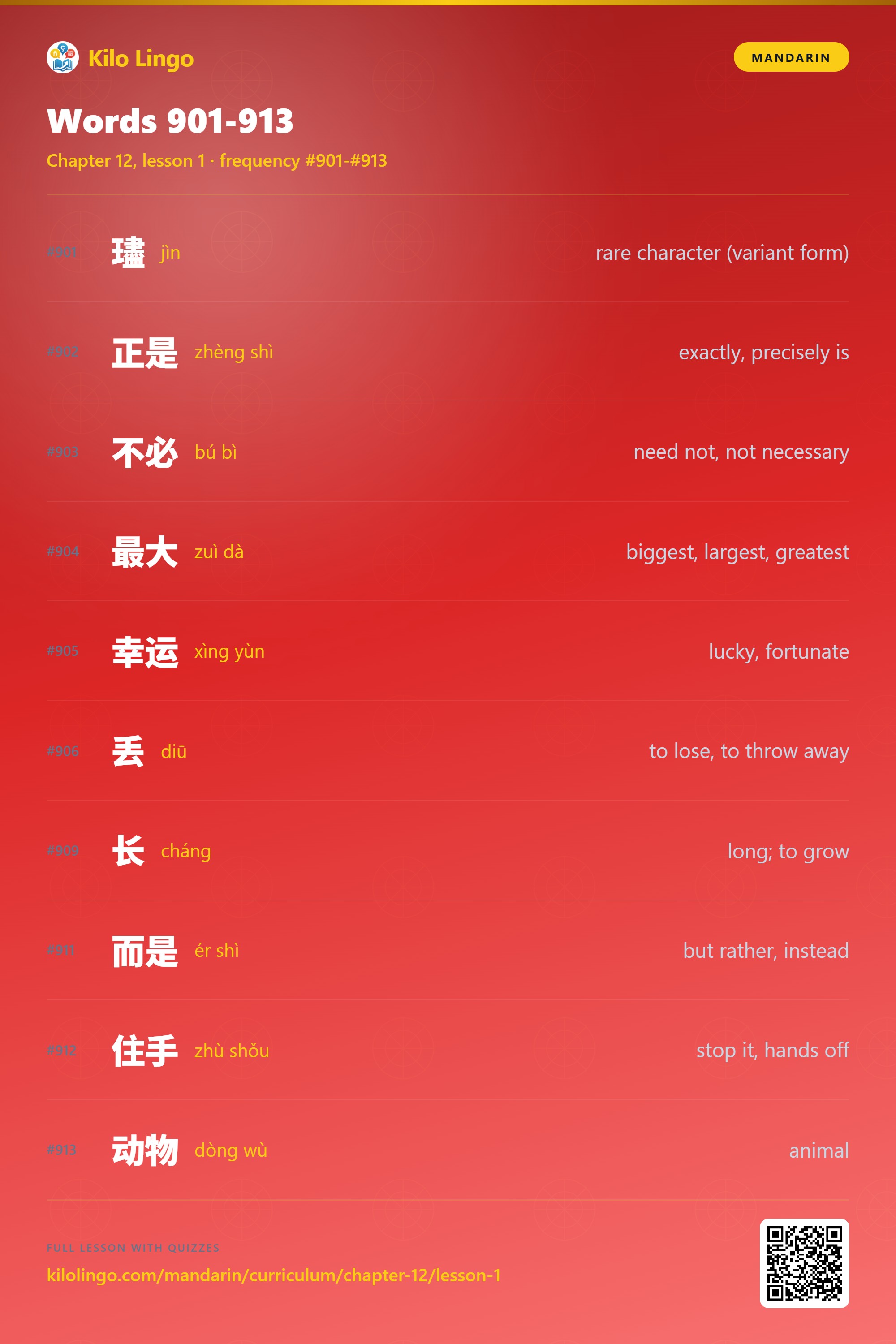
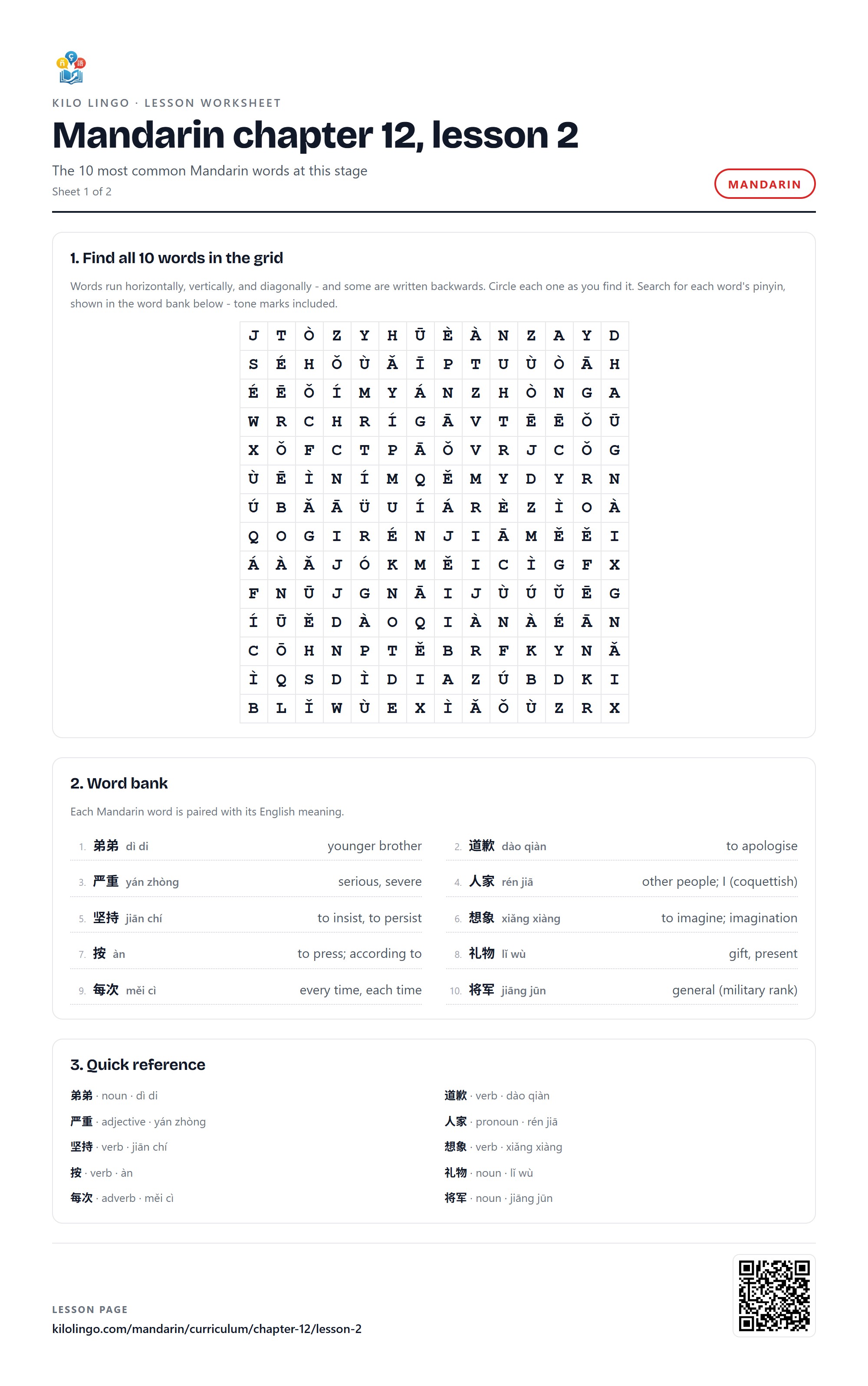
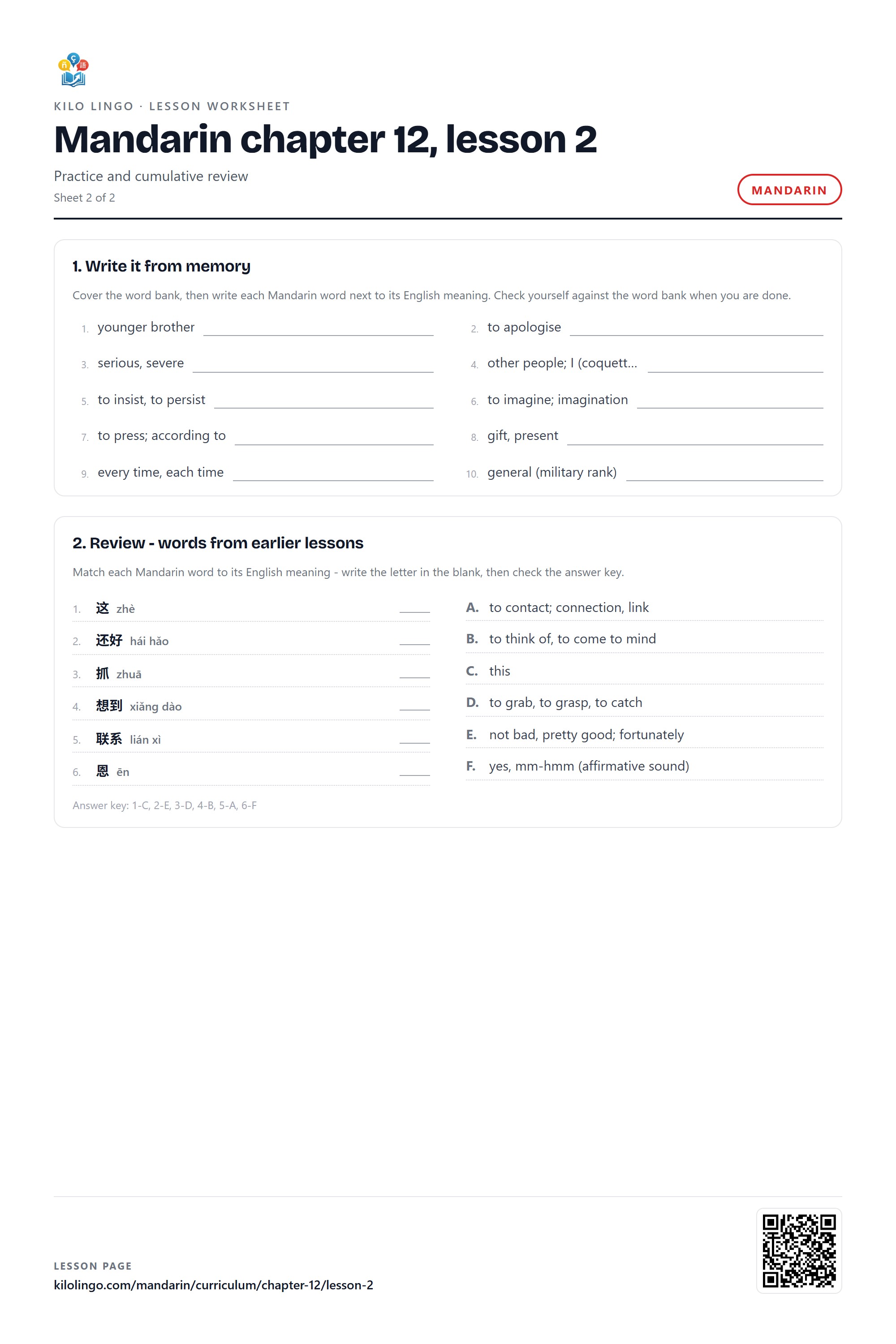
Chapter page →- Words 902-914Vocabulary
10 words · ranks 902-914
- Word Bubbles review sessionReview games
Pop the words you just met by matching each one to its meaning. A couple of rounds and the batch is yours.
- Words 915-924Vocabulary
10 words · ranks 915-924
- Tone Shooter review sessionReview games
Shoot the words you just met into their tones by colour. The quickest way to fix a tone in place.
- Words 925-937Vocabulary
10 words · ranks 925-937
- Word Bubbles review sessionReview games
Pop the words you just met by matching each one to its meaning. A couple of rounds and the batch is yours.
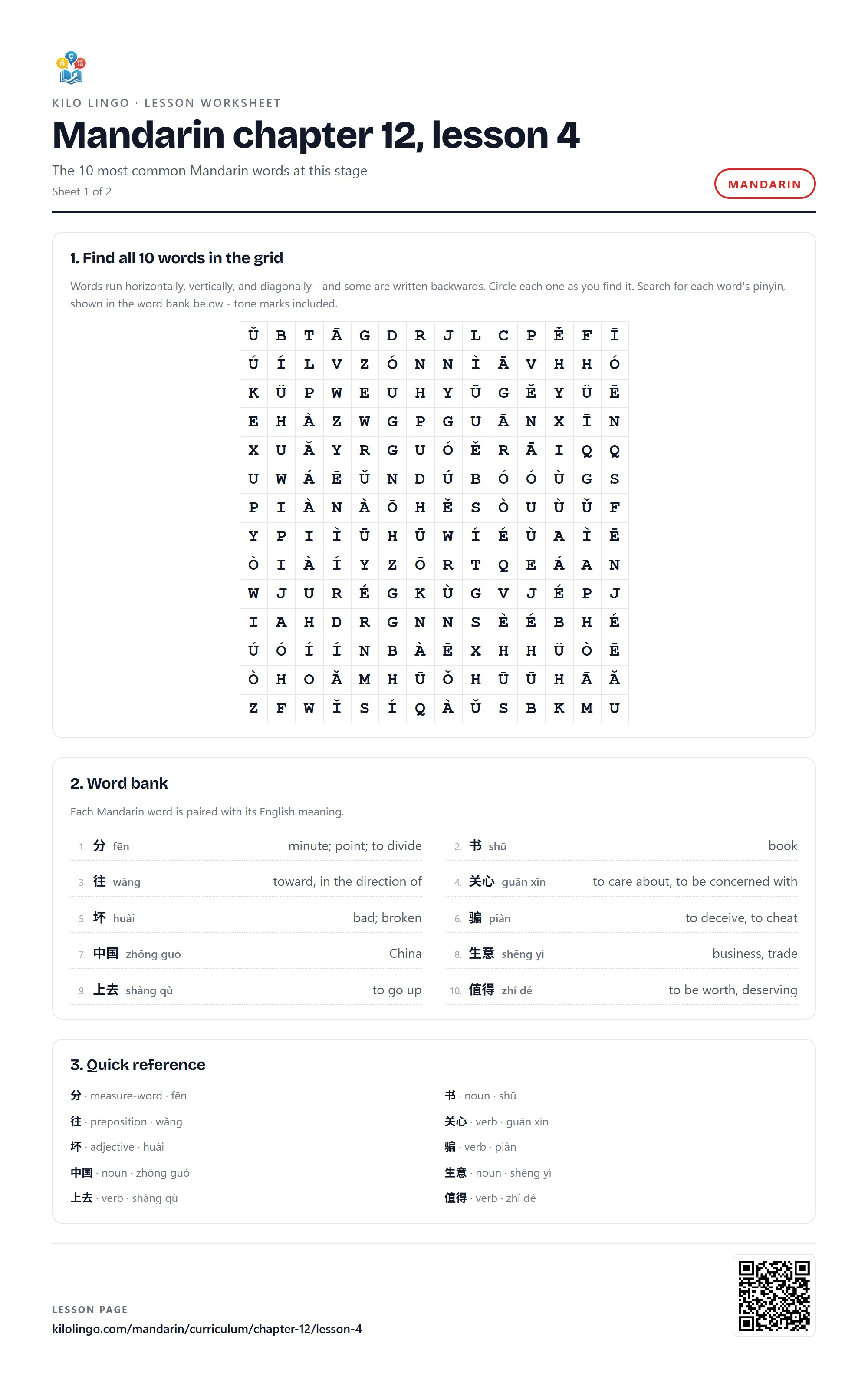
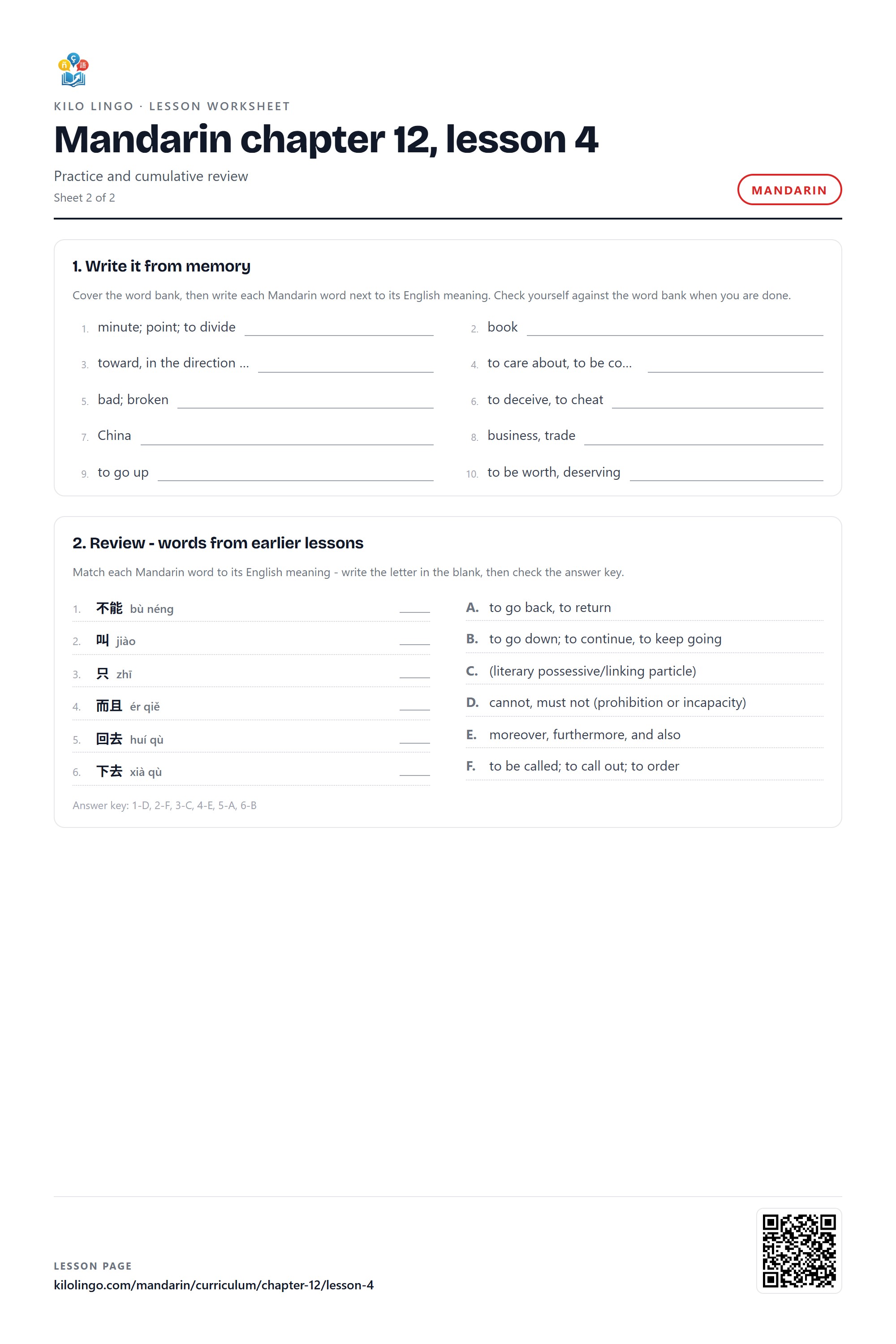
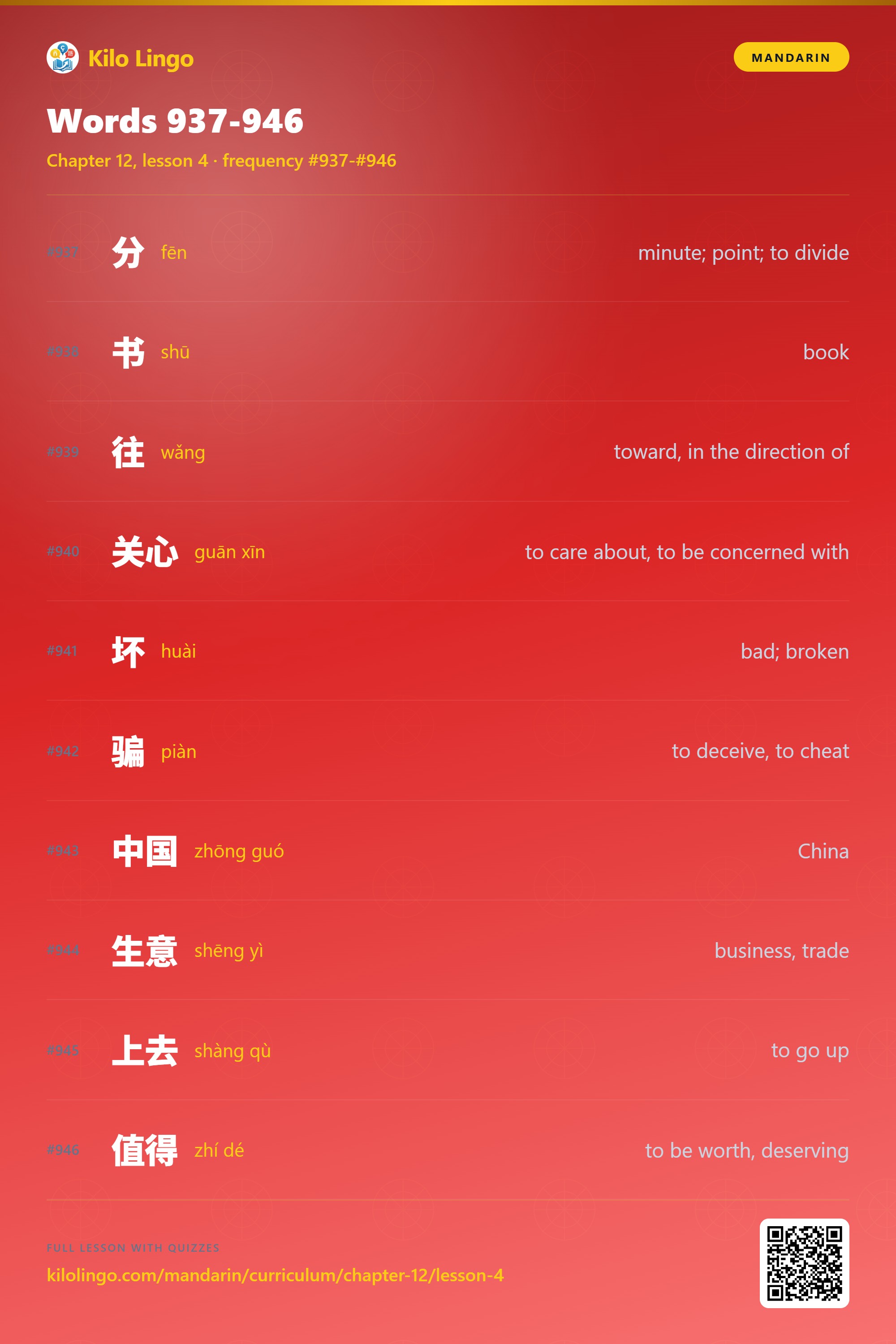
- Words 938-947Vocabulary
10 words · ranks 938-947
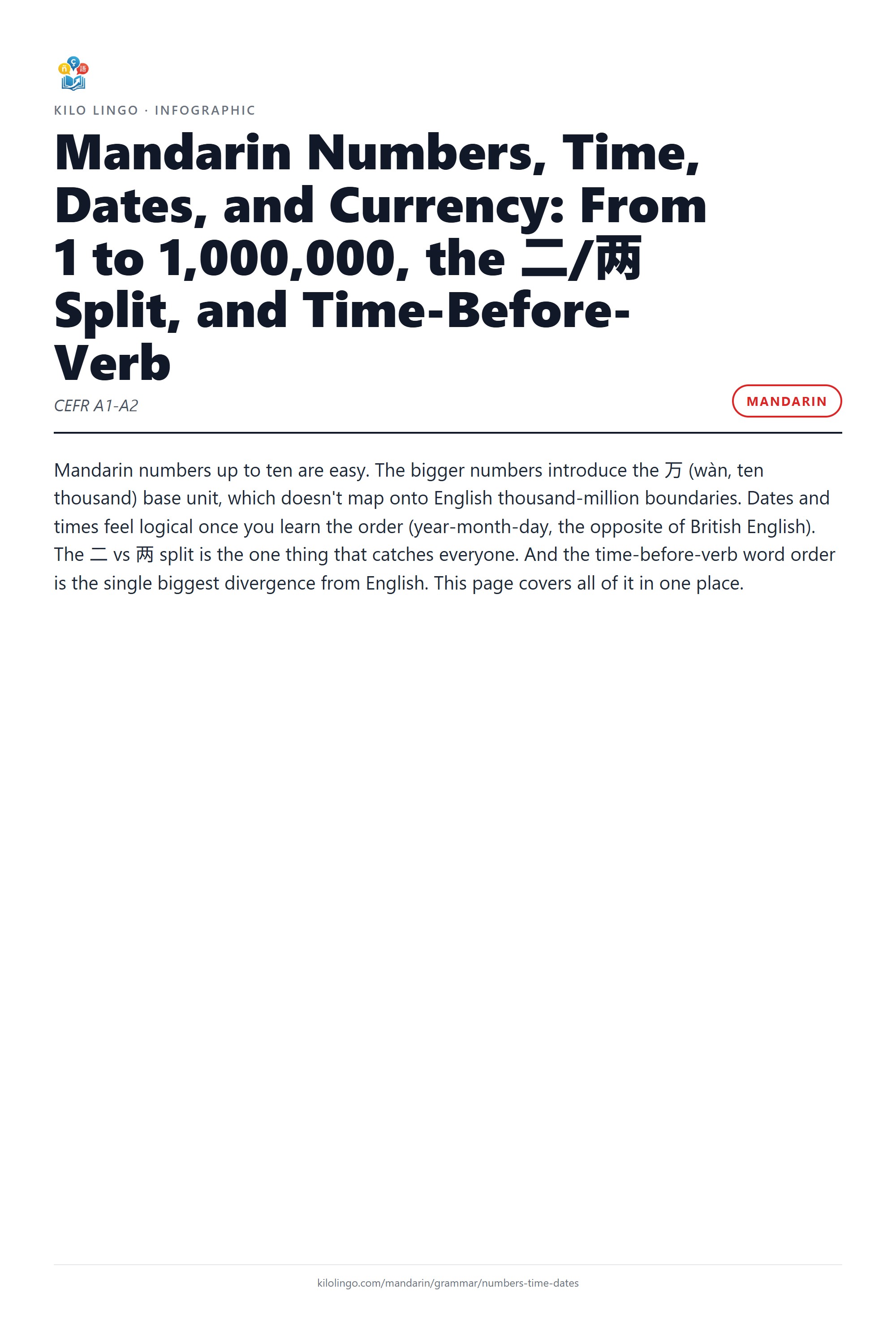
Numbers to a million. The 二/两 split. Ordinals with 第. Dates (年/月/日/号), times (X点 X分), durations, currency (元/块/毛). The time-before-verb word-order rule.
- 不 or 没, againMistake clinic
You met this in chapter 2. It is worth proving you still have it.
- Words 948-957Vocabulary
10 words · ranks 948-957
- Tone Shooter review sessionReview games
Shoot the words you just met into their tones by colour. The quickest way to fix a tone in place.
- Words 958-968Vocabulary
10 words · ranks 958-968
- Word Bubbles review sessionReview games
Pop the words you just met by matching each one to its meaning. A couple of rounds and the batch is yours.
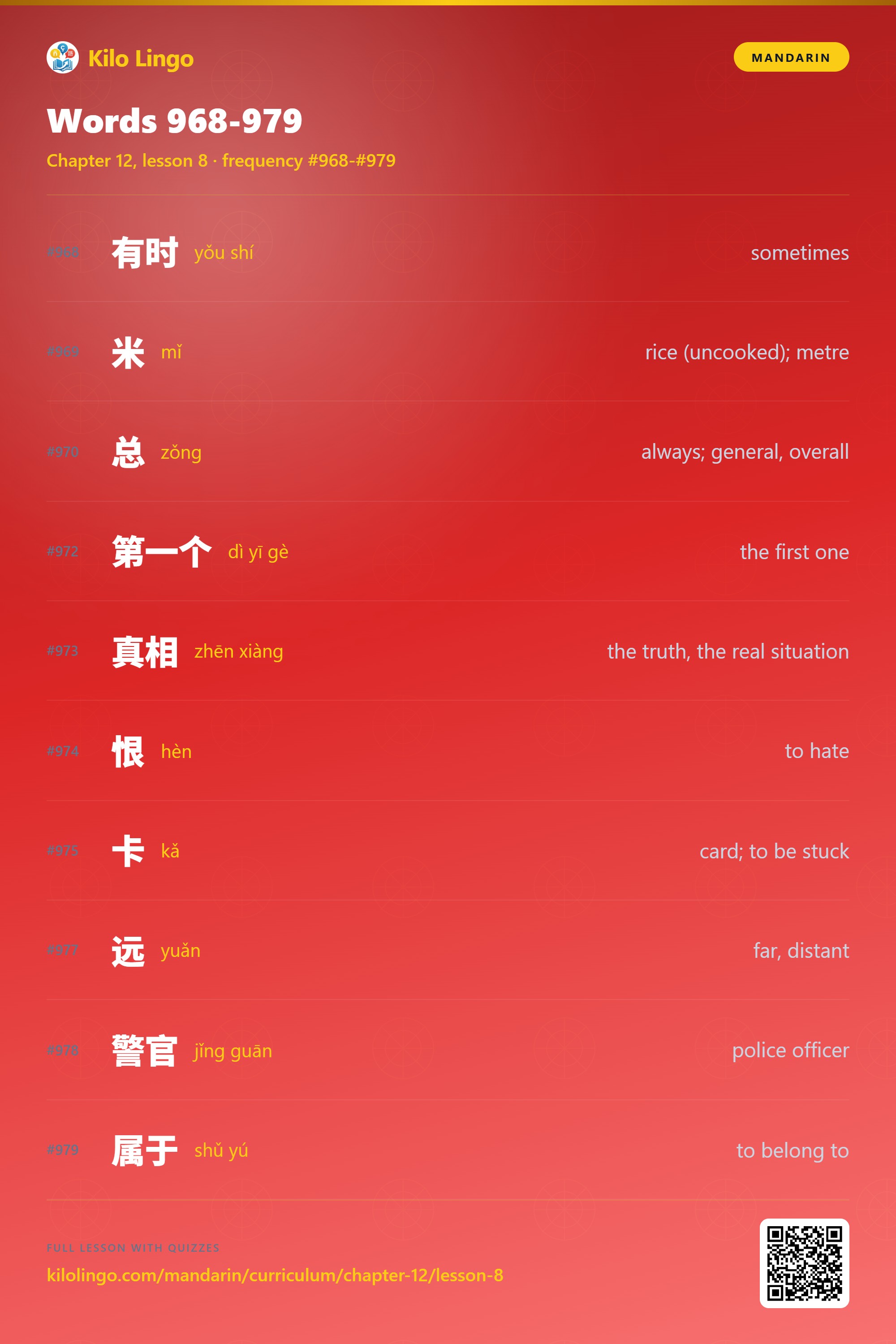
- Words 969-980Vocabulary
10 words · ranks 969-980
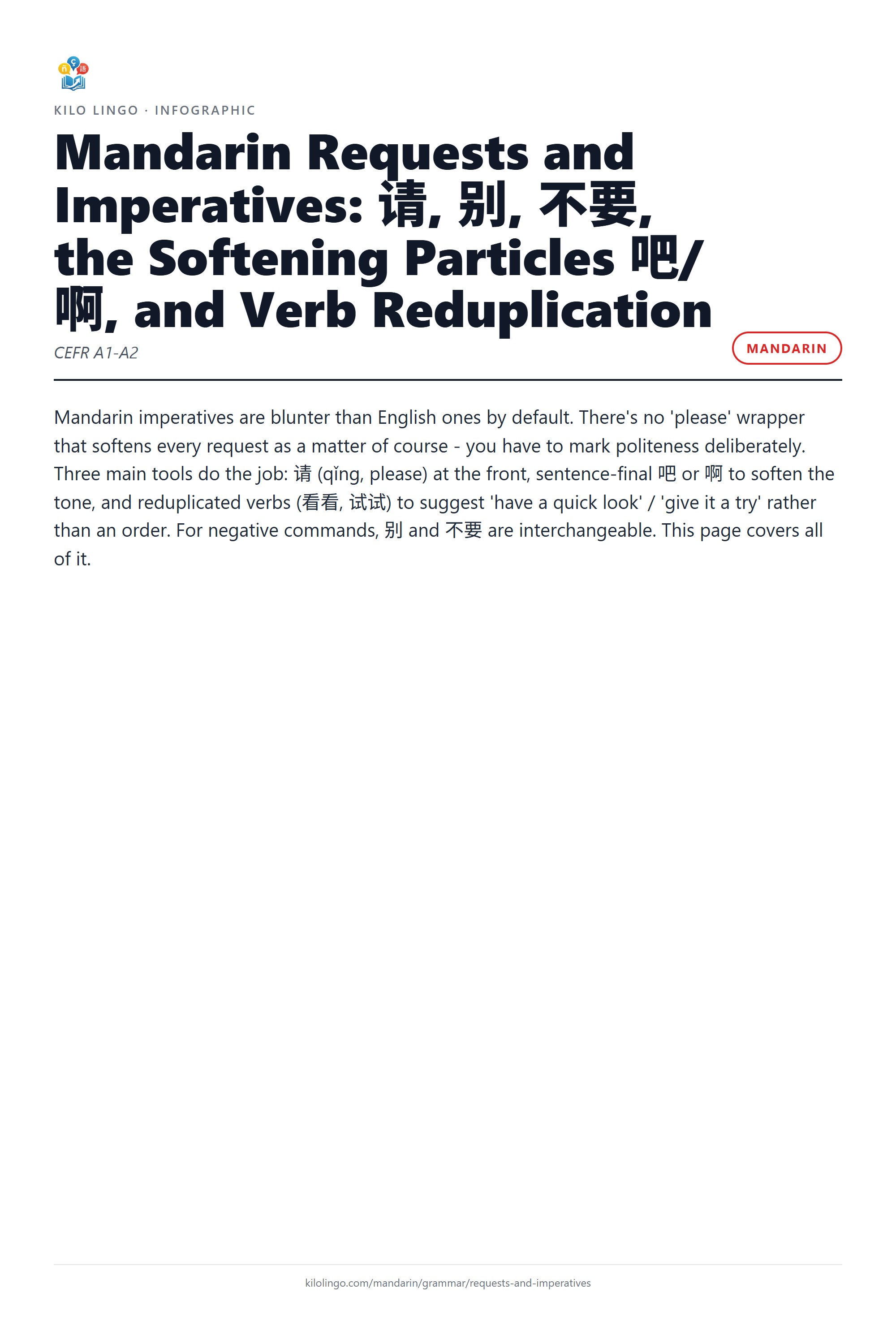
- Requests and imperativesGrammar
请 + verb for polite requests. 别/不要 for negative imperatives. Sentence-softening 吧/啊. Reduplication (看看, 试试) as a politeness device.
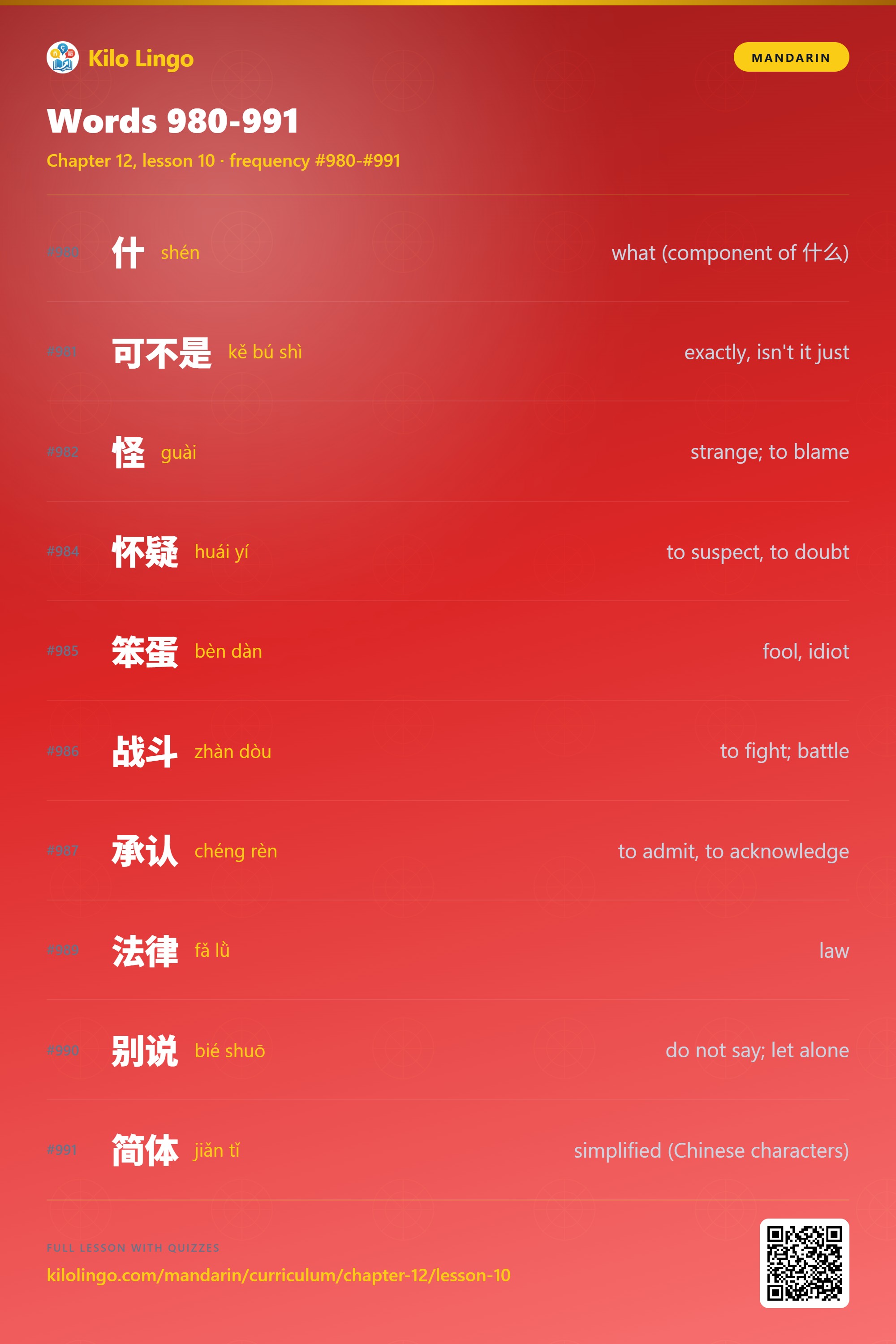
- Words 981-992Vocabulary
10 words · ranks 981-992
- Tone Shooter review sessionReview games
Shoot the words you just met into their tones by colour. The quickest way to fix a tone in place.
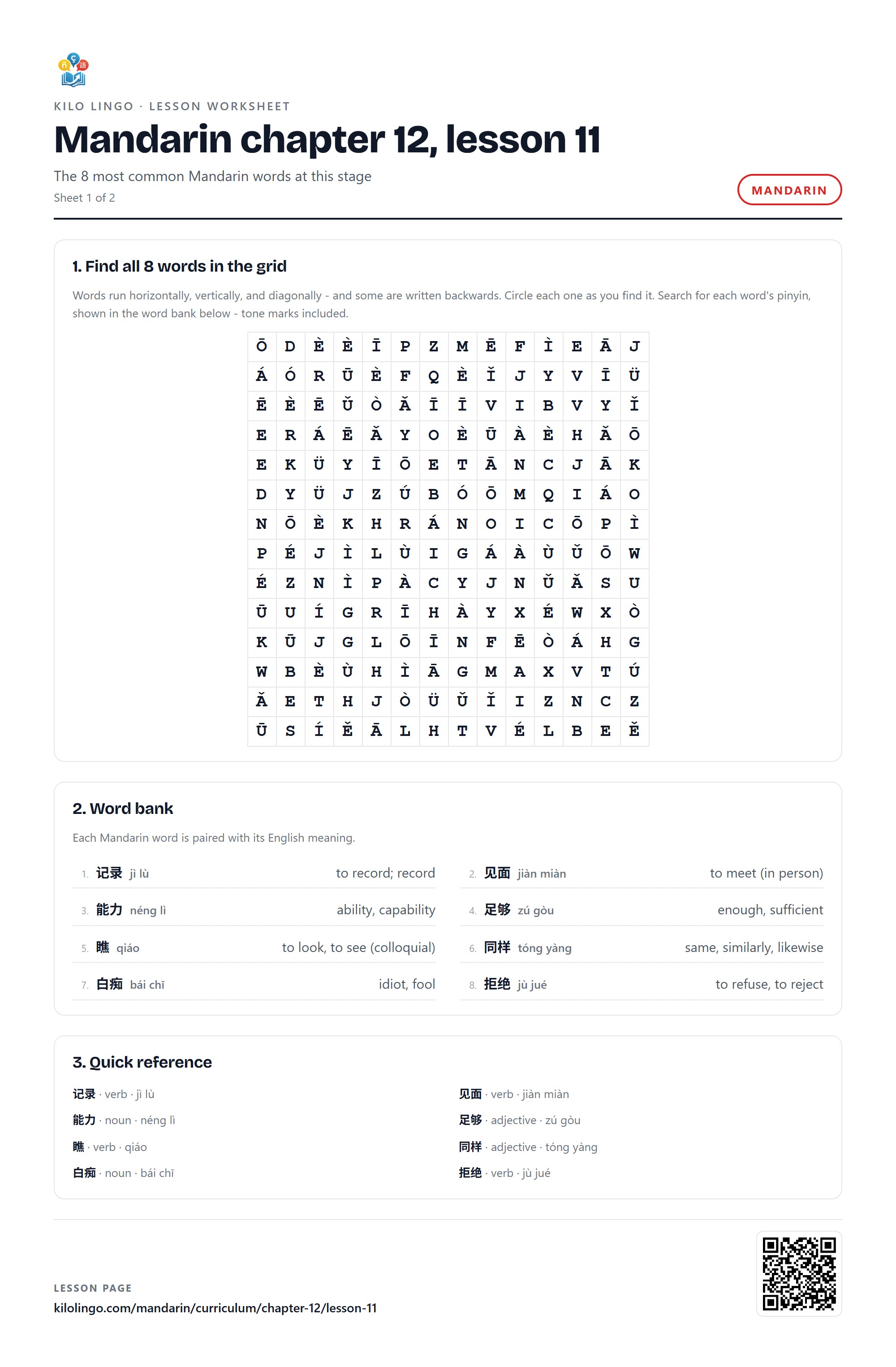
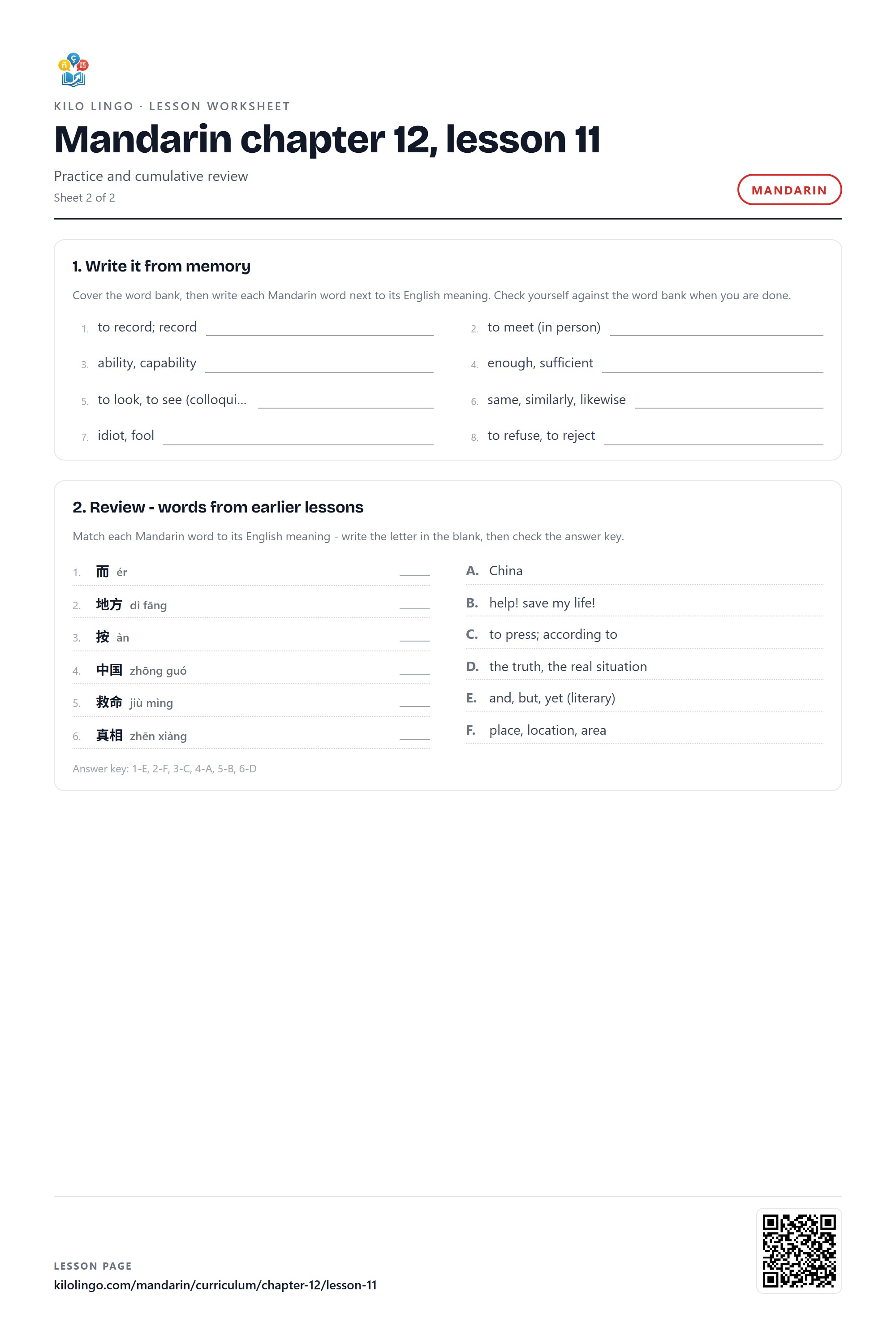
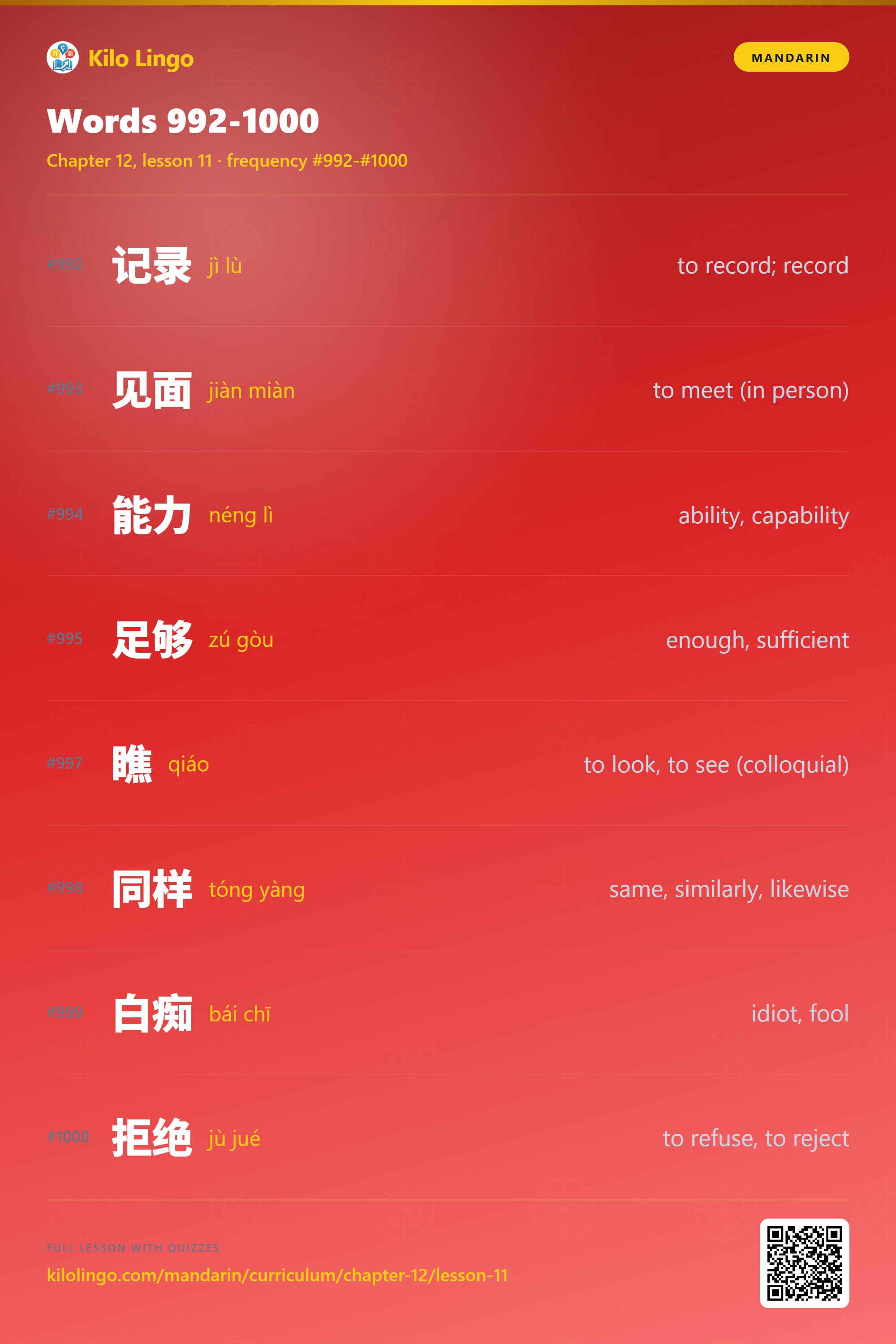
- Words 993-1000Vocabulary
7 words · ranks 993-1000
- Story milestone: top 1000 wordsGraded-reader story
You can read this story using only the words you've learned so far. Every content word sits at or above the rank-1000 ceiling.
- Measure words: cupfuls and things you gripMeasure words
杯 for what fills a cup, 把 for what fills a hand. A round of matching in both directions, over every pairing your first thousand words can feed.
- FeelingsThemed review
Happy, afraid, angry and in love.
xi3-huan0is the one you will use most - liking something is the everyday version of all of these. - Arcade reviewReview games
Replay this chapter's words as games - a different kind of repetition, and it counts.
Word printables
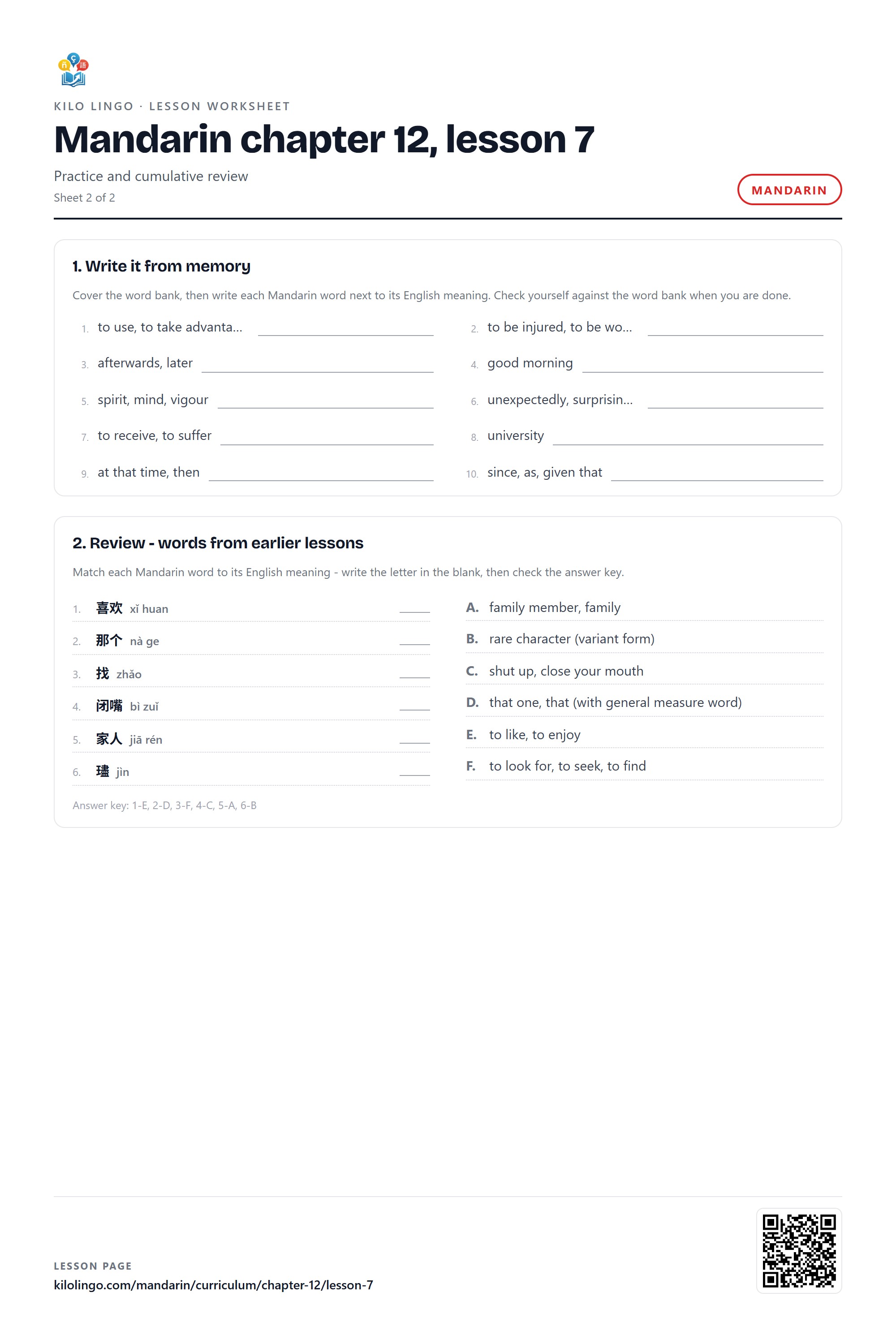
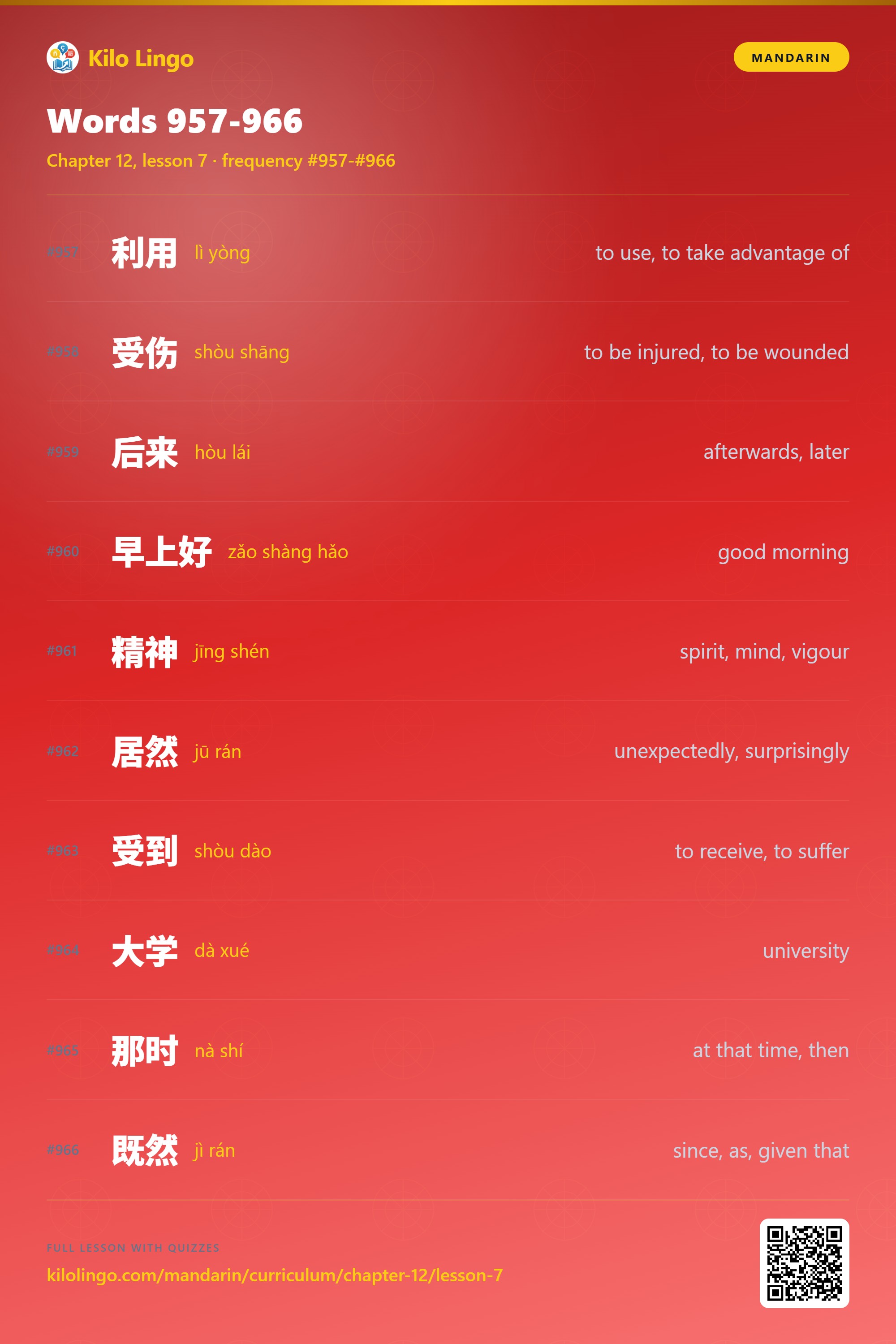
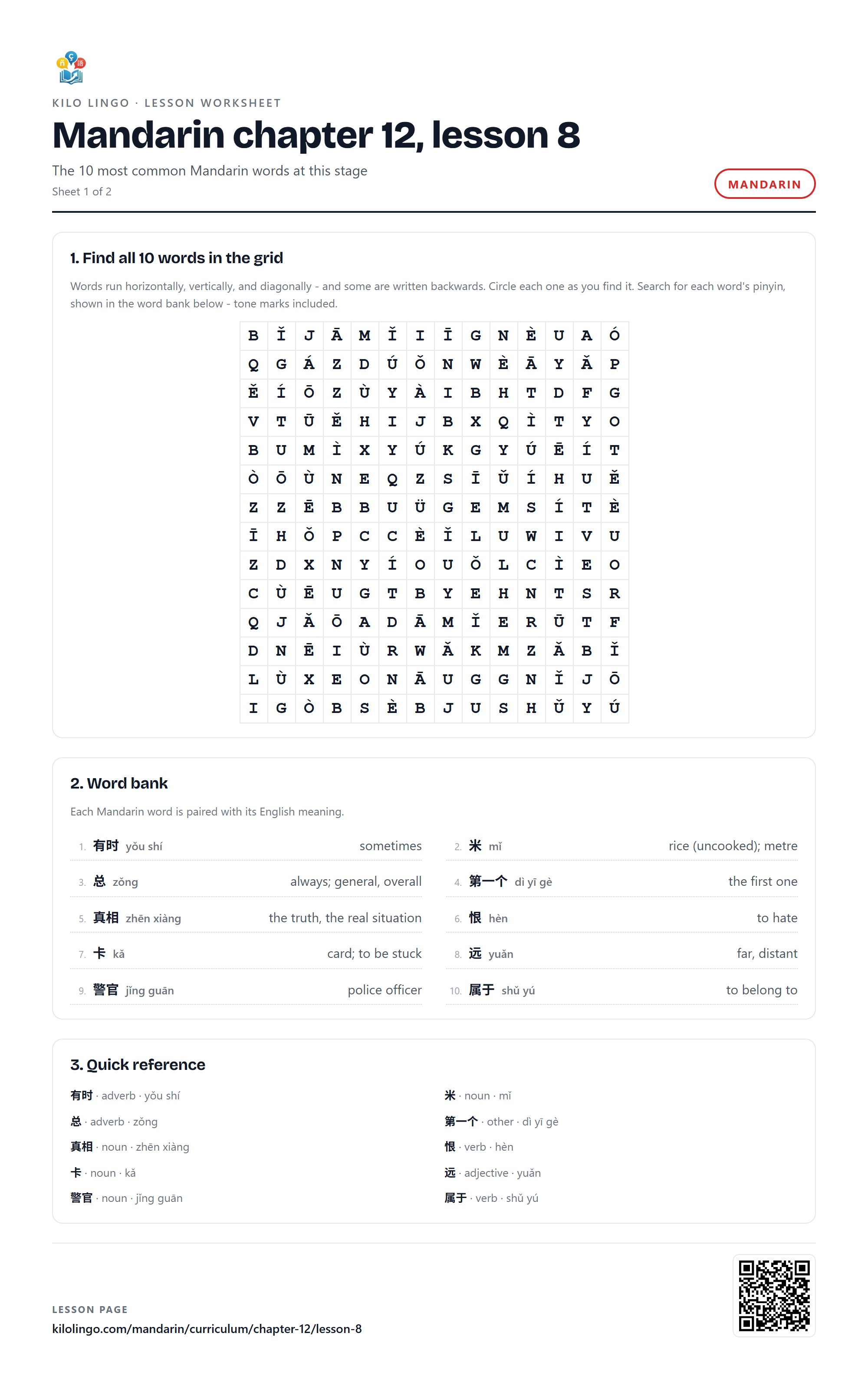
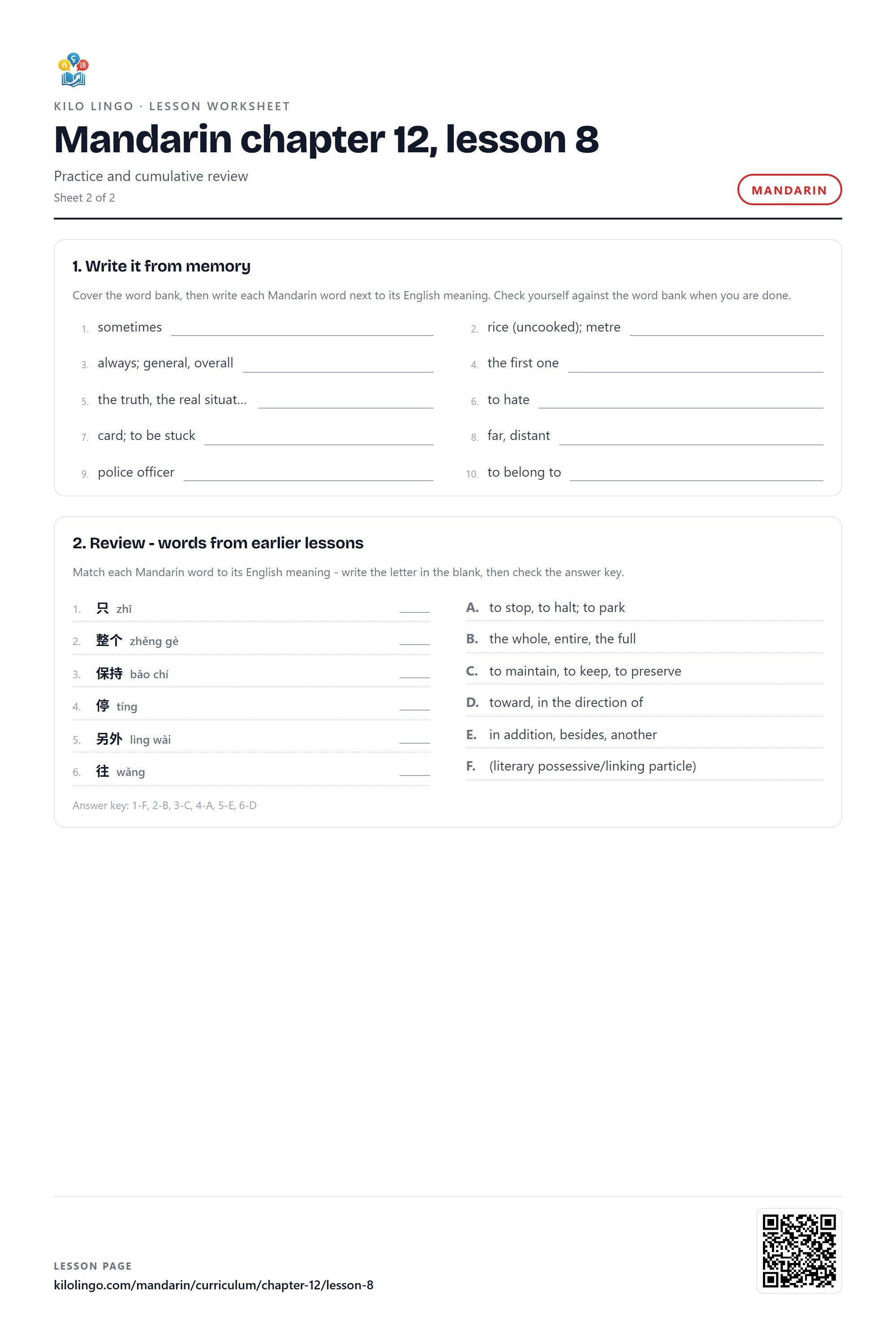
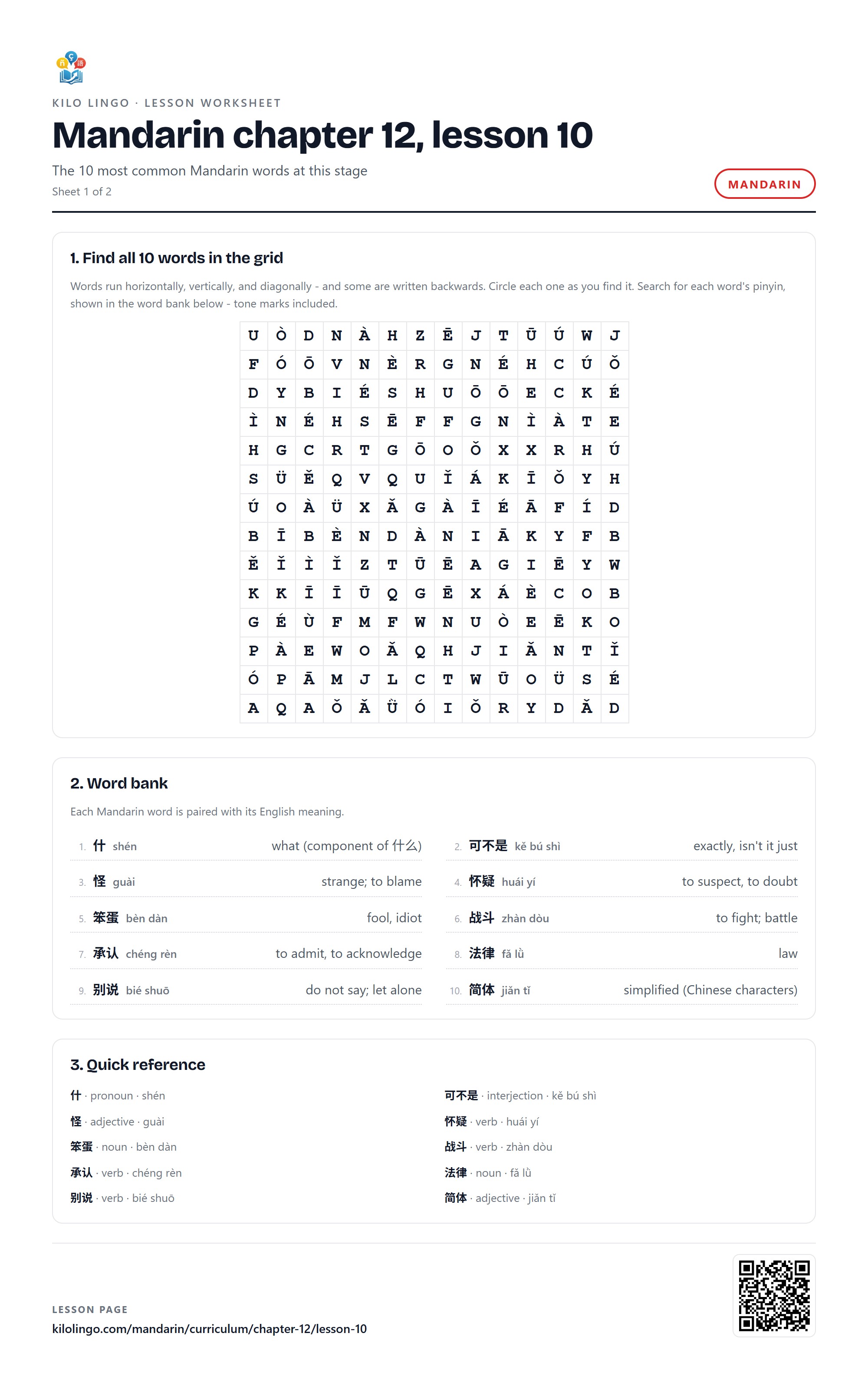
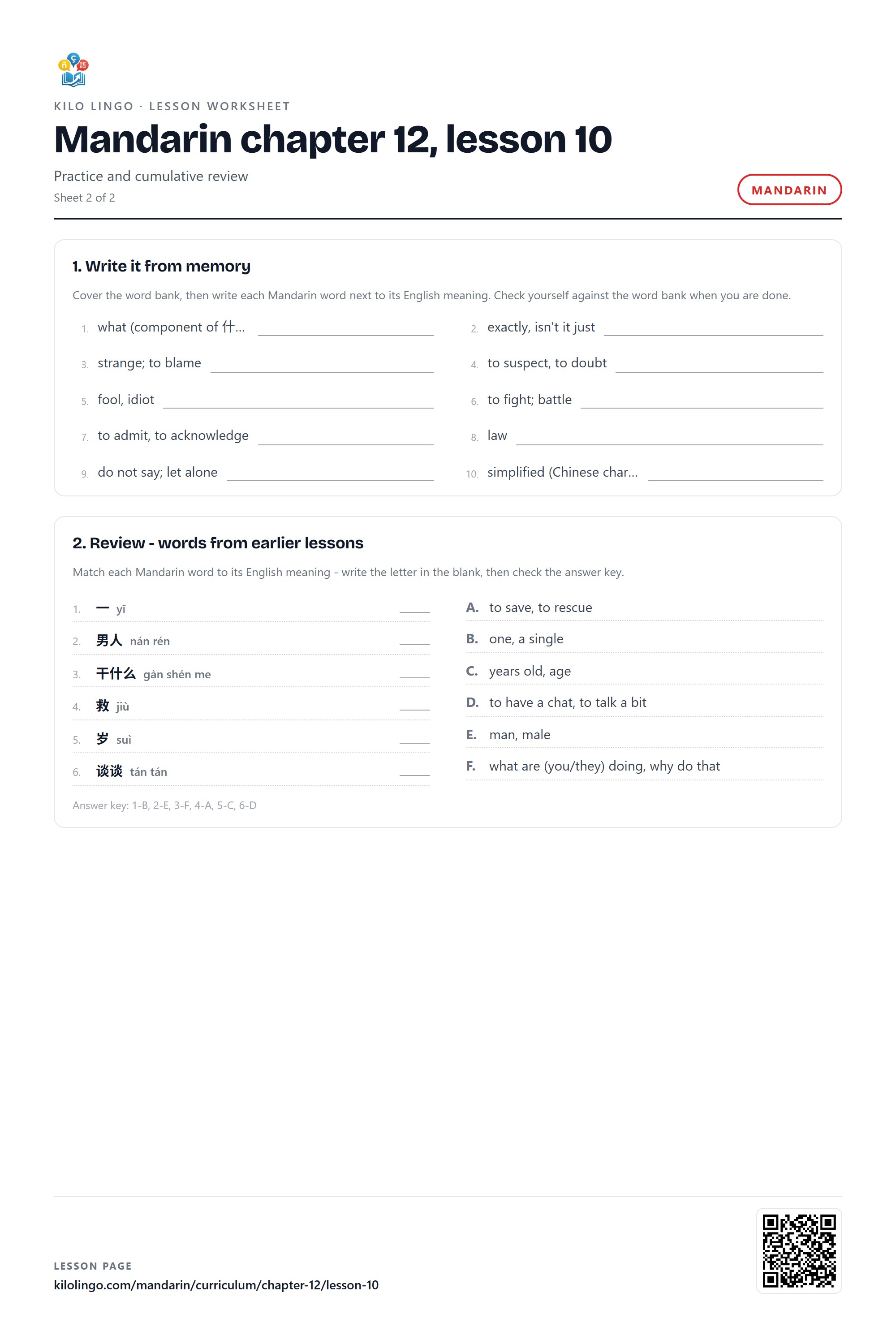
Per-word sheets87 words · a worksheet, infographic and listicle each
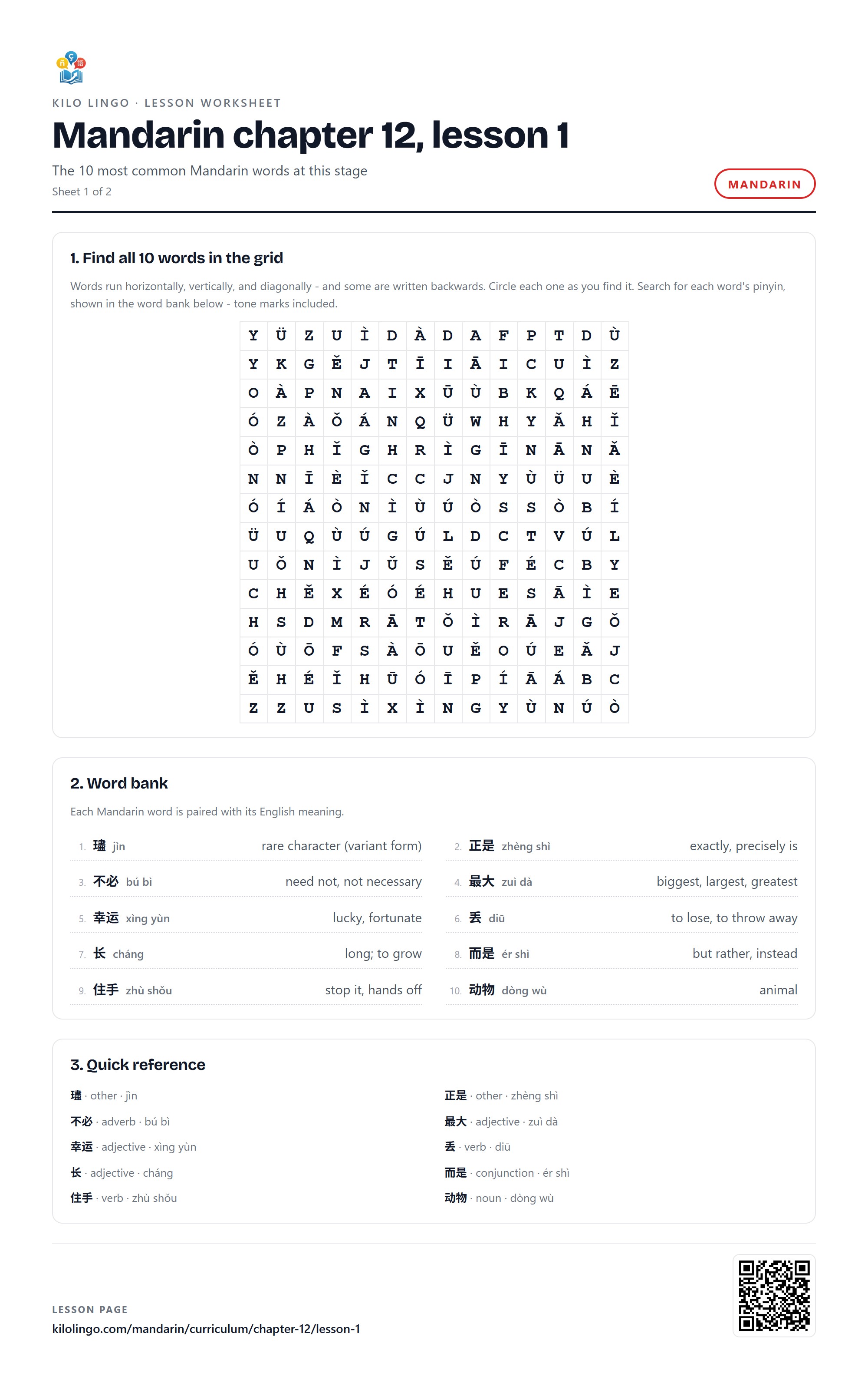




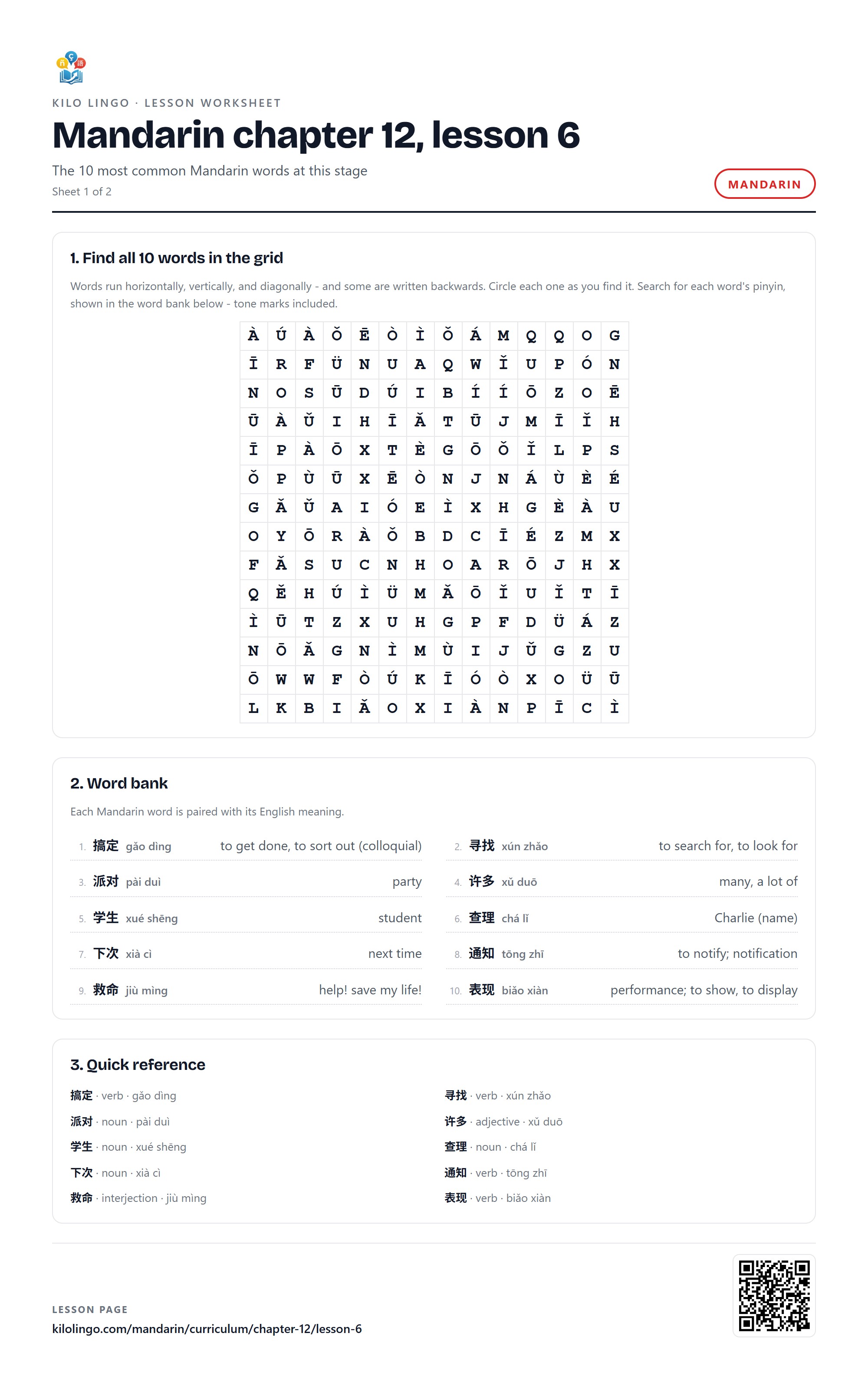
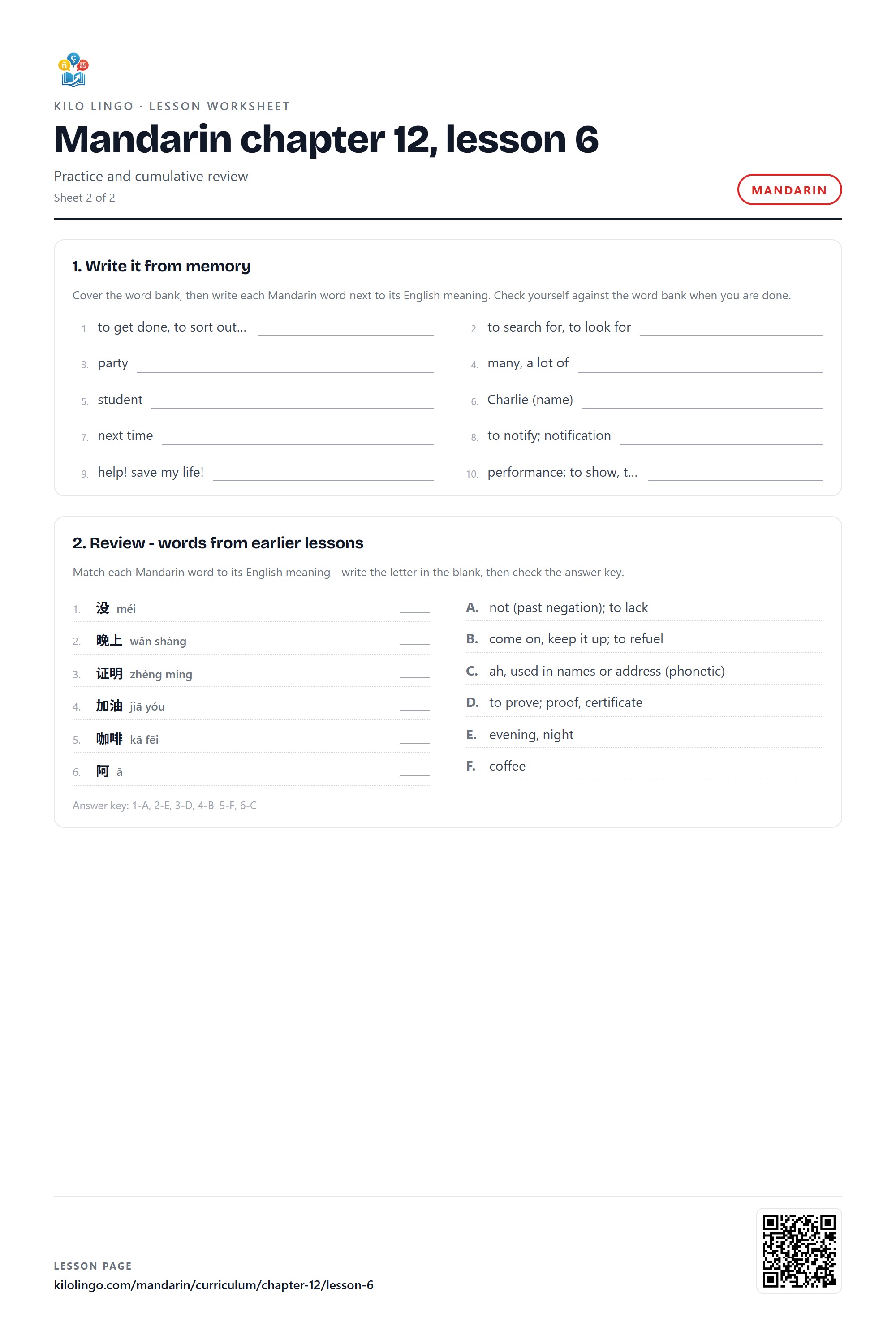

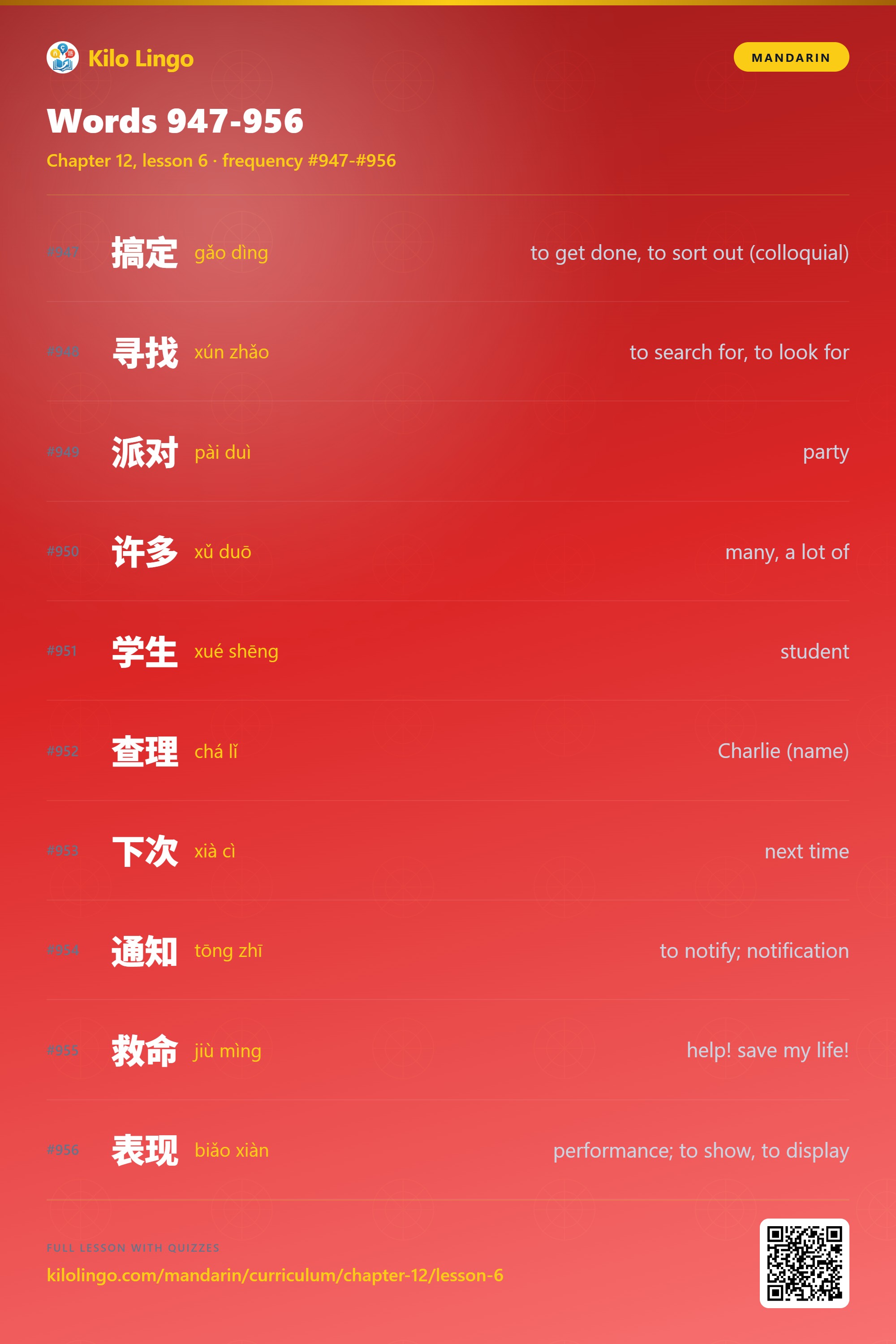
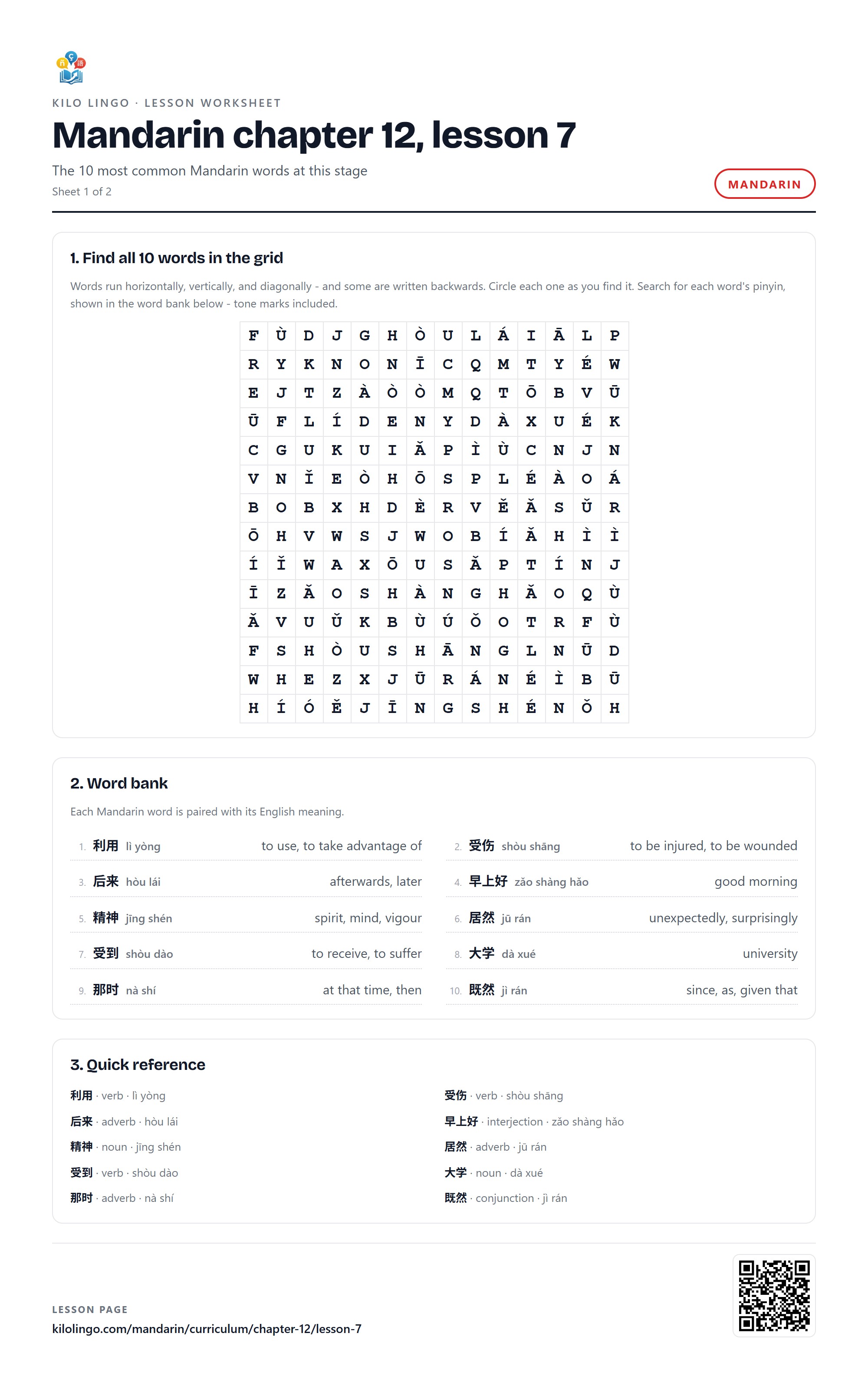




Chapter 13 · The 把 (bǎ) construction
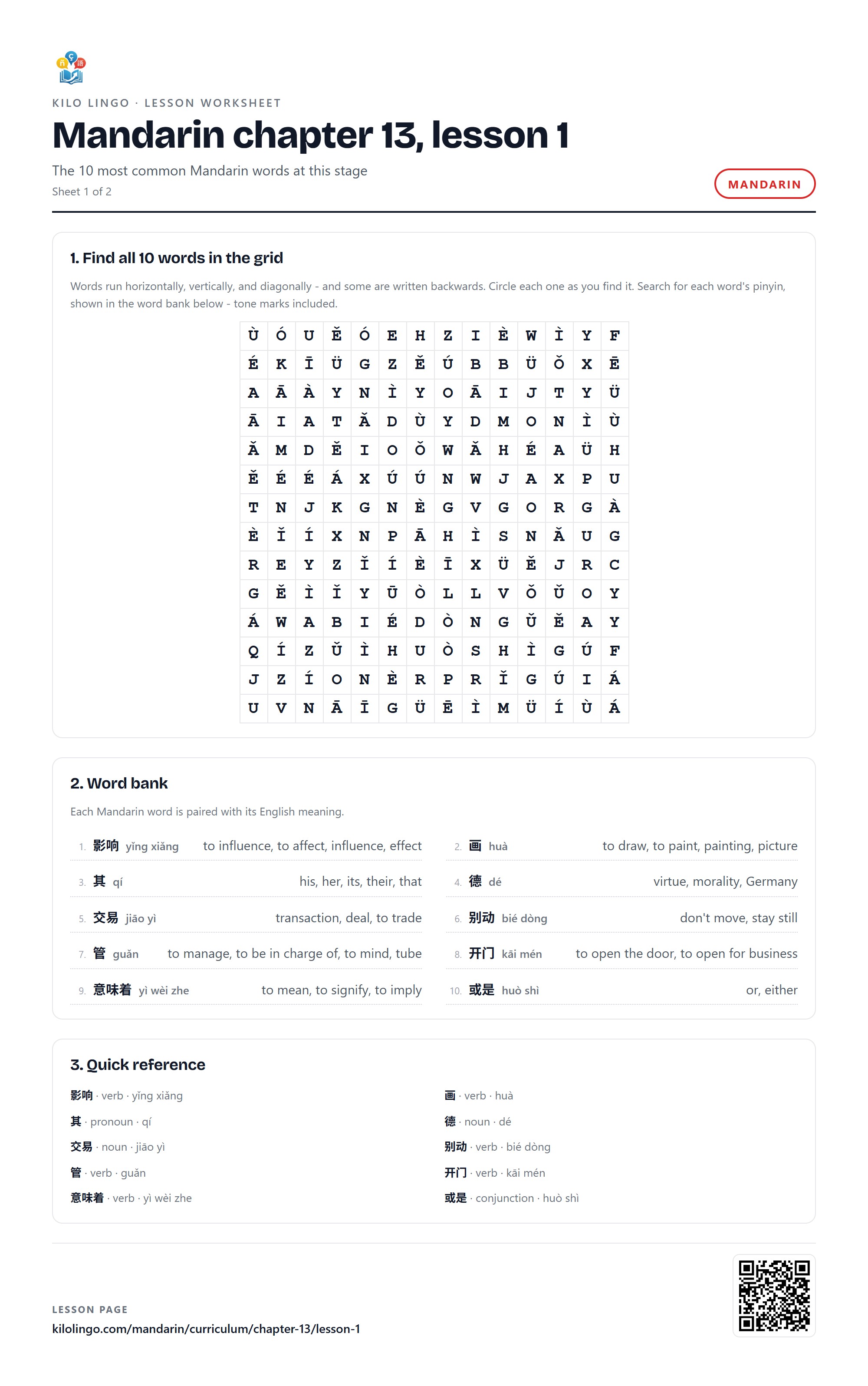
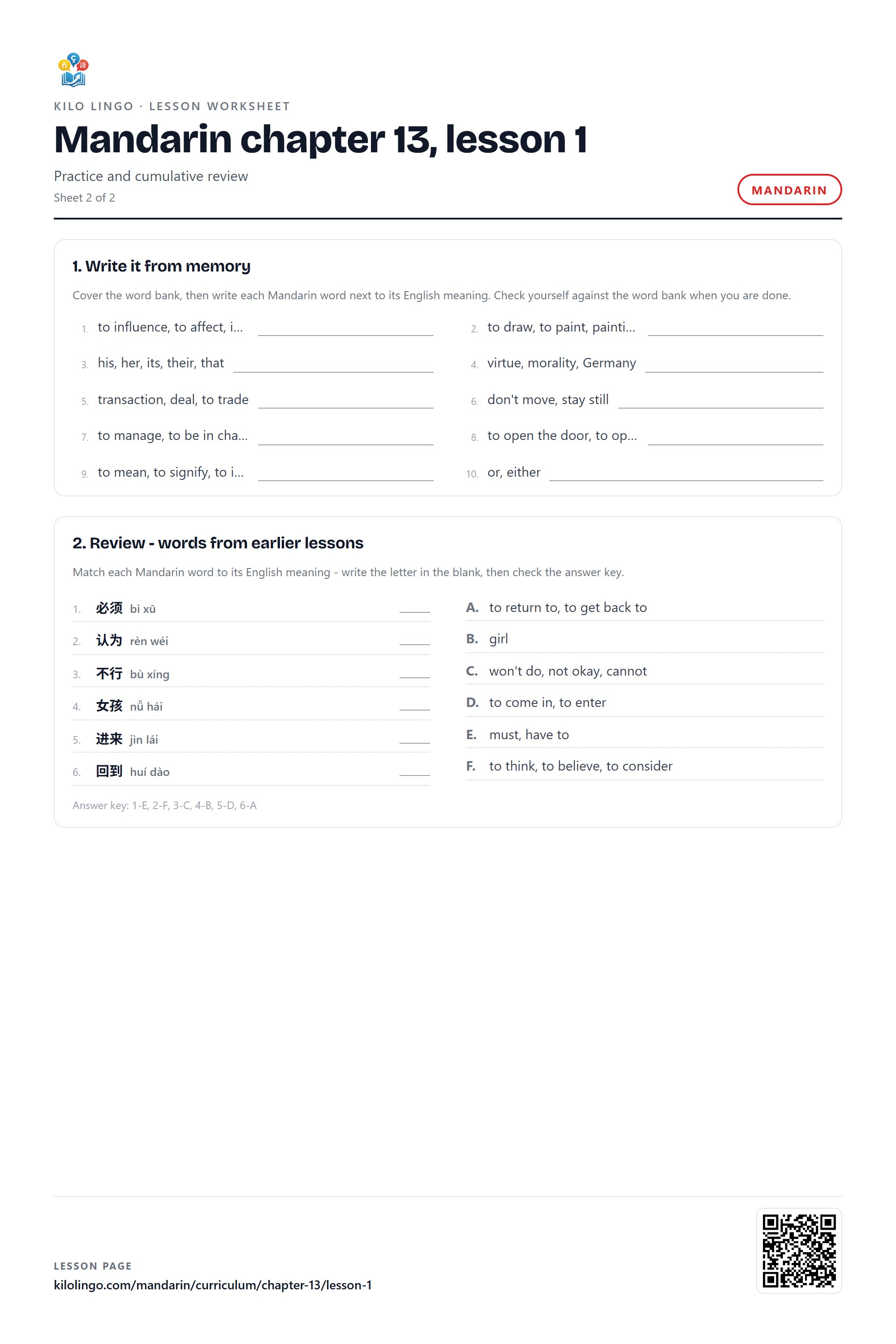
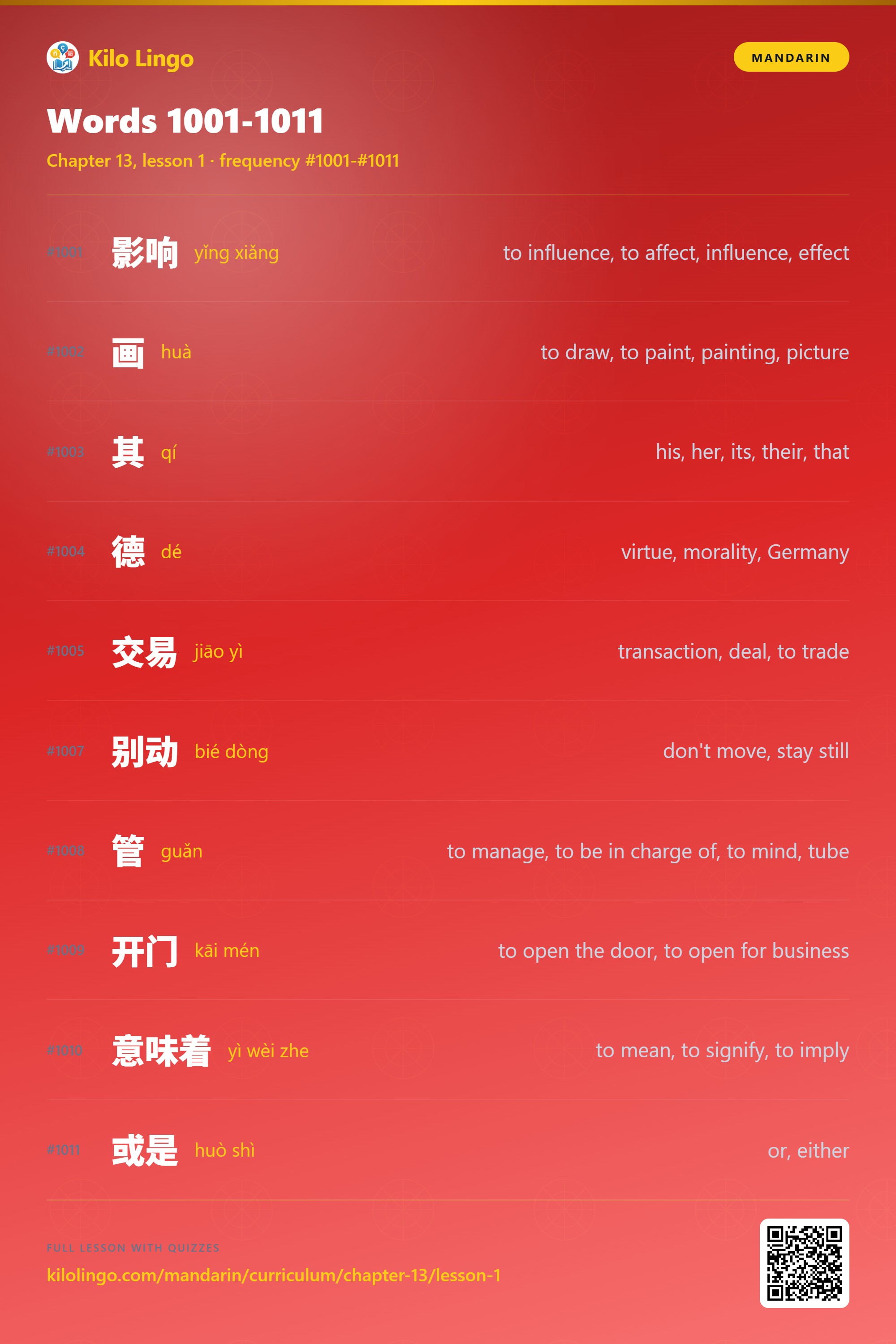
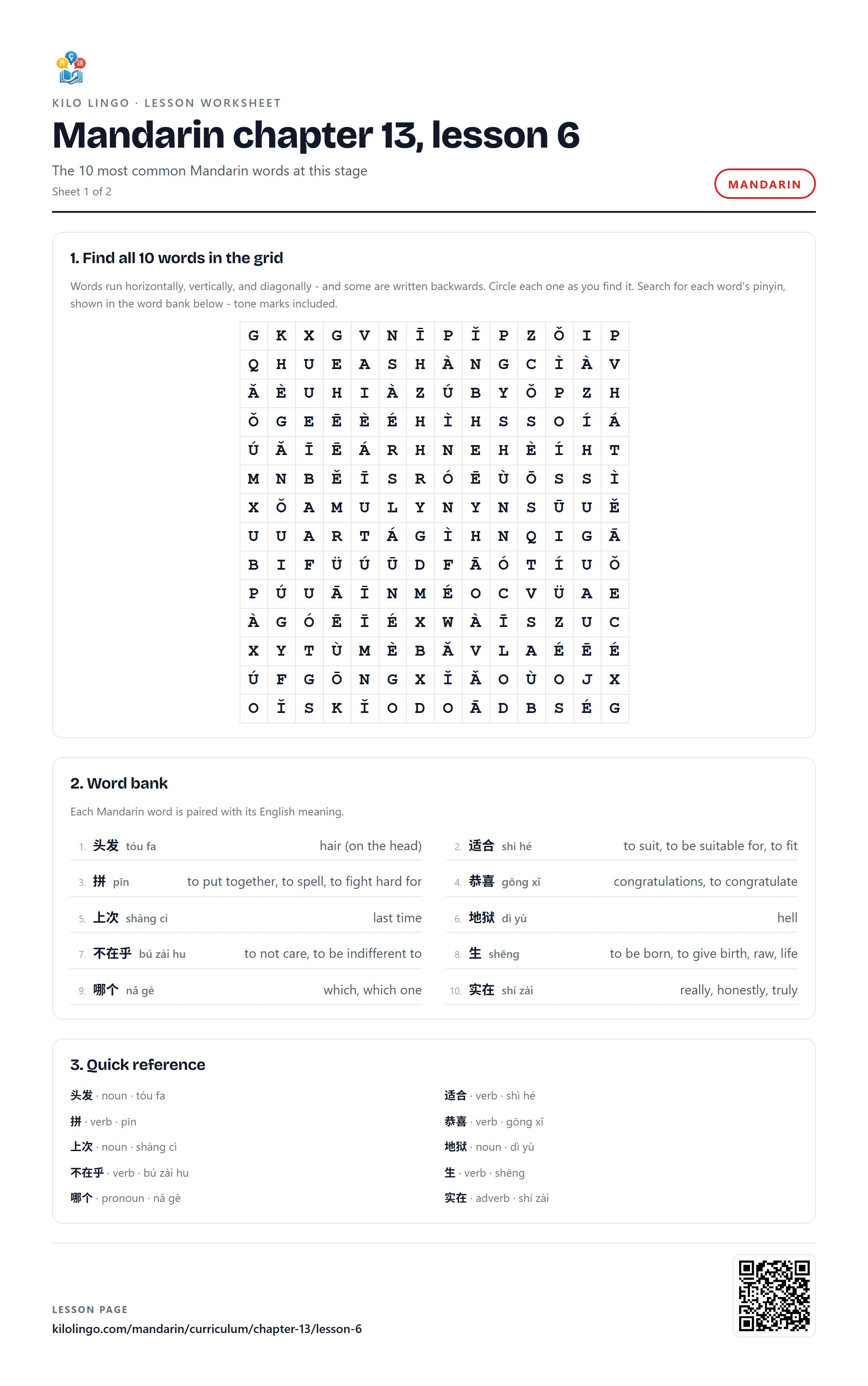
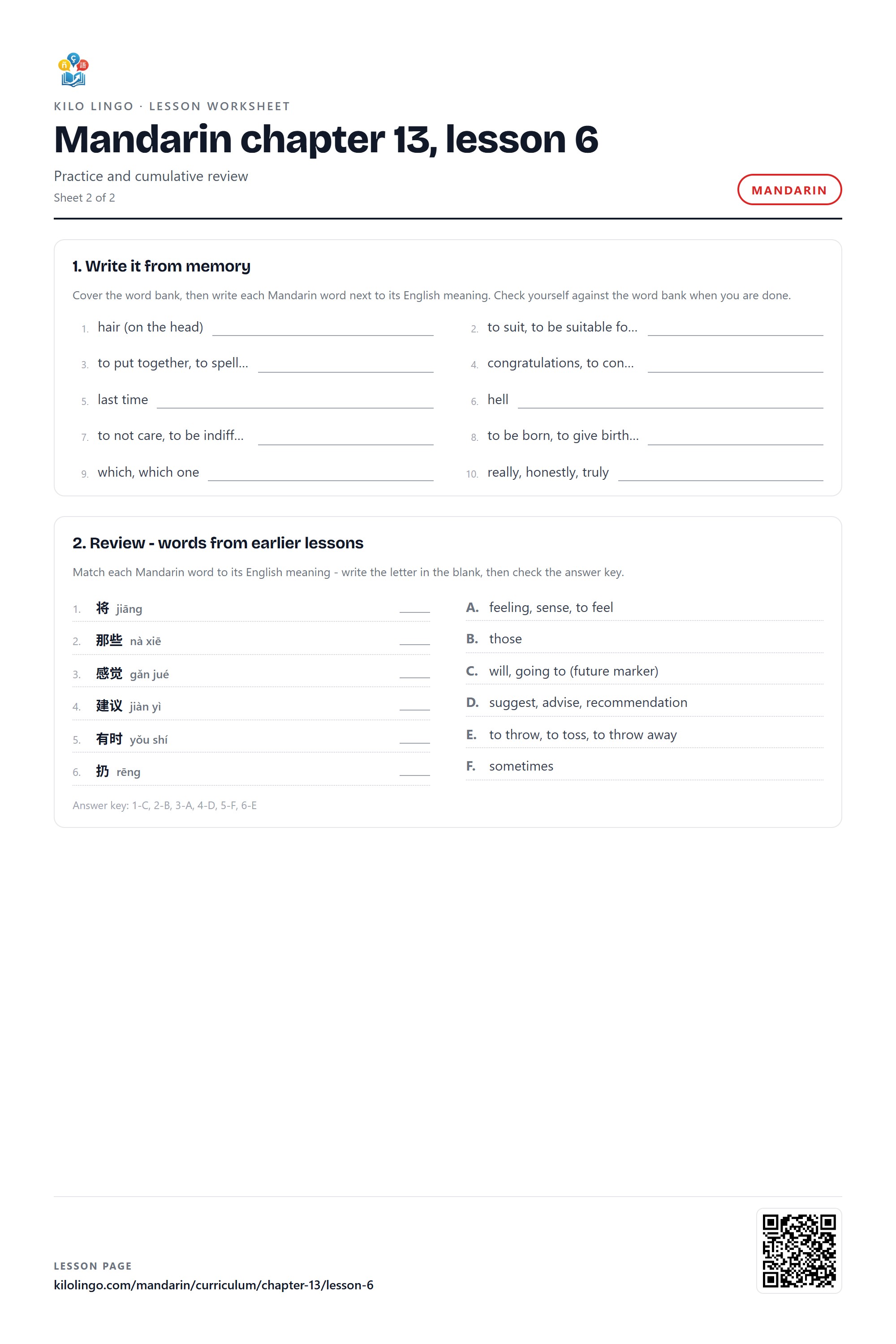
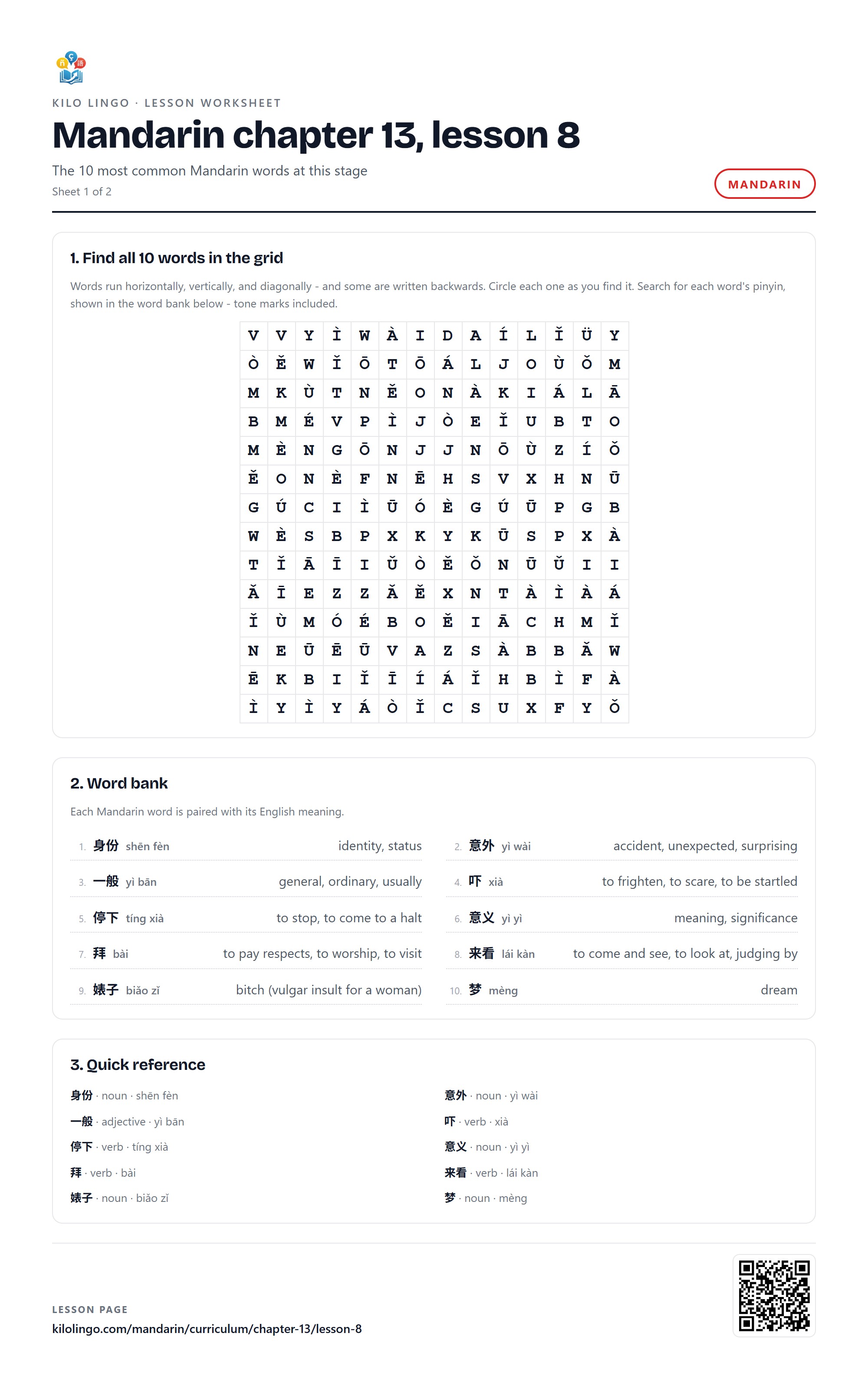
Chapter page →- Words 1001-1011Vocabulary
10 words · ranks 1001-1011
- Crossword review sessionReview games
Cross the words you just met, clued in English. Slower than a drill, and it sticks harder.
- Words 1012-1023Vocabulary
10 words · ranks 1012-1023
- Word Bubbles review sessionReview games
Pop the words you just met by matching each one to its meaning. A couple of rounds and the batch is yours.
- Words 1024-1033Vocabulary
10 words · ranks 1024-1033
- Tone Shooter review sessionReview games
Shoot the words you just met into their tones by colour. The quickest way to fix a tone in place.
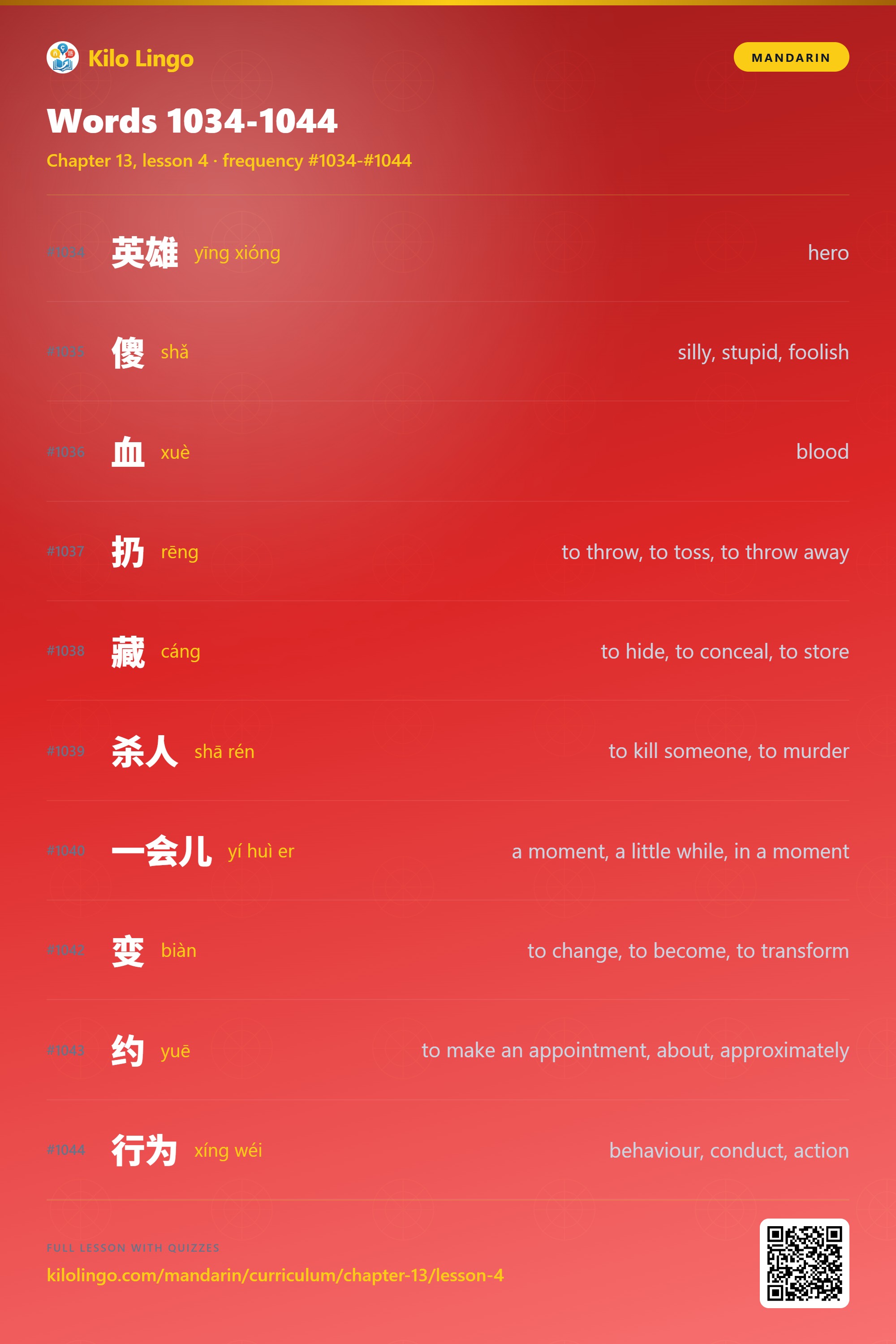
- Words 1034-1044Vocabulary
10 words · ranks 1034-1044
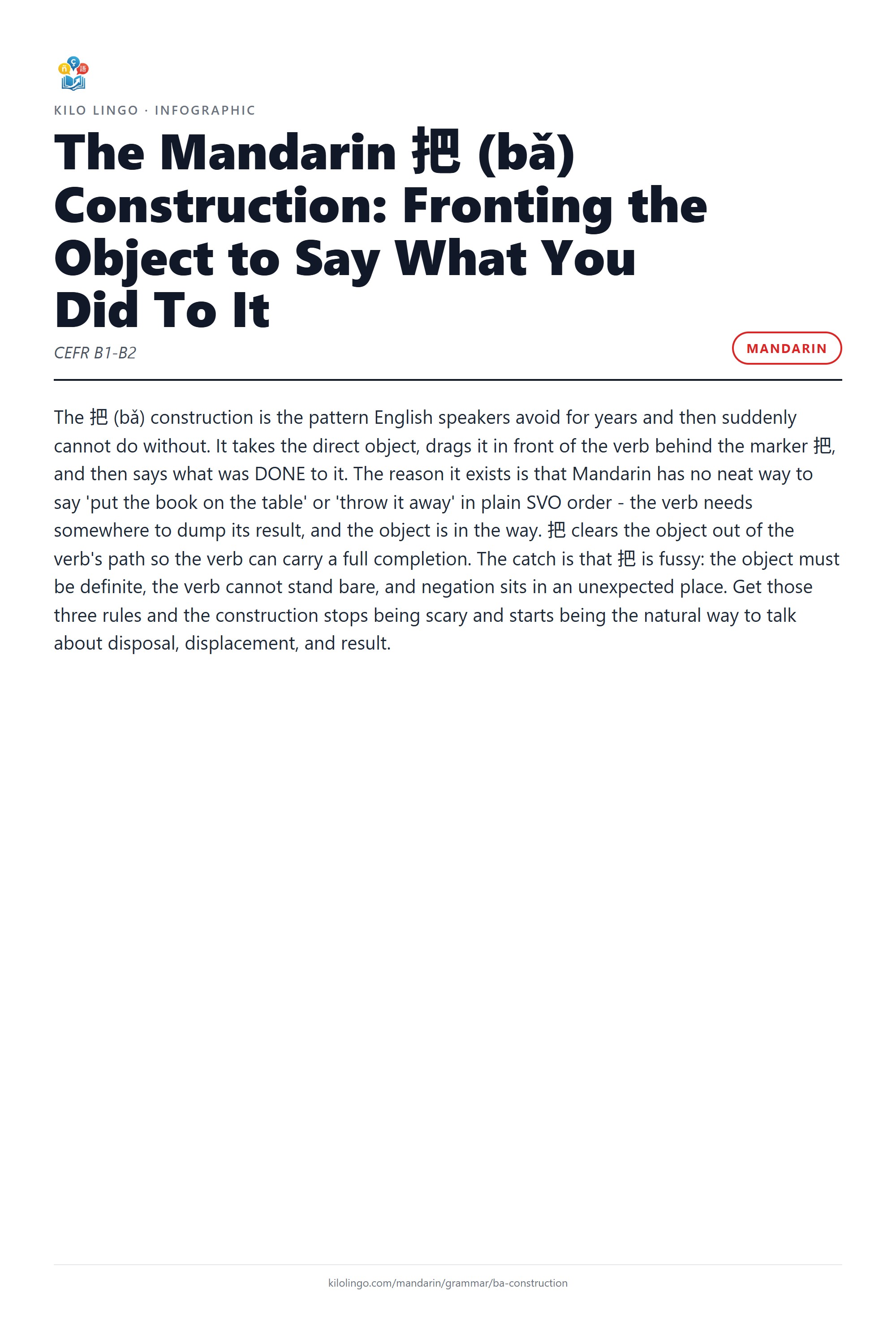
- The 把 (bǎ) constructionGrammar
Fronting a definite object with 把 to say what was done to it: Subject + 把 + Object + Verb + completion (了 / 完 / a result or direction / 到/在/给 + endpoint). Why a bare verb is not allowed (我把书看完了, not 我把书看), and how negation sits before 把 (我没把门关上).
- 会 or 要, for the future?Mistake clinic
Both mean
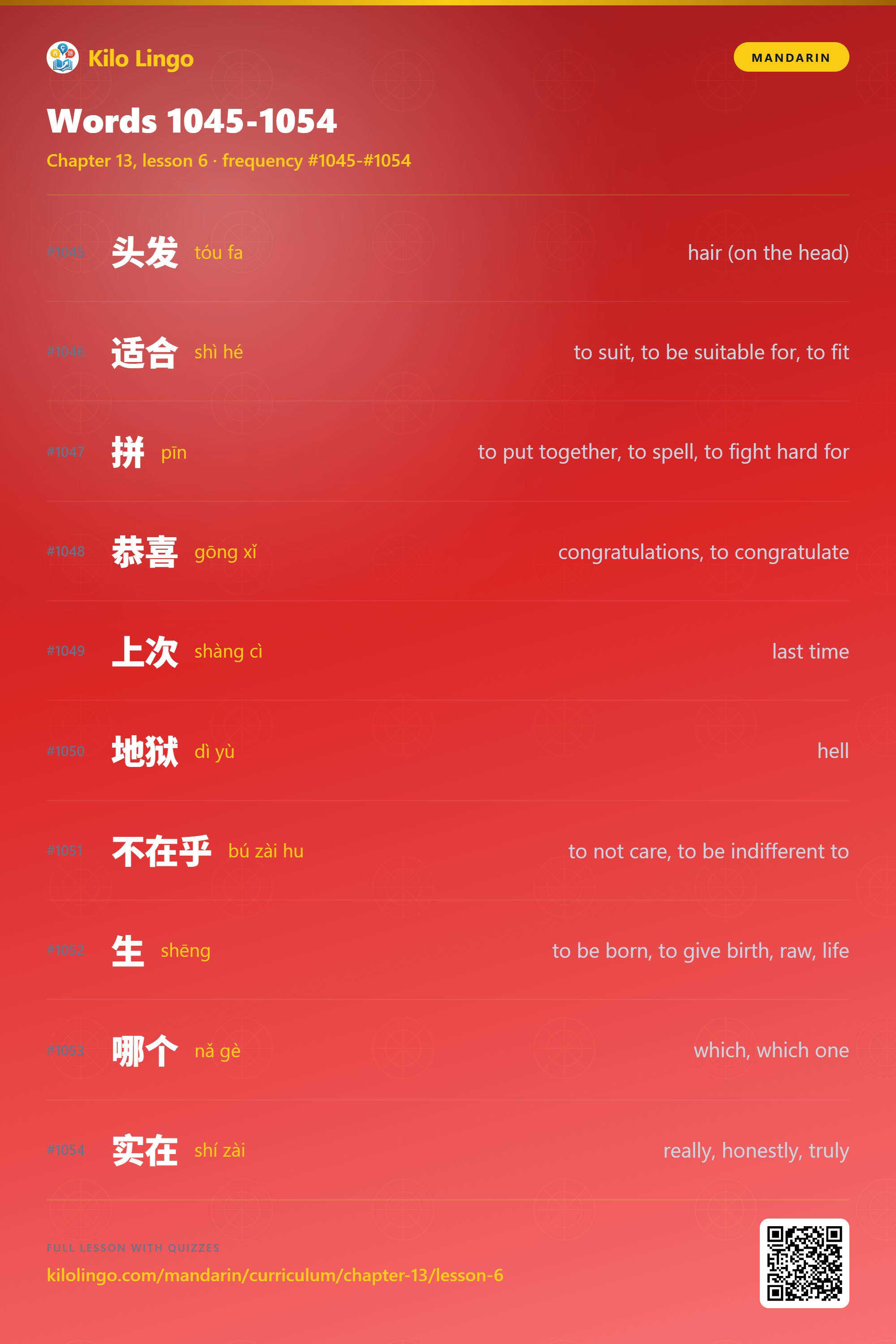
will. One is a forecast, the other a plan. - Words 1045-1054Vocabulary
10 words · ranks 1045-1054
- Word Bubbles review sessionReview games
Pop the words you just met by matching each one to its meaning. A couple of rounds and the batch is yours.
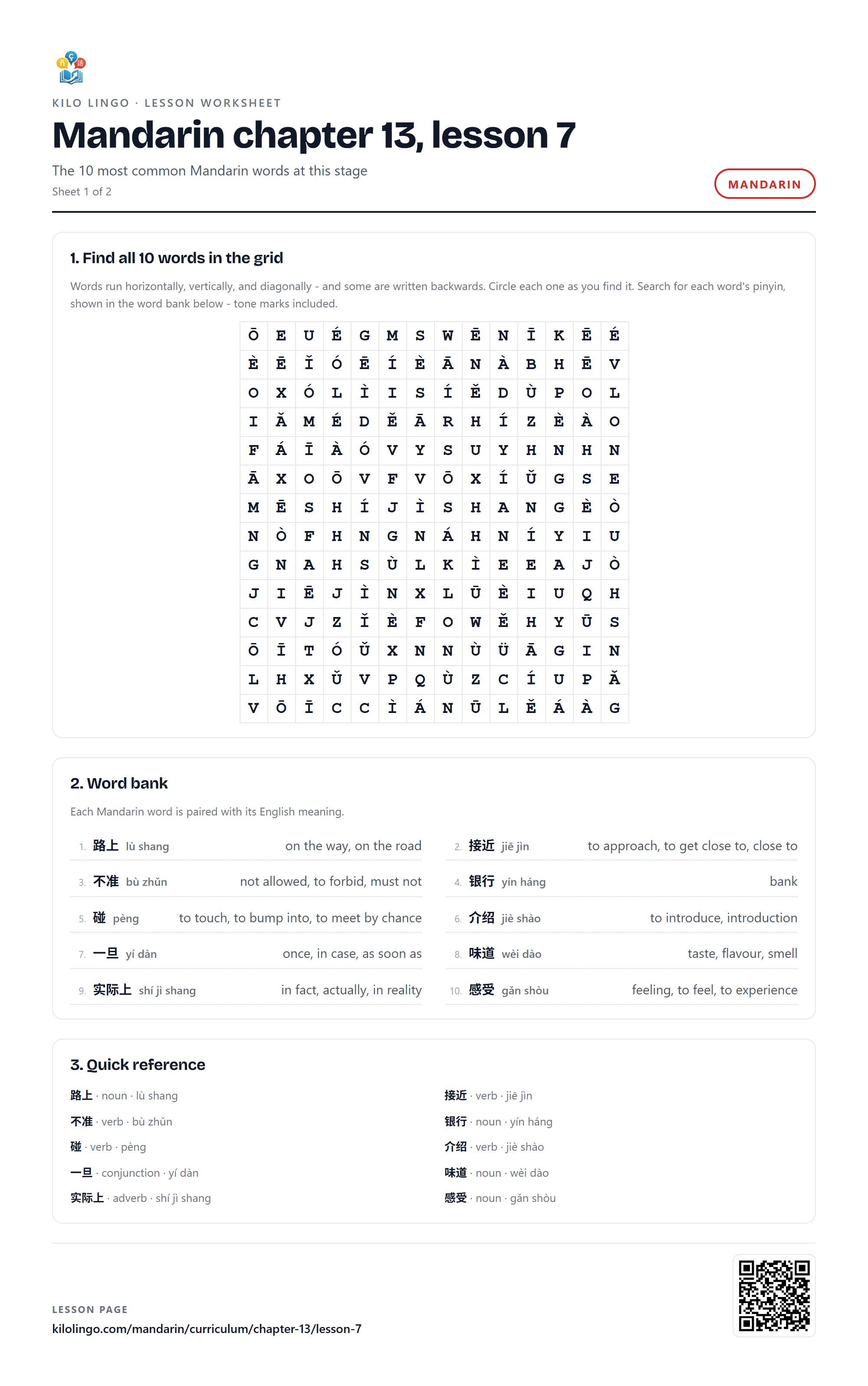
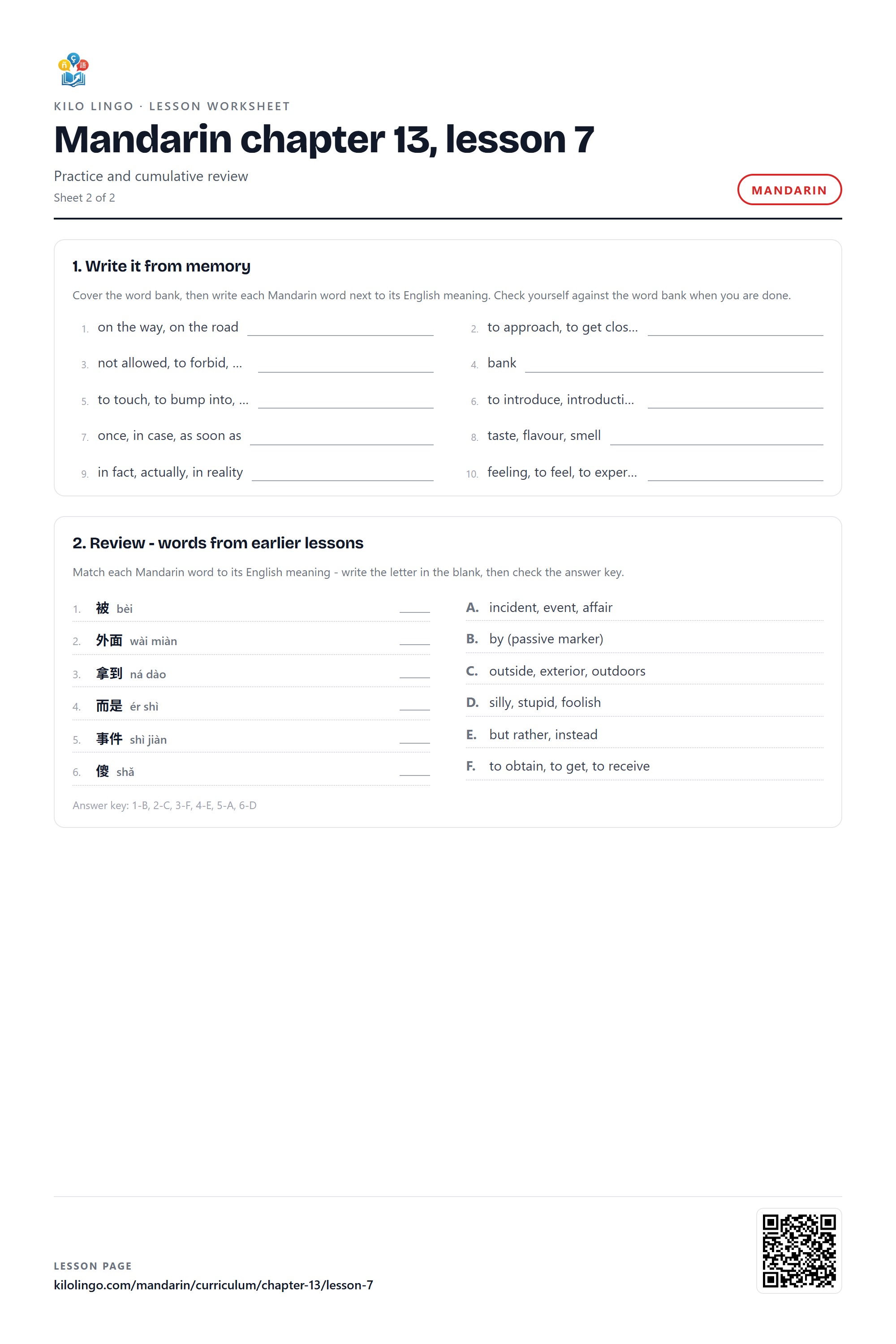
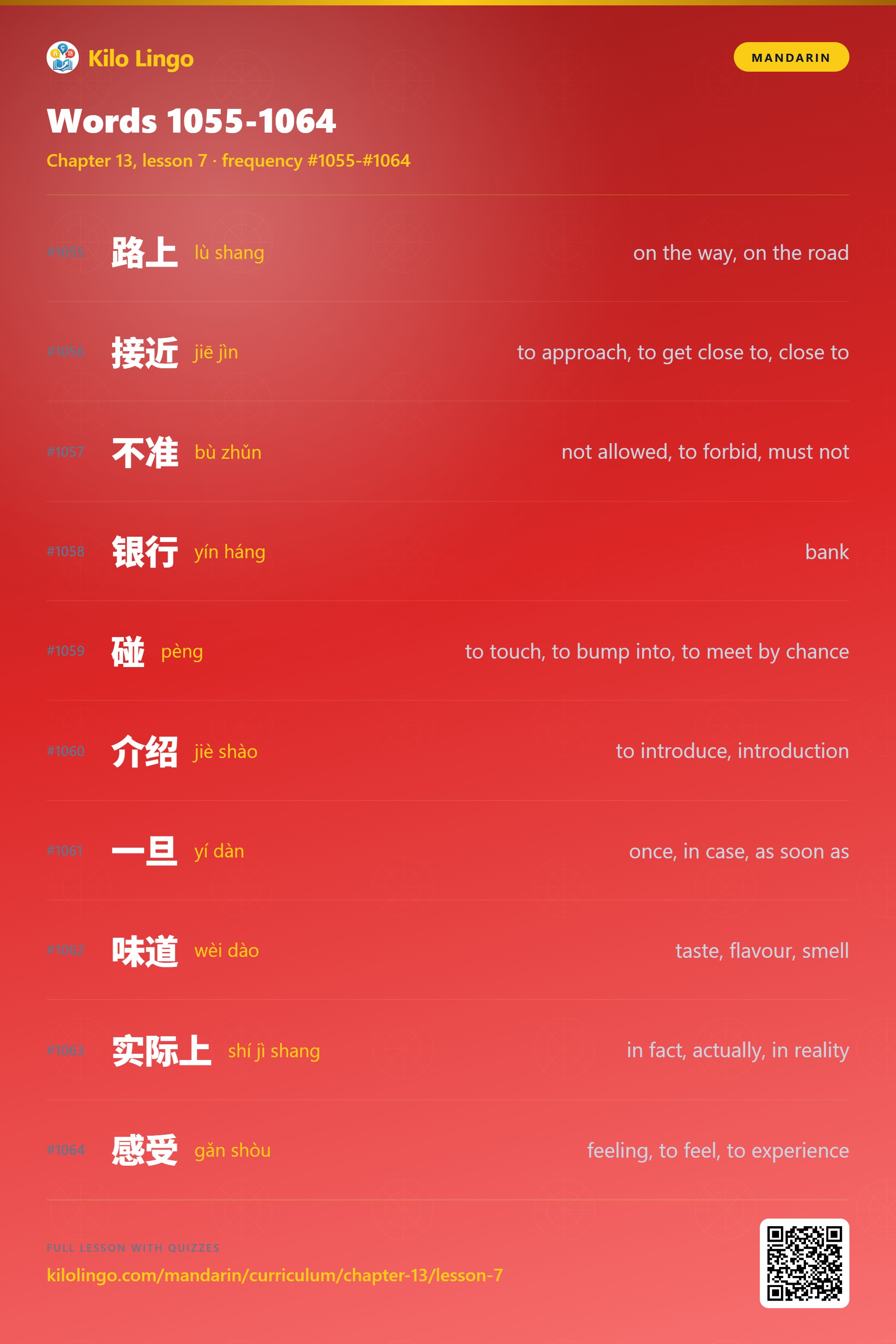
- Words 1055-1064Vocabulary
10 words · ranks 1055-1064
- Tone Shooter review sessionReview games
Shoot the words you just met into their tones by colour. The quickest way to fix a tone in place.
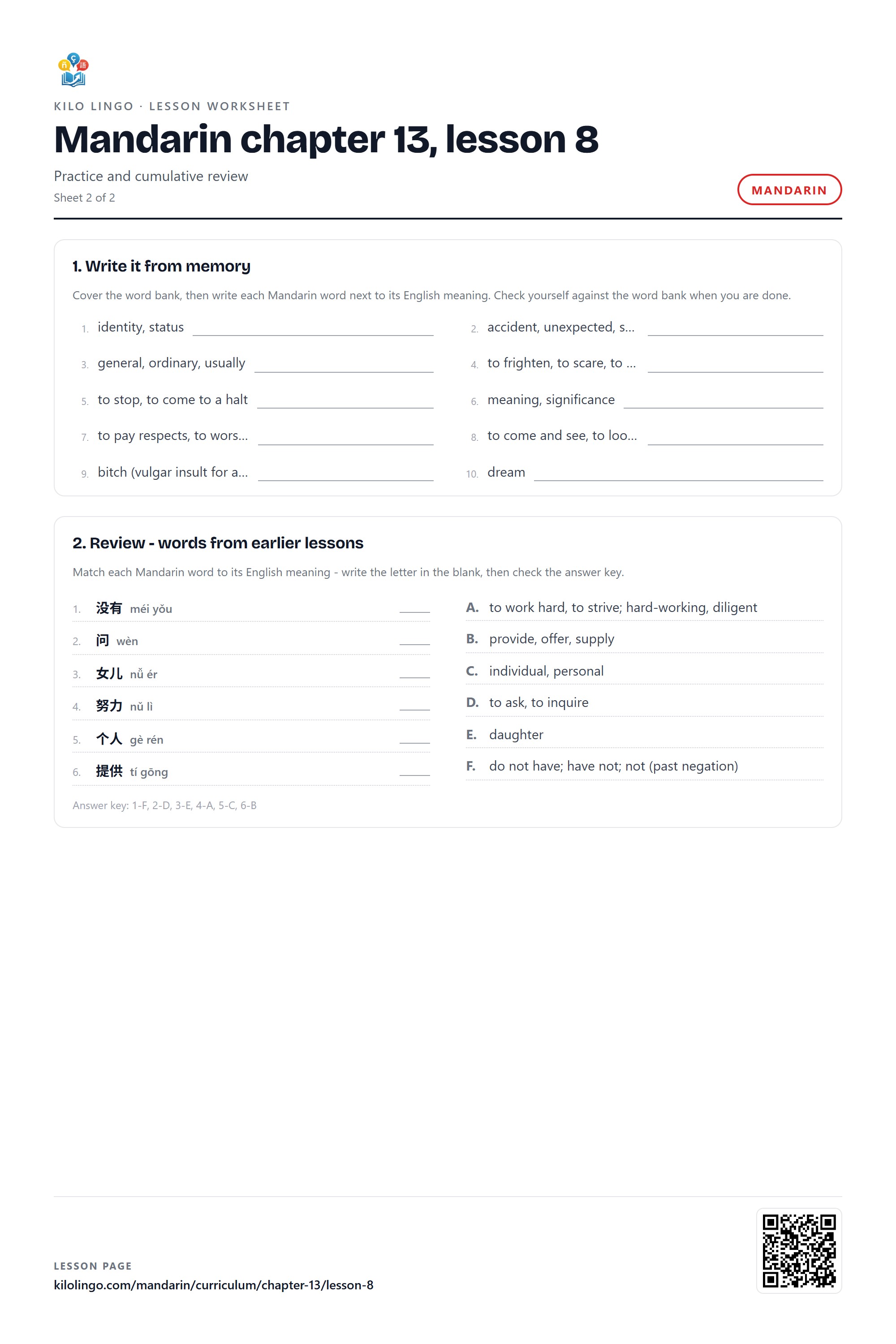
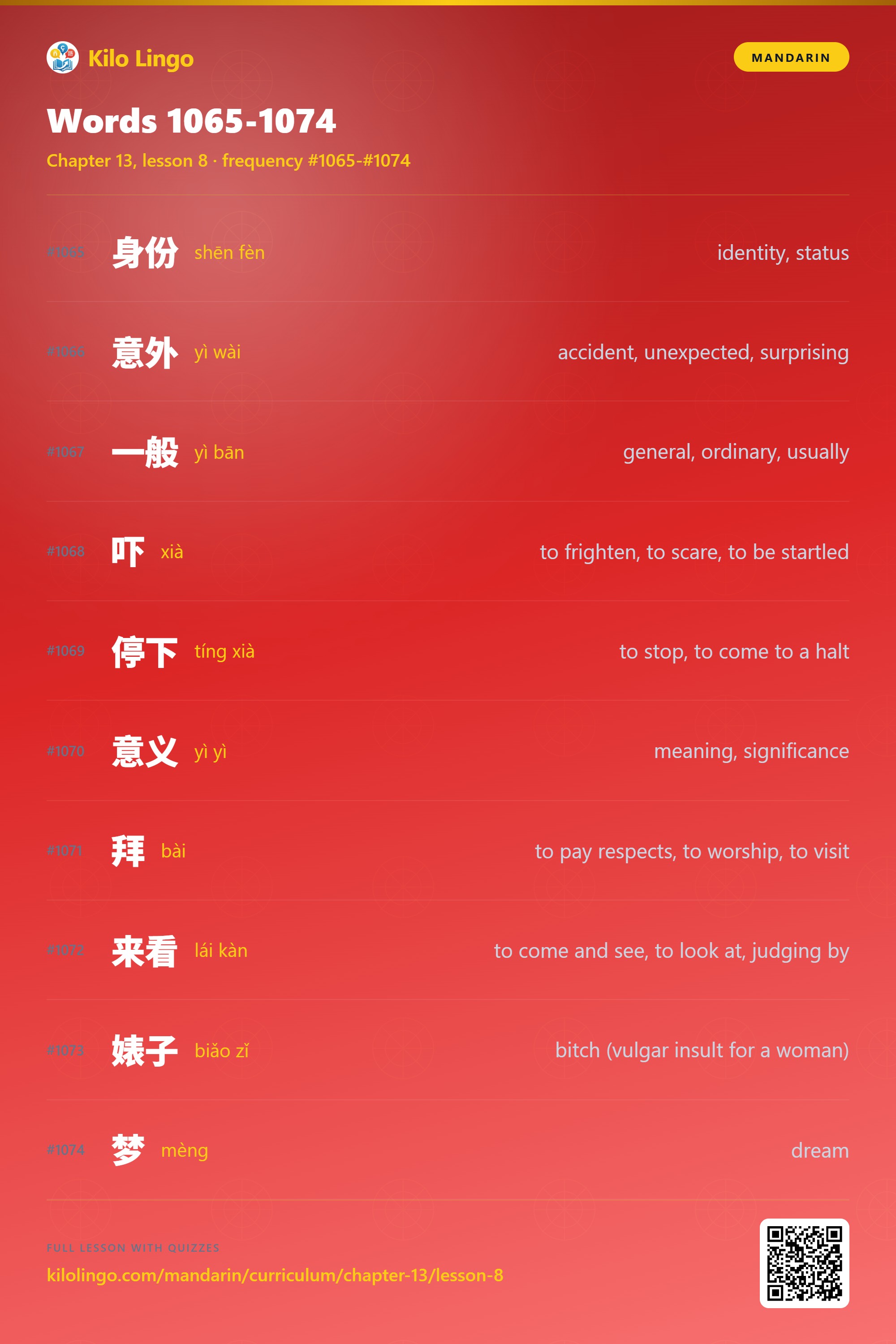
- Words 1065-1075Vocabulary
10 words · ranks 1065-1075
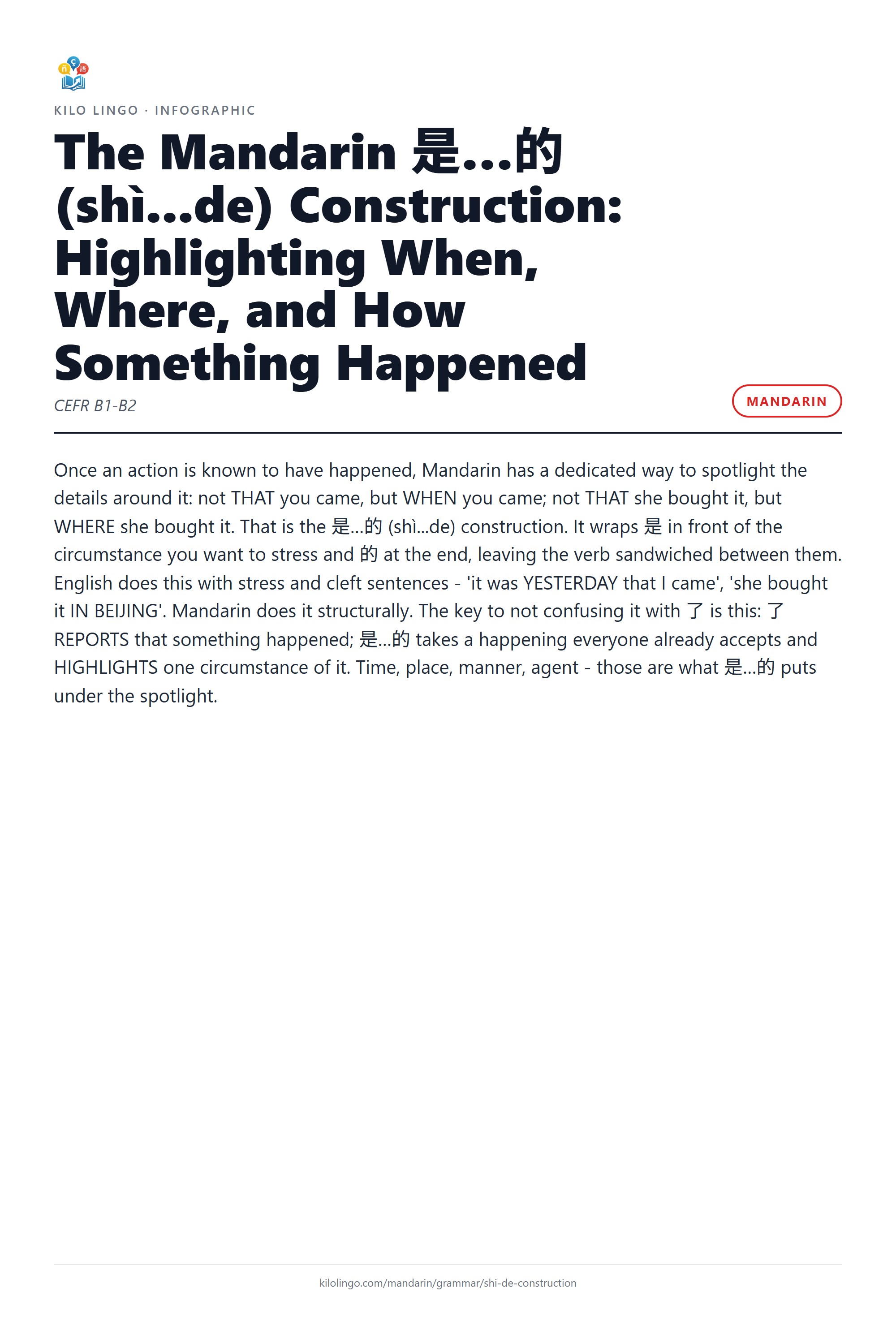
- The 是…的 constructionGrammar
Highlighting the time, place, manner or agent of a known past action: 我是昨天来的, 他是坐飞机来的, 这本书是在北京买的. How it differs from 了 (了 reports that something happened; 是…的 stresses a detail of it), and the 不是…的 negation.
- Words 1076-1085Vocabulary
10 words · ranks 1076-1085
- In a shopPhrase session
Buying something, and getting out without buying something.
- Words 1086-1095Vocabulary
10 words · ranks 1086-1095
- Word Bubbles review sessionReview games
Pop the words you just met by matching each one to its meaning. A couple of rounds and the batch is yours.
- Words 1096-1100Vocabulary
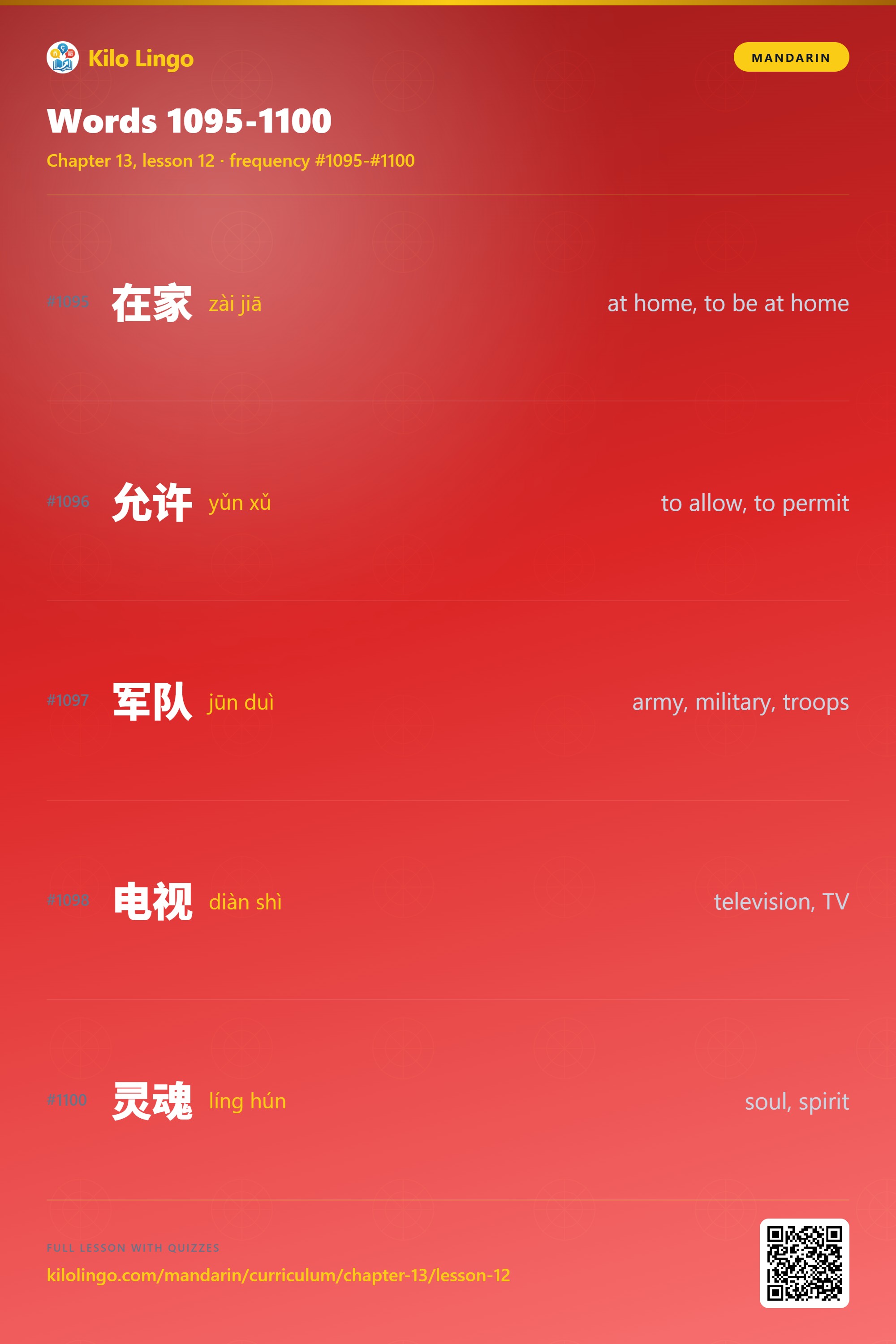
4 words · ranks 1096-1100
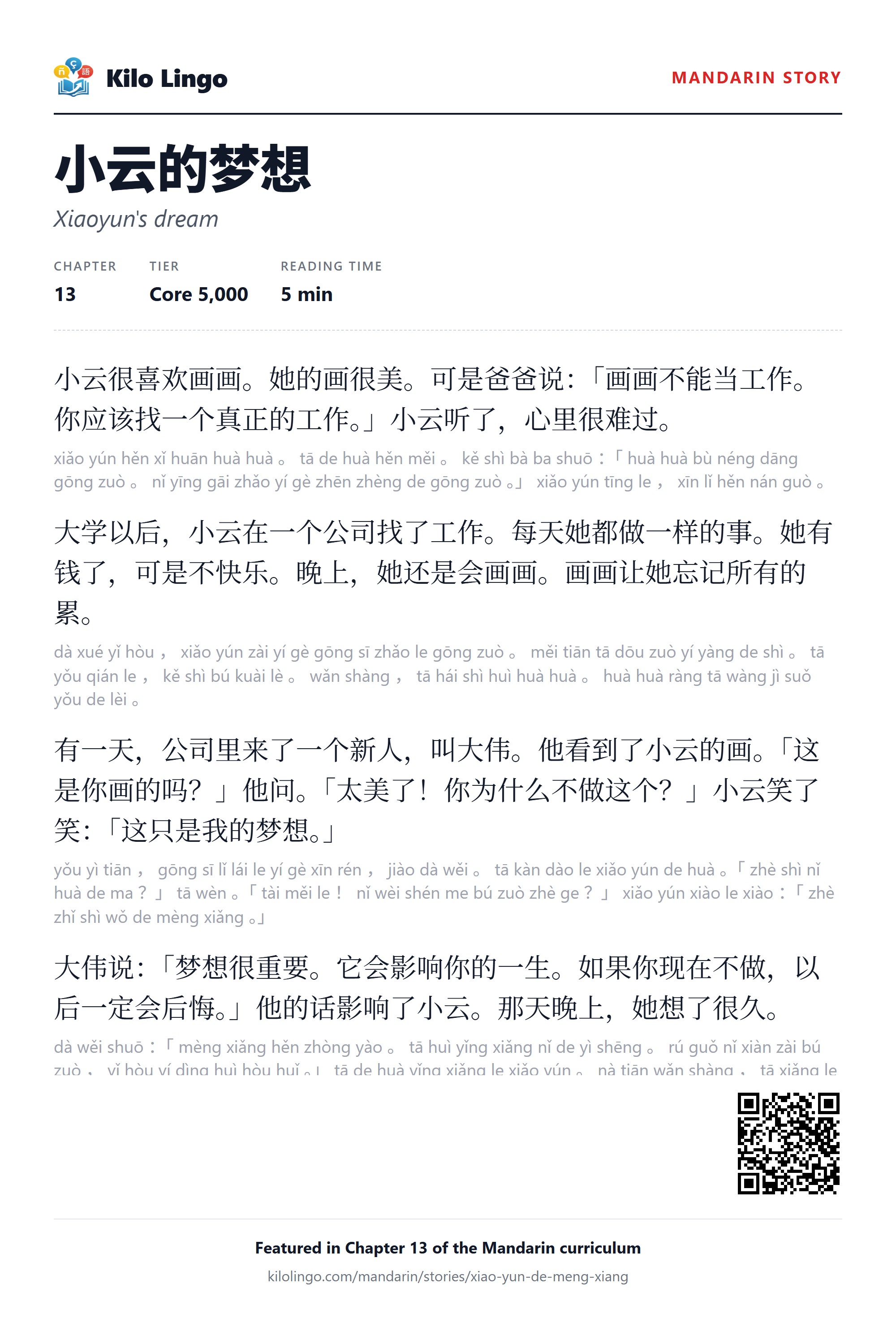
- Story milestone: top 1100 wordsGraded-reader story
You can read this story using only the words you've learned so far. Every content word sits at or above the rank-1100 ceiling.
- Arcade reviewReview games
Replay this chapter's words as games - a different kind of repetition, and it counts.
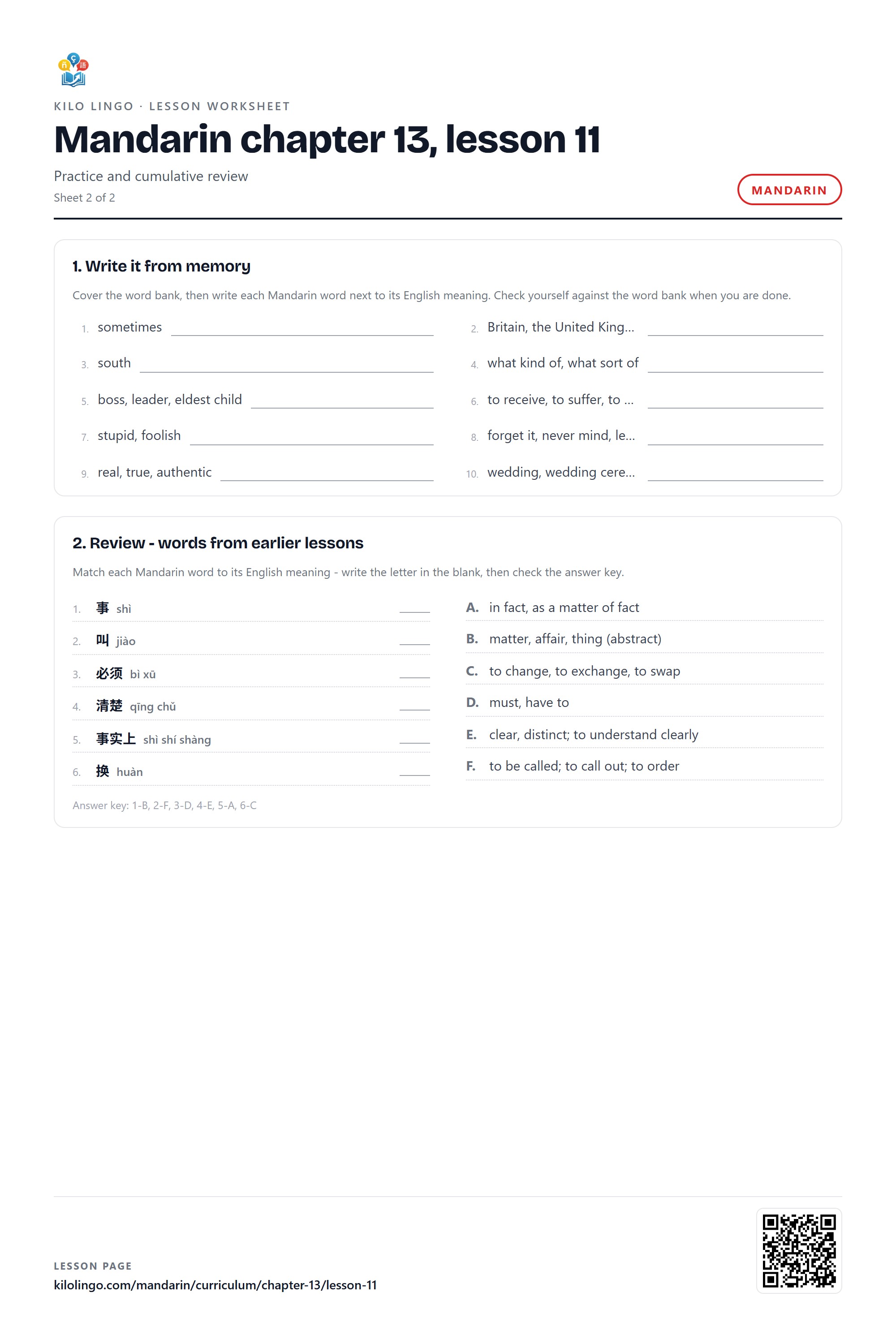
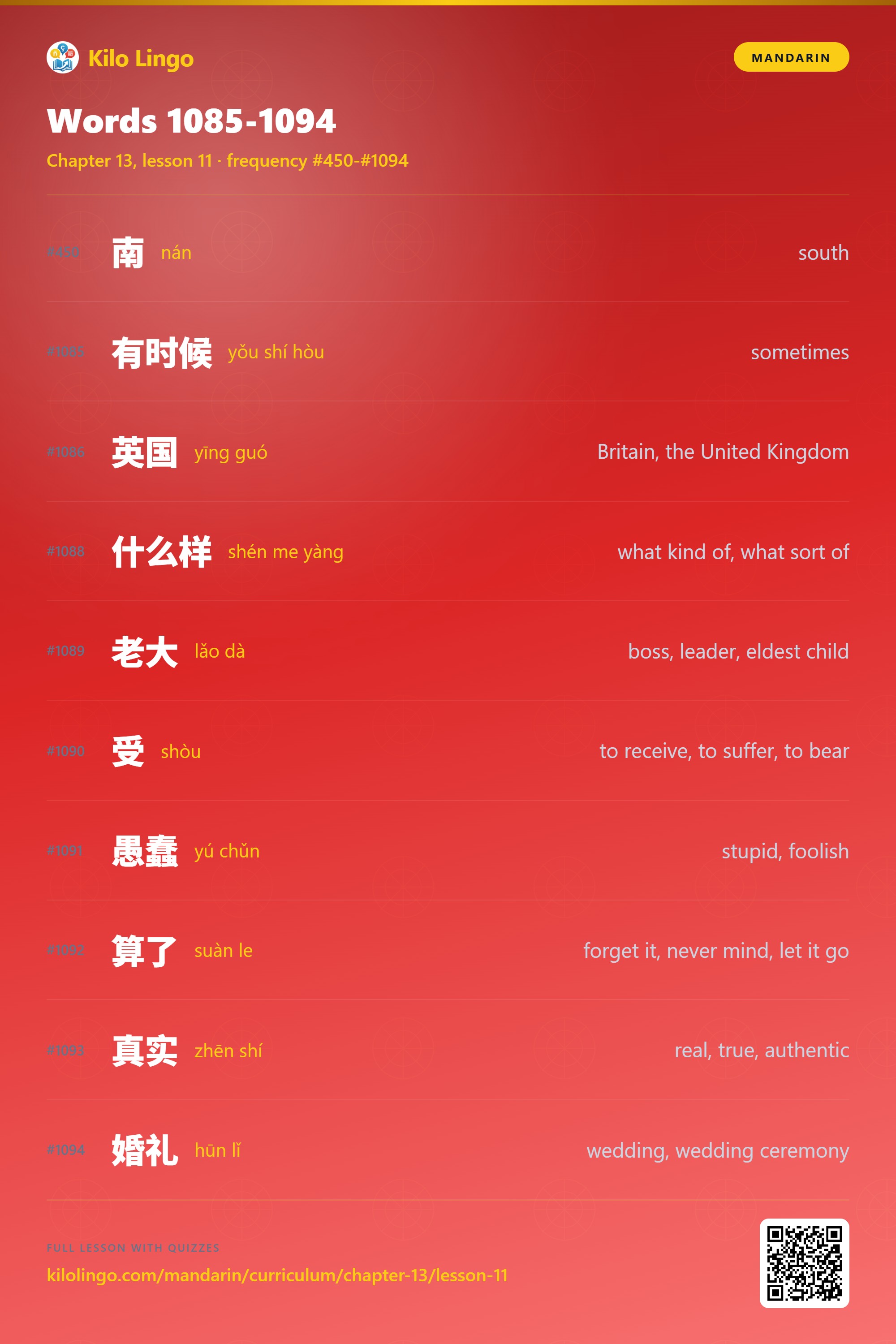
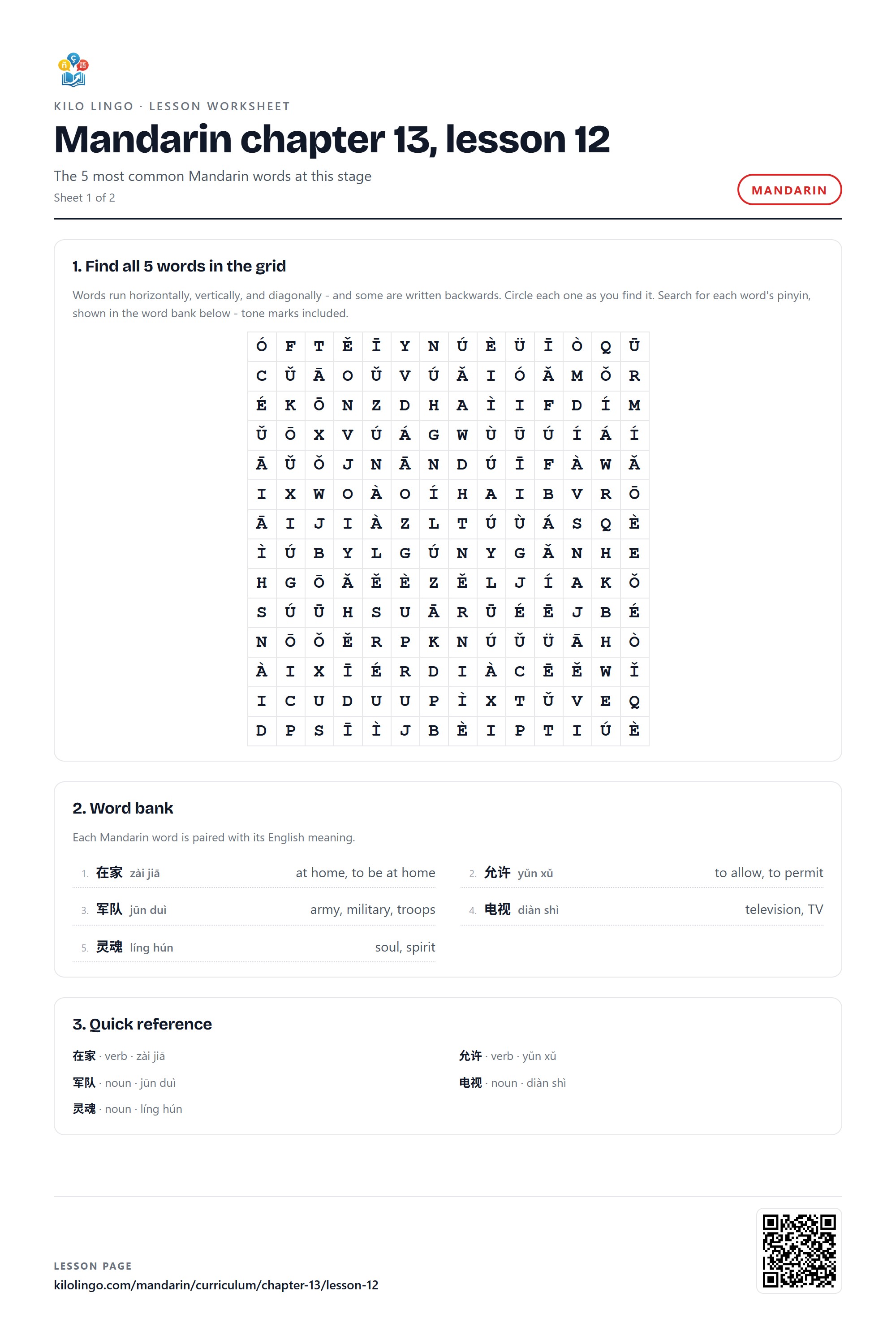
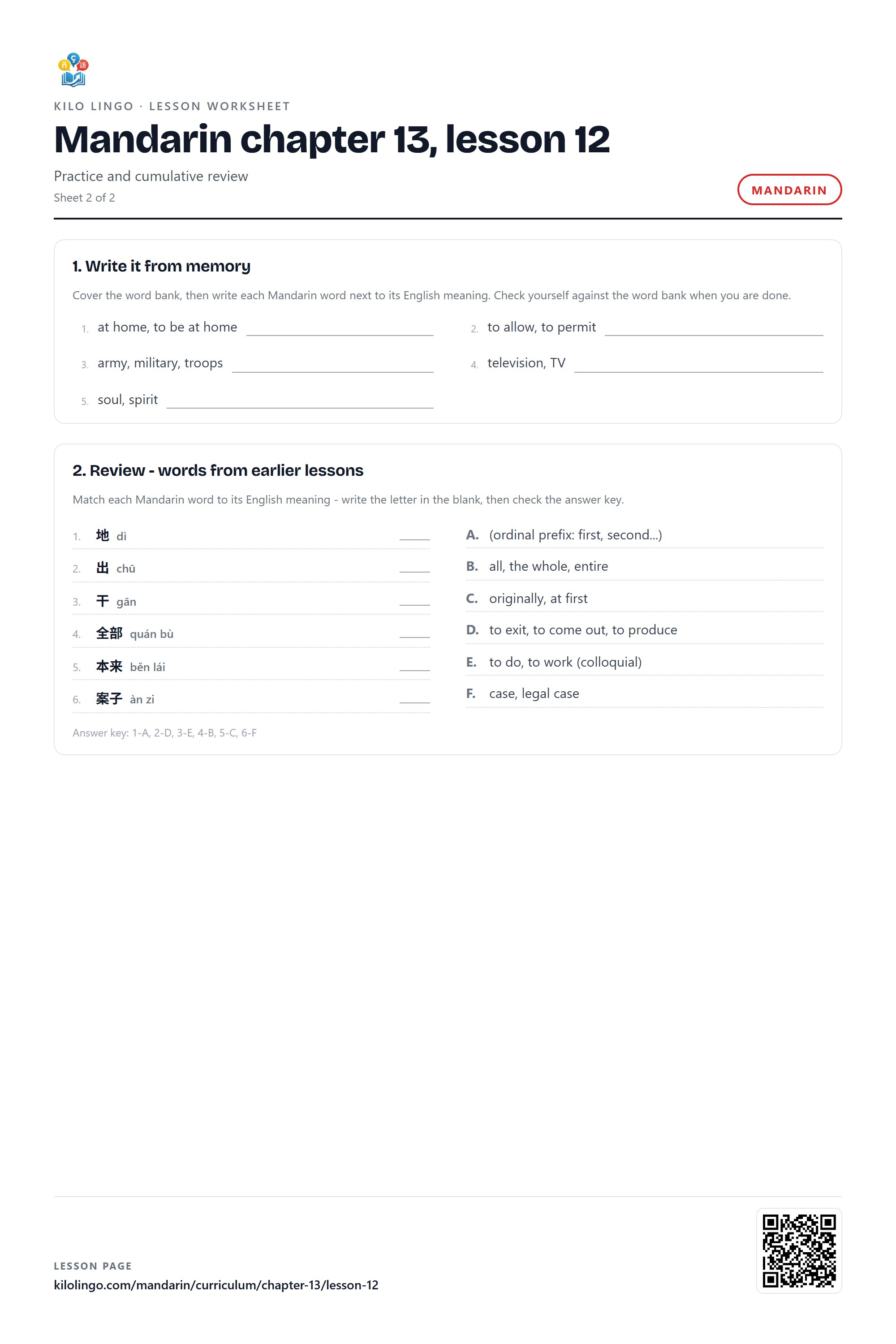
Word printables
Per-word sheets94 words · a worksheet, infographic and listicle each

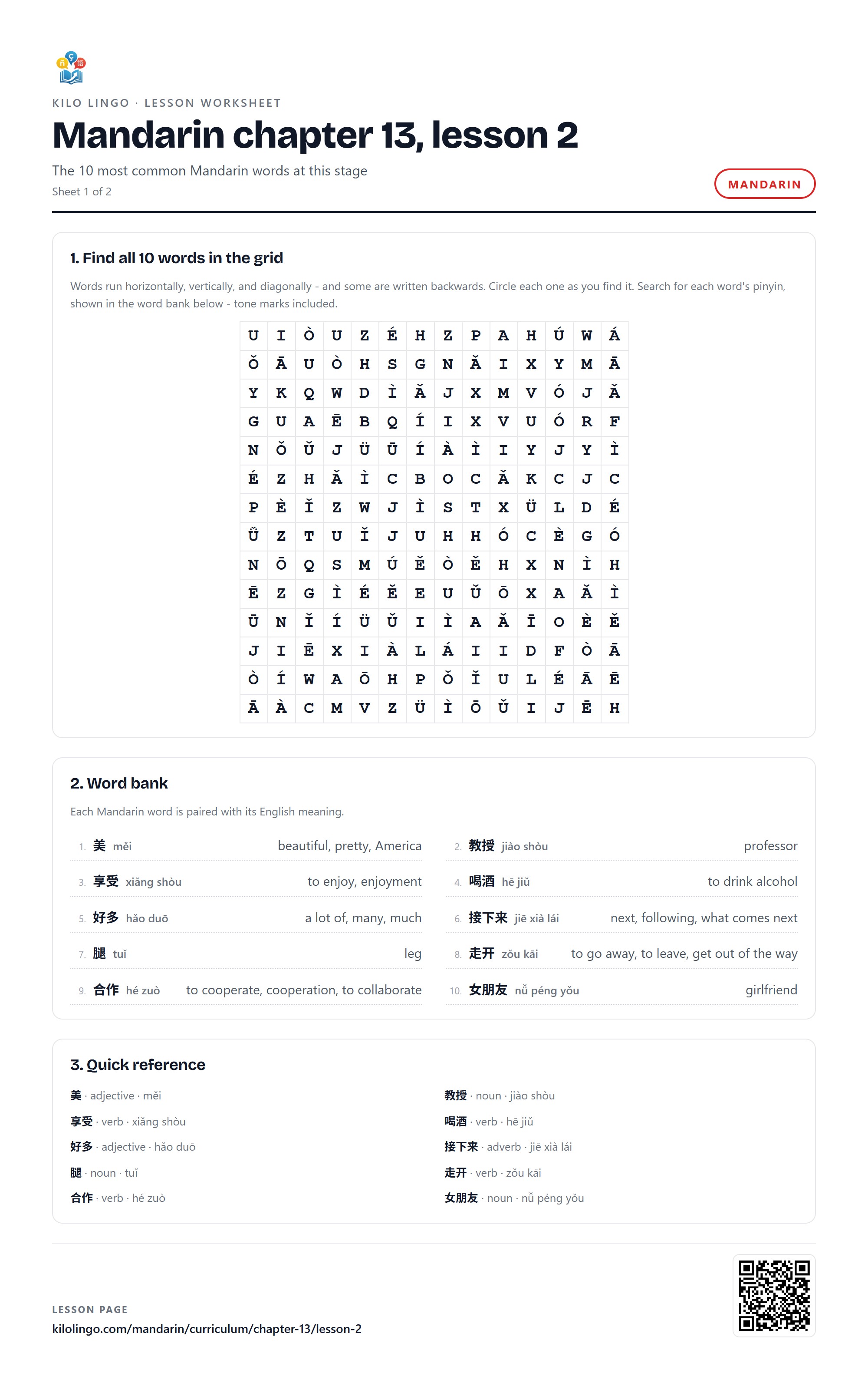
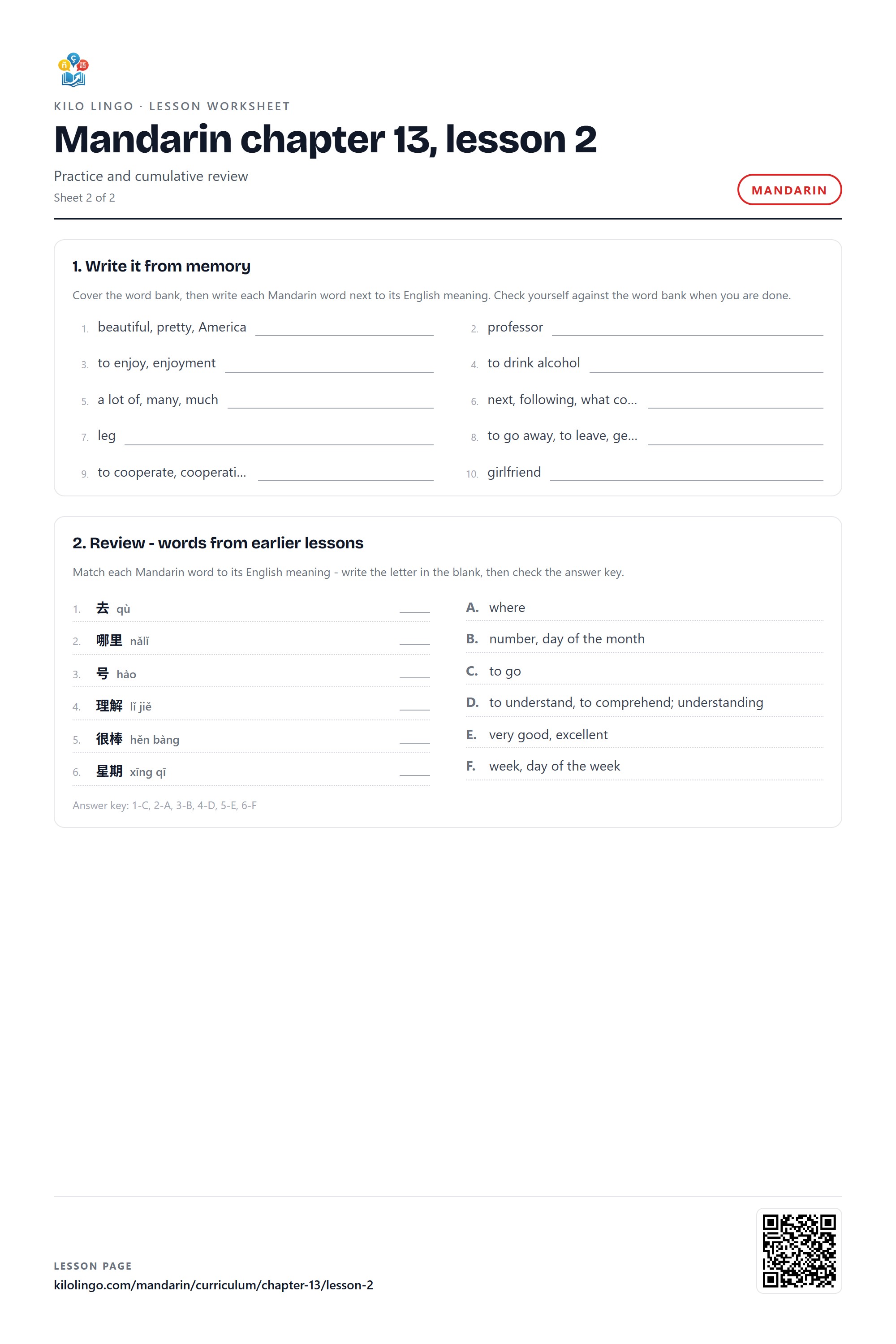

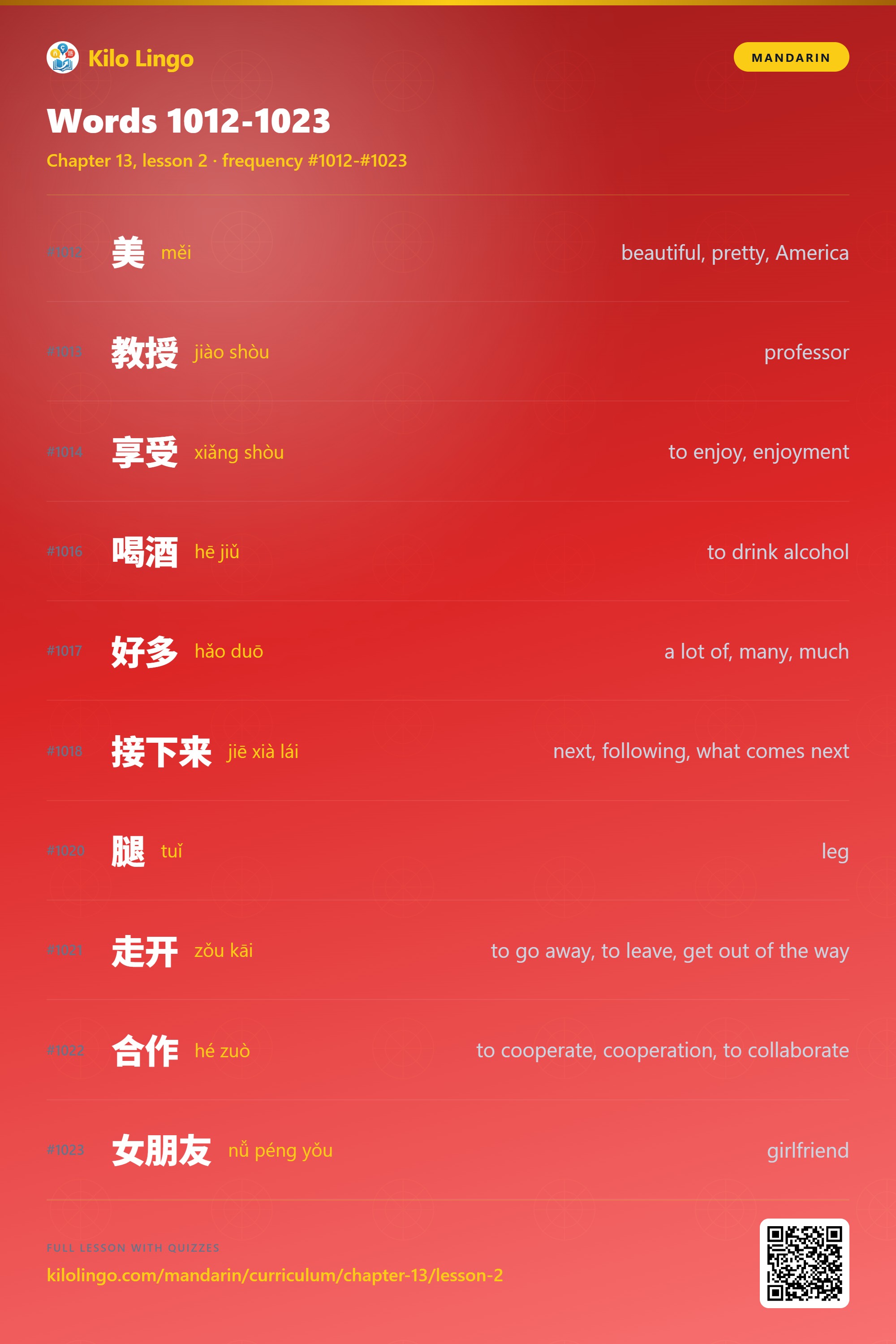
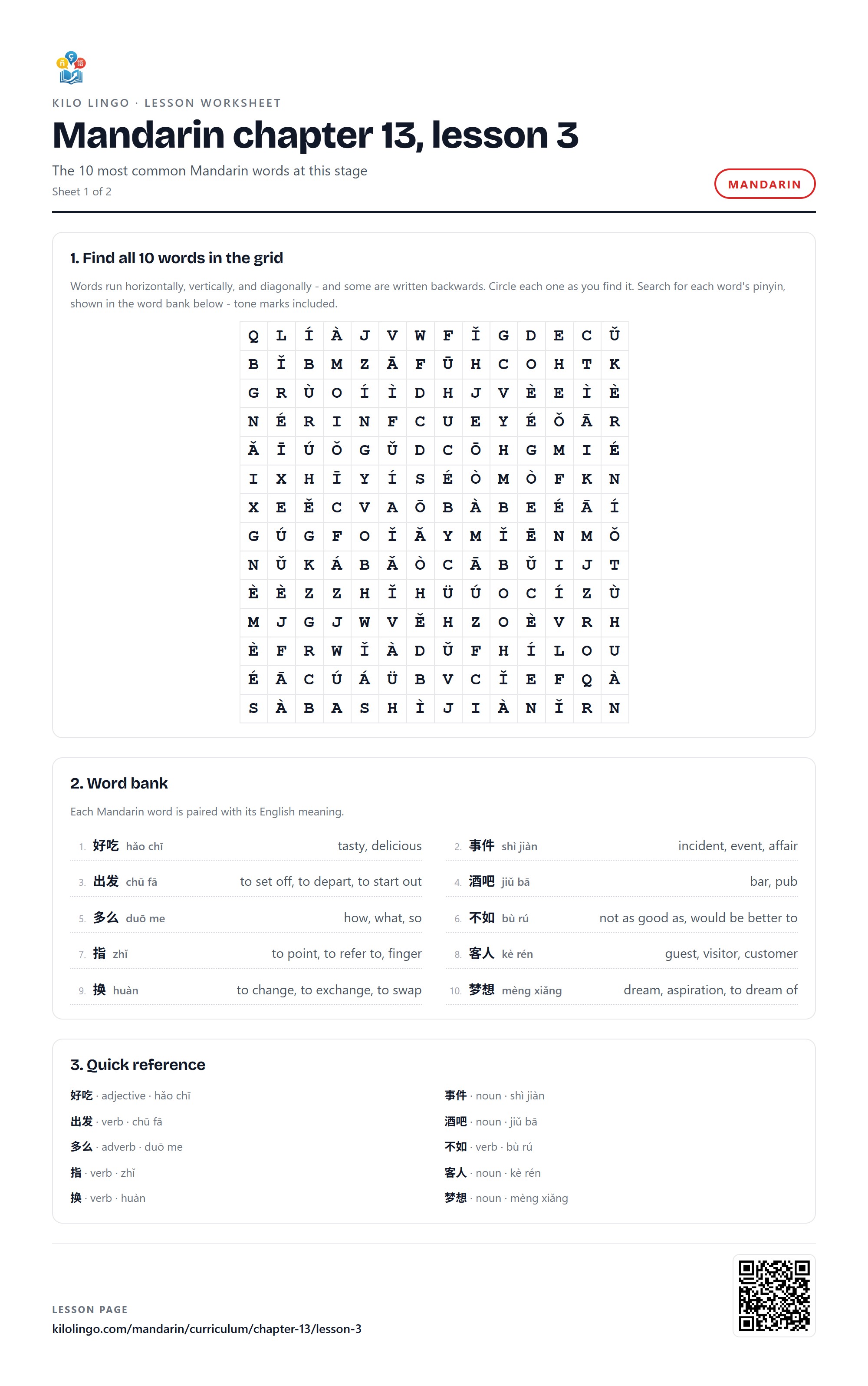
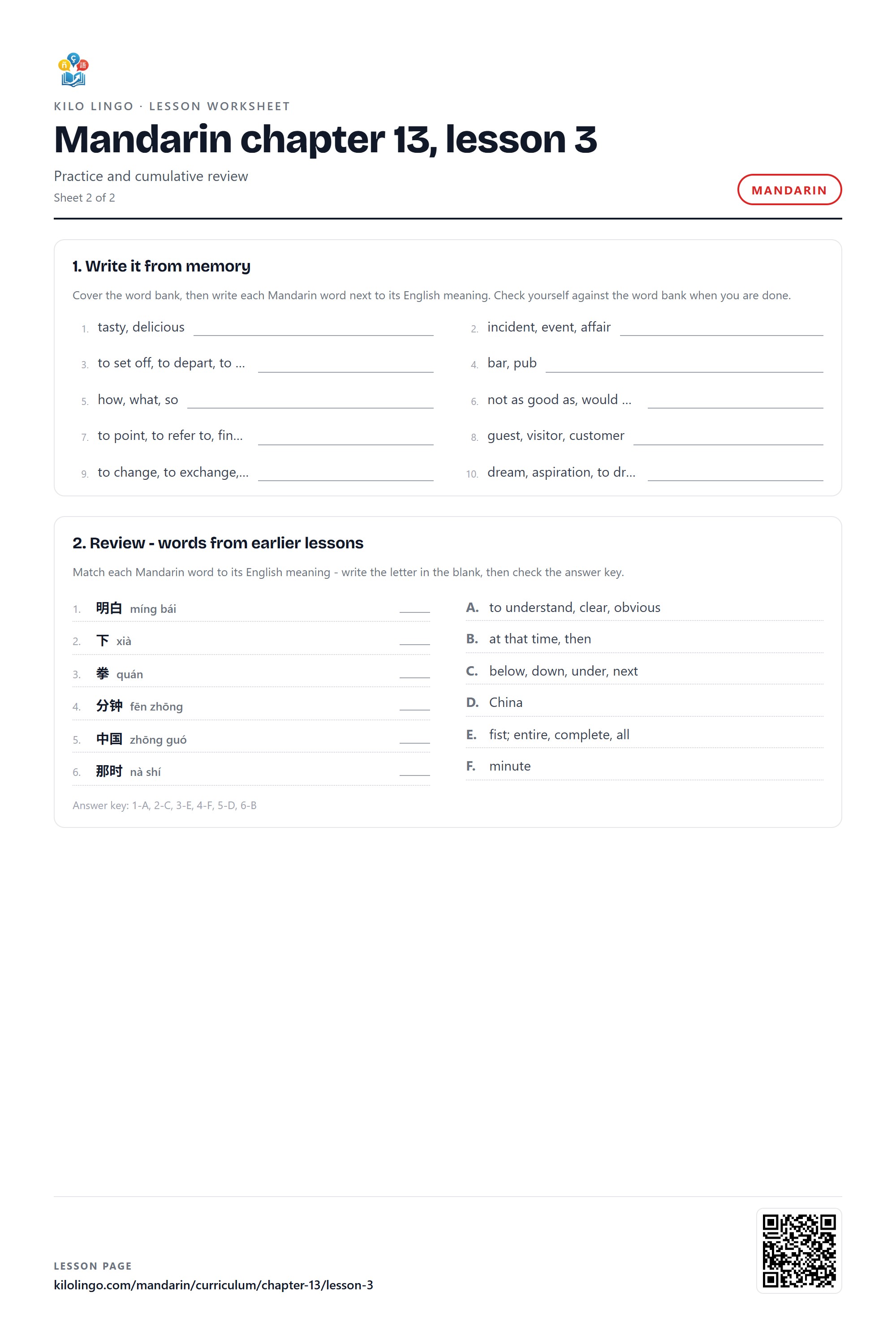

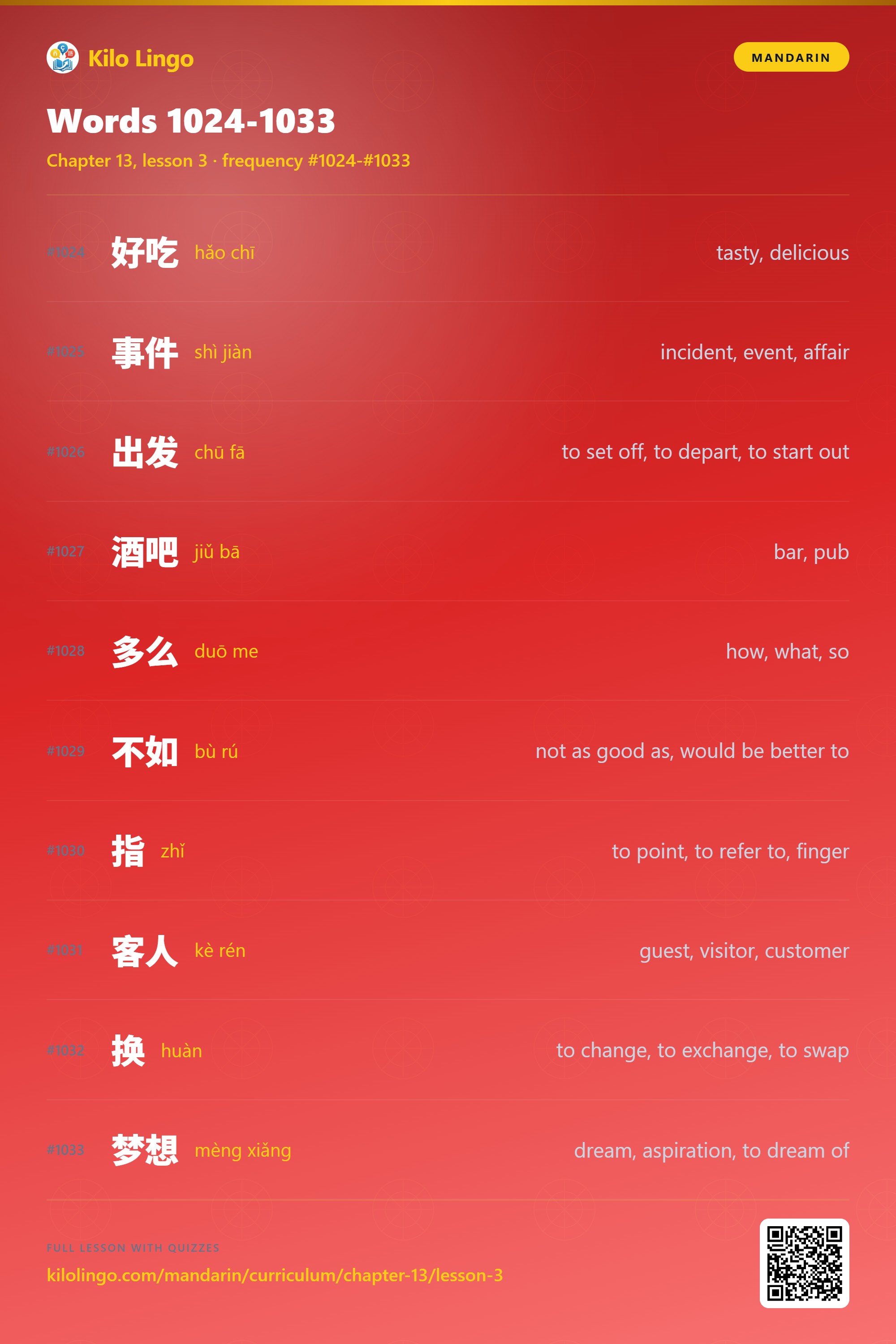
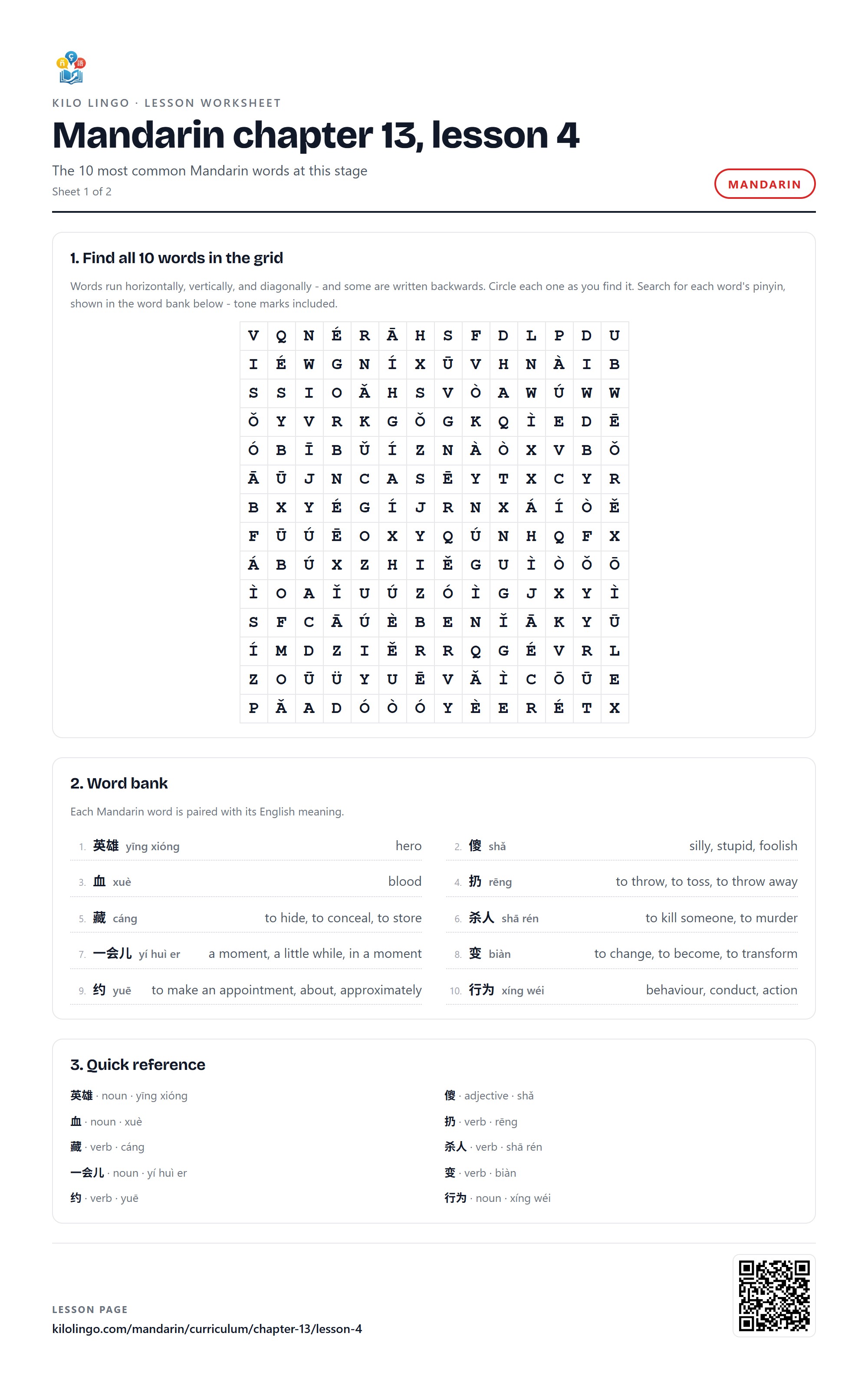
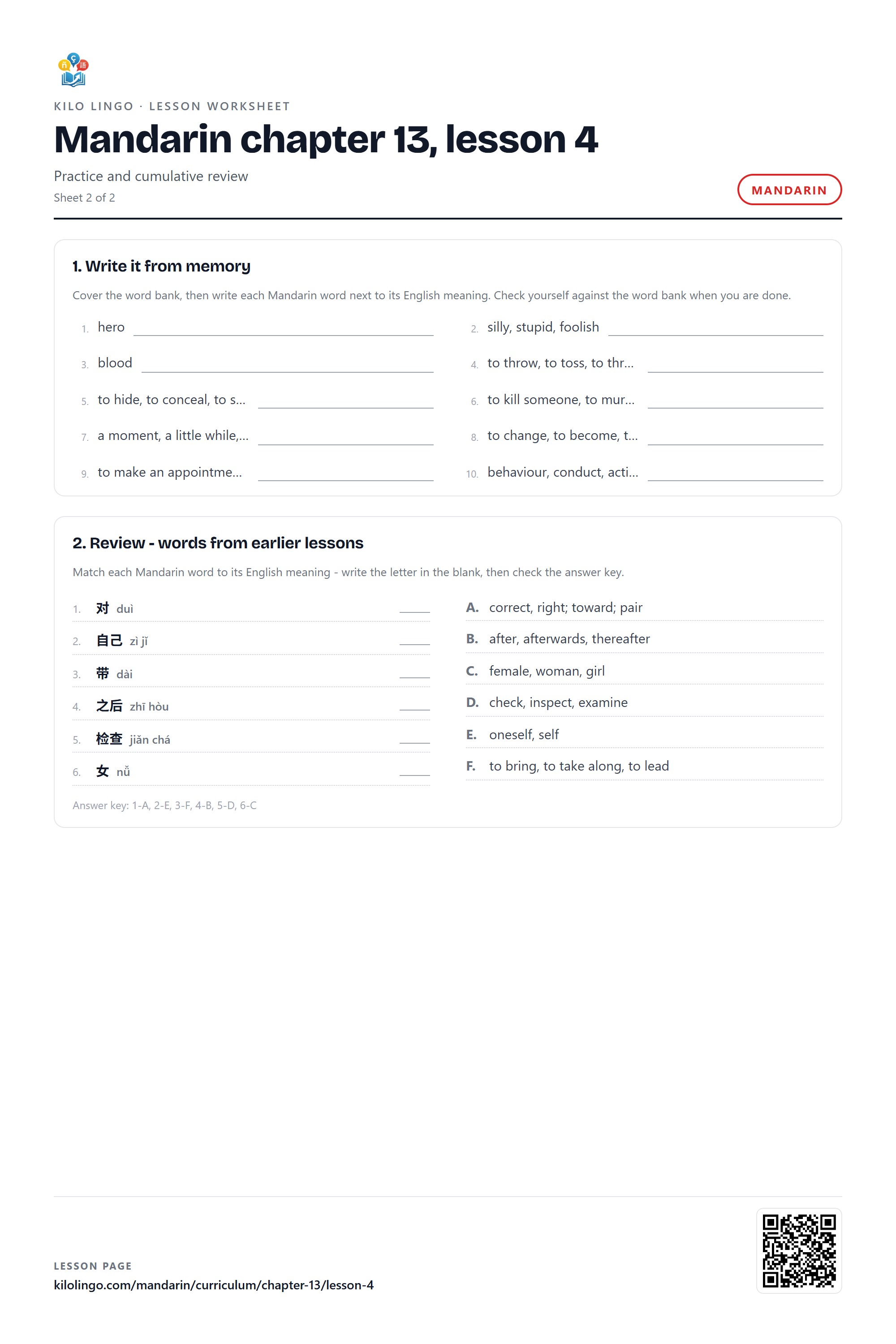




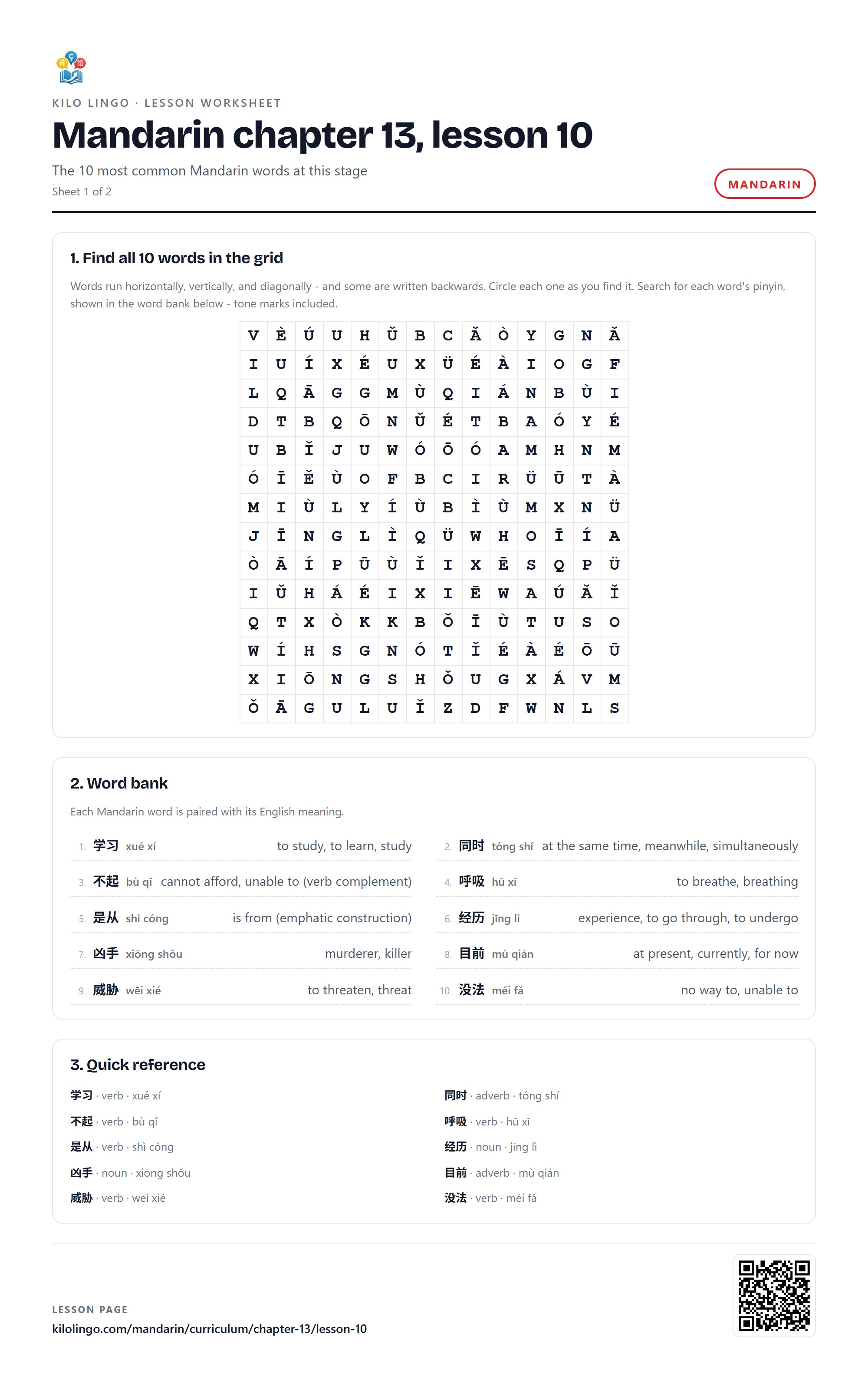
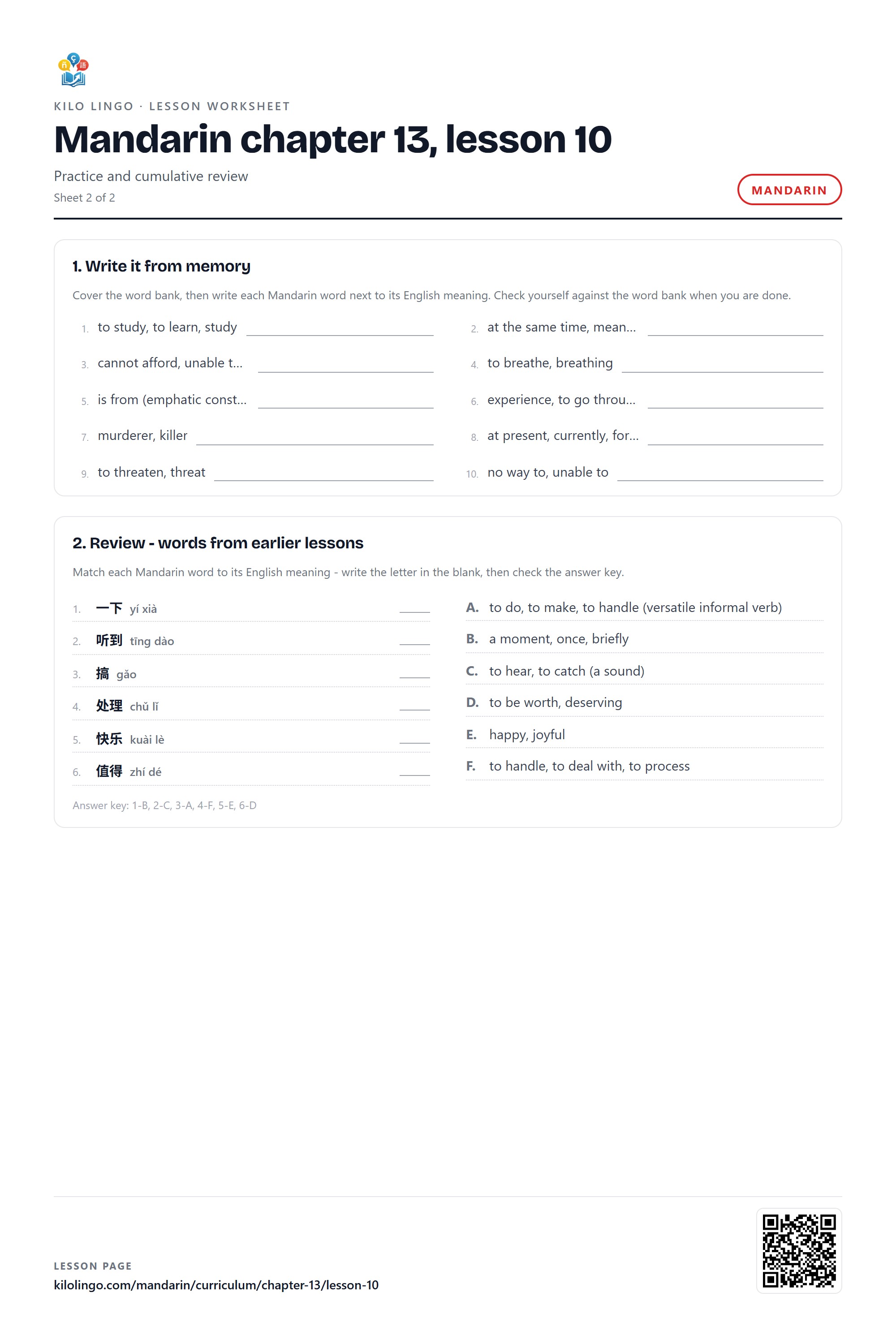

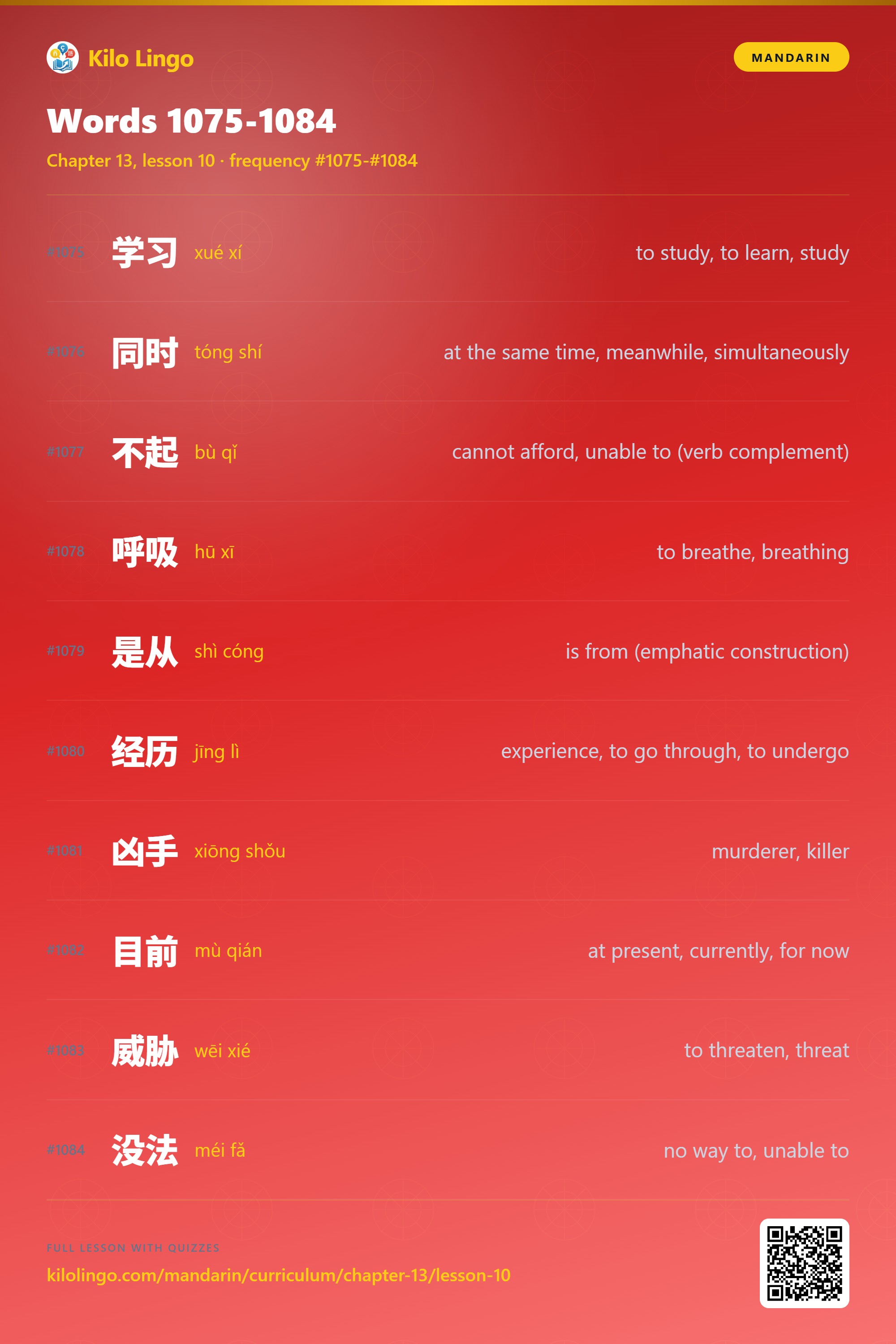
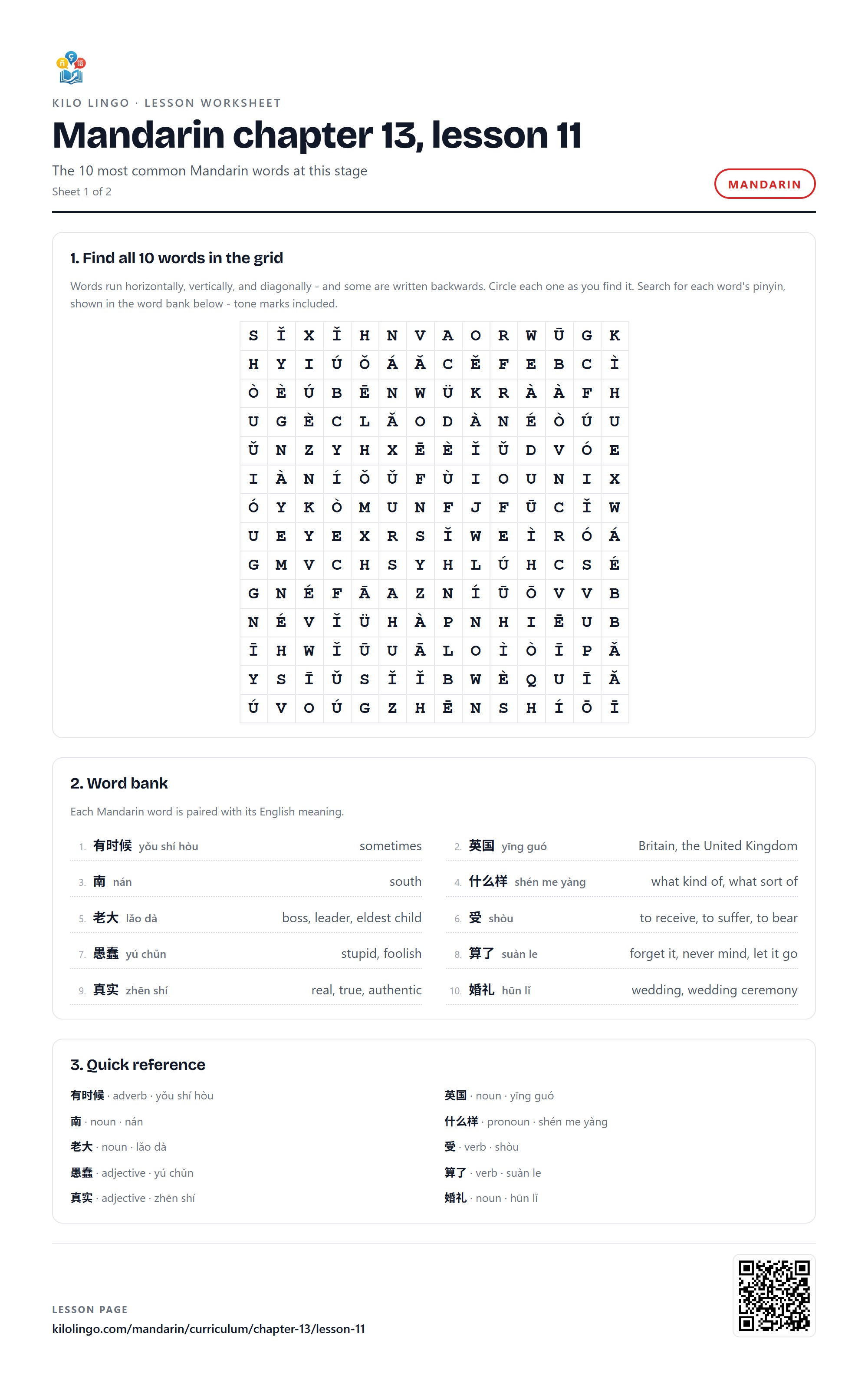


Chapter 14 · The 被 (bèi) passive
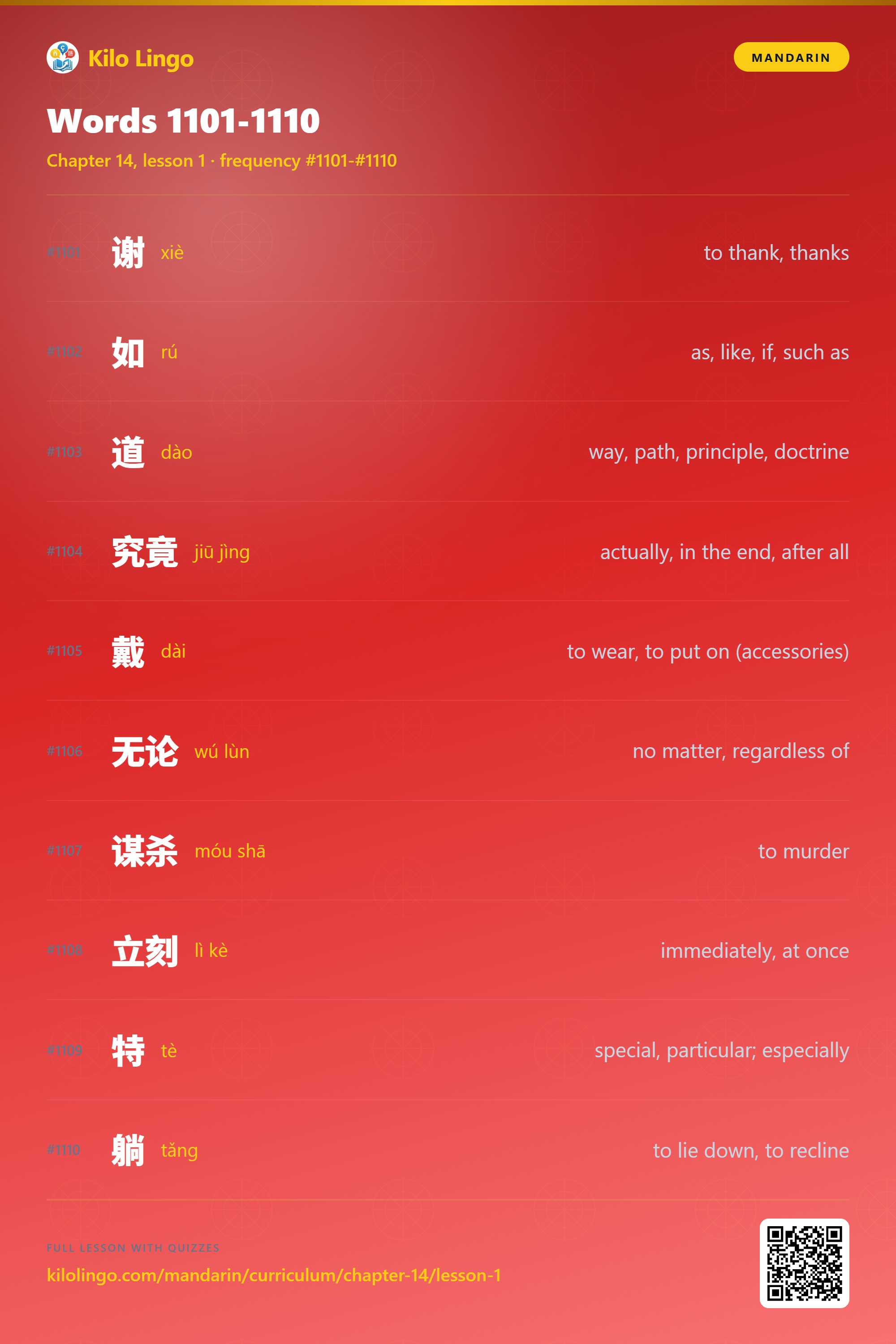
Chapter page →- Words 1101-1110Vocabulary
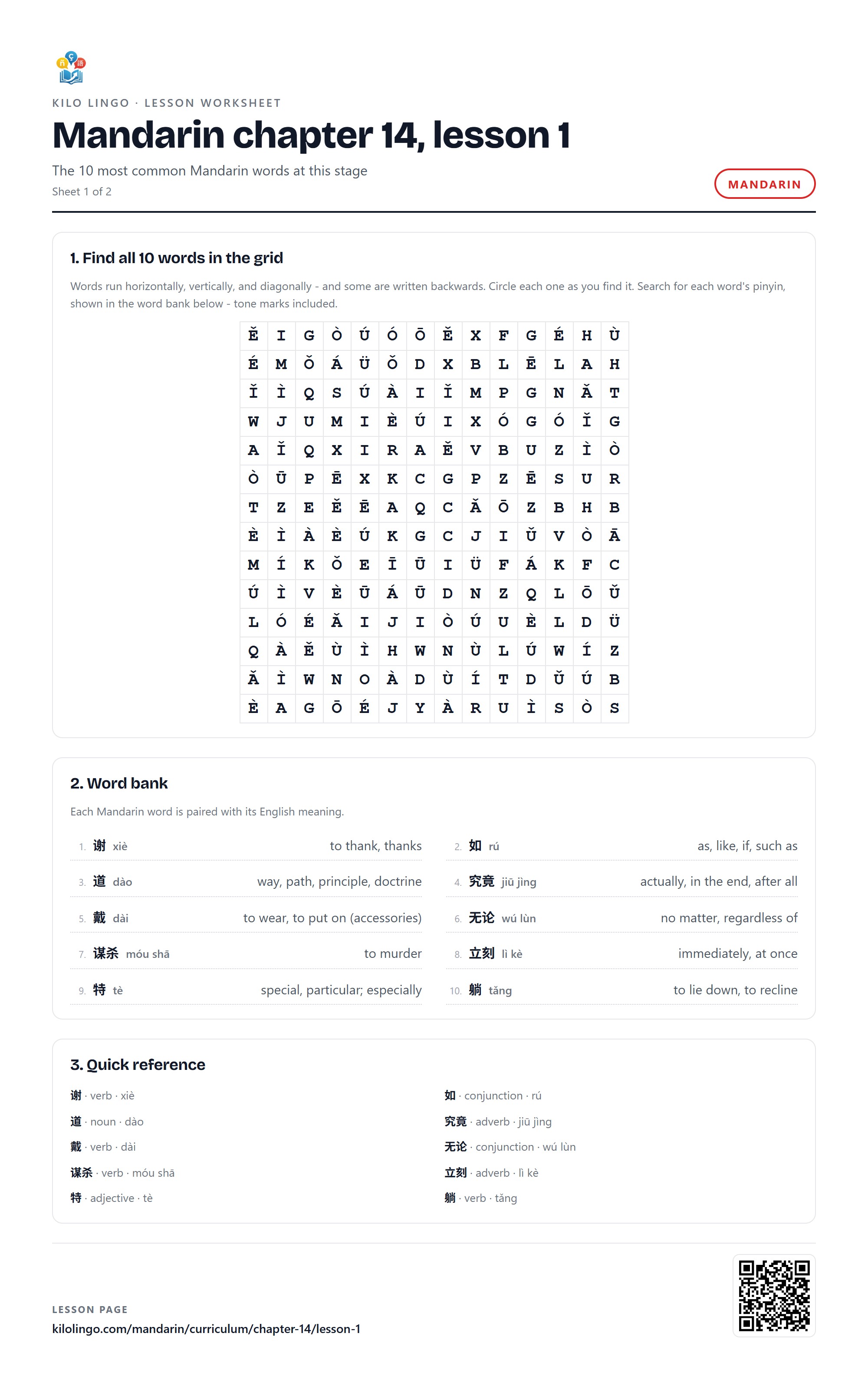
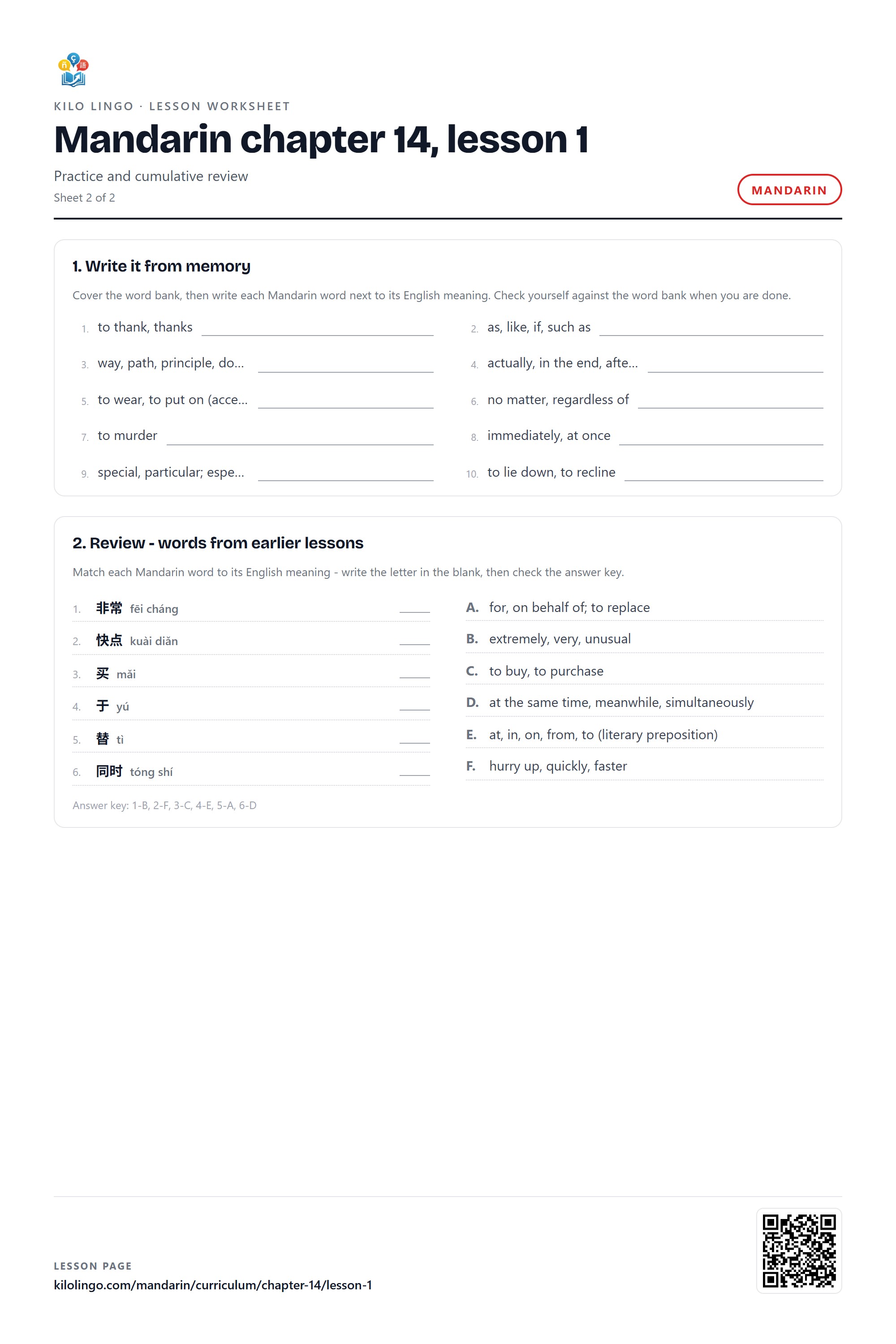
10 words · ranks 1101-1110
- Tone Shooter review sessionReview games
Shoot the words you just met into their tones by colour. The quickest way to fix a tone in place.
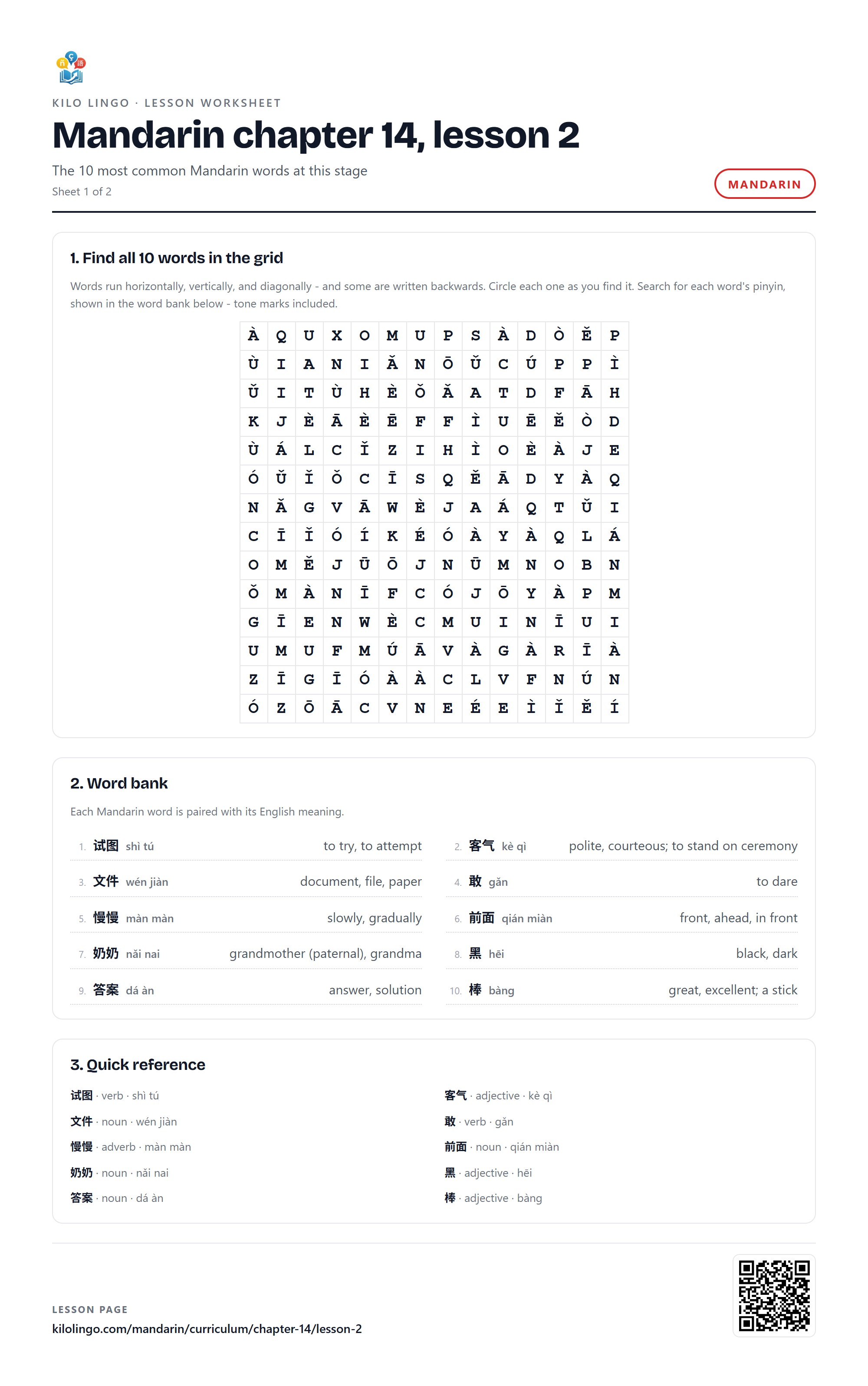
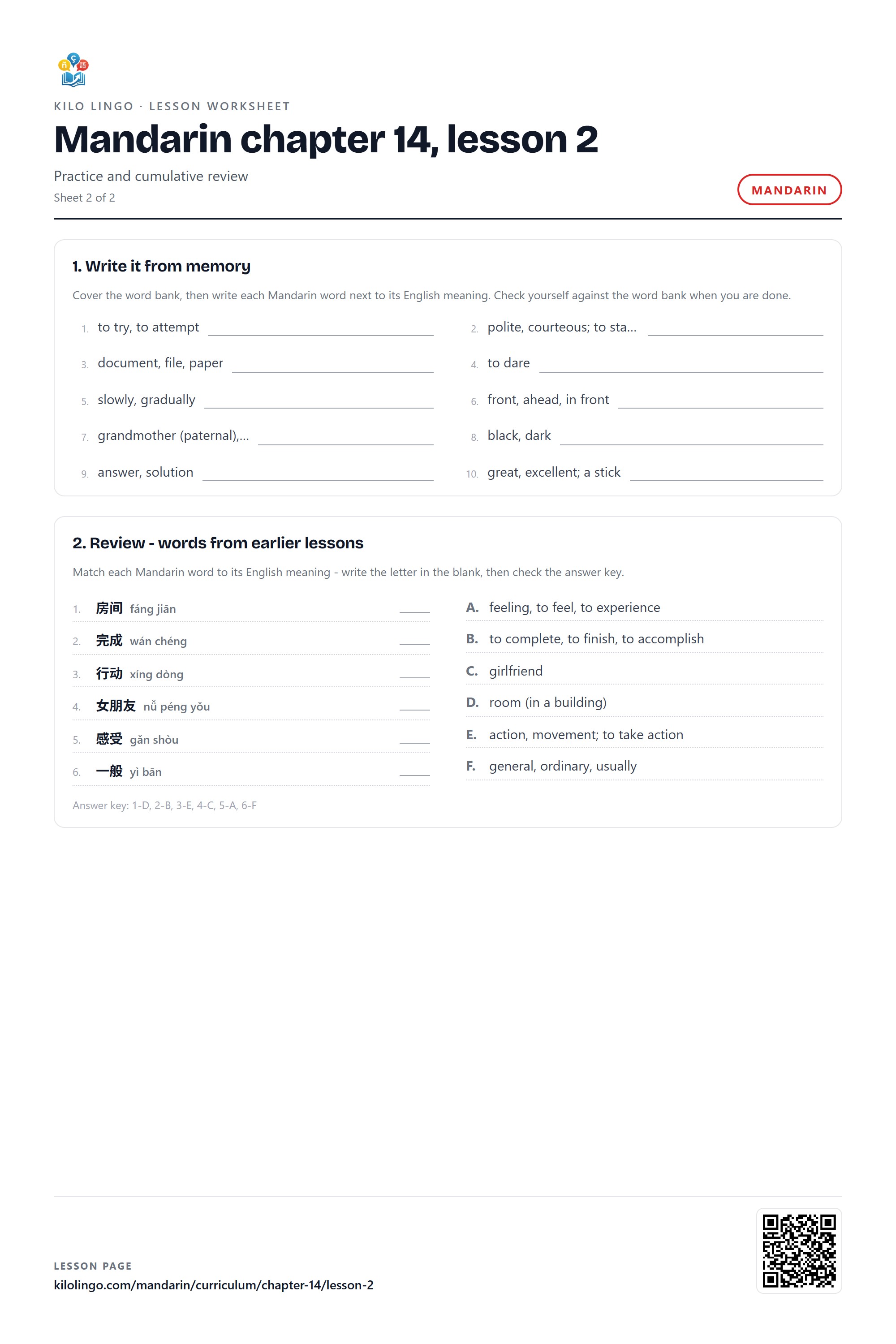
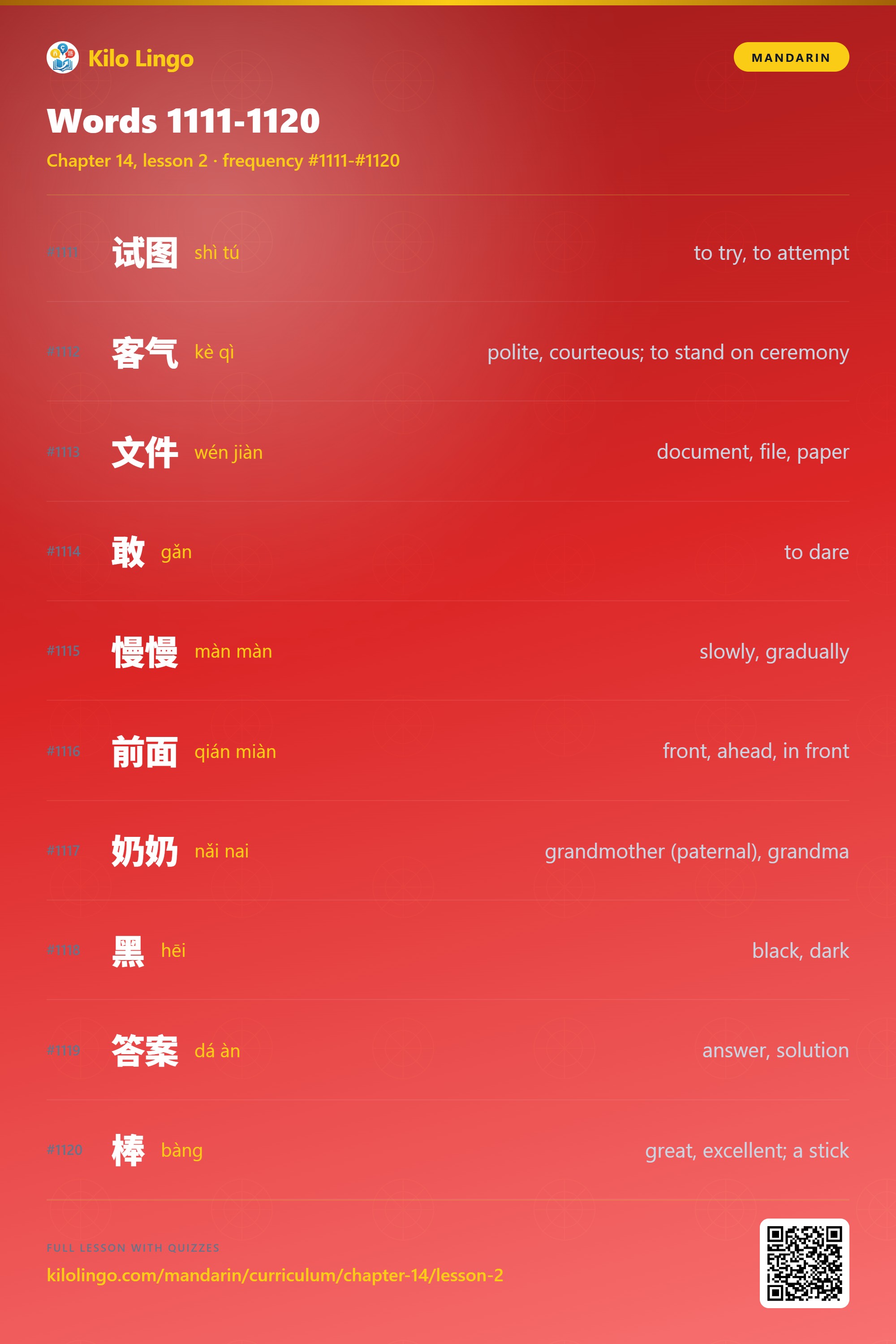
- Words 1111-1120Vocabulary
10 words · ranks 1111-1120
- Crossword review sessionReview games
Cross the words you just met, clued in English. Slower than a drill, and it sticks harder.
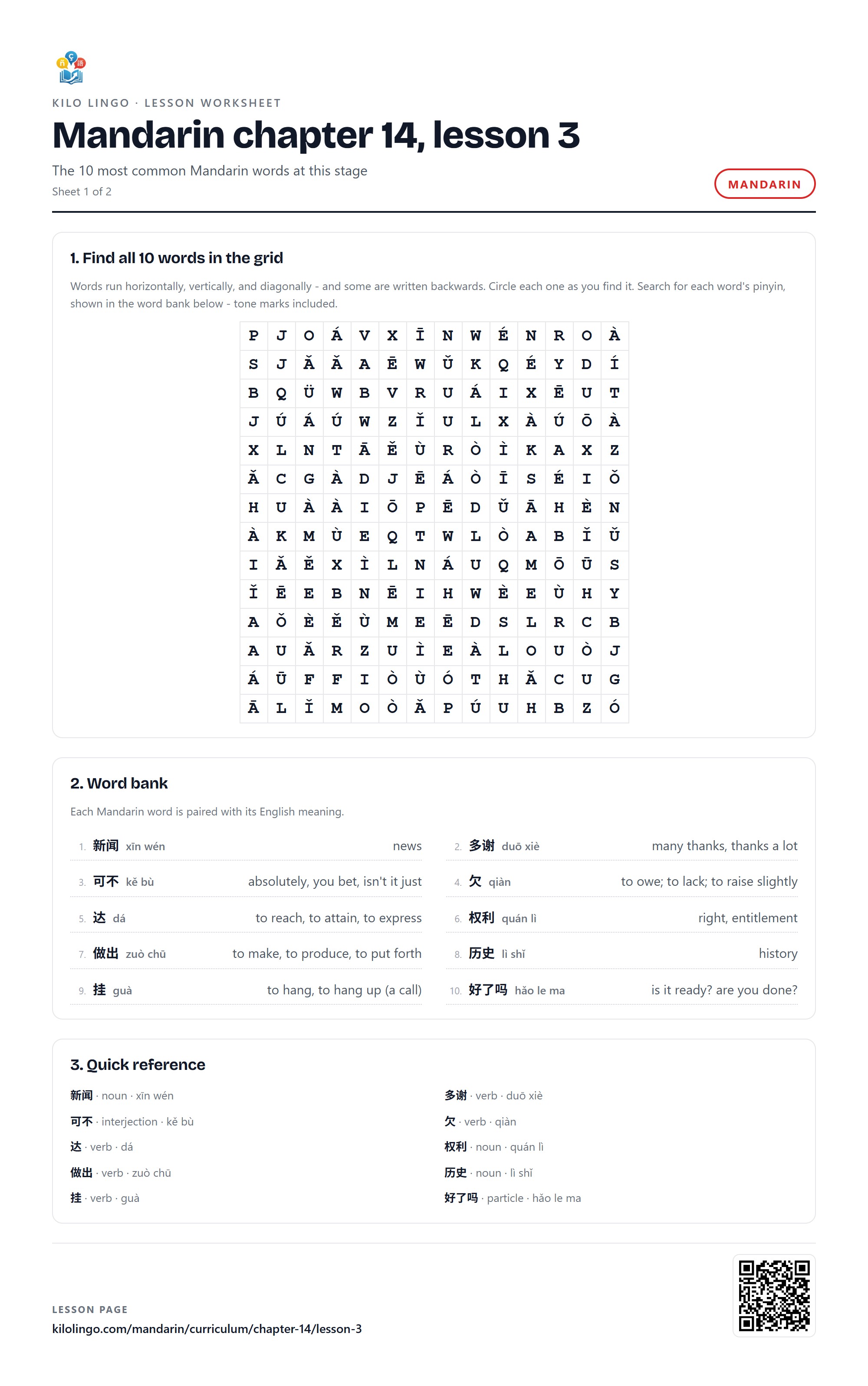
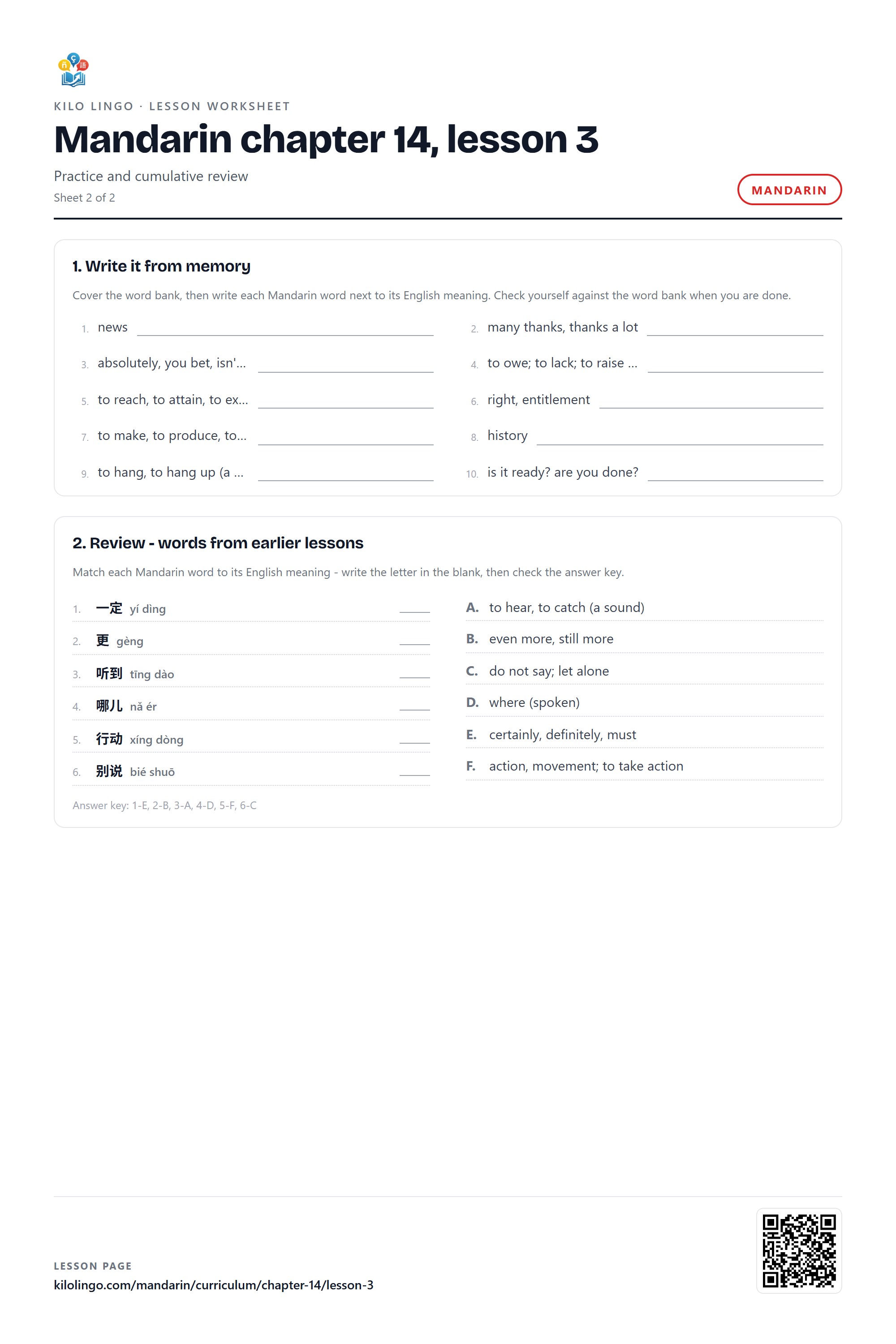
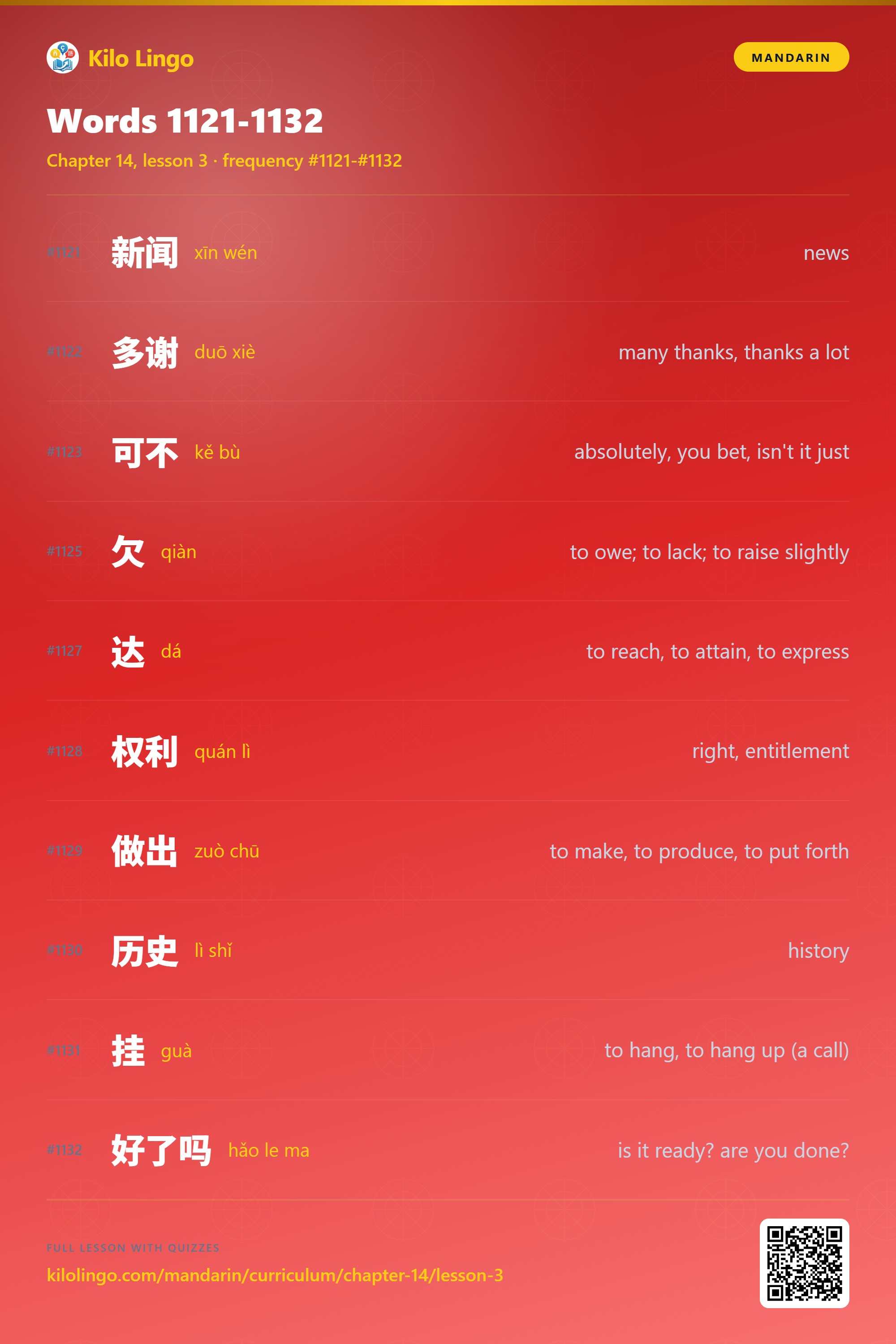
- Words 1121-1132Vocabulary
10 words · ranks 1121-1132
- Word Bubbles review sessionReview games
Pop the words you just met by matching each one to its meaning. A couple of rounds and the batch is yours.
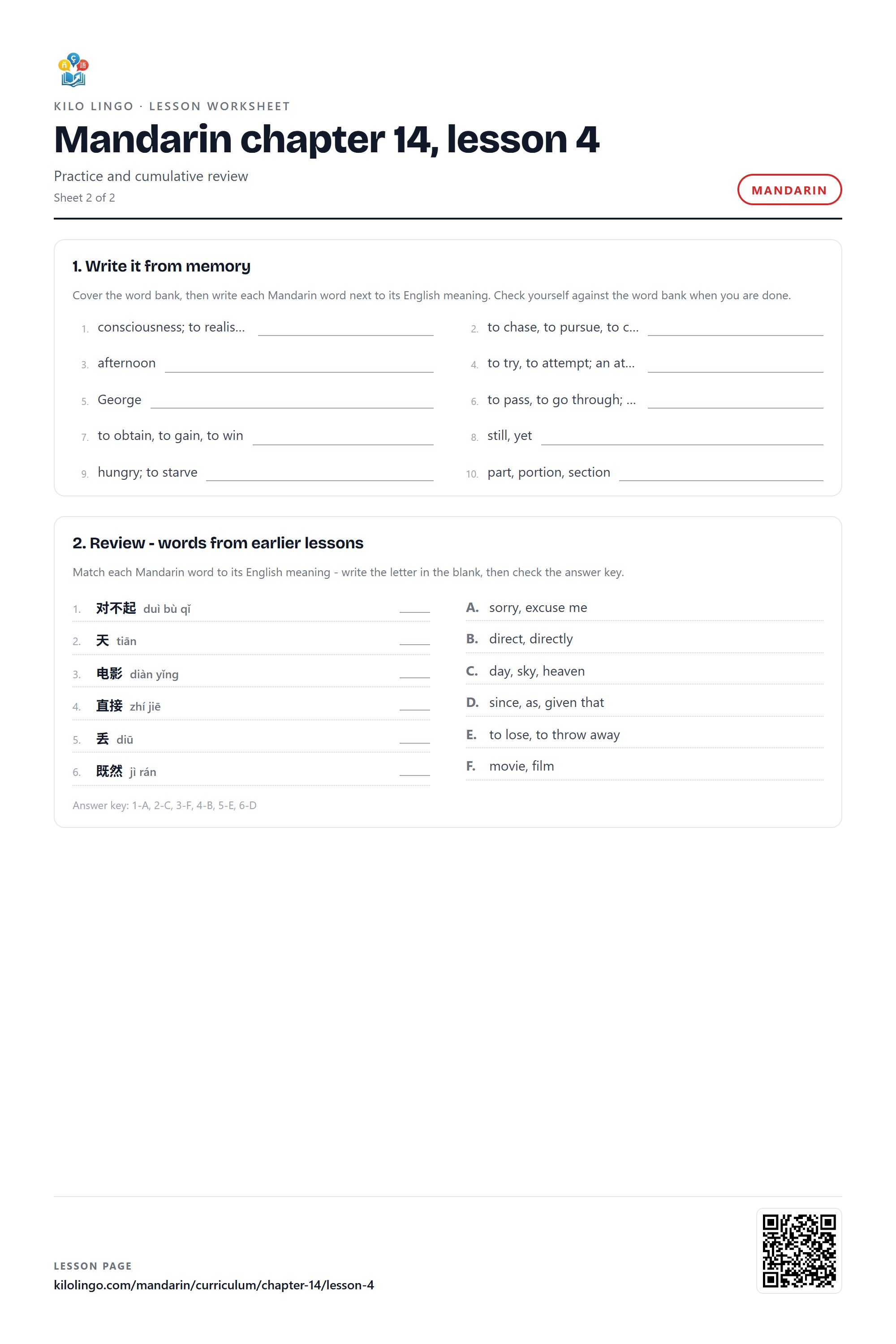
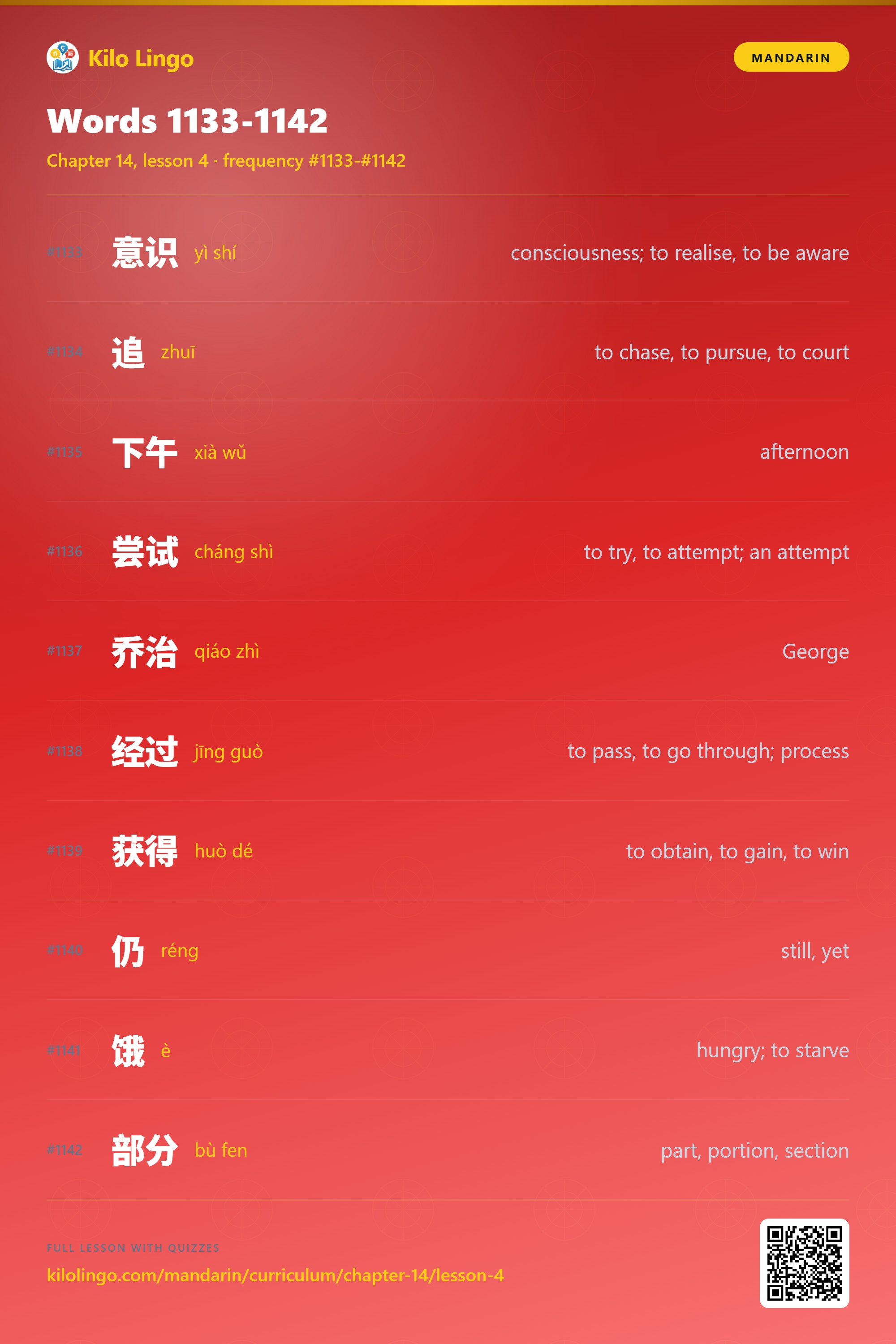
- Words 1133-1142Vocabulary
10 words · ranks 1133-1142
- The 被 (bèi) passiveGrammar
Putting the affected thing first and saying what was done to it: Receiver + 被 + (Agent) + verb + completion. Why the agent is optional (杯子被打破了), why the verb still needs a result like 把 does, the 让/叫/给 colloquial alternatives, the adversity flavour, and why Mandarin uses 被 far less than English does. Negation sits before 被 with 没 (我的车没被偷).
- 看 or 看见?Mistake clinic
One is trying. The other is succeeding.
- Words 1143-1153Vocabulary
10 words · ranks 1143-1153
- Tone Shooter review sessionReview games
Shoot the words you just met into their tones by colour. The quickest way to fix a tone in place.
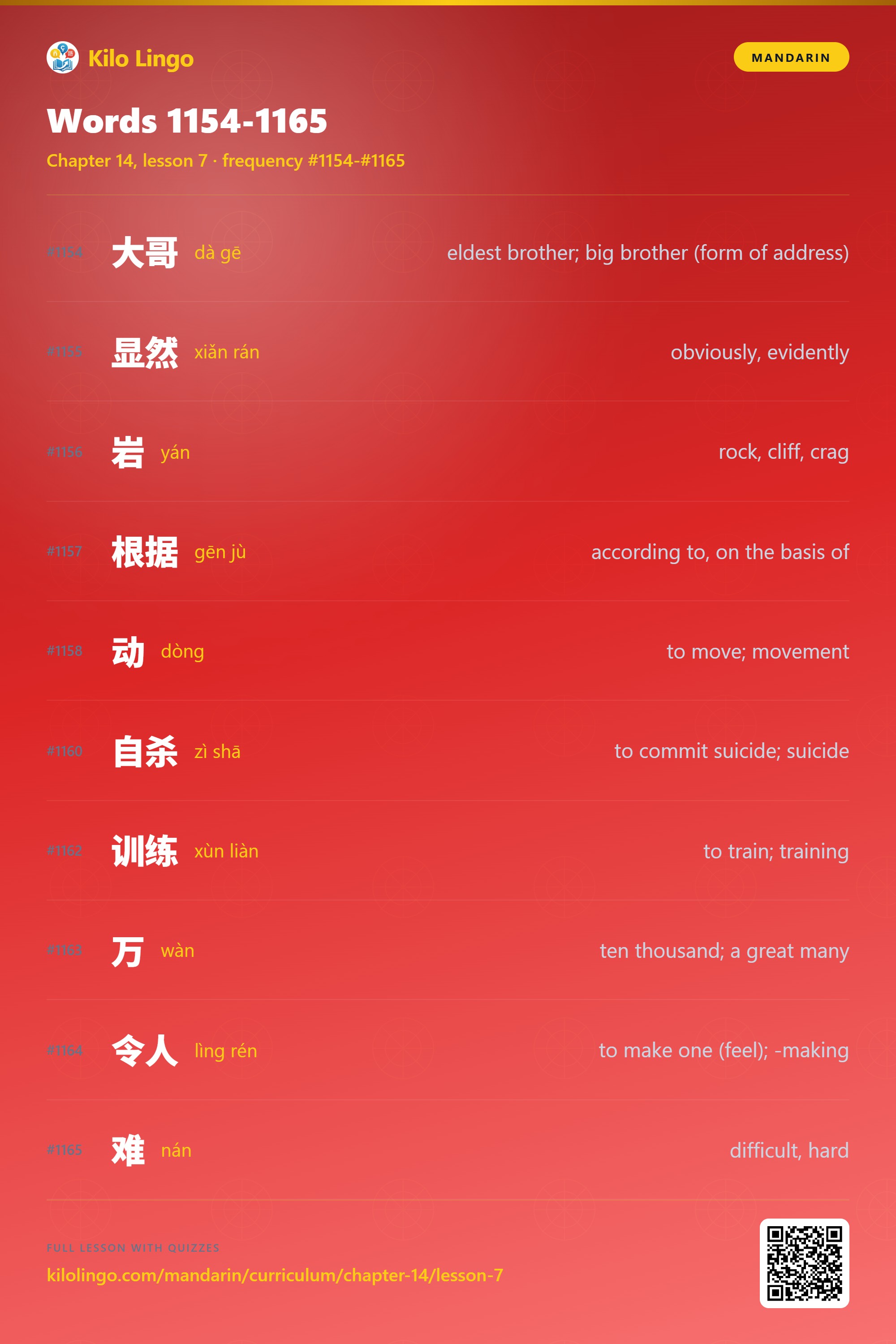
- Words 1154-1165Vocabulary
10 words · ranks 1154-1165
- Word Bubbles review sessionReview games
Pop the words you just met by matching each one to its meaning. A couple of rounds and the batch is yours.
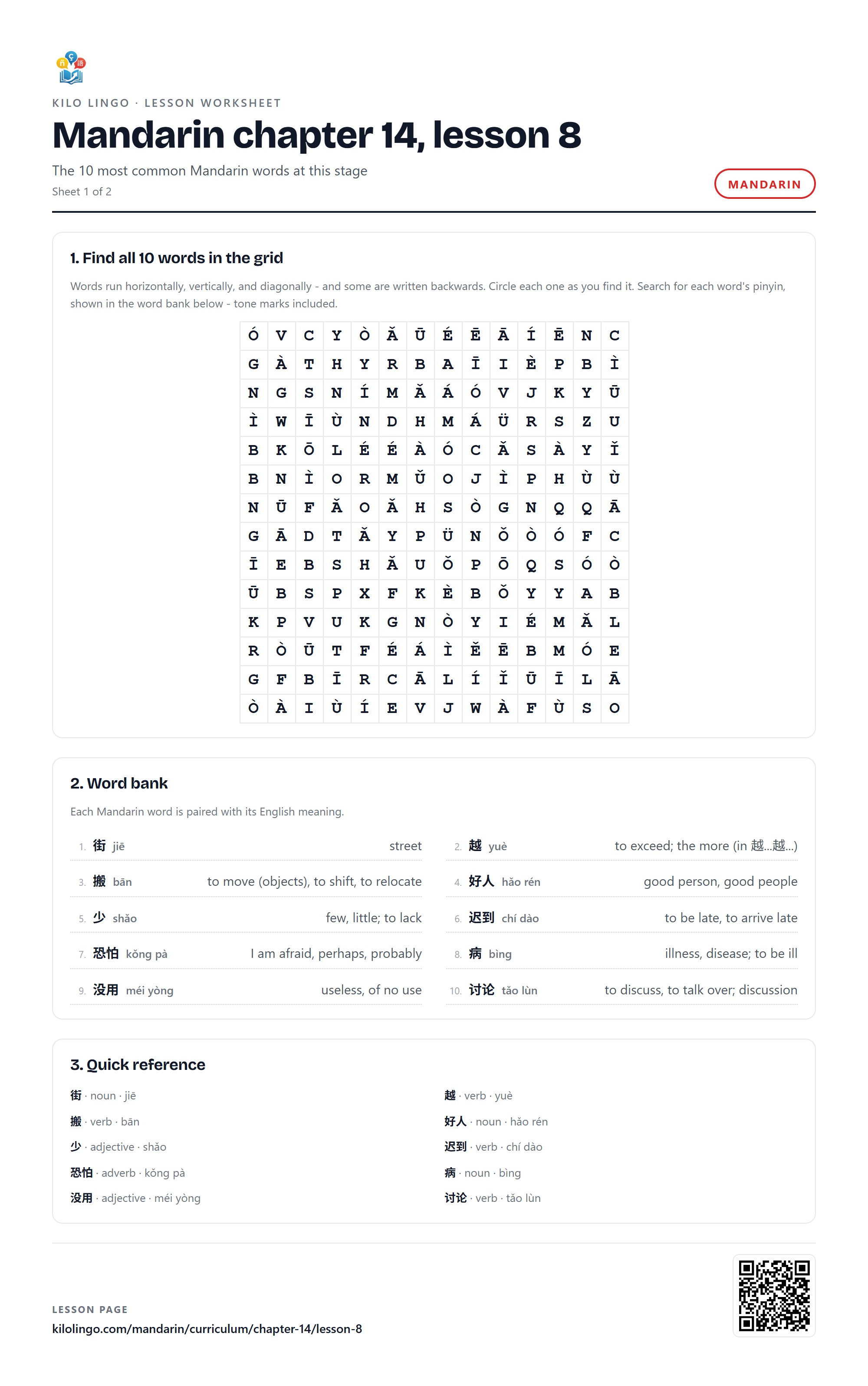
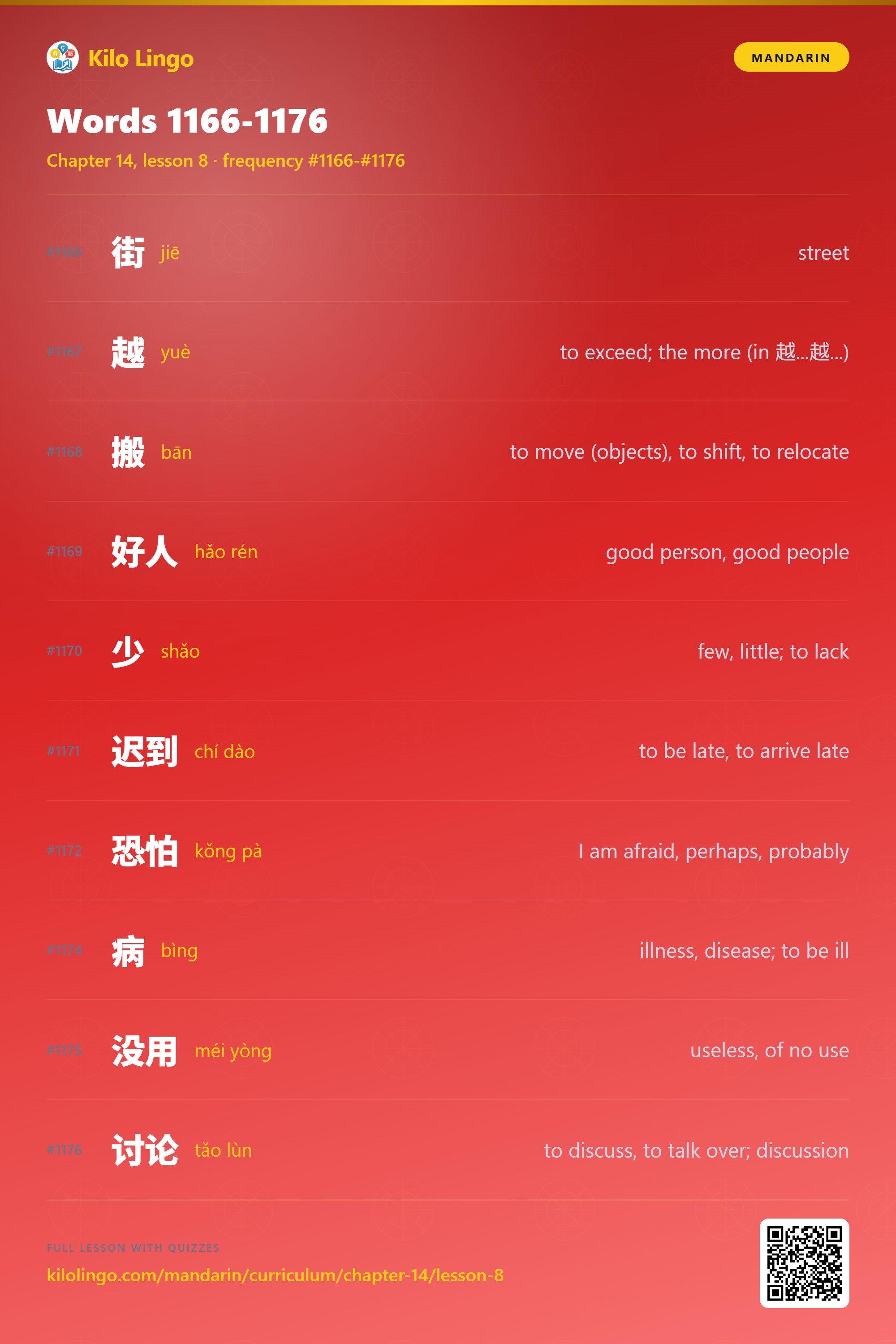
- Words 1166-1176Vocabulary
10 words · ranks 1166-1176
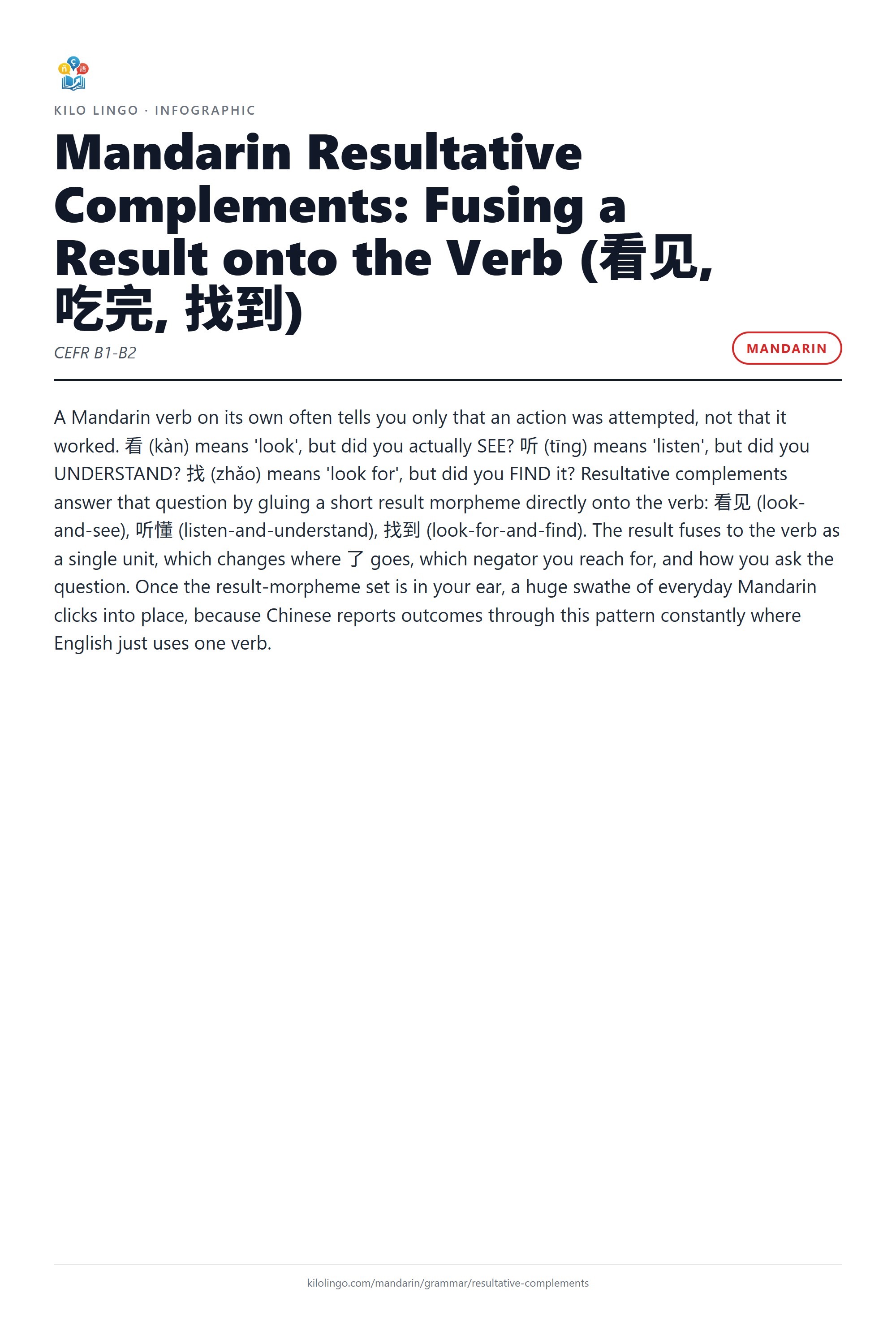
- Resultative complementsGrammar
Fusing a result morpheme onto the verb so it reports an outcome, not just an attempt: 看见 (see), 听懂 (understand), 吃完 (finish eating), 找到 (find). The common result set 完/好/到/见/懂/会/错/对/成/住/掉, why 了 follows the whole unit, why negation uses 没 not 不 (没看完), and the V + 没有 question form.
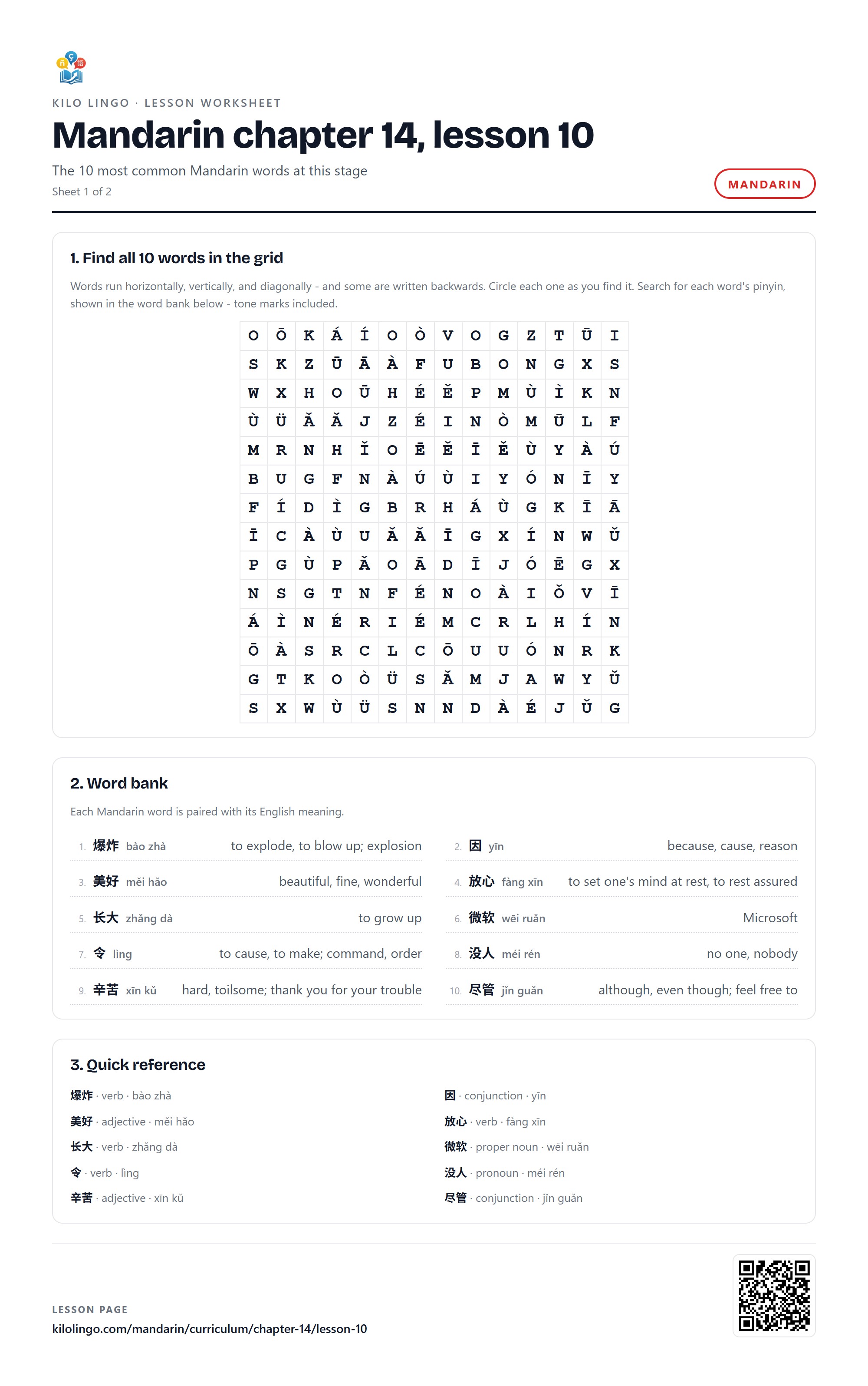
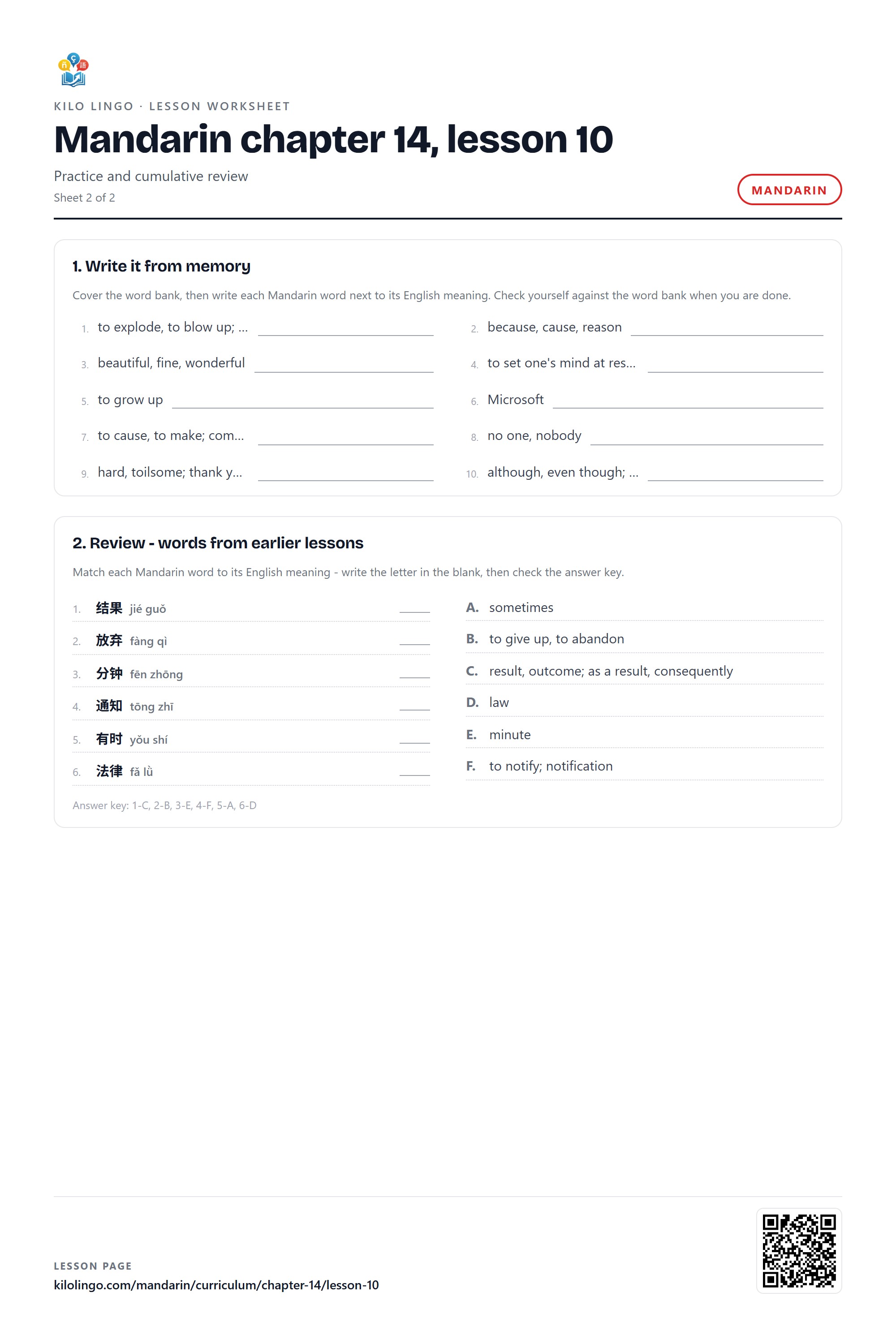
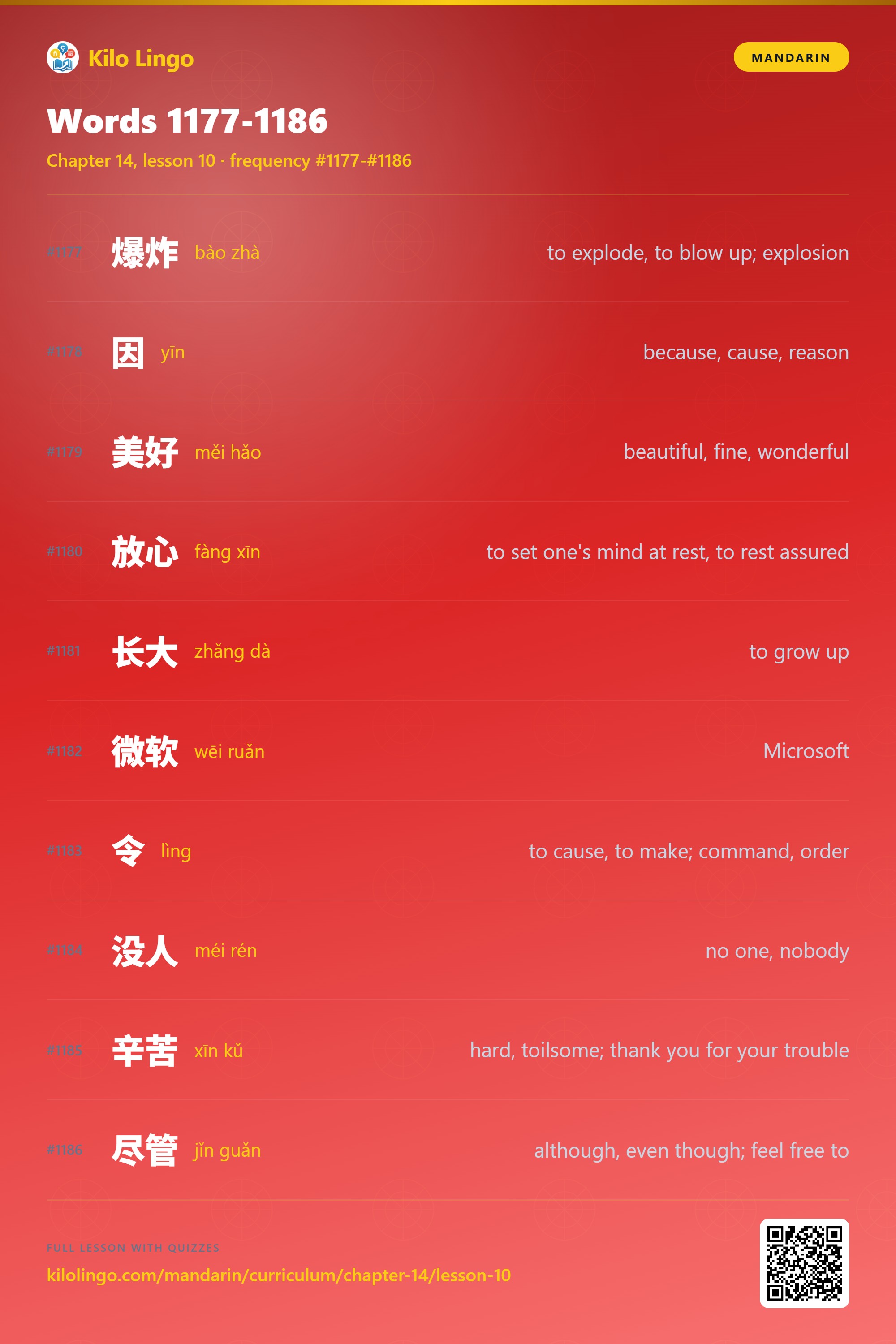
- Words 1177-1186Vocabulary
10 words · ranks 1177-1186
- Tone Shooter review sessionReview games
Shoot the words you just met into their tones by colour. The quickest way to fix a tone in place.
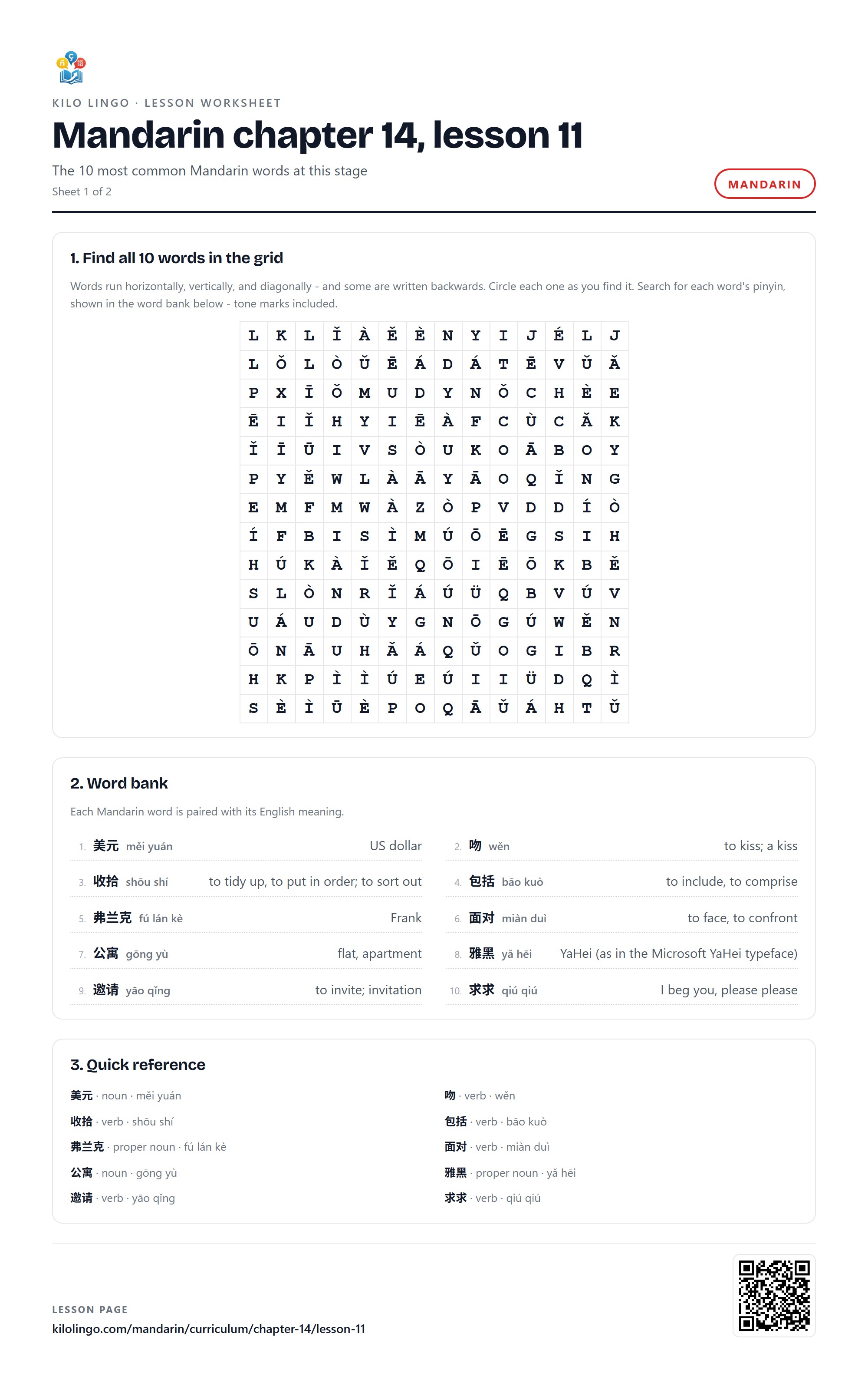
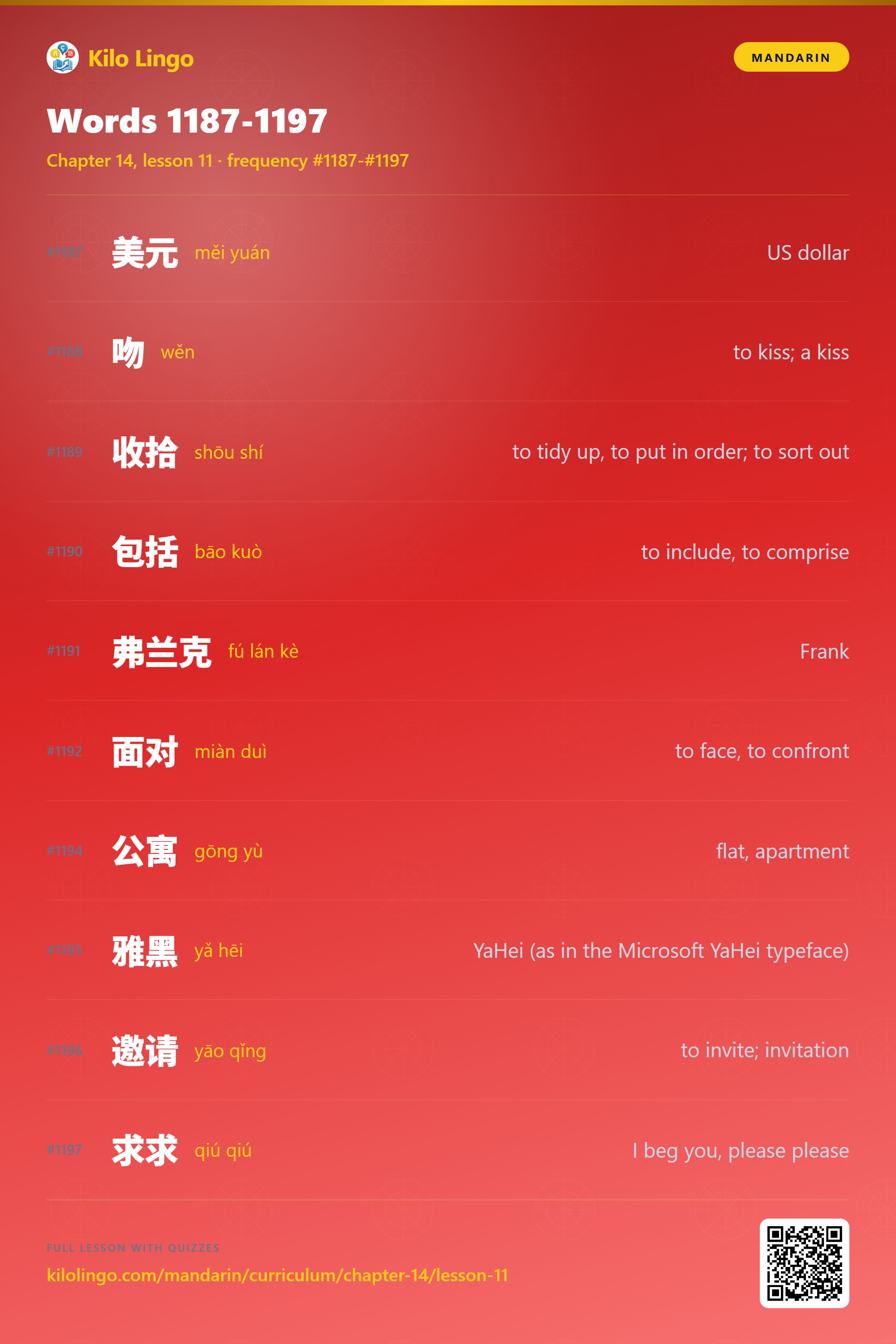
- Words 1187-1197Vocabulary
10 words · ranks 1187-1197
- Word Bubbles review sessionReview games
Pop the words you just met by matching each one to its meaning. A couple of rounds and the batch is yours.
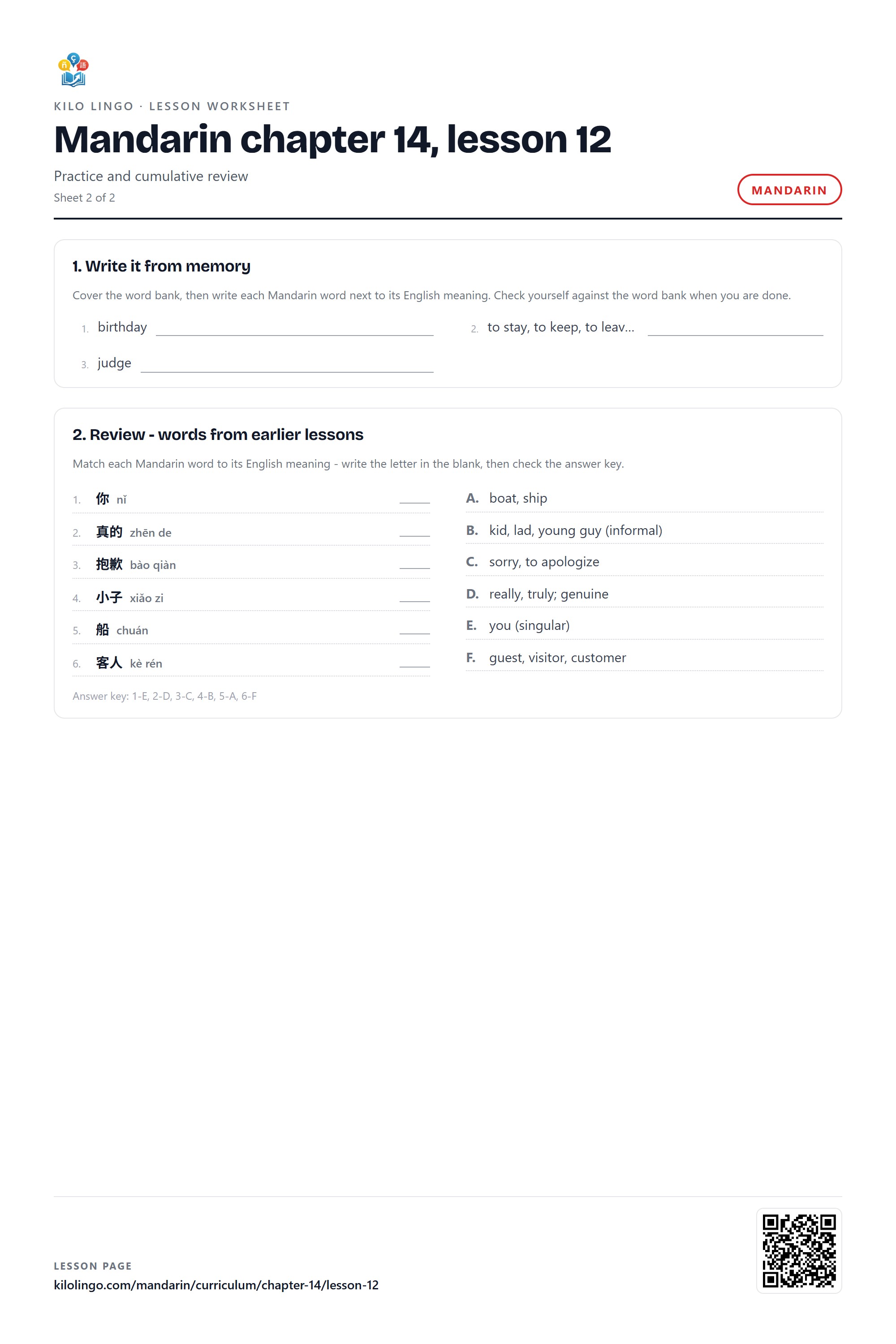
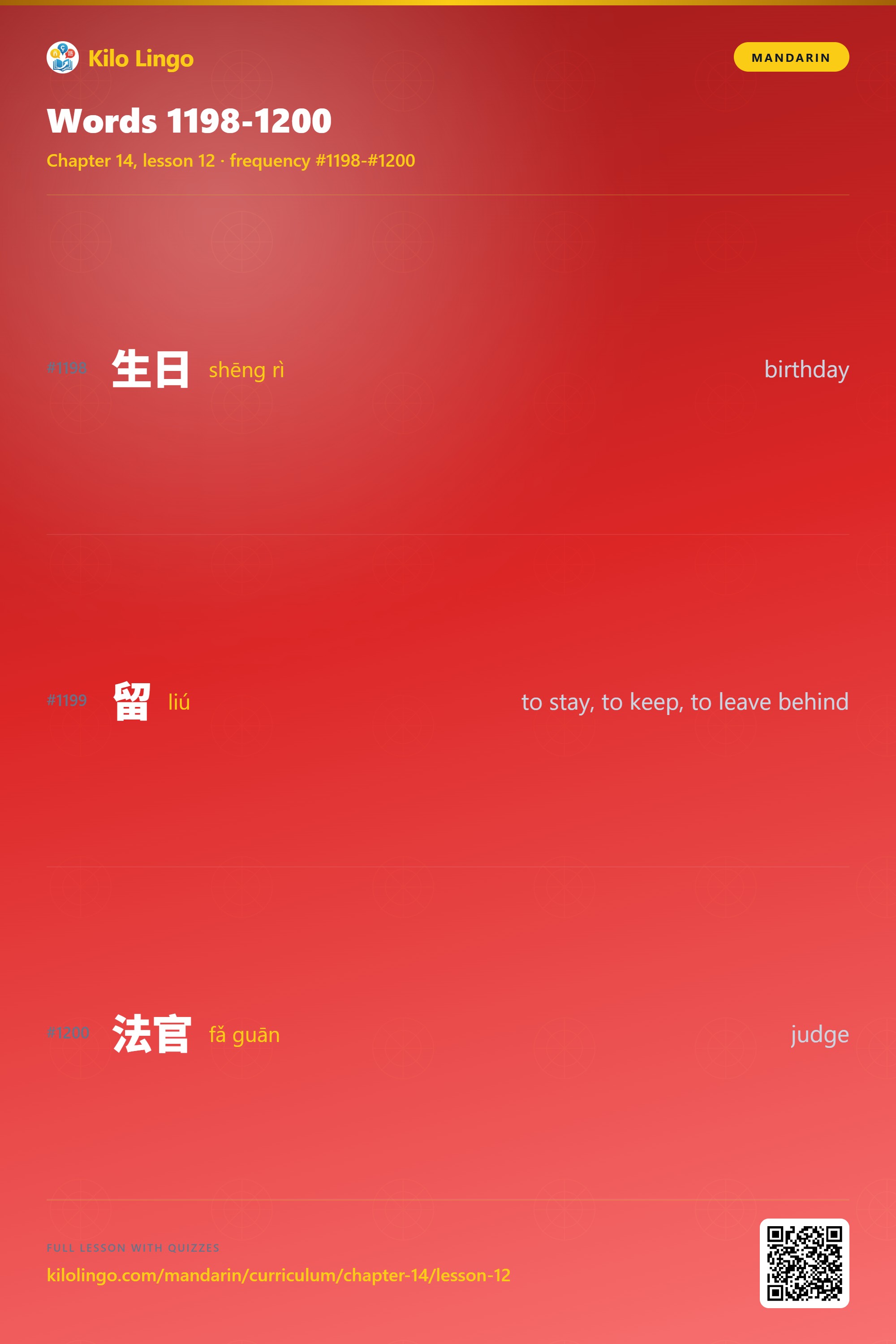
- Words 1198-1200Vocabulary
3 words · ranks 1198-1200
- Song: 茉莉花Song
Play it, read along word by word, then answer the questions. Every word is at your level - the song page teaches the few that are new.
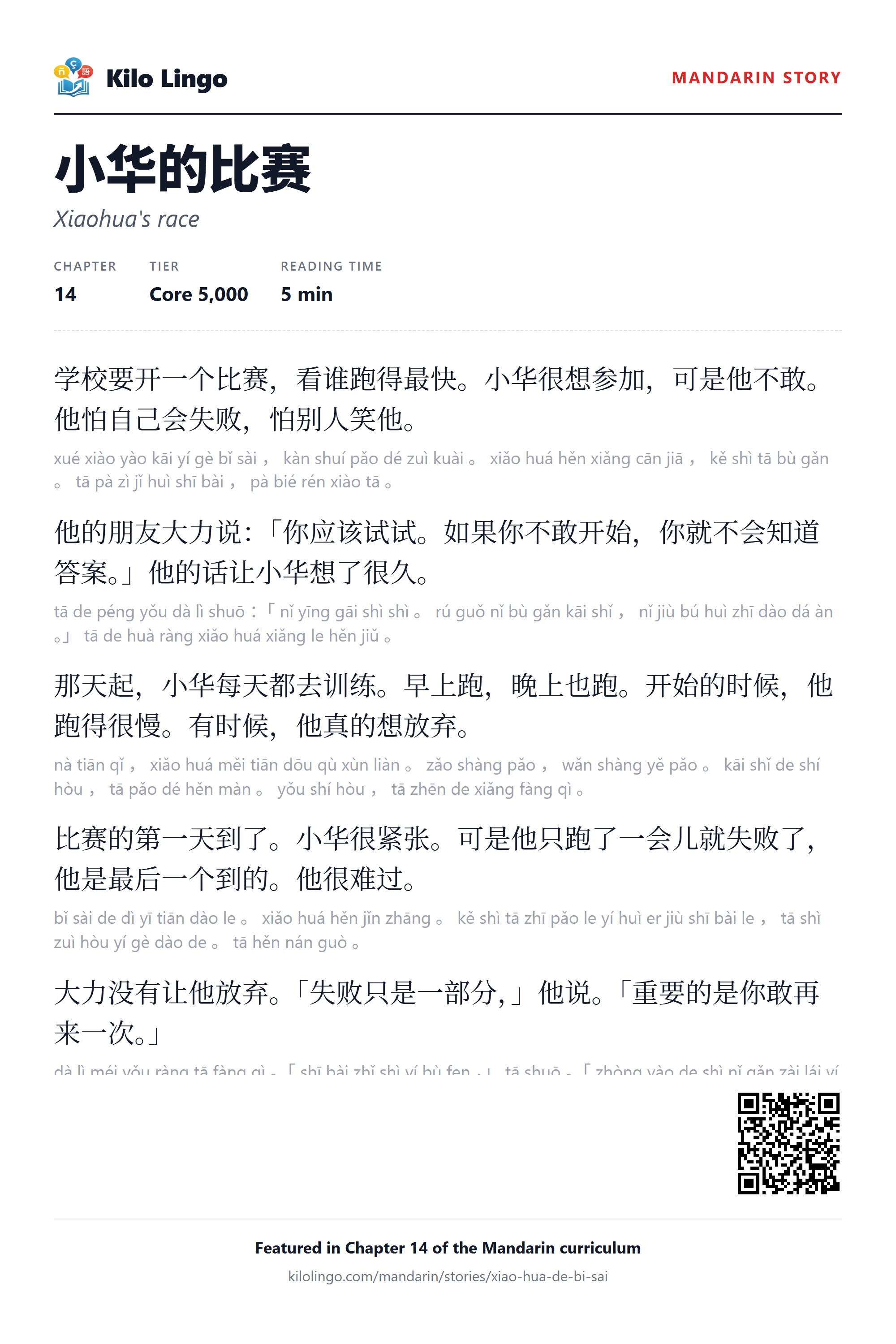
- Story milestone: top 1200 wordsGraded-reader story
You can read this story using only the words you've learned so far. Every content word sits at or above the rank-1200 ceiling.
- The body and healthThemed review
Head, hand and heart, and enough to explain what is wrong.
xin1is the heart and the mind at once, which is worth knowing before you meet it in a compound. - Arcade reviewReview games
Replay this chapter's words as games - a different kind of repetition, and it counts.
Word printables
Per-word sheets93 words · a worksheet, infographic and listicle each










Chapter 15 · Potential complements
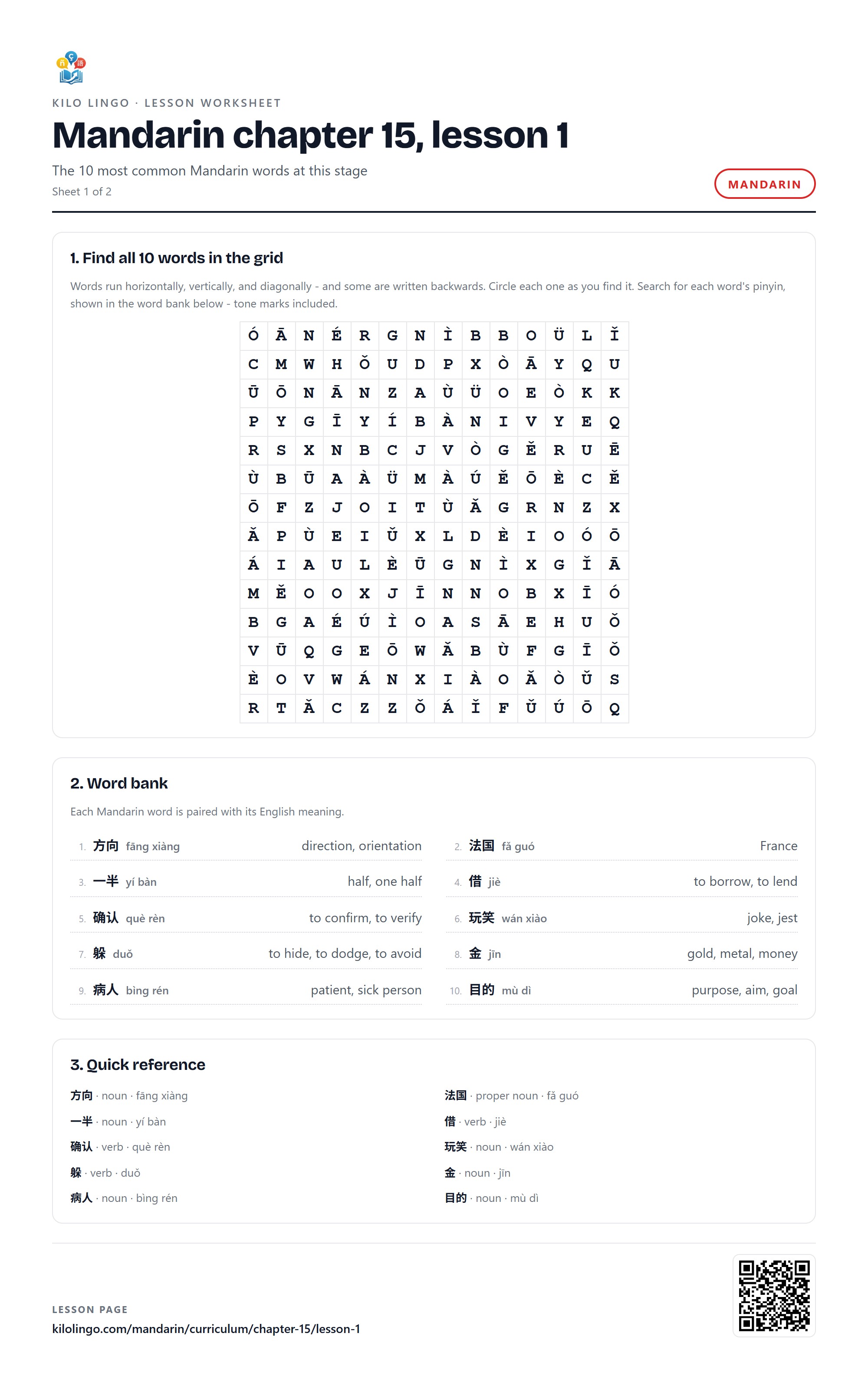
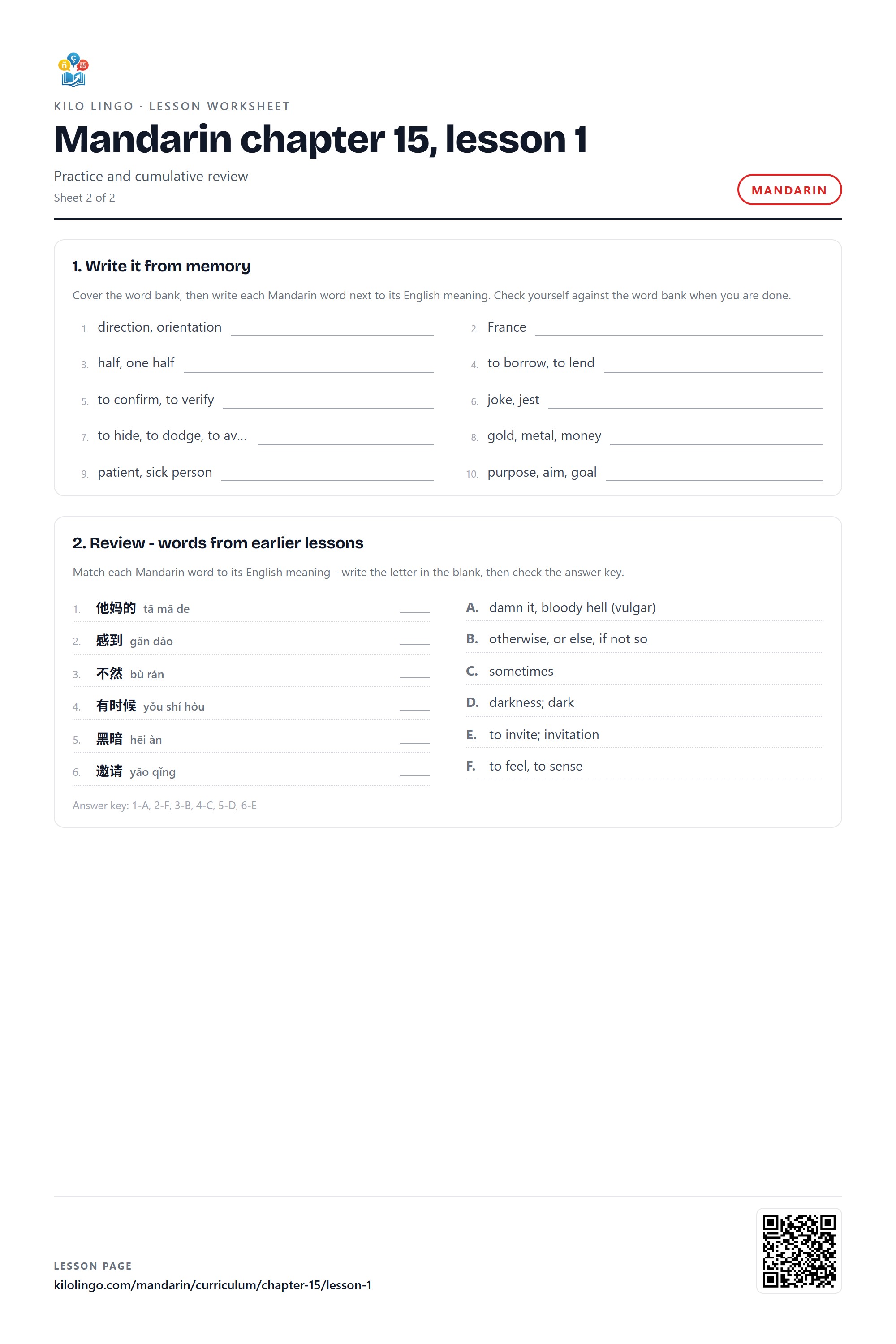
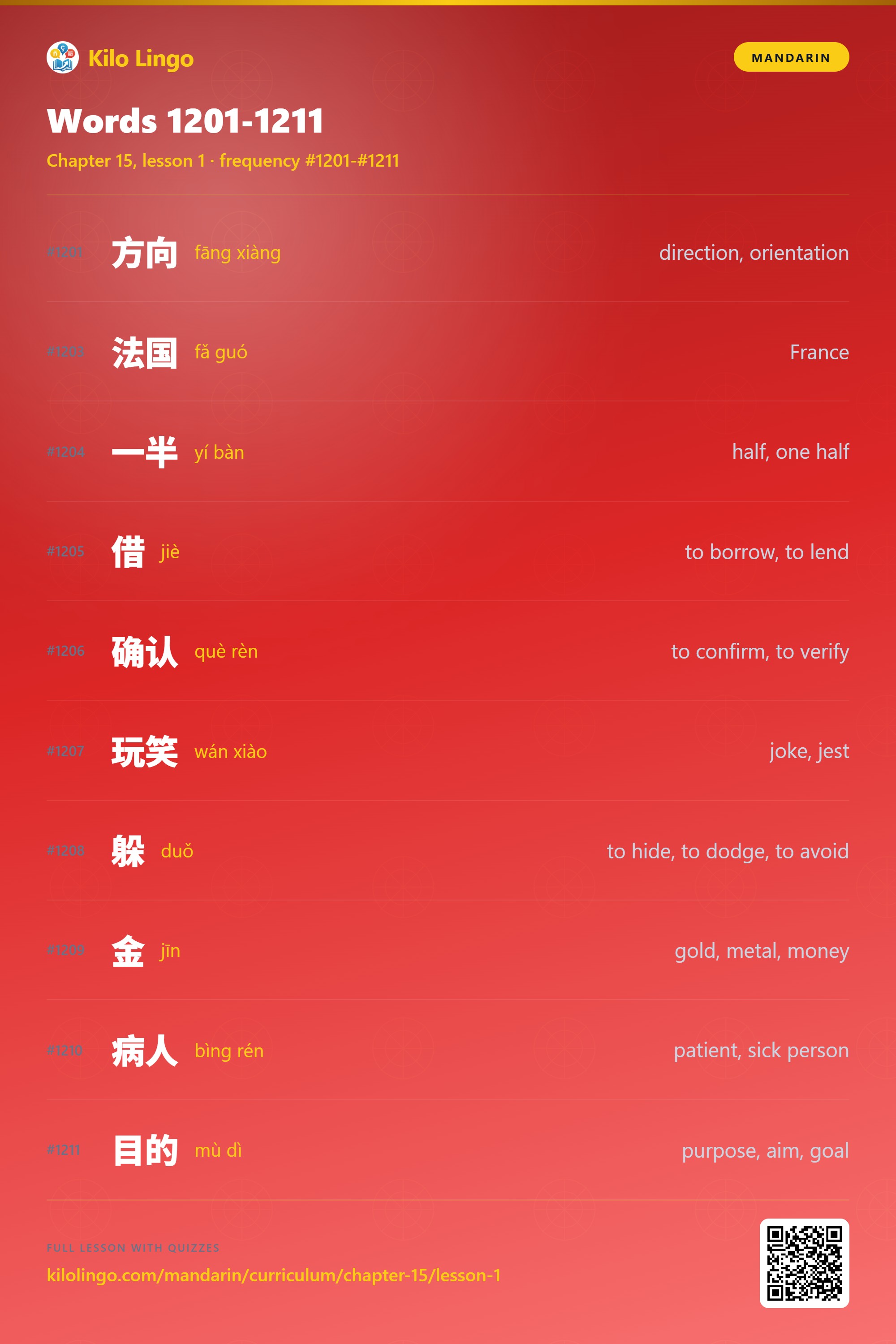
Chapter page →- Words 1201-1211Vocabulary
10 words · ranks 1201-1211
- Word Bubbles review sessionReview games
Pop the words you just met by matching each one to its meaning. A couple of rounds and the batch is yours.
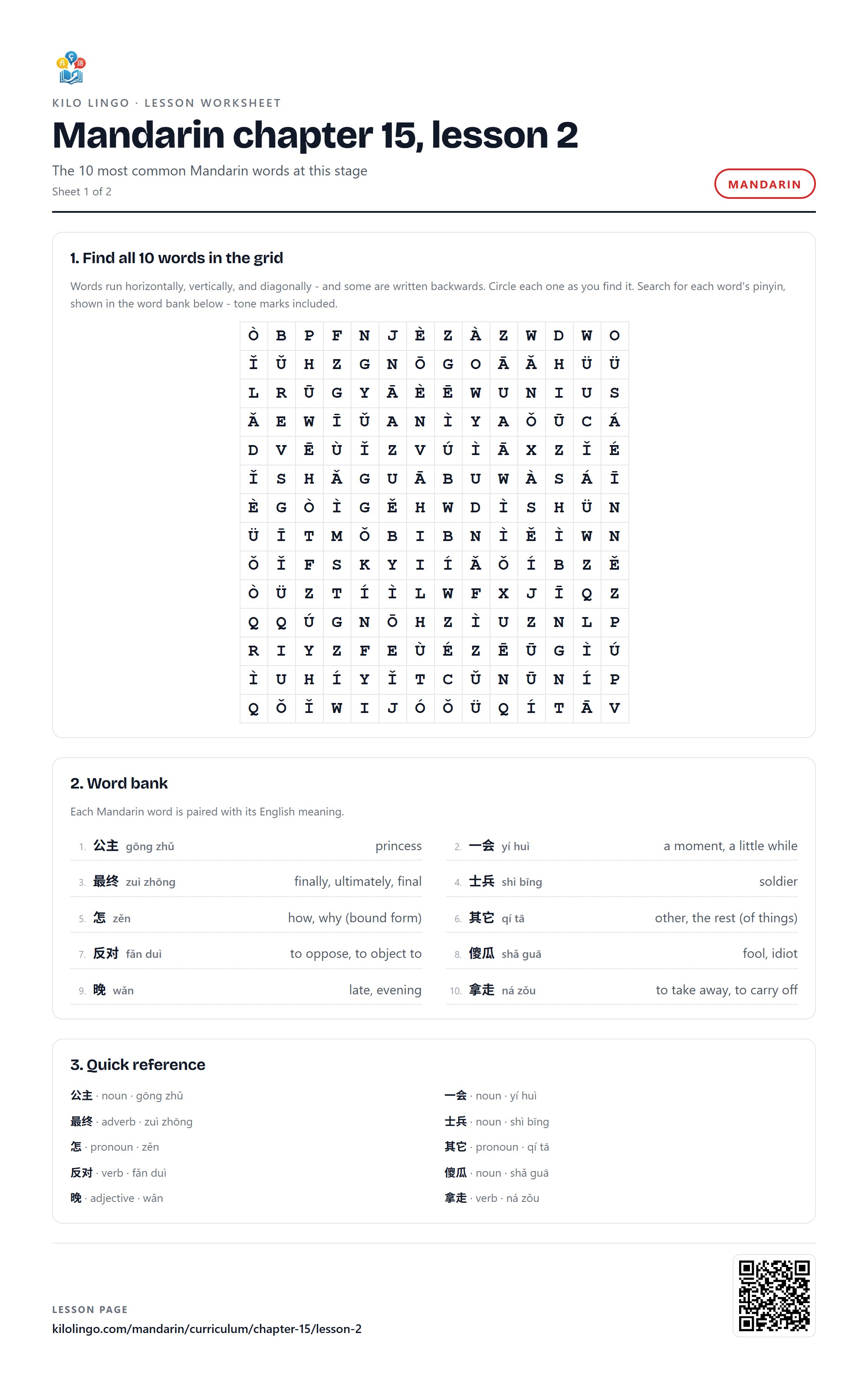
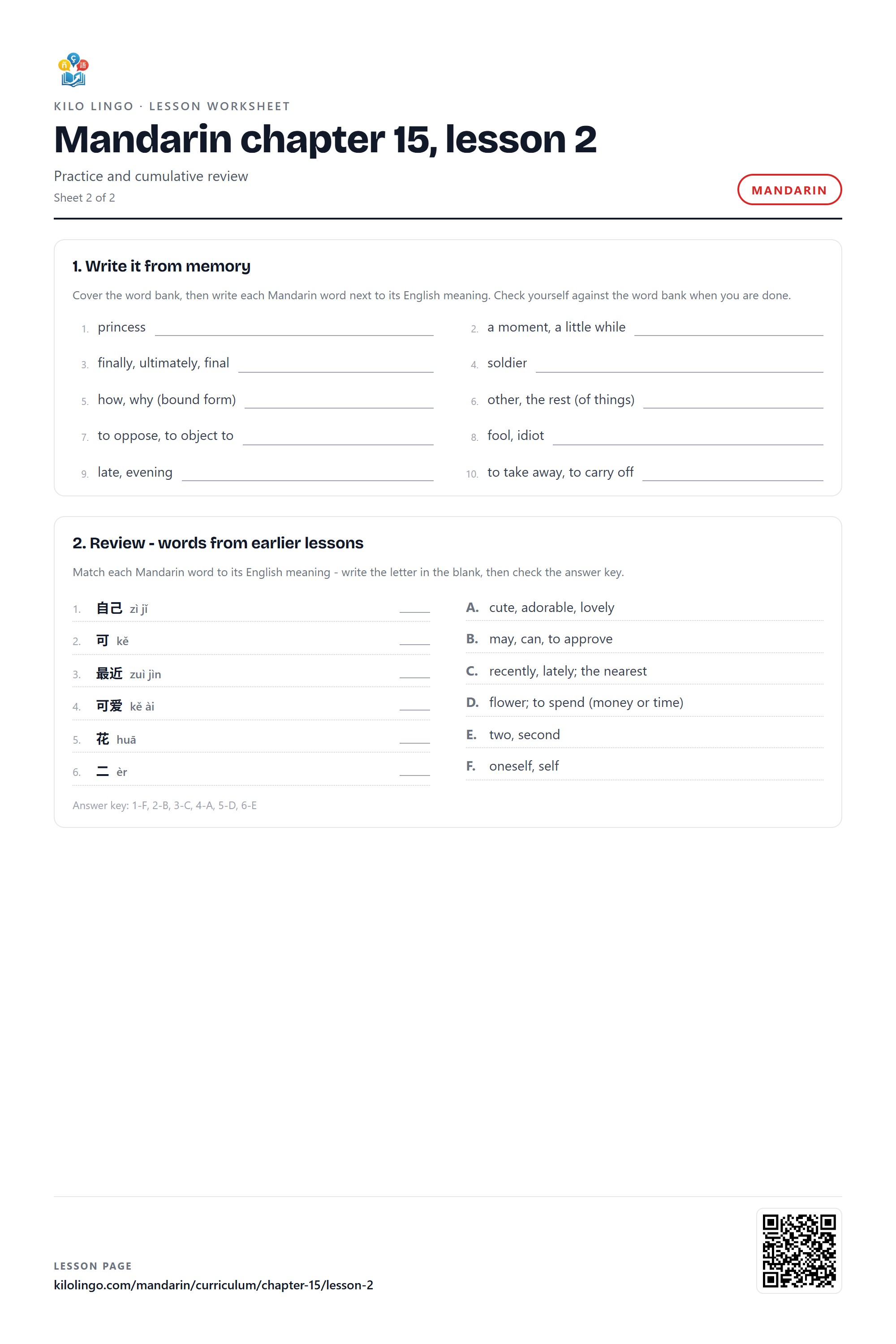
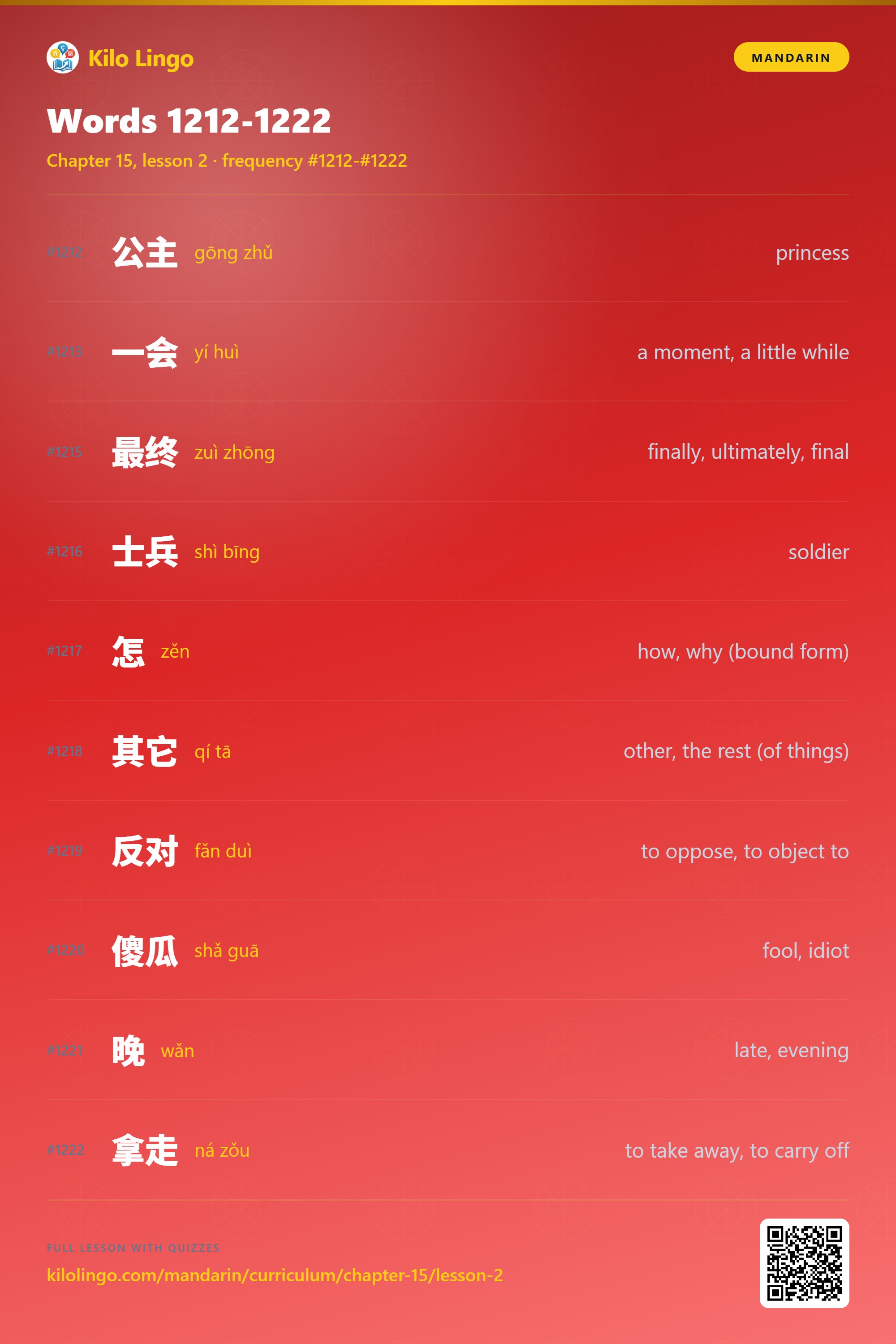
- Words 1212-1222Vocabulary
10 words · ranks 1212-1222
- Crossword review sessionReview games
Cross the words you just met, clued in English. Slower than a drill, and it sticks harder.
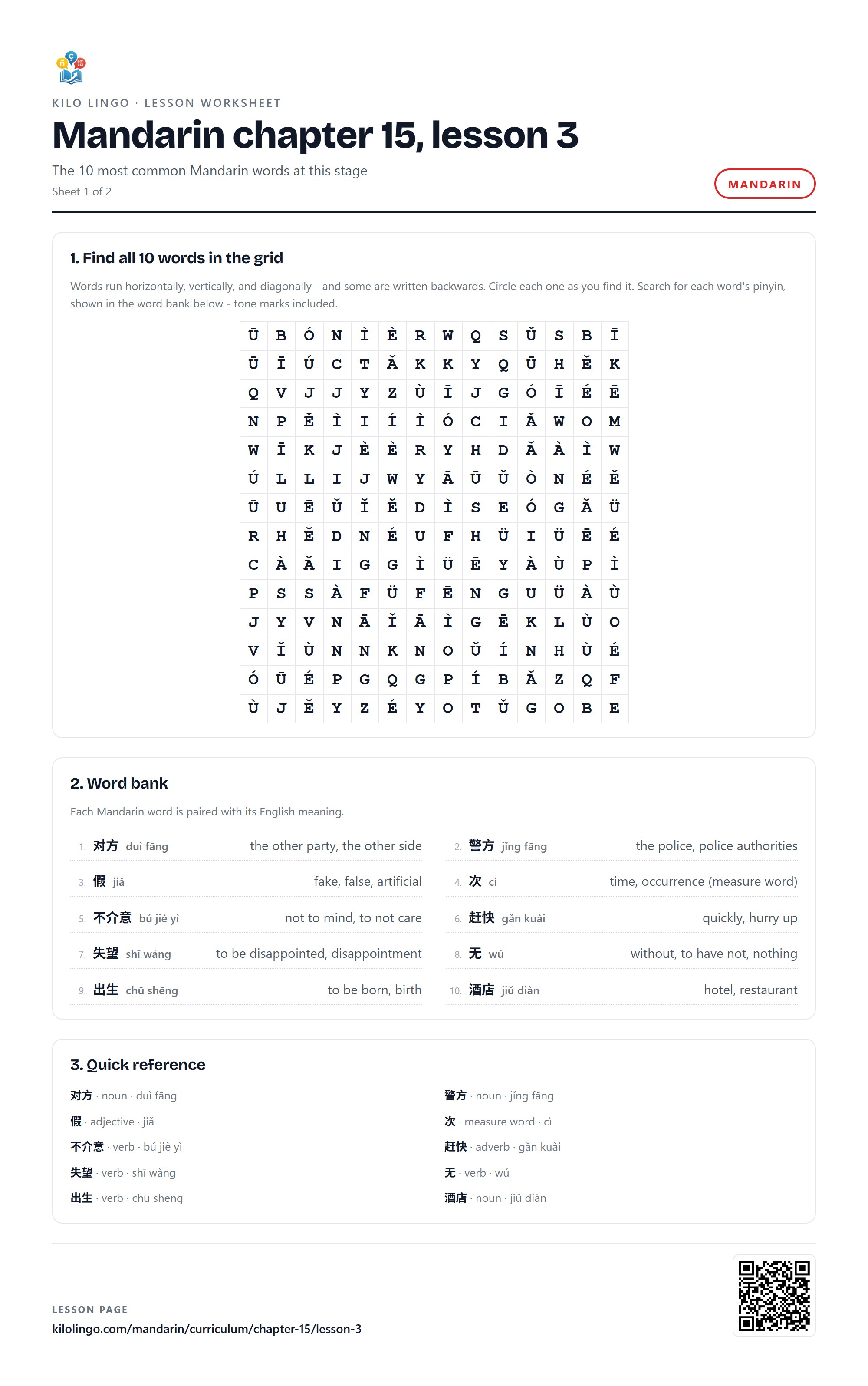
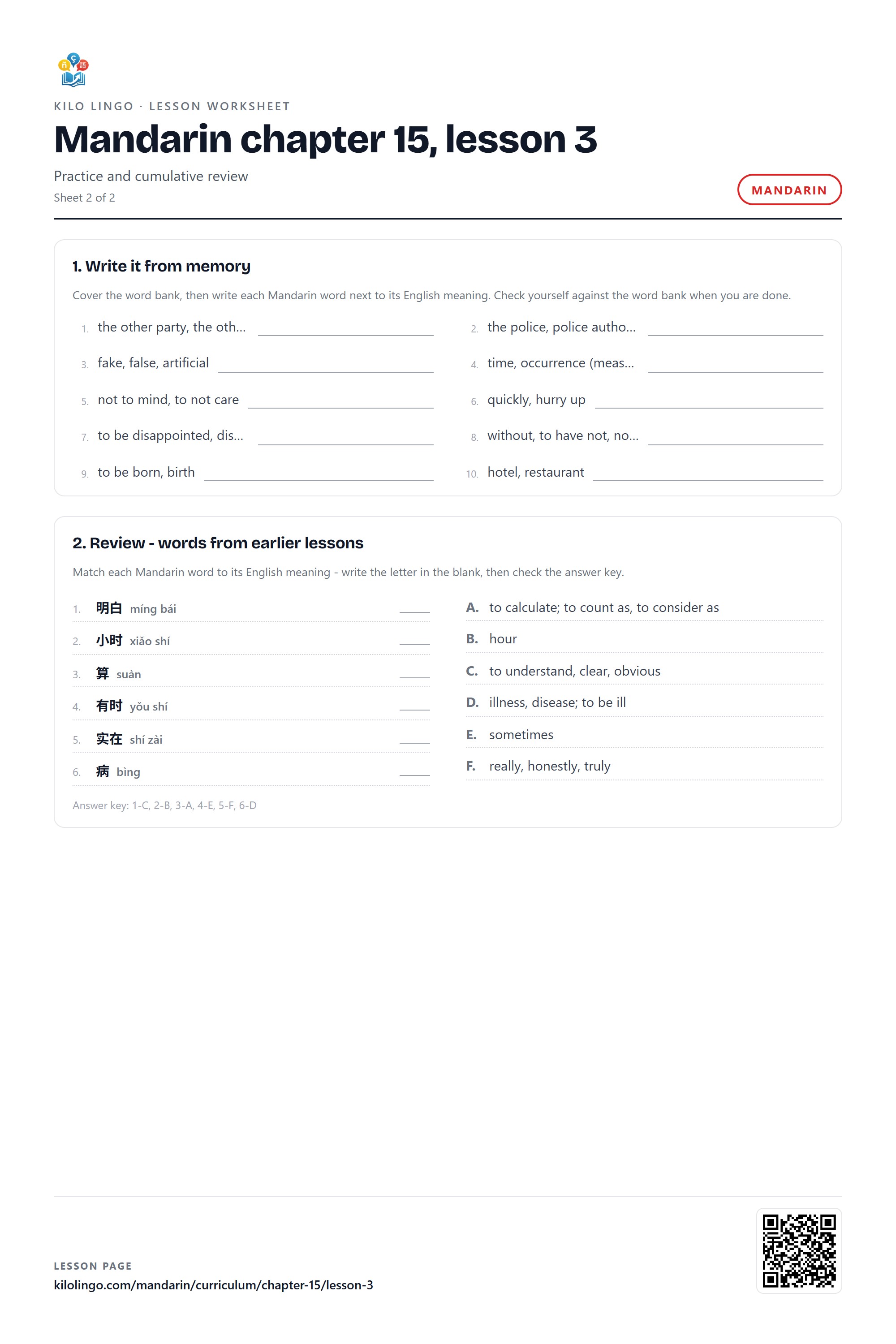
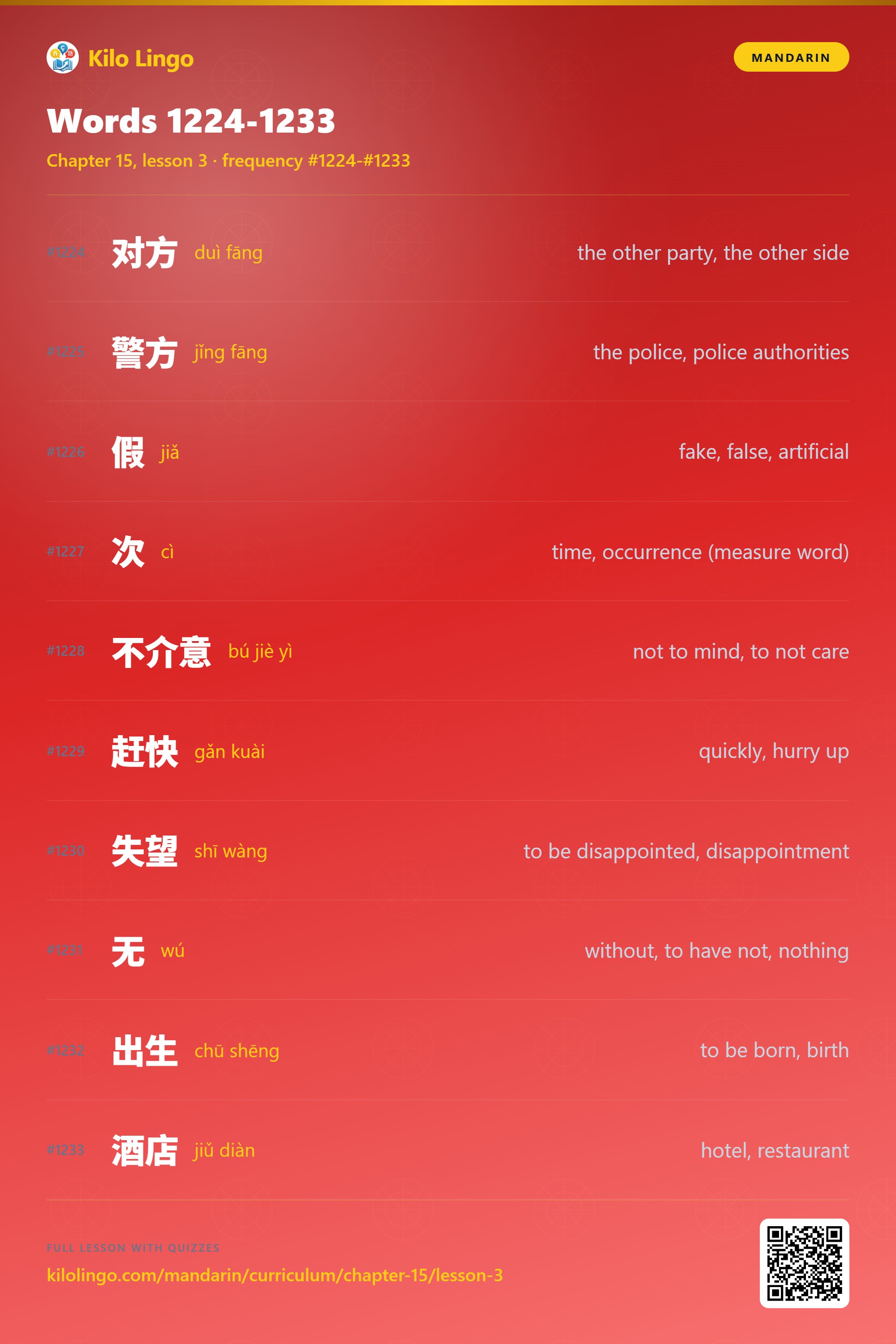
- Words 1224-1233Vocabulary
10 words · ranks 1224-1233
- Tone Shooter review sessionReview games
Shoot the words you just met into their tones by colour. The quickest way to fix a tone in place.
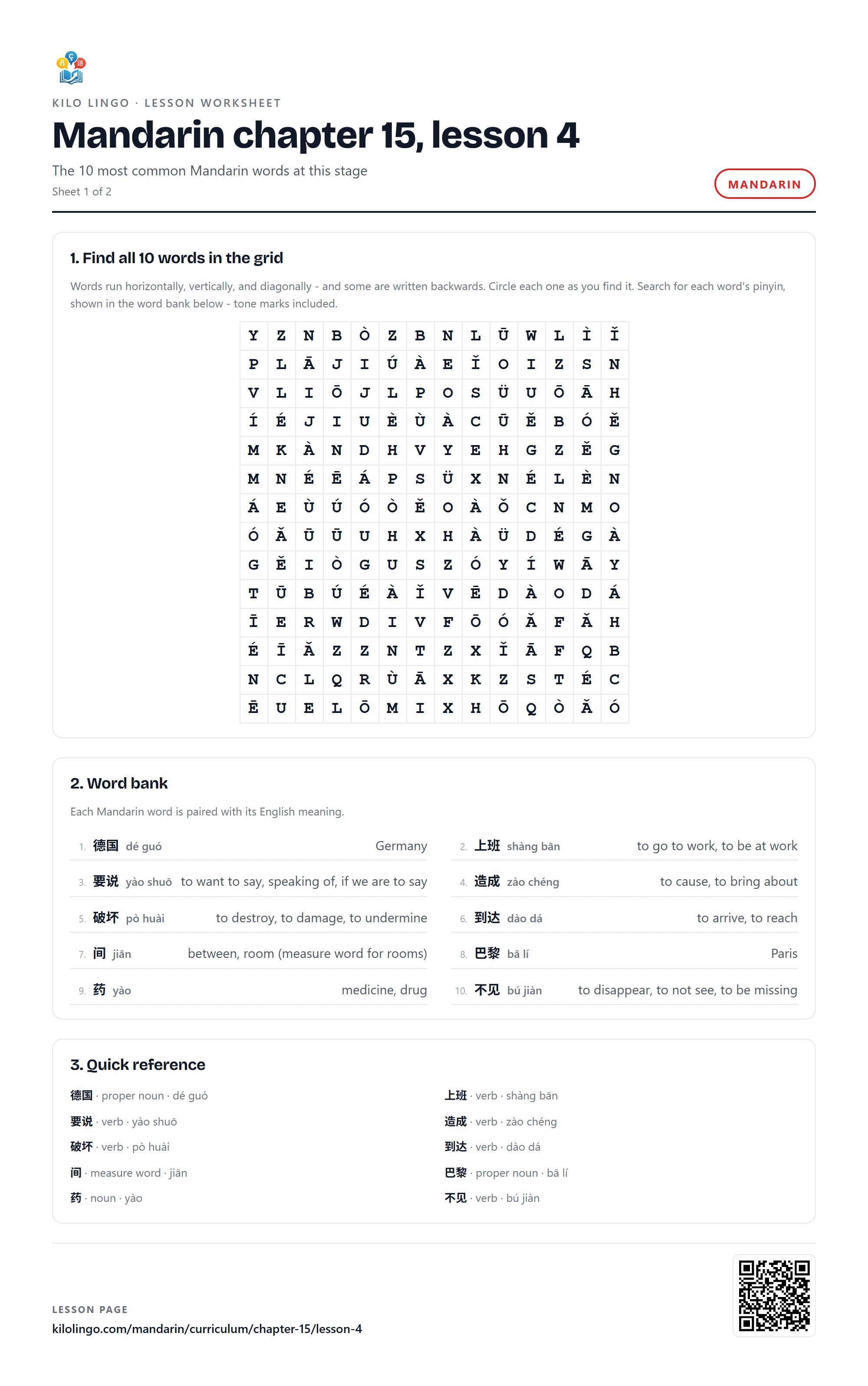
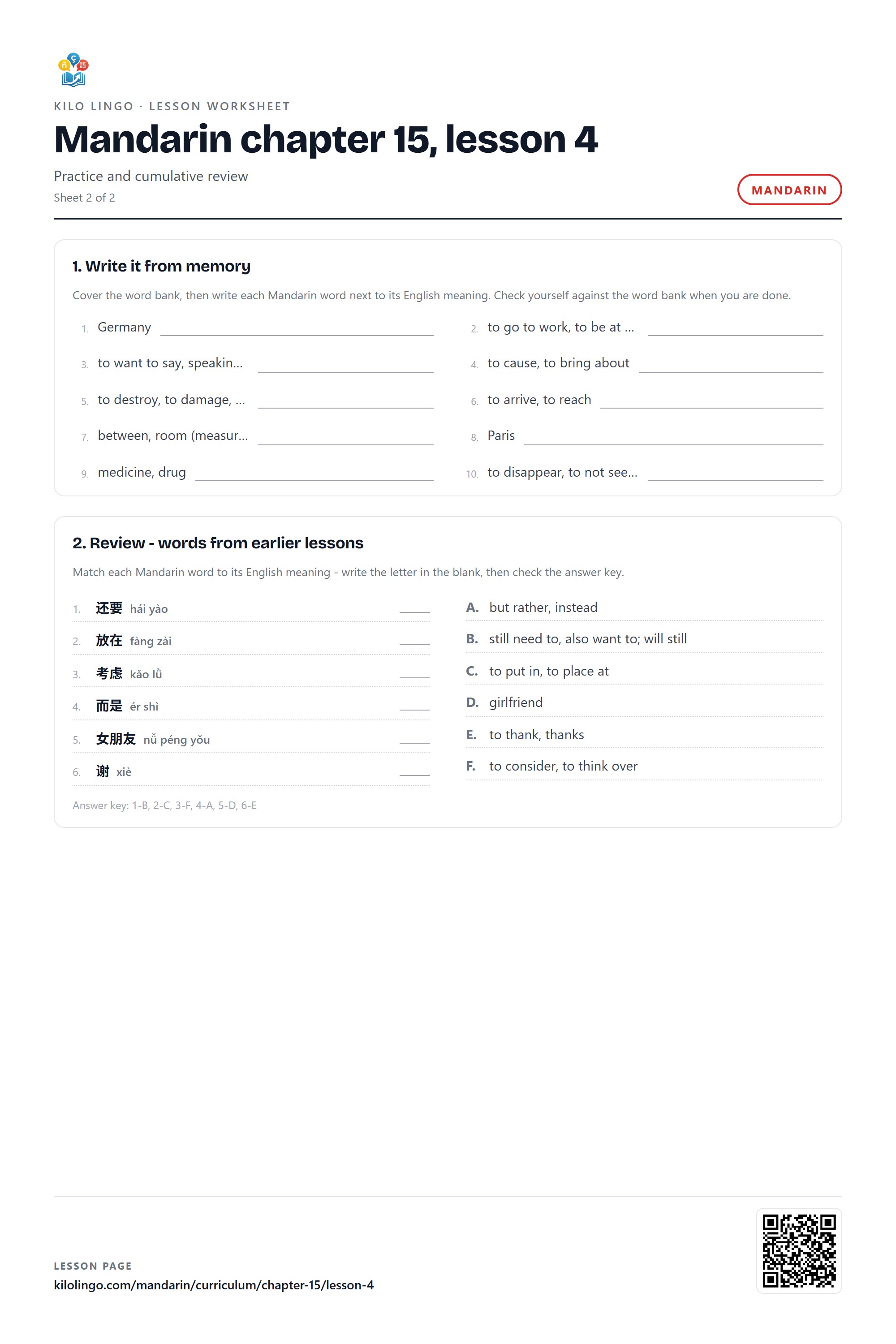
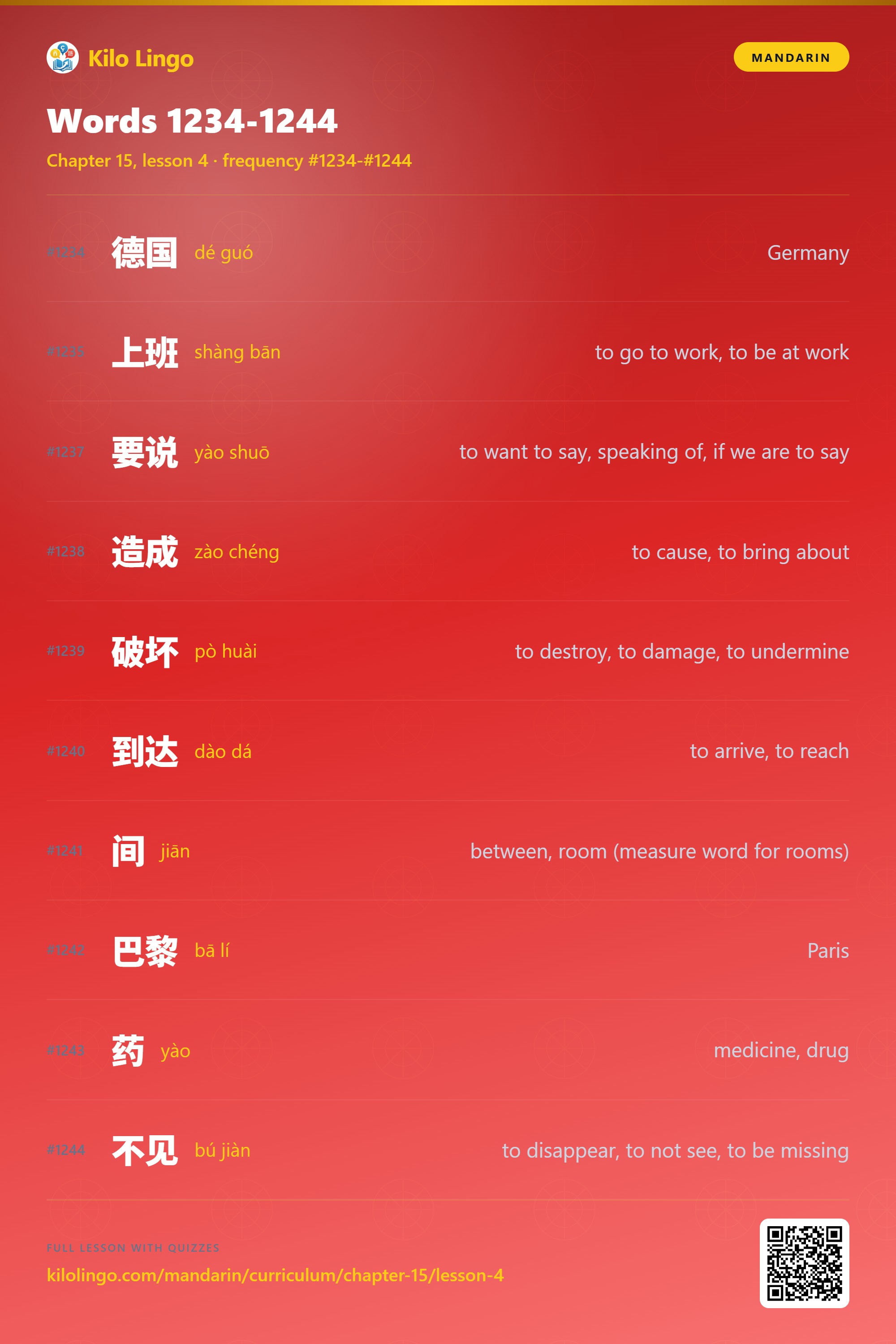
- Words 1234-1244Vocabulary
10 words · ranks 1234-1244
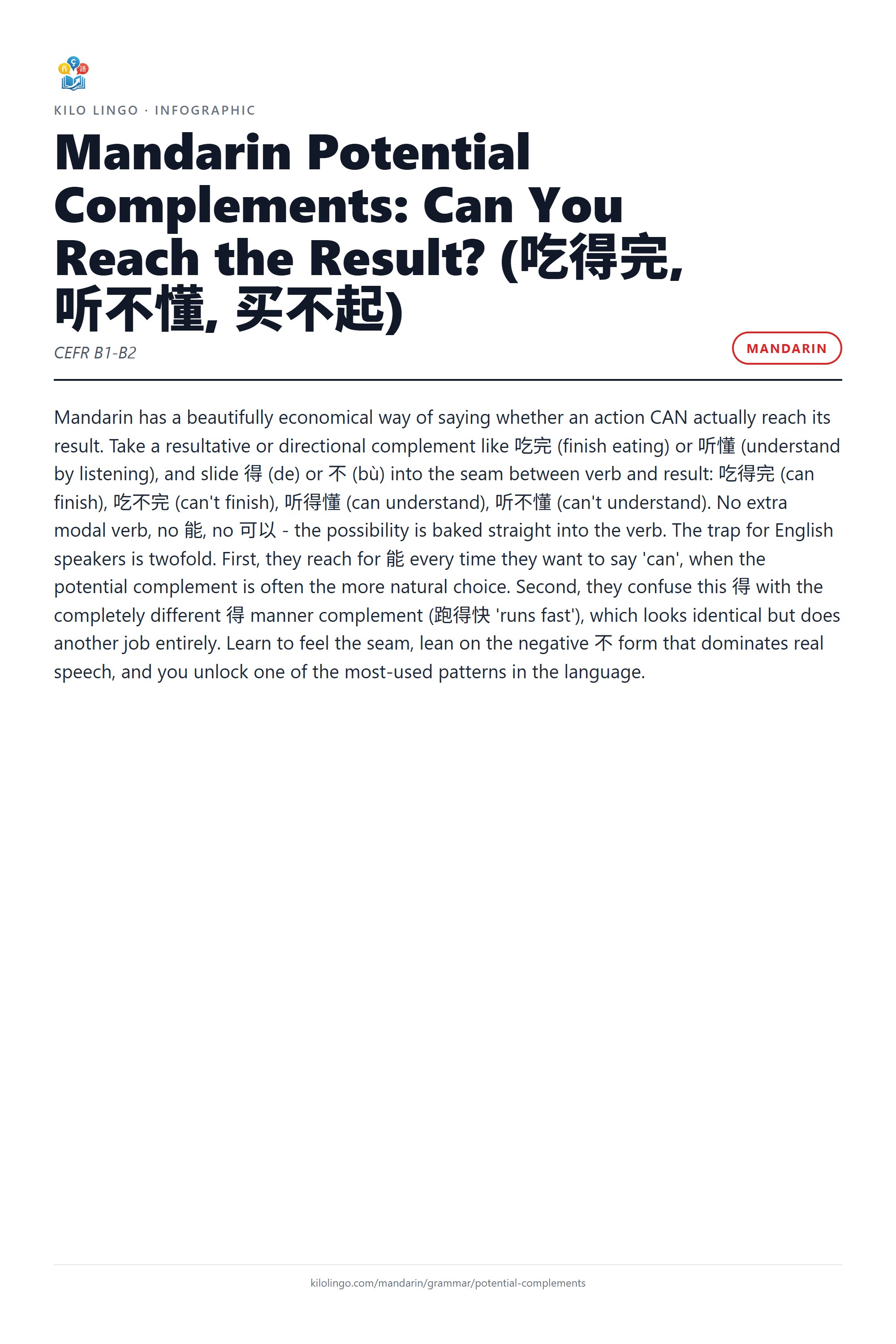
- Potential complementsGrammar
Inserting 得 or 不 into a result/direction complement to say whether the action CAN reach its result: 吃得完/吃不完, 听得懂/听不懂, 看得见/看不见, 买得起/买不起, 来得及/来不及. Why the negative 不 form dominates speech, how it differs from 能/可以 (inherent achievability vs permission), and why it is not the manner 得 of 跑得快.
- 一直 or 一定?Mistake clinic
One character apart, and not remotely related.
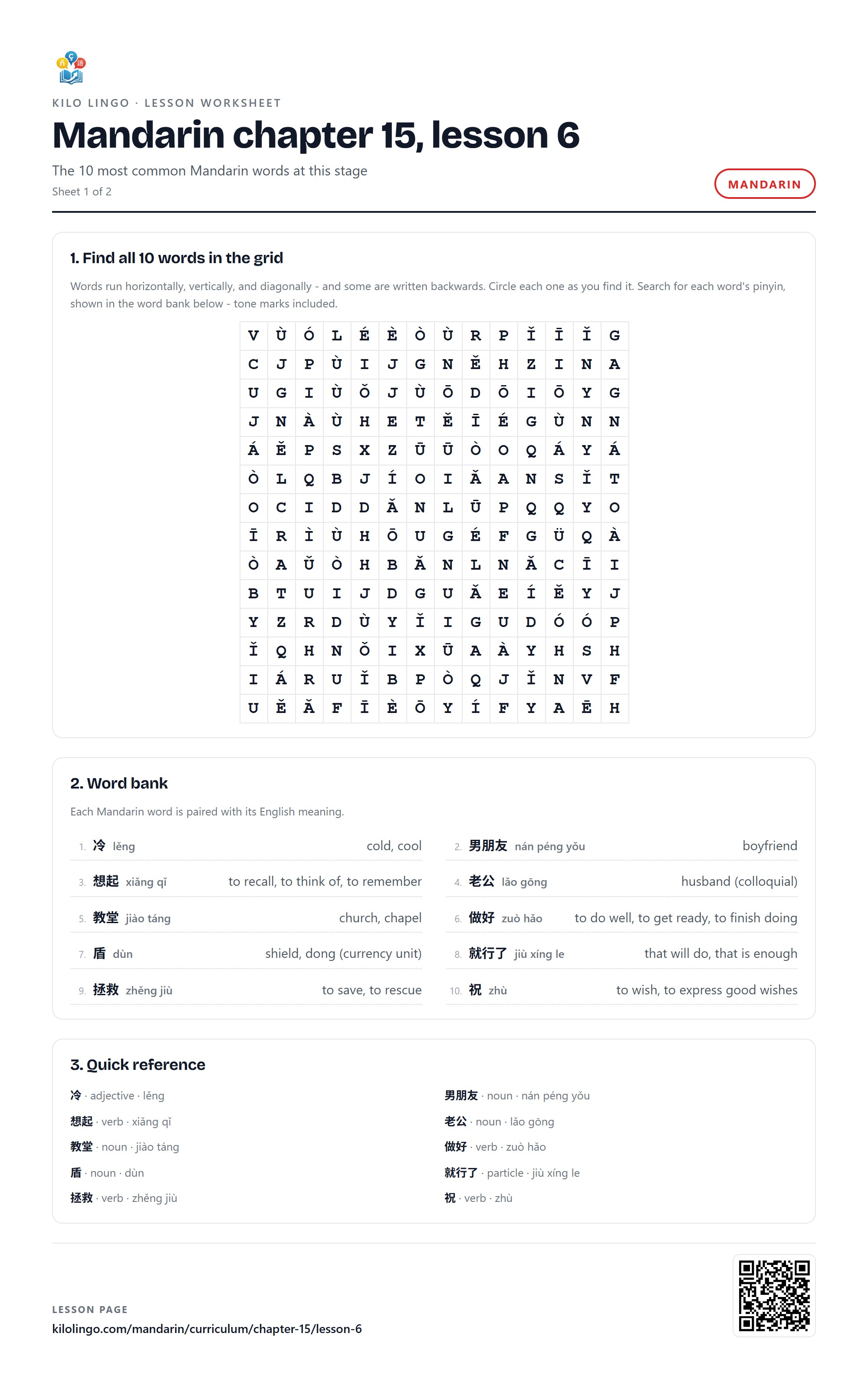
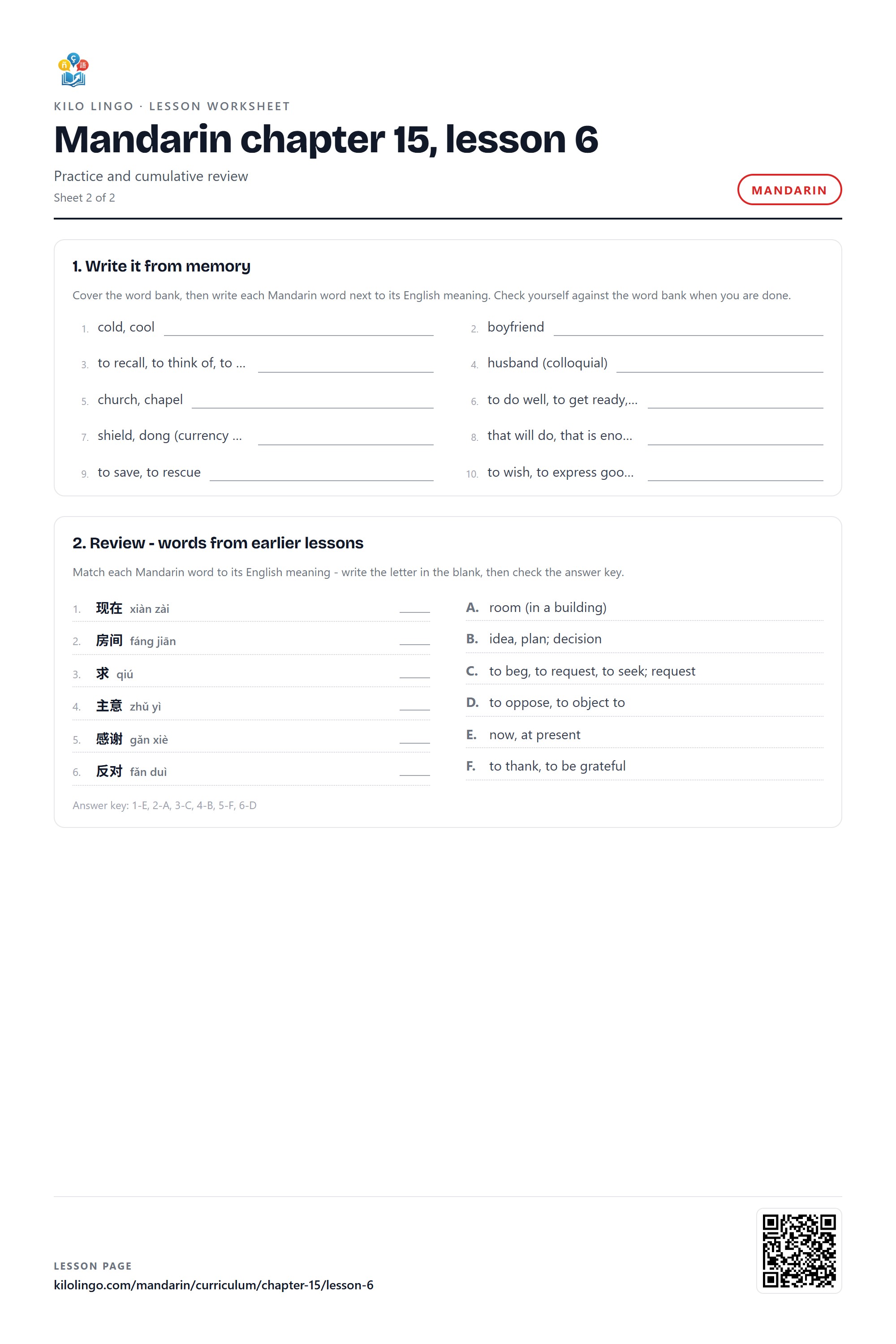
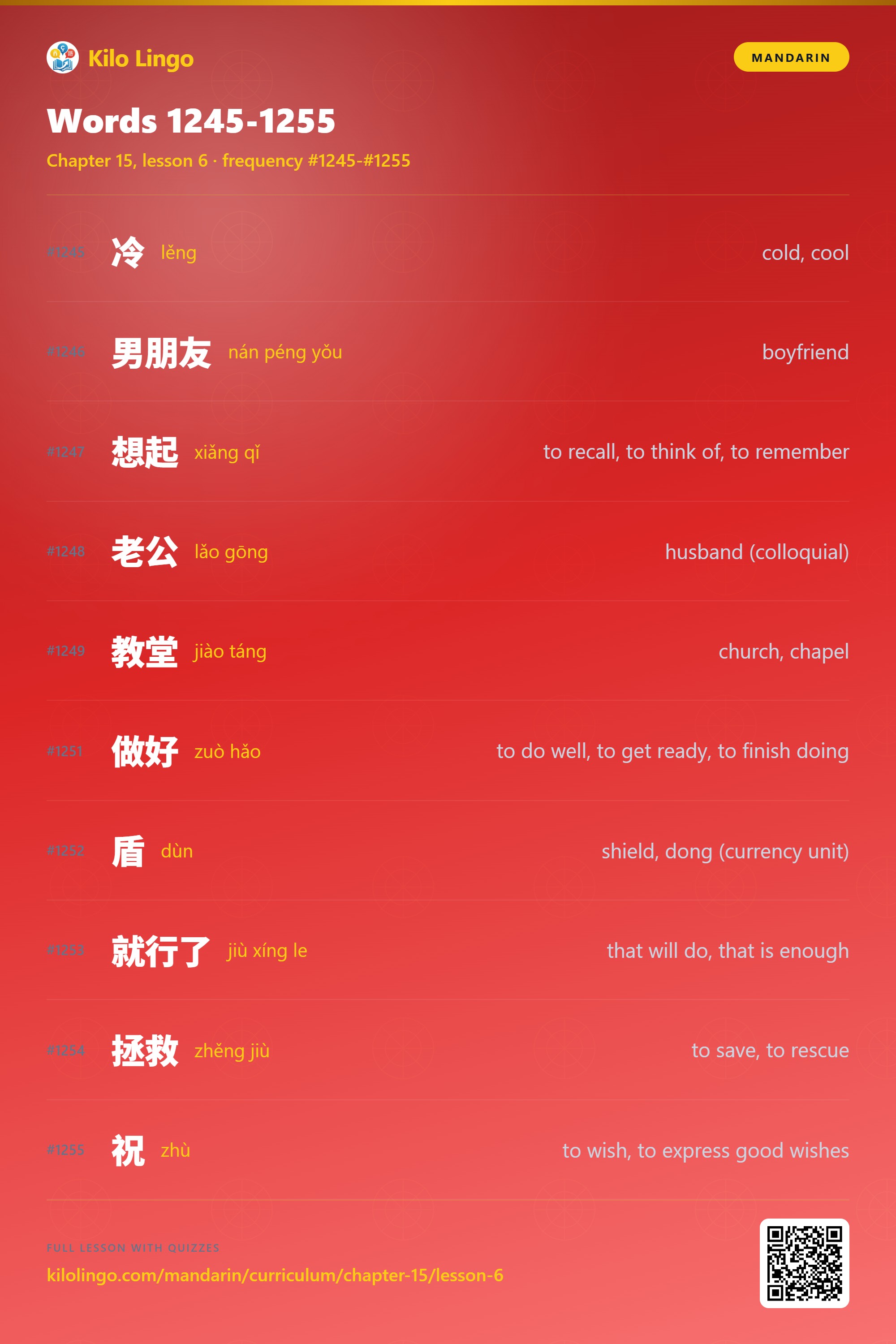
- Words 1245-1255Vocabulary
10 words · ranks 1245-1255
- Word Bubbles review sessionReview games
Pop the words you just met by matching each one to its meaning. A couple of rounds and the batch is yours.
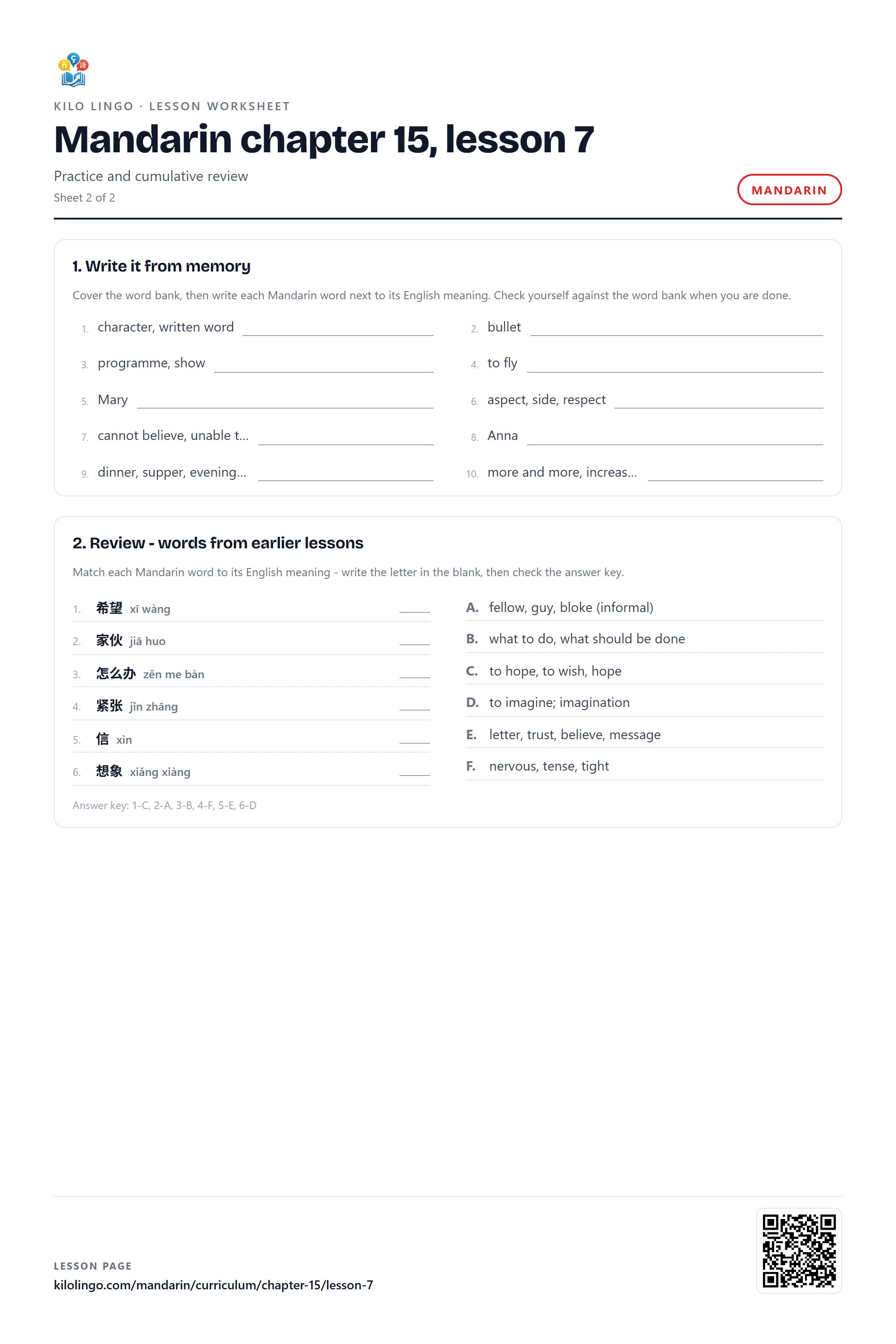
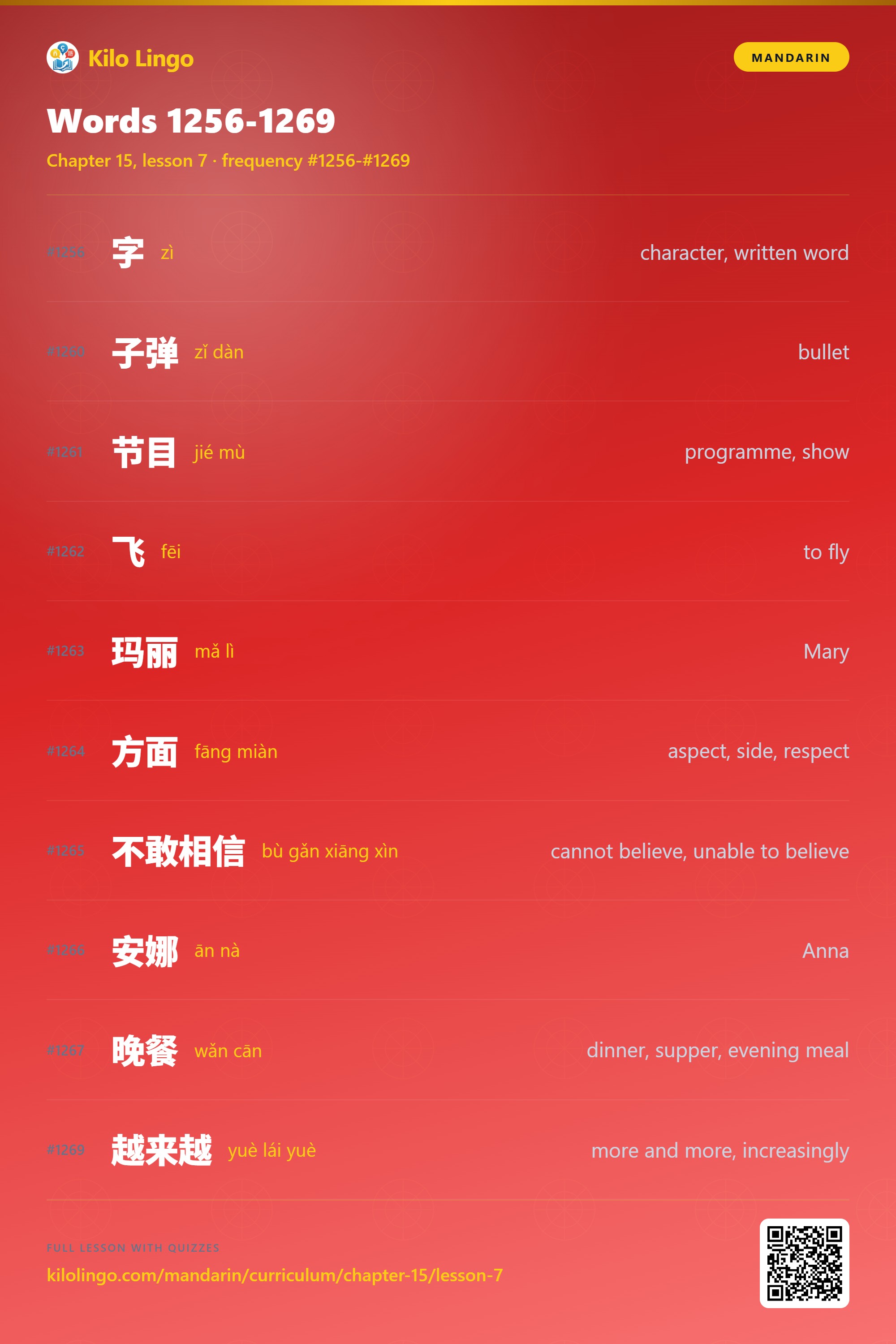
- Words 1256-1269Vocabulary
10 words · ranks 1256-1269
- Tone Shooter review sessionReview games
Shoot the words you just met into their tones by colour. The quickest way to fix a tone in place.
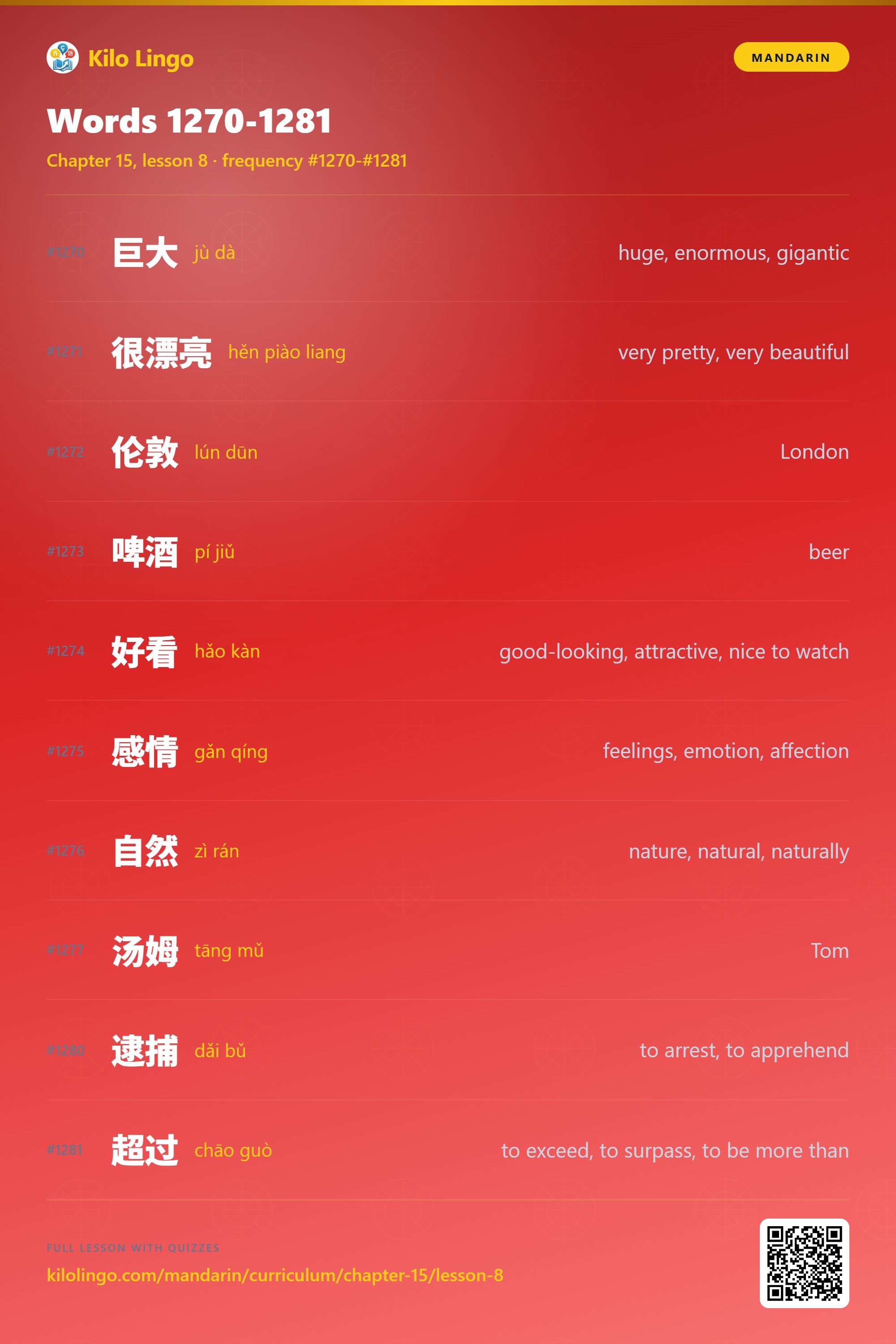
- Words 1270-1281Vocabulary
10 words · ranks 1270-1281
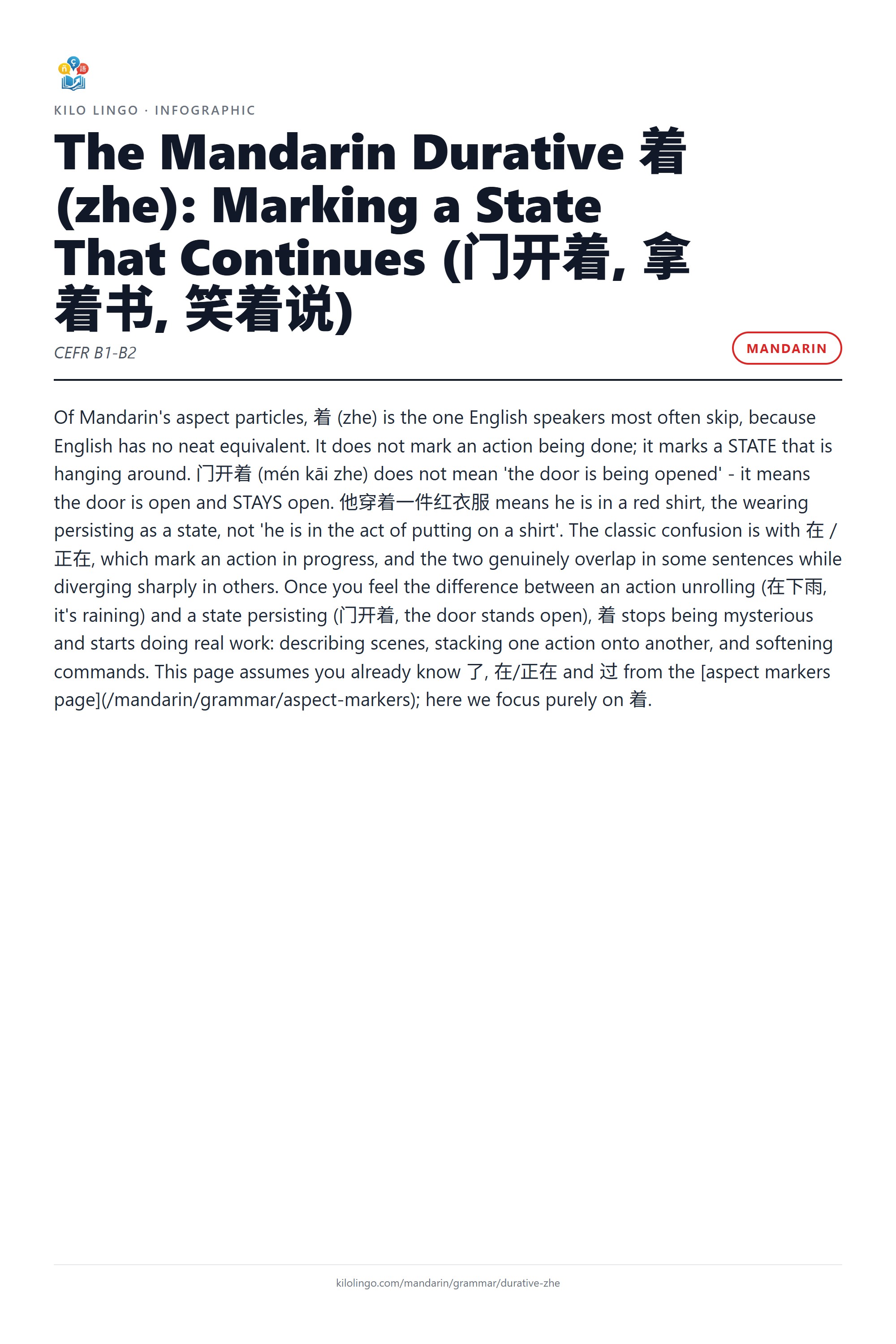
- The durative aspect 着 (zhe)Grammar
着 marks a continuing state rather than a completed action: 门开着 (the door is open), 他穿着红衣服 (he is wearing red), 笑着说 (say with a smile). How 着 (state holding) differs from 在/正在 (action in progress), the V1着 V2 'while doing' pattern, existential 墙上挂着一幅画, and why negation uses 没 not 不.
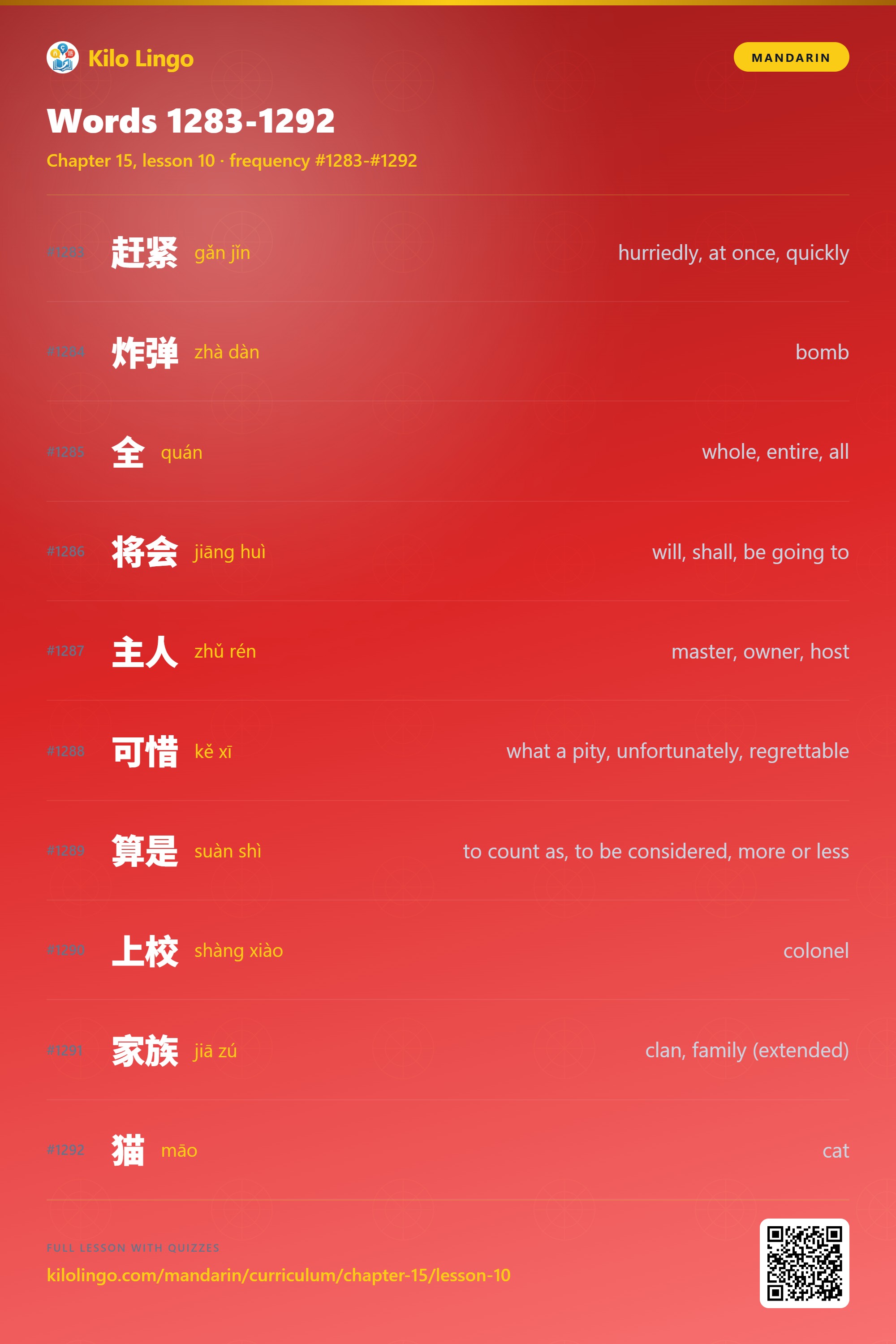
- Words 1283-1292Vocabulary
10 words · ranks 1283-1292
- Word Bubbles review sessionReview games
Pop the words you just met by matching each one to its meaning. A couple of rounds and the batch is yours.
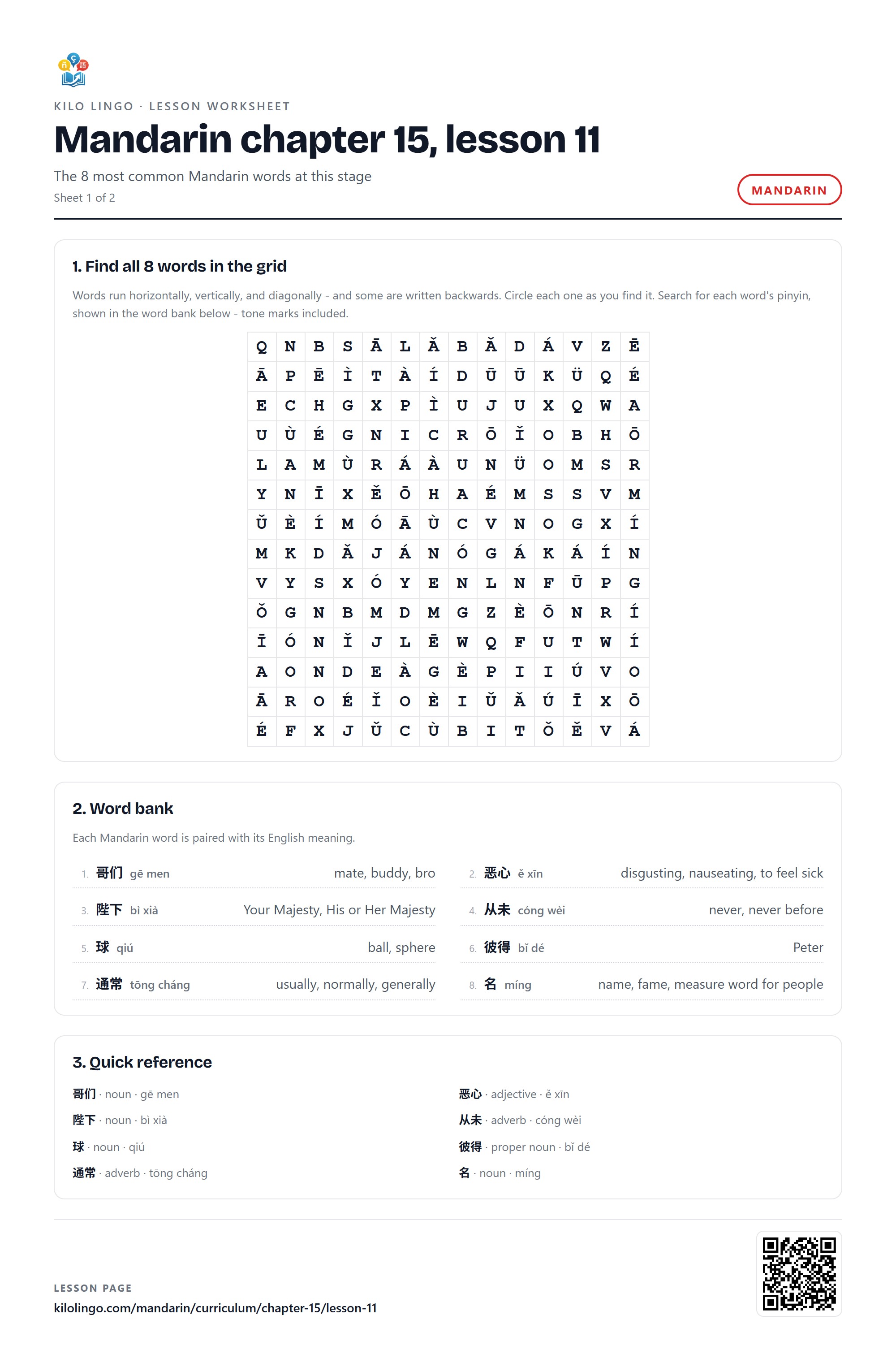
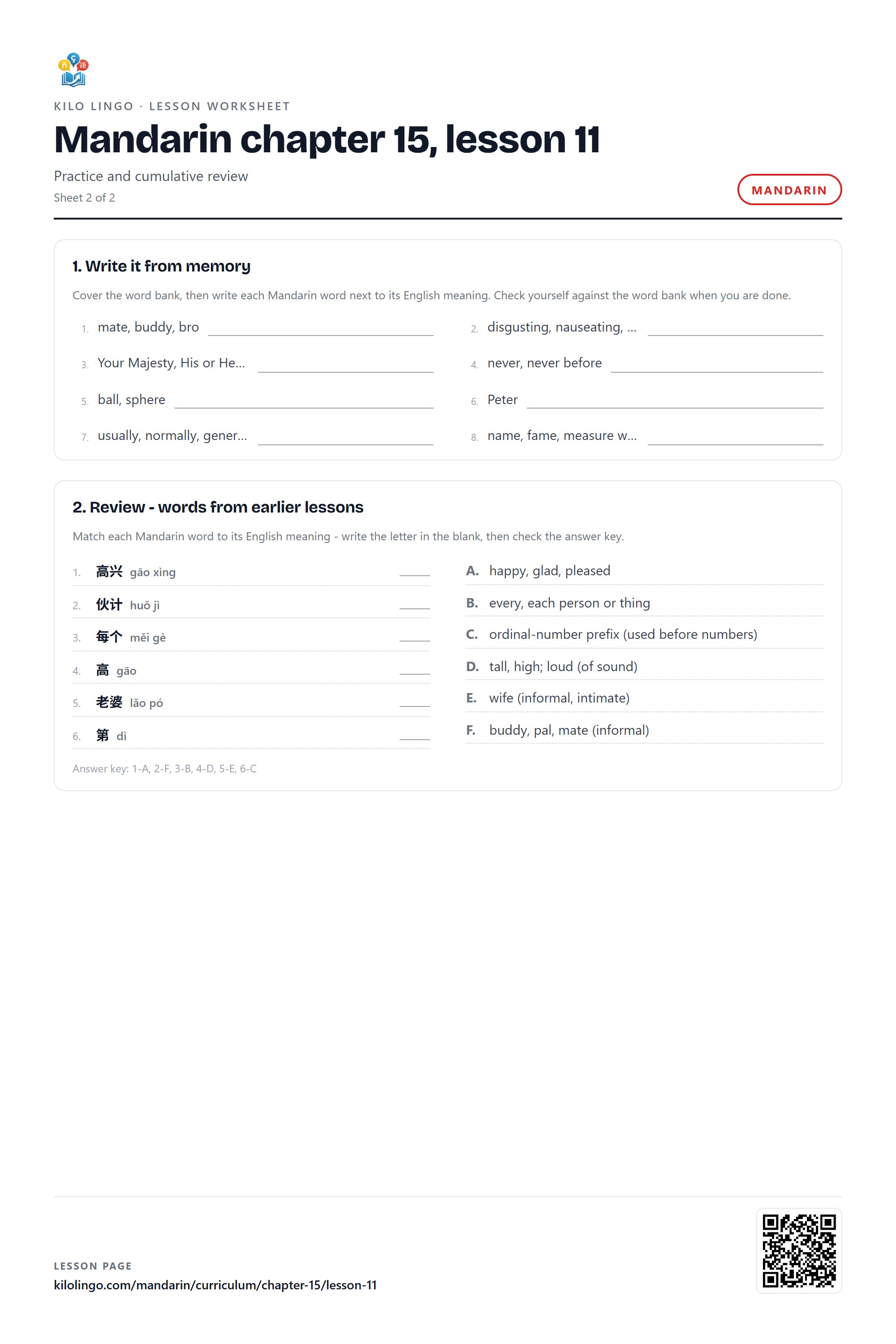
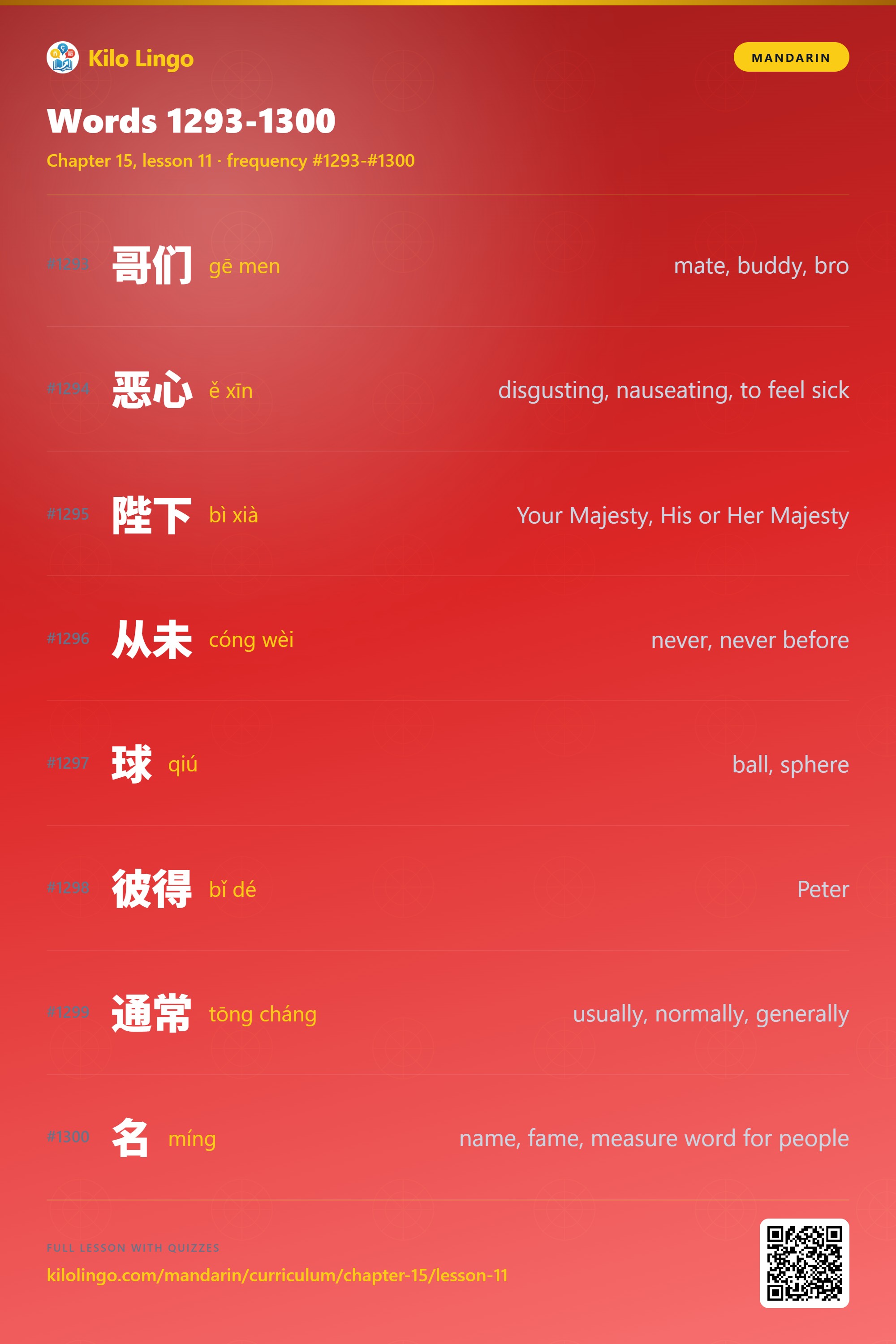
- Words 1293-1300Vocabulary
8 words · ranks 1293-1300
- Story milestone: top 1300 wordsGraded-reader story
You can read this story using only the words you've learned so far. Every content word sits at or above the rank-1300 ceiling.
- Work and studyThemed review
The office and the classroom.
xue2runs through half of these - student, school, to study, university are all built on the same character for learning. - Arcade reviewReview games
Replay this chapter's words as games - a different kind of repetition, and it counts.
Word printables
Per-word sheets88 words · a worksheet, infographic and listicle each









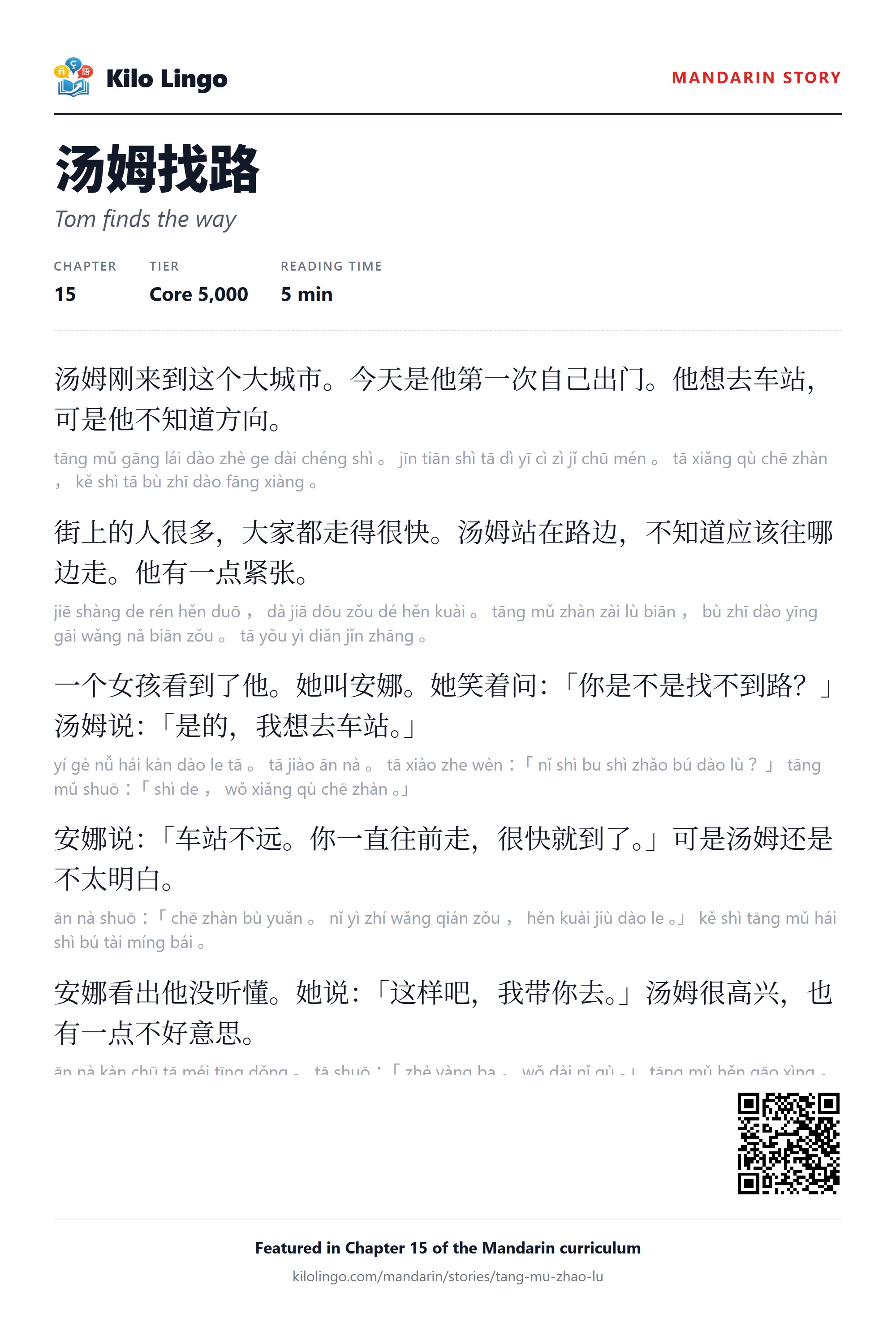
Chapter 16 · The three de: 的, 得, 地
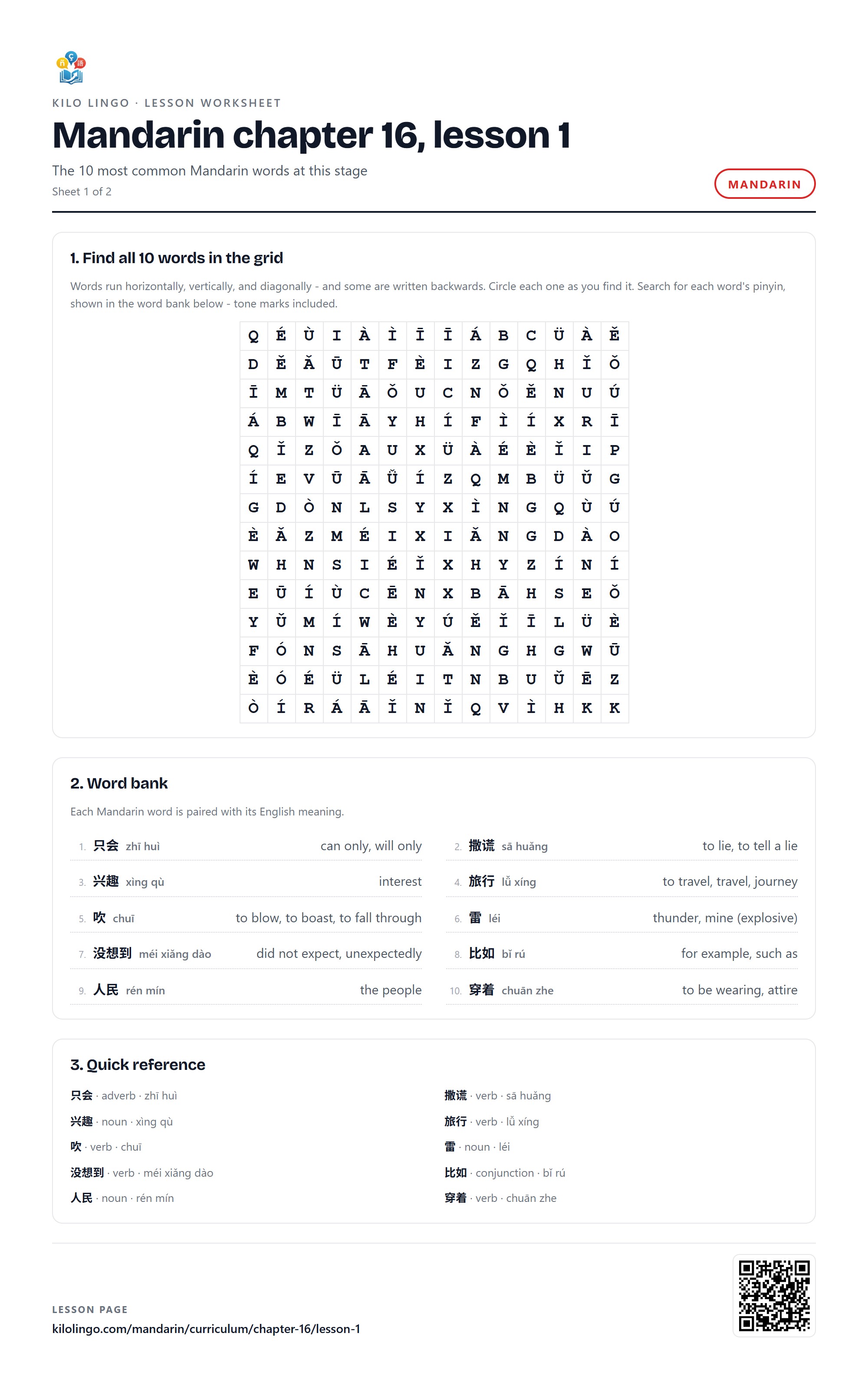
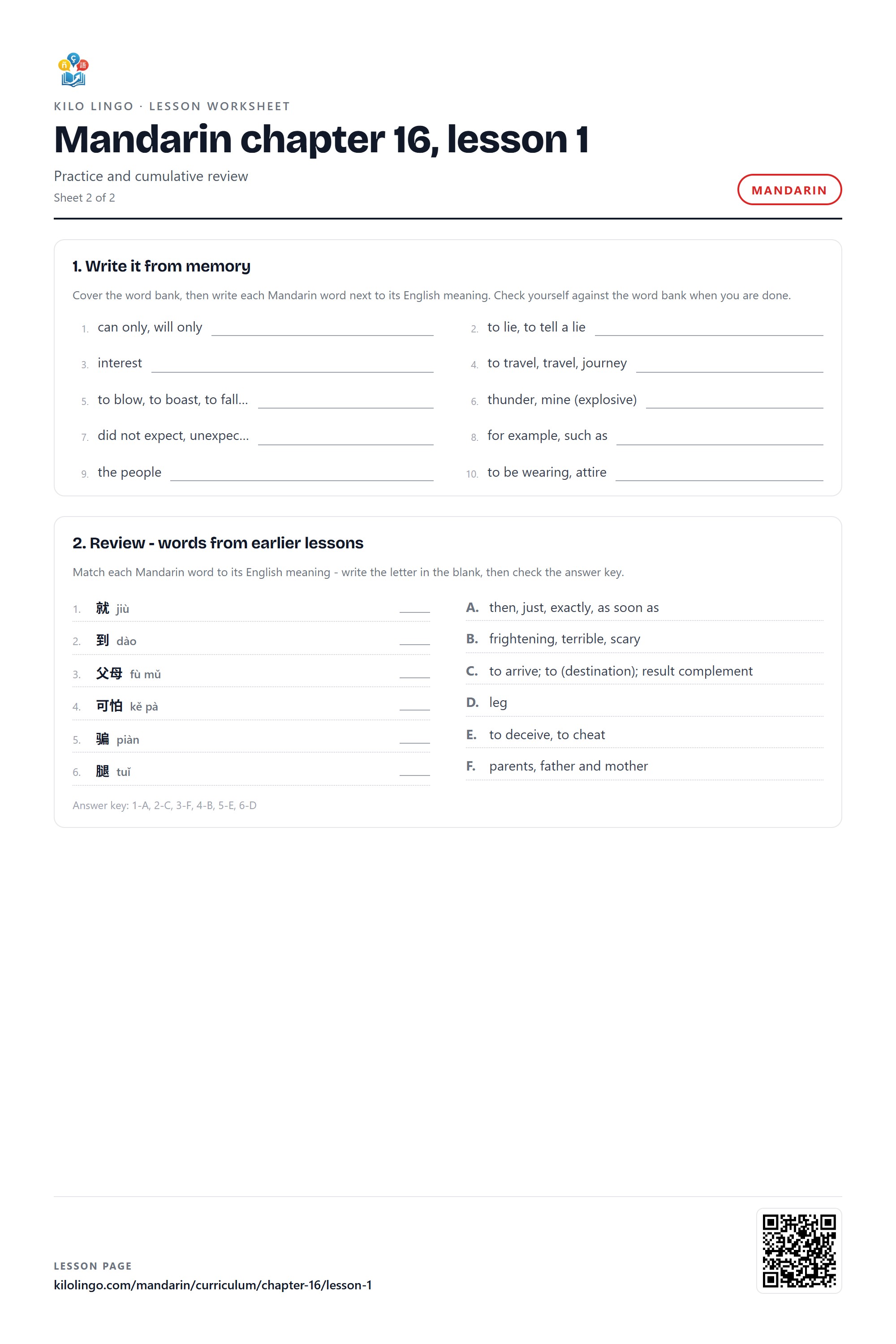
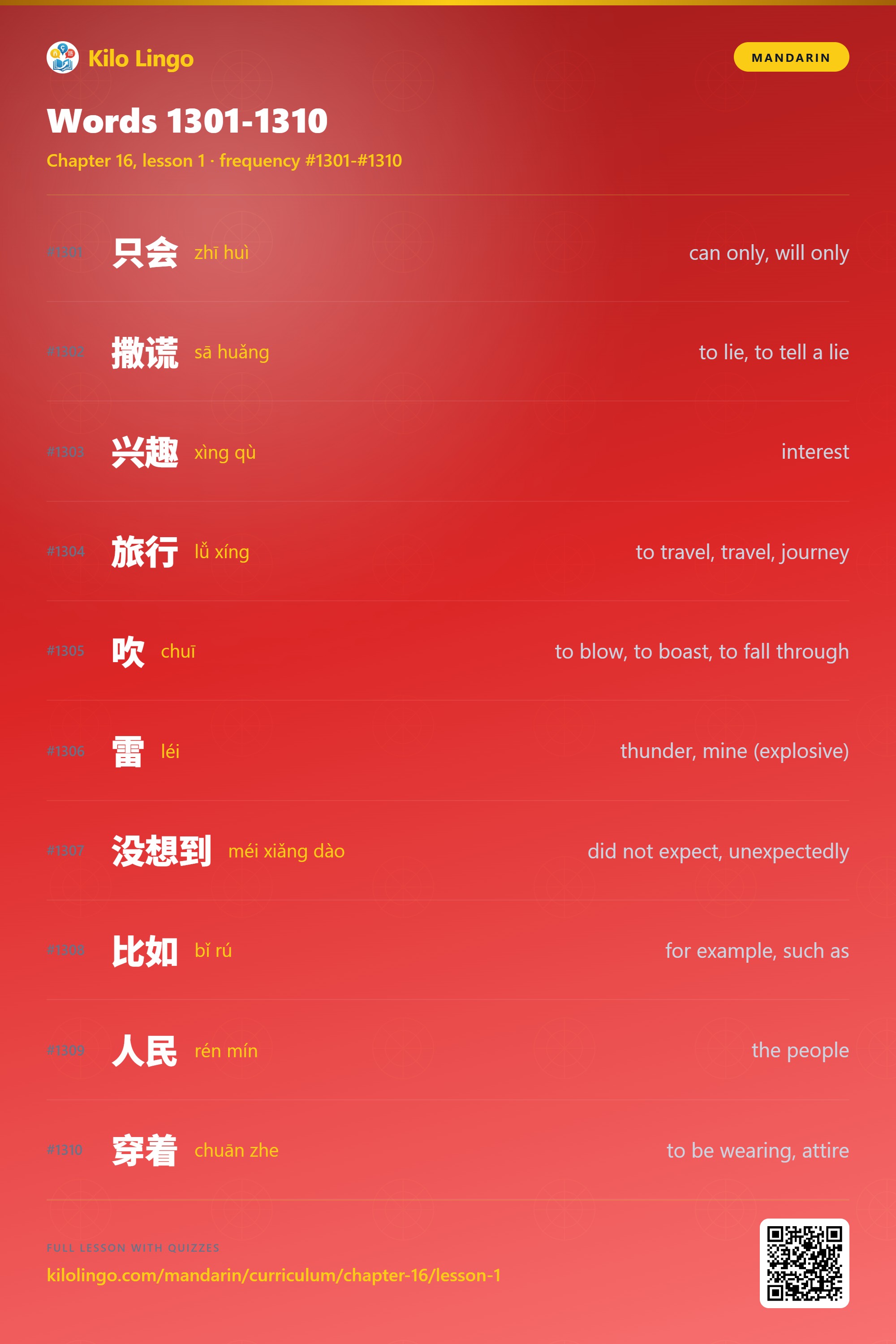
Chapter page →- Words 1301-1310Vocabulary
10 words · ranks 1301-1310
- Crossword review sessionReview games
Cross the words you just met, clued in English. Slower than a drill, and it sticks harder.
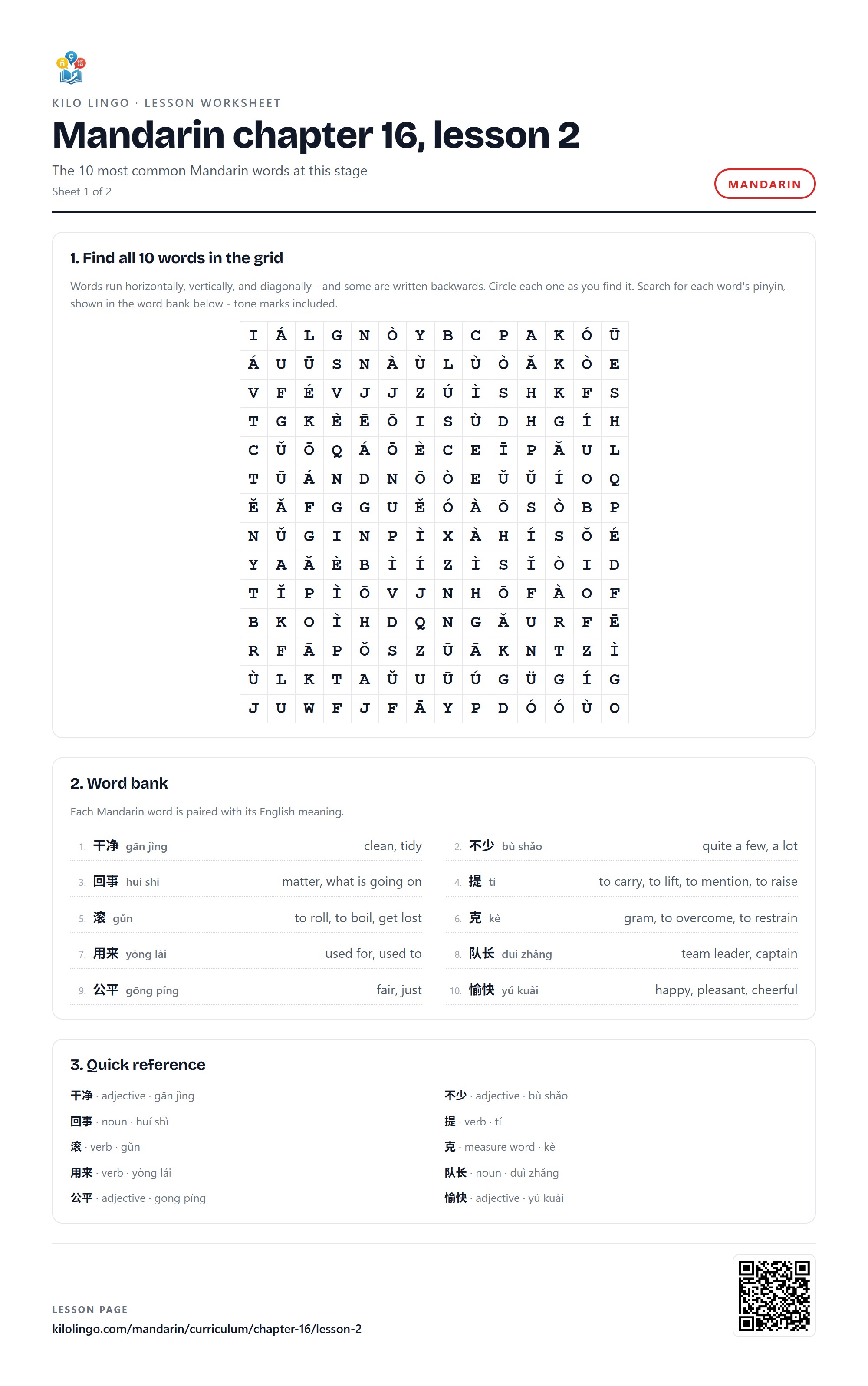
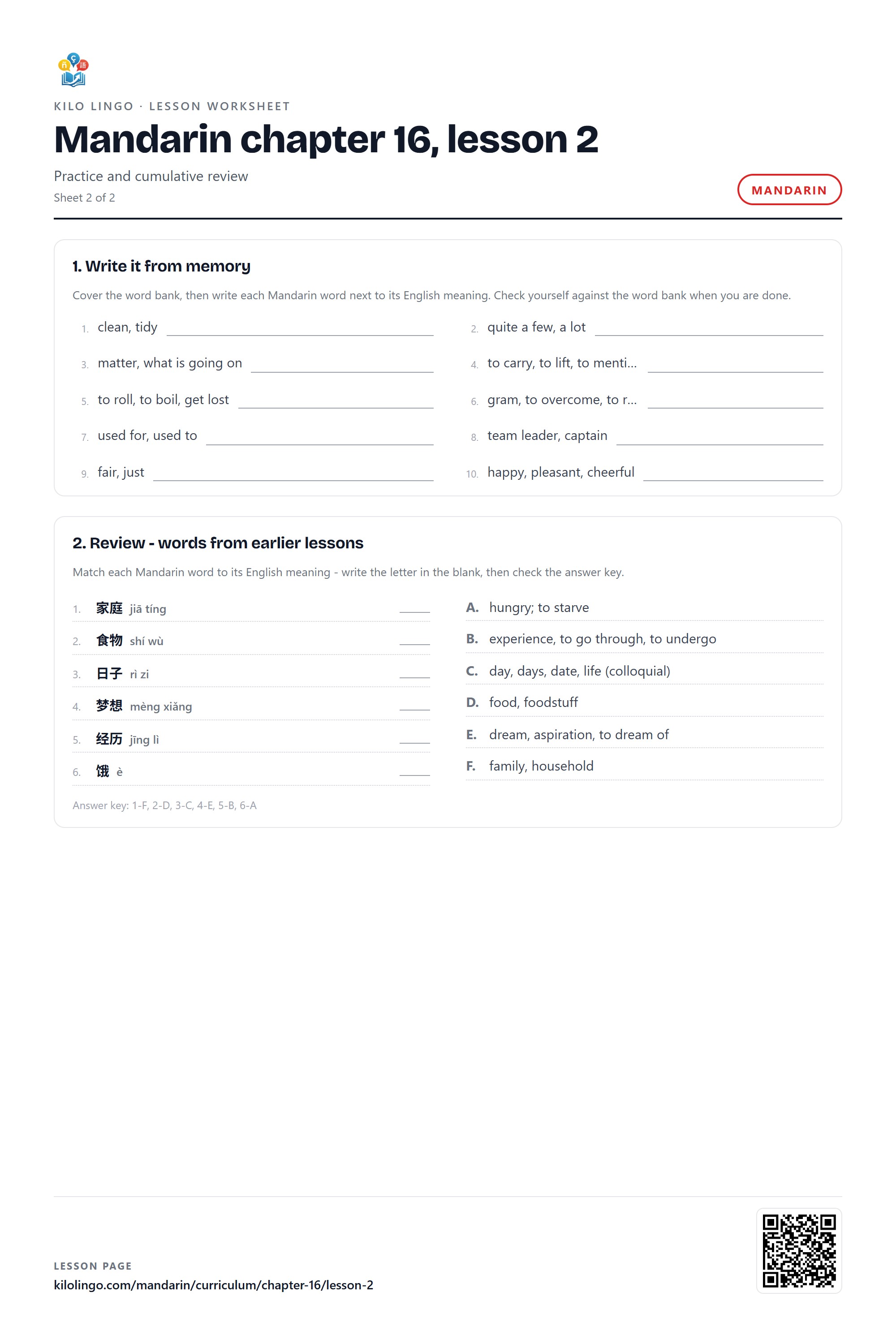
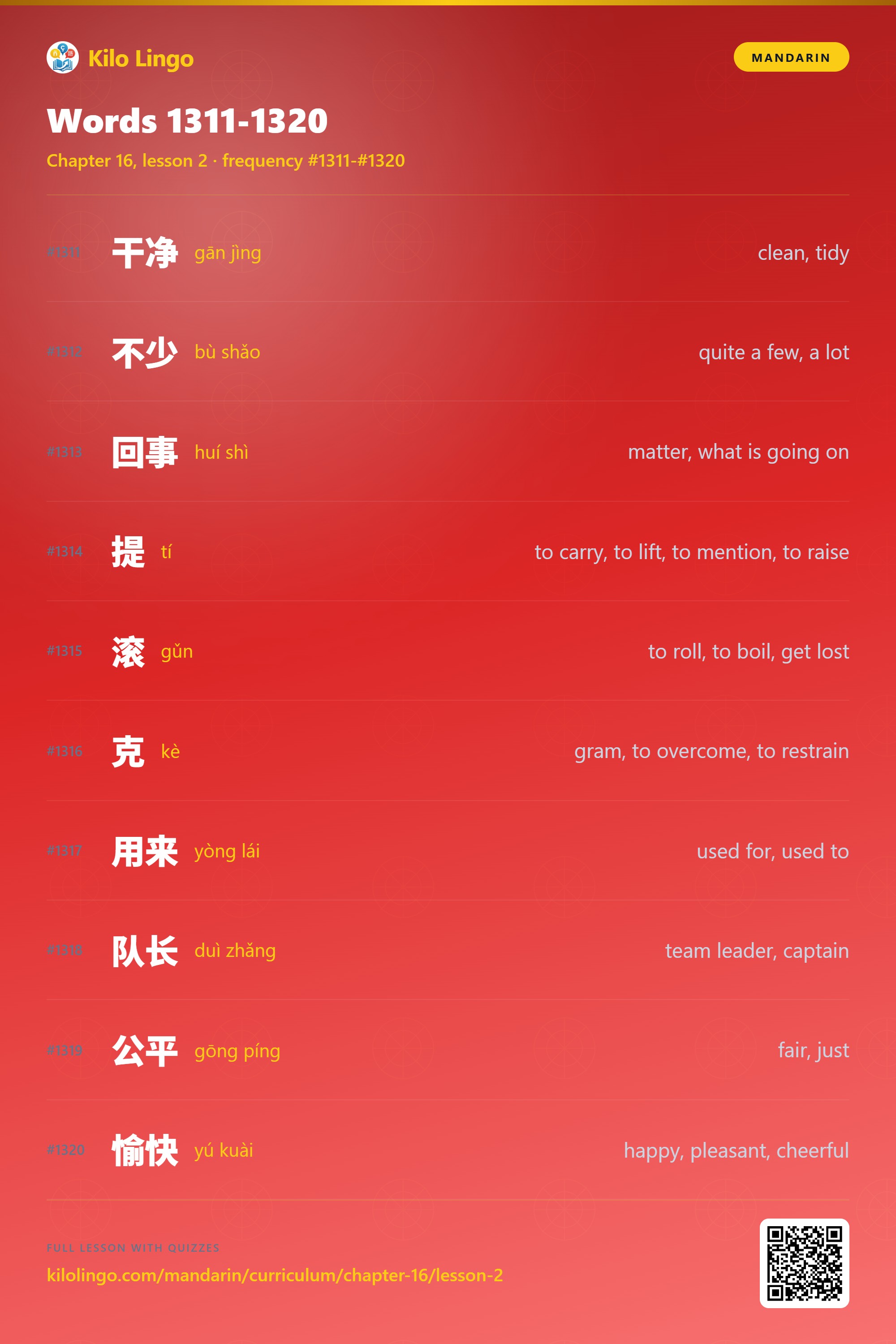
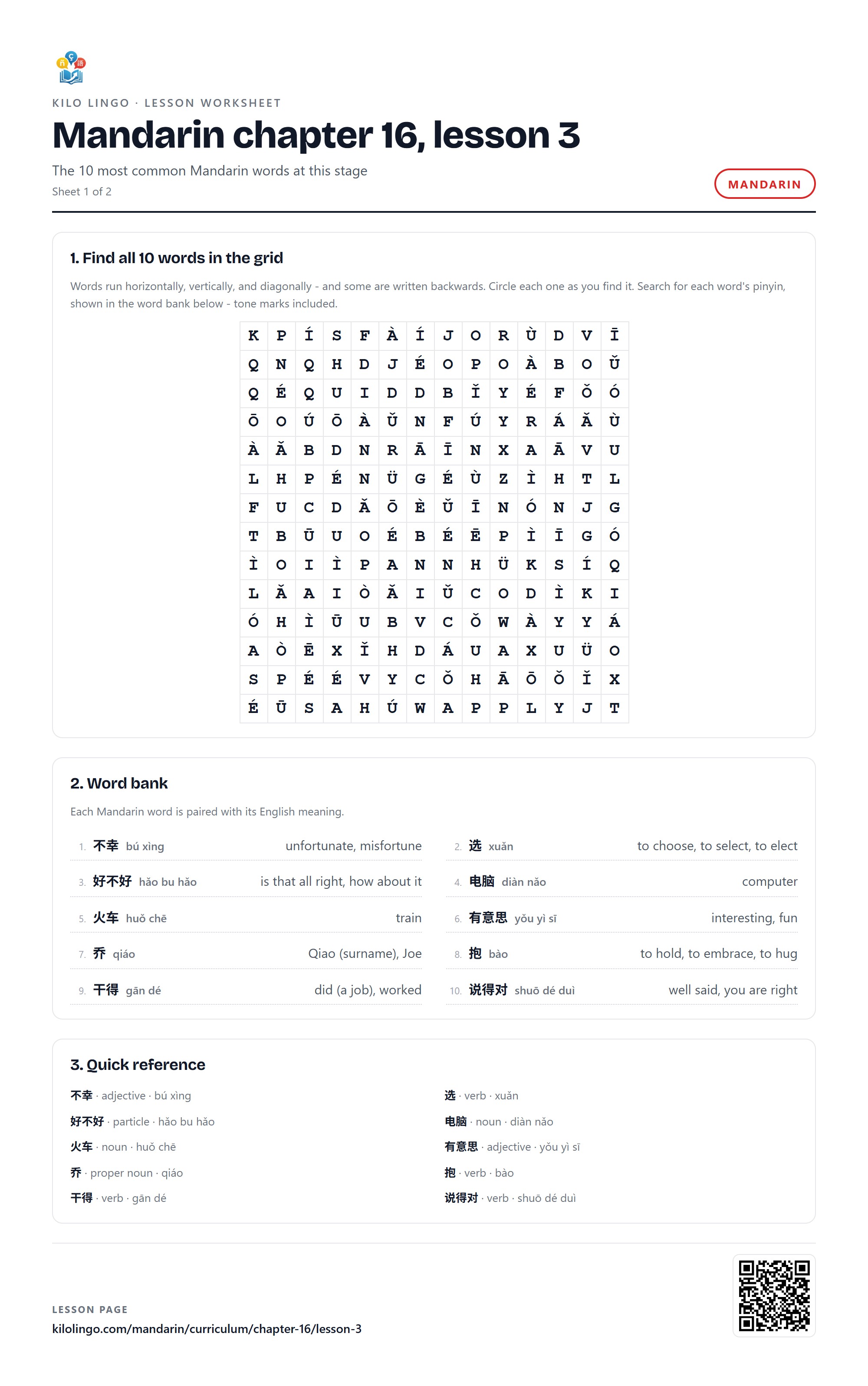
- Words 1311-1320Vocabulary
10 words · ranks 1311-1320
- Tone Shooter review sessionReview games
Shoot the words you just met into their tones by colour. The quickest way to fix a tone in place.
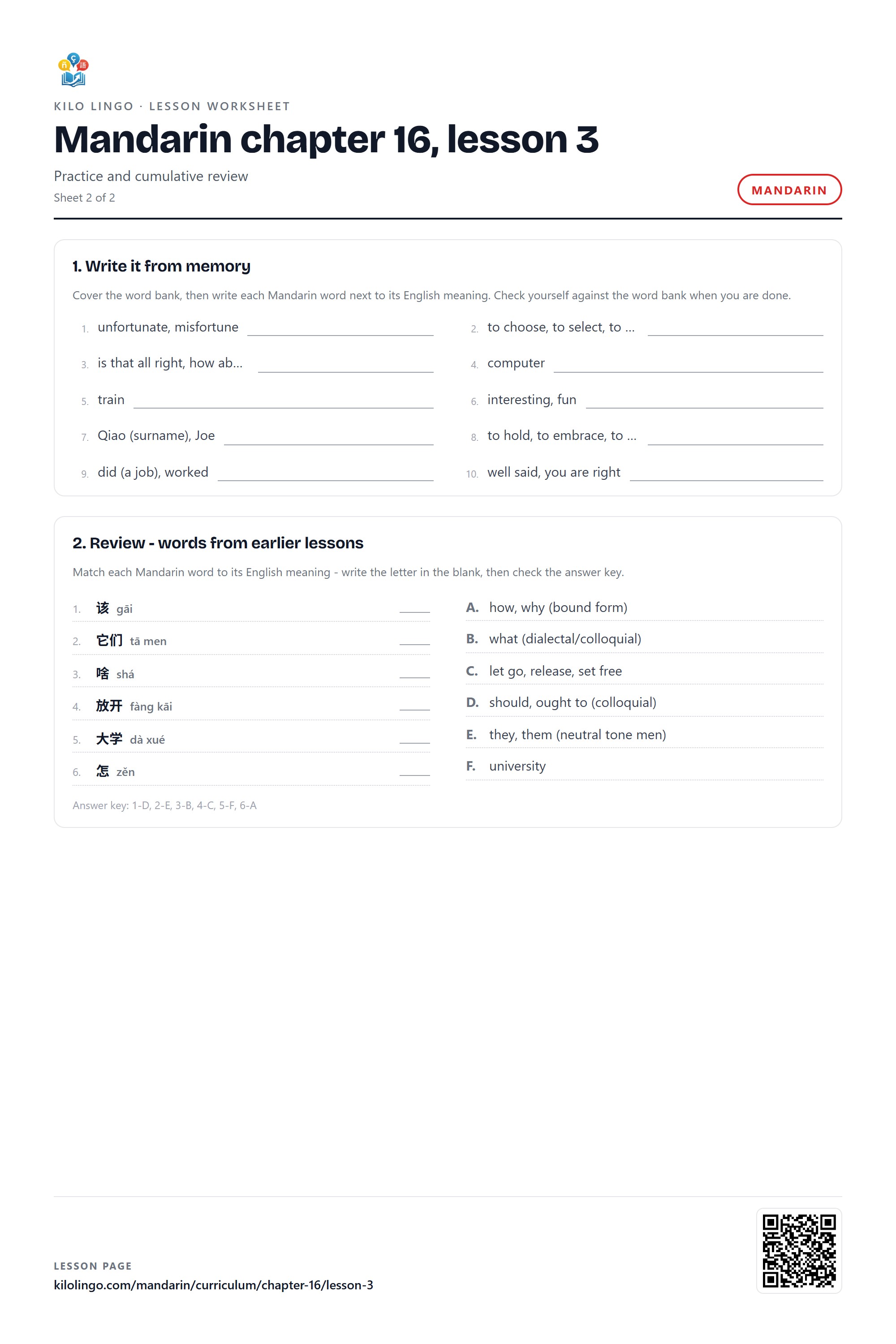
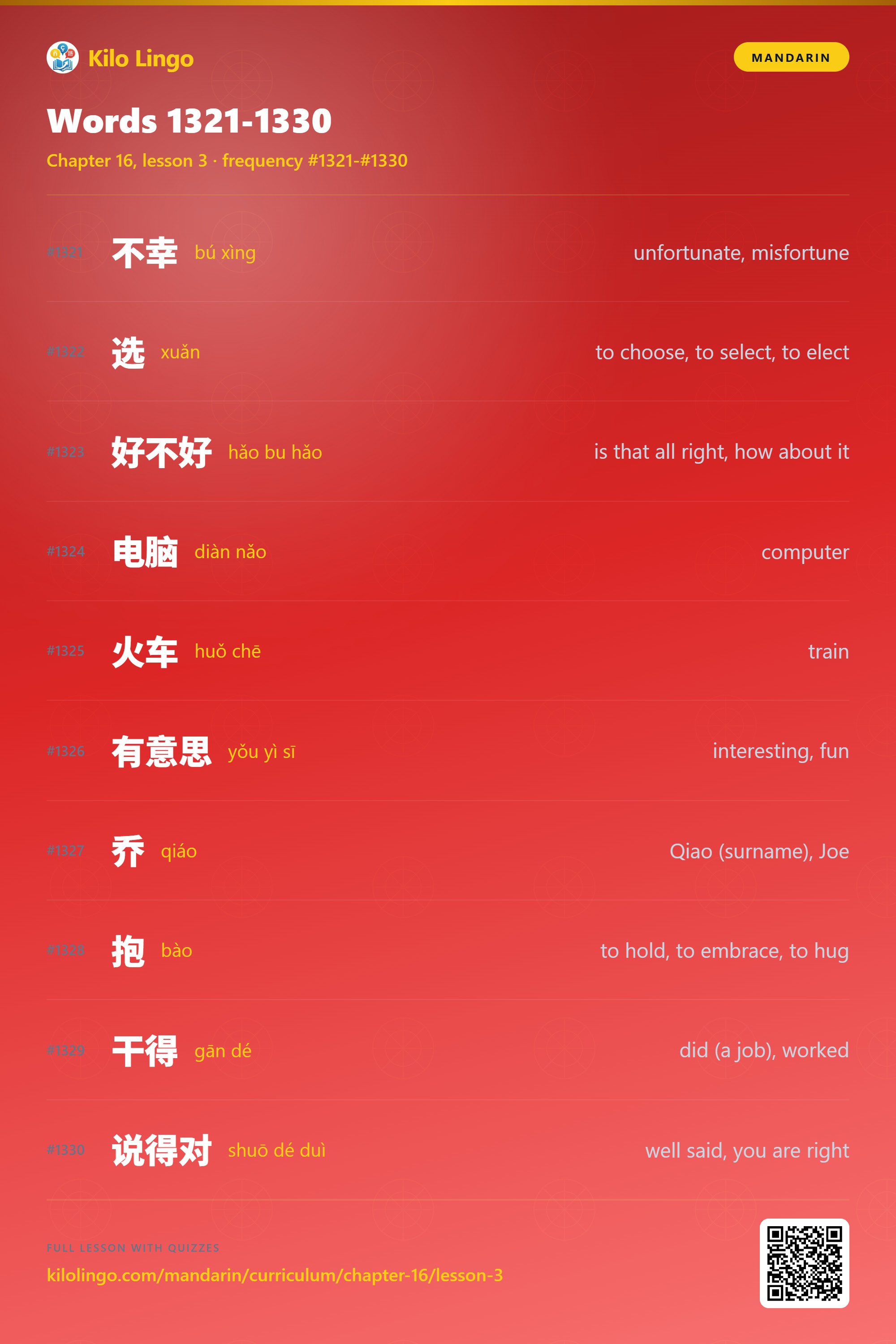
- Words 1321-1330Vocabulary
10 words · ranks 1321-1330
- Word Bubbles review sessionReview games
Pop the words you just met by matching each one to its meaning. A couple of rounds and the batch is yours.
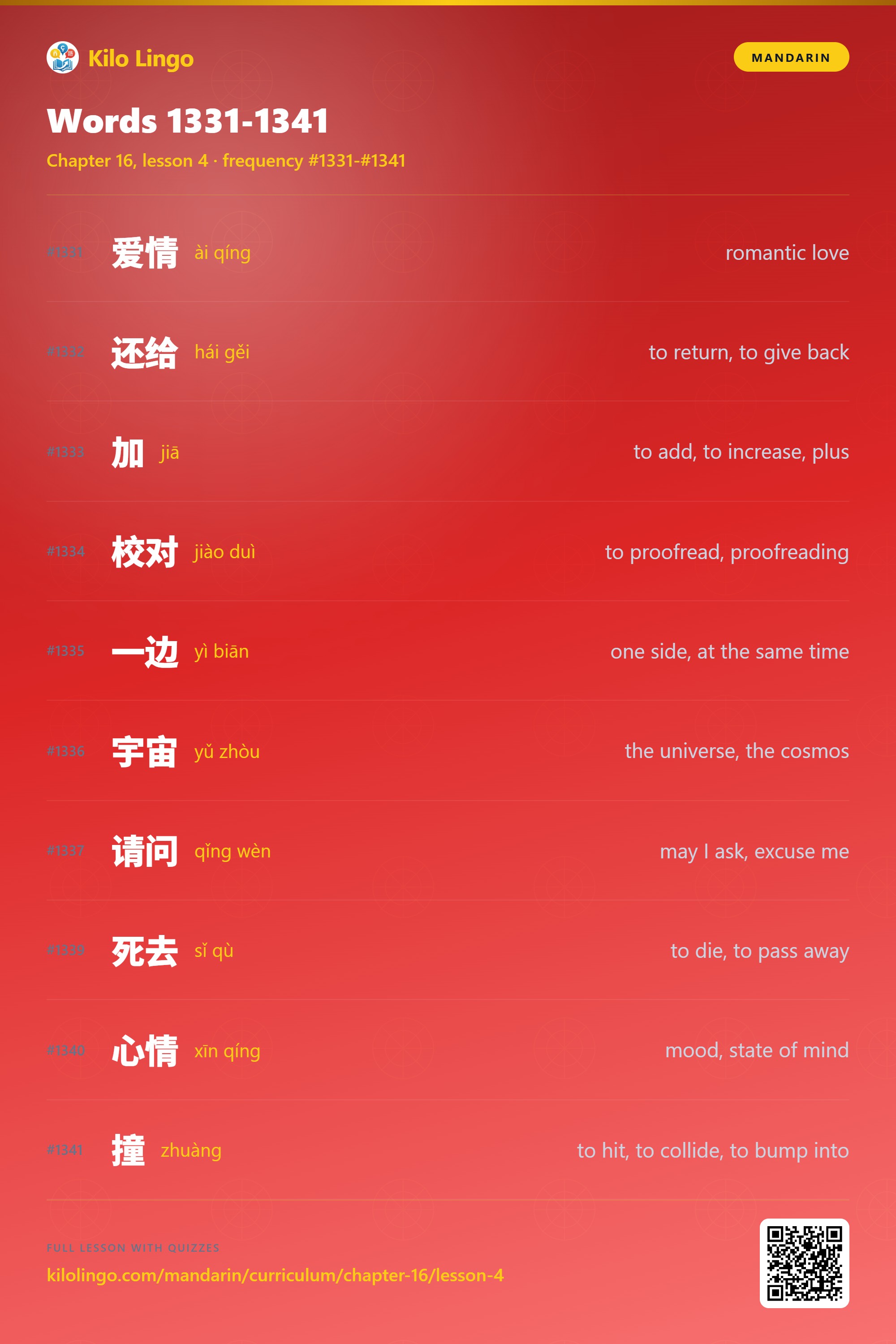
- Words 1331-1341Vocabulary
10 words · ranks 1331-1341
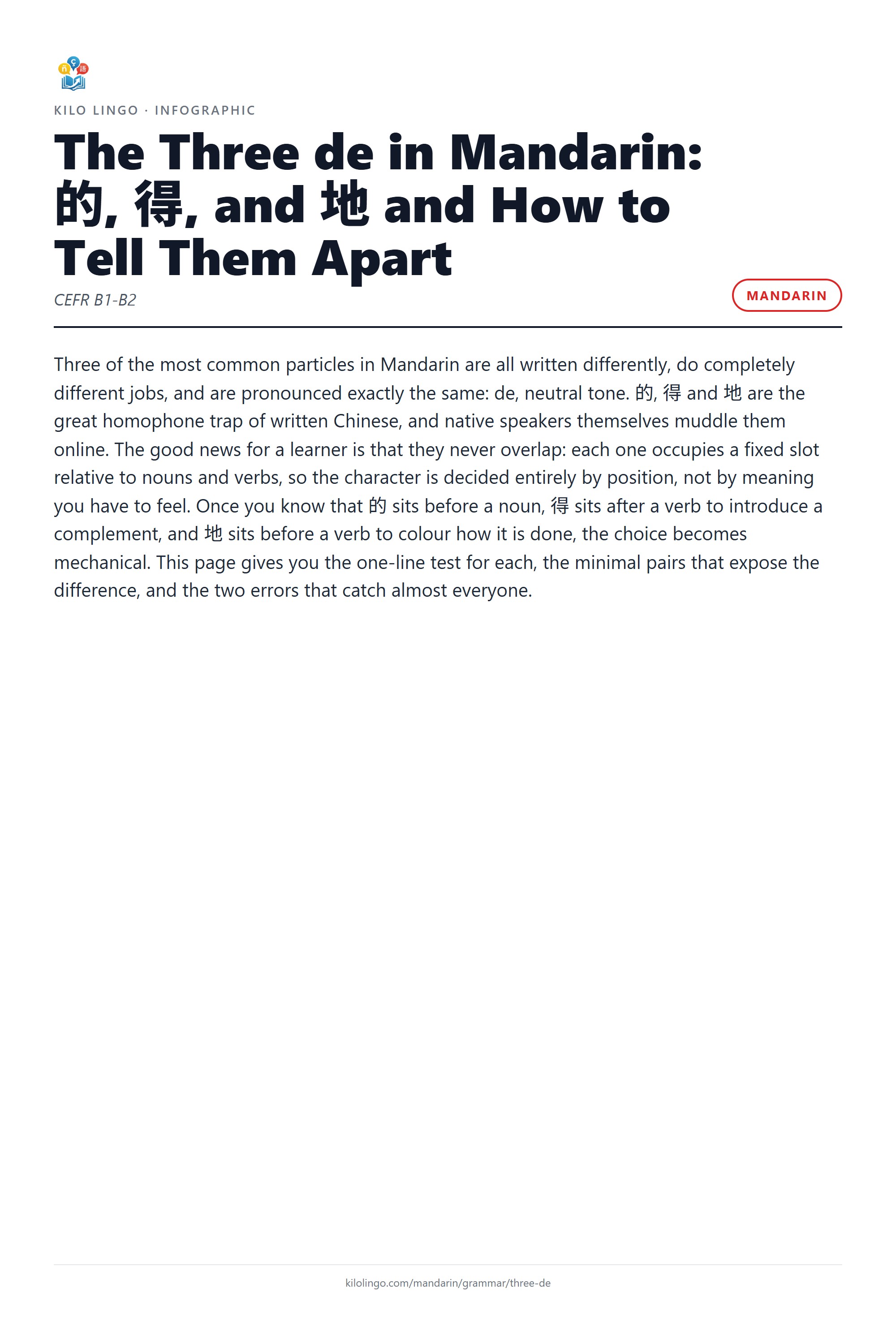
- The three de: 的, 得, 地Grammar
Three homophones, three jobs. 的 links a modifier to a following noun (红的车, 我买的书); 得 hangs a complement off a verb or adjective (跑得快, 高兴得跳起来); 地 turns a description into the manner of a following verb (慢慢地走, 高兴地说). The position test for each and why defaulting to 的 for all three is the classic error.
- 给 or 为?Mistake clinic
One hands something over. The other acts on someone's behalf.
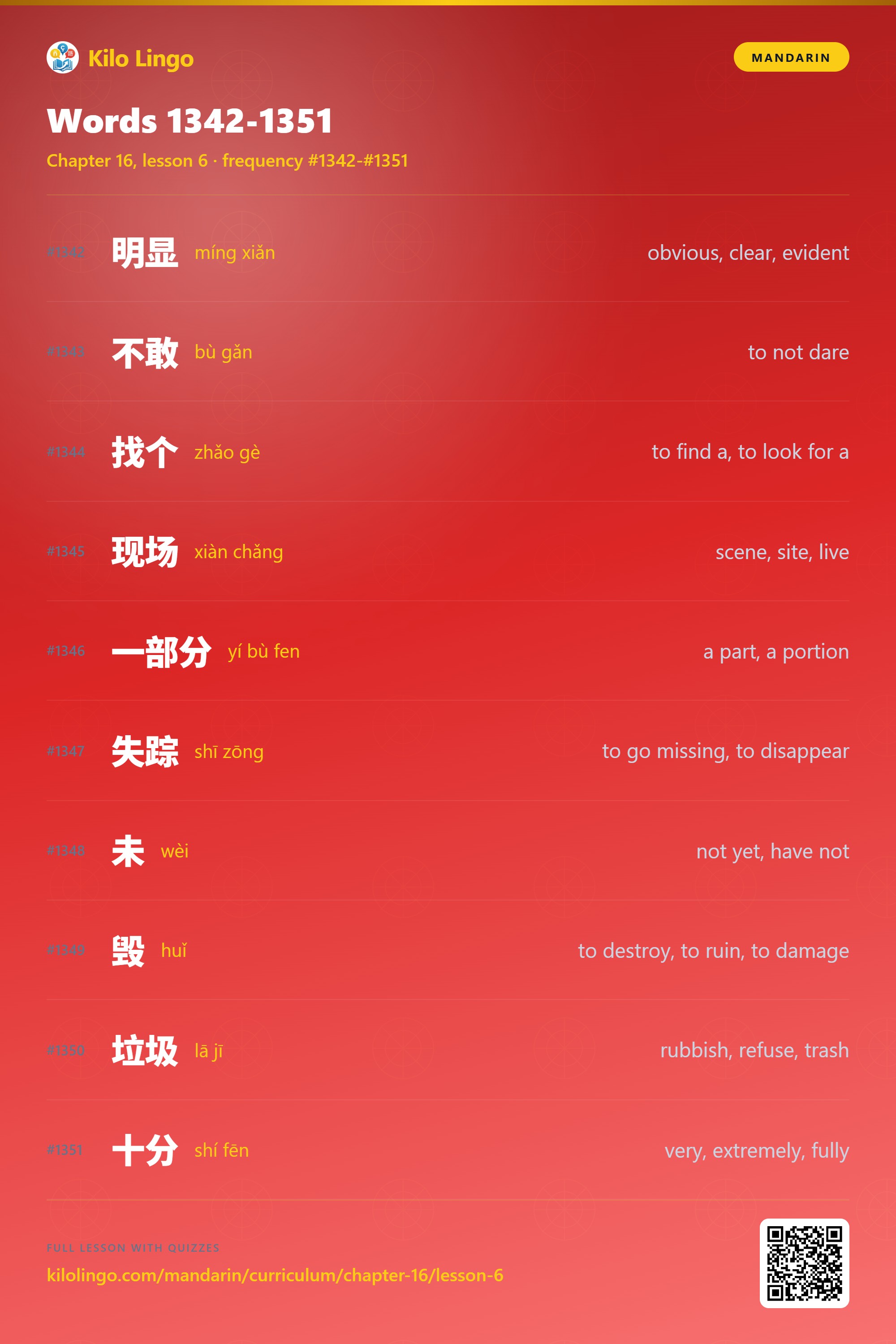
- Words 1342-1351Vocabulary
10 words · ranks 1342-1351
- Tone Shooter review sessionReview games
Shoot the words you just met into their tones by colour. The quickest way to fix a tone in place.
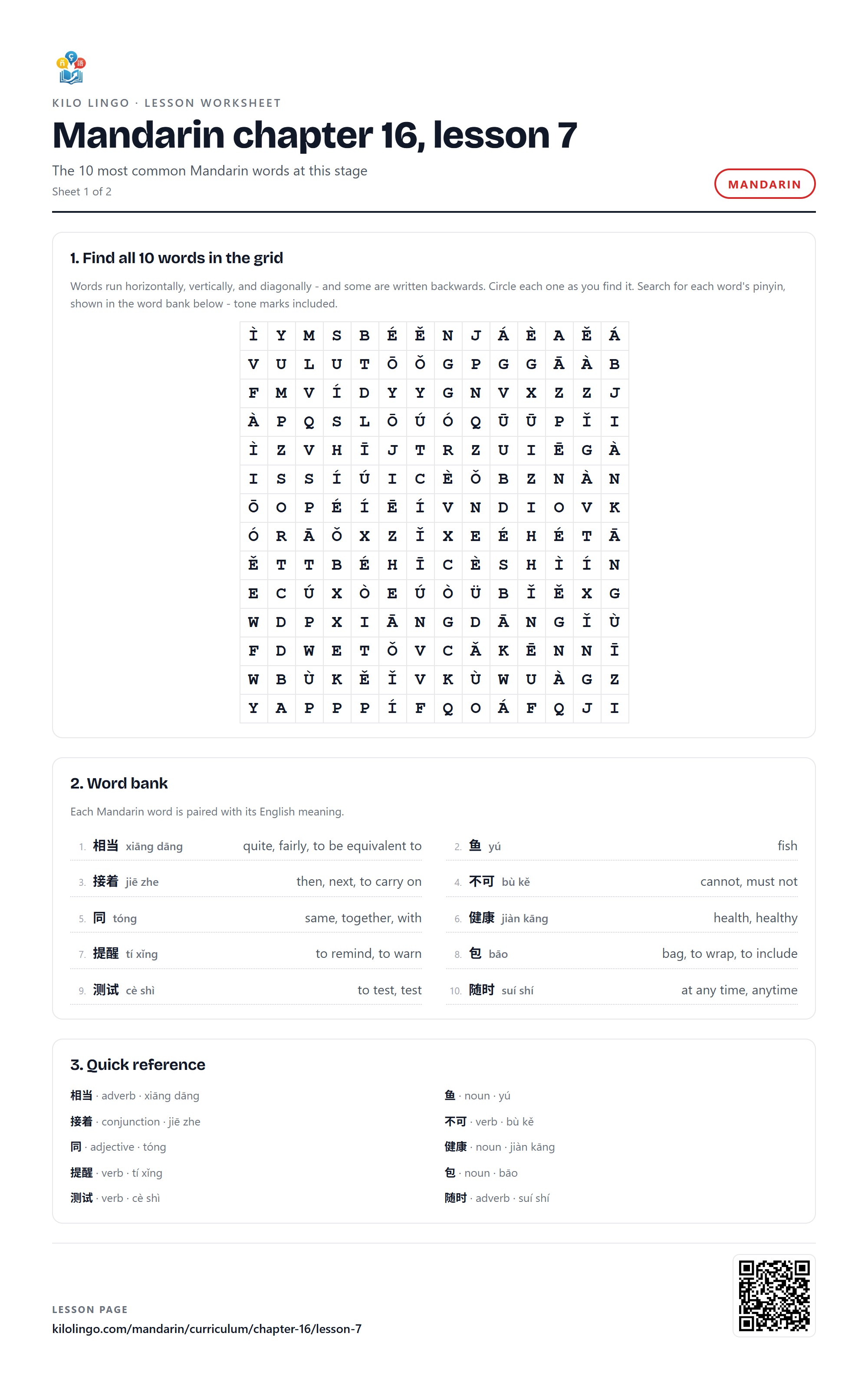
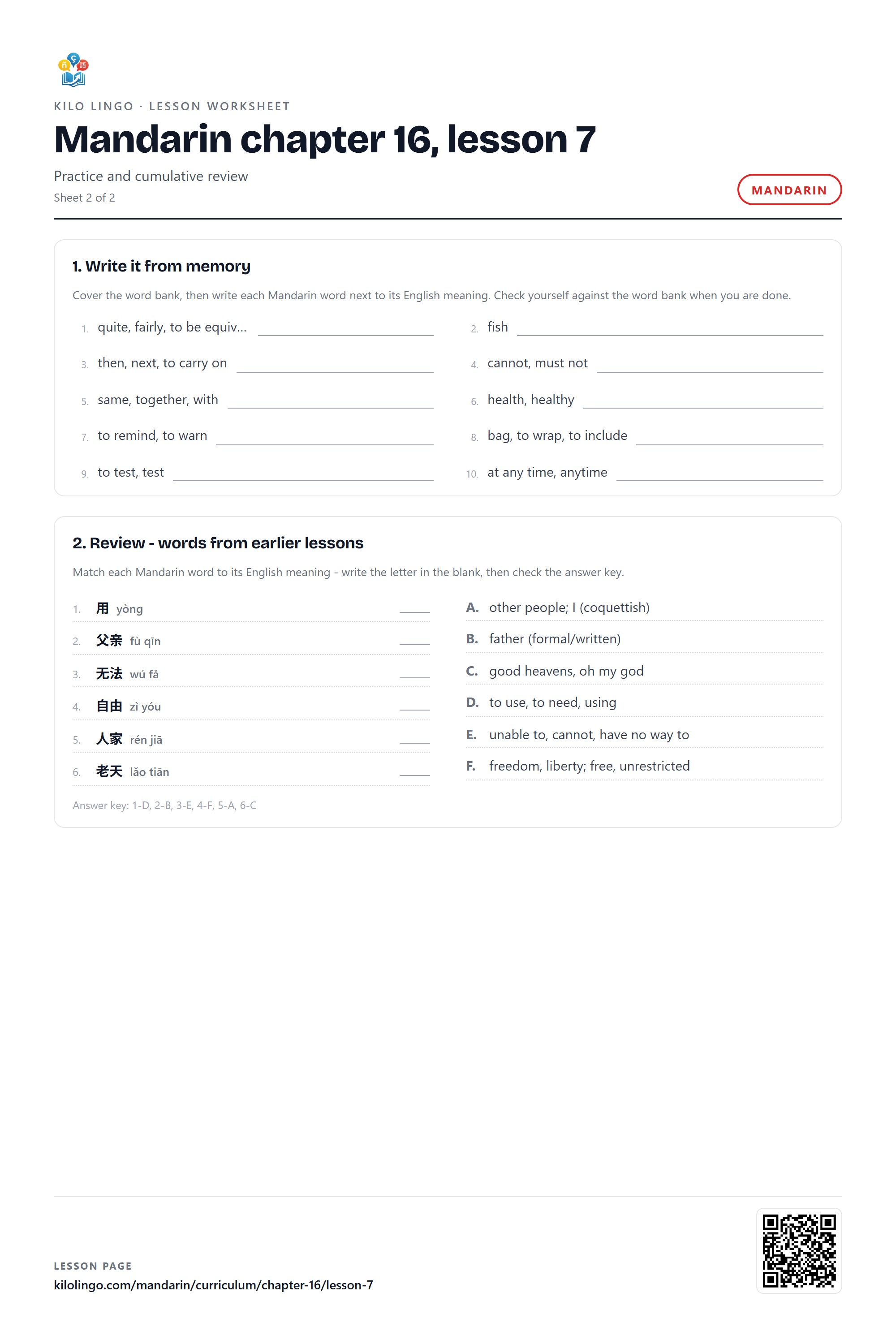
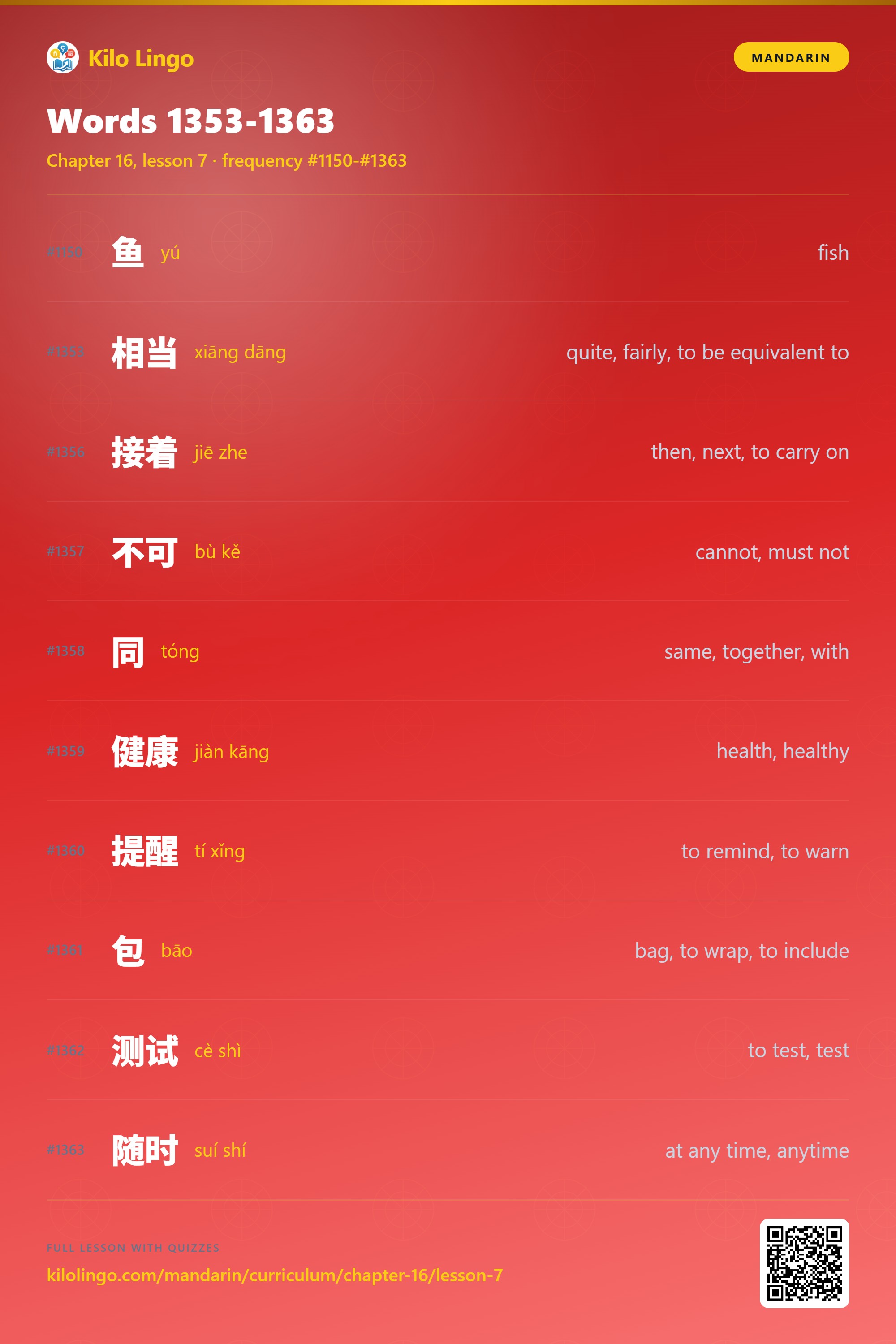
- Words 1353-1363Vocabulary
10 words · ranks 1353-1363
- Word Bubbles review sessionReview games
Pop the words you just met by matching each one to its meaning. A couple of rounds and the batch is yours.
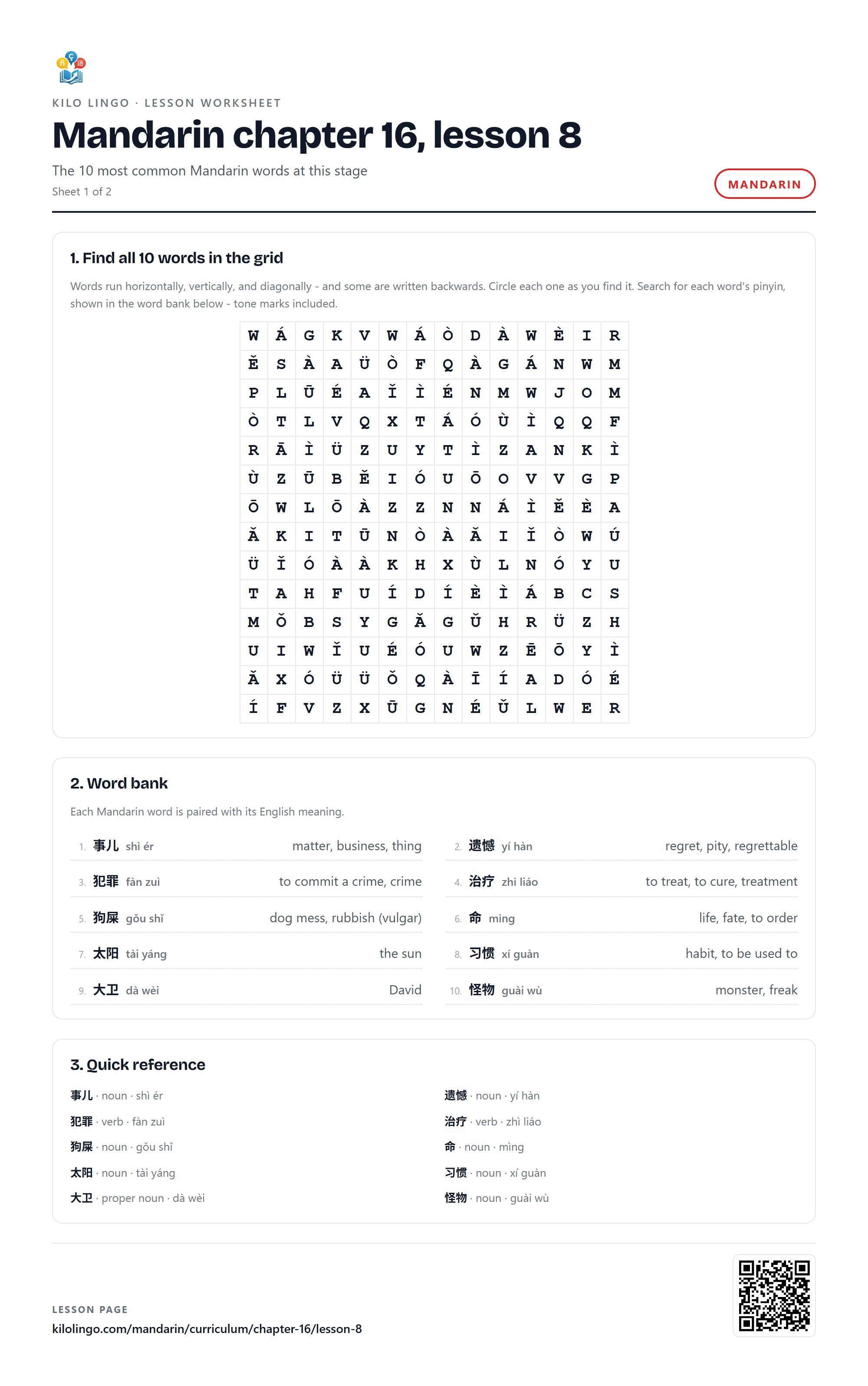
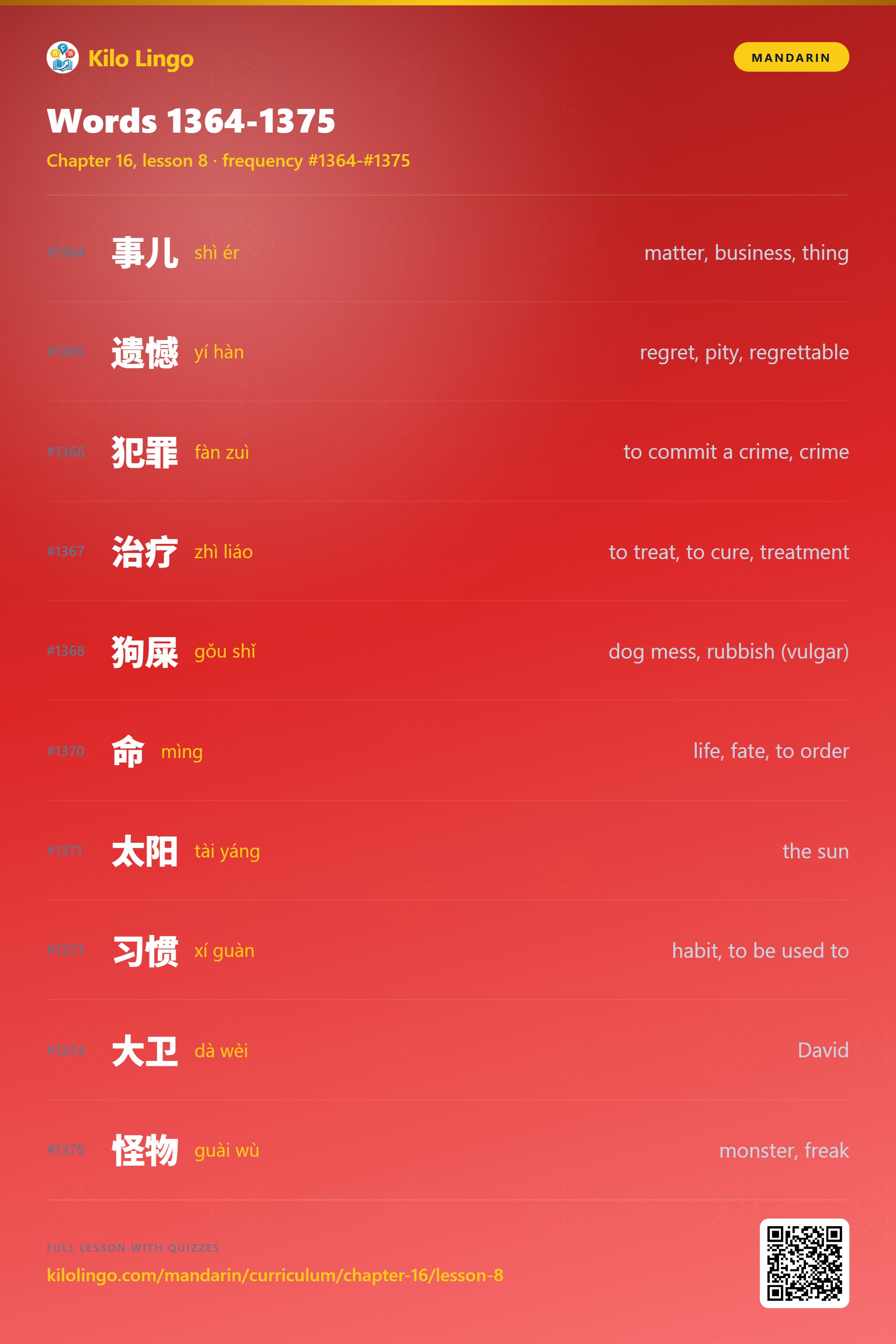
- Words 1364-1376Vocabulary
10 words · ranks 1364-1376
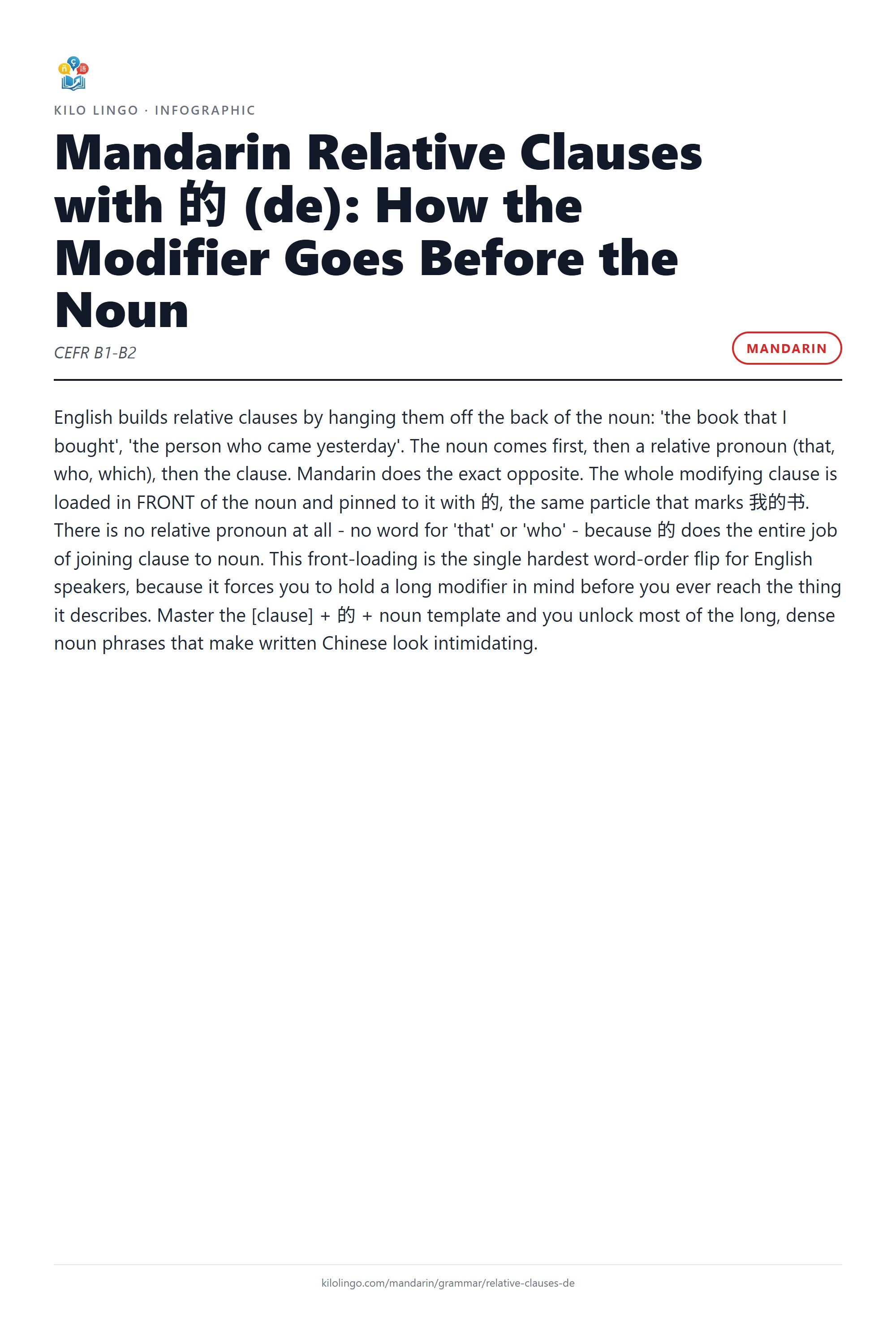
- Relative clauses with 的Grammar
Mandarin puts the whole modifying clause BEFORE the noun and joins it with 的, the reverse of English which/that/who clauses: 我买的书 (the book I bought), 昨天来的人 (the person who came yesterday), 会说中文的朋友 (a friend who can speak Chinese). There is no relative pronoun - 的 does all the work - and the head noun can drop entirely (买的 = the one bought).
- Words 1377-1387Vocabulary
10 words · ranks 1377-1387
- Tone Shooter review sessionReview games
Shoot the words you just met into their tones by colour. The quickest way to fix a tone in place.
- Words 1388-1397Vocabulary
10 words · ranks 1388-1397
- Word Bubbles review sessionReview games
Pop the words you just met by matching each one to its meaning. A couple of rounds and the batch is yours.
- Words 1398-1399Vocabulary
2 words · ranks 1398-1399
- Story milestone: top 1400 wordsGraded-reader story
You can read this story using only the words you've learned so far. Every content word sits at or above the rank-1400 ceiling.
- Measure words: machines and long thingsMeasure words
电脑 takes 台, 鱼 takes 条, and neither takes 个 without sounding like a beginner. The pool keeps widening as your vocabulary does.
- Around townThemed review
Finding your way about. Three of these are the police -
jing3-cha2,jing3-guan1andjing3-fang1- and the shared first character is the giveaway. - Arcade reviewReview games
Replay this chapter's words as games - a different kind of repetition, and it counts.
Word printables
Per-word sheets92 words · a worksheet, infographic and listicle each







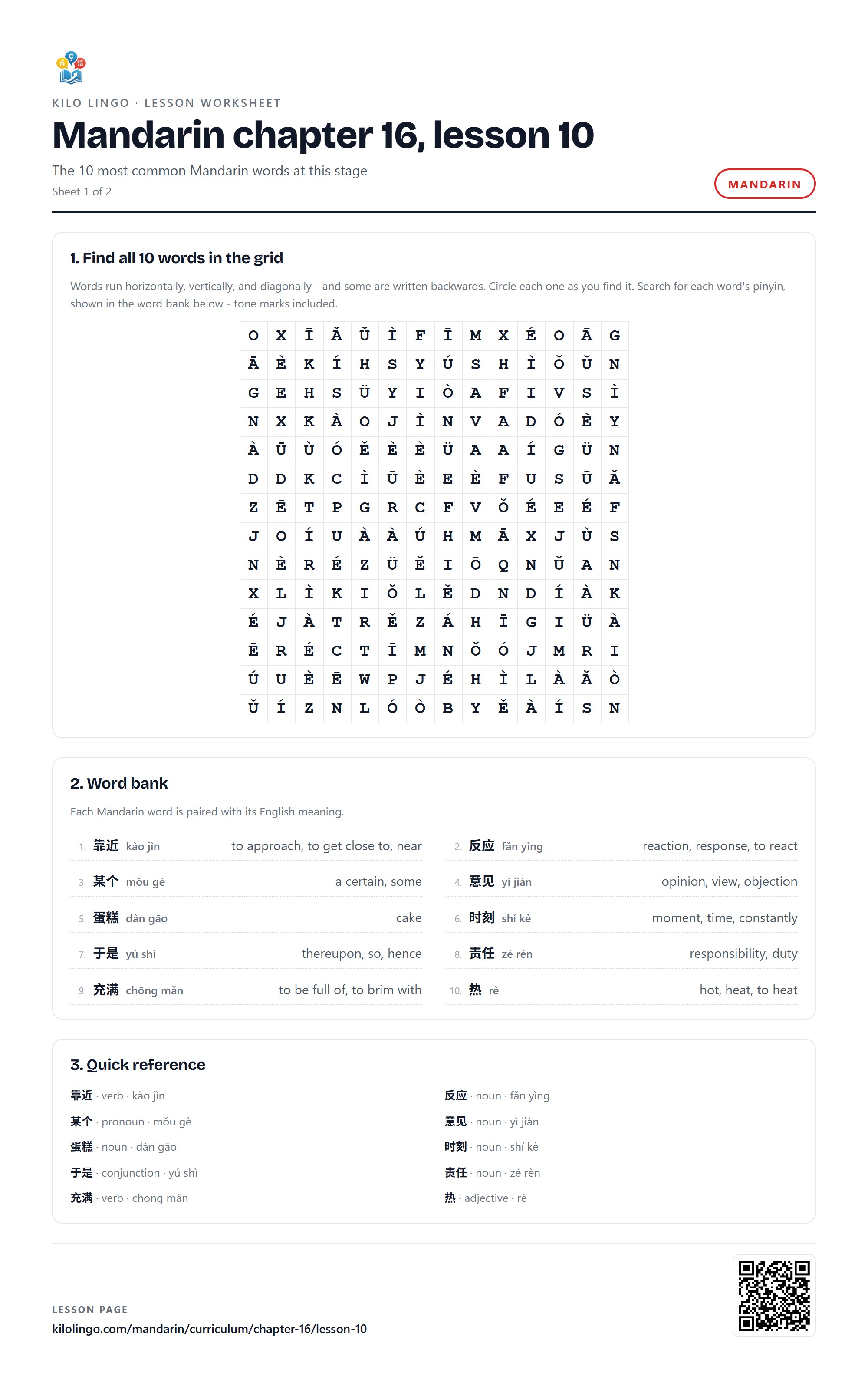
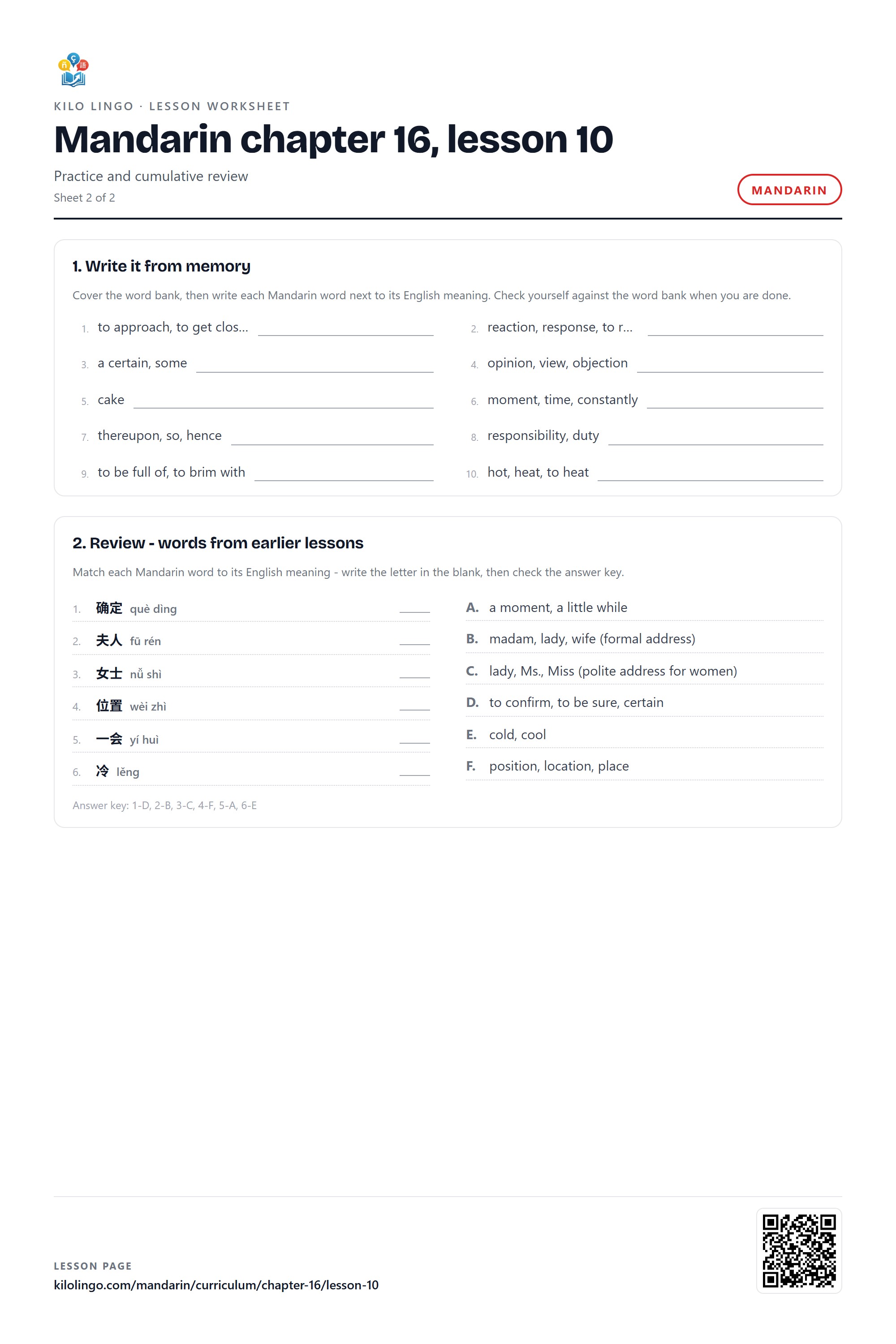

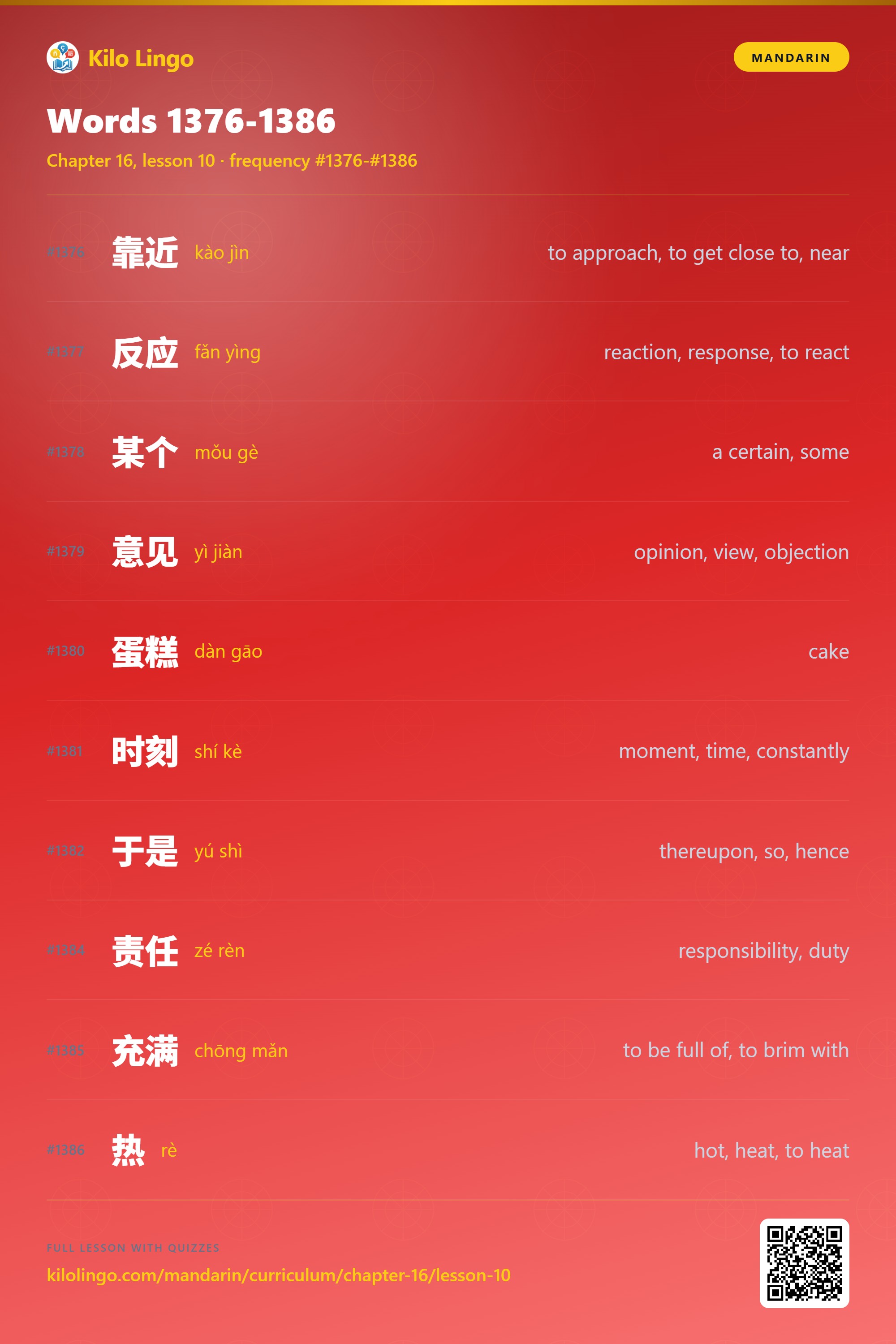
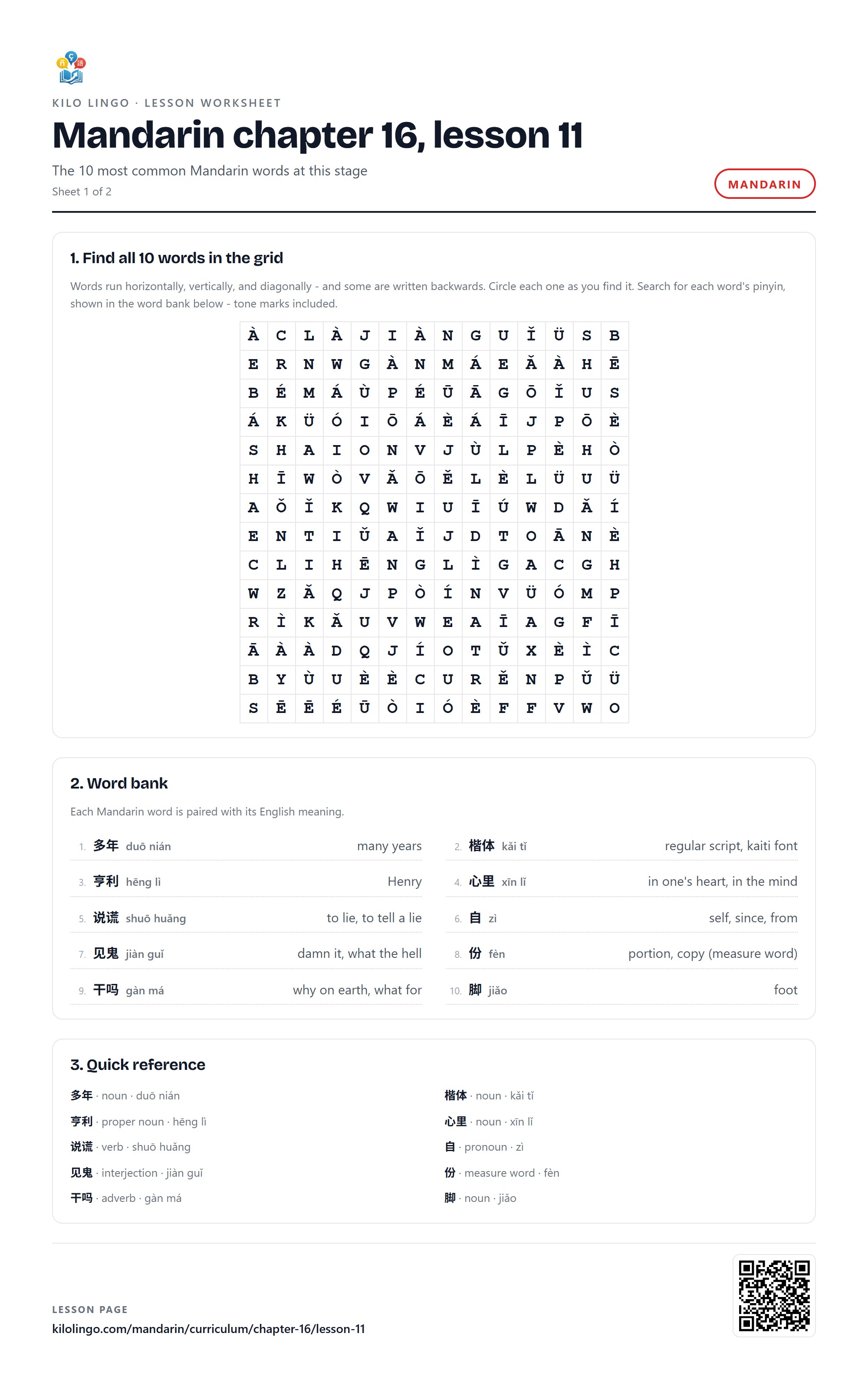
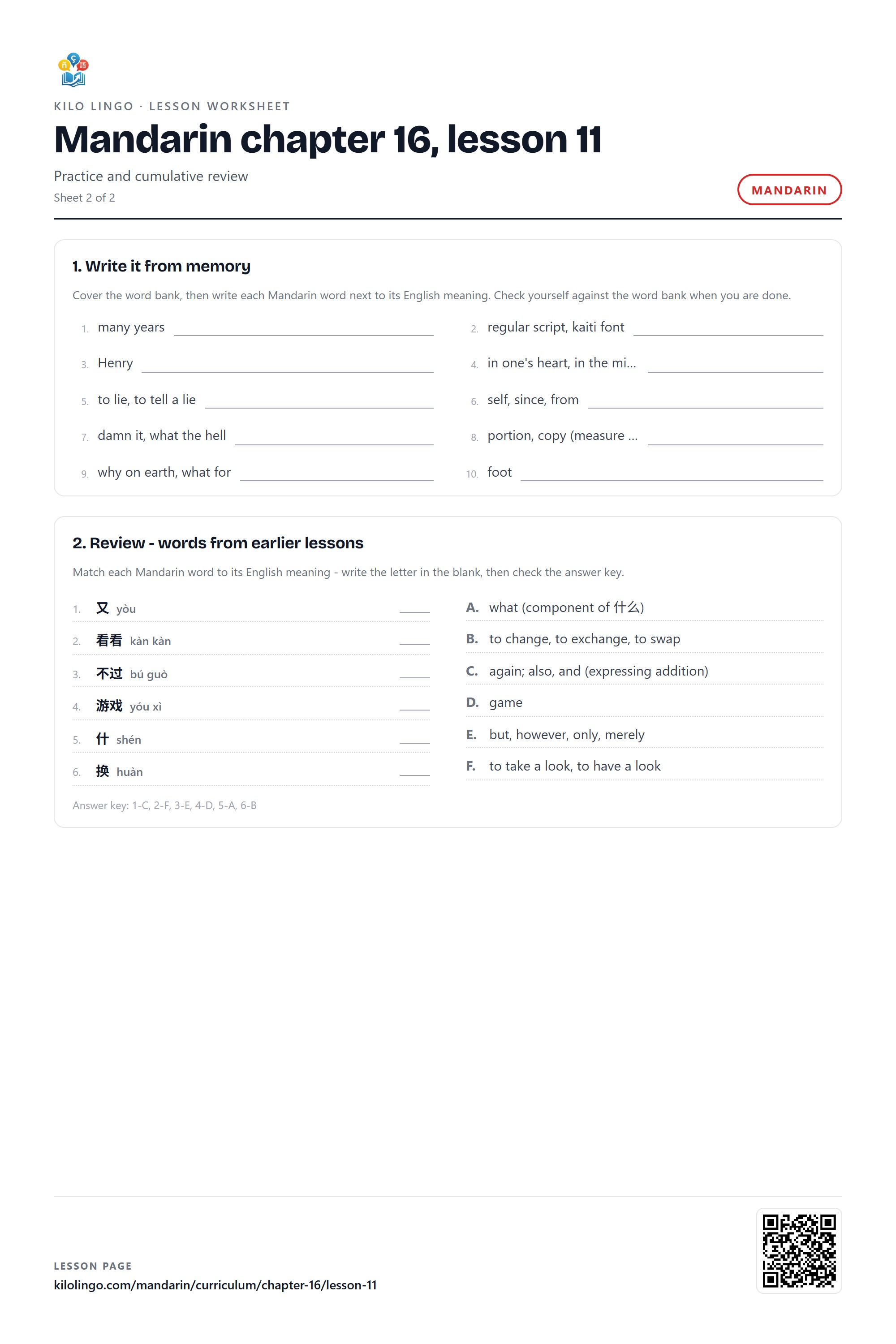

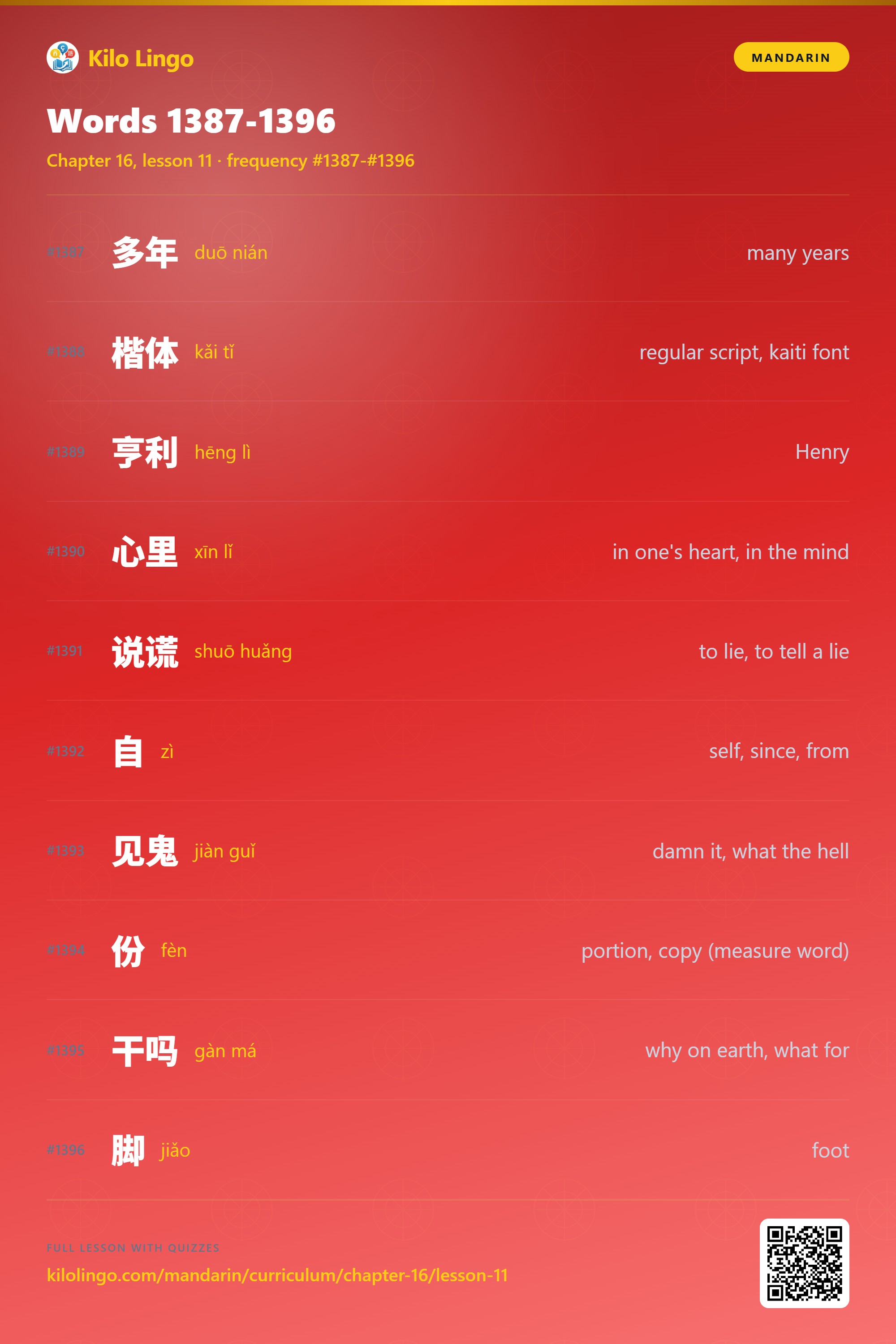
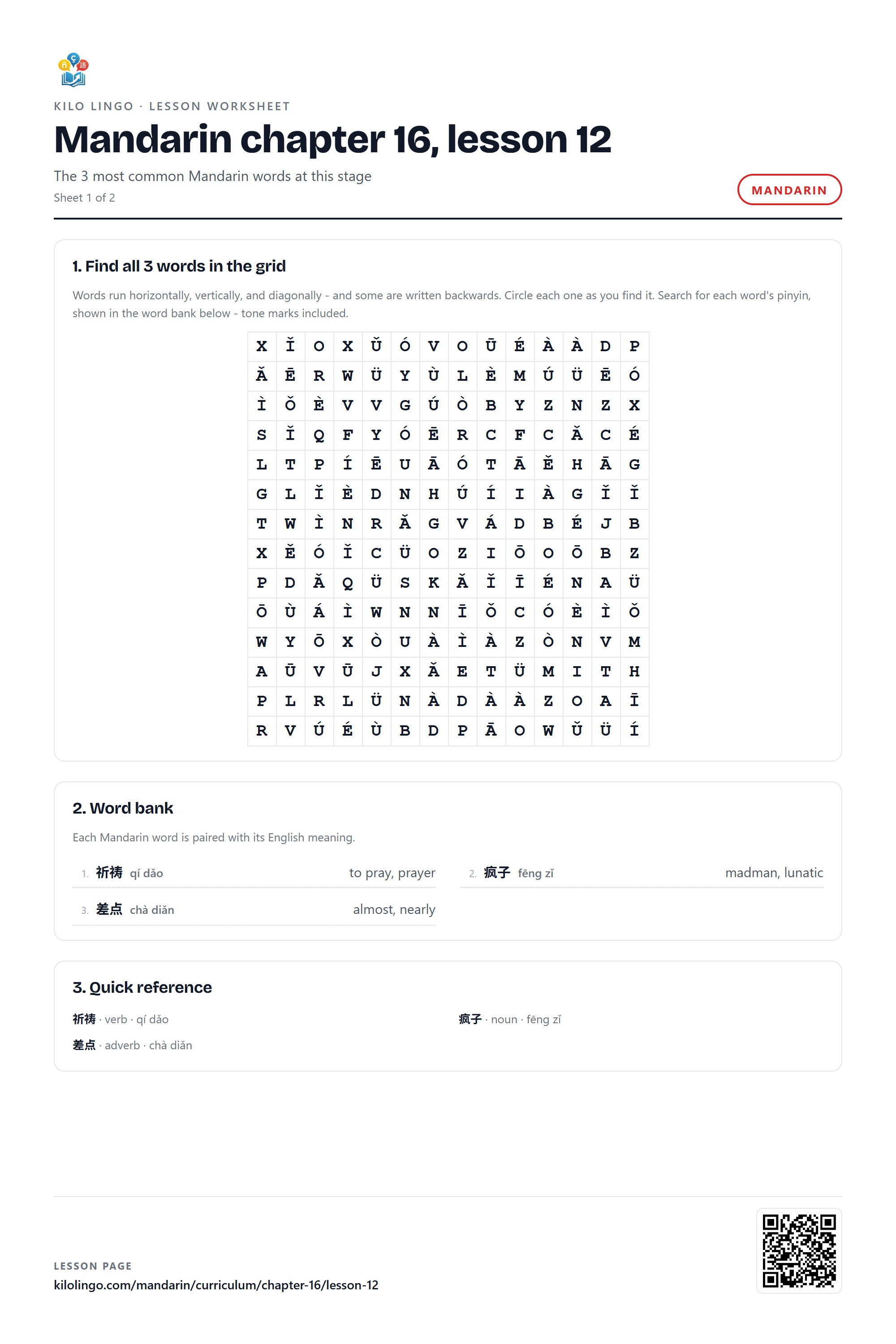
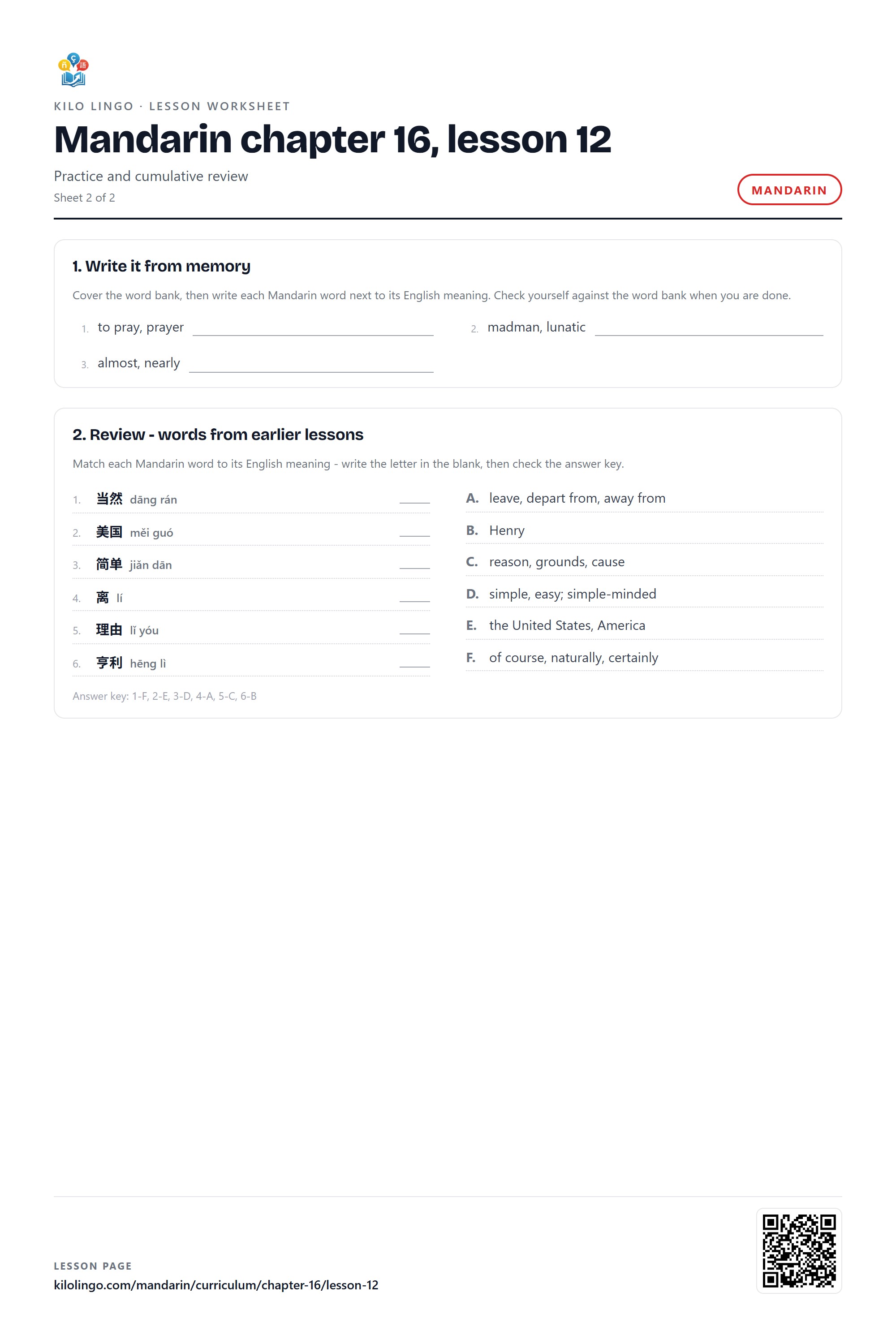

Chapter 17 · The two 了: completion vs change-of-state
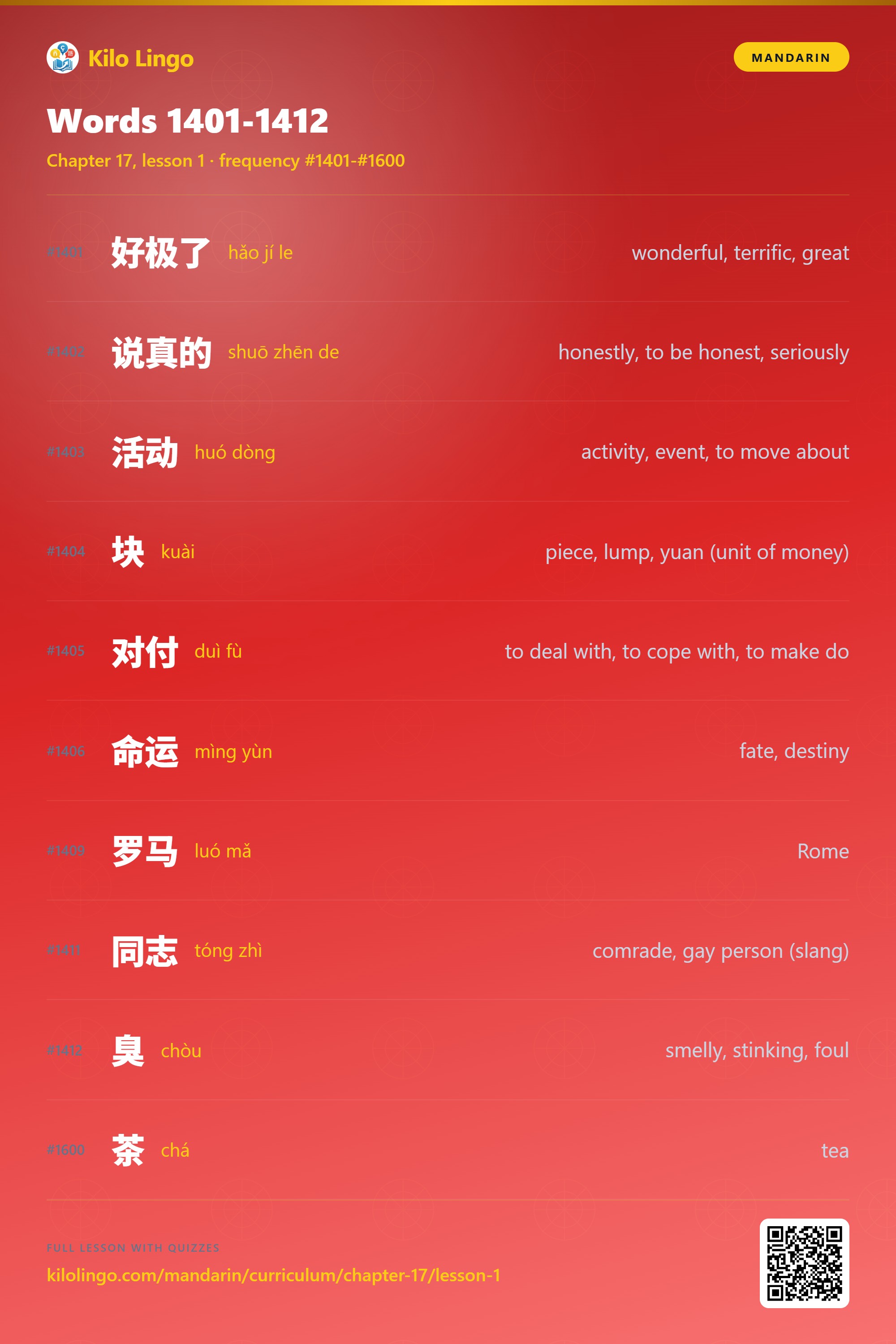
Chapter page →- Words 1401-1412Vocabulary
10 words · ranks 1401-1412
- Tone Shooter review sessionReview games
Shoot the words you just met into their tones by colour. The quickest way to fix a tone in place.
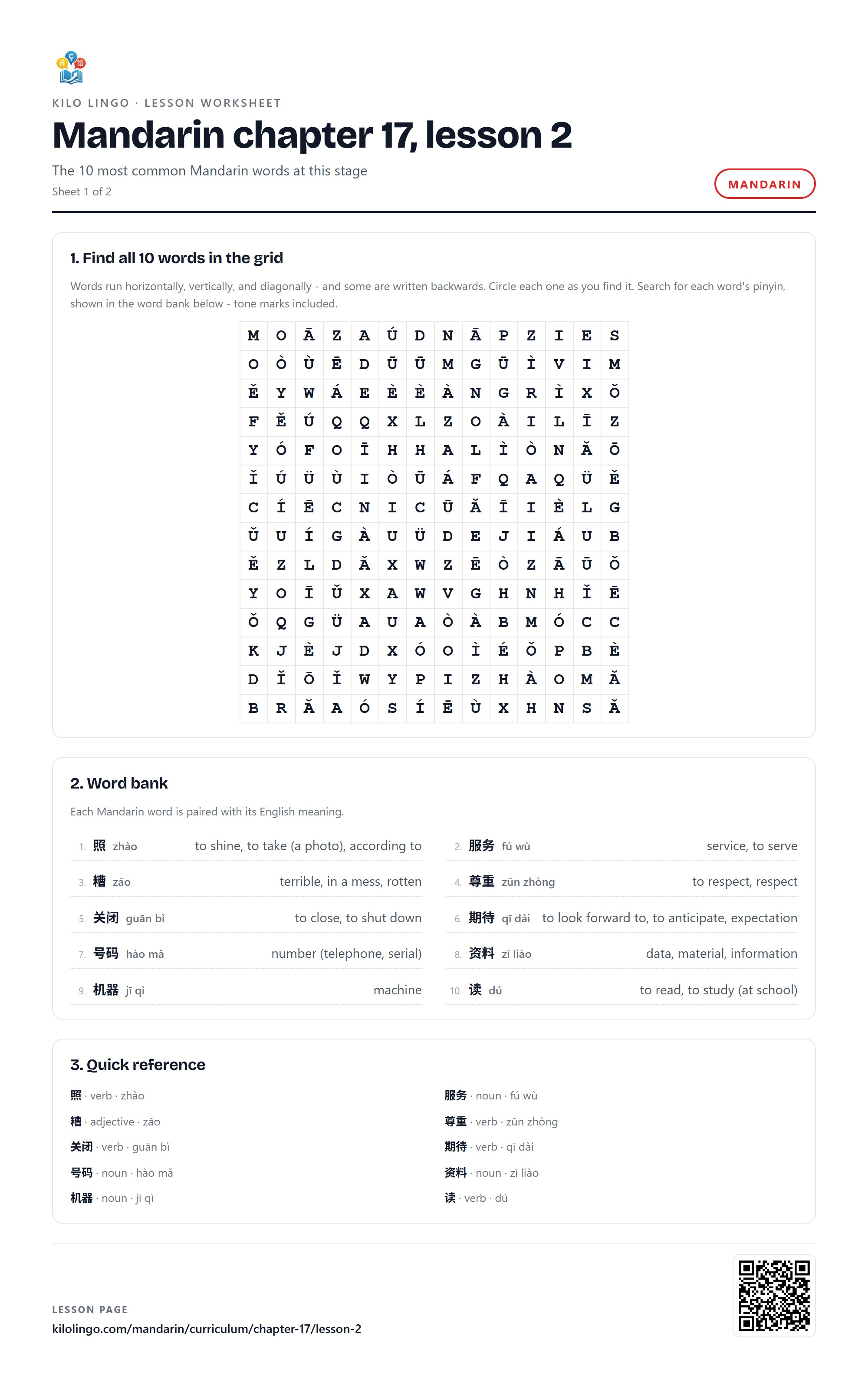
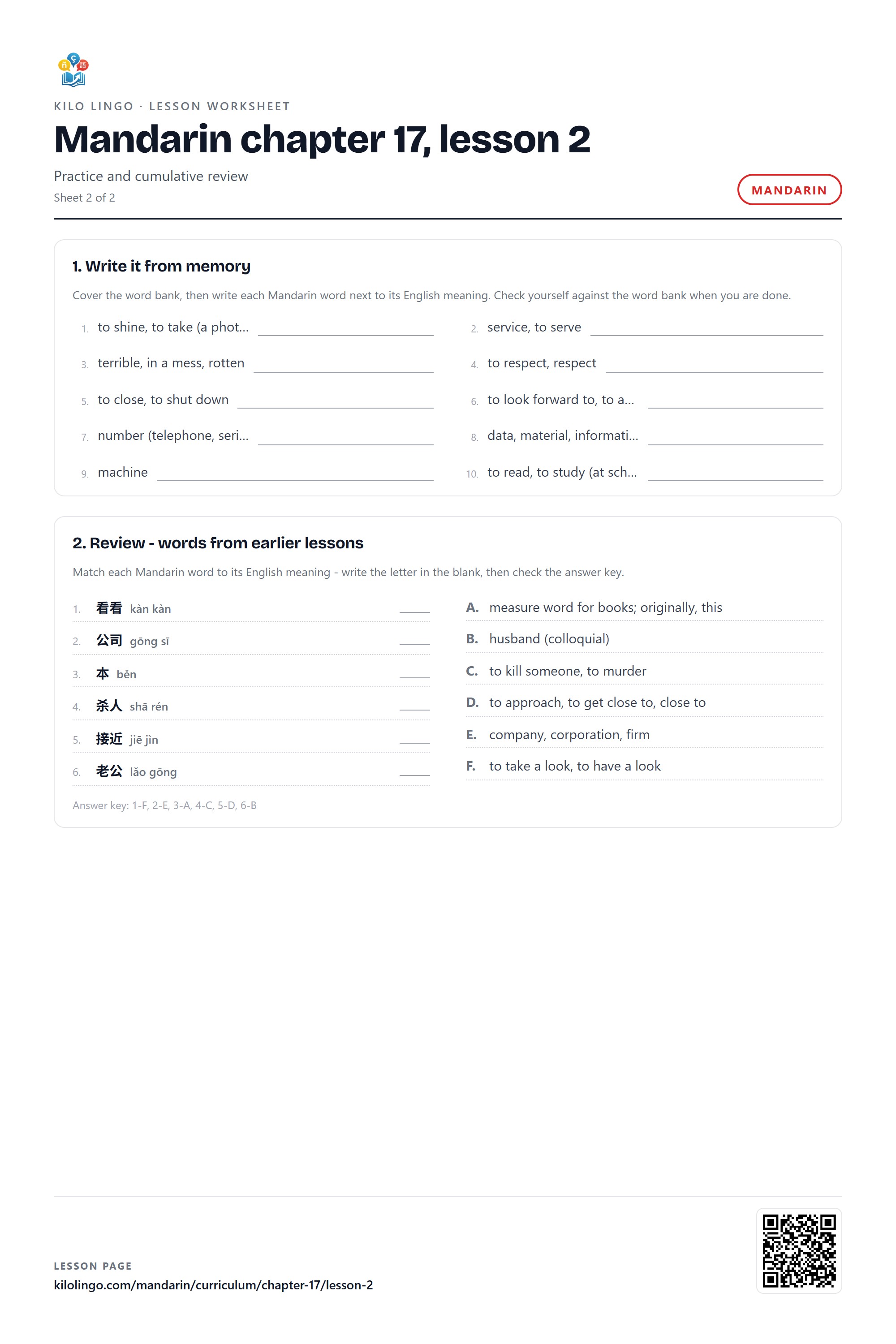
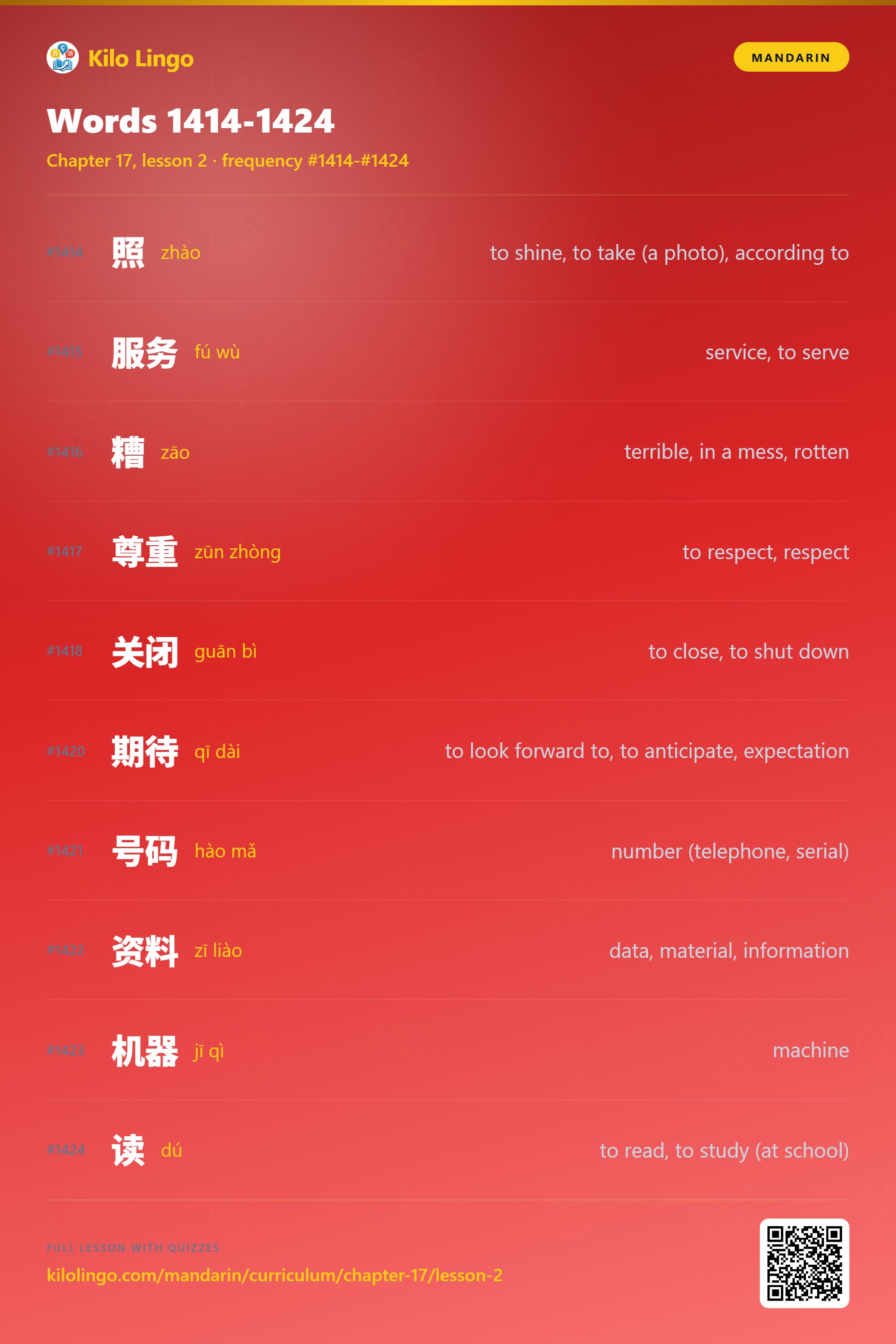
- Words 1414-1424Vocabulary
10 words · ranks 1414-1424
- Word Bubbles review sessionReview games
Pop the words you just met by matching each one to its meaning. A couple of rounds and the batch is yours.
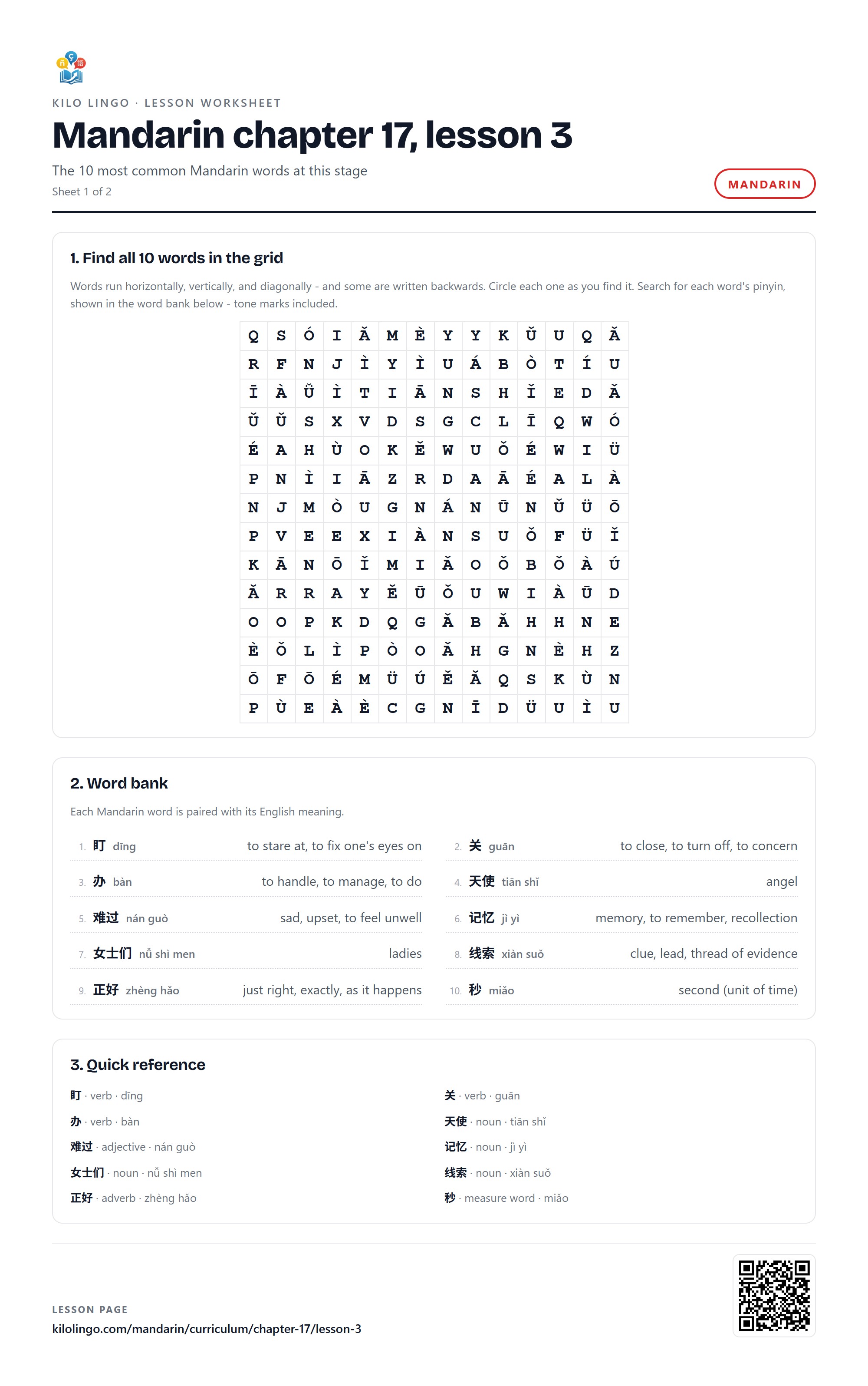
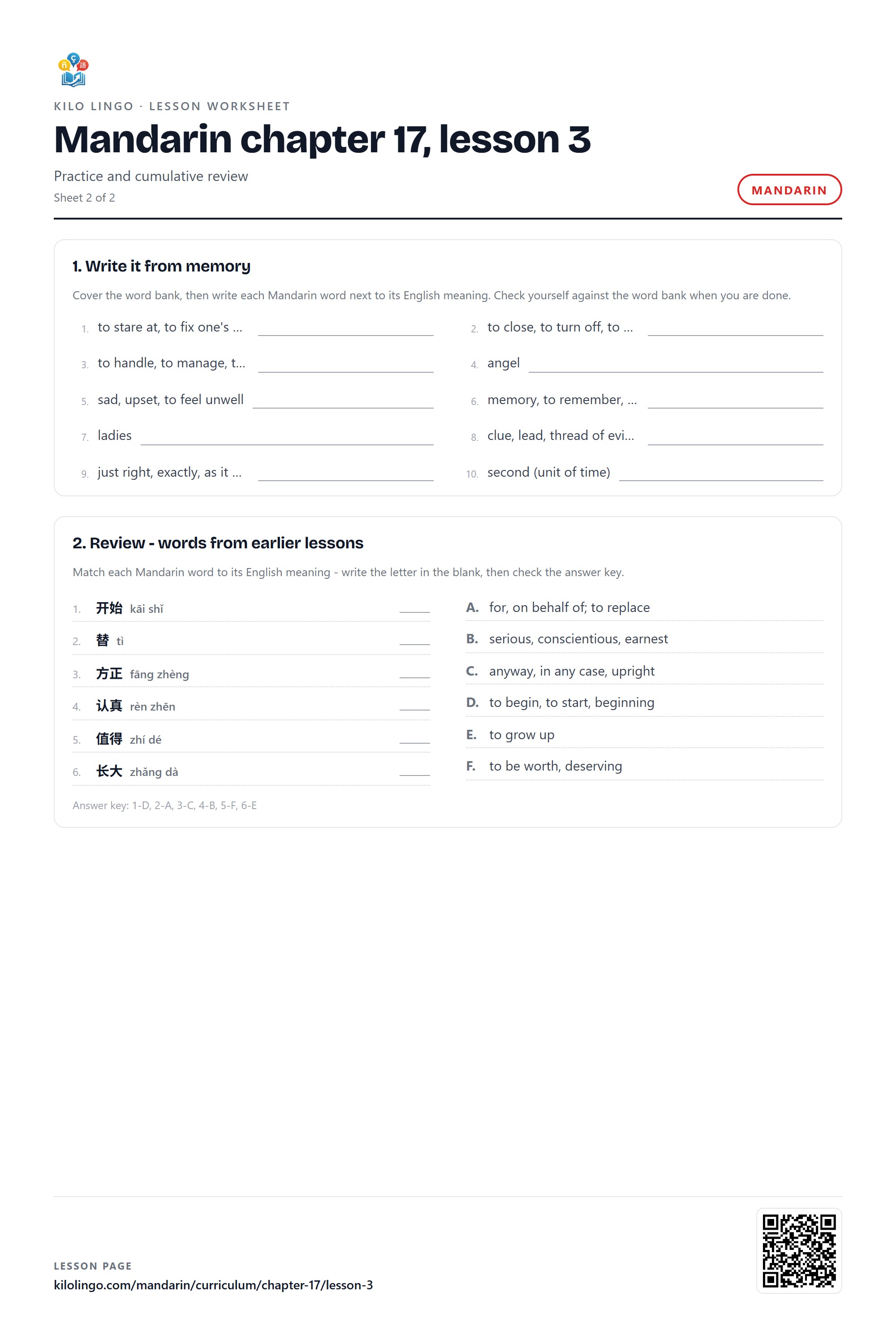
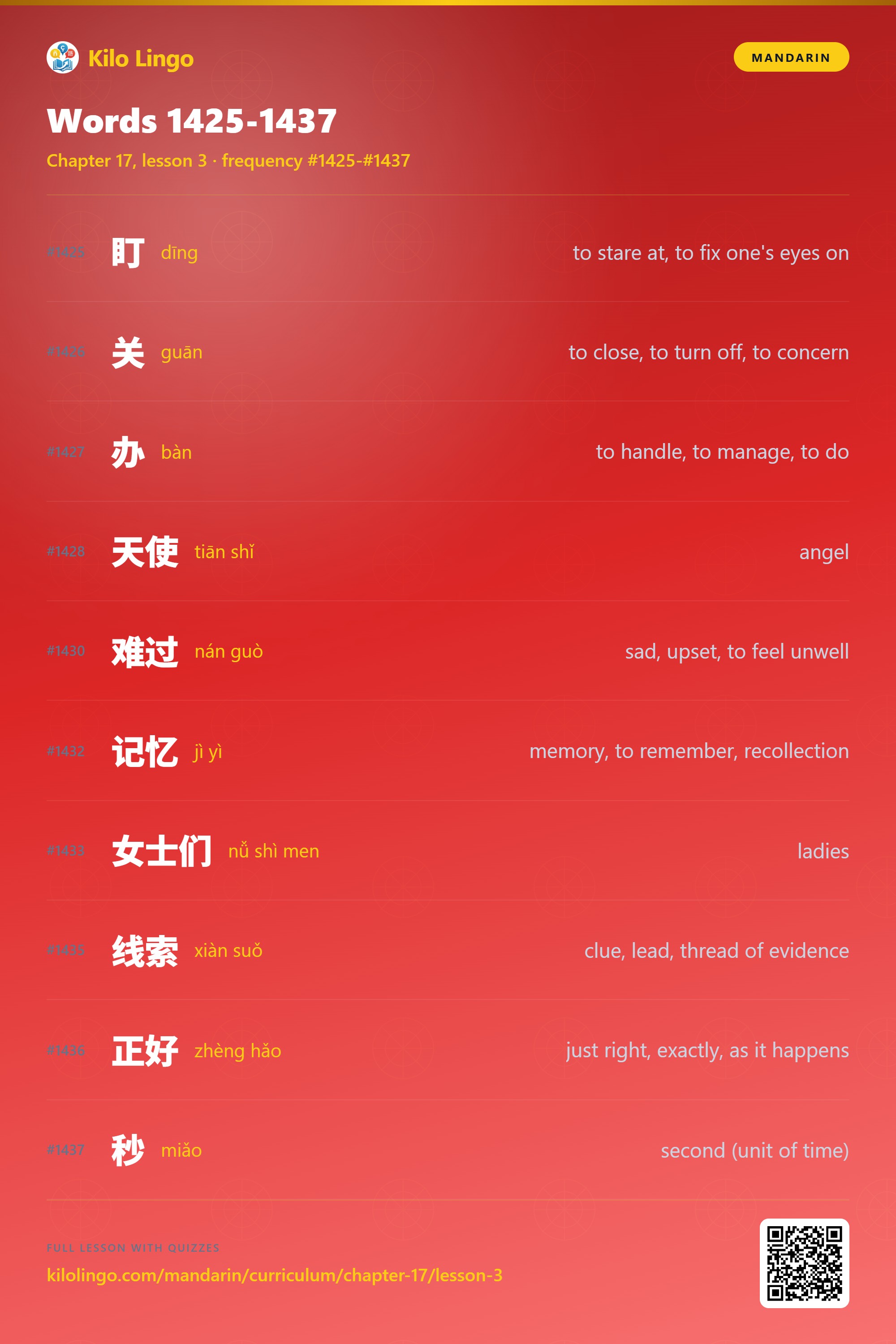
- Words 1425-1437Vocabulary
10 words · ranks 1425-1437
- Tone Shooter review sessionReview games
Shoot the words you just met into their tones by colour. The quickest way to fix a tone in place.
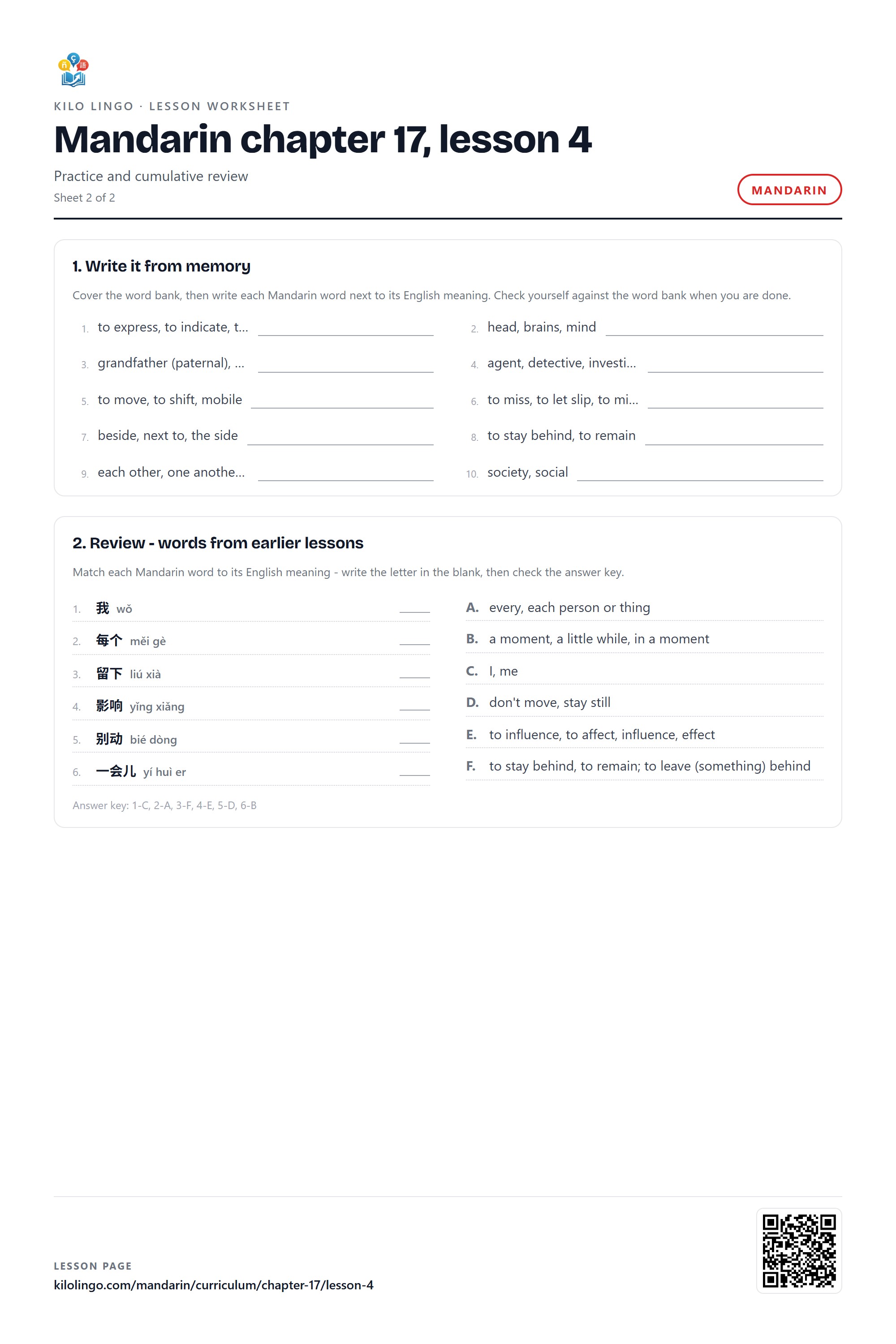
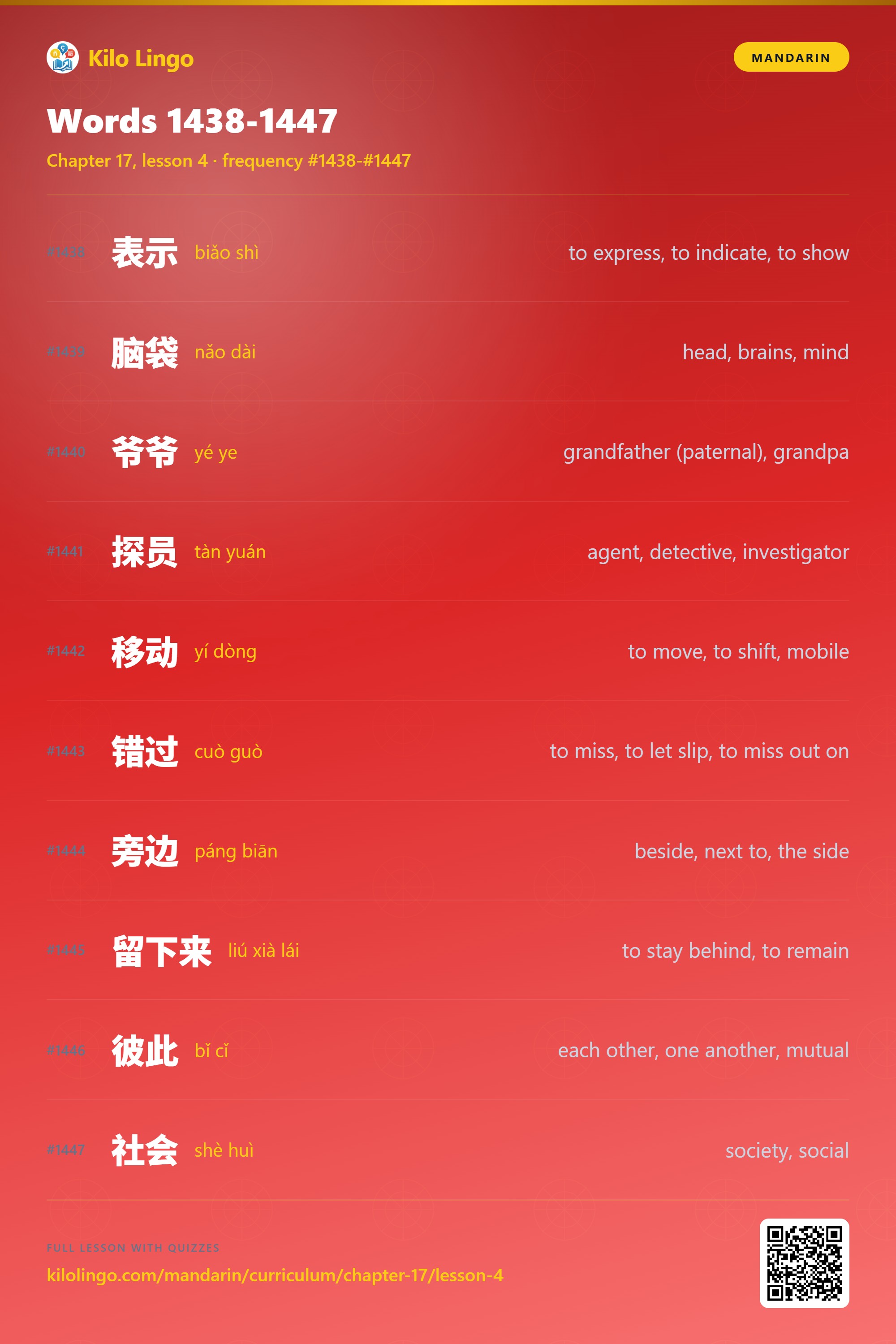
- Words 1438-1447Vocabulary
10 words · ranks 1438-1447
Two unrelated particles written 了. The aspectual 了 sits right after the verb and marks an action as completed (我吃了饭); the change-of-state 了 sits at the very end and signals a new situation now holds (下雨了, 我会游泳了). The position test, what each one means, sentences where both appear, and the errors that catch every learner.
- 从 or 离?Mistake clinic
One starts a journey. The other measures a gap.
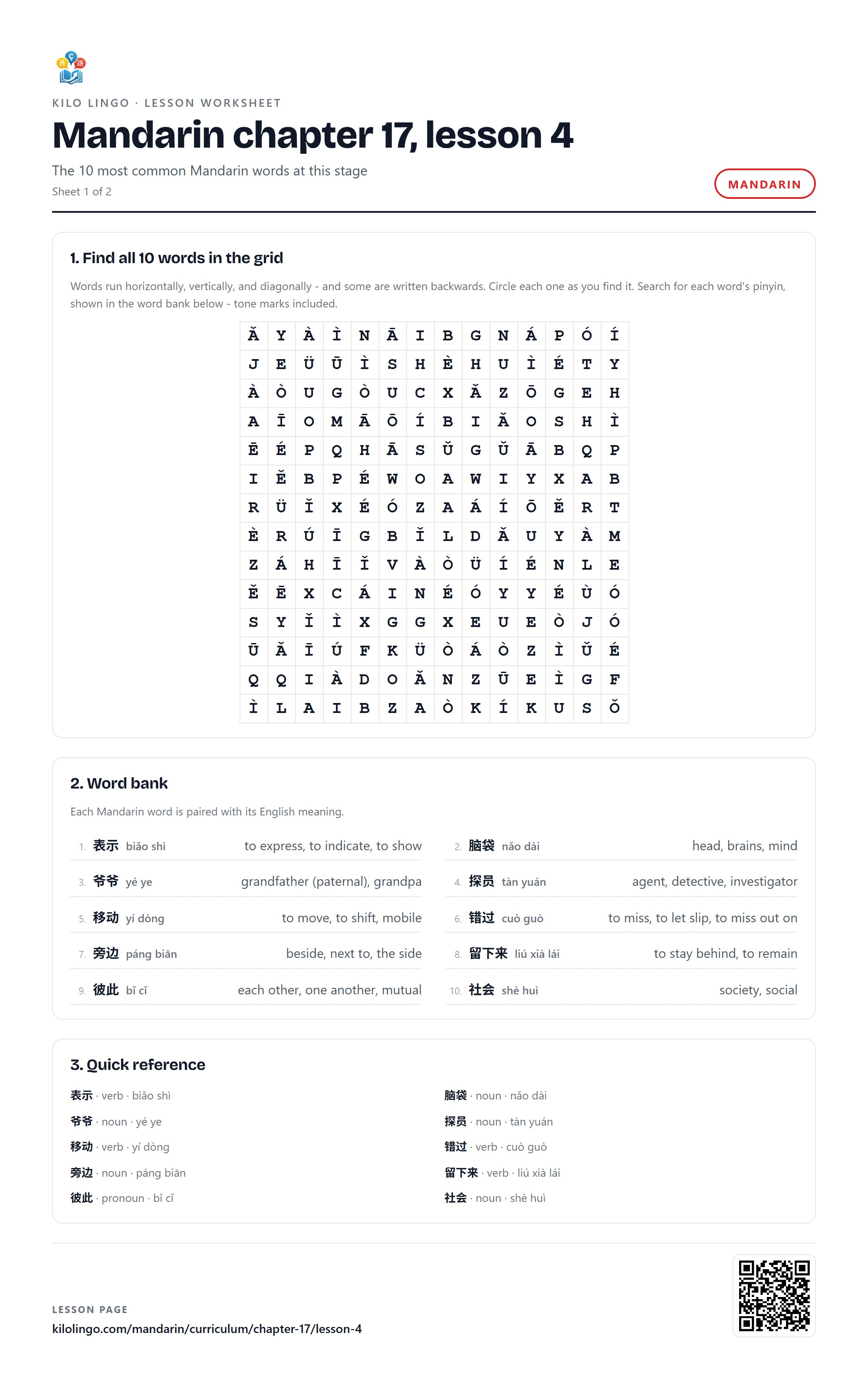
- Words 1448-1457Vocabulary
10 words · ranks 1448-1457
- Word Bubbles review sessionReview games
Pop the words you just met by matching each one to its meaning. A couple of rounds and the batch is yours.
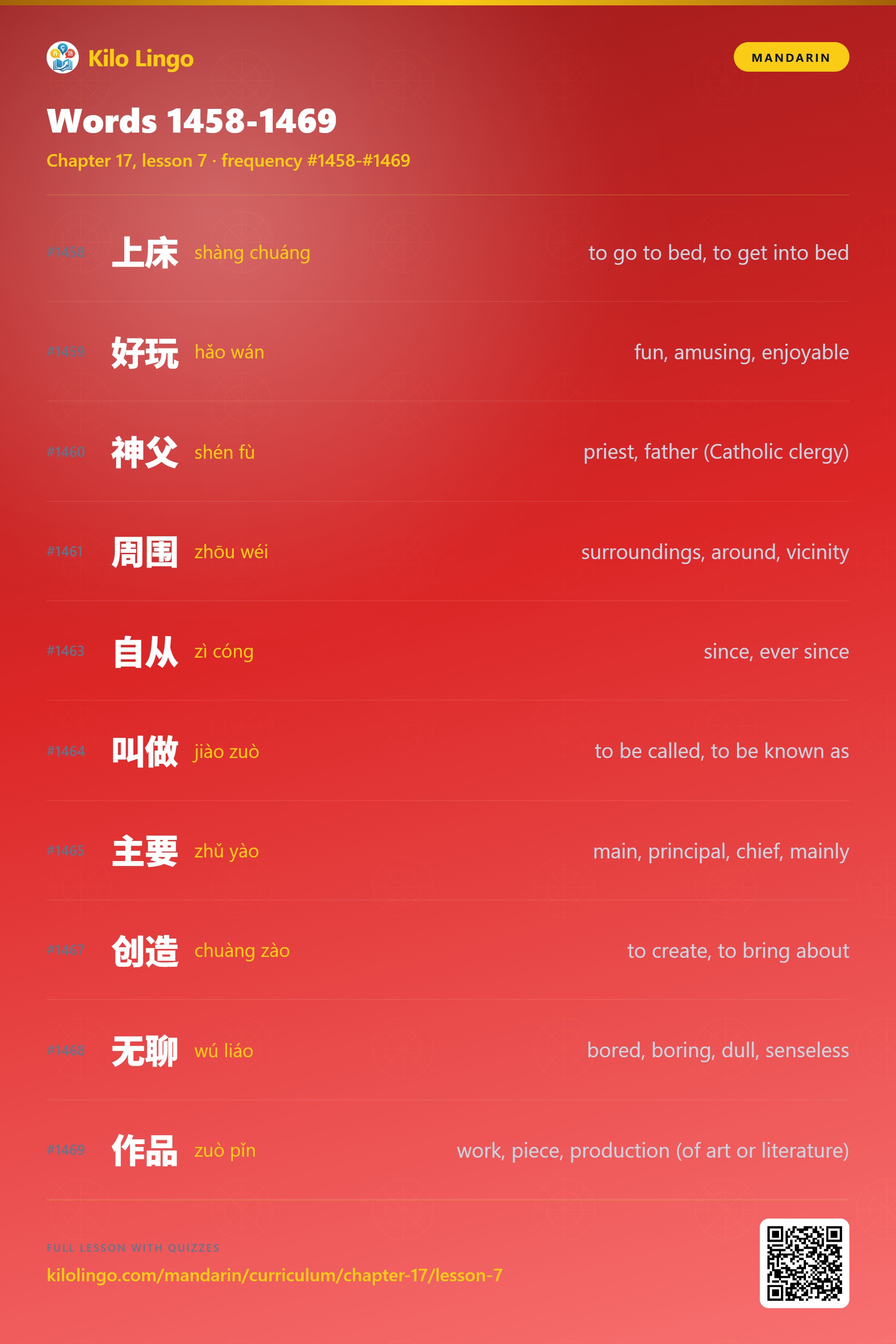
- Words 1458-1469Vocabulary
10 words · ranks 1458-1469
- Tone Shooter review sessionReview games
Shoot the words you just met into their tones by colour. The quickest way to fix a tone in place.
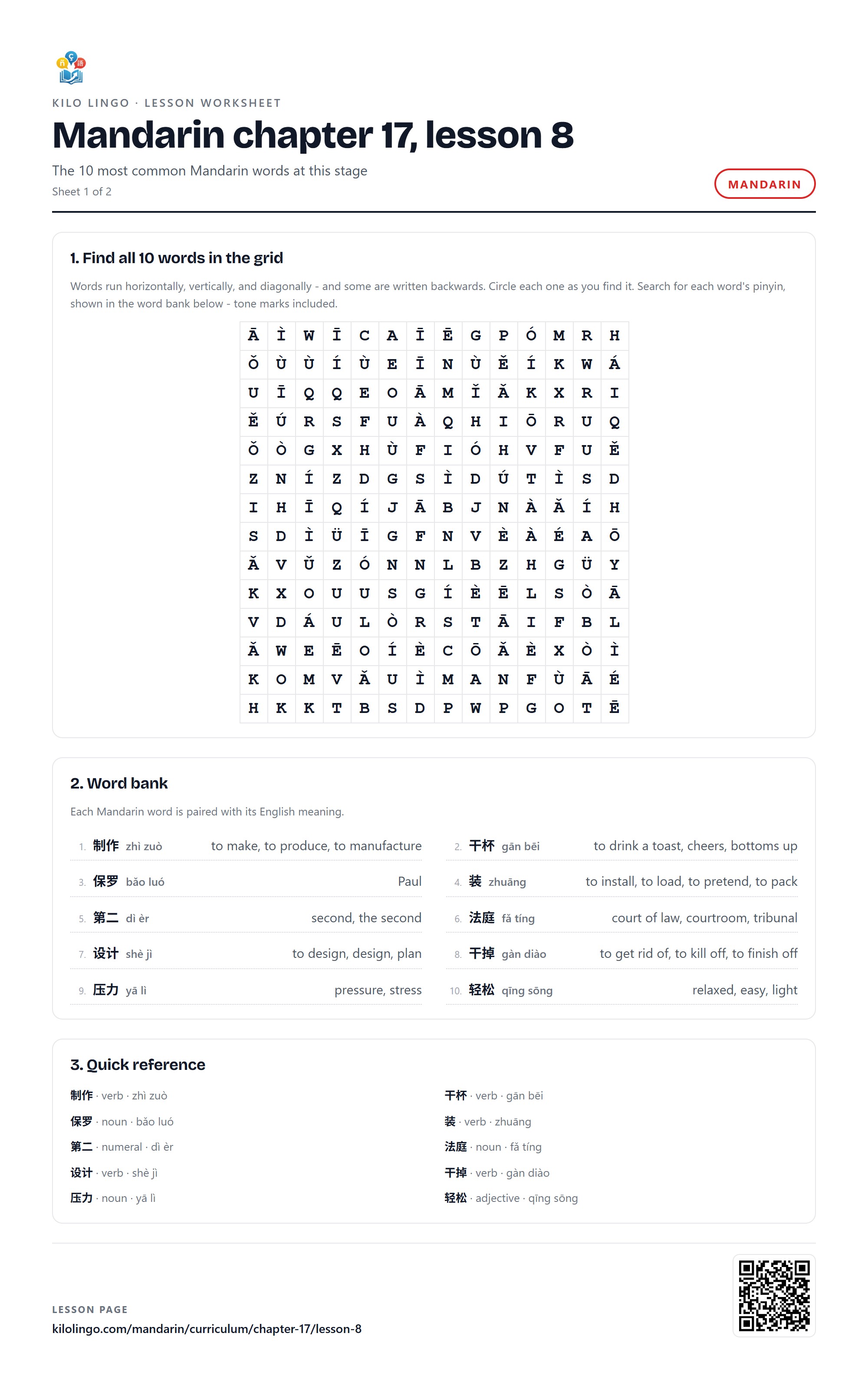
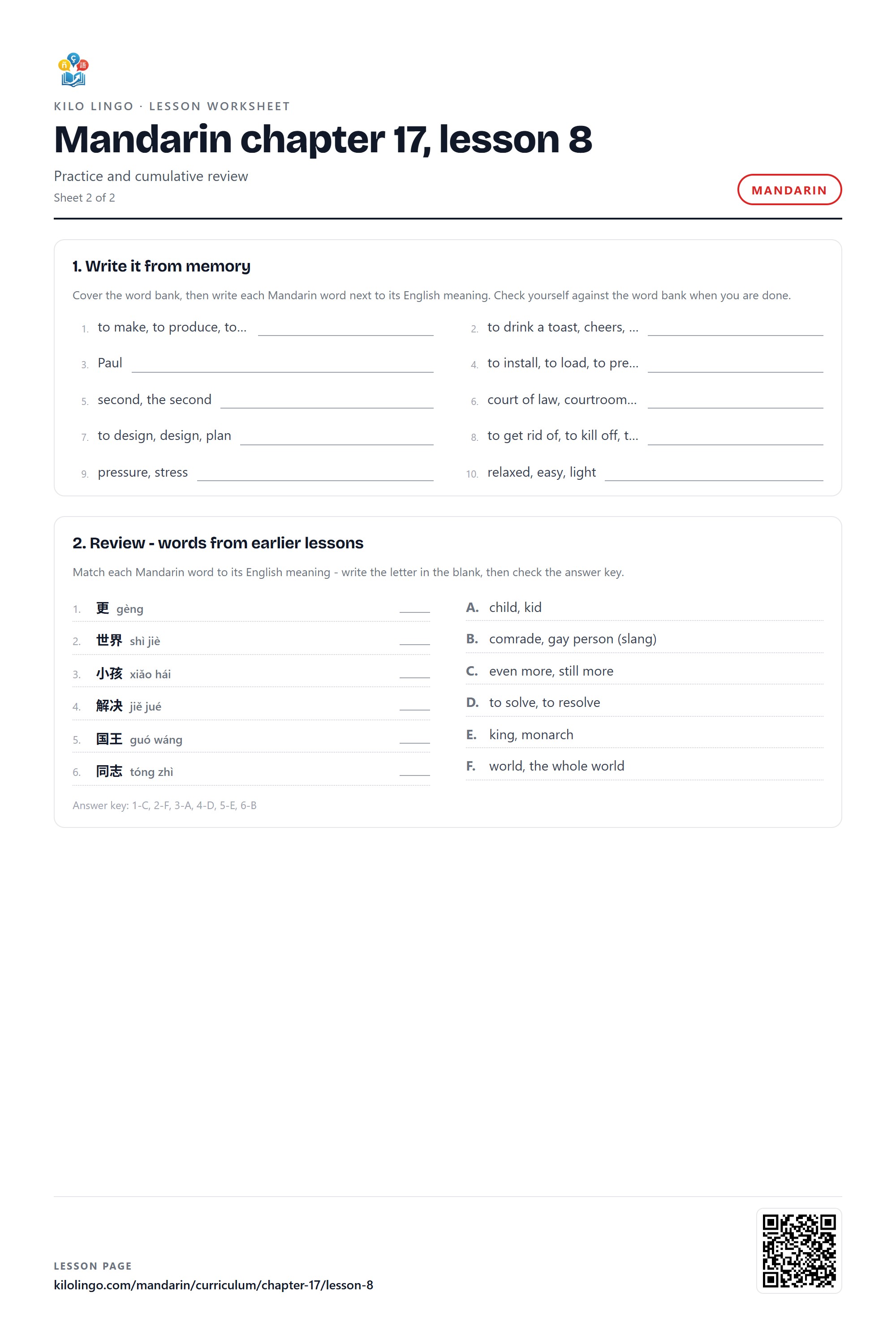
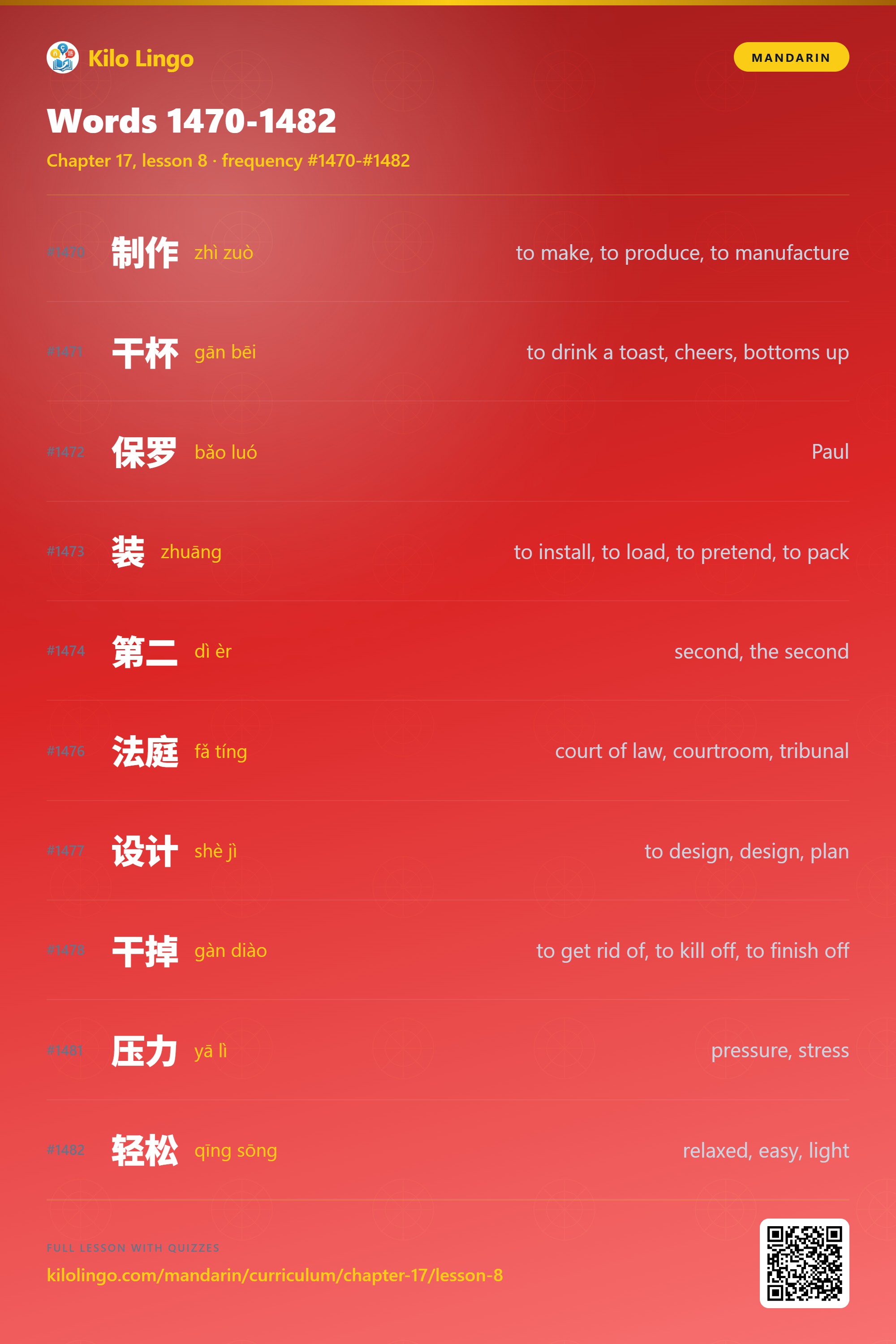
- Words 1470-1482Vocabulary
10 words · ranks 1470-1482
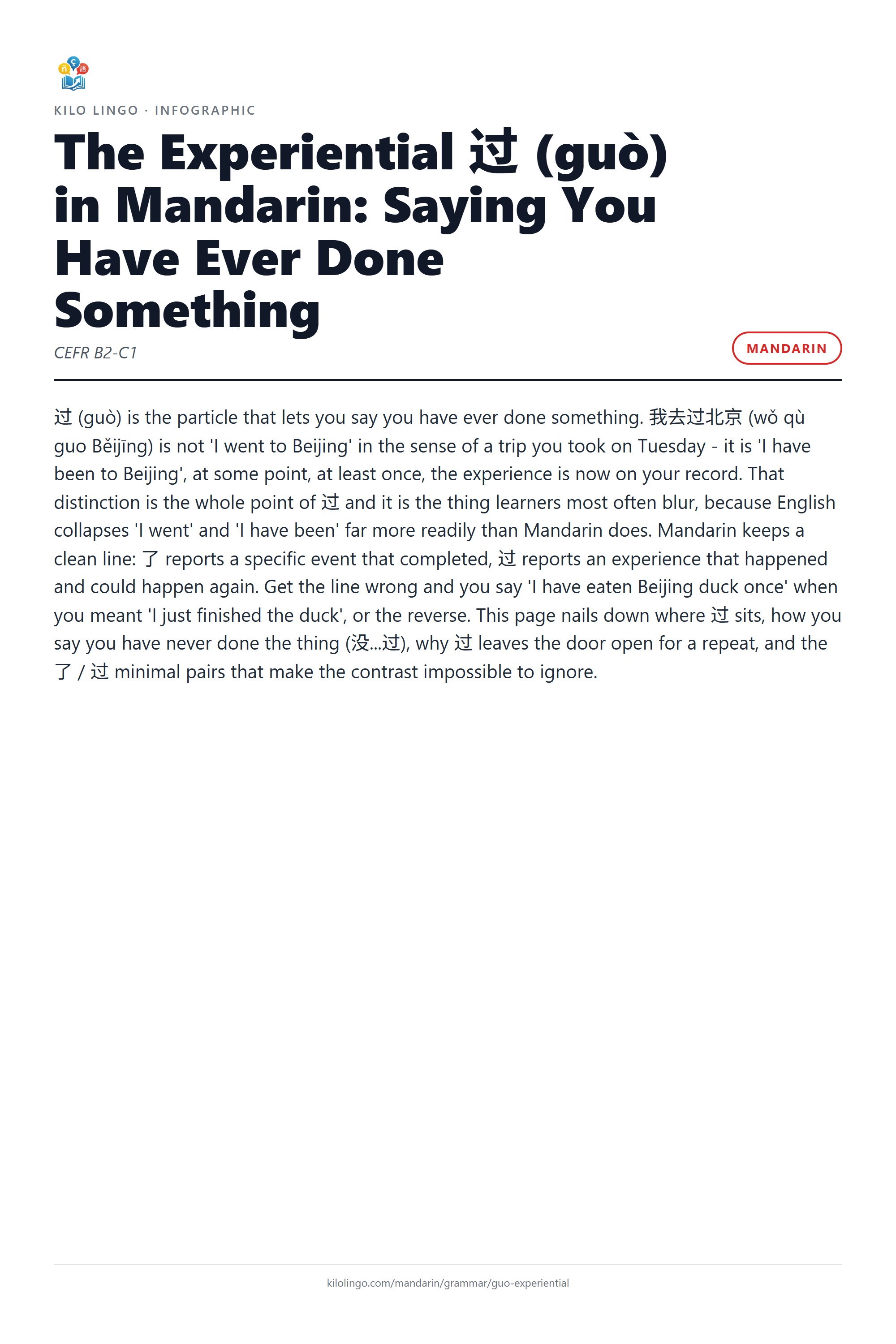
- The experiential 过 (guò)Grammar
过 marks an experience that has happened at least once: 我去过北京 (I have been to Beijing). Where 过 sits, the 没...过 negation (我没看过), why 过 keeps the action repeatable while 了 reports a single finished event, and the 吃了 vs 吃过 minimal pairs that separate completion from experience.
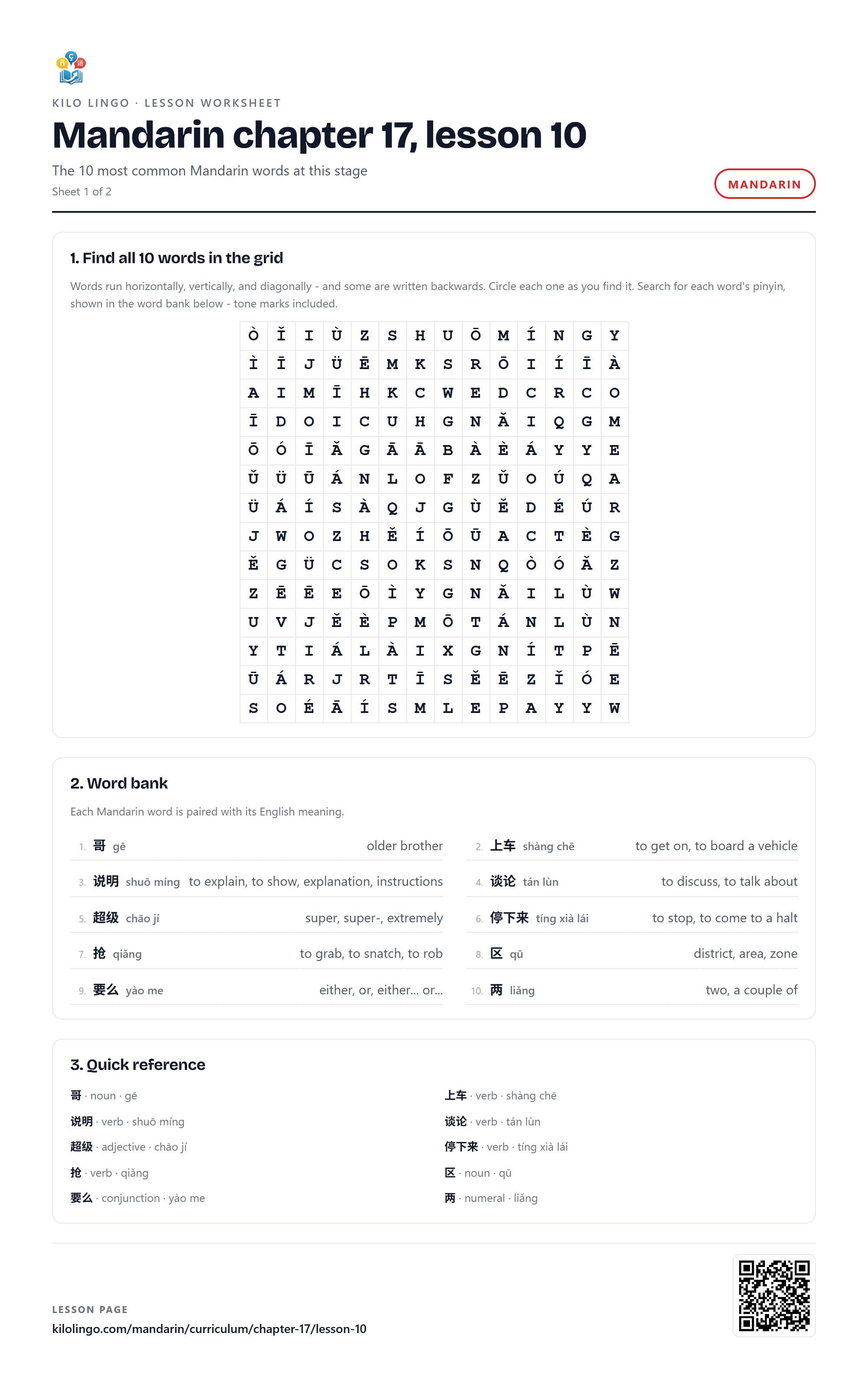
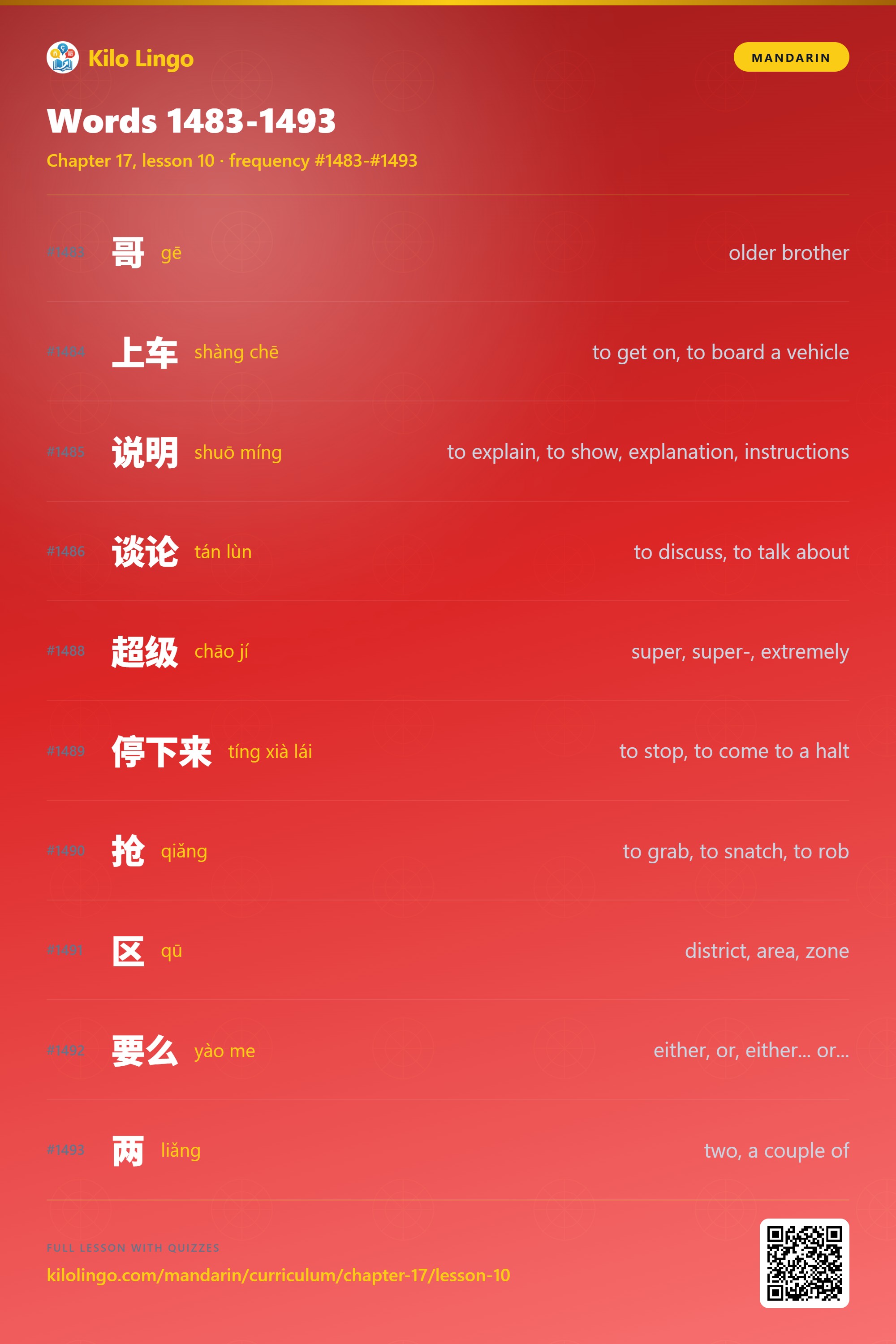
- Words 1483-1493Vocabulary
10 words · ranks 1483-1493
- Word Bubbles review sessionReview games
Pop the words you just met by matching each one to its meaning. A couple of rounds and the batch is yours.
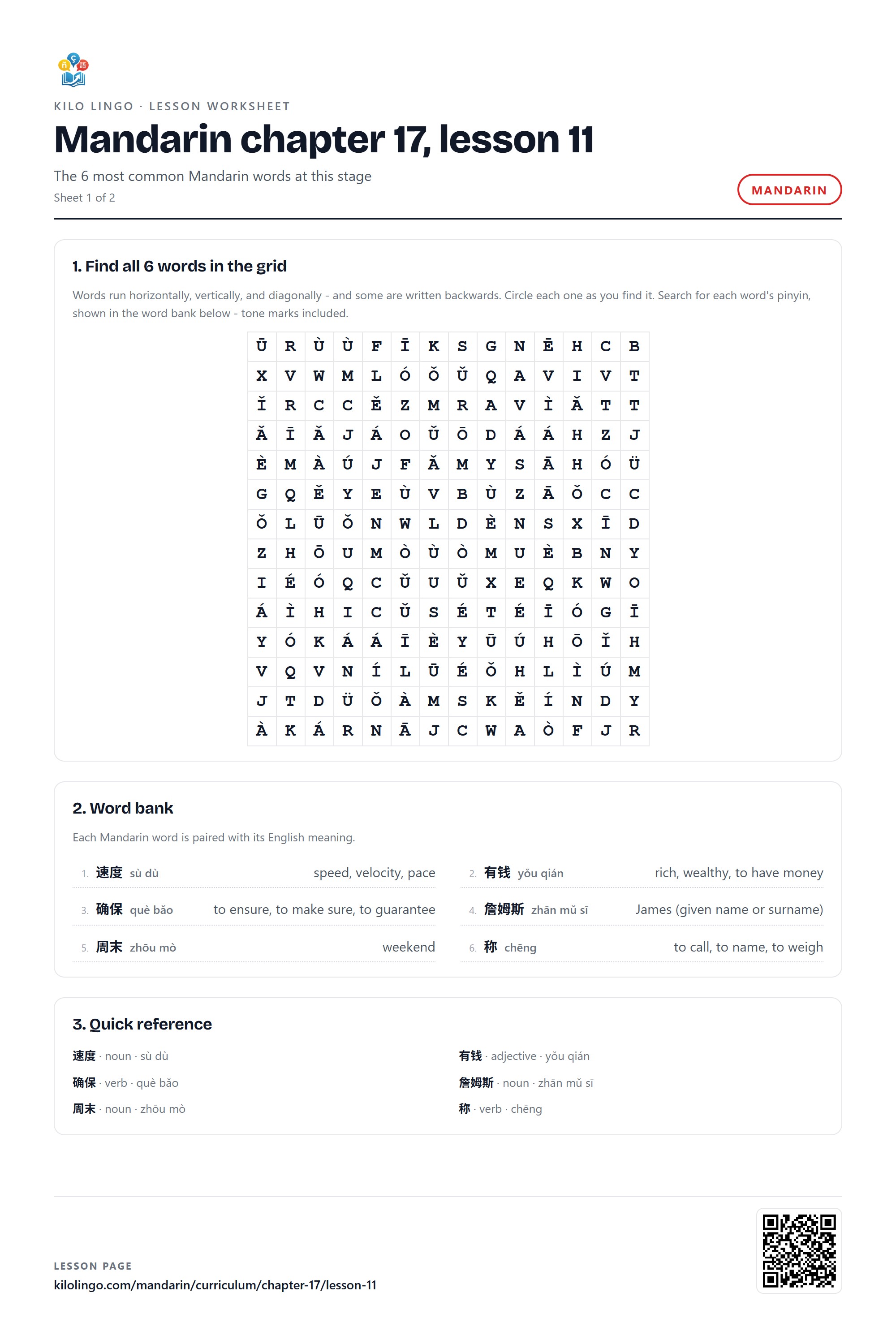
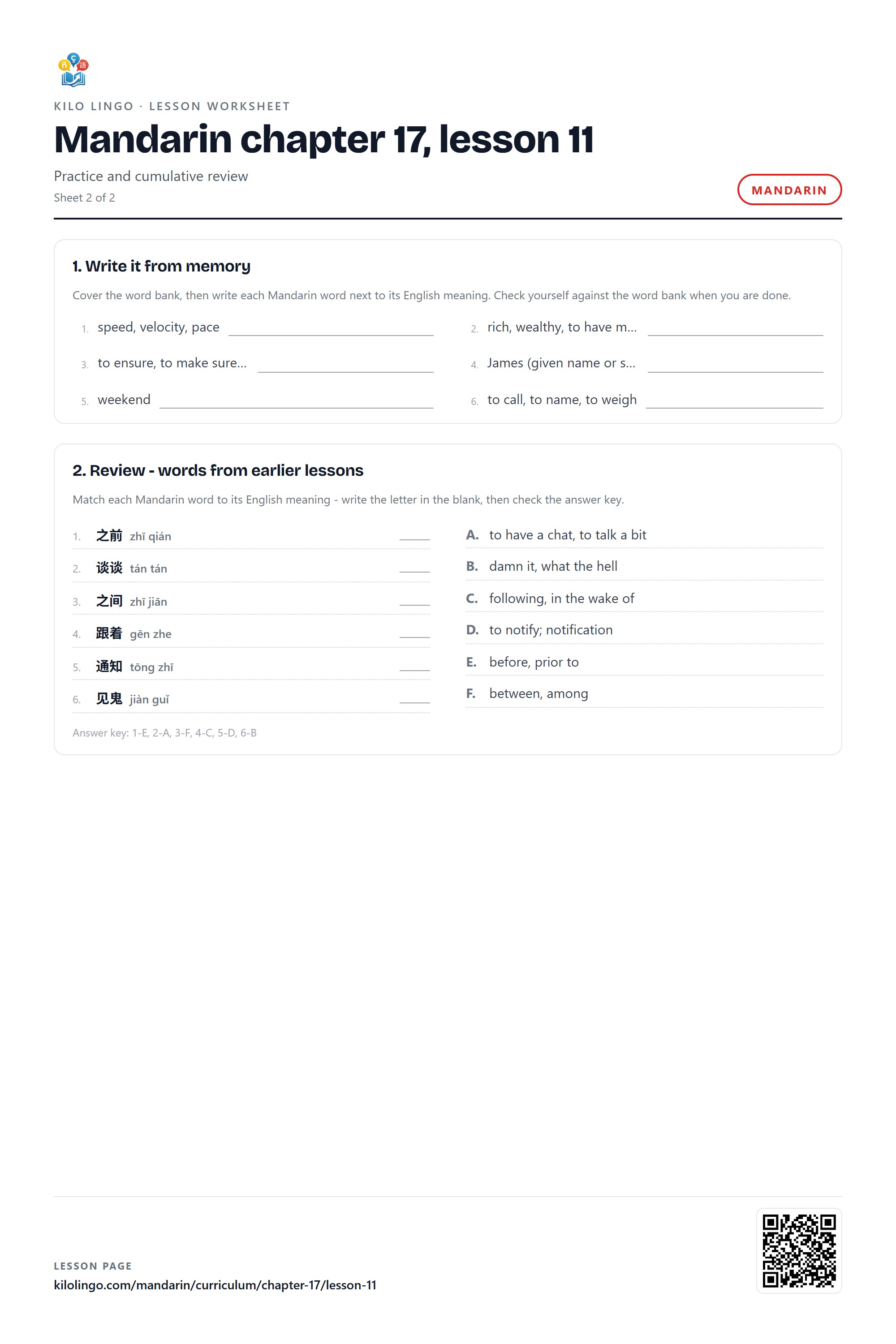
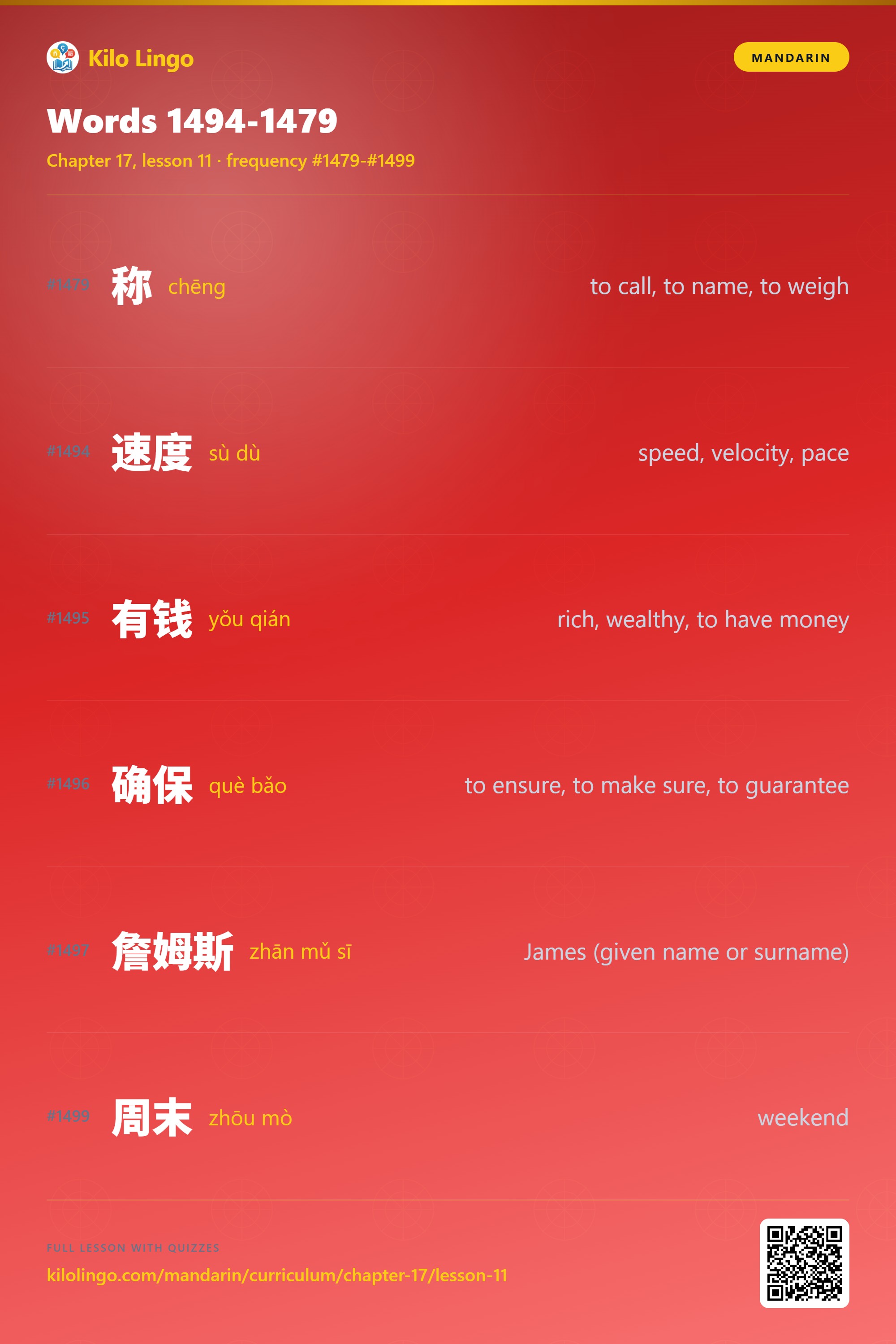
- Words 1494-1479Vocabulary
6 words · ranks 1494-1479
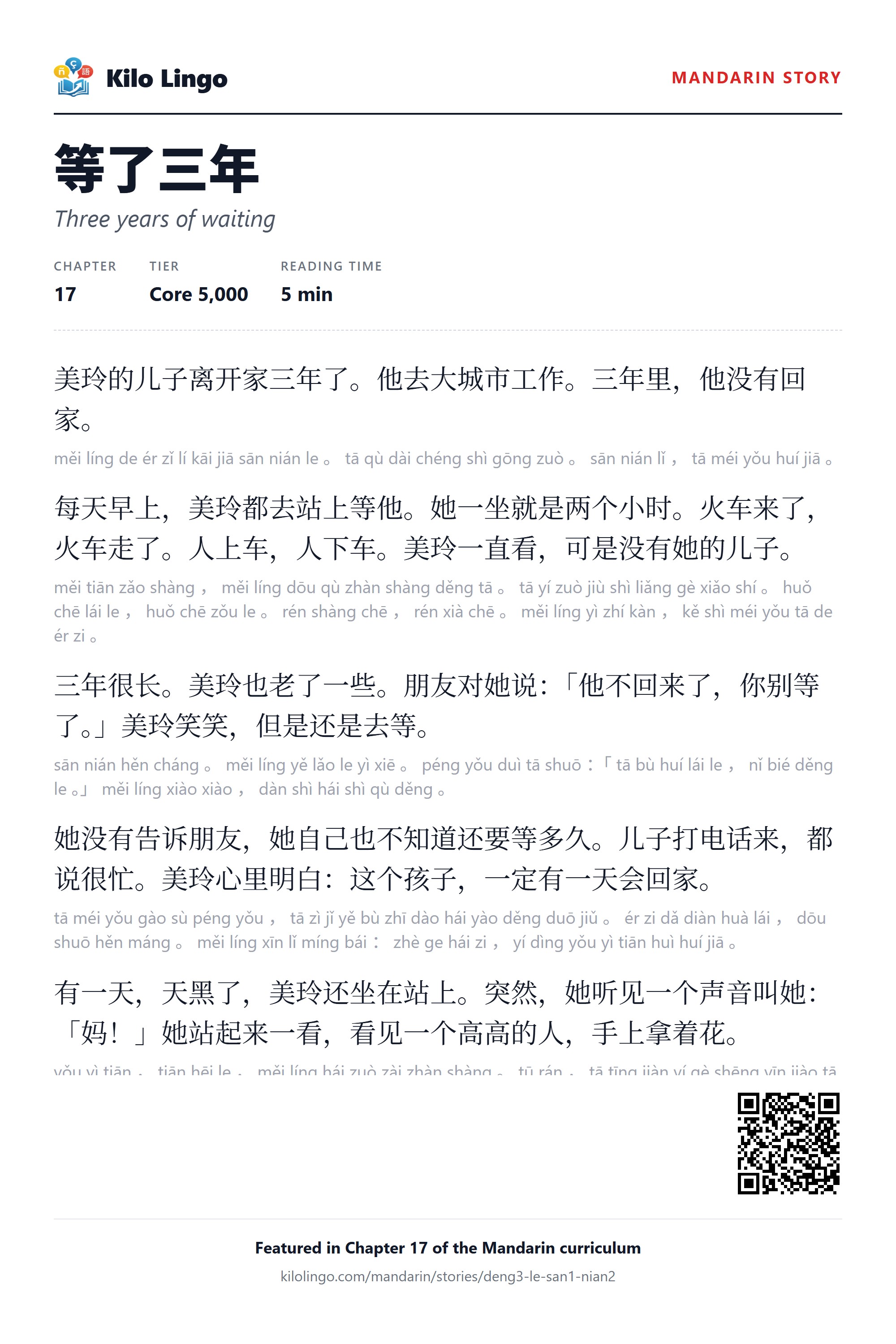
- Story milestone: top 1500 wordsGraded-reader story
You can read this story using only the words you've learned so far. Every content word sits at or above the rank-1500 ceiling.
- Eating and drinkingThemed review
The smallest theme in the course, and the most useful.
chi1-fan4is literally to eat rice, and it means to have a meal of anything at all. - Arcade reviewReview games
Replay this chapter's words as games - a different kind of repetition, and it counts.
Word printables
Per-word sheets86 words · a worksheet, infographic and listicle each









Chapter 18 · The double 了 sentence
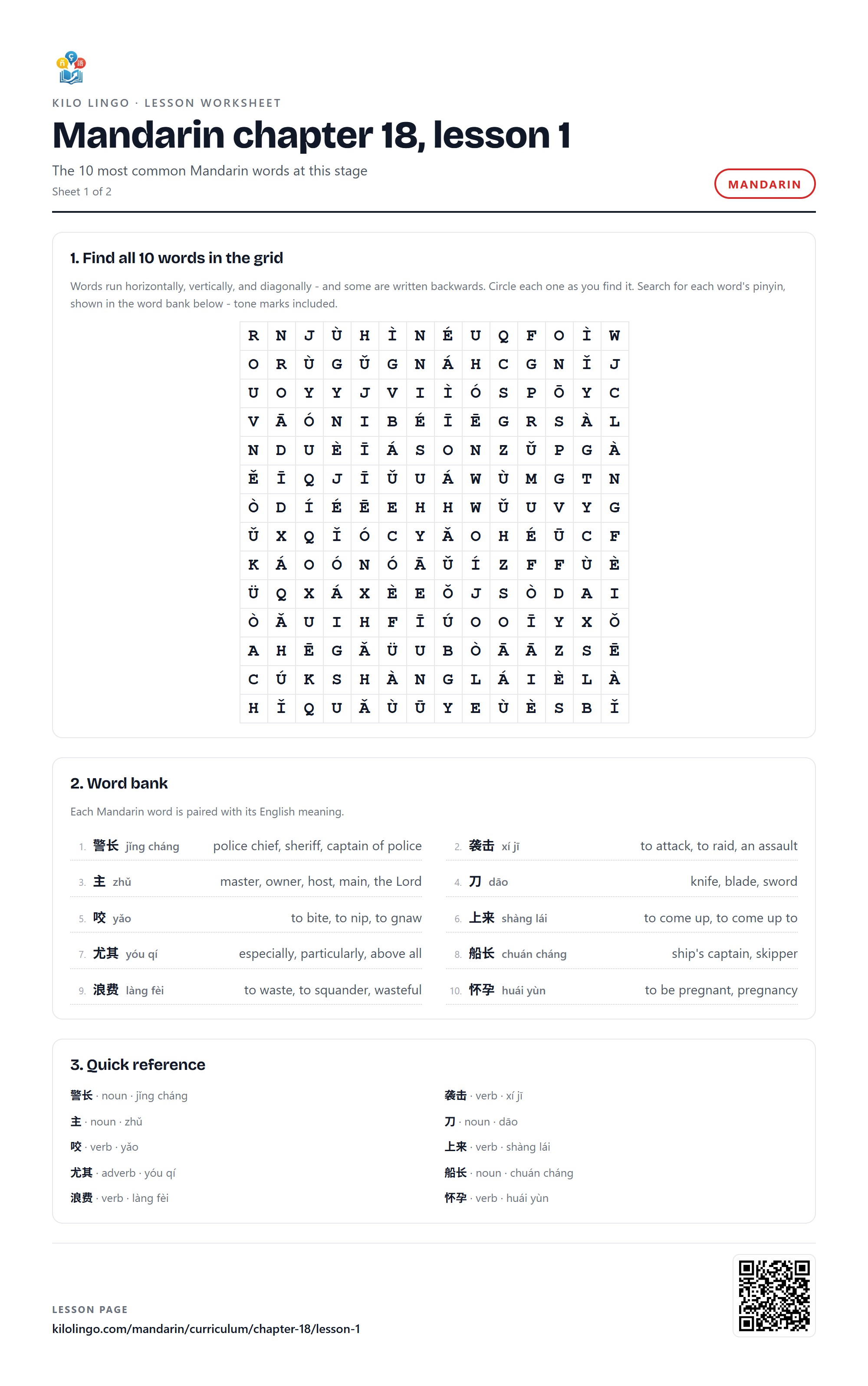
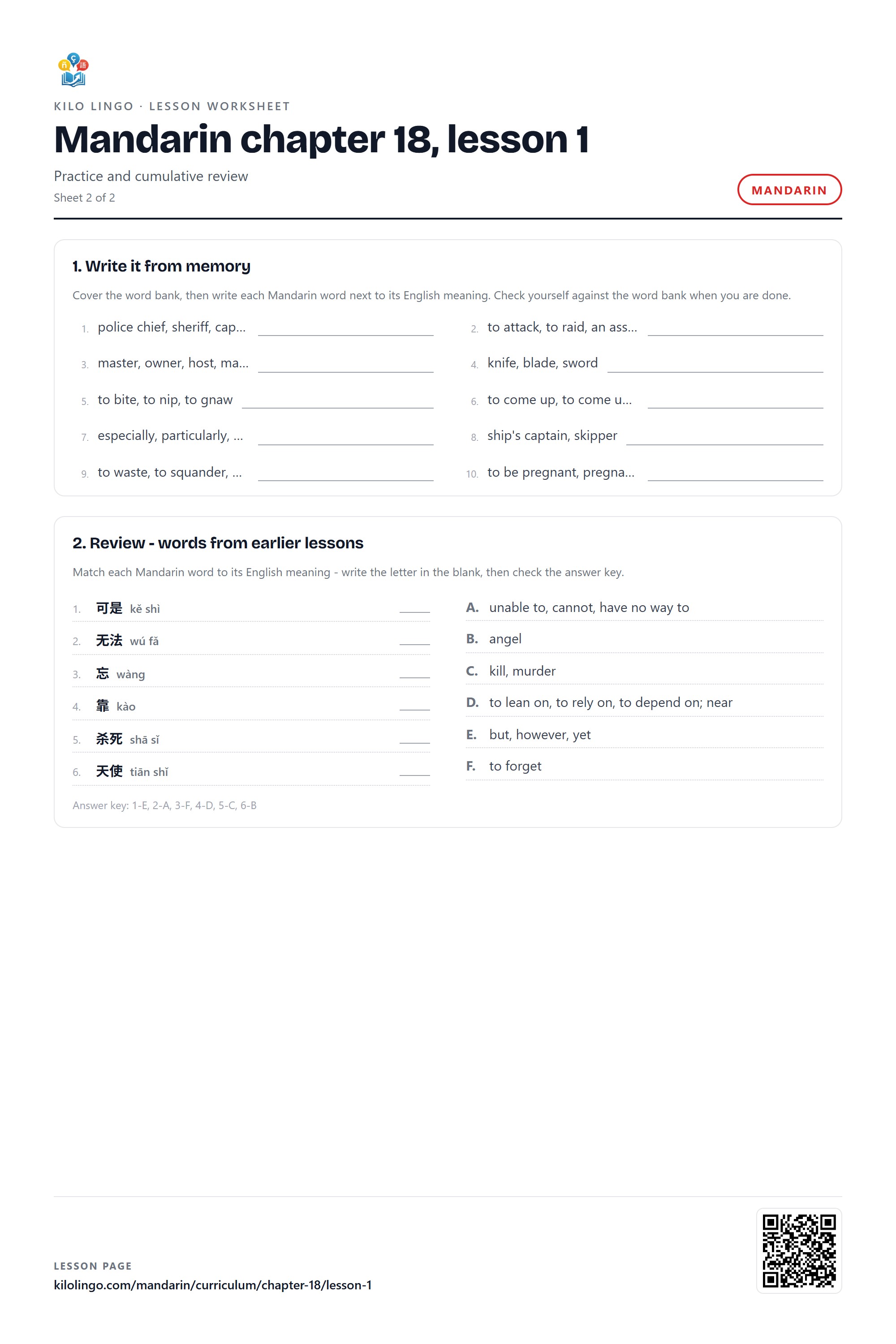
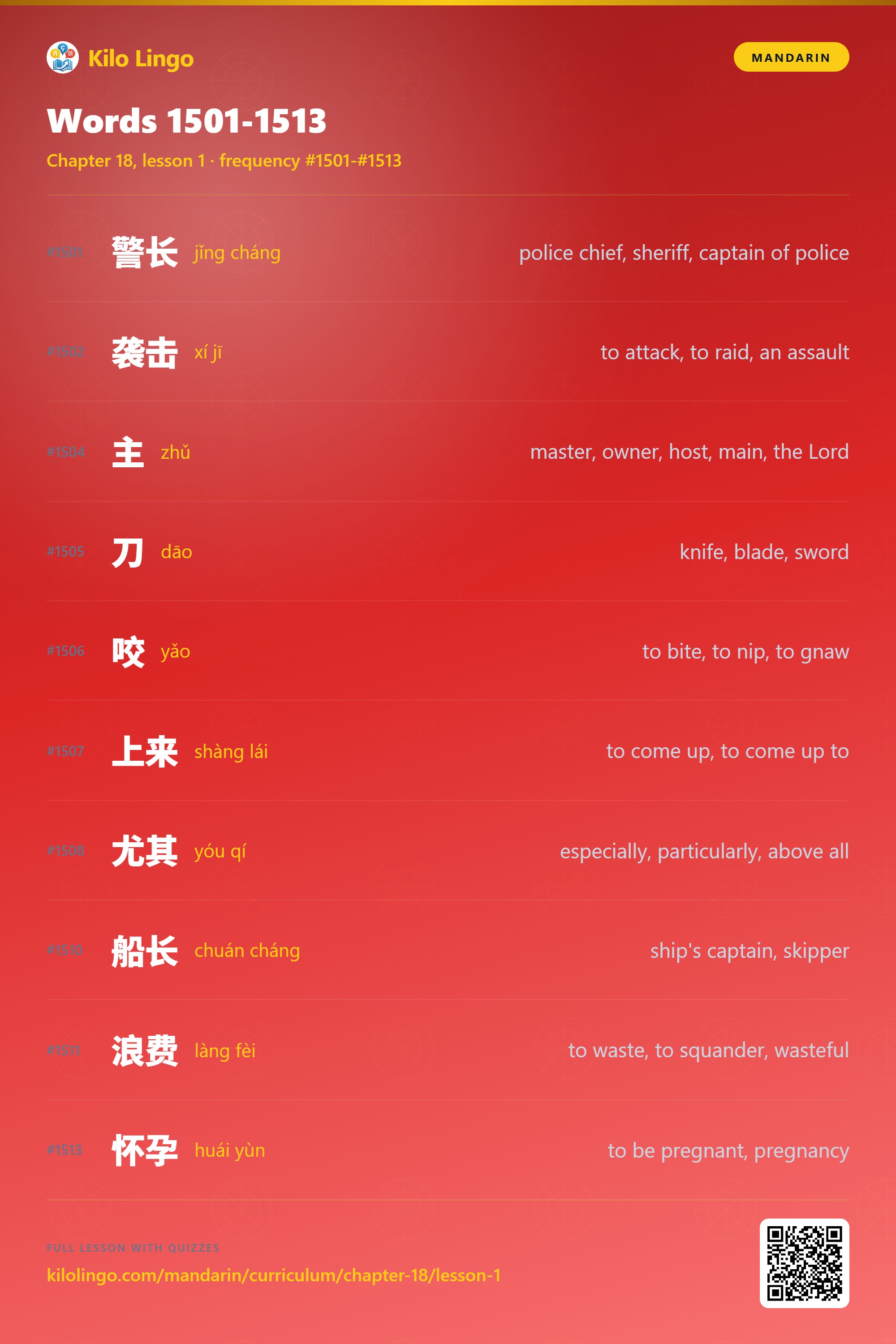
Chapter page →- Words 1501-1513Vocabulary
10 words · ranks 1501-1513
- Word Bubbles review sessionReview games
Pop the words you just met by matching each one to its meaning. A couple of rounds and the batch is yours.
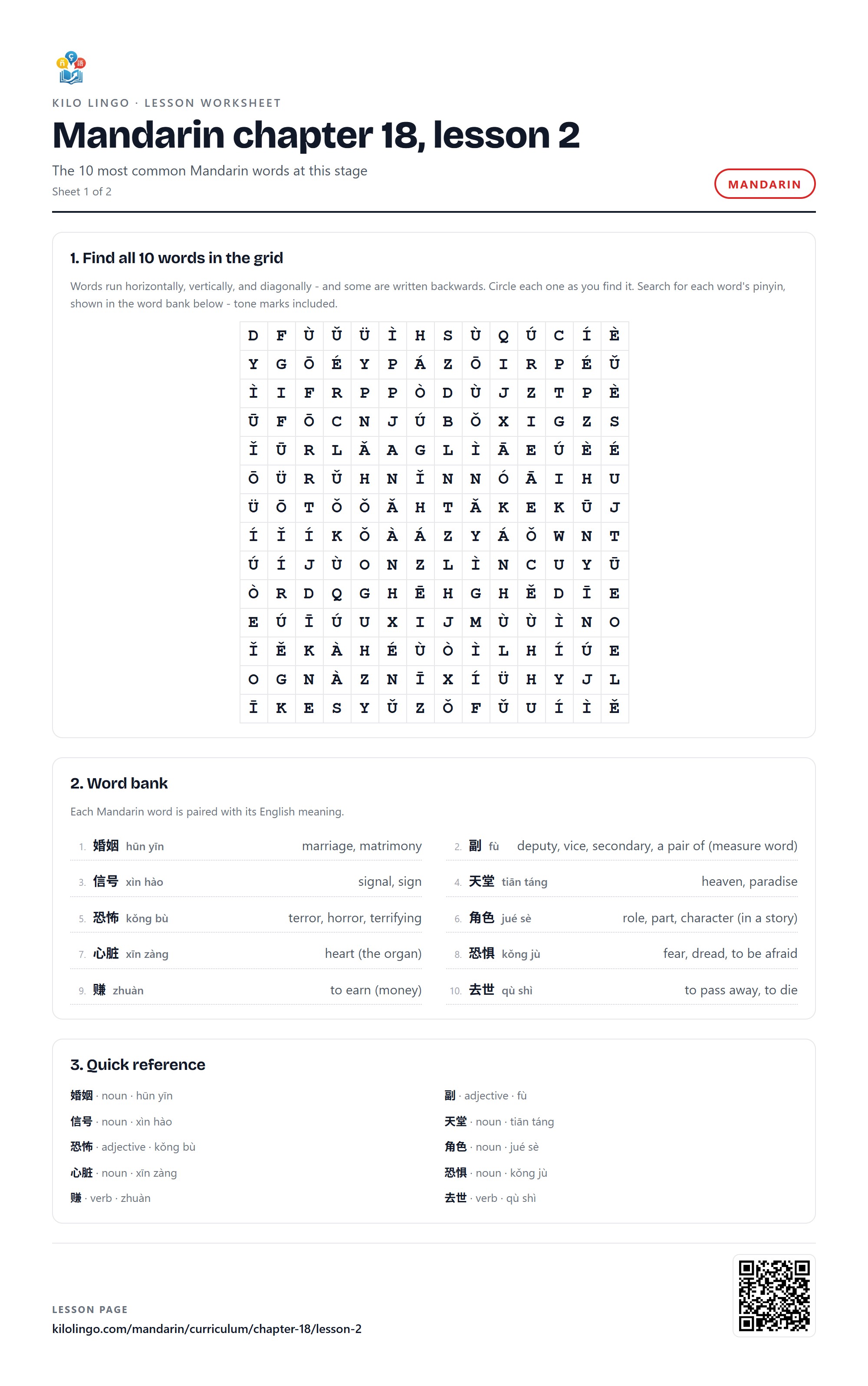
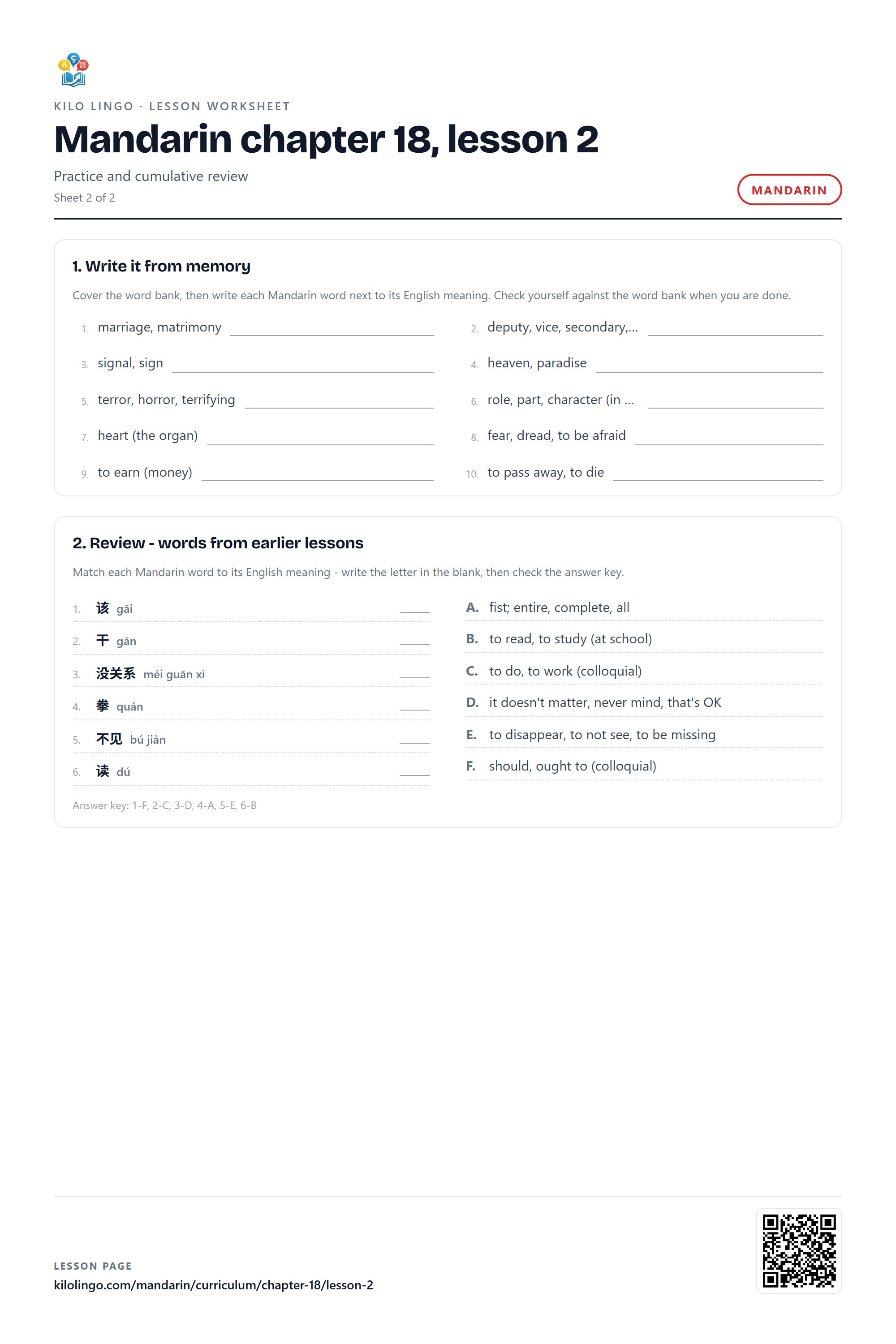
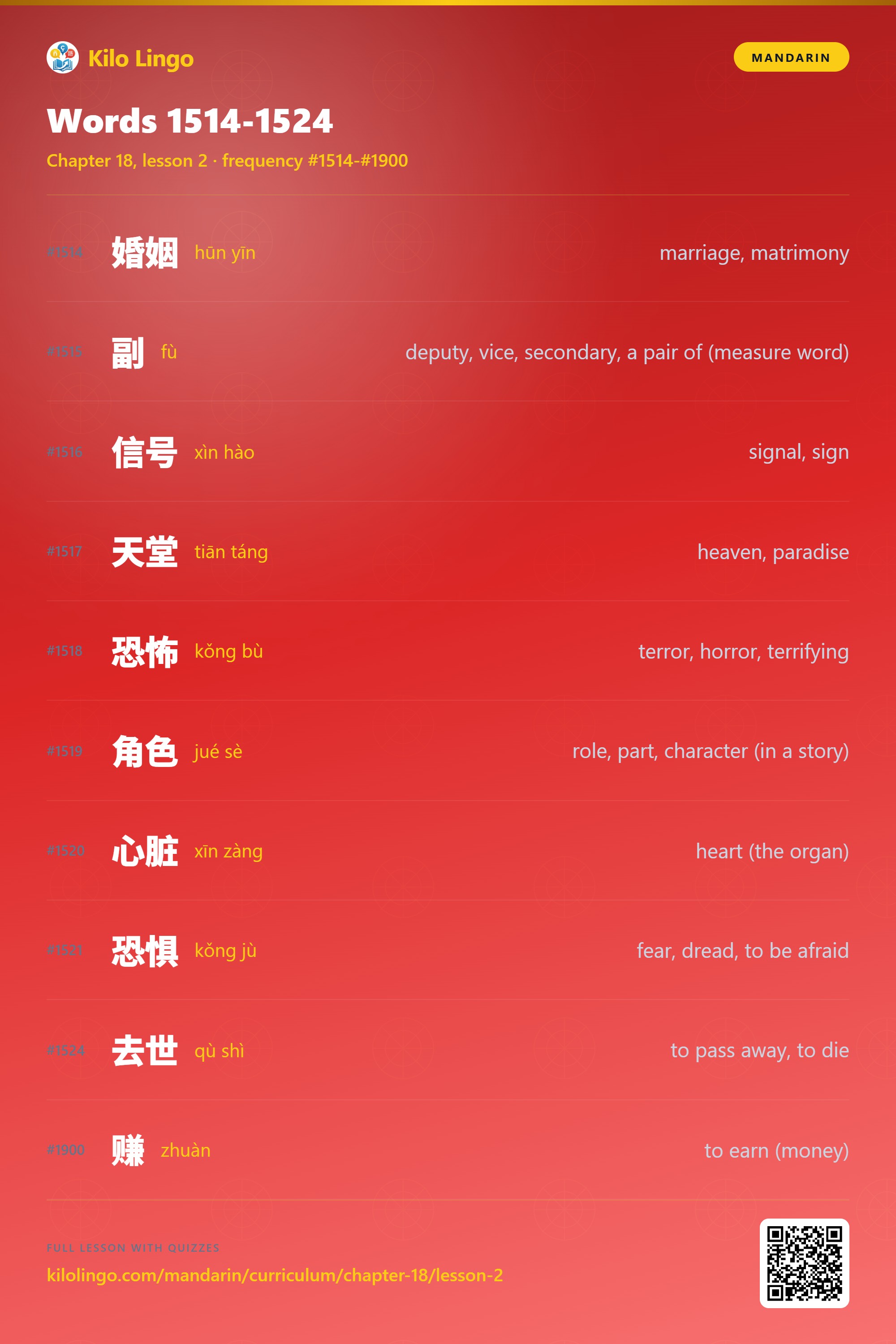
- Words 1514-1524Vocabulary
10 words · ranks 1514-1524
- Tone Shooter review sessionReview games
Shoot the words you just met into their tones by colour. The quickest way to fix a tone in place.
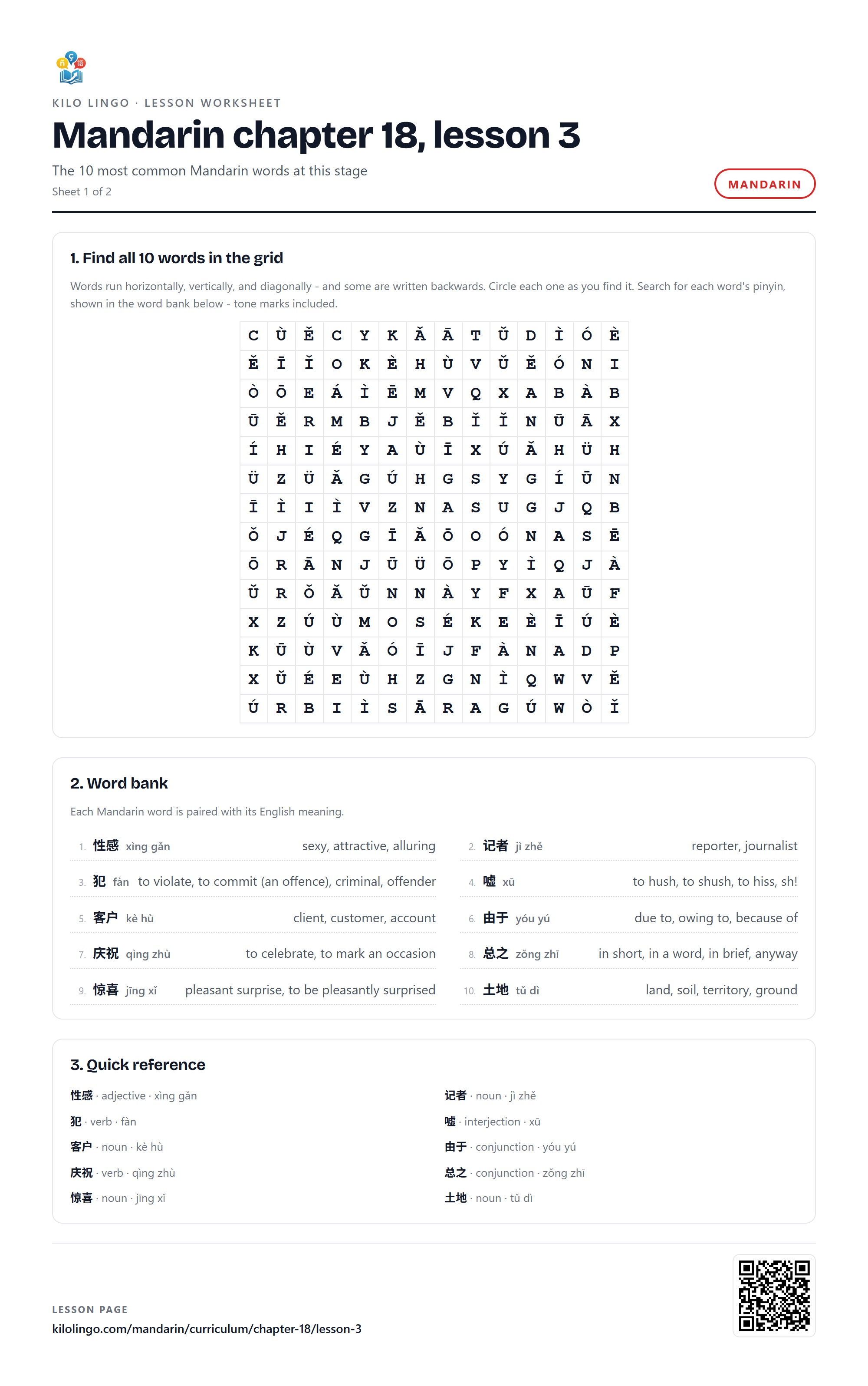
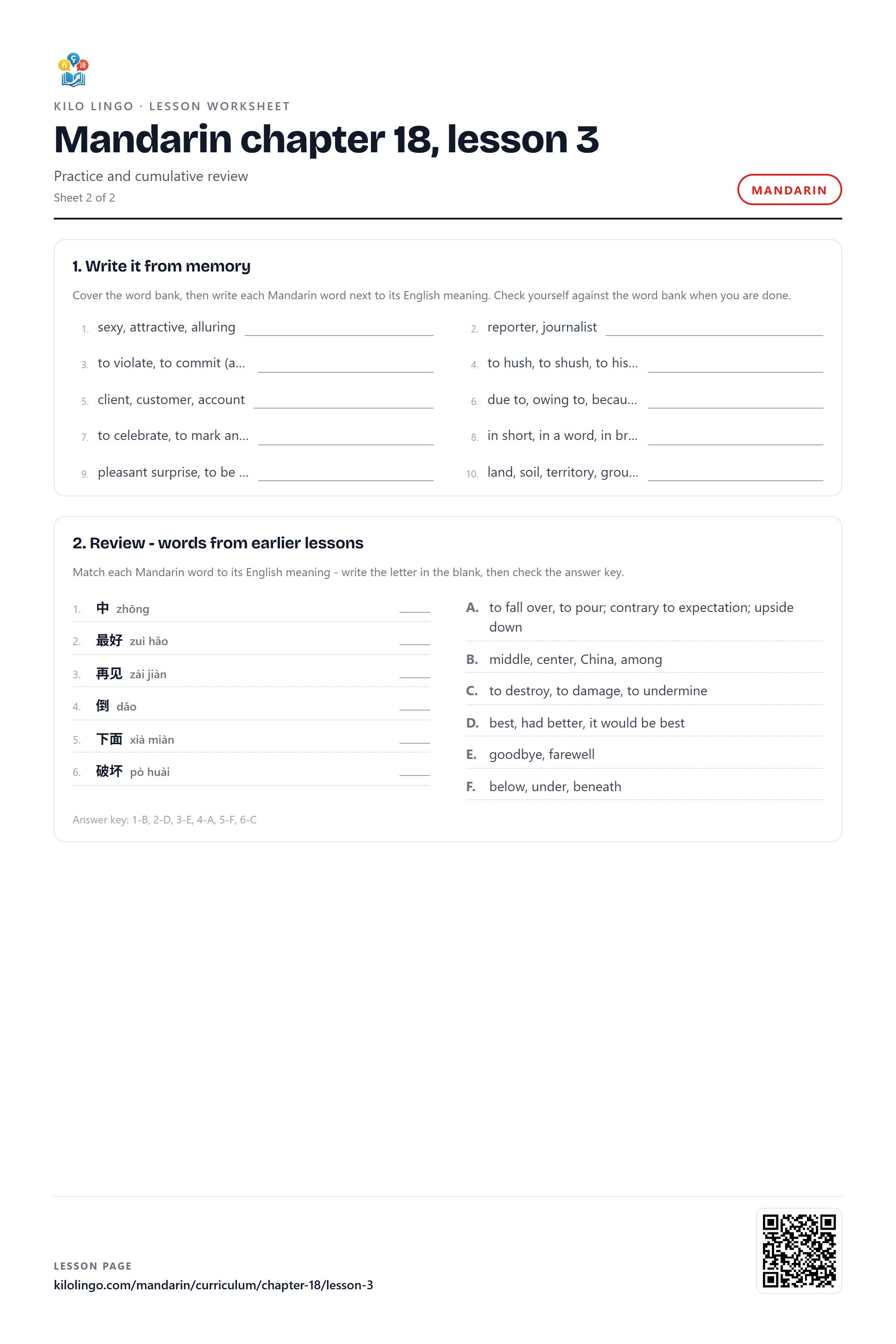
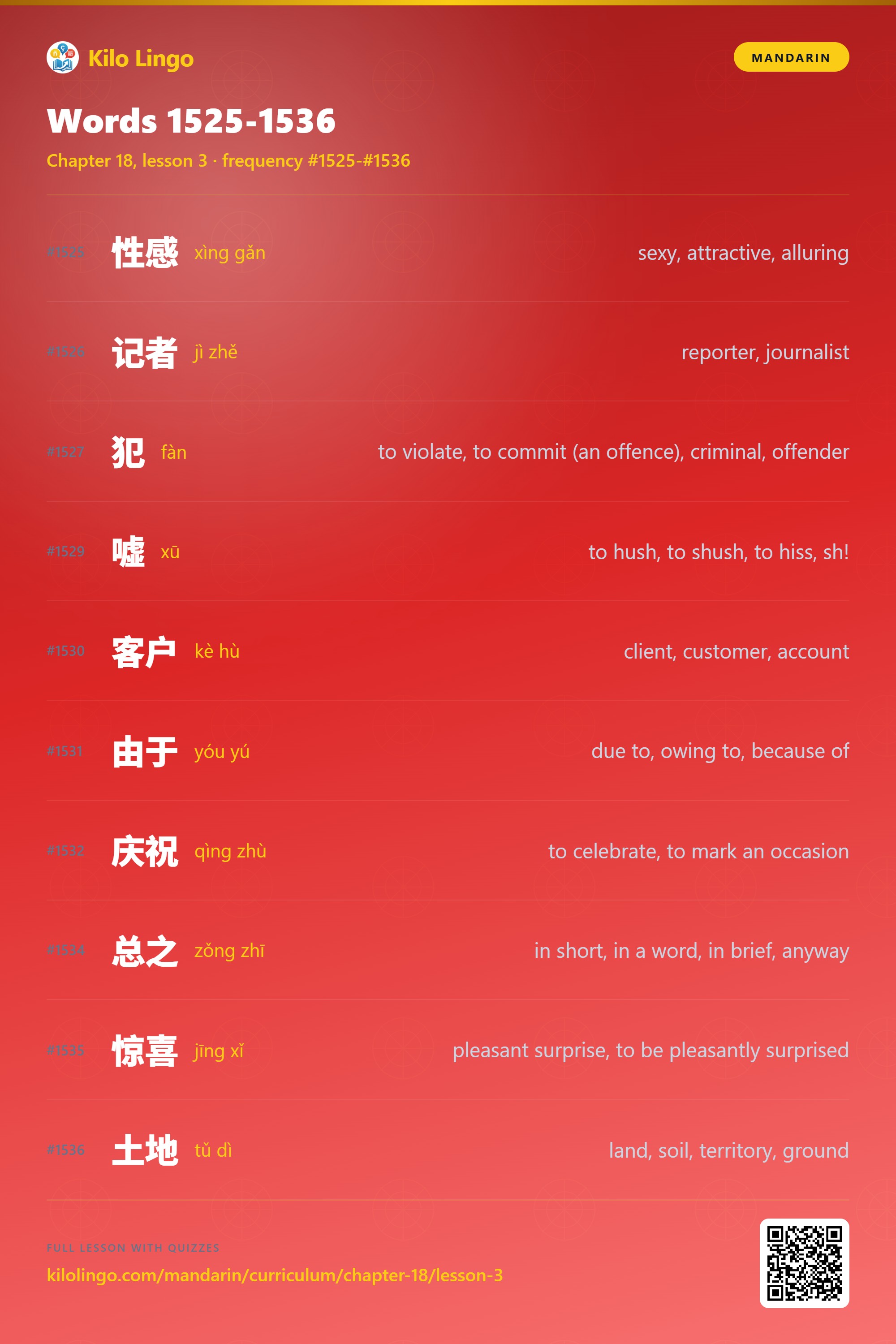
- Words 1526-1538Vocabulary
10 words · ranks 1526-1538
- Word Bubbles review sessionReview games
Pop the words you just met by matching each one to its meaning. A couple of rounds and the batch is yours.
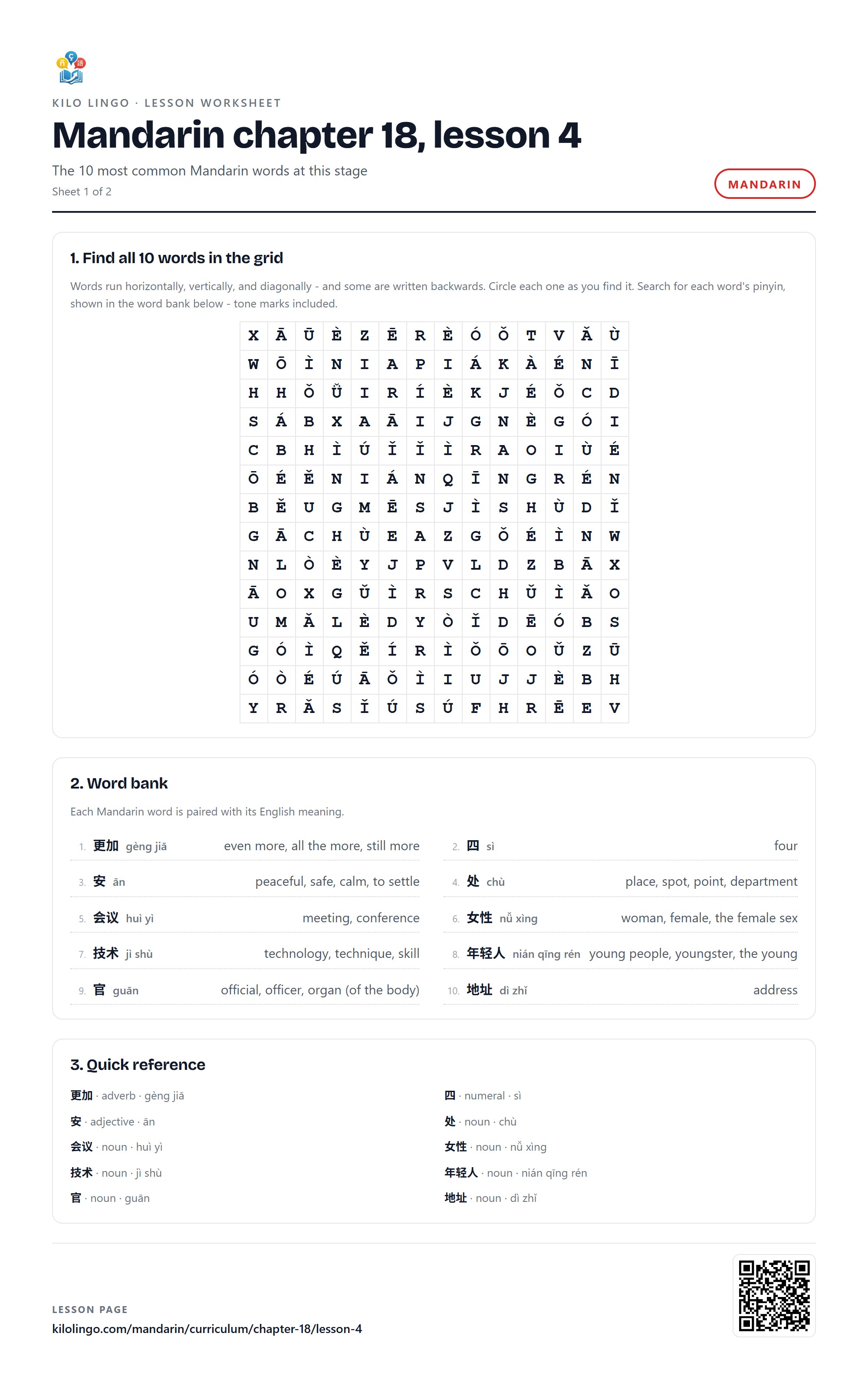
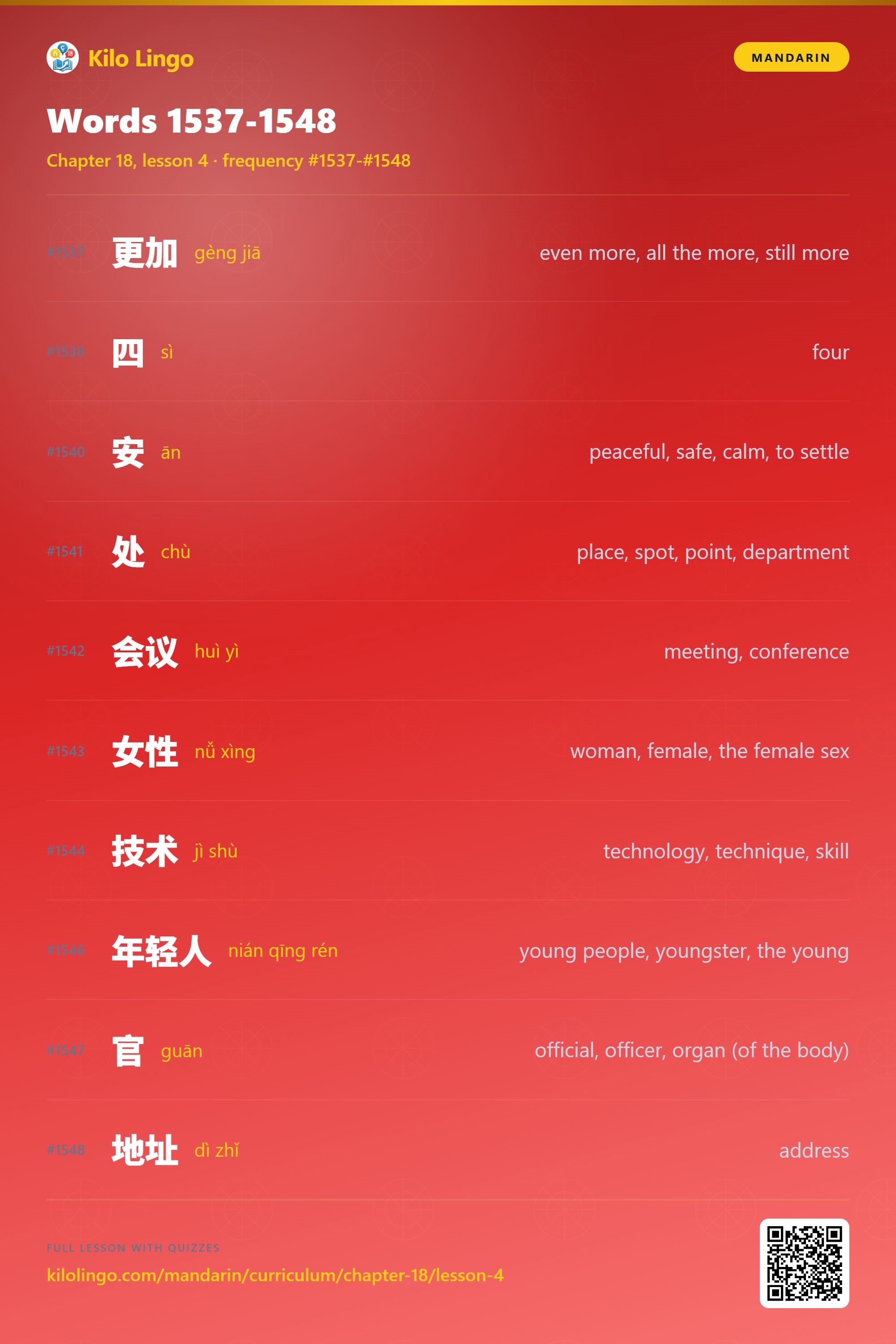
- Words 1540-1550Vocabulary
10 words · ranks 1540-1550
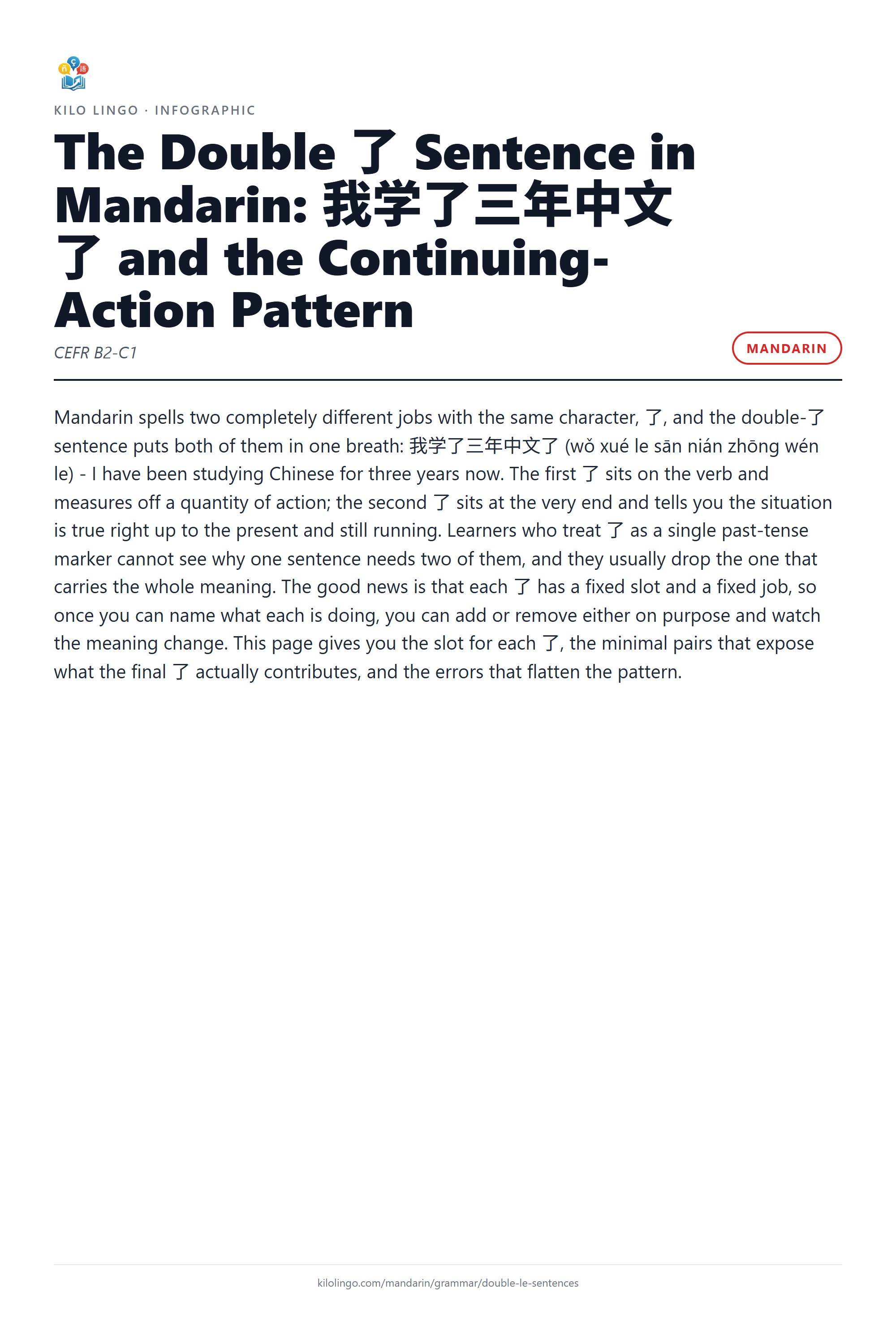
- The double 了 sentenceGrammar
我学了三年中文了 (I have been studying Chinese for three years now). The verb-了 closes off a measured chunk of action; the sentence-final 了 says it is still going at the moment of speaking. Drop the final 了 and the three years are over; drop the verb-了 and the duration loses its anchor.
- 了 or 过?Mistake clinic
One says it happened. The other says you have done it before.
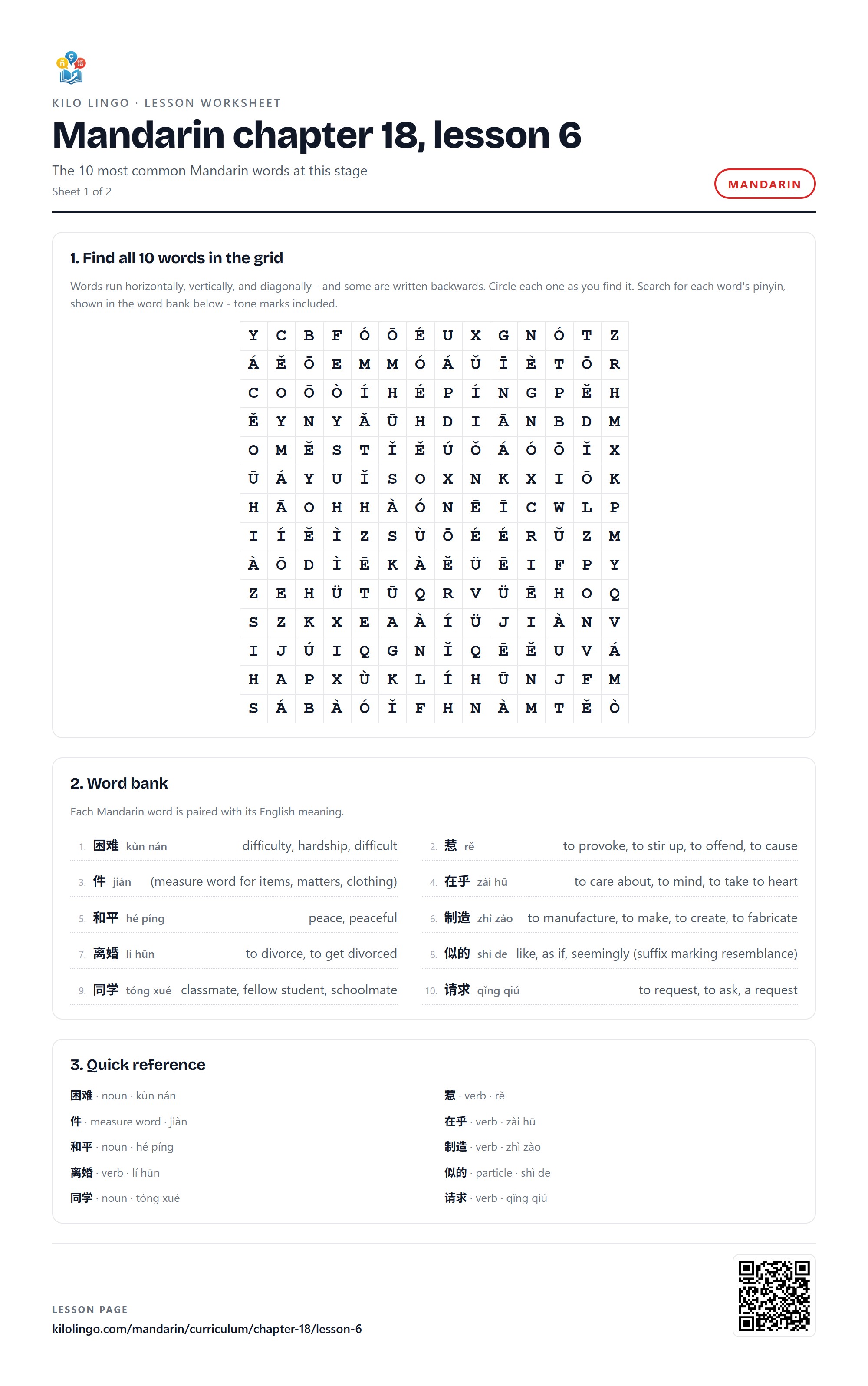
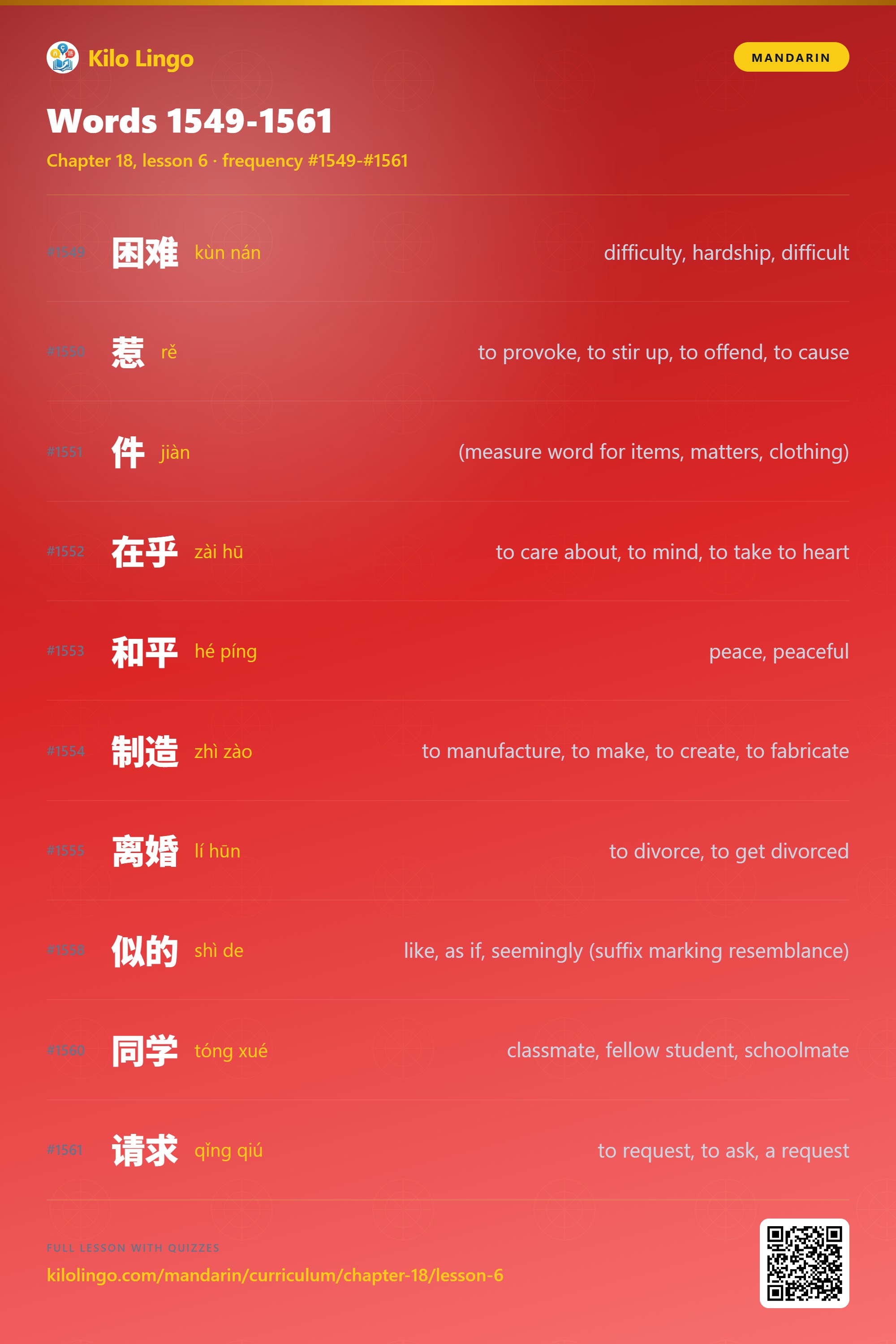
- Words 1551-1564Vocabulary
10 words · ranks 1551-1564
- Tone Shooter review sessionReview games
Shoot the words you just met into their tones by colour. The quickest way to fix a tone in place.
- Words 1565-1575Vocabulary
10 words · ranks 1565-1575
- Word Bubbles review sessionReview games
Pop the words you just met by matching each one to its meaning. A couple of rounds and the batch is yours.
- Words 1576-1586Vocabulary
10 words · ranks 1576-1586
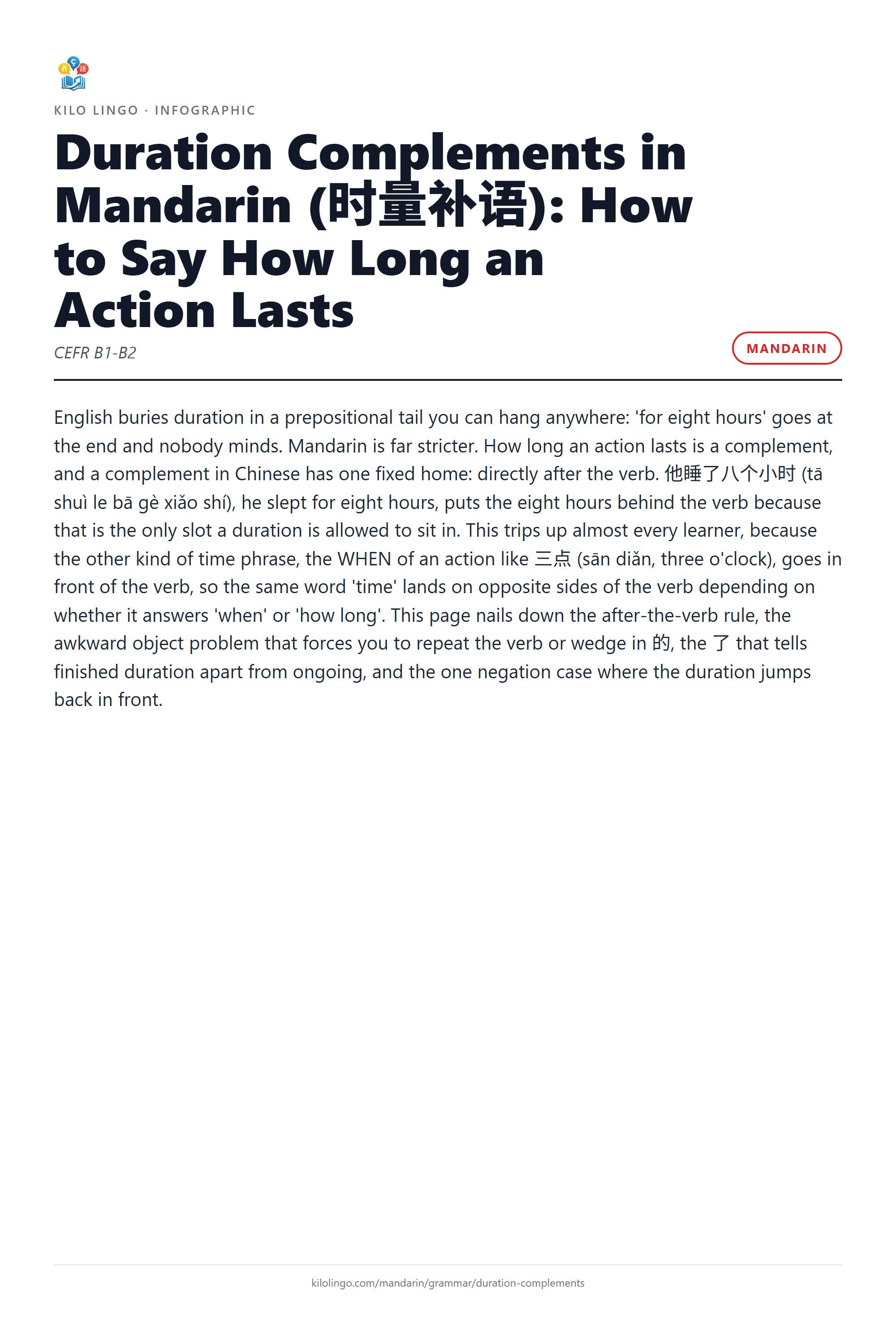
- Duration complements (时量补语)Grammar
How long an action lasts goes AFTER the verb, not before: 他睡了八个小时. With an object you either repeat the verb (他学中文学了三年) or split the duration in with 的 (他学了三年的中文). The 了 placement for a finished vs still-running stretch, the negation that flips duration in front (他三天没吃饭), and the classic 我学了中文三年 error.
- Words 1588-1597Vocabulary
10 words · ranks 1588-1597
- Making plansPhrase session
Arranging to meet, and getting out of it politely.
- Words 1599-1600Vocabulary
2 words · ranks 1599-1600
- Story milestone: top 1600 wordsGraded-reader story
You can read this story using only the words you've learned so far. Every content word sits at or above the rank-1600 ceiling.
- Arcade reviewReview games
Replay this chapter's words as games - a different kind of repetition, and it counts.
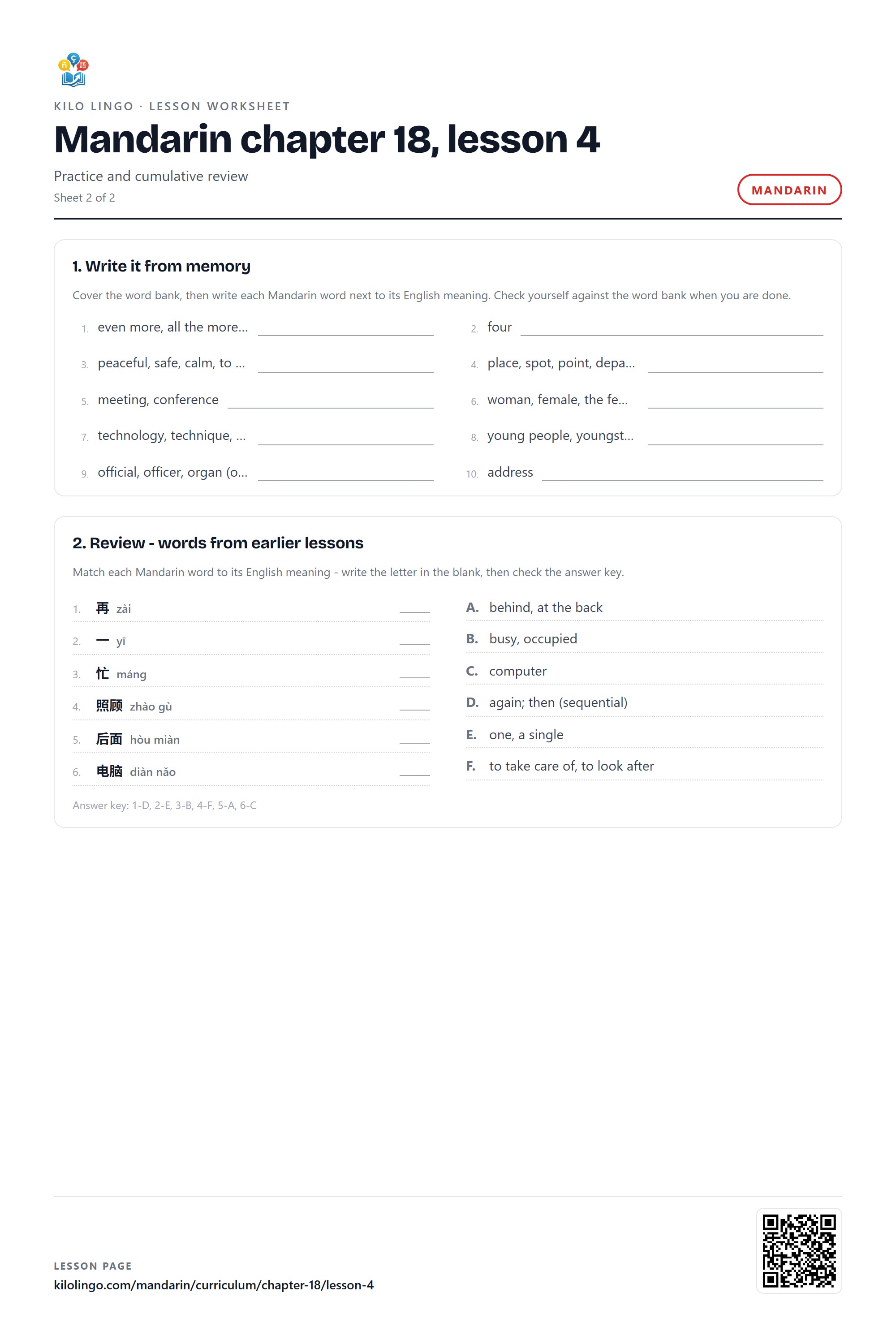
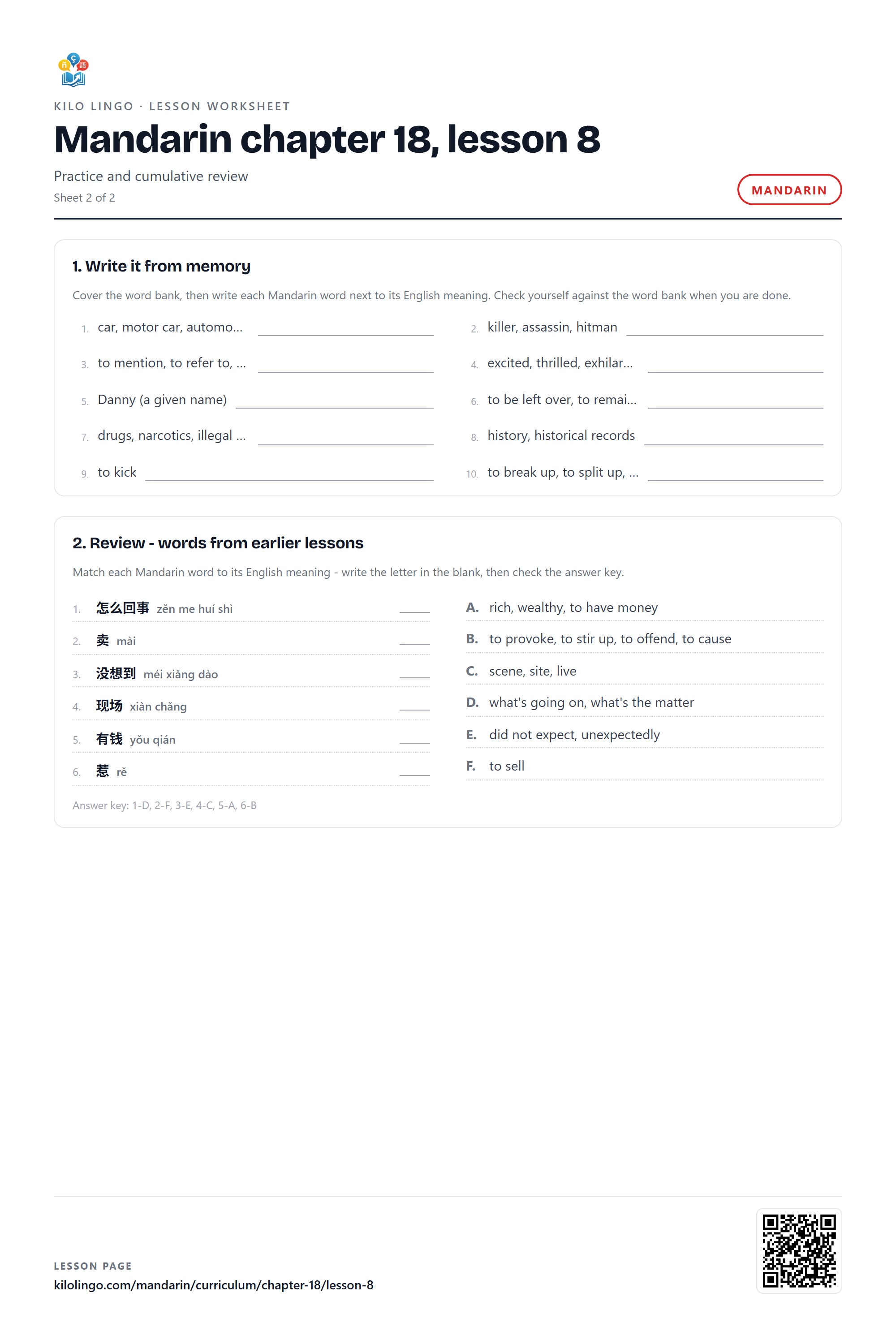
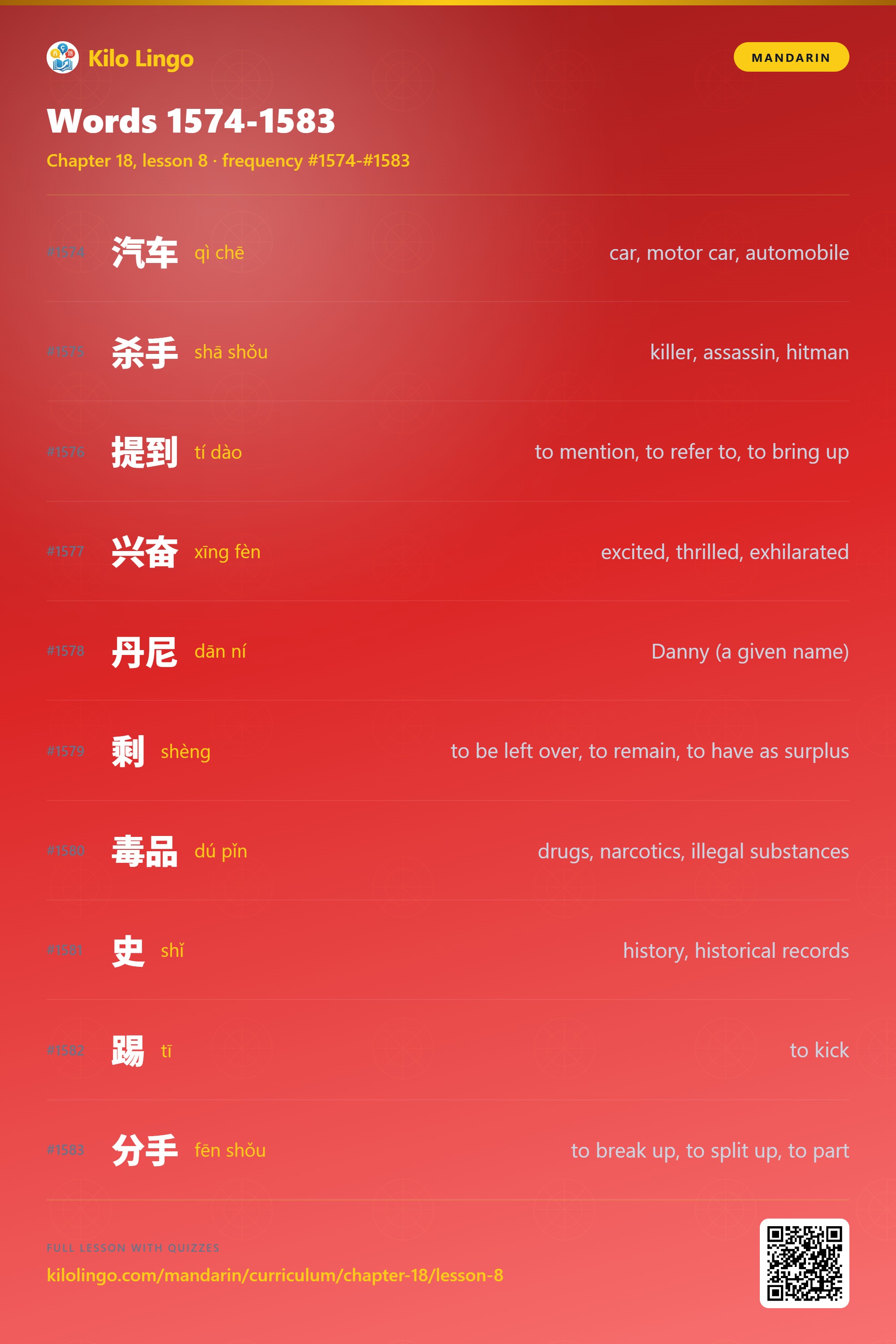
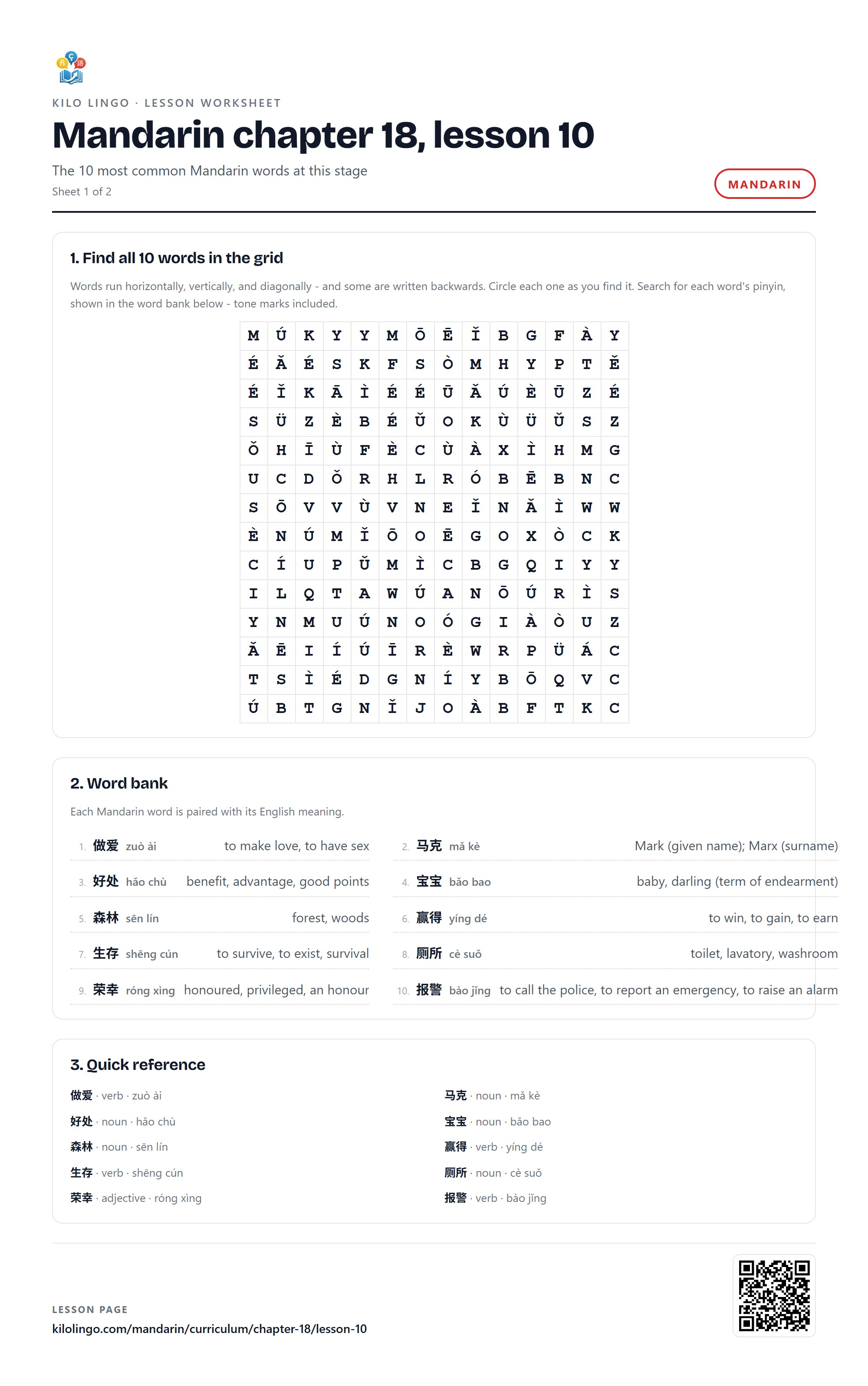
Word printables
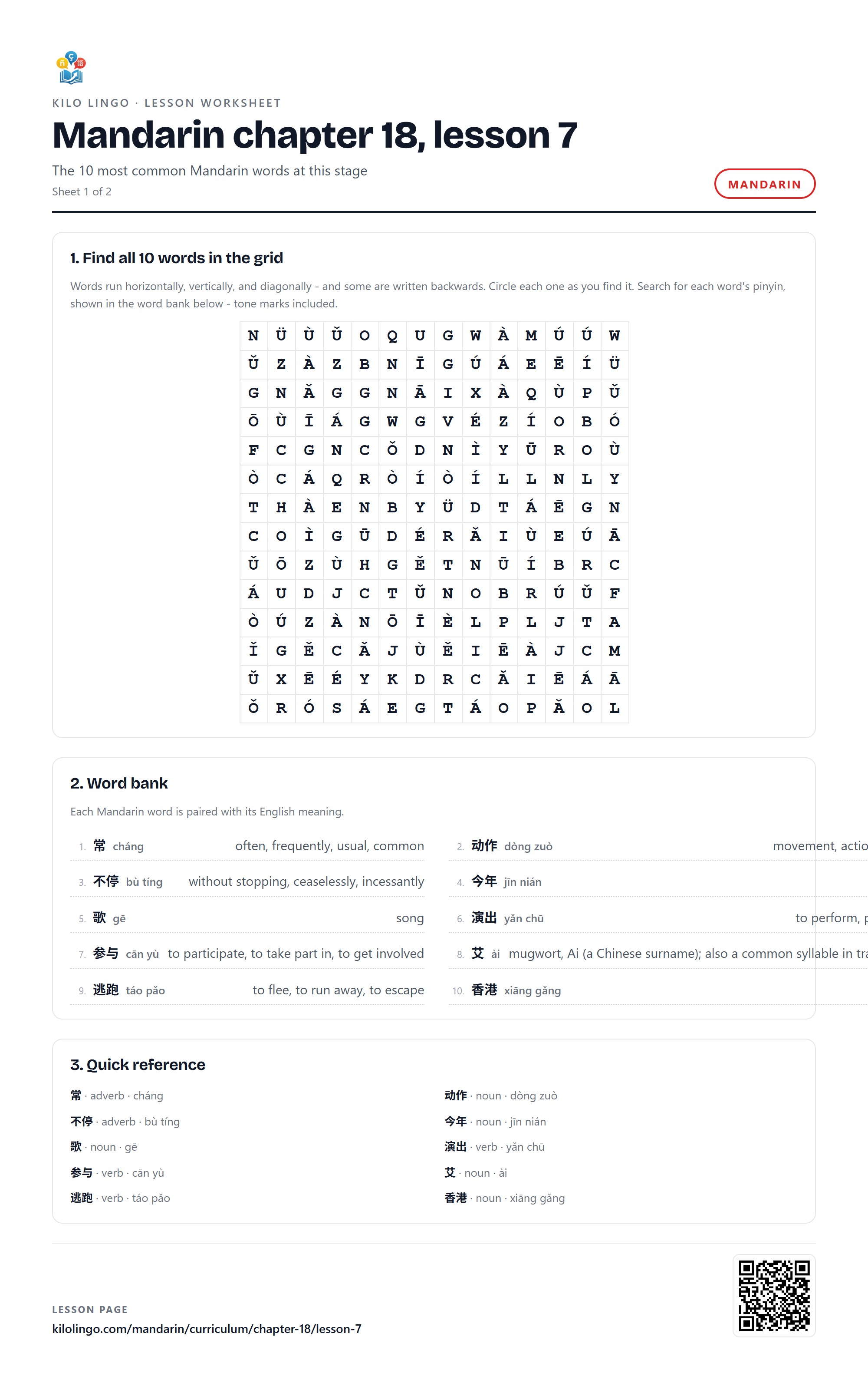
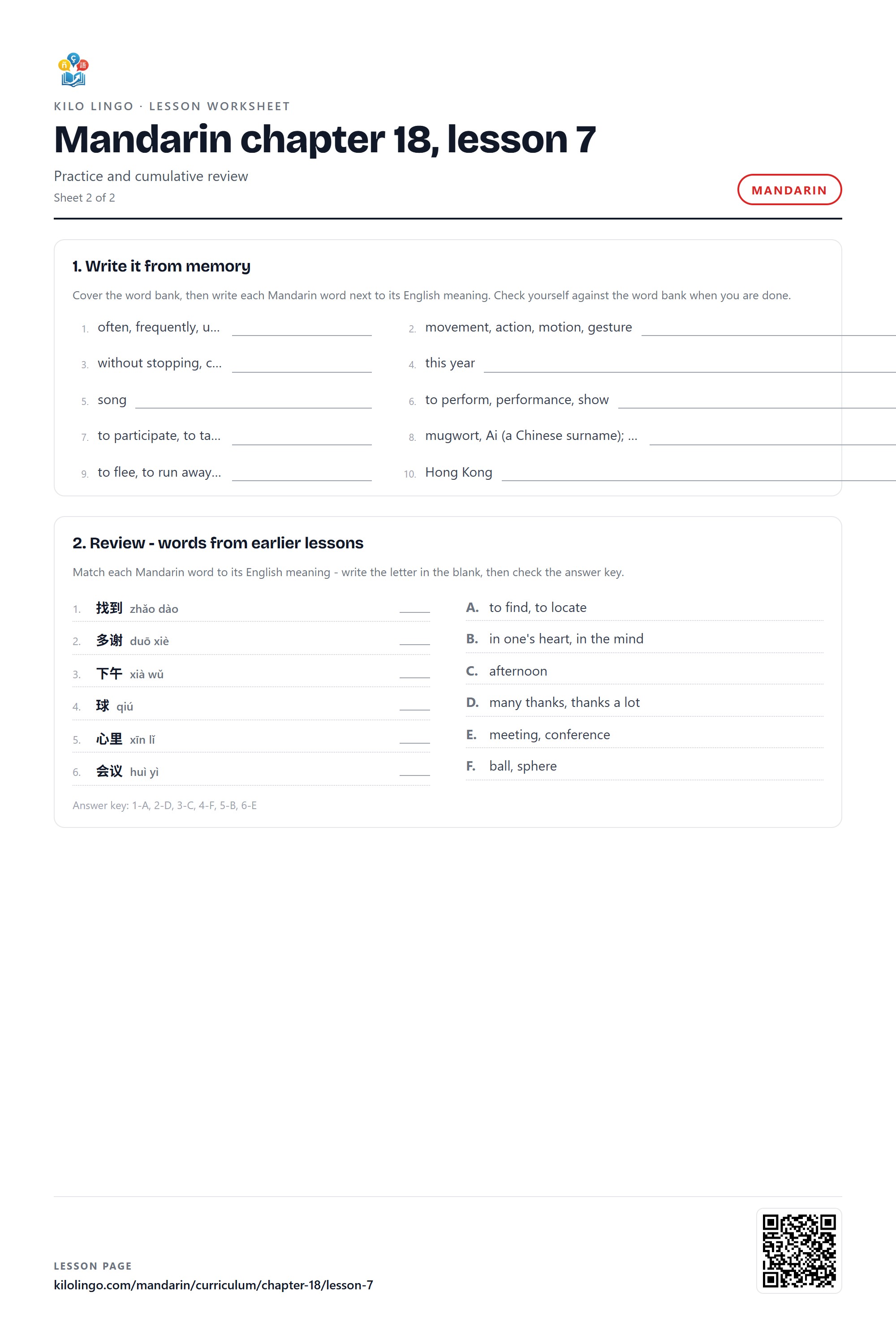
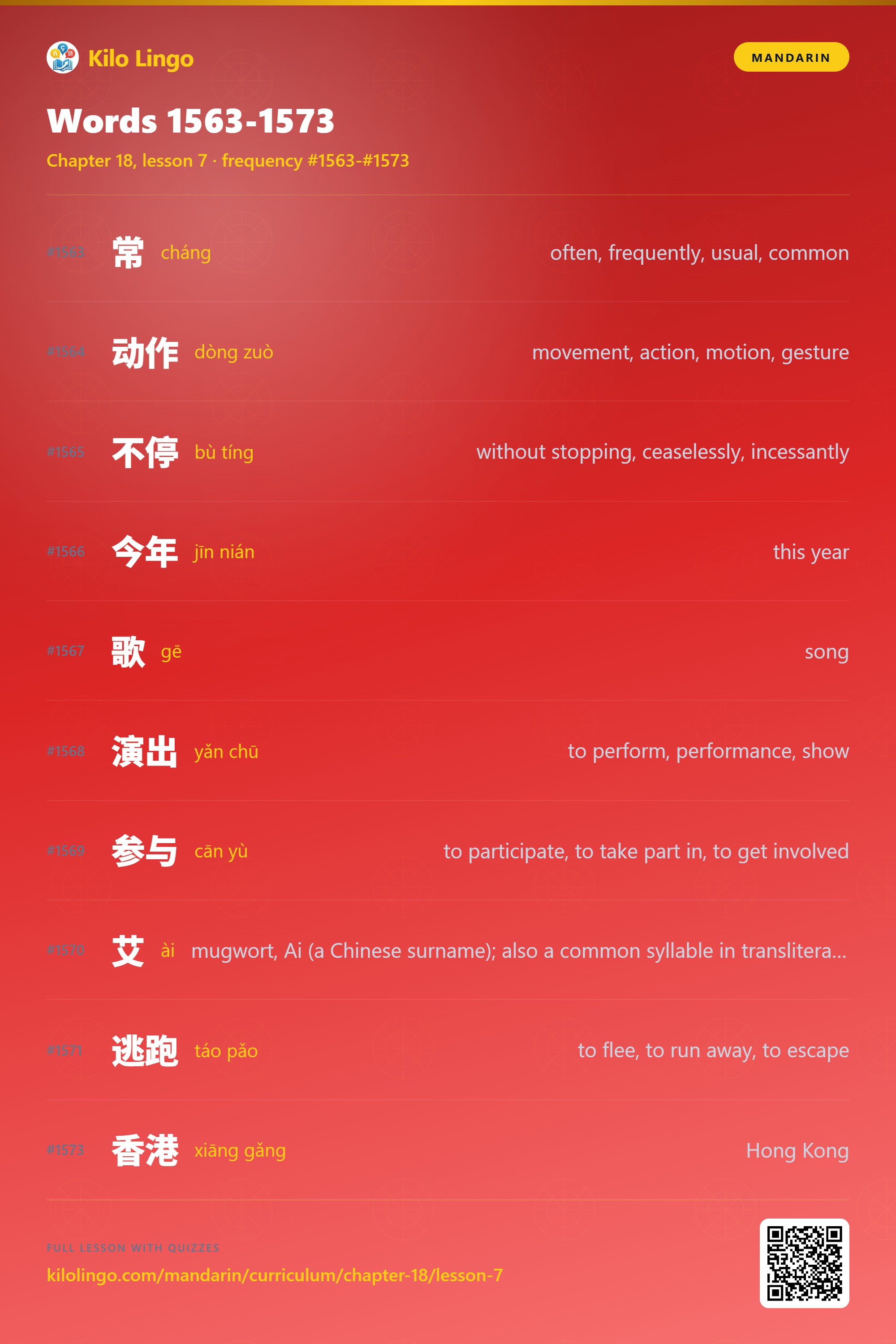
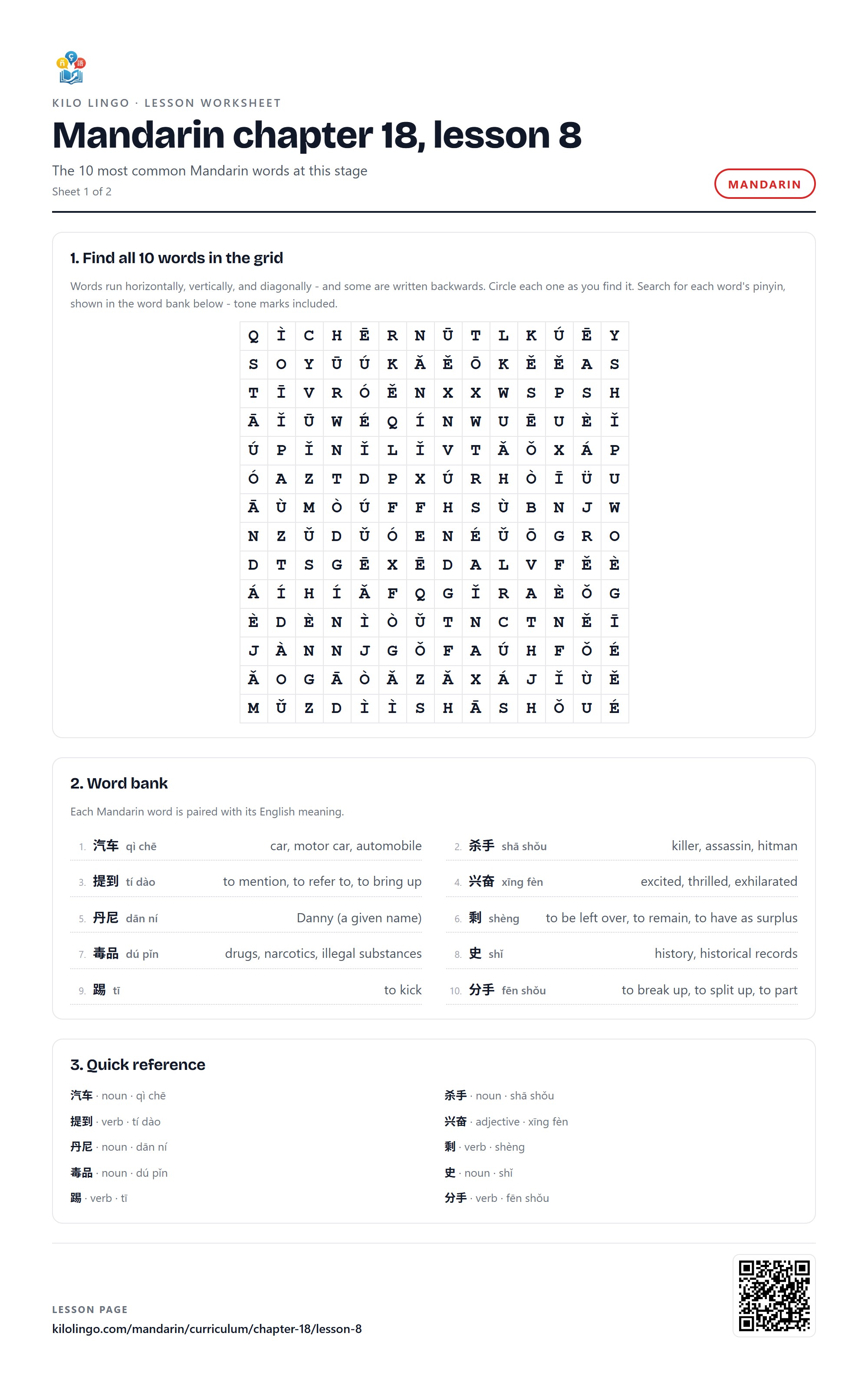
Per-word sheets82 words · a worksheet, infographic and listicle each









Chapter 19 · Serial verb constructions
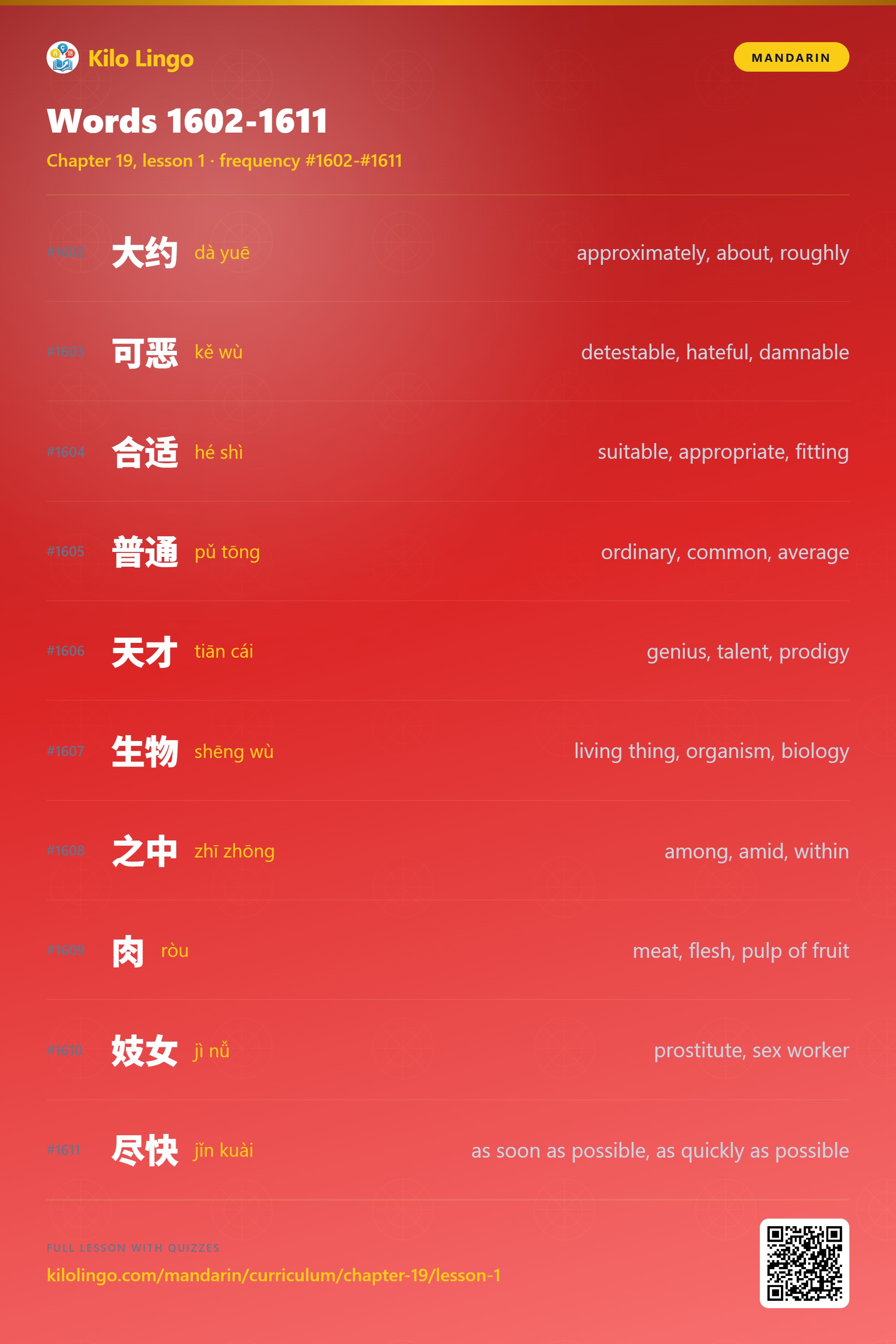
Chapter page →- Words 1602-1611Vocabulary
10 words · ranks 1602-1611
- Crossword review sessionReview games
Cross the words you just met, clued in English. Slower than a drill, and it sticks harder.
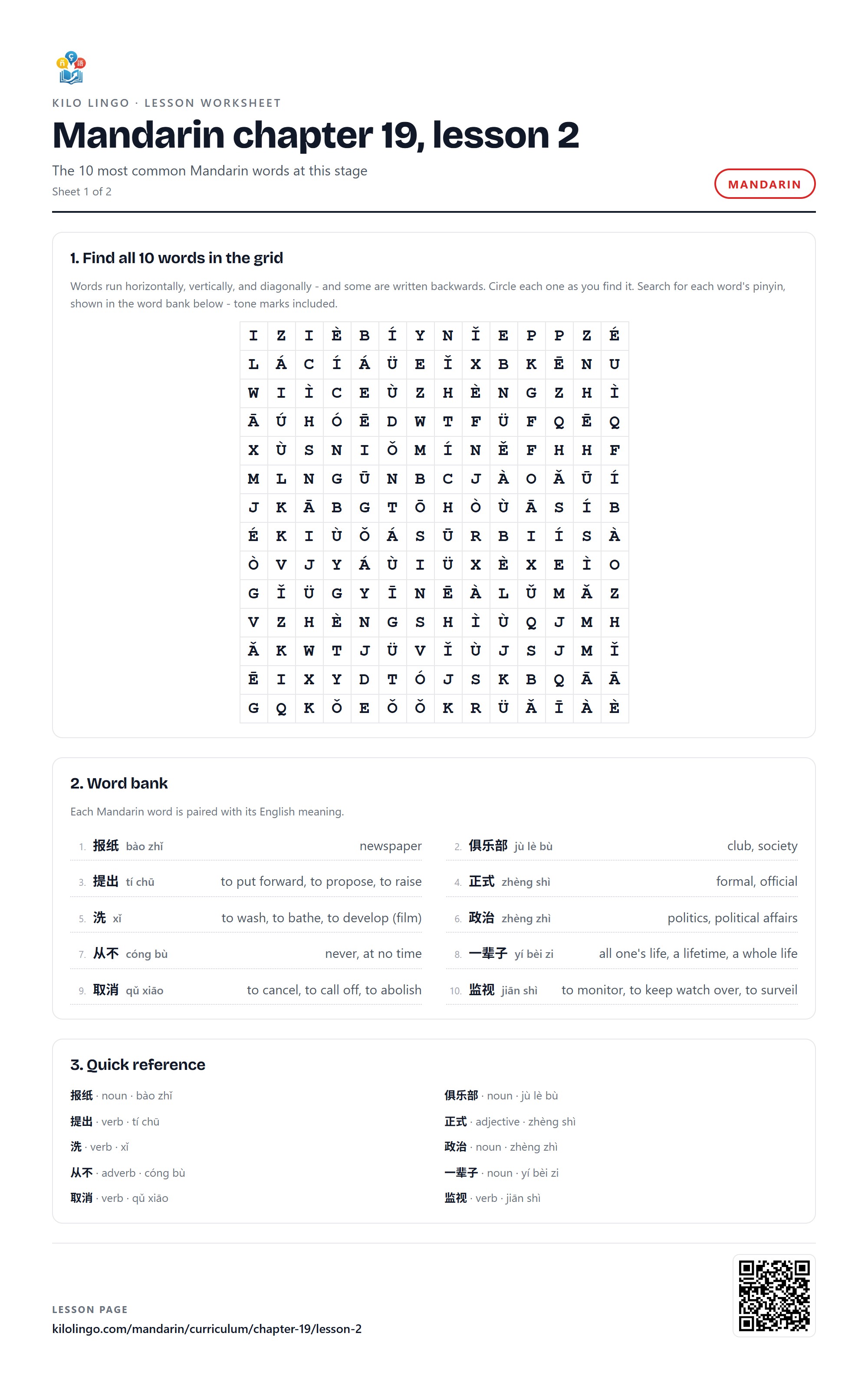
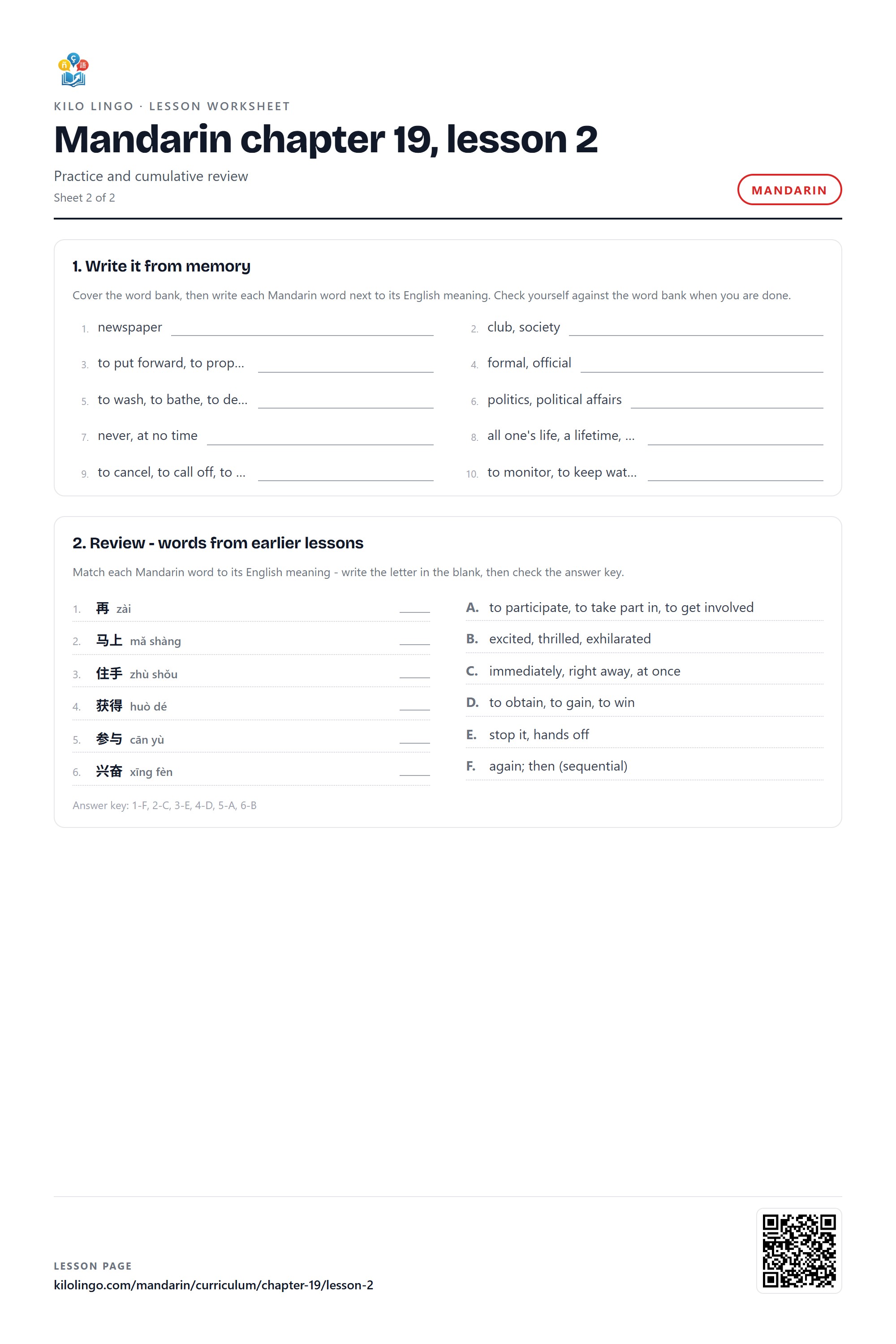
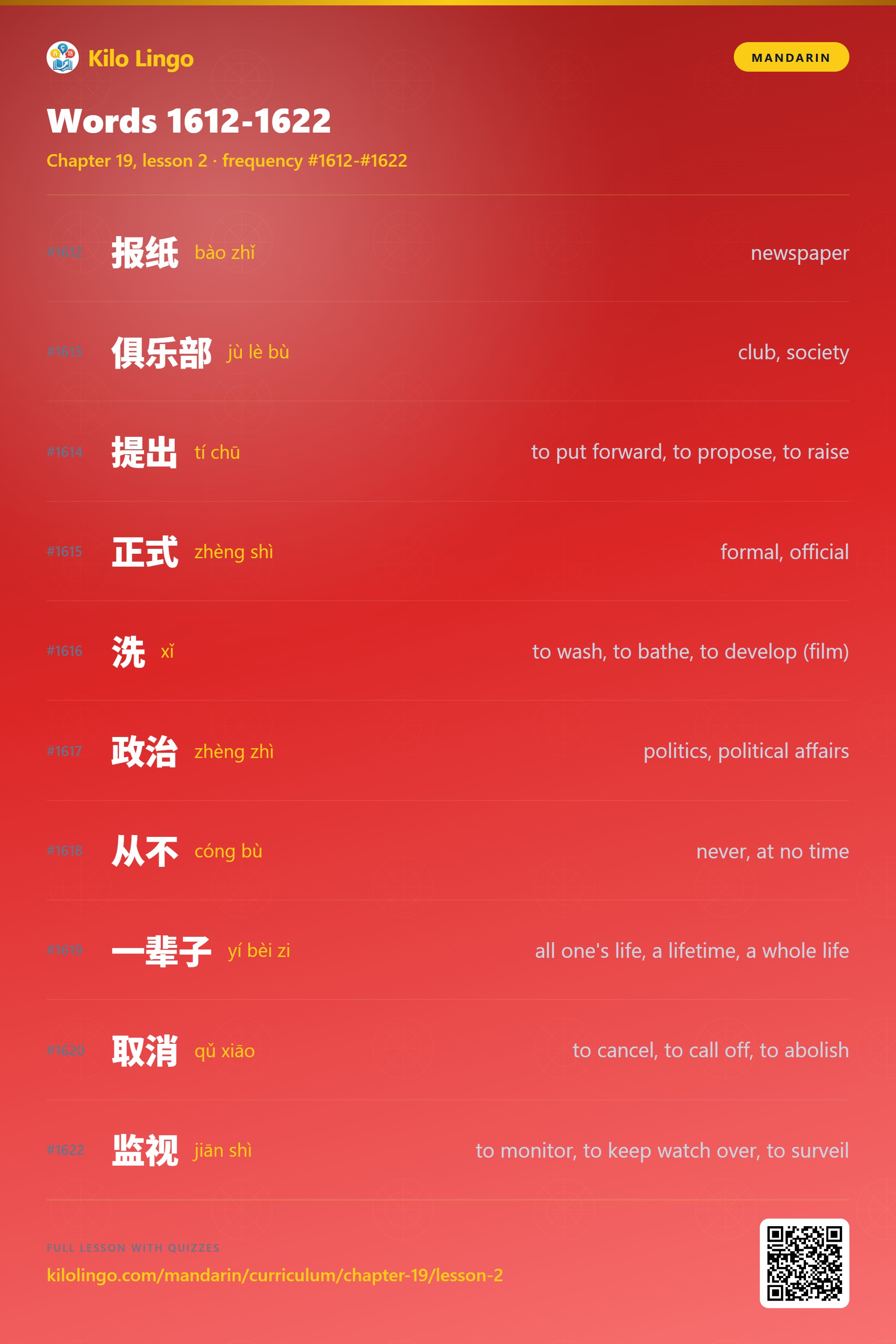
- Words 1612-1622Vocabulary
10 words · ranks 1612-1622
- Word Bubbles review sessionReview games
Pop the words you just met by matching each one to its meaning. A couple of rounds and the batch is yours.
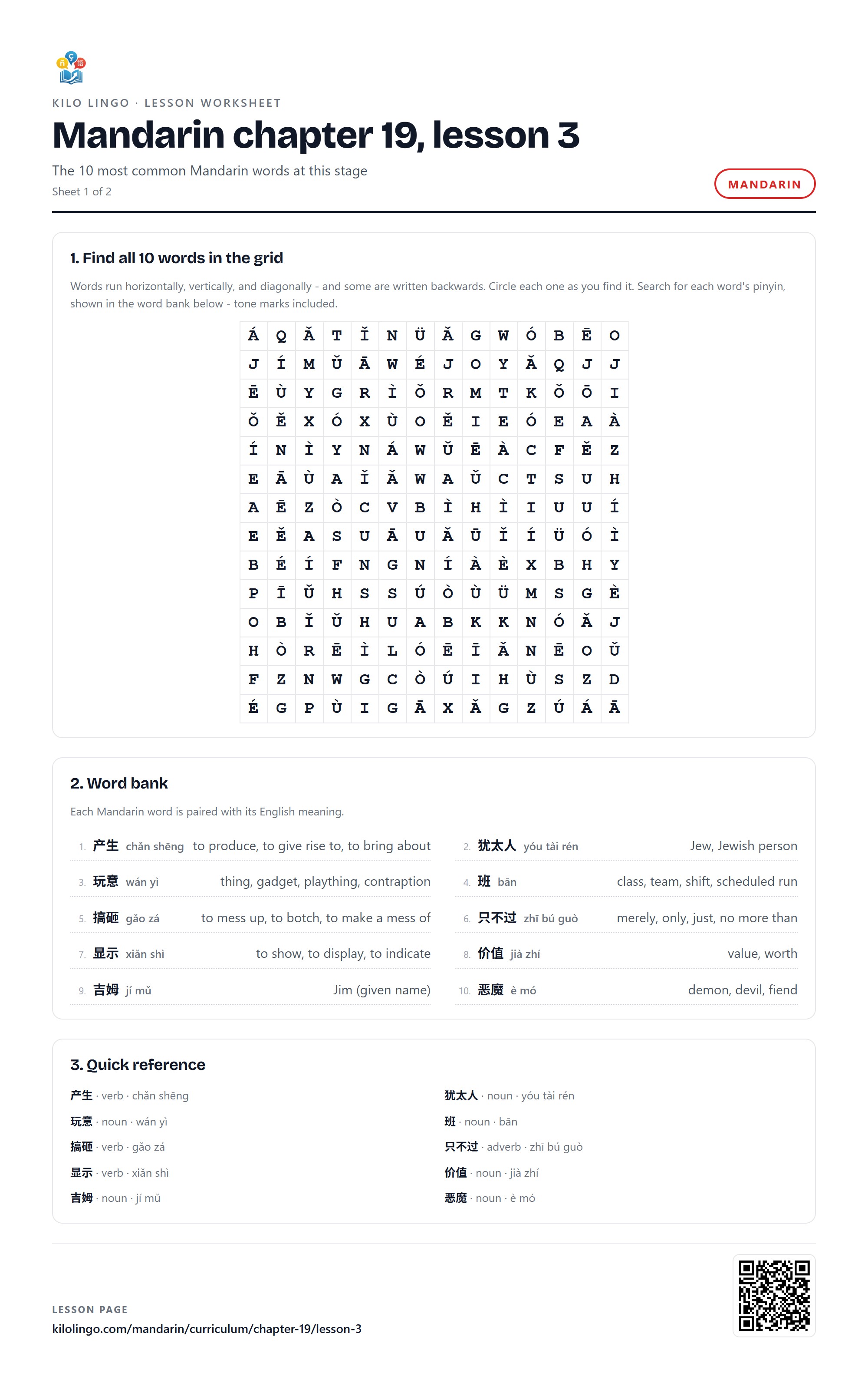
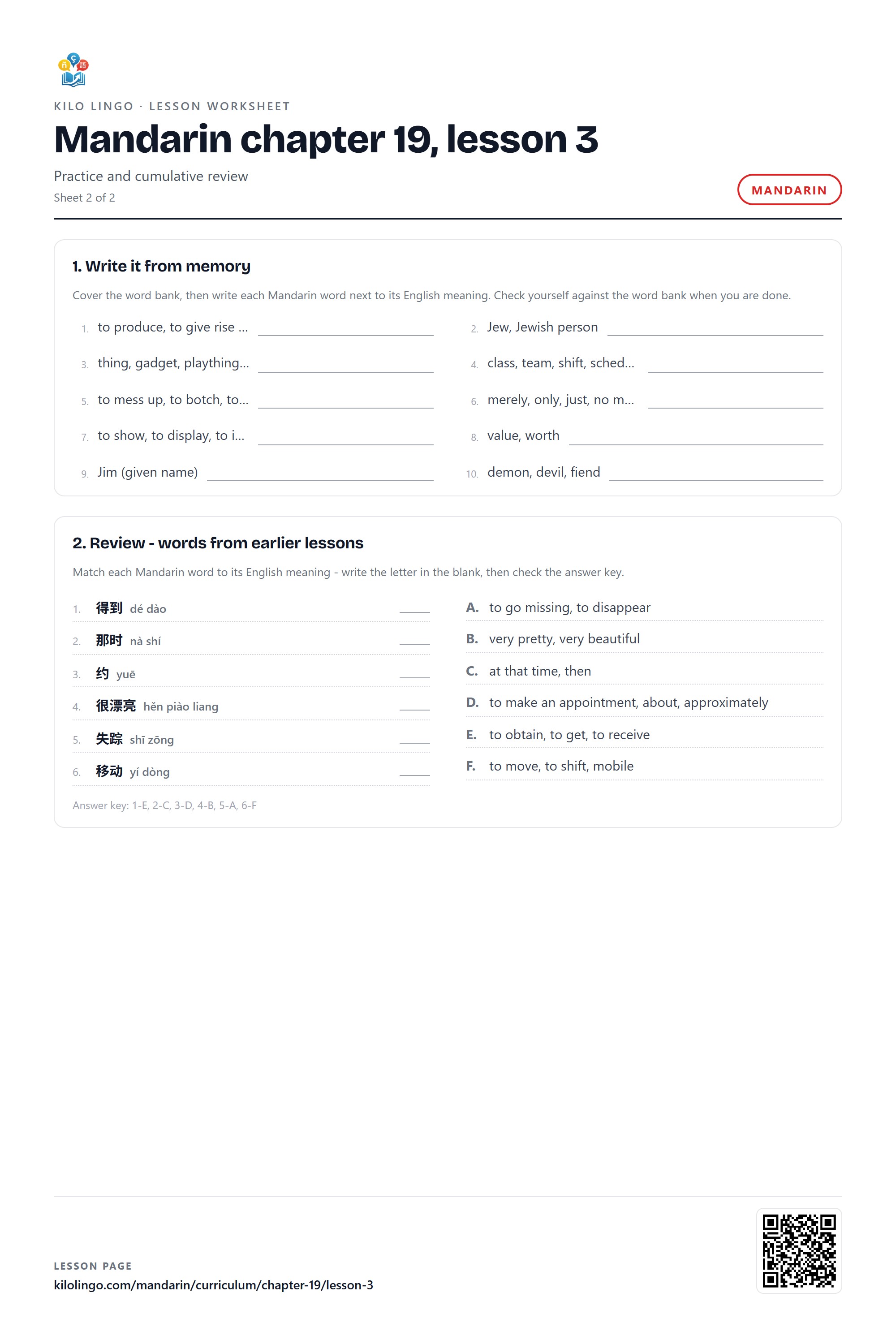
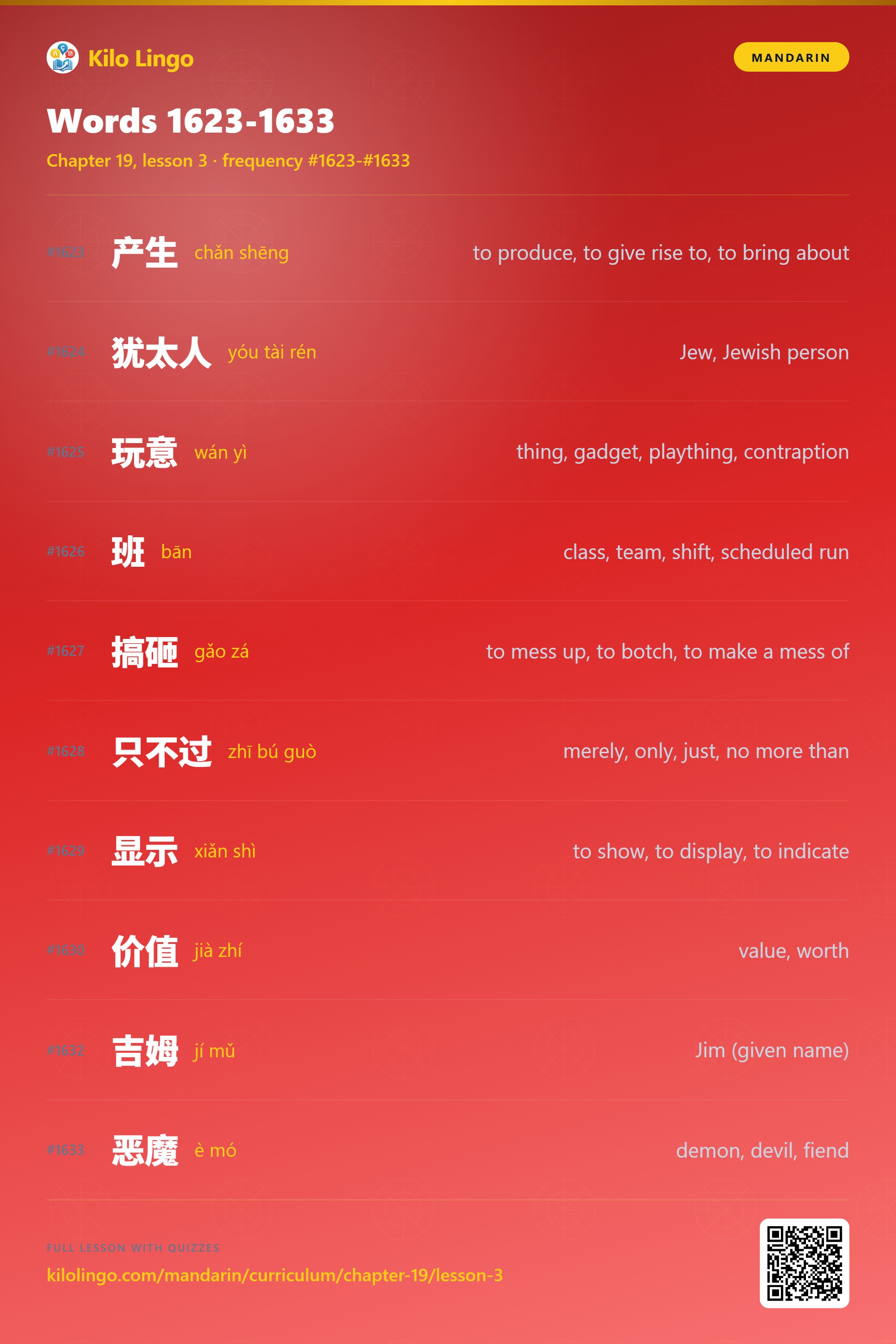
- Words 1623-1633Vocabulary
10 words · ranks 1623-1633
- Tone Shooter review sessionReview games
Shoot the words you just met into their tones by colour. The quickest way to fix a tone in place.
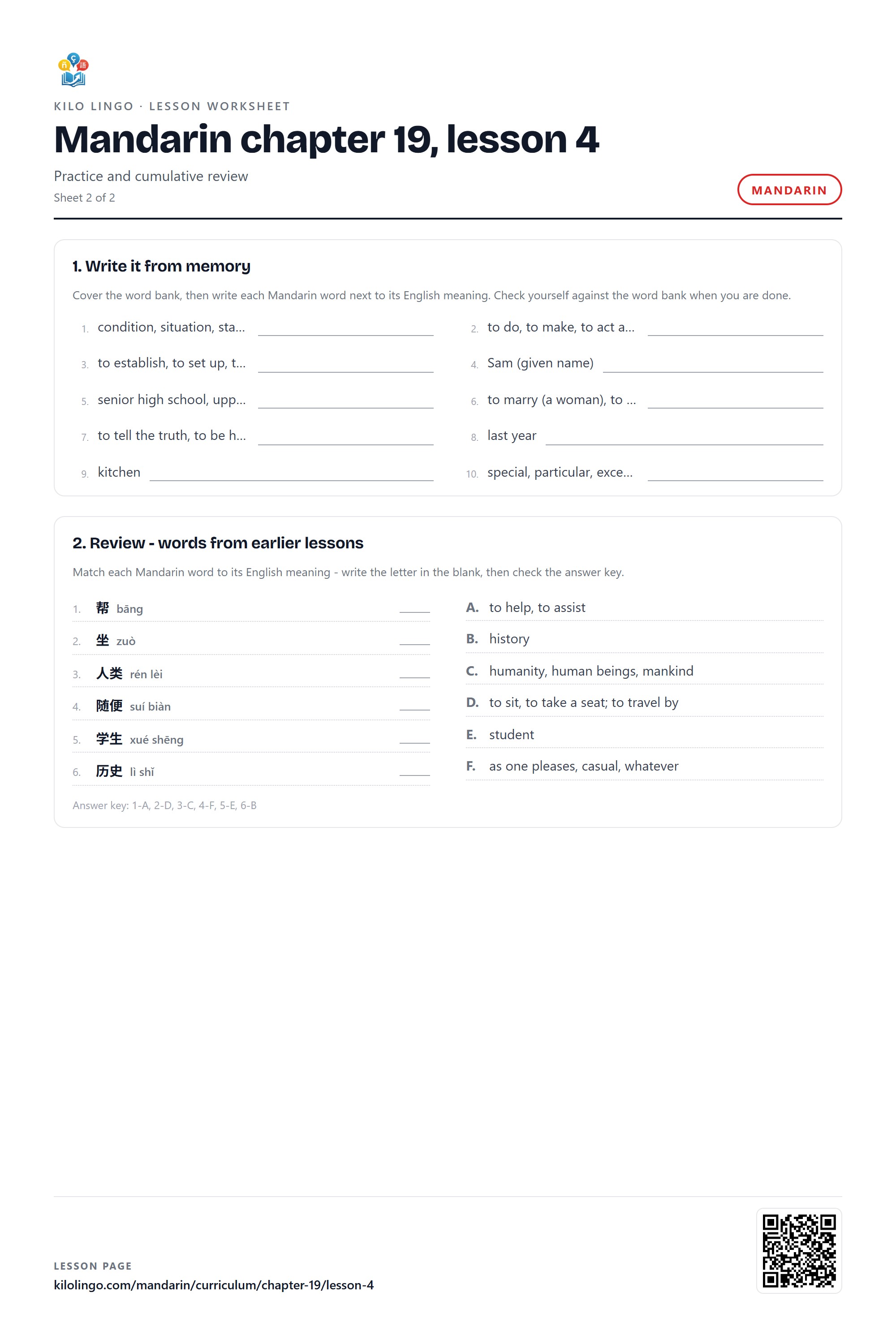
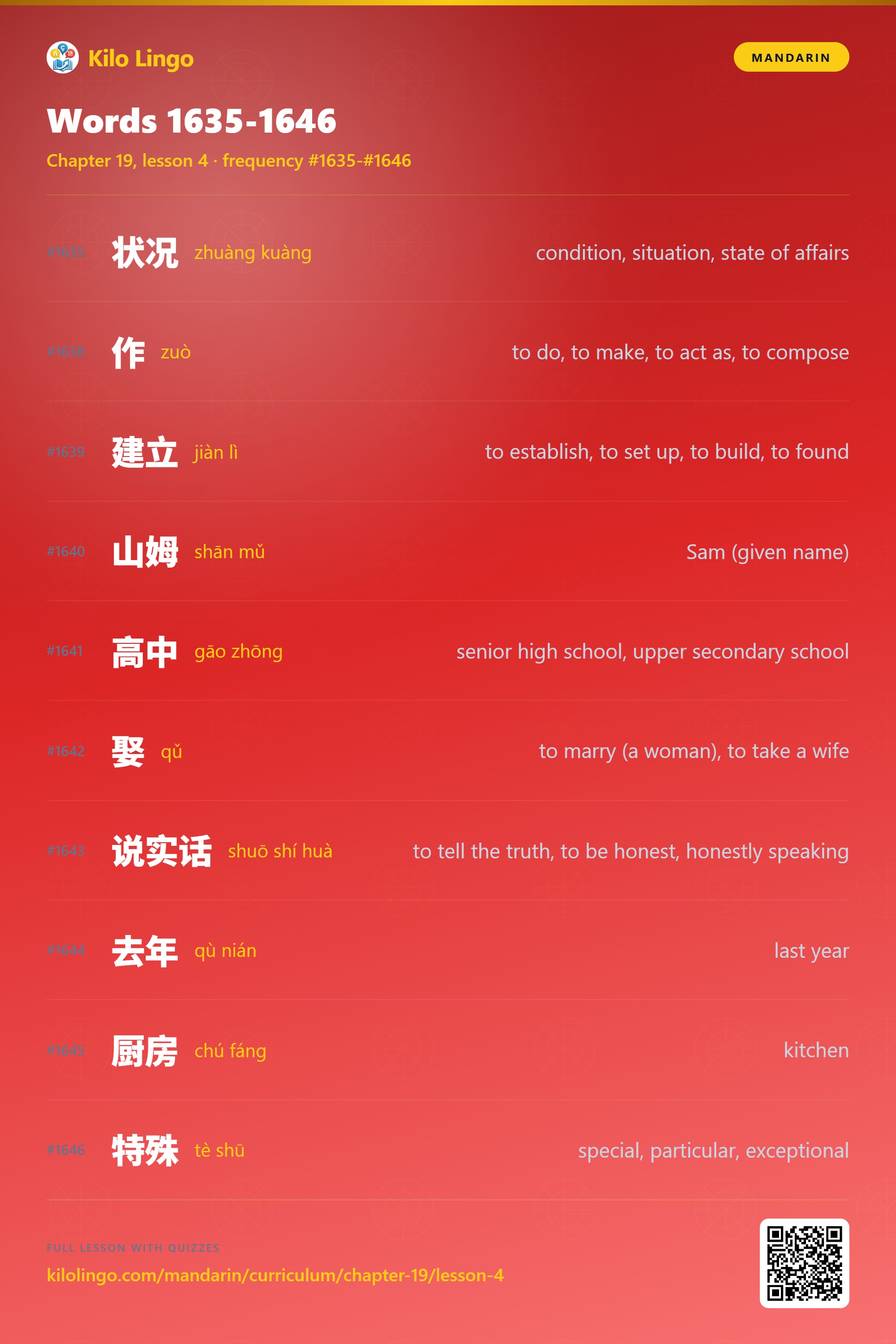
- Words 1635-1646Vocabulary
10 words · ranks 1635-1646
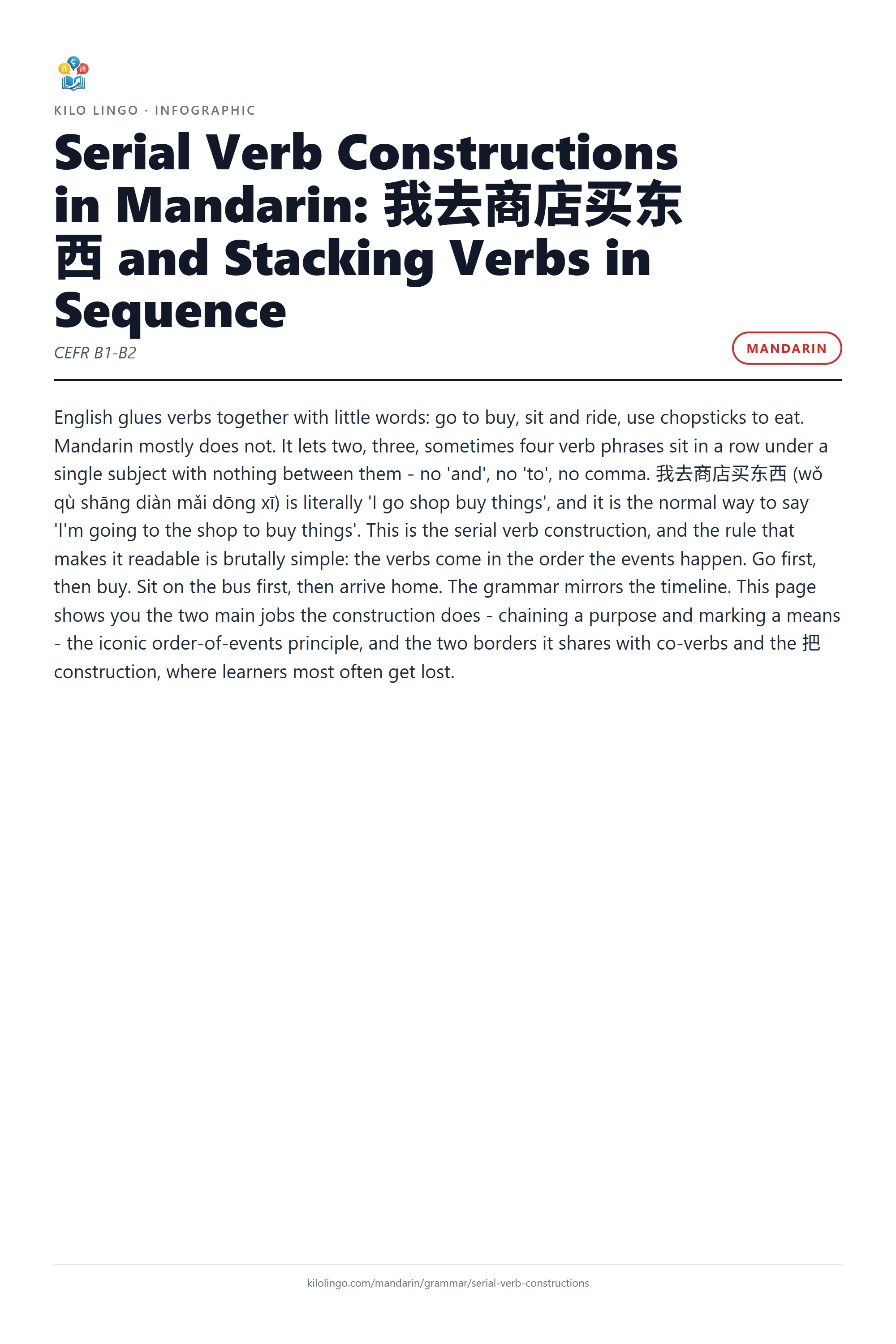
- Serial verb constructionsGrammar
Stacking verbs in the order the actions happen: 我去商店买东西 (I go to the shop to buy things). The verbs share one subject and run in real-world sequence, with no conjunction between them, covering purpose (去...买), means (坐车去) and instrument (用筷子吃).
- 以为 or 认为?Mistake clinic
One of these admits you were mistaken. Choose carefully.
- Words 1647-1658Vocabulary
10 words · ranks 1647-1658
- Word Bubbles review sessionReview games
Pop the words you just met by matching each one to its meaning. A couple of rounds and the batch is yours.
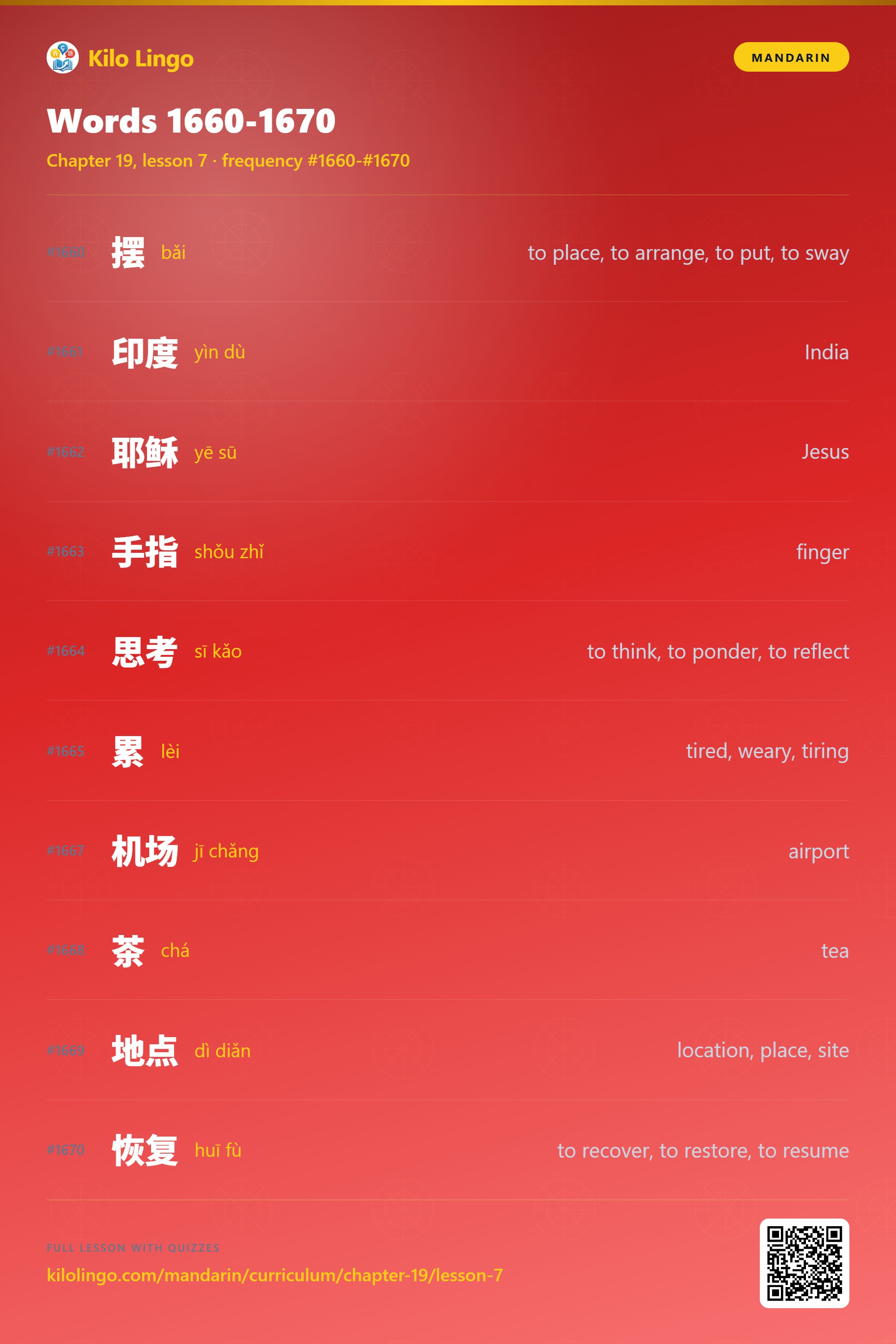
- Words 1660-1670Vocabulary
10 words · ranks 1660-1670
- Tone Shooter review sessionReview games
Shoot the words you just met into their tones by colour. The quickest way to fix a tone in place.
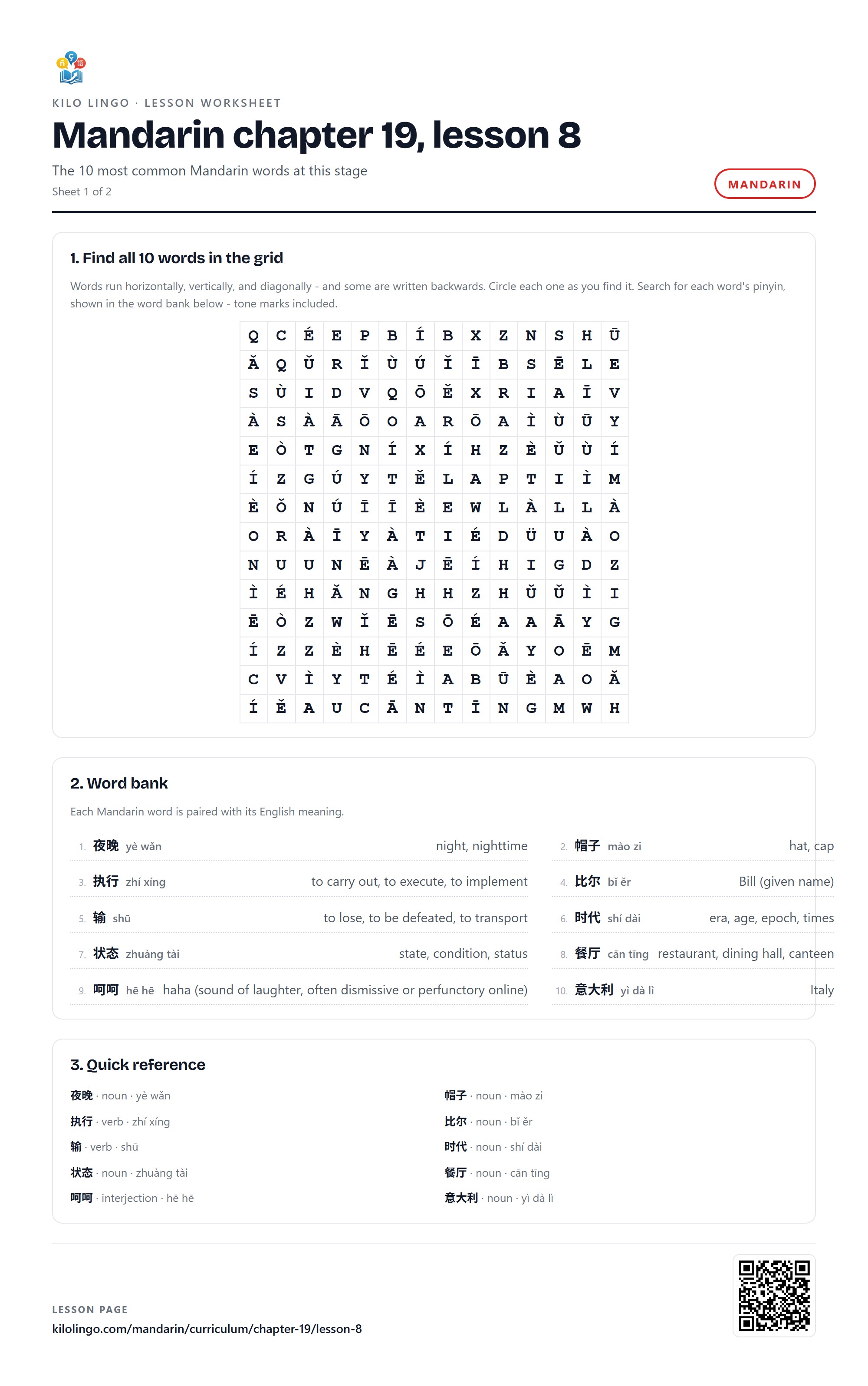
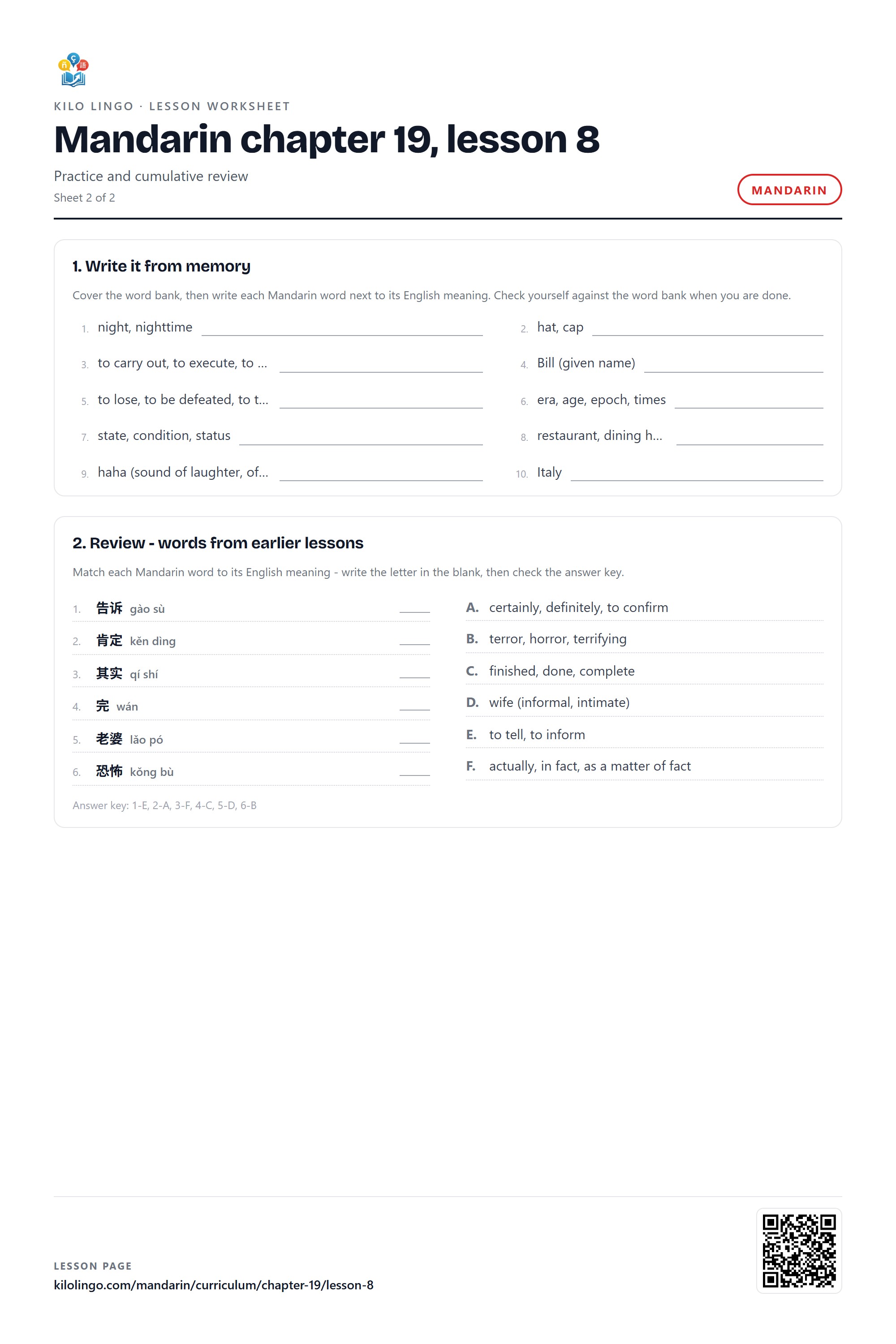
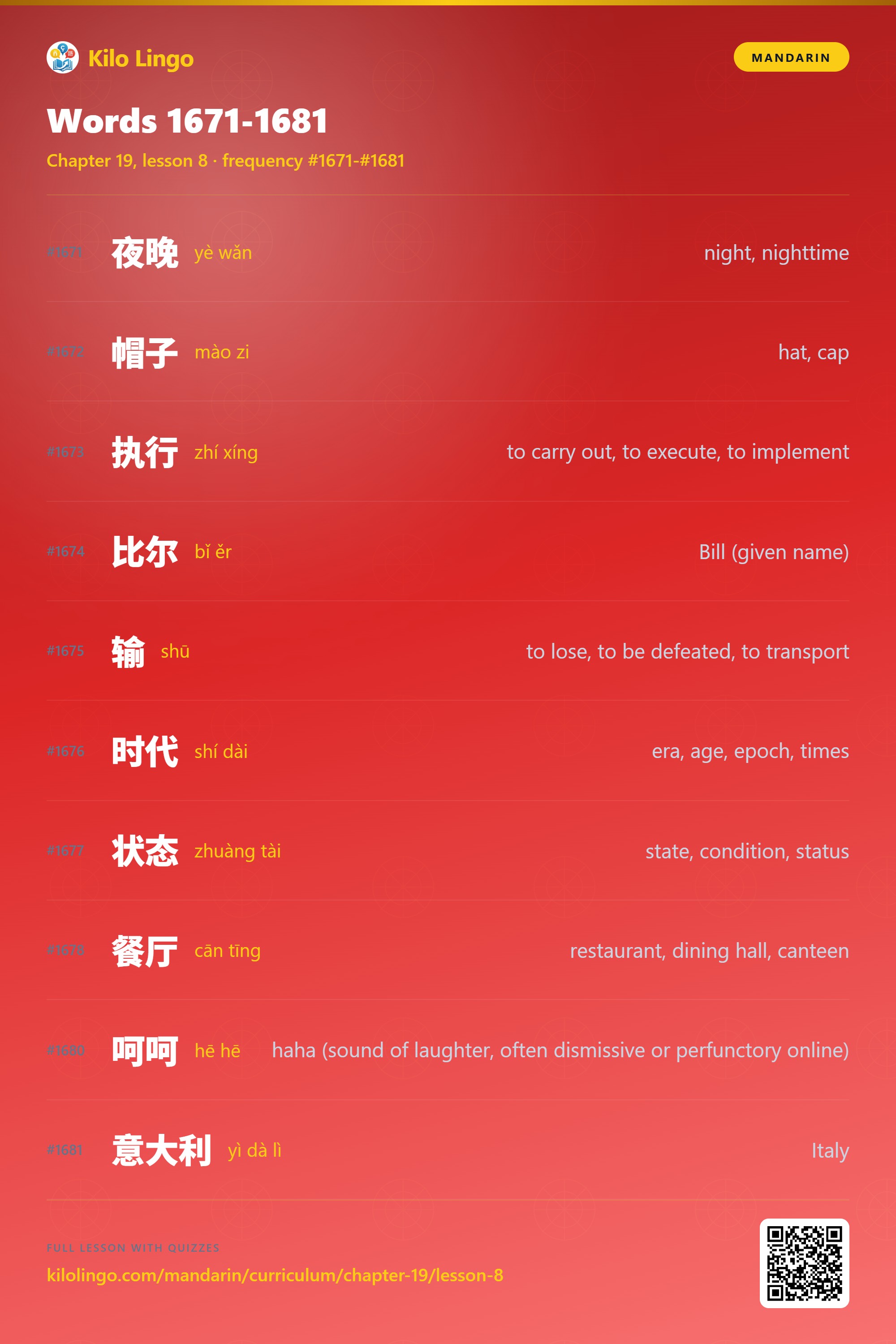
- Words 1671-1681Vocabulary
10 words · ranks 1671-1681
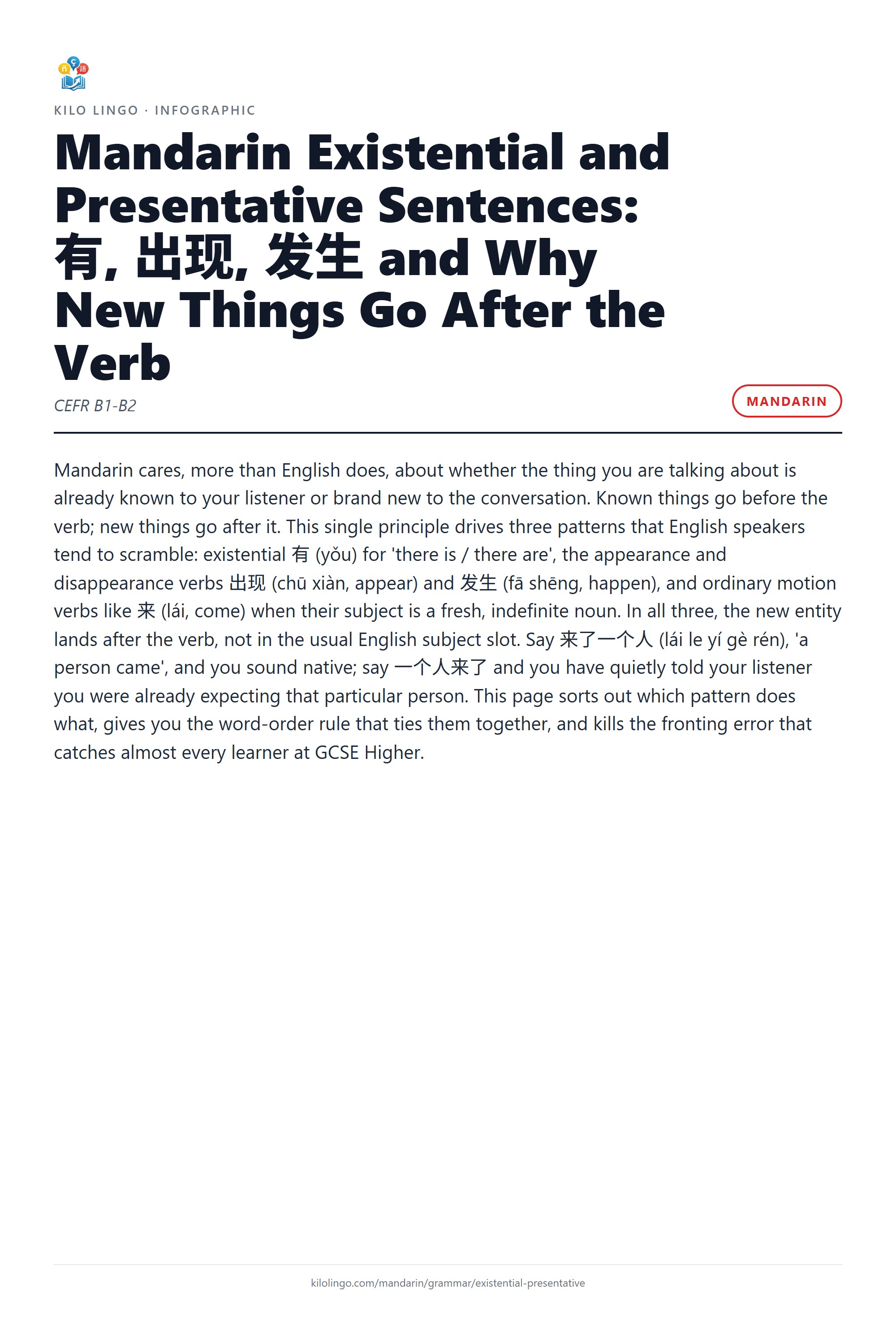
新东西 go AFTER the verb in Mandarin: 有, 出现, 发生 introduce something into the scene rather than comment on a known thing (桌上有一本书, 发生了一件事). Why indefinite new information lands at the end, and how this differs from a topic the listener already knows.
- Words 1682-1693Vocabulary
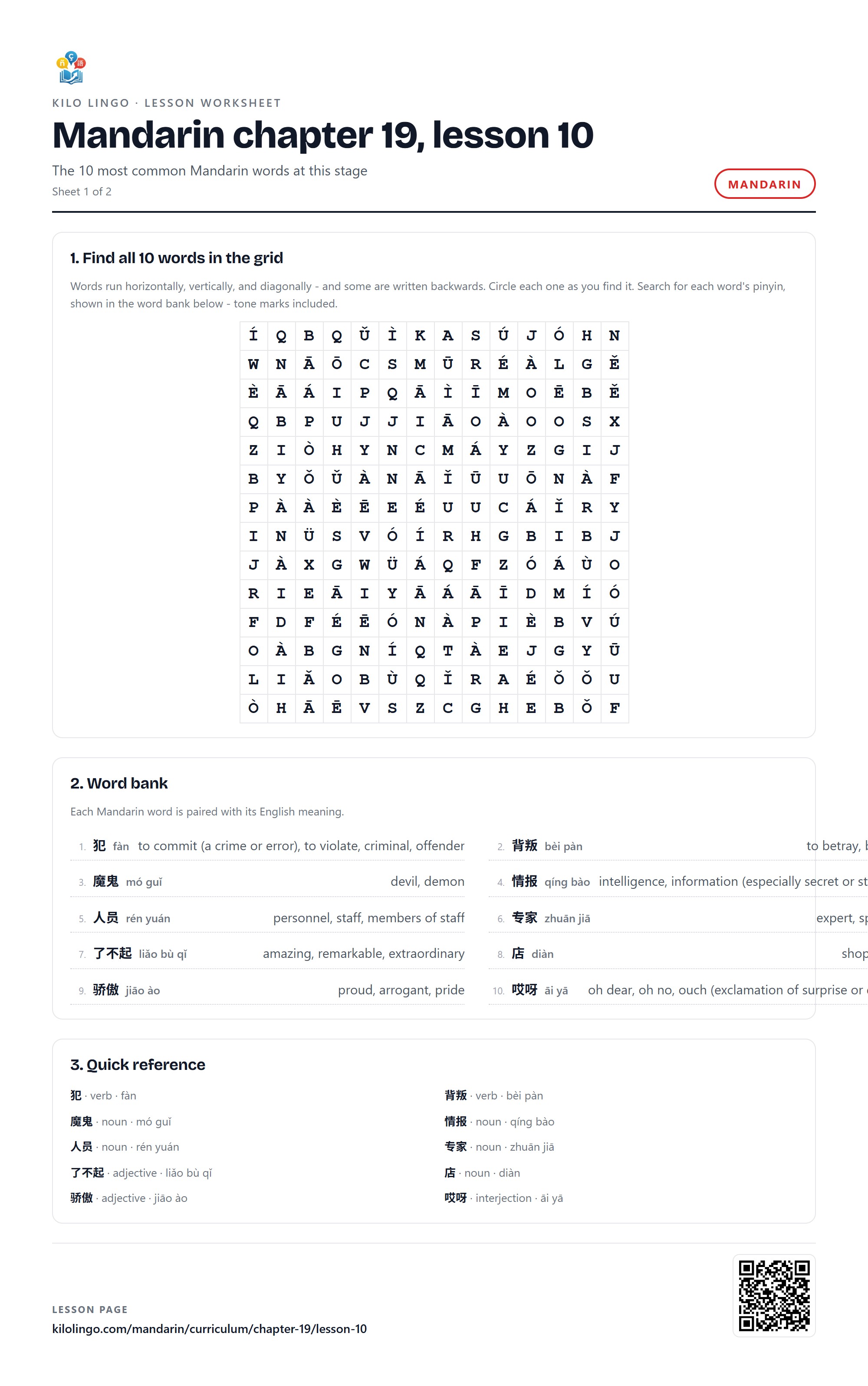
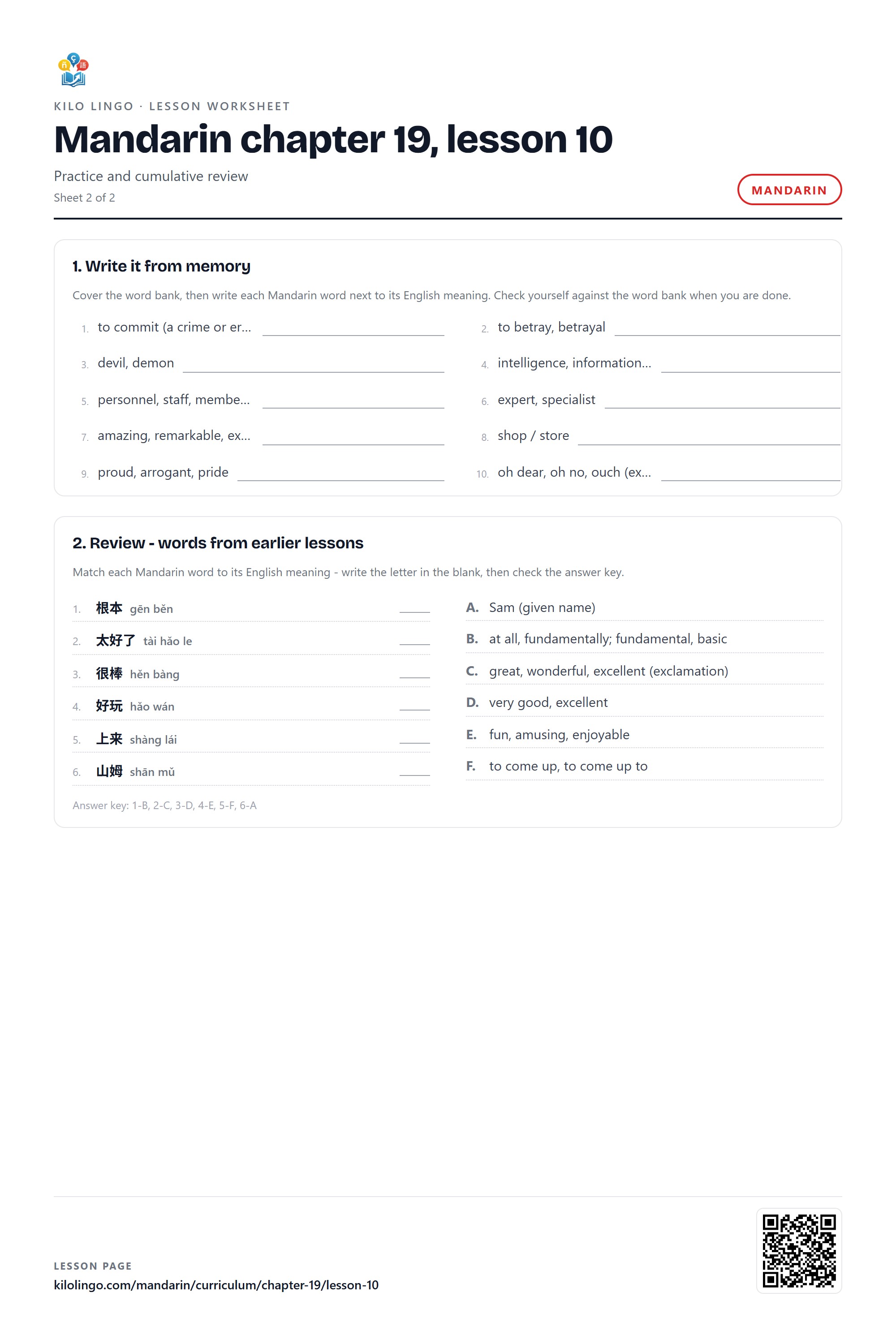
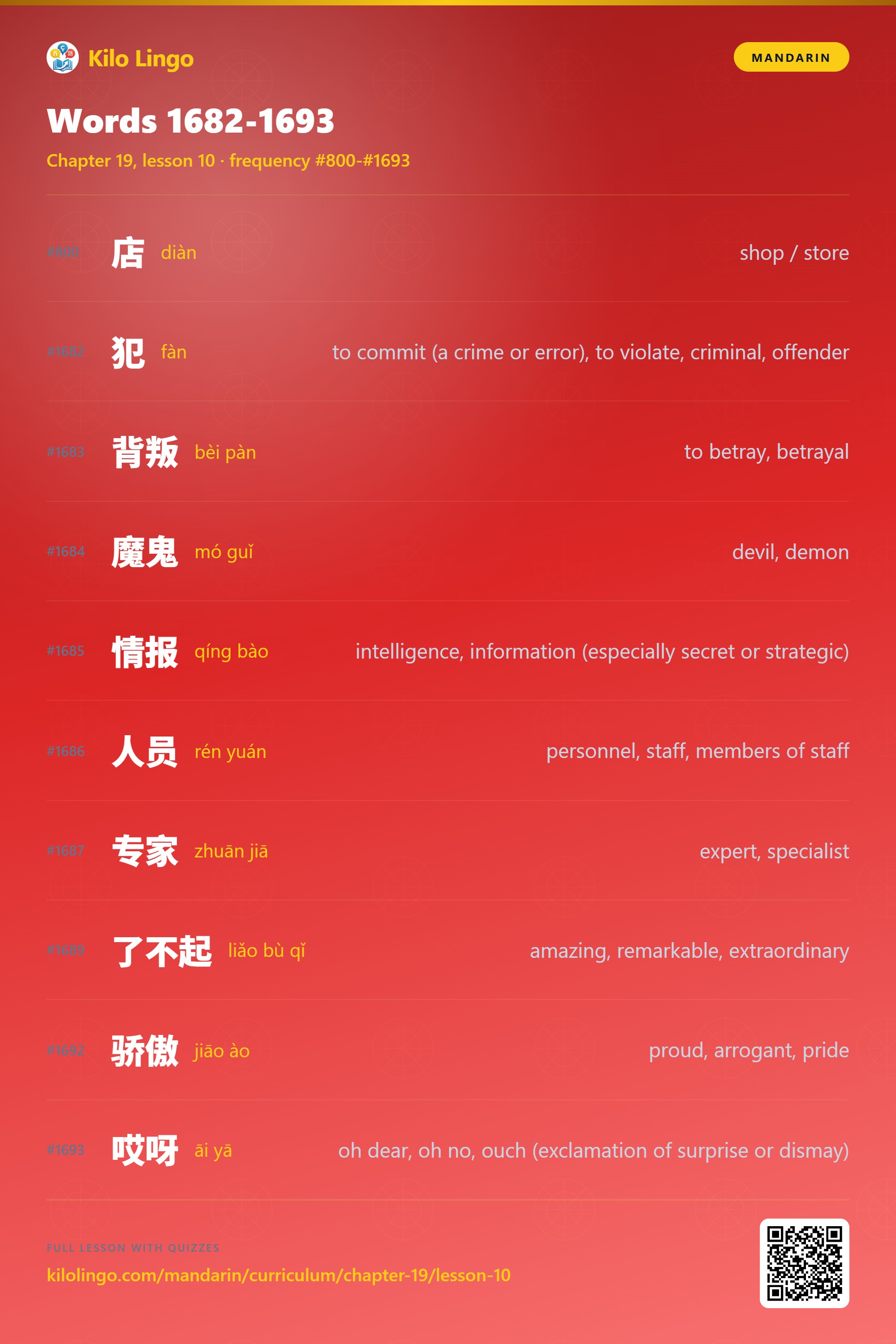
10 words · ranks 1682-1693
- Word Bubbles review sessionReview games
Pop the words you just met by matching each one to its meaning. A couple of rounds and the batch is yours.
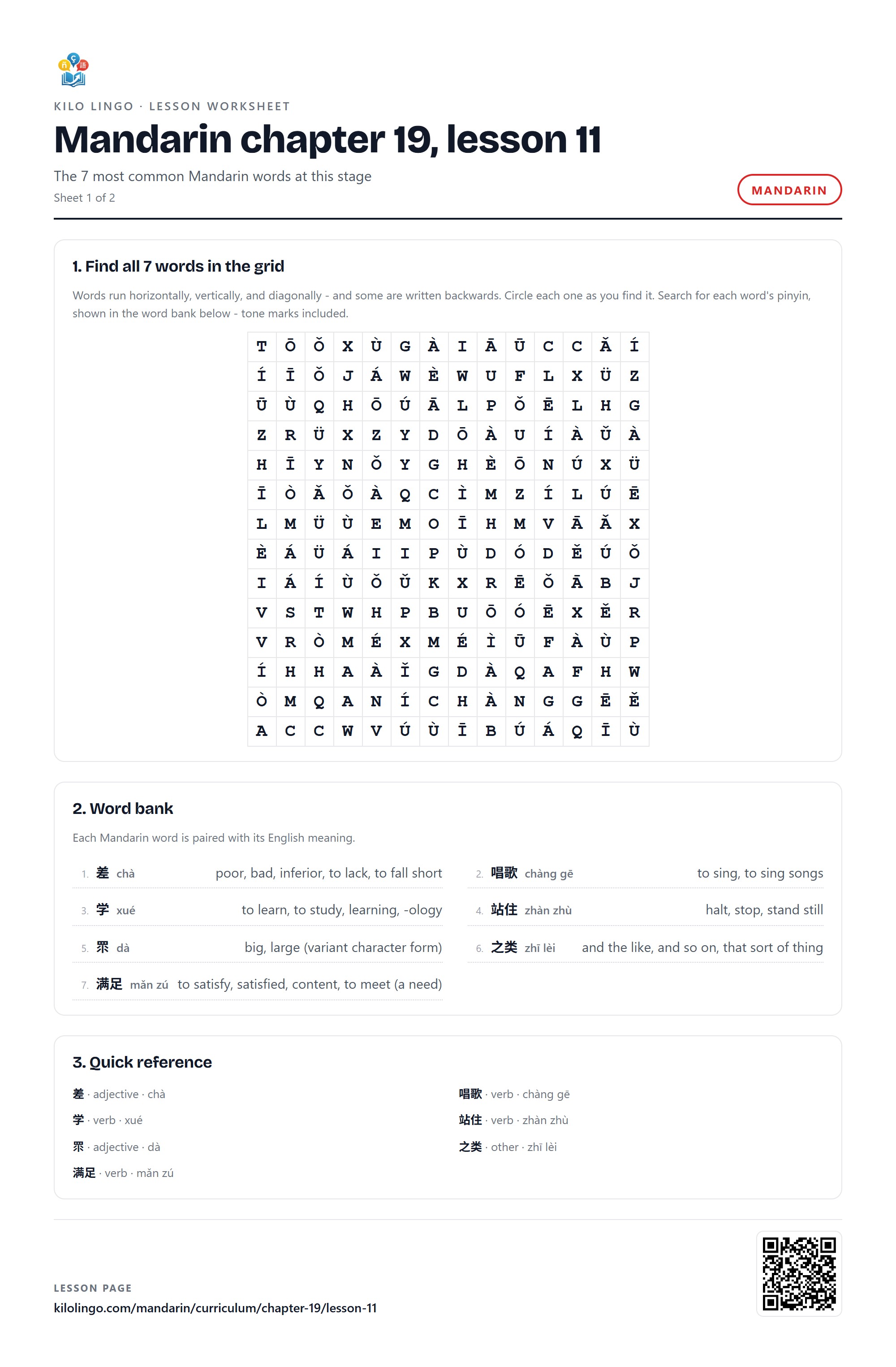
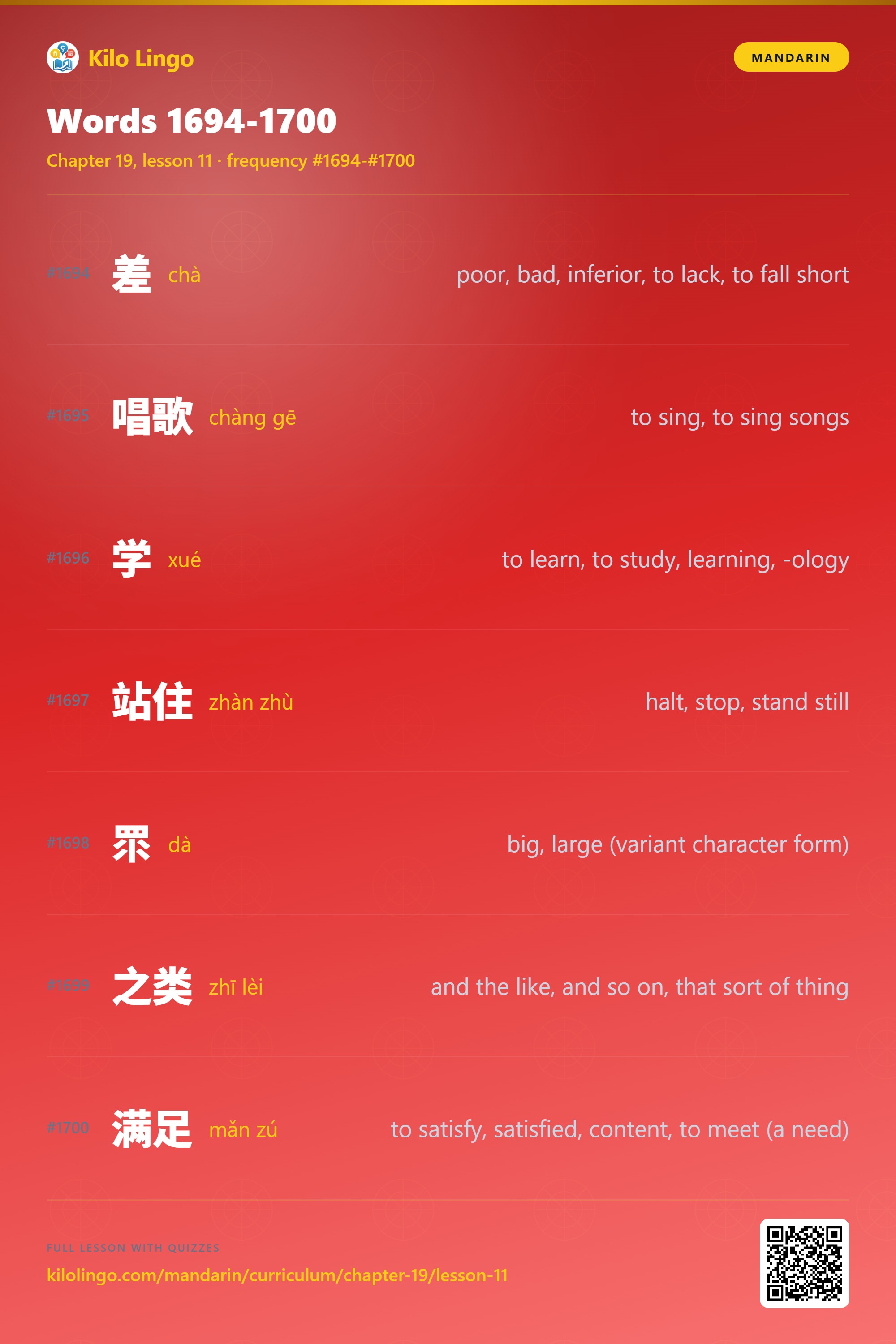
- Words 1694-1700Vocabulary
6 words · ranks 1694-1700
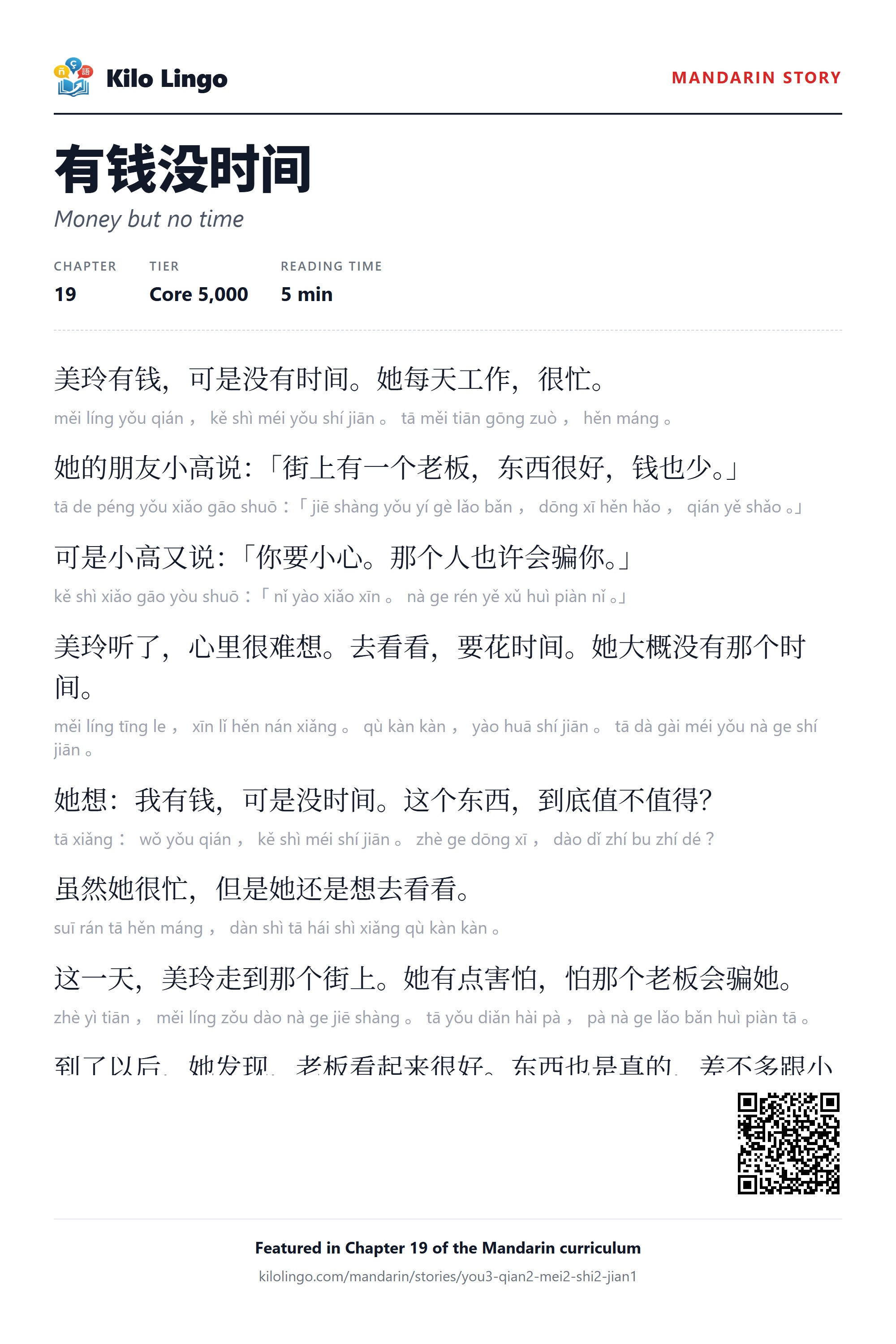
- Story milestone: top 1700 wordsGraded-reader story
You can read this story using only the words you've learned so far. Every content word sits at or above the rank-1700 ceiling.
- Saying and hearingThemed review
Talking and listening.
shuo1runs through half of these - to say, to speak, to chat, to explain are all built on it. - Arcade reviewReview games
Replay this chapter's words as games - a different kind of repetition, and it counts.
Word printables
Per-word sheets86 words · a worksheet, infographic and listicle each









Chapter 20 · Compound directional complements
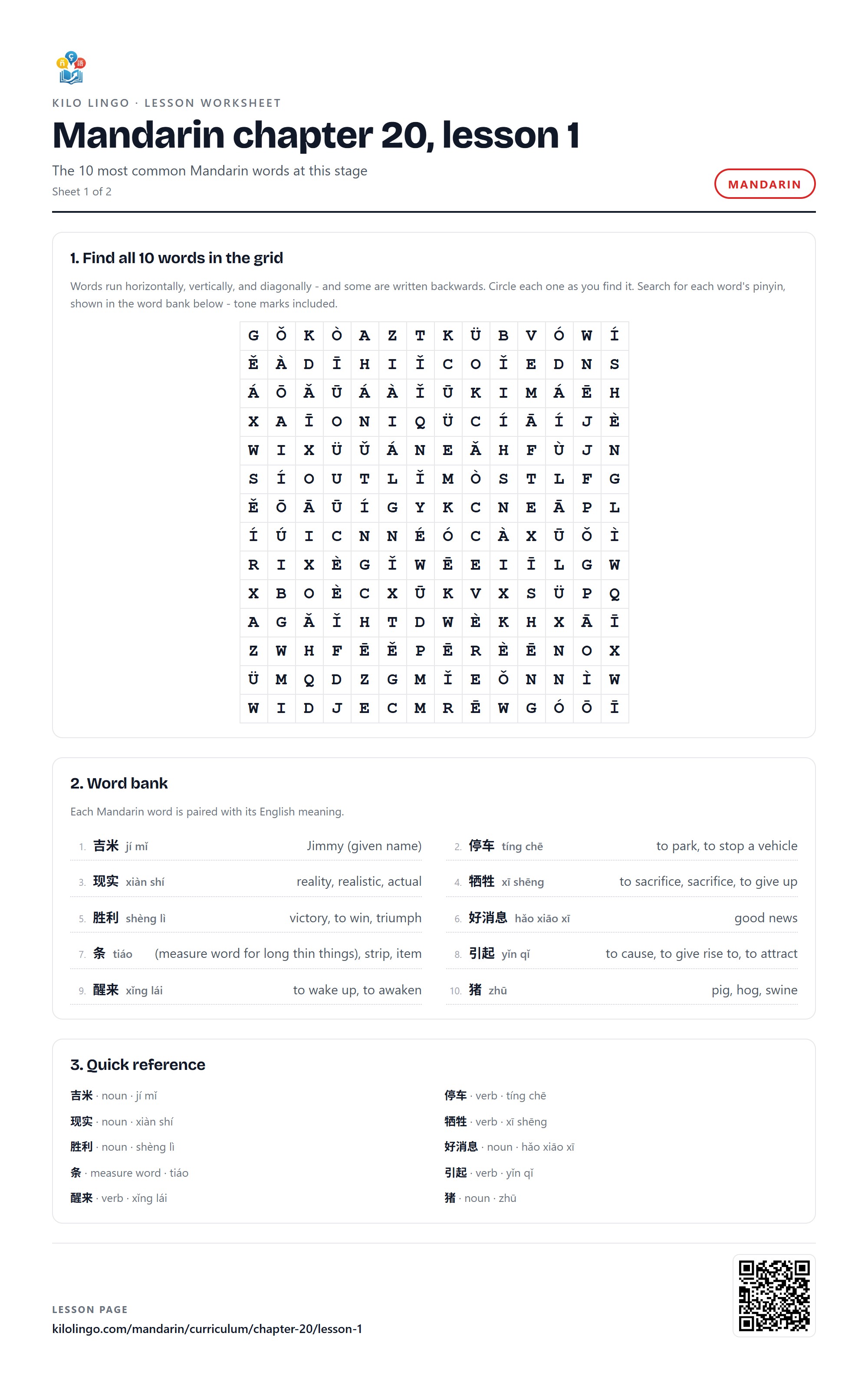
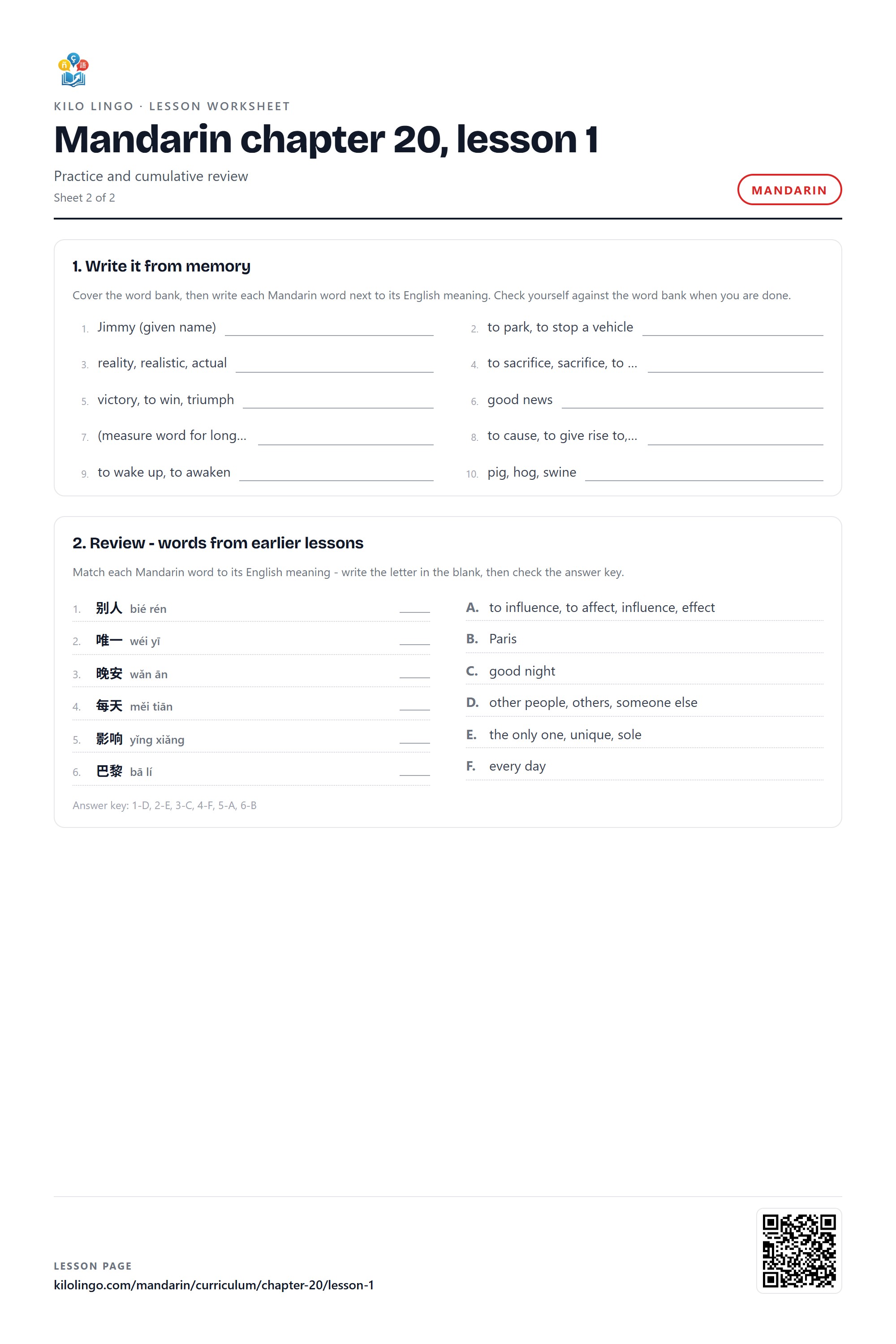
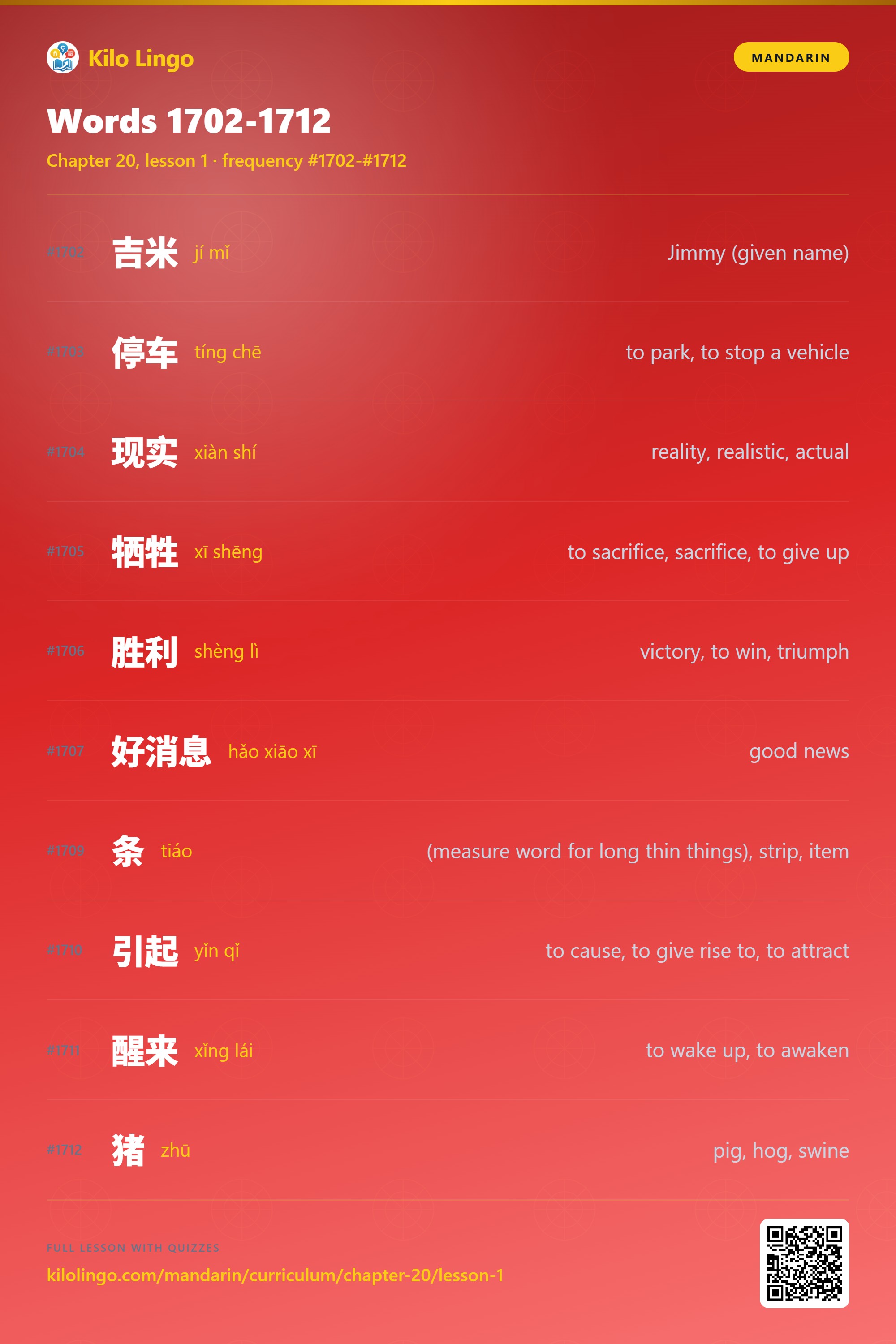
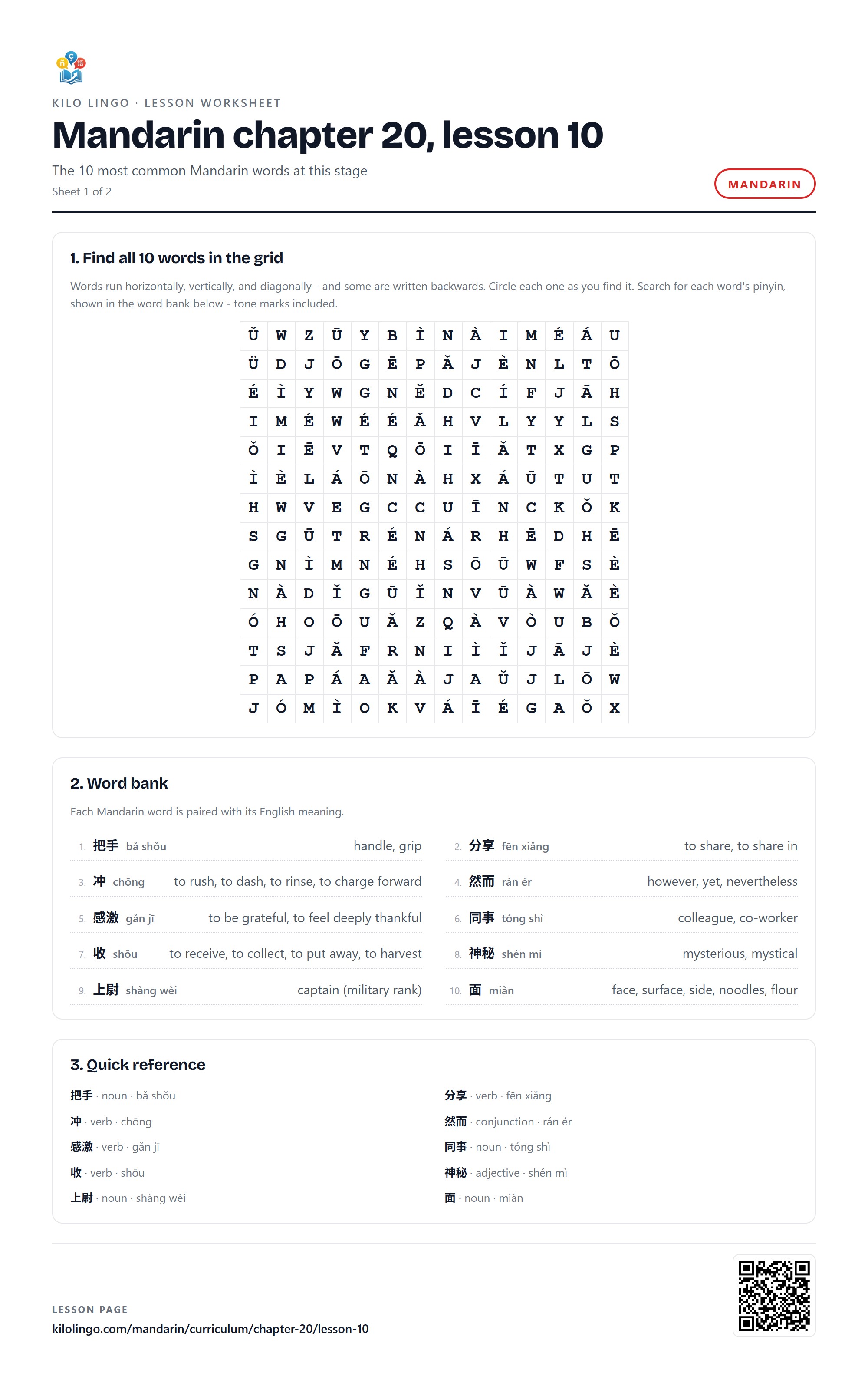
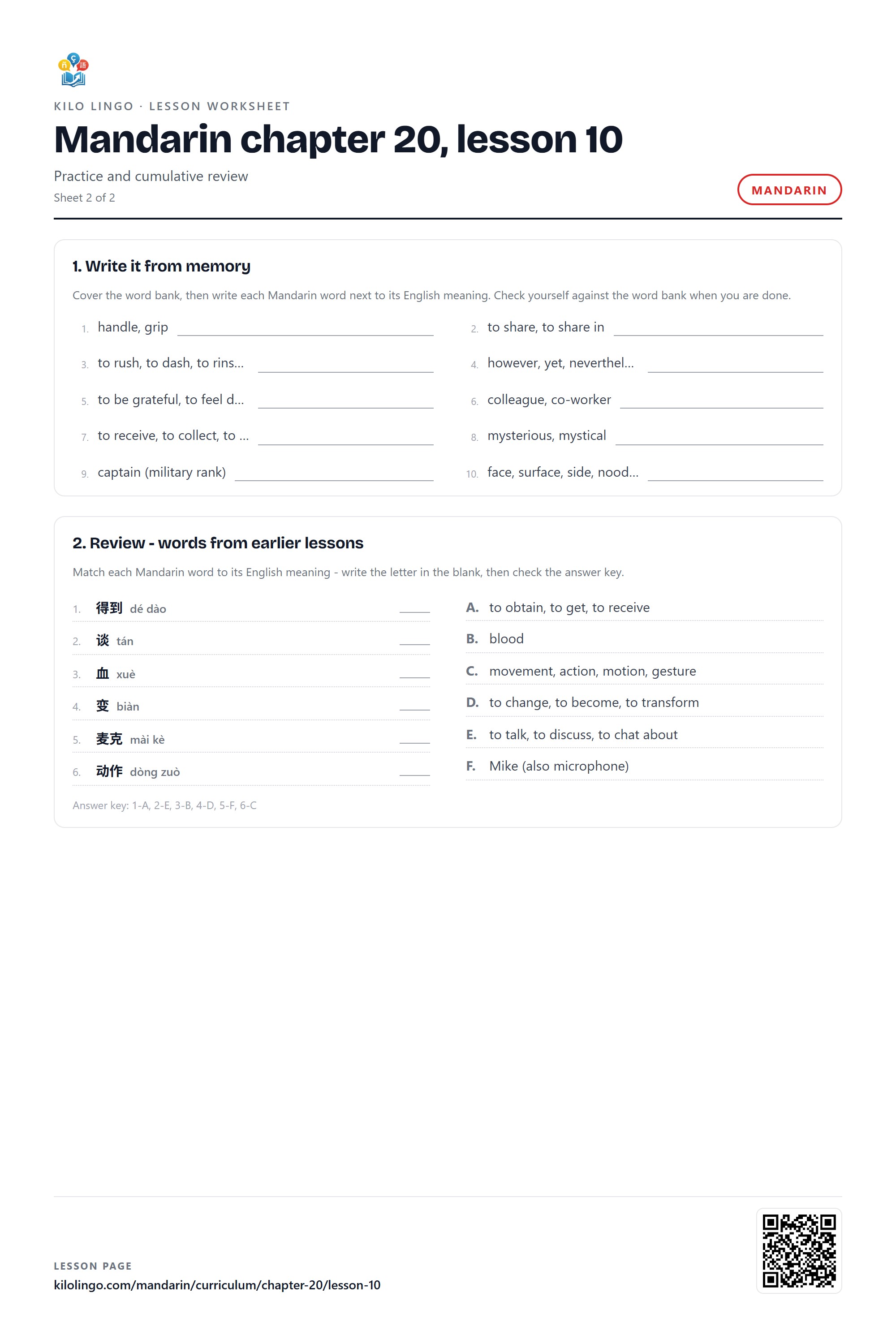
Chapter page →- Words 1702-1712Vocabulary
10 words · ranks 1702-1712
- Tone Shooter review sessionReview games
Shoot the words you just met into their tones by colour. The quickest way to fix a tone in place.
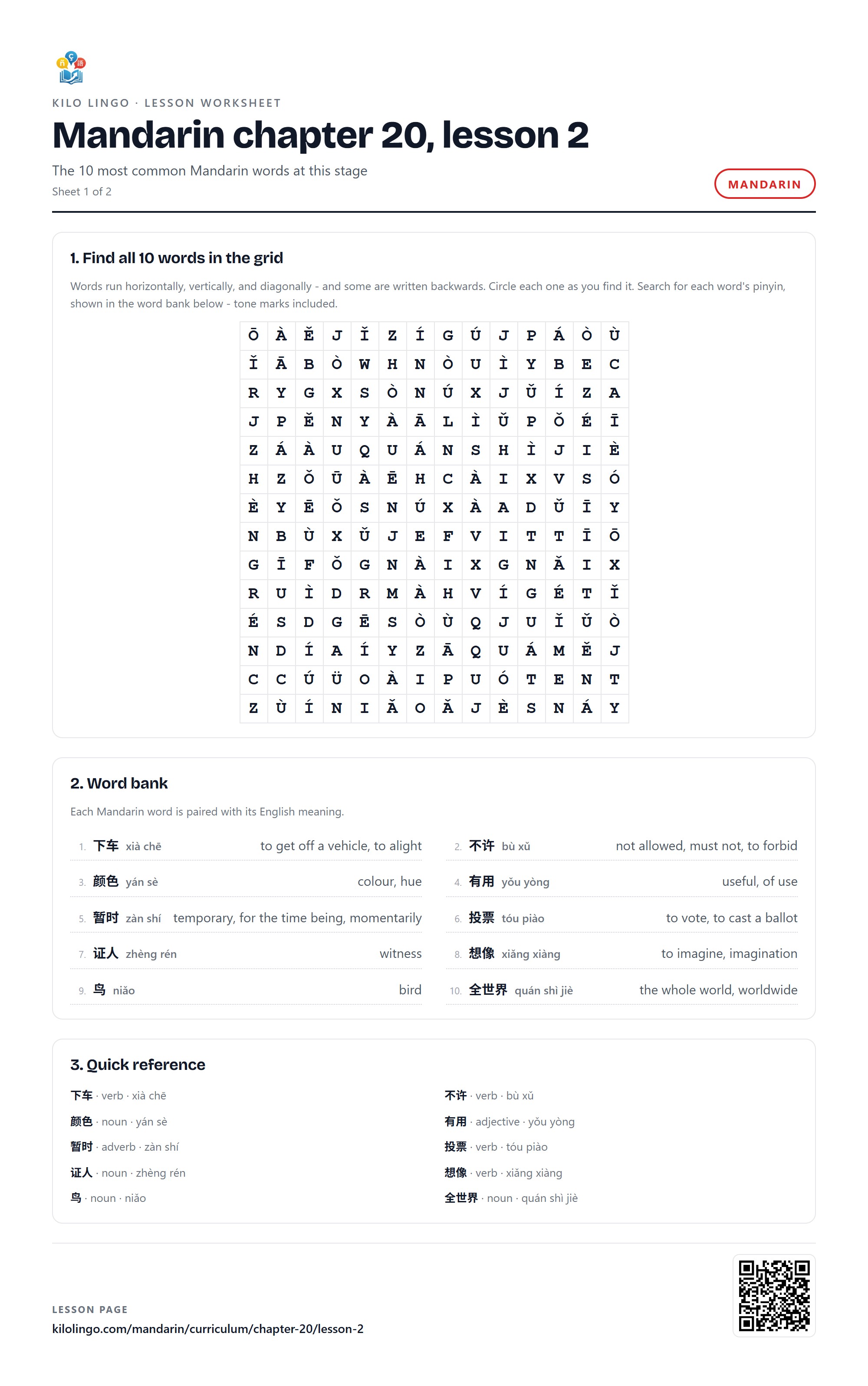
- Words 1714-1723Vocabulary
10 words · ranks 1714-1723
- Crossword review sessionReview games
Cross the words you just met, clued in English. Slower than a drill, and it sticks harder.
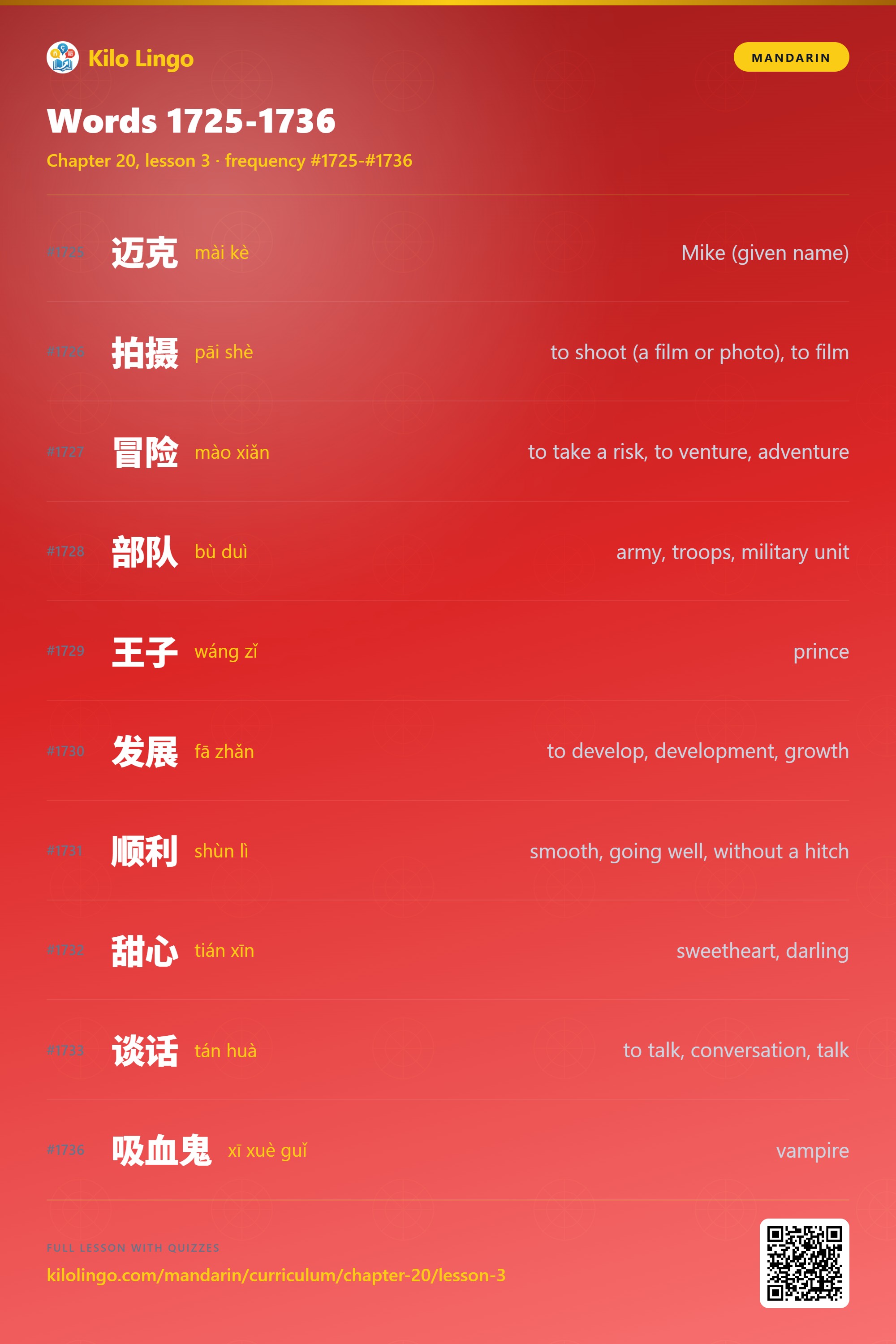
- Words 1725-1736Vocabulary
10 words · ranks 1725-1736
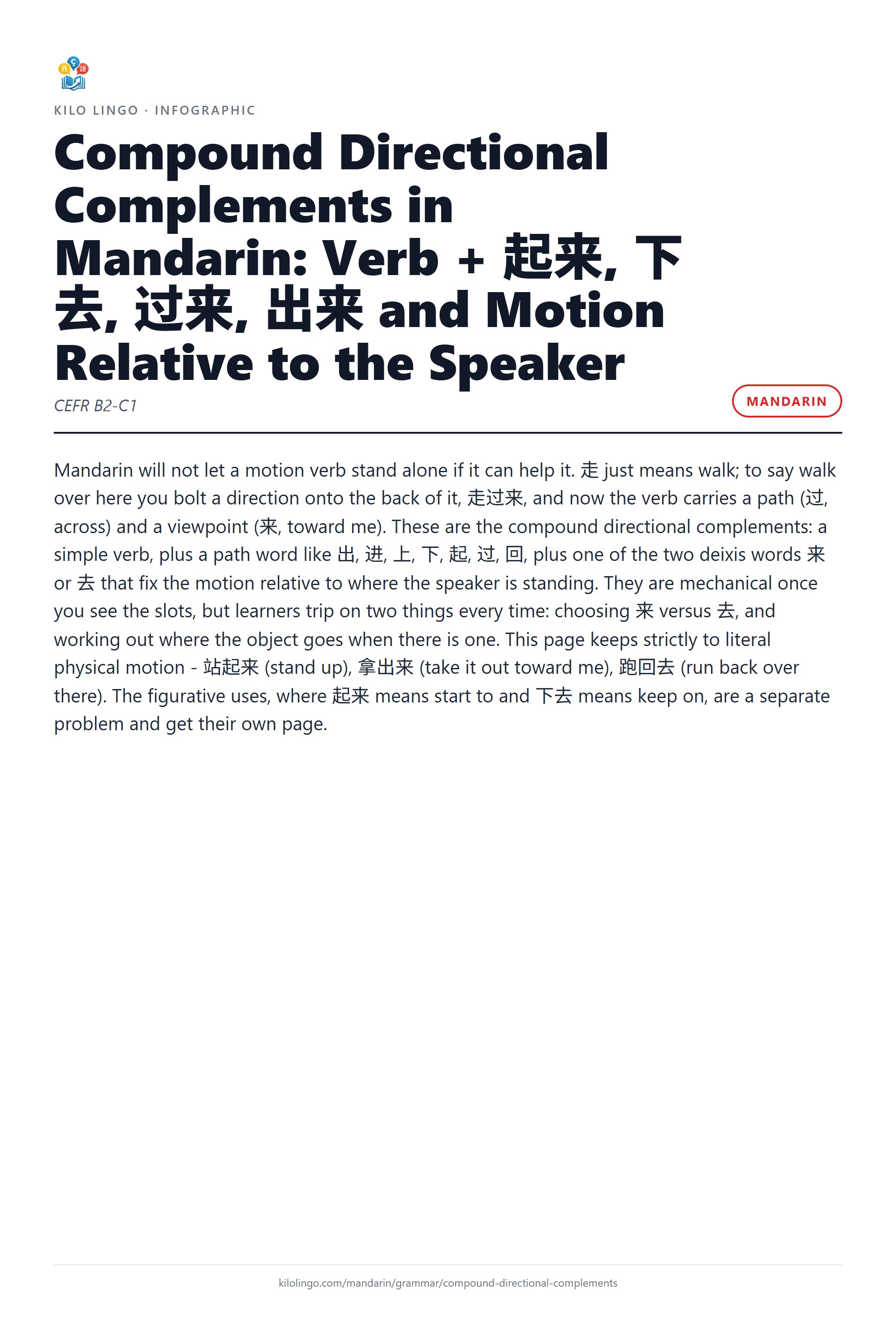
Verb + a two-part direction showing motion relative to the speaker: 走出来, 跑下去, 拿起来, 带过来. The 来/去 element fixes whether the motion heads toward or away from the speaker, and the object slots inside the complement (拿出一本书来).
- Words 1738-1750Vocabulary
10 words · ranks 1738-1750
- 刚 or 刚才?Mistake clinic
Both mean
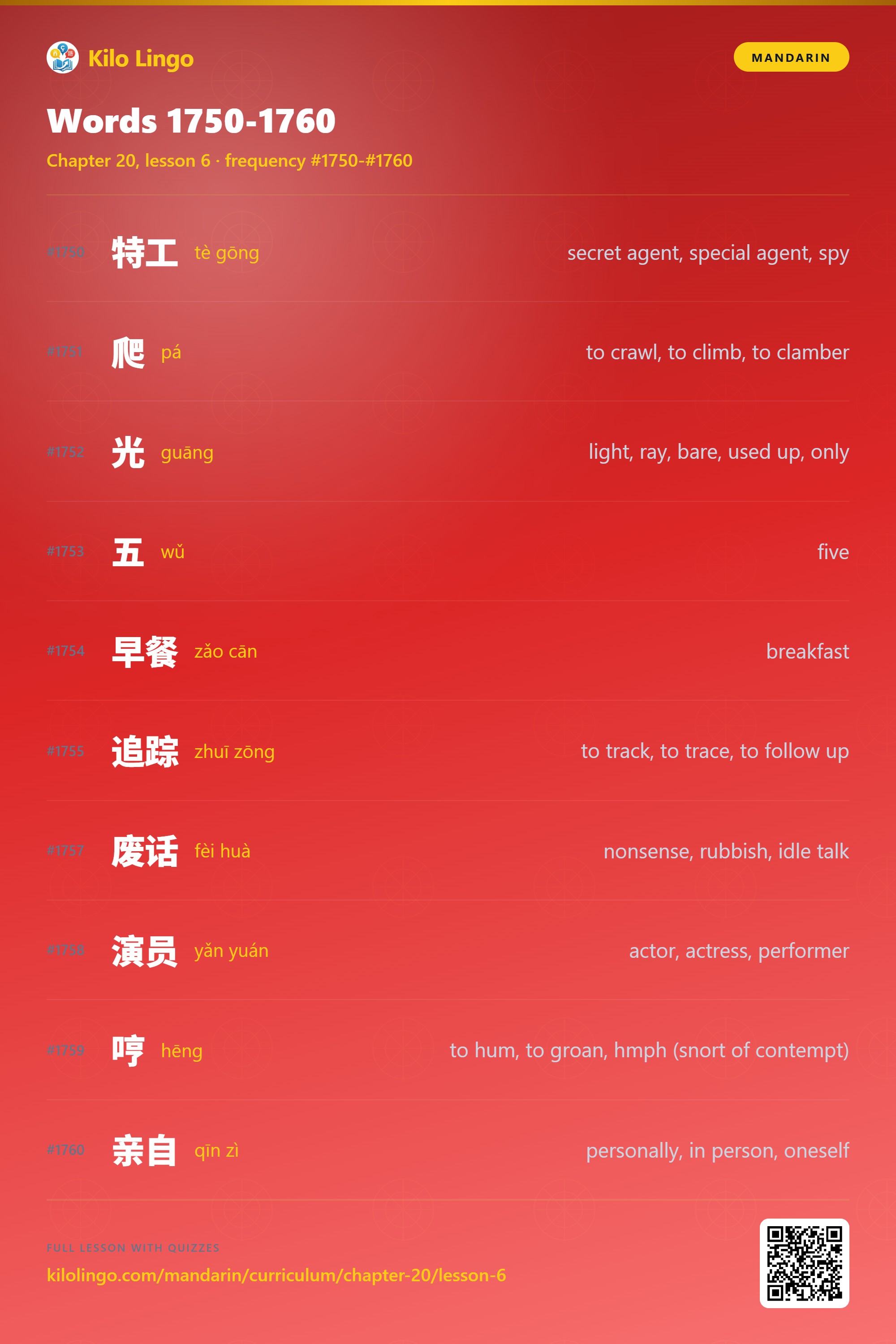
just now. They go in different places. - Words 1751-1762Vocabulary
10 words · ranks 1751-1762
- Word Bubbles review sessionReview games
Pop the words you just met by matching each one to its meaning. A couple of rounds and the batch is yours.
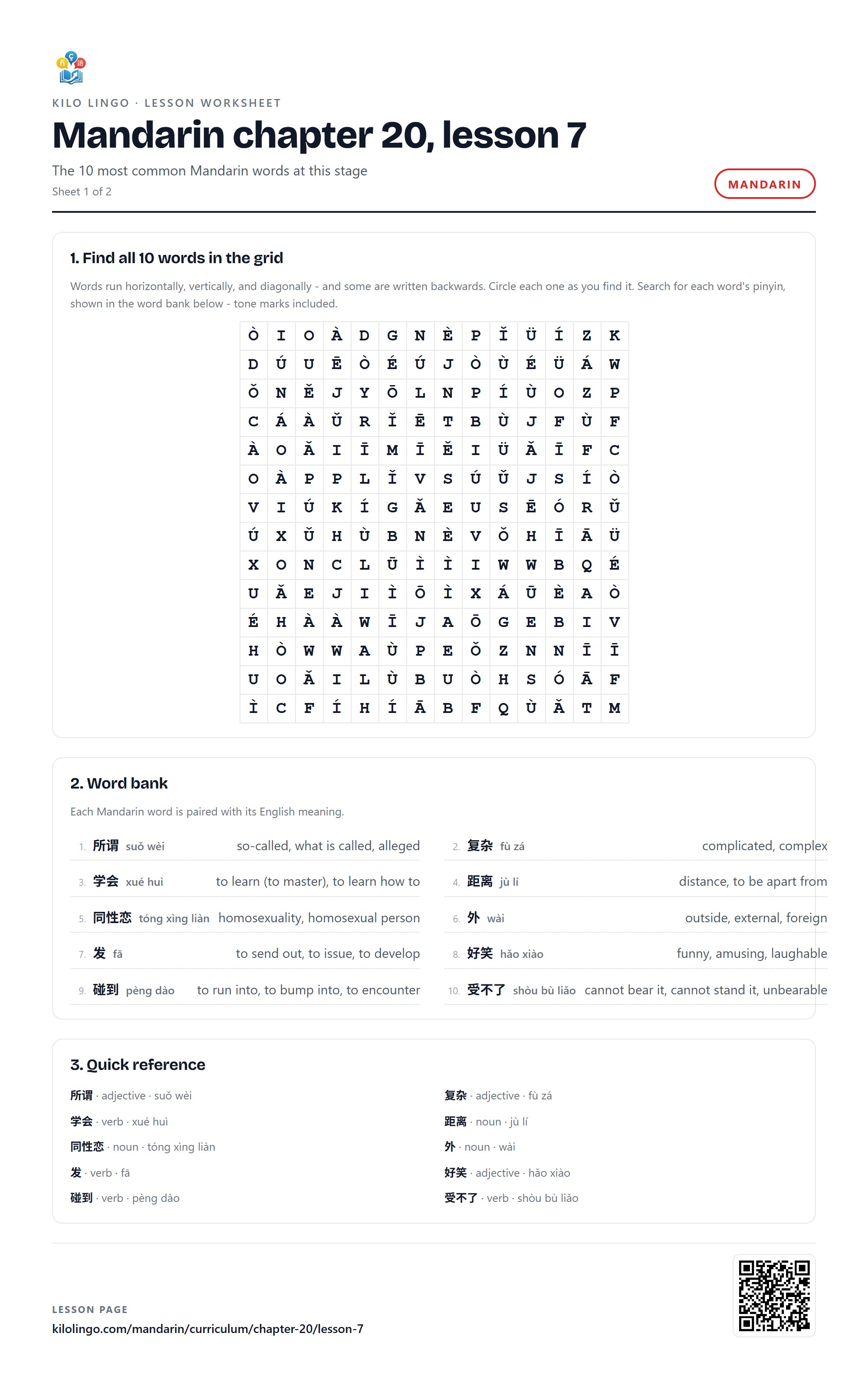
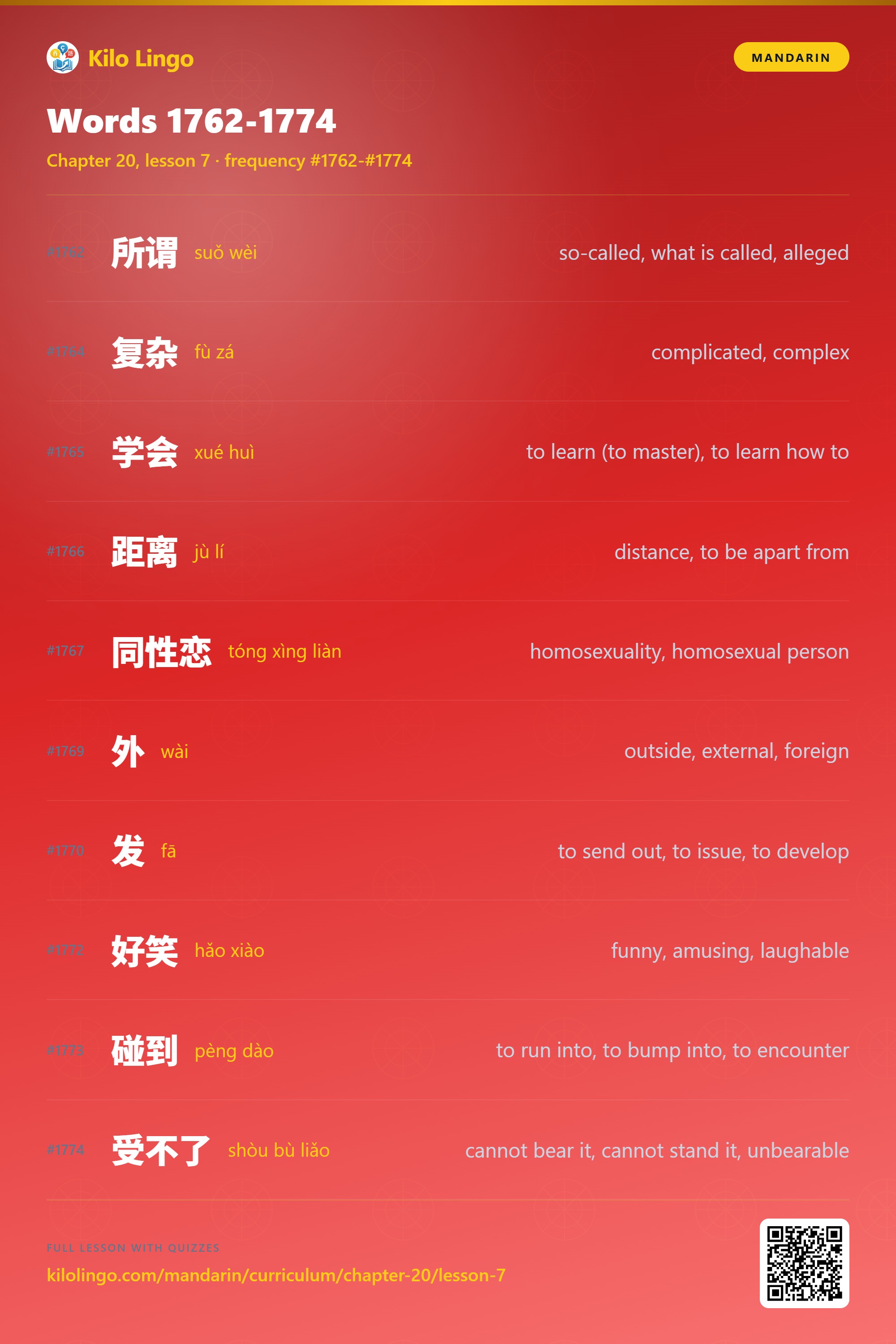
- Words 1764-1777Vocabulary
10 words · ranks 1764-1777
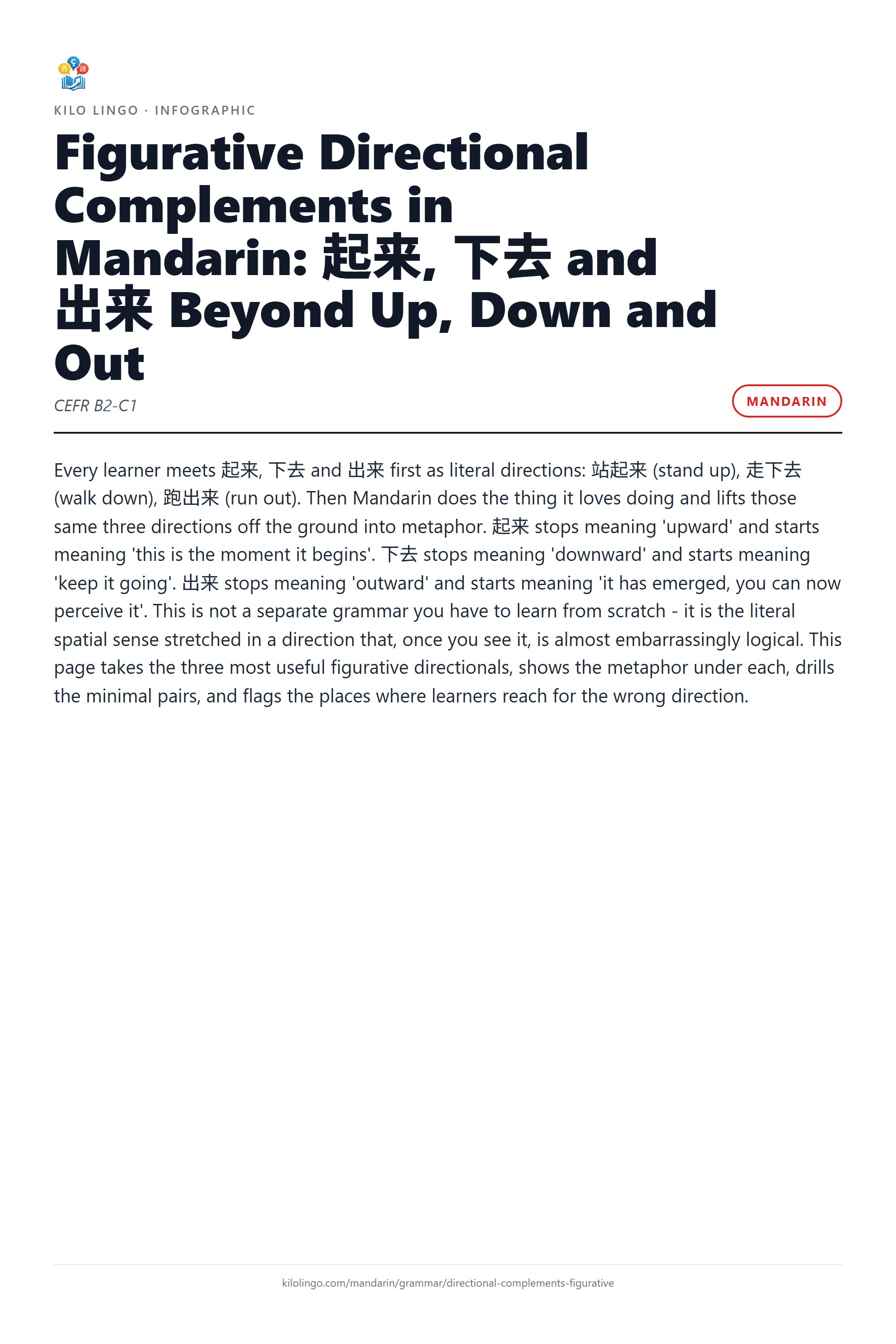
起来, 下去 and 出来 beyond literal up, down and out: 想起来 (call to mind), 说下去 (carry on speaking), 看出来 (figure out). The same direction words mark the start, continuation or emergence of a state once the motion sense is left behind.
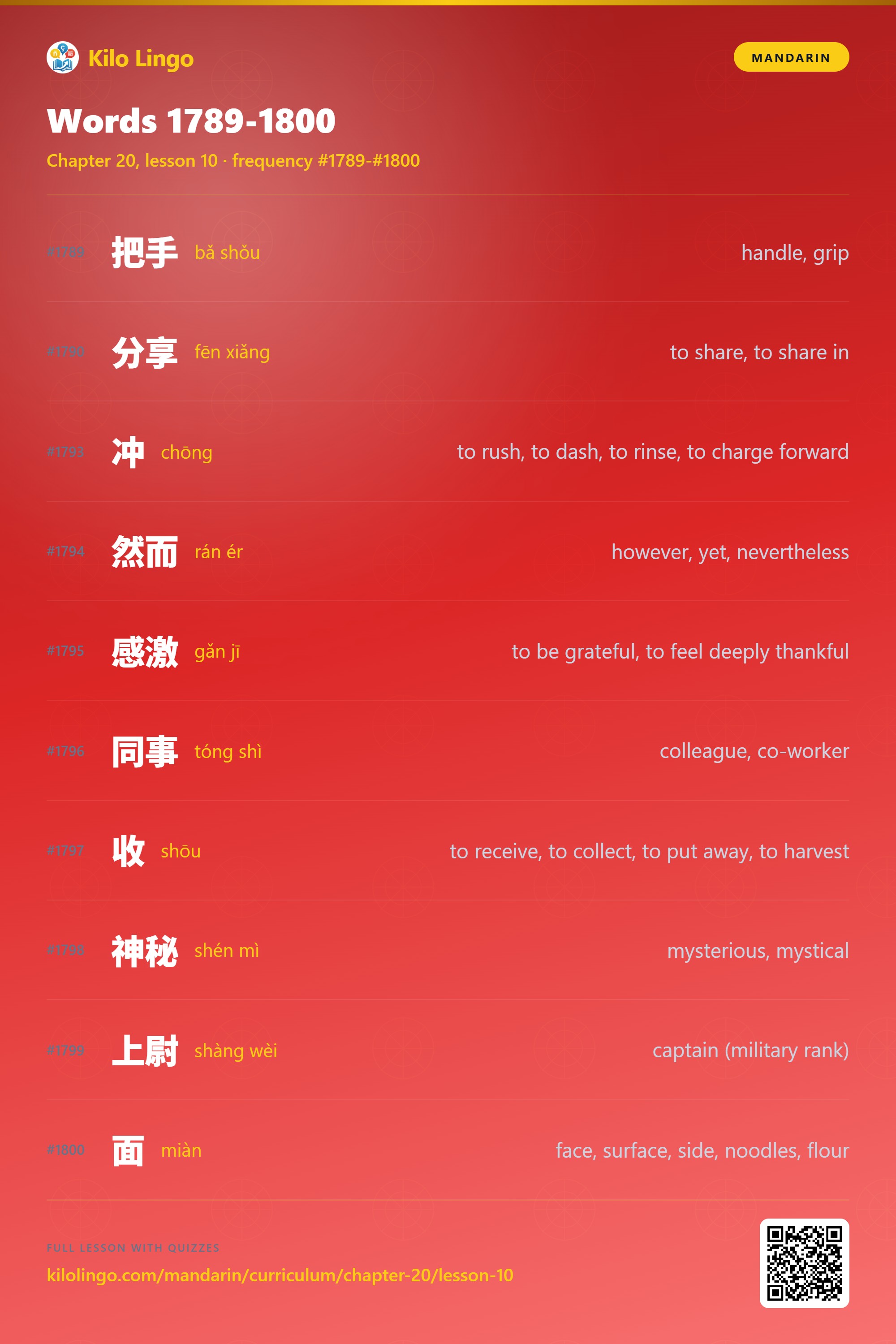
- Words 1779-1789Vocabulary
10 words · ranks 1779-1789
- Tone Shooter review sessionReview games
Shoot the words you just met into their tones by colour. The quickest way to fix a tone in place.
- Words 1790-1768Vocabulary
10 words · ranks 1790-1768
- Story milestone: top 1800 wordsGraded-reader story
You can read this story using only the words you've learned so far. Every content word sits at or above the rank-1800 ceiling.
- Measure words: the menagerieMeasure words
只 for most animals, 头 for the big ones in a field, 条 for the ones that bend. If you can tell a pig from a bird, you can pick its measure word.
- Getting aroundThemed review
Ways to travel.
che1is the vehicle at the heart of most of them - train, car and bus are all built on it. - Arcade reviewReview games
Replay this chapter's words as games - a different kind of repetition, and it counts.
Word printables
Per-word sheets80 words · a worksheet, infographic and listicle each

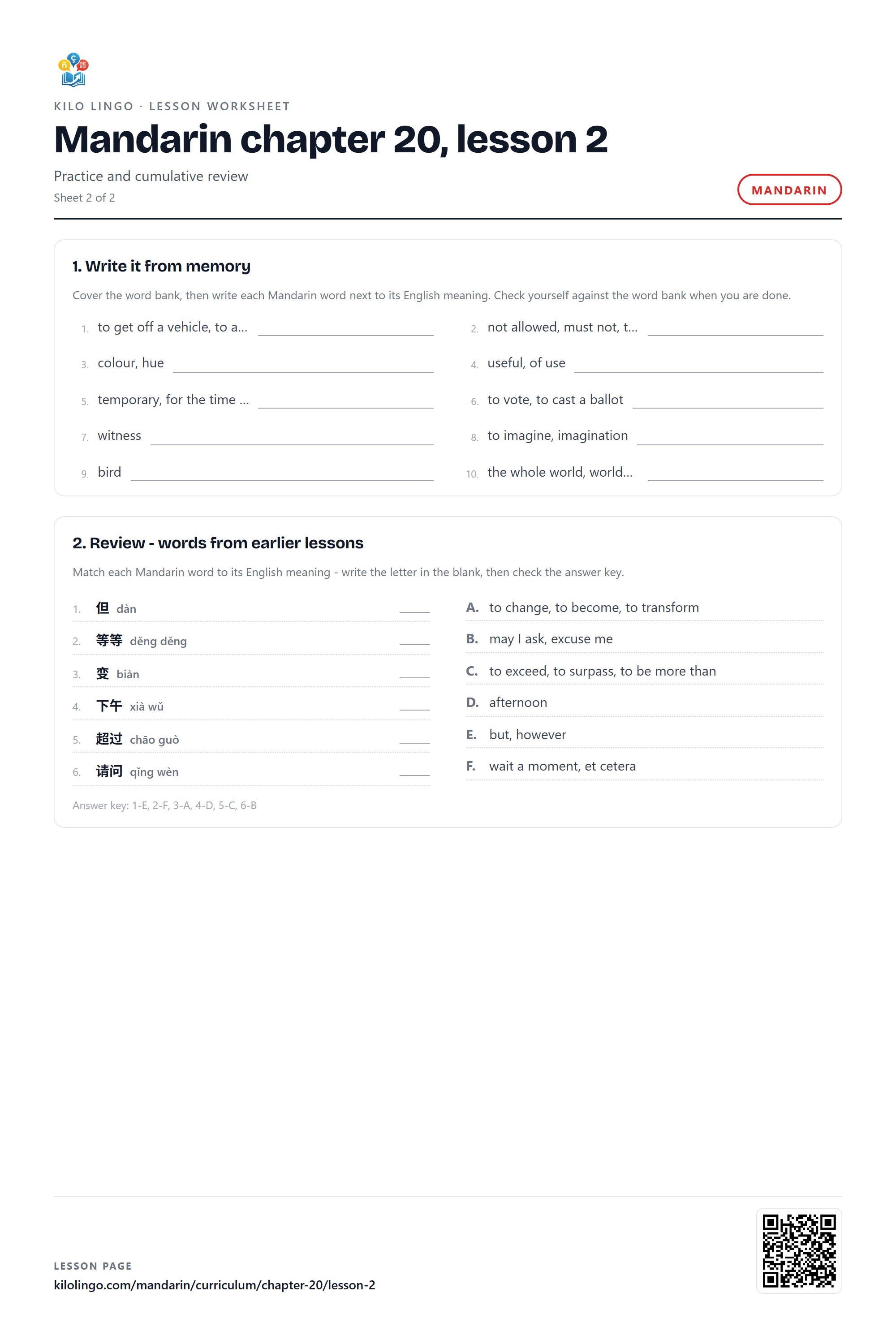

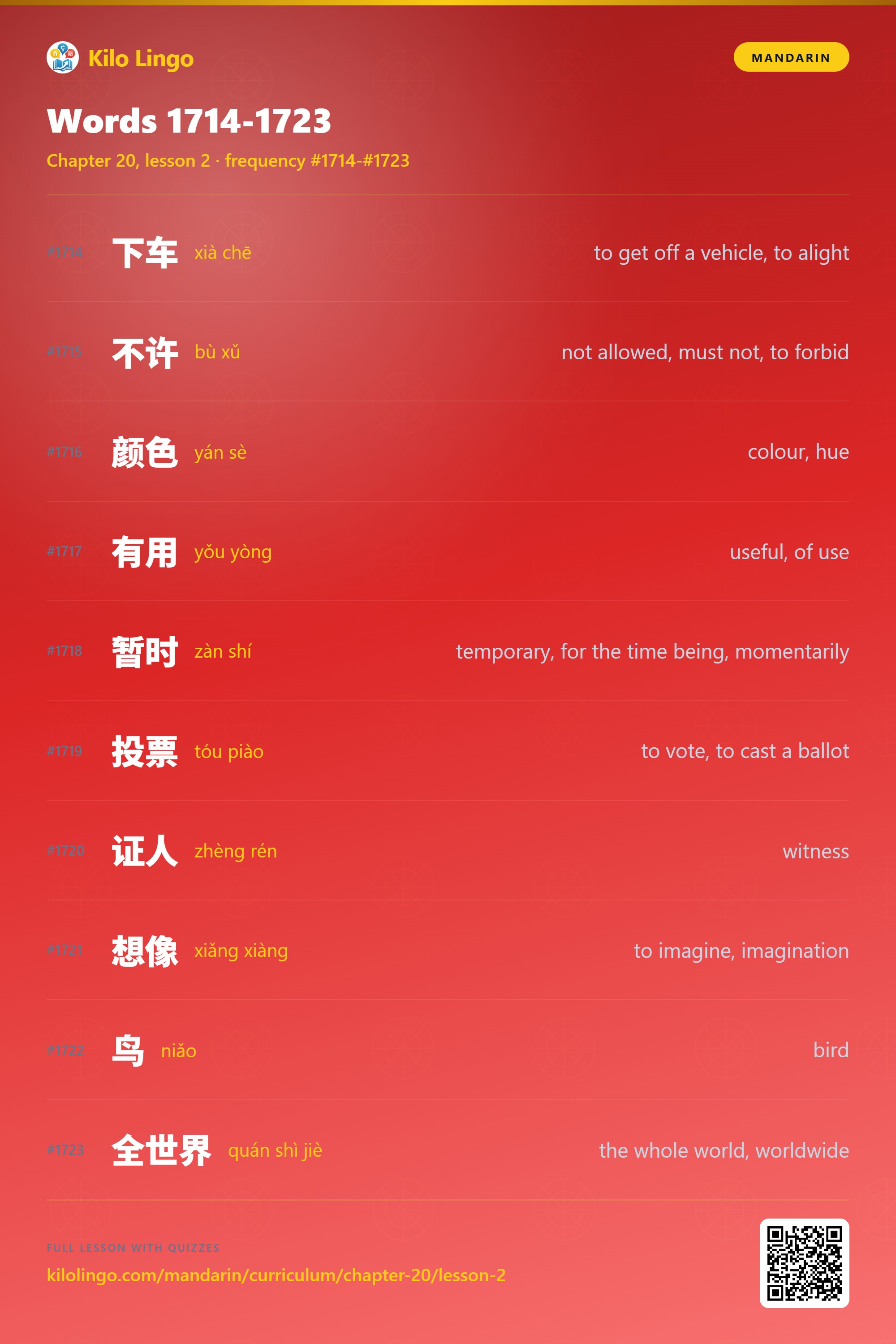
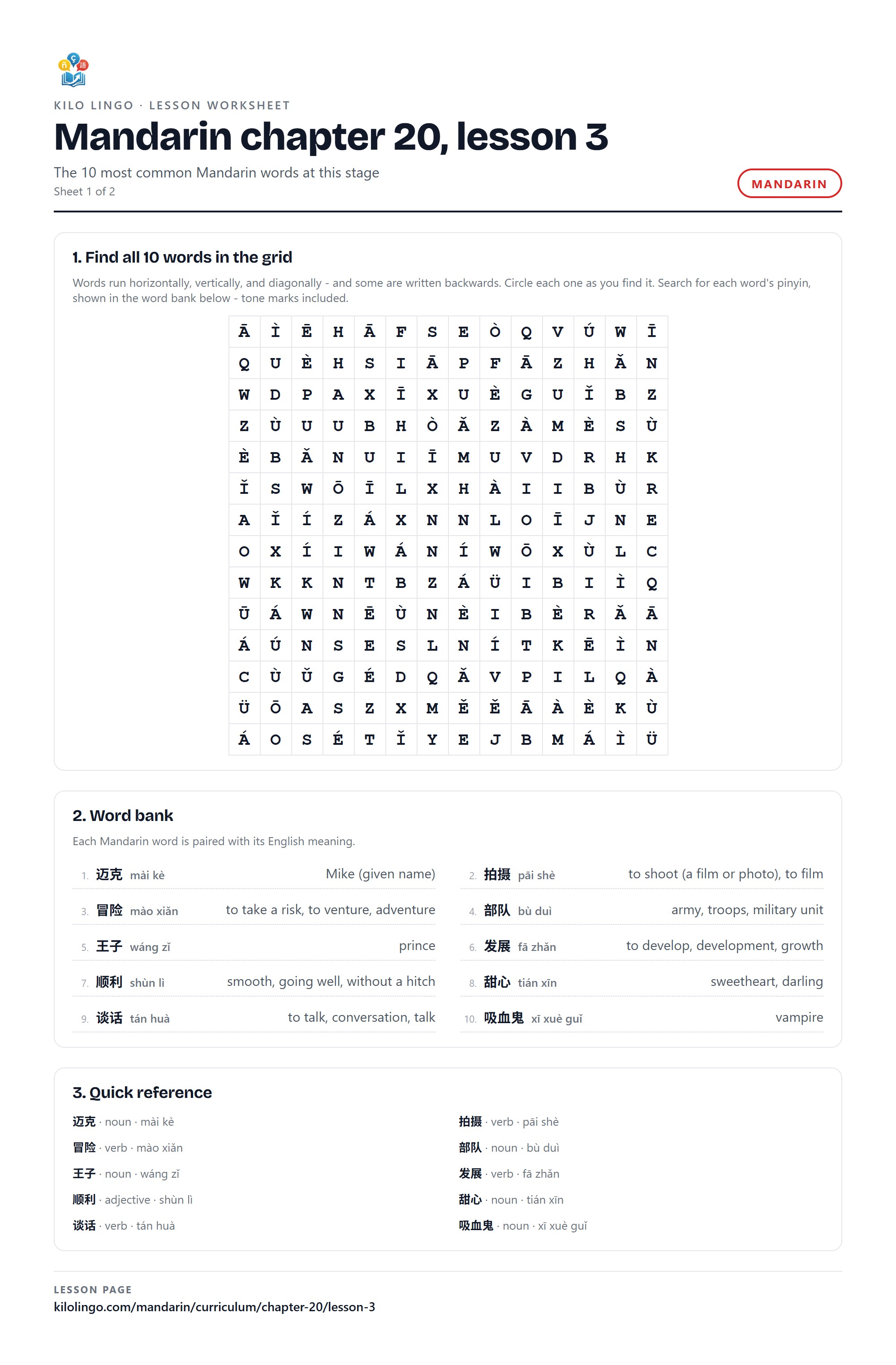
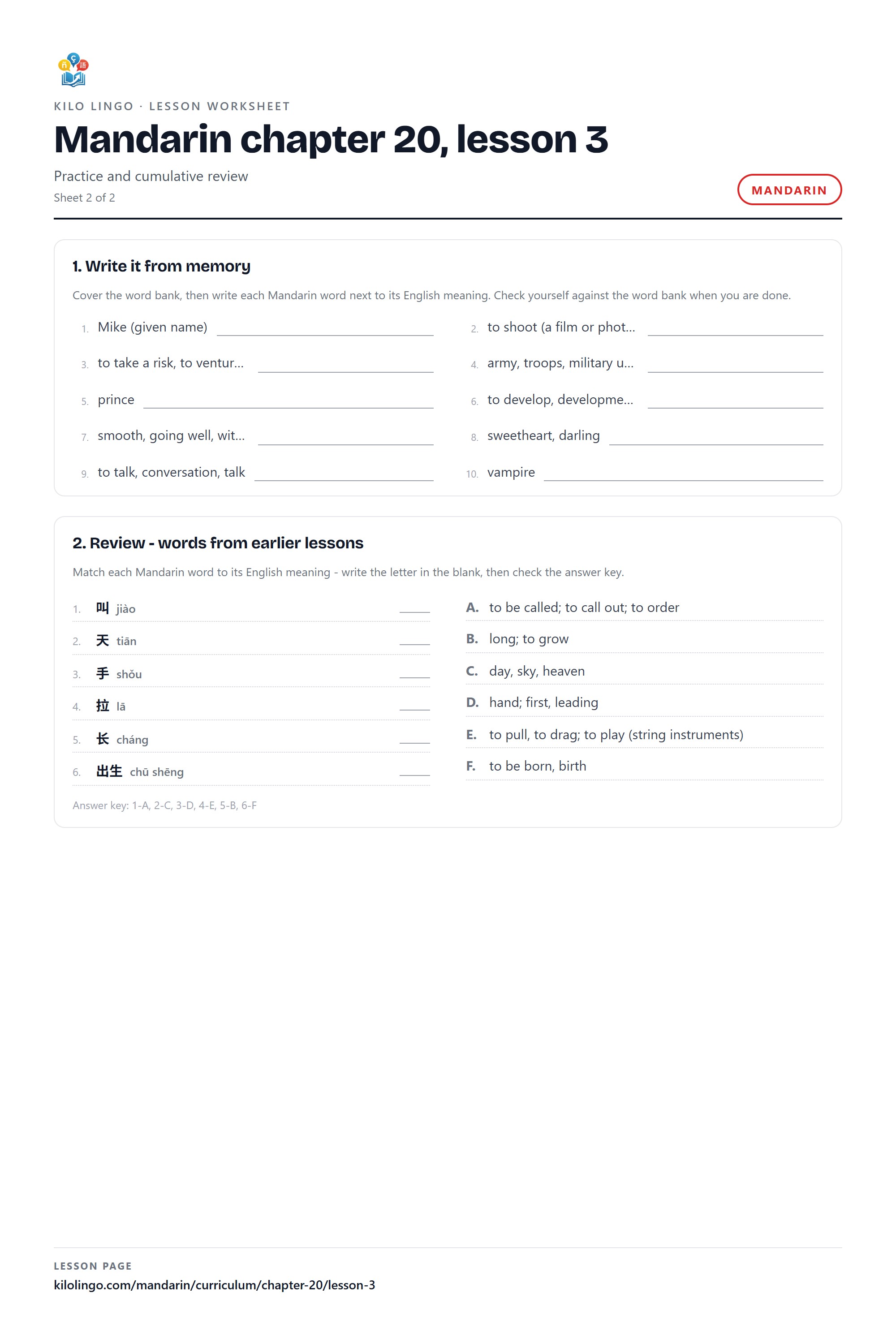




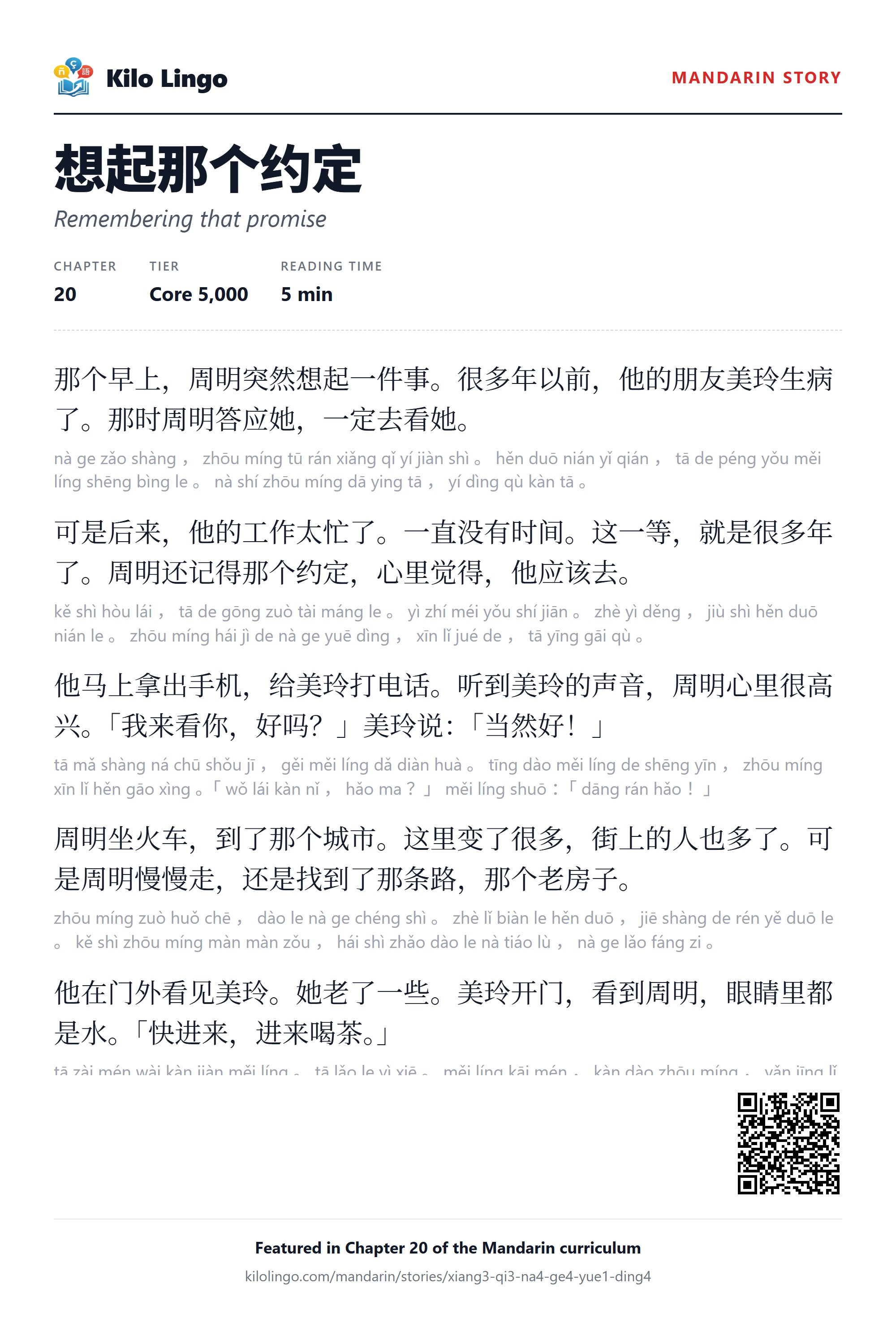
Chapter 21 · Asking how + adjective with 多
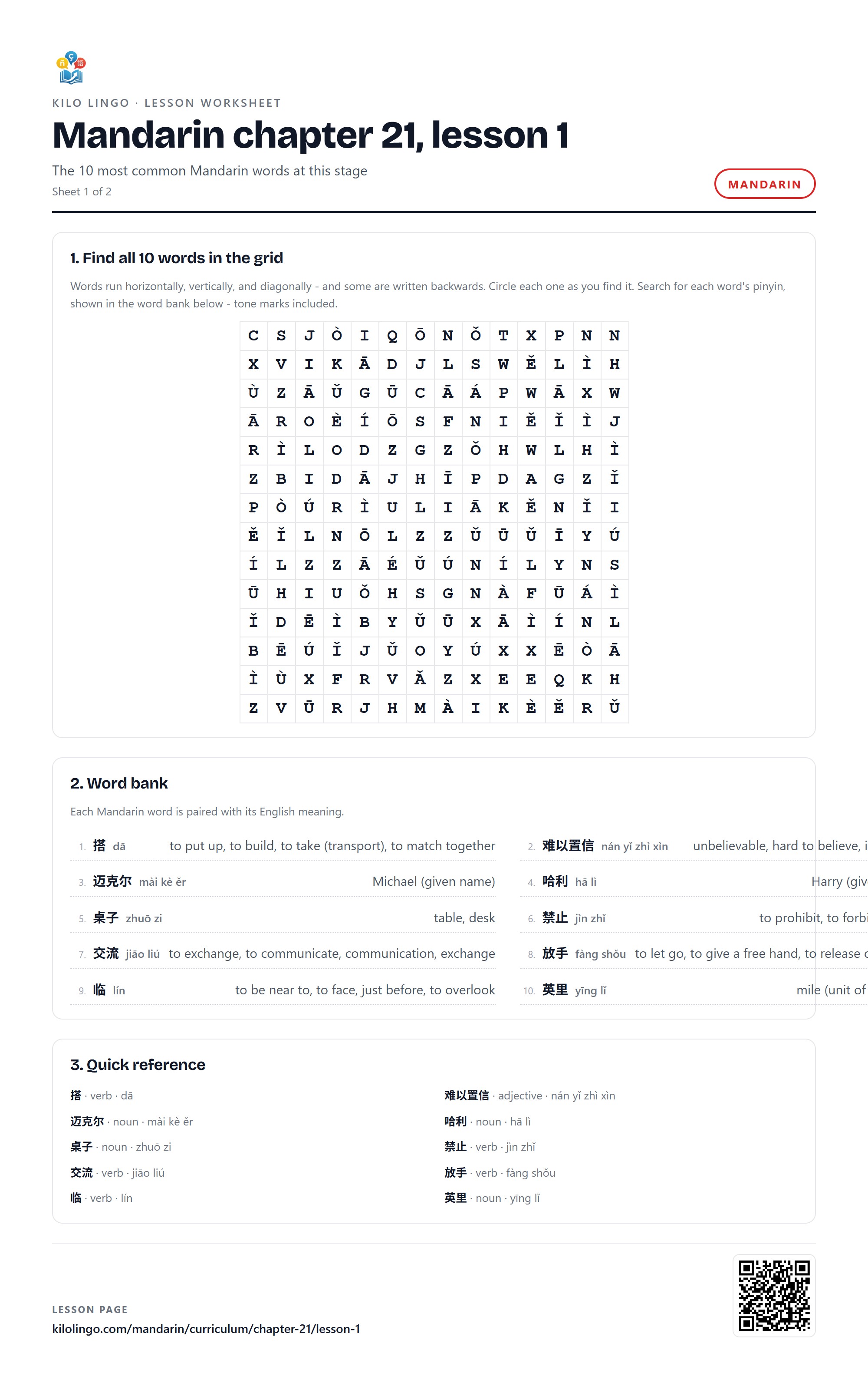
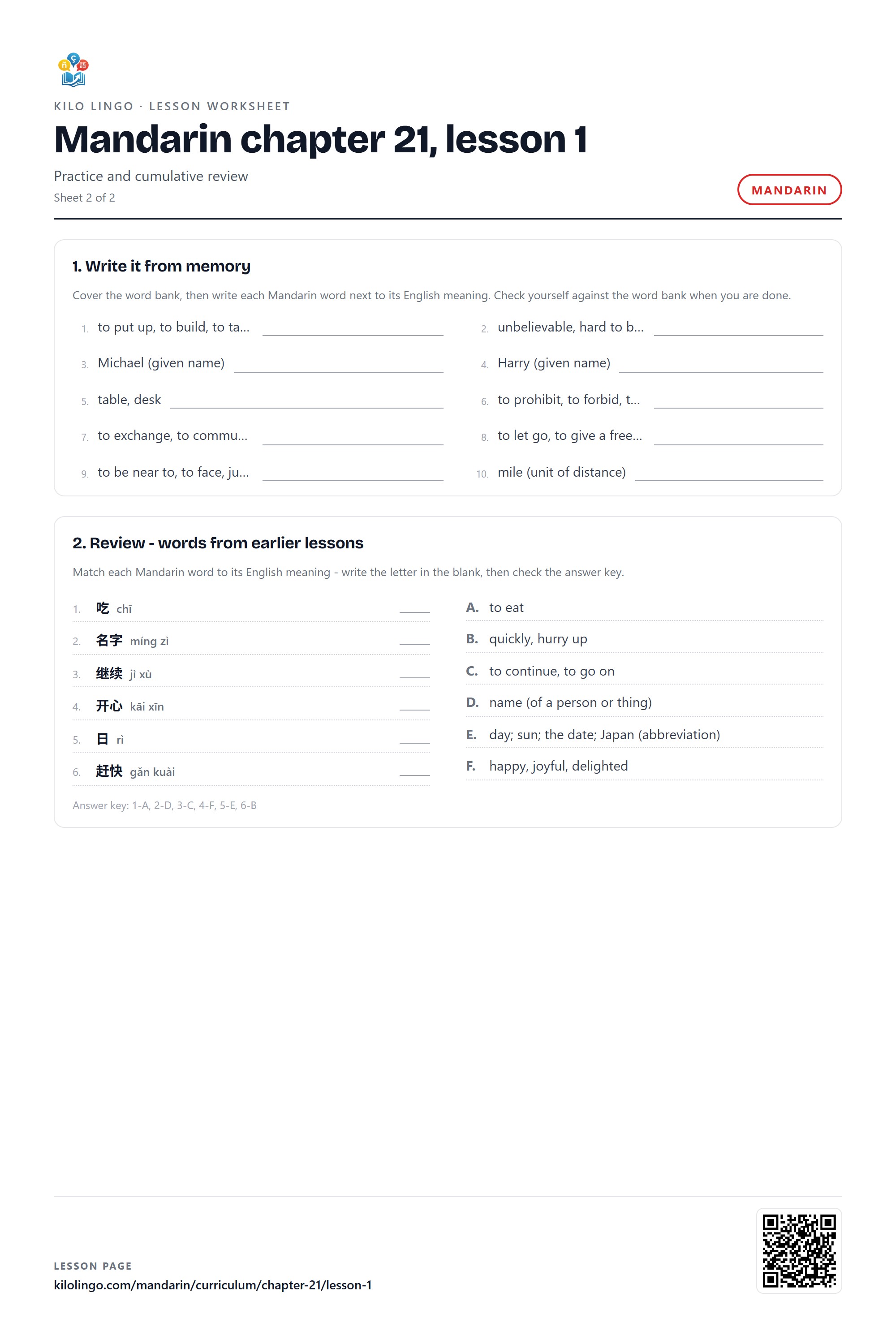
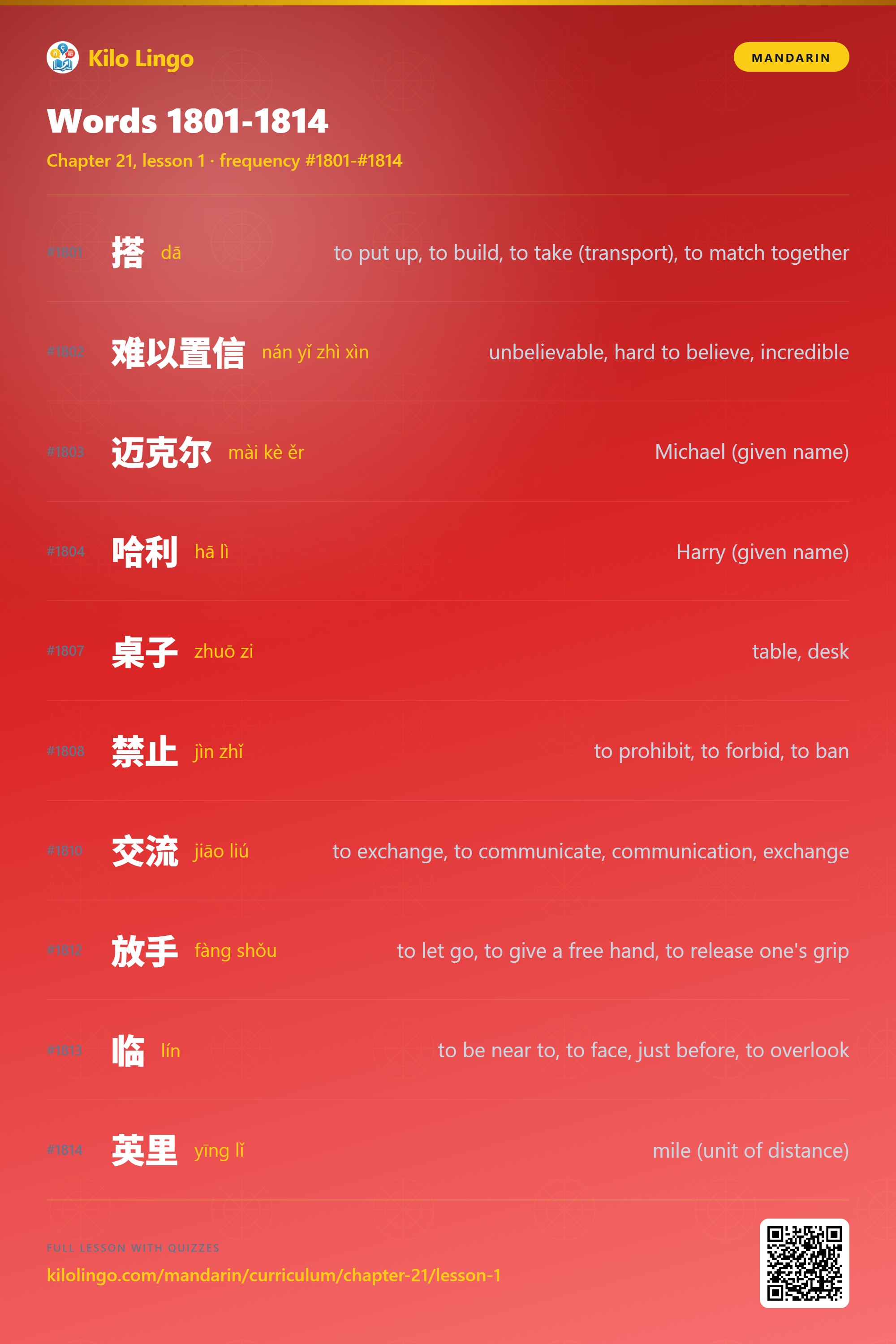
Chapter page →- Words 1801-1814Vocabulary
10 words · ranks 1801-1814
- Word Bubbles review sessionReview games
Pop the words you just met by matching each one to its meaning. A couple of rounds and the batch is yours.
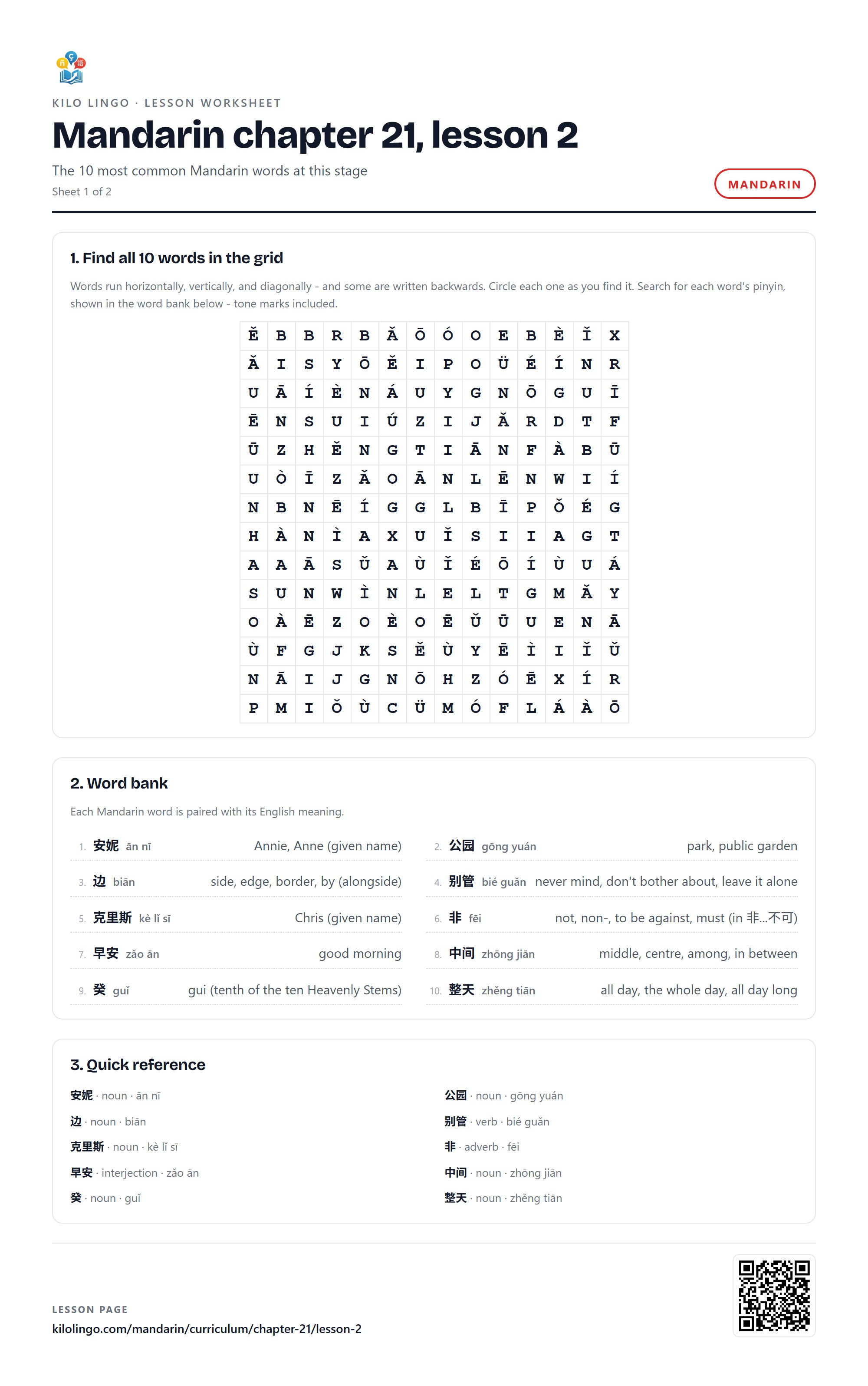
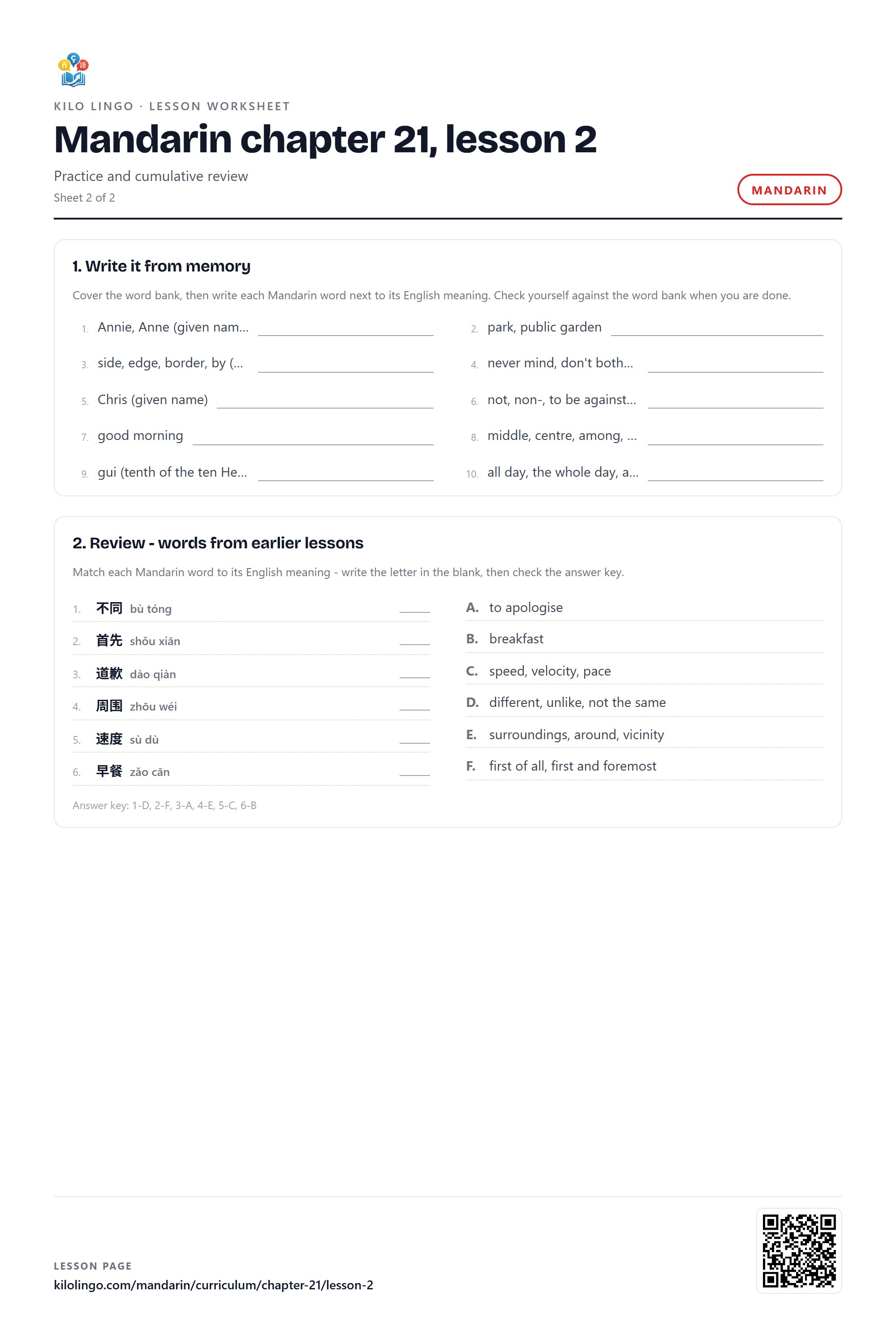
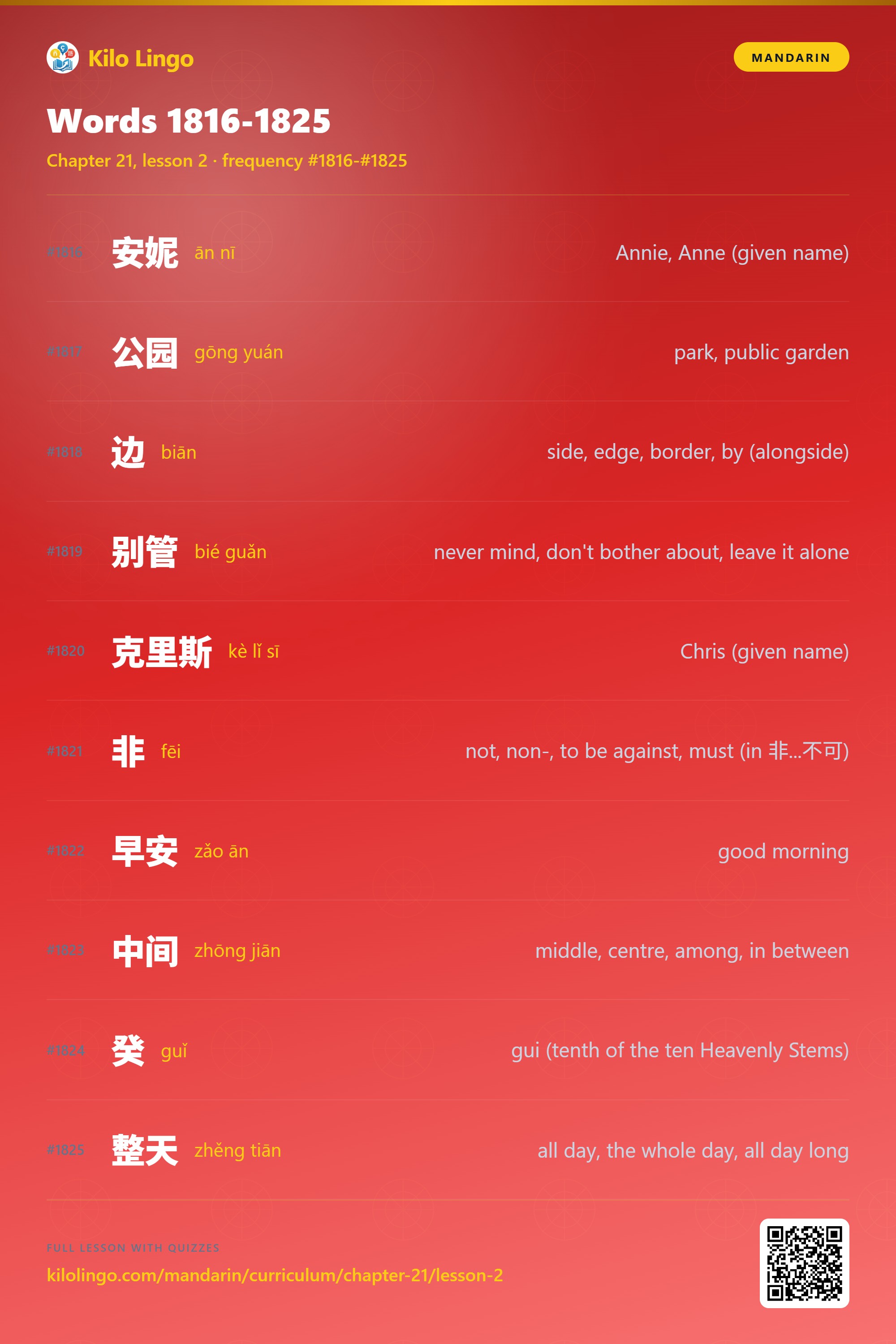
- Words 1816-1825Vocabulary
10 words · ranks 1816-1825
- Crossword review sessionReview games
Cross the words you just met, clued in English. Slower than a drill, and it sticks harder.
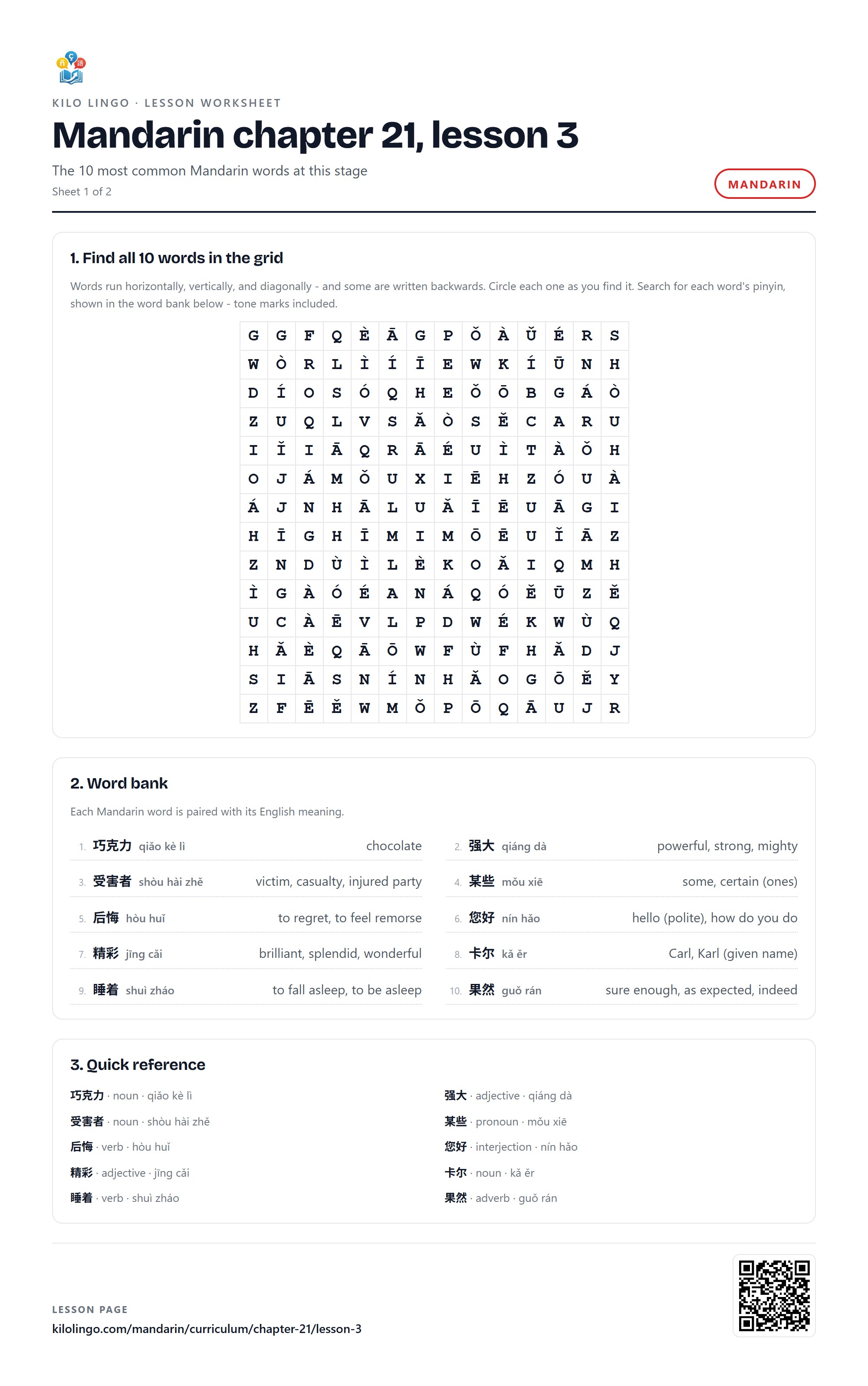
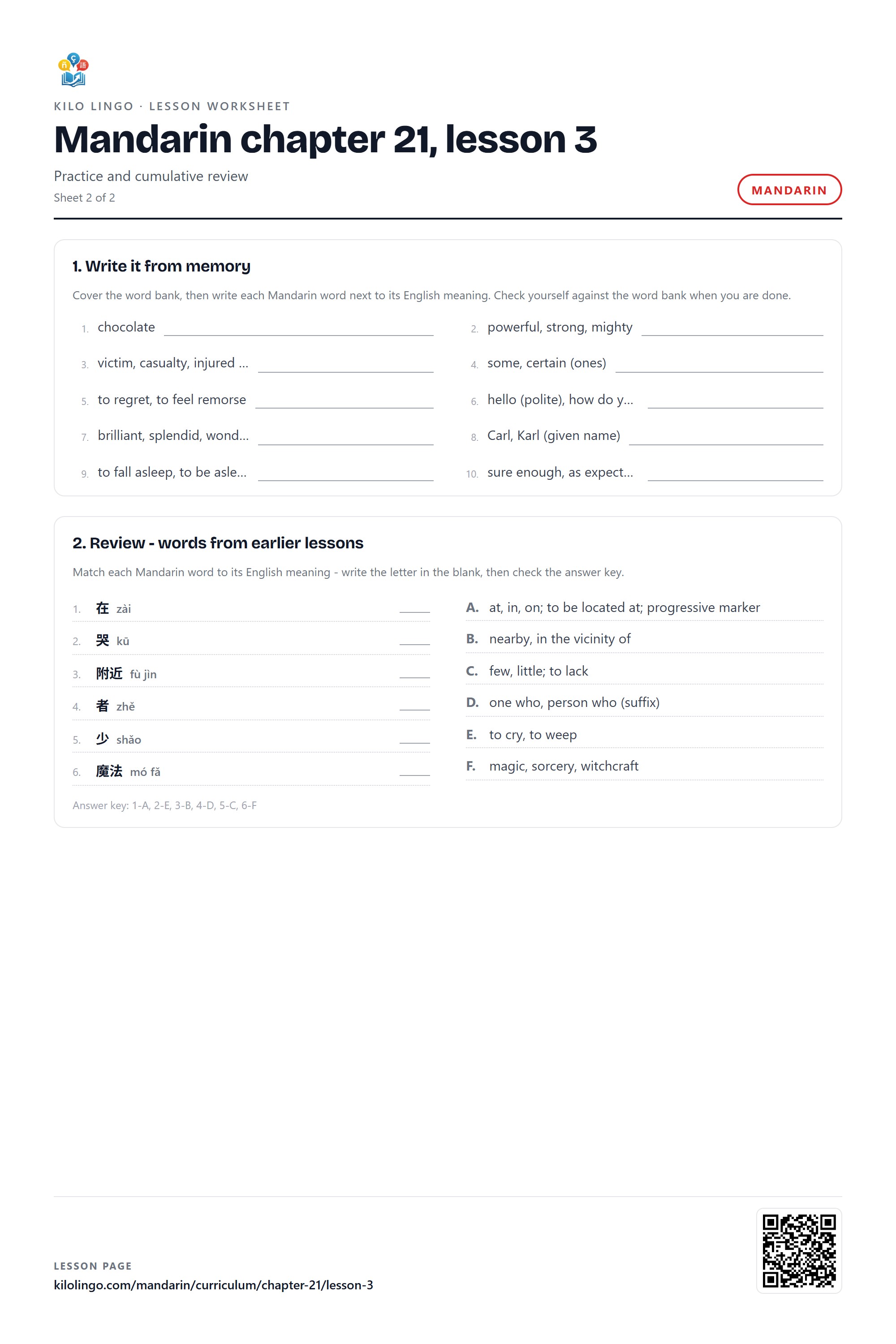
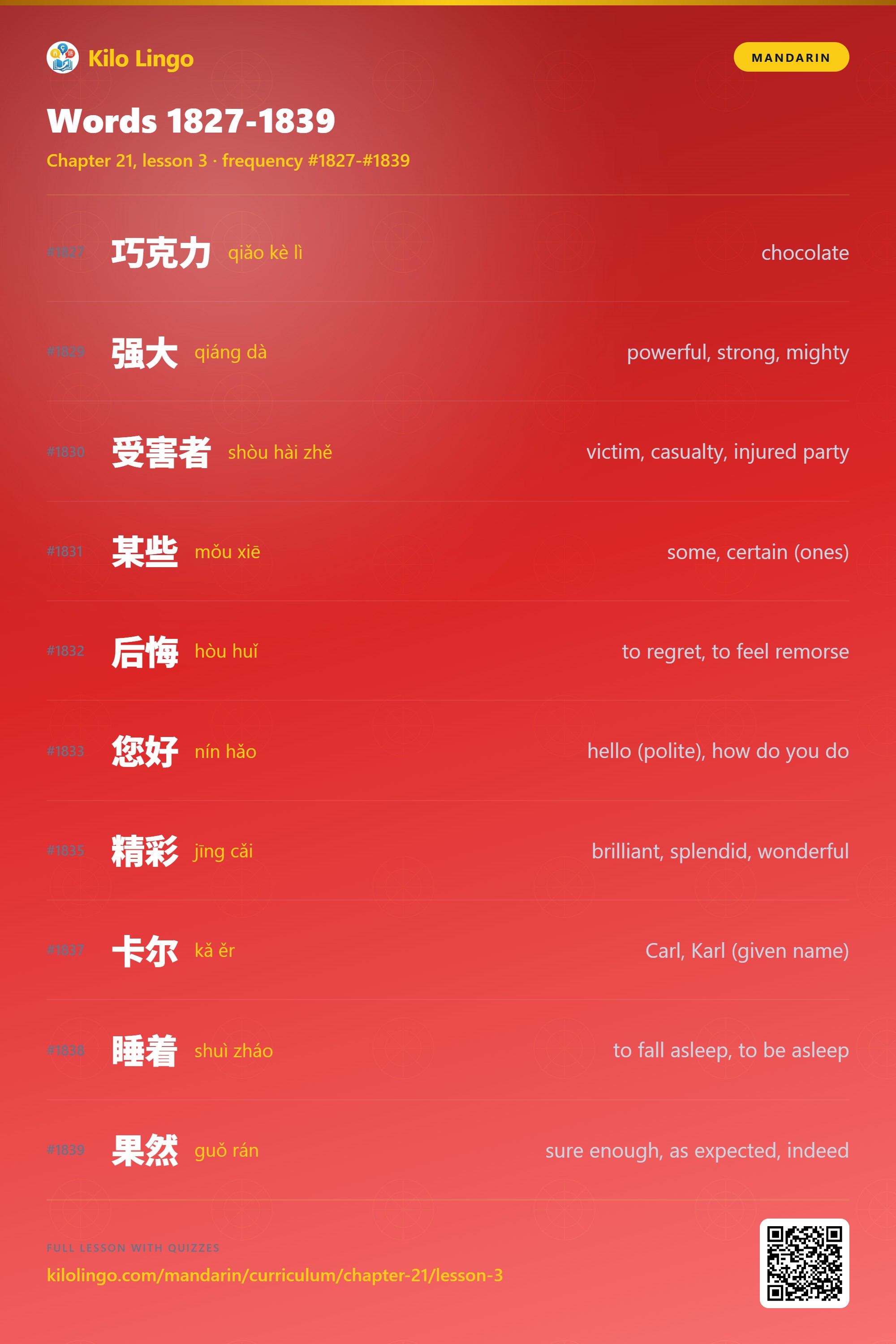
- Words 1827-1839Vocabulary
10 words · ranks 1827-1839
- Tone Shooter review sessionReview games
Shoot the words you just met into their tones by colour. The quickest way to fix a tone in place.
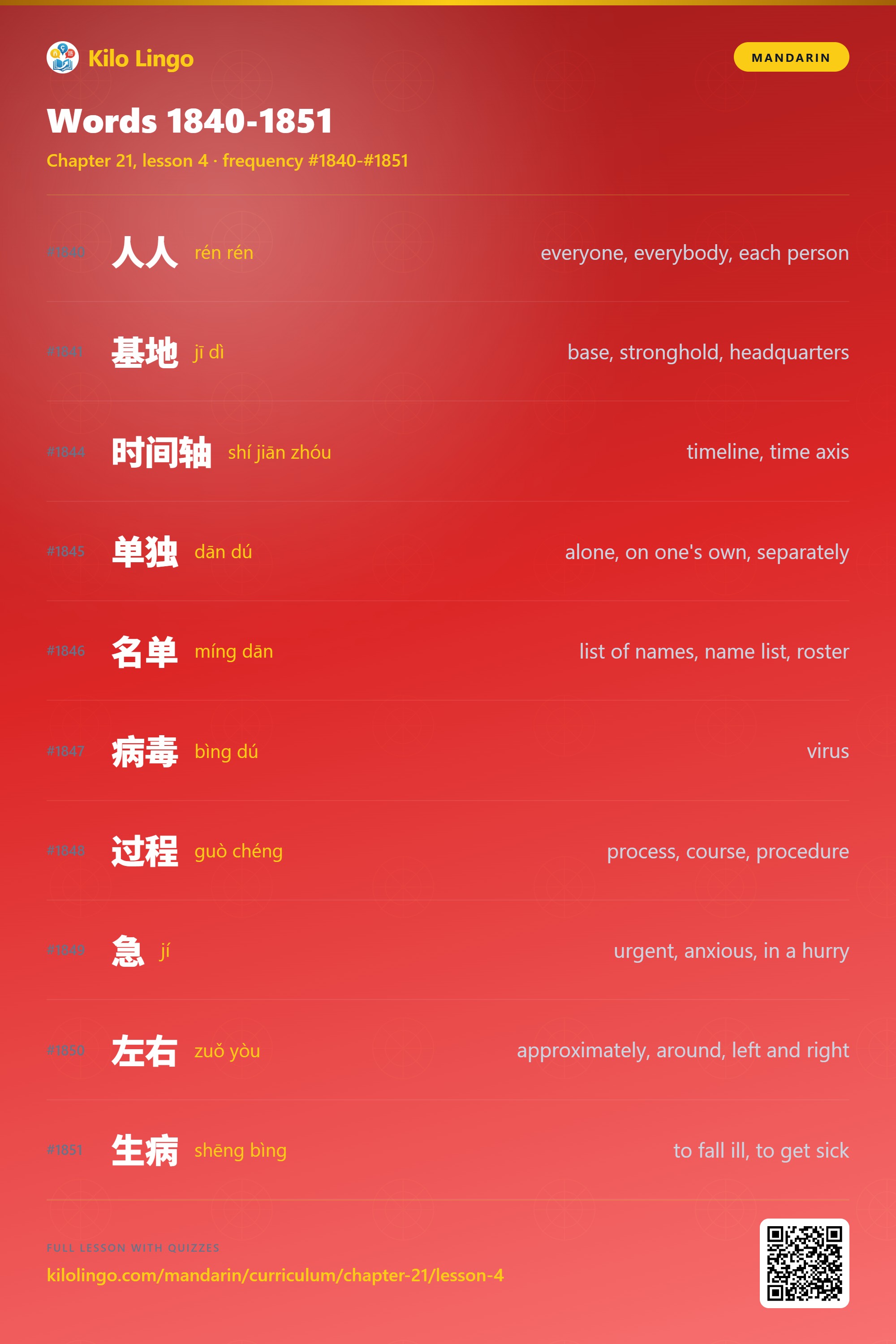
- Words 1840-1851Vocabulary
10 words · ranks 1840-1851
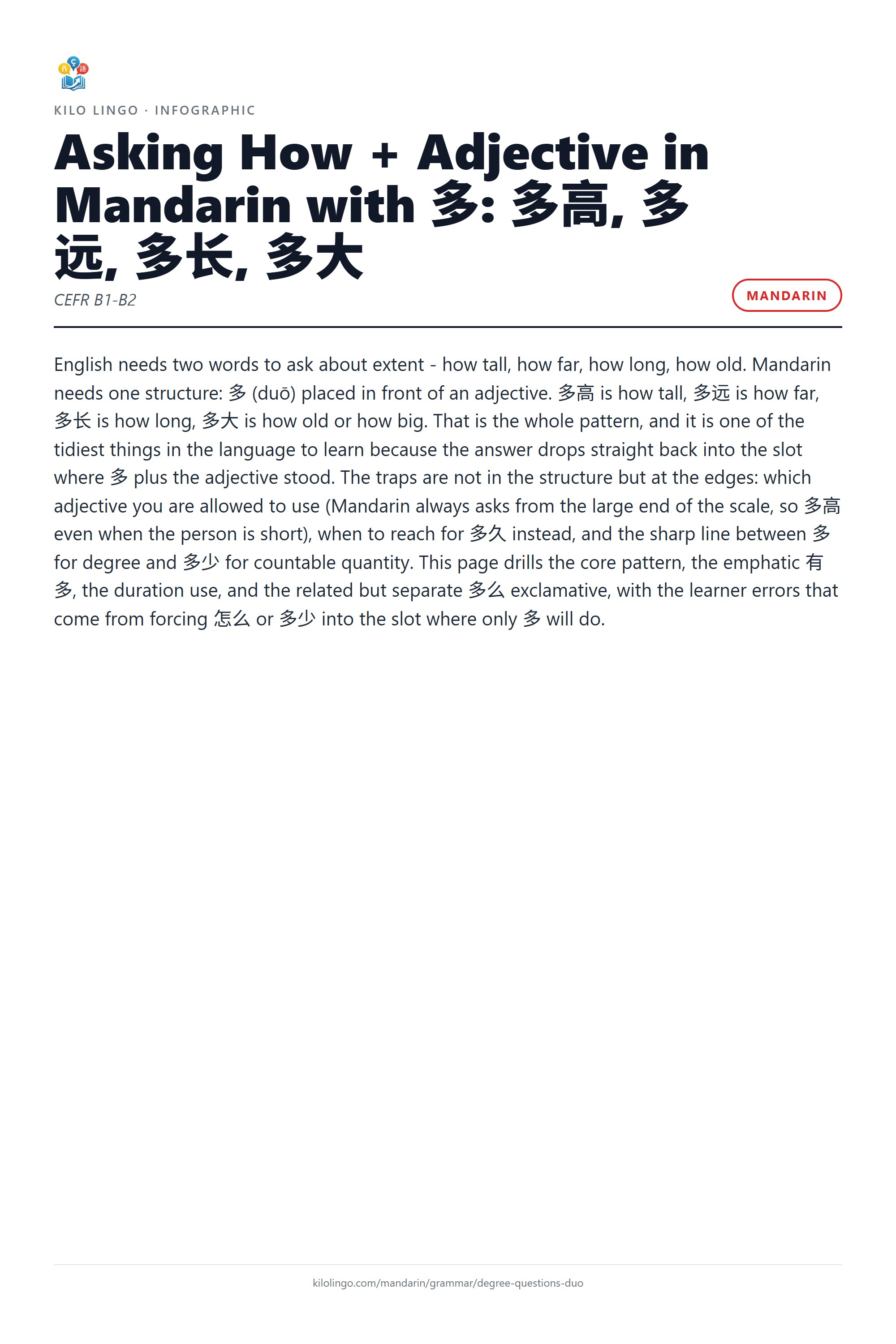
多 + an adjective asks the degree of a measurable quality: 多高 (how tall), 多远 (how far), 多长 (how long), 多大 (how big or how old). Why 多 takes the positive adjective, how the answer mirrors the question, and the 有多 framing for emphasis.
- 听 or 听见?Mistake clinic
The same shape as 看 and 看见, one chapter later and with the ears.
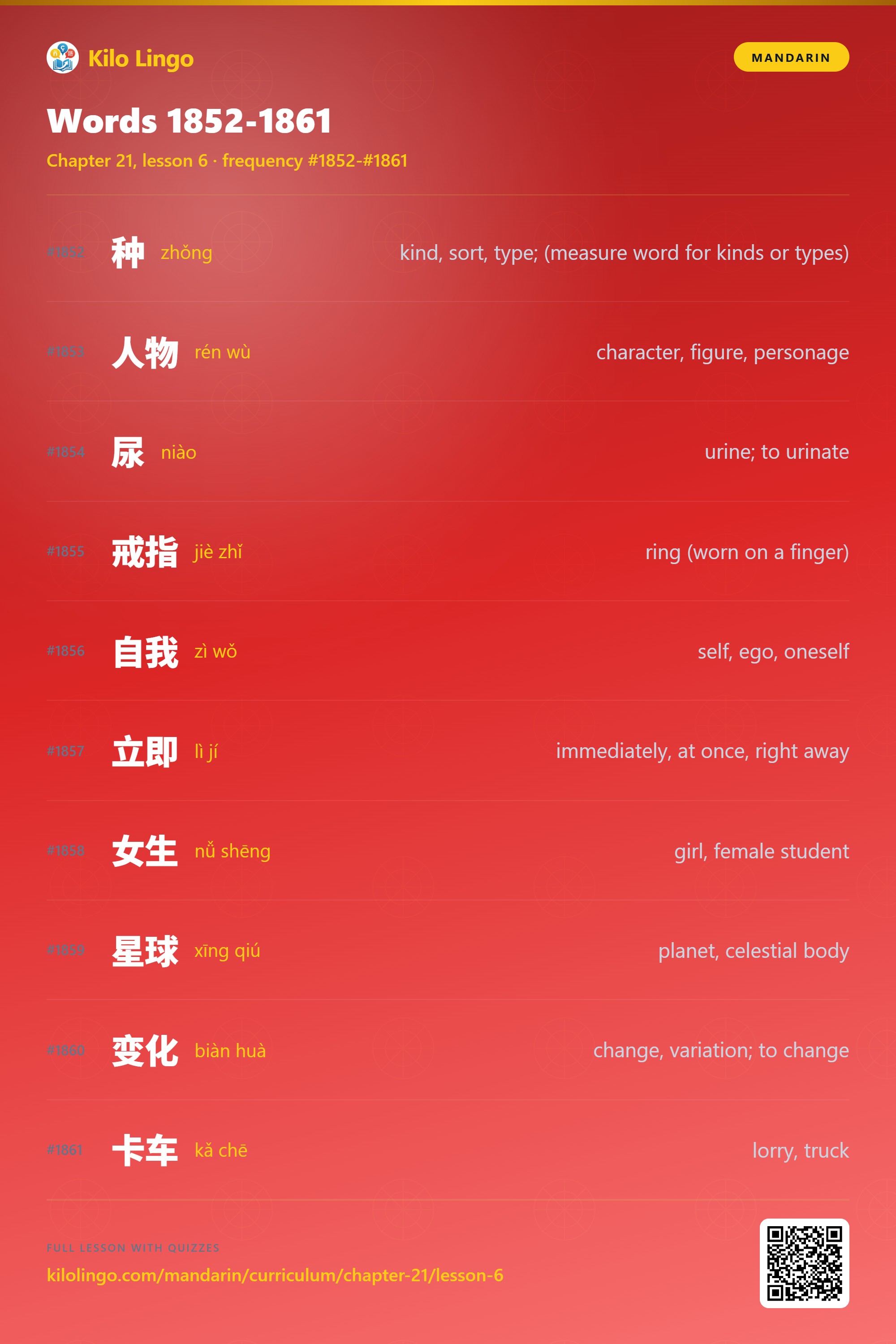
- Words 1852-1861Vocabulary
10 words · ranks 1852-1861
- Word Bubbles review sessionReview games
Pop the words you just met by matching each one to its meaning. A couple of rounds and the batch is yours.
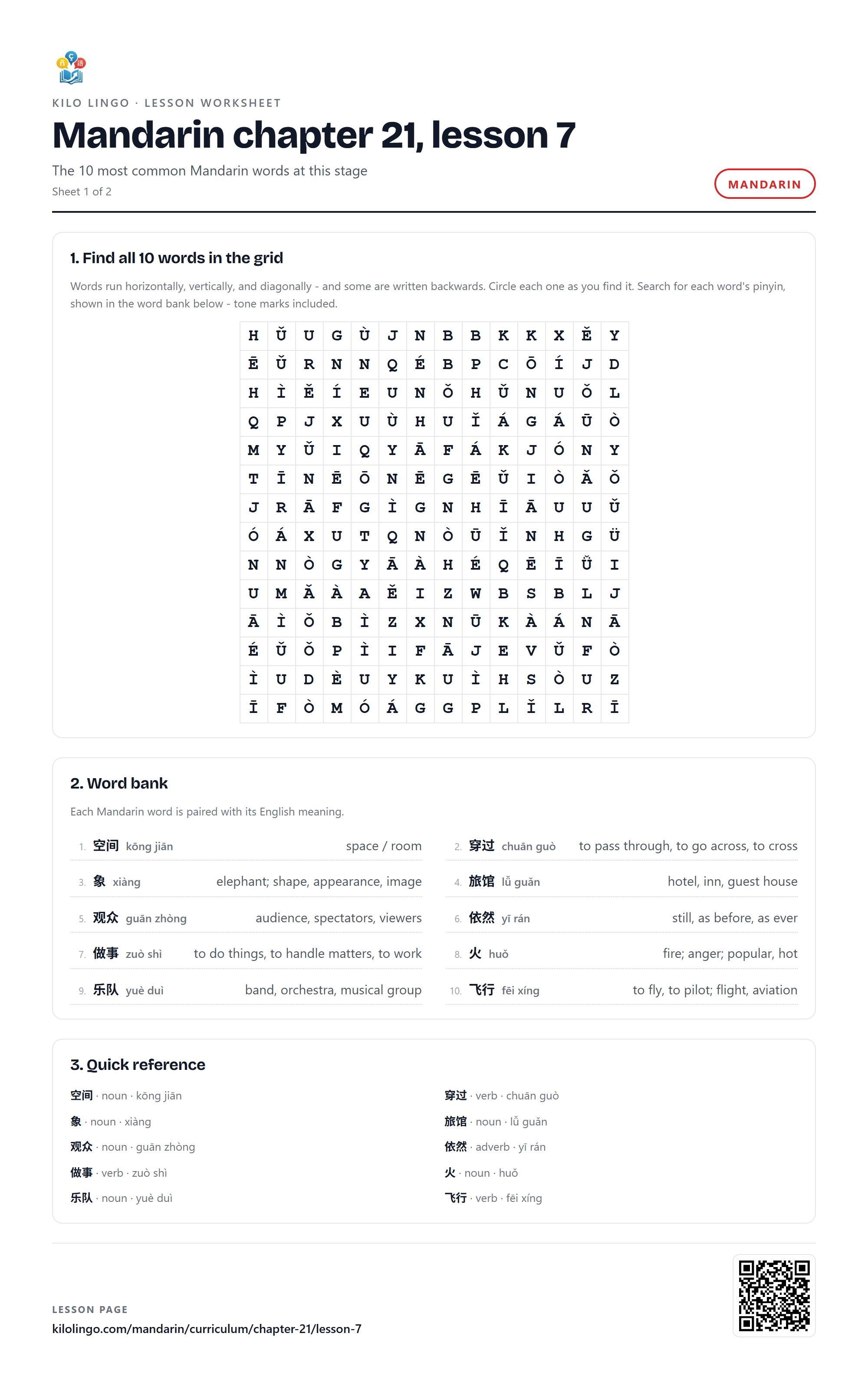
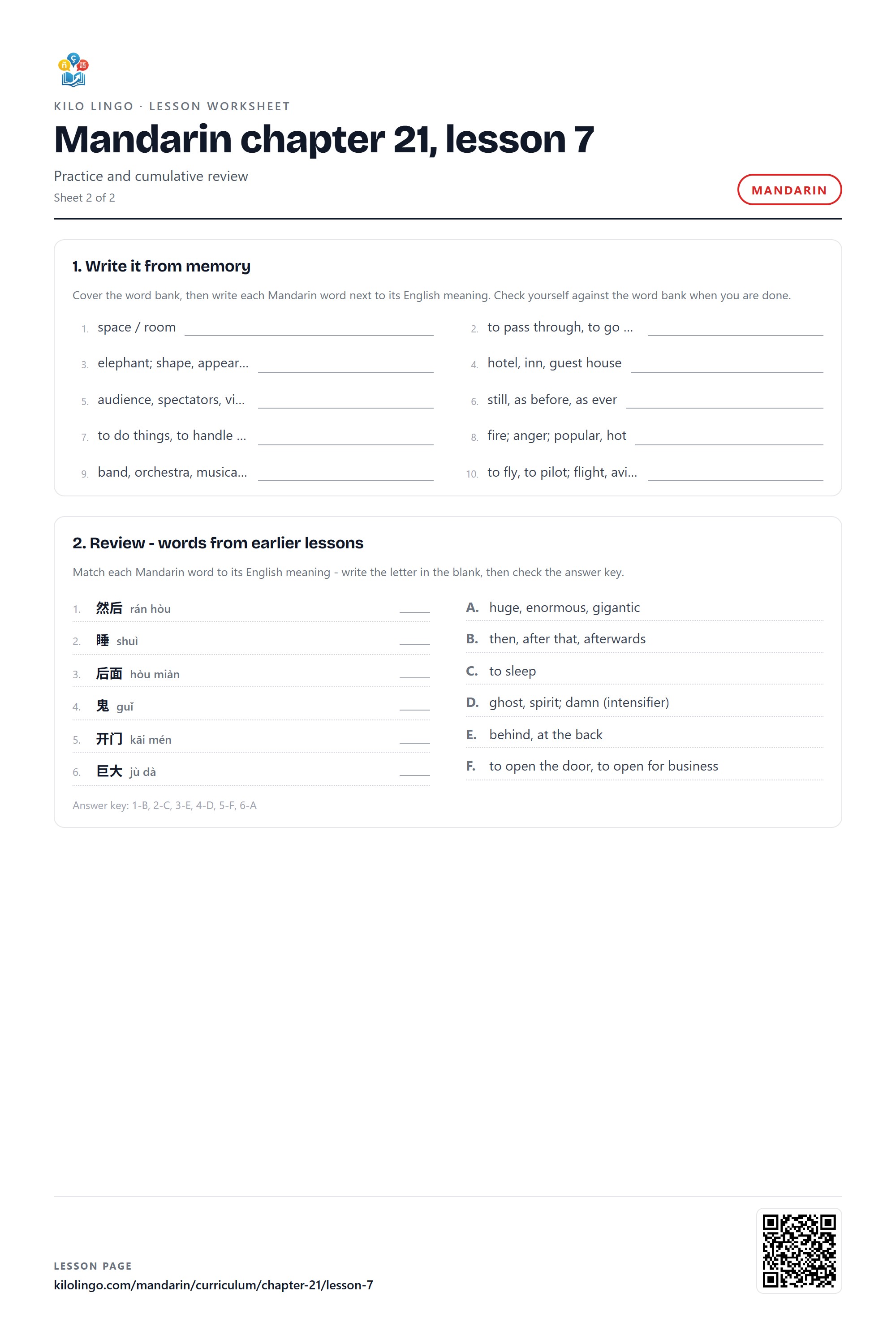
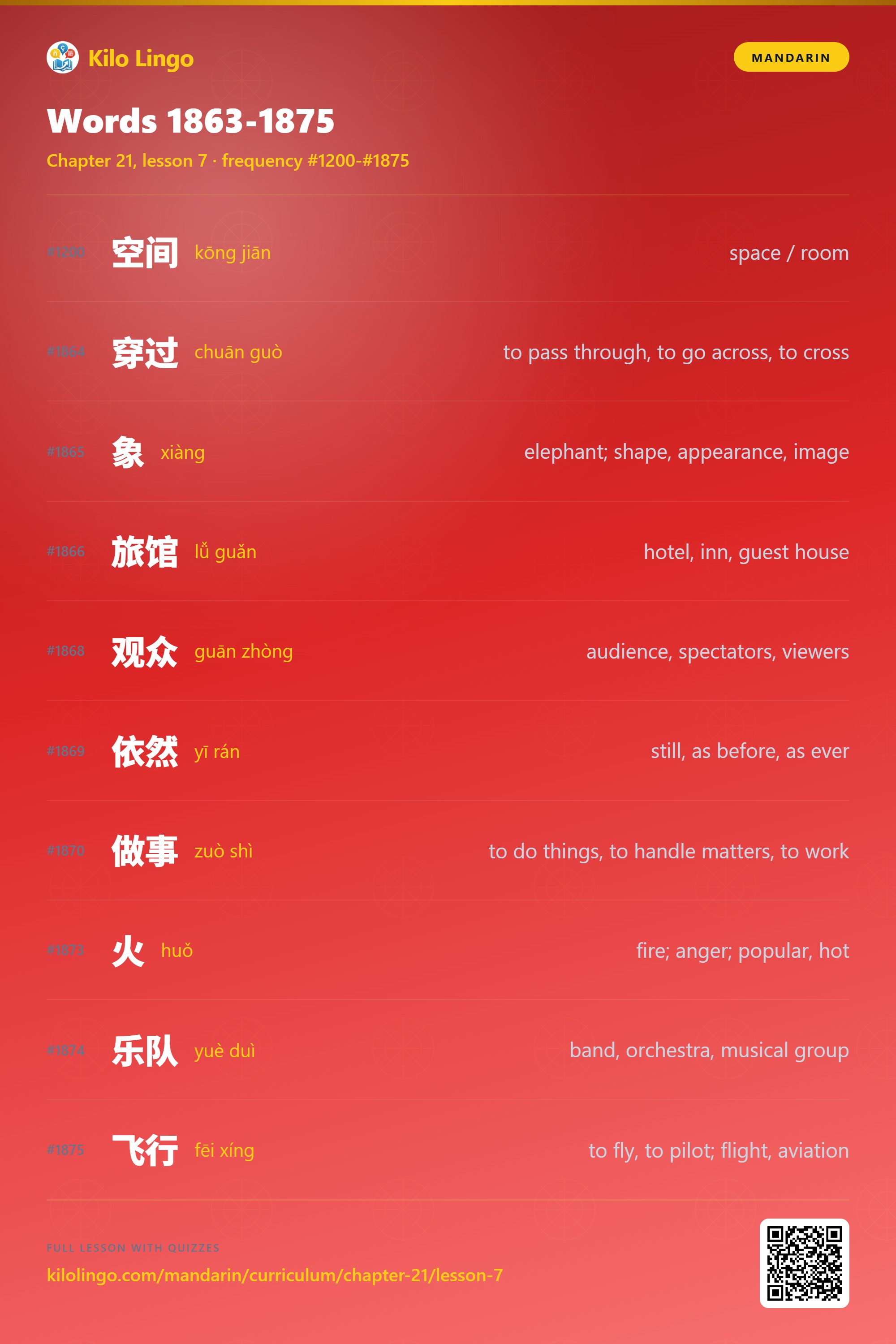
- Words 1863-1875Vocabulary
10 words · ranks 1863-1875
- Tone Shooter review sessionReview games
Shoot the words you just met into their tones by colour. The quickest way to fix a tone in place.
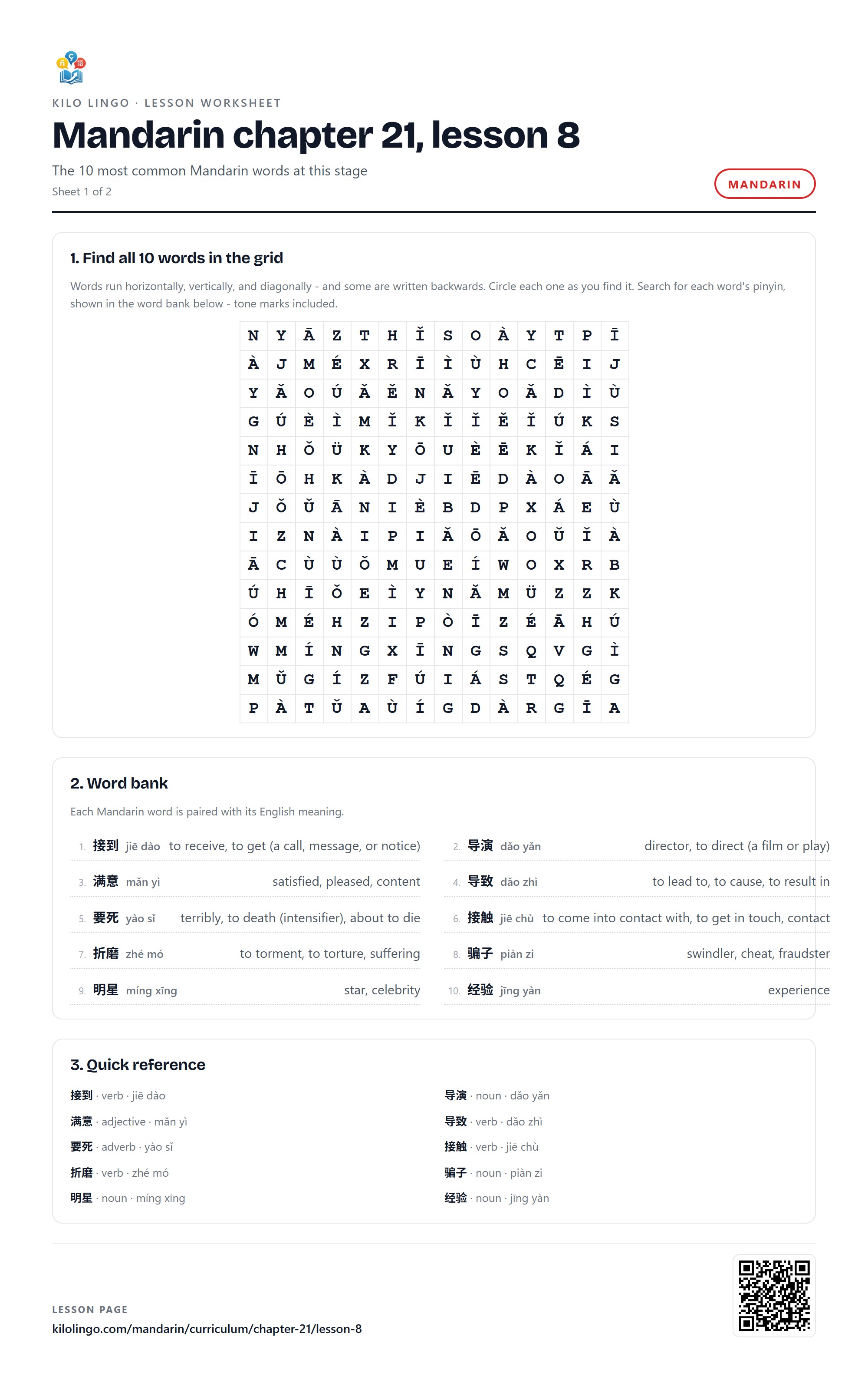
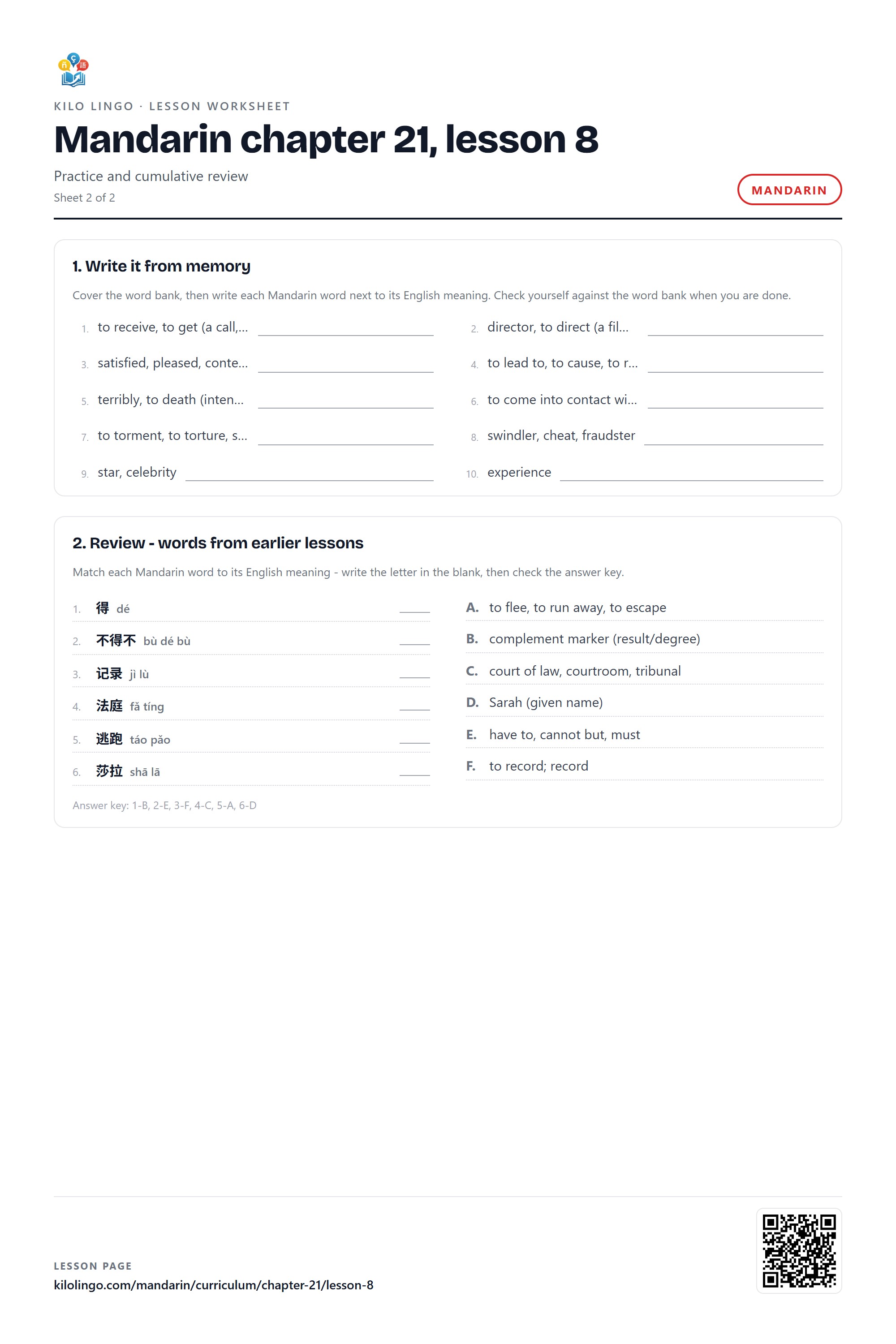
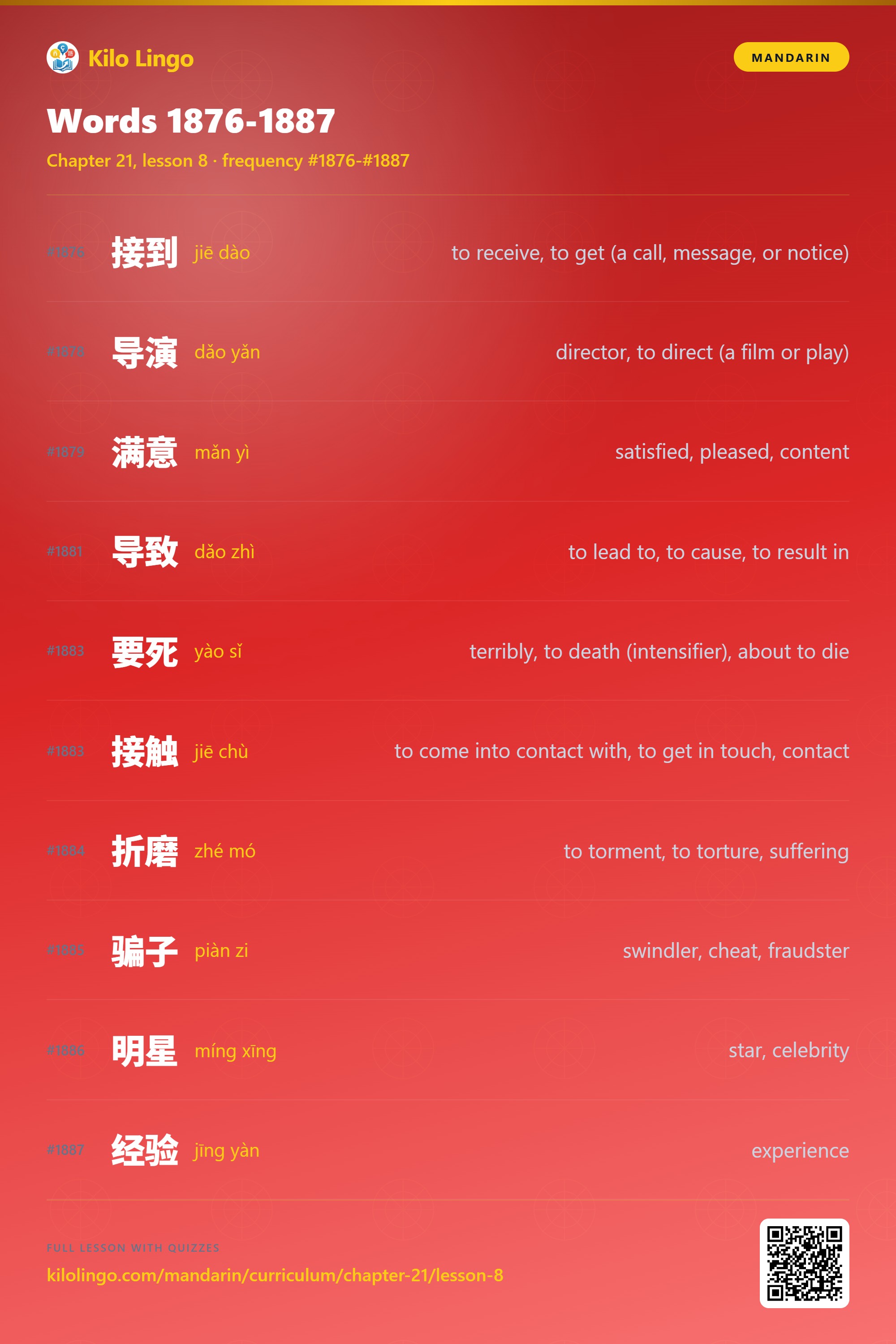
- Words 1876-1887Vocabulary
10 words · ranks 1876-1887
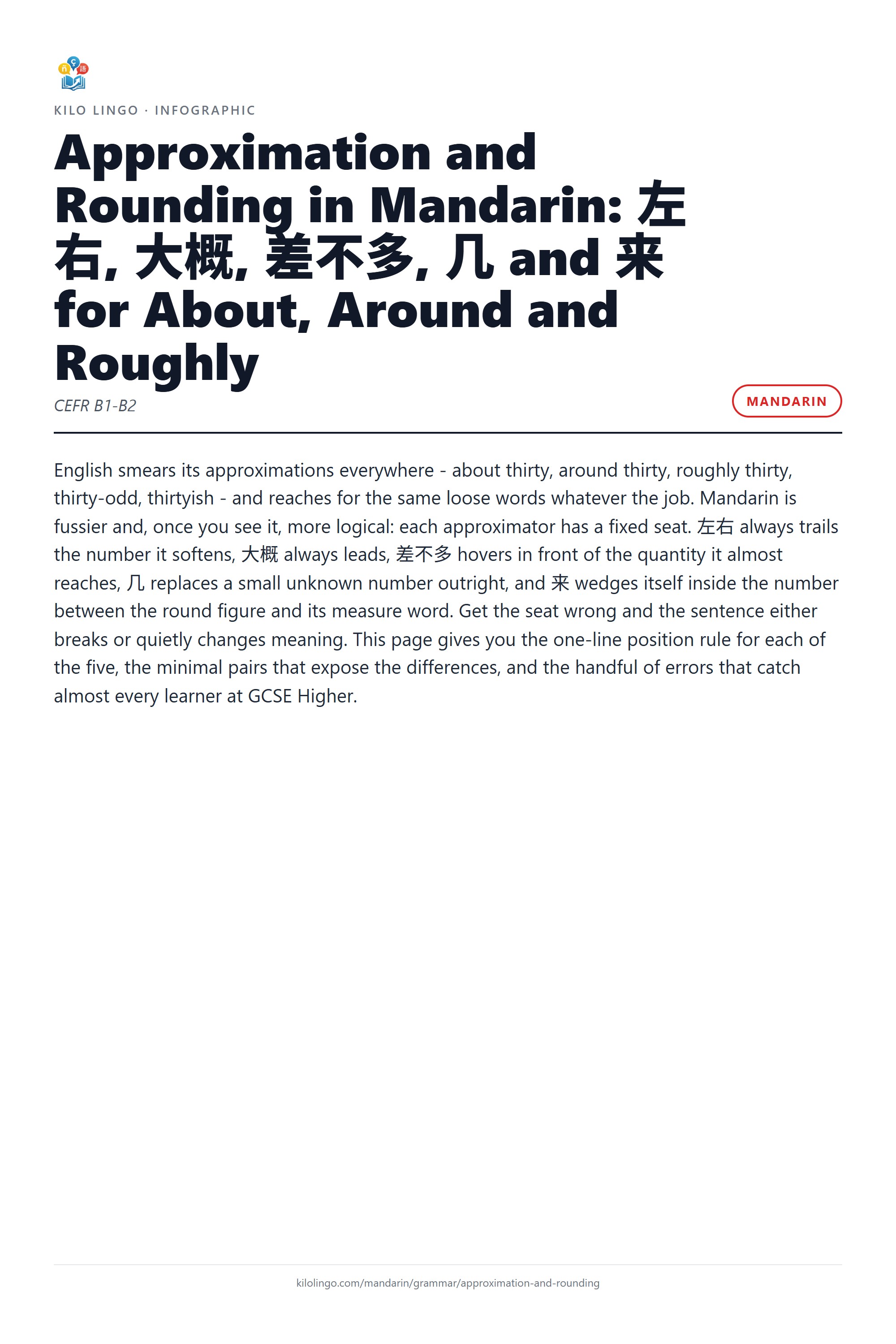
- Approximation and roundingGrammar
Saying about, around and roughly: 左右 (give or take) after a number, 大概 and 差不多 for an estimate, 几 for an unspecified small number, and 来 for a round figure (十来个). Which one sits where, and how they soften an exact count into a ballpark.
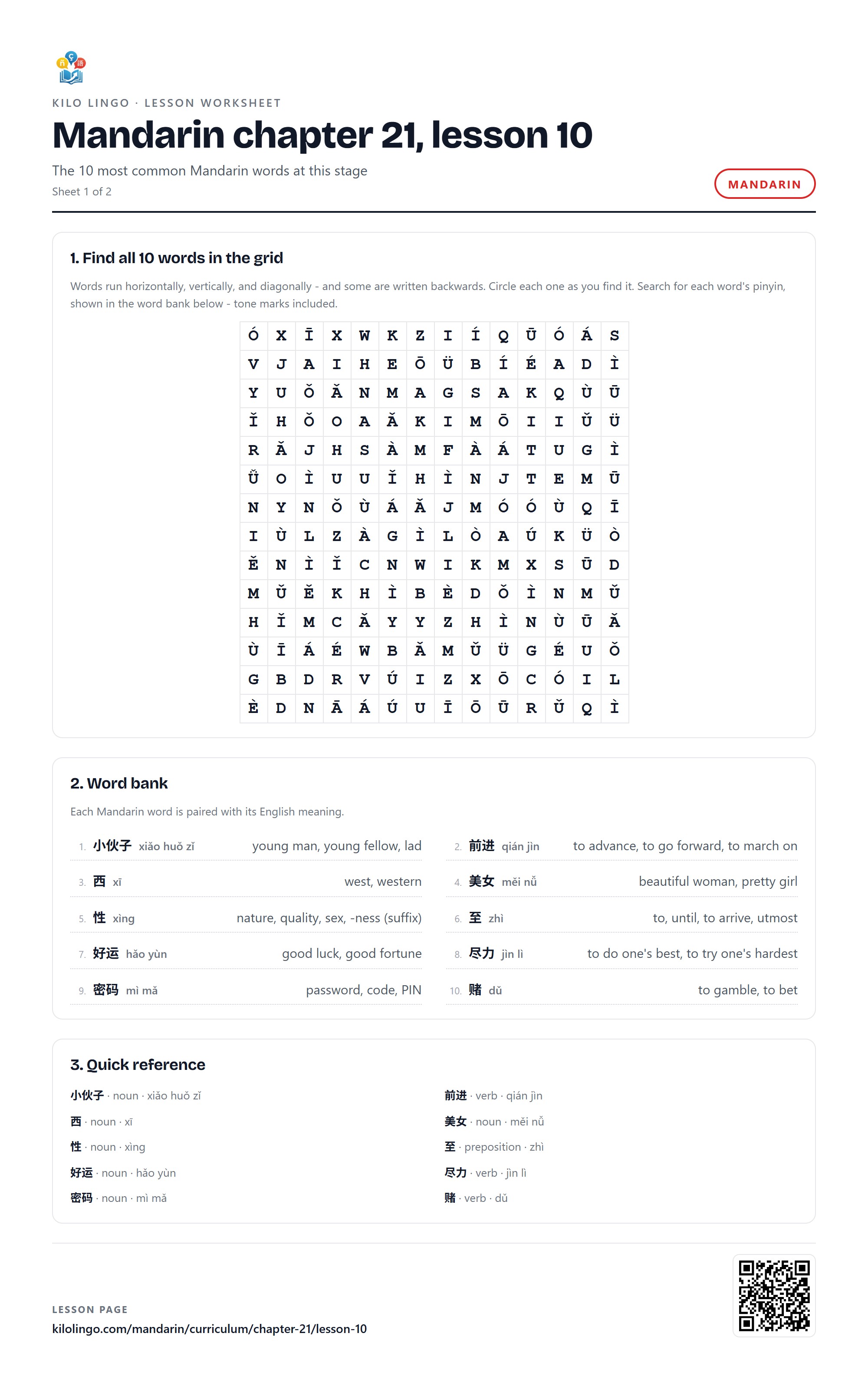
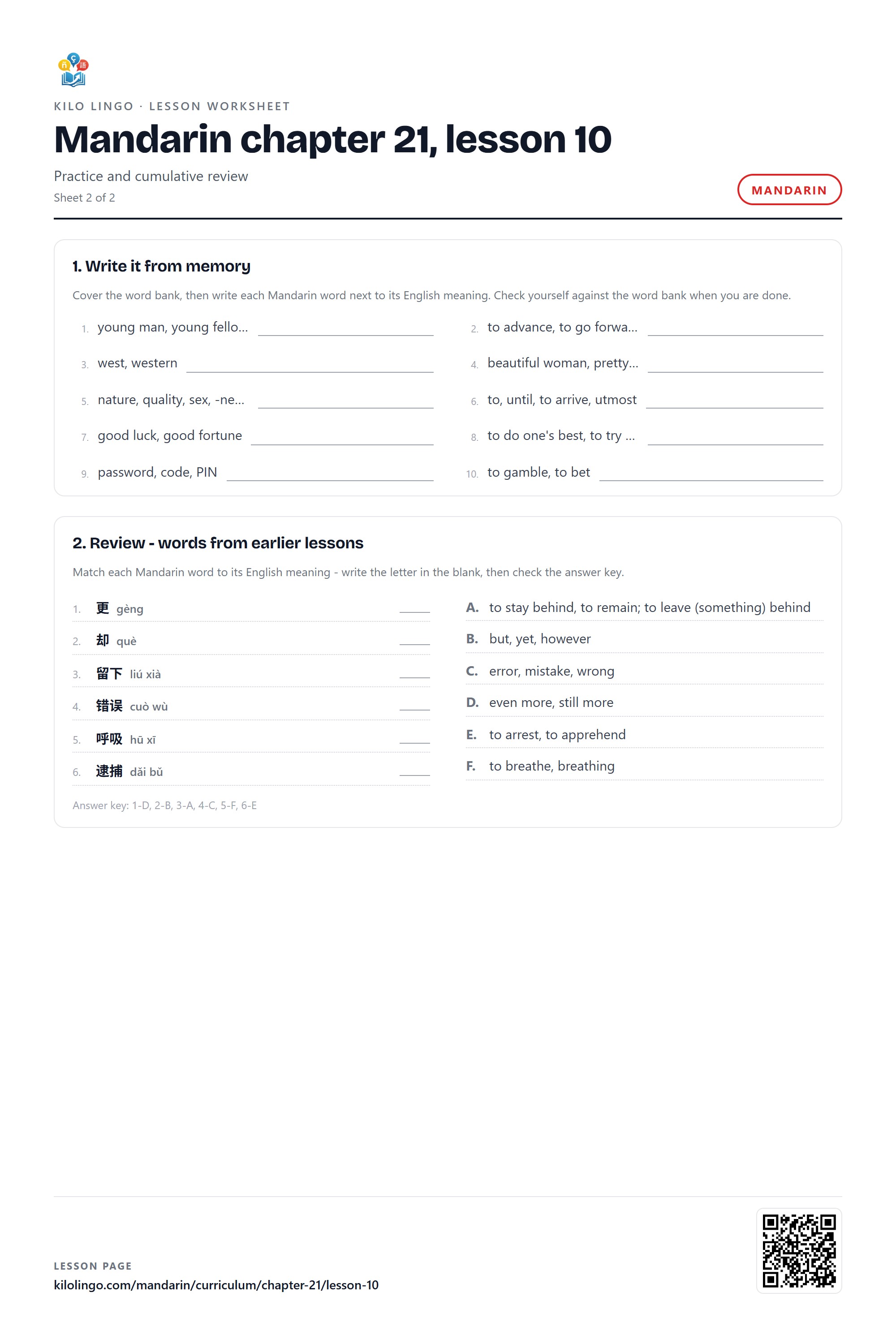
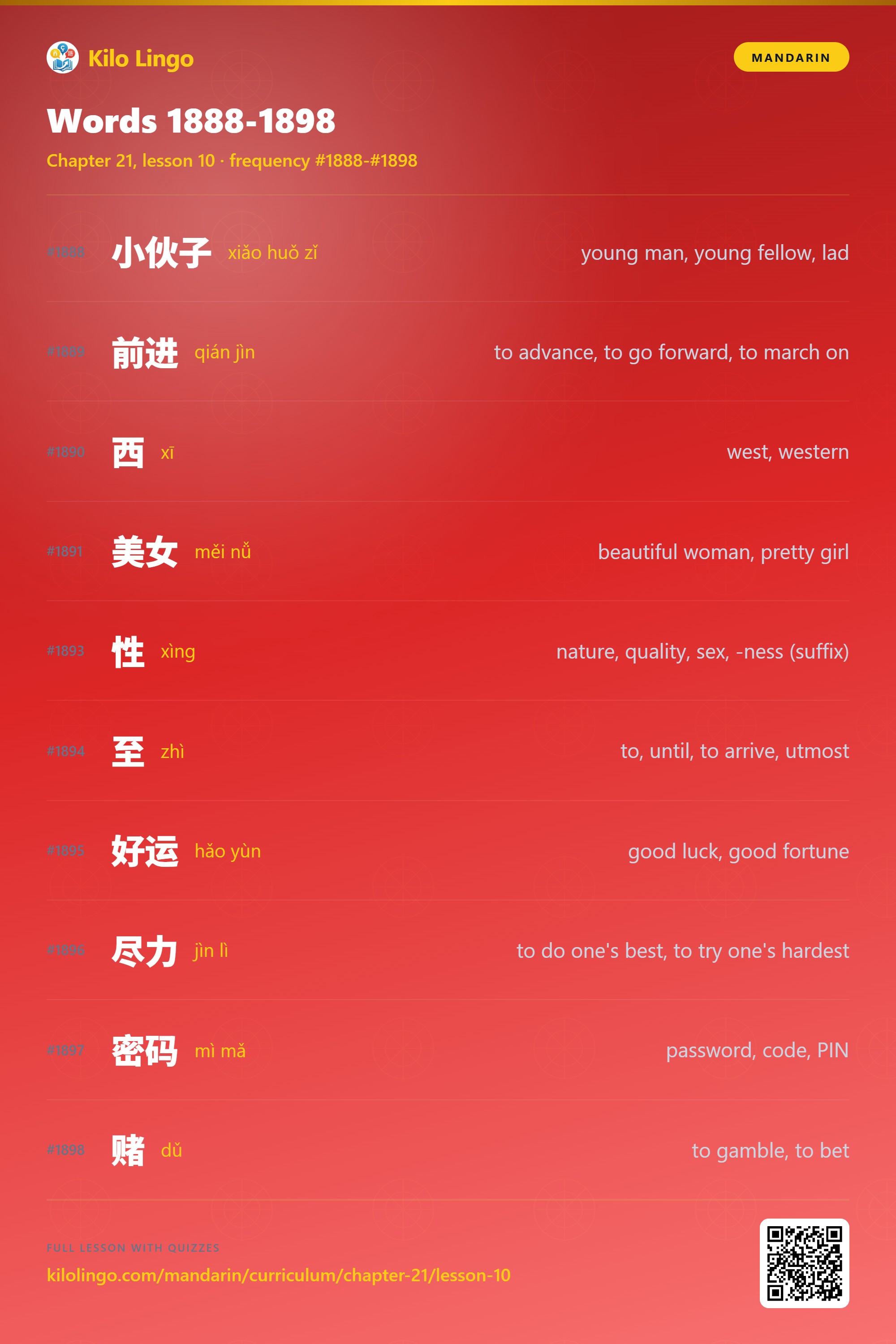
- Words 1888-1898Vocabulary
10 words · ranks 1888-1898
- The rest of the everyday phrasesPhrase session
The short ones that do not belong to any one situation and come up in all of them.
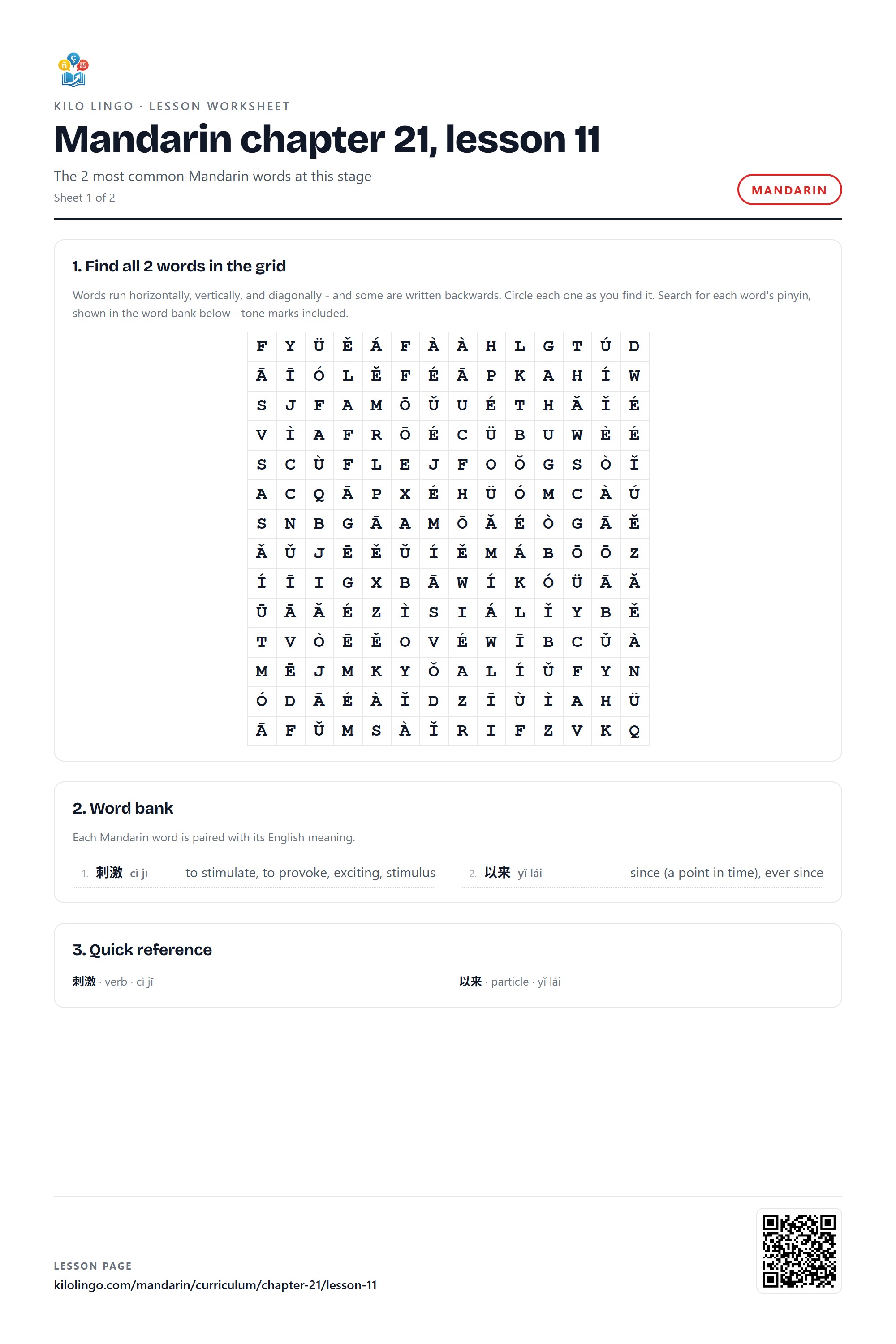
- Words 1899-1900Vocabulary
2 words · ranks 1899-1900
- Story milestone: top 1900 wordsGraded-reader story
You can read this story using only the words you've learned so far. Every content word sits at or above the rank-1900 ceiling.
- Arcade reviewReview games
Replay this chapter's words as games - a different kind of repetition, and it counts.
Word printables
Per-word sheets82 words · a worksheet, infographic and listicle each









Chapter 22 · Topic-comment fronting
Chapter page →- Words 1901-1910Vocabulary
10 words · ranks 1901-1910
- Crossword review sessionReview games
Cross the words you just met, clued in English. Slower than a drill, and it sticks harder.
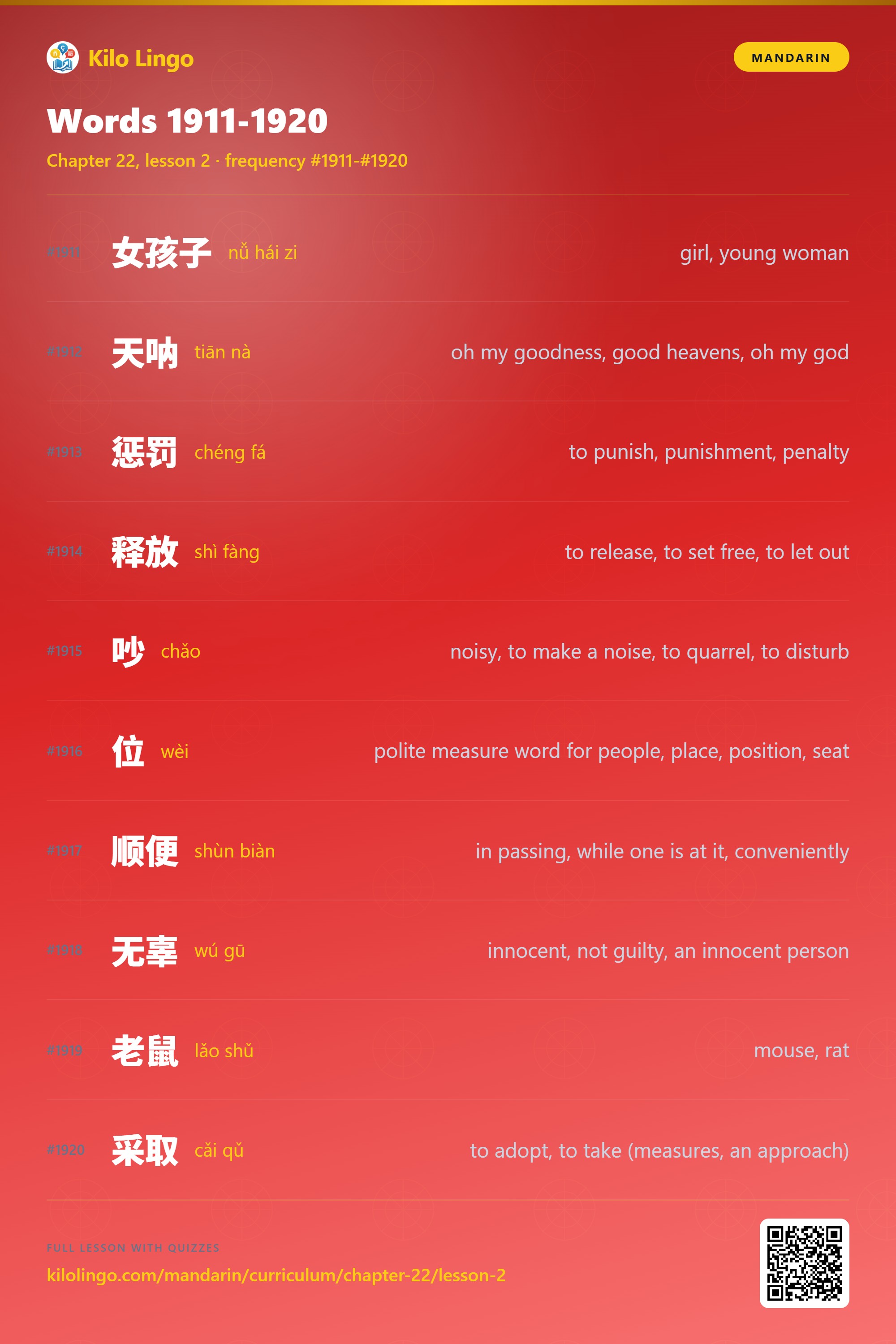
- Words 1911-1920Vocabulary
10 words · ranks 1911-1920
- Tone Shooter review sessionReview games
Shoot the words you just met into their tones by colour. The quickest way to fix a tone in place.
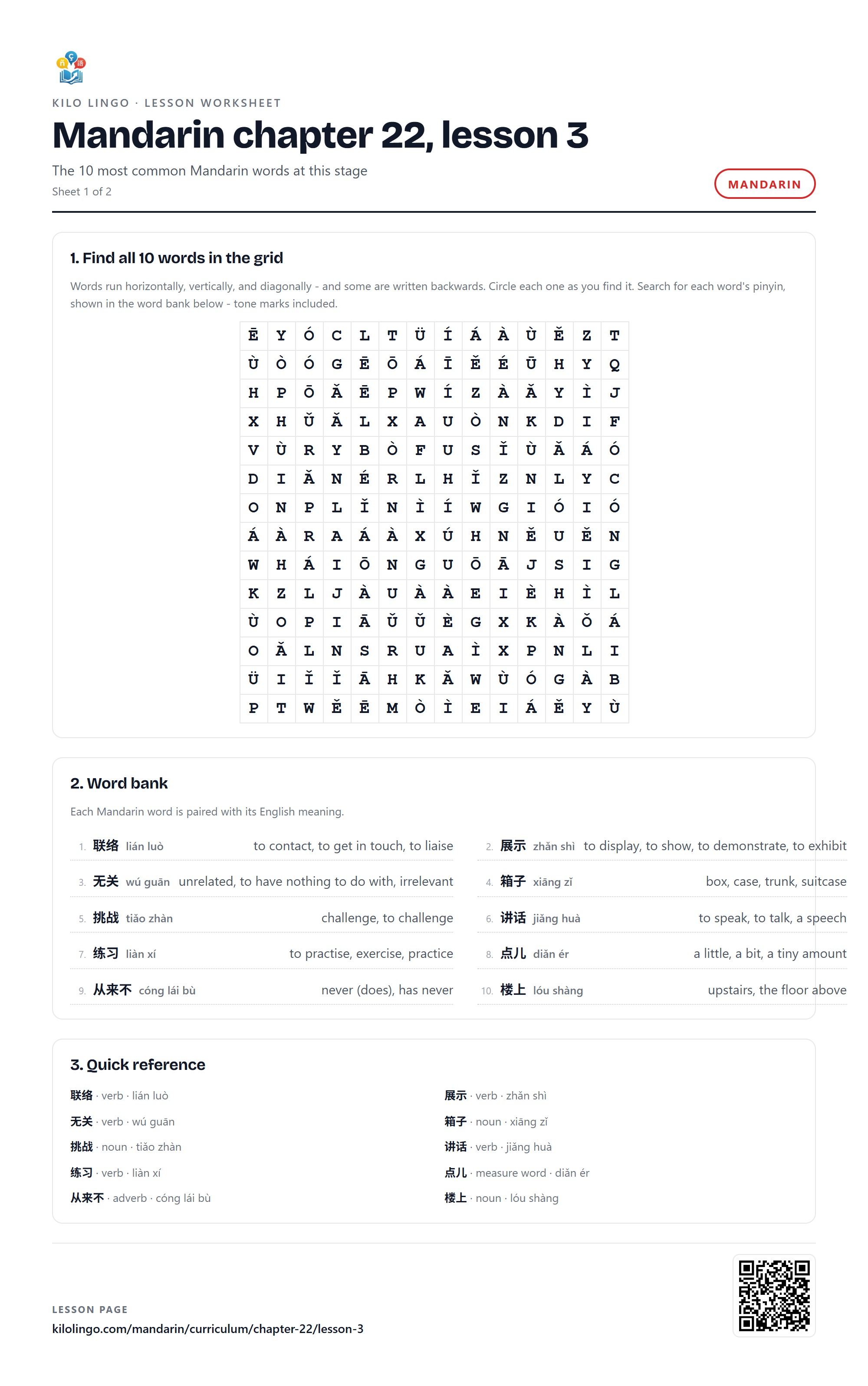
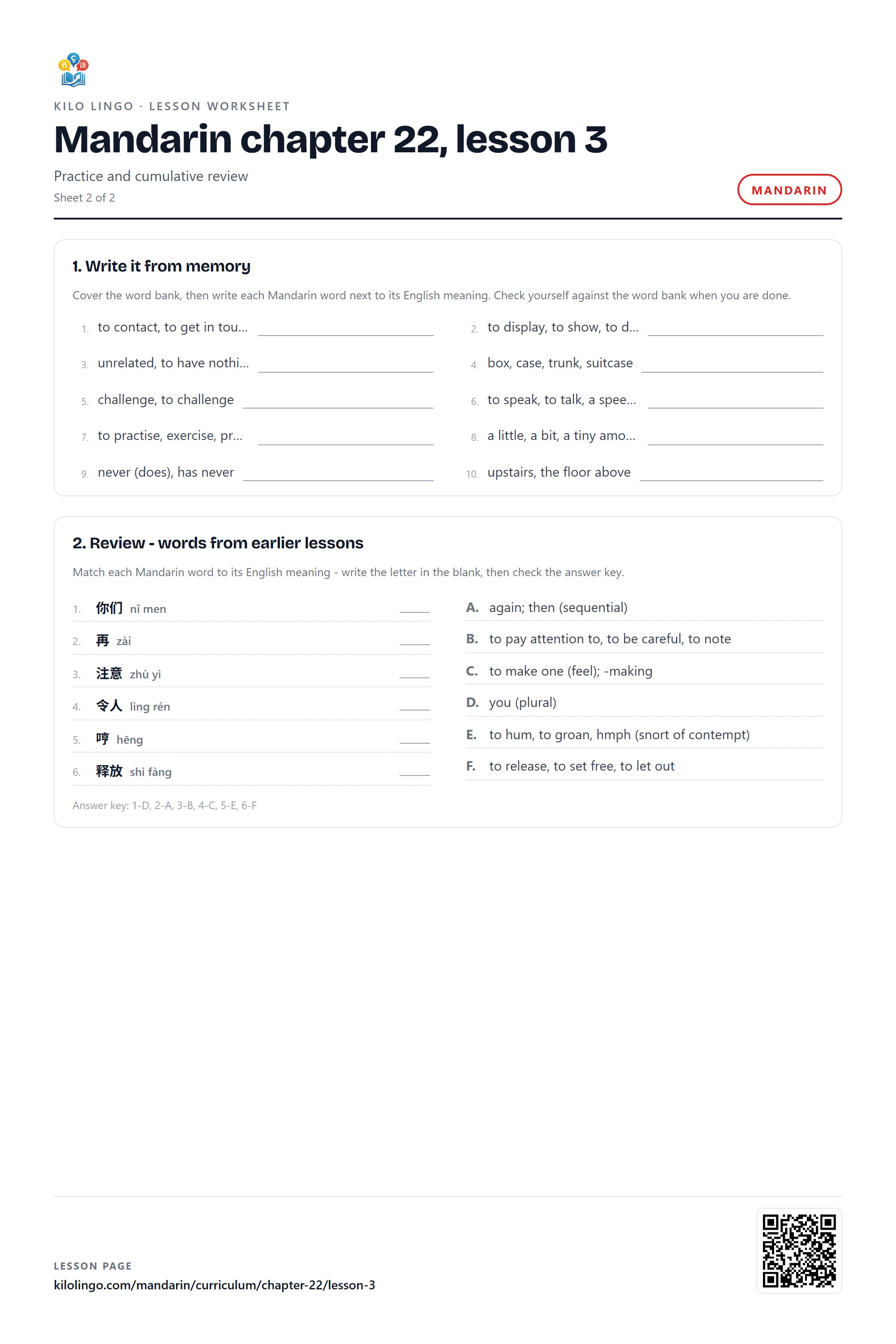
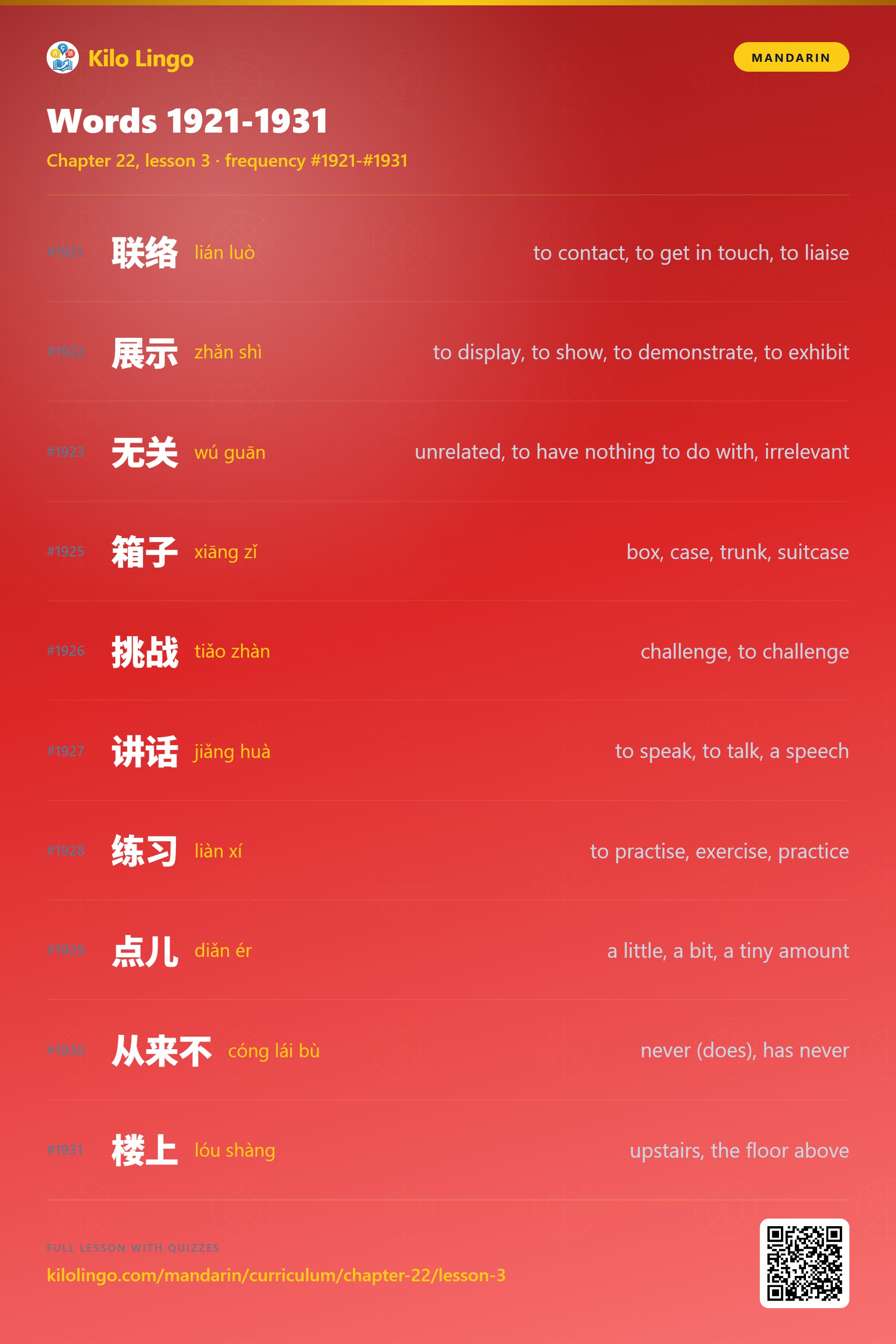
- Words 1921-1931Vocabulary
10 words · ranks 1921-1931
- Word Bubbles review sessionReview games
Pop the words you just met by matching each one to its meaning. A couple of rounds and the batch is yours.
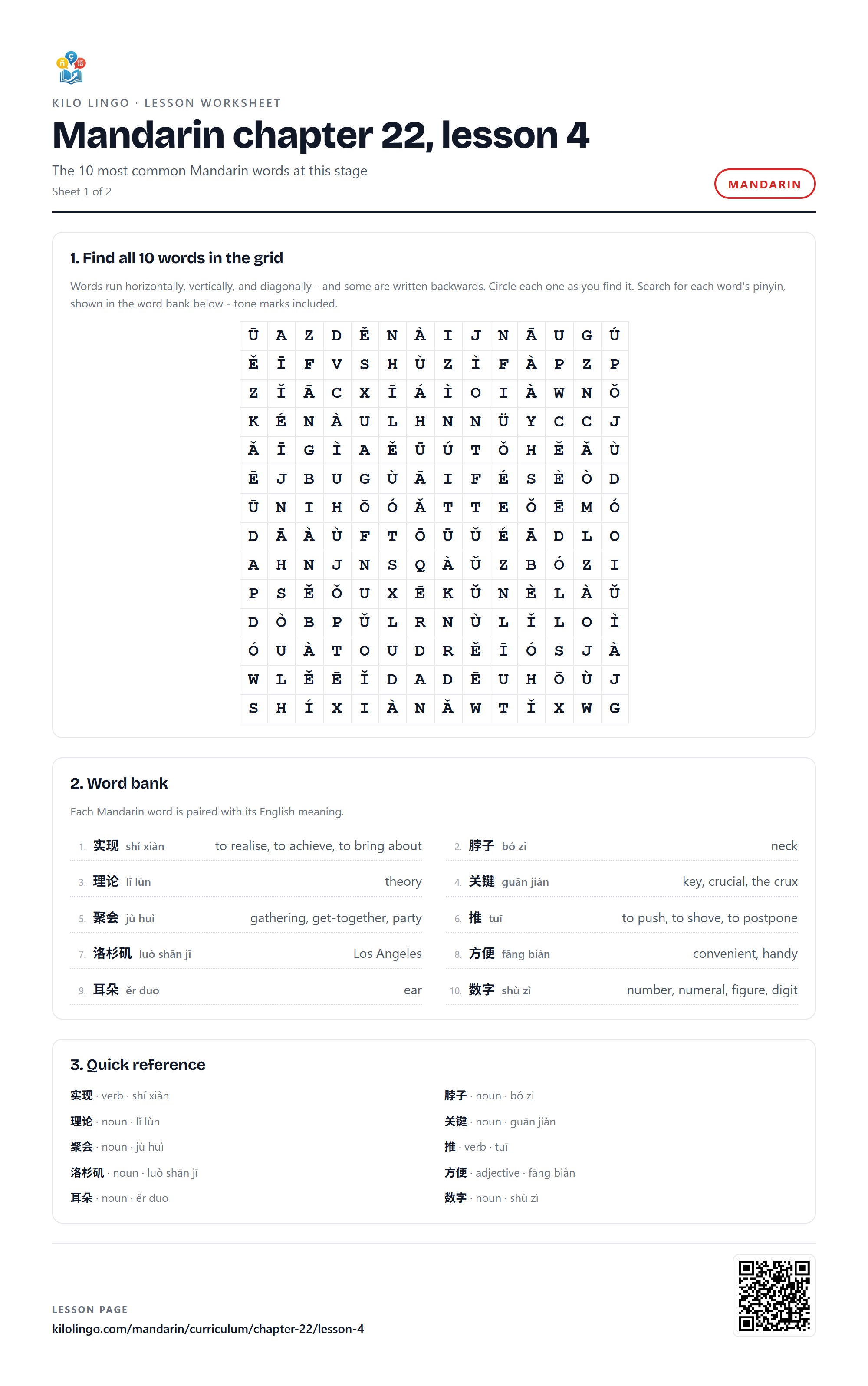
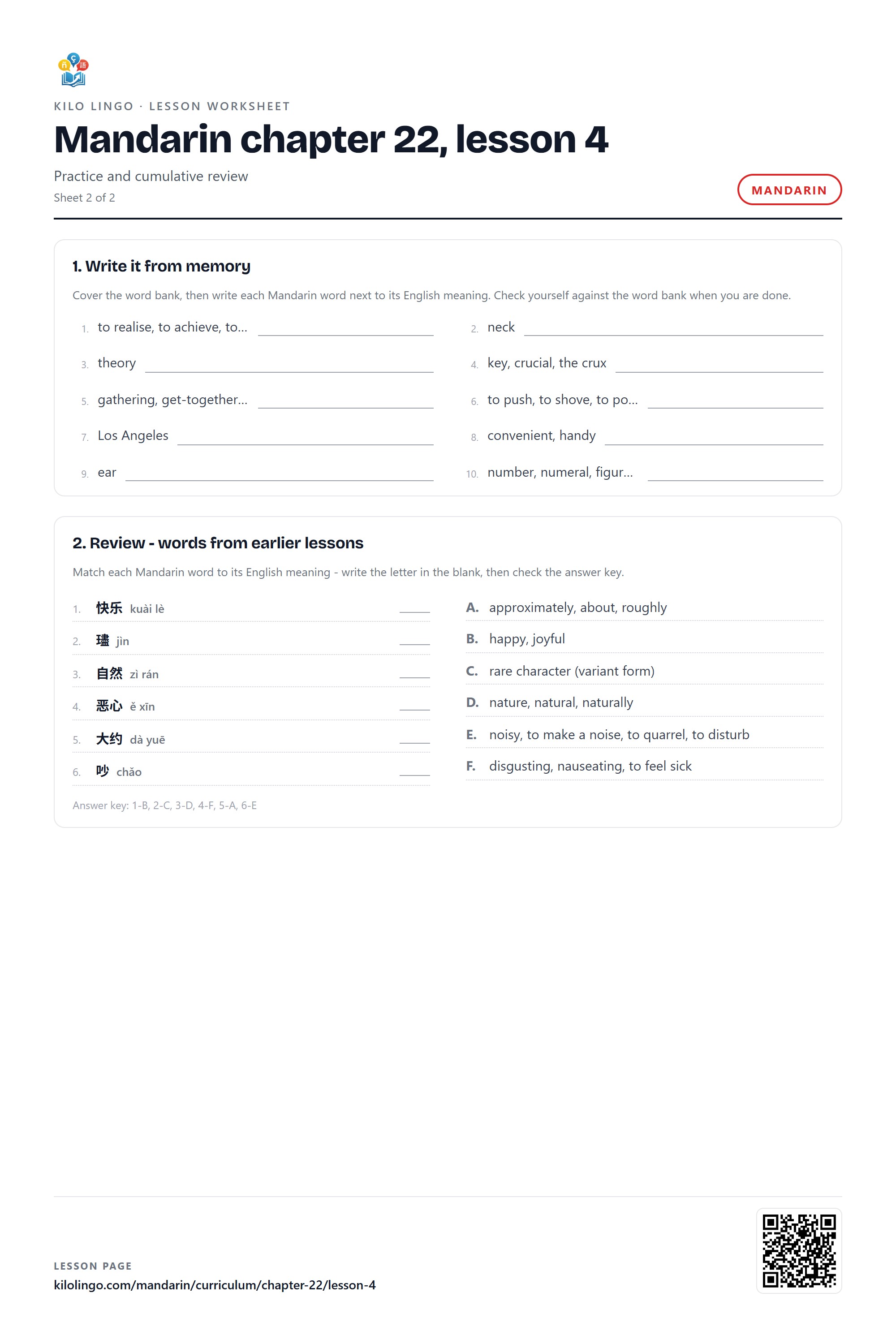
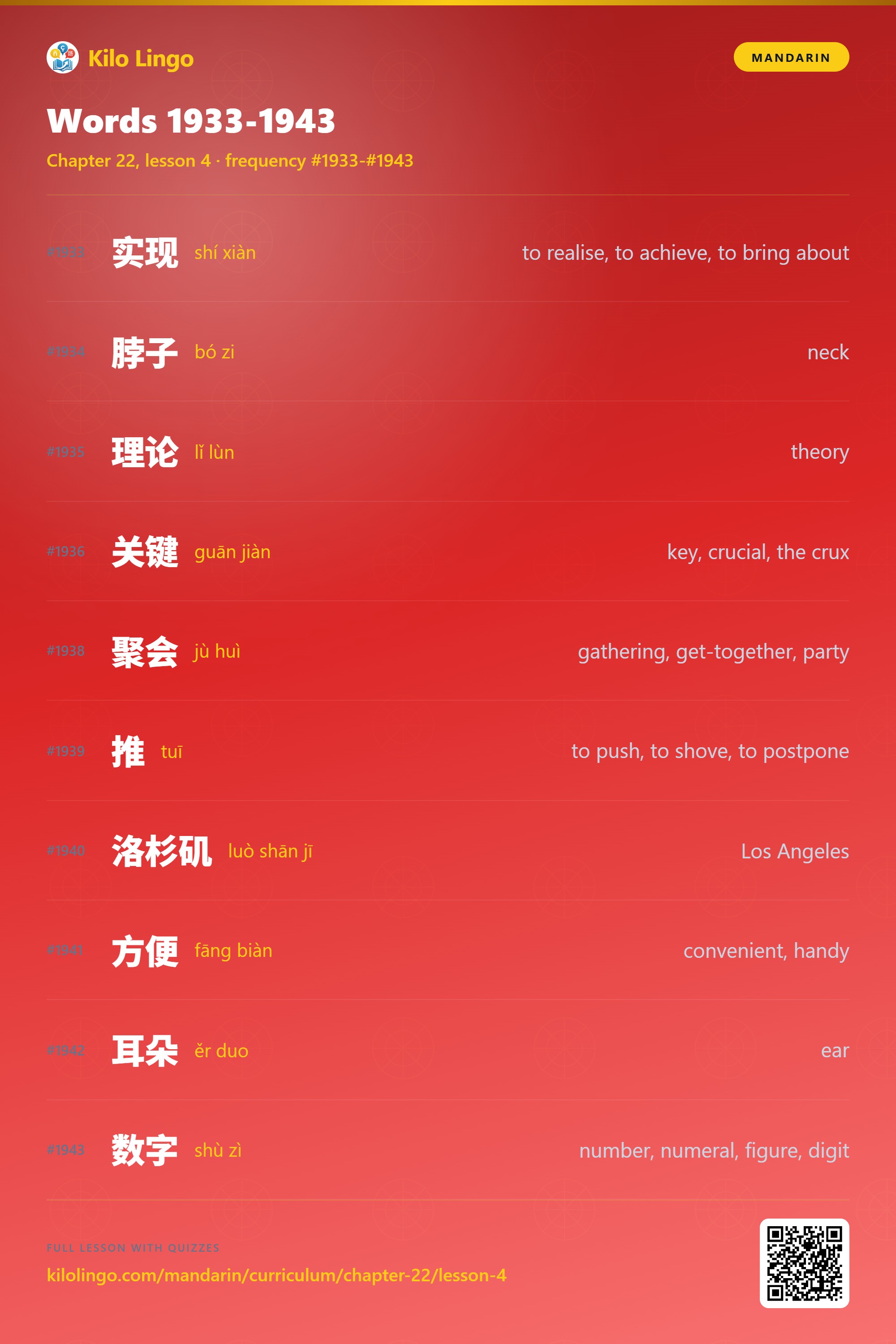
- Words 1933-1943Vocabulary
10 words · ranks 1933-1943
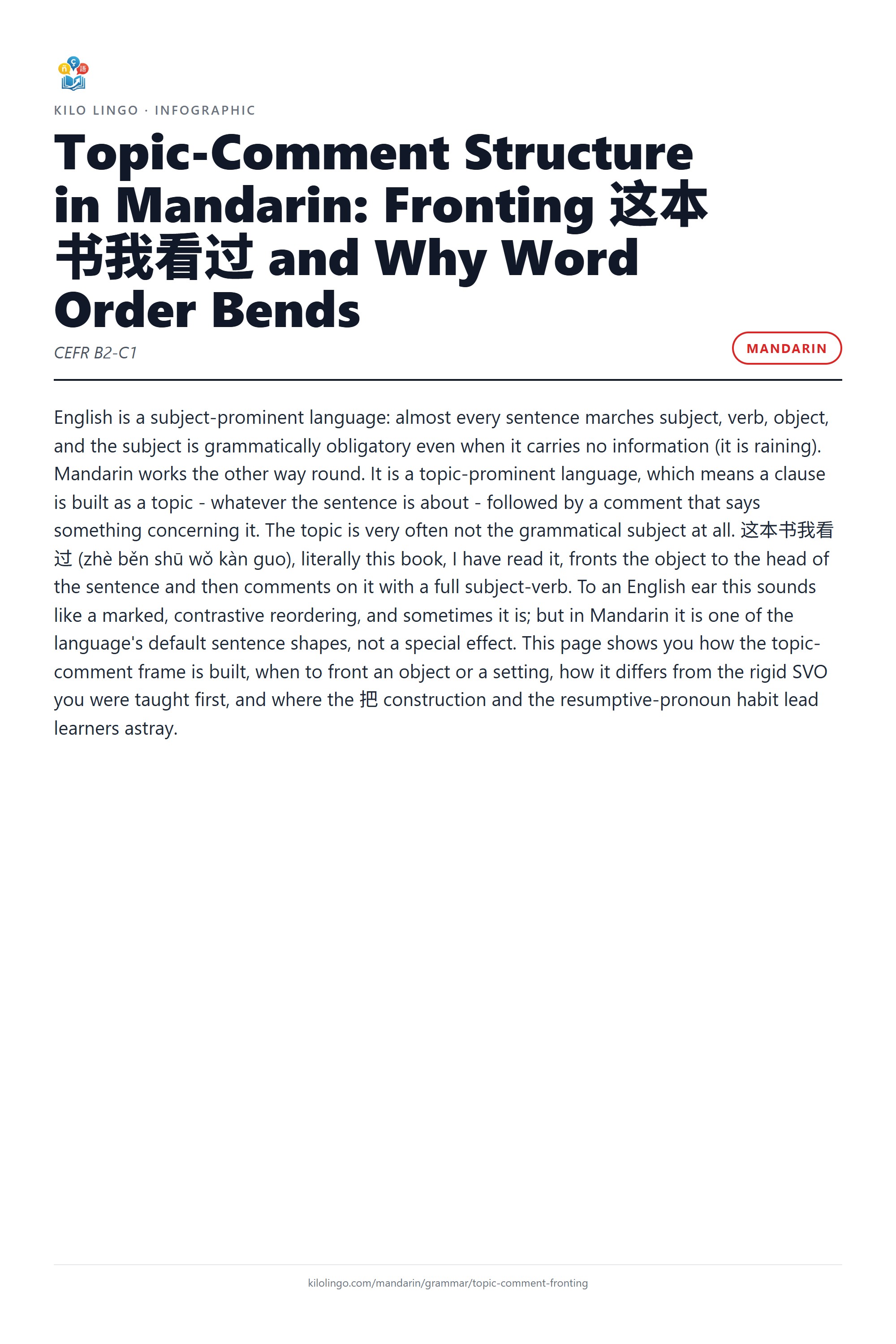
- Topic-comment frontingGrammar
这本书我看过 (this book, I have read it): Mandarin lifts a known thing to the front as the topic, then comments on it. Why word order bends this way, how the fronted topic differs from a grammatical subject, and why the slot is one of the language's most basic organising principles.
- 二 or 两?Mistake clinic
Mandarin has two words for two, and a measure word decides which.
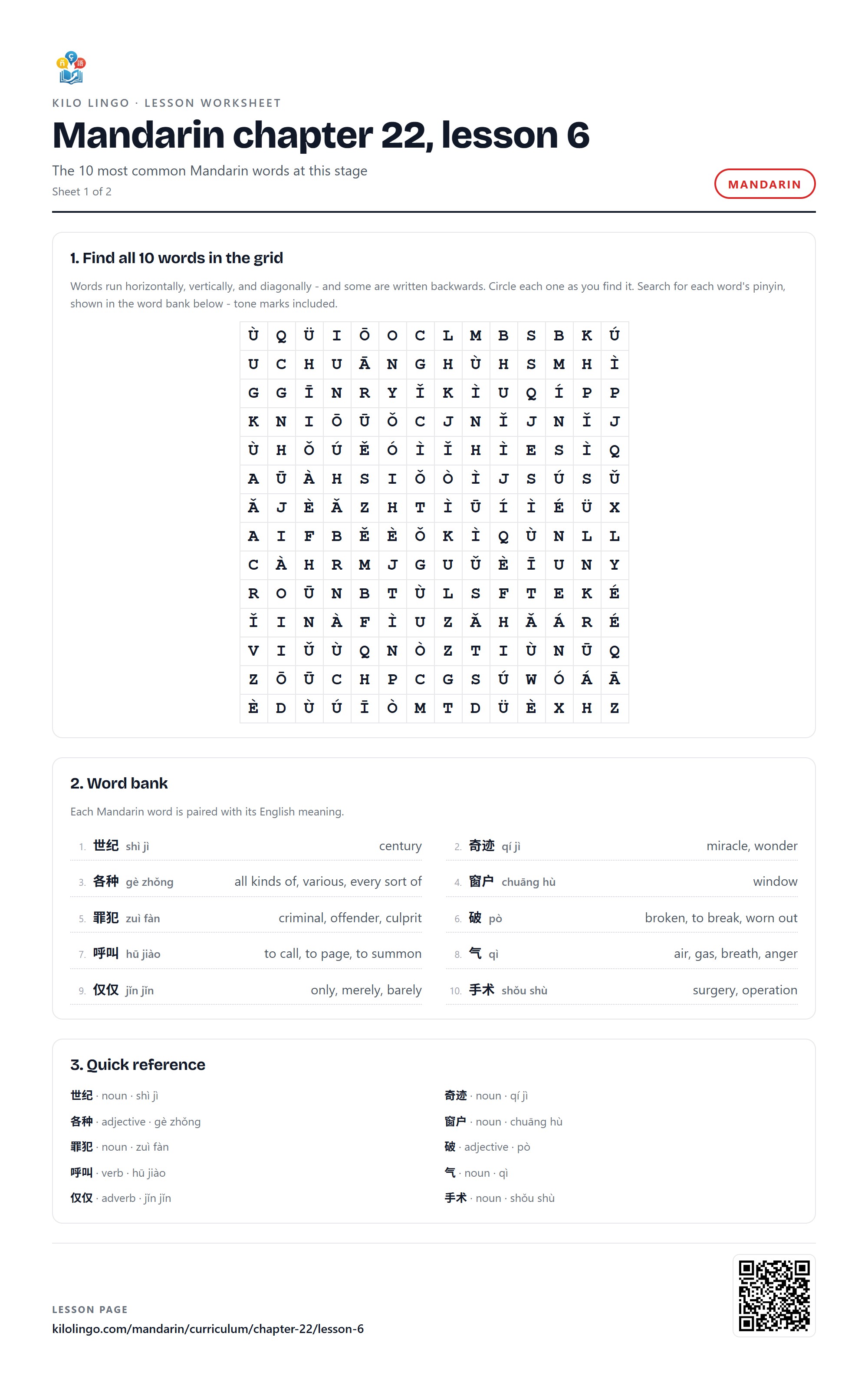
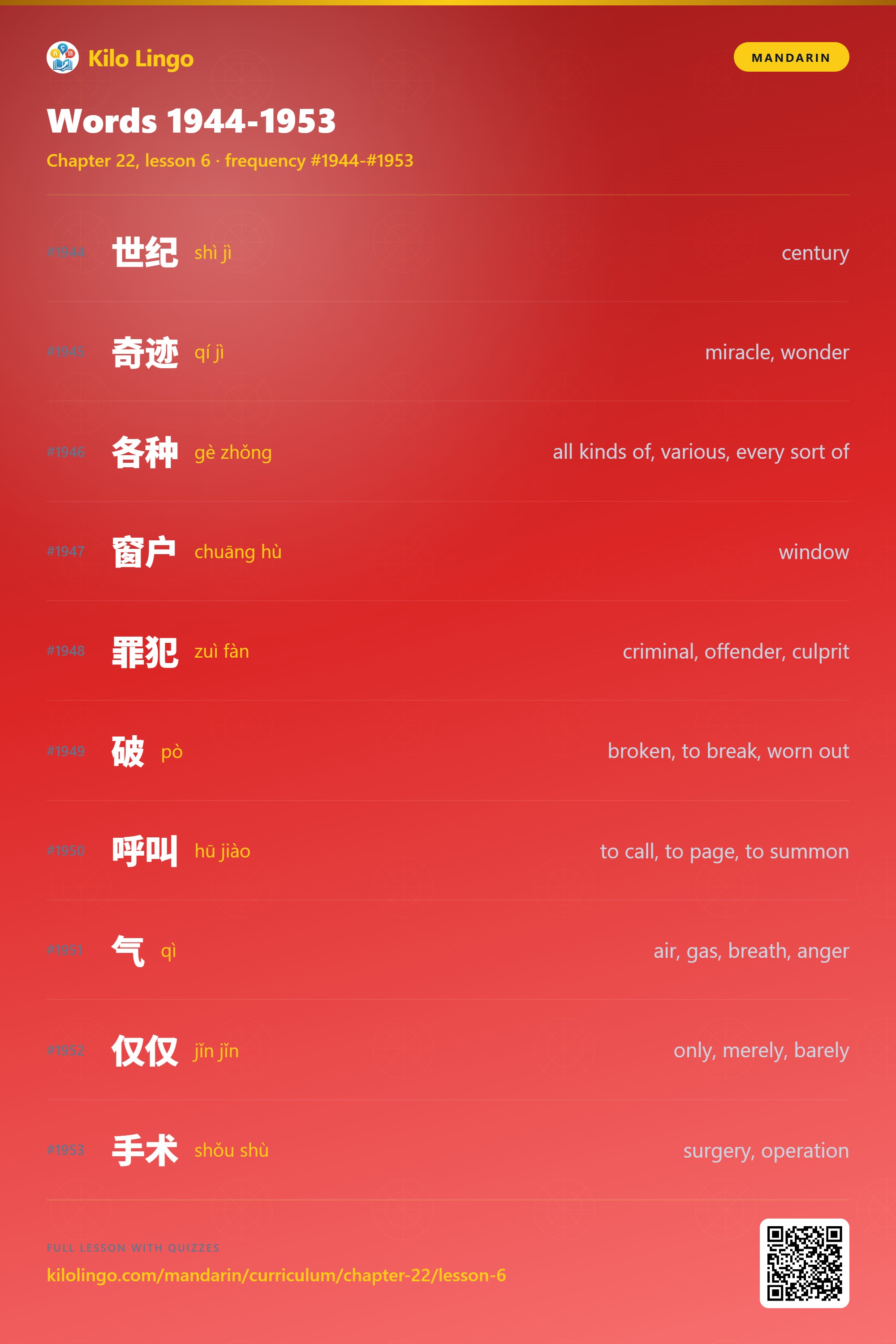
- Words 1944-1953Vocabulary
10 words · ranks 1944-1953
- Tone Shooter review sessionReview games
Shoot the words you just met into their tones by colour. The quickest way to fix a tone in place.
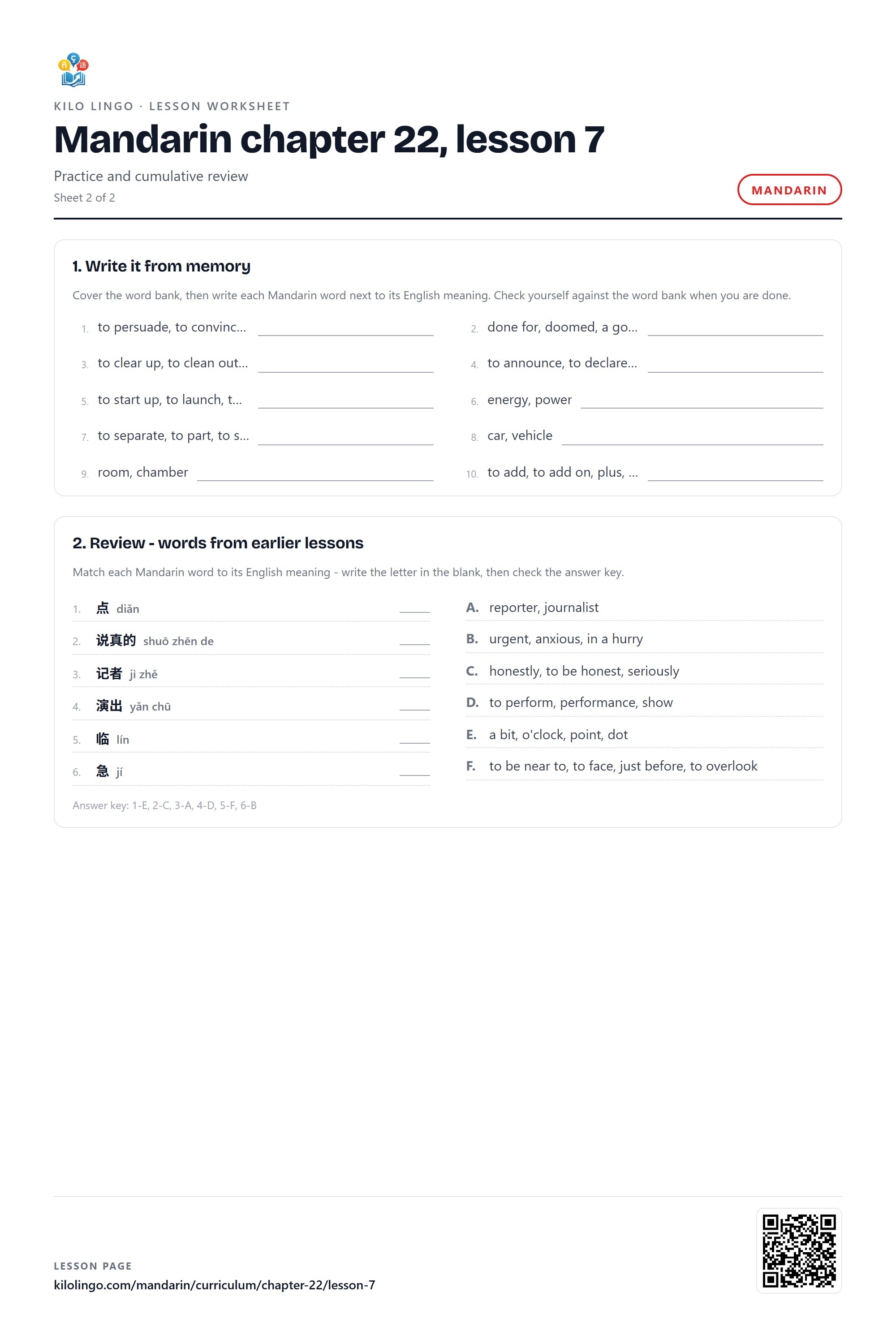
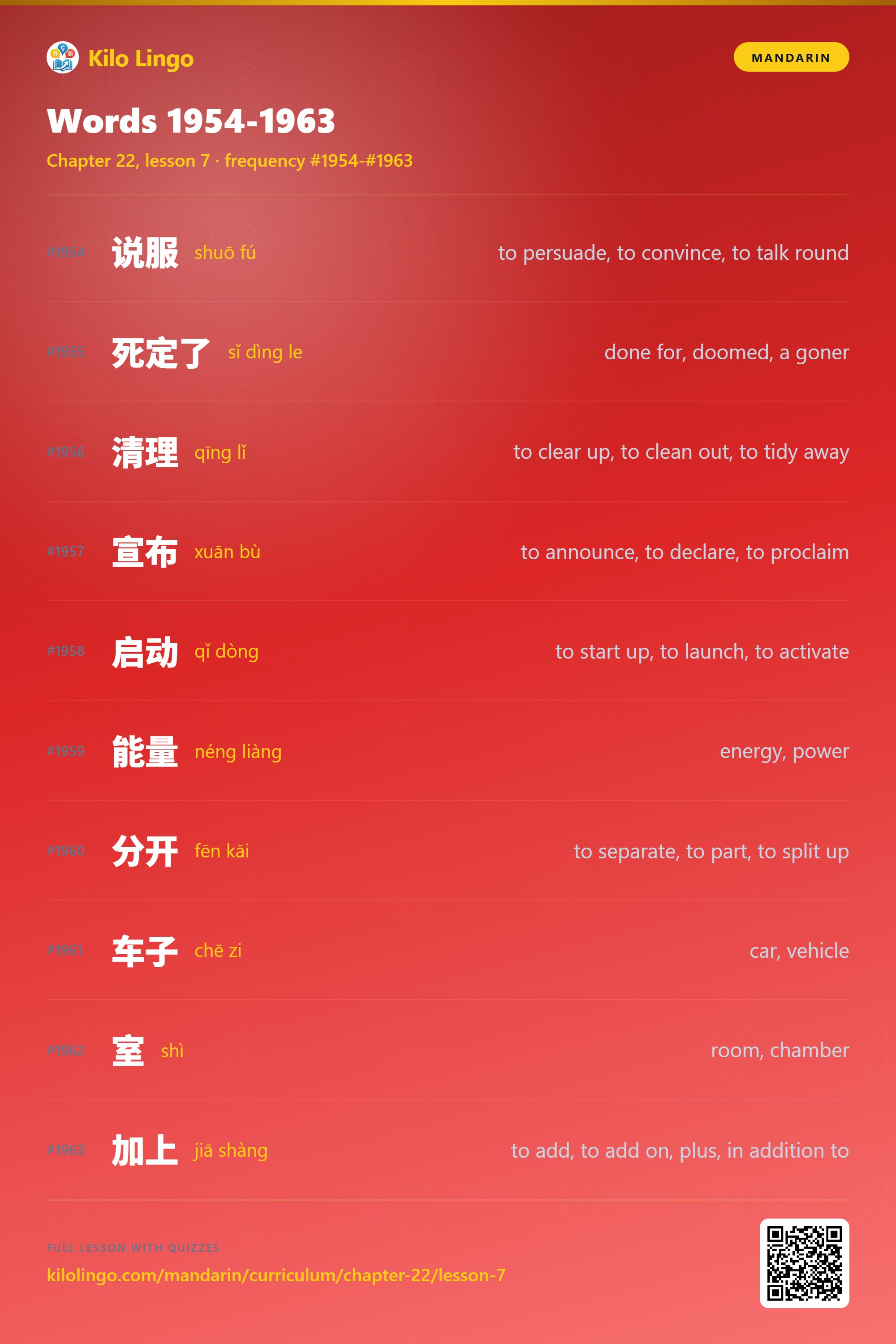
- Words 1954-1963Vocabulary
10 words · ranks 1954-1963
- Word Bubbles review sessionReview games
Pop the words you just met by matching each one to its meaning. A couple of rounds and the batch is yours.
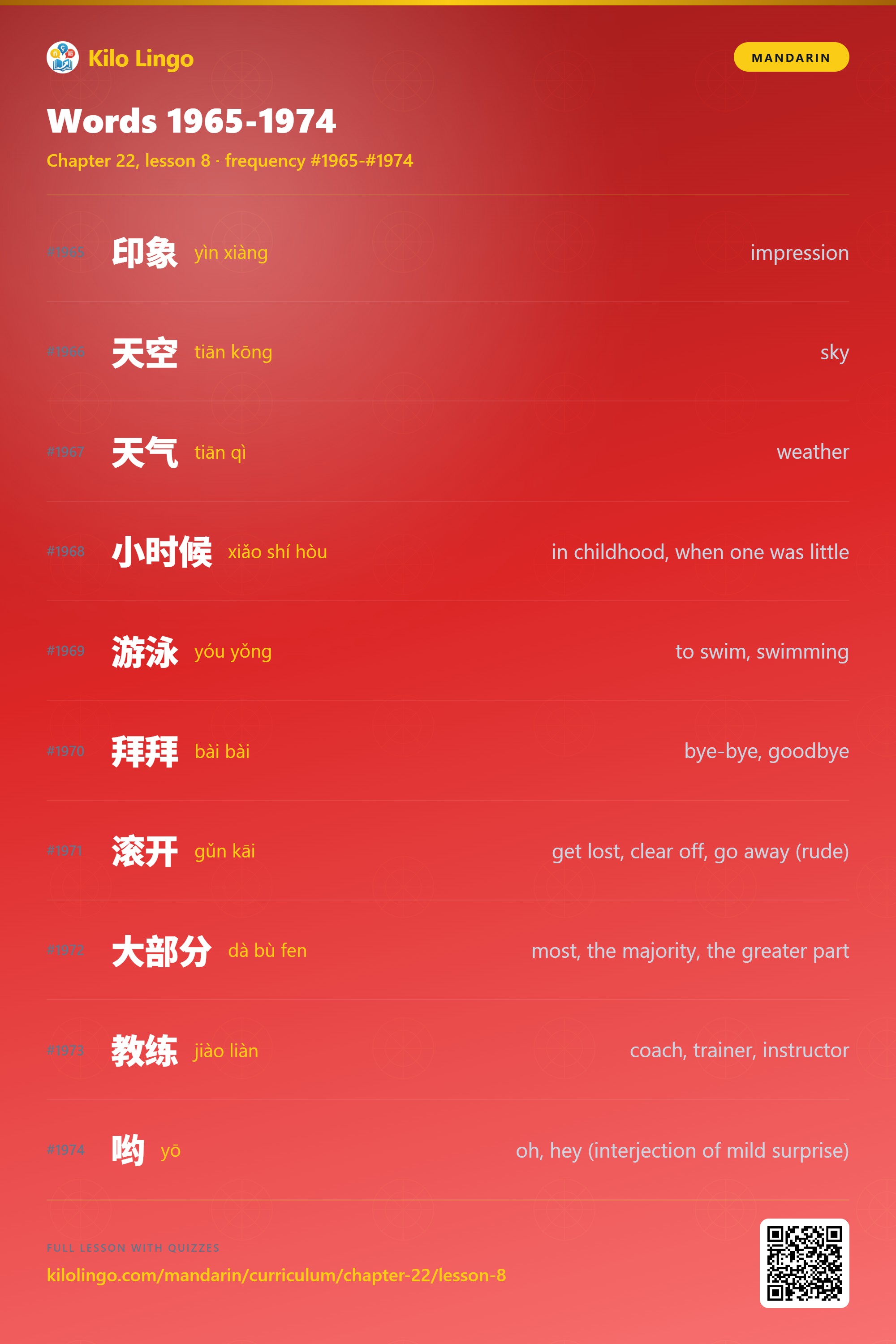
- Words 1965-1974Vocabulary
10 words · ranks 1965-1974
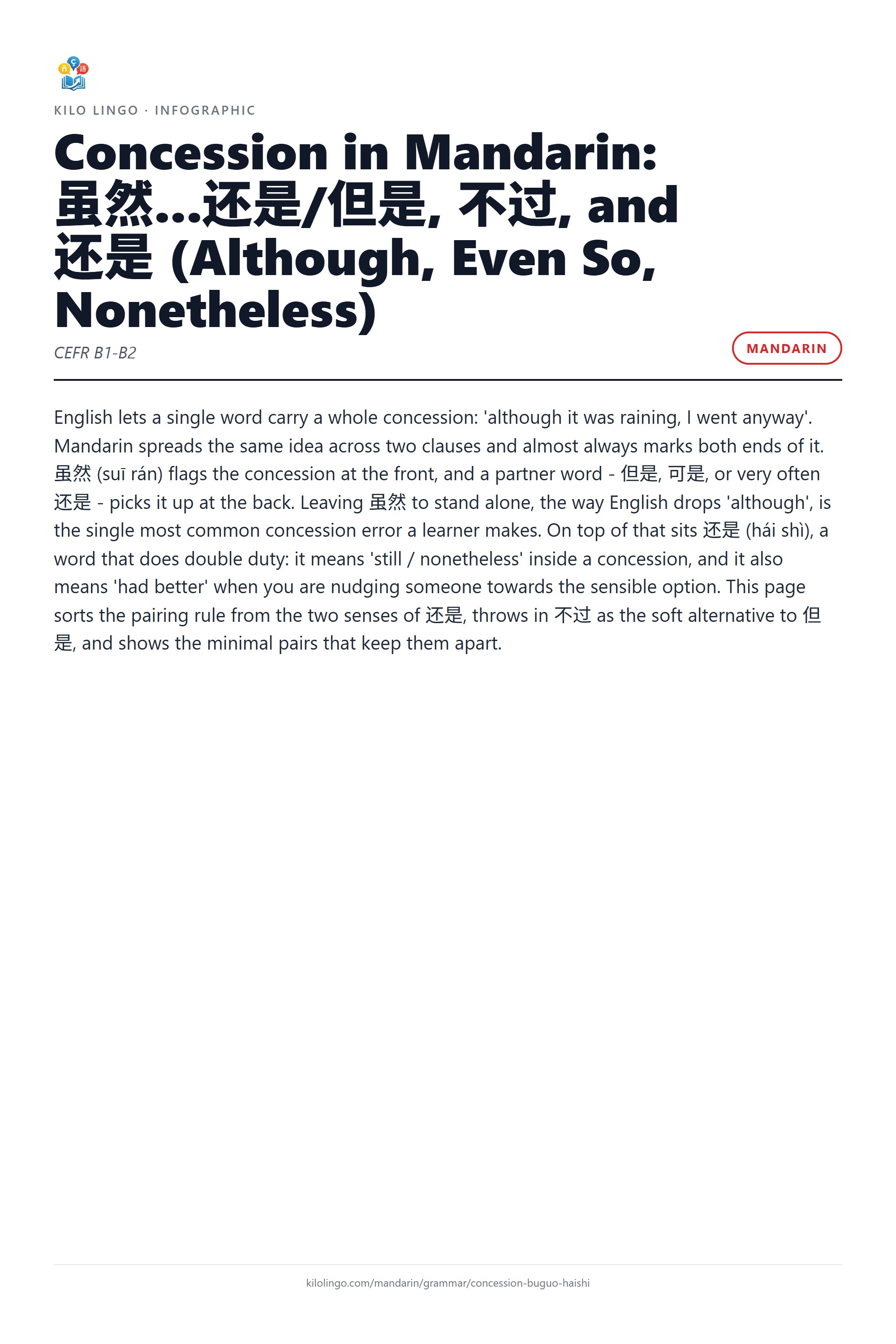
- Concession: 虽然, 不过, 还是Grammar
Conceding a point and pushing past it: 虽然...还是/但是 (although...still), 不过 (nonetheless), and standalone 还是 (even so). The paired connectives, why the second clause carries the real message, and the register difference between 但是 and the lighter 不过.
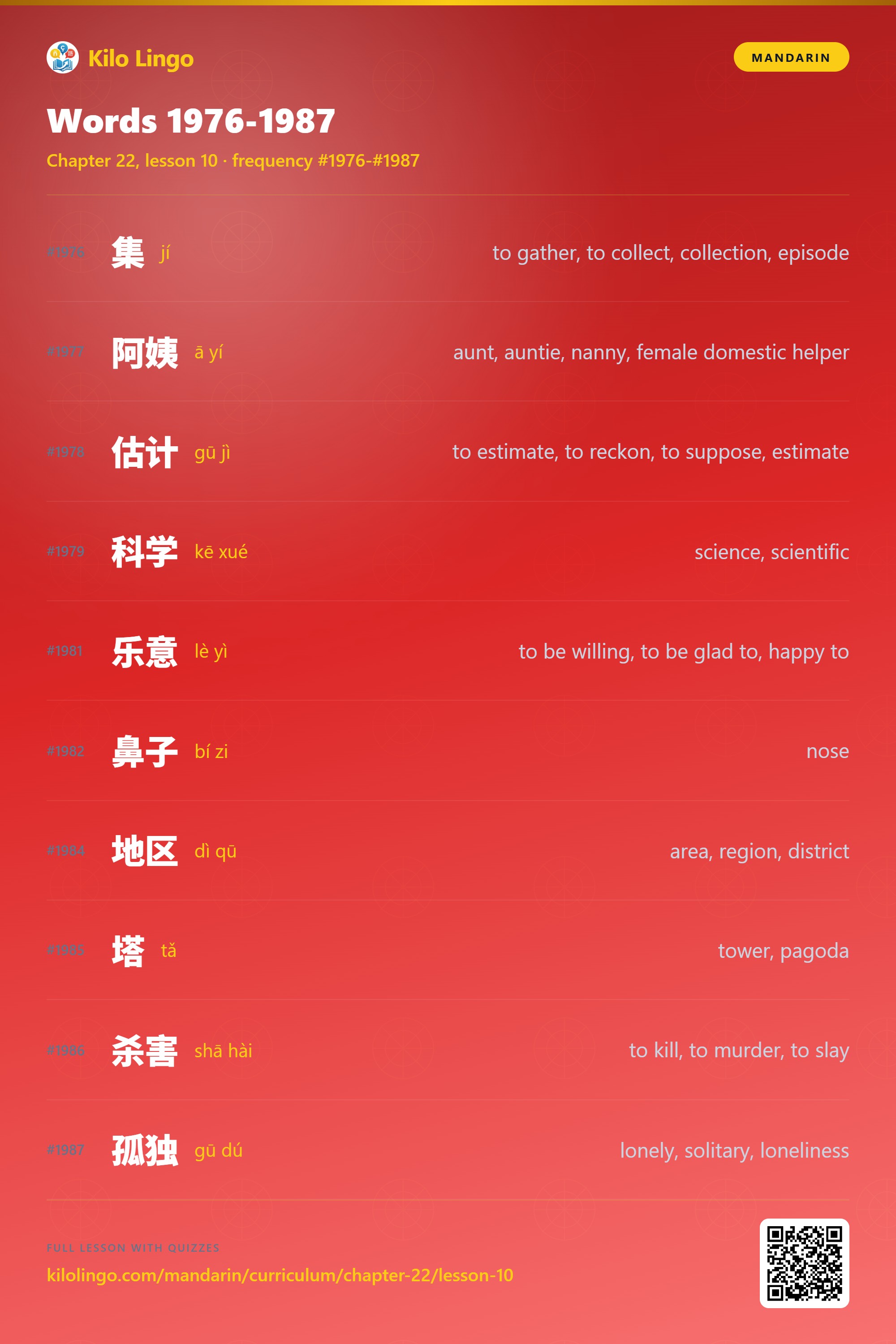
- Words 1976-1987Vocabulary
10 words · ranks 1976-1987
- Tone Shooter review sessionReview games
Shoot the words you just met into their tones by colour. The quickest way to fix a tone in place.
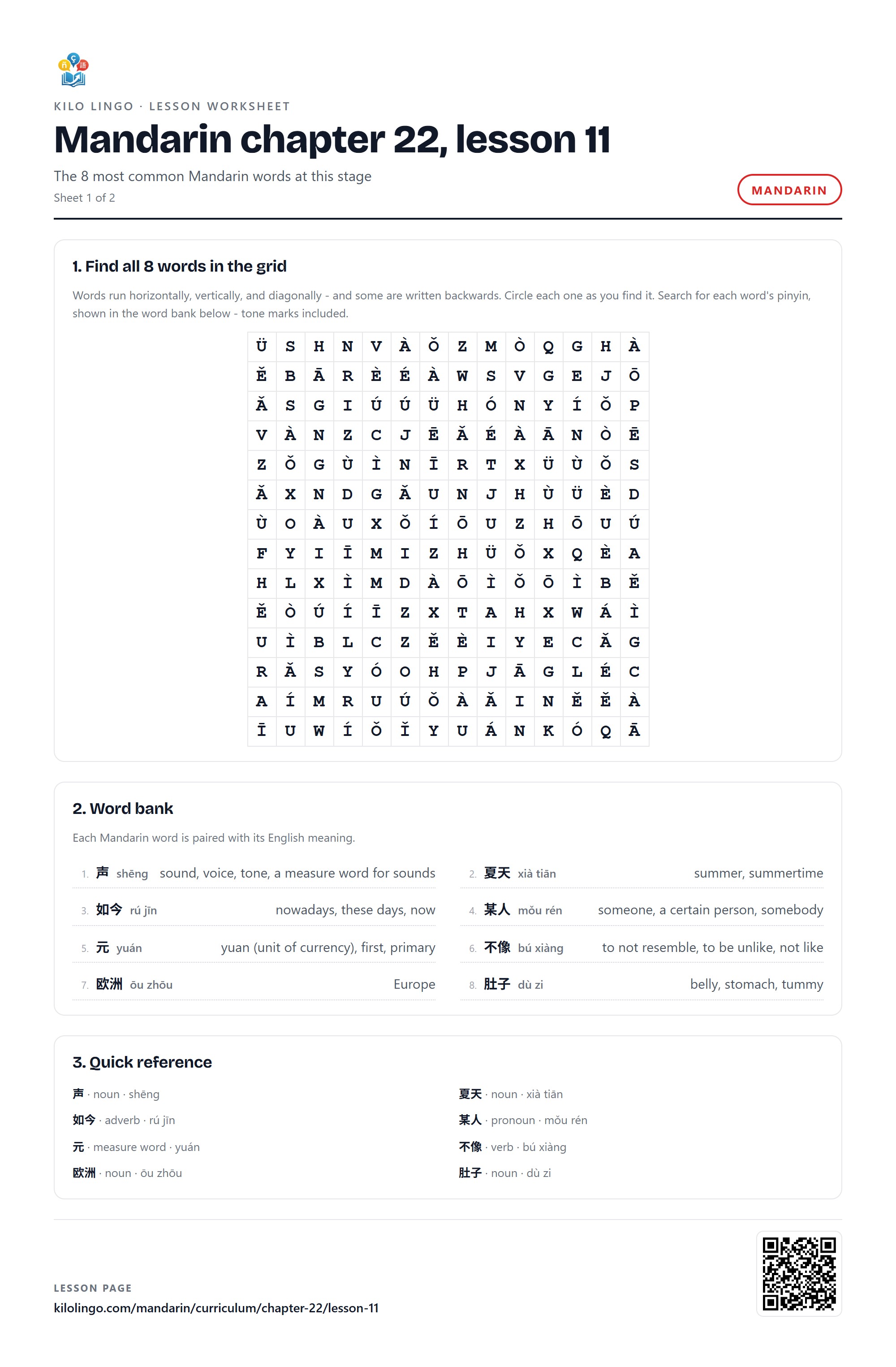
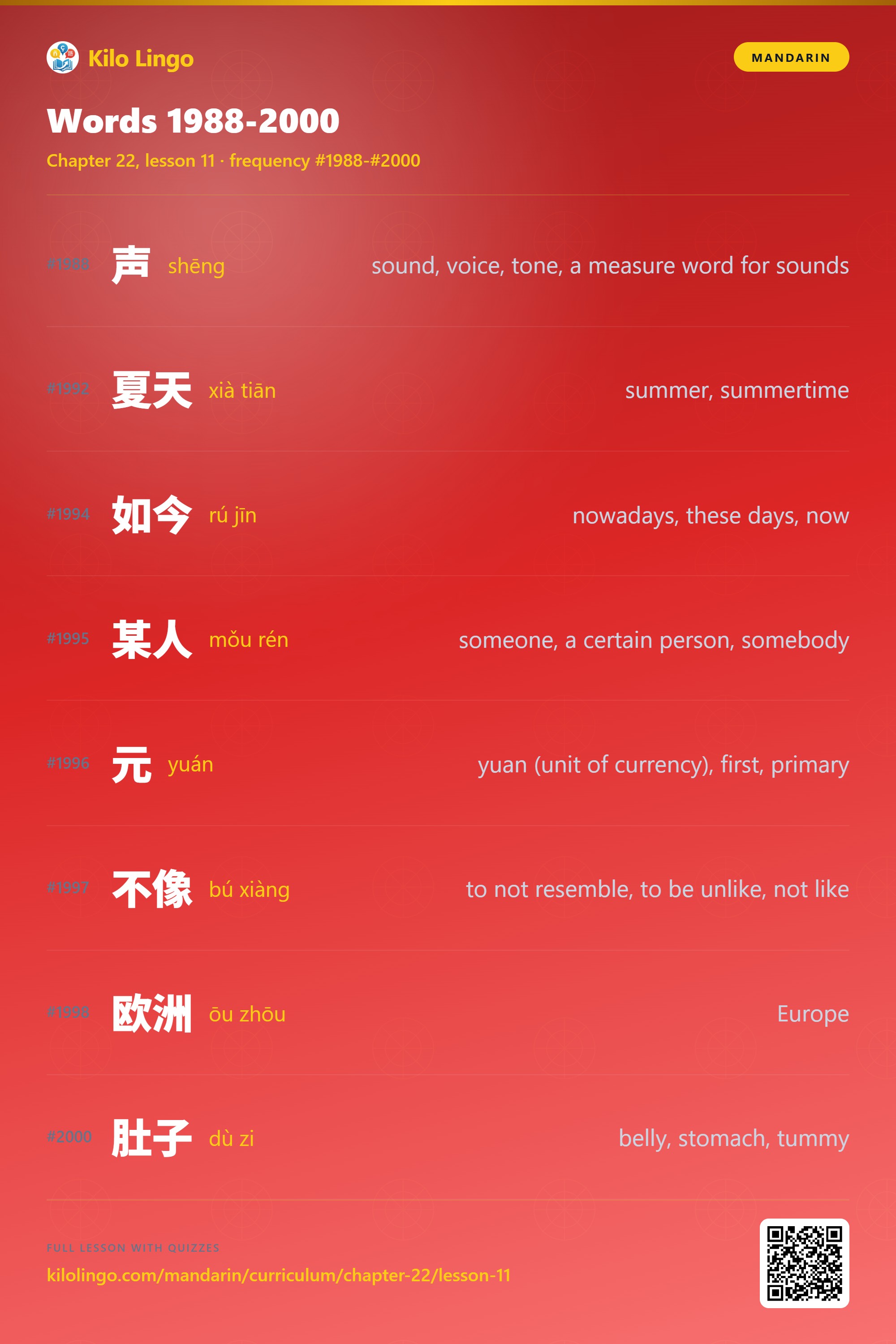
- Words 1988-2000Vocabulary
8 words · ranks 1988-2000
- Story milestone: top 2000 wordsGraded-reader story
You can read this story using only the words you've learned so far. Every content word sits at or above the rank-2000 ceiling.
- Money and shoppingThemed review
Buying and selling.
mai3andmai4are buy and sell, and they differ only in the tone - the pair worth getting right early. - Arcade reviewReview games
Replay this chapter's words as games - a different kind of repetition, and it counts.
Word printables
Per-word sheets88 words · a worksheet, infographic and listicle each









Chapter 23 · The 所 family
Chapter page →- Words 2001-2010Vocabulary
10 words · ranks 2001-2010
- Tone Shooter review sessionReview games
Shoot the words you just met into their tones by colour. The quickest way to fix a tone in place.
- Words 2011-2020Vocabulary
10 words · ranks 2011-2020
- Word Bubbles review sessionReview games
Pop the words you just met by matching each one to its meaning. A couple of rounds and the batch is yours.
- Words 2021-2031Vocabulary
10 words · ranks 2021-2031
- Tone Shooter review sessionReview games
Shoot the words you just met into their tones by colour. The quickest way to fix a tone in place.
- Words 2032-2041Vocabulary
10 words · ranks 2032-2041
- The 所 familyGrammar
所有, 所谓, 所以 and the bare 所 + verb nominaliser. One classical morpheme doing one job, hiding inside four words the learner already uses, plus the formal 为...所 passive that written Chinese reaches for when 被 would sound like bad news.
- 住 or 呆?Mistake clinic
One is where you live. The other is where you happen to be for now.
- Words 2042-2052Vocabulary
10 words · ranks 2042-2052
- Word Bubbles review sessionReview games
Pop the words you just met by matching each one to its meaning. A couple of rounds and the batch is yours.
- Words 2053-2062Vocabulary
10 words · ranks 2053-2062
- Tone Shooter review sessionReview games
Shoot the words you just met into their tones by colour. The quickest way to fix a tone in place.
- Words 2063-2073Vocabulary
10 words · ranks 2063-2073
- 者 as a nominaliserGrammar
作者, 读者, 记者: the suffix that turns a verb into the person who does it. Why it is not productive in speech, how to read it in a headline, and the set words it has already frozen into.
- Words 2074-2083Vocabulary
10 words · ranks 2074-2083
- Word Bubbles review sessionReview games
Pop the words you just met by matching each one to its meaning. A couple of rounds and the batch is yours.
- Words 2084-2094Vocabulary
10 words · ranks 2084-2094
- Tone Shooter review sessionReview games
Shoot the words you just met into their tones by colour. The quickest way to fix a tone in place.
- Words 2095-2090Vocabulary
6 words · ranks 2095-2090
- Story milestone: top 2100 wordsGraded-reader story
You can read this story using only the words you've learned so far. Every content word sits at or above the rank-2100 ceiling.
- The natural worldThemed review
Sky, weather and animals.
tian1is the day and the sky at once, which is why it turns up in the words for weather and summer. - Arcade reviewReview games
Replay this chapter's words as games - a different kind of repetition, and it counts.
Word printables
Per-word sheets96 words · a worksheet, infographic and listicle each
Chapter 24 · 性 and 化: abstract nouns and -ise verbs
Chapter page →- Words 2101-2110Vocabulary
10 words · ranks 2101-2110
- Word Bubbles review sessionReview games
Pop the words you just met by matching each one to its meaning. A couple of rounds and the batch is yours.
- Words 2111-2121Vocabulary
10 words · ranks 2111-2121
- Tone Shooter review sessionReview games
Shoot the words you just met into their tones by colour. The quickest way to fix a tone in place.
- Words 2122-2132Vocabulary
10 words · ranks 2122-2132
- Word Bubbles review sessionReview games
Pop the words you just met by matching each one to its meaning. A couple of rounds and the batch is yours.
- Words 2133-2142Vocabulary
10 words · ranks 2133-2142
可能性, 重要性, 现代化, 简化. Two suffixes with two jobs: 性 builds an abstract noun, 化 builds a process. The syllable-rhythm rule for which bases each takes, and the trap that 文化 and 变化 are roots rather than suffixes.
- Words 2143-2152Vocabulary
10 words · ranks 2143-2152
- Tone Shooter review sessionReview games
Shoot the words you just met into their tones by colour. The quickest way to fix a tone in place.
- Words 2153-2162Vocabulary
10 words · ranks 2153-2162
- Word Bubbles review sessionReview games
Pop the words you just met by matching each one to its meaning. A couple of rounds and the batch is yours.
- Words 2163-2172Vocabulary
10 words · ranks 2163-2172
马马虎虎, 一心一意, 乱七八糟. The 2+2 beat, the AABB and ABAC frames you can decode on sight, and why the block is frozen: it is compressed classical Chinese, so nothing goes inside it.
- Words 2173-2182Vocabulary
10 words · ranks 2173-2182
- Tone Shooter review sessionReview games
Shoot the words you just met into their tones by colour. The quickest way to fix a tone in place.
- Words 2183-2192Vocabulary
10 words · ranks 2183-2192
- Word Bubbles review sessionReview games
Pop the words you just met by matching each one to its meaning. A couple of rounds and the batch is yours.
- Words 2193-2200Vocabulary
8 words · ranks 2193-2200
- Story milestone: top 2200 wordsGraded-reader story
You can read this story using only the words you've learned so far. Every content word sits at or above the rank-2200 ceiling.
- Measure words: around the houseMeasure words
Beds, tables, tickets and luggage - the household nouns and their counters, drilled in both directions with the full set you have met so far.
- Arcade reviewReview games
Replay this chapter's words as games - a different kind of repetition, and it counts.
Word printables
Per-word sheets98 words · a worksheet, infographic and listicle each
Chapter 25 · Formal connectives
Chapter page →- Words 2201-2210Vocabulary
10 words · ranks 2201-2210
- Crossword review sessionReview games
Cross the words you just met, clued in English. Slower than a drill, and it sticks harder.
- Words 2211-2221Vocabulary
10 words · ranks 2211-2221
- Word Bubbles review sessionReview games
Pop the words you just met by matching each one to its meaning. A couple of rounds and the batch is yours.
- Words 2222-2231Vocabulary
10 words · ranks 2222-2231
- Tone Shooter review sessionReview games
Shoot the words you just met into their tones by colour. The quickest way to fix a tone in place.
- Words 2232-2241Vocabulary
10 words · ranks 2232-2241
- Formal connectivesGrammar
然而, 因此, 于是, 尽管. The written-register joins that replace 但是 and 所以 in an essay or a news report, and the difference between a result (因此), a sequence (于是) and a genuine contrast (然而).
- Words 2242-2251Vocabulary
10 words · ranks 2242-2251
- Word Bubbles review sessionReview games
Pop the words you just met by matching each one to its meaning. A couple of rounds and the batch is yours.
- Words 2252-2262Vocabulary
10 words · ranks 2252-2262
- Tone Shooter review sessionReview games
Shoot the words you just met into their tones by colour. The quickest way to fix a tone in place.
- Words 2263-2272Vocabulary
10 words · ranks 2263-2272
- The 于 prepositionsGrammar
对于, 关于, 由于, 至于, 属于, 位于, 终于. A single classical particle that fused into a shelf of everyday words, and how to tell the topic-setters from the cause-givers.
- Words 2273-2282Vocabulary
10 words · ranks 2273-2282
- Word Bubbles review sessionReview games
Pop the words you just met by matching each one to its meaning. A couple of rounds and the batch is yours.
- Words 2283-2292Vocabulary
10 words · ranks 2283-2292
- Tone Shooter review sessionReview games
Shoot the words you just met into their tones by colour. The quickest way to fix a tone in place.
- Words 2293-2300Vocabulary
8 words · ranks 2293-2300
- Story milestone: top 2300 wordsGraded-reader story
You can read this story using only the words you've learned so far. Every content word sits at or above the rank-2300 ceiling.
- Arcade reviewReview games
Replay this chapter's words as games - a different kind of repetition, and it counts.
Word printables
Per-word sheets98 words · a worksheet, infographic and listicle each
Chapter 26 · Causatives: 使, 令, 让
Chapter page →- Words 2301-2310Vocabulary
10 words · ranks 2301-2310
- Tone Shooter review sessionReview games
Shoot the words you just met into their tones by colour. The quickest way to fix a tone in place.
- Words 2311-2321Vocabulary
10 words · ranks 2311-2321
- Crossword review sessionReview games
Cross the words you just met, clued in English. Slower than a drill, and it sticks harder.
- Words 2322-2331Vocabulary
10 words · ranks 2322-2331
- Word Bubbles review sessionReview games
Pop the words you just met by matching each one to its meaning. A couple of rounds and the batch is yours.
- Words 2332-2341Vocabulary
10 words · ranks 2332-2341
- Causatives: 使, 令, 让Grammar
Two jobs English calls make: a cause producing a state, and a person imposing an action. 让 does both in speech, 使 is the written cause, 令 the literary one, and 令人 + a reaction word is a pattern worth learning whole.
- Words 2342-2351Vocabulary
10 words · ranks 2342-2351
- Tone Shooter review sessionReview games
Shoot the words you just met into their tones by colour. The quickest way to fix a tone in place.
- Words 2352-2362Vocabulary
10 words · ranks 2352-2362
- Word Bubbles review sessionReview games
Pop the words you just met by matching each one to its meaning. A couple of rounds and the batch is yours.
- Words 2363-2372Vocabulary
10 words · ranks 2363-2372
- The spoken passives: 让, 叫, 给Grammar
What people actually say instead of 被. The adversity bias, the rule that 让 and 叫 must name a doer (with 人 as the placeholder), the stacked 被...给..., and two tests for telling a passive from a causative.
- Words 2373-2384Vocabulary
10 words · ranks 2373-2384
- Tone Shooter review sessionReview games
Shoot the words you just met into their tones by colour. The quickest way to fix a tone in place.
- Words 2386-2395Vocabulary
10 words · ranks 2386-2395
- Word Bubbles review sessionReview games
Pop the words you just met by matching each one to its meaning. A couple of rounds and the batch is yours.
- Words 2396-2400Vocabulary
5 words · ranks 2396-2400
- Song: 凤阳花鼓Song
Play it, read along word by word, then answer the questions. Every word is at your level - the song page teaches the few that are new.
- Story milestone: top 2400 wordsGraded-reader story
You can read this story using only the words you've learned so far. Every content word sits at or above the rank-2400 ceiling.
- Arcade reviewReview games
Replay this chapter's words as games - a different kind of repetition, and it counts.
Word printables
Per-word sheets95 words · a worksheet, infographic and listicle each
Chapter 27 · The 以 family
Chapter page →- Words 2401-2410Vocabulary
10 words · ranks 2401-2410
- Word Bubbles review sessionReview games
Pop the words you just met by matching each one to its meaning. A couple of rounds and the batch is yours.
- Words 2411-2420Vocabulary
10 words · ranks 2411-2420
- Crossword review sessionReview games
Cross the words you just met, clued in English. Slower than a drill, and it sticks harder.
- Words 2421-2430Vocabulary
10 words · ranks 2421-2430
- Tone Shooter review sessionReview games
Shoot the words you just met into their tones by colour. The quickest way to fix a tone in place.
- Words 2431-2441Vocabulary
10 words · ranks 2431-2441
- The 以 familyGrammar
以为, 以及, 以便, 以免, 以来 and 以...为.... Six hats on one old verb, including the assumption that turned out wrong (以为) and the negation trap in 以免.
- Words 2442-2451Vocabulary
10 words · ranks 2442-2451
- Word Bubbles review sessionReview games
Pop the words you just met by matching each one to its meaning. A couple of rounds and the batch is yours.
- Words 2452-2462Vocabulary
10 words · ranks 2452-2462
- Tone Shooter review sessionReview games
Shoot the words you just met into their tones by colour. The quickest way to fix a tone in place.
- Words 2463-2475Vocabulary
10 words · ranks 2463-2475
- 之: the written ancestor of 的Grammar
之一, 之间, 之后, 总之, and 三分之一. The classical linker that survives only in fixed shapes, why it is never productive, and how fractions read backwards to an English eye.
- Words 2476-2485Vocabulary
10 words · ranks 2476-2485
- Word Bubbles review sessionReview games
Pop the words you just met by matching each one to its meaning. A couple of rounds and the batch is yours.
- Words 2486-2495Vocabulary
10 words · ranks 2486-2495
- Tone Shooter review sessionReview games
Shoot the words you just met into their tones by colour. The quickest way to fix a tone in place.
- Words 2496-2500Vocabulary
5 words · ranks 2496-2500
- Story milestone: top 2500 wordsGraded-reader story
You can read this story using only the words you've learned so far. Every content word sits at or above the rank-2500 ceiling.
- Arcade reviewReview games
Replay this chapter's words as games - a different kind of repetition, and it counts.
Word printables
Per-word sheets95 words · a worksheet, infographic and listicle each
Chapter 28 · 就 vs 才
Chapter page →- Words 2501-2511Vocabulary
10 words · ranks 2501-2511
- Crossword review sessionReview games
Cross the words you just met, clued in English. Slower than a drill, and it sticks harder.
- Words 2512-2522Vocabulary
10 words · ranks 2512-2522
- Tone Shooter review sessionReview games
Shoot the words you just met into their tones by colour. The quickest way to fix a tone in place.
- Words 2523-2532Vocabulary
10 words · ranks 2523-2532
- Word Bubbles review sessionReview games
Pop the words you just met by matching each one to its meaning. A couple of rounds and the batch is yours.
- Words 2533-2543Vocabulary
10 words · ranks 2533-2543
- 就 vs 才Grammar
他六点就来了 against 他六点才来: the same hour, opposite sentences. Neither word is about the clock, both are about what the speaker expected, which is why 就 reads as early or easy and 才 as late or grudging.
- Words 2544-2553Vocabulary
10 words · ranks 2544-2553
- Tone Shooter review sessionReview games
Shoot the words you just met into their tones by colour. The quickest way to fix a tone in place.
- Words 2554-2564Vocabulary
10 words · ranks 2554-2564
- Word Bubbles review sessionReview games
Pop the words you just met by matching each one to its meaning. A couple of rounds and the batch is yours.
- Words 2566-2575Vocabulary
10 words · ranks 2566-2575
- 又, 再 and 还Grammar
Three ways to say again, split by time: 又 for a repeat that already happened, 再 for one that has not, 还 for something still going on. Swapping the first two is the commonest error at this level, and the 了 is the tell.
- Words 2576-2586Vocabulary
10 words · ranks 2576-2586
- Tone Shooter review sessionReview games
Shoot the words you just met into their tones by colour. The quickest way to fix a tone in place.
- Words 2587-2597Vocabulary
10 words · ranks 2587-2597
- Word Bubbles review sessionReview games
Pop the words you just met by matching each one to its meaning. A couple of rounds and the batch is yours.
- Words 2598-2600Vocabulary
3 words · ranks 2598-2600
- Story milestone: top 2600 wordsGraded-reader story
You can read this story using only the words you've learned so far. Every content word sits at or above the rank-2600 ceiling.
- Measure words: the full collectionMeasure words
Every noun-counter pairing the course has taught, in one session. By now the right measure word should arrive before the thought does.
- Arcade reviewReview games
Replay this chapter's words as games - a different kind of repetition, and it counts.
Word printables
Per-word sheets93 words · a worksheet, infographic and listicle each
Chapter 29 · 连...都/也: saying even
Chapter page →- Words 2601-2610Vocabulary
10 words · ranks 2601-2610
- Tone Shooter review sessionReview games
Shoot the words you just met into their tones by colour. The quickest way to fix a tone in place.
- Words 2611-2620Vocabulary
10 words · ranks 2611-2620
- Word Bubbles review sessionReview games
Pop the words you just met by matching each one to its meaning. A couple of rounds and the batch is yours.
- Words 2622-2631Vocabulary
10 words · ranks 2622-2631
- Tone Shooter review sessionReview games
Shoot the words you just met into their tones by colour. The quickest way to fix a tone in place.
- Words 2632-2641Vocabulary
10 words · ranks 2632-2641
- 连...都/也: saying evenGrammar
连他都不知道. Why the emphasised thing has to move in front of the verb, why 都 can never be dropped, and the one-unit idiom 连一个人都没有 that turns even into not a single one.
- Words 2642-2653Vocabulary
10 words · ranks 2642-2653
- Word Bubbles review sessionReview games
Pop the words you just met by matching each one to its meaning. A couple of rounds and the batch is yours.
- Words 2654-2664Vocabulary
10 words · ranks 2654-2664
- Tone Shooter review sessionReview games
Shoot the words you just met into their tones by colour. The quickest way to fix a tone in place.
- Words 2665-2674Vocabulary
10 words · ranks 2665-2674
The same opening clause means apart from with 都 and besides with 还. The second half of the sentence decides whether the thing is in or out, which makes this the most reversible pattern in the language.
- Words 2675-2685Vocabulary
10 words · ranks 2675-2685
- Word Bubbles review sessionReview games
Pop the words you just met by matching each one to its meaning. A couple of rounds and the batch is yours.
- Words 2686-2695Vocabulary
10 words · ranks 2686-2695
- Tone Shooter review sessionReview games
Shoot the words you just met into their tones by colour. The quickest way to fix a tone in place.
- Words 2696-2700Vocabulary
5 words · ranks 2696-2700
- Story milestone: top 2700 wordsGraded-reader story
You can read this story using only the words you've learned so far. Every content word sits at or above the rank-2700 ceiling.
- Arcade reviewReview games
Replay this chapter's words as games - a different kind of repetition, and it counts.
Word printables
Per-word sheets95 words · a worksheet, infographic and listicle each
Chapter 30 · 不但...而且: not only, but also
Chapter page →- Words 2701-2712Vocabulary
10 words · ranks 2701-2712
- Word Bubbles review sessionReview games
Pop the words you just met by matching each one to its meaning. A couple of rounds and the batch is yours.
- Words 2713-2723Vocabulary
10 words · ranks 2713-2723
- Tone Shooter review sessionReview games
Shoot the words you just met into their tones by colour. The quickest way to fix a tone in place.
- Words 2724-2733Vocabulary
10 words · ranks 2724-2733
- Word Bubbles review sessionReview games
Pop the words you just met by matching each one to its meaning. A couple of rounds and the batch is yours.
- Words 2734-2743Vocabulary
10 words · ranks 2734-2743
- 不但...而且: not only, but alsoGrammar
The escalating pair, plus 不仅 as its written twin. Where 不但 sits depends on whether both halves share a subject, and the second connective is not optional however much English instinct says otherwise.
- Words 2744-2753Vocabulary
10 words · ranks 2744-2753
- Tone Shooter review sessionReview games
Shoot the words you just met into their tones by colour. The quickest way to fix a tone in place.
- Words 2754-2763Vocabulary
10 words · ranks 2754-2763
- Word Bubbles review sessionReview games
Pop the words you just met by matching each one to its meaning. A couple of rounds and the batch is yours.
- Words 2764-2773Vocabulary
10 words · ranks 2764-2773
- 无论 and 不管: no matter whatGrammar
The frame needs a genuinely open middle: a question word, an A-not-A, or an either/or list. Put a plain statement in the slot and the sentence breaks, which is the error to watch for.
- Words 2774-2783Vocabulary
10 words · ranks 2774-2783
- Tone Shooter review sessionReview games
Shoot the words you just met into their tones by colour. The quickest way to fix a tone in place.
- Words 2785-2796Vocabulary
10 words · ranks 2785-2796
- Word Bubbles review sessionReview games
Pop the words you just met by matching each one to its meaning. A couple of rounds and the batch is yours.
- Words 2797-2800Vocabulary
4 words · ranks 2797-2800
- Story milestone: top 2800 wordsGraded-reader story
You can read this story using only the words you've learned so far. Every content word sits at or above the rank-2800 ceiling.
- Arcade reviewReview games
Replay this chapter's words as games - a different kind of repetition, and it counts.
Word printables
Per-word sheets94 words · a worksheet, infographic and listicle each
Chapter 31 · Rhetorical questions
Chapter page →- Words 2801-2810Vocabulary
10 words · ranks 2801-2810
- Crossword review sessionReview games
Cross the words you just met, clued in English. Slower than a drill, and it sticks harder.
- Words 2811-2820Vocabulary
10 words · ranks 2811-2820
- Word Bubbles review sessionReview games
Pop the words you just met by matching each one to its meaning. A couple of rounds and the batch is yours.
- Words 2821-2830Vocabulary
10 words · ranks 2821-2830
- Tone Shooter review sessionReview games
Shoot the words you just met into their tones by colour. The quickest way to fix a tone in place.
- Words 2831-2841Vocabulary
10 words · ranks 2831-2841
- Rhetorical questionsGrammar
难道, 不是...吗, 何必 and 岂不. Questions that are not questions: the polarity inverts, so a positive one makes a negative point. Also a register warning, because 难道 lands as an accusation.
- Words 2842-2851Vocabulary
10 words · ranks 2842-2851
- Word Bubbles review sessionReview games
Pop the words you just met by matching each one to its meaning. A couple of rounds and the batch is yours.
- Words 2852-2861Vocabulary
10 words · ranks 2852-2861
- Tone Shooter review sessionReview games
Shoot the words you just met into their tones by colour. The quickest way to fix a tone in place.
- Words 2862-2872Vocabulary
10 words · ranks 2862-2872
- Verb reduplicationGrammar
看看, 看一看, 休息休息. Doubling a verb makes the action brief and tentative, which is how Mandarin softens a request. The neutral tone on the second copy, and why AABB belongs to adjectives instead.
- Words 2873-2884Vocabulary
10 words · ranks 2873-2884
- Word Bubbles review sessionReview games
Pop the words you just met by matching each one to its meaning. A couple of rounds and the batch is yours.
- Words 2885-2894Vocabulary
10 words · ranks 2885-2894
- Tone Shooter review sessionReview games
Shoot the words you just met into their tones by colour. The quickest way to fix a tone in place.
- Words 2895-2900Vocabulary
6 words · ranks 2895-2900
- Story milestone: top 2900 wordsGraded-reader story
You can read this story using only the words you've learned so far. Every content word sits at or above the rank-2900 ceiling.
- Arcade reviewReview games
Replay this chapter's words as games - a different kind of repetition, and it counts.
Word printables
Per-word sheets96 words · a worksheet, infographic and listicle each
Chapter 32 · Conditionals: 如果, 要是, 的话
Chapter page →- Words 2901-2910Vocabulary
10 words · ranks 2901-2910
- Tone Shooter review sessionReview games
Shoot the words you just met into their tones by colour. The quickest way to fix a tone in place.
- Words 2911-2920Vocabulary
10 words · ranks 2911-2920
- Crossword review sessionReview games
Cross the words you just met, clued in English. Slower than a drill, and it sticks harder.
- Words 2921-2932Vocabulary
10 words · ranks 2921-2932
- Word Bubbles review sessionReview games
Pop the words you just met by matching each one to its meaning. A couple of rounds and the batch is yours.
- Words 2933-2943Vocabulary
10 words · ranks 2933-2943
- Conditionals: 如果, 要是, 的话Grammar
The if-then frame across the register scale, the 就 that finishes the second clause and cannot be dropped, the bare conditional with no connective at all, and 要不是...早就 for the thing that did not happen.
- Words 2944-2953Vocabulary
10 words · ranks 2944-2953
- Tone Shooter review sessionReview games
Shoot the words you just met into their tones by colour. The quickest way to fix a tone in place.
- Words 2954-2964Vocabulary
10 words · ranks 2954-2964
- Word Bubbles review sessionReview games
Pop the words you just met by matching each one to its meaning. A couple of rounds and the batch is yours.
- Words 2965-2974Vocabulary
10 words · ranks 2965-2974
- Sentence-final particlesGrammar
吧, 呢, 啊, 嘛 and the final 了. These carry most of the politeness in spoken Mandarin, which is why perfect grammar without them still sounds blunt. Includes why 啊 appears to be four different particles.
- Words 2975-2984Vocabulary
10 words · ranks 2975-2984
- Tone Shooter review sessionReview games
Shoot the words you just met into their tones by colour. The quickest way to fix a tone in place.
- Words 2985-2995Vocabulary
10 words · ranks 2985-2995
- Word Bubbles review sessionReview games
Pop the words you just met by matching each one to its meaning. A couple of rounds and the batch is yours.
- Words 2996-2930Vocabulary
6 words · ranks 2996-2930
- Song: 送别Song
Play it, read along word by word, then answer the questions. Every word is at your level - the song page teaches the few that are new.
- Story milestone: top 3000 wordsGraded-reader story
You can read this story using only the words you've learned so far. Every content word sits at or above the rank-3000 ceiling.
- Arcade reviewReview games
Replay this chapter's words as games - a different kind of repetition, and it counts.
Word printables
Per-word sheets96 words · a worksheet, infographic and listicle each
Chapter 33 · Graded readers: the first 1000 words
Chapter page →- Graded readers: the first 1000 wordsIntroduction
十个短故事,只用最常见的 1000 个词就能读完。The reward for the core 1000: a small library of stories to read straight through.
Chapter 34 · Strong language in Mandarin
Chapter page →- Strong language in MandarinIntroduction
The words you will hear in films and arguments, and how hard each one lands. This chapter is here so you can understand what you hear, not so you can say it. Mandarin insults reach for someone's family rather than for the body, which is why translating them into English makes them sound stranger and milder than they are.
- The mild endVocabulary
2 words · Crude rather than offensive. Aimed at a thing or a situation, not at a person, which is what keeps them mild.
- Words aimed at a personVocabulary
2 words · Insults, and the point where Mandarin stops being mild. Note the gendering: one of these is thrown at anyone, the other only ever at a woman, and it lands harder than its English gloss suggests.
- The two strong onesVocabulary
2 words · Both of these have an innocent life elsewhere in the language - one is the ordinary character for operating a machine, the other insults a stranger's mother. Knowing which reading you are hearing is entirely a matter of whether the word is standing on its own.
- Read the roomGraded-reader story
The whole chapter in one story. The word that gets a laugh when the office phone dies empties a family dinner table in one second, because Mandarin's heaviest insult drags in someone's mother and this time she was sitting right there. 看场合: the place first, then the people.
Word printables
Per-word sheets6 words · a worksheet, infographic and listicle each