
(duì miàn) - opposite, across from in Mandarin
duìmiànTraditional: 對面
Translation
opposite, across from
Stroke order

对

面
Examples
。
The bank is opposite the supermarket.
。
He lives right opposite my house.
。
We agreed to meet opposite the cinema.
。
That restaurant opposite is well known.
。
Please look at the shop across the road.
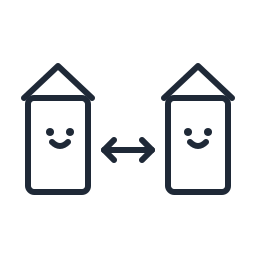
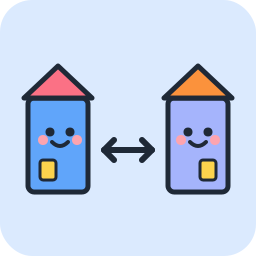
对面 (duì miàn) pairs 对 (duì, "facing, towards") with 面 (miàn, "side, face"), and together they mean "opposite" or "across from" - the spot directly facing wherever you are standing. It works as a place word tacked onto the end of a noun phrase: 银行对面 (yínháng duì miàn), "opposite the bank", with no preposition needed in between.
English speakers often reach for "in front of" first, but 前面 (qiánmiàn) is "in front of" (the same side, ahead of you) while 对面 (duì miàn) is specifically "across from" (the far side, facing you) - a road, a table, a street all separate the two things it links. 马路对面 (mǎlù duì miàn), "across the road", is the classic example.
对面 (duì miàn) also stands alone as a shorthand noun meaning "the other side" or "the person facing you": 对面的人 (duì miàn de rén), "the person opposite". Don't confuse it with the verb 面对 (miàn duì, "to face, to confront"), which reverses the same two characters into a different meaning entirely - facing a problem, not facing a building.
Where this fits
Add to review queue
Track this word in your spaced-repetition queue and be tested on it at the right interval.
Go to my review queueMandarin · Free printables
对面: worksheet, infographic and listicle
Free printable study downloads for the Mandarin word "对面" (opposite, across from): a worksheet with the answer key built in, an infographic, and a sentence listicle. Open any one to view, print or save.
Free for members
The printable worksheets, infographics and PDFs are free with an account. Start a free week and download as many as you like.
Start your free weekThis word is part of lesson 70.