
(tǎo yàn) - to dislike, to hate; annoying, disgusting in Mandarin
tǎoyànTraditional: 討厭
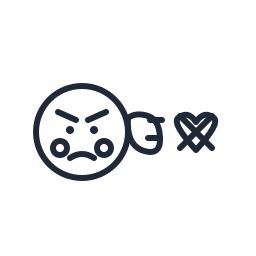
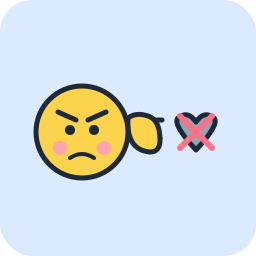
Translation
to dislike, to hate; annoying, disgusting
Word origin
A compound of 討 (tǎo) 'to demand, to discuss' and 厭 (yàn) 'to loathe, to be fed up'. 討 has 言 (speech) with 寸 (a hand); 厭 has 厂 (cliff) with a phonetic body. Together they mean to dislike or, as an adjective, annoying.
- Origin
- compound
- Root
- 討 (tǎo: 言 speech + 寸 hand) + 厭 (yàn, to loathe)
Stroke order

讨

厌
Examples
雨。
I hate rainy days.
!
You are so annoying!
。
This kind of behaviour is annoying.
雨。
I really hate rainy days.
,。
He is so annoying, always late.
讨厌 (tǎo yàn) means to dislike or find disgusting as a verb, and annoying or hateful as an adjective. 讨 means to seek or demand and 厌 means to be fed up or disgusted. Together they express strong distaste. 我讨厌 + thing (I hate/dislike X) is a direct expression of aversion. As an exclamation 讨厌! (how annoying! / I hate it!) conveys irritation, sometimes in a light or playful way between close speakers. The antonym is 喜欢 (xǐ huān, to like).
Where this fits
Add to review queue
Track this word in your spaced-repetition queue and be tested on it at the right interval.
Go to my review queueMandarin · Free printables
讨厌: worksheet, infographic and listicle
Free printable study downloads for the Mandarin word "讨厌" (to dislike, to hate; annoying, disgusting): a worksheet with the answer key built in, an infographic, and a sentence listicle. Open any one to view, print or save.
Free for members
The printable worksheets, infographics and PDFs are free with an account. Start a free week and download as many as you like.
Start your free weekThis word is part of lesson 12.