
Asking for directions in English: turn left, go straight on
By Michael McGettrickUpdated 12 October 2026
To ask the way, you need one question: Excuse me, where is...? The answer uses a small set of words again and again: left, right, straight on, next to, opposite.
| Job | You hear | Meaning |
|---|---|---|
. | ||
. | ||
. | ||
. | : | |
. |
Quick check
Now use it: three quick questions on the chart above. The full practice is further down.
Pick the right one
0/3Pick the right sentence.
Start a question to a person in the street.
Do not turn. Keep going the same way.
Say where the bank is.
Excuse me, where is...?
Start with Excuse me. It is the polite way to stop a person in the street.
| Use it when | Question |
|---|---|
, ? | |
? | |
? | |
? |
In a question, is comes before the place:
Say Where is the station?, not Where the station is? In speech, where is is often where's: Excuse me, where's the bank?
If you do not understand, say Sorry, can you say that again, please? At the end, say Thank you. The other person may say You're welcome or No problem.
Left, right and straight on
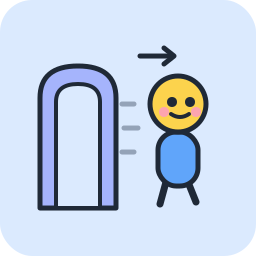
These are the three most important direction words.



| Words | Meaning |
|---|---|
| : | |
| : | |
| , | |
Go straight on is British English. Go straight ahead is common in the UK and the US. They mean the same.
Two different jobs, two different patterns:
| Job | Example |
|---|---|
. | |
. | |
. |
In directions, people say Turn left, with no to and no the. (Turn to the left is not wrong, but it is longer, and you will rarely hear it.)
Turn, go, take: the direction verbs
Directions are short orders. Start with the verb. There is no you.
| Verb | Example | Meaning |
|---|---|---|
. | ||
. | ||
. | ||
. | ||
. | , |
For the street, count: first, second, third.
.(the first street you meet).(two streets go by, then this one)
Join the steps with and or then: , .
Next to, opposite, between: where things are
At the end, the person says where the place is.
 at the side of
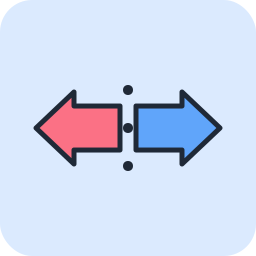 face to face
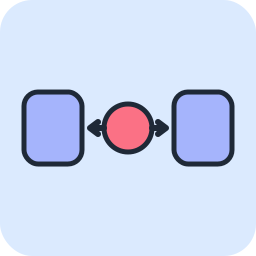 one thing on each side
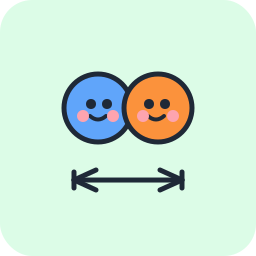 not far
| Words | Meaning | Example |
|---|---|---|
. | ||
| , | . | |
. | ||
. | ||
. |
Between needs two things and and: between the cafe and the chemist.
Near and far are opposites: Is it far? No, it's not far. It's two minutes from here.
A short conversation in the street
Ana asks Tom the way. Read it out loud.
| Who | Says |
|---|---|
| Ana | Excuse me, where's the station? |
| Tom | Go straight on, then take the second street on the left. |
| Ana | The second on the left? |
| Tom | Yes. Then turn right at the bank. |
| Ana | Is it far? |
| Tom | No, it's not far. Five minutes. It's opposite a big cafe. |
| Ana | Thank you! |
| Tom | You're welcome. |
When Ana is not sure, she says the words again: The second on the left? It is short, and it checks that she understands.
Common mistakes
| Wrong | Right | Why |
|---|---|---|
| It's in the left. | It's on the left. | : . |
| Where the bank is? | Where is the bank? | . |
| It's next the bank. | It's next to the bank. | . |
| between Tom or Ana | between Tom and Ana | . |
| Take the two street. | Take the second street. | : , . |
The big one: turn left for what you do, on the left for where it is.
What to do next
- Ask the way to a place near you, in English, in your head.
- Give directions from your home to the nearest shop.
- Do the drills below.