
/ˈfɔː.wəd/
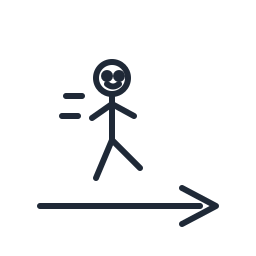
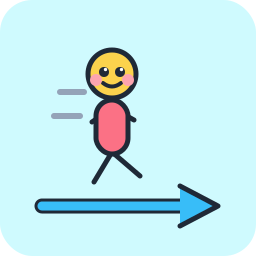
Translation
Toward the front; in the direction ahead of you.
Word origin
From Old English foreweard, meaning toward the front or the fore part.
- Origin
- Old English
- Root
- foreweard
Examples
stepped .
"Forward" means toward the front.
.
Here "forward" means in the direction ahead.
.
Here "forward" means it moved ahead, not back.
Where this fits
Used in
Stories
(1)Grammar articles
(15)Future in the past: was going to, would, was about to, and the grammar of plans that failed
Future tense in English: will, going to and more explained
Gerund and infinitive: which verb form comes next?
English grammar test: 30 questions with answers (A2-B2)
Past continuous tense: was and were plus -ing, and when to use it instead of the past simple
Phrasal-prepositional verbs: look forward to, put up with and the other three-part verbs
Phrasal verbs: 100 examples with meanings
Phrasal verbs exercises: 80 questions with answers
Phrasal Verbs with Look: 12 Meanings You Actually Need
Phrasal Verbs with Put: 13 Meanings You Actually Need
Phrasal verbs in English: what they are, meanings, rules and examples
Question tags in English: the mirror rule, aren't I, and tags after let's and imperatives
Reporting verbs in English: admit, deny, suggest, promise, and the pattern welded to each one
Separable and inseparable phrasal verbs: the rules that matter
Time clauses in English: when, while, as soon as, until, before and after
Add to review queue
Track this word in your spaced-repetition queue and be tested on it at the right interval.
Go to my review queueEnglish · Free printables
forward: worksheet, infographic and listicle
Free printable study downloads for the English word "forward" (Toward the front; in the direction ahead of you.): a worksheet with the answer key built in, an infographic, and a sentence listicle. Open any one to view, print or save.
Free for members
The printable worksheets, infographics and PDFs are free with an account. Start a free week and download as many as you like.
Start your free weekThis word is part of lesson 17.