
/plʌs/
Translation
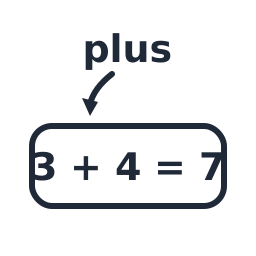
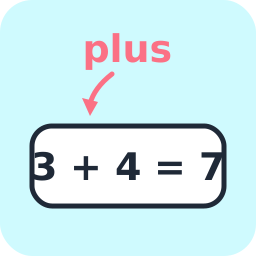
Added to. It is the word for the + sign, and in speech it can also mean "and also".
Word origin
From Latin plus, meaning more.
- Origin
- Latin
- Root
- plus
Examples
.
"Plus" is how we say the + sign in sums.
, .
Here "plus" means breakfast is added to the price.
, .
In speech "plus" can simply mean "and also".
Used in
Grammar articles
(22)Advanced articles in English: the zero article, the with names and places, and go to school vs go to the school
As vs like in English: swims like a fish, works as a waiter, and the truth about like I said
British vs American grammar: have got, gotten, the team are, and the other quiet differences
Comparatives and superlatives in English: the complete guide
Compound nouns in English: car park, coffee cup, and why GREENhouse is not green HOUSE
Conditional sentences in English: the four types explained
Ellipsis and substitution in English: I think so, neither do I, and the words you are allowed to leave out
Future continuous and future perfect in English: will be doing vs will have done
Gerund and infinitive: which verb form comes next?
Mixed conditionals in English: past causes with present results, and present causes with past results
Modals of deduction in English: must be, might be, could be and can't be
Advanced passive structures in English: the get-passive, it is said that, and passives with two objects
Past modals in English: should have, could have, must have and might have
Phrasal verbs in English: rules, examples and how to use them
Reflexive and reciprocal pronouns in English: myself, yourself, each other, and when English does not bother
Reported speech in English: backshift, questions and commands
Reporting verbs in English: admit, deny, suggest, promise, and the pattern welded to each one
So, such, too and enough in English: words of degree and result
The subjunctive and the unreal past in English: I suggest he go, if I were you, and it's time we left
English tenses explained: all 12 with a master table
Word formation with prefixes: un-, in-, im-, dis-, re-, over-, under- and mis-
Word formation in English: how suffixes build word families and give away the part of speech
Add to review queue
Track this word in your spaced-repetition queue and be tested on it at the right interval.
Go to my review queueThis word is part of lesson 26.