
Ch 22 · Lesson 8Esperanto · Chapter 22 · Lesson 8 · Grammar primer
Pluvas, estas varme: sentences with no subject
Esperanto has no dummy it: is a whole sentence, and with no noun to agree with, takes -e: , it is warm.
The short version
.
Why?Hide
Esperanto weather verbs take no subject at all: , and are complete sentences. English needs a dummy it (it is raining); Esperanto leaves the slot empty, and would send your listener looking for the thing that is raining. The tenses work as usual: , .
, not
, .
Why?Hide
When a sentence has no noun for an adjective to agree with, Esperanto uses the adverb: (it is warm), ... (it is important that...). The -a form would need something to describe; with nobody there, -e carries the meaning. English speakers under-use this and it marks their Esperanto instantly.
has no dummy subject. English props up it is raining with a meaningless it; Esperanto leaves the slot empty, and is the whole sentence.
| Pattern | Example | English |
|---|---|---|
| weather | . | It is raining. |
-e | . | It is warm. |
| , . | They say he will come. |
| one-word | . | It is necessary to wait. |
a | , . | It seems he is right. |
person after | . | I am short of money. |
No dummy subject
is a real pronoun for a thing already mentioned. Put it in a weather sentence and your listener looks for the thing that is raining:
.- It is raining..- Wrong: there is no it to point at.
The empty slot is not a gap to fill. It is the pattern, and every sentence on this page uses it.
The weather verbs
Four weather verbs share their roots with nouns you know, and in the weather sense they have no subject:
| Verb | From | English |
|---|---|---|
| | it is raining |
| | it is snowing |
| | it is thundering |
| | there is lightning |
They take every tense like any verb:
.- It rained all day..- It will snow tomorrow.
Not every weather sentence is subjectless. The wind is a thing, so it is the subject: , the wind is blowing.

- .
- .
- .
- .
Estas varme (it is hot), pluvas (it is raining), neĝas (it is snowing), blovas vento (the wind is blowing).
Estas plus -e
An adjective needs a noun to describe. When has no noun subject, the word after it takes the adverb ending -e:
| Subject | Esperanto | English |
|---|---|---|
a noun: -a | . | The soup is warm. |
none: -e | . | It is warm. |
a noun: -a | . | The question is important. |
a clause: -e | , . | It is important that you come. |
Three shapes take the -e:
| Subject | Example | English |
|---|---|---|
| nothing | . | It was dark. |
| an infinitive | . | It is good to learn. |
a | , . | It is clear that he is right. |
Add a person with to say how it feels to them:
.- I feel hot..- She found it hard.
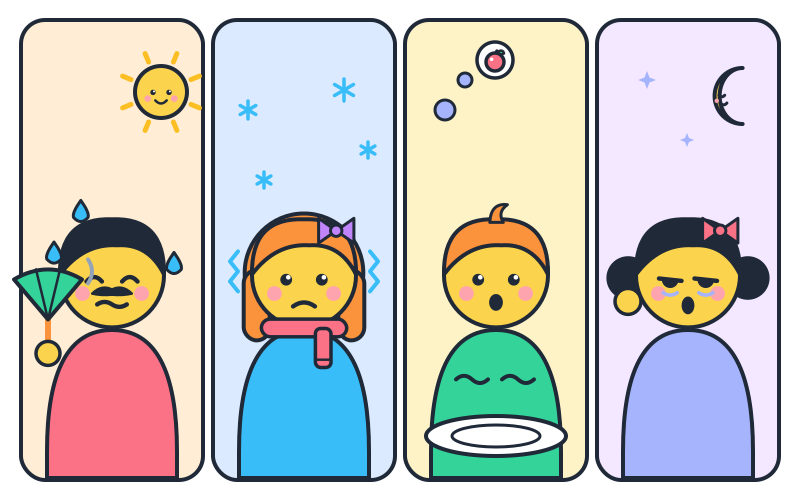
- .
- .
Estas varme al li (he feels hot), estas malvarme al ŝi (she feels cold).
The adverbs article has the -a or -e rule in full.
Going further: Oni: you, one, they, people and the rest of the guide, when you want them. This lesson does not need them.
Practice
Practise this lesson
9-question session
One question at a time, mixed across the exercises in this lesson. Miss one and it comes back round before the end.
Esperanto · Free printables
Worksheets for this lesson
Worksheets with answer keys built in. Open any one to view, print or save.
Free for members
The printable worksheets, infographics and PDFs are free with an account. Start a free week and download as many as you like.
Start your free weekLesson 8 of 29 in this chapter