

Translation
to breed, to rear (animals)
Word origin
From the Germanic brood word: English breed and German brüten come from a root meaning to keep warm and hatch. Esperanto took it as bred- and kept it for the farmer's sense.
- Origin
- Germanic
- Root
- breed
- English cognates
- breed, brood
Examples
.
My father breeds horses on the farm.
.
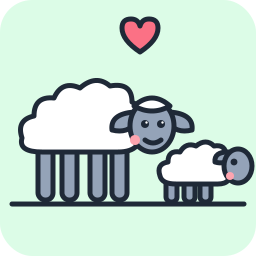
They rear sheep and cattle.
.
Rearing animals is not an easy business.
is transitive, and that is the fact to take away. The farmer does
the breeding and the animals are the object: . The animals
themselves do not - they and they , and a sentence
saying that the horses on the hillside is not a sentence.
That is a genuine trap for English speakers, because English lets one verb face both ways. Rabbits breed; a farmer breeds rabbits. Esperanto refuses the double duty and makes you pick the right verb for the direction you mean:
| Esperanto | English |
|---|---|
. | He breeds rabbits. |
. | The rabbits are born. |
. | The rabbits are growing. |
The derivations are regular and useful: o is a breeder, o the
activity of breeding, o the place where it happens. The word extends to
plants in careful usage, but the ordinary verb for growing a crop is ,
and sits most naturally with animals.
Where this fits
Add to review queue
Track this word in your spaced-repetition queue and be tested on it at the right interval.
Go to my review queueEsperanto · Free printables
bredi: worksheet, infographic and listicle
Free printable study downloads for the Esperanto word "bredi" (to breed, to rear (animals)): a worksheet with the answer key built in, an infographic, and a sentence listicle. Open any one to view, print or save.
Free for members
The printable worksheets, infographics and PDFs are free with an account. Start a free week and download as many as you like.
Start your free weekThis word is part of lesson 44.