Latin · For teachers
Every Latin printable, chapter by chapter
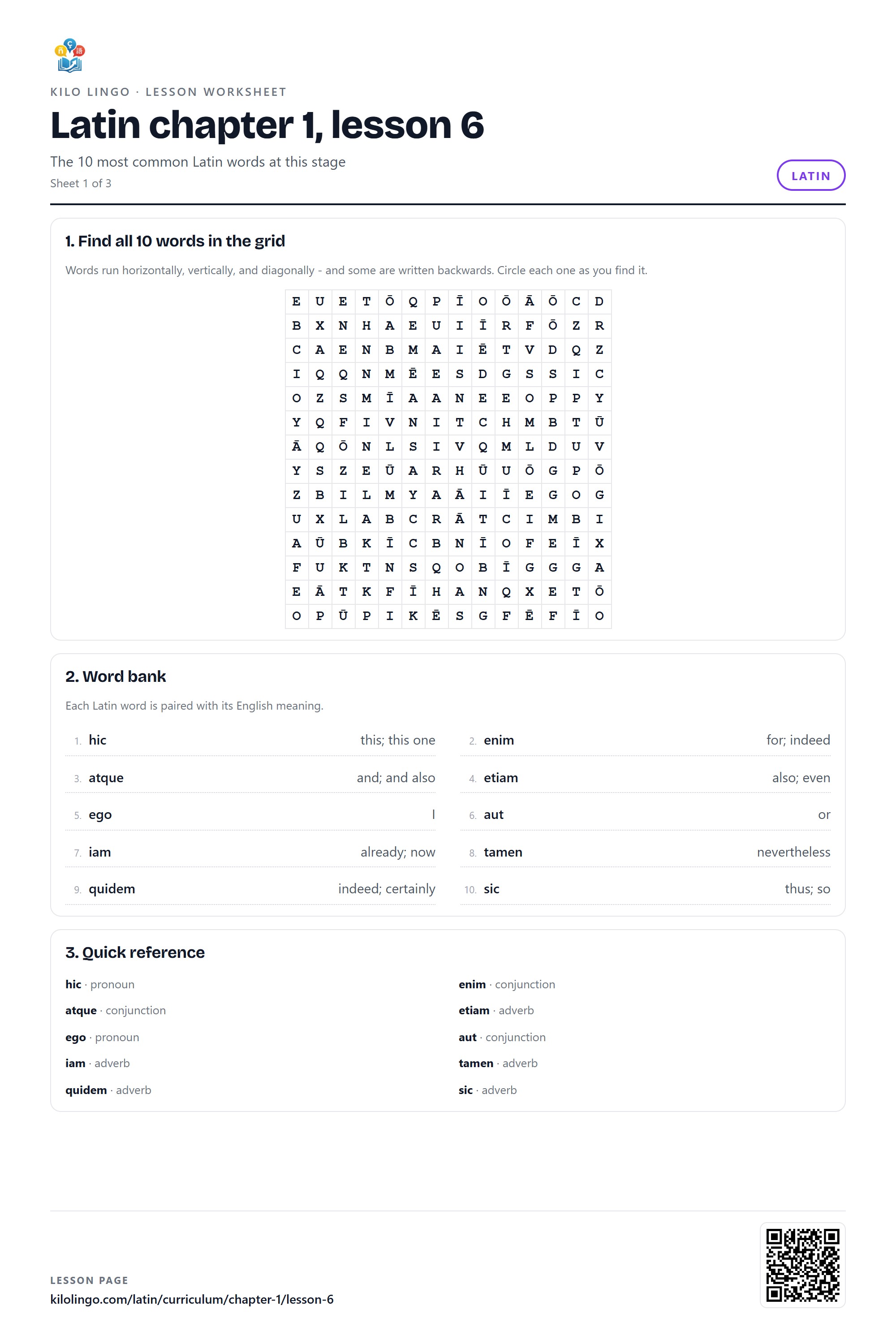
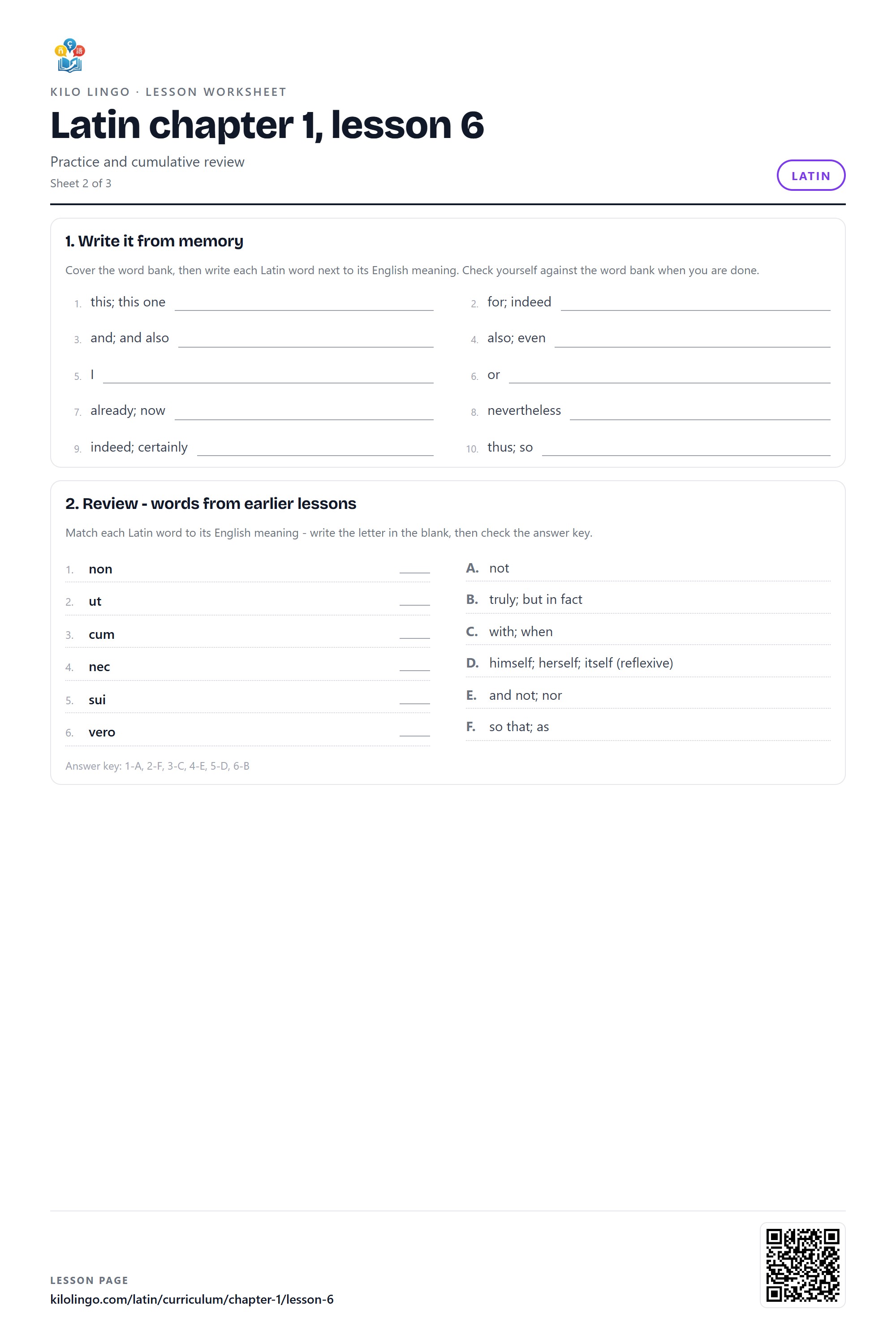
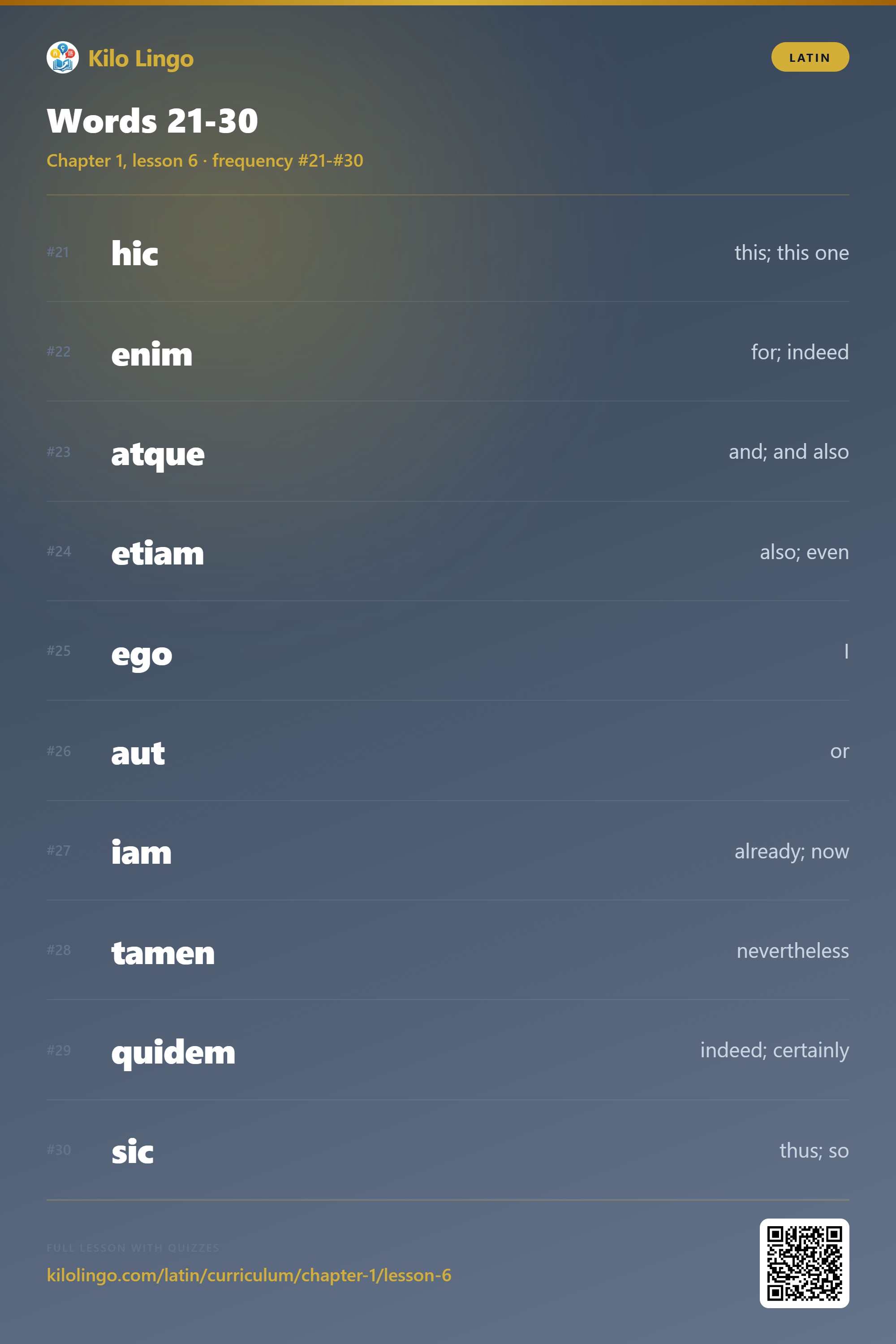
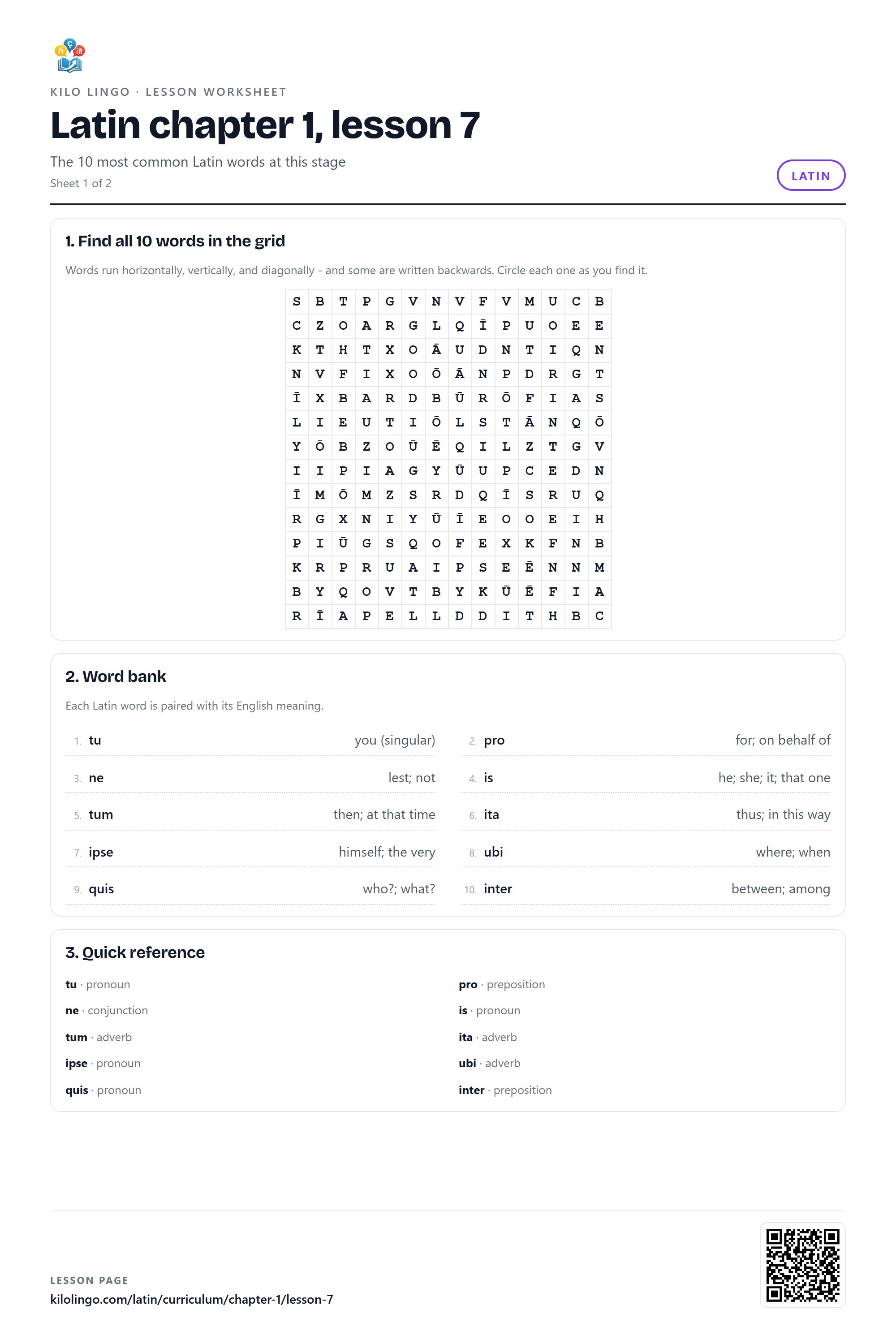
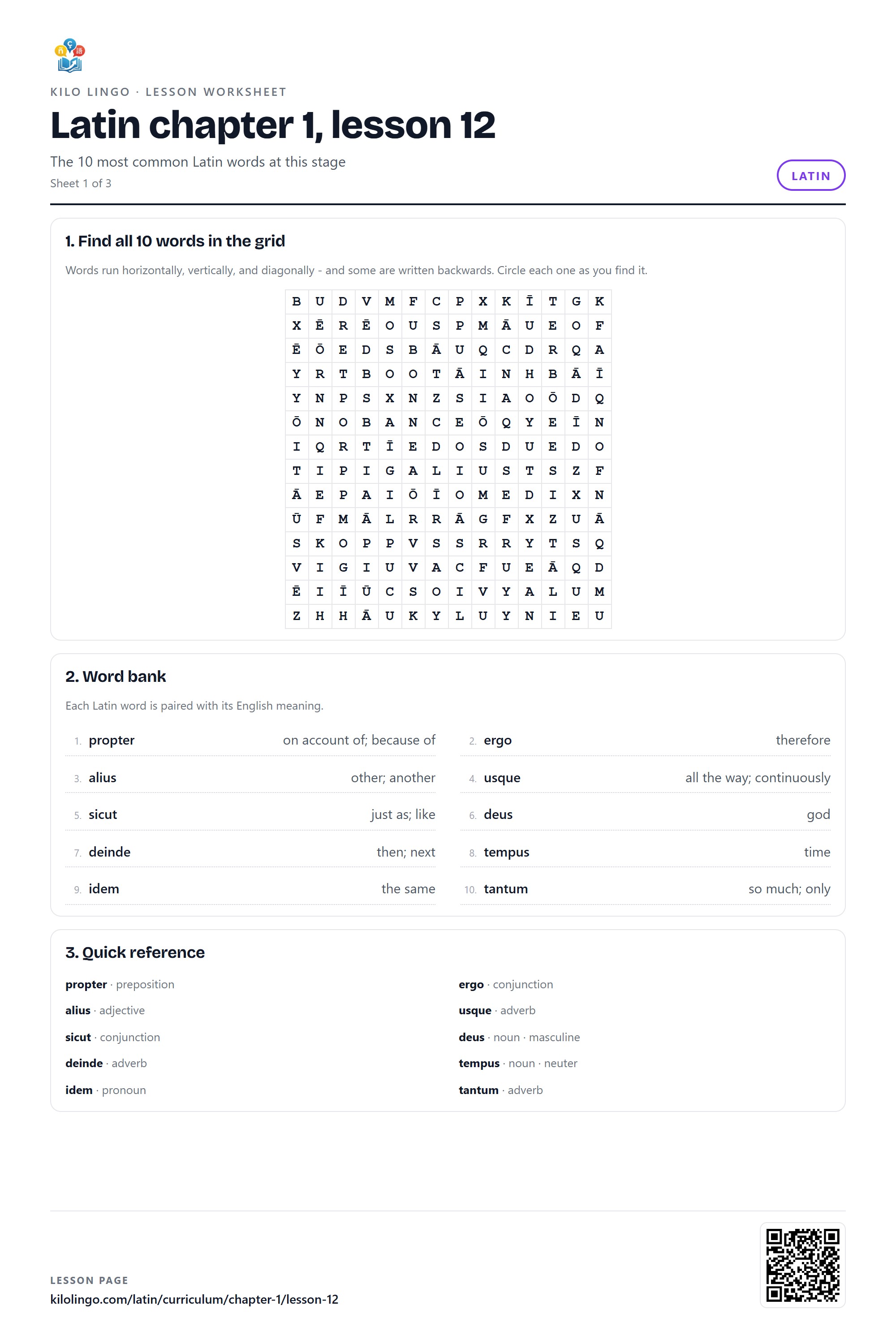
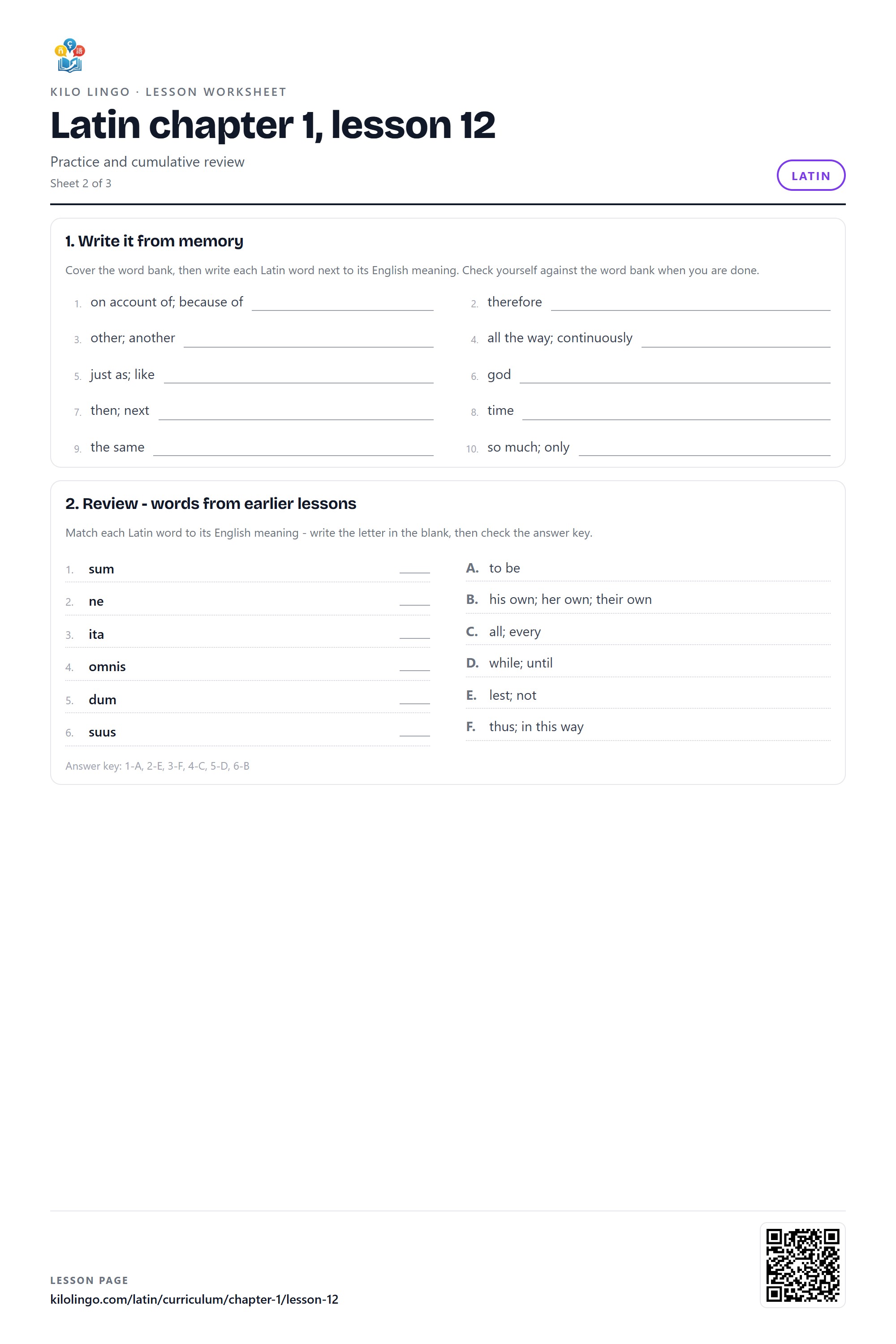
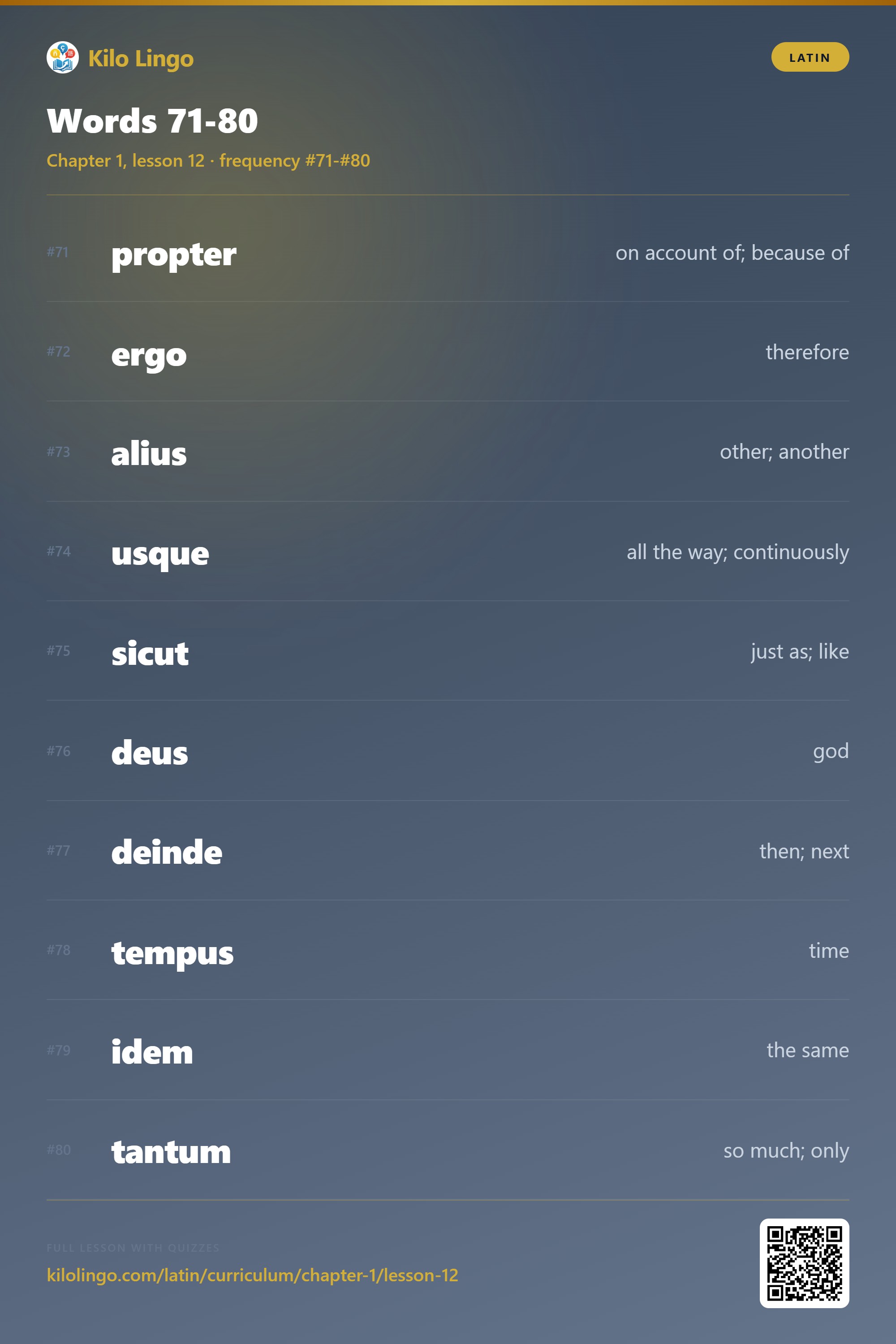
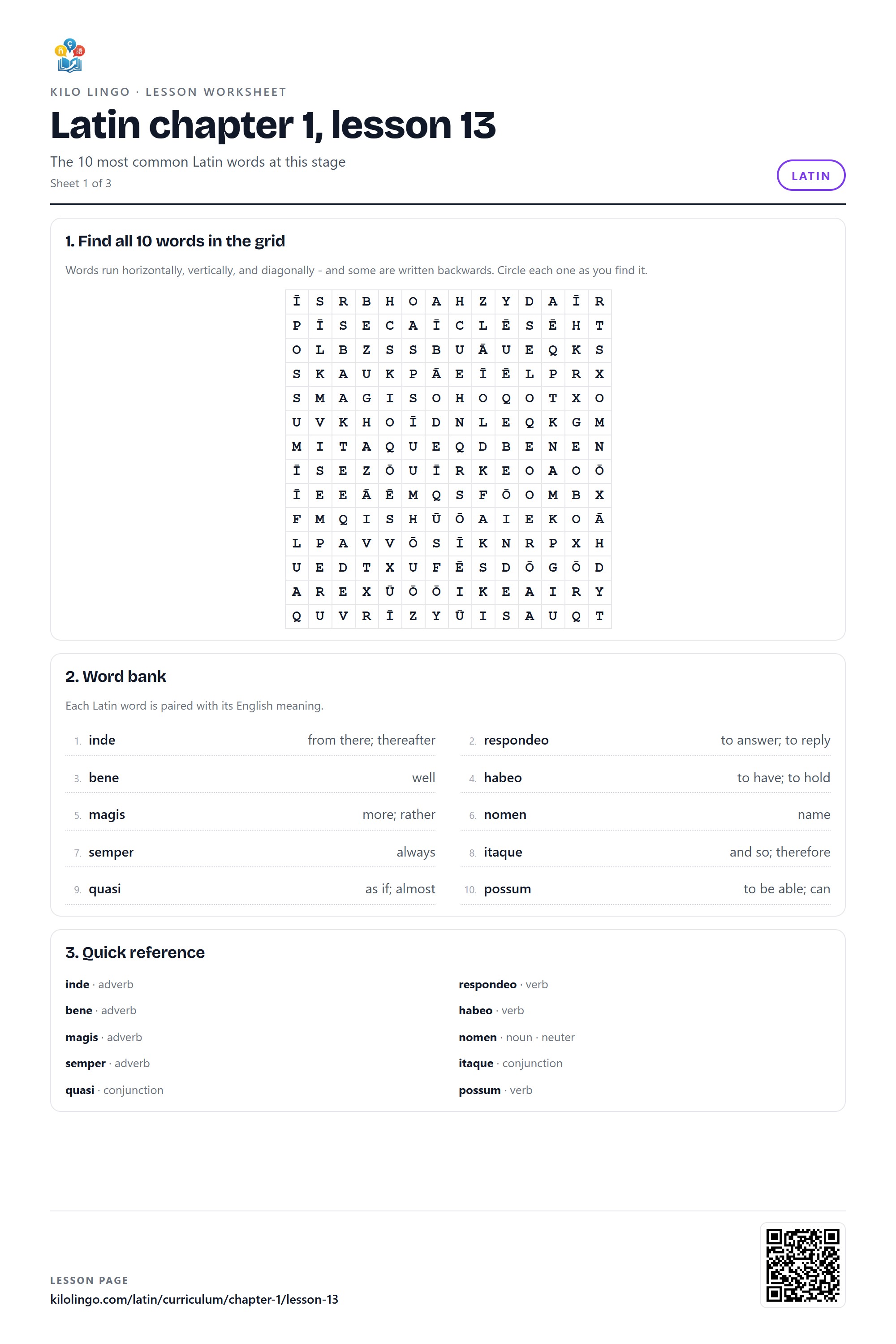
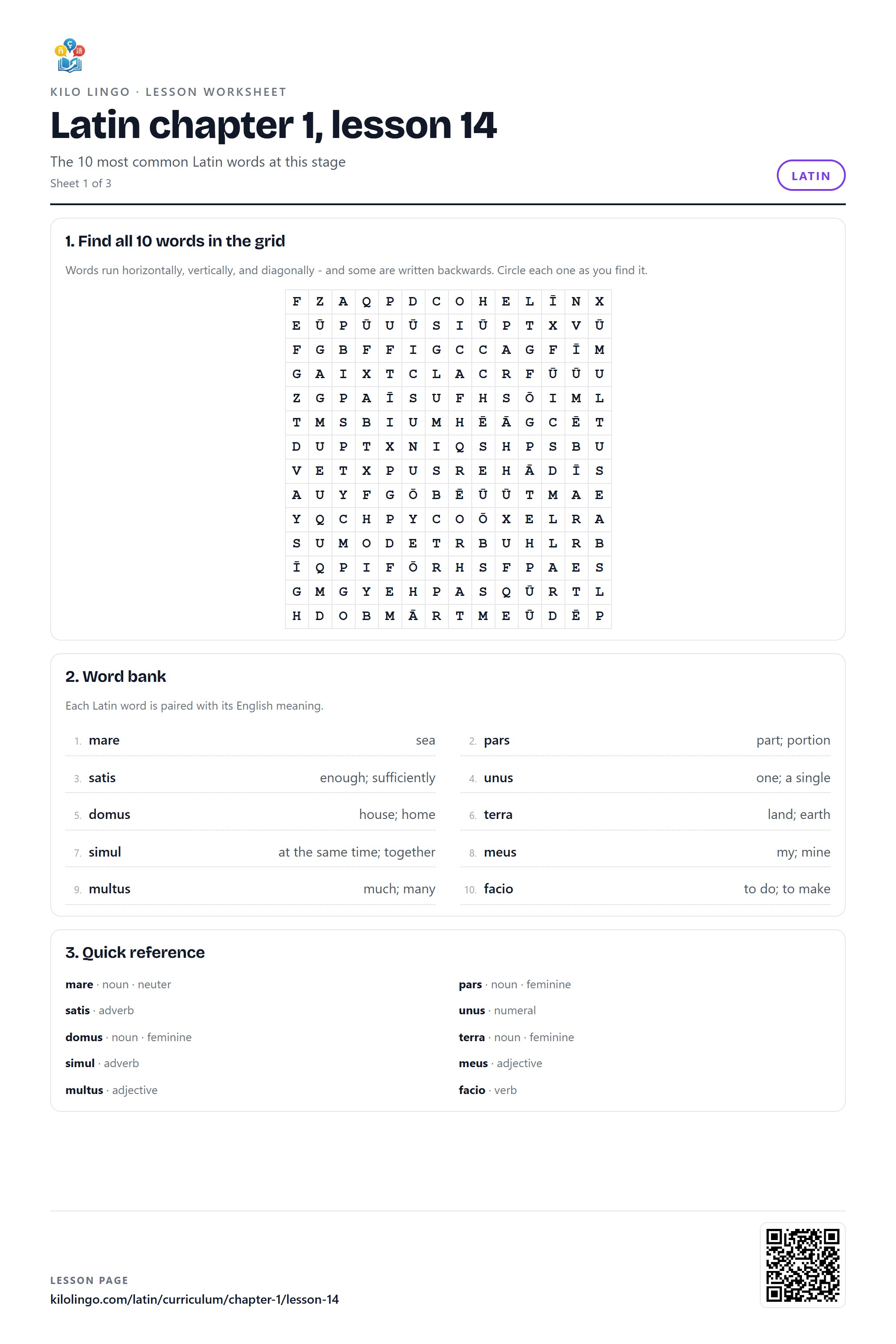
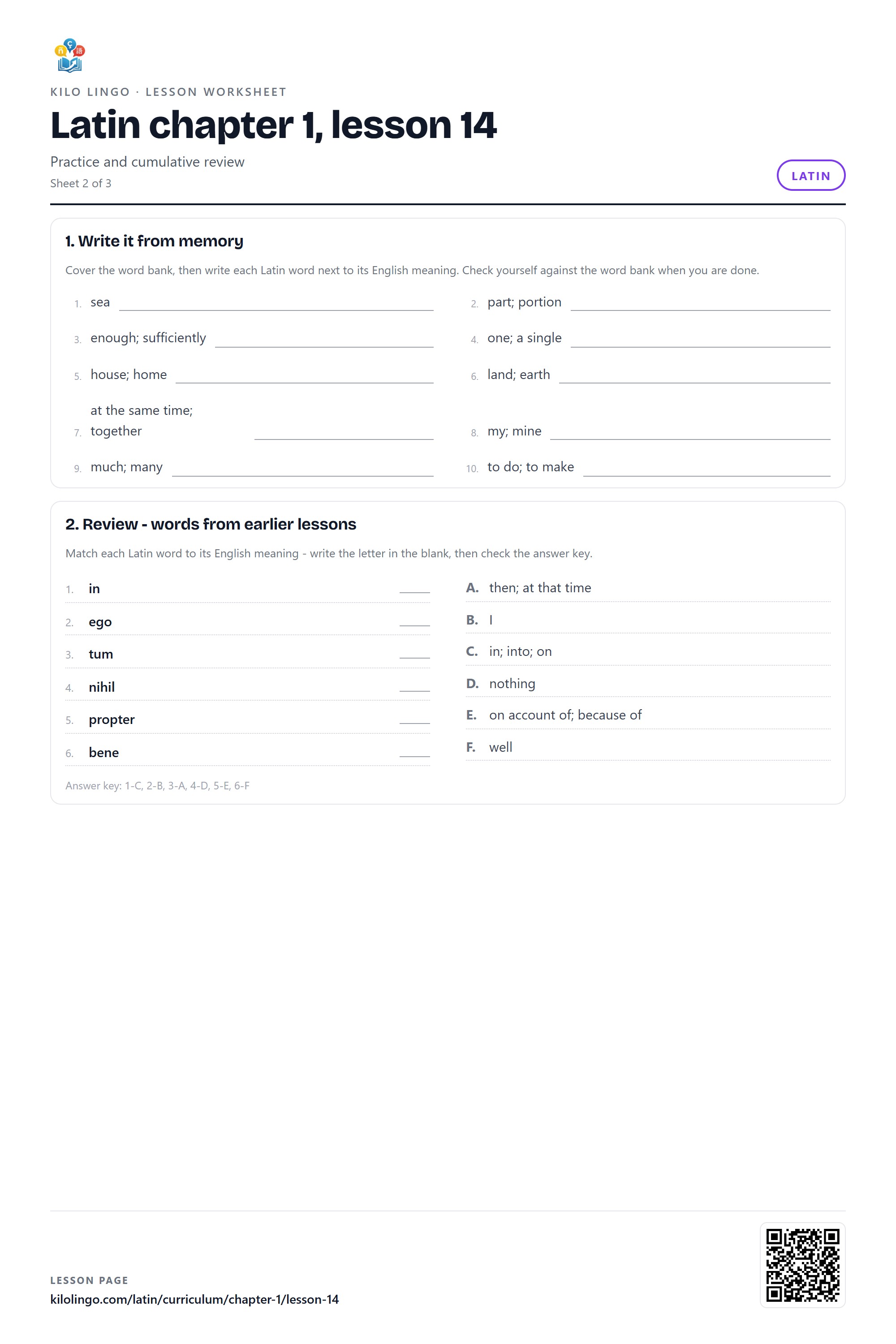
The whole Latin curriculum in one place, mapped to its 12 chapters and 392 lessons. Each lesson lists its downloads inline - worksheets with answer keys, infographics and PDFs - and each chapter's words fold out into their own per-word printable sets, so you can open and print any sheet for a class without hunting through the site.
Chapter 1 · Foundations
Chapter page →- How Latin worksIntroduction
Endings carry the meaning, not word order. Get the cases and everything else follows.
The alphabet as the Romans wrote it, why I and V do double duty, and what vowel length changes. Read this once and Latin spelling never surprises you again.
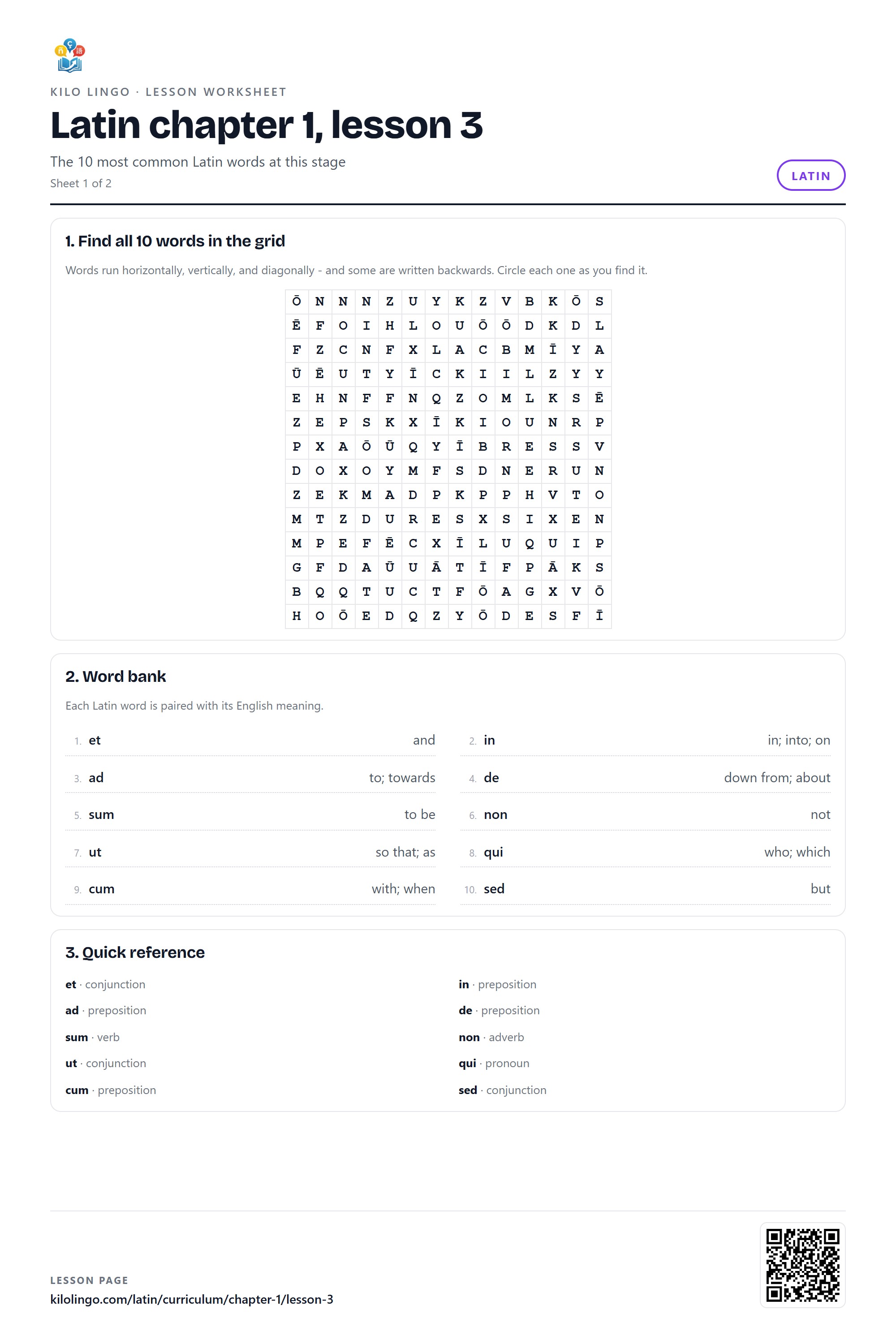
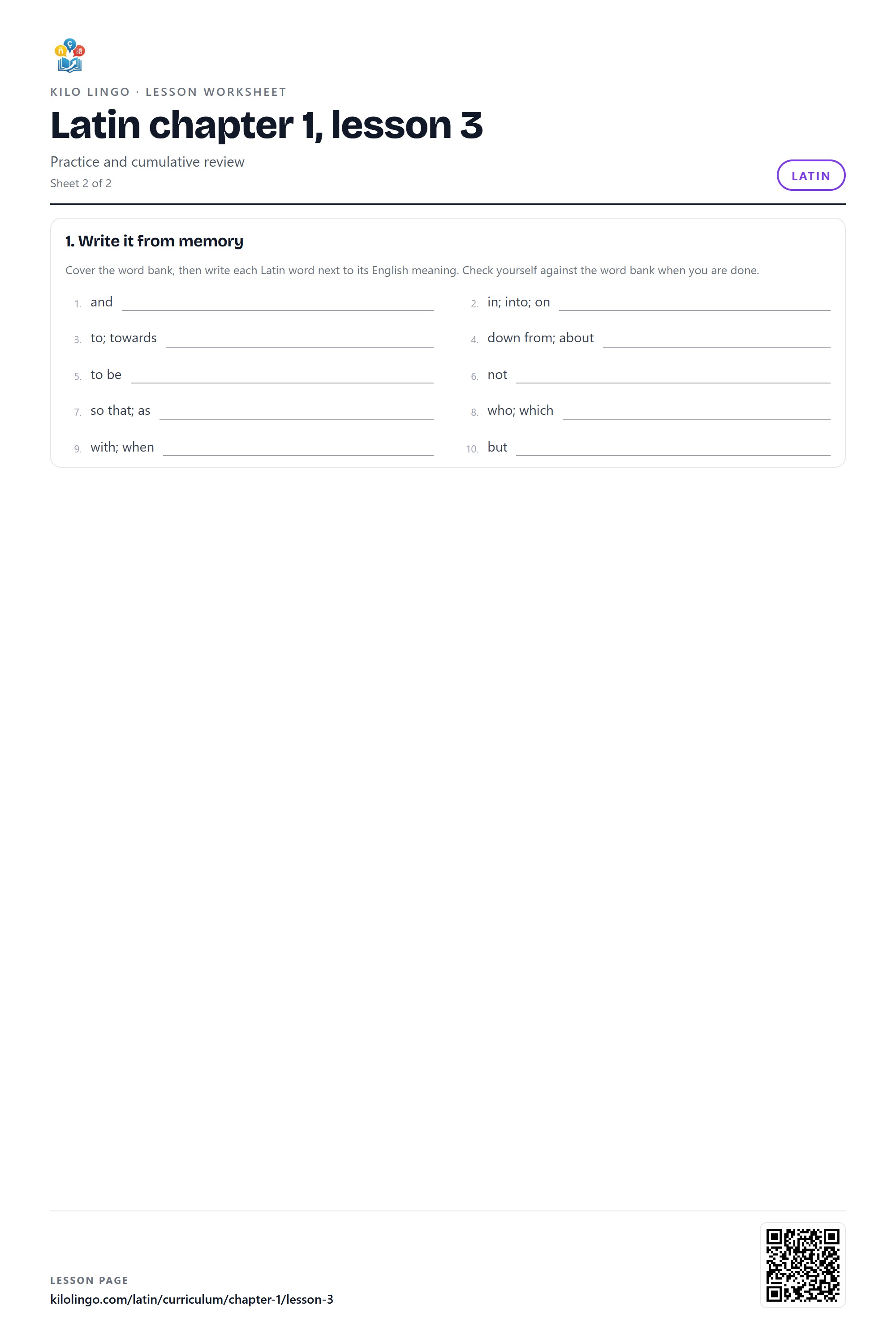
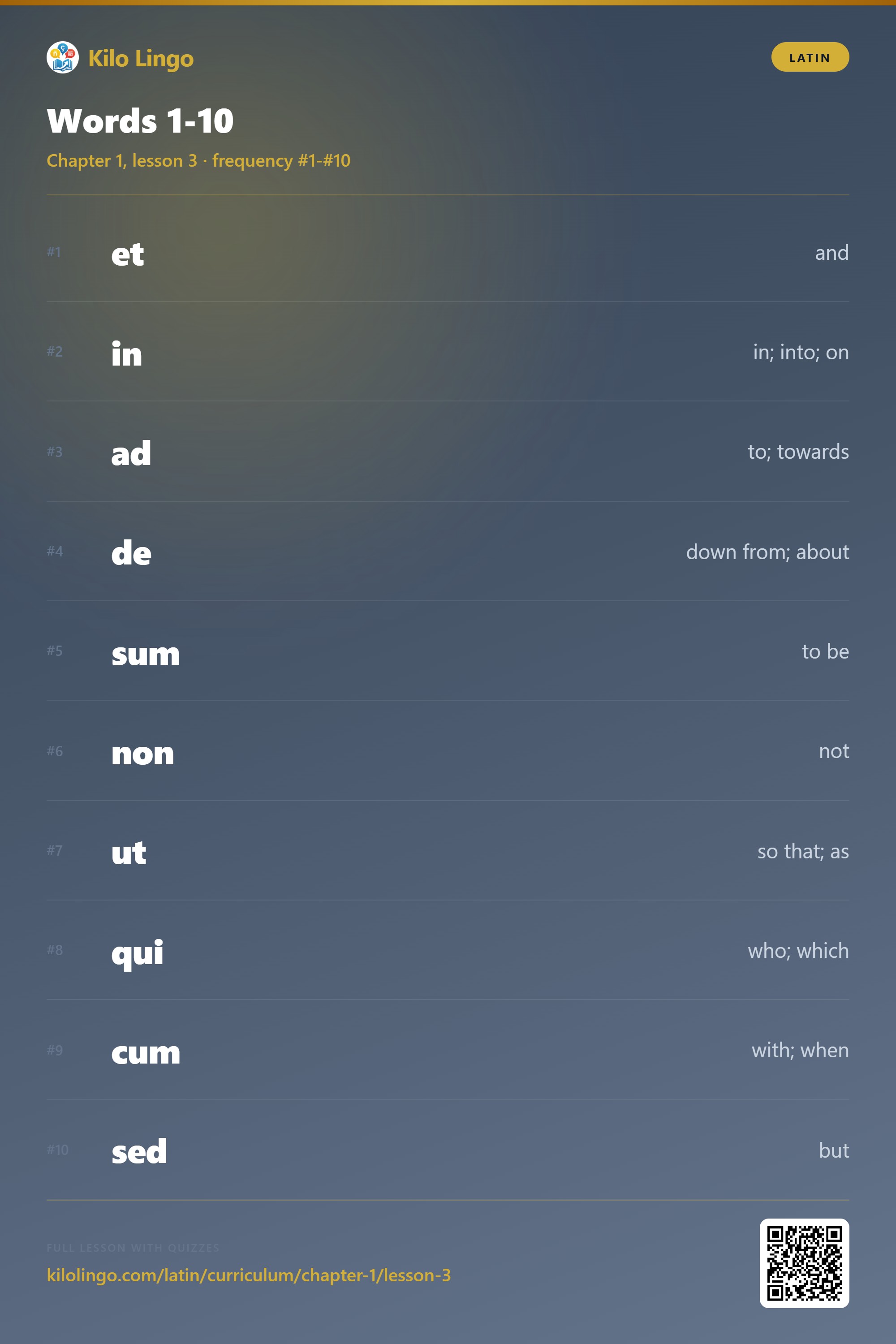
- Words 1-10Vocabulary
14 words · ranks 1-10
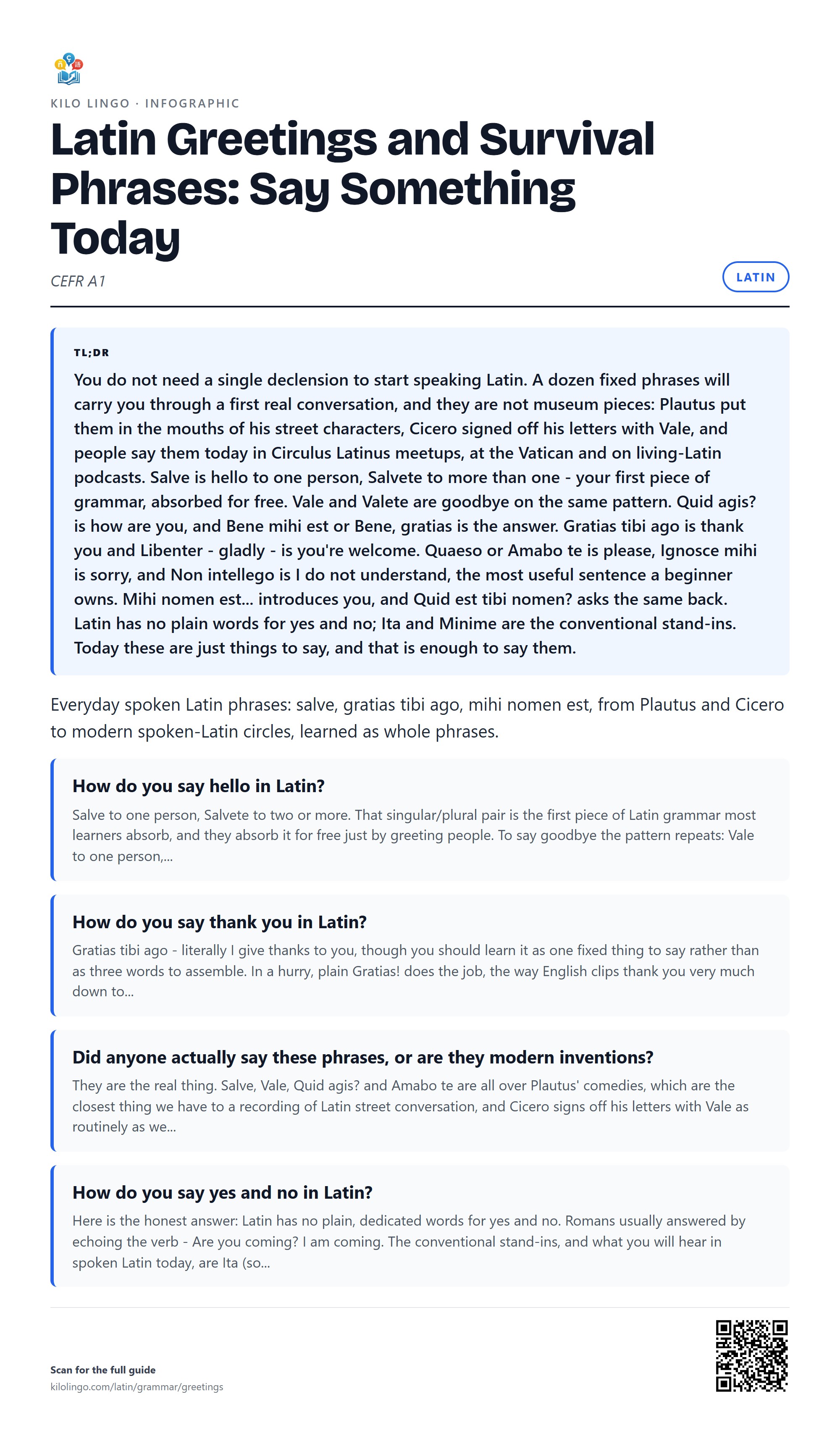
Salve, vale, quid agis, mihi nomen est: the Latin of greetings in Plautus' comedies, Cicero's letters and today's spoken-Latin circles, before you have met a single declension. Please and thank you are next.
Quaeso and amabo te for please, gratias tibi ago for thank you, libenter for you're welcome, ignosce mihi for sorry, and ita and minime, because Latin has no plain yes or no.
- The words inside the phrasesVocabulary
9 words · Salve and vale, with -te for more than one person (salvete, valete). Gratias tibi ago is gratia, thanks, and ago, I do or give; quid agis is how are you doing. Quaeso is please, ignosce mihi is forgive me, from ignosco, non intellego is I do not understand, libenter is gladly and minime is not at all, the Latin no.
- Word Bubbles review sessionReview games
Pop the words you just met by matching each one to its meaning. A couple of rounds and the batch is yours.
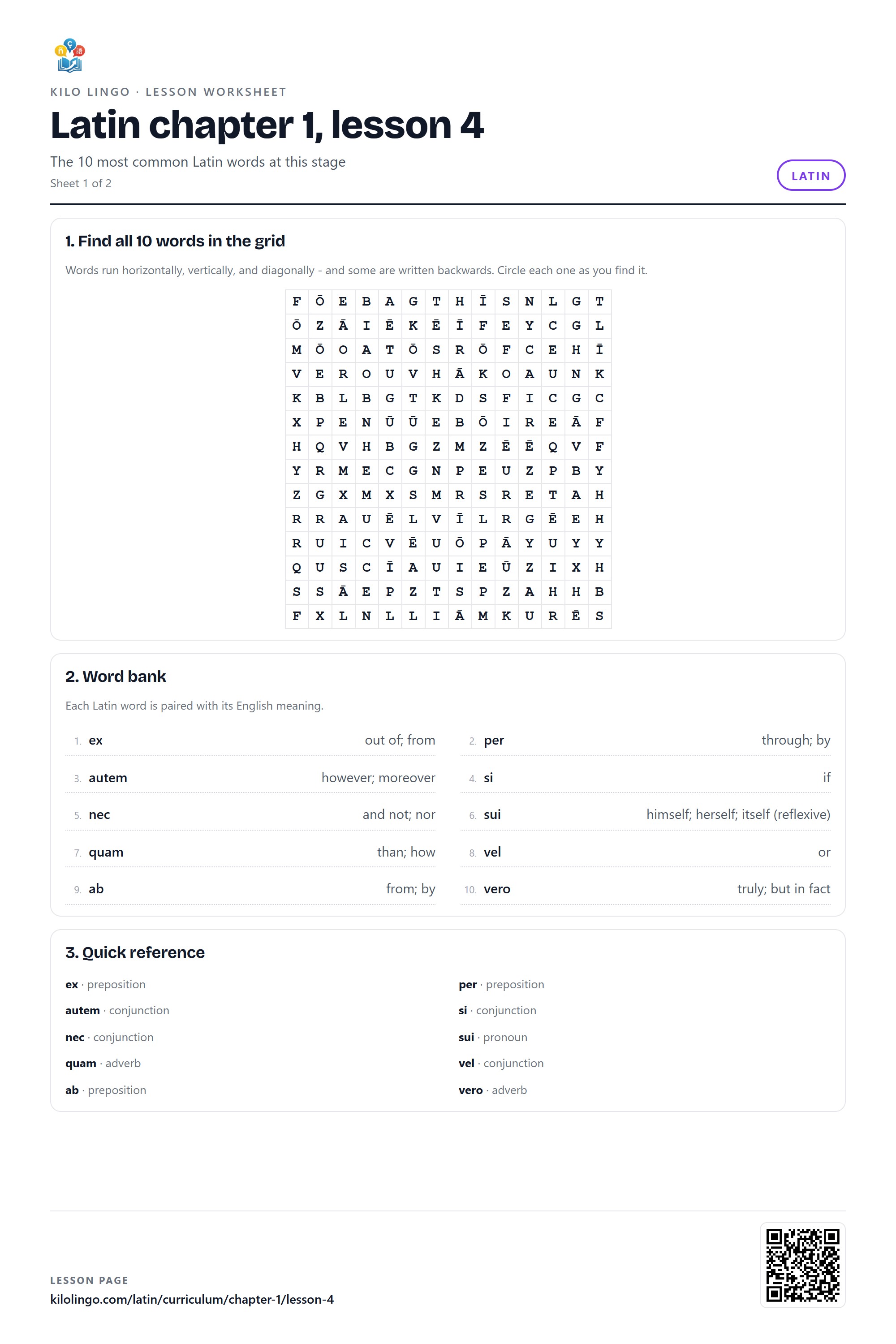
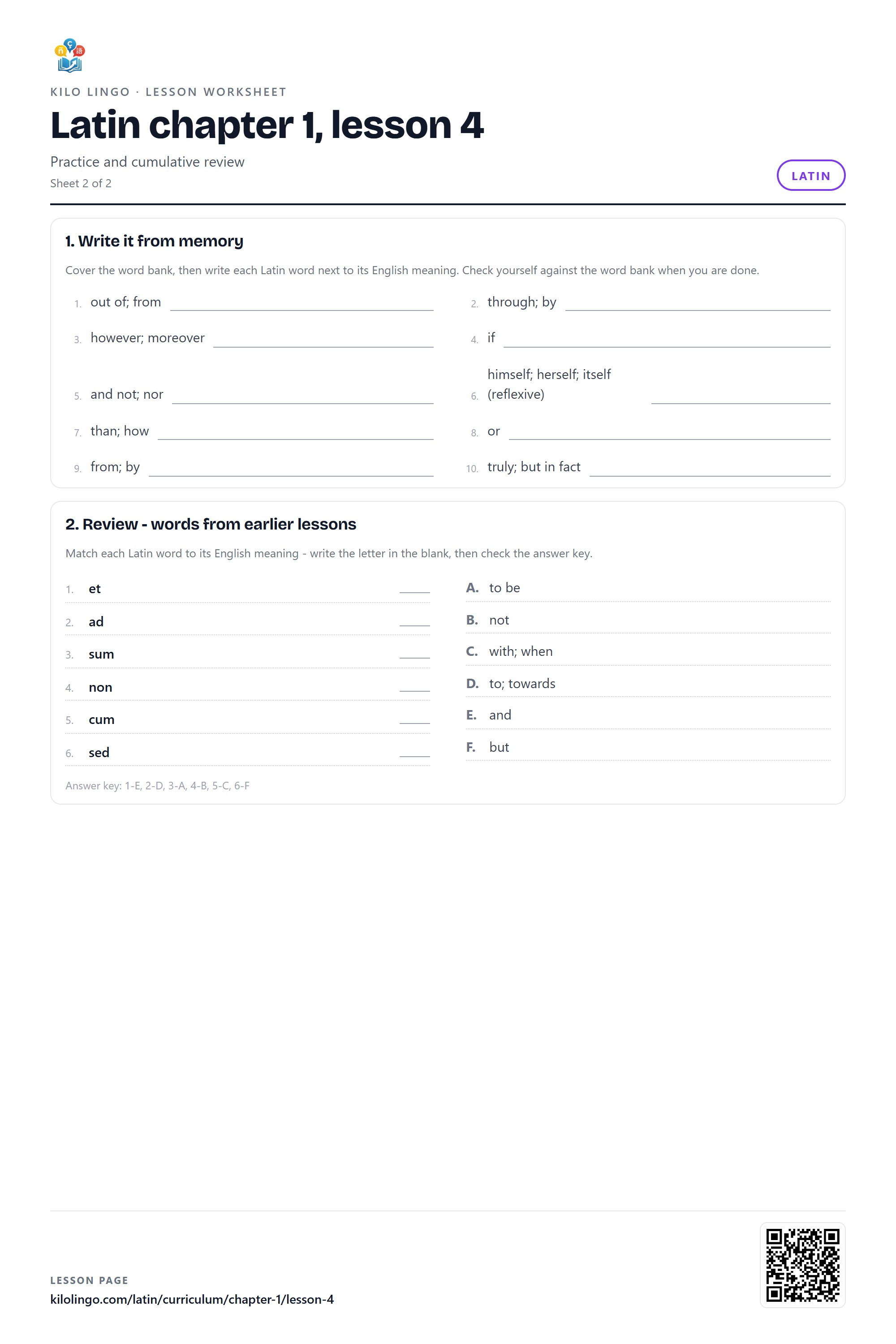
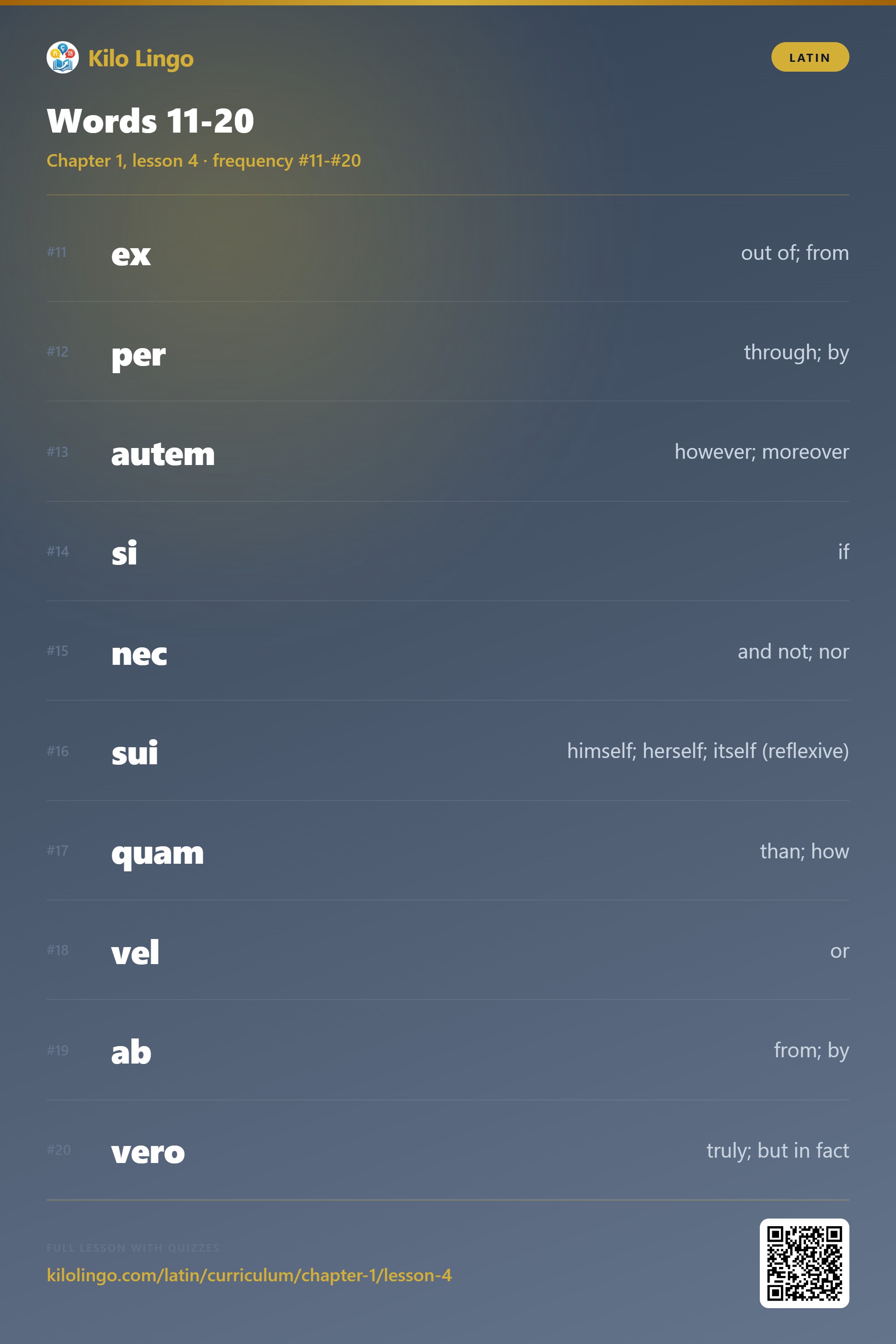
- Words 11-20Vocabulary
14 words · ranks 11-20
- The KiloKombat dojoLesson
Learn 10 new words faster than a rival. Spar the training partner to earn your grams, then challenge a real person - winner takes a tooth.
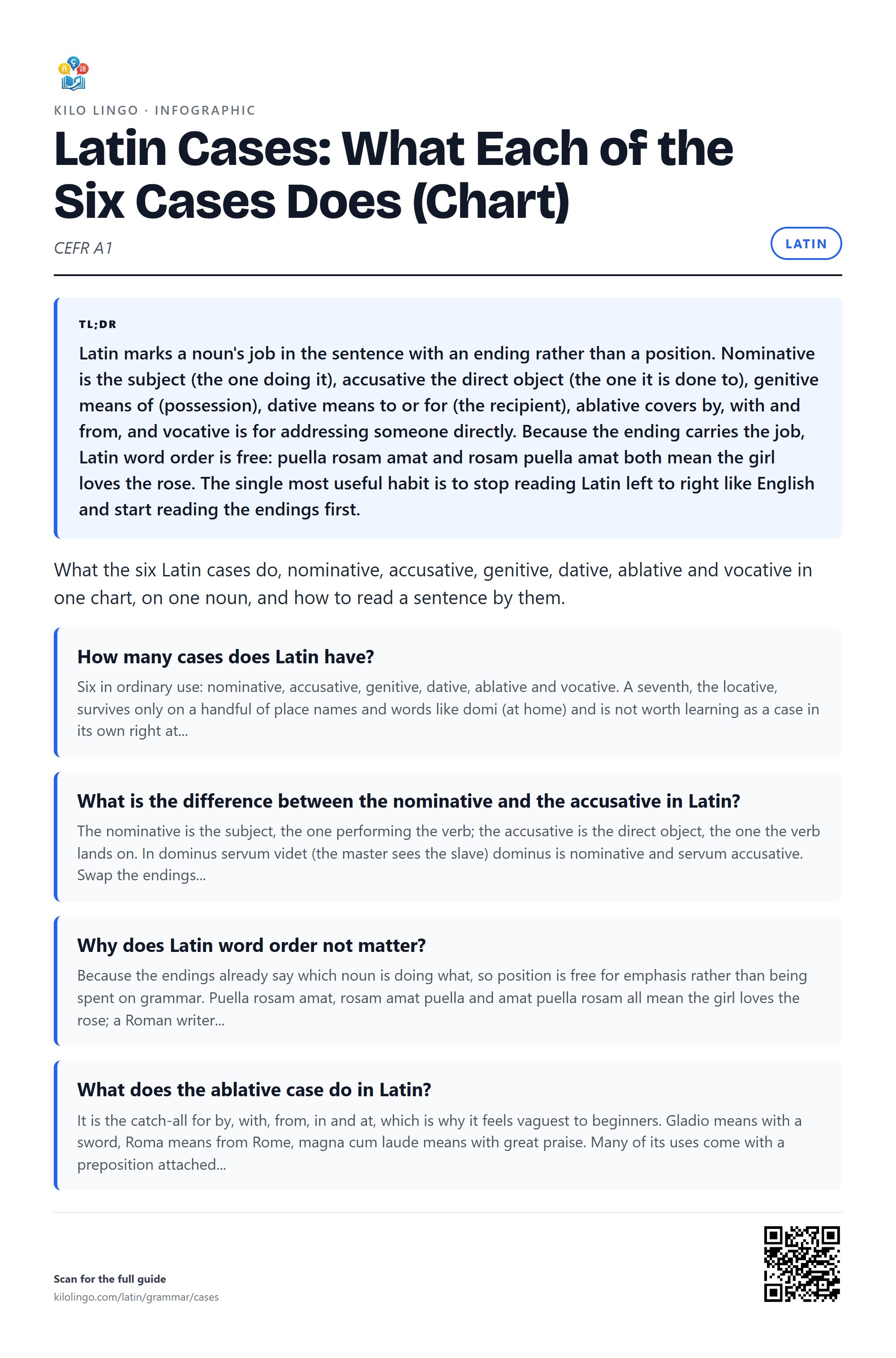
- The six Latin casesGrammar
Latin puts the grammar on the end of the noun instead of in the word order. This is the lesson that makes Latin sentences stop looking scrambled.
Find the verb, then the nominative, then the accusative, and fit the rest in. Prepositions help: cum always brings an ablative, ad an accusative.
Calling someone usually uses the nominative, except that -us turns into -e (Domine) and -ius into -i (fili). And two odd forms for at a place: Romae, domi.
- Words 21-30Vocabulary
11 words · ranks 21-30
- Crossword review sessionReview games
Cross the words you just met, clued in English. Slower than a drill, and it sticks harder.
- Words 31-40Vocabulary
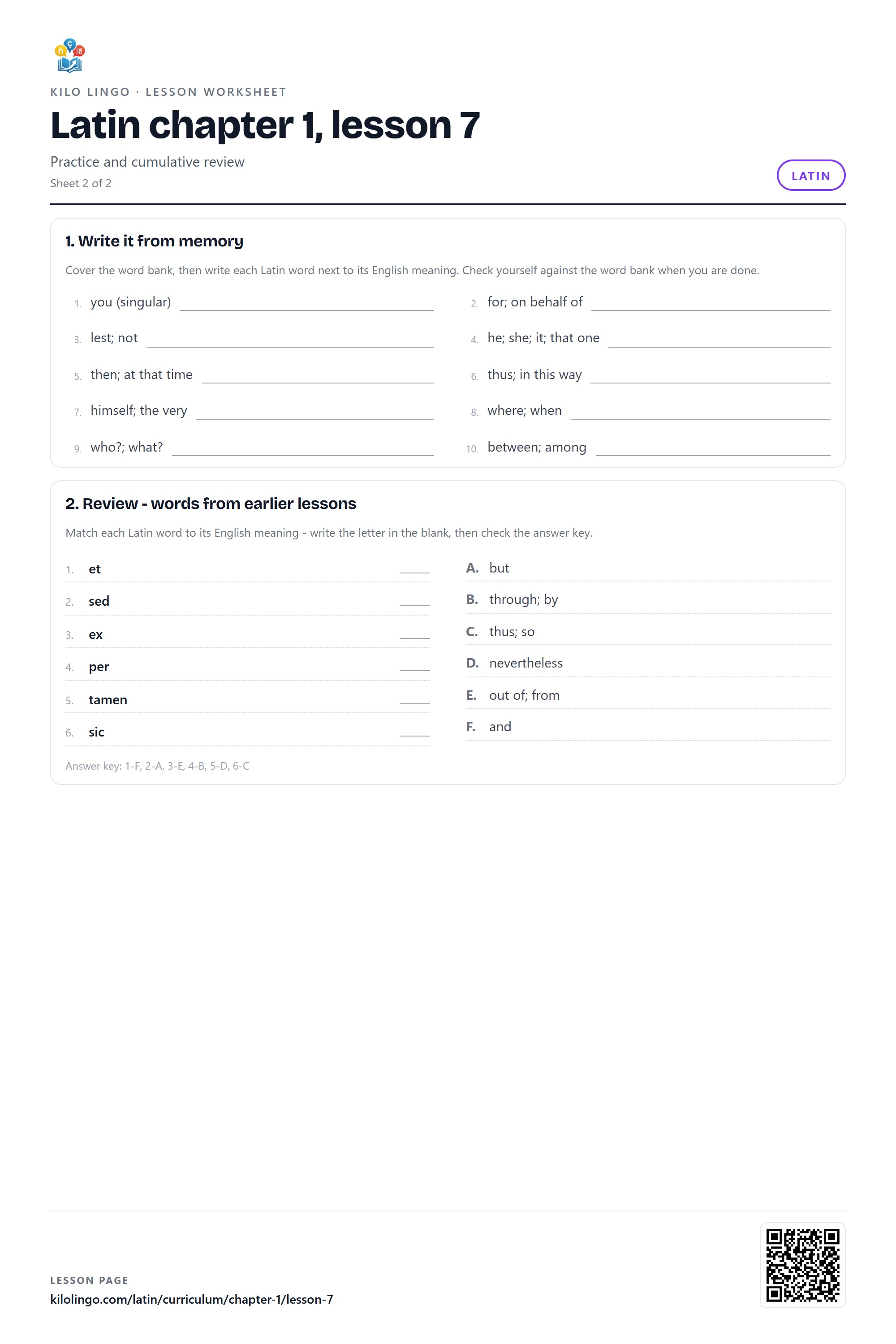
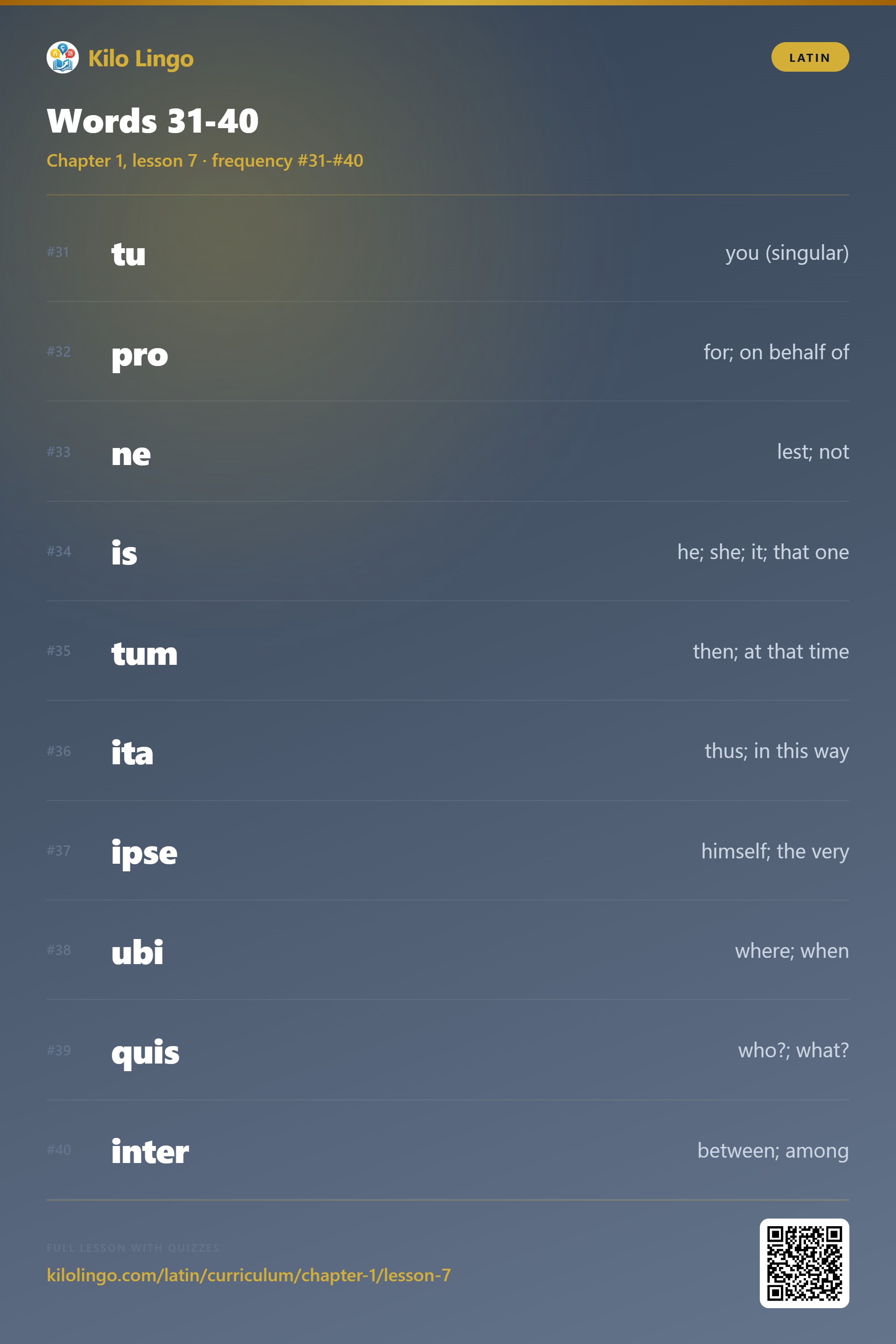
13 words · ranks 31-40
- Word Bubbles review sessionReview games
Pop the words you just met by matching each one to its meaning. A couple of rounds and the batch is yours.
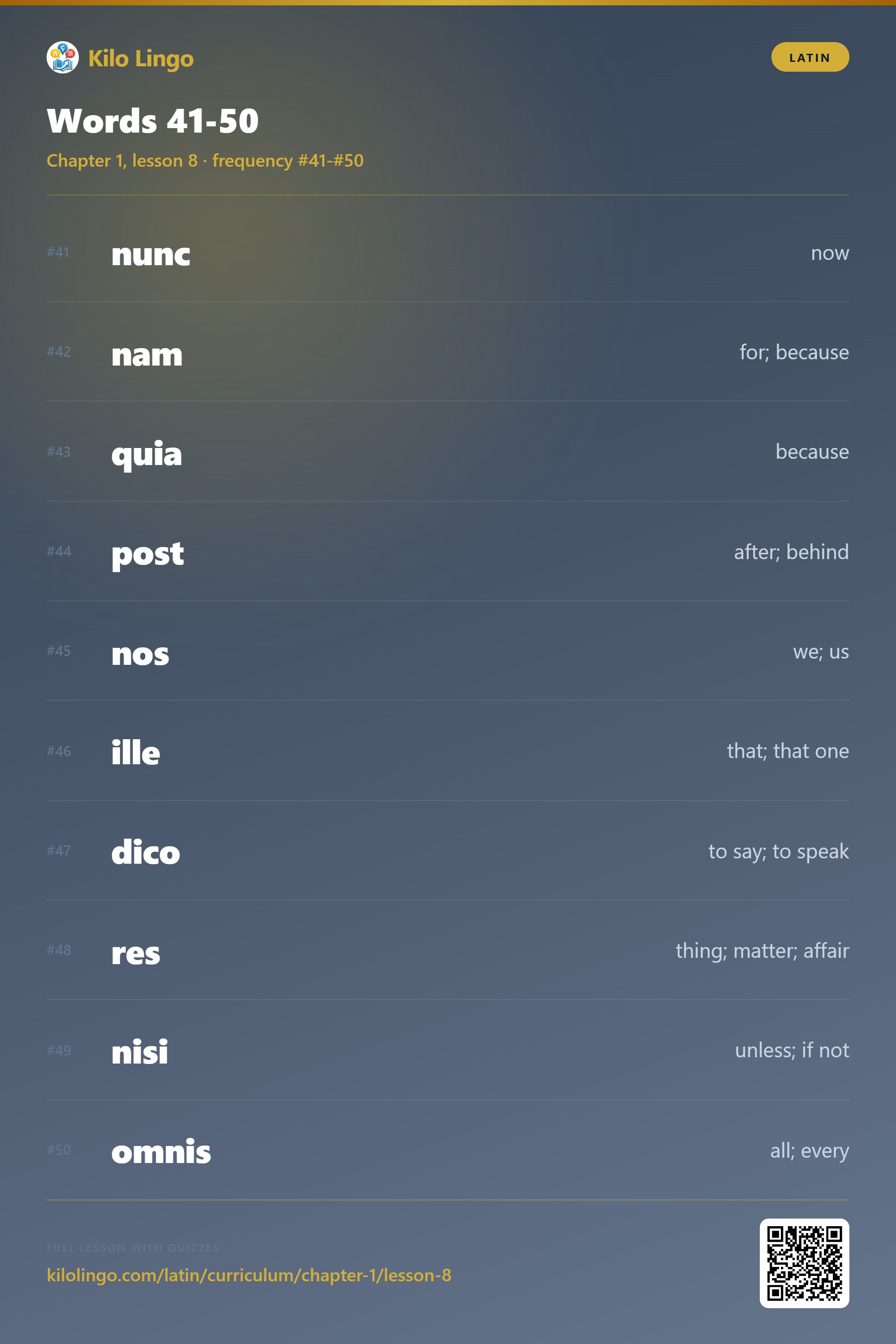
- Words 41-50Vocabulary
14 words · ranks 41-50
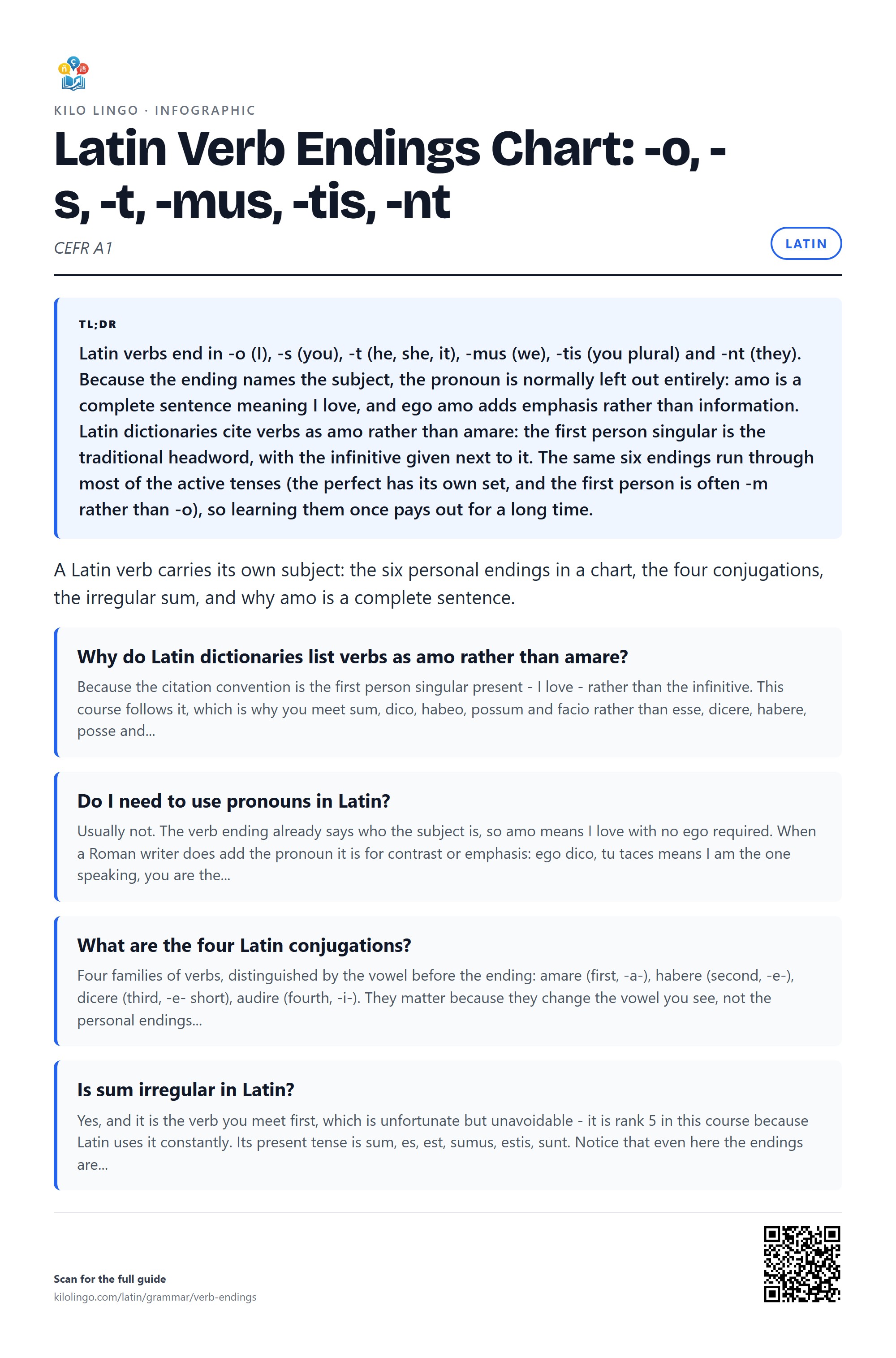
A Latin verb carries its own subject, which is why the pronoun is usually absent. Six endings run through most of the tenses in the language.
Amat, habet, dicit, audit: the four conjugations differ mainly in the vowel before the ending. And sum, I am, has an irregular stem but almost the same endings.
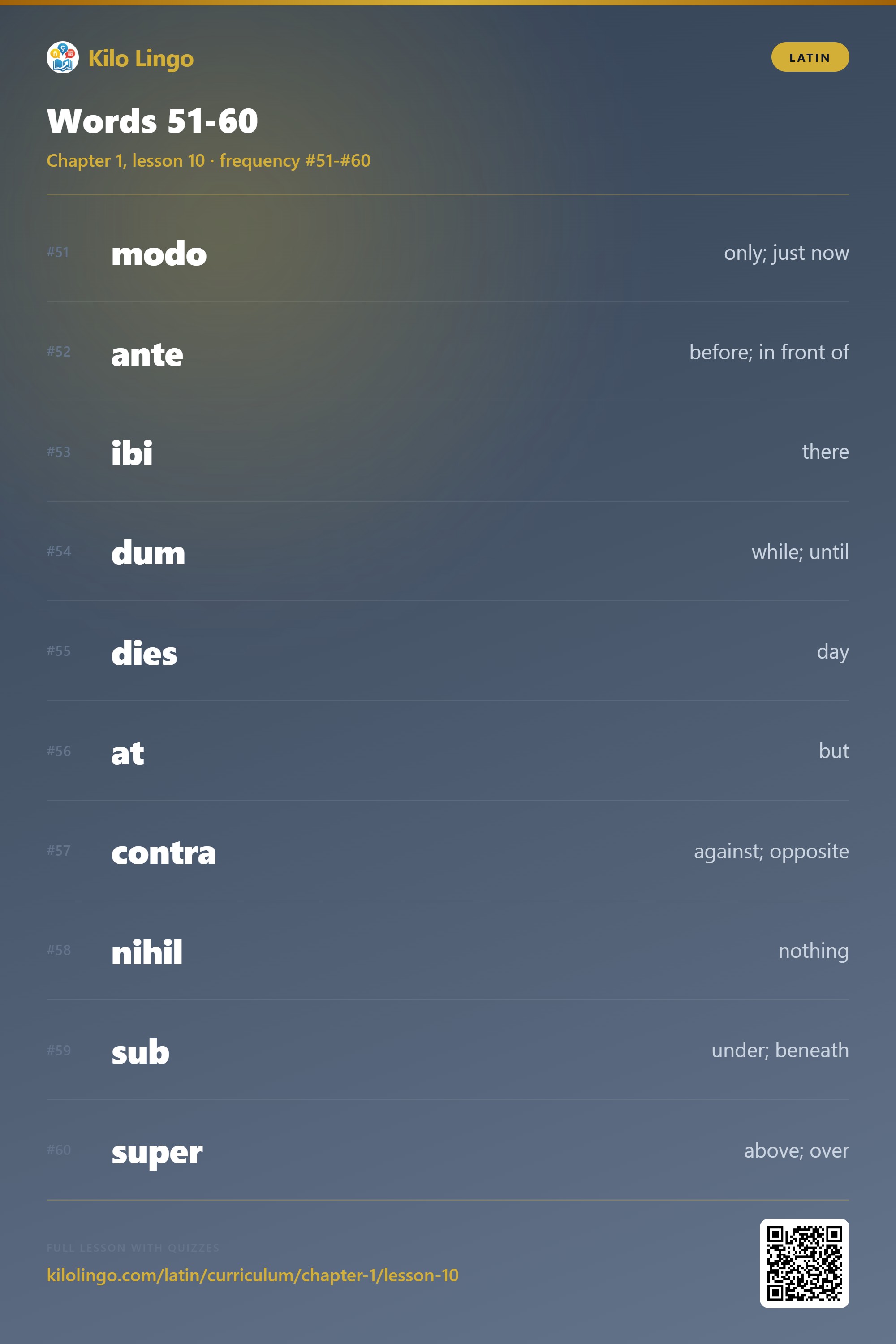
- Words 51-60Vocabulary
14 words · ranks 51-60
- Crossword review sessionReview games
Cross the words you just met, clued in English. Slower than a drill, and it sticks harder.
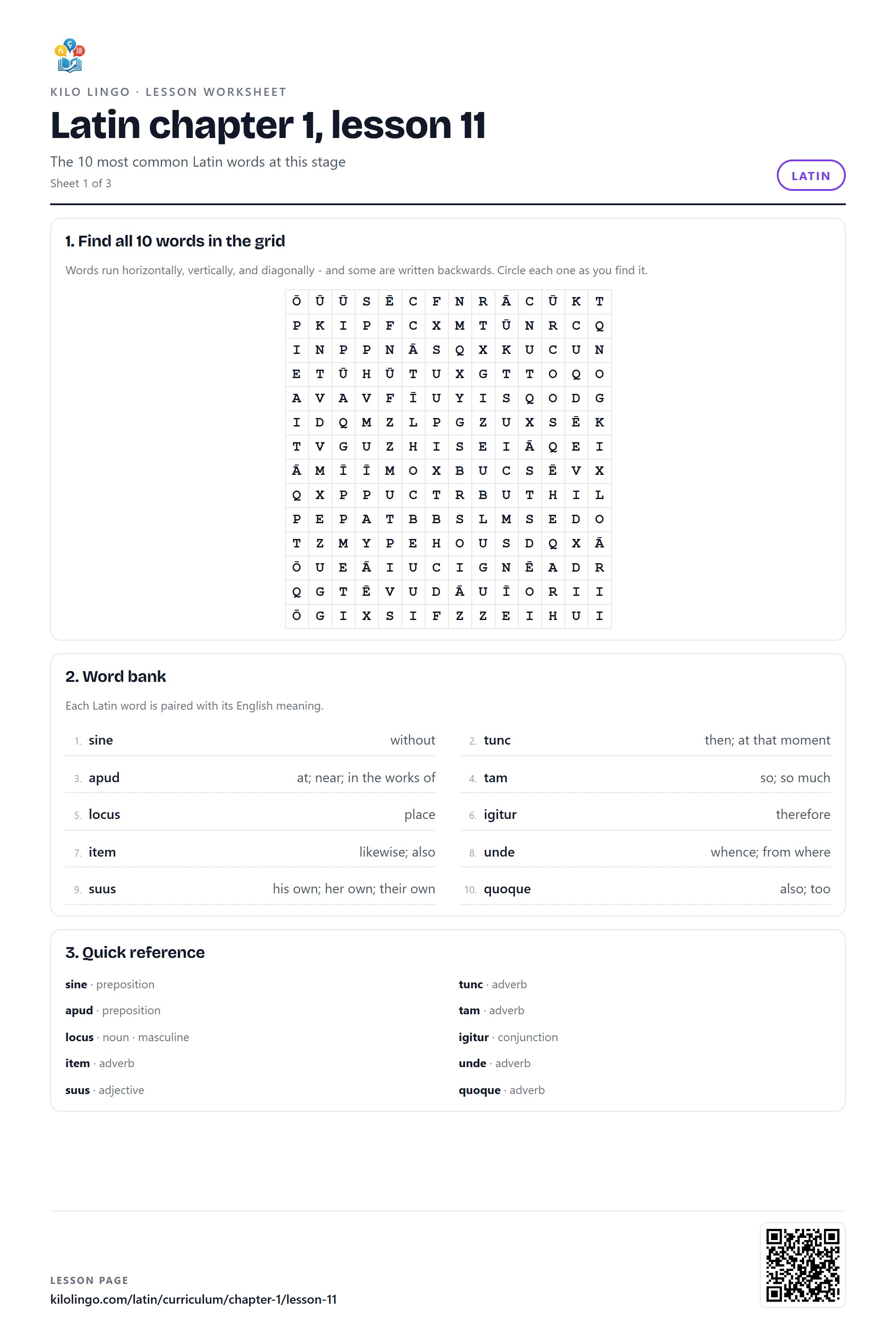
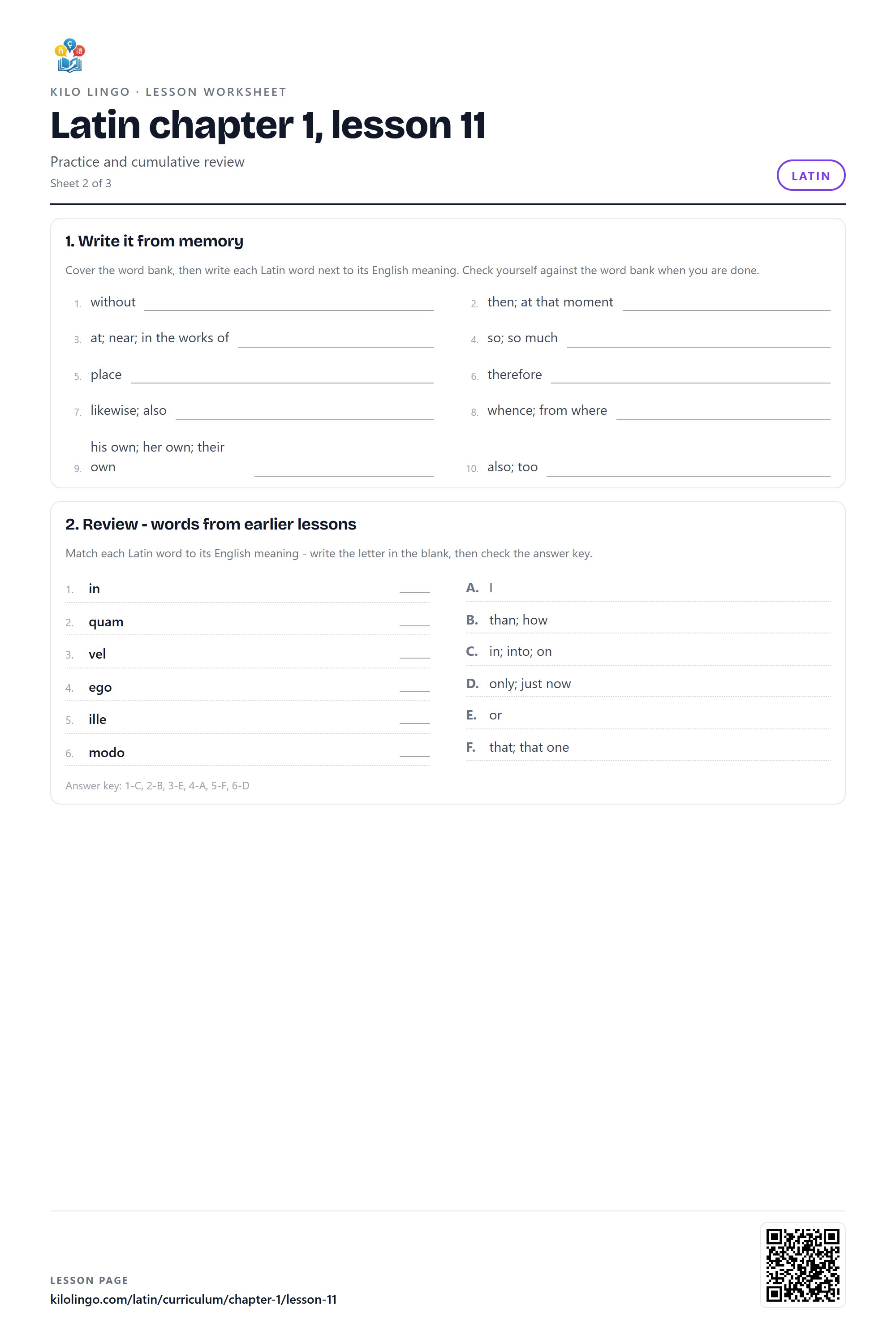
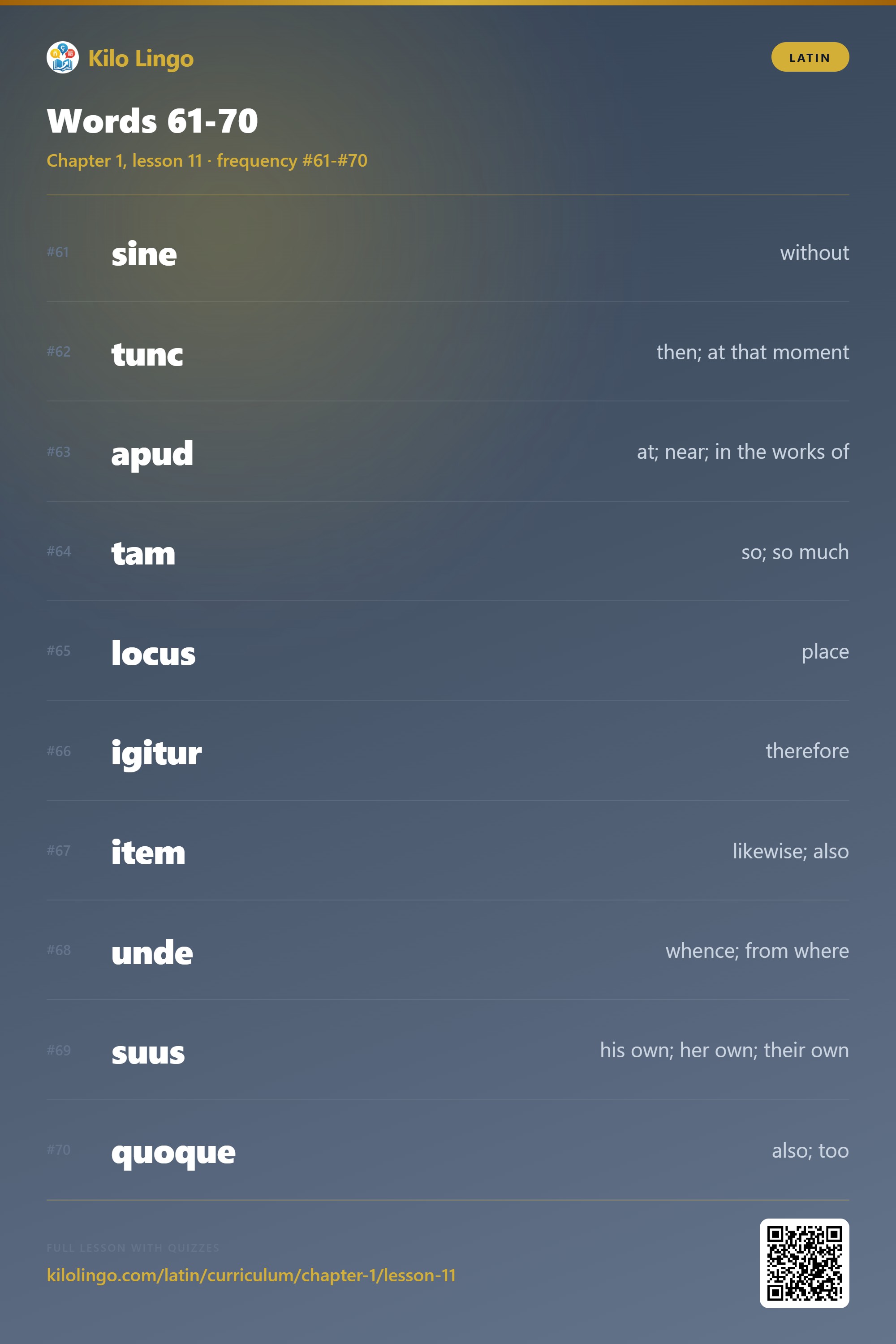
- Words 61-70Vocabulary
14 words · ranks 61-70
- Word Bubbles review sessionReview games
Pop the words you just met by matching each one to its meaning. A couple of rounds and the batch is yours.
- Words 71-80Vocabulary
14 words · ranks 71-80
- Crossword review sessionReview games
Cross the words you just met, clued in English. Slower than a drill, and it sticks harder.
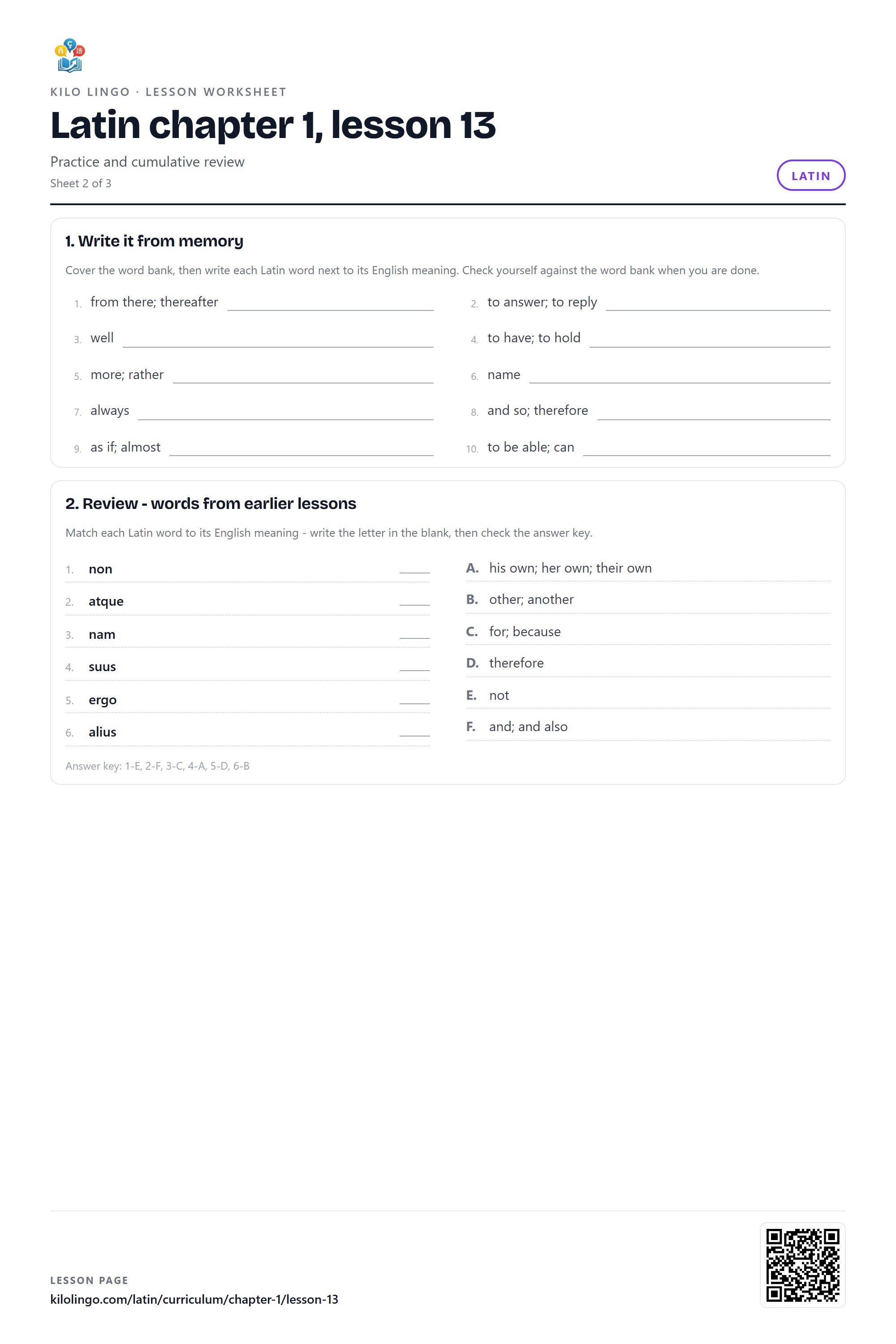
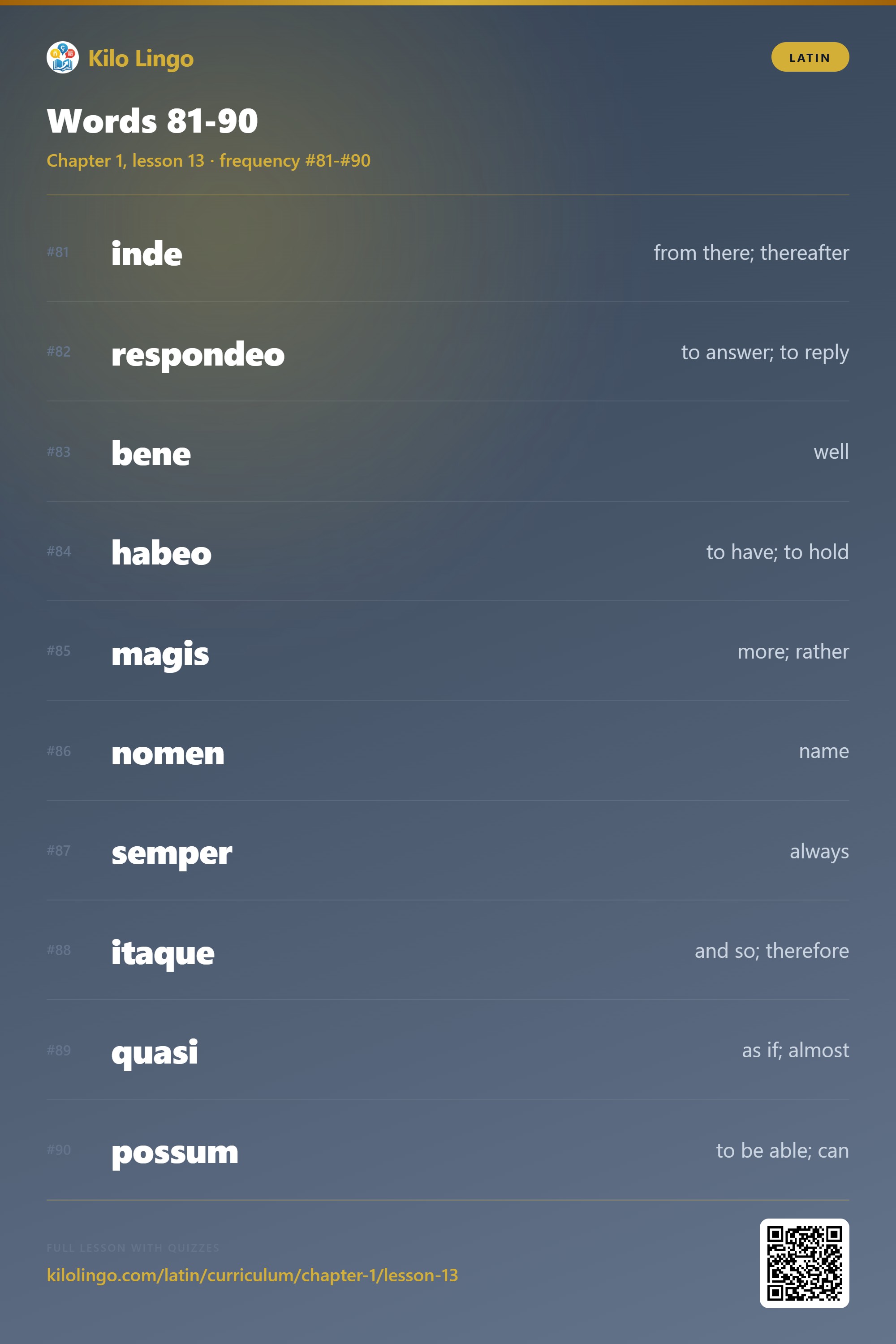
- Words 81-90Vocabulary
14 words · ranks 81-90
- Word Bubbles review sessionReview games
Pop the words you just met by matching each one to its meaning. A couple of rounds and the batch is yours.
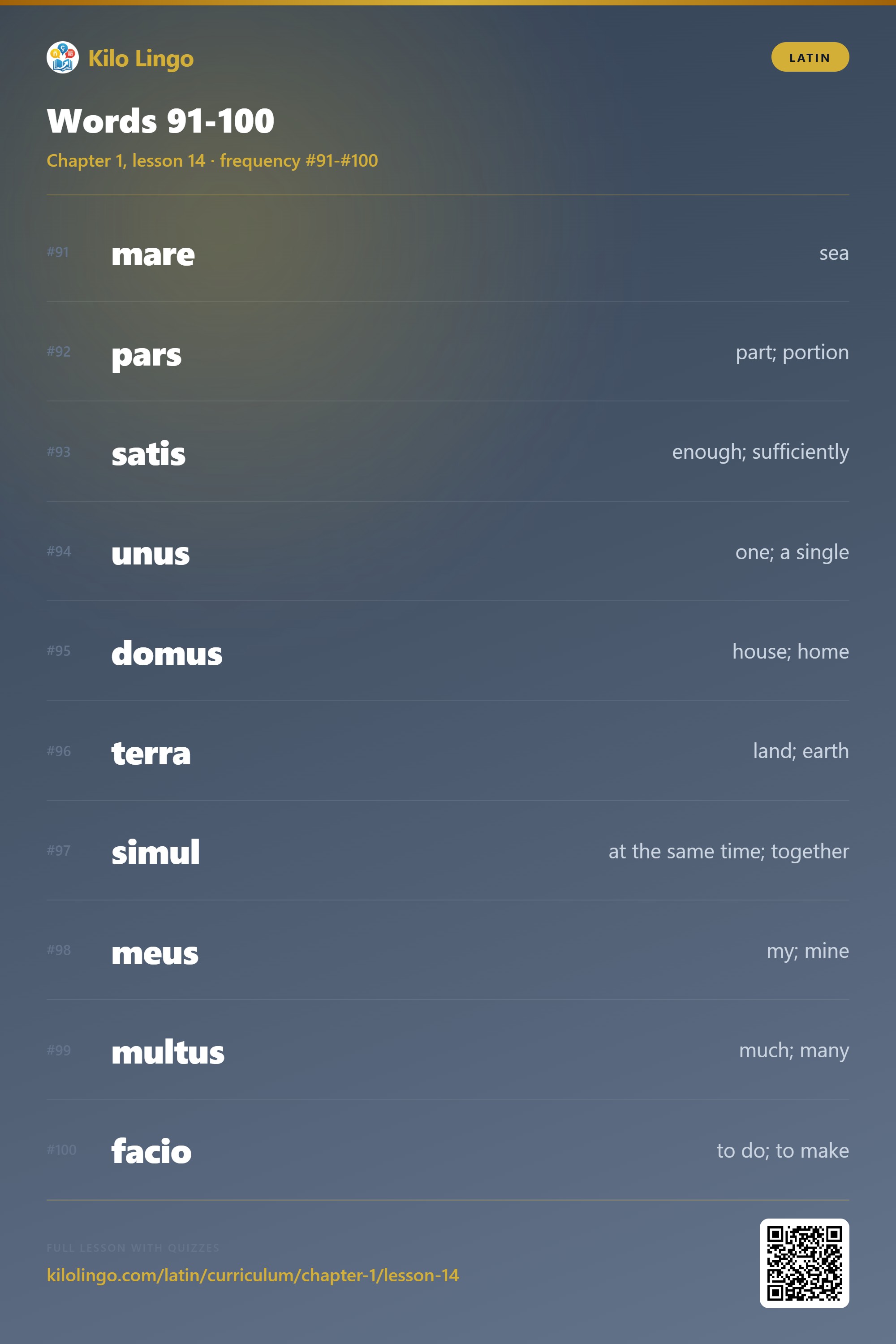
- Words 91-100Vocabulary
14 words · ranks 91-100
- The sounds of LatinPronunciation
Classical v is w, c is always hard, ae is 'eye'. Watch both Latins side by side and pick your era.
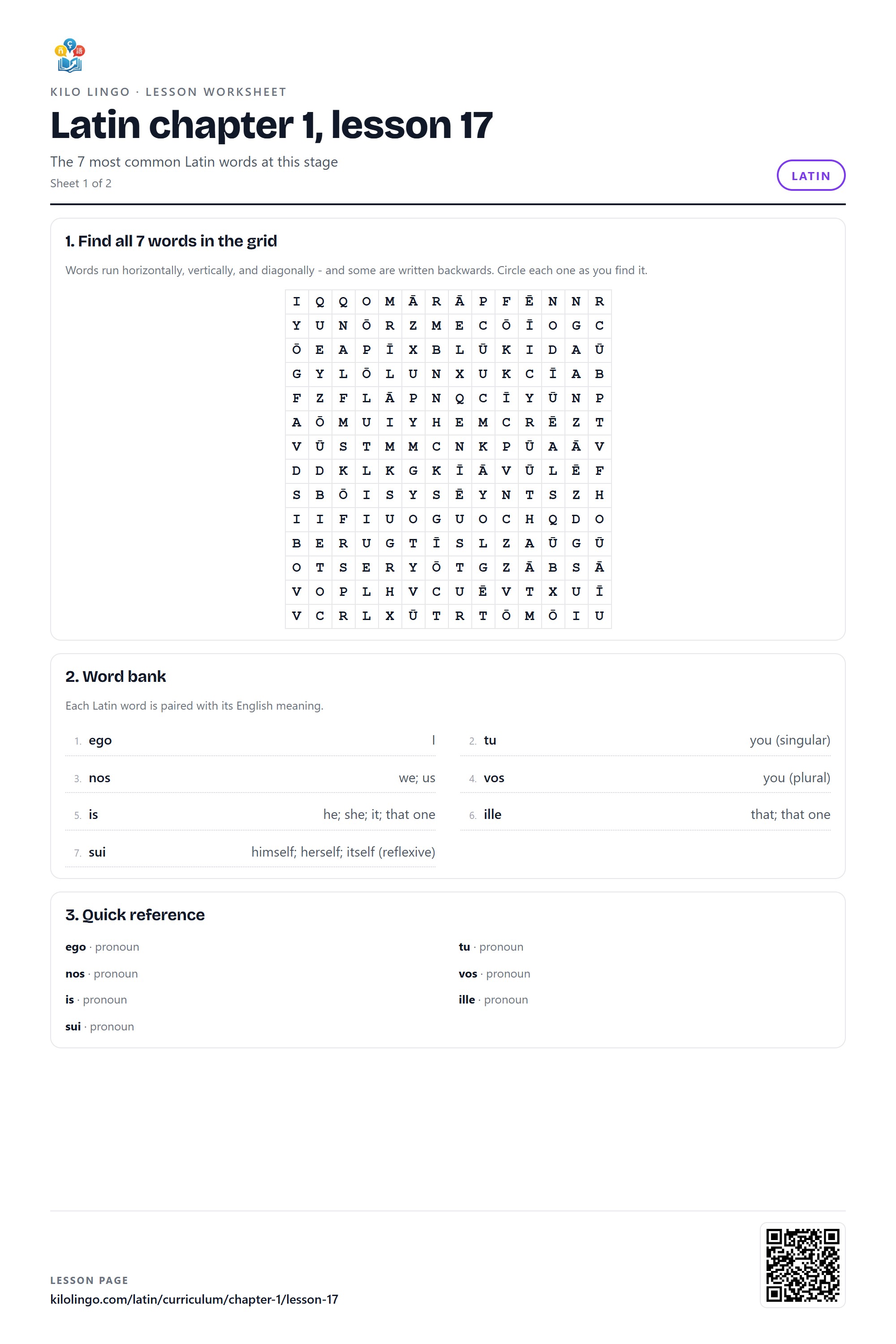
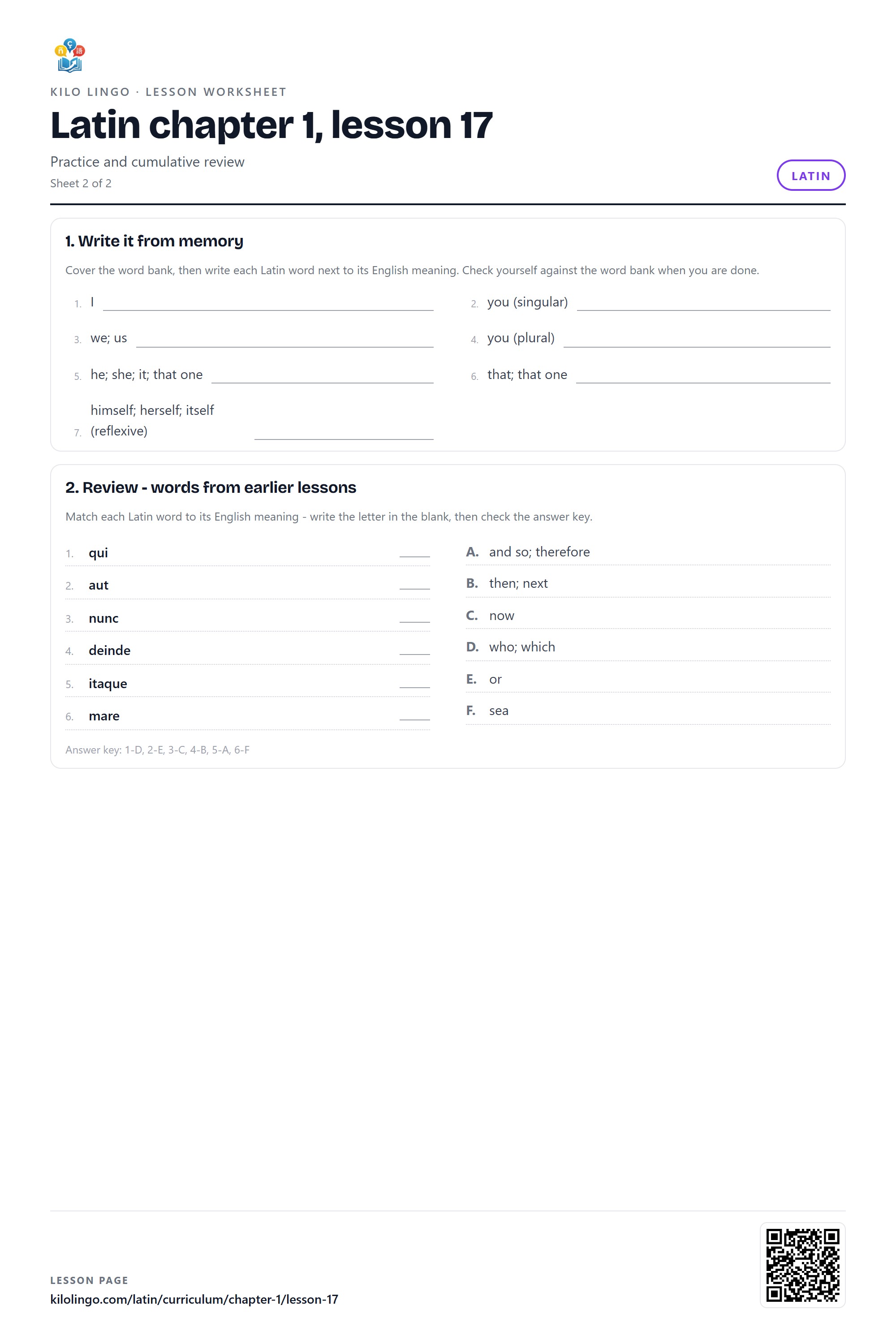
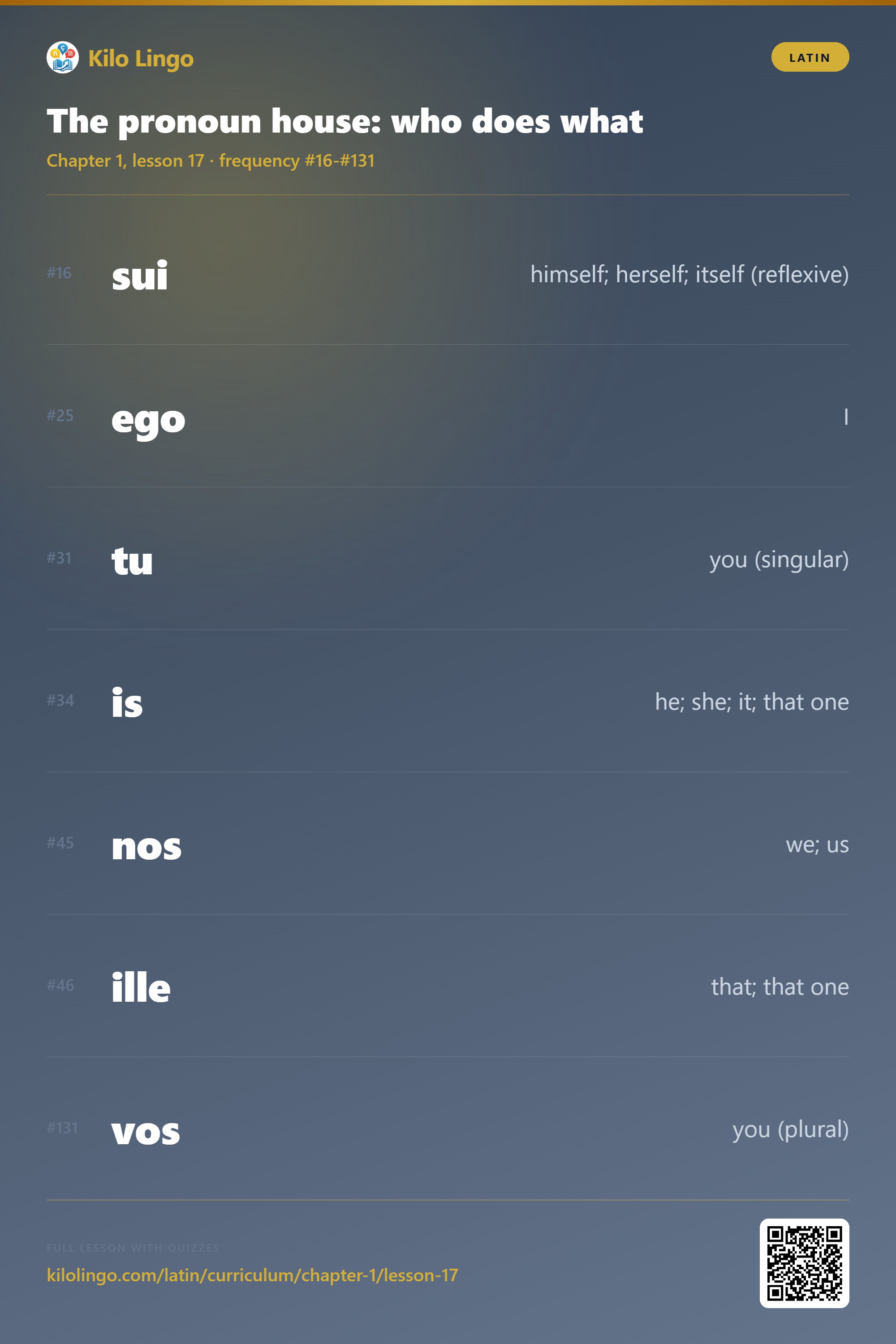
- The pronoun house: who does whatVocabulary
7 words · Latin mostly leaves these out - the verb ending already names the subject. When ego or tu does appear, it is there for emphasis, and this house keeps the whole set together.
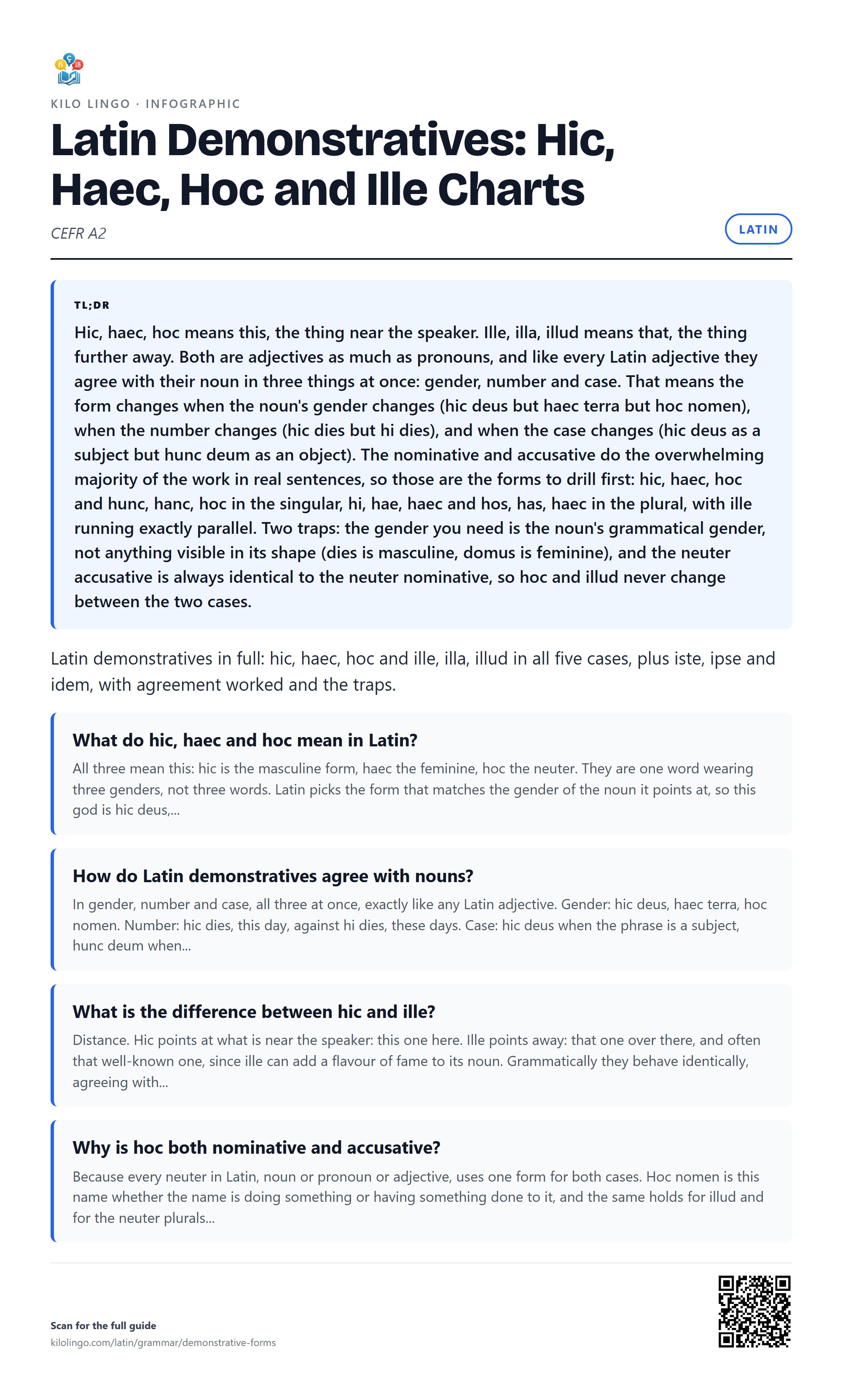
This and that must match their noun in gender, number and case - the agreement drill, hands-on, before the forms fossilise wrong.
- The number house: unus to novemVocabulary
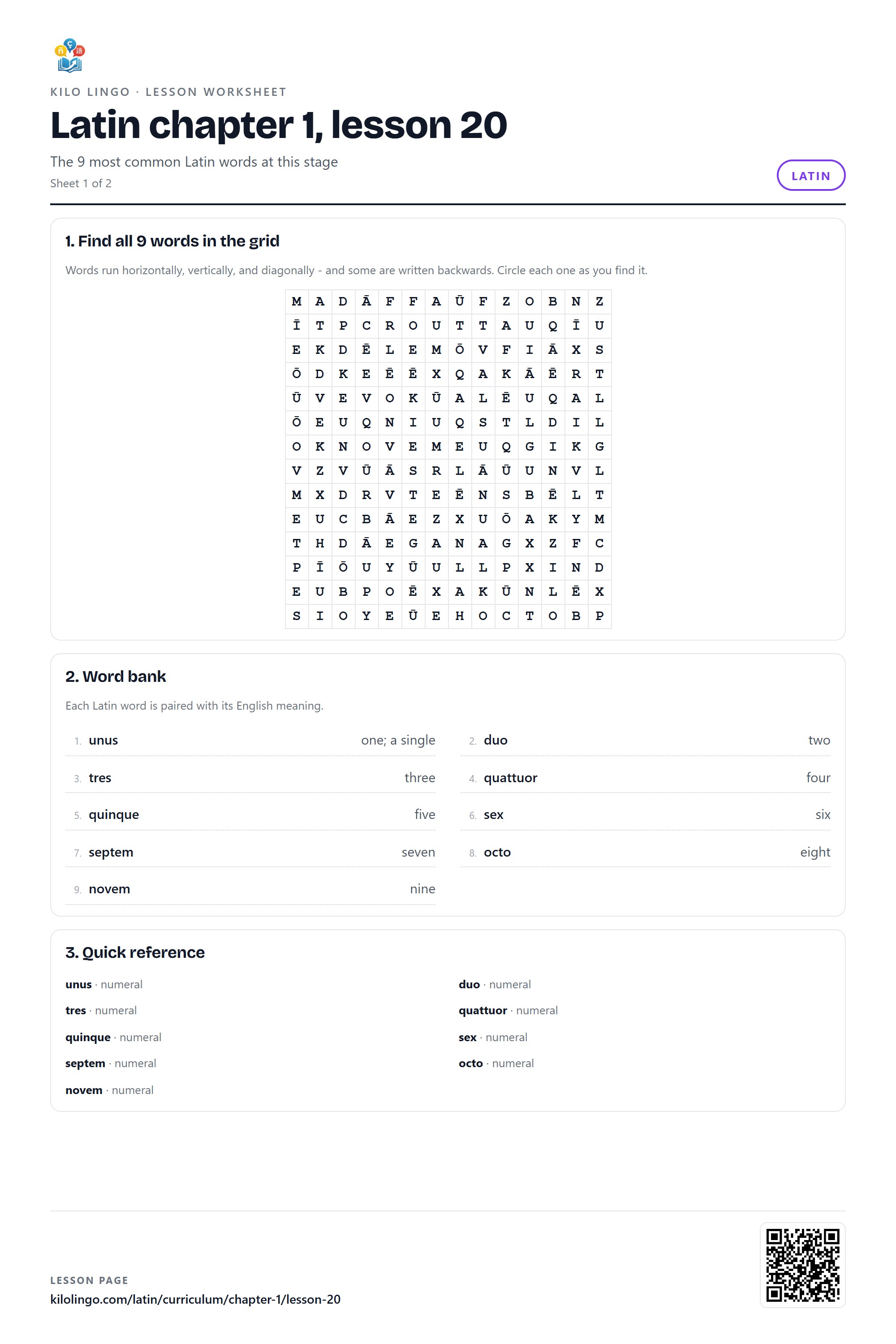
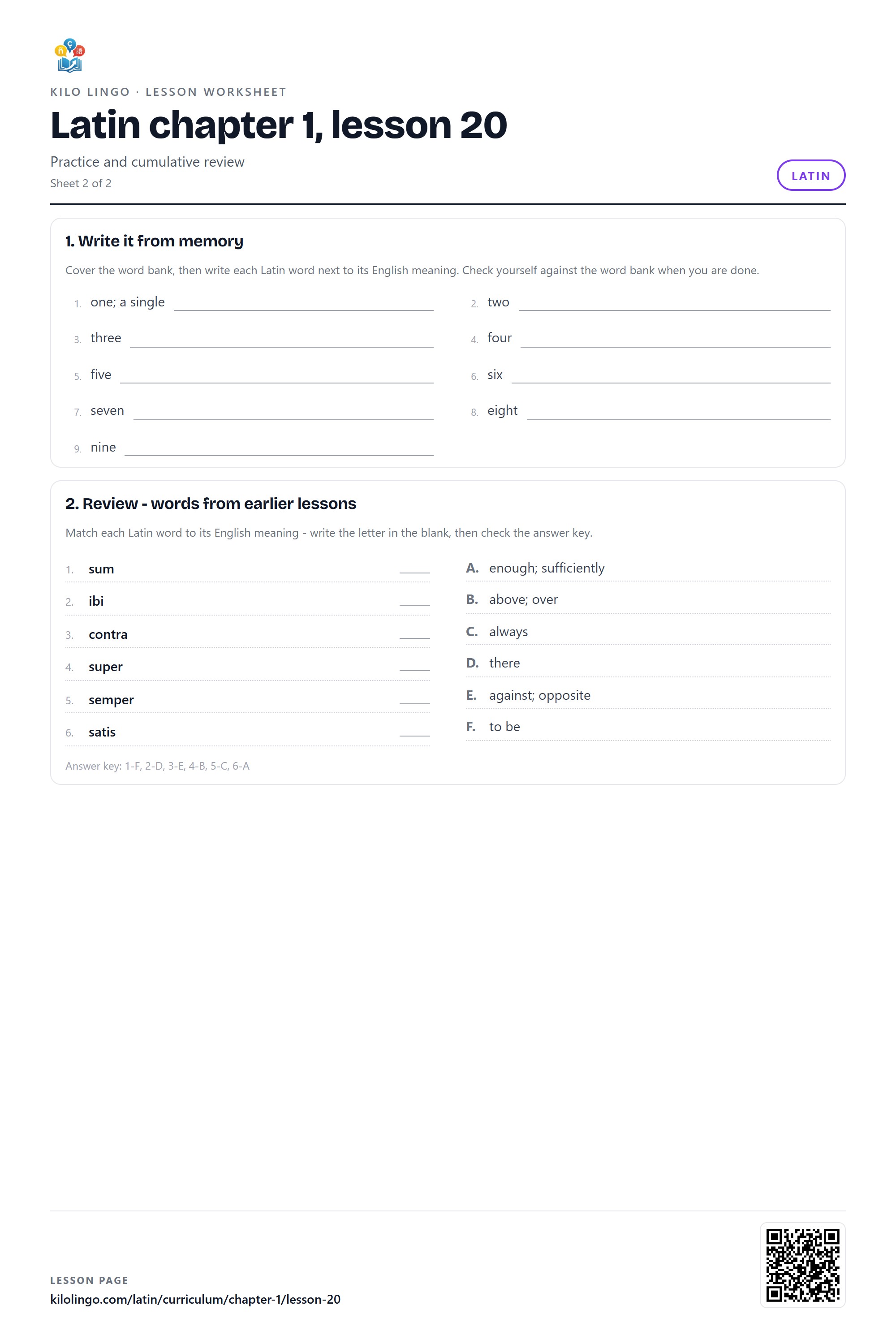
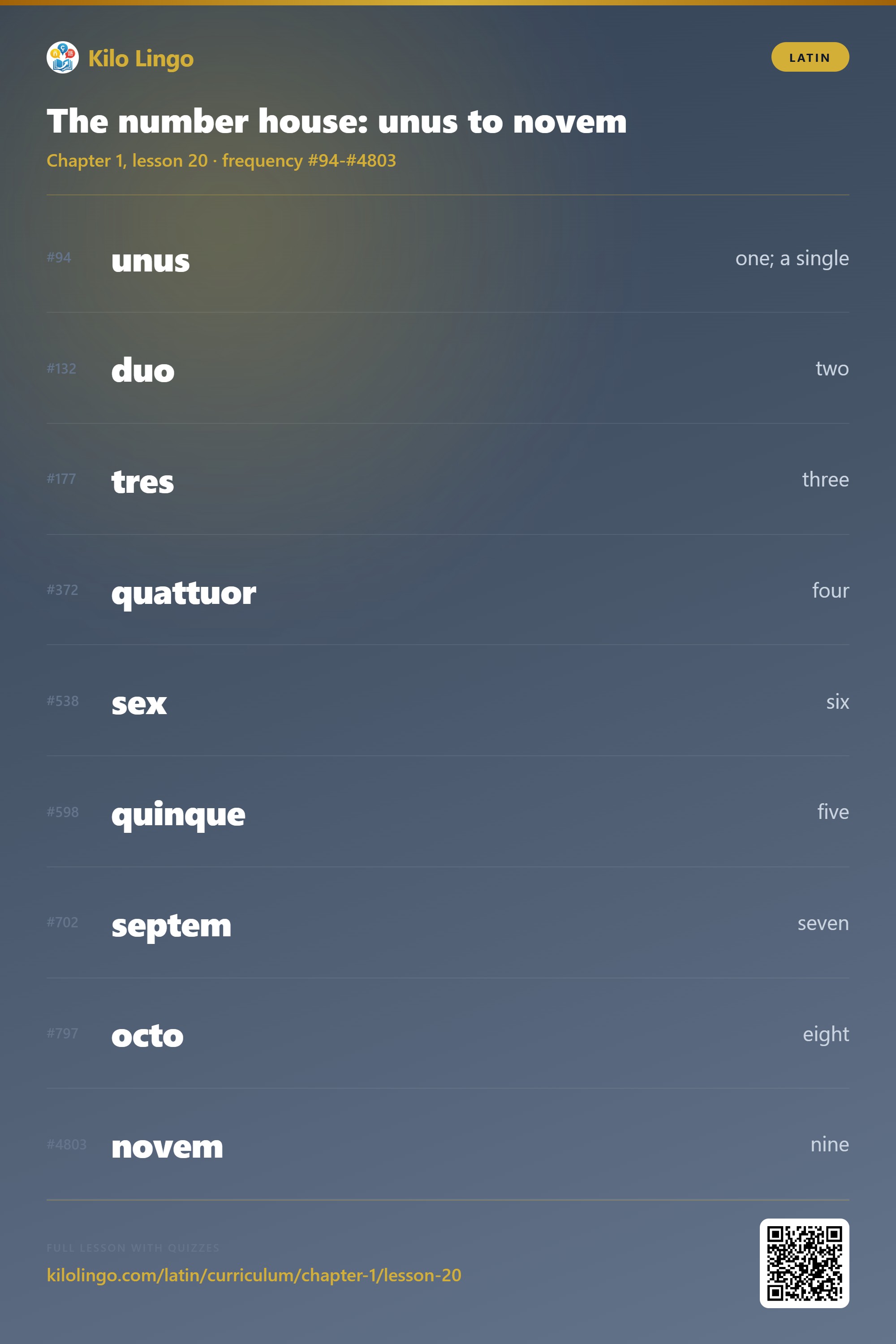
9 words · One to nine, because Latin had no word for zero. Unus, duo and tres change their endings to match what they count; quattuor to novem never change at all.
- Crossword review sessionReview games
Cross the words you just met, clued in English. Slower than a drill, and it sticks harder.
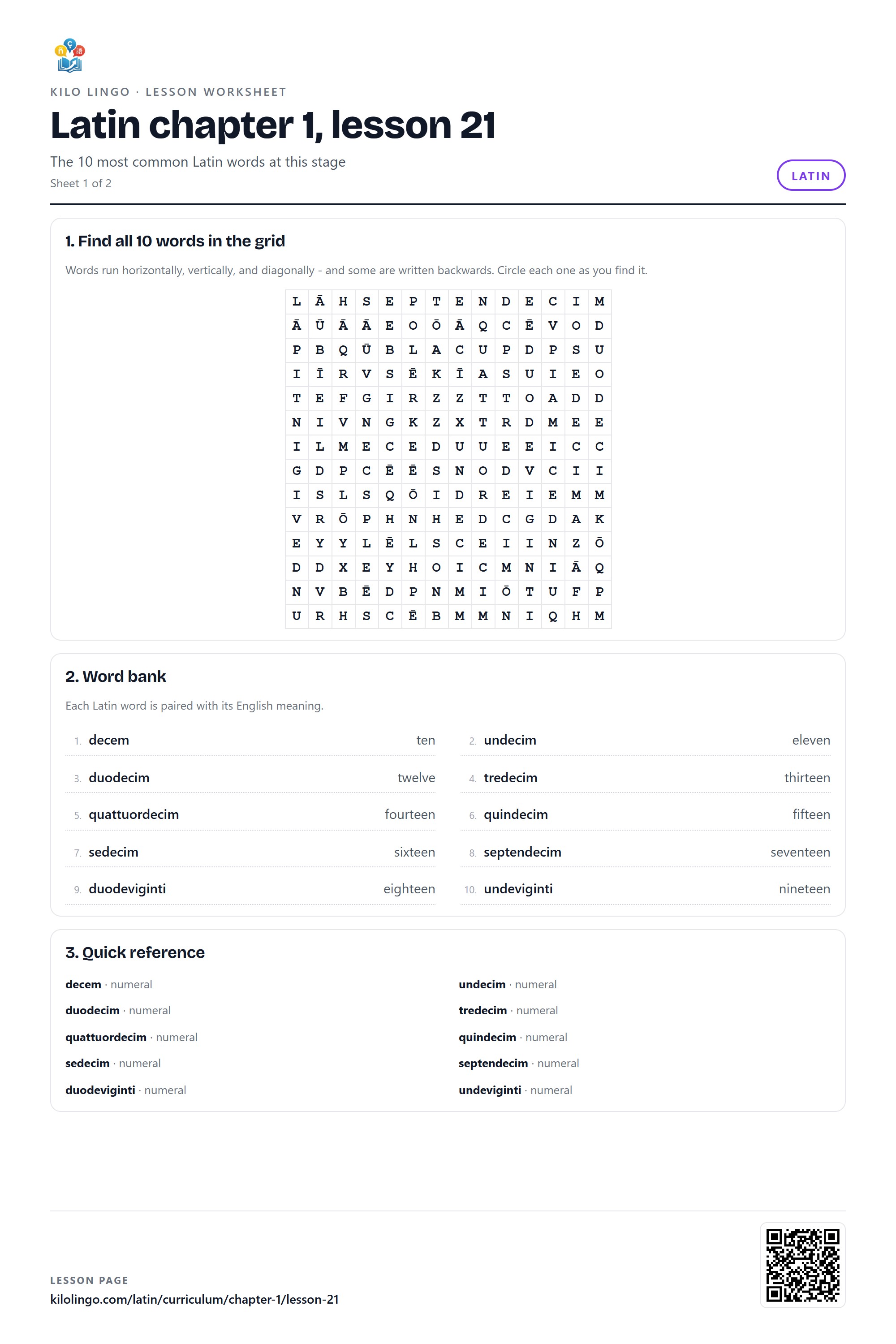
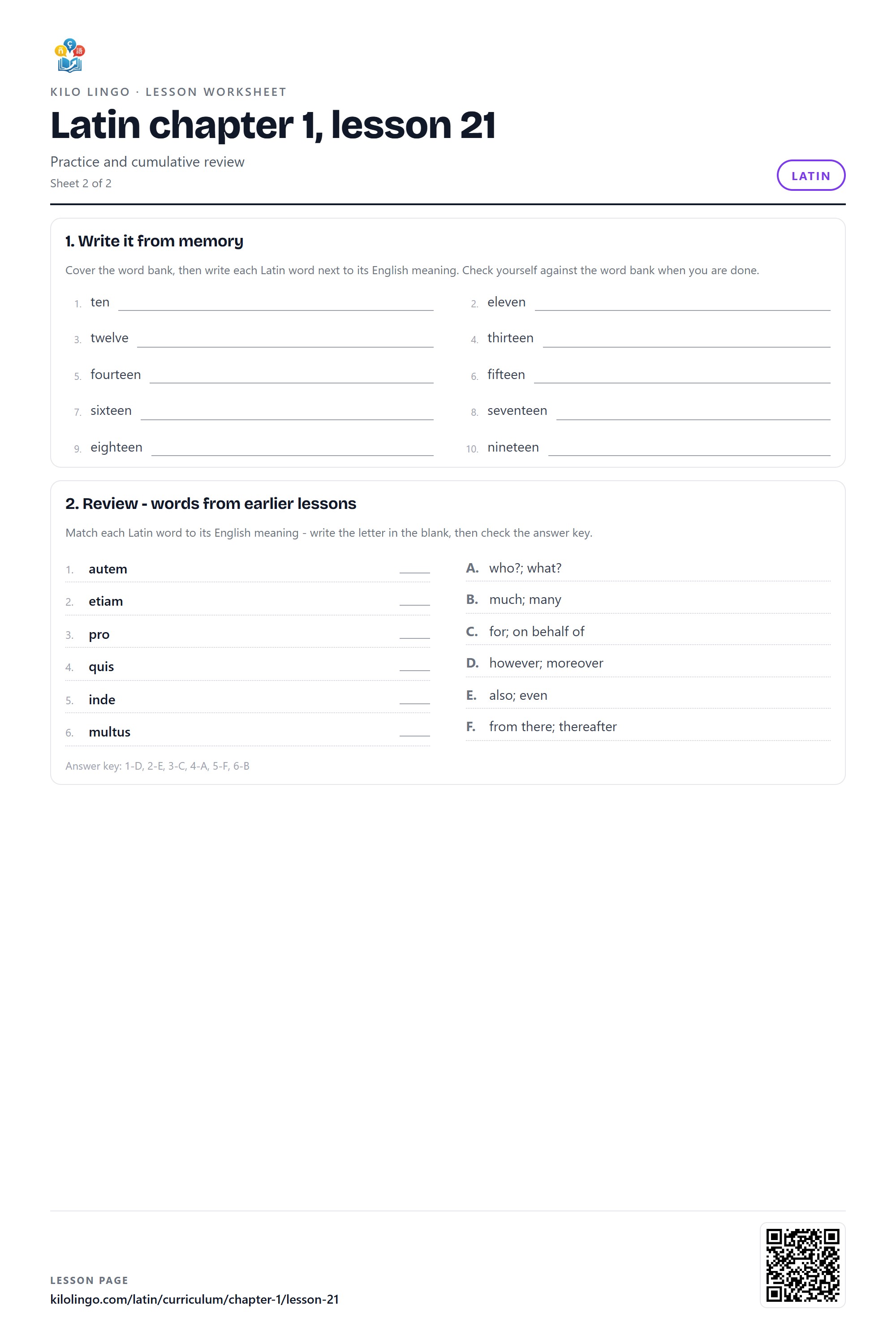
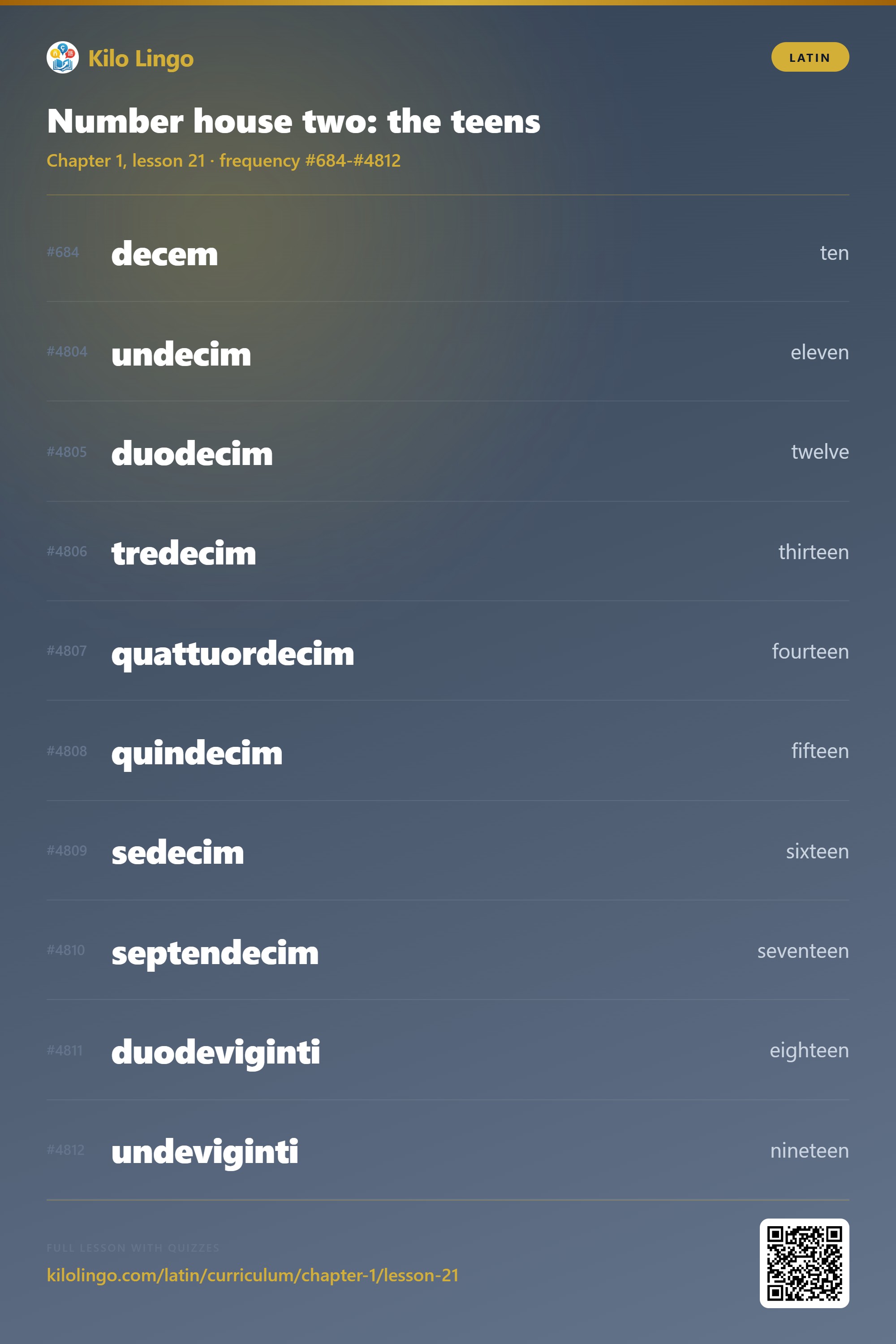
- Number house two: the teensVocabulary
10 words · Decem to undeviginti. Eleven to seventeen add a unit to ten; eighteen and nineteen count back from twenty, two-from-twenty and one-from-twenty.
- Word Bubbles review sessionReview games
Pop the words you just met by matching each one to its meaning. A couple of rounds and the batch is yours.
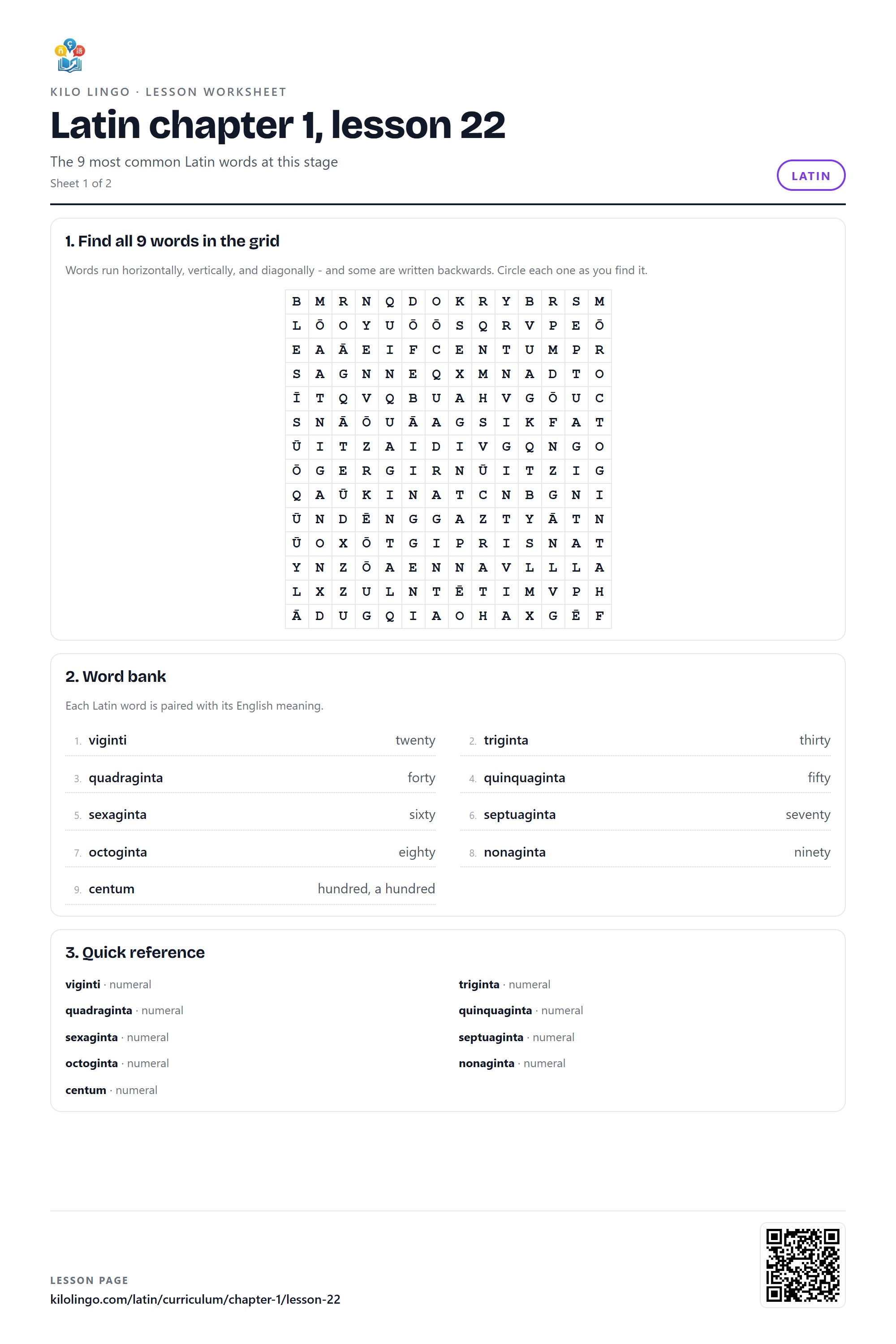
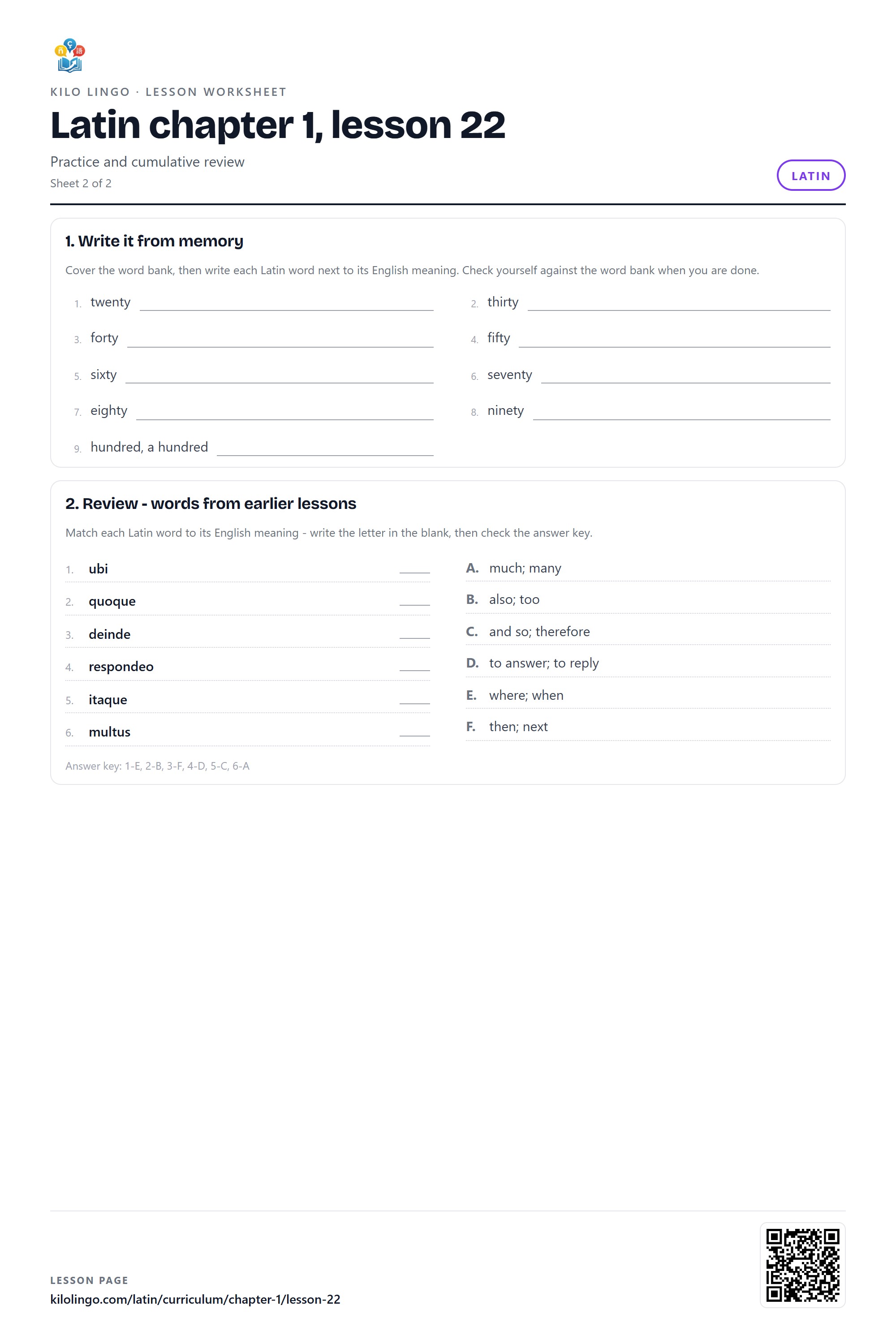
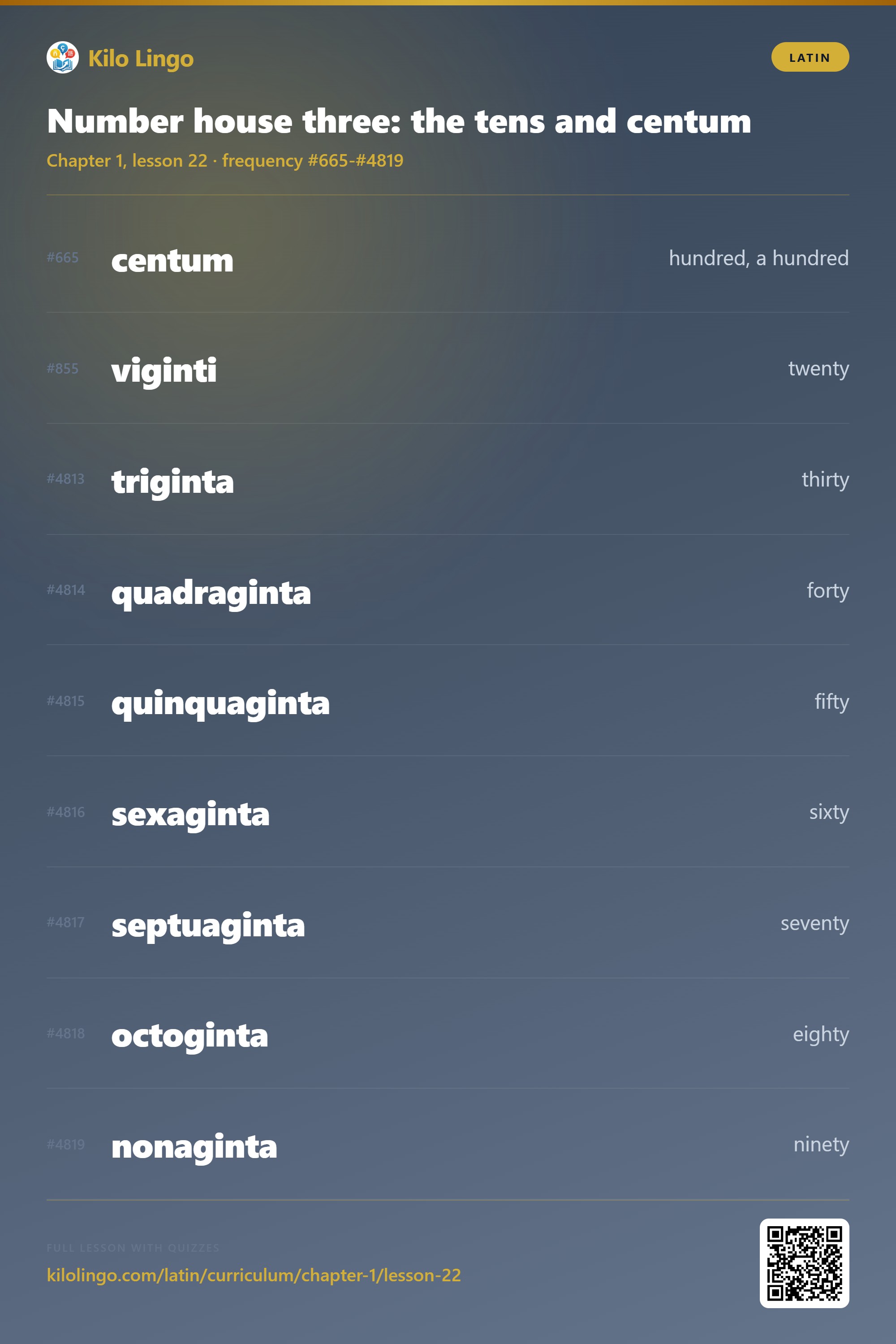
- Number house three: the tens and centumVocabulary
9 words · Viginti to nonaginta, then centum, and not one of them ever changes its ending. Watch nonaginta: ninety borrows its start from nonus, ninth, not from novem.
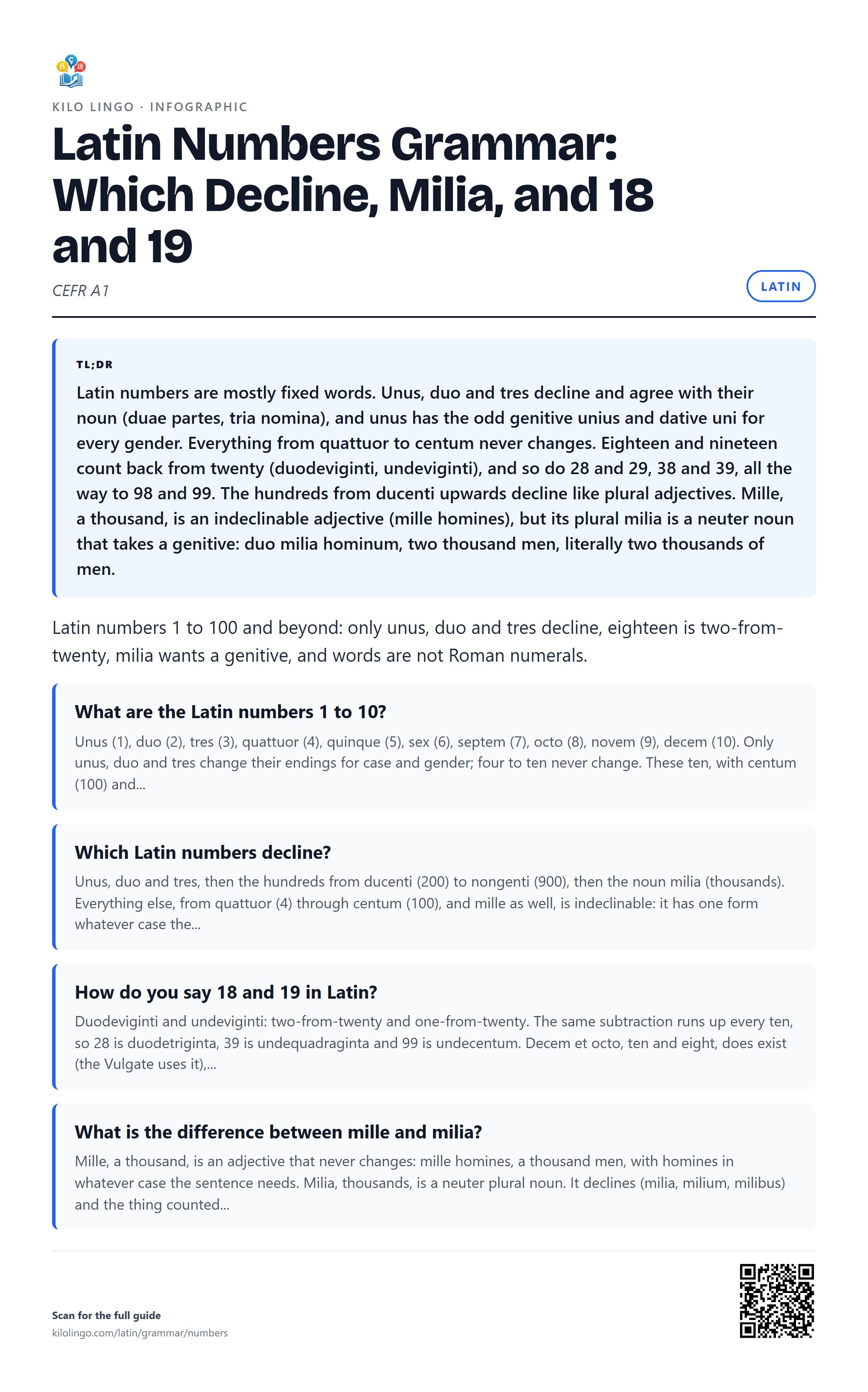
- How Latin numbers workGrammar
Which numbers decline and which never do, why eighteen is two-from-twenty, and why duo milia hominum needs a genitive when mille homines does not.
Viginti tres or tres et viginti, both correct; duo and tres still agree inside a compound. And why the word undeviginti and the numeral XIX are not the same thing.
- Et, sed, autemThemed review
The particles that join Latin sentences together. They are among the commonest words in the language and the ones a dictionary is least able to explain, so they get a session of their own.
- Marcus has a houseConversation
Eight lines with Marcus, on his way to his house by the sea.
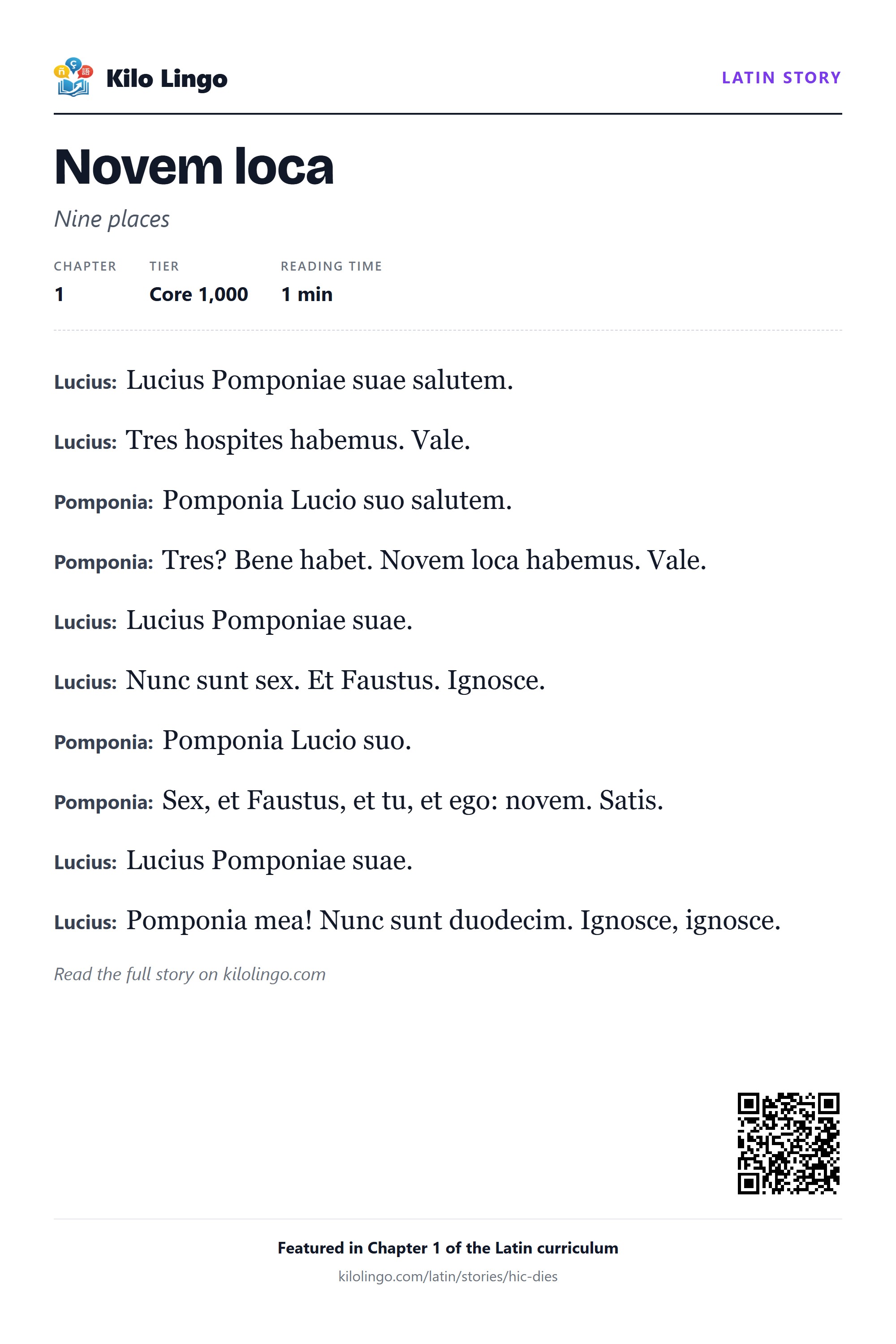
- Your first story in LatinGraded-reader story
Wax-tablet notes about a dinner party that gets out of hand. Every word comes from the hundred you have just learned, apart from two listed at the top.
- Arcade reviewReview games
Replay this chapter's words as games - a different kind of repetition, and it counts.
Word printables
Per-word sheets137 words · a worksheet, infographic and listicle each