
Ch 1 · Lesson 11Latin · Chapter 1 · Lesson 11 · Grammar primer
Reading by the endings: verb first, then the cases
Find the verb, then the nominative, then the accusative, and fit the rest in. Prepositions help: always brings an ablative, ad an accusative.
The short version
Find the verb first, never read left to right
.
Why?Hide
An English speaker's instinct is to assign roles by position, and in Latin that actively misleads. The order that works is: find the verb, which is often last; find the nominative, which is your subject wherever it sits; find the accusative, which is what the verb landed on; then fit the rest in. Learners who never break the left-to-right habit stall for years.
Reading Latin the right way round
An English speaker reads left to right and hands out roles by position. In Latin that instinct actively misleads. Read the endings in this order instead:
- Find the verb. It is often last, and its ending may give you the subject.
- Find the nominative. That is your subject, wherever it sits.
- Find the accusative. That is what the verb lands on.
- Fit the rest in. Genitives hang on a nearby noun; datives and ablatives colour the action.
Try it on .
| Step | In the sentence | What it gives you |
|---|---|---|
| Verb | | we see (the -mus is "we") |
| Nominative | none | the subject is in the verb |
| Accusative | | God, the thing seen |
| The rest | , | on earth; not |
We do not see God on earth. The order was object, phrase, negative, verb, and none of it mattered once the endings were read. What Roman writers did with that freedom is the subject of Latin word order.
Prepositions tell you which case is coming
Almost every Latin preposition takes a fixed case on the noun after it, so a preposition is a free clue:
| Preposition | Case | Example | English |
|---|---|---|---|
| ablative | | with God | |
| ablative | | without water | |
| ex | ablative | | out of the land |
| ablative | | down from the land | |
| pro | ablative | | for the fatherland |
| ad | accusative | | to the land |
| per | accusative | | through the lands |
| post | accusative | | after death |
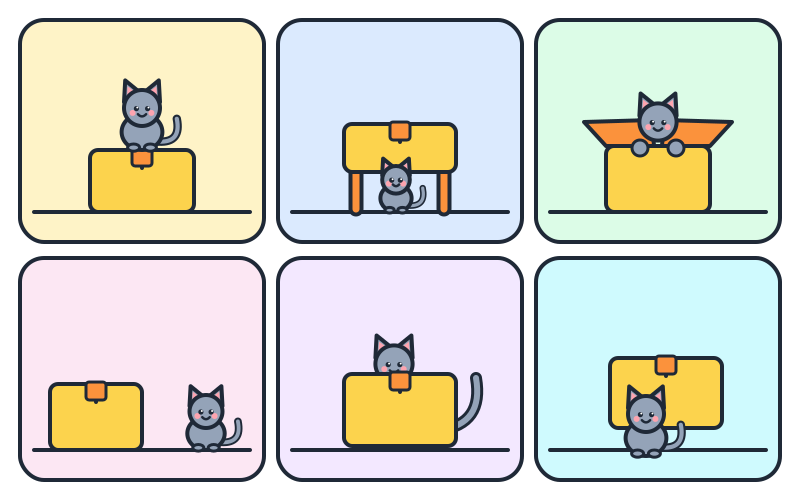
Where is the cat? Arca is the box. Super (on top of), iuxta (beside), post (behind) and ante (in front of) take the accusative; sub and in take the ablative when the cat is simply there.
and take either case, and the choice carries meaning: ablative for where something is, accusative for where it is going.
| Meaning | Latin | English |
|---|---|---|
| where it is | . | We are on land. |
| where it goes | . | We come onto land. |
| where it is | | under the earth |
| where it goes | | going below the earth |
Going further: Why the word order is free and the rest of the guide, when you want them. This lesson does not need them.
Practice
Practise this lesson
10-question session
One question at a time, mixed across the exercises in this lesson. Miss one and it comes back round before the end.
Latin · Free printables
Worksheets for this lesson
Worksheets with answer keys built in. Open any one to view, print or save.
Lesson 11 of 42 in this chapter