
(nǔ lì) - to work hard, to strive; hard-working, diligent in Mandarin
nǔlìTraditional: 努力
Translation
to work hard, to strive; hard-working, diligent
Word origin
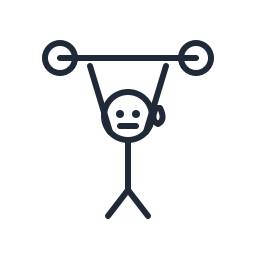
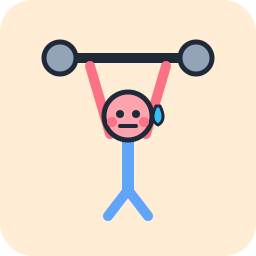
努力 (nǔlì) 'to work hard' joins 努 'to exert' with 力 'strength', literally 'to exert strength'. 努 is a phono-semantic compound of 力 'strength' plus 奴 (nú) as phonetic; 力 is a pictograph of a flexed arm or plough.
- Origin
- compound
- Root
- 努 (to exert: 奴 nú phonetic + 力) + 力 (strength)
Stroke order

努

力
Examples
。
You need to study hard.
,。
He works very hard, putting in twelve hours every day.
。
Hard work will ultimately be rewarded.
。
She works hard every day.
。
I will try my best.
努力 (nǔ lì) means to work hard, to strive, or to make an effort. It can be used as a verb (要努力, need to work hard), an adjective (努力的学生, a hard-working student), or an adverb (努力工作, work diligently). 努 means to exert force and 力 means strength or effort. It is a key word in Mandarin motivational contexts and reflects an important cultural emphasis on diligence and perseverance.
Where this fits
Used in
Grammar articles
(7)Mandarin Conjunctions: 虽然…但是, 因为…所以, 如果…就 and the Paired Structures That Join Clauses
Formal Mandarin Connectives: 然而, 因此, 于是 and 尽管 (The Written Register)
Mandarin Intermediate Grammar (B1-B2 / HSK 4-5): Complements, Conjunctions and the Full 了 System
就 (jiù) vs 才 (cái) in Mandarin: Sooner Than Expected, Later Than Expected
Mandarin Modal Verbs: 会, 想, 要, 应该, 可以, 能 and the Future-Intent Words 打算, 准备
The Mandarin 所 (suǒ) Family: 所有, 所谓, 所 + Verb, and the 为...所 Passive
The Three de in Mandarin: 的, 得, and 地 and How to Tell Them Apart
Add to review queue
Track this word in your spaced-repetition queue and be tested on it at the right interval.
Go to my review queueMandarin · Free printables
努力: worksheet, infographic and listicle
Free printable study downloads for the Mandarin word "努力" (to work hard, to strive; hard-working, diligent): a worksheet with the answer key built in, an infographic, and a sentence listicle. Open any one to view, print or save.
Free for members
The printable worksheets, infographics and PDFs are free with an account. Start a free week and download as many as you like.
Start your free weekThis word is part of lesson 12.