
(qǐ lái) - to get up, to rise in Mandarin
qǐláiTraditional: 起來
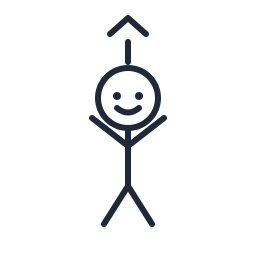

Translation
to get up, to rise
Word origin
起来 (qǐ lái) combines 起 (qǐ), 'to rise', with the directional verb 来 (lái), 'to come'. 来 was originally a pictograph of a wheat or barley plant, later borrowed for 'to come'. As a compound it means 'to get up' or 'to rise', and serves as a directional complement.
- Origin
- compound
- Root
- 起 (qǐ, rise) + 来 (lái, come)
Stroke order

起

来
Examples
!
Get up quickly!
。
He stood up.
,。
It's dawn, time to get up.
,。
It's dawn, get up quickly.
。
This matter is easy to talk about.
起来 (qǐ lái) means to get up, to rise. It is used as a verb in everyday Mandarin speech.
Where this fits
Used in
Stories
(4)Grammar articles
(10)The Mandarin 把 (bǎ) Construction: Fronting the Object to Say What You Did To It
Compound Directional Complements in Mandarin: Verb + 起来, 下去, 过来, 出来 and Motion Relative to the Speaker
Mandarin Conjunctions: 虽然…但是, 因为…所以, 如果…就 and the Paired Structures That Join Clauses
Figurative Directional Complements in Mandarin: 起来, 下去 and 出来 Beyond Up, Down and Out
The Mandarin Durative 着 (zhe): Marking a State That Continues (门开着, 拿着书, 笑着说)
Formal Mandarin Connectives: 然而, 因此, 于是 and 尽管 (The Written Register)
Mandarin Potential Complements: Can You Reach the Result? (吃得完, 听不懂, 买不起)
Mandarin Requests and Imperatives: 请, 别, 不要, the Softening Particles 吧/啊, and Verb Reduplication
The Three de in Mandarin: 的, 得, and 地 and How to Tell Them Apart
无论 and 不管 in Mandarin: The No Matter What Frame (无论/不管 ... 都/也)
Add to review queue
Track this word in your spaced-repetition queue and be tested on it at the right interval.
Go to my review queueMandarin · Free printables
起来: worksheet, infographic and listicle
Free printable study downloads for the Mandarin word "起来" (to get up, to rise): a worksheet with the answer key built in, an infographic, and a sentence listicle. Open any one to view, print or save.
Free for members
The printable worksheets, infographics and PDFs are free with an account. Start a free week and download as many as you like.
Start your free weekThis word is part of lesson 4.