
Ch 2 · Lesson 8Russian · Chapter 2 · Lesson 8 · Grammar primer
Новый, новая, новое: adjectives agree
An adjective matches its noun: , , , . And the order makes the sentence: is a big house, is the house is big.
The short version
Word order turns a phrase into a sentence
. (Dom bolshoy.)
Why?Hide
Because the present tense of to be is invisible, the position of the adjective does its job. Bolshoy dom, adjective first, is a big house. Dom bolshoy, adjective second, is a whole sentence: the house is big.
A Russian adjective matches its noun on three things at once: gender, number and case. That sounds like the worst table in the language and is not, because one set of endings serves nearly every adjective, and the endings copy a pronoun you already know.
The four nominative forms
Start with the dictionary form and the three beside it. The ending is coloured by gender, the same colours as Russian noun gender:
| Goes with | Form | Example |
|---|---|---|
| masculine | | - a new house |
| feminine | | - a new book |
| neuter | | - a new window |
| plural | | - new friends |
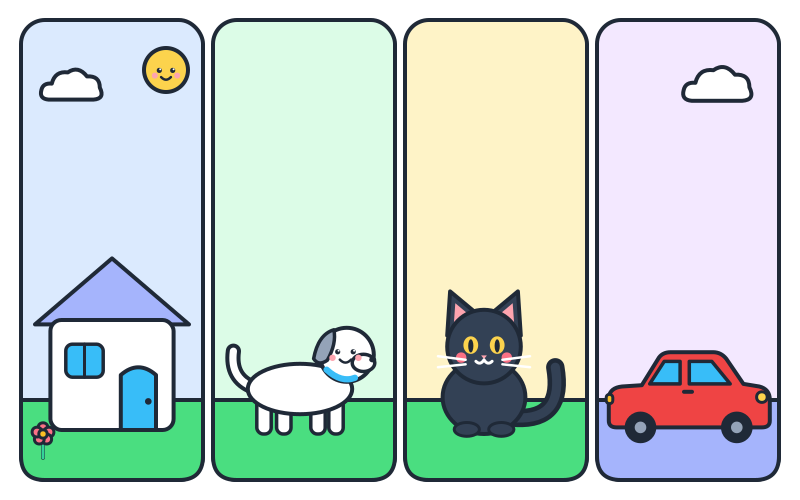
The same white, two ways: дом is masculine, so белый; собака is feminine, so белая. Кошка and машина are feminine too.
Gender disappears in the plural: one ending serves houses, books and windows alike.
The masculine comes in three flavours, all declining almost the same way:
| Ending | When | Example |
|---|---|---|
| -ый | ordinary hard stem | - an old house |
| - | the ending is stressed | - a big house |
| -ий | spelling rule, or soft | - a good friend |
Only the masculine nominative of the -ой type looks different. Every other form follows the -ый pattern, with the spelling rules below:
Where the adjective goes
Before the noun, as in English. And here the missing verb to be earns its keep: because the present tense of is invisible, word order separates a phrase from a sentence.
большой дом: a big house. Дом большой: the house is big.
.- The house is big. (a complete sentence).- The car is new.
No verb, no article, and still no ambiguity: the order tells you which one you are looking at.
Going further: The adjectives to learn first, and how they compare and the rest of the guide, when you want them. This lesson does not need them.
Practice
Practise this lesson
8-question session
One question at a time, mixed across the exercises in this lesson. Miss one and it comes back round before the end.
New words in this lesson
 новыйˈnovɨjnew
 старыйˈstarɨjold
 большойbɐlʲˈʂojbig, large
 хорошийxɐˈroʂɨjgood
 грустныйˈɡrusnɨjsad
- весёлыйvʲɪˈsʲoɫɨjjolly, cheerful, happy
 интересныйɪntʲɪˈrʲesnɨjinteresting
 скучныйˈskutɕnɨjboring, dull
 глупыйˈɡɫupɨjsilly, stupid
 умныйˈumnɨjintelligent, clever
 высокийvɨˈsokʲɪjtall; high
 смеятьсяsmʲɪˈjatsəto laugh
 улыбатьсяʊɫɨˈbatsəto smile
 длинныйˈdlʲinːɨjlong
 удобныйʊˈdobnɨjcomfortable, convenient
- страшныйˈstraʂnɨjscary, frightening; terrible
 суперˈsupʲɪrgreat, awesome, super (colloquial exclamation)
Russian · Free printables
Worksheets for this lesson
Worksheets with answer keys built in. Open any one to view, print or save.
Lesson 8 of 35 in this chapter