
Spanish · Chapter 42 · Lesson 22 · Themed review
Los sentimientos, mas a fondo
The second pass at feeling. Spanish makes a verb out of most of these - enamorarse, enfadarse, calmarse - so the emotion is something you do rather than something you are.
Practise this lesson
28-word session
A quick mix of exercises - recognise, recall, type and build each word. Miss one and it comes back round until it sticks.
Worth knowing
In Spanish, most emotions are things you do to yourself
The first feelings session gave you , and . This one is about a pattern rather than a list: Spanish turns most emotions into reflexive verbs, so the emotion becomes something that happens to you at a moment rather than something you simply are.
is to get angry. is to fall in love. is to calm down. is to worry. Each one is an event with a beginning.
English needs a helper verb for all of these - get, fall, become - and Spanish folds it into the verb itself.
The three-way split
Take anger. is to make someone angry. is to get angry. is to be angry, the resulting state.
Cause, change, state. Spanish keeps all three separate and you can say precisely which one you mean. Me is I got angry, at a moment. is I was angry, throughout.
That is the same preterite-imperfect logic you have been drilling for thirty chapters, now applied to feelings, where it does its most useful work.
enfadarse and enojarse
Both are to get angry. is Spain; enojarse is Latin America. Neither is wrong anywhere, but each sounds foreign in the other's territory.
alegria, alegre, contento
is joy, the noun. is cheerful as a characteristic - is a description of someone's nature. is happy right now - .
sits between them and takes either verb, with the usual shift: is a happy person, is having a good day.
The ones that are not what they look like
is not illusion. It is excitement or eager anticipation: me is I am looking forward to it, and it is warm and completely positive. This is one of the loveliest false friends in the language and there is no clean English equivalent.
is a shame or a pity, not lastingness. ¡ ! is what a shame.
is embarrassment and shame both, and me is I am embarrassed - the construction again, giving you the feeling rather than you having it.
Words in this theme
 el sentimiento/sentiˈmjento/feeling, emotion
 la sensación/sensaˈθjon/sensation, feeling
 la alegría/aleˈɣɾia/joy, happiness
 alegre/aˈleɣɾe/happy, cheerful
 contento/konˈten.to/happy, pleased
 enamorado/enamoˈɾaðo/in love
 enamorar/e.na.moˈɾaɾ/to make fall in love
 orgulloso/oɾ.ɡuˈʝo.so/proud
 la esperanza/espeˈɾanθa/hope
 la ilusión/iluˈsjon/illusion, excitement, hope
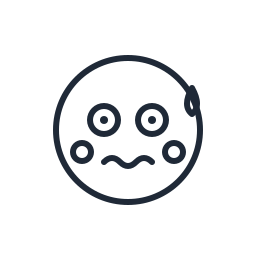 nervioso/neɾˈβjoso/nervous
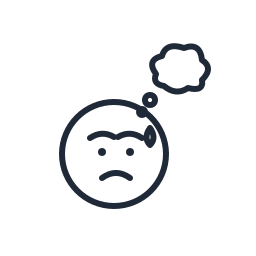 la preocupación/pɾeokupaˈθjon/worry, concern
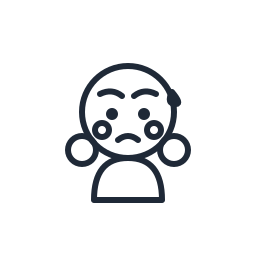 el temor/teˈmoɾ/fear
 la rabia/ˈraβja/anger, rage
 enfadado/enfaˈðaðo/angry, annoyed
 enojado/enoˈxaðo/angry
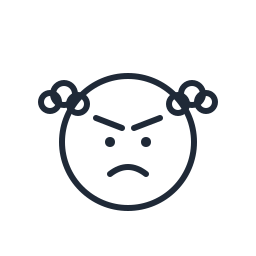 enfadar/emfaˈðaɾ/to make angry, to annoy
 celoso/θeˈloso/jealous
 solitario/soliˈtaɾjo/solitary, lonely
 aburrido/aβuˈriðo/bored, boring
 la vergüenza/beɾˈɣwen.θa/shame, embarrassment
 la lástima/ˈlas.ti.ma/pity, shame
 la sonrisa/sonˈrisa/smile
 sonreír/sonreˈiɾ/to smile
 reír/reˈiɾ/to laugh
 la calma/ˈkalma/calm
 calmar/kalˈmaɾ/to calm, to soothe
 odiar/oˈðjaɾ/to hate, to detest