
Spanish · Chapter 5 · Lesson 6 · Grammar primer
Adjective agreement
Adjectives agree with the noun for gender and number. The endings, the position, the agreement patterns.
The short version
Why it is buen amigo, never bueno amigo
A short list of adjectives lose their final vowel before a masculine singular noun: bueno becomes buen, malo becomes mal, grande becomes gran, primero becomes primer. Move the adjective after the noun, or make it feminine or plural, and the full form comes straight back: un hombre bueno, una buena amiga.
Es un buen amigo.
Position changes the meaning, not just the music
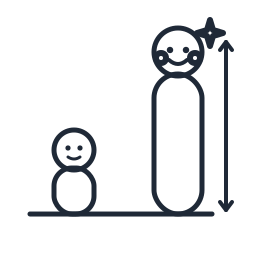
Spanish adjectives normally follow the noun, and a handful mean something different when they jump in front. Un gran hombre is a great man; un hombre grande is a big one. Un viejo amigo is a long-standing friend; un amigo viejo is an elderly one. These are semantic choices, not stylistic ones.
un gran hombre
That's the gist. The full article goes deeper - more examples, the edge cases, the why - and the practice below scores like a vocabulary session and earns the same XP.
Read the full article · 3 min readPractice
Practise this lesson
25-question session
One question at a time, mixed across the exercises in this lesson. Miss one and it comes back round before the end.




Spanish · Free printables
Worksheets for this lesson
Worksheets with answer keys built in. Open any one to view, print or save.
Free for members
The printable worksheets, infographics and PDFs are free with an account. Start a free week and download as many as you like.
Start your free weekLesson 6 of 24 in this chapter