
Ch 31 · Lesson 9English · Chapter 31 · Lesson 9 · Grammar primer
I think so, I hope not; so do I
So stands for a whole idea: I think so. Hope puts not at the end: I hope not. To agree: So do I, Neither can I, with the helper before I.
The short version
I don't think so, but I hope not
? - .
Why?Hide
So stands in for a whole idea: Is she coming? I think so. For a not answer, think takes don't: I don't think so. Hope and be afraid put not at the end instead: I hope not, I'm afraid not. I don't hope so is wrong.
So do I agrees with a yes; neither do I with a not
. - .
Why?Hide
To agree, put so or neither, then the helper verb, then I: I love it. So do I. I can't swim. Neither can I. The helper must match the other person's: So am I after I'm tired, So did I after a past verb. In relaxed speech, me too and me neither are fine.
I think so, I hope not
When the missing part is a , stands in for it:
? - .- I think she is coming.? - .? - .
For a answer, the verbs split into two groups:
| Verb | Not answer | Not |
|---|---|---|
. | I think no. | |
. | I don't hope so. | |
. | I'm not afraid so. | |
. or . |
I think not is correct, but formal and old-fashioned. I don't think so is the everyday answer.
I'm afraid so and I'm afraid not give bad news politely:
? - .So do I, neither do I
To agree, say + helper + . To agree with a sentence, say + helper + . The helper comes I.
- .
- !
- .
- !
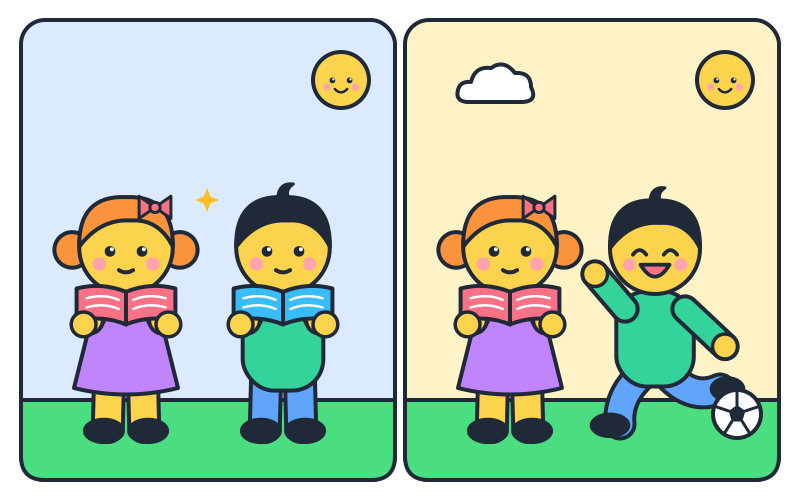
Left: the girl says I'm reading, and the boy, reading too, says So am I. Right: the girl is still reading, but the boy is playing football, so he says I'm not (not reading).
| You agree | They say |
|---|---|
. | . |
. | . |
. | . |
. | . |
. | . |
The helper must match theirs: So did I after a past verb, So would I after would. Nor works like neither:
. - .In relaxed speech, agrees with a yes sentence and
with a not sentence. (Me either is also heard in
American speech.) More in
both, either and neither.
Going further: The helper verb stays and the rest of the guide, when you want them. This lesson does not need them.
Practice
Practise this lesson
10-question session
One question at a time, mixed across the exercises in this lesson. Miss one and it comes back round before the end.
English · Free printables
Worksheets for this lesson
Worksheets with answer keys built in. Open any one to view, print or save.
Free for members
The printable worksheets, infographics and PDFs are free with an account. Start a free week and download as many as you like.
Start your free weekLesson 9 of 26 in this chapter