
Meaning
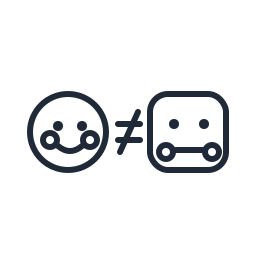
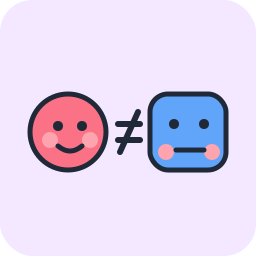
The way in which two things are not the same.
Test yourself on difference
Three quick questions. No account needed.
Know this word? Create a free account to track it.
Word origin
From Latin differentia, from differre meaning to carry apart or to be unlike.
- Origin
- Latin
- Root
- differentia
- English cognates
- different, defer
Grammar
Examples
?
"The difference between A and B" is the usual pattern.
.
"Differences" is the plural, for more than one way of not matching.
.
"Make a difference" means to change something for the better.
Where this fits
Used in
Grammar articles
(8)Articles in English: a, an, the and the zero article
-ed endings in English: spelling and the three sounds
Future tense in English: will vs going to, with examples
Have got in English: I've got a brother (chart and examples)
Linking Words in English: although, despite, however
Must, have to and should in English: rules and examples
Numbers in English: how to say, write and spell them
So, such, too and enough in English: rules and examples
Add to review queue
Track this word in your spaced-repetition queue and be tested on it at the right interval.
Meet this word in a story
Every course has graded stories written only with words you have been taught, plus grammar drills, a games arcade and printable worksheets. Chapters 1 and 2 are free.
Chapters 1 and 2 free, forever. Plus: 7 days free, then $5 a month for all eleven languages.
English · Free printables
difference: worksheet, infographic and listicle
Free printable study downloads for the English word "difference" (The way in which two things are not the same.): a worksheet with the answer key built in, an infographic, and a sentence listicle. Open any one to view, print or save.
Free for members
The printable worksheets, infographics and PDFs are free with an account. Start a free week and download as many as you like.
Start your free weekThis word is taught in chapter 10, lesson 1: difference, appreciate, beg and 7 more words.