
/ˈɒntu/

Translation
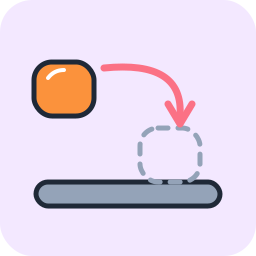
Moving to a place on top of something.
Word origin
A joining of the two words on and to, written as one word from the 1700s.
- Origin
- English
- Root
- on + to
- English cognates
- on, to
Examples
.
"Onto" shows the cat moved up and landed on the table.
.
Here "onto" shows where the soup went.
stepped .
"Onto" follows a verb of movement, such as "step" or "climb".
Used in
Stories
(1)Grammar articles
(10)Comparatives and superlatives in English: the complete guide
Dummy subjects in English: it's raining, there's a problem, and why the subject slot is never empty
Ellipsis and substitution in English: I think so, neither do I, and the words you are allowed to leave out
Emphasis in English: I do like it, my own, the very, and how to push back
Indirect questions in English: Could you tell me where the station is, and the word order that goes with it
Past modals in English: should have, could have, must have and might have
Prepositions in English: place, time and movement explained
Question tags in English: the mirror rule, aren't I, and tags after let's and imperatives
Reporting verbs in English: admit, deny, suggest, promise, and the pattern welded to each one
Wish and if only in English: wish + past, wish + past perfect, wish + would, and why I wish I would is wrong
Add to review queue
Track this word in your spaced-repetition queue and be tested on it at the right interval.
Go to my review queueThis word is part of lesson 27.