
Ch 5 · Lesson 15Latin · Chapter 5 · Lesson 15 · Grammar primer
To whom: the dative
do, I give the book to the king; , I have a book. The dative marks the person the action reaches, and the owner.
The short version
is how Latin says I have a book
.
Why?Hide
Beside the ordinary , Latin owns things the other way round: the thing possessed becomes the subject and the owner goes into the dative. is literally there is a book to me. The genitive handles the other side of ownership, plus the partitive: , , . And watch the overlap while you are there, because is genitive singular, dative singular and nominative plural at once, with only the sentence to settle it.
The dative: the person the action reaches
Not the thing acted on, which is accusative, but the person on the receiving end or with a stake in it.
Indirect object, with verbs of giving, telling, sending and showing:
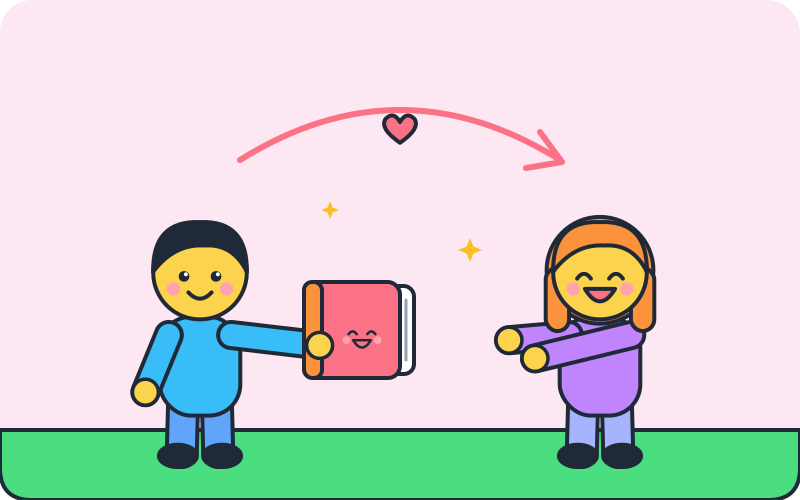
Puer puellae librum dat: the boy gives the girl a book. The giver is nominative, the book accusative, the girl, who receives it, dative.
.- I give the book to the king..- He spoke words to the soldiers.Dona .- Give us peace. (the end of the.- Glory be to the Father and to the Son and to the Holy Spirit.
, , , and all take the thing in the accusative and the person in the dative.
The owner: the dative of possession.
.- I have a book.Marcus.- My name is Marcus.
It is as ordinary as . The difference is emphasis: puts the owner first, the thing owned, which is why names are given this way.
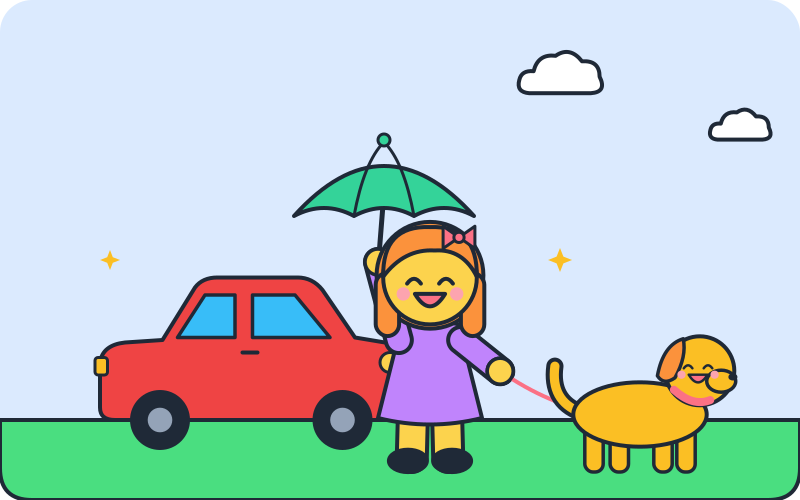
Femina is the woman; canis feminae (genitive) is the woman's dog. Latin can also say feminae est canis (dative): the woman has a dog.
Going further: The forms, in one place and the rest of the guide, when you want them. This lesson does not need them.
Practice
Practise this lesson
10-question session
One question at a time, mixed across the exercises in this lesson. Miss one and it comes back round before the end.
Latin · Free printables
Worksheets for this lesson
Worksheets with answer keys built in. Open any one to view, print or save.
Free for members
The printable worksheets, infographics and PDFs are free with an account. Start a free week and download as many as you like.
Start your free weekLesson 15 of 31 in this chapter