
(bú xiàng) - to not resemble, to be unlike, not like in Mandarin
búxiàngTraditional: 不像

Translation
to not resemble, to be unlike, not like
Word origin
A compound of the negative 不 (bù) and the verb 像 (xiàng, to resemble, to be like), giving the sense of not resembling something.
- Origin
- compound
- Root
- 不 (bù, not) + 像 (xiàng, to resemble)
Stroke order

不

像
Examples
。
He does not look like his father.
。
Today's weather is not like summer.
。
This is not like you at all.
座。
This house is not as big as it looked in the photo.
。
The way he speaks does not seem like a teacher.
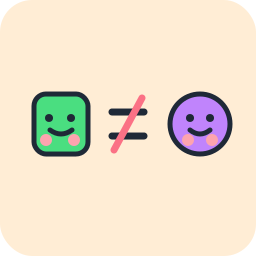
不像 (bú xiàng) means to not resemble or to be unlike something, the negation of 像. It also softens into "it is not like..." when commenting that a situation or behaviour is out of character.
Where this fits
Add to review queue
Track this word in your spaced-repetition queue and be tested on it at the right interval.
Go to my review queueMandarin · Free printables
不像: worksheet, infographic and listicle
Free printable study downloads for the Mandarin word "不像" (to not resemble, to be unlike, not like): a worksheet with the answer key built in, an infographic, and a sentence listicle. Open any one to view, print or save.
Free for members
The printable worksheets, infographics and PDFs are free with an account. Start a free week and download as many as you like.
Start your free weekThis word is part of lesson 40.