
(diào) - to fall, to drop; (result complement) away, off in Mandarin
diàoTraditional: 掉

Translation
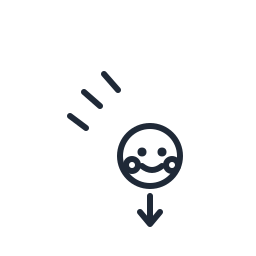
to fall, to drop; (result complement) away, off
Word origin
掉 is a phono-semantic compound: 扌 (the hand radical) gives the meaning and 卓 (zhuó) supplies the sound. It means 'to fall, to drop', and serves as a result complement meaning 'away, off'.
- Origin
- phono-semantic compound
- Root
- 扌 (shǒu, hand radical) + 卓 (zhuó, phonetic)
Stroke order

掉
Examples
。
The cup fell off the table.
。
Your key has dropped.
。
Please forget about this matter.
。
My keys fell on the floor.
。
My wallet fell on the bus.
掉 (diào) means to fall or drop as a standalone verb. As a result complement attached to other verbs it indicates removal, elimination, or completion: 忘掉 (to forget completely), 扔掉 (to throw away), 去掉 (to remove), 卖掉 (to sell off). This complement use is very common in everyday Mandarin and gives 掉 a sense of getting rid of or finishing off something definitively.
Where this fits
Appears in 1 word
Multi-character compounds in the corpus that contain 掉.
Used in
Add to review queue
Track this word in your spaced-repetition queue and be tested on it at the right interval.
Go to my review queueMandarin · Free printables
掉: worksheet, infographic and listicle
Free printable study downloads for the Mandarin word "掉" (to fall, to drop; (result complement) away, off): a worksheet with the answer key built in, an infographic, and a sentence listicle. Open any one to view, print or save.
Free for members
The printable worksheets, infographics and PDFs are free with an account. Start a free week and download as many as you like.
Start your free weekThis word is part of lesson 11.