
(shàng miàn) - above, on top, on the surface in Mandarin
shàngmiànTraditional: 上面

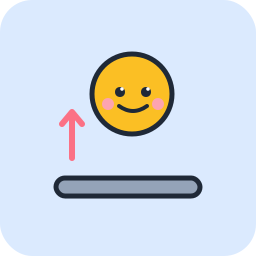
Translation
above, on top, on the surface
Word origin
上面 (shàng miàn) combines 上 (shàng), 'up' or 'above', with the locative noun 面 (miàn), 'side' or 'surface', itself a pictograph of a face. The compound means 'above', 'on top' or 'on the surface'.
- Origin
- compound
- Root
- 上 (shàng, above) + 面 (miàn, side/surface)
Stroke order

上

面
Examples
。
There is a book on top of the table.
。
We must comply with the decision from above.
。
Please write your name on it.
。
His name is written on top.
。
The book is on top of the table.
上面 (shàng miàn) means above, on top, or on the surface. It is a location noun that indicates position on the upper side of something (桌子上面, on top of the table). In a hierarchical or organisational context it means the higher authorities or those above: 上面说了 (those above said). Related location words form a system: 下面 (below), 里面 (inside), 外面 (outside), 前面 (in front), 后面 (behind).
Where this fits
Used in
Stories
(4)Add to review queue
Track this word in your spaced-repetition queue and be tested on it at the right interval.
Go to my review queueMandarin · Free printables
上面: worksheet, infographic and listicle
Free printable study downloads for the Mandarin word "上面" (above, on top, on the surface): a worksheet with the answer key built in, an infographic, and a sentence listicle. Open any one to view, print or save.
Free for members
The printable worksheets, infographics and PDFs are free with an account. Start a free week and download as many as you like.
Start your free weekThis word is part of lesson 12.