
Portuguese Numbers and Quantities: 0 to 100, Cem, Mais de
By Michael McGettrickUpdated 11 October 2026
Portuguese numbers are built, not memorised: learn zero to fifteen and the , then join the parts with . One and two change for gender, and becomes . That is nearly the whole system.
Quick check
Three quick questions on what you have just read. The full practice is further down.
Fill in the blank
0/3Write the missing word. The number in brackets tells you what to say.
vinte um (21) (Portuguese joins every part of a number with the same little word)
casas (2 houses) (casa is feminine)
e dez (110) (a hundred with something after it)
The whole system on one screen
| Number | Portuguese | How it is built |
|---|---|---|
| 0-15 | | learn them as words |
| 16 | | ten and six |
| 21 | | + e + unit |
| 99 | | + e + unit |
| 100 | | exactly a hundred |
| 101 | | |
| 2 | , | agrees with the noun |
Zero to nineteen
Zero to fifteen are words to learn as they come:
| No. | Portuguese | No. | Portuguese |
|---|---|---|---|
| 0 | | 8 | |
| 1 | | 9 | |
| 2 | | 10 | |
| 3 | | 11 | |
| 4 | | 12 | |
| 5 | | 13 | |
| 6 | | 14 | |
| 7 | | 15 | |
 two
 three
 four
 five
Brazil writes fourteen or ; writes .
From sixteen, the pattern shows through: ten, a joining vowel, then the unit, written as one word.
| No. | Brazil | EP |
|---|---|---|
| 16 | | |
| 17 | | |
| 18 | | |
| 19 | | |
Both sets are correct Portuguese; the vowel after sounds different in each country, and the spelling follows. Pick one set and do not mix them in one piece of writing.
.- She is sixteen. (EP:.)
Reading out a phone number in Brazil, people say (short for dúzia, half a dozen) instead of , so it is not misheard as : , , is 962.
The tens, and e between every part
| No. | Portuguese | No. | Portuguese |
|---|---|---|---|
| 20 | | 60 | |
| 30 | | 70 | |
| 40 | | 80 | |
| 50 | | 90 | |
and are the pair to watch: sixty has the double s of , seventy the t of .
Everything between the is built by addition with , and:
| No. | Portuguese | English |
|---|---|---|
| 21 | | twenty-one |
| 35 | | thirty-five |
| 58 | | fifty-eight |
| 99 | | ninety-nine |
English puts one and into a hundred and twenty-three; Portuguese puts between every part:
Bigger numbers keep the same habit, with one twist after : Portuguese big numbers has them.
Cem and cento
is exactly a hundred, on its own or straight before a noun:
.- She is a hundred.
The moment another number follows with , it becomes :
| No. | Portuguese | English |
|---|---|---|
| 100 | | a hundred |
| 101 | | a hundred and one |
| 120 | | a hundred and twenty |
| 199 | | a hundred and ninety-nine |
also lives on in per cent: , ten per cent; , a hundred per cent.
Where numbers agree with gender
and have feminine forms, used with feminine nouns. Every other number up to a hundred stays the same.
| No. | Masculine | Feminine |
|---|---|---|
| 1 | (one car) | (one house) |
| 2 | (two cars) | (two houses) |
| 3 | | |
The agreement carries on inside bigger numbers, because the last part is still counting the noun:
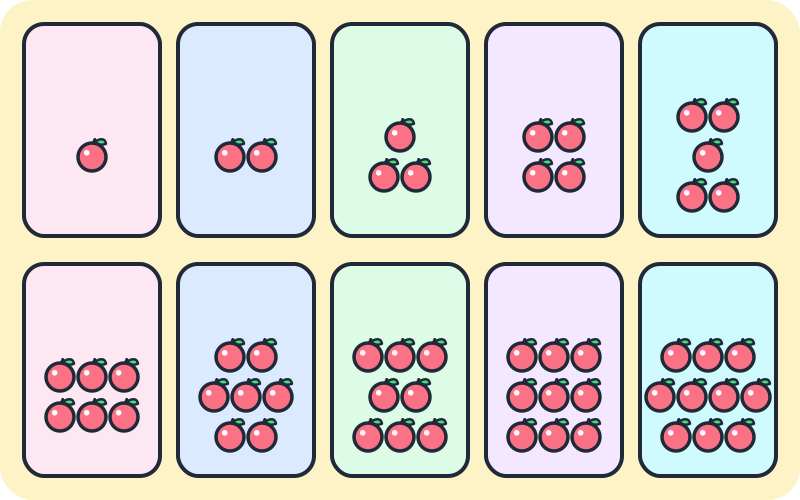
Maçã is feminine, so one apple is uma maçã and two are duas maçãs; from três on, the number never changes.
The hundreds from 200 to 900 agree too: , two hundred , against , two hundred people. Big numbers has the whole set.
Numbers in a sentence: age, more than, about
Three patterns turn a number into something you can say.
Age takes , not , literally I have twenty years:
.- I am twenty.?- How old are you?
More than and less than a figure take and :
.- More than a hundred people were there..- It costs less than ten.
is for comparing two things, not a quantity against a number: , he is taller than me.
About a figure: put or in front, agreeing with the noun:
Fractions, a dozen and the other quantity words are in Portuguese fractions and quantities.
Mistakes English speakers make
| Wrong | Right | Why |
|---|---|---|
| um | | |
| | |
| e um | | |
| exactly a hundred: | |
. | age takes | |
| do | | |
What to do next
Numbers sit on the Pearson Edexcel GCSE Portuguese specification at Foundation and Higher tier.
- Count from
toaloud until thearrives without thinking. - Say your age, and a phone number, in Portuguese.
- Then read big numbers and practise in the Portuguese course.