
Ch 5 · Lesson 7Esperanto · Chapter 5 · Lesson 7 · Grammar primer
Into the house: -n for direction
is in the house; is into it. After , , and the other prepositions of position, -n turns where something is into where it is going.
The short version
After a place preposition, -n means towards
.
Why?Hide
The same ending switches position into direction. is I am in the house; is I go into the house. English has in and into, on and onto, then runs out of pairs and falls back on phrases like to underneath the table. Esperanto handles every preposition the same way with one ending.
Job two: movement towards
After a preposition of place, -n turns position into direction:
| Position (no -n) | English | Direction (-n) | English |
|---|---|---|---|
| in the house | | into the house |
| on the table | | onto the table |
| under the table | | to under the table |
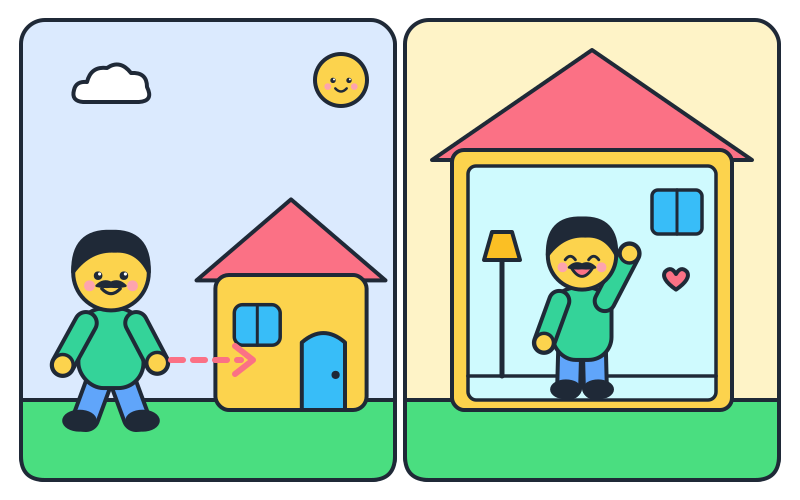
- .
- .
Same man, same en: walking into the house takes -n, being in it does not.
.- I put it onto the table..- The cat is under the table.
English has in/into and on/onto, then runs out. Esperanto handles every place preposition the same way. Prepositions that already mean direction, such as , and , never take -n:
.- I am going to the house..- She came out of the house..- We went as far as the road.
Going further: You already do this, on a handful of words and the rest of the guide, when you want them. This lesson does not need them.
Practice
Practise this lesson
10-question session
One question at a time, mixed across the exercises in this lesson. Miss one and it comes back round before the end.
Esperanto · Free printables
Worksheets for this lesson
Worksheets with answer keys built in. Open any one to view, print or save.
Free for members
The printable worksheets, infographics and PDFs are free with an account. Start a free week and download as many as you like.
Start your free weekLesson 7 of 31 in this chapter