
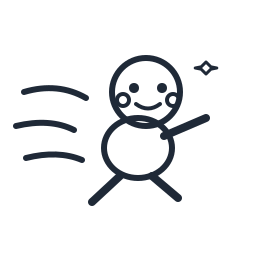

Translation
impetus, drive; a sudden rush, a dash
Word origin
From Latin impetus, an attack or an onrush, from impetere, to rush at, which is in-petere, to seek towards. English impetus, impetuous and appetite all sit on the same petere.
- Origin
- Latin
- Root
- impetus
- English cognates
- impetus, impetuous, appetite
Examples
.
He ran to the door with great impetus.
.
The rush of the water moved even the big stones.
.
After the first burst his energy disappeared.
An impetus is not a small imp. is one root of six letters and it
has nothing to do with the -- diminutive: there is no word impo for it to
be the little version of. This matters more in Esperanto than in English,
because the language really does build from and a from
, so a learner reading imp--o is following a habit the language
taught them. Here the habit misfires. Read it as a block.
What it actually means. Two related things: the forward drive a person or a
project has, and the physical onrush of something moving. is
to work with drive, in the neighbourhood of energio
at 1,142 and vigla at 731. is
the sheer force of the gust. A subita impeto is a
sudden dash, and impete as an adverb means headlong.
One caution for the physicists. English momentum translates as movokvanto
in Esperanto's scientific register, and although is sometimes pressed
into that job it is not the safe technical term. Keep for the everyday
sense, where it competes with nothing and says exactly what you mean.
Where this fits
Add to review queue
Track this word in your spaced-repetition queue and be tested on it at the right interval.
Go to my review queueEsperanto · Free printables
impeto: worksheet, infographic and listicle
Free printable study downloads for the Esperanto word "impeto" (impetus, drive; a sudden rush, a dash): a worksheet with the answer key built in, an infographic, and a sentence listicle. Open any one to view, print or save.
Free for members
The printable worksheets, infographics and PDFs are free with an account. Start a free week and download as many as you like.
Start your free weekThis word is part of lesson 54.