
Numbers in French: The Rules Behind 21, 70, 80, 90 and 1,000
By Michael McGettrickUpdated 11 October 2026
French numbers are seventeen words to learn, five tens and a handful of joining rules. Up to 69 they count in tens, much like English; from 70, France counts in twenties.
Quick check
Three quick questions on what you have just read. The full practice is further down.
Pick the right one
0/3Choose the correct form, using the traditional spelling. Remember that et only joins a ten to un, from 21 to 71.
21
41
71
The whole system on one screen
| Range | Built as | Example | Digits |
|---|---|---|---|
| 0 to 16 | a word of its own | | 16 |
| 17 to 19 | + unit | - | 17 |
| 20 to 69 | ten + unit | - | 34 |
| 21 to 61 | ten + | | 21 |
| 70 to 79 | + 10 to 19 | - | 75 |
| 80 to 99 | - + 1-19 | -- | 92 |
| BE/CH 70, 90 | septante, nonante | nonante- | 92 |
| 100 and up | cent, , million | | 203 |
Everything below is one of those rows, taken apart.
0 to 16: seventeen words to learn
There is nothing to work out here. to are words of their own.
| 0-4 | 5-9 | 10-13 | 14-16 |
|---|---|---|---|
0 | 5 | 10 | 14 |
1 | 6 | 11 | 15 |
2 | 7 | 12 | 16 |
3 | 8 | 13 | |
4 | 9 |
 2
 3
 4
 5
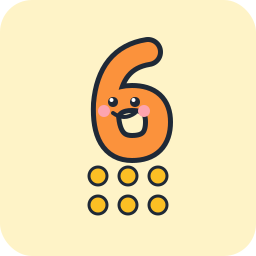 6
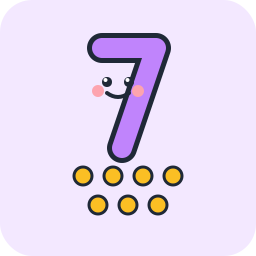 7
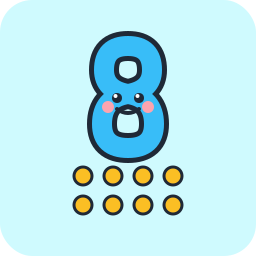 8
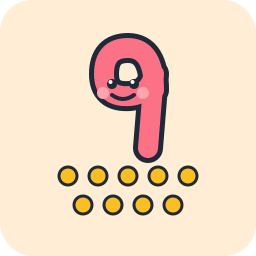 9
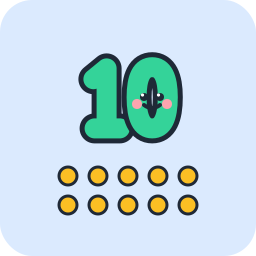 10
.- I have two brothers..- He is sixteen.
Two pairs trip beginners:
(11) and(12) look nothing likeand: Latin undecim and duodecim, one-ten and two-ten.(15) and(16) blur at speed:is nasal kɛ̃z, seize rhymes with "says" sɛz.
17 to 69: tens plus units
From seventeen, French adds. The tens are words to learn: , , , , . Between them you write the ten, a hyphen and the unit.
| French | Digits | Literally |
|---|---|---|
- | 17 | ten-seven |
- | 19 | ten-nine |
- | 22 | twenty-two |
- | 35 | thirty-five |
- | 48 | forty-eight |
- .- I'm twenty-two.- .- There are thirty-five pages.
The one exception: for 21 to 61, French puts between the ten and , and drops the hyphen.
| Number | French | Not |
|---|---|---|
| 21 | | - |
| 31 | | - |
| 41 | | - |
| 51 | | - |
| 61 | | - |
| 71 | | - |
.- I'm twenty-one.
The survives into 71, because seventy-one is sixty and eleven, then vanishes for good: 81 is -- and 101 is .
also agrees with a feminine noun, even inside a bigger number. No other number changes for gender.
.- There are twenty-one girls..- The book has thirty-one pages.
70 to 99: counting in twenties
Here France counts in twenties, a relic of an older system. Seventy is sixty-ten, eighty is four twenties, ninety is four-twenty-ten, and the teens ride on top.
70 to 79: sixty-ten
| Number | French | Literally |
|---|---|---|
| 70 | | sixty-ten |
| 71 | | sixty and eleven |
| 72 | - | sixty-twelve |
| 73 | - | sixty-thirteen |
| 74 | - | sixty-fourteen |
| 75 | - | sixty-fifteen |
| 76 | - | sixty-sixteen |
| 77 | - | sixty-ten-seven |
| 78 | - | sixty-ten-eight |
| 79 | - | sixty-ten-nine |
- .- That's seventy-five euros.
80 to 89: four twenties
| Number | French | Literally |
|---|---|---|
| 80 | | four twenties |
| 81 | -- | four-twenty-one |
| 82 | -- | four-twenty-two |
| 83 | -- | four-twenty-three |
| 84 | -- | four-twenty-four |
| 85 | -- | four-twenty-five |
| 86 | -- | four-twenty-six |
| 87 | -- | four-twenty-seven |
| 88 | -- | four-twenty-eight |
| 89 | -- | four-twenty-nine |
-- .- My grandfather is eighty-two.
90 to 99: four-twenty-ten
| Number | French | Literally |
|---|---|---|
| 90 | | four-twenty-ten |
| 91 | -- | four-twenty-eleven |
| 92 | -- | four-twenty-twelve |
| 93 | -- | four-twenty-thirteen |
| 94 | -- | four-twenty-fourteen |
| 95 | -- | four-twenty-fifteen |
| 96 | -- | four-twenty-sixteen |
| 97 | - | four-twenty-ten-seven |
| 98 | - | four-twenty-ten-eight |
| 99 | - | four-twenty-ten-nine |
The listening trick is to wait. When you hear or -, write nothing until the next word arrives: a teen after it means the seventies or nineties.
-- .- That's ninety-six euros, not eighty-something.
When the s comes and goes: quatre-vingts and cents
and take a plural s when they are multiplied and nothing follows. The moment another number follows, the s goes.
| Number | French | Why |
|---|---|---|
| 80 | | multiplied, nothing after |
| 83 | -- | a number follows |
| 100 | | not multiplied |
| 200 | | multiplied, nothing after |
| 201 | | a number follows |
| 2,000 | | never takes an s |
| page 80 | - | a page number |
A noun after the number does not count as something following, so the s stays:
.- It costs two hundred euros.
When the number names a position rather than a quantity, as in page numbers and years, there is no s at all: , page two hundred. You only hear the s in , as a z before a vowel: ka.tʁə.vɛ̃.zɑ̃, eighty years.
The big numbers: cent, mille, million, milliard
| Number | French | Note |
|---|---|---|
| 100 | | no in front |
| 1,000 | | no , never takes an s |
| 2,000 | | |
| 100,000 | | |
| 1 million | | a noun: million |
| 1 billion | | a noun: the English billion |
and are numbers, so they sit straight in front of a noun:
.- It costs a hundred euros..- There are a thousand people.
and are nouns. They take , add an s in the plural, and need before a noun:
When another number follows, there is no : , 1,200,000.
The false friend is billion. In French, billion is a million million, the English trillion. For the English billion, say .
Years are read as ordinary numbers: - is 2026. Before 2000 you have a choice, both correct: 1990 is or, like English "nineteen ninety", - .
Hyphens: the traditional rule and the 1990 reform
French has two correct ways to hyphenate numbers, and you will see both.
| Number | Traditional | 1990 reform |
|---|---|---|
| 17 | - | - |
| 21 | -- | |
| 203 | cent | -cent- |
| 2,026 | -six | ---six |
The traditional rule puts a hyphen only between two parts that are both below 100, and not where joins them; and always stand apart with spaces. The reform puts a hyphen between every part. Neither is wrong; pick one and stay .
Saying them: the pronunciation traps
, , and change their last sound depending on what follows.
| Word | Before a consonant | Before a vowel |
|---|---|---|
| si, six days | siz, six years |
| di, ten days | diz, ten years |
| ɥi, eight days | ɥit, eight years |
| nœf, nine days | nœv, nine years |
On their own, and end in s and in t. Two details the table cannot show:
becomes nœv only beforeand(some speakers add):- Many speakers now sound the t of
before a consonant too.
The rest, briefly:
is sɛ̃k. Before a consonant most speakers now keep the k too,alone is vɛ̃. In 21 to 29 the t is sounded:-vɛ̃t.dø. In 81 to 99 it stays silent.is sɛt: silent p, sounded t.andblock elision:.
Belgium and Switzerland: septante, huitante and nonante
Belgium and French-speaking Switzerland keep counting in tens past sixty:
| Number | France | Belgium | Switzerland |
|---|---|---|---|
| 70 | septante | septante | |
| 71 | septante | septante | |
| 80 | huitante (some) | ||
| 90 | nonante | nonante |
septante .- That's seventy euros. (in Brussels or Lausanne)
The Swiss split for 80 is by canton: Vaud, and Fribourg say huitante, while Geneva, Neuchâtel and the Jura keep . Quebec counts like France. Learn the forms of France to speak, and learn to recognise these.
Mistakes English speakers make
| Wrong | Right | Why |
|---|---|---|
| | no before cent |
| | no before |
- | | in 21 to 71 |
- | -- | no after 71 |
- | -- | the s goes before a number |
milles | | never takes an s |
| | million is a noun |
billion (10⁹) | | billion is 10¹², trillion |
| | no elision before |
What to do next
- Clear the drill below until 70 to 99 need no counting on your fingers.
- Put the numbers to work: prices, phone numbers and ages are on French numbers in daily life.
- Ordinals (
,) are on word-building; dates on days, months and dates.