
Ch 3 · Lesson 19Latin · Chapter 3 · Lesson 19 · Grammar primer
Setting the scene: imperfect or perfect?
, : the imperfect paints the scene and the habits, the perfect moves the story on. What the imperfect means, and how to choose.
The short version
Imperfect sets the scene, perfect tells the story
. .
Why?Hide
The imperfect is for what was going on, what used to happen and how things were. The perfect reports the event. So is usually in the scenery, while the perfect reports what happened: , it was night; , then he came.
What the imperfect means
English needs several phrasings for what Latin does with one tense:
| Use | Latin | English |
|---|---|---|
| in progress | . | Father was writing. |
| habit | . | The boy often used to come. |
| description | . | The king was in the city. |
| repeated | . | He always told the truth. |
The last one: English says told, a simple past, but the telling was a habit, so Latin usually reaches for the imperfect. Translate by meaning, not by matching English forms.
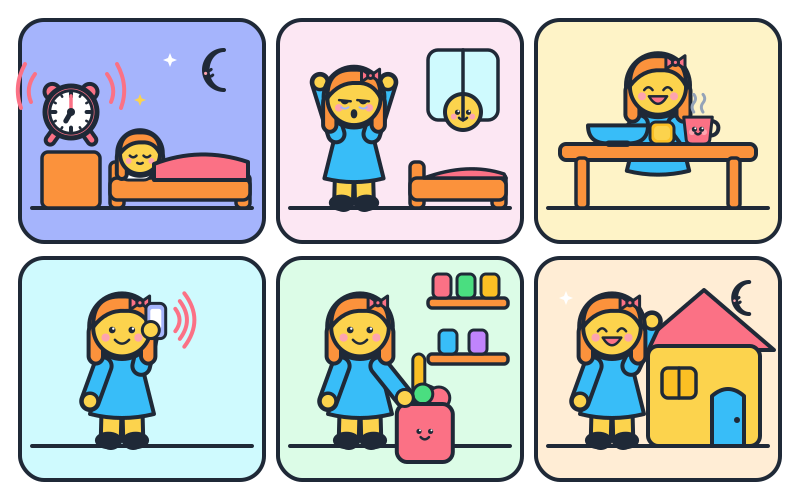
- .
- .
Her old routine: dormiebat, she was still asleep when the alarm rang (in progress); domum veniebat, she used to come home in the evening (a habit). Both are imperfect.
Imperfect or perfect?
Both are past tenses. The perfect reports an event as a finished whole; the imperfect shows it as ongoing, repeated or as the setting:
| Imperfect | Perfect | The difference |
|---|---|---|
| | he was saying / he said |
| | he used to make / he made |
| | he was able / he managed |
In a story the split is clean: the imperfect paints the set, the perfect moves the plot.
. .- It was night and father was writing. Then a boy came and said a word.
nox erat (it was night: the scene)
pater scribebat (father was writing)
puer venit (a boy came: one event)
verbum dixit (he said a word)
Timeline from past to now, with now marked.
Going further: The imperfect on one screen and the rest of the guide, when you want them. This lesson does not need them.
Practice
Practise this lesson
10-question session
One question at a time, mixed across the exercises in this lesson. Miss one and it comes back round before the end.
Latin · Free printables
Worksheets for this lesson
Worksheets with answer keys built in. Open any one to view, print or save.
Free for members
The printable worksheets, infographics and PDFs are free with an account. Start a free week and download as many as you like.
Start your free weekLesson 19 of 35 in this chapter