
/eˈɾiɾ/
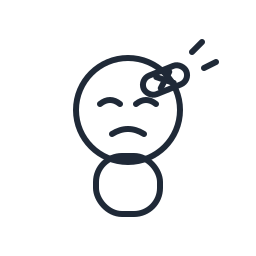

Translation
to injure, to wound, to hurt
Word origin
From Latin ferire ('to strike, to hit'). The English lookalike 'hear' is unrelated.
- Origin
- Latin
- Root
- ferire
Grammar
Conjugation
Regular spanish-irregular conjugation. Pronouns: yo, tú, él/ella/ud., nos., vos., ellos/uds..
Indicative
| Person | Present | Preterite | Imperfect | Future | Conditional |
|---|---|---|---|---|---|
| yo | hiero | herí | hería | heriré | heriría |
| tú | hieres | heriste | herías | herirás | herirías |
| él/ella/ud. | hiere | hirió | hería | herirá | heriría |
| nos. | herimos | herimos | heríamos | heriremos | heriríamos |
| vos. | herís | heristeis | heríais | heriréis | heriríais |
| ellos/uds. | hieren | hirieron | herían | herirán | herirían |
Subjunctive
| Person | Present | Imperfect (-ra) | Imperfect (-se) |
|---|---|---|---|
| yo | hiera | hiriera | hiriese |
| tú | hieras | hirieras | hirieses |
| él/ella/ud. | hiera | hiriera | hiriese |
| nos. | hiramos | hiriéramos | hiriésemos |
| vos. | hiráis | hirierais | hirieseis |
| ellos/uds. | hieran | hirieran | hiriesen |
Imperative
| Person | Affirmative |
|---|---|
| tú | hiere |
| ud. | hiera |
| nosotros | hiramos |
| vosotros | herid |
| uds. | hieran |
Non-finite
- Gerund / present participle
- hiriendo
- Past participle
- herido
Examples
.
His words hurt me deeply.
.
The soldier was wounded in the leg.
.
I do not want to hurt her feelings.
.
Your words can hurt more than a blow.
, .
Be careful with the knife, you could cut your finger.
.
She did not want to hurt anyone with her comments.
Where this fits
Add to review queue
Track this word in your spaced-repetition queue and be tested on it at the right interval.
Go to my review queueSpanish · Free printables
herir: worksheet, infographic and listicle
Free printable study downloads for the Spanish word "herir" (to injure, to wound, to hurt): a worksheet with the answer key built in, an infographic, and a sentence listicle. Open any one to view, print or save.
Free for members
The printable worksheets, infographics and PDFs are free with an account. Start a free week and download as many as you like.
Start your free weekThis word is part of lesson 18.