
Ch 8 · Lesson 17English · Chapter 8 · Lesson 17 · Grammar primer
Too hot, big enough: too and enough
Too means there is a problem, very only makes a word stronger. Enough goes after an adjective (big enough) but before a noun (enough money).
The short version
Too means there is a problem
.
Why?Hide
Very just makes an adjective stronger and passes no judgement. Too says the amount is more than you want or need, so it carries a complaint. Very hot could be exactly how you like it; too hot never is. If you only mean a strong hot, use very and save too for when something is genuinely wrong.
Enough goes after an adjective, before a noun
.
Why?Hide
With an adjective or an adverb, enough comes after it: big enough, fast enough. With a noun, it comes before: enough money, enough time. Add to and a verb for what it lets you do.
Too: more than you want
Too means more than you want or need. There is a problem.
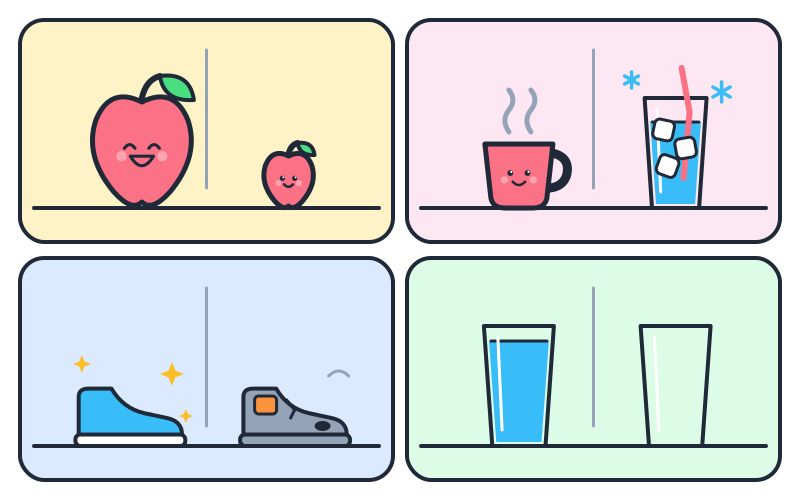
The steaming drink is too hot to drink (a problem: you have to wait). The iced drink is cold enough to drink now.
.(I can't drink it yet.).(I can't buy it.)!(It isn't safe.)
Add to + verb to say what the problem stops:
., .
Too or very?
Very only makes a word stronger. Too says there is a problem.
- hot
- very hotmaybe you like it
- too hotyou can’t drink it yet
| Word | Example | Means |
|---|---|---|
. | . . | |
. | . |
So the film was too good sounds strange if you loved it: say very good. A few polite phrases break the rule: You're too kind. Not too bad. With strong words like freezing, English says absolutely, not very: see gradable and ungradable adjectives.
Too much and too many
Before a noun, too needs much or many, as in quantifiers:
| Noun | Example |
|---|---|
. | |
. |
Enough: after an adjective, before a noun
Enough means as much as you need. Where it goes depends on the word with it:
| With | Enough goes | Example |
|---|---|---|
| adjective | . | |
| adverb | . | |
| noun | . |
Add to + verb for what it lets you do:
..
Not enough is the problem the other way:
.Going further: So + adjective, such + noun and the rest of the guide, when you want them. This lesson does not need them.
Practice
Practise this lesson
7-question session
One question at a time, mixed across the exercises in this lesson. Miss one and it comes back round before the end.
English · Free printables
Worksheets for this lesson
Worksheets with answer keys built in. Open any one to view, print or save.
Free for members
The printable worksheets, infographics and PDFs are free with an account. Start a free week and download as many as you like.
Start your free weekLesson 17 of 29 in this chapter