
Ch 18 · Lesson 17Esperanto · Chapter 18 · Lesson 17 · Grammar primer
Letters: Kara, Estimata and one vi
One for everyone, so the register lives in the opening and the closing: Maria to a friend, to a stranger, and to answer it.
The short version
One
Maria, ?
Why?Hide
Esperanto has no tu and vous: is a friend, a stranger and a crowd. The Fundamento's dictionary also has , a familiar thou, but almost nobody uses it: Zamenhof wrote to everyone, and usage followed. You may meet in translated novels and in . In your own letters, write and put the politeness in the opening, the closing and the request.
, ... ,
Why?Hide
is the friendly default and what Esperantists mostly use with each other. is the formal rung for a stranger, an official or a complaint, and it agrees like the ordinary adjective it is: oj. is genuinely ceremonial, and to an ordinary reader it can sound ironic. ! stands beside the ladder as the email- neutral. Then match the ends: opens what closes, opens what or closes.
Esperanto has one , for a friend, a stranger and a crowd. Politeness moved to three other places: how you open a letter, how you close it, and how you ask.
| Layer | Friendly | Formal |
|---|---|---|
| Opening | Maria, | , |
| Closing | , | , |
| Request | . | ? |
| Group | , | , |
There is little of a posh second vocabulary to climb into either: Esperanto has where English has start and commence. Register lives mostly in the construction, not the words.
One vi for everyone
French makes you choose tu or vous, German or Sie. Esperanto has , for one person or many, close or distant:
.- You are my best friend., ?- Would you kindly reply, madam?
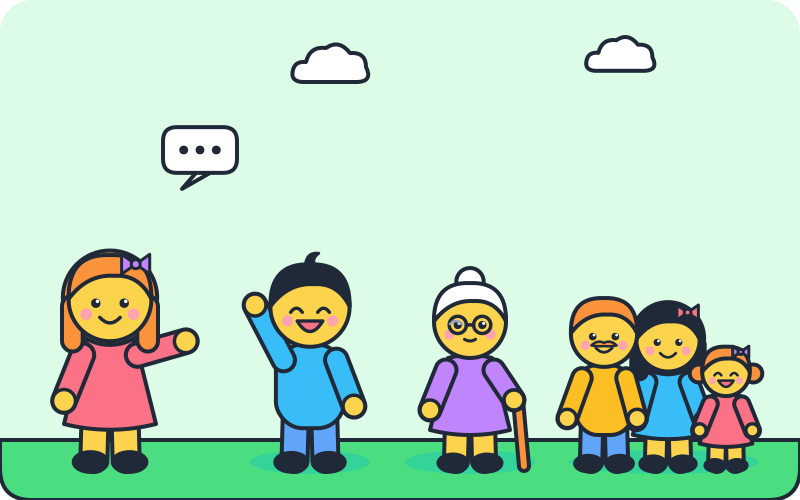
Mi (I), the woman speaking; vi (you) to her friend; vi to the older stranger; vi to the family. One word for all three.
The Fundamento's dictionary also has , a familiar singular thou, with as the object and for thy. Almost nobody uses it: Zamenhof himself wrote to everyone, and usage followed him. You will meet in some translated novels and in . Recognise it, and write .
The salutation ladder
The opening places you on a ladder from warm to ceremonial:
- Kara Maria,a friend
- Saluton!neutral, email
- Estimata sinjoro,a stranger, an official
- Altestimata sinjoro,ceremony
| Opening | For |
|---|---|
Maria, | a friend; also usual between Esperantists |
! | most emails: friendly, claims no rung |
, | a stranger, an official, a complaint |
, | a head of state, a ceremonial open letter |
(dear) and (esteemed) are adjectives, so they agree with a plural:
,- Dear friends,,- Dear ladies and gentlemen (to a mixed group),
(highly esteemed) is for real ceremony; to an ordinary reader it can sound ironic. Between Esperantists you will also meet (dear fellow Esperantist, literally same-idea person), friendly and a little old-fashioned.
The closings
Three of the closings are adverbs: a root plus -e, as in adverbs.
| Closing | English | For |
|---|---|---|
, | in friendship | friends, fellow learners |
, | warmly, cordially | warm, not intimate |
, | sincerely | the safe middle |
, | with esteem | formal letters |
! | see you soon | short, friendly notes |
Match the ends. The opening and the closing sit on the same rung:
| Opens with | Closes with |
|---|---|
| |
| |
! | ! |
A letter that opens with and ends with ! reads as a joke.
Going further: A letter, top to bottom and the rest of the guide, when you want them. This lesson does not need them.
Practice
Practise this lesson
9-question session
One question at a time, mixed across the exercises in this lesson. Miss one and it comes back round before the end.
Esperanto · Free printables
Worksheets for this lesson
Worksheets with answer keys built in. Open any one to view, print or save.
Free for members
The printable worksheets, infographics and PDFs are free with an account. Start a free week and download as many as you like.
Start your free weekLesson 17 of 27 in this chapter