
Ch 26 · Lesson 16Esperanto · Chapter 26 · Lesson 16 · Grammar primer
Festoj kaj la kalendaro: Zamenhofa Tago and the feast names
15 December and the book custom, 26 July or 2 June for Esperanto Day, and feast names you can take apart: is -o.
The short version
15 December: Zamenhofa
15- .
Why?Hide
Zamenhof's birthday, 15 December, is the one date the whole movement keeps. It is also the Day of the Esperanto Book: people exchange presents, preferably Esperanto books, helped by the date falling ten days before Christmas. The -n on the date means on, with no preposition.
-.
Why?Hide
Most feast names are built from roots you know, and the last root says what the thing is: is Christ's birth (-o), the new year. Feasts take a capital by convention; weekdays do not. Months are disputed: PMEG recommends , but is very common.
The year has two dates of its own: 15 December, Zamenhof's birthday, and 26 July, when the first textbook was cleared for sale in 1887. Around them sit the ordinary feasts, whose names you build from parts, and the wishes, which all end in -n.
| When | Name | What it marks |
|---|---|---|
| 15 December | Zamenhofa | Zamenhof's birthday, 1859 |
| 26 July | | the first textbook, 1887 |
| July or August | | the world congress, a week |
| 25 December | | Christmas |
| 1 January | | New Year's Day |
!- Have a happy festival!
Zamenhofa Tago: 15 December
Zamenhof was born on 15 December 1859, and his birthday is the one date the whole movement keeps, with club meetings, talks and readings. The custom dates from the 1920s; the writers Baghy and Nikolao Nekrasov were among those who proposed it.
15- .- The club meets on 15 December.
The -n on the date means on, so no preposition is needed. Time expressions has the rule.
One footnote: the Russian Empire still used the calendar, so the records of his birth read 3 December. The 15th is the Gregorian date.
A book as a present
The day is also called -, the Day of the Esperanto Book. People exchange presents, preferably books written in Esperanto, and the reason is practical: the date falls ten days before Christmas. It is a custom, not a rule.
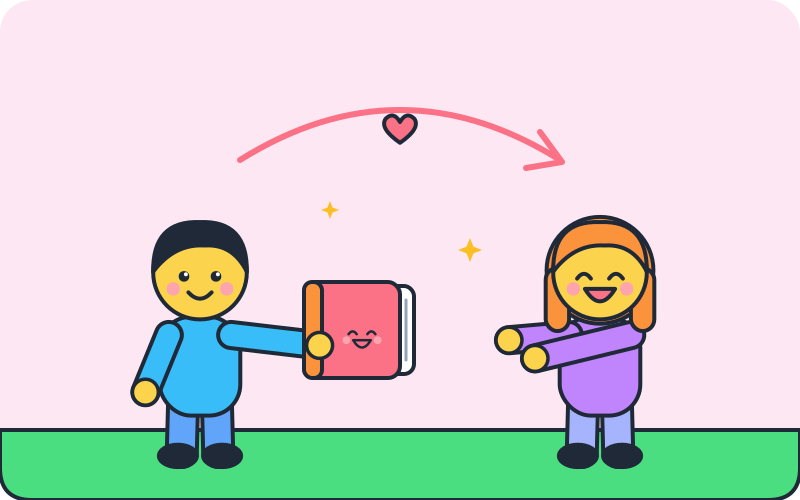
Mi donas libron al vi: I give you a book. Mi (I) gives, libron (a book) is the thing given, al vi (to you) receives it.
.- I am giving you a book.
Esperanto Day: 26 July, or 2 June
The first textbook, the , passed the Russian censor twice in 1887: once to be printed, once to be distributed.
| Date (Gregorian) | The censor allowed | Kept by |
|---|---|---|
| 2 June 1887 | printing | the Civito |
| 26 July 1887 | distribution | the UEA, as |
The UEA keeps 26 July (14 July by the calendar). The Civito, a separate Esperanto organisation, keeps 2 June, which it calls the only certain date.
1887.- The book came out in July 1887.
The history of Esperanto tells the story of the book, and la kongreso covers the summer congress.
Naming the feasts
Most feast names are compounds. The last root says what the thing is; the first says which one. Take them apart and they read themselves.
| Word | Pieces | English |
|---|---|---|
| Christ + | Christmas: Christ's birth |
| | New Year's Day |
| | a birthday |
| | an anniversary |
| one root | Easter, and also Passover |
.- We will travel home for Christmas.
Capitals
Feast names take a capital, like other names; weekdays do not. Months are the disputed case: the writes , and PMEG recommends the capital, but lower-case is very common, and it is what this site writes.
| Kind | Example | Capital? |
|---|---|---|
| feast | | yes |
| weekday | | no |
| month | | both are met |
-.- Easter is in April this year.
PMEG adds that no capitalisation rule in Esperanto is binding: these are conventions. Capital letters has the whole picture.
Going further: Festo or ferio? and the rest of the guide, when you want them. This lesson does not need them.
Practice
Practise this lesson
10-question session
One question at a time, mixed across the exercises in this lesson. Miss one and it comes back round before the end.
Esperanto · Free printables
Worksheets for this lesson
Worksheets with answer keys built in. Open any one to view, print or save.
Free for members
The printable worksheets, infographics and PDFs are free with an account. Start a free week and download as many as you like.
Start your free weekLesson 16 of 27 in this chapter