
Ch 7 · Lesson 15Esperanto · Chapter 7 · Lesson 15 · Grammar primer
Prepositions: one meaning each
, , : every preposition has one meaning, sorted here by job. And English with is two words: , .
The short version
English with is two words:
, .
Why?Hide
is company and per is the tool or the means. is I eat with friends; is I eat with a . English hides the difference in one word, Esperanto never does, so ask whether the with is a companion or an instrument.
Each preposition has one meaning, and none of them changes the noun after it. , , : the noun stays plain. Five rules cover the whole system:
| Rule | Example | English |
|---|---|---|
| one meaning each | | with friends |
| one meaning each | | with a |
| no case after it | | on the table |
-n only for motion | | into the house |
nothing fits: | | at three o'clock |
a clause: , | , | because he was tired |
Where: place and movement
Six of the commonest, round one box:
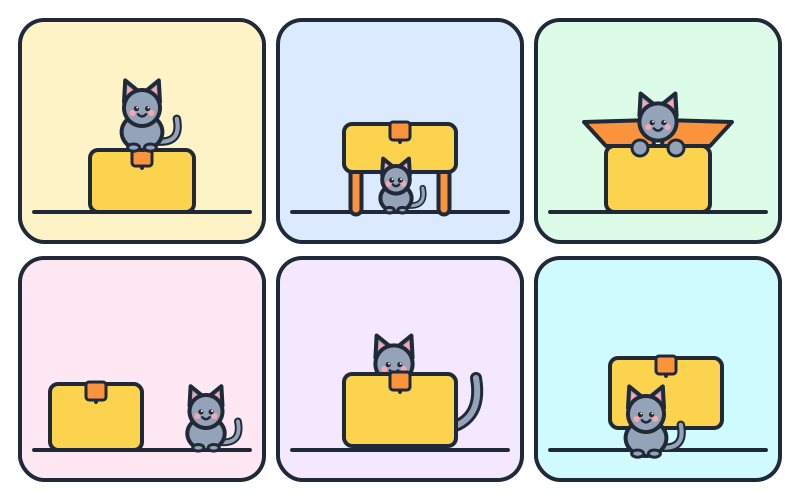
Sur la skatolo, on the box; sub, under it; en, in it; apud, beside it; malantaŭ, behind it; antaŭ, in front of it.
The rest of the place words:
| Preposition | Example | English |
|---|---|---|
| | above the table |
| | at my friend's |
| | between the trees |
| | around the house |
| | outside the town |
| | across the river |
touches, does not: the book is , the lamp hangs .
And the movement words:
| Preposition | Example | English |
|---|---|---|
| | to the town |
| | out of the house |
| | from the town |
| | as far as the sea |
| | through the park |
| | along the river |
| | past the church |
When
, , and work for place and for time; only for time:
| Preposition | Example | English |
|---|---|---|
| | before the lesson |
| | after the lesson |
| | during the night |
| | until tomorrow |
| | at about three |
.- We will eat after the film.
The rest: with, for, about
| Preposition | Example | English |
|---|---|---|
| | with friends |
| | by train |
| | for you |
| | because of the weather |
| | about the film |
| | without money |
| | against the wind |
| | according to my father |
| | a glass of water |
| | instead of coffee |
| | everyone except him |
| | despite the rain |
| | two each |
| | at three |
English with hides two words. is company; is the tool:
.- I eat with friends..- I eat with a.
Going further: No case after a preposition, except direction and the rest of the guide, when you want them. This lesson does not need them.
Practice
Practise this lesson
10-question session
One question at a time, mixed across the exercises in this lesson. Miss one and it comes back round before the end.
Esperanto · Free printables
Worksheets for this lesson
Worksheets with answer keys built in. Open any one to view, print or save.
Free for members
The printable worksheets, infographics and PDFs are free with an account. Start a free week and download as many as you like.
Start your free weekLesson 15 of 26 in this chapter