
Esperanto Greetings: Saluton, Dankon and Survival Phrases
By Michael McGettrickUpdated 11 October 2026
You can hold a first conversation before you know any grammar. Greetings and courtesies are fixed phrases in every language: learn the ones below as whole things to say, and you can walk into a club, a video call or a congress this afternoon.
| Esperanto | English |
|---|---|
! | Hello! |
? | How are you? |
. | Thank you. |
. | I do not understand. |
! | Bye! |
Quick check
Now use it: three quick questions on the chart above. The full practice is further down.
Pick the right one
0/3Pick the right phrase for each situation. Read the meaning, then tap the Esperanto.
Someone asks how you are and you feel fine. What do you say?
You want to say 'How are you?'
You didn't catch what someone said. How do you tell them?
New to the language itself? Is Esperanto easy to learn? covers what Esperanto is, and basic Esperanto phrases goes beyond greetings into a first trip.
Greetings
| Esperanto | English | When |
|---|---|---|
! | Hello, hi | any time, anyone: learn this first |
! | Good morning | the morning |
! | Good day | the daytime |
! | Good evening | the evening |
! | Good night | going to bed |
! | Goodbye | literally: until the seeing-again |
! | Bye | the short form most people say |
- !
- !
- !
- !
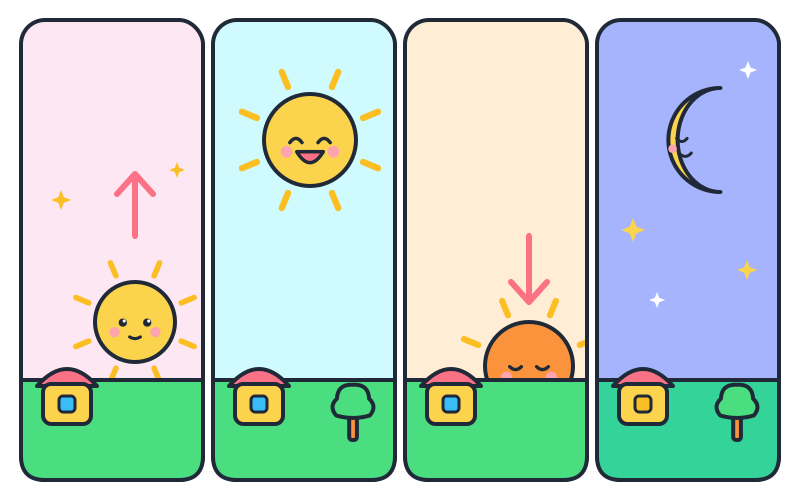
One greeting for each part of the day: only the middle word changes.
In a real exchange:
! ?- Hello! How are you?, .- Good day, sir.!- See you tomorrow!
means until, so is until tomorrow and is until we see each other again.
Getting by
| Esperanto | English |
|---|---|
? | How are you? |
, . | Fine, thank you. |
? | And you? |
? | What is your name? |
... | My name is... |
. | I do not understand. |
. | I am a beginner. |
Learn them in pairs, question with answer, so they arrive together:
? - Berta.- What is your name? - My name is Berta.
is the most useful sentence a beginner owns: it asks the other person to slow down or try again instead of leaving them guessing. buys you patience from anyone you say it to.
Courtesies
| Esperanto | English | Note |
|---|---|---|
. | Thank you. | one word, said as it looks |
. | Thank you very much. | warmer |
e. | You are welcome. | literally: not worth thanks |
... | Please (be so good as) | before a |
. | Please (I ask). | on its own, or after a request |
. | Sorry. / Excuse me. | an apology, or to get past |
. / . | Yes. / No. |
The two ways of saying please sit in different places:
.- Please come. (+ a verb in-i), .- That one, please. (
- , . !
- .
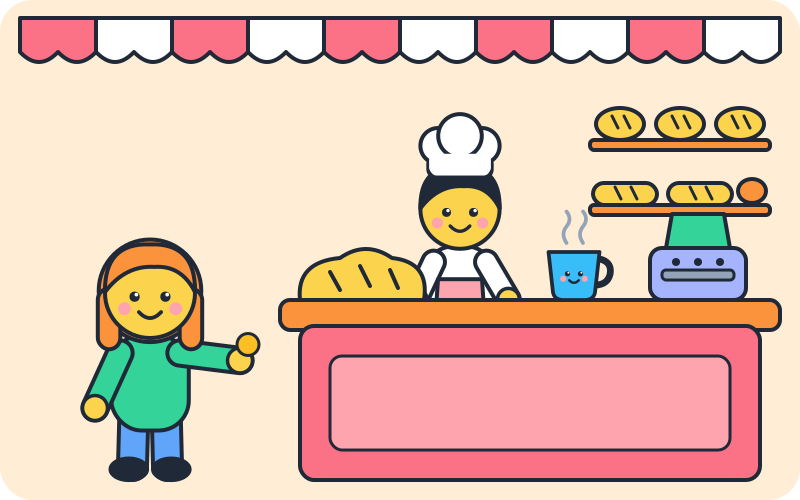
The customer asks with mi petas and thanks with dankon; the baker answers ne dankinde.
(literally forgive) covers a bump in a corridor and a real apology alike:
, .- Sorry, I do not understand.
Why saluton and dankon end in -n
Each greeting is the object of a verb nobody says: (I say) hello, (I wish you) a good day. Objects take the accusative -n, so:
!- Good day!.- I wish you a good day.!- Thank you!
You do not need the rule to use the phrases. It simply means ! is the form everyone uses, and a bare ! sounds odd to an s ear.
A quiet promise for later
Once you learn how Esperanto builds words, these phrases come apart into pieces:
| Phrase | Pieces | Literally |
|---|---|---|
e | dank- + -- + -e | worthy of thanks |
| komenc- + -ant- + -o | one who is beginning |
| - + vid- + -o | a seeing-again |
That is a treat for a later week. Today they are just things to say.
Mistakes English speakers make
| Wrong | Right | Why |
|---|---|---|
! | ! | greetings customarily take -n |
! | ! | the same -n |
. | . | much thanks, not very thanks |
? | ? | a calque: the set phrase is |
What to do next
- Say
! ?aloud, then answer it yourself. - Learn
- Then read word endings: the four letters behind every word on this page.