
Ch 1 · Lesson 29German · Chapter 1 · Lesson 29 · Grammar primer
Einundzwanzig: the unit comes first
21 is one-and-twenty, all in one word. Then or , zwo on the phone, and hundreds and thousands as one long word.
The short version
German says 21 as one-and-twenty
siebenundvierzig.
Why?Hide
From 21 to 99 German puts the unit first and joins it to the ten with , all in one word. The hard part is hearing it, not saying it: write the unit digit down first, in the right-hand slot, and let the ten fill the gap in front. After a few weeks the reversal stops registering.
21 to 99: the unit comes first
German builds 21 to 99 as unit, then , then the ten, all in one word:
| Number | German | Literally |
|---|---|---|
| 21 | einundzwanzig | one-and-twenty |
| 22 | zweiundzwanzig | two-and-twenty |
| 31 | einunddreißig | one-and-thirty |
| 47 | siebenundvierzig | seven-and-forty |
| 66 | sechsundsechzig | six-and-sixty |
| 99 | neunundneunzig | nine-and-ninety |
The unit keeps its full form: sechsundsechzig keeps the s at the front and loses it at the back. Only the ten shrinks. English used to count this way too: four-and-twenty blackbirds.
The hard part is hearing these, not saying them. When you hear siebenundvierzig, write the 7 with a gap in front of it, then fill in the 4.
eins or ein?
One is the only number that changes shape:
| Where | Form | Example | English |
|---|---|---|---|
| counting | | , , | nought, one, two |
| ending a number | | hunderteins | 101 |
| before | | einundzwanzig | 21 |
| before a noun | | . | I have a child. |
| before | | . | It is one o'clock. |
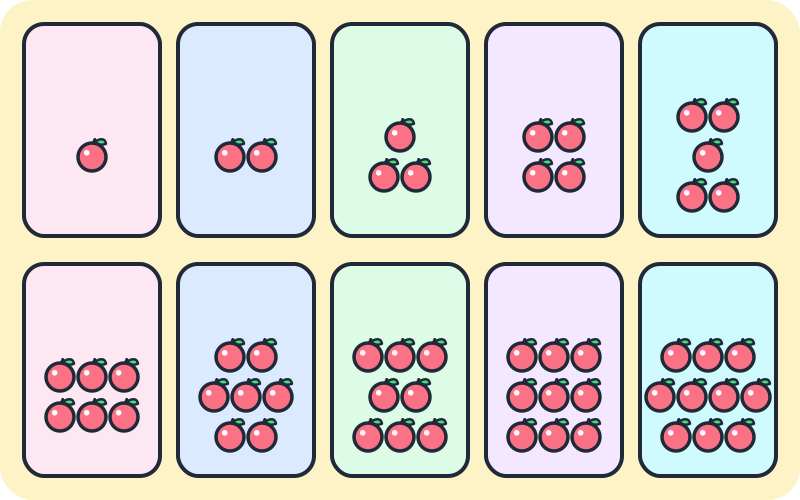
Counting aloud you say eins, but in front of a noun one is ein: ein Apfel, then zwei Äpfel, drei Äpfel and on to zehn.
Before a noun, one is the article , with the noun's gender and case: , , (with a man). German does not split a from one, so means both I have a child and I have one child. The full set of forms is in German articles.
zwo: two on the phone
You will hear zwo for on the phone, in station announcements and anywhere a number must survive a noisy line, because and sound alike. It is standard German, rarely written:
, zwo, .- Nought, two, three.
Phone numbers are read digit by digit or in pairs: zweiundvierzig dreiundachtzig is 42 83. In pairs, the unit-first habit bites hardest.
Hundreds and thousands: one long word
or einhundert is 100. The hundreds are the unit plus , usually with no after it:
| Number | German |
|---|---|
| 101 | hunderteins |
| 121 | hunderteinundzwanzig |
| 200 | zweihundert |
| 250 | zweihundertfünfzig |
| 1,000 | eintausend |
| 2,000 | zweitausend |
| 2,490 | zweitausendvierhundertneunzig |
zweihundert .- That costs two hundred euros.
You will also hear hundertundeins for 101; that is optional and usually left out in writing. Every number below a million is one word. Read a long one by chopping at and : -, -, .
Going further: The whole system on one screen and the rest of the guide, when you want them. This lesson does not need them.
Practice
Practise this lesson
8-question session
One question at a time, mixed across the exercises in this lesson. Miss one and it comes back round before the end.
German · Free printables
Worksheets for this lesson
Worksheets with answer keys built in. Open any one to view, print or save.
Lesson 29 of 38 in this chapter