
Ch 2 · Lesson 22German · Chapter 2 · Lesson 22 · Grammar primer
Du, ihr or Sie, and er for a thing
Three words for you, and a German key is he and a door is she: the pronoun follows the noun. Plus the of ?
The short version
A German key is he and a door is she
? .
Why?Hide
German pronouns follow grammatical gender, not whether something is alive. A masculine noun becomes er, a feminine one , and only a neuter noun becomes . Calling every object is wrong more often than it is right.
Du, ihr or Sie
English has one you. German has three, and picking one is a social decision first.
| You | For | Example |
|---|---|---|
| a friend, child, relative | ? |
| several of them | ? |
| a stranger, one or more | ? |
All three mean Are you coming today?
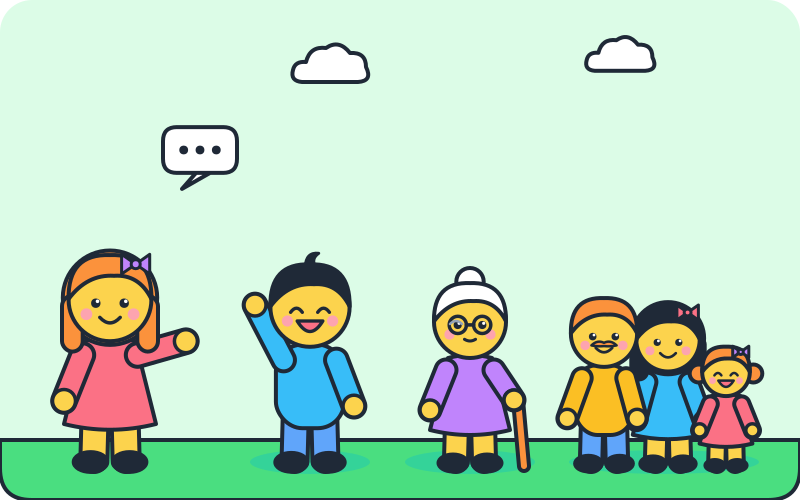
One speaker, three yous: du to the friend her age, Sie to the older woman she does not know, ihr to a group she would call du one by one (a group of strangers gets Sie too).
Formal is capitalised in every case, and that capital is all that separates it from they:
.- You come. (formal)?- How are you? (formal)
If in doubt, use . The worst that happens is someone offers you . And note that does two unrelated jobs: . - You all come. . - I help her. The verb ending tells them apart.
Er, sie and es for things
A German pronoun matches the noun's grammatical gender, not whether it is alive. English says it for all three:
| The noun | The pronoun | English |
|---|---|---|
| . | It is here. |
| . | It is open. |
| . | It is old. |
Calling every object sounds as odd to a German as calling a table she sounds to you. One more reason to learn every noun with its article.
Es with nothing behind it
also fills the subject slot when there is no real subject at all:
| German | English | Literally |
|---|---|---|
. | There is a problem. | it gives a problem |
? | How are you? | how does it go for you? |
. | I'm sorry. | it does sorrow to me |
The person in the last two is dative, exactly as with . Spot that and a lot of idioms turn back into grammar.
Going further: The full chart and the rest of the guide, when you want them. This lesson does not need them.
Practice
Practise this lesson
9-question session
One question at a time, mixed across the exercises in this lesson. Miss one and it comes back round before the end.
German · Free printables
Worksheets for this lesson
Worksheets with answer keys built in. Open any one to view, print or save.
Lesson 22 of 37 in this chapter