
Ch 2 · Lesson 19German · Chapter 2 · Lesson 19 · Grammar primer
Months and seasons: im Mai, im Sommer
to look like English, and every month and season takes . Plus the weather: , .
The short version
Am for days,
, .
Why?Hide
Every German day, month and season is masculine, so one pattern covers them all: (on Monday), (in May), (in summer). For a weekly habit, add -s and drop the capital: , on Mondays. Never use in on its own before a day or a month.
Months of the year
Months are masculine too, and they look so like the English that the only real work is the pronunciation: . - January is cold.
| German | English | German | English |
|---|---|---|---|
| January | | July |
| February | | August |
| March | | September |
| April | | October |
| May | | November |
| June | | December |
"In" a month is , which is plus :
Two notes. In Austria January is Jänner, and Austrians use it everywhere, on calendars and in the news. And because and sound alike, people on the phone often say Juno and Julei to keep them apart.
The four seasons
The seasons are masculine as well, so "in" is for all four. is the word for a season.
| Season | English | "in" the season |
|---|---|---|
| spring | |
| summer | |
| autumn | |
| winter | |
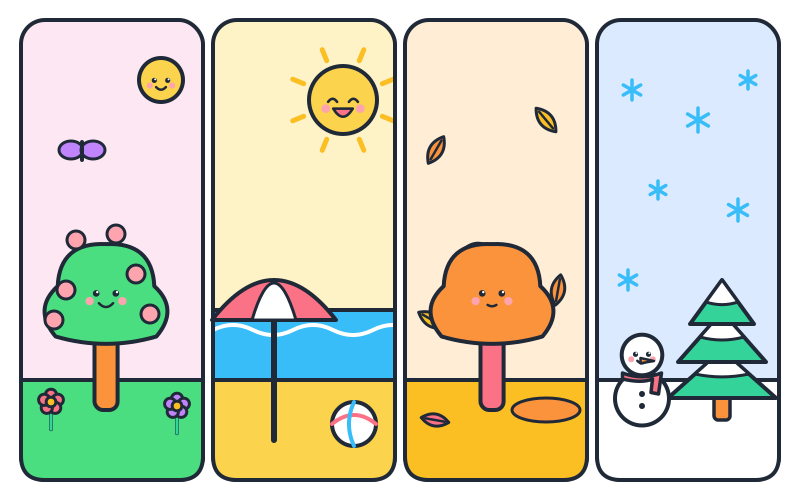
Four masculine seasons, one little word: im, for all four.
Unlike French ( printemps but en été), German has no odd one out here. Frühjahr (neuter) is a second word for spring, common in the news and the weather forecast.
Weather by season
? asks what the weather is like. Most weather sentences start with , as English starts with "it".
| Season | German | English |
|---|---|---|
| . | It often rains. |
| . | The sun is shining. |
| . | It is warm. |
| . | There is a lot of rain. |
| . | It is cold. |
| . | It is snowing. |
is the rain and the verb; is the snow and the verb. German present tense covers both "it rains" and "it is raining", so is both.
Going further: The whole system on one screen and the rest of the guide, when you want them. This lesson does not need them.
Practice
Practise this lesson
8-question session
One question at a time, mixed across the exercises in this lesson. Miss one and it comes back round before the end.
New words in this lesson
 der Januar(masculine)ˈjanuaːɐ̯January
 der Februar(masculine)ˈfeːbʁuˌaːɐ̯February
 der März(masculine)mɛʁtsMarch
 der April(masculine)aˈpʁɪlApril
 der Mai(masculine)maɪ̯May
 der Juni(masculine)ˈjuːniJune
 der Juli(masculine)ˈjuːliJuly
 der August(masculine)au̯ˈɡʊstAugust
 der September(masculine)zɛpˈtɛmbɐSeptember
 der Oktober(masculine)ɔkˈtoːbɐOctober
 der November(masculine)nɔˈvɛmbɐNovember
 der Dezember(masculine)deˈtsɛmbɐDecember
 der Frühling(masculine)ˈfʁyːlɪŋspring (the season)
 der Sommer(masculine)ˈzɔmɐthe summer
 der Herbst(masculine)hɛʁpstthe autumn, fall
 der Winter(masculine)ˈvɪntɐthe winter
 die Jahreszeit(feminine)ˈjaːʁəsˌtsaɪ̯tthe season
 das Wetter(neuter)ˈvɛtɐthe weather
 der Regen(masculine)ˈʁeːɡn̩the rain
 regnenˈʁeːɡnənto rain
 der Schnee(masculine)ʃneːthe snow
 schneienˈʃnaɪ̯ənto snow
 die Sonne(feminine)ˈzɔnəthe sun
 kaltkaltcold
 warmvaʁmwarm
German · Free printables
Worksheets for this lesson
Worksheets with answer keys built in. Open any one to view, print or save.
Lesson 19 of 37 in this chapter