
Ch 2 · Lesson 32German · Chapter 2 · Lesson 32 · Grammar primer
War and hatte: was and had
Even Germans who tell everything else in the perfect say war and . Two short tables and you can talk about yesterday.
The short version
Say war and
.
Why?Hide
Germans tell most of the past in the perfect, but war (was) and (had) are the exception: they are what people say, even in casual talk. is correct, and common in the south, but is never wrong.
Was is and had is : the simple past of and . Germans say them every day, even when they tell everything else in the perfect.
.- I was tired..- I had no time.
The whole system on one screen
| Person | sein: was | haben: had |
|---|---|---|
| | |
| | |
, , | | |
| | |
| | |
, | | |
Two forms to learn, and , and endings you already know from the present: -st, -t and -en, which shrinks to -n after the final e of .
War: was and were
covers was for people, things and situations:
| German | English |
|---|---|
. | That was good. |
. | It was cold. |
? | How was your day? |
. | We were at the cinema. |
? | Where were you? |
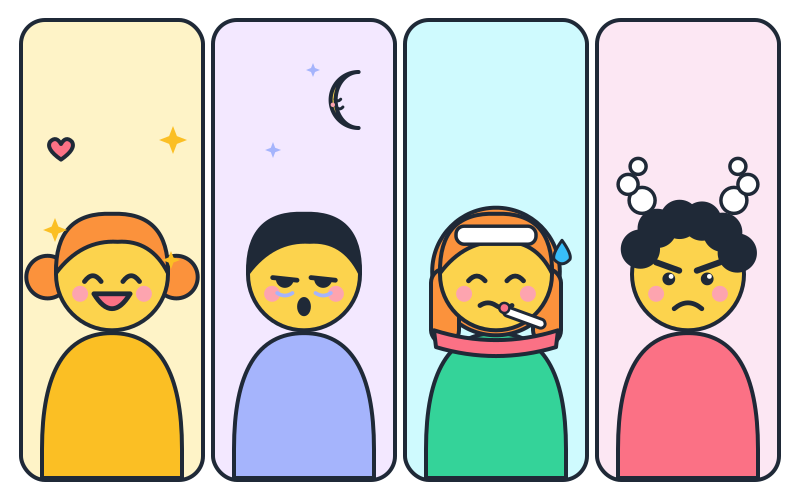
- .
- .
- .
- .
One past form for a state: war. She was happy, he was tired, she was ill, he was angry.
Hatte: had, and sometimes was
is had. It also covers four places where English says was, because German has , thirst, fear and luck:
| German | English |
|---|---|
. | He had no money. |
. | I was hungry. |
. | He was thirsty. |
? | Were you afraid? |
. | We were lucky. |
 hunger, so hungry
 thirst, so thirsty
 fear, so afraid
 luck, so lucky
The present works the same way: . - I am hungry.
Why not the perfect?
German talks about the past mostly in the perfect tense: . - I drank coffee. But for and the perfect is long, and most speakers do not bother:
| Usual | Possible | English |
|---|---|---|
. | . | I was tired. |
. | . | I had time. |
The long forms are correct, and common in the south, Austria and Switzerland. and are never wrong anywhere.
Going further: Ich and er: the same word and the rest of the guide, when you want them. This lesson does not need them.
Practice
Practise this lesson
10-question session
One question at a time, mixed across the exercises in this lesson. Miss one and it comes back round before the end.
New words in this lesson

German · Free printables
Worksheets for this lesson
Worksheets with answer keys built in. Open any one to view, print or save.
Lesson 32 of 37 in this chapter