
War and Hatte: How to Say Was and Had in German
By Michael McGettrickUpdated 11 October 2026
Was is and had is : the simple past of and . Germans say them every day, even when they tell everything else in the perfect.
Quick check
Three quick questions on what you have just read. The full practice is further down.
Pick the right one
0/3War or hatte? Pick the verb that fits.
Ich gestern müde.
Ich keine Zeit.
Das gut.
.- I was tired..- I had no time.
The whole system on one screen
| Person | sein: was | haben: had |
|---|---|---|
| | |
| | |
, , | | |
| | |
| | |
, | | |
Two forms to learn, and , and endings you already know from the present: -st, -t and -en, which shrinks to -n after the final e of .
Ich and er: the same word
In the past, the and forms are identical, with no ending at all:
.- I was at home..- He was at home..- I was lucky..- She was lucky.
So and are wrong: the endings belong to the other persons.
War: was and were
covers was for people, things and situations:
| German | English |
|---|---|
. | That was good. |
. | It was cold. |
? | How was your day? |
. | We were at the cinema. |
? | Where were you? |
- .
- .
- .
- .
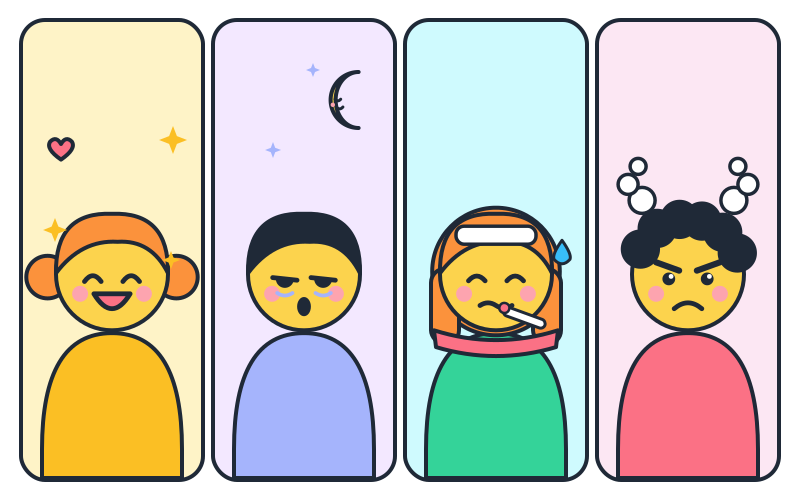
One past form for a state: war. She was happy, he was tired, she was ill, he was angry.
Hatte: had, and sometimes was
is had. It also covers four places where English says was, because German has , thirst, fear and luck:
| German | English |
|---|---|
. | He had no money. |
. | I was hungry. |
. | He was thirsty. |
? | Were you afraid? |
. | We were lucky. |
 hunger, so hungry
 thirst, so thirsty
 fear, so afraid
 luck, so lucky
The present works the same way: . - I am hungry.
She, they or you: sie and Sie
Three meanings share one spelling, and the verb sorts two of them out:
| German | English | Why |
|---|---|---|
. | She was ill. | war: one person |
. | They were ill. | : plural |
? | Were you ill? | polite you, plural verb |
At the start of a sentence, can be they or polite you. Context decides, exactly as in the present.
Questions and word order
and follow the normal rule: the verb is the second element, or first in a yes or no question.
.- Yesterday I was tired.?- Were you tired yesterday?
More on the verb-second rule in German word order.
Why not the perfect?
German talks about the past mostly in the perfect tense: . - I drank coffee. But for and the perfect is long, and most speakers do not bother:
| Usual | Possible | English |
|---|---|---|
. | . | I was tired. |
. | . | I had time. |
The long forms are correct, and common in the south, Austria and Switzerland. and are never wrong anywhere.
Mistakes English speakers make
| Wrong | Right | Why |
|---|---|---|
. | . | has no ending |
. | . | er has no ending |
. | . | plural adds -en |
. | . | the verb is second |
What to do next
- Say three true sentences about yesterday with
and. - Ask someone
? - When the rest of the past calls, read the German simple past for
,and.