
Ch 2 · Lesson 30Mandarin · Chapter 2 · Lesson 30 · Grammar primer
Counting things: 两, measure words and 第
(liǎng ge rén), two people: for two of something, a measure word between number and noun, for first and second, and for how many.
The short version
Count with
。Wǒ yǒu liǎng ge háizi.
Why?Hide
Two is (èr) when you count aloud, inside longer numbers and in ordinals: (shí'èr, 12), (dì èr, second). Before a measure word it is (liǎng): (liǎng ge rén), two people. Twenty is always (èrshí), never (liǎng shí).
二 (èr) or 两 (liǎng)?
Two has two words. (èr) is the number itself; (liǎng) is two of something, before a measure word:
| Hanzi | Pinyin | English |
|---|---|---|
,, | yī, èr, sān | one, two, three |
| shí'èr ge rén | twelve people |
。 | Wǒ yǒu liǎng ge háizi. | I have two children |
| liǎngqiān | 2,000 |
Before (qiān) and (wàn) two is normally (liǎng); before (bǎi) both (liǎngbǎi) and (èrbǎi) are heard. Phone numbers, years and the rest are on the 二 vs 两 page.
A measure word between the number and the noun
In everyday speech a number does not sit straight against a noun. A measure word goes between them, and (gè) is the general one:
。(Zhèlǐ yǒu sān ge rén.) - There are three people here.
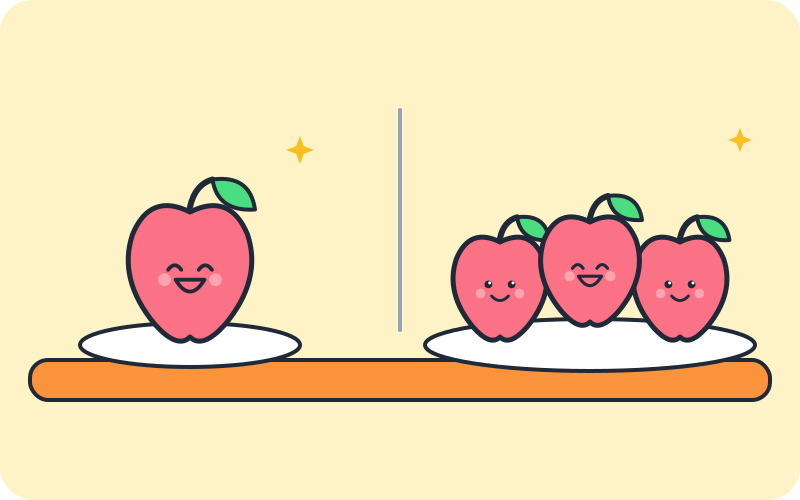
Number, then 个 gè, then the noun. 苹果 píngguǒ, apple, stays the same for one or three.
A few nouns are units themselves and take no measure word: (sān tiān, three days), (liǎng nián, two years). Which noun takes which measure word is on the measure words page.
第 (dì) for first, second, third
Put (dì) in front of a number and it becomes an ordinal: (dì yī), first; (dì èr), second, never (dì liǎng). The measure word and noun follow as usual:
。(Tā shì dì yī ge lái de.) - He was the first to arrive.
Floors are counted from the ground: (yī lóu) is the ground floor, so (èr lóu) is what British English calls the first floor.
How many? 几 (jǐ) or 多少 (duōshao)
(jǐ) expects a small number, usually under ten, and always takes a measure word or a unit noun such as (tiān, day); (duōshao) fits any number, and the measure word is optional:
?(Nǐ yǒu jǐ ge háizi?) - How many children do you have??(Zhège duōshao qián?) - How much is this?
More in interrogative pronouns.
Going further: The whole system on one screen and the rest of the guide, when you want them. This lesson does not need them.
Practice
Practise this lesson
9-question session
One question at a time, mixed across the exercises in this lesson. Miss one and it comes back round before the end.
New words in this lesson

Mandarin · Free printables
Worksheets for this lesson
Worksheets with answer keys built in. Open any one to view, print or save.
Lesson 30 of 44 in this chapter