
(hòu) - after, behind, later in Mandarin
hòuTraditional: 後
Translation
after, behind, later
Word origin
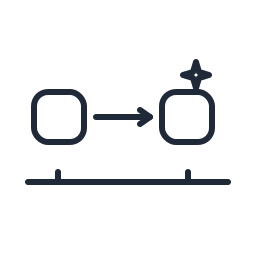
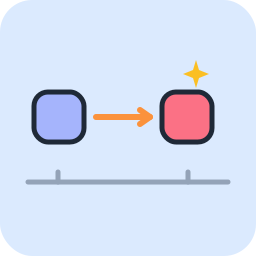
后 (hòu) here means 'after, behind'. In this sense it is the simplified form of 後, which combined 彳 (step), 幺 (small) and 夂 (to follow behind) to convey lagging or coming after. The plain 后 also independently means 'empress'.
- Origin
- compound
- Root
- 后 (simplified from 後: 彳 step + 幺 + 夂 follow behind)
Stroke order

后
Examples
。
After finishing the meal.
。
Let's talk in three days.
。
He is behind me.
课。
After class we will go and eat.
。
He will be back after three days.
后 (hòu) means after, behind, later. It is used as a noun in everyday Mandarin speech.
Where this fits
Appears in 7 words
Multi-character compounds in the corpus that contain 后.
Used in
Grammar articles
(9)Mandarin Advanced Grammar (C1-C2 / HSK 6+): Chengyu, Classical Remnants, and Register
Mandarin Verb Conjugation: Why It Doesn't Exist and What Replaces It
Mandarin Conjunctions: 虽然…但是, 因为…所以, 如果…就 and the Paired Structures That Join Clauses
Mandarin Location and Existence: 在 for Where, 有 for There Is, and the 上/下/里/外 Position Words
Serial Verb Constructions in Mandarin: 我去商店买东西 and Stacking Verbs in Sequence
The Mandarin 以 (yǐ) Family: 以为, 以及, 以便, 以免, 以来 and 以...为...
The Mandarin 于 (yú) Family: 对于, 关于, 由于, 至于, 属于, 位于, 终于
The Mandarin 者 (zhě) Suffix: 作者, 读者, 前者, and Naming the One Who Does It
Mandarin 之 (zhī): 之一, 之间, 之后, 之中, 总之 and the Written Ancestor of 的
Add to review queue
Track this word in your spaced-repetition queue and be tested on it at the right interval.
Go to my review queueMandarin · Free printables
后: worksheet, infographic and listicle
Free printable study downloads for the Mandarin word "后" (after, behind, later): a worksheet with the answer key built in, an infographic, and a sentence listicle. Open any one to view, print or save.
Free for members
The printable worksheets, infographics and PDFs are free with an account. Start a free week and download as many as you like.
Start your free weekThis word is part of lesson 5.