
Ch 48 · Lesson 16Spanish · Chapter 48 · Lesson 16 · Grammar primer
Voseo: vos tenés, vos sos, vení
In , Uruguay and much of Central America the informal you is : the present ( , , ) and the commands (, , decime).
The short version
Voseo changes the verb, not the possessive
¿ ?
Why?Hide
In , Uruguay, Paraguay and much of Central America the informal singular you is , and the present tense takes final stress: , , . The mercy is that the object and the possessive stay as they are with , so it is still and . Only after a preposition does appear again: , .
Spanish grammar changes by region in three main ways: for , for every plural you, and which past tense covers today. None of them is slang, and all are correct where they are used:
./.- You'right../.- I ate late today.
Regional grammar at a glance
The whole picture. Spain's habit is in the solid blue box, the Latin American one in the dashed pink box.
| Feature | Spain | Latin America |
|---|---|---|
| you (friend) | | or |
| you all (friends) | | |
| you all () | | |
| done today | | |
| I saw him | , | |
is not all of Latin America: most of Mexico, Peru and the Caribbean say .
Voseo: vos instead of tú
In , Uruguay and Paraguay, is the everyday informal you. It is common across Central America too, and heard in parts of Colombia, Venezuela, Bolivia and .
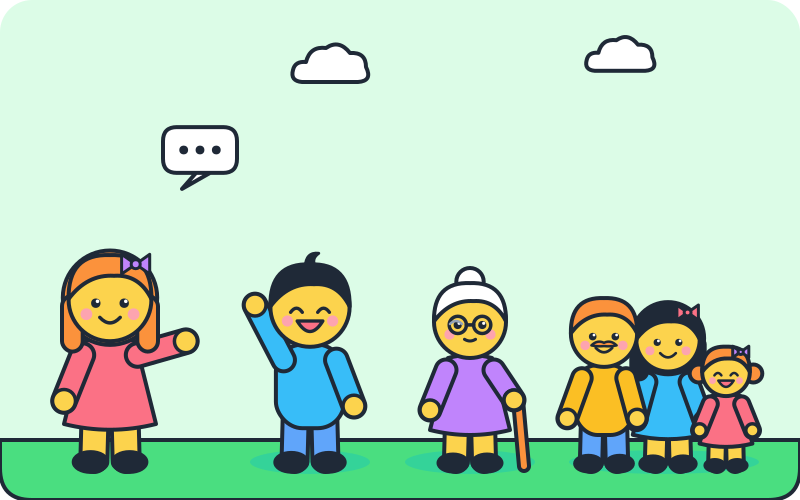
In Buenos Aires: vos to a friend (2), usted to an older stranger (3), ustedes to a group (4), friends or not.
The present tense: drop the -r of the infinitive, add -s, and stress the last vowel.
| Verb | tú | vos |
|---|---|---|
| | |
| | |
| | |
| | |
| | |
Two things the table shows if you look twice. The stem does not change: , not "tienés"; , not "puedés". And is the one big irregular: .
¿ ?- Do you know where it is?
Only the subject and the verb move. The object and the possessive stay as with ; after a preposition, it is :
.- I love you. (as with).- It's your house. (as with).- This is for you. (:
Voseo commands
The command is the infinitive minus its -r, with the stress on the last vowel. That makes most of the irregular commands regular:
| Verb | tú command | vos command |
|---|---|---|
| | |
| | |
| | |
| | |
| | |
| | |
¡ !- Come here!Decime .- Tell me the truth.
A pronoun joins the end as usual, and the accent then falls away because the stress stays put: plus me is decime. The exception is : the command is , from .
Going further: Ustedes for everyone and the rest of the guide, when you want them. This lesson does not need them.
Practice
Practise this lesson
10-question session
One question at a time, mixed across the exercises in this lesson. Miss one and it comes back round before the end.
Spanish · Free printables
Worksheets for this lesson
Worksheets with answer keys built in. Open any one to view, print or save.
Free for members
The printable worksheets, infographics and PDFs are free with an account. Start a free week and download as many as you like.
Start your free weekLesson 16 of 27 in this chapter