
/roˈβaɾ/

Translation
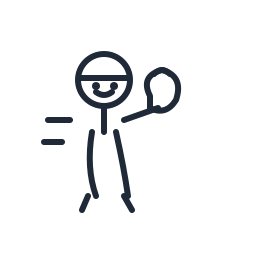
to steal, to rob
Word origin
From Vulgar Latin raubare, of Germanic origin, from a Frankish or Gothic word related to 'to plunder' (compare Old High German roubon). It means 'to steal, to rob'.
- Origin
- Frankish
- Root
- raubon
- English cognates
- rob, robe, bereave
Grammar
Conjugation
Regular -ar conjugation. Pronouns: yo, tú, él/ella/ud., nos., vos., ellos/uds..
Indicative
| Person | Present | Preterite | Imperfect | Future | Conditional |
|---|---|---|---|---|---|
| yo | robo | robé | robaba | robaré | robaría |
| tú | robas | robaste | robabas | robarás | robarías |
| él/ella/ud. | roba | robó | robaba | robará | robaría |
| nos. | robamos | robamos | robábamos | robaremos | robaríamos |
| vos. | robáis | robasteis | robabais | robaréis | robaríais |
| ellos/uds. | roban | robaron | robaban | robarán | robarían |
Subjunctive
| Person | Present | Imperfect (-ra) | Imperfect (-se) |
|---|---|---|---|
| yo | robe | robara | robase |
| tú | robes | robaras | robases |
| él/ella/ud. | robe | robara | robase |
| nos. | robemos | robáramos | robásemos |
| vos. | robéis | robarais | robaseis |
| ellos/uds. | roben | robaran | robasen |
Imperative
| Person | Affirmative |
|---|---|
| tú | roba |
| ud. | robe |
| nosotros | robemos |
| vosotros | robad |
| uds. | roben |
Non-finite
- Gerund / present participle
- robando
- Past participle
- robado
Examples
.
Someone wants to steal the money from the bank.
.
The man stole a car in the street.
.
Nobody is going to steal my key.
.
The police are looking for the one who robbed the shop.
.
It is not good to steal from friends.
Where this fits
Used in
Add to review queue
Track this word in your spaced-repetition queue and be tested on it at the right interval.
Go to my review queueSpanish · Free printables
robar: worksheet, infographic and listicle
Free printable study downloads for the Spanish word "robar" (to steal, to rob): a worksheet with the answer key built in, an infographic, and a sentence listicle. Open any one to view, print or save.
Free for members
The printable worksheets, infographics and PDFs are free with an account. Start a free week and download as many as you like.
Start your free weekThis word is part of lesson 10.