
Ch 1 · Lesson 31English · Chapter 1 · Lesson 31 · Grammar primer
Possessives: my, your, his, her
My, your, his, her, its, our and their, and how to choose his or her: look at the owner, not the thing.
The short version
His or her comes from the owner
Tom . Ana .
Why?Hide
In English, his and her depend on who owns the thing, not on the thing. A man's mother is his mother; a woman's father is her father. Look at the owner and the choice is easy.
Possessives say who something belongs to: my bag (the bag is mine), your phone, Tom's car (the car belongs to Tom). English has two ways. Use my, your, his and so on, or add 's to a name. For I and me, he and him, see subject and object pronouns.
The chart: my, your, his, her
Each person word has its own possessive. In this chart and below, his and her wear the colours of the owner: a man or a woman.
| Person | Possessive | Example |
|---|---|---|
| | |
| | |
| | |
| | |
| | |
| | |
| |
The possessive goes before the noun. It never changes for the noun: one thing or many, the word is the same.
His or her: look at the owner
This is the big one. Choose his or her from the , not the thing.
| Owner | Example | Why |
|---|---|---|
| Tom () | Tom | Tom . |
| Tom () | Tom | Tom . |
| Ana () | Ana | Ana . |
| Ana () | Ana | Ana . |
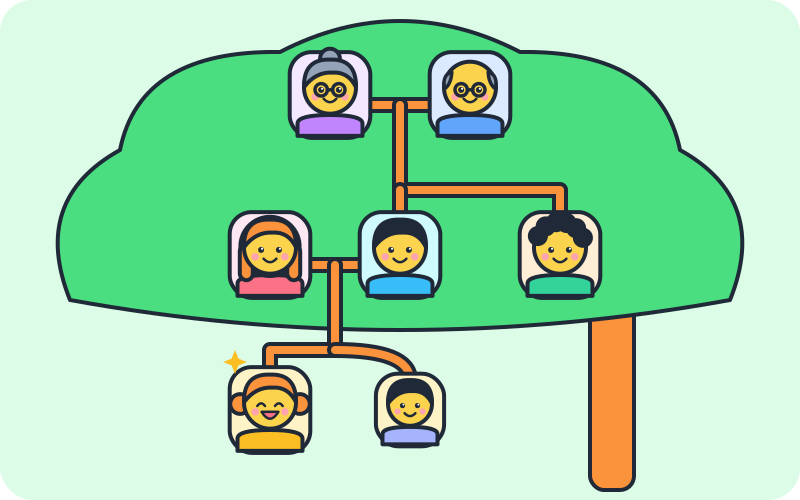
- Ana
Ana is the owner, so every word is her, even for a man: her father, her brother.
In some languages, the word changes for the thing. In English it does not.
Tom's mother is his mother, because Tom is a man: Tom .
Things have no his or her. A table or a car is it, so use its: The car is old, but its doors are new. An animal is often it too: The dog is in its bed.
Possessives every day
You will hear these all the time.
| When | Sentence |
|---|---|
| What's your name? | |
| My name is Sam. | |
| Ana | This is my friend Ana. |
| Is this your bag? | |
| Where are our tickets? | |
| Their house is near here. |
Going further: Name + 's and the rest of the guide, when you want them. This lesson does not need them.
Practice
Practise this lesson
9-question session
One question at a time, mixed across the exercises in this lesson. Miss one and it comes back round before the end.
New words in this lesson
English · Free printables
Worksheets for this lesson
Worksheets with answer keys built in. Open any one to view, print or save.
Lesson 31 of 44 in this chapter