
Ch 1 · Lesson 13English · Chapter 1 · Lesson 13 · Grammar primer
The present simple
How English says what is true now and what happens again and again - the everyday tense.
The short version
The -s is added once and only once
?
Why?Hide
He, she and it take an -s on the verb, and dropping it marks you as a beginner faster than almost anything else. But once you bring in does or doesn't, the auxiliary is already carrying the ending, so the main verb goes bare. The -s goes on only one of the two verbs, never both.
The present simple in simple words
Start here if English is new to you. Use the present simple for things that are true now, and for things you do again and again. The part that changes is coloured.
| I, you, we, they | he / she / it |
|---|---|
. | . |
. | . |
. | Ana . |
. | Tom . |
| Rule | Example |
|---|---|
| , , : -s | . |
| : , | . . |
| : , | ? ? |
, . , . |
- .
- .
- .
- .
- .
- .
- .
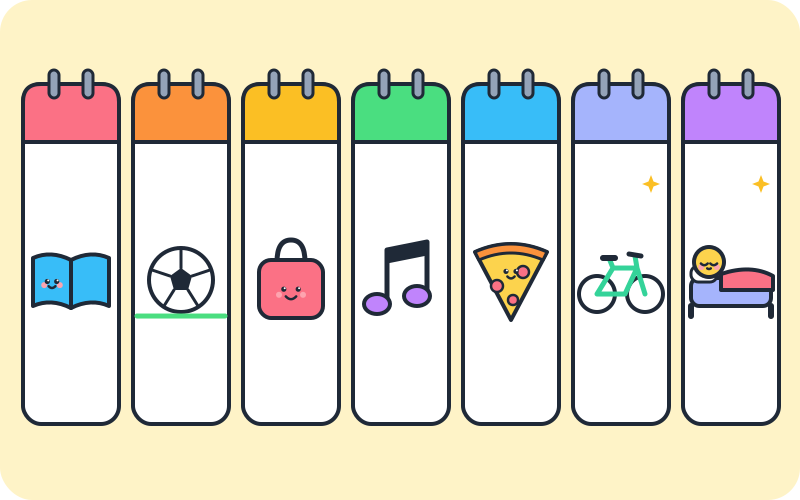
The same thing every week: the present simple, with -s for he.
A few verbs change a little: becomes ,
becomes , becomes .
-s . The -s moves to does, and the verb goes bare: She doesn't like it, never She doesn't likes it.
The full rules for questions and negatives are on their own page: do and does.
Going further: How to form the present simple and the rest of the guide, when you want them. This lesson does not need them.
Practice
Practise this lesson
10-question session
One question at a time, mixed across the exercises in this lesson. Miss one and it comes back round before the end.
English · Free printables
Worksheets for this lesson
Worksheets with answer keys built in. Open any one to view, print or save.
Lesson 13 of 44 in this chapter