
/ˈækʃən/

Translation
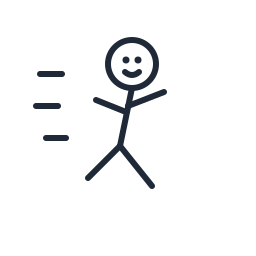
Something that a person does, or the fact of doing something rather than only talking.
Word origin
From Latin actio, from agere meaning to do or to drive, through French action.
- Origin
- Latin
- Root
- actio
- English cognates
- act, active
Grammar
Examples
, more .
"Action" means doing something, not just talking about it.
.
"Actions" is the plural, meaning the things he did.
.
Here "action" means fast, exciting movement.
Used in
Grammar articles
(32)Adverb position in English: before the verb, after be, and the just, still and already traps
Causative have and get in English: have something done, get something done and having someone do it
Cleft sentences in English: it was X who, what I need is, and how to move the emphasis
Dummy subjects in English: it's raining, there's a problem, and why the subject slot is never empty
Ellipsis and substitution in English: I think so, neither do I, and the words you are allowed to leave out
Future continuous and future perfect in English: will be doing vs will have done
Future in the past: was going to, would, was about to, and the grammar of plans that failed
Future tense in English: will, going to and more explained
English grammar test: 30 questions with answers (A2-B2)
Modal verbs in English: rules, examples and how to use them
Modals of deduction in English: must be, might be, could be and can't be
Nominalisation in English: arrive becomes arrival, decide becomes decision, and why written English turns actions into things
Participle clauses in English: -ing and -ed clauses, and the dangling participle trap
Passive voice in English: rules, examples and when to use it
Past continuous tense: was and were plus -ing, and when to use it instead of the past simple
Past modals in English: should have, could have, must have and might have
Past perfect tense: had plus past participle, and when English actually needs it
Past simple tense: rules, examples and when to use it
Present continuous tense: form, spelling and uses
Present perfect continuous: have been doing, and how it differs from the present perfect
Present perfect tense: rules, examples and when to use it
Present simple tense: rules, examples and when to use it
Reflexive and reciprocal pronouns in English: myself, yourself, each other, and when English does not bother
Relative clauses in English: defining, non-defining and when to drop the pronoun
Reporting verbs in English: admit, deny, suggest, promise, and the pattern welded to each one
The subjunctive and the unreal past in English: I suggest he go, if I were you, and it's time we left
English tenses explained: all 12 with a master table
Time clauses in English: when, while, as soon as, until, before and after
Used to, would and be used to: talking about past habits and states in English
Verb patterns with objects in English: want somebody to do, make somebody do, and see somebody doing
Wish and if only in English: wish + past, wish + past perfect, wish + would, and why I wish I would is wrong
Word formation with prefixes: un-, in-, im-, dis-, re-, over-, under- and mis-
Add to review queue
Track this word in your spaced-repetition queue and be tested on it at the right interval.
Go to my review queueThis word is part of lesson 18.