
Ch 15 · Lesson 9Esperanto · Chapter 15 · Lesson 9 · Grammar primer
Po: so many each
goes straight before a number and shares it out: , two apples each. Why it never sits before the unit, and the -n nobody agrees on.
The short version
.
Why?Hide
shares an amount out. is two apples in total and presumably an argument; is six apples, two apiece. The rule that prevents every classic mistake: goes before the number or amount and nothing else, so is wrong. Whether the noun then takes -n is a genuine long-running dispute, and PMEG accepts both: we write , and mark nobody wrong.
po: so many each
shares a number out: the number applies to each member of a group, not to the group as a whole.
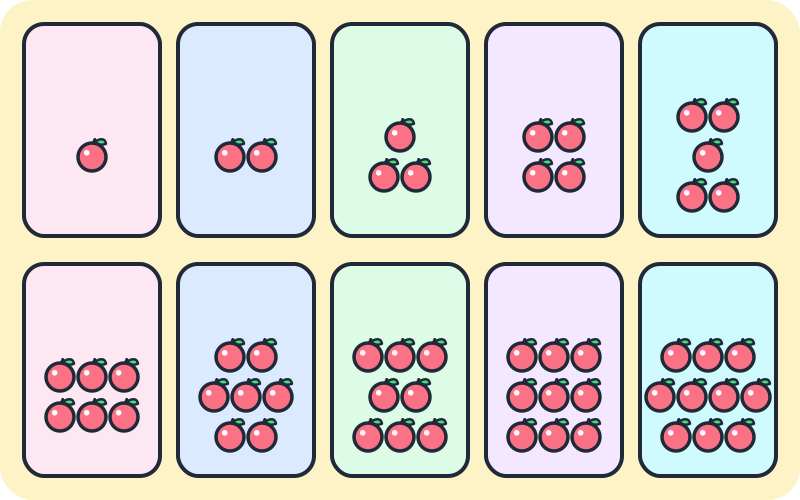
Tri infanoj ricevis po du pomoj: two apples each, six apples in all.
.- Three children got two apples (two in all)..- Three children got two apples each (six in all).
goes straight before the number or other amount ( , ), never before the unit:
| Wrong | Right | Why |
|---|---|---|
| | |
| | the ten is what repeats |
The second is the classic slip: English ten dollars a puts its distributive word before . In Esperanto the repeated amount takes , and the unit usually takes , or another fitting word such as .
.- I will read ten pages a day.
The -n after po
Does the noun after take -n when it is the object? The movement has never agreed:
| As a preposition | As an adverb |
|---|---|
blocks -n | the object keeps -n |
| |
PMEG says both uses are correct. This site writes , and marks nobody wrong for the other.
Going further: je: the preposition with no meaning and the rest of the guide, when you want them. This lesson does not need them.
Practice
Practise this lesson
9-question session
One question at a time, mixed across the exercises in this lesson. Miss one and it comes back round before the end.
Esperanto · Free printables
Worksheets for this lesson
Worksheets with answer keys built in. Open any one to view, print or save.
Free for members
The printable worksheets, infographics and PDFs are free with an account. Start a free week and download as many as you like.
Start your free weekLesson 9 of 29 in this chapter