
Ch 4 · Lesson 12French · Chapter 4 · Lesson 12 · Grammar primer
Colours: rouge, bleu, vert
Eleven colours, where they go (after the noun: ) and how they agree - plus orange and , which never change.
The short version
Colours go after the noun, and orange never changes
,
Why?Hide
Colours follow the noun and agree like any adjective: , . Orange and began as nouns (the fruit, the chestnut), so they never change, not even in the plural: .
Colours
A French adjective agrees with its noun: it changes its ending to match the noun's gender (masculine or feminine) and number (one or more). Colours are adjectives, so they agree too, and they go after the noun: , a red car.
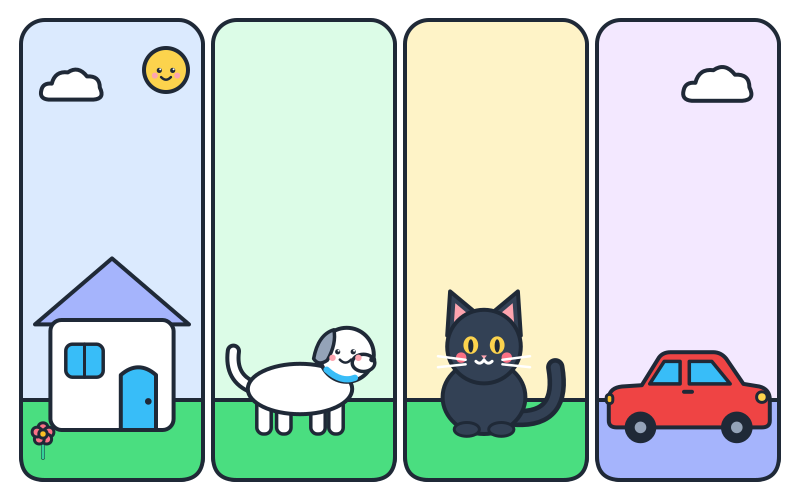
Every colour comes after its noun. The feminine maison takes blanche, the masculine chien blanc.
| Colour | Masc. | Fem. | Fem. pl. |
|---|---|---|---|
| black | | | |
| green | | | |
| grey | | | |
| blue | | | |
| white | | | |
| purple | | | |
| red | | | |
| yellow | | | |
| pink | | | |
| orange | | | |
| brown | | | |
Most colours add -e and -s: , , . and are the irregular ones: (a white dress).
, and already end in -e, so the feminine looks the same; they still add -s in the plural: (pink dresses).
and never change, because they began as nouns (an orange, a chestnut): , . began as a noun too, but it agrees like an ordinary adjective: . A colour with a second word never changes either: (a light blue dress).
Going further: The whole system on one screen and the rest of the guide, when you want them. This lesson does not need them.
Practice
Practise this lesson
10-question session
One question at a time, mixed across the exercises in this lesson. Miss one and it comes back round before the end.


French · Free printables
Worksheets for this lesson
Worksheets with answer keys built in. Open any one to view, print or save.
Free for members
The printable worksheets, infographics and PDFs are free with an account. Start a free week and download as many as you like.
Start your free weekLesson 12 of 31 in this chapter