
/dɔ̃k/ (en liaison) ou /dɔ̃/ (en fin de groupe)
Translation
so, therefore, then
Word origin
From Latin dumque, a blend of Latin dum ('while') and the enclitic -que ('and'), influenced by tunc ('then').
- Origin
- Latin
- Root
- dumque
Examples
pleut, l' cet -.
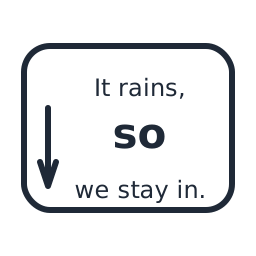
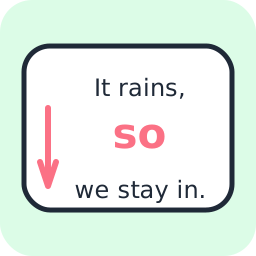
It's raining, so we'll stay inside this afternoon.
, c' .
So you came back earlier, what a real surprise.
, - Descartes .
I think, therefore I am - Descartes's words remain famous.
pleut, .
It's raining, so we'll stay at home.
.
So you've finally arrived after all this time.
est une conjonction de coordination exprimant la conséquence ou la conclusion. Sa prononciation varie : en position médiane, le c final est généralement muet /dɔ̃/ ; en liaison devant voyelle ou en position emphatique, il se prononce /dɔ̃k/ : dis donc ! (hey!, well!).
Dis donc et voyons donc sont des interjections très fréquentes à l'oral pour marquer la surprise ou l'impatience. Donc se distingue d'alors (then, in that case) par sa valeur logique plus rigoureuse. Dans l'argumentation formelle, donc introduit la conclusion d'un syllogisme.
Where this fits
Used in
Stories
(2)Add to review queue
Track this word in your spaced-repetition queue and be tested on it at the right interval.
Go to my review queueFrench · Free printables
donc: worksheet, infographic and listicle
Free printable study downloads for the French word "donc" (so, therefore, then): a worksheet with the answer key built in, an infographic, and a sentence listicle. Open any one to view, print or save.
Free for members
The printable worksheets, infographics and PDFs are free with an account. Start a free week and download as many as you like.
Start your free weekThis word is part of lesson 3.