
Telling the Time in Italian: Che ore sono? Sono le tre
By Michael McGettrickUpdated 12 October 2026
Ask ? and answer . Minutes go on with e (and) and come off with (minus), so Italian time is a small sum: . Two things catch English speakers: the plural , and the singular exception .
Quick check
Three quick questions on what you have just read. The full practice is further down.
Pick the right one
0/3What time is it? Tap the clock time.
Sono le tre e un quarto.
Sono le quattro meno un quarto.
Sono le sette e mezza.
The whole system on one screen
| Clock | Italian | Literally |
|---|---|---|
| 1:00 | . | It is the one |
| 3:00 | . | They are the three |
| 3:10 | | three and ten |
| 3:15 | | three and a quarter |
| 3:30 | | three and a half |
| 3:45 | | four minus a quarter |
| 12:00 | . | It is midday |
| 15:30 | | timetable form |
| at 8 | | a + = |
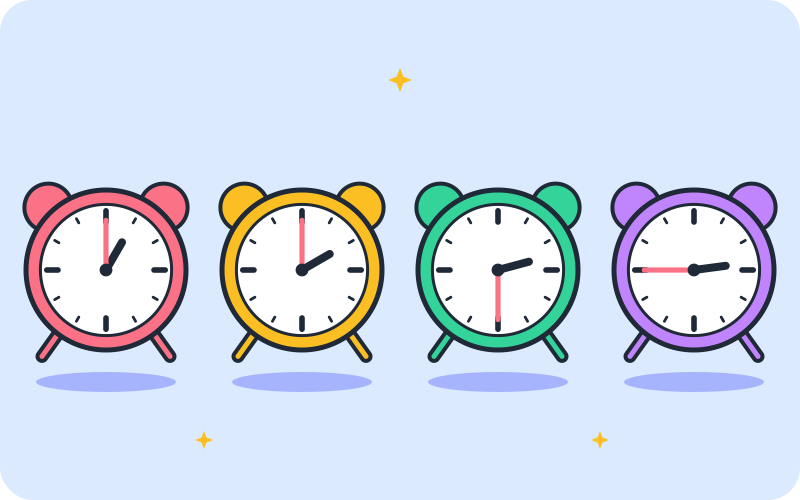
È l'una: one o'clock. Sono le due: two o'clock. Sono le due e mezza: half past two. Sono le tre meno un quarto: quarter to three.
Every row is built from numbers you know, plus four small words: , , and .
Asking the time
Two everyday questions, both correct everywhere, both meaning what time is it?
| Italian | Literally | Note |
|---|---|---|
? | what hours are they? | the commonest |
? | what hour is it? | just as good |
, ?- Excuse me, what time is it? (to a stranger).- It's three o'clock..- It's exactly three. (
There is no word for o'clock. The is the article of the hidden word , hours.
Ora, tempo and volta
English uses time for three different things. Italian gives each its own word:
| Meaning | Italian | Example |
|---|---|---|
| the clock, an hour | | . - I waited an hour. |
| time in general | | . - I haven't got time. |
| an occasion | | . - It's the first time. |
also means now: , I'm going now. The sentence always tells you which. Ago is , after the length of time: , an hour ago; , two years ago.
Sono le tre, but è l'una
From two to twelve the hours are plural, because you are counting hours. One o'clock is a single hour, so the verb and the article go singular, and shortens to ':
| Clock | Italian | English |
|---|---|---|
| 2:00 | . | It's two o'clock. |
| 11:00 | . | It's eleven o'clock. |
| 1:00 | . | It's one o'clock. |
| 1:30 | . | It's half past one. |
| 12:00 | . | It's midday. |
| 00:00 | . | It's midnight. |
Midday and midnight are singular nouns of their own, with no article: , it's half past twelve. is also correct for midday, but is what most people say.
E and meno: the minutes
Up to the half hour, add the minutes with . After it, most people go to the next hour and take the minutes away with , as English moves from past to to:
- :01-:30Add to the hour: le tre e cinque, e un quarto, e venti
- :31-:59Take from the next hour: le quattro meno venti, meno un quarto, meno cinque
| Clock | Italian | English |
|---|---|---|
| 4:05 | | five past four |
| 4:15 | | quarter past four |
| 4:30 | | half past four |
| 4:40 | | twenty to five |
| 4:45 | | quarter to five |
| 4:55 | | five to five |
Two variants you will hear, and can use:
andare both correct)
At what time? alle
At with a clock time is plus the article, fused as always:
| Italian | English |
|---|---|
? | At what time? |
| at eight o'clock |
| at one o'clock |
| at midday |
| at about eight |
.- The film starts at nine..- The shop is open from nine to seven.
means around: use it when you are not promising the minute.
Early, late and on time
| Italian | English | Example |
|---|---|---|
| early | . - I'm going out early. |
| late, in general | . - It's late. |
| late (for something) | . - I'm late. |
| on time | . - The train is on time. |
The 24-hour clock
Timetables, shop doors, cinema listings and appointments use the 24-hour clock. Read it as plain numbers, hours then minutes, joined by :
| Written | Said |
|---|---|
| 13:00 | |
| 15:30 | |
| 17:45 | quarantacinque |
| 20:10 | |
The quarter, the half and rarely mix with the 24-hour clock: 15:30 is , or in conversation . Italy writes the time with a colon or a full stop, 15:30 or 15.30, and the station timetable is the .
Parts of the day
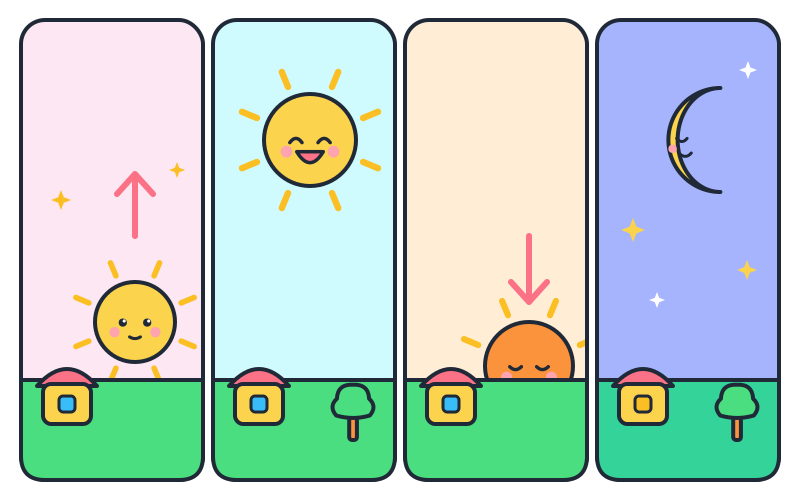
Di mattina, in the morning: the sun rising. A mezzogiorno, at midday: the sun high. Di sera, in the evening: the sun setting. Di notte, at night: the moon and stars.
Add a part of the day to a clock time to settle morning or evening:
| Clock | Italian | English |
|---|---|---|
| 8:00 am | | eight in the morning |
| 3:00 pm | | three in the afternoon |
| 8:00 pm | | eight in the evening |
| 2:00 am | | two in the morning |
Italian usually counts the small hours as , at night, where English says in the morning (you will also hear mattino). On their own, and describe a habit:
.- In the morning (every morning) I have a coffee.
Mistakes English speakers make
| Wrong | Right | Why |
|---|---|---|
| è | | the hours are plural |
| one o'clock is singular | |
| a | | a and always fuse |
| takes l' | |
| midday takes no article | |
| an hour of time is | |
| 3 pm is the afternoon |
What to do next
- Each time you look at a clock today, say the time in Italian,
- Read one train time aloud in the 24-hour form.
- Do the drill below, then check the
andtable again.